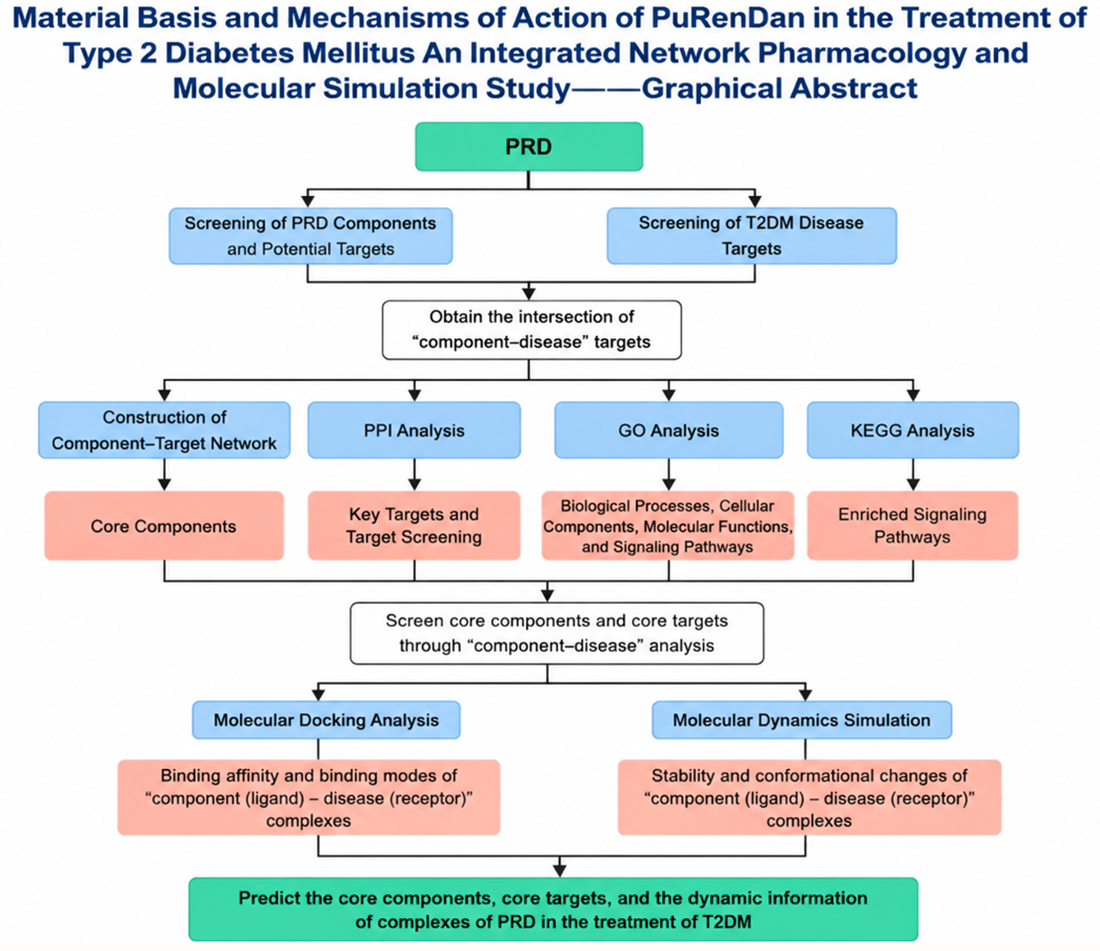
Material Basis and Mechanisms of Action of PuRenDan in the Treatment of Type 2 Diabetes Mellitus: An Integrated Network Pharmacology and Molecular Simulation Study

Abstract
1. Introduction
2. Results
2.1. Screening of Active Compounds and Targets of PuRenDan
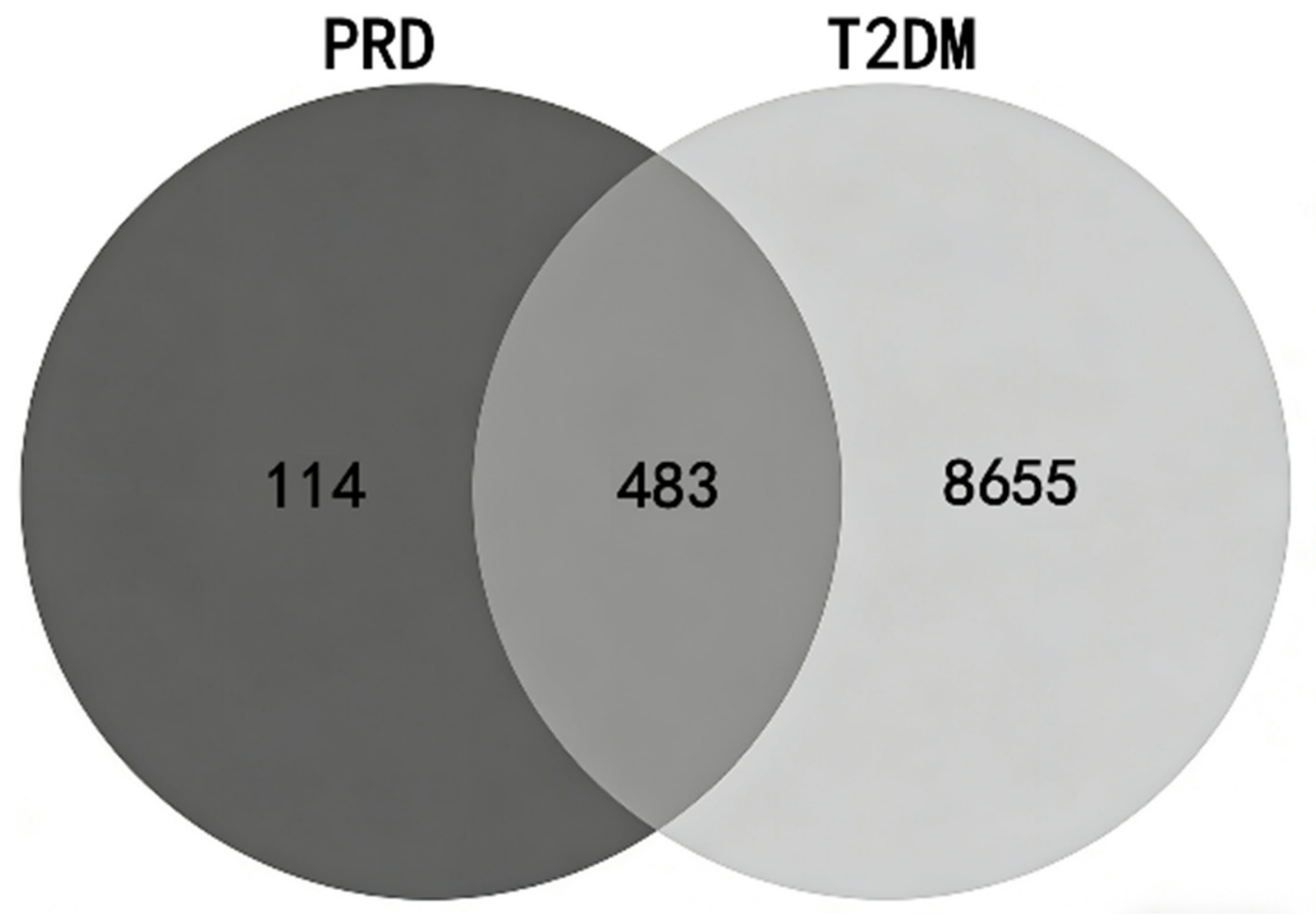
2.2. Acquisition of T2DM-Associated Disease Targets
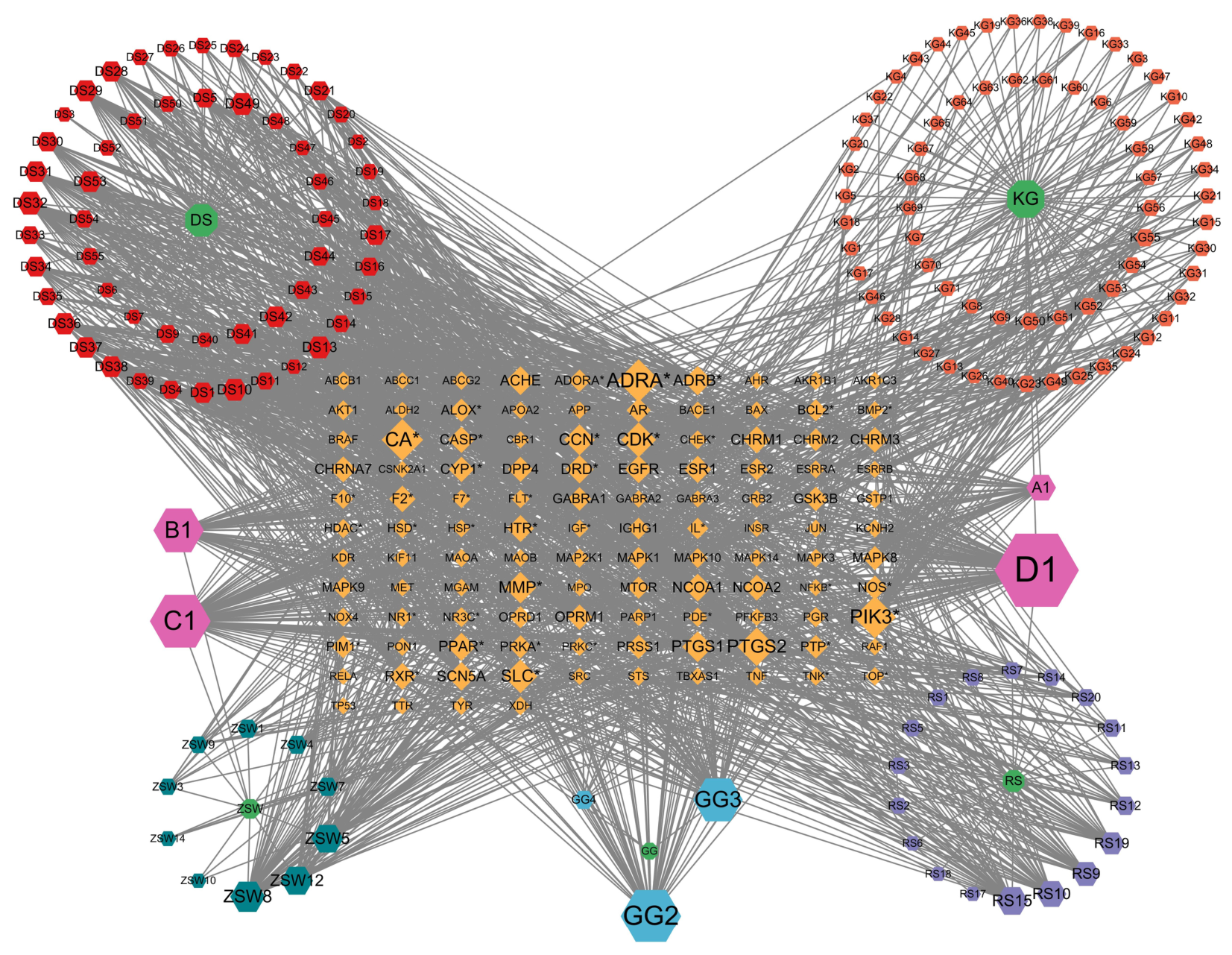
2.3. Identification of Compound–Disease Intersection Targets and Network Construction
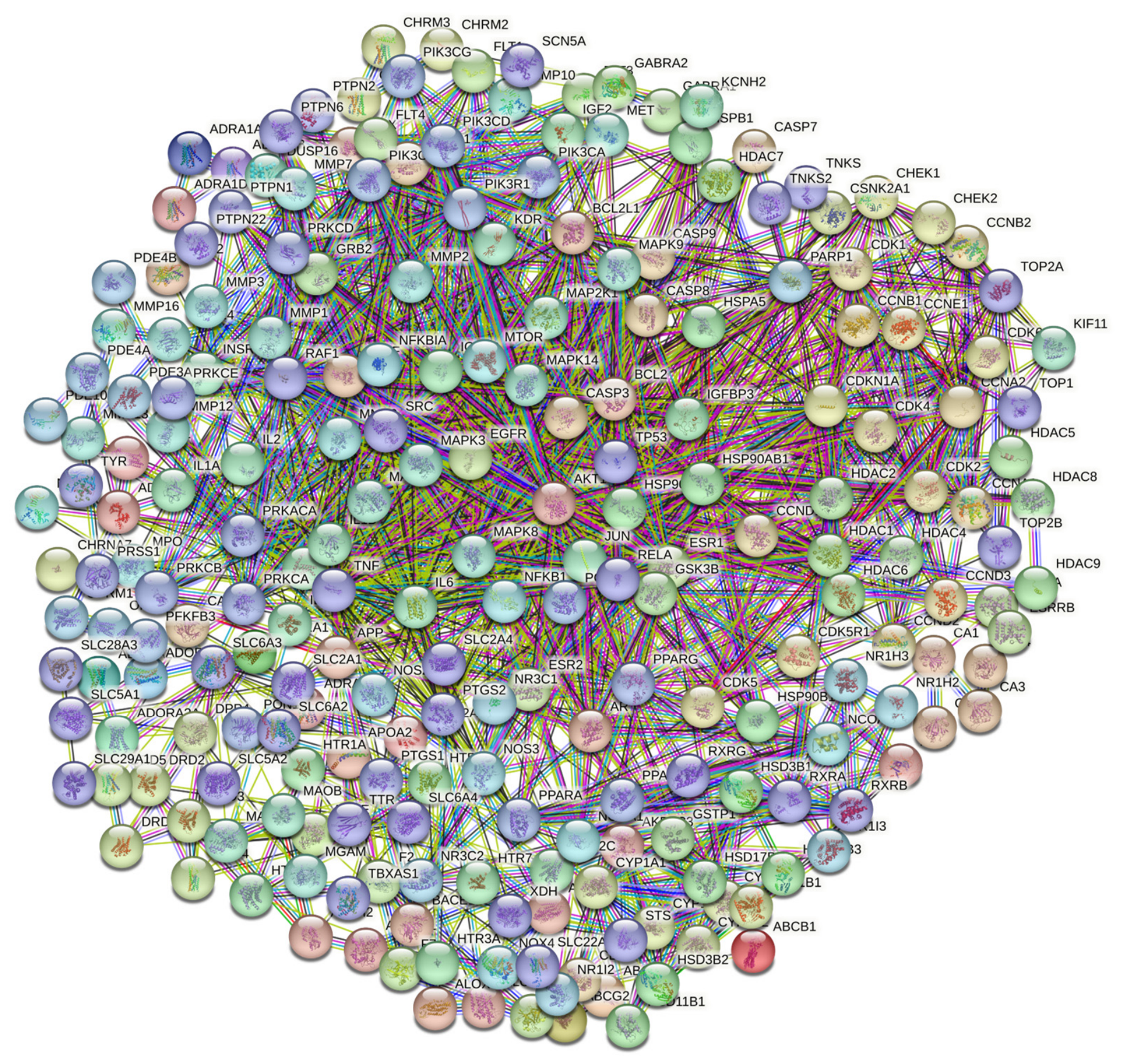
2.4. PPI Network Analysis and Identification of Core Target Clusters
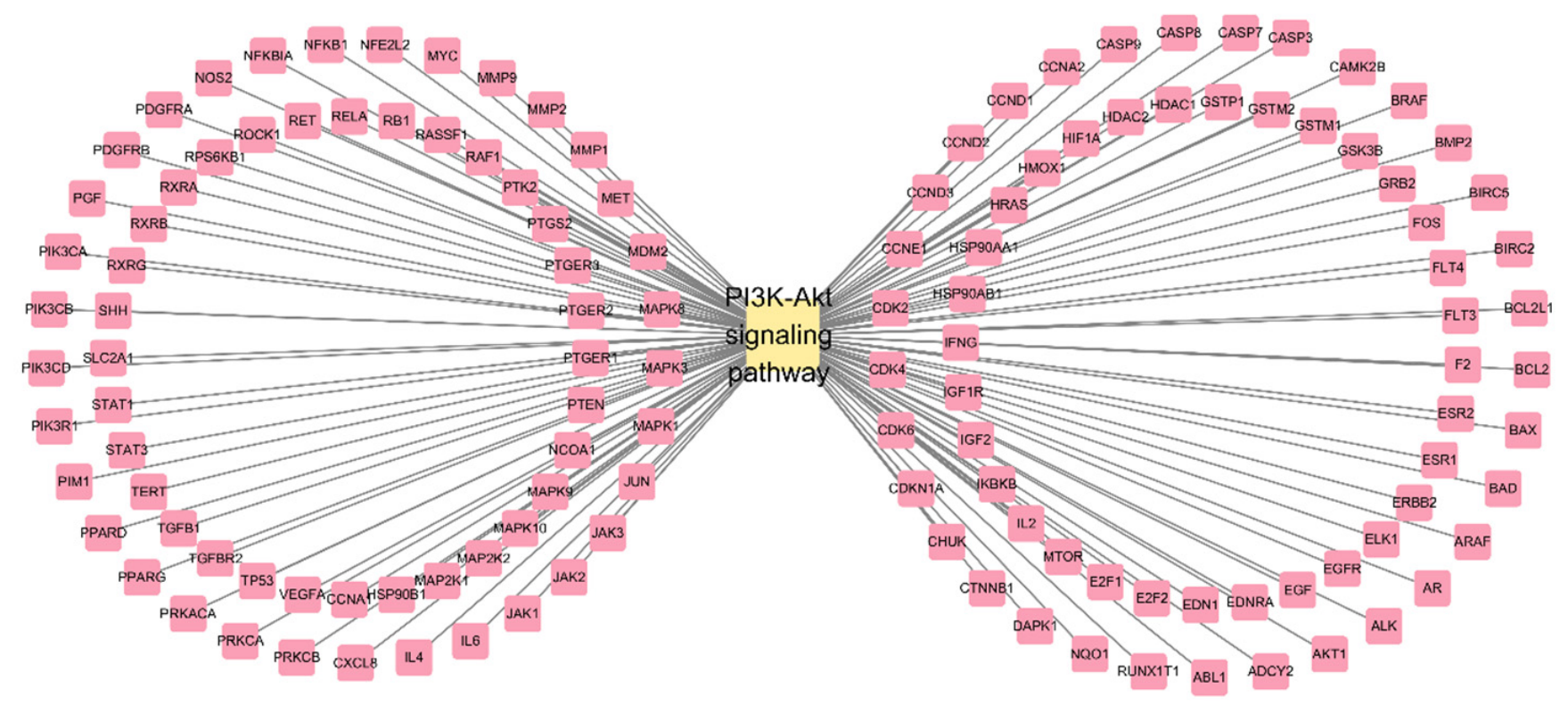
2.5. GO and KEGG Enrichment Analyses
2.6. Final Screening of Core Compounds
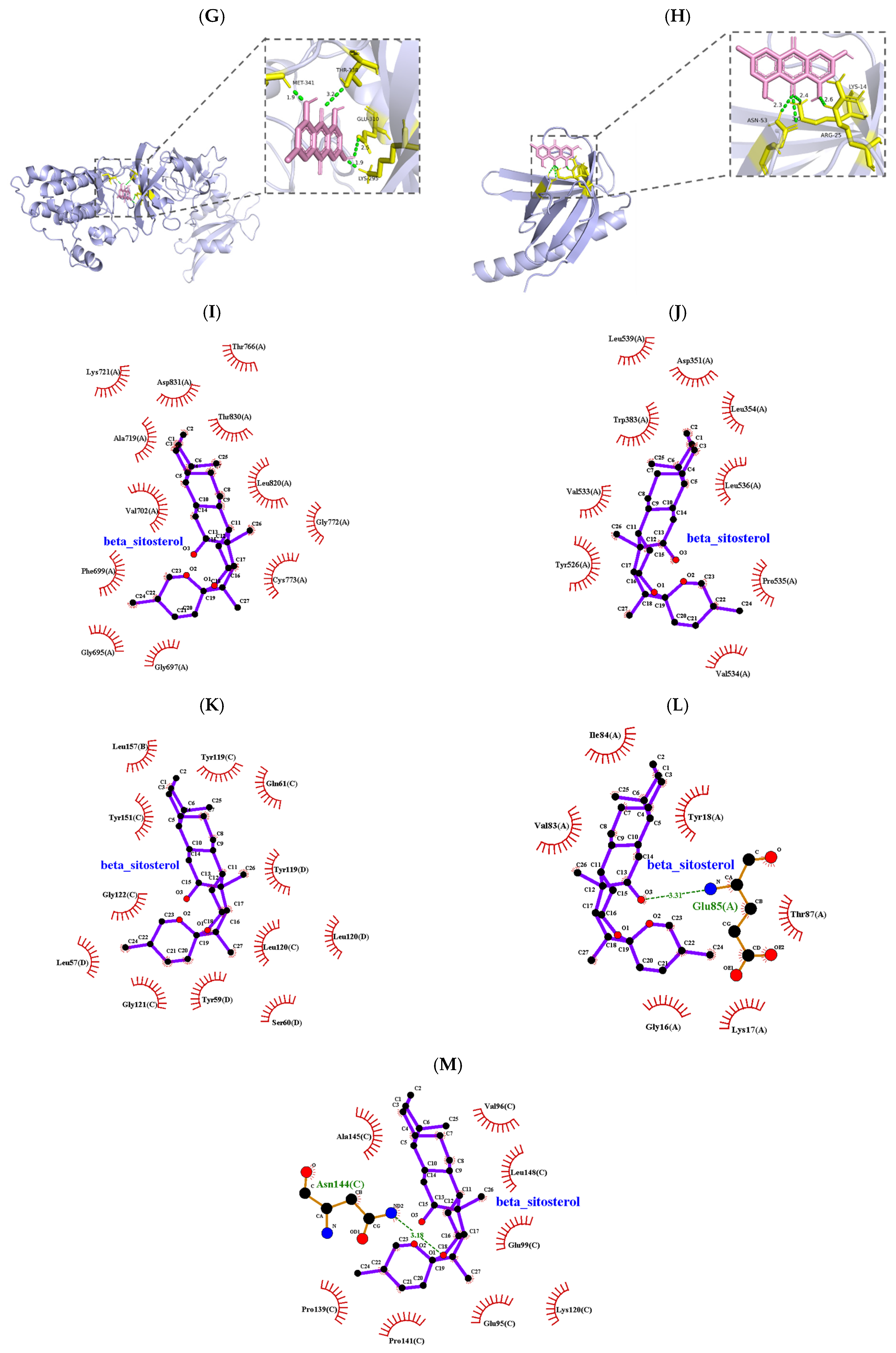
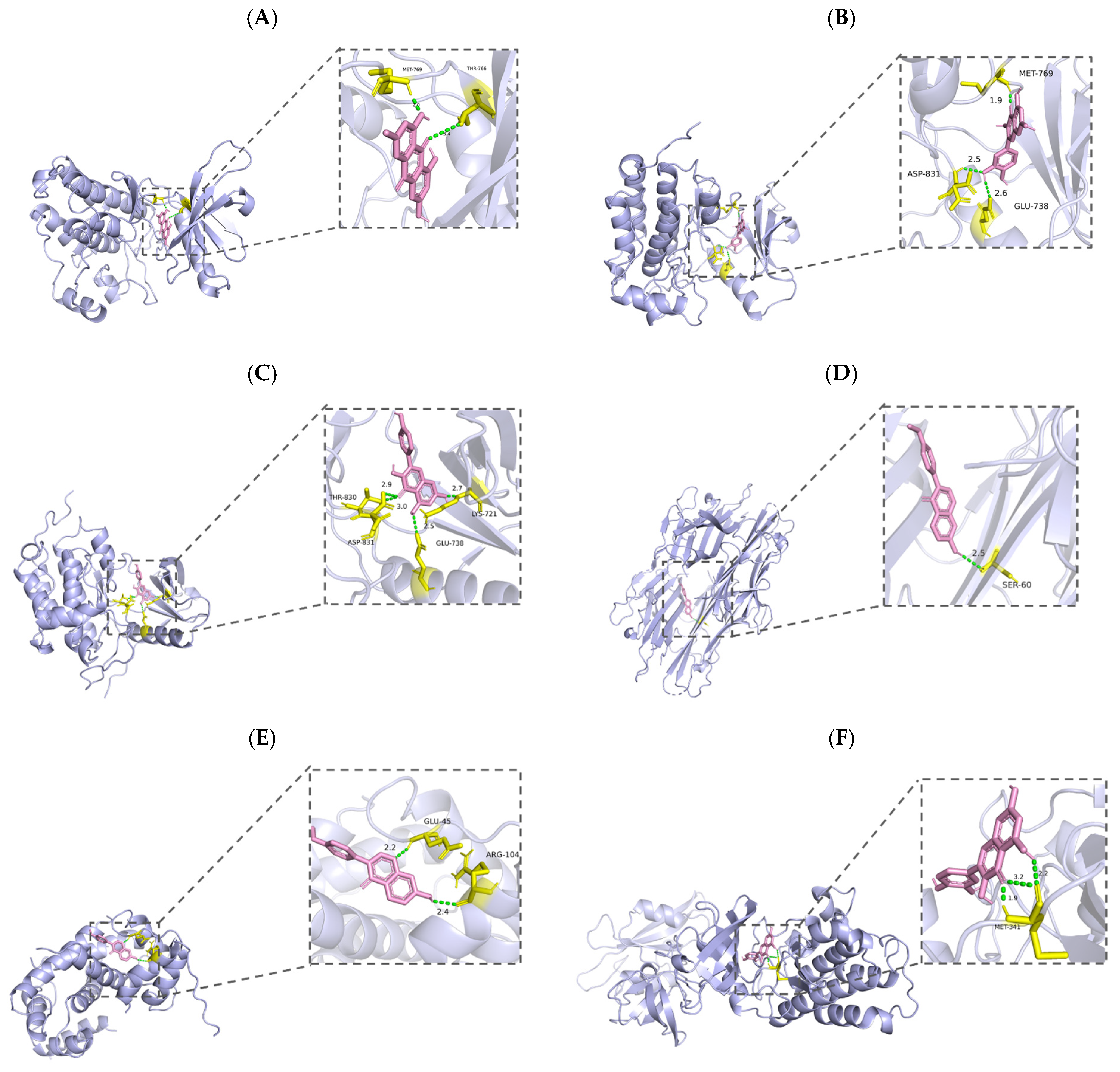
2.7. Molecular Docking Results
2.8. Molecular Dynamics Simulation Results
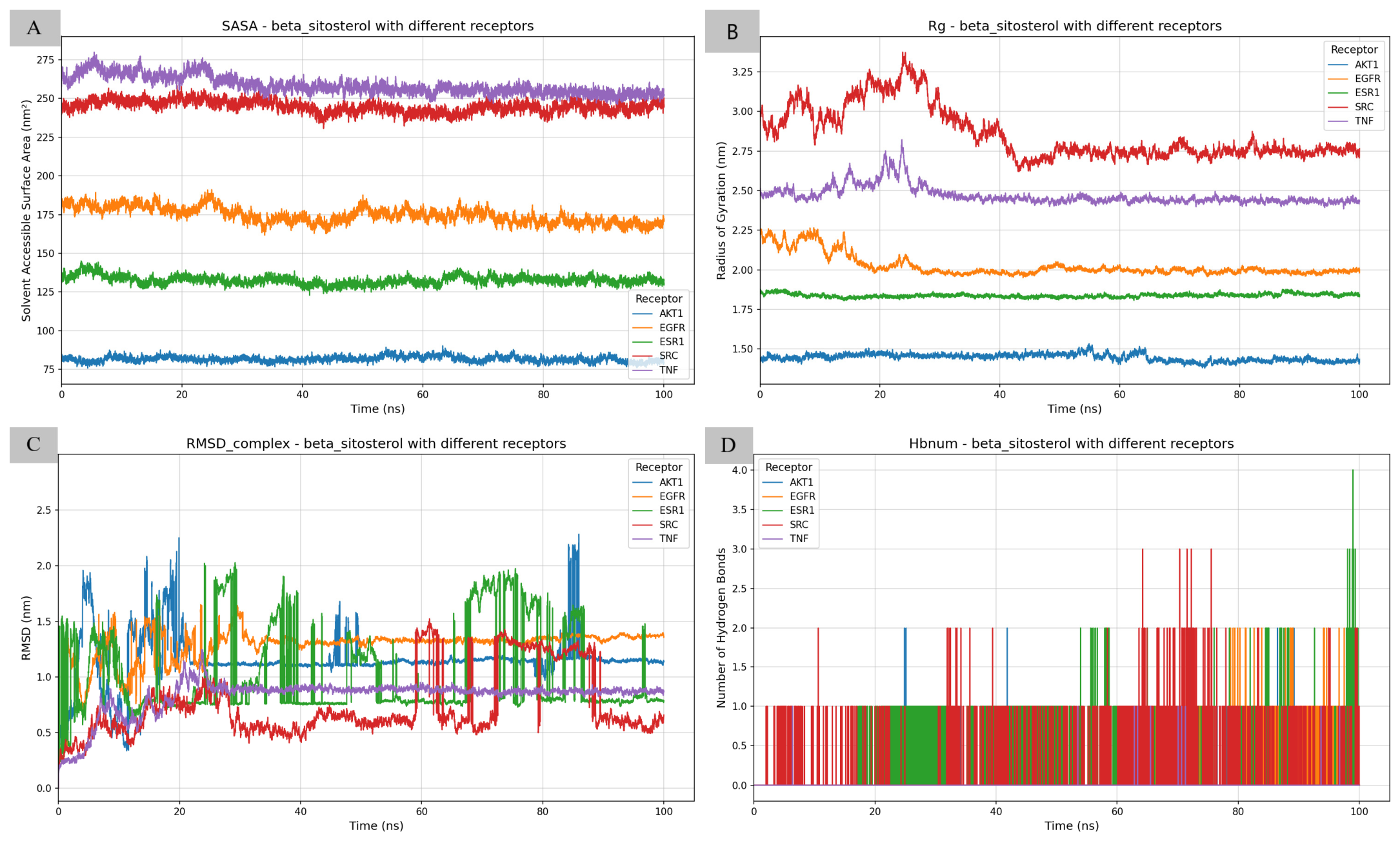
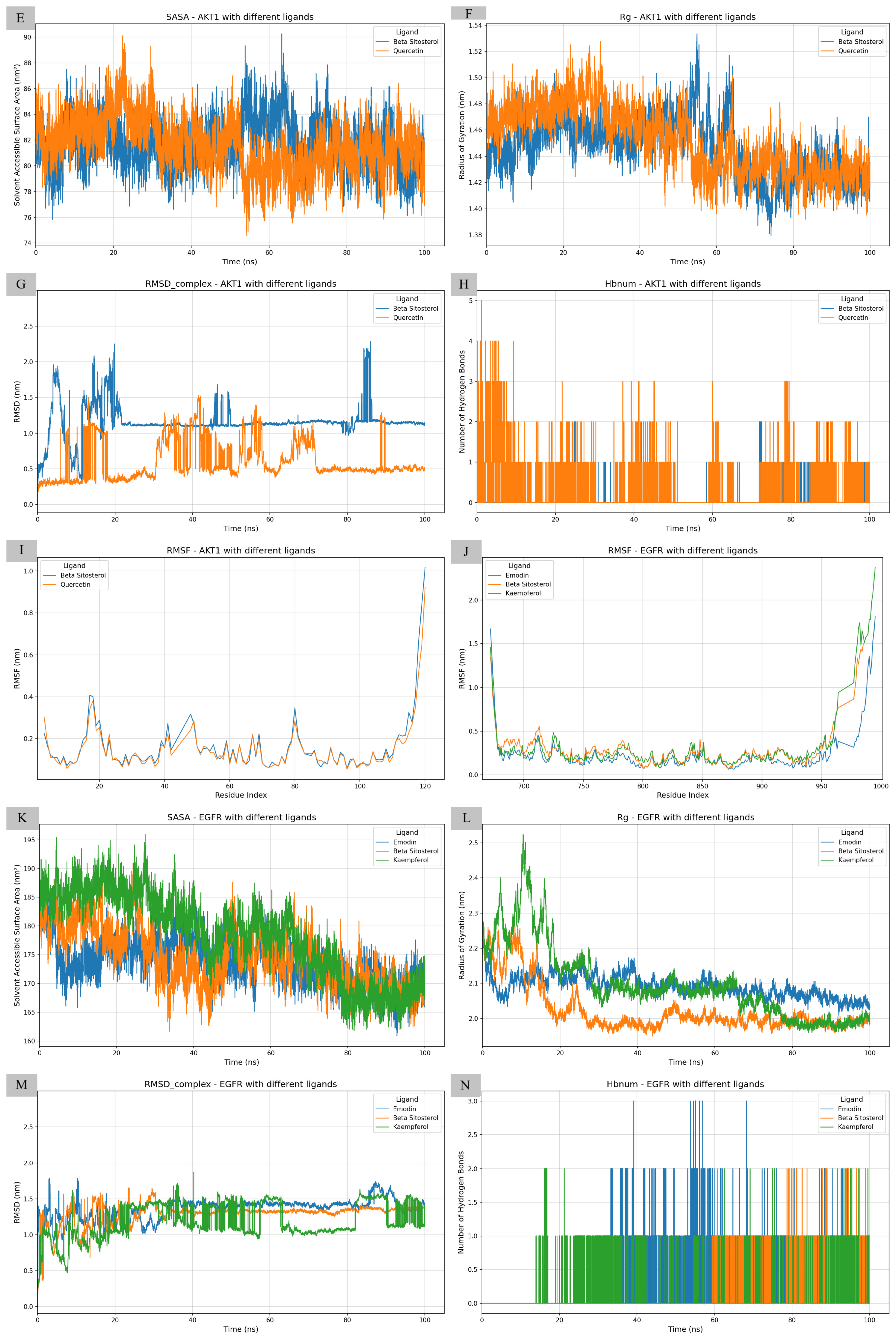
2.8.1. MD Trajectory Analysis
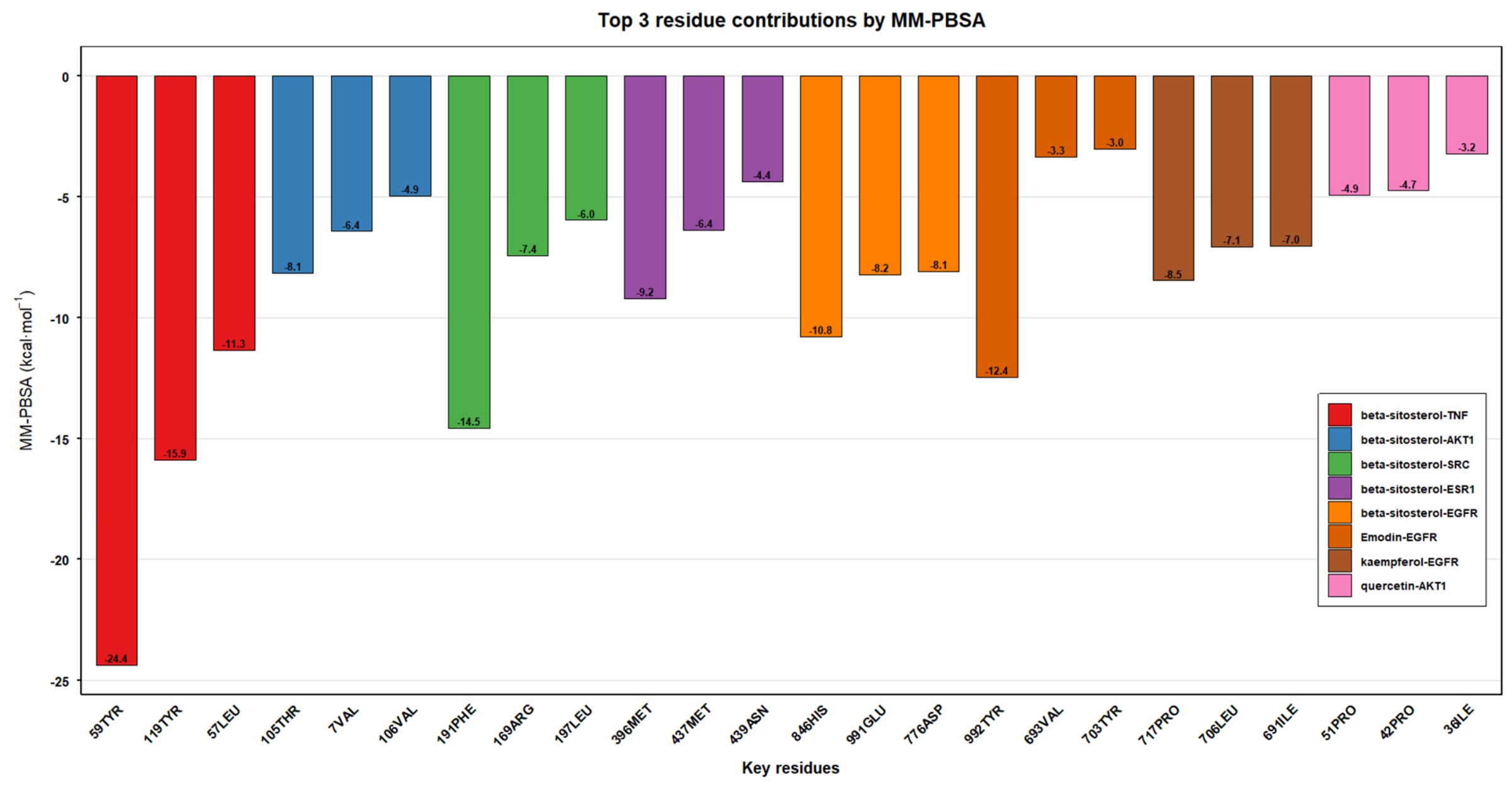
2.8.2. MM/PBSA Binding Free Energy and Residue Energy Decomposition
3. Discussion
4. Materials and Methods
4.1. Screening of Active Compounds and Targets of PuRenDan
4.2. Screening of T2DM-Associated Disease Targets
4.3. Screening of Compound–Disease Intersection Targets and Network Construction
4.4. PPI Network Construction and Core Target Screening
4.5. GO and KEGG Enrichment Analyses
4.6. Molecular Docking Validation
4.7. Molecular Dynamics Simulation
4.7.1. MD Simulation
4.7.2. MD Trajectory Analysis
4.7.3. MM/PBSA Binding Free-Energy Calculation and Residue Energy Decomposition
5. Conclusions
Supplementary Materials
Author Contributions
Funding
Institutional Review Board Statement
Informed Consent Statement
Data Availability Statement
Conflicts of Interest
Abbreviations
| ADME | Absorption, distribution, metabolism and excretion |
| AGE-RAGE | Advanced glycation end-product-receptor for advanced glycation end-product |
| BP | Biological process |
| CC | Cellular component |
| DL | Drug-likeness |
| GO | Gene Ontology |
| HPO | Human Phenotype Ontology |
| KEGG | Kyoto Encyclopedia of Genes and Genomes |
| MD | Molecular dynamics |
| MF | Molecular function |
| MM/PBSA | Molecular mechanics/Poisson–Boltzmann surface area |
| OB | Oral bioavailability |
| PDB | Protein Data Bank |
| PPI | Protein–protein interaction |
| PRD | PuRenDan |
| Rg | Radius of gyration |
| RMSD | Root mean square deviation |
| RMSF | Root mean square fluctuation |
| SASA | Solvent accessible surface area |
| T2DM | Type 2 diabetes mellitus |
References
- Zhou, B.; Rayner, A.W.; Gregg, E.W.; Sheffer, K.E.; Carrillo-Larco, R.M.; Bennett, J.E.; Shaw, J.E.; Paciorek, C.J.; Singleton, R.K.; Pires, A.B.; et al. Worldwide trends in diabetes prevalence and treatment from 1990 to 2022: A pooled analysis of 1108 population-representative studies with 141 million participants. Lancet 2024, 404, 2077–2093. [Google Scholar] [CrossRef] [Scilit] [PubMed]
- Cui, J.; Liu, Y.; Li, Y.; Xu, F.; Liu, Y. Type 2 Diabetes and Myocardial Infarction: Recent Clinical Evidence and Perspective. Front. Cardiovasc. Med. 2021, 8, 644189. [Google Scholar] [CrossRef] [Scilit] [PubMed]
- Sinha, B.; Ghosal, S. A Target HbA1c Between 7 and 7.7% Reduces Microvascular and Macrovascular Events in T2D Regardless of Duration of Diabetes: A Meta-Analysis of Randomized Controlled Trials. Diabetes Ther. 2021, 12, 1661–1676. [Google Scholar] [CrossRef] [Scilit] [PubMed]
- Nedosugova, L.V.; Markina, Y.V.; Bochkareva, L.A.; Kuzina, I.A.; Petunina, N.A.; Yudina, I.Y.; Kirichenko, T.V. Inflammatory Mechanisms of Diabetes and Its Vascular Complications. Biomedicines 2022, 10, 1168. [Google Scholar] [CrossRef] [Scilit] [PubMed]
- Zhang, Y.; Chen, S. Effect of Purendan on glucolipid metabolism and insulin resistance in ob/ob mice. Tianjin J. Tradit. Chin. Med. 2017, 34, 175–180. (In Chinese) [Google Scholar]
- Ma, X.; Qiu, Y.; Mao, M.; Lu, B.; Zhao, H.; Pang, Z.; Li, S. PuRenDan alleviates type 2 diabetes mellitus symptoms by modulating the gut microbiota and its metabolites. J. Ethnopharmacol. 2024, 322, 117627. [Google Scholar] [CrossRef] [Scilit] [PubMed]
- Niu, H.; Fan, L.; Zhao, L.; Yao, R.; He, X.; Lu, B.; Pang, Z. The therapeutic mechanism of PuRenDan for the treatment of diabetic nephropathy: Network pharmacology and experimental verification. J. Ethnopharmacol. 2022, 293, 115283. [Google Scholar] [CrossRef] [Scilit] [PubMed]
- Jia, C.; Liu, B. Study on the PRD on the Glucose-decreasing Effect of Diabetic Rats. J. Basic Chin. Med. 2002, 8, 29. (In Chinese) [Google Scholar] [CrossRef] [Scilit]
- Saltiel, A.R. Insulin signaling in health and disease. J. Clin. Investig. 2021, 131, e142241. [Google Scholar] [CrossRef] [Scilit] [PubMed]
- Kanehisa, M.; Furumichi, M.; Sato, Y.; Matsuura, Y.; Ishiguro-Watanabe, M. KEGG: Biological systems database as a model of the real world. Nucleic Acids Res. 2025, 53, D672–D677. [Google Scholar] [CrossRef] [Scilit] [PubMed]
- Kanehisa Laboratories. KEGG DRUG: Sitagliptin, D08516. Kyoto Encyclopedia of Genes and Genomes. Available online: https://www.genome.jp/dbget-bin/www_bget?drug:D08516 (accessed on 27 June 2026).
- Kanehisa Laboratories. KEGG DRUG: Dapagliflozin, D08897. Kyoto Encyclopedia of Genes and Genomes. Available online: https://www.genome.jp/dbget-bin/www_bget?D08897 (accessed on 27 June 2026).
- Kanehisa Laboratories. KEGG DRUG: Pioglitazone, D08378. Kyoto Encyclopedia of Genes and Genomes. Available online: https://www.genome.jp/dbget-bin/www_bget?drug:D08378 (accessed on 27 June 2026).
- Kanehisa Laboratories. KEGG DRUG/COMPOUND: Acarbose, D00216/C06802. Kyoto Encyclopedia of Genes and Genomes. Available online: https://www.genome.jp/dbget-bin/www_bget?cpd:C06802 (accessed on 27 June 2026).
- Kanehisa Laboratories. KEGG DRUG: Insulin Human and Insulin Analogues, D03230. Kyoto Encyclopedia of Genes and Genomes. Available online: https://www.genome.jp/dbget-bin/www_bget?drug:D03230 (accessed on 27 June 2026).
- Gilbert, M.P.; Pratley, R.E. GLP-1 analogs and DPP-4 inhibitors in type 2 diabetes therapy: Review of head-to-head clinical trials. Front. Endocrinol. 2020, 11, 178. [Google Scholar] [CrossRef] [Scilit] [PubMed]
- Zheng, Z.; Zong, Y.; Ma, Y.; Tian, Y.; Pang, Y.; Zhang, C.; Gao, J. Glucagon-like peptide-1 receptor: Mechanisms and advances in therapy. Signal Transduct. Target. Ther. 2024, 9, 234. [Google Scholar] [CrossRef] [Scilit] [PubMed]
- Winiarska, A.; Knysak, M.; Nabrdalik, K.; Gumprecht, J.; Stompór, T. Inflammation and oxidative stress in diabetic kidney disease: The targets for SGLT2 inhibitors and GLP-1 receptor agonists. Int. J. Mol. Sci. 2021, 22, 10822. [Google Scholar] [CrossRef] [Scilit] [PubMed]
- Zhang, R.; Xie, Q.; Lu, X.; Fan, R.; Tong, N. Research advances in the anti-inflammatory effects of SGLT inhibitors in type 2 diabetes mellitus. Diabetol. Metab. Syndr. 2024, 16, 99. [Google Scholar] [CrossRef] [Scilit] [PubMed]
- Han, Y.-P.; Liu, L.-J.; Yan, J.-L.; Chen, M.-Y.; Meng, X.-F.; Zhou, X.-R.; Qian, L.-B. Autophagy and its therapeutic potential in diabetic nephropathy. Front. Endocrinol. 2023, 14, 1139444. [Google Scholar] [CrossRef] [Scilit] [PubMed]
- Taguchi, K.; Fukami, K.; Yamagishi, S. RAGE signaling regulates the progression of diabetic complications. Front. Pharmacol. 2023, 14, 1128872. [Google Scholar] [CrossRef] [Scilit] [PubMed]
- Zhang, S.; Wang, Y.; Han, L.; Fu, X.; Wang, S.; Li, W.; Han, W. Targeting N-terminal human maltase-glucoamylase to unravel possible inhibitors using molecular docking, molecular dynamics simulations and adaptive steered molecular dynamics simulations. Front. Chem. 2021, 9, 711242. [Google Scholar] [CrossRef] [Scilit] [PubMed]
- Kearney, A.L.; Norris, D.M.; Ghomlaghi, M.; Wong, M.K.L.; Humphrey, S.J.; Carroll, L.; Yang, G.; Cooke, K.C.; Yang, P.; Geddes, T.A.; et al. Akt phosphorylates insulin receptor substrate to limit PI3K-mediated PIP3 synthesis. eLife 2021, 10, e66942. [Google Scholar] [CrossRef] [Scilit] [PubMed]
- Kahal, H.; Halama, A.; Aburima, A.; Bhagwat, A.M.; Butler, A.E.; Graumann, J.; Suhre, K.; Sathyapalan, T.; Atkin, S.L. Effect of induced hypoglycemia on inflammation and oxidative stress in type 2 diabetes and control subjects. Sci. Rep. 2020, 10, 4750, Correction in Sci. Rep. 2020, 10, 10233. [Google Scholar] [CrossRef] [Scilit] [PubMed]
- Ding, Q.; Gao, Z.; Chen, K.; Zhang, Q.; Hu, S.; Zhao, L. Inflammation-Related Epigenetic Modification: The Bridge Between Immune and Metabolism in Type 2 Diabetes. Front. Immunol. 2022, 13, 883410. [Google Scholar] [CrossRef] [Scilit] [PubMed]
- Sheng, L.; Bayliss, G.; Zhuang, S. Epidermal Growth Factor Receptor: A Potential Therapeutic Target for Diabetic Kidney Disease. Front. Pharmacol. 2021, 11, 598910. [Google Scholar] [CrossRef] [Scilit] [PubMed]
- Dorotea, D.; Jiang, S.; Pak, E.S.; Son, J.B.; Choi, H.G.; Ahn, S.-M.; Ha, H. Pan-Src kinase inhibitor treatment attenuates diabetic kidney injury via inhibition of Fyn kinase-mediated endoplasmic reticulum stress. Exp. Mol. Med. 2022, 54, 1086–1097. [Google Scholar] [CrossRef] [Scilit] [PubMed]
- Kung, C.P.; Murphy, M.E. The role of the p53 tumor suppressor in metabolism and diabetes. J. Endocrinol. 2016, 231, R61–R75. [Google Scholar] [CrossRef] [Scilit] [PubMed]
- Flores-López, L.A.; Enríquez-Flores, S.; Mora, I.D.L.M.L.; García-Torres, I.; López-Velázquez, G.; Viedma-Rodríguez, R.; Ávalos-Rodríguez, A.; Contreras-Ramos, A.; Ortega-Camarillo, C. Pancreatic β-cell apoptosis in type 2 diabetes is related to post-translational modifications of p53. Mol. Med. Rep. 2024, 30, 193. [Google Scholar] [CrossRef] [Scilit] [PubMed]
- Zarrouki, B.; Benterki, I.; Fontés, G.; Peyot, M.-L.; Seda, O.; Prentki, M.; Poitout, V. Epidermal growth factor receptor signaling promotes pancreatic β-cell proliferation in response to nutrient excess in rats through mTOR and FOXM1. Diabetes 2014, 63, 982–993. [Google Scholar] [CrossRef] [Scilit] [PubMed]
- Loizou, S.; Lekakis, I.; Chrousos, G.P.; Moutsatsou, P. B-Sitosterol exhibits anti-inflammatory activity in human aortic endothelial cells. Mol. Nutr. Food Res. 2010, 54, 551–558. [Google Scholar] [CrossRef] [Scilit] [PubMed]
- Ru, J.; Li, P.; Wang, J.; Zhou, W.; Li, B.; Huang, C.; Li, P.; Guo, Z.; Tao, W.; Yang, Y.; et al. TCMSP: A database of systems pharmacology for drug discovery from herbal medicines. J. Cheminform. 2014, 6, 13. [Google Scholar] [CrossRef] [Scilit] [PubMed]
- Fang, S.; Dong, L.; Liu, L.; Guo, J.; Zhao, L.; Zhang, J.; Bu, D.; Liu, X.; Huo, P.; Cao, W.; et al. HERB: A high-throughput experiment- and reference-guided database of traditional Chinese medicine. Nucleic Acids Res. 2021, 49, D1197–D1206. [Google Scholar] [CrossRef] [Scilit] [PubMed]
- Arif, R.; Bukhari, S.A.; Mustafa, G.; Ahmed, S.; Albeshr, M.F. Network Pharmacology and Experimental Validation to Explore the Potential Mechanism of Nigella sativa for the Treatment of Breast Cancer. Pharmaceuticals 2024, 17, 617. [Google Scholar] [CrossRef] [Scilit] [PubMed]
- Liu, H.; Hu, Y.; Qi, B.; Yan, C.; Wang, L.; Zhang, Y.; Chen, L. Network pharmacology and molecular docking to elucidate the mechanism of pulsatilla decoction in the treatment of colon cancer. Front. Pharmacol. 2022, 13, 940508. [Google Scholar] [CrossRef] [Scilit] [PubMed]
- Xiang, C.; Liao, Y.; Chen, Z.; Xiao, B.; Zhao, Z.; Li, A.; Xia, Y.; Wang, P.; Li, H.; Xiao, T. Network Pharmacology and Molecular Docking to Elucidate the Potential Mechanism of Ligusticum Chuanxiong Against Osteoarthritis. Front. Pharmacol. 2022, 13, 854215. [Google Scholar] [CrossRef] [Scilit] [PubMed]
- Daina, A.; Michielin, O.; Zoete, V. SwissTargetPrediction: Updated data and new features for efficient prediction of protein targets of small molecules. Nucleic Acids Res. 2019, 47, W357–W364. [Google Scholar] [CrossRef] [Scilit] [PubMed]
- Wang, X.; Shen, Y.; Wang, S.; Li, S.; Zhang, W.; Liu, X.; Lai, L.; Pei, J.; Li, H. PharmMapper 2017 update: A web server for potential drug target identification with a comprehensive target pharmacophore database. Nucleic Acids Res. 2017, 45, W356–W360. [Google Scholar] [CrossRef] [Scilit] [PubMed]
- Shannon, P.; Markiel, A.; Ozier, O.; Baliga, N.S.; Wang, J.T.; Ramage, D.; Amin, N.; Schwikowski, B.; Ideker, T. Cytoscape: A Software Environment for Integrated Models of Biomolecular Interaction Networks. Genome Res. 2003, 13, 2498–2504. [Google Scholar] [CrossRef] [Scilit] [PubMed]
- Szklarczyk, D.; Gable, A.L.; Nastou, K.C.; Lyon, D.; Kirsch, R.; Pyysalo, S.; Doncheva, N.T.; Legeay, M.; Fang, T.; Bork, P.; et al. The STRING database in 2021: Customizable protein–protein networks, and functional characterization of user-uploaded gene/measurement sets. Nucleic Acids Res. 2021, 49, D605–D612, Correction in Nucleic Acids Res. 2021, 49, 10800. https://doi.org/10.1093/nar/gkab835. [Google Scholar] [CrossRef] [Scilit] [PubMed]
- Szklarczyk, D.; Kirsch, R.; Koutrouli, M.; Nastou, K.; Mehryary, F.; Hachilif, R.; Gable, A.L.; Fang, T.; Doncheva, N.T.; Pyysalo, S.; et al. The STRING database in 2023: Protein–protein association networks and functional enrichment analyses for any sequenced genome of interest. Nucleic Acids Res. 2023, 51, D638–D646. [Google Scholar] [CrossRef] [Scilit] [PubMed]
- Zhou, Y.; Zhou, B.; Pache, L.; Chang, M.; Khodabakhshi, A.H.; Tanaseichuk, O.; Benner, C.; Chanda, S.K. Metascape provides a biologist-oriented resource for the analysis of systems-level datasets. Nat. Commun. 2019, 10, 1523. [Google Scholar] [CrossRef] [Scilit] [PubMed]
- Carpten, J.D.; Faber, A.L.; Horn, C.; Donoho, G.P.; Briggs, S.L.; Robbins, C.M.; Hostetter, G.; Boguslawski, S.; Moses, T.Y.; Savage, S.; et al. A transforming mutation in the pleckstrin homology domain of AKT1 in cancer. Nature 2007, 448, 439–444. [Google Scholar] [CrossRef] [Scilit] [PubMed]
- Cheong, H.K.; Kim, H.J. Modular Evolution and Design of the Protein Binding Interface: 4j4l. 12 February 2014. Available online: https://www.rcsb.org/structure/4J4L (accessed on 17 April 2026).
- He, M.M.; Smith, A.S.; Oslob, J.D.; Flanagan, W.M.; Braisted, A.C.; Whitty, A.; Cancilla, M.T.; Wang, J.; Lugovskoy, A.A.; Yoburn, J.C.; et al. Small-Molecule Inhibition of TNF-α. Science 2005, 310, 1022–1025. [Google Scholar] [CrossRef] [Scilit] [PubMed]
- Stamos, J.; Sliwkowski, M.X.; Eigenbrot, C. Structure of the Epidermal Growth Factor Receptor Kinase Domain Alone and in Complex with a 4-Anilinoquinazoline Inhibitor. J. Biol. Chem. 2002, 277, 46265–46272. [Google Scholar] [CrossRef] [Scilit] [PubMed]
- Kim, S.; Wu, J.Y.; Birzin, E.T.; Frisch, K.; Chan, W.; Pai, L.-Y.; Yang, Y.T.; Mosley, R.T.; Fitzgerald, P.M.D.; Sharma, N.; et al. Estrogen Receptor Ligands. II. Discovery of Benzoxathiins as Potent, Selective Estrogen Receptor α Modulators. J. Med. Chem. 2004, 47, 2171–2175. [Google Scholar] [CrossRef] [Scilit] [PubMed]
- Weber, D.J.; Rust, R.R.; Baldisseri, D.M. Structure of the negative regulatory domain of p53 bound to S100B(ββ). Nat. Struct. Biol. 2000, 7, 570–574. [Google Scholar] [CrossRef] [Scilit] [PubMed]
- Cowan-Jacob, S.W.; Fendrich, G.; Manley, P.W.; Jahnke, W.; Fabbro, D.; Liebetanz, J.; Meyer, T. The Crystal Structure of a c-Src Complex in an Active Conformation Suggests Possible Steps in c-Src Activation. Structure 2005, 13, 861–871. [Google Scholar] [CrossRef] [Scilit] [PubMed]
- Trott, O.; Olson, A.J. AutoDock Vina: Improving the speed and accuracy of docking with a new scoring function, efficient optimization, and multithreading. J. Comput. Chem. 2010, 31, 455–461. [Google Scholar] [CrossRef] [Scilit] [PubMed]
- Kumari, R.; Kumar, R.; Lynn, A.; Open Source Drug Discovery Consortium. g_mmpbsa—A GROMACS Tool for High-Throughput MM-PBSA Calculations. J. Chem. Inf. Model. 2014, 54, 1951–1962. [Google Scholar] [CrossRef] [Scilit] [PubMed]









| ID | Active Compound | OB (%) | DL | Source |
|---|---|---|---|---|
| A1 | luteolin | 36.16 | 0.25 | Momordicae Charantiae Fructus; Salviae Miltiorrhizae Radix et Rhizoma |
| B1 | β-sitosterol | 36.91 | 0.75 | Ginseng Radix et Rhizoma; Puerariae Lobatae Radix; Polygoni Multiflori Radix Praeparata |
| C1 | quercetin | 46.43 | 0.28 | Momordicae Charantiae Fructus; Polygoni Multiflori Radix Praeparata |
| D1 | kaempferol | 41.88 | 0.24 | Ginseng Radix et Rhizoma; Momordicae Charantiae Fructus; Polygoni Multiflori Radix Praeparata |
| ID | Core Compound | Betweenness | Closeness | Degree | Score | Source |
|---|---|---|---|---|---|---|
| D1 | kaempferol | 0.13 | 0.52 | 225 | 19.72 | Ginseng Radix et Rhizoma; Momordicae Charantiae Fructus; Polygoni Multiflori Radix Praeparata |
| C1 | quercetin | 0.15 | 0.53 | 148 | 18.07 | Momordicae Charantiae Fructus; Polygoni Multiflori Radix Praeparata |
| GG2 | formononetin | 0.05 | 0.44 | 147 | 10.10 | Puerariae Lobatae Radix |
| B1 | β-sitosterol | 0.05 | 0.43 | 114 | 8.51 | Ginseng Radix et Rhizoma; Puerariae Lobatae Radix; Polygoni Multiflori Radix Praeparata |
| GG3 | 3′-methoxydaidzein | 0.04 | 0.43 | 111 | 7.45 | Puerariae Lobatae Radix |
| ZSW8 | emodin | 0.04 | 0.44 | 63 | 6.27 | Polygoni Multiflori Radix Praeparata |
| A1 | luteolin | 0.04 | 0.45 | 46 | 6.11 | Momordicae Charantiae Fructus; Salviae Miltiorrhizae Radix et Rhizoma |
| Core Target | Betweenness | Closeness | Degree | Score |
|---|---|---|---|---|
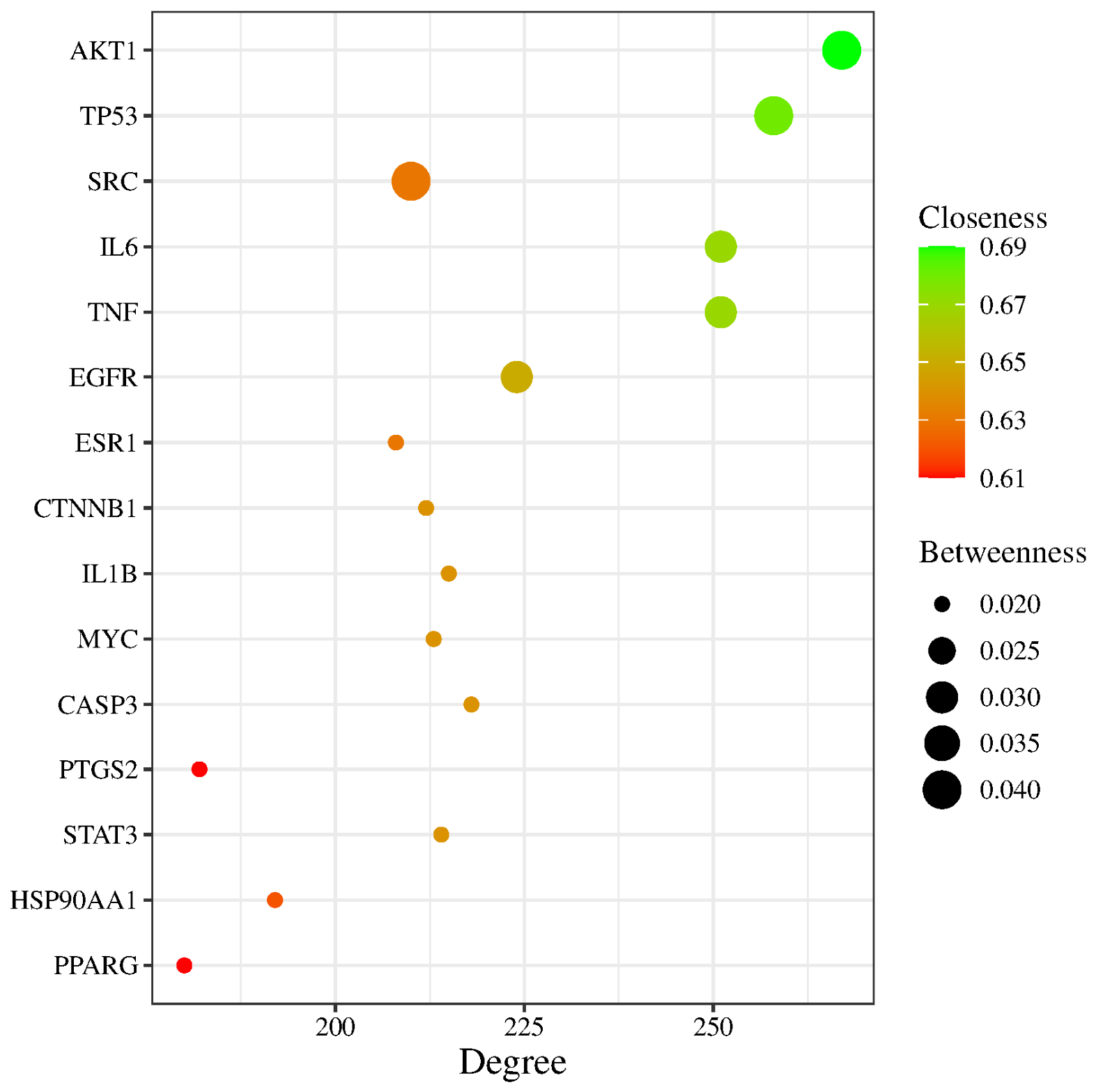
| AKT1 | 0.04 | 0.69 | 267 | 15.28 |
| TP53 | 0.04 | 0.68 | 258 | 13.88 |
| SRC | 0.04 | 0.63 | 210 | 12.91 |
| IL6 | 0.03 | 0.67 | 251 | 12.73 |
| TNF | 0.03 | 0.67 | 251 | 12.72 |
| EGFR | 0.03 | 0.65 | 224 | 10.92 |
| ESR1 | 0.02 | 0.63 | 208 | 9.88 |
| CTNNB1 | 0.02 | 0.64 | 212 | 9.16 |
| IL1B | 0.02 | 0.64 | 215 | 8.93 |
| MYC | 0.02 | 0.64 | 213 | 8.75 |
| CASP3 | 0.02 | 0.64 | 218 | 8.36 |
| PTGS2 | 0.02 | 0.61 | 182 | 8.33 |
| STAT3 | 0.02 | 0.64 | 214 | 8.20 |
| HSP90AA1 | 0.02 | 0.62 | 192 | 8.11 |
| PPARG | 0.02 | 0.61 | 180 | 7.94 |
| ID | Core Compound | Betweenness | Closeness | Degree | Score | Source |
|---|---|---|---|---|---|---|
| C1 | quercetin | 0.12 | 0.46 | 107 | 18.21 | Momordicae Charantiae Fructus; Polygoni Multiflori Radix Praeparata |
| D1 | kaempferol | 0.05 | 0.42 | 121 | 12.68 | Ginseng Radix et Rhizoma; Momordicae Charantiae Fructus; Polygoni Multiflori Radix Praeparata |
| RS15 | inermin | 0.04 | 0.40 | 38 | 6.18 | Ginseng Radix et Rhizoma |
| ZSW8 | emodin | 0.03 | 0.40 | 43 | 5.63 | Polygoni Multiflori Radix Praeparata |
| A1 | luteolin | 0.02 | 0.40 | 40 | 4.47 | Momordicae Charantiae Fructus; Salviae Miltiorrhizae Radix et Rhizoma |
| ZSW12 | physcion | 0.02 | 0.40 | 34 | 4.25 | Polygoni Multiflori Radix Praeparata |
| GG2 | formononetin | 0.02 | 0.38 | 45 | 4.16 | Puerariae Lobatae Radix |
| ID | Core Compound | Initial Score | Analysis Score | Final Score | Source |
|---|---|---|---|---|---|
| C1 | quercetin | 18.07 | 18.21 | 3.92 | Momordicae Charantiae Fructus; Polygoni Multiflori Radix Praeparata |
| D1 | kaempferol | 19.72 | 12.68 | 3.15 | Ginseng Radix et Rhizoma; Momordicae Charantiae Fructus; Polygoni Multiflori Radix Praeparata |
| GG2 | formononetin | 10.10 | 4.16 | −0.21 | Puerariae Lobatae Radix |
| B1 | β-sitosterol | 8.51 | 3.76 | −0.57 | Ginseng Radix et Rhizoma; Puerariae Lobatae Radix; Polygoni Multiflori Radix Praeparata |
| ZSW8 | emodin | 6.27 | 5.63 | −0.60 | Polygoni Multiflori Radix Praeparata |
| RS15 | inermin | 5.33 | 6.18 | −0.67 | Ginseng Radix et Rhizoma |
| A1 | luteolin | 6.11 | 4.47 | −0.86 | Momordicae Charantiae Fructus; Salviae Miltiorrhizae Radix et Rhizoma |
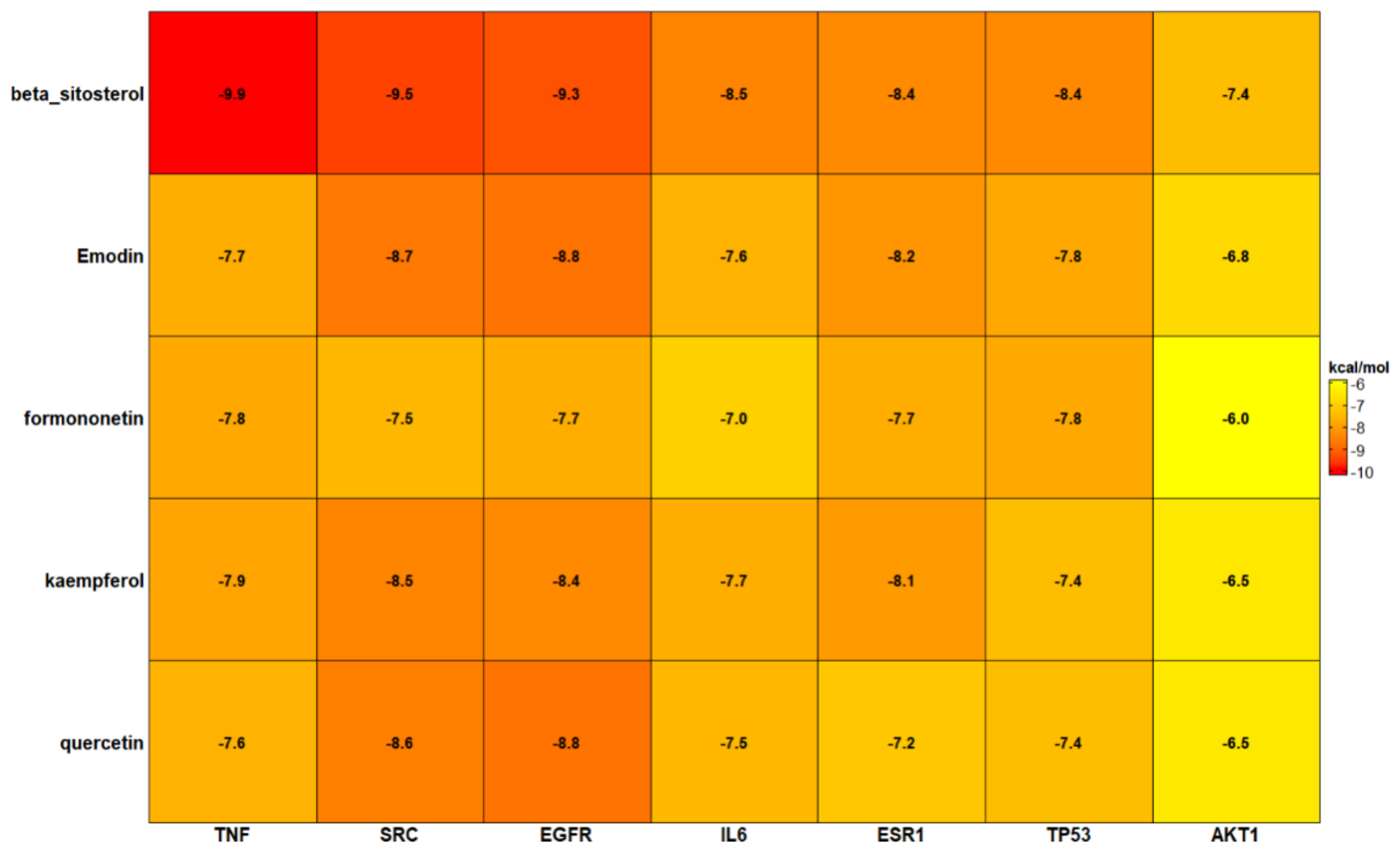
| Ligand | TNF (2AZ5) | SRC (1Y57) | EGFR (1M17) | IL6 (4J4L) | ESR1 (1SJ0) | TP53 (1DT7) | AKT1 (2UZR) |
|---|---|---|---|---|---|---|---|
| β-sitosterol | −9.9 | −9.5 | −9.3 | −8.5 | −8.4 | −8.4 | −7.4 |
| emodin | −7.7 | −8.5 | −8.8 | −7.6 | −8.2 | −7.8 | −6.8 |
| formononetin | −7.8 | −7.5 | −7.7 | −7.0 | −7.7 | −7.8 | −6.0 |
| kaempferol | −7.9 | −8.7 | −8.4 | −7.7 | −8.1 | −7.4 | −6.5 |
| quercetin | −7.6 | −8.6 | −8.8 | −7.5 | −7.2 | −7.4 | −6.5 |
| Ligand–Receptor Complex | ΔGSA | ΔGPB | ΔEMM | ΔH | −TΔS | ΔGbind |
|---|---|---|---|---|---|---|
| β-sitosterol-TNF | −5.26 ± 0.12 | 13.33 ± 0.92 | −53.07 ± 2.67 | −44.99 ± 2.61 | 16.70 | −28.29 |
| β-sitosterol-AKT1 | −3.84 ± 0.44 | 9.11 ± 1.17 | −32.72 ± 5.28 | −27.44 ± 5.37 | 8.56 | −18.88 |
| β-sitosterol-SRC | −3.59 ± 0.36 | 9.96 ± 3.51 | −29.05 ± 3.52 | −22.68 ± 1.32 | 8.54 | −14.14 |
| β-sitosterol-ESR1 | −3.61 ± 0.35 | 13.24 ± 2.57 | −30.33 ± 4.64 | −20.70 ± 3.53 | 8.32 | −12.38 |
| β-sitosterol-EGFR | −3.07 ± 0.45 | 10.67 ± 2.61 | −28.54 ± 5.44 | −20.94 ± 4.12 | 13.45 | −7.49 |
| emodin-EGFR | −3.83 ± 0.33 | 14.07 ± 2.93 | −27.56 ± 2.54 | −17.32 ± 2.24 | 3.60 | −13.72 |
| kaempferol-EGFR | −2.98 ± 0.29 | 6.74 ± 2.28 | −20.57 ± 4.00 | −16.82 ± 2.68 | 7.09 | −9.73 |
| quercetin-AKT1 | −2.86 ± 0.33 | 11.03 ± 2.91 | −20.58 ± 3.42 | −12.41 ± 3.87 | 6.02 | −6.39 |
| Complex | Top Three Key Residues and Contributions (kcal/mol) | Interpretation |
|---|---|---|
| β-sitosterol-TNF | Tyr39 (−24.4); Tyr119 (−15.9); Leu57 (−11.3) | The strongest hotspot combination; aromatic and hydrophobic residues dominate, explaining the optimal ΔG. |
| β-sitosterol-AKT1 | Thr105 (−8.1); Val7 (−6.4); Val106 (−4.9) | Val residues indicate an important role for hydrophobic interactions, while Thr105 may provide local polar anchoring. |
| β-sitosterol-SRC | Phe191 (−14.5); Arg169 (−7.4); Leu197 (−6.0) | Phe/Leu hydrophobic contacts and aromatic stacking contribute prominently, supporting strong β-sitosterol-SRC binding. |
| β-sitosterol-ESR1 | Met396 (−9.2); Met437 (−6.4); Asn439 (−4.4) | Met hydrophobic residues dominate, and Asn may contribute to polar stabilisation. |
| β-sitosterol-EGFR | His846 (−10.8); Glu991 (−8.2); Asp776 (−8.1) | Individual residue contributions are not weak, but the total ΔG is affected by PB and entropic penalties and is inferior to emodin-EGFR. |
| emodin-EGFR | Tyr992 (−12.4); Val693 (−3.3); Tyr703 (−3.0) | Tyr992 is the central hotspot, combining hydrogen bonding and aromatic interactions, which explains the energetic advantage of emodin-EGFR. |
| kaempferol-EGFR | Pro717 (−8.5); Leu706 (−7.1); Ile691 (−7.0) | A balanced hydrophobic residue cluster contribution is consistent with the moderately strong binding of kaempferol-EGFR. |
| quercetin-AKT1 | Pro51 (−4.9); Pro42 (−4.7); Ile36 (−3.2) | Single-residue contributions are relatively weak; despite multiple hydrogen bonds, strong energetic hotspots are insufficient. |
| Key Target | PDB | Structure Determination Method | Resolution | Reference |
|---|---|---|---|---|
| AKT1 | 2UZR | X-ray diffraction | 1.94 Å | [43] |
| IL6 | 4J4L | X-ray diffraction | 2.30 Å | [44] |
| TNF | 2AZ5 | X-ray diffraction | 2.10 Å | [45] |
| EGFR | 1M17 | X-ray diffraction | 2.60 Å | [46] |
| ESR1 | 1SJ0 | X-ray diffraction | 1.90 Å | [47] |
| TP53 | 1DT7 | Solution NMR | 40 submitted conformers | [48] |
| SRC | 1Y57 | X-ray diffraction | 1.91 Å | [49] |
Disclaimer/Publisher’s Note: The statements, opinions and data contained in all publications are solely those of the individual author(s) and contributor(s) and not of MDPI and/or the editor(s). MDPI and/or the editor(s) disclaim responsibility for any injury to people or property resulting from any ideas, methods, instructions or products referred to in the content. |
© 2026 by the authors. Licensee MDPI, Basel, Switzerland. This article is an open access article distributed under the terms and conditions of the Creative Commons Attribution (CC BY) license.
Share and Cite
Yang, W.; Ouyang, G.; Zhou, W.; Lu, B.; Pang, Z. Material Basis and Mechanisms of Action of PuRenDan in the Treatment of Type 2 Diabetes Mellitus: An Integrated Network Pharmacology and Molecular Simulation Study. Pharmaceuticals 2026, 19, 1107. https://doi.org/10.3390/ph19071107
Yang W, Ouyang G, Zhou W, Lu B, Pang Z. Material Basis and Mechanisms of Action of PuRenDan in the Treatment of Type 2 Diabetes Mellitus: An Integrated Network Pharmacology and Molecular Simulation Study. Pharmaceuticals. 2026; 19(7):1107. https://doi.org/10.3390/ph19071107
Chicago/Turabian StyleYang, Wenshuai, Gaojie Ouyang, Wenwen Zhou, Binan Lu, and Zongran Pang. 2026. "Material Basis and Mechanisms of Action of PuRenDan in the Treatment of Type 2 Diabetes Mellitus: An Integrated Network Pharmacology and Molecular Simulation Study" Pharmaceuticals 19, no. 7: 1107. https://doi.org/10.3390/ph19071107
APA StyleYang, W., Ouyang, G., Zhou, W., Lu, B., & Pang, Z. (2026). Material Basis and Mechanisms of Action of PuRenDan in the Treatment of Type 2 Diabetes Mellitus: An Integrated Network Pharmacology and Molecular Simulation Study. Pharmaceuticals, 19(7), 1107. https://doi.org/10.3390/ph19071107