Antenatal Corticosteroids: Short-Term Gains, Long-Term Questions—A Meta-Analysis



Abstract
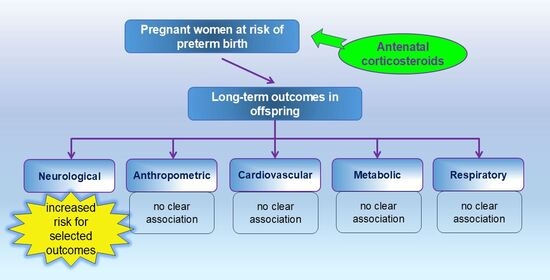
1. Introduction
2. Results
2.1. Search Results
2.2. Quality Assessment
2.3. Long-Term Neurological Effect Following Antenatal Corticosteroid Exposure
2.4. Long-Term Anthropometric Effect Following Antenatal Corticosteroid Exposure
2.5. Long-Term Cardiovascular Effect Following Antenatal Corticosteroid Exposure
2.6. Long-Term Metabolic Effect Following Antenatal Corticosteroid Exposure
2.7. Long-Term Respiratory Effect Following Antenatal Corticosteroid Exposure
2.8. Publication Bias
3. Discussion
4. Materials and Methods
4.1. Search Strategy
4.2. Study Selection and Data Extraction
- Neurological outcomes:
- Suspected neurocognitive disorder—any physician service claim with a diagnosis code related to a suspected neurocognitive disorder;
- Hearing impairment—physician service claim for audiometry testing outside the routine provincial infant screening program for hearing deficits, or bilateral hearing loss, or the need for hearing aids;
- Visual impairment—any consultations or assessments from an ophthalmologist or optometrist, or blindness with no functional vision in at least one eye or bilateral amblyopia, or bilateral blindness, or moderate visual impairment (any of the following: visual acuity (logMAR) > 0.3, better eye; myopia > 2.0 dioptres, better eye; hypermetropia > 2.0 dioptres, better eye; astigmatism > 2.0 dioptres, better eye);
- Cerebral palsy—cerebral palsy or cerebral palsy requiring walking aids;
- Neurodevelopmental impairment—developmental quotient < 70 or <−2 SD according to the Kyoto Scale of Psychological Development or Griffiths Mental Development Scales, scored by General Quotient or the Mental Scale of the Bayley Scales of Infant Development-II, scored by Mental Development Index (MDI); or Bayley Scales of Infant Development scored by MDI; or according to ICD-9-CM or ICD-10-CM; or abnormal results in ‘Problem Solving’ according to Ages & Stages Questionnaires, Third Edition (ASQ-3) scores;
- Autism spectrum disorders—autism, or autism spectrum disorders, or pervasive developmental disorders according to ICD-9-CM (299) and ICD-10-CM/PCS (F84), or Social Responsiveness Scale t score > 65;
- Any mental or behavioral disorder—any mental or behavioral disorder, or any childhood mental disorders, any behavioral or emotional problems according to the Strengths and Difficulties Questionnaire (SDQ) category, or diagnosis or treatment of a mental health disorder.
- Anthropometric outcomes:
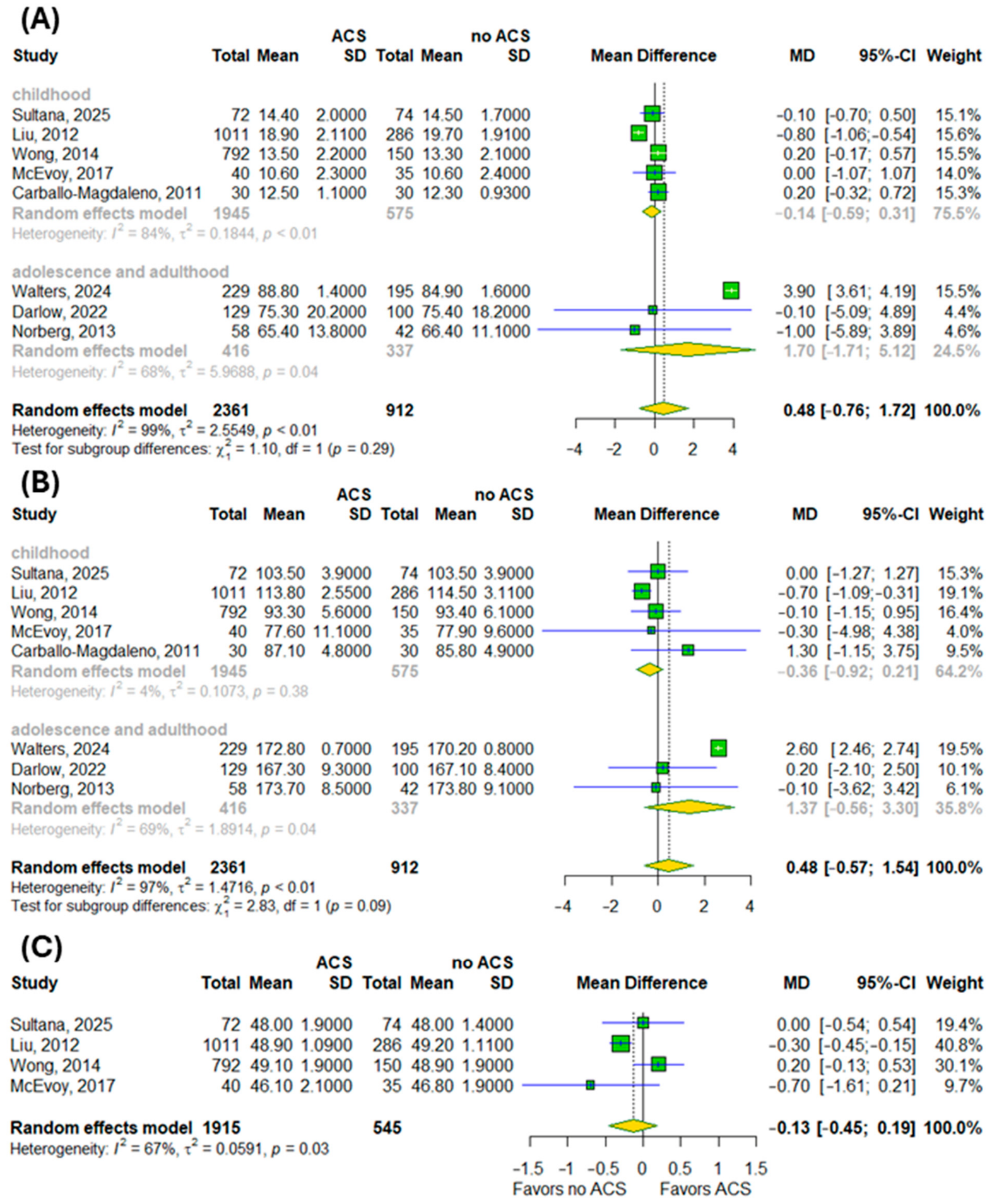
- Weight, kg;
- Height, cm;
- Head circumference, cm.
- Cardiovascular outcomes:
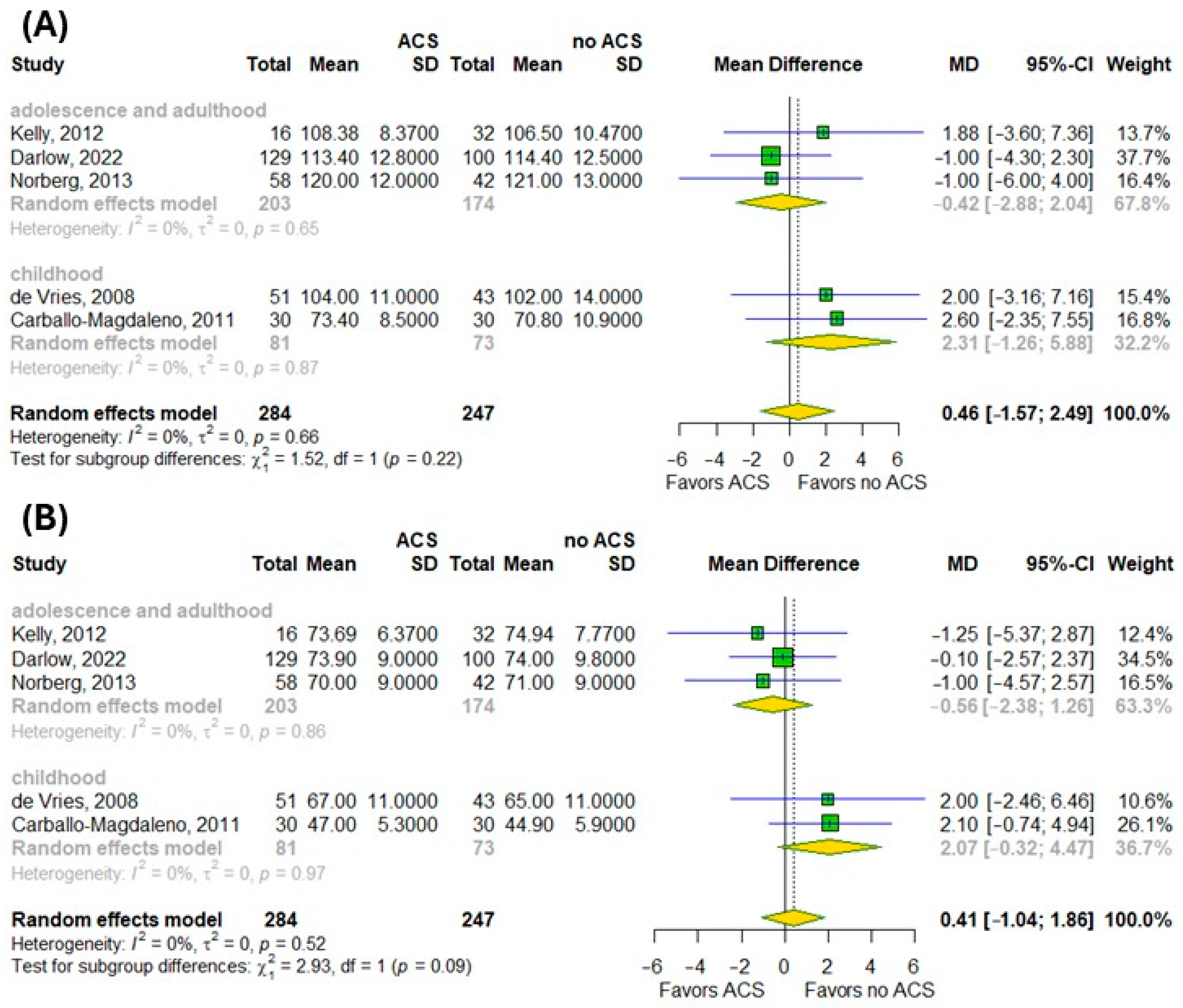
- Systolic blood pressure, mm Hg;
- Diastolic blood pressure, mm Hg.
- Metabolic outcomes (lipid profile):
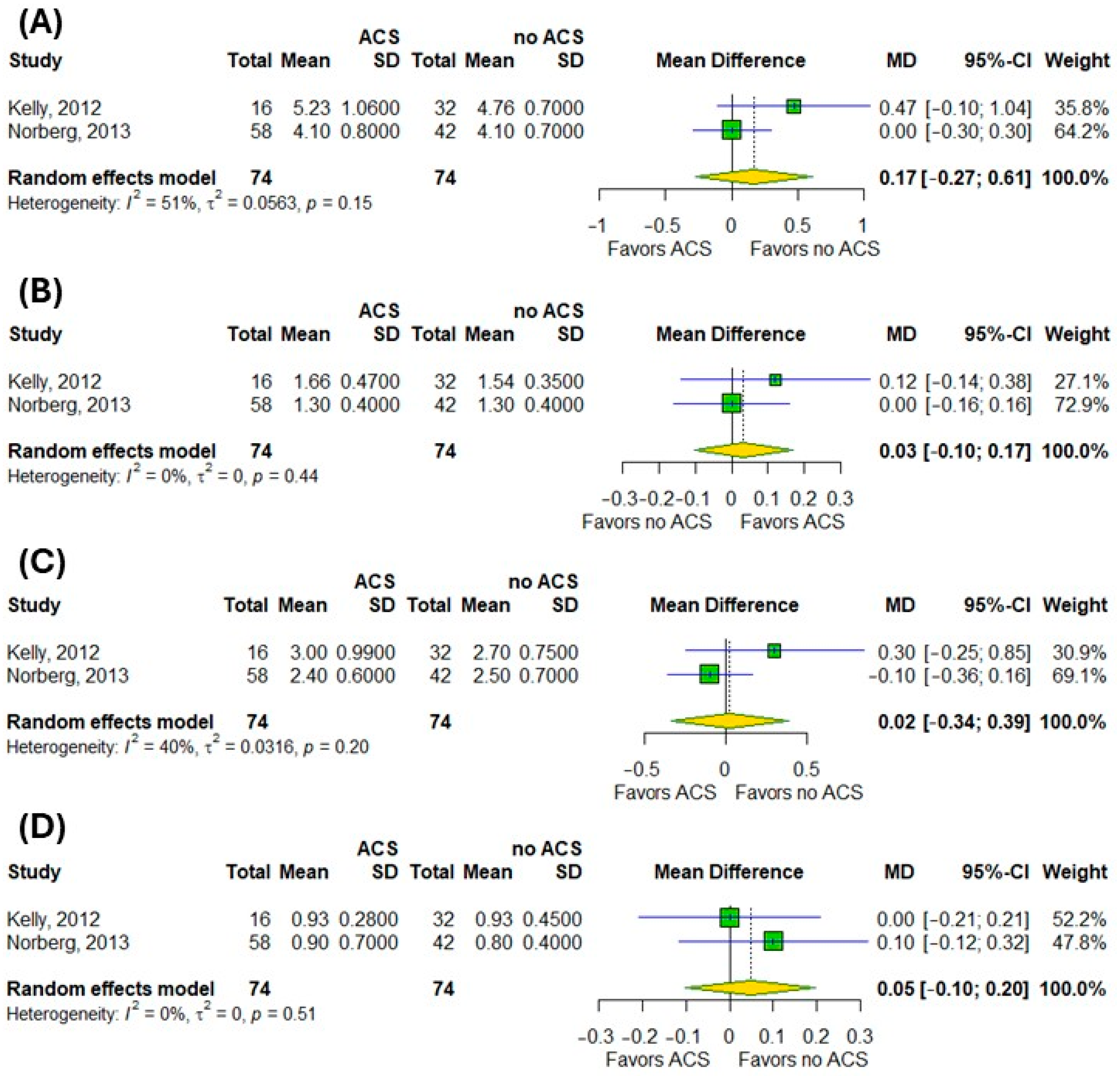
- Cholesterol, mmol/L;
- High-density lipoprotein (HDL), mmol/L;
- Low-density lipoprotein (LDL), mmol/L;
- Triglycerides, mmol/L.
- Respiratory outcomes:
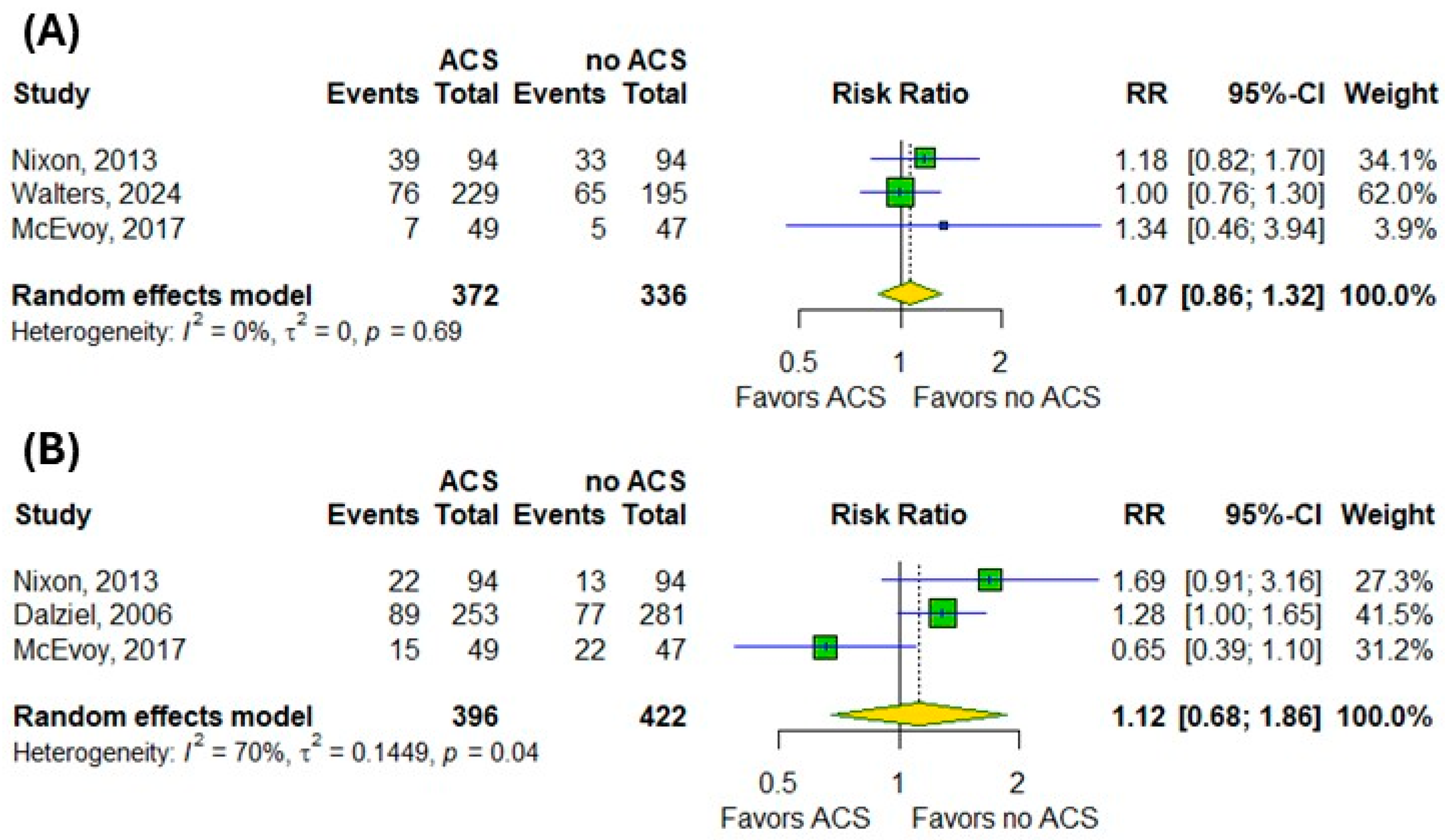
- Asthma—history of asthma using questionnaires or asthma diagnosed by doctor in lifetime;
- Wheezing—wheezing in last 12 months or episodes of wheezing.
- If the data was presented as a mean (SE), the value was converted using the formula: .
4.3. Quality Assessment
4.4. Statistical Analysis
5. Conclusions
Supplementary Materials
Author Contributions
Funding
Institutional Review Board Statement
Informed Consent Statement
Data Availability Statement
Conflicts of Interest
Abbreviations
| ACS | antenatal corticosteroid |
| WHO | World Health Organization |
| RCT | randomized controlled trial |
| HDL | high-density lipoprotein |
| LDL | low-density lipoprotein |
| RR | relative risk |
| CI | 95% confidence interval |
| MD | mean difference |
| SD | standard deviation |
References
- Walani, S. Global Burden of Preterm Birth. Int. J. Gynecol. Obstet. 2020, 150, 31–33. [Google Scholar] [CrossRef] [Scilit]
- Briceño-Pérez, C.; Reyna-Villasmil, E.; Vigil-De-Gracia, P. Antenatal Corticosteroid Therapy: Historical and Scientific Basis to Improve Preterm Birth Management. Eur. J. Obstet. Gynecol. Reprod. Biol. 2019, 234, 32–37. [Google Scholar] [CrossRef] [Scilit] [PubMed]
- Shanks, A.L.; Grasch, J.L.; Quinney, S.K.; Haas, D.M. Controversies in Antenatal Corticosteroids. Semin. Fetal Neonatal Med. 2019, 24, 182–188. [Google Scholar] [CrossRef] [Scilit] [PubMed]
- Thevathasan, I.; Said, J.M. Controversies in Antenatal Corticosteroid Treatment. Prenat. Diagn. 2020, 40, 1138–1149. [Google Scholar] [CrossRef] [Scilit] [PubMed]
- Watson, H.R.S.; Kemp, M.W.; Johnson, E.L. Optimizing Antenatal Corticosteroid Therapy: Balancing Benefit and Risk in the Era of Precision Medicine. Early Hum. Dev. 2025, 210, 106389. [Google Scholar] [CrossRef] [Scilit] [PubMed]
- Aviram, A.; Murphy, K.; McDonald, S.; Asztalos, E.; Zaltz, A.; Redelmeier, D.; Shah, B.; Barrett, J.; Melamed, N. Antenatal Corticosteroids and Neurodevelopmental Outcomes in Late Preterm Births. Arch. Dis. Child.-Fetal Neonatal Ed. 2022, 107, 250–255. [Google Scholar] [CrossRef] [Scilit] [PubMed]
- Carballo-Magdaleno, D.; Guízar-Mendoza, J.M.; Amador-Licona, N.; Domínguez-Domínguez, V. Renal Function, Renal Volume, and Blood Pressure in Infants with Antecedent of Antenatal Steroids. Pediatr. Nephrol. 2011, 26, 1851–1856. [Google Scholar] [CrossRef] [Scilit] [PubMed]
- Dalziel, S.; Rea, H.H.; Walker, N.K.; Parag, V.; Mantell, C.; Rodgers, A.; Harding, J.E. Long Term Effects of Antenatal Betamethasone on Lung Function: 30 Year Follow up of a Randomised Controlled Trial. Thorax 2006, 61, 678–683. [Google Scholar] [CrossRef] [Scilit] [PubMed]
- Darlow, B.A.; Harris, S.L.; Horwood, L.J. Little Evidence for Long-Term Harm from Antenatal Corticosteroids in a Population-Based Very Low Birthweight Young Adult Cohort. Paediatr. Perinat. Epidemiol. 2022, 36, 631–639. [Google Scholar] [CrossRef] [Scilit] [PubMed]
- Eriksson, L.; Haglund, B.; Ewald, U.; Odlind, V.; Kieler, H. Health Consequences of Prophylactic Exposure to Antenatal Corticosteroids among Children Born Late Preterm or Term. Acta Obstet. Gynecol. Scand. 2012, 91, 1415–1421. [Google Scholar] [CrossRef] [Scilit] [PubMed]
- Gyamfi-Bannerman, C.; Clifton, R.G.; Tita, A.T.N.; Blackwell, S.C.; Longo, M.; de Voest, J.A.; O’Shea, T.M.; Bousleiman, S.Z.; Ortiz, F.; Rouse, D.J.; et al. Neurodevelopmental Outcomes After Late Preterm Antenatal Corticosteroids: The ALPS Follow-Up Study. JAMA 2024, 331, 1629–1637. [Google Scholar] [CrossRef] [Scilit] [PubMed]
- Ho, F.-C.; Chung, H.-W.; Yu, C.-H.; Huang, C.-Y.; Liang, F.-W. Timing of Antenatal Corticosteroid Exposure and Its Association with Childhood Mental Disorders in Early- and Full-Term Births: A Population-Based Cohort Study. Eur. J. Pediatr. 2025, 184, 181. [Google Scholar] [CrossRef] [Scilit] [PubMed]
- Kelly, B.A.; Lewandowski, A.J.; Worton, S.A.; Davis, E.F.; Lazdam, M.; Francis, J.; Neubauer, S.; Lucas, A.; Singhal, A.; Leeson, P. Antenatal Glucocorticoid Exposure and Long-Term Alterations in Aortic Function and Glucose Metabolism. Pediatrics 2012, 129, e1282–e1290. [Google Scholar] [CrossRef] [Scilit] [PubMed]
- LeFlore, J.L.; Salhab, W.A.; Broyles, R.S.; Engle, W.D. Association of Antenatal and Postnatal Dexamethasone Exposure with Outcomes in Extremely Low Birth Weight Neonates. Pediatrics 2002, 110, 275–279. [Google Scholar] [CrossRef] [Scilit] [PubMed]
- Liu, J.; Feng, Z.-C.; Li, J.; Wang, Q. Antenatal Dexamethasone Has No Adverse Effects on Child Physical and Cognitive Development: A Long-Term Cohort Follow-up Investigation. J. Matern. Fetal Neonatal Med. 2012, 25, 2369–2371. [Google Scholar] [CrossRef] [Scilit] [PubMed]
- McEvoy, C.; Schilling, D.; Spitale, P.; O’Malley, J.; Bowling, S.; Durand, M. Pulmonary Function and Outcomes in Infants Randomized to a Rescue Course of Antenatal Steroids. Pediatr. Pulmonol. 2017, 52, 1171–1178. [Google Scholar] [CrossRef] [Scilit] [PubMed]
- Melamed, N.; Asztalos, E.; Murphy, K.; Zaltz, A.; Redelmeier, D.; Shah, B.R.; Barrett, J. Neurodevelopmental Disorders among Term Infants Exposed to Antenatal Corticosteroids during Pregnancy: A Population-Based Study. BMJ Open 2019, 9, e031197. [Google Scholar] [CrossRef] [Scilit] [PubMed]
- Nixon, P.A.; Washburn, L.K.; O’Shea, T.M. Antenatal Steroid Exposure and Pulmonary Outcomes in Adolescents Born with Very Low Birth Weight. J. Perinatol. 2013, 33, 806–810. [Google Scholar] [CrossRef] [Scilit] [PubMed]
- Norberg, H.; Stålnacke, J.; Nordenström, A.; Norman, M. Repeat Antenatal Steroid Exposure and Later Blood Pressure, Arterial Stiffness, and Metabolic Profile. J. Pediatr. 2013, 163, 711–716. [Google Scholar] [CrossRef] [Scilit] [PubMed]
- Räikkönen, K.; Gissler, M.; Kajantie, E. Associations Between Maternal Antenatal Corticosteroid Treatment and Mental and Behavioral Disorders in Children. JAMA 2020, 323, 1924–1933. [Google Scholar] [CrossRef] [Scilit] [PubMed]
- Räikkönen, K.; Gissler, M.; Tapiainen, T.; Kajantie, E. Associations Between Maternal Antenatal Corticosteroid Treatment and Psychological Developmental and Neurosensory Disorders in Children. JAMA Netw. Open 2022, 5, e2228518. [Google Scholar] [CrossRef] [Scilit] [PubMed]
- Sultana, S.; Jaben, I.A.; Farha, T.; Roy, S.; Ahmed, S.; Homer, C.S.E.; Baqui, A.H.; Vogel, J.P. Antenatal Dexamethasone for Preterm Birth and Long-Term Health Outcomes in Children: A Pilot Follow-up Cohort Study of ACTION-I Trial Participants in Sylhet, Bangladesh. BMJ Paediatr. Open 2025, 9, e003983. [Google Scholar] [CrossRef] [Scilit]
- Ushida, T.; Kotani, T.; Hayakawa, M.; Hirakawa, A.; Sadachi, R.; Nakamura, N.; Moriyama, Y.; Imai, K.; Nakano-Kobayashi, T.; Kikkawa, F. Antenatal Corticosteroids and Preterm Offspring Outcomes in Hypertensive Disorders of Pregnancy: A Japanese Cohort Study. Sci. Rep. 2020, 10, 9312. [Google Scholar] [CrossRef] [Scilit] [PubMed]
- de Vries, W.B.; Karemaker, R.; Mooy, N.F.; Strengers, J.L.M.; Kemperman, H.; Baerts, W.; Veen, S.; Visser, G.H.A.; Heijnen, C.J.; van Bel, F. Cardiovascular Follow-up at School Age after Perinatal Glucocorticoid Exposure in Prematurely Born Children: Perinatal Glucocorticoid Therapy and Cardiovascular Follow-Up. Arch. Pediatr. Adolesc. Med. 2008, 162, 738–744. [Google Scholar] [CrossRef] [Scilit] [PubMed]
- Walters, A.G.B.; Gamble, G.D.; Crowther, C.A.; Dalziel, S.R.; Eagleton, C.L.; McKinlay, C.J.D.; Milne, B.J.; Harding, J.E. Cardiovascular Outcomes 50 Years after Antenatal Exposure to Betamethasone: Follow-up of a Randomised Double-Blind, Placebo-Controlled Trial. PLoS Med. 2024, 21, e1004378. [Google Scholar] [CrossRef] [Scilit] [PubMed]
- Walters, A.G.B.; Gamble, G.D.; Crowther, C.A.; Dalziel, S.R.; Eagleton, C.L.; McKinlay, C.J.D.; Milne, B.J.; Harding, J.E. General Health and Social Outcomes 50 Years after Exposure to Antenatal Betamethasone: Follow-up of a Randomised Controlled Trial. BMC Med. 2024, 22, 505. [Google Scholar] [CrossRef] [Scilit] [PubMed]
- Wong, D.; Abdel-Latif, M.; Kent, A. NICUS Network. Antenatal Steroid Exposure and Outcomes of Very Premature Infants: A Regional Cohort Study. Arch. Dis. Child.-Fetal Neonatal Ed. 2014, 99, F12–F20. [Google Scholar] [CrossRef] [Scilit] [PubMed]
- Liggins, G.C. Premature Delivery of Foetal Lambs Infused with Glucocorticoids. J. Endocrinol. 1969, 45, 515–523. [Google Scholar] [CrossRef] [Scilit] [PubMed]
- Yan, Y.; Wang, J.; Lei, X. Prenatal Corticosteroid Use and Offspring Neurological Outcomes. Neurotoxicol. Teratol. 2025, 112, 107564. [Google Scholar] [CrossRef] [Scilit] [PubMed]
- Sarid, E.B.; Stoopler, M.L.; Morency, A.-M.; Garfinkle, J. Neurological Implications of Antenatal Corticosteroids on Late Preterm and Term Infants: A Scoping Review. Pediatr. Res. 2022, 92, 1225–1239. [Google Scholar] [CrossRef] [Scilit] [PubMed]
- van der Merwe, J.L.; Sacco, A.; Toelen, J.; Deprest, J. Long-Term Neuropathological and/or Neurobehavioral Effects of Antenatal Corticosteroid Therapy in Animal Models: A Systematic Review. Pediatr. Res. 2020, 87, 1157–1170. [Google Scholar] [CrossRef] [Scilit] [PubMed]
- Diaz Heijtz, R.; Fuchs, E.; Feldon, J.; Pryce, C.R.; Forssberg, H. Effects of Antenatal Dexamethasone Treatment on Glucocorticoid Receptor and Calcyon Gene Expression in the Prefrontal Cortex of Neonatal and Adult Common Marmoset Monkeys. Behav. Brain Funct. 2010, 6, 18. [Google Scholar] [CrossRef] [Scilit] [PubMed]
- Rakers, F.; Schleußner, E.; Muth, I.; Hoyer, D.; Rupprecht, S.; Schiecke, K.; Groten, T.; Dreiling, M.; Kozik, V.; Schwab, M.; et al. Association between Antenatal Glucocorticoid Exposure and the Activity of the Stress System, Cognition, and Behavior in 8- to 9-year-old Children: A Prospective Observational Study. Acta Obstet. Gynecol. Scand. 2022, 101, 996–1006. [Google Scholar] [CrossRef] [Scilit] [PubMed]
- Amiya, R.M.; Mlunde, L.B.; Ota, E.; Swa, T.; Oladapo, O.T.; Mori, R. Antenatal Corticosteroids for Reducing Adverse Maternal and Child Outcomes in Special Populations of Women at Risk of Imminent Preterm Birth: A Systematic Review and Meta-Analysis. PLoS ONE 2016, 11, e0147604. [Google Scholar] [CrossRef] [Scilit] [PubMed]
- Peltoniemi, O.M.; Kari, M.A.; Hallman, M. Repeated Antenatal Corticosteroid Treatment: A Systematic Review and Meta-Analysis. Acta Obstet. Gynecol. Scand. 2011, 90, 719–727. [Google Scholar] [CrossRef] [Scilit] [PubMed]
- Deshmukh, M.; Patole, S. Antenatal Corticosteroids for Impending Late Preterm (34-36+6 Weeks) Deliveries—A Systematic Review and Meta-Analysis of RCTs. PLoS ONE 2021, 16, e0248774. [Google Scholar] [CrossRef] [Scilit] [PubMed]
- Cho, G.J.; Park, C.-W.; Cho, K.-D.; Ha, S.; Choi, S.-J.; Oh, M.-J. A Comparison of Short- and Long-Term Prognoses between Cases with and without Antenatal Corticosteroid Administration in Late Preterm Delivery: A Nationwide Population-Based Study. BMC Pregnancy Childbirth 2025, 25, 148. [Google Scholar] [CrossRef] [Scilit] [PubMed]
- Guerini, C.; Goffinet, F.; Marchand-Martin, L.; Delorme, P.; Pierrat, V.; Ancel, P.-Y.; Schmitz, T. Timing of Antenatal Corticosteroids and Survival without Neurologic Disabilities at 5½ Years in Children Born before 35 Weeks of Gestation. Am. J. Obstet. Gynecol. 2023, 229, 675.e1–675.e18. [Google Scholar] [CrossRef] [Scilit] [PubMed]
- Murphy, K.E.; Hannah, M.E.; Willan, A.R.; Hewson, S.A.; Ohlsson, A.; Kelly, E.N.; Matthews, S.G.; Saigal, S.; Asztalos, E.; Ross, S.; et al. Multiple Courses of Antenatal Corticosteroids for Preterm Birth (MACS): A Randomised Controlled Trial. Lancet 2008, 372, 2143–2151. [Google Scholar] [CrossRef] [Scilit] [PubMed]
- Braun, T.; Filleböck, V.; Metze, B.; Bührer, C.; Plagemann, A.; Henrich, W. Long Term Alterations of Growth after Antenatal Steroids in Preterm Twin Pregnancies. J. Perinat. Med. 2021, 49, 127–137. [Google Scholar] [CrossRef] [Scilit] [PubMed]
- Page, M.J.; McKenzie, J.E.; Bossuyt, P.M.; Boutron, I.; Hoffmann, T.C.; Mulrow, C.D.; Shamseer, L.; Tetzlaff, J.M.; Akl, E.A.; Brennan, S.E.; et al. The PRISMA 2020 Statement: An Updated Guideline for Reporting Systematic Reviews. BMJ 2021, 372, n71. [Google Scholar] [CrossRef] [Scilit] [PubMed]
- Luo, D.; Wan, X.; Liu, J.; Tong, T. Optimally Estimating the Sample Mean from the Sample Size, Median, Mid-Range, and/or Mid-Quartile Range. Stat. Methods Med. Res. 2018, 27, 1785–1805. [Google Scholar] [CrossRef] [Scilit] [PubMed]
- Wan, X.; Wang, W.; Liu, J.; Tong, T. Estimating the Sample Mean and Standard Deviation from the Sample Size, Median, Range and/or Interquartile Range. BMC Med. Res. Methodol. 2014, 14, 135. [Google Scholar] [CrossRef] [Scilit] [PubMed]
- Higgins, J.P.T.; Altman, D.G.; Gotzsche, P.C.; Juni, P.; Moher, D.; Oxman, A.D.; Savovic, J.; Schulz, K.F.; Weeks, L.; Sterne, J.A.C.; et al. The Cochrane Collaboration’s Tool for Assessing Risk of Bias in Randomised Trials. BMJ 2011, 343, d5928. [Google Scholar] [CrossRef] [Scilit] [PubMed]
- Ottawa Hospital Research Institute. Available online: https://www.ohri.ca/programs/clinical_epidemiology/oxford.asp (accessed on 9 June 2025).
- Deeks, J.J.; Higgins, J.P.; Altman, D.G. Analysing Data and Undertaking Meta-Analyses. In Cochrane Handbook for Systematic Reviews of Interventions; Higgins, J.P., Green, S., Eds.; John Wiley & Sons, Ltd.: Chichester, UK, 2008; pp. 243–296. ISBN 978-0-470-71218-4. [Google Scholar]



| Studies | Study Design | Country/City | Maternal Age (Years) Mean ± SD | Interventions | Participants | Follow-Up | Outcomes |
|---|---|---|---|---|---|---|---|
| Aviram et al., 2022 [6] | a population-based retrospective cohort study | Canada, Ontario | I: 30.2 ± 6.1 C: 30.2 ± 5.7 | Information about the preparation, dose and timing of exposure is not recorded in the database, but according to Canadian guidelines, administration of betamethasone (2 × 12 mg intramuscularly, 24 h apart) or dexamethasone (4 × 6 mg intramuscularly, 12 h apart) is recommended between 24 and 34 weeks of gestation. | Late preterm singleton infants (340/7–366/7 gestational weeks) | 5 years of age | suspected neurocognitive disorder, hearing impairment, visual impairment |
| Carballo-Magdaleno et al., 2011 [7] | a prospective study | Mexico | NA | A complete single course of antenatal steroids (betamethasone or dexamethasone). | preterm infants | 12–36 months of age | weight, height, SBP, DBP |
| Dalziel et al., 2006 [8] | a follow-up of the Auckland Steroid Trial—double-blind, randomized, placebo-controlled trial | New Zealand, Auckland | NA | Women were randomized to receive an intramuscular injection of 6 mg betamethasone phosphate and 6 mg betamethasone acetate, or a placebo. The allocated treatment was repeated 24 h later if delivery had not occurred. After the first 717 women had enrolled, the dose of betamethasone in the intervention group was doubled. | all surviving term and preterm offspring | 30 years | wheezing |
| Darlow et al., 2022 [9] | a population-based cohort follow-up study | New Zealand | NA | Mothers had received all or part of a course of ACSs. | infants with very low birth weight (<1500 g) | 26–30 years of age | visual impairment, weight, height, SBP, DBP |
| Eriksson et al., 2012 [10] | a cohort study | Sweden | NA | Exposure to ACSs was estimated at the hospital level. Thus, if an infant was born at a maternity ward where routine ACS prophylaxis was offered, the infant was classified as exposed. | singleton infants born after gestational week 34+0 | until 11 years of age or to date of death | cerebral palsy |
| Gyamfi-Bannerman et al., 2024 [11] | a prospective, follow-up study of a multicenter, double-blind, placebo-controlled trial conducted at MFMU Network centers of the National Institute of Child Health and Human Development | the United States | I: 29 ± 6.3 C: 29 ± 6.1 | Consenting participants were randomly assigned to receive 12 mg of intramuscular betamethasone. A second, final dose was given if the participant had not delivered at 24 h. | term and preterm infants | 6 years of age or older | autism spectrum disorders |
| Ho et al., 2025 [12] | a population-based retrospective cohort study | Taiwan | NA | ACS treatment is performed according to the American guidelines, either two 12 mg doses of betamethasone given parenterally 24 h apart or four 6 mg doses of dexamethasone parenterally every 12 h in pregnant women who are at risk of preterm labor. The timing of the first ACS administration was categorized according to GA: 22–27 weeks, 28–33 weeks, and 34–36 weeks. | singleton infants born at term (≧370/7 weeks of gestation) | childhood | neurodevelopmental impairment, autism spectrum disorders, any mental or behavioral disorder |
| Kelly et al., 2012 [13] | a nested case–control study | the United Kingdom | NA | ACS use varied significantly between recruitment centers, consistent with local practice in the 1980s. | infants born preterm (birth weight <1850 g) | 25 years (23 to 28 years of age) | SBP, DBP, cholesterol, HDL, LDL, triglycerides |
| LeFlore et al., 2002 [14] | a prospectively collected, previously validated computerized database and hospital and clinic records | the United States, Texas, Dallas | NA | Antenatal dexamethasone was given at the discretion of the attending obstetrician using guidelines. The antenatal dexamethasone dosing schedule was four 5 mg doses given intramuscularly every 12 h. | liveborn neonates with birth weight ≤1000 g | 18 to 22 months of corrected age | neurodevelopmental impairment |
| Liu et al., 2012 [15] | the retrospective cohort study | China, Beijing | I: 26.9 ± 2.1 C: 27.7 ± 2.3 | Antenatal dexamethasone 10 mg per day for 1 day or antenatal dexamethasone 10 mg per day for 2 consecutive days. | infants | 6 years of age | weight, height, head circumference |
| McEvoy et al., 2017 [16] | follow-up of a randomized, double-blinded trial | the United States, Florida, Pensacola, and Oregon, Portland | NA | “Rescue AS” group received a course of ACSs (two 12 mg intramuscular injections of betamethasone 24 h apart); the “placebo” group received 2 doses of placebo. | preterm infants | 1–2 years of corrected age | weight, height, head circumference, asthma, wheezing |
| Melamed et al., 2019 [17] | a retrospective cohort study | Canada, Ontario | I: 29.50 ± 5.87 C: 29.97 ± 5.48 | Although information about the preparation, dose and timing of exposure are not recorded in the database, according to Canadian guidelines, administration of betamethasone (2 × 12 mg intramuscularly, 24 h apart) or dexamethasone (4 × 6 mg intramuscularly, 12 h apart) is recommended between 24 and 34 weeks of gestation. | singleton infants born at term (≥370/7 weeks gestation) | 5 years | suspected neurocognitive disorder, hearing impairment, visual impairment |
| Nixon et al., 2013 [18] | NA | the United States, North Carolina, Winston-Salem | NA | Antenatal corticosteroid therapy | singleton infants born prematurely with very low birth weight (<1500 g) | 14 years of age | asthma, wheezing |
| Norberg et al., 2013 [19] | a cohort study | Sweden, Stockholm | I: 32.0 ± 5.1 C: 30.9 ± 5.3 | The standard ACS treatment at the time and at this hospital consisted of an initial course of betamethasone 24 mg intramuscularly (8 mg q 8 h), followed by weekly courses of 12 mg betamethasone until delivery, or until pregnancy reached 34 gestational weeks. | infants | 14 to 26 years | weight, height, SBP, DBP, cholesterol, HDL, LDL, triglycerides |
| Räikkönen et al., 2020 [20] | a population-based retrospective cohort study | Finland | I: 30.6 ± 5.8 C: 30.3 ± 5.3 | Register does not include information on the number or timing of treatments. The treatment recommended by Finnish national guidelines consisted of betamethasone (12 mg) administered twice, 24 h apart throughout the study period. Repeated treatments were not recommended before 2009; after 2009, 1 repeat course could be considered when the risk of respiratory distress was high. | singleton preterm and term infants | median 5.8 (IQR, 3.1–8.7) years | any mental or behavioral disorder |
| Räikkönen et al., 2022 [21] | a population-based cohort study | Finland | Term I: 30.1 ± 5.8 C: 30.3 ± 5.4 Preterm I: 31.0 ± 5.7 C: 30.4 ± 5.7 | Data were not available on the number of treatments or their timing. The Finnish national guidelines recommended betamethasone, 12 mg, administered twice, 24 h apart throughout the study period. Repeated treatments were not recommended before 2009; after 2009, 1 repeated course could be considered when the risk of respiratory distress was high. | singleton preterm and term infants | median of 5.8 (IQR, 3.1–8.7) years | cerebral palsy, autism spectrum disorders |
| Sultana et al., 2025 [22] | a pilot follow-up cohort study of participants from the double-blind, individually randomized WHO ACTION-I trial in Sylhet, Bangladesh | Bangladesh, Sylhet | I: 23.9 ± 5.3 C: 23.5 ± 5.3 | Women were randomized to a regimen of intramuscular injections of 6 mg dexamethasone or placebo administered every 12 h, to a maximum of four doses (one or two courses). | infants who had survived to 28 completed days after birth | 5 years (ages between 4.75 and 5.5 years of corrected age) | neurodevelopmental impairment, any mental or behavioral disorder, weight, height, head circumference |
| Ushida et al., 2020 [23] | a population-based retrospective cohort study | Japan | I: 31.4 ± 5.3 C: 31.0 ± 5.5 | According to Japanese obstetrical guidelines, administration of ACSs (injection of 12 mg of betamethasone intramuscularly followed by a repeat injection 24 h later) is recommended. Although information on the type of ACS, dose of ACS, and administration-to-birth interval in each case was not included in the database, the majority of women in this study would have received a single course of betamethasone. Patients who received only one ACS injection until parturition were allocated to the ACS group. | preterm neonates born weighing ≤1500 g at 24–31 weeks of gestation admitted to the neonatal intensive care units (NICUs) | 3 years of age | hearing impairment, visual impairment, cerebral palsy, neurodevelopmental impairment |
| de Vries et al., 2008 [24] | a retrospective matched-cohort study | the Netherlands, Utrecht, Leiden, Amsterdam and Zwolle | NA | 2 × 12 mg intramuscular injections of betamethasone with an interval of 24 h between injections. | preterm infants born at less than 32 weeks of gestation | 7 to 10 years of age | SBP, DBP |
| Walters et al., 2024 [25] | a follow-up of the Auckland Steroid Trial— double-blind, randomized, placebo-controlled trial | New Zealand, Auckland | NA | Women were randomized to receive either betamethasone 12 mg intramuscularly (6 mg of short-acting betamethasone phosphate and 6 mg long-acting betamethasone acetate), repeated at 24 h, or an identical-appearing control (standard treatment dose). The control treatment contained 6 mg cortisone acetate which has glucocorticoid potency of one-seventieth of the active treatment and an identical appearance. The dose of the betamethasone and control treatments were both doubled (twice standard treatment dose) in October 1972. | all surviving term and preterm offspring | 50 years | weight, height, asthma |
| Walters et al., 2024 [26] | a follow-up of the Auckland Steroid Trial— double-blind, randomized, placebo-controlled trial | New Zealand, Auckland | NA | 6 mg betamethasone sodium phosphate and 6 mg betamethasone acetate by intramuscular injection repeated after 24 h. In October 1972, the dose of the betamethasone and control treatments was doubled for the remainder of the trial. | all surviving term and preterm offspring | 50 years | any mental or behavioral disorder |
| Wong et al., 2014 [27] | a retrospective population-based study | New South Wales and the Australian Capital Territory | Complete course I: 29.6 ± 6.7 C: 27.6 ± 6.7 | ACS regimens consist of betamethasone, 2 × 12 mg given intramuscularly 24 h apart, or dexamethasone, 4 × 6 mg given intramuscularly 12 h apart. A complete course of antenatal steroids was defined as receipt of all doses 48 h to less than 7 days before delivery; infants who received steroids more than 7 days before birth were also classified as having a complete course. An incomplete course was defined as steroid exposure of less than 24 h before delivery. | infants admitted to NICUs born at less than 29 weeks gestational age | 2–3 years of age | hearing impairment, visual impairment, cerebral palsy, neurodevelopmental impairment, weight, height, head circumference |
Disclaimer/Publisher’s Note: The statements, opinions and data contained in all publications are solely those of the individual author(s) and contributor(s) and not of MDPI and/or the editor(s). MDPI and/or the editor(s) disclaim responsibility for any injury to people or property resulting from any ideas, methods, instructions or products referred to in the content. |
© 2026 by the authors. Licensee MDPI, Basel, Switzerland. This article is an open access article distributed under the terms and conditions of the Creative Commons Attribution (CC BY) license.
Share and Cite
Sobczak, M.; Wencka, B.; Pawliczak, R. Antenatal Corticosteroids: Short-Term Gains, Long-Term Questions—A Meta-Analysis. Pharmaceuticals 2026, 19, 1098. https://doi.org/10.3390/ph19071098
Sobczak M, Wencka B, Pawliczak R. Antenatal Corticosteroids: Short-Term Gains, Long-Term Questions—A Meta-Analysis. Pharmaceuticals. 2026; 19(7):1098. https://doi.org/10.3390/ph19071098
Chicago/Turabian StyleSobczak, Marharyta, Barbara Wencka, and Rafał Pawliczak. 2026. "Antenatal Corticosteroids: Short-Term Gains, Long-Term Questions—A Meta-Analysis" Pharmaceuticals 19, no. 7: 1098. https://doi.org/10.3390/ph19071098
APA StyleSobczak, M., Wencka, B., & Pawliczak, R. (2026). Antenatal Corticosteroids: Short-Term Gains, Long-Term Questions—A Meta-Analysis. Pharmaceuticals, 19(7), 1098. https://doi.org/10.3390/ph19071098