Using Deep Learning Models of Gene Regulation to Guide Drug Prioritization

Abstract
1. Introduction
2. Results
2.1. Overview of the Framework
2.2. Deep Learning Enhancer Modeling and Heritability Enrichment Link Cell Lines to Disease Gwas
2.3. Allele-Specific TF Convergence at Breast Cancer Risk Loci
2.4. Drug Candidate Prioritization Through Foxa1-Centered Transcriptional Concordance
2.5. Variant-to-Gene Mapping Identifies Complementary Therapeutic Candidates
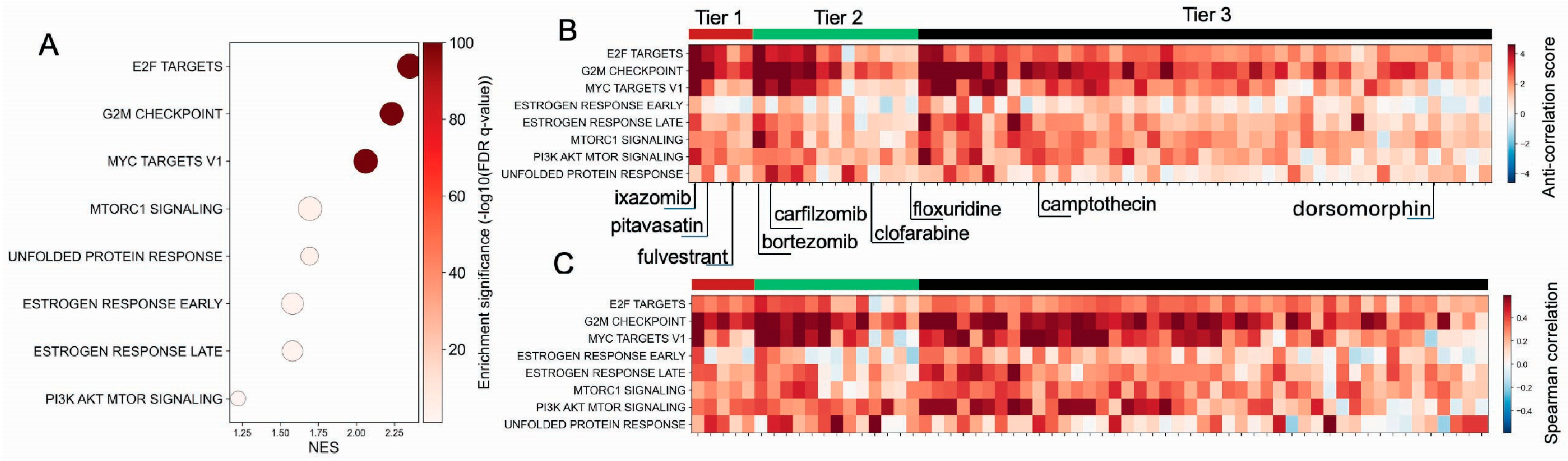
2.6. Prioritized Compounds Exhibit Transcriptional Signatures Anti-Correlated with Breast Cancer-Associated Pathways
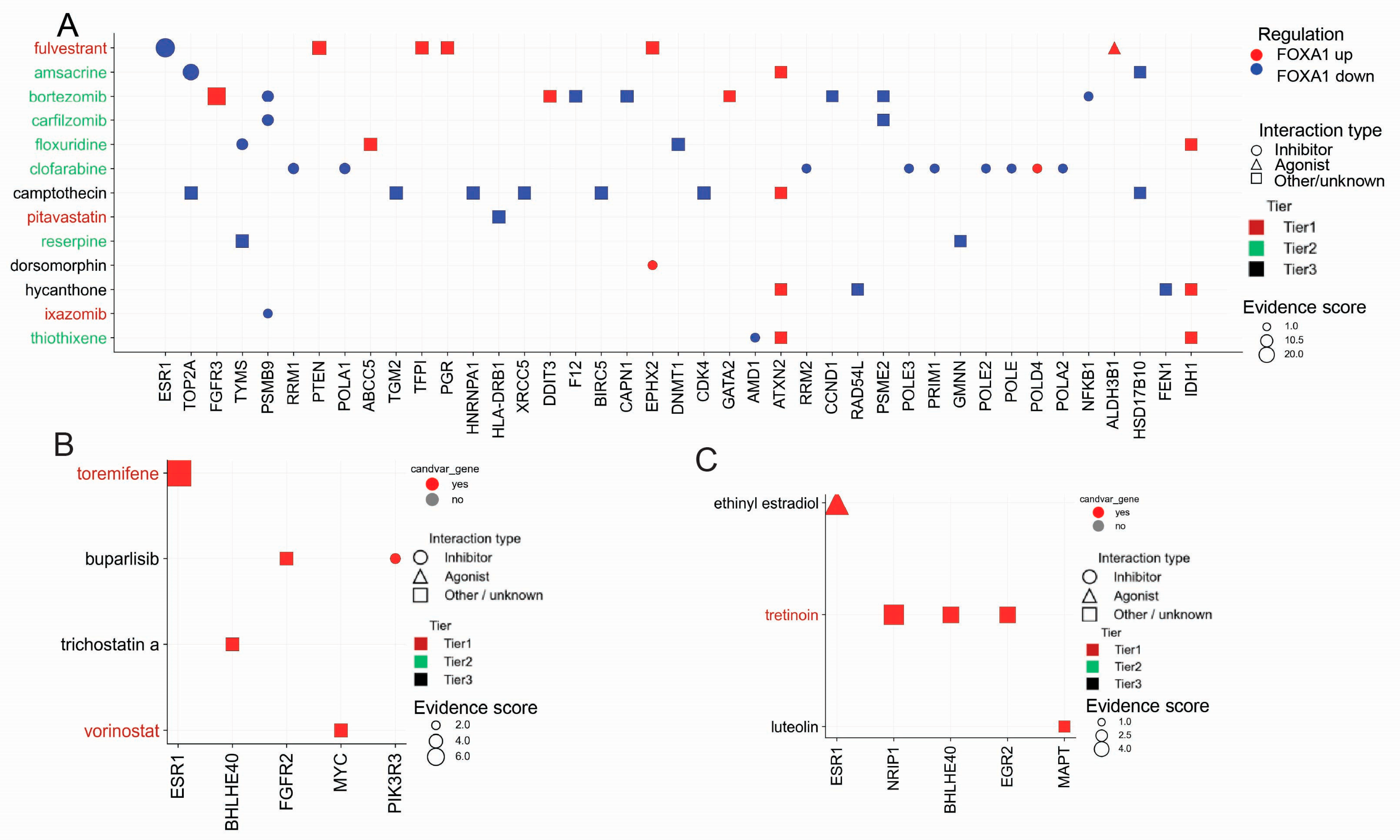
2.7. Curated Drug-Gene Interactions Provide Independent Support for Prioritized Candidates
3. Discussion
4. Methods and Materials
4.1. Data Collection
4.1.1. Drug-Induced Gene Expression Profiles
4.1.2. TF Knockdown-Induced Gene Expression Profiles
4.1.3. Epigenomic Profiles
4.1.4. GWAS Summary Statistics
4.2. Cell Type-Specific Enhancer Modeling
4.3. GWAS Enrichment in Enhancer Regions
4.4. Allele-Specific Enhancer Effect and Motif Inference
4.5. TF Enrichment in Drug Perturbation Profiles
4.6. TF Knockdown Concordance Score
4.7. Drug Prioritization
4.7.1. TF-Based Prioritization
4.7.2. Gene-Based Prioritization
4.8. Pathway-Level Anti-Correlation Analysis
4.9. Drug Annotation and Drug-Gene Interaction Analysis
5. Conclusions
Supplementary Materials
Author Contributions
Funding
Institutional Review Board Statement
Data Availability Statement
Acknowledgments
Conflicts of Interest
References
- Pushpakom, S.; Iorio, F.; Eyers, P.A.; Escott, K.J.; Hopper, S.; Wells, A.; Doig, A.; Guilliams, T.; Latimer, J.; McNamee, C.; et al. Drug repurposing: Progress, challenges and recommendations. Nat. Rev. Drug Discov. 2019, 18, 41–58. [Google Scholar] [PubMed]
- Scannell, J.W.; Blanckley, A.; Boldon, H.; Warrington, B. Diagnosing the decline in pharmaceutical R&D efficiency. Nat. Rev. Drug Discov. 2012, 11, 191–200. [Google Scholar] [CrossRef] [Scilit] [PubMed]
- Pammolli, F.; Magazzini, L.; Riccaboni, M. The productivity crisis in pharmaceutical R&D. Nat. Rev. Drug Discov. 2011, 10, 428–438. [Google Scholar] [CrossRef] [Scilit] [PubMed]
- Waring, M.J.; Arrowsmith, J.; Leach, A.R.; Leeson, P.D.; Mandrell, S.; Owen, R.M.; Pairaudeau, G.; Pennie, W.D.; Pickett, S.D.; Wang, J.; et al. An analysis of the attrition of drug candidates from four major pharmaceutical companies. Nat. Rev. Drug Discov. 2015, 14, 475–486. [Google Scholar] [CrossRef] [Scilit] [PubMed]
- Low, Z.Y.; Farouk, I.A.; Lal, S.K. Drug Repositioning: New Approaches and Future Prospects for Life-Debilitating Diseases and the COVID-19 Pandemic Outbreak. Viruses 2020, 12, 1058. [Google Scholar] [CrossRef] [Scilit] [PubMed]
- Pinzi, L.; Bisi, N.; Rastelli, G. How drug repurposing can advance drug discovery: Challenges and opportunities. Front. Drug Des. Discov. 2024, 4, 1460100. [Google Scholar] [CrossRef] [Scilit]
- Jonker, A.H.; O’Connor, D.; Cavaller-Bellaubi, M.; Fetro, C.; Gogou, M.; Hoen, P.A.C.T.; de Kort, M.; Stone, H.; Valentine, N.; Pasmooij, A.M.G. Drug repurposing for rare: Progress and opportunities for the rare disease community. Front. Med. 2024, 11, 1352803. [Google Scholar] [CrossRef] [Scilit]
- Govender, K.; Chuturgoon, A. An Overview of Repurposed Drugs for Potential COVID-19 Treatment. Antibiotics 2022, 11, 1678. [Google Scholar] [CrossRef] [Scilit] [PubMed]
- Tanoli, Z.; Fernandez-Torras, A.; Ozcan, U.O.; Kushnir, A.; Nader, K.M.; Gadiya, Y.; Fiorenza, L.; Ianevski, A.; Vaha-Koskela, M.; Miihkinen, M.; et al. Computational drug repurposing: Approaches, evaluation of in silico resources and case studies. Nat. Rev. Drug Discov. 2025, 24, 521–542. [Google Scholar] [CrossRef] [Scilit] [PubMed]
- Kunkel, S.D.; Suneja, M.; Ebert, S.M.; Bongers, K.S.; Fox, D.K.; Malmberg, S.E.; Alipour, F.; Shields, R.K.; Adams, C.M.; Adams, C.M. MRNA expression signatures of human skeletal muscle atrophy identify a natural compound that increases muscle mass. Cell Metab. 2011, 13, 627–638. [Google Scholar] [CrossRef] [Scilit] [PubMed]
- Williams, G.; Gatt, A.; Clarke, E.; Corcoran, J.; Doherty, P.; Chambers, D.; Ballard, C. Drug repurposing for Alzheimer’s disease based on transcriptional profiling of human iPSC-derived cortical neurons. Transl. Psychiatry 2019, 9, 220. [Google Scholar] [CrossRef] [Scilit] [PubMed]
- Han, M.; Jung, S.; Lee, D. Drug repurposing for Parkinson’s disease by biological pathway based edge-weighted network proximity analysis. Sci. Rep. 2024, 14, 21258. [Google Scholar] [CrossRef] [Scilit] [PubMed]
- Aqeel, I.; Majid, A.; Ismail, M.; Bashir, H. Drug Repurposing For SARS-COV-2 Using Molecular Docking. In Proceedings of the 2022 19th International Bhurban Conference on Applied Sciences and Technology (IBCAST), Islamabad, Pakistan, 16–20 August 2022; IEEE: New York, NY, USA, 2022; pp. 364–369. [Google Scholar]
- Szustakowski, J.D.; Balasubramanian, S.; Kvikstad, E.; Khalid, S.; Bronson, P.G.; Sasson, A.; Wong, E.; Liu, D.; Wade Davis, J.; Haefliger, C.; et al. Advancing human genetics research and drug discovery through exome sequencing of the UK Biobank. Nat. Genet. 2021, 53, 942–948. [Google Scholar] [CrossRef] [Scilit] [PubMed]
- Reay, W.R.; Cairns, M.A.-O. Advancing the use of genome-wide association studies for drug repurposing. Nat. Rev. Genet. 2021, 22, 658–671. [Google Scholar] [CrossRef] [Scilit] [PubMed]
- Claringbould, A.; Zaugg, J.B. Enhancers in disease: Molecular basis and emerging treatment strategies. Trends Mol. Med. 2021, 27, 1060–1073. [Google Scholar] [CrossRef] [Scilit] [PubMed]
- Chatterjee, S.; Ahituv, N. Gene Regulatory Elements, Major Drivers of Human Disease. Annu. Rev. Genom. Hum. Genet. 2017, 18, 45–63. [Google Scholar] [CrossRef] [Scilit]
- Lin, W.-Z.; Liu, Y.-C.; Lee, M.-C.; Tang, C.-T.; Wu, G.-J.; Chang, Y.-T.; Chu, C.-M.; Shiau, C.-Y. From GWAS to drug screening: Repurposing antipsychotics for glioblastoma. J. Transl. Med. 2022, 20, 70. [Google Scholar] [CrossRef] [Scilit] [PubMed]
- Xu, Y.; Kong, J.; Hu, P. Computational Drug Repurposing for Alzheimer’s Disease Using Risk Genes From GWAS and Single-Cell RNA Sequencing Studies. Front. Pharmacol. 2021, 12, 617537. [Google Scholar] [CrossRef] [Scilit] [PubMed]
- Li, Z.; Gao, E.; Zhou, J.; Han, W.; Xu, X.; Gao, X. Applications of deep learning in understanding gene regulation. Cell Rep. Methods 2023, 3, 100384. [Google Scholar] [CrossRef] [Scilit] [PubMed]
- Manzo, G.; Borkowski, K.; Ovcharenko, I. Comparative Analysis of Deep Learning Models for Predicting Causative Regulatory Variants. Genes 2025, 16, 1223. [Google Scholar] [CrossRef] [Scilit] [PubMed]
- Hudaiberdiev, S.; Taylor, D.L.; Song, W.; Narisu, N.; Bhuiyan, R.M.; Taylor, H.J.; Tang, X.; Yan, T.; Swift, A.J.; Bonnycastle, L.L.; et al. Modeling islet enhancers using deep learning identifies candidate causal variants at loci associated with T2D and glycemic traits. Proc. Natl. Acad. Sci. USA 2023, 120, e2206612120. [Google Scholar] [CrossRef] [Scilit] [PubMed]
- Srivastava, J.; Ovcharenko, I. Regulatory risk loci link disrupted androgen response to the pathophysiology of polycystic ovary syndrome. J. Endocr. Soc. 2026, 10, bvag083. [Google Scholar] [CrossRef] [Scilit] [PubMed]
- Huang, D.; Ovcharenko, I. Silencer variants are key drivers of gene up-regulation in Alzheimer’s disease. Sci. Adv. 2026, 12, eadz3323. [Google Scholar] [CrossRef] [Scilit] [PubMed]
- Zhou, J.; Theesfeld, C.L.; Yao, K.; Chen, K.M.; Wong, A.K.; Troyanskaya, O.G. Deep learning sequence-based ab initio prediction of variant effects on expression and disease risk. Nat. Genet. 2018, 50, 1171–1179. [Google Scholar] [CrossRef] [Scilit] [PubMed]
- Koo, P.K.; Ploenzke, M. Deep learning for inferring transcription factor binding sites. Curr. Opin. Syst. Biol. 2020, 19, 16–23. [Google Scholar] [CrossRef] [Scilit] [PubMed]
- Avsec, Z.; Weilert, M.; Shrikumar, A.; Krueger, S.; Alexandari, A.; Dalal, K.; Fropf, R.; McAnany, C.; Gagneur, J.; Kundaje, A.; et al. Base-resolution models of transcription-factor binding reveal soft motif syntax. Nat. Genet. 2021, 53, 354–366. [Google Scholar] [CrossRef] [Scilit] [PubMed]
- Consortium, E.P. An integrated encyclopedia of DNA elements in the human genome. Nature 2012, 489, 57–74. [Google Scholar] [CrossRef] [Scilit]
- Consortium, E.P.; Moore, J.E.; Purcaro, M.J.; Pratt, H.E.; Epstein, C.B.; Shoresh, N.; Adrian, J.; Kawli, T.; Davis, C.A.; Dobin, A.; et al. Expanded encyclopaedias of DNA elements in the human and mouse genomes. Nature 2020, 583, 699–710. [Google Scholar] [CrossRef] [Scilit]
- Shrikumar, A.; Greenside, P.; Kundaje, A. Learning important features through propagating activation differences. In Proceedings of the International Conference on Machine Learning; PMLR: Sydney, Australia, 2017; pp. 3145–3153. [Google Scholar]
- Shrikumar, A.; Tian, K.; Avsec, Ž.; Shcherbina, A.; Banerjee, A.; Sharmin, M.; Nair, S.; Kundaje, A. Technical note on transcription factor motif discovery from importance scores (TF-MoDISco) version 0.5.6.5. arXiv 2018, arXiv:181100416. [Google Scholar]
- Subramanian, A.; Narayan, R.; Corsello, S.M.; Peck, D.D.; Natoli, T.E.; Lu, X.; Gould, J.; Davis, J.F.; Tubelli, A.A.; Asiedu, J.K.; et al. A Next Generation Connectivity Map: L1000 Platform and the First 1,000,000 Profiles. Cell 2017, 171, 1437–1452.e17. [Google Scholar] [CrossRef] [Scilit] [PubMed]
- Feng, C.; Song, C.; Song, S.; Zhang, G.; Yin, M.; Zhang, Y.; Qian, F.; Wang, Q.; Guo, M.; Li, C. KnockTF 2.0: A comprehensive gene expression profile database with knockdown/knockout of transcription (co-)factors in multiple species. Nucleic Acids Res. 2024, 52, D183–D193. [Google Scholar] [PubMed]
- Cannon, M.; Stevenson, J.; Stahl, K.; Basu, R.; Coffman, A.; Kiwala, S.; McMichael, J.F.; Kuzma, K.; Morrissey, D.; Cotto, K.; et al. DGIdb 5.0: Rebuilding the drug-gene interaction database for precision medicine and drug discovery platforms. Nucleic Acids Res. 2024, 52, D1227–D1235. [Google Scholar] [PubMed]
- Bulik-Sullivan, B.K.; Loh, P.R.; Finucane, H.K.; Ripke, S.; Yang, J.; Schizophrenia Working Group of the Psychiatric Genomics Consortium; Patterson, N.; Daly, M.J.; Price, A.L.; Neale, B.M. LD Score regression distinguishes confounding from polygenicity in genome-wide association studies. Nat. Genet. 2015, 47, 291–295. [Google Scholar] [CrossRef] [Scilit] [PubMed]
- Bullinger, D.; Neubauer, H.; Fehm, T.; Laufer, S.; Gleiter, C.H.; Kammerer, B. Metabolic signature of breast cancer cell line MCF-7: Profiling of modified nucleosides via LC-IT MS coupling. BMC Biochem. 2007, 8, 25. [Google Scholar] [CrossRef] [Scilit] [PubMed]
- Michailidou, K.; Lindstrom, S.; Dennis, J.; Beesley, J.; Hui, S.; Kar, S.; Lemacon, A.; Soucy, P.; Glubb, D.; Rostamianfar, A.; et al. Association analysis identifies 65 new breast cancer risk loci. Nature 2017, 551, 92–94. [Google Scholar] [CrossRef] [Scilit] [PubMed]
- Li, Q.; Seo, J.H.; Stranger, B.; McKenna, A.; Pe’er, I.; Laframboise, T.; Brown, M.; Tyekucheva, S.; Freedman, M.L. Integrative eQTL-based analyses reveal the biology of breast cancer risk loci. Cell 2013, 152, 633–641. [Google Scholar] [CrossRef] [Scilit] [PubMed]
- Hurtado, A.; Holmes, K.A.; Ross-Innes, C.S.; Schmidt, D.; Carroll, J.S. FOXA1 is a key determinant of estrogen receptor function and endocrine response. Nat. Genet. 2011, 43, 27–33. [Google Scholar] [PubMed]
- Fu, X.; Pereira, R.; De Angelis, C.; Veeraraghavan, J.; Nanda, S.; Qin, L.; Cataldo, M.L.; Sethunath, V.; Mehravaran, S.; Gutierrez, C.; et al. FOXA1 upregulation promotes enhancer and transcriptional reprogramming in endocrine-resistant breast cancer. Proc. Natl. Acad. Sci. USA 2019, 116, 26823–26834. [Google Scholar] [CrossRef] [Scilit] [PubMed]
- Seachrist, D.D.; Anstine, L.J.; Keri, R.A. FOXA1: A Pioneer of Nuclear Receptor Action in Breast Cancer. Cancers 2021, 13, 5205. [Google Scholar] [CrossRef] [Scilit] [PubMed]
- Watanabe, K.; Taskesen, E.; van Bochoven, A.; Posthuma, D. Functional mapping and annotation of genetic associations with FUMA. Nat. Commun. 2017, 8, 1826. [Google Scholar] [CrossRef] [Scilit] [PubMed]
- Avram, S.; Wilson, T.B.; Curpan, R.; Halip, L.; Borota, A.; Bora, A.; Bologa Cristian, G.; Holmes, J.; Knockel, J.; Yang Jeremy, J.; et al. DrugCentral 2023 extends human clinical data and integrates veterinary drugs. Nucleic Acids Res. 2023, 51, D1276–D1287. [Google Scholar] [PubMed]
- Gaulton, A.; Bellis, L.J.; Bento, A.P.; Chambers, J.; Davies, M.; Hersey, A.; Light, Y.; McGlinchey, S.; Michalovich, D.; Al-Lazikani, B.; et al. ChEMBL: A large-scale bioactivity database for drug discovery. Nucleic Acids Res. 2012, 40, D1100–D1107. [Google Scholar] [PubMed]
- Clinical Trials.gov. Available online: https://clinicaltrials.gov/ (accessed on 16 March 2026).
- Andrahennadi, S.; Sami, A.; Haider, K.; Chalchal, H.I.; Le, D.; Ahmed, O.; Manna, M.; El-Gayed, A.; Wright, P.; Ahmed, S. Efficacy of Fulvestrant in Women with Hormone-Resistant Metastatic Breast Cancer (mBC): A Canadian Province Experience. Cancers 2021, 13, 4163. [Google Scholar] [CrossRef] [Scilit] [PubMed]
- Cyr, A.R.; Kulak, M.V.; Park, J.M.; Bogachek, M.V.; Spanheimer, P.M.; Woodfield, G.W.; White-Baer, L.S.; O’Malley, Y.Q.; Sugg, S.L.; Olivier, A.K.; et al. TFAP2C governs the luminal epithelial phenotype in mammary development and carcinogenesis. Oncogene 2015, 34, 436–444. [Google Scholar] [CrossRef] [Scilit] [PubMed]
- Woodfield, G.W.; Horan, A.D.; Chen, Y.; Weigel, R.J. TFAP2C controls hormone response in breast cancer cells through multiple pathways of estrogen signaling. Cancer Res. 2007, 67, 8439–8443. [Google Scholar] [CrossRef] [Scilit] [PubMed]
- Wade, M.A.; Jones, D.; Wilson, L.; Stockley, J.; Coffey, K.; Robson, C.N.; Gaughan, L. The histone demethylase enzyme KDM3A is a key estrogen receptor regulator in breast cancer. Nucleic Acids Res. 2015, 43, 196–207. [Google Scholar] [PubMed]
- Hua, S.; Kittler, R.; White, K.P. Genomic antagonism between retinoic acid and estrogen signaling in breast cancer. Cell 2009, 137, 1259–1271. [Google Scholar] [CrossRef] [Scilit] [PubMed]
- Kouros-Mehr, H.; Slorach, E.M.; Sternlicht, M.D.; Werb, Z. GATA-3 maintains the differentiation of the luminal cell fate in the mammary gland. Cell 2006, 127, 1041–1055. [Google Scholar] [CrossRef] [Scilit] [PubMed]
- Zekri, Y.; Gregoricchio, S.; Yapici, E.; Huang, C.F.; Morova, T.; Altintas, U.B.; Korkmaz, G.; Lack, N.A.; Zwart, W. Comprehensive functional annotation of ESR1-driven enhancers in breast cancer reveals hierarchical activity independent of genomic and epigenomic contexts. Genome Res. 2025, 35, 1530–1543. [Google Scholar] [CrossRef] [Scilit] [PubMed]
- Martin, E.M.; Orlando, K.A.; Yokobori, K.; Wade, P.A. The estrogen receptor/GATA3/FOXA1 transcriptional network: Lessons learned from breast cancer. Curr. Opin. Struct. Biol. 2021, 71, 65–70. [Google Scholar] [CrossRef] [Scilit] [PubMed]
- Theodorou, V.; Stark, R.; Menon, S.; Carroll, J.S. GATA3 acts upstream of FOXA1 in mediating ESR1 binding by shaping enhancer accessibility. Genome Res. 2013, 23, 12–22. [Google Scholar] [PubMed]
- Nathan, M.R.; Schmid, P. A Review of Fulvestrant in Breast Cancer. Oncol. Ther. 2017, 5, 17–29. [Google Scholar] [CrossRef] [Scilit] [PubMed]
- Knox, C.; Wilson, M.; Klinger, C.M.; Franklin, M.; Oler, E.; Wilson, A.; Pon, A.; Cox, J.; Chin, N.E.L.; Strawbridge, S.A.; et al. DrugBank 6.0: The DrugBank Knowledgebase for 2024. Nucleic Acids Res. 2024, 52, D1265–D1275. [Google Scholar] [PubMed]
- Rajapaksa, G.; Thomas, C.; Gustafsson, J.A. Estrogen signaling and unfolded protein response in breast cancer. J. Steroid Biochem. Mol. Biol. 2016, 163, 45–50. [Google Scholar] [CrossRef] [Scilit] [PubMed]
- Oshi, M.; Takahashi, H.; Tokumaru, Y.; Yan, L.; Rashid, O.M.; Nagahashi, M.; Matsuyama, R.; Endo, I.; Takabe, K. The E2F Pathway Score as a Predictive Biomarker of Response to Neoadjuvant Therapy in ER+/HER2- Breast Cancer. Cells 2020, 9, 1643. [Google Scholar] [CrossRef] [Scilit] [PubMed]
- Oshi, M.; Takahashi, H.; Tokumaru, Y.; Yan, L.; Rashid, O.M.; Matsuyama, R.; Endo, I.; Takabe, K. G2M Cell Cycle Pathway Score as a Prognostic Biomarker of Metastasis in Estrogen Receptor (ER)-Positive Breast Cancer. Int. J. Mol. Sci. 2020, 21, 2921. [Google Scholar] [CrossRef] [Scilit] [PubMed]
- Schulze, A.; Oshi, M.; Endo, I.; Takabe, K. MYC Targets Scores Are Associated with Cancer Aggressiveness and Poor Survival in ER-Positive Primary and Metastatic Breast Cancer. Int. J. Mol. Sci. 2020, 21, 8127. [Google Scholar] [CrossRef] [Scilit] [PubMed]
- Nur, M.M.H.; Prihantono, P.; Kusuma, M.I.; Indra, I.; Syamsu, S.A.; Smaradhania, N.; Pieter, J., Jr.; Faruk, M. mTOR Levels and Metastasis in Luminal Breast Cancer: Implications for Prognosis and Treatment. Asian Pac. J. Cancer Prev. 2025, 26, 3347–3352. [Google Scholar] [CrossRef] [Scilit] [PubMed]
- Oshi, M.; Roy, A.M.; Gandhi, S.; Tokumaru, Y.; Yan, L.; Yamada, A.; Endo, I.; Takabe, K. The clinical relevance of unfolded protein response signaling in breast cancer. Am. J. Cancer Res. 2022, 12, 2627–2640. [Google Scholar] [CrossRef] [Scilit] [PubMed]
- Clusan, L.; Ferriere, F.; Flouriot, G.; Pakdel, F. A Basic Review on Estrogen Receptor Signaling Pathways in Breast Cancer. Int. J. Mol. Sci. 2023, 24, 6834. [Google Scholar] [CrossRef] [Scilit] [PubMed]
- Thorn, C.F.; Klein, T.E.; Altman, R.B. PharmGKB: The Pharmacogenomics Knowledge Base. In Methods and Protocols; Humana Press: Totowa, NJ, USA, 2013; Volume 1015, pp. 311–320. [Google Scholar]
- Griffith, M.; Spies, N.C.; Krysiak, K.; McMichael, J.F.; Coffman, A.C.; Danos, A.M.; Ainscough, B.J.; Ramirez, C.A.; Rieke, D.T.; Kujan, L.; et al. CIViC is a community knowledgebase for expert crowdsourcing the clinical interpretation of variants in cancer. Nat. Genet. 2017, 49, 170–174. [Google Scholar] [CrossRef] [Scilit] [PubMed]
- Kwak, B.; Mulhaupt, F.; Myit, S.; Mach, F. Statins as a newly recognized type of immunomodulator. Nat. Med. 2000, 6, 1399–1402. [Google Scholar] [CrossRef] [Scilit] [PubMed]
- Mach, F. Immunosuppressive effects of statins. Atheroscler. Suppl. 2002, 3, 17–20. [Google Scholar] [CrossRef] [Scilit] [PubMed]
- Hunter, D.J.; Colditz, G.A.; Hankinson, S.E.; Malspeis, S.; Spiegelman, D.; Chen, W.; Stampfer, M.J.; Willett, W.C. Oral contraceptive use and breast cancer: A prospective study of young women. Cancer Epidemiol. Biomark. Prev. 2010, 19, 2496–2502. [Google Scholar] [CrossRef] [Scilit]
- Arruabarrena-Aristorena, A.; Maag, J.L.V.; Kittane, S.; Cai, Y.; Karthaus, W.R.; Ladewig, E.; Park, J.; Kannan, S.; Ferrando, L.; Cocco, E.; et al. FOXA1 Mutations Reveal Distinct Chromatin Profiles and Influence Therapeutic Response in Breast Cancer. Cancer Cell 2020, 38, 534–550 e539. [Google Scholar] [CrossRef] [Scilit] [PubMed]
- Nakagawa, T.; Yoneda, M.; Higashi, M.; Ohkuma, Y.; Ito, T. Enhancer function regulated by combinations of transcription factors and cofactors. Genes Cells 2018, 23, 808–821. [Google Scholar] [CrossRef] [Scilit] [PubMed]
- Huang, X.X.; Ng, L.M.; Lee, P.-H.; Guan, P.; Chow, M.J.; Bashir, A.B.M.; Lau, M.; Tan, K.Y.S.; Li, Z.; Chan, J.Y.; et al. Effects of RARα ligand binding domain mutations on breast fibroepithelial tumor function and signaling. NPJ Breast Cancer 2025, 11, 1. [Google Scholar] [CrossRef] [Scilit] [PubMed]
- Schwartz, G.; Shee, K.; Romo, B.; Marotti, J.; Kisselev, A.; Lewis, L.; Miller, T. Phase Ib Study of the Oral Proteasome Inhibitor Ixazomib (MLN9708) and Fulvestrant in Advanced ER+ Breast Cancer Progressing on Fulvestrant. Oncologist 2021, 26, 467-e924. [Google Scholar] [CrossRef] [Scilit] [PubMed]
- Ko, D.; Park, S.; Park, M.; Kim, S.; Park, J.M.; Seo, J.; Nam, K.D.; Kang, Y.K.; Farrand, L.; Jung, E.; et al. Pitavastatin is a novel Mcl-1 inhibitor that overcomes paclitaxel resistance in triple-negative breast cancer. Exp. Hematol. Oncol. 2025, 14, 125. [Google Scholar] [CrossRef] [Scilit] [PubMed]
- Jones, M.D.; Liu, J.C.; Barthel, T.K.; Hussain, S.; Lovria, E.; Cheng, D.; Schoonmaker, J.A.; Mulay, S.; Ayers, D.C.; Bouxsein, M.L.; et al. A proteasome inhibitor, bortezomib, inhibits breast cancer growth and reduces osteolysis by downregulating metastatic genes. Clin. Cancer Res. 2010, 16, 4978–4989. [Google Scholar] [CrossRef] [Scilit] [PubMed]
- Park, J.E.; Park, J.; Jun, Y.; Oh, Y.; Ryoo, G.; Jeong, Y.S.; Gadalla, H.H.; Min, J.S.; Jo, J.H.; Song, M.G.; et al. Expanding therapeutic utility of carfilzomib for breast cancer therapy by novel albumin-coated nanocrystal formulation. J. Control Release 2019, 302, 148–159. [Google Scholar] [CrossRef] [Scilit] [PubMed]
- Avsec, Z.; Agarwal, V.; Visentin, D.; Ledsam, J.R.; Grabska-Barwinska, A.; Taylor, K.R.; Assael, Y.; Jumper, J.; Kohli, P.; Kelley, D.R. Effective gene expression prediction from sequence by integrating long-range interactions. Nat. Methods 2021, 18, 1196–1203. [Google Scholar] [CrossRef] [Scilit] [PubMed]
- Avsec, Z.; Latysheva, N.; Cheng, J.; Novati, G.; Taylor, K.R.; Ward, T.; Bycroft, C.; Nicolaisen, L.; Arvaniti, E.; Pan, J.; et al. Advancing regulatory variant effect prediction with AlphaGenome. Nature 2026, 649, 1206–1218. [Google Scholar] [CrossRef] [Scilit] [PubMed]
- Amemiya, H.M.; Kundaje, A.; Boyle, A.P. The ENCODE Blacklist: Identification of Problematic Regions of the Genome. Sci. Rep. 2019, 9, 9354. [Google Scholar] [CrossRef] [Scilit] [PubMed]
- Finucane, H.K.; Reshef, Y.A.; Anttila, V.; Slowikowski, K.; Gusev, A.; Byrnes, A.; Gazal, S.; Loh, P.R.; Lareau, C.; Shoresh, N.; et al. Heritability enrichment of specifically expressed genes identifies disease-relevant tissues and cell types. Nat. Genet. 2018, 50, 621–629. [Google Scholar] [CrossRef] [Scilit] [PubMed]
- Movva, R.; Greenside, P.; Marinov, G.K.; Nair, S.; Shrikumar, A.; Kundaje, A. Deciphering regulatory DNA sequences and noncoding genetic variants using neural network models of massively parallel reporter assays. PLoS ONE 2019, 14, e0218073. [Google Scholar] [CrossRef] [Scilit] [PubMed]
- Lamb, J.; Crawford, E.D.; Peck, D.; Modell, J.W.; Blat, I.C.; Wrobel, M.J.; Lerner, J.; Brunet, J.P.; Subramanian, A.; Ross, K.N.; et al. The Connectivity Map: Using gene-expression signatures to connect small molecules, genes, and disease. Science 2006, 313, 1929–1935. [Google Scholar] [CrossRef] [Scilit] [PubMed]
- Thennavan, A.; Beca, F.; Xia, Y.; Recio, S.G.; Allison, K.; Collins, L.C.; Tse, G.M.; Chen, Y.Y.; Schnitt, S.J.; Hoadley, K.A.; et al. Molecular analysis of TCGA breast cancer histologic types. Cell Genom. 2021, 1, 100067. [Google Scholar] [CrossRef] [Scilit] [PubMed]
- Subramanian, A.; Tamayo, P.; Mootha, V.K.; Mukherjee, S.; Ebert, B.L.; Gillette, M.A.; Paulovich, A.; Pomeroy, S.L.; Golub, T.R.; Lander, E.S.; et al. Gene set enrichment analysis: A knowledge-based approach for interpreting genome-wide expression profiles. Proc. Natl. Acad. Sci. USA 2005, 102, 15545–15550. [Google Scholar] [CrossRef] [Scilit] [PubMed]



| Drug | Rank Method | Approve Any | BC Trial | MOA | Indication | Literature Support Evidence |
|---|---|---|---|---|---|---|
| Ixazomib | TF-FOXA1 | 1 | 1 | proteasome inhibitor | multiple myeloma | Ixazomib in combination with fulvestrant demonstrated a favorable safety profile and antitumor activity in patients with fulvestrant-resistant, advanced estrogen receptor-positive breast cancer. NCT02993094; “https://doi.org/10.1002/onco.13733” |
| Pitavasatin | 1 | 1 | HMG-CoA reductase inhibitor | hypercholesterolemia and dyslipidemia | Pitavastatin was reported to overcome paclitaxel resistance in triple-negative breast cancer models. (NCT04705909; PMID: 41126317) | |
| Bortezomib | 1 | 0 | proteasome inhibitor | multiple myeloma | Bortezomib has been shown to inhibit breast cancer growth in preclinical studies. (PMID: 20843837) | |
| Carfilzomib | 1 | 0 | proteasome inhibitor | multiple myeloma | An albumin-coated nanocarrier formulation of carfilzomib demonstrated improved metabolic stability and enhanced cytotoxic effects in breast cancer cells in vitro. (PMID: 30954620) | |
| Floxuridine | 1 | 0 | antimetabolite | liver metastases of gastrointestinal malignancy | Camptothecin-floxuridine conjugate nanocapsules enhanced anti-metastatic efficacy in breast cancer models. “https://pubs.acs.org/doi/10.1021/acsami.8b11723 (accessed on 15 January 2026)” | |
| Clofarabine | 1 | 0 | inhibitor of ribonucleotide reductase | leukemias | Clofarabine exhibits potent anti-breast cancer activity, although cytotoxicity toward normal cells has been reported; modified analogs have shown improved selectivity. “https://doi.org/10.1016/j.bmcl.2025.130349” | |
| Camptothecin | 0 | 0 | topoisomerase inhibitor | Tumor-targeted nanocrystal formulations of camptothecin demonstrated improved therapeutic efficacy in breast cancer models. “https://doi.org/10.1016/j.xphs.2025.103951” | ||
| Dorsomorphin | 0 | 0 | selective and ATP-competitive AMPK inhibitor | Dorsomorphin has been reported as an inhibitor of dickkopf-1 (DKK1), with implications for breast cancer progression. (PMID: 32001001) | ||
| Vorinostat | Gene down | 1 | 1 | histone deacetylase inhibitor (HDI) | cutaneous T-cell lymphoma | In combination with other conventional chemotherapeutics, exhibit anti-neoplastic properties through inhibition of proliferation, migration and invasion, induction of differentiation and apoptosis as well as cell-cycle arrest, in many types of BC cells, both in in vitro and in vivo settings. (PMID: 34572928) |
| Dicoumarol | 1 | 0 | anticoagulant agent, inhibits vitamin K reductase | deep vein thrombosis | In estrogen receptor-negative breast cancer (in vitro and in vivo), dicoumarol counteracted the chemoresistance to taxane-anthracycline-based chemotherapy by targeting the PSG1. (PMID: 27653744) | |
| U-0126 | 0 | 0 | MEK1/2 inhibitor | MEK inhibitor U-0126 reduces cancer cell proliferation and can induce cell death (apoptosis) in various breast cancer cell lines. (PMID: 22945392) | ||
| Trichostatin A (BRD-A19037878) | 0 | 0 | histone deacetylase inhibitor | Trichostatin A reverses epithelial-mesenchymal transition and attenuates invasion and migration in MCF-7 breast cancer cells. (PMID: 32104221) | ||
| Cyproheptadine | Gene up | 1 | 0 | combined serotonin and histamine antagonist | allergic symptoms | Treatment of human breast cancer cells (MCF7 cells) with cyproheptadine decreased the expression and transcriptional activity of ERα, thereby inhibiting estrogen-dependent cell growth. (PMID: 27088648) |
| Duloxetine | 1 | 0 | Selective Serotonin and Norepinephrine Reuptake Inhibitor (SNRI) | depression and anxiety | Treatment of human breast cancer cells (MCF7 cells) with cyproheptadine decreased the expression and transcriptional activity of ERα, thereby inhibiting estrogen-dependent cell growth. (PMID: 27088648) | |
| Mitoxantrone | 1 | 0 | DNA-reactive agent, a potent inhibitor of topoisomerase II | prostate cancer; Acute myeloid leukemia; multiple sclerosis | mitoxantrone binds to eEF-2K and inhibits its activity, and the combination treatment of mitoxantrone and mTOR inhibitor resulted in significant synergistic cytotoxicity in breast cancer. “https://www.nature.com/articles/s41419-020-03153-x (accessed on 20 May 2026)” | |
| Fluphenazine | 1 | 0 | blocking postsynaptic dopaminergic D1 and D2 receptors | schizophrenia and other psychotic disorders | Flu inhibited survival of metastatic TNBC cells. (PMID: 30949404) |
Disclaimer/Publisher’s Note: The statements, opinions and data contained in all publications are solely those of the individual author(s) and contributor(s) and not of MDPI and/or the editor(s). MDPI and/or the editor(s) disclaim responsibility for any injury to people or property resulting from any ideas, methods, instructions or products referred to in the content. |
© 2026 by the authors. Licensee MDPI, Basel, Switzerland. This article is an open access article distributed under the terms and conditions of the Creative Commons Attribution (CC BY) license.
Share and Cite
Huang, X.; Ovcharenko, I. Using Deep Learning Models of Gene Regulation to Guide Drug Prioritization. Pharmaceuticals 2026, 19, 1097. https://doi.org/10.3390/ph19071097
Huang X, Ovcharenko I. Using Deep Learning Models of Gene Regulation to Guide Drug Prioritization. Pharmaceuticals. 2026; 19(7):1097. https://doi.org/10.3390/ph19071097
Chicago/Turabian StyleHuang, Xiaoqin, and Ivan Ovcharenko. 2026. "Using Deep Learning Models of Gene Regulation to Guide Drug Prioritization" Pharmaceuticals 19, no. 7: 1097. https://doi.org/10.3390/ph19071097
APA StyleHuang, X., & Ovcharenko, I. (2026). Using Deep Learning Models of Gene Regulation to Guide Drug Prioritization. Pharmaceuticals, 19(7), 1097. https://doi.org/10.3390/ph19071097