In Vitro, In Silico, and In Vivo Evaluation of Antiplasmodial Activity of Ursodeoxycholic Acid Following GNPS Dereplication of an Active Streptomyces sp. Fraction

Abstract
1. Introduction
2. Results
2.1. Isolation and Identification of Actinomycetes
2.2. In Vitro Antiplasmodial Activities of Crude Extract and Fraction from Streptomyces sp. Strain D10
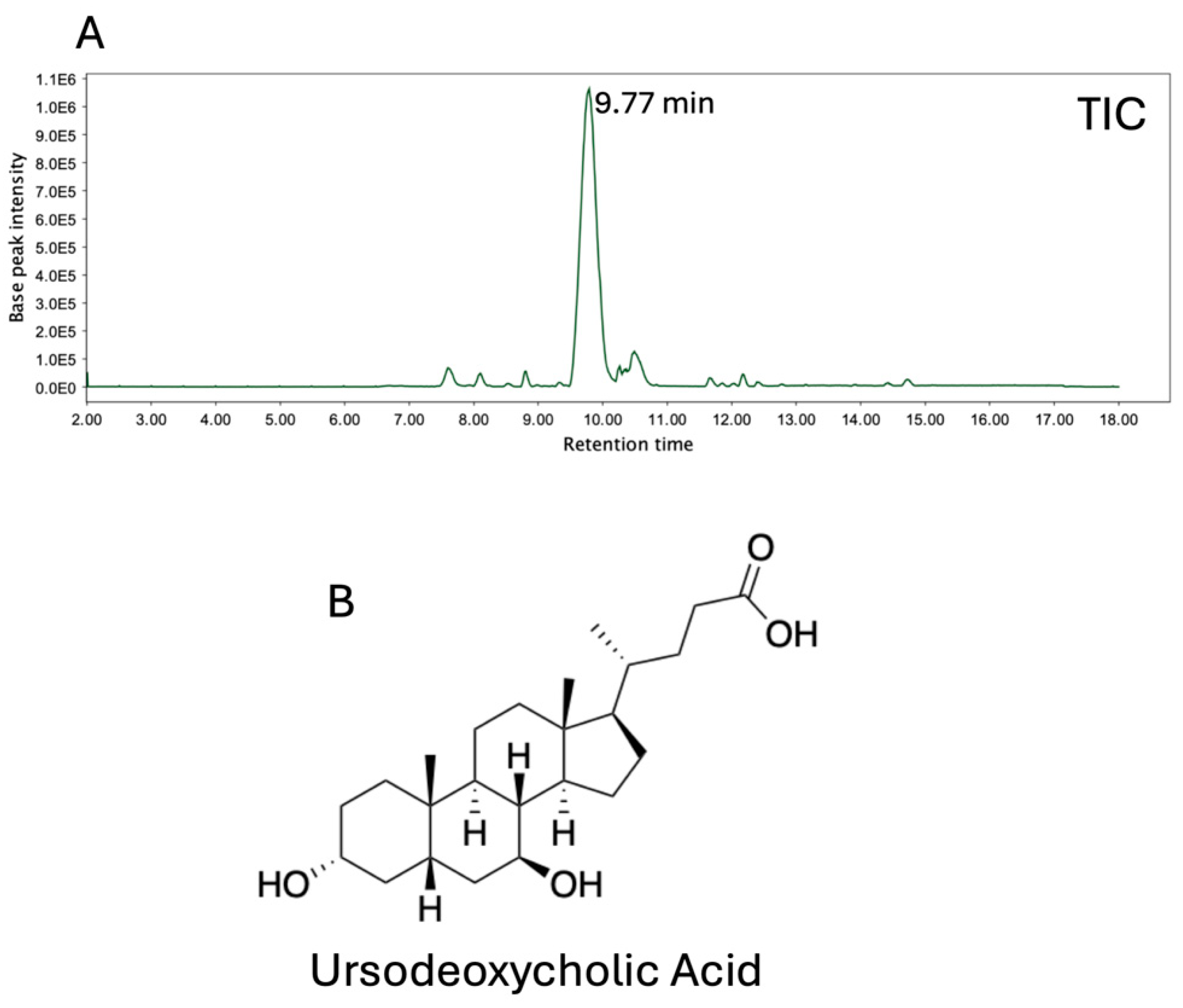
2.3. GNPS-Based Dereplication of Chemical Components in the Active Fraction C2
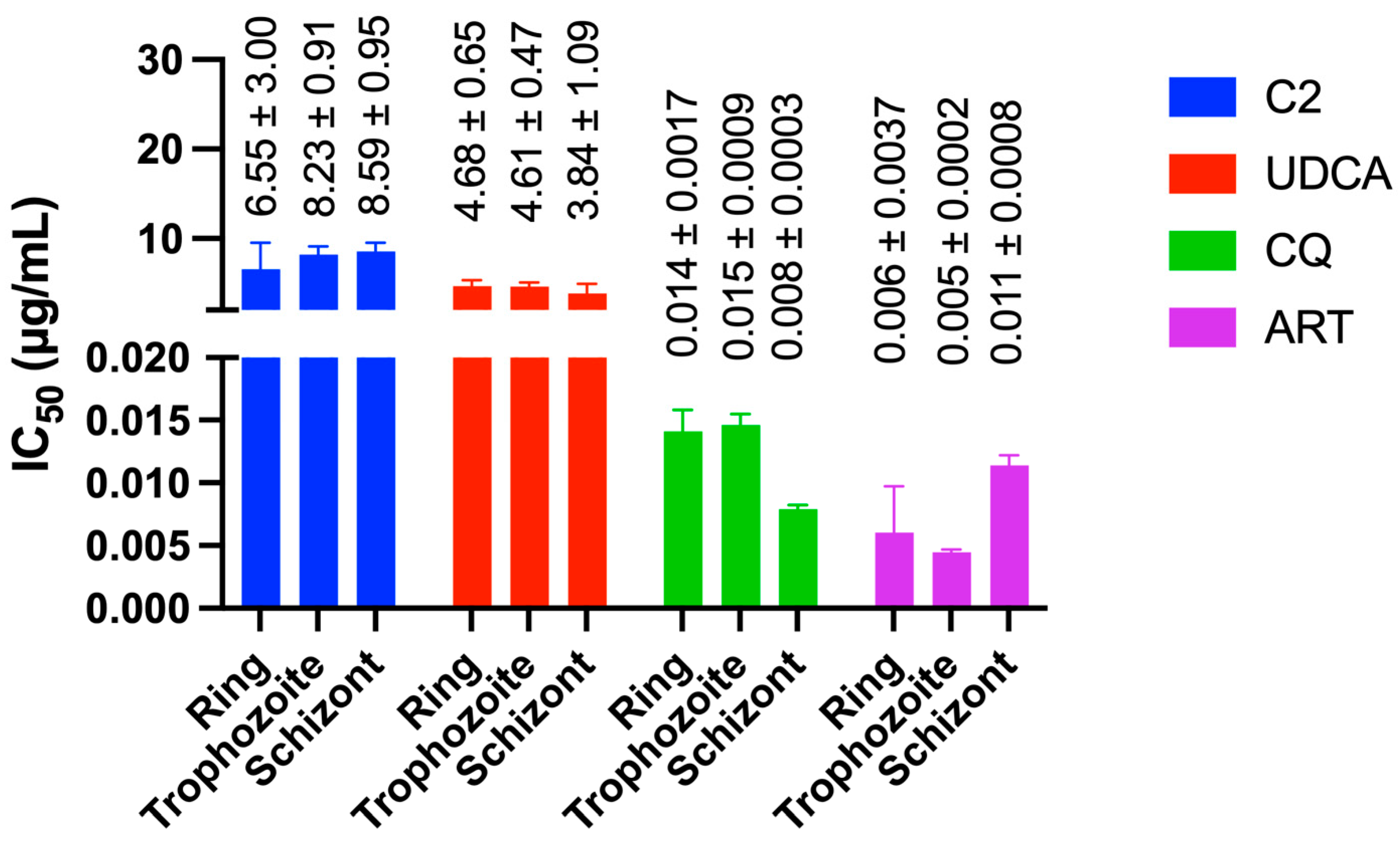
2.4. In Vitro Antiplasmodial Activity of UDCA
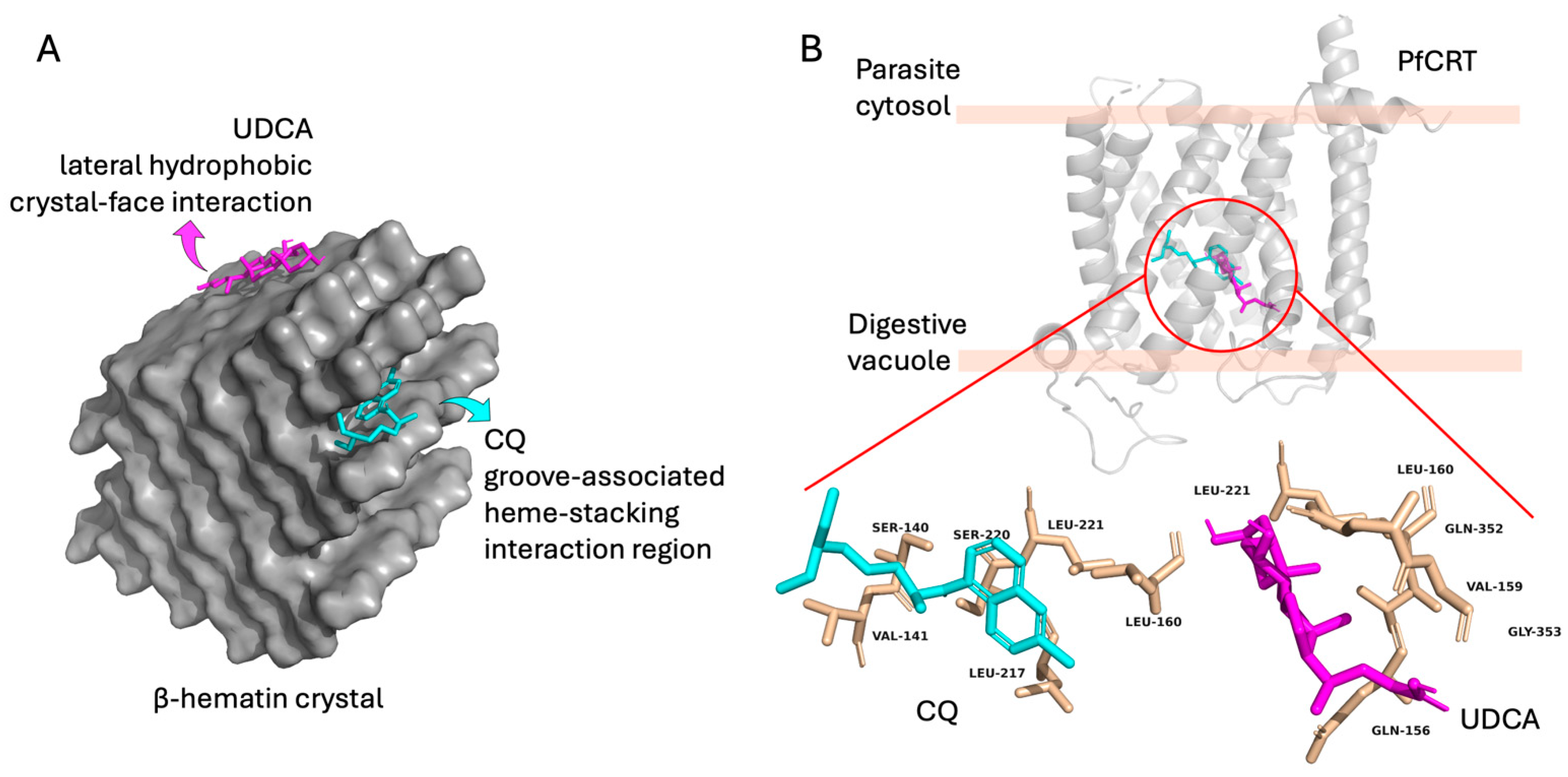
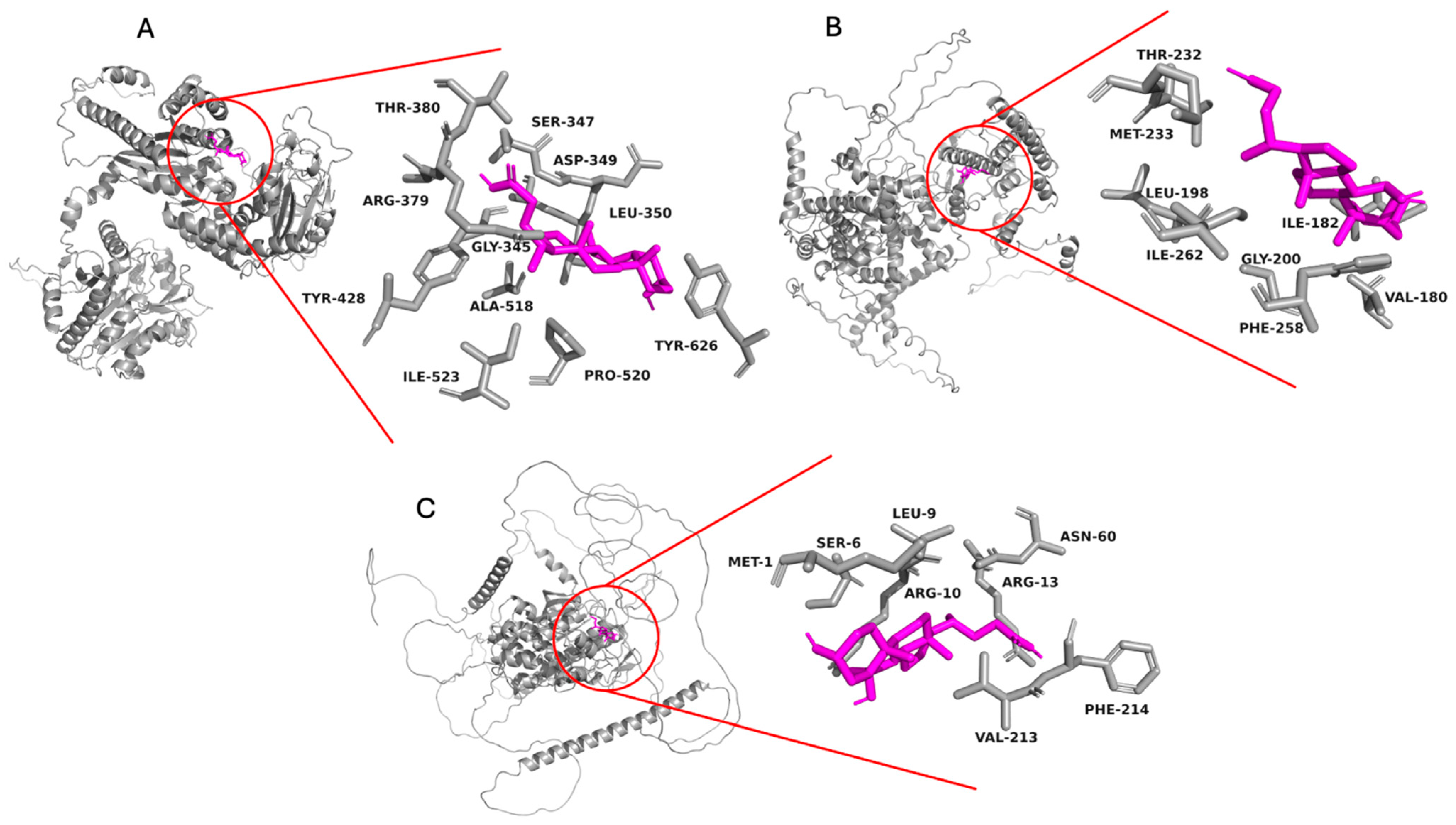
2.5. In Silico Drug Target Prediction and Docking Simulations of UDCA
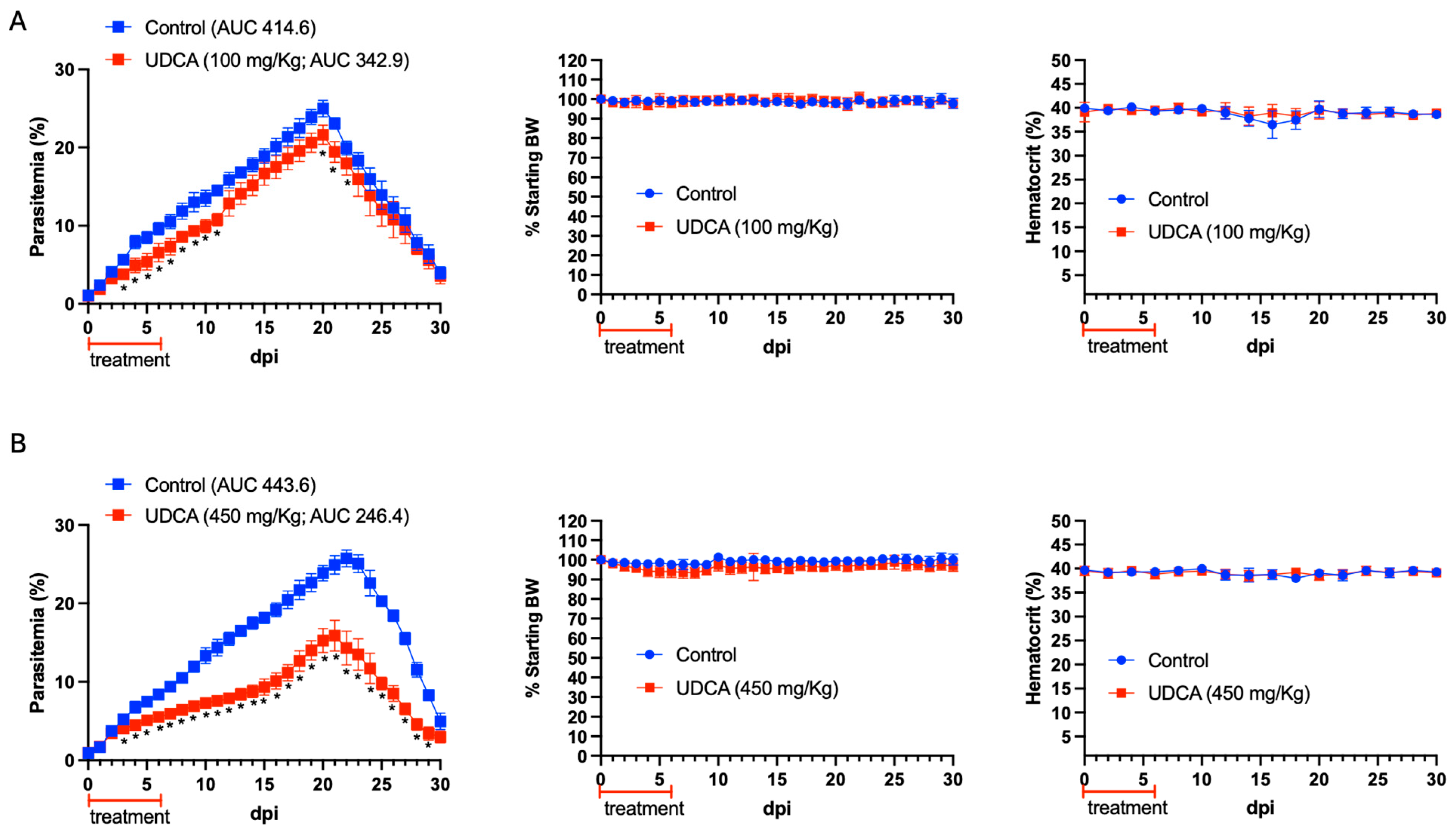
2.6. Effects of UDCA on P. yoelii 17XNL-Infected Mice
3. Discussion
4. Materials and Methods
4.1. Sampling and Isolation of Actinomycetes
4.2. Fermentation and Extraction
4.3. Fractionation and Compound Identification
4.4. LC-HRMS Analysis
4.5. Chemicals
4.6. In Vitro Antiplasmodial Activity
4.7. In Vitro Cytotoxicity and Hemolysis Assays
4.8. In Silico Target Prediction and Molecular Docking
4.9. Mice and In Vivo Infection
4.10. Statistical Analysis
5. Conclusions
Supplementary Materials
Author Contributions
Funding
Institutional Review Board Statement
Informed Consent Statement
Data Availability Statement
Acknowledgments
Conflicts of Interest
Abbreviations
| ART | Artemisinin |
| CC50 | 50% cytotoxic concentration |
| CNN | Convolutional neural network |
| CQ | Chloroquine |
| DBSCAN | density-based spatial clustering of applications with noise |
| DMSO | Dimethyl sulfoxide |
| dpi | Day post-infection |
| ETKDG | Experimental torsion knowledge distance geometry |
| FBS | Fetal bovine serum |
| FDA | Food and Drug Administration |
| G6PD | Glucose-6-phosphate dehydrogenase deficiency |
| GNPS | Global Natural Products Social Molecular Networking |
| HSF | Human skin fibroblast cells |
| IC50 | 50% inhibitory concentration |
| MMFF | Merck molecular force field |
| MW | Molecular weight |
| PfGluPho | Plasmodium falciparum glucose-6-phosphate dehydrogenase/6-phosphogluconolactonase |
| PfMAPK | Plasmodium falciparum mitogen-activated protein kinase |
| PfPFT-β | Plasmodium falciparum protein farnesyltransferase subunit beta |
| PLIP | Protein–ligand interaction profiler |
| RI | Resistance index |
| SI | Selectivity index |
| STRING | Search tool for the retrieval of interacting genes/proteins |
| UDCA | Ursodeoxycholic acid |
References
- World Health Organization (WHO). World Malaria Report 2025: Addressing the Threat of Antimalarial Drug Resistance; World Health Organization: Geneva, Switzerland, 2025. [Google Scholar]
- Shang, X.; Dai, L.; Cao, X.; Ma, Y.; Gulnaz, I.; Miao, X.; Li, X.; Yang, X. Natural Products in Antiparasitic Drug Discovery: Advances, Opportunities and Challenges. Nat. Prod. Rep. 2025, 42, 1419–1458. [Google Scholar] [CrossRef] [PubMed]
- Alam, K.; Mazumder, A.; Sikdar, S.; Zhao, Y.-M.; Hao, J.; Song, C.; Wang, Y.; Sarkar, R.; Islam, S.; Zhang, Y.; et al. Streptomyces: The Biofactory of Secondary Metabolites. Front. Microbiol. 2022, 13, 968053. [Google Scholar] [CrossRef] [PubMed]
- Sivalingam, P.; Hong, K.; Pote, J.; Prabakar, K. Extreme Environment Streptomyces: Potential Sources for New Antibacterial and Anticancer Drug Leads? Int. J. Microbiol. 2019, 2019, 5283948. [Google Scholar] [CrossRef] [PubMed]
- Pagmadulam, B.; Tserendulam, D.; Rentsenkhand, T.; Igarashi, M.; Sawa, R.; Nihei, C.-I.; Nishikawa, Y. Isolation and Characterization of Antiprotozoal Compound-Producing Streptomyces Species from Mongolian Soils. Parasitol. Int. 2020, 74, 101961. [Google Scholar] [CrossRef] [PubMed]
- Baljinova, T. Diversity and Biotechnological Potential of Actinomycetes in Arid Lands of Mongolia. In Actinomycetes in Marine and Extreme Environments: Unexhausted Sources for Microbial Biotechnology; Taylor and Francis: Oxfordshire, UK, 2024; pp. 290–322. [Google Scholar]
- Norovsuren, Z.; Oborotov, G.V.; Zenova, G.M.; Aliev, R.A.; Zvyagintsev, D.G. Haloalkaliphilic Actinomycetes in Soils of Mongolian Desert Steppes. Biol. Bull. 2007, 34, 417–422. [Google Scholar] [CrossRef]
- Coulson, L.B.; Chibale, K. Multi-target Antimalarials as a Strategy to Reduce Resistance Risk. In Polypharmacology; Wiley: Hoboken, NJ, USA, 2025; pp. 423–436. [Google Scholar]
- Tse, E.G.; Korsik, M.; Todd, M.H. The Past, Present and Future of Anti-Malarial Medicines. Malar. J. 2019, 18, 93. [Google Scholar] [CrossRef] [PubMed]
- Pal, C. Redox Modulating Small Molecules Having Antimalarial Efficacy. Biochem. Pharmacol. 2023, 218, 115927. [Google Scholar] [CrossRef] [PubMed]
- Soni, R.; Sharma, D.; Rai, P.; Sharma, B.; Bhatt, T.K. Signaling Strategies of Malaria Parasite for Its Survival, Proliferation, and Infection during Erythrocytic Stage. Front. Immunol. 2017, 8, 349. [Google Scholar] [CrossRef] [PubMed]
- Sanyaolu, A.; Marinkovic, A.; Prakash, S.; Balendra, V.; Shazley, O.; Gardellini, T.; Jan, A.; Younis, K.; Okorie, C.; Izurieta, R. Emerging Molecular Mechanisms in Malaria Pathogenesis and Novel Therapeutic Approaches: A Focus on P. falciparum Malaria. Biomolecules 2025, 15, 1038. [Google Scholar] [CrossRef] [PubMed]
- Wang, M.; Carver, J.J.; Phelan, V.V.; Sanchez, L.M.; Garg, N.; Peng, Y.; Nguyen, D.D.; Watrous, J.; Kapono, C.A.; Luzzatto-Knaan, T.; et al. Sharing and Community Curation of Mass Spectrometry Data with Global Natural Products Social Molecular Networking. Nat. Biotechnol. 2016, 34, 828–837. [Google Scholar] [CrossRef] [PubMed]
- Campodónico, V.L.; Ruelle, J.; Fitzgerald, A.; Bergman, Y.; Osborne, B.; Bourdas, D.; Lu, J.; Carroll, K.C.; Simner, P.J. Evaluation of Long-Read 16S RRNA next-Generation Sequencing for Identification of Bacterial Isolates in a Clinical Diagnostic Laboratory. J. Clin. Microbiol. 2025, 63, e0167024. [Google Scholar] [CrossRef] [PubMed]
- Glaeser, S.P.; Kämpfer, P. Multilocus Sequence Analysis (MLSA) in Prokaryotic Taxonomy. Syst. Appl. Microbiol. 2015, 38, 237–245. [Google Scholar] [CrossRef] [PubMed]
- Kim, D.; Lee, J.S.; Kim, J.; Kang, S.-J.; Yoon, J.-H.; Kim, W.G.; Lee, C.H. Biosynthesis of Bile Acids in a Variety of Marine Bacterial Taxa. J. Microbiol. Biotechnol. 2007, 17, 403–407. [Google Scholar] [PubMed]
- Mukai, A.; Yazawa, K.; Mikami, Y.; Harada, K.I.; Gräfe, U. Biotransformation of Bile Acids by Pathogenic Actinomycetes Nocardia otitidiscaviarum and Amycolatopsis sp. Strains. J. Antibiot. 2005, 58, 356–360. [Google Scholar] [CrossRef] [PubMed]
- van der Meij, A.; Worsley, S.F.; Hutchings, M.I.; van Wezel, G.P. Chemical Ecology of Antibiotic Production by Actinomycetes. FEMS Microbiol. Rev. 2017, 41, 392–416. [Google Scholar] [CrossRef] [PubMed]
- Selim, M.S.M.; Abdelhamid, S.A.; Mohamed, S.S. Secondary Metabolites and Biodiversity of Actinomycetes. J. Genet. Eng. Biotechnol. 2021, 19, 72. [Google Scholar] [CrossRef] [PubMed]
- Goossens, J.-F.; Bailly, C. Ursodeoxycholic Acid and Cancer: From Chemoprevention to Chemotherapy. Pharmacol. Ther. 2019, 203, 107396. [Google Scholar] [CrossRef] [PubMed]
- Onofrio, F.Q.; Hirschfield, G.M.; Gulamhusein, A.F. A Practical Review of Primary Biliary Cholangitis for the Gastroenterologist. Gastroenterol. Hepatol. 2019, 15, 145–154. [Google Scholar]
- Lazaridis, K.N.; Gores, G.J.; Lindor, K.D. Ursodeoxycholic Acid “Mechanisms of Action and Clinical Use in Hepatobiliary Disorders”. J. Hepatol. 2001, 35, 134–146. [Google Scholar] [CrossRef] [PubMed]
- Kehr, S.; Sturm, N.; Rahlfs, S.; Przyborski, J.M.; Becker, K. Compartmentation of Redox Metabolism in Malaria Parasites. PLoS Pathog. 2010, 6, e1001242. [Google Scholar] [CrossRef] [PubMed]
- Müller, S. Role and Regulation of Glutathione Metabolism in Plasmodium falciparum. Molecules 2015, 20, 10511–10534. [Google Scholar] [CrossRef] [PubMed]
- Olafson, K.N.; Nguyen, T.Q.; Rimer, J.D.; Vekilov, P.G. Antimalarials Inhibit Hematin Crystallization by Unique Drug-Surface Site Interactions. Proc. Natl. Acad. Sci. USA 2017, 114, 7531–7536. [Google Scholar] [CrossRef] [PubMed]
- Allen, S.M.; Lim, E.E.; Jortzik, E.; Preuss, J.; Chua, H.H.; MacRae, J.I.; Rahlfs, S.; Haeussler, K.; Downton, M.T.; McConville, M.J.; et al. Plasmodium falciparum Glucose-6-Phosphate Dehydrogenase 6-Phosphogluconolactonase Is a Potential Drug Target. FEBS J. 2015, 282, 3808–3823. [Google Scholar] [CrossRef] [PubMed]
- Campbell, C.O.; Santiago, D.N.; Guida, W.C.; Manetsch, R.; Adams, J.H. In Silico Characterization of an Atypical MAPK Phosphatase of Plasmodium falciparum as a Suitable Target for Drug Discovery. Chem. Biol. Drug Des. 2014, 84, 158–168. [Google Scholar] [CrossRef] [PubMed]
- Berndt, N.; Sebti, S.M. Measurement of Protein Farnesylation and Geranylgeranylation In Vitro, in Cultured Cells and in Biopsies, and the Effects of Prenyl Transferase Inhibitors. Nat. Protoc. 2011, 6, 1775–1791. [Google Scholar] [CrossRef] [PubMed]
- Fletcher, S.; Cummings, C.G.; Rivas, K.; Katt, W.P.; Hornéy, C.; Buckner, F.S.; Chakrabarti, D.; Sebti, S.M.; Gelb, M.H.; Van Voorhis, W.C.; et al. Potent, Plasmodium-Selective Farnesyltransferase Inhibitors That Arrest the Growth of Malaria Parasites: Structure-Activity Relationships of Ethylenediamine-Analogue Scaffolds and Homology Model Validation. J. Med. Chem. 2008, 51, 5176–5197. [Google Scholar] [CrossRef] [PubMed]
- Shah, S.S.; Stone, E.F.; Francis, R.O.; Karafin, M.S. The Global Role of G6PD in Infection and Immunity. Front. Immunol. 2024, 15, 1393213. [Google Scholar] [CrossRef] [PubMed]
- Guarino, M.P.L.; Cocca, S.; Altomare, A.; Emerenziani, S.; Cicala, M. Ursodeoxycholic Acid Therapy in Gallbladder Disease, a Story Not yet Completed. World J. Gastroenterol. 2013, 19, 5029–5034. [Google Scholar] [CrossRef] [PubMed]
- Lane, D.J. 16S/23S RRNA Sequencing. In Nucleic Acid Techniques in Bacterial Systematics; Stackebrandt, E., Goodfellow, M., Eds.; John Wiley and Sons: New York, NY, USA, 1991; pp. 115–175. [Google Scholar]
- Evans, B.C.; Nelson, C.E.; Yu, S.S.; Beavers, K.R.; Kim, A.J.; Li, H.; Nelson, H.M.; Giorgio, T.D.; Duvall, C.L. Ex Vivo Red Blood Cell Hemolysis Assay for the Evaluation of PH-Responsive Endosomolytic Agents for Cytosolic Delivery of Biomacromolecular Drugs. J. Vis. Exp. 2013, 73, e50166. [Google Scholar] [CrossRef]
- Daina, A.; Michielin, O.; Zoete, V. SwissTargetPrediction: Updated Data and New Features for Efficient Prediction of Protein Targets of Small Molecules. Nucleic Acids Res. 2019, 47, W357–W364. [Google Scholar] [CrossRef] [PubMed]
- Szklarczyk, D.; Gable, A.L.; Nastou, K.C.; Lyon, D.; Kirsch, R.; Pyysalo, S.; Doncheva, N.T.; Legeay, M.; Fang, T.; Bork, P.; et al. The STRING Database in 2021: Customizable Protein-Protein Networks, and Functional Characterization of User-Uploaded Gene/Measurement Sets. Nucleic Acids Res. 2021, 49, D605–D612. [Google Scholar] [CrossRef] [PubMed]
- Landrum, G.; Tosco, P.; Kelley, B.; sriniker; Ric; gedeck; Vianello, R.; NadineSchneider; Dalke, A.; N, D.; et al. Rdkit/Rdkit: 2020_09_5 (Q3 2020) Release; Zenodo: Geneva, Switzerland, 2021. [Google Scholar] [CrossRef]
- Ester, M.; Kriegel, H.-P.; Sander, J.; Xu, X. A Density-Based Algorithm for Discovering Clusters in Large Spatial Databases with Noise. In Proceedings of the 2nd International Conference on Knowledge Discovery and Data Mining, Portland, OR, USA, 2–4 August 1996; pp. 226–231. [Google Scholar]
- Schubert, E.; Sander, J.; Ester, M.; Kriegel, H.P.; Xu, X. DBSCAN Revisited, Revisited: Why and How You Should (Still) Use DBSCAN. ACM Trans. Database Syst. 2017, 42, 1–21. [Google Scholar] [CrossRef]
- Koes, D.R.; Baumgartner, M.P.; Camacho, C.J. Lessons Learned in Empirical Scoring with Smina from the CSAR 2011 Benchmarking Exercise. J. Chem. Inf. Model. 2013, 53, 1893–1904. [Google Scholar] [CrossRef] [PubMed]
- Eberhardt, J.; Santos-Martins, D.; Tillack, A.F.; Forli, S. AutoDock Vina 1.2.0: New Docking Methods, Expanded Force Field, and Python Bindings. J. Chem. Inf. Model. 2021, 61, 3891–3898. [Google Scholar] [CrossRef] [PubMed]
- Trott, O.; Olson, A.J. AutoDock Vina: Improving the Speed and Accuracy of Docking with a New Scoring Function, Efficient Optimization, and Multithreading. J. Comput. Chem. 2010, 31, 455–461. [Google Scholar] [CrossRef] [PubMed]
- McNutt, A.T.; Francoeur, P.; Aggarwal, R.; Masuda, T.; Meli, R.; Ragoza, M.; Sunseri, J.; Koes, D.R. GNINA 1.0: Molecular Docking with Deep Learning. J. Cheminform. 2021, 13, 43. [Google Scholar] [CrossRef] [PubMed]
- Pagola, S.; Stephens, P.W.; Bohle, D.S.; Kosar, A.D.; Madsen, S.K. The Structure of Malaria Pigment β-Haematin. Nature 2000, 404, 307–310. [Google Scholar] [CrossRef] [PubMed]
- Momma, K.; Izumi, F. VESTA 3 for Three-Dimensional Visualization of Crystal, Volumetric and Morphology Data. J. Appl. Crystallogr. 2011, 44, 1272–1276. [Google Scholar] [CrossRef]
- Kim, J.; Tan, Y.Z.; Wicht, K.J.; Erramilli, S.K.; Dhingra, S.K.; Okombo, J.; Vendome, J.; Hagenah, L.M.; Giacometti, S.I.; Warren, A.L.; et al. Structure and Drug Resistance of the Plasmodium falciparum Transporter PfCRT. Nature 2019, 576, 315–320. [Google Scholar] [CrossRef] [PubMed]
- Adasme, M.F.; Linnemann, K.L.; Bolz, S.N.; Kaiser, F.; Salentin, S.; Haupt, V.J.; Schroeder, M. PLIP 2021: Expanding the Scope of the Protein-Ligand Interaction Profiler to DNA and RNA. Nucleic Acids Res. 2021, 49, W530–W534. [Google Scholar] [CrossRef] [PubMed]
- Berneburg, I.; Peddibhotla, S.; Heimsch, K.C.; Haeussler, K.; Maloney, P.; Gosalia, P.; Preuss, J.; Rahbari, M.; Skorokhod, O.; Valente, E.; et al. An Optimized Dihydrodibenzothiazepine Lead Compound (SBI-0797750) as a Potent and Selective Inhibitor of Plasmodium falciparum and P. vivax Glucose 6-Phosphate Dehydrogenase 6-Phosphogluconolactonase. Antimicrob. Agents Chemother. 2022, 66, e0210921. [Google Scholar] [CrossRef] [PubMed]
- Brumlik, M.J.; Nkhoma, S.; Kious, M.J.; Thompson, G.R.; Patterson, T.F.; Siekierka, J.J.; Anderson, T.J.C.; Curiel, T.J. Human P38 Mitogen-Activated Protein Kinase Inhibitor Drugs Inhibit Plasmodium falciparum Replication. Exp. Parasitol. 2011, 128, 170–175. [Google Scholar] [CrossRef] [PubMed]
- Nallan, L.; Bauer, K.D.; Bendale, P.; Rivas, K.; Yokoyama, K.; Hornéy, C.P.; Pendyala, P.R.; Floyd, D.; Lombardo, L.J.; Williams, D.K.; et al. Protein Farnesyltransferase Inhibitors Exhibit Potent Antimalarial Activity. J. Med. Chem. 2005, 48, 3704–3713. [Google Scholar] [CrossRef] [PubMed]
- Winston, J.A.; Rivera, A.; Cai, J.; Patterson, A.D.; Theriot, C.M. Secondary Bile Acid Ursodeoxycholic Acid Alters Weight, the Gut Microbiota, and the Bile Acid Pool in Conventional Mice. PLoS ONE 2021, 16, e0246161. [Google Scholar] [CrossRef] [PubMed]



| Sample | IC50 P. falciparum (μg/mL) [Hill Slope] | CC50 HSF Cells (μg/mL) | RI | SI | RBC Hemolysis Rate at 100 μg/mL (%) | |||||
|---|---|---|---|---|---|---|---|---|---|---|
| 3D7 | K1 | Dd2 | K1 | Dd2 | 3D7 | K1 | Dd2 | |||
| C2 | 6.55 ± 3.00 [1.69 ± 0.34] | 24.50 ± 7.39 [1.21 ± 0.05] | 37.76 ± 4.17 [1.09 ± 0.61] | >200 | 3.74 | 5.76 | >30.53 | >8.16 | >5.30 | 1.642 ± 0.362 |
| UDCA | 4.68 ± 0.65 [2.89 ± 0.20] | 12.89 ± 6.02 [1.32 ± 0.13] | 21.13 ± 8.61 [0.92 ± 0.24] | >200 | 2.75 | 4.51 | >42.74 | >15.52 | >9.47 | 5.022 ± 0.527 |
| Chloroquine | 0.014 ± 0.002 [3.64 ± 0.79] | 0.524 ± 0.300 [3.78 ± 1.16] | 0.461 ± 0.020 [1.04 ± 0.06] | 10.68 ± 3.51 | 37.43 | 32.93 | 762.86 | 20.38 | 23.17 | 1.262 ± 0.553 |
| Artemisinin | 0.006 ± 0.004 [2.10 ± 1.11] | 0.007 ± 0.004 [1.79 ± 0.27] | 0.013 ± 0.002 [1.57 ± 0.05] | 43.20 ± 8.68 | 1.17 | 2.17 | 7200.00 | 6171.43 | 3323.08 | 0.586 ± 0.369 |
| Receptor | Ligand | |
|---|---|---|
| CQ | UDCA | |
| β-hematin | ||
| Binding affinity (kcal/mol) | −7.50 | −10.00 |
| CNN score | 0.9451 | 0.8951 |
| PfCRT (6UKJ) | ||
| Binding affinity (kcal/mol) | −5.93 | −7.01 |
| CNN score | 0.8053 | 0.9231 |
| Hydrogen bond interactions | Ser140, Ser220, Gln253 | Gln352, Gly353 |
| Hydrophobic interactions | Val141, Leu160, Leu217, Leu221 | Gln156, Val 159, Leu160, Leu221 |
| UniProt Code | Human Gene | UniProt Code | P. falciparum 3D7 Gene | % Homology | Node Degree in PPI |
|---|---|---|---|---|---|
| P11413 | G6PD | Q8IKU0 | PF14_0511 | 39.65 | 1 |
| Q16539 | MAPK14 | Q8ILF0 | PF3D7_1431500 | 39.49 | 3 |
| P49356 | FNTB | Q8IHP6 | PF3D7_1147500 | 33.18 | 2 |
| Q9UBT2 | UBA2 | Q8I553 | PF3D7_1237000 | 32.24 | 1 |
| Q9UBE0 | SAE1 | Q8IHS2 | PF3D7_1144500 | 27.21 | 1 |
| O75907 | DGAT1 | O97295 | PF3D7_0322300 | 26.62 | 2 |
| P12931 | SRC | Q8IEG4 | PF3D7_1315100 | 25.00 | 18 |
| P35610 | SOAT1 | O97295 | PF3D7_0322300 | 23.35 | 1 |
| P61964 | WDR5 | C0H4D3 | PF3D7_0510800 | 22.77 | 2 |
| P49354 | FNTA | Q8I503 | PF3D7_1242600 | 22.19 | 2 |
| P00533 | EGFR | O96197 | PF3D7_0211700 | 19.63 | 14 |
| Parameter | Receptor | ||
|---|---|---|---|
| PfGluPho PF14_0511 (AF-Q8IKU0) | PfMAPK PF3D7_1431500 (AF-Q8ILF0) | PfPFT-β PF3D7_1147500 (AF-Q8IHP6) | |
| Binding affinity | −8.04 kcal/mol | −5.46 kcal/mol | −6.53 kcal/mol |
| CNN score | 0.9450 | 0.8251 | 0.8384 |
| Hydrogen bond interactions | Ser347, Asp 349, Leu350, Arg379, Thr380, | Thr232, Met233 | Arg10, Phe 214 |
| Hydrophobic interactions | Leu350, Arg379, Ile523, Tyr626 | Val180, Ile182, Thr232, Phe258, Ile262 | Met1, Leu9, Arg10, Arg13, Val213 |
Disclaimer/Publisher’s Note: The statements, opinions and data contained in all publications are solely those of the individual author(s) and contributor(s) and not of MDPI and/or the editor(s). MDPI and/or the editor(s) disclaim responsibility for any injury to people or property resulting from any ideas, methods, instructions or products referred to in the content. |
© 2026 by the authors. Licensee MDPI, Basel, Switzerland. This article is an open access article distributed under the terms and conditions of the Creative Commons Attribution (CC BY) license.
Share and Cite
Ariefta, N.R.; Pagmadulam, B.; Aboshi, T.; Nishikawa, Y. In Vitro, In Silico, and In Vivo Evaluation of Antiplasmodial Activity of Ursodeoxycholic Acid Following GNPS Dereplication of an Active Streptomyces sp. Fraction. Pharmaceuticals 2026, 19, 958. https://doi.org/10.3390/ph19060958
Ariefta NR, Pagmadulam B, Aboshi T, Nishikawa Y. In Vitro, In Silico, and In Vivo Evaluation of Antiplasmodial Activity of Ursodeoxycholic Acid Following GNPS Dereplication of an Active Streptomyces sp. Fraction. Pharmaceuticals. 2026; 19(6):958. https://doi.org/10.3390/ph19060958
Chicago/Turabian StyleAriefta, Nanang R., Baldorj Pagmadulam, Takako Aboshi, and Yoshifumi Nishikawa. 2026. "In Vitro, In Silico, and In Vivo Evaluation of Antiplasmodial Activity of Ursodeoxycholic Acid Following GNPS Dereplication of an Active Streptomyces sp. Fraction" Pharmaceuticals 19, no. 6: 958. https://doi.org/10.3390/ph19060958
APA StyleAriefta, N. R., Pagmadulam, B., Aboshi, T., & Nishikawa, Y. (2026). In Vitro, In Silico, and In Vivo Evaluation of Antiplasmodial Activity of Ursodeoxycholic Acid Following GNPS Dereplication of an Active Streptomyces sp. Fraction. Pharmaceuticals, 19(6), 958. https://doi.org/10.3390/ph19060958