1. Introduction
Diabetic retinopathy (DR) is one of the main complications of diabetes and also one of the main causes of visual impairment and blindness in patients [
1]. In recent years, research has gradually revealed the complex pathological mechanisms of DR. Diabetic retinal neurodegeneration (DRN) is an early event in the pathogenesis of DR and is closely related to the occurrence and development of microvascular abnormalities. DR is not simply a microvascular disease but a highly tissue-specific neurovascular complication. DRN combines retinal neurodegeneration with pathological changes in the vascular system, namely impaired neurovascular unit (NVU) function in the retina [
2,
3]. The disorder of the NVU structure and function is an early event of DR and directly mediates the further development of DR [
4,
5,
6]. Therefore, early identification of the pathological features of DR and taking effective prevention and treatment measures are crucial for reducing the risk of irreversible visual impairment in patients.
Polygonatum sibiricum (Chinese: “huang jing”) and
Lycium barbarum L. (Chinese: “gou qi”) constitute a classic herbal pair, documented as early as the Northern Song Dynasty in “Shengji Zonglu”. This combination, typically in a 1:1 ratio and referred to as Erjing Pills (EJPs), has been historically used to alleviate a cluster of symptoms, including blurred vision, tinnitus, dizziness, polydipsia (excessive thirst), and lumbar weakness. Modern pharmacological investigations have revealed that the individual herbs [
7,
8]
Polygonatum sibiricum [
9,
10] and
Lycium barbarum L. [
11,
12] possess a range of bioactivities relevant to metabolic and inflammatory disorders, such as hypoglycemic, antioxidant, anti-inflammatory, anti-aging, and neuroprotective effects. While several studies have explored the multifaceted potential of the EJP formulation itself [
13,
14,
15,
16], its specific mechanisms of action against diabetic retinopathy (DR) remain unclear. Our preliminary in vitro studies on retinal pigment epithelium (RPE) cells indicated that EJP treatment significantly reduced the levels of key DR-related pathogenic factors, including reactive oxygen species (ROS), vascular endothelial growth factor (VEGF), and intercellular adhesion molecule-1 (ICAM-1). This prompted us to further investigate its therapeutic potential and mechanisms in DR.
In the setting of diabetes mellitus (DM), non-enzymatic glycation is markedly accelerated, resulting in the accumulation of its products, advanced glycation end products (AGEs), in circulation and retinal tissues. Upon binding to their receptor (RAGE), AGEs generate ROS and reactive nitrogen species (RNS), thereby inducing oxidative stress. The excessive production of ROS and RNS, in turn, promotes further AGE formation, establishing a vicious cycle that continuously damages retinal neurons, glial cells, and microvascular endothelial cells [
17,
18]. Concurrently, the endogenous antioxidant defense system becomes dysregulated. In particular, nuclear factor E2-related factor 2 (Nrf2) exhibits impaired nuclear translocation and transcriptional activity, leading to the downregulation of its downstream antioxidant target genes, such as heme oxygenase-1 (HO-1), superoxide dismutase (SOD), and glutamate-cysteine ligase (GCL). This results in decreased glutathione (GSH) synthesis and reduced antioxidant enzyme activities, thereby compromising the capacity to scavenge and defend against oxidative stress [
19]. Oxidative stress further activates nuclear factor-kappaB (NF-κB), which stimulates glial cells to release a variety of inflammatory factors, including interleukin-6 (IL-6), tumor necrosis factor-alpha (TNF-α), interleukin-1beta (IL-1β), and ICAM-1 [
20]. This perpetuates a chronic inflammatory state in the retina, ultimately leading to DRN, characterized predominantly by neuronal apoptosis and further promoting the initiation and progression of retinal microvascular disease [
21].
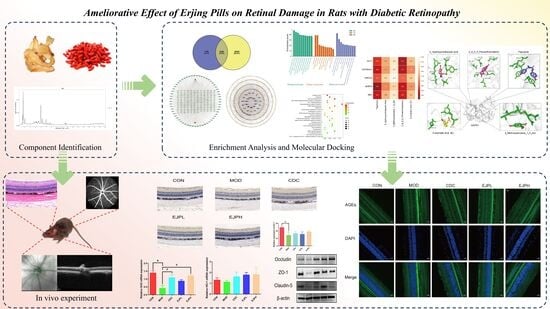
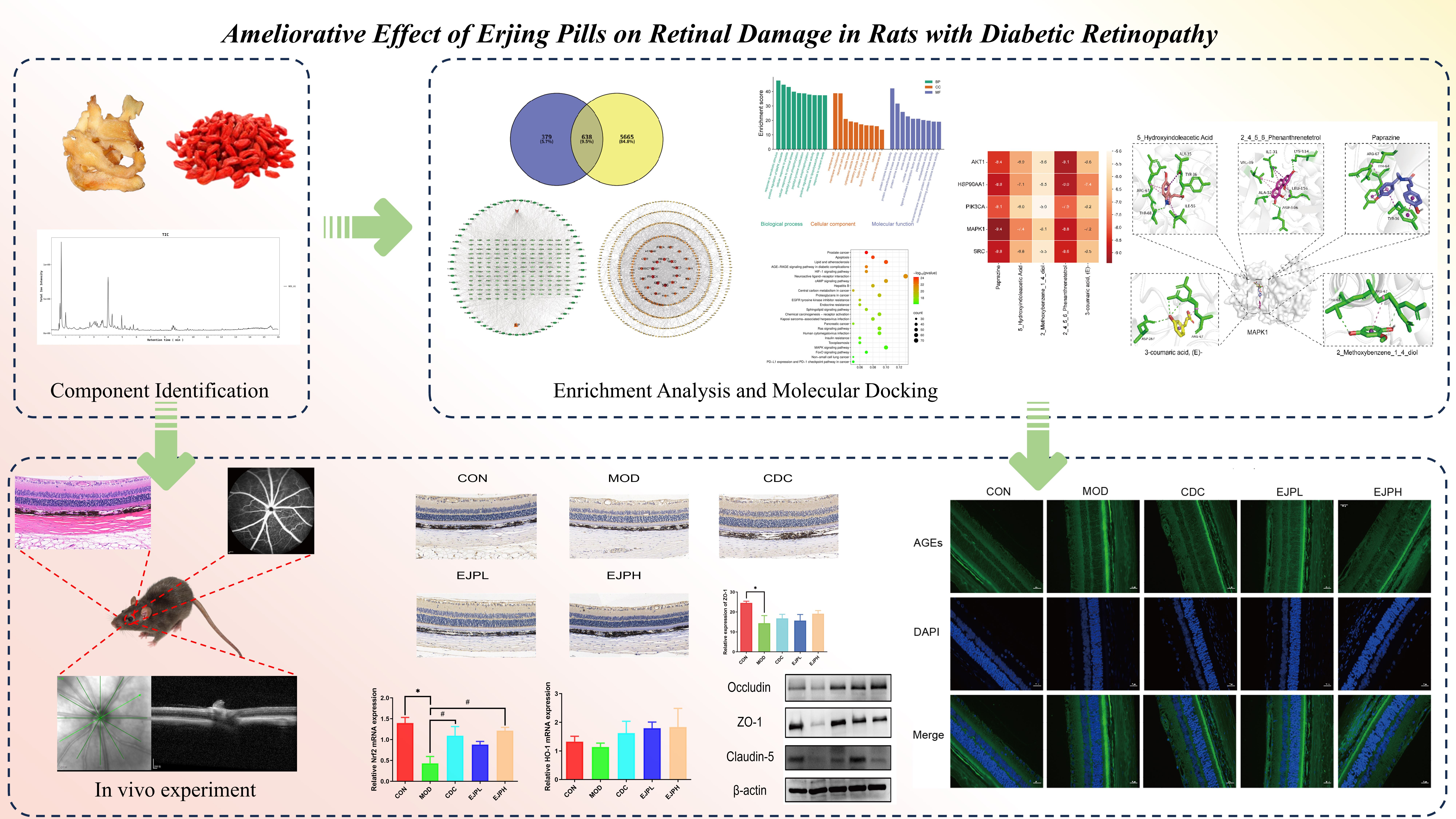
The purpose of this study is to explore the mechanism of EJPs in preventing and treating DR by improving damage to retinal neurovascular unit function in diabetes through network pharmacology and animal experiments, so as to provide a valuable scientific basis and reference for the application of EJPs in preventing and treating diabetes and its retinopathy.
3. Discussion
Our integrated study demonstrates that the traditional Chinese medicine formula known as EJPs significantly alleviates diabetic retinal injury in rats. The protective effects are manifested as improved retinal structure and function, preservation of the blood–retinal barrier (BRB), and reduction in vascular leakage. Mechanistically, our data point to the coordinated modulation of the AGE-RAGE-NF-κB/Nrf2 axis as a central mechanism underlying EJP efficacy.
The integrity of the BRB is fundamental to retinal homeostasis, and its breakdown is a hallmark of DR, leading to vascular leakage, edema, and neuronal dysfunction [
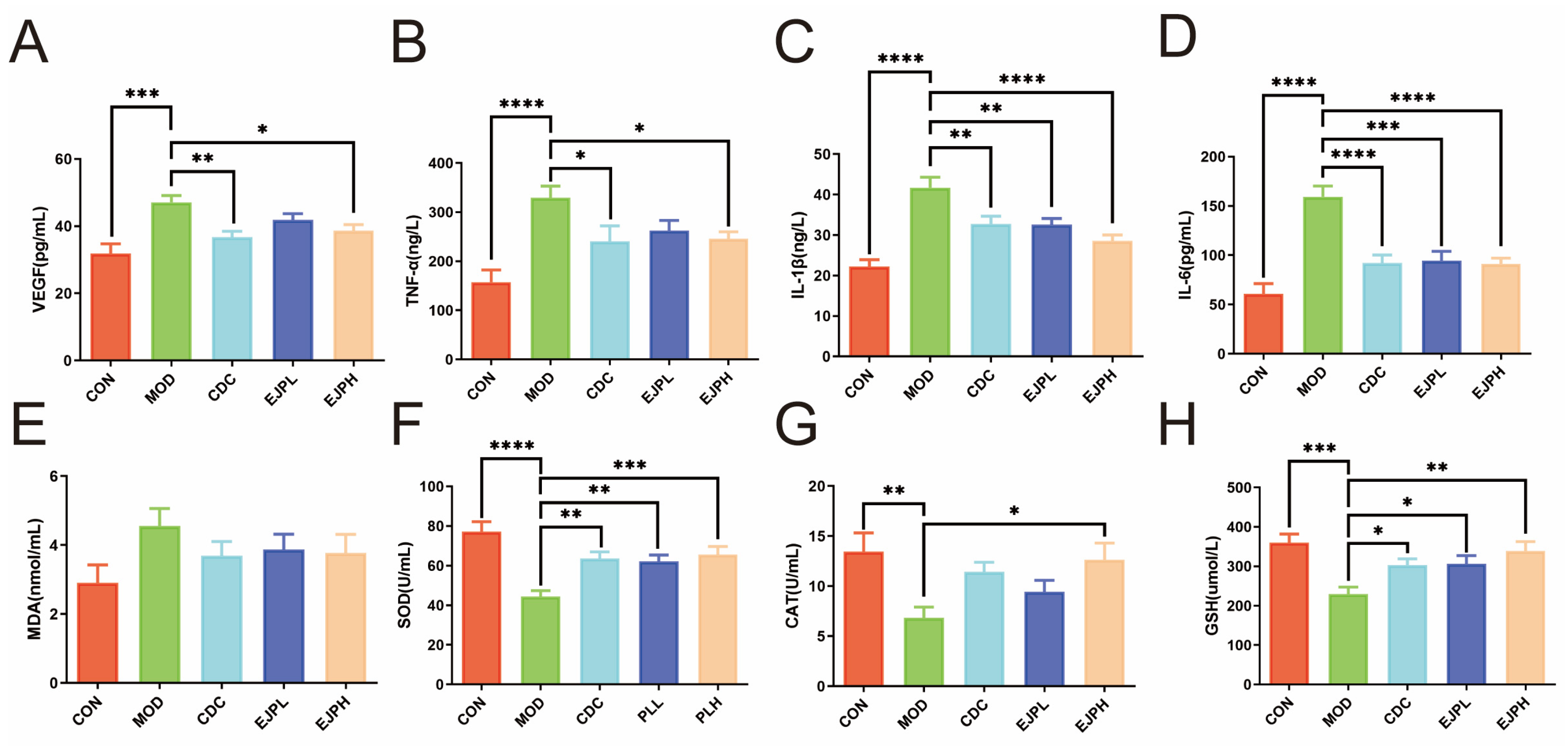
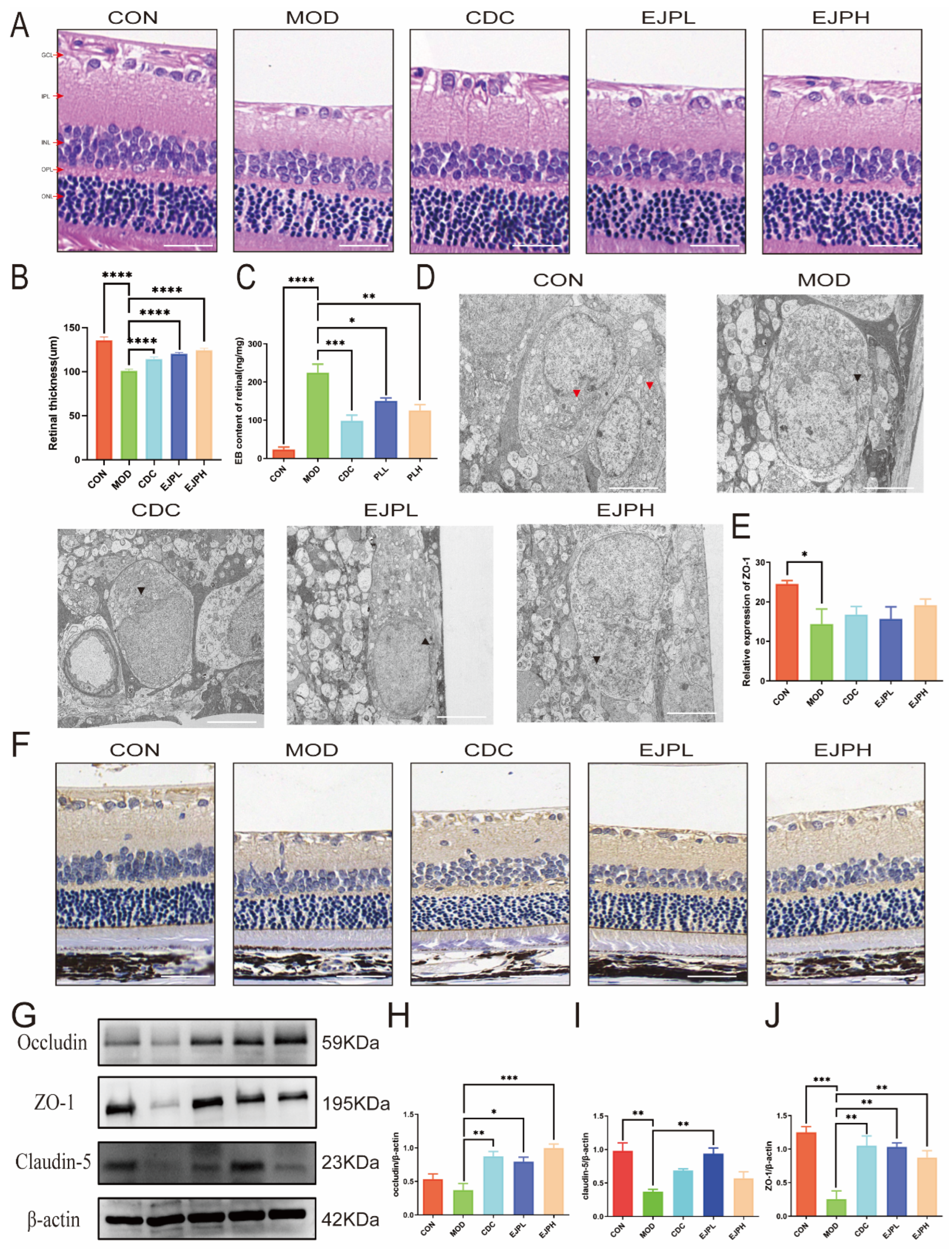
22]. Our study provides multifaceted evidence that EJP treatment effectively preserves BRB function in diabetic rats. First, EJPs significantly mitigated the pathological increase in vascular permeability, as demonstrated by the reduction in sodium fluorescein and Evans blue dye leakage. This functional improvement was paralleled by a marked decrease in serum VEGF levels. VEGF is a well-established master regulator of pathological vascular permeability and angiogenesis in DR, and its overexpression directly compromises BRB integrity by downregulating tight junction proteins [
1,
23]. Therefore, the suppression of VEGF by EJPs represents a critical mechanism for reducing the destructive force on the retinal vasculature. Second, beyond countering VEGF, EJPs actively fortified the BRB structure itself. We observed a significant upregulation in the expression of key tight junction proteins, including ZO-1, occludin, and claudin-5, in the retinal vasculature of EJP-treated animals. These proteins are essential for forming and maintaining the paracellular seal of endothelial cells, and their loss is directly linked to BRB failure in diabetes [
24]. The coordinated action of EJPs—simultaneously dampening the VEGF-driven disruptive signal and enhancing the structural components of the barrier—underscores its multi-targeted efficacy in stabilizing the neurovascular unit during diabetic insult.
Beyond its protective effects on the BRB, our findings elucidate that EJPs intercept diabetic retinal damage at a key upstream pathogenic node: the AGE-RAGE-NF-κB inflammatory axis. Hyperglycemia-driven accumulation of AGEs and their interaction with RAGE initiate a cascade of detrimental events central to DR progression [
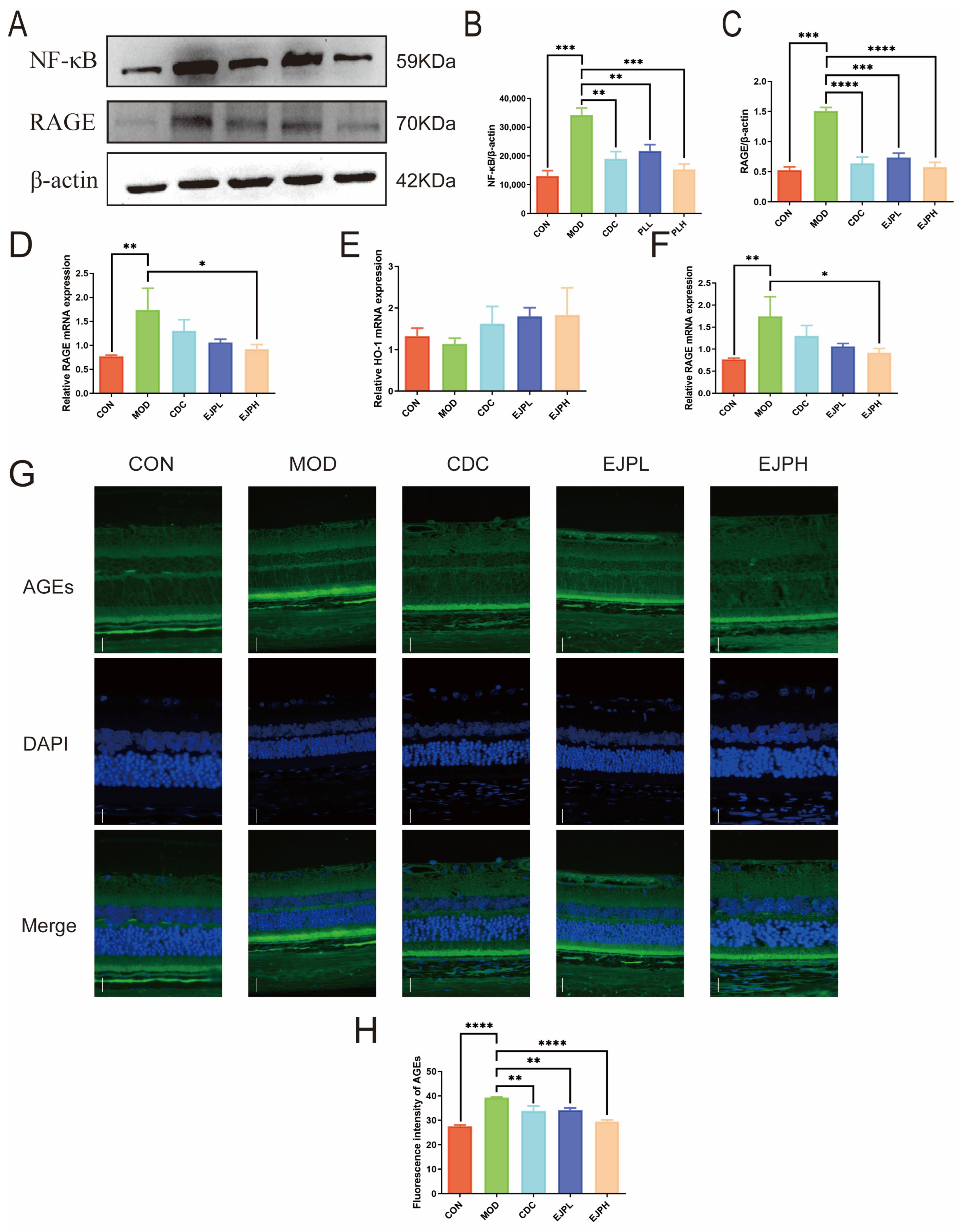
25]. Consistent with this paradigm, we observed a significant increase in AGE deposition, along with elevated RAGE and NF-κB protein levels, in the retinas of diabetic rats, which was accompanied by a surge in the pro-inflammatory cytokines TNF-α, IL-6, and IL-1β. Critically, EJP treatment disrupted this cascade at multiple levels: it reduced retinal AGE accumulation, downregulated RAGE expression, suppressed NF-κB activation, and consequently diminished the production of downstream inflammatory mediators. This multi-point suppression is significant because the AGE-RAGE interaction is known to activate NF-κB, a master transcriptional regulator of inflammation [
26]. The ensuing NF-κB-driven synthesis of cytokines like TNF-α and IL-1β not only sustains a chronic inflammatory milieu but also directly contributes to BRB dysfunction and vascular leakage—thereby bridging the mechanistic action of EJPs to the improved vascular phenotype [
27]. By concurrently targeting the AGEs, RAGE, and NF-κB, EJPs demonstrate a comprehensive strategy to quell a primary source of inflammatory insult in the diabetic retina.
In parallel to suppressing inflammation, EJPs robustly augmented the endogenous antioxidant defense system, which is typically compromised in diabetes. The transcription factor Nrf2 serves as the primary regulator of cellular redox homeostasis [
28]. Under diabetic conditions, sustained oxidative stress and inflammatory signaling can lead to Nrf2 pathway dysregulation, impairing its nuclear translocation and subsequent transactivation of antioxidant genes [
29]. This failure manifests as a depletion of crucial antioxidant enzymes, such as SOD, CAT, and GSH, and an accumulation of lipid peroxidation products like MDA—a profile we confirmed in the retinas of untreated diabetic rats [
30]. Treatment with EJPs effectively reversed this imbalance, significantly upregulating the expression and activity of Nrf2 and its key downstream effector HO-1, while restoring the levels of SOD, CAT, and GSH and reducing MDA. This indicates that EJPs actively reinstate the Nrf2-mediated antioxidant program. The therapeutic significance of this action extends beyond mere redox correction. A critical pathogenic feature in DR is the crosstalk between oxidative stress and inflammation, forming a self-perpetuating vicious cycle [
31]. Notably, NF-κB and Nrf2 pathways are known to reciprocally inhibit each other; NF-κB activation can suppress Nrf2 activity, while a deficient Nrf2 response exacerbates oxidative stress, further fueling NF-κB-driven inflammation [
25,
32].
This study is subject to certain limitations. Although network pharmacology predicted that EJPs might interact with multiple targets central to key signaling pathways, such as AKT1, MAPK1, and SRC, our experimental work provided direct validation mainly for the modulation of the AGE-RAGE-NF-κB pathway. The involvement of other predicted targets is yet to be functionally confirmed. Furthermore, the active chemical constituents within the complex mixture of EJPs that drive its therapeutic effects are yet to be precisely identified. To address these gaps, subsequent research will pursue two main directions: first, to functionally dissect the roles of prioritized targets in the protective mechanisms; second, to characterize and quantify the key active components, thereby providing a scientific foundation for the standardization of this herbal preparation.
In conclusion, EJPs mitigate diabetic retinopathy in rats by attenuating oxidative stress, inflammation, and vascular leakage, likely through the coordinated regulation of the AGE-RAGE-NF-κB/Nrf2 axis. This work provides a pharmacological foundation for the traditional use of EJPs and identifies promising directions for further mechanistic investigation and potential standardization.
4. Materials and Methods
4.1. Main Reagents and Instruments
Chromatography-grade methanol, acetonitrile, formic acid, and acetic acid were obtained from Fisher Scientific (Waltham, MA, USA). Mass spectrometry-grade water, 2-propanol, and 2-chloro-L-phenylalanine were purchased from Merck (Rahway, NJ, USA). Streptozotocin (STZ) and Evans blue were acquired from Sigma-Aldrich (St. Louis, MO, USA). Sodium citrate buffer and sodium fluorescein were sourced from Beijing Solarbio Science & Technology Co., Ltd. (Beijing, China). Tropicamide phenylephrine eye drops were procured from Santen Pharmaceutical Co., Ltd. (Xiamen, China). FAS eye fixative and glutaraldehyde fixative (2.5% in phosphate buffer) were obtained from Servicebio (Wuhan, China). Retinal imaging was performed using the Spectralis HRA + OCT system (Heidelberg Engineering GmbH, Heidelberg, Germany).
4.2. Extract of EJP Experimental Medicine
The processed rhizomes of Polygonatum sibiricum and the dried fruits of Lycium barbarum L. (Lycii Fructus) were purchased from Yunnan Kanglv Agricultural Technology Co., Ltd. (Kunming, China). Their botanical origins were authenticated by a Senior Engineer at the Yunnan University of Chinese Medicine (Voucher specimen numbers: 20230501001 and 20230501002, respectively). The two medicinal materials were ground into a coarse powder (40 mesh) and mixed in a 1:1 (w/w) ratio. The mixed powder was subjected to water extraction. Briefly, 1000 g of the powder was decocted twice with 10 volumes (w/v) of distilled water for 2 h per extraction under reflux at 100 °C. The combined aqueous extracts were filtered, concentrated under reduced pressure at 60 °C, and then lyophilized to obtain the dry EJP powder. The extraction yield was approximately 22.5% (w/w). The entire extraction process was strictly standardized.
4.3. EJP Component Characterization
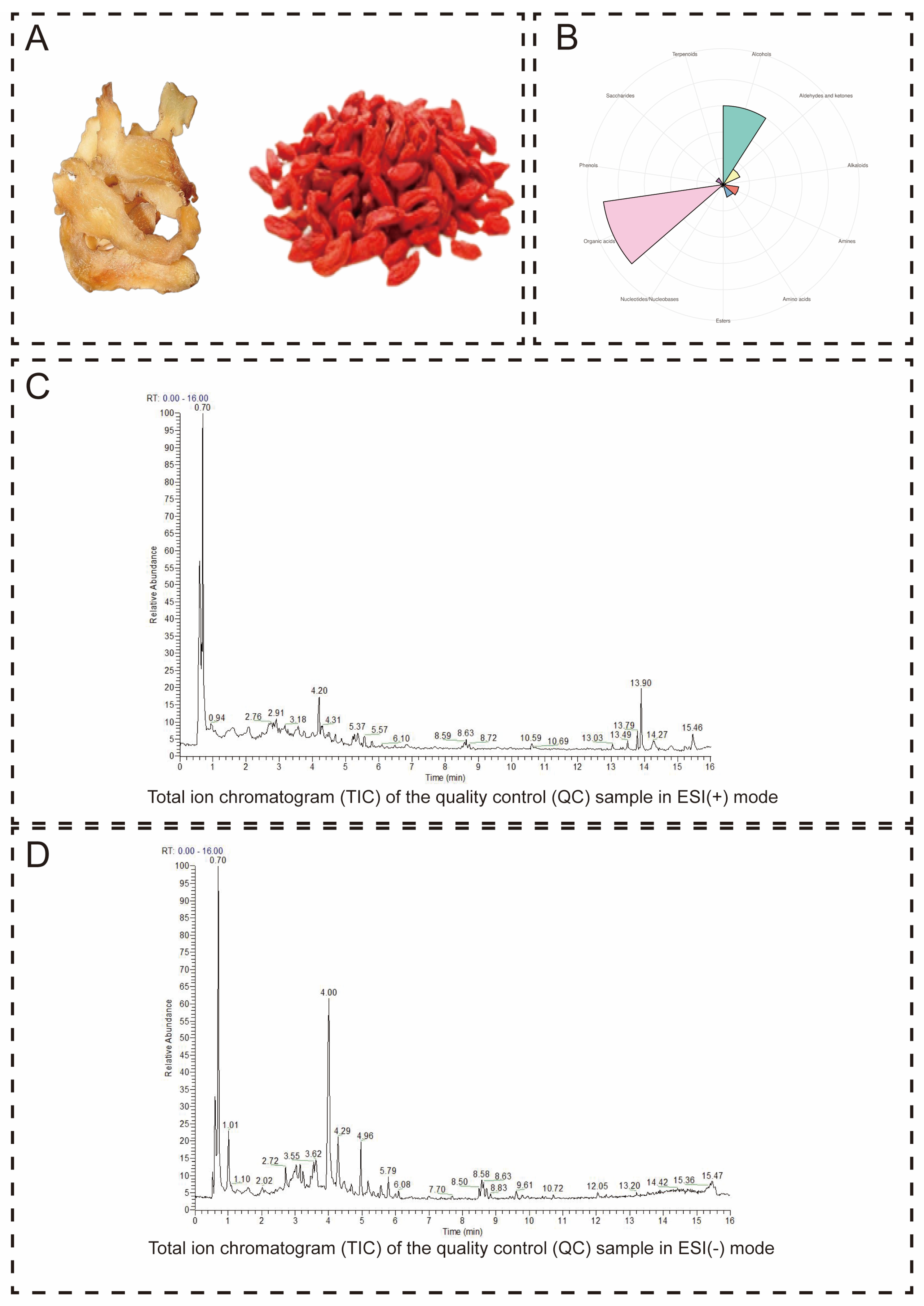
Sample preparation involved adding 300 µL of extraction solvent (methanol:acetonitrile, 1:1, v/v, spiked with 0.02 mg/mL L-2-chlorophenylalanine (Rahway, NJ, USA) as an internal standard) to a 100 µL aliquot in a 1.5 mL tube. Following extraction, metabolomic analysis was conducted on a UHPLC system coupled to a Q Exactive Orbitrap mass spectrometer (Thermo Scientific, Waltham, MA, USA).
Chromatographic separation was performed on an ACQUITY UPLC BEH C18 column (100 mm × 2.1 mm, 1.7 µm, Waters, Milford, MA, USA) maintained at 40 °C. The mobile phase consisted of solvent A (water with 0.1% formic acid and 2% acetonitrile) and solvent B (acetonitrile with 0.1% formic acid), delivered at a flow rate of 0.3 mL/min. The gradient elution program was as follows: 5–20% B (0–2 min), 20–35% B (2–5 min), 35–65% B (5–10 min), 65–95% B (10–15 min), and 95–5% B (15–17 min), with a 3 µL injection volume.
Mass spectrometric detection was performed in both positive and negative electrospray ionization (ESI) modes using a data-dependent acquisition (DDA) strategy. Key operating parameters were as follows: the spray voltage was set to 3.5 kV (positive) and −3.0 kV (negative); the heater and capillary temperatures were 450 °C and 320 °C, respectively. Full MS scans were acquired at a resolution of 70,000 (
m/
z 200) over a mass range of
m/
z 70–1050. Data-dependent MS/MS scans were triggered for the top 10 most intense ions, with a resolution of 17,500 and stepped normalized collision energies of 20%, 40%, and 60%. A summary of all parameters is provided in
Table S2.
Data were processed using Progenesis QI v3.0 (Waters Corporation, Milford, MA, USA). All metabolite identifications are preliminary annotations based on matching the acquired MS and MS/MS spectra against the MJBIOTCM and an in-house traditional Chinese medicine database, with a mass tolerance of <10 ppm. These annotations have not been validated using authentic chemical standards.
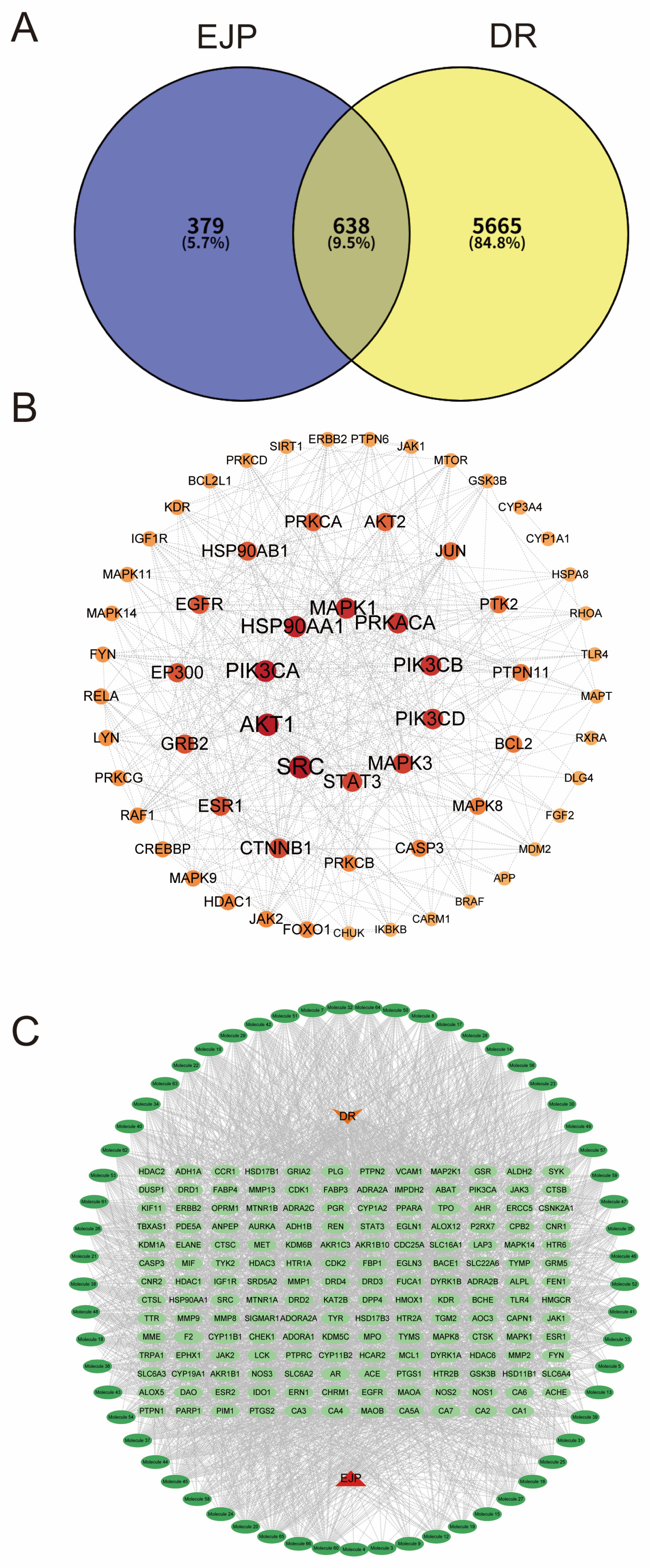
4.4. Screening of EJP Chemical Component Targets and Disease Targets
The identified chemical components were input into the SwissADME database. A preliminary screening for active ingredients with potentially good oral bioavailability was conducted by setting the gastrointestinal absorption parameter to “High”. Subsequently, these compounds were evaluated according to five drug-likeness rules (Lipinski, Ghose, Veber, Egan, Muegge). Compounds that received a “Yes” designation in two or more of these rules were considered qualified active compounds. The Swiss Target Prediction tool was then used to match these screened active ingredients with their corresponding potential targets. The term “Diabetic retinopathy” was used to search for related target genes in the GeneCards and OMIM databases. The retrieved targets were pooled, and duplicate entries were removed. The Venny 2.1.0 tool was subsequently employed to identify the common targets shared between the active ingredients and diabetic retinopathy for in-depth analysis. Following this, the drug–component–disease relationships and the intersection targets were organized into type and network files. These files were imported into Cytoscape 3.7.2 to construct a “Component–DiseaseTarget” network figure. The topological properties of this network were studied. Nodes with values of Degree, Betweenness Centrality, and Closeness Centrality all greater than their respective network averages were screened. Among these, the nodes with the highest Degree values were identified as the main active components of EJPs for treating DR [
33].
4.5. Construction of Protein–Protein Interaction (PPI) Network
Using the STRING database, the intersection genes were first imported into the STRING version 11.5 platform, with the species set to “Homo sapiens”. A confidence score threshold of ≥0.9 was applied, and isolated nodes were removed to obtain a visualizable protein–protein interaction relationship map. The connections between the targets were then detailed statistically. Finally, the data were saved and backed up as a TSV format file, which was subsequently imported into Cytoscape 3.7.2 software for visualization of the results.
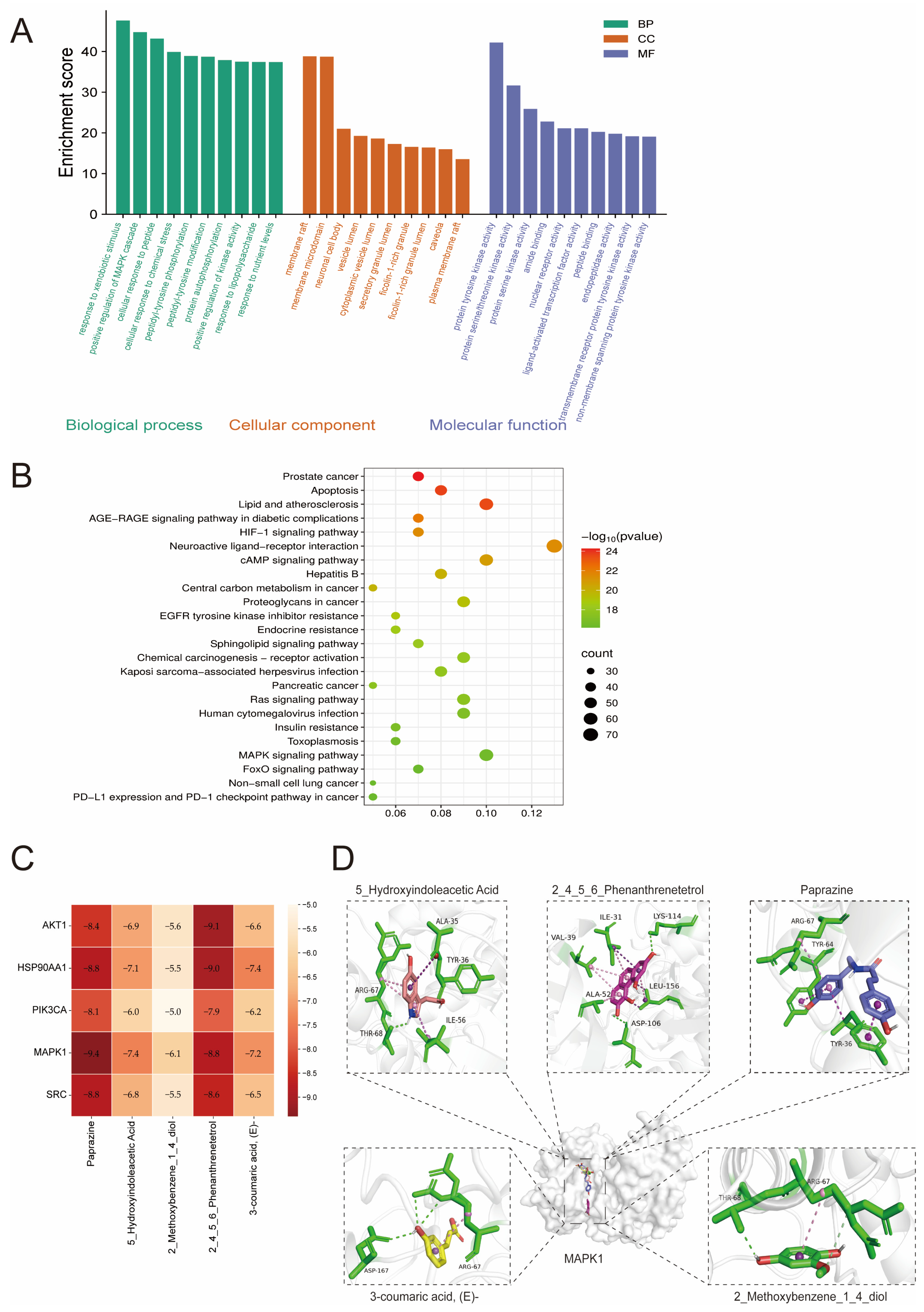
4.6. Gene Ontology (GO) and Kyoto Encyclopedia of Genes and Genomes (KEGG) Enrichment Analyses
Functional enrichment analysis was performed to interpret the common targets. Specifically, Gene Ontology (GO) and KEGG analyses were carried out using the ClusterProfiler package (v3.6.1) to annotate biological attributes and pathways, respectively. The GO analysis interrogates three domains: biological process (BP), molecular function (MF), and cellular component (CC). Terms with a p-value < 0.05 were considered significantly enriched.
4.7. Molecular Docking
The two-dimensional structures of the candidate compounds (2,4,5,6-Phenanthrenetetrol, 2-Methoxybenzene-1,4-diol, (E)-3-Coumaric acid, 5-Hydroxyindoleacetic Acid, and Paprazine) were retrieved from the PubChem database. Each structure was subjected to geometry optimization via energy minimization using the MMFF94 force field in Chem3D 23.1.1, with a gradient convergence criterion of 0.001 kcal/mol. The energy-minimized structures were subsequently converted into three-dimensional models and saved in PDBQT format using AutoDock Tools 1.5.7.
The three-dimensional crystal structures of the target proteins—HSP90AA1 (PDB: 1UY6), SRC (2SRC), AKT1 (3CQW), PIK3CA (4JPS), and MAPK1 (4QTA)—were obtained from the RCSB Protein Data Bank. Using PyMOL 3.2, all water molecules, co-crystallized ligands, and any heteroatoms (e.g., non-standard residues or ions not involved in catalysis or structural integrity) were removed from each protein structure. Polar hydrogen atoms were added, and Kollman partial atomic charges were assigned. The prepared protein structures were then converted to PDBQT format using AutoDock Tools.
The binding site for docking was defined by centering a grid box on the centroid of the native co-crystallized ligand (or, for structures without a bound ligand, on the centroid of key active site residues as reported in the literature). The grid box dimensions were set to 30 × 30 × 30, with a grid-point spacing of 0.375, ensuring comprehensive sampling of the binding pocket. Molecular docking simulations were performed using AutoDock Vina 1.1.2. The exhaustiveness of the global search was set to 50. For each ligand-protein pair, 20 independent docking runs were conducted. The conformation with the most favorable (i.e., lowest) calculated binding affinity (kcal/mol) was selected for subsequent interaction analysis. The optimal docking poses were visualized using PyMOL 3.2 to elucidate potential molecular interactions, such as hydrogen bonds and hydrophobic contacts.
4.8. Experimental Animals and Model
A total of 35 male SPF-grade brown Norway (BN) rats, aged 6 weeks and weighing 150 ± 20 g, were purchased from SPF Biotechnology Co., Ltd. (Beijing, China) (animal production license number: SCXK (Beijing) 2022-0004). The rats were housed in the SPF animal laboratory of the Animal Experiment Center of Yunnan University of Chinese Medicine. The housing conditions were maintained at a room temperature of 20–25 °C, relative humidity of 45–65%, with a 12 h/12 h light-dark cycle and adequate ventilation. All experimental procedures and protocols were approved by the Animal Ethics Committee of Yunnan University of Chinese Medicine (Ethical approval document number: R-062023057).
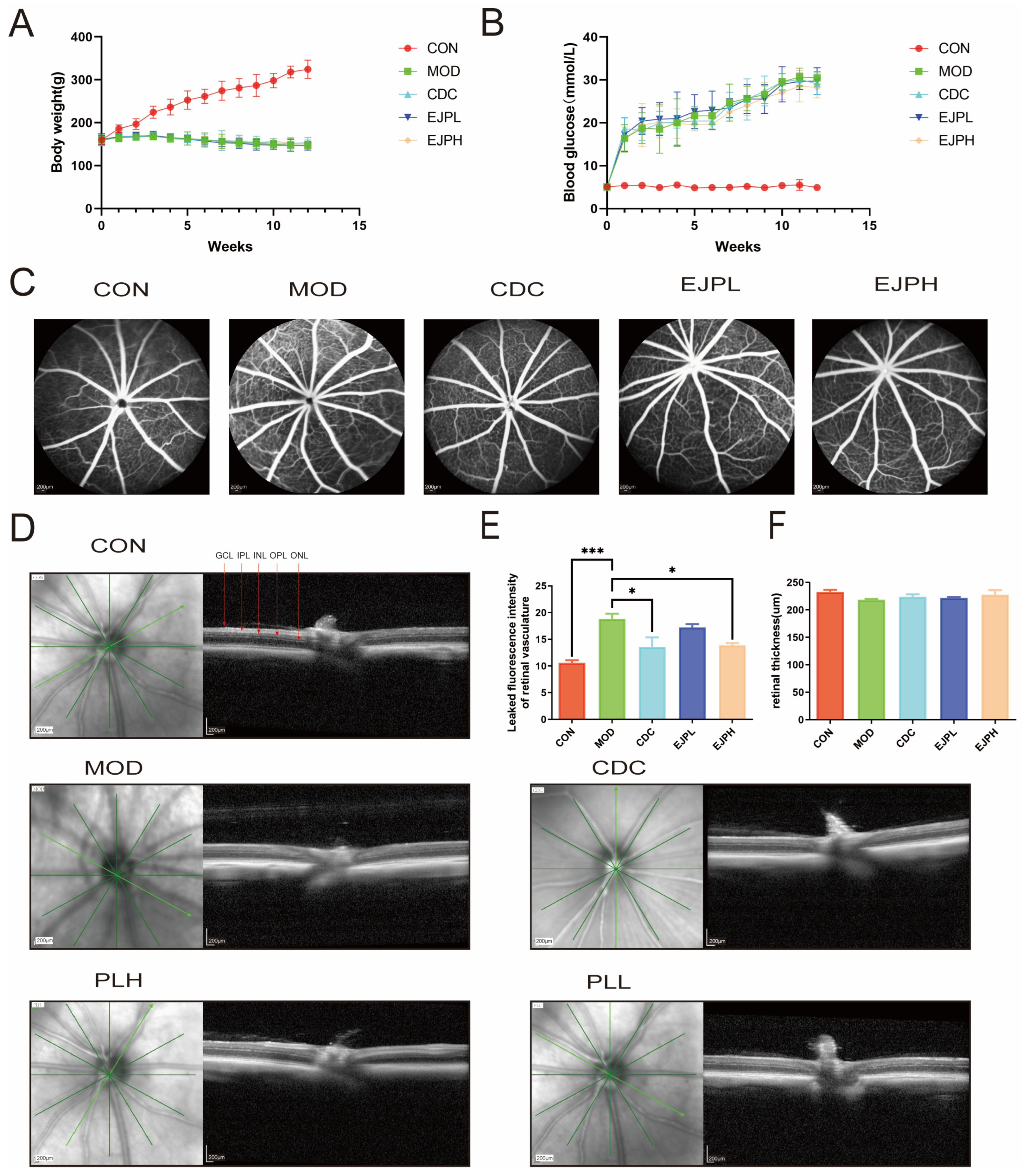
STZ can selectively destroy pancreatic β-cells and was used to induce diabetes in rats. A freshly prepared STZ solution (30 mg/kg) was administered via intraperitoneal injection for four consecutive days. Fasting blood glucose levels were measured on the 7th day after the last injection. Rats with blood glucose levels consistently ≥16.7 mmol/L were considered diabetic and included in the subsequent study. Following confirmation of successful diabetes induction, the diabetic rats were randomly divided into the following 5 groups (n = 7 per group): model group (MOD, received physiological saline), positive control group (CDC, received calcium dobesilate at 135 mg/kg, Beijing, China), low-dose EJPL group (EJPL, 1.5 g/kg), and high-dose EJPL group (EJPH, 6 g/kg). An additional group of age-matched normal rats served as the non-diabetic control (CON, saline). Drug administration commenced on the day following model confirmation (day 13 after the first STZ injection). All treatments were administered orally by gavage once daily in the morning for 10 consecutive weeks. At the end of the 10-week treatment period, blood was collected from the abdominal aorta, and retinal tissues were harvested for subsequent analysis.
The calcium dobesilate was selected as the positive control drug based on its well-established efficacy in diabetic microangiopathy, particularly retinopathy. Its therapeutic actions are primarily attributed to reducing capillary permeability and abnormal blood viscosity. At the molecular level, calcium dobesilate exerts antioxidant effects, inhibits the formation of AGEs, and modulates pathways involving VEGF and nitric oxide (NO), thereby stabilizing the retinal microvasculature [
24,
34].
4.9. Fluorescein Fundus Angiography (FFA) Test
FFA was performed using the Spectralis HRA + OCT system [
35]. After anesthesia in rats, 1% tropicamide eye drops (Santen Pharmaceutical Co., Ltd., Xiamen, China) were used to protect the pupils, followed by intraperitoneal injection of 0.1 mL of 10% fluorescein sodium (Solarbio, Beijing, China). The HRA module was used to continuously scan the retina to detect fluorescein sodium leakage in diabetic rats. ImageJ 1.54 software was used to analyze the fluorescence intensity of each group of photos and perform statistical analysis and inter-group comparison (GraphPad Prism v8.0).
4.10. Optical Coherence Tomography (OCT) Testing
After anesthesia in rats, 1% tropicamide eye drops were used to dilate the pupils, followed by observation of the changes in retinal structure using the Spectralis HRA + OCT system. Finally, the retinal thickness in OCT images was measured using ImageJ 1.54 software to evaluate the pathological changes in the retina [
36].
4.11. Determination of EB Penetration
After the last administration, 3 rats were randomly selected from each group for EB permeability testing [
37]. Rats were intraperitoneally injected with 2% Evans blue (45 mg/kg, Macklin Biochemical Co., Ltd., Shanghai, China), and after 2 h of circulation, the left ventricle was washed with physiological saline to eliminate circulating EB in the rat’s body. Subsequently, the eyeball was removed, and the retinal tissue was separated under a dissecting microscope (Model ST60, Sunny Optical, Ningbo, China). It was then placed in a 55 °C vacuum drying oven (BPG-9420A, Shanghai Yiheng Scientific Instrument Co., Ltd., Shanghai, China) and dried for 5 h before weighing. The retinal tissue was placed in a 70 °C water bath and 200 μL of formamide (Sinopharm Chemical Reagent Co., Ltd., Shanghai, China) was added to extract EB for 18 h. The extract was centrifuged at 12,000×
g for 30 min (Model 5428, Eppendorf AG, Hamburg, Germany), and the absorbance of the supernatant at 620 nm was measured using an enzyme-linked immunosorbent assay (ELISA) reader (Epoch HTS2, Agilent Technologies, Inc., Santa Clara, CA, USA). The EB content was calculated through a standard curve (GraphPad Prism v8.0) and compared with the weight of dried retinal tissue to calculate the EB leakage rate.
4.12. Hematoxylin and Eosin (H&E) Staining
The rat eyeballs were fixed overnight in FAS eye fixative (Servicebio, Wuhan, China) and then embedded in paraffin and cut into 3 μm continuous sections. The sections were stained with H&E, and the pathological changes of the retina were observed under an upright optical microscope (Nikon Eclipse E100, Nikon Corporation, Tokyo, Japan) to evaluate the degree of diabetic retinopathy. The method for detecting retinal thickness is specified in
Section 4.11, and relevant quantitative comparisons were performed using GraphPad Prism v8.0.
4.13. Transmission Electron Microscopy Analysis
After euthanizing the rats, the eyeballs were quickly removed and fixed in 2.5% glutaraldehyde (Servicebio, Wuhan, China) for 2–4 h. The retina was then dissected, cut it into small pieces of 1 mm3, and fixed in 1% osmium tetroxide (Ted Pella Inc., Redding, CA, USA) in 0.1 M phosphate buffer solution for 2 h. Following dehydration treatment, the tissue was embedded in SPI Pon 812 epoxy resin (SPI Supplies, West Chester, PA, USA) and polymerized at 60 °C for more than 48 h. Ultra-thin sections of 60–80 nm were cut using a Leica UC7 microtome (Leica Microsystems, Wetzlar, Germany), stained with 2% uranyl acetate (Servicebio, Wuhan, China) for 8 h, and finally, retinal ultrastructure changes were observed under a transmission electron microscope (Hitachi HT7800/HT7700, Hitachi High-Technologies Corporation, Tokyo, Japan).
4.14. Western Blot Analysis
Retinal tissues stored at −80 °C were homogenized in lysis buffer (prepared in-house) to extract total protein. Protein samples were denatured by boiling at 100 °C for 5 min and cooled to room temperature prior to loading. The denatured proteins were separated by SDS-PAGE and subsequently transferred onto a PVDF membrane (MilliporeSigma, Burlington, MA, USA). The membrane was then blocked with 5% non-fat milk (Solarbio, Beijing, China) for 2 h at room temperature on a shaker. Following blocking, the membrane was incubated overnight at 4 °C with the following primary antibodies: anti-ZO-1 (1:10,000, Cat# 21773-1-AP, Proteintech, San Diego, CA, USA), anti-occludin (1:5000, Cat# 13409-1-AP, Proteintech), anti-claudin-5 (1:10,000, Cat# 29767-1-AP, Proteintech), anti-NF-κB p65 (1:5000, Cat# 10745-1-AP, Proteintech), anti-RAGE (1:2000, Cat# 16346-1-AP, Proteintech), and anti-β-actin (1:5000, Cat# bs-0061R, BIOSS, Woburn, MA, USA). After washing with TBST [Tris-buffered saline with 0.1% Tween-20], the membrane was incubated with an HRP-conjugated goat anti-rabbit IgG secondary antibody (1:5000, Cat# SA00001-2, Proteintech) for 1 h at room temperature. Protein bands were visualized using an enhanced chemiluminescence substrate (GLPBIO, San Diego, CA, USA). The optical density of each target protein band was quantified using ImageJ 1.54 software and normalized to that of β-actin to determine the relative expression level.
4.15. IHC Staining
Paraffin-embedded retinal sections were routinely deparaffinized and rehydrated. After three 5 min washes with phosphate-buffered saline (PBS; Solarbio, Beijing, China), endogenous peroxidase activity was quenched by incubation with 3% hydrogen peroxide (prepared in-house) for 30 min. The sections were then blocked with 3% bovine serum albumin (BSA; Sigma-Aldrich, St. Louis, MO, USA) for 30 min at room temperature. Subsequently, the sections were incubated with a rabbit anti-ZO-1 primary antibody (1:2000, Cat# 21773-1-AP, Proteintech, Proteintech, San Diego, CA, USA) overnight at 4 °C. After washing with PBS, the sections were incubated with an HRP-conjugated goat anti-rabbit IgG secondary antibody (1:200, Cat# GB23303, Servicebio, Wuhan, China) for 1 h at room temperature. Color development was performed using a 3,3′-diaminobenzidine substrate kit (ZSGB-Bio, Beijing, China), and the reaction was terminated with distilled water after approximately 2–5 min. Finally, the sections were counterstained with hematoxylin (Solarbio, Beijing, China), dehydrated, cleared in xylene (Sinopharm Chemical Reagent, Shanghai, China), and mounted with neutral balsam (Solarbio, Beijing, China). For quantitative analysis, three non-overlapping fields per section were randomly selected under a light microscope (Nikon Eclipse E100, Nikon Corporation, Tokyo, Japan). The positive staining (brown-yellow) was analyzed using ImageJ 1.54 software. The expression level of ZO-1 was evaluated by calculating the average optical density (AOD) using the formula AOD = integrated optical density (IOD)/total area.
4.16. Immunofluorescence
Retinal sections were processed for immunofluorescence. After deparaffinization, rehydration, and antigen retrieval, sections were blocked with 3% BSA (Solarbio, Beijing, China) for 1 h at room temperature. The sections were then incubated with a rabbit anti-AGE primary antibody (1:100, Cat# bs-1158R, BIOSS, Beijing, China) overnight at 4 °C in a humidified chamber. After three 5 min washes with PBS (Solarbio, Beijing, China), the sections were incubated with a fluorescently labeled secondary antibody (1:200, Cat# GB22303, Servicebio, Wuhan, China) for 50 min at room temperature in the dark. Following another series of PBS washes, cell nuclei were counterstained with DAPI (1 µg/mL; Servicebio, Wuhan, China) for 10 min. To reduce tissue autofluorescence, sections were treated with an autofluorescence quenching reagent() for 5 min and rinsed under running tap water for 10 min. Finally, sections were mounted with an anti-fade mounting medium (Servicebio, Wuhan, China).
Fluorescent images were acquired using a BX51 inverted fluorescence microscope (OLYMPUS, Tokyo, Japan). For each retinal section, three non-overlapping fields were captured at 200× magnification. The Mean Fluorescence Intensity (MFI) of AGE immunostaining was quantified using ImageJ 1.54 software.
4.17. RT-qPCR
Utilizing a total RNA extraction kit (Tiangen Biotech, Beijing, China) according to the manufacturer’s protocol, the concentration and purity of the extracted RNA were assessed by measuring the absorbance at 260 nm and 280 nm using a NanoDrop spectrophotometer (Thermo Fisher Scientific, Waltham, MA, USA). RNA samples with an A260/A280 ratio between 1.8 and 2.0 were considered suitable for subsequent experiments. First-strand complementary DNA was synthesized from 1 µg of total RNA using the Hifair® III 1st Strand cDNA Synthesis SuperMix (YEASEN, Shanghai, China) in a 20 µL reaction volume, following the manufacturer’s instructions. The reverse transcription conditions were as follows: 42 °C for 2 min. Quantitative PCR was performed on a QuantStudio™ 1 Plus Real-Time PCR System (Thermo Scientific, Waltham, MA, USA) using Hieff UNICON® Universal Blue SYBR Green Master Mix (YEASEN, Shanghai, China). The 20 µL PCR reaction mixture contained 10 µL of SYBR Green Master Mix, 0.8 µL of each forward and reverse primer (10 µM), 2 µL of cDNA template, and 6.4 µL of nuclease-free water. The primer sequences used in this study are listed below (all primers were synthesized by Sangon Biotech, Shanghai, China):
Nrf2: Forward: 5′-GCCTTCCTCTGCTGCCATTAGTC-3′, Reverse: 5′-TGCCTTCAGTGTGCTTCTGGTTG-3′.
HO-1: Forward: 5′-AGGGTCAGGTGTCCAGGGAAAG-3′, Reverse: 5′-TCTGCTTGTTTCGCTCTATCTCCCTC-3‘.
RAGE: Forward: 5′-CCCAATGGTTCACTCCTCCTTCC-3′, Reverse: 5′-ACTTGGTAGACTCGGACTCGGTAG-3′.
β-actin: Forward: 5′-GTGACGTTGACATCCGTAAAGA-3′, Reverse: 5′-GCCGGACTCATCGTACTCC-3′.
The relative mRNA expression levels of target genes were normalized to the endogenous reference gene β-actin and calculated using the 2−ΔΔCt method. All reactions were performed in triplicate for each sample.
4.18. Biological Kit Determination
Serum and retinal tissues were collected and stored at −80 °C until analysis. After thawing, the levels of inflammatory cytokines (TNF-α, IL-6, and IL-1β) in retinal tissue homogenates and VEGF in serum were measured using specific enzyme-linked immunosorbent assay (ELISA) kits according to the manufacturers’ instructions. The commercial ELISA kits used were as follows: VEGF (Cat# MM-0807R2), TNF-α (Cat# MM-0180R1), IL-6 (Cat# MM-0190R1), and IL-1β (Cat# MM-0047R1), all from Jiangsu Meimian Industrial Co., Ltd. (Zhangjiagang, China).
The levels of oxidative stress markers, including malondialdehyde (MDA), superoxide dismutase (SOD), catalase (CAT), and glutathione (GSH), in serum were determined using corresponding colorimetric assay kits (MDA, Cat# A003-1-2; SOD, Cat# A001-3-2; CAT, Cat# A007-1-1; GSH, Cat# A006-2-1) purchased from the Nanjing Jiancheng Bioengineering Institute (Nanjing, China).
4.19. Statistical Analysis
Data are presented as the mean ± standard deviation (SD). Statistical analyses were performed using GraphPad Prism software (version 8.0). For comparisons between the MOD group and all other groups, one-way analysis of variance (ANOVA) was used, followed by Dunnett’s post hoc test. A p-value of less than 0.05 was considered statistically significant.




 ,
,