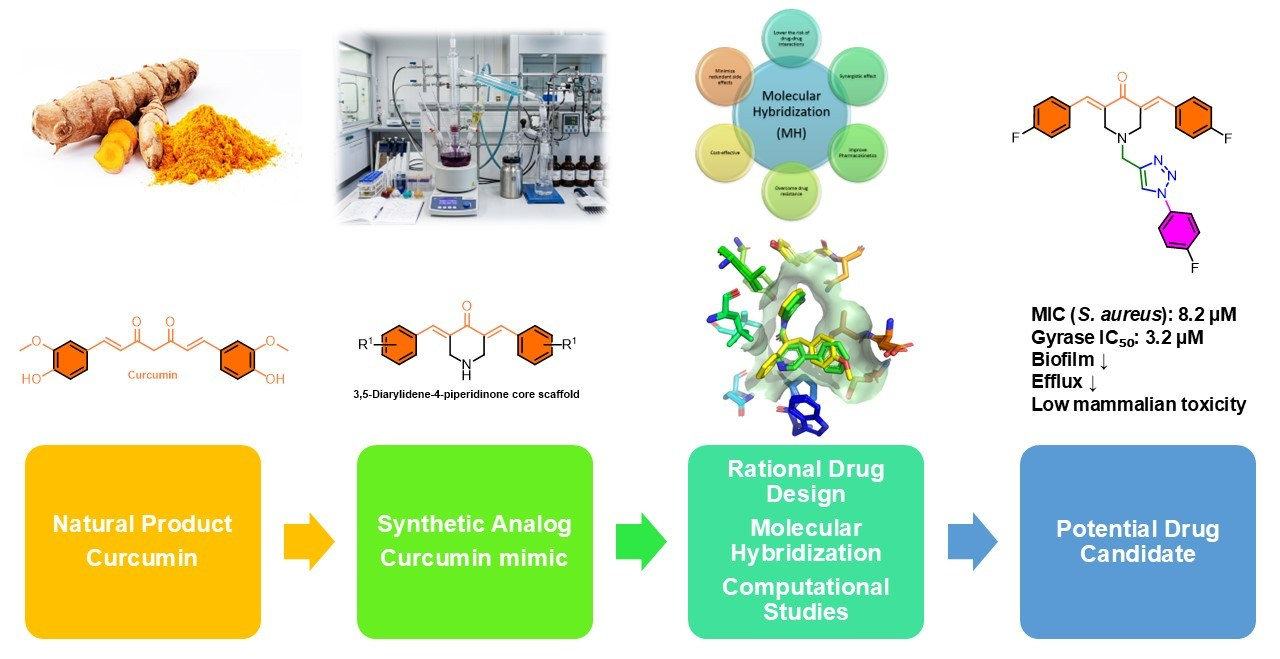
Multifunctional Curcumin-Inspired 3,5-Diarylidene-4-Piperidones: Design, Synthesis, Biological Evaluation and Computational Mechanistic Studies
 , , , , , and
Abstract
1. Introduction
2. Results
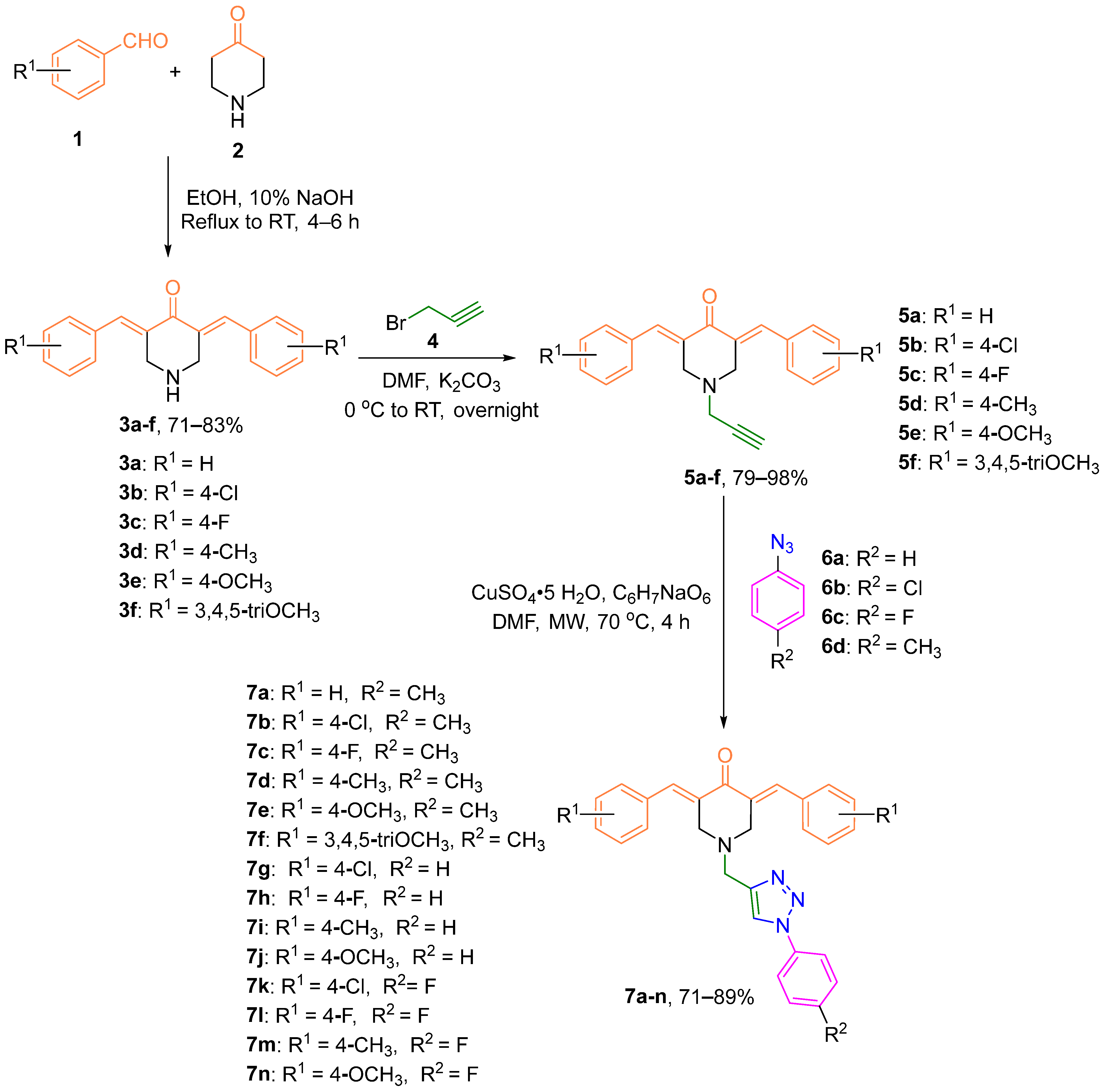
2.1. -Synthesis and Characterization
2.2. Biological Studies
2.2.1. Antibacterial Properties
2.2.2. DNA Gyrase Inhibition
2.2.3. Antibiofilm Properties
2.2.4. Anti-Efflux Properties
2.2.5. Antiproliferation Properties
2.3. Computational Results
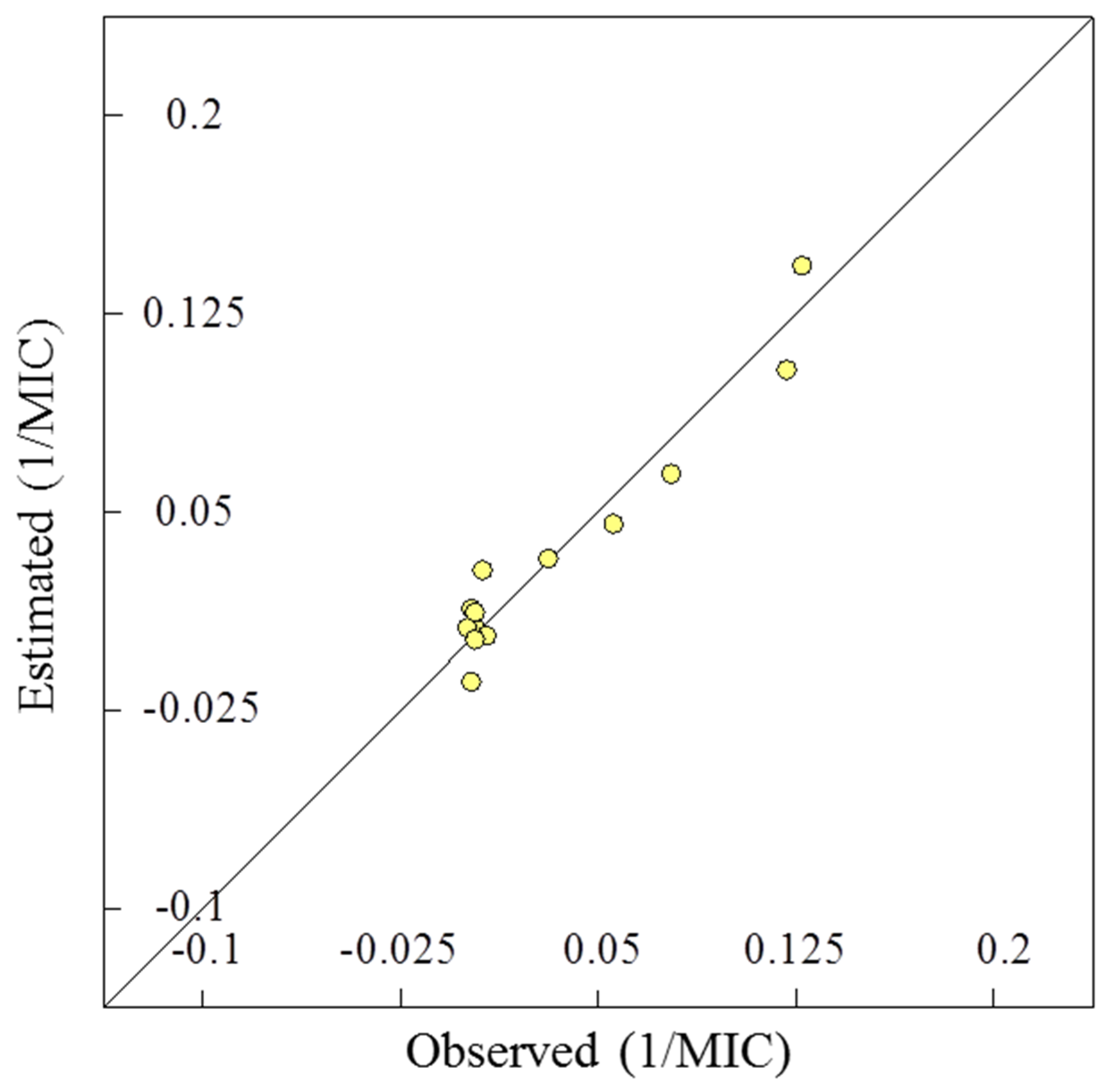
2.3.1. QSAR Analysis
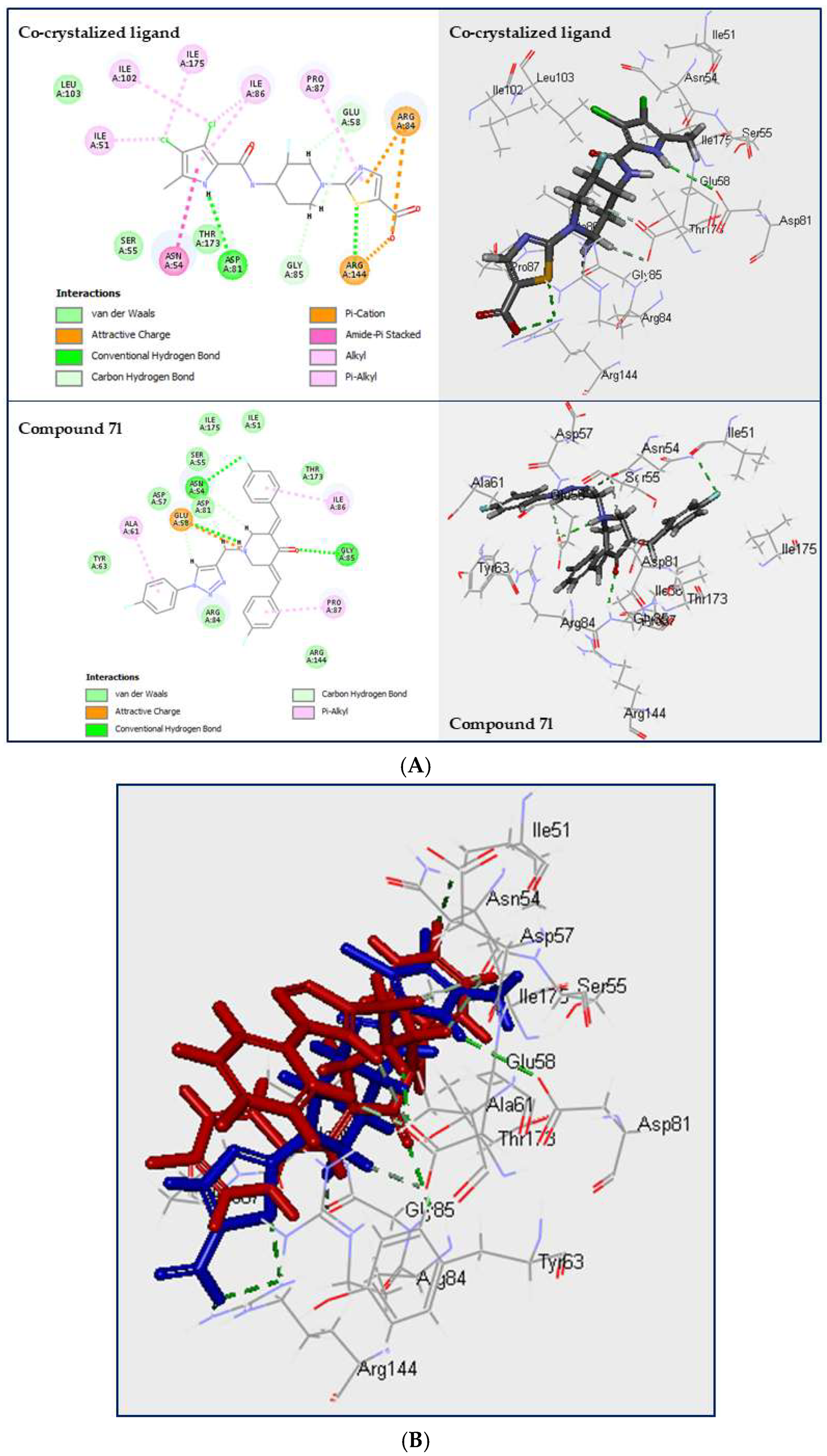
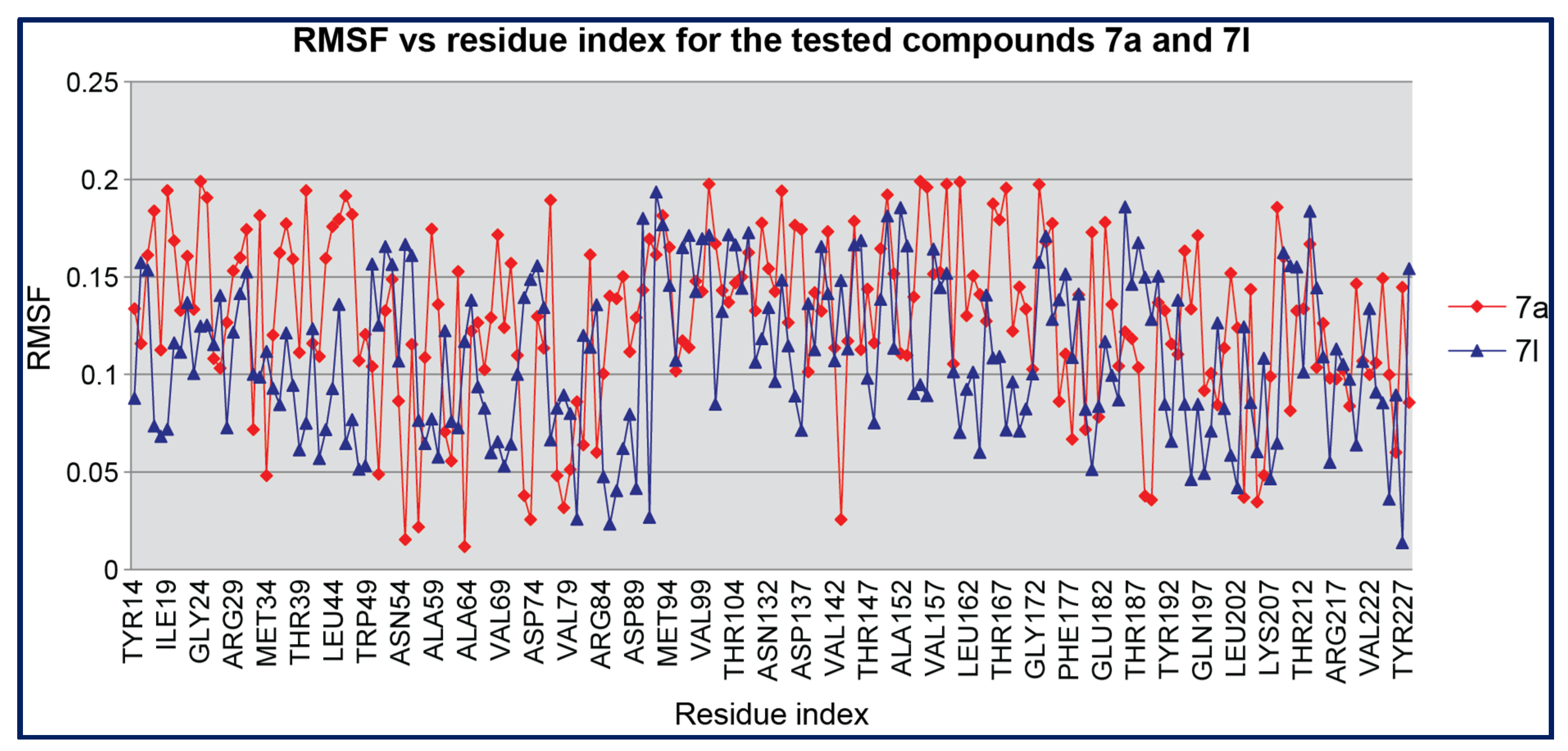
2.3.2. Molecular Dynamics Simulation Results
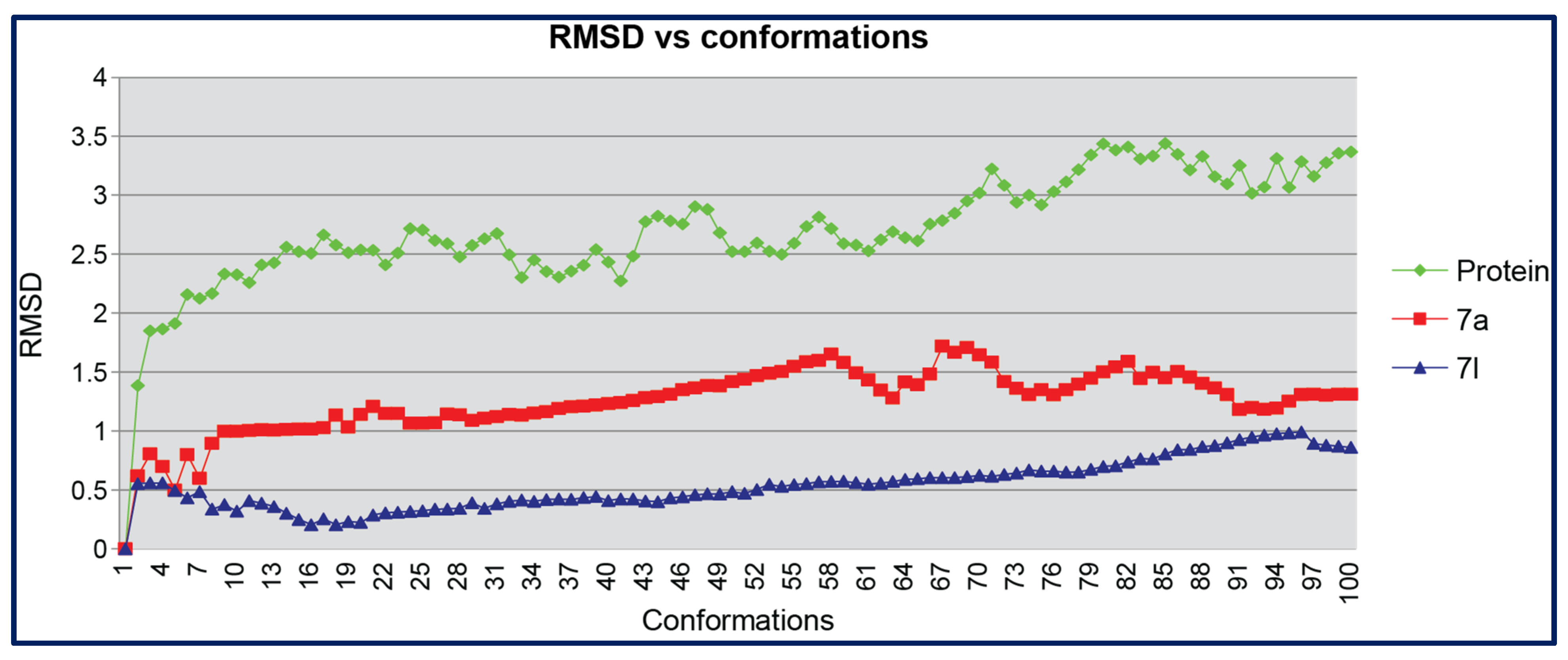
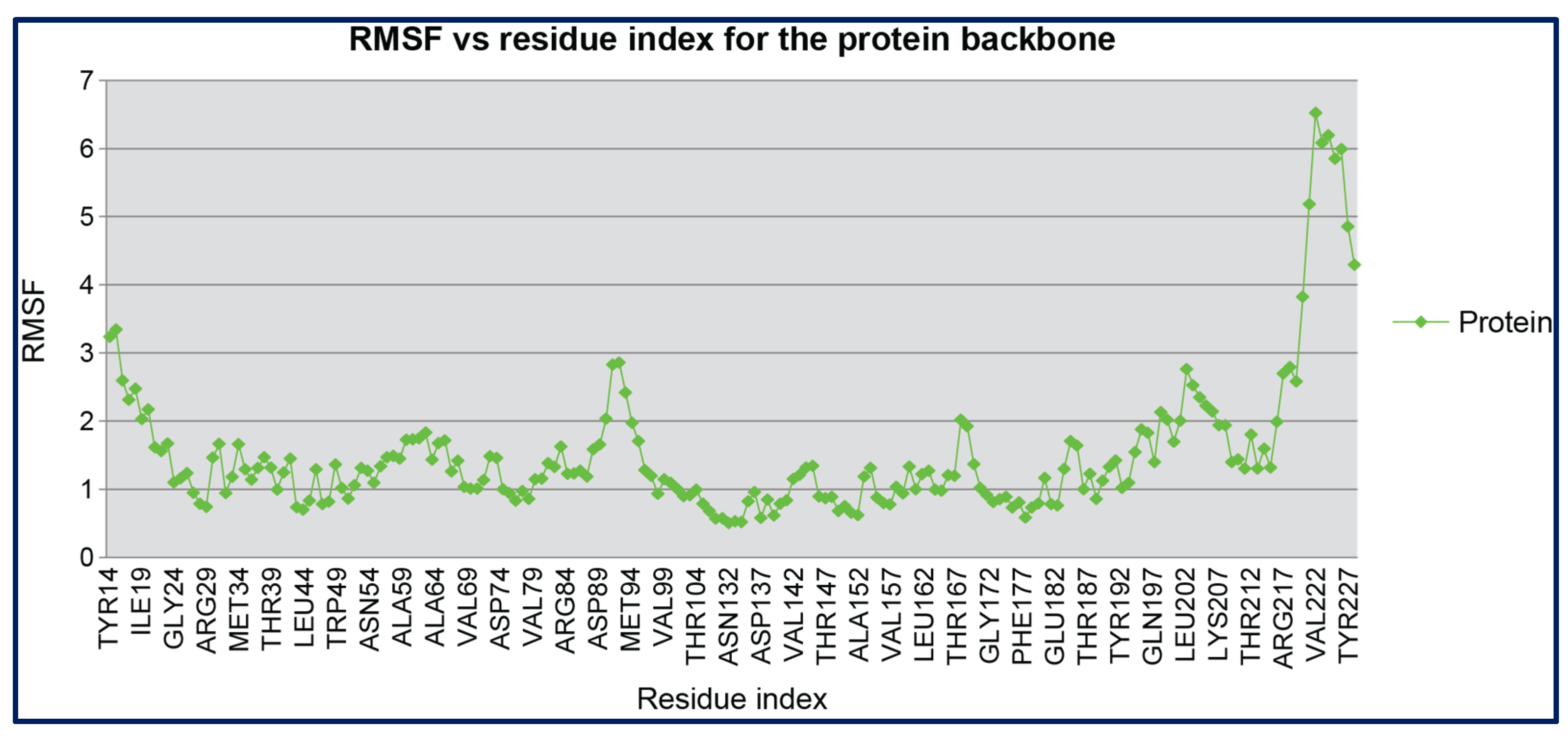
2.3.3. Molecular Dynamics SimulationResults
2.3.4. Physicochemical Properties (In Silico Results)
2.3.5. In Silico Toxicity Assessment
3. Discussion
3.1. Discussion of Synthetic Strategy
3.2. Biological Activity Discussion
3.2.1. Discussion of Antibacterial Activity
3.2.2. Discussion of DNA Gyrase Inhibition
3.2.3. Interpretation of Antibiofilm Activity
3.2.4. Mechanistic Insights into Efflux Inhibition
3.2.5. Discussion on Antiproliferation Activity
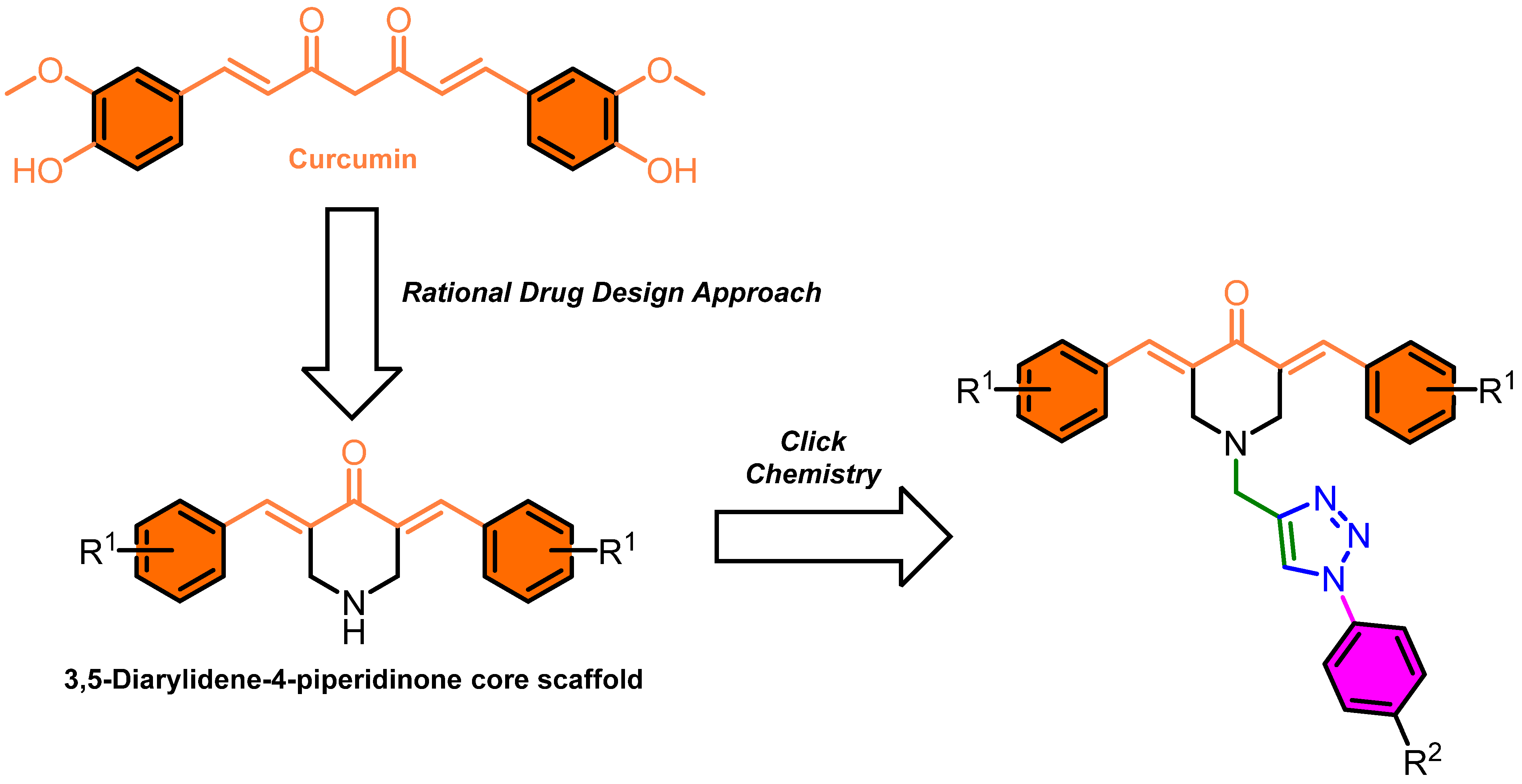
3.3. Computational Analysis and Interpretation
3.3.1. QSAR-Based Structure–Activity Relationship Analysis
3.3.2. Molecular Docking Interpretation and Binding Mechanism
3.3.3. Dynamic Behavior and Stability Analysis of Protein–Ligand Complexes
3.3.4. Physicochemical Profile and Drug-Likeness Interpretation
3.3.5. Discussion of Toxicity and Safety Profile
4. Materials and Methods
4.1. Chemical Synthesis
4.2. Antibacterial Bio-Assay
4.3. DNA Gyrase Inhibition
4.4. Antibiofilm Properties
4.5. Anti-Efflux Properties
4.6. Antiproliferation Properties
4.7. QSAR Studies
4.8. Molecular Docking Studies
4.9. Molecular Dynamics Simulations
5. Conclusions
Supplementary Materials
Author Contributions
Funding
Institutional Review Board Statement
Informed Consent Statement
Data Availability Statement
Acknowledgments
Conflicts of Interest
References
- Salam, M.A.; Al-Amin, M.Y.; Salam, M.T.; Pawar, J.S.; Akhter, N.; Rabaan, A.A.; Alqumber, M.A.A. Antimicrobial Resistance: A Growing Serious Threat for Global Public Health. Healthcare 2023, 11, 1946. [Google Scholar] [CrossRef] [PubMed]
- Ahmed, S.K.; Hussein, S.; Qurbani, K.; Ibrahim, R.H.; Fareeq, A.; Mahmood, K.A.; Mohamed, M.G. Antimicrobial Resistance: Impacts, Challenges, and Future Prospects. J. Med. Surg. Public Health 2024, 2, 100081. [Google Scholar] [CrossRef]
- Krishnaprasad, V.H.; Kumar, S. Antimicrobial Resistance: An Ultimate Challenge for 21st Century Scientists, Healthcare Professionals, and Policymakers to Save Future Generations. J. Med. Chem. 2024, 67, 15927–15930. [Google Scholar] [CrossRef]
- Edward, M.; Owoicho, A.W. Antimicrobial Resistance in Cancer Care: Challenge and Path Forward. Health Sci. Rep. 2026, 9, e71976. [Google Scholar] [CrossRef] [PubMed]
- Bassetti, M.; Cardone, A.; Cardoso, F.; Carter, V.; Cornely, O.A.; Falcone, M.; Gallego, D.; Giannella, M.; Grossi, P.A.; Pagano, L.; et al. Can We Lower the Burden of Antimicrobial Resistance (AMR) in Heavily Immunocompromised Patients? A Narrative Review and Call to Action. Infect. Dis. Ther. 2025, 14, 2029–2052. [Google Scholar] [CrossRef]
- Brdová, D.; Ruml, T.; Viktorová, J. Mechanisms of staphylococcal resistance to clinically relevant antibiotics. Drug Resist. Updat. 2024, 77, 101147. [Google Scholar] [CrossRef]
- Touaitia, R.; Mairi, A.; Ibrahim, N.A.; Basher, N.S.; Idres, T.; Touati, A. Staphylococcus aureus: A Review of Pathogenesis and Virulence Mechanisms. Antibiotics 2025, 14, 470. [Google Scholar] [CrossRef]
- Abebe, A.A.; Birhanu, A.G. Methicillin Resistant Staphylococcus aureus: Molecular Mechanisms Underlying Drug Resistance Development and Novel Strategies to Combat. Infect. Drug Resist. 2023, 16, 7641–7662. [Google Scholar] [CrossRef]
- Thacharodi, A.; Hassan, S.; Ahmed, T.; Acharya, G.; Blacknell, N.-M.G.; Singh, P.; Pal, S.; Saraswathi, A.; Kosuru, B.R.; Sofi, M.A.; et al. Methicillin-resistant Staphylococcus aureus is raising global concern as it overcomes immune challenges through various virulence mechanisms. iScience 2026, 29, 114376. [Google Scholar] [CrossRef] [PubMed]
- Hirabayashi, A.; Yahara, K.; Oka, K.; Kajihara, T.; Ohkura, T.; Hosaka, Y.; Shibayama, K.; Sugai, M.; Yagi, T. Comparison of disease and economic burden between MRSA infection and MRSA colonization in a university hospital: A retrospective data integration study. Antimicrob. Resist. Infect. Control 2024, 13, 27. [Google Scholar] [CrossRef]
- Turner, N.A.; Sharma-Kuinkel, B.K.; Maskarinec, S.A.; Eichenberger, E.M.; Shah, P.P.; Carugati, M.; Holland, T.L.; Fowler, V.G., Jr. Methicillin-Resistant Staphylococcus aureus: An overview of basic and clinical research. Nat. Rev. Microbiol. 2019, 17, 203–218. [Google Scholar] [CrossRef] [PubMed]
- Danielsen, A.S.; Franconeri, L.; Page, S.; Myhre, A.E.; Tornes, R.A.; Kacelnik, O.; Bjørnholt, J.V. Clinical outcomes of antimicrobial resistance in cancer patients: A systematic review of multivariable models. BMC Infect. Dis. 2023, 23, 247. [Google Scholar] [CrossRef]
- Lawal, O.P.; Ahmed, N.K.; Ilesanmi, T.A.; Anthony, G.I.; Nwosu, S.N.; Ogungbemiro, F.O.; Olaide, Z.; Adeniyi, M.M.; Okoye, U.L.; Olufunmilayo, A.M.; et al. The Impact of Antimicrobial Resistance on Cancer Treatment: A Systematic Review of Current Evidence and Future Directions. Asian J. Res. Med. Pharm. Sci. 2024, 13, 9–27. [Google Scholar] [CrossRef]
- Nanayakkara, A.K.; Boucher, H.W.; Fowler, V.G., Jr.; Jezek, A.; Outterson, K.; Greenberg, D.E. Antibiotic resistance in the patient with cancer: Escalating challenges and paths forward. CA Cancer J. Clin. 2021, 71, 488–504. [Google Scholar] [CrossRef]
- Holmes, A.H.; Moore, L.S.P.; Sundsfjord, A.; Steinbakk, M.; Regmi, S.; Karkey, A.; Guerin, P.J.; Piddock, L.J.V. Understanding the mechanisms and drivers of antimicrobial resistance. Lancet 2016, 387, 176–187. [Google Scholar] [CrossRef] [PubMed]
- Joyce, K.; Saxena, S.; Williams, A.; Damurjian, C.; Auricchio, N.; Aluotto, S.; Tynan, H.; Demain, A.L. Antimicrobial spectrum of the antitumor agent, cisplatin. J. Antibiot. 2010, 63, 530–532. [Google Scholar] [CrossRef]
- Niu, H.; Gu, J.; Zhang, Y. Bacterial persisters: Molecular mechanisms and therapeutic development. Signal Transduct. Target. Ther. 2024, 9, 174. [Google Scholar] [CrossRef]
- Guðmundsdóttir, J.S.; Fredheim, E.G.A.; Koumans, C.I.M.; Hegstada, J.; Tang, P.-C.; Andersson, D.I.; Samuelsena, Ø.; Johnsen, P.J. The chemotherapeutic drug methotrexate selects for antibiotic resistance. eBioMedicine 2021, 74, 103742. [Google Scholar] [CrossRef]
- Tewey, K.M.; Chen, G.L.; Nelson, E.M.; Liu, L.F. Intercalative antitumor drugs interfere with the breakage-reunion reaction of mammalian DNA topoisomerase II. J. Biol. Chem. 1984, 259, 9182–9187. [Google Scholar] [CrossRef]
- Pfab, C.; Schnobrich, L.; Eldnasoury, S.; Gessner, A.; El-Najjar, N. Repurposing of Antimicrobial Agents for Cancer Therapy: What Do We Know? Cancers 2021, 13, 3193. [Google Scholar] [CrossRef]
- Upadhyay, A.; Jha, H.C.; Pal, D.; Kumar, A. Repurposing antibiotics: A dual-action approach against bacteria-induced cancer. Cancer Pathog. Ther. 2025, 3, 473–483. [Google Scholar] [CrossRef]
- Beleva, E.; Diukendjieva, A.; Pajeva, I.; Tsakovska, I. Identifiation of Compounds with Potential Dual Inhibitory Activity Against Drug Efflux Pumps in Resistant Cancer Cells and Bacteria: Protocol for a Systematic Review. JMIR Res. Protoc. 2025, 14, e66197. [Google Scholar] [CrossRef]
- Zhang, L.; Tian, X.; Sun, L.; Mi, K.; Wang, R.; Gong, F.; Huang, L. Bacterial Efflux Pump Inhibitors Reduce Antibiotic Resistance. Pharmaceutics 2024, 16, 170. [Google Scholar] [CrossRef]
- Butler, M.S.; Vollmer, W.; Goodall, E.C.A.; Capon, R.J.; Henderson, I.R.; Blaskovich, M.A.T. A Review of Antibacterial Candidates with New Modes of Action. ACS Infect. Dis. 2024, 10, 3440–3474. [Google Scholar] [CrossRef]
- Ong, C.J.N.; Elesho, O.E.; Bramwell, B.B.; Cabuhat, K.S.; Bacalzo, G.D.; Nuevo, J.J.; Fortaleza, J.A. Staphylococcus aureus: Antimicrobial resistance, quorum sensing, and antibiofilm approaches. Eur. J. Microbiol. Immunol. 2025, 15, 195–209. [Google Scholar] [CrossRef]
- Sinha, S.; Aggarwal, S.; Singh, D.V. Efflux Pumps: Gatekeepers of antibiotic resistance in Staphylococcus aureus biofilms. Microb. Cell 2024, 11, 368–377. [Google Scholar] [CrossRef]
- Urošević, M.; Nikolić, L.; Gajić, I.; Nikolić, V.; Dinić, A.; Miljković, V. Curcumin: Biological Activities and Modern Pharmaceutical Forms. Antibiotics 2022, 11, 135. [Google Scholar] [CrossRef] [PubMed]
- Adahoun, M.A.; Al-Akhras, M.A.H.; Jaafar, M.S.; Bououdina, M. Enhanced anti-cancer and antimicrobial activities of curcumin nanoparticles. Artif. Cells Nanomed. Biotechnol. 2017, 45, 98–107. [Google Scholar] [CrossRef]
- Fuloria, S.; Mehta, J.; Chandel, A.; Sekar, M.; Rani, N.N.M.; Begum, M.Y.; Subramaniyan, V.; Chidambaram, K.; Thangavelu, L.; Nordin, R.; et al. A Comprehensive Review on the Therapeutic Potential of Curcuma longa Linn. In Relation to its Major Active Constituent Curcumin. Front. Pharmacol. 2022, 13, 820806. [Google Scholar] [CrossRef] [PubMed]
- Chavez, J.C.; Girgis, A.S.; Aziz, M.N.; Khurana, S.; Carr, B.; Verbeck, G.F.; Panda, S.S. Hybrid Conjugates of Ibuprofen and 3,5-Diarylidene-4-Piperidone: A New Avenue in Anti-Inflammatory Drug Discovery. ChemMedChem 2025, 20, e202500342. [Google Scholar] [CrossRef] [PubMed]
- Panda, S.S.; Fayad, W.; Soliman, A.A.F.; Chagas, P.S.; Naeini, S.E.; Morsy, M.A.; Ferguson, F.A.; Gupta, K.B.; Verbeck, G.F.; Baban, B.; et al. Hybrid molecules of ibuprofen and piperidone: A rational approach toward anti-cancer drug development. Bioorg. Med. Chem. 2025, 130, 118370. [Google Scholar] [CrossRef]
- Mandalapu, D.; Saini, K.S.; Gupta, S.; Sharma, V.; Malik, M.Y.; Chaturvedi, S.; Bala, V.; Hamidullah; Thakur, S.; Maikhuri, J.P.; et al. Synthesis and biological evaluation of some novel triazole hybrids of curcumin mimics and their selective anticancer activity against breast and prostate cancer cell lines. Bioorg. Med. Chem. Lett. 2016, 26, 4223–4232. [Google Scholar] [CrossRef]
- Dimmock, J.R.; Arora, V.K.; Quail, J.W.; Pugazhenthi, U.; Allen, T.M.; Kao, G.Y.; De Clercq, E. Cytotoxic evaluation of some 3,5-diarylidene-4-piperidones and various related quaternary ammonium compounds and analogs. J. Pharm. Sci. 1994, 83, 1124–1130. [Google Scholar] [CrossRef]
- Siddiqui, L.; Hawsawi, M.B.; Chotana, G.A.; Saleem, R.S.Z. Bis-Chalcones: Recent Reports of Their Diverse Applications in Biological and Material Sciences. ACS Omega 2024, 9, 42061–42090. [Google Scholar] [CrossRef] [PubMed]
- Moreira, J.; Saraiva, L.; Pinto, M.M.; Cidade, H. Bioactive Diarylpentanoids: Insights into the Biological Effects beyond Antitumor Activity and Structure–Activity Relationships. Molecules 2022, 27, 6340. [Google Scholar] [CrossRef]
- Singaram, K.; Marimuthu, D.; Baskaran, S.; Ramaswamy, V. Synthesis and antimicrobial activity of new 3,5-diarylidene-4-piperidone derivatives. J. Serb. Chem. Soc. 2016, 81, 859–870. [Google Scholar] [CrossRef]
- Panda, S.S.; Girgis, A.S.; Thomas, S.J.; Capito, J.E.; George, R.F.; Salman, A.; El-Manawaty, M.A.; Samir, A. Synthesis, pharmacological profile and 2D-QSAR studies of curcumin-amino acid conjugates as potential drug candidates. Eur. J. Med. Chem. 2020, 196, 112293. [Google Scholar] [CrossRef] [PubMed]
- Clinical and Laboratory Standards Institute (CLSI). Performance standards for antimicrobial susceptibility testing. In CLSI Supplement M100, 31st ed.; CLSI: Berwyn, PA, USA, 2021. [Google Scholar]
- Sharma, D.; Patel, R.P.; Zaidi, S.T.R.; Sarker, M.M.R.; Lean, Q.Y.; Ming, L.C. Interplay of the Quality of Ciprofloxacin and Antibiotic Resistance in Developing Countries. Front. Pharmacol. 2017, 8, 546. [Google Scholar] [CrossRef]
- Ciprofloxacin Uses, Interactions, Mechanism of Action—DrugBank. Available online: https://go.drugbank.com/drugs/DB00537 (accessed on 1 May 2026).
- Ciprofloxacin Uses, Dosage, Side Effects, Warnings—Drugs.com. Available online: https://www.drugs.com/ciprofloxacin.html (accessed on 1 May 2026).
- Sharma, P.C.; Jain, A.; Jain, S.; Pahwa, R.; Yar, M.S. Ciprofloxacin: Review on developments in synthetic, analytical, and medicinal aspects. J. Enzym. Inh. Med. Chem. 2010, 25, 577–589. [Google Scholar] [CrossRef]
- Inspiralis. S. aureus DNA Gyrase Supercoiling Assay Kit, Product Numbers SAS4001 and SAS4002. Available online: https://www.inspiralis.com/products/bacterial-topoisomerases/dna-gyrase/s-aureus (accessed on 19 April 2026).
- Pietsch, F.; Bergman, J.M.; Brandis, G.; Marcusson, L.L.; Zorzet, A.; Huseby, D.L.; Hughes, D. Ciprofloxacin selects for RNA polymerase mutations with pleiotropic antibiotic resistance effects. J. Antimicrob. Chemother. 2017, 72, 75–84. [Google Scholar] [CrossRef]
- Ferreira, L.; Pos, E.; Nogueira, D.R.; Ferreira, F.P.; Sousa, R.; Abreu, M.A. Antibiotics with antibiofilm activity—Rifampicin and beyond. Front. Microbiol. 2024, 15, 1435720. [Google Scholar] [CrossRef]
- Geremia, N.; Giovagnorio, F.; Colpani, A.; De Vito, A.; Botan, A.; Stroffolini, G.; Toc, D.-A.; Zerbato, V.; Principe, L.; Madeddu, G.; et al. Fluoroquinolones and Biofilm: A Narrative Review. Pharmaceuticals 2024, 17, 1673. [Google Scholar] [CrossRef] [PubMed]
- Tuon, F.F.; Suss, P.H.; Telles, J.P.; Dantas, L.R.; Borges, N.H.; Ribeiro, V.S.T. Antimicrobial Treatment of Staphylococcus aureus Biofilms. Antibiotics 2023, 12, 87. [Google Scholar] [CrossRef] [PubMed]
- Liu, S.; Xiong, Y.; Xiao, H.; Zheng, J.; Wen, Z.; Li, D.; Deng, Q.; Yu, Z. Inhibition of planktonic growth and biofilm formation of Staphylococcus aureus by entrectinib through disrupting the cell membrane. Front. Microbiol. 2023, 13, 1106319. [Google Scholar] [CrossRef]
- Yee, R.; Yuan, Y.; Tarff, A.; Brayton, C.; Gour, N.; Feng, J.; Zhang, Y. Eradication of Staphylococcus aureus Biofilm Infection by Persister Drug Combination. Antibiotics 2022, 11, 1278. [Google Scholar] [CrossRef]
- Shenkutie, A.M.; Yao, M.Z.; Siu, G.K.; Wong, B.K.C.; Leung, P.H. Biofilm-Induced Antibiotic Resistance in Clinical Acinetobacter baumannii Isolates. Antibiotics 2020, 9, 817. [Google Scholar] [CrossRef]
- Cui, W.; Wang, Y.; Zhang, L.; Liu, F.; Duan, G.; Chen, S.; Long, J.; Jin, Y.; Yang, H. Recent advances in the use of resveratrol against Staphylococcus aureus infections (Review). Med. Int. 2024, 4, 67. [Google Scholar] [CrossRef]
- Irianti, M.I.; Ritsema, J.H.; Hageman, J.; Vincken, J.-P.; Araya-Cloutier, C. Molecular features of prenylated (iso)flavonoids from Fabaceae in relation to their potential NorA inhibition in Staphylococcus aureus. Front. Pharmacol. 2026, 16, 1715533. [Google Scholar] [CrossRef]
- Kouidhi, B.; Ali, E.M.M.; Zmantar, T.; Bayar, S.; Omar, A.M.; Hosawi, S.B.; Altayeb, H.N.; Kazmi, I.; Zeyadi, M.; Chaieb, K. Evaluation of lawsone as a potential inhibitor of Staphylococcus aureus efflux pump mediated drugs resistance: An in-vitro and in-silico study. Comput. Biol. Chem. 2026, 122, 108922. [Google Scholar] [CrossRef] [PubMed]
- Coldham, N.G.; Webber, M.; Woodward, M.J.; Piddock, L.J.V. A 96-well plate fluorescence assay for assessment of cellular permeability and active efflux in Salmonella enterica serovar Typhimurium and Escherichia coli. J. Antimicrob. Chemother. 2010, 65, 1655–1663. [Google Scholar] [CrossRef]
- Bekheit, M.S.; Panda, S.S.; Kariuki, B.M.; Fayad, W.; Soliman, A.A.F.; Farag, H.; Girgis, A.S. Antineoplastic 4-piperidone-1-phosphonothioates with potential multi-targeted inhibitory properties. Sci. Rep. 2025, 15, 40363. [Google Scholar] [CrossRef]
- Sunitinib, Uses, Interactions, Mechanism of Action. Available online: https://go.drugbank.com/drugs/DB01268 (accessed on 1 May 2026).
- Sutent (Sunitinib Malate) FDA Approval History. Available online: https://www.drugs.com/history/sutent.html (accessed on 1 May 2026).
- Fluorouracil Injection Uses, Side Effects & Warnings. Available online: https://www.drugs.com/mtm/fluorouracil-injection.html (accessed on 1 May 2026).
- Aboshouk, D.R.; Youssef, M.A.; Panda, S.S.; Kariuki, B.M.; Bekheit, M.S.; Hamed, A.R.; Fayad, W.; Soliman, A.A.F.; Girgis, A.S. Design and synthesis of antiproliferative 2-oxoindolin-3-ylidenes incorporating urea function with potential VEGFR-2 inhibitory properties. Sci. Rep. 2025, 15, 618. [Google Scholar] [CrossRef] [PubMed]
- Girgis, A.S.; Panda, S.S.; Aziz, M.N.; Steel, P.J.; Hall, C.D.; Katritzky, A.R. Rational design, synthesis, and 2D-QSAR study of anti-oncological alkaloids against hepatoma and cervical carcinoma. RSC Adv. 2015, 5, 28554–28569. [Google Scholar] [CrossRef]
- Brown, L.D.; Girgis, A.S.; Patel, S.; Samir, N.; Said, M.F.; Baidya, A.T.K.; Kumar, R.; Moore, J.; Khadanga, A.; Sakhuja, R.; et al. Novel isatin conjugates endowed with analgesic and anti-inflammatory properties: Design, synthesis and biological evaluation. Future Med. Chem. 2025, 17, 59–73. [Google Scholar] [CrossRef]
- Available online: http://www.codessa-pro.com/manuals/manual.htm (accessed on 19 April 2026).
- Hassan, S.M.; Farid, A.; Bekheit, M.S.; Panda, S.S.; Kariuki, B.M.; Abdelnaser, A.; Nasr, S.; Fayad, W.; El-Manawaty, M.A.; Soliman, A.A.F.; et al. Antiproliferation, 3D-multicellular spheroid and VEGFR-2 inhibitory properties of spiroindolin-2-ones with phosphonate function. Sci. Rep. 2025, 15, 35018. [Google Scholar] [CrossRef]
- 3TTZ, pdb_00003ttz, Crystal Structure of a Topoisomerase ATPase Inhibitor. Available online: https://www.rcsb.org/structure/3TTZ (accessed on 19 April 2026).
- Sherer, B.A.; Hull, K.; Green, O.; Basarab, G.; Hauck, S.; Hill, P.; Loch, J.T., 3rd; Mullen, G.; Bist, S.; Bryant, J.; et al. Pyrrolamide DNA gyrase inhibitors: Optimization of antibacterial activity and efficacy. Bioorg. Med. Chem. Lett. 2011, 21, 7416‒7420. [Google Scholar] [CrossRef]
- Aboshouk, D.R.; Hamed, A.R.; Panda, S.S.; Bekheit, M.S.; Youssef, M.A.; Girgis, A.S. Curcumin mimics of potential chemoprevention with NQO1 induction properties. Sci. Rep. 2025, 15, 2332. [Google Scholar] [CrossRef]
- Daina, A.; Michielin, O.; Zoete, V. SwissADME: A free web tool to evaluate pharmacokinetics, drug-likeness and medicinal chemistry friendliness of small molecules. Sci. Rep. 2017, 7, 42717. [Google Scholar] [CrossRef]
- Medina-Franco, J.L.; Chávez-Hernández, A.L.; López-López, E.; Saldívar-González, F.I. Chemical Multiverse: An Expanded View of Chemical Space. Mol. Inf. 2022, 41, 2200116. [Google Scholar] [CrossRef]
- Basak, D.; Arrighi, S.; Darwiche, Y.; Deb, S. Comparison of Anticancer Drug Toxicities: Paradigm Shift in Adverse Effect Profile. Life 2022, 12, 48. [Google Scholar] [CrossRef] [PubMed]
- Renaghan, A.D.; Ostermann, M.; Ronco, C.; Ballen, K.; Cosmai, L.; Fenoglio, R.; Floris, M.; Forni, L.G.; Gladstone, D.E.; Glezerman, I.G.; et al. The nephrotoxic effects of anti-cancer therapies: Consensus report of the 34th Acute Disease Quality Initiative workgroup. Nat. Rev. Nephrol. 2026, 22, 283–300. [Google Scholar] [CrossRef]
- Banerjee, P.; Kemmler, E.; Dunkel, M.; Preissner, R. ProTox 3.0: A webserver for the prediction of toxicity of chemicals. Nucleic Acids Res. 2024, 52, W513–W520. [Google Scholar] [CrossRef]
- Tharani, R.S.; Vishnu Priya, R.; Al-Shemaimari, K.I.; Almansour, A.I.; Kumar, R.S.; Rajput, K.; Suresh Kumar, R. A synergistic investigation on halogen-driven piperidine derivatives as CA IX inhibitors: From crystal packing to docking analysis. J. Mol. Struct. 2026, 1355, 145065. [Google Scholar] [CrossRef]
- Neganova, M.E.; Aleksandrova, Y.R.; Nikolaeva, N.S.; Brel, V.K. Synthesis and biological testing of 3,5-bis(arylidene)-4-piperidone conjugates with 2,5-dihydro-5H-1,2-oxaphospholenes. Bioorg. Med. Chem. Lett. 2022, 74, 128940. [Google Scholar] [CrossRef] [PubMed]
- Seliem, I.A.; Panda, S.S.; Girgis, A.S.; Moatasim, Y.; Kandeil, A.; Mostafa, A.; Ali, M.A.; Nossier, E.S.; Rasslan, F.; Srour, A.M.; et al. New quinoline–triazole conjugates: Synthesis and antiviral properties against SARS-CoV-2. Bioorg. Chem. 2021, 114, 105117. [Google Scholar] [CrossRef] [PubMed]



 | ||||||
| Entry | Solvent | Catalyst/Reagent System | Heating Method | Temperature (°C) | Time (h) | Yield (%) |
| 1 | DCM/H2O (1:1) | CuSO4·5H2O/Sodium ascorbate | Conventional stirring | rt | 24 | 0 |
| 2 | tBuOH/H2O (1:1) | CuSO4·5H2O/Sodium ascorbate | Conventional heating | 60 | 18 | 10 |
| 3 | MeOH | CuSO4·5H2O/Sodium ascorbate | Reflux | 65 | 12 | 0 |
| 4 | CH3CN | CuI/DIPEA | Conventional heating | 70 | 10 | 0 |
| 5 | DMF | CuSO4·5H2O/Sodium D-isoascorbate | Conventional heating | 70 | 8 | 31 |
| 6 | DMF | CuSO4·5H2O/Sodium D-isoascorbate | Microwave irradiation | 70 | 5 | 58 |
| 7 | DMF | CuSO4·5H2O Sodium D-isoascorbate | Microwave irradiation | 70 | 4 | 89 |
| Compd. | Staphylococcus aureus | Enterococcus faecalis | ||
|---|---|---|---|---|
| μg/mL ± SEM b | μM | μg/mL ± SEM b | μM | |
| 7a | 8 ± 0.23 | 17.9 | 256 ± 7.54 | 573.3 |
| 7b | 256 ± 5.16 | 496.7 | 1024 ± 9.89 | 1986.7 |
| 7c | 256 ± 3.27 | 530.5 | 1024 ± 6.24 | 2122.1 |
| 7d | 128 ± 6.22 | 269.7 | 512 ± 9.21 | 1078.8 |
| 7e | 16 ± 0.15 | 31.6 | 256 ± 8.44 | 505.3 |
| 7f | 8 ± 0.04 | 12.8 | 256 ± 5.63 | 408.5 |
| 7g | 64 ± 0.68 | 127.6 | 256 ± 3.76 | 510.6 |
| 7h | 128 ± 2.33 | 273.2 | 256 ± 7.44 | 546.4 |
| 7i | 64 ± 1.54 | 139.0 | 256 ± 3.99 | 555.8 |
| 7j | 128 ± 6.21 | 259.9 | 512 ± 6.22 | 1039.4 |
| 7k | 512 ± 2.99 | 985.8 | 1024 ± 8.47 | 1971.5 |
| 7l | 4 ± 0.42 | 8.2 | 256 ± 5.28 | 526.2 |
| 7m | 128 ± 1.73 | 267.5 | 512 ± 4.26 | 1069.9 |
| 7n | 4 ± 0.74 | 7.8 | 128 ± 5.21 | 250.7 |
| CIP c | 1024 ± 4.35 | 3090.4 | 512 ± 3.81 | 1545.2 |
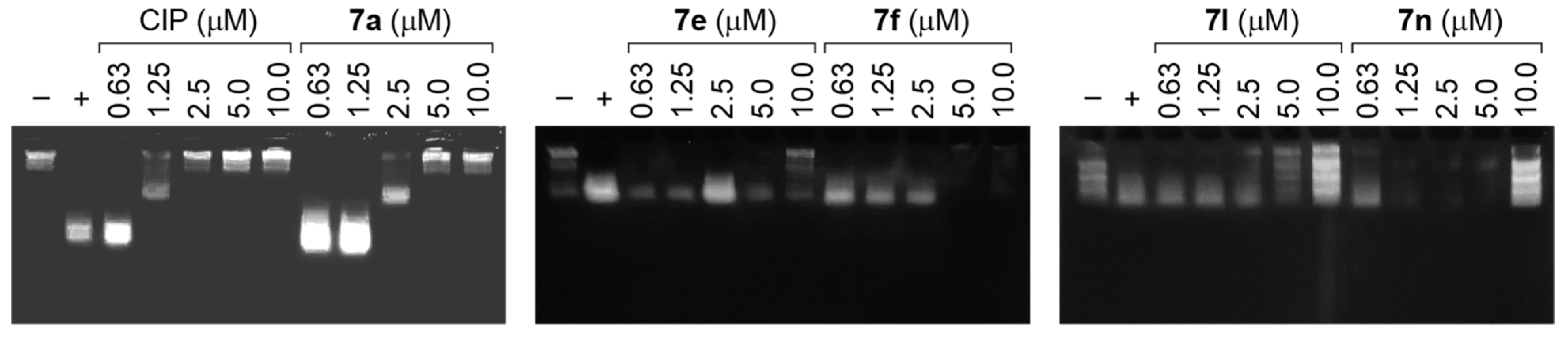
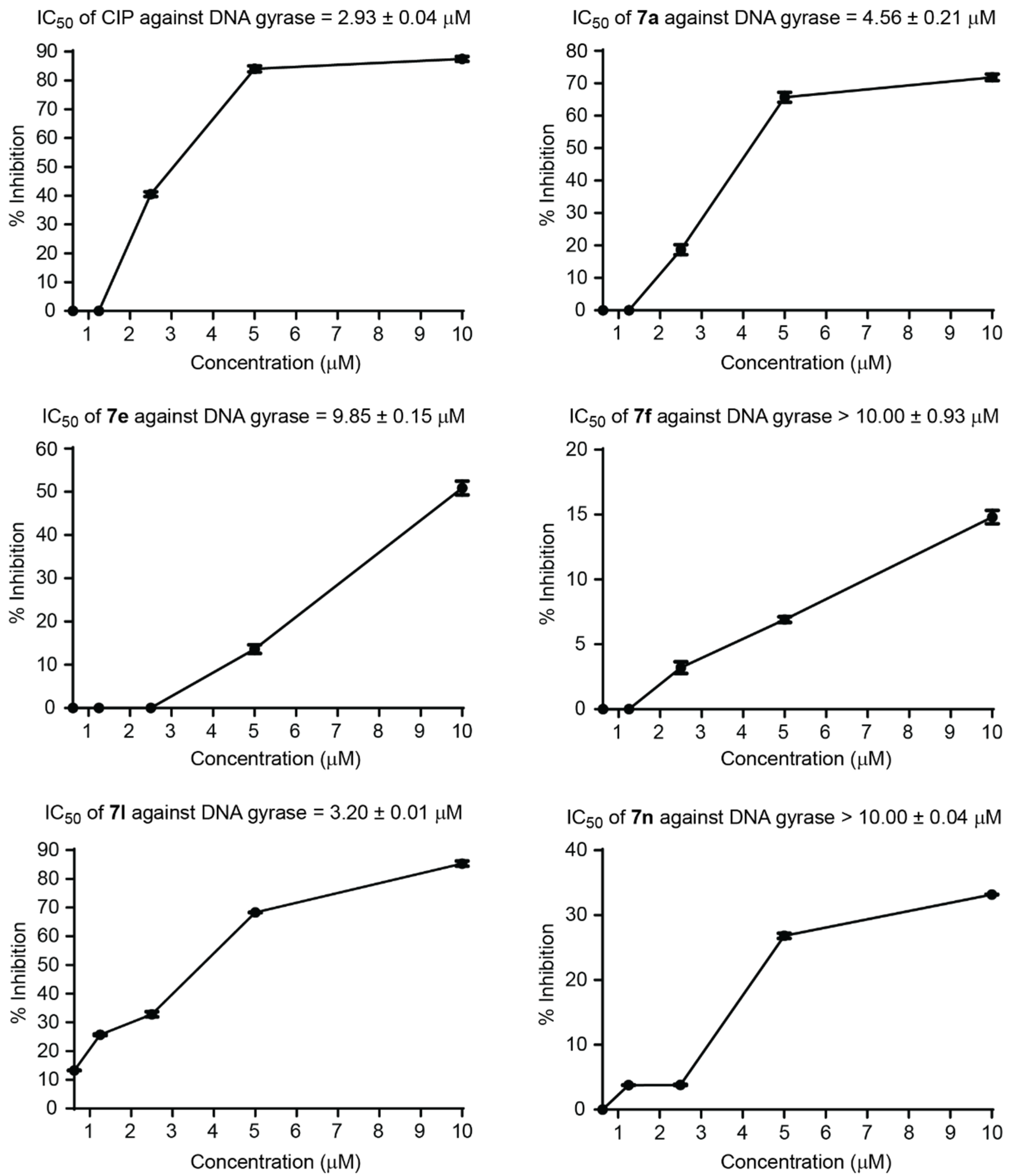
| Compd. | IC50 (μM) ± SEM |
|---|---|
| CIP | 2.93 ± 0.04 |
| 7a | 4.56 ± 0.21 |
| 7e | 9.85 ± 0.15 |
| 7f | >10.00 ± 0.93 |
| 7l | 3.20 ± 0.01 |
| 7n | >10.00 ± 0.04 |
| Compd. | MIC, μg/mL ± SEM | Fold Change a | % Biofilm Detected |
|---|---|---|---|
| CIP | 15.6 ± 0.47 | 31.3 | 23.6 |
| 7a | 31.3 ± 0.23 | 62.5 | 72.5 |
| 7e | 31.3 ± 0.10 | 62.5 | 20.2 |
| 7f | 125 ± 1.92 | 250 | 62.7 |
| 7l | 31.3 ± 0.99 | 62.5 | 39.1 |
| 7n | 62.5 ± 1.00 | 125 | 54.4 |
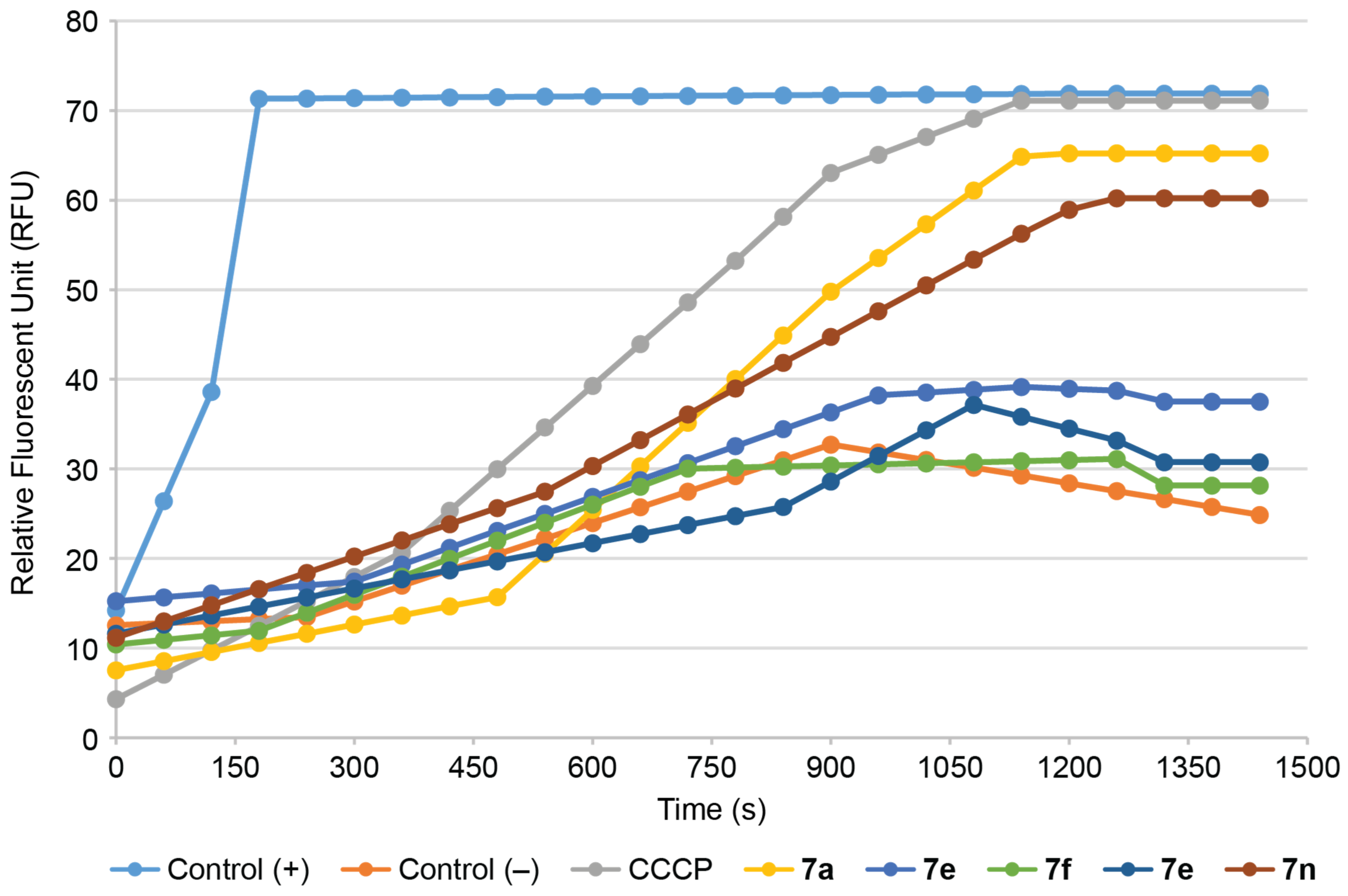
| Compd. | MIC, μg/mL ± SEM | ½ MIC, μg/mL | % Efflux Pumping Inhibitory Activity |
|---|---|---|---|
| CCCP | 10.0 ± 0.27 | 5.0 | 98.9 |
| 7a | 31.3 ± 0.23 | 15.6 | 90.7 |
| 7e | 31.3 ± 0.10 | 15.6 | 52.2 |
| 7f | 125 ± 1.92 | 62.5 | 39.1 |
| 7l | 31.3 ± 0.99 | 15.6 | 42.8 |
| 7n | 62.5 ± 1.00 | 31.3 | 83.7 |
| Compd. | IC50 (μM ± SEM) | ||
|---|---|---|---|
| HCT116 | MCF7 | RPE1 | |
| 7a | >10.00 ± 0.64 | >10.00 ± 0.19 | >10.00 ± 0.35 |
| 7b | 9.59 ± 0.18 | 8.70 ± 0.20 | >10.00 ± 0.56 |
| 7c | 6.01 ± 0.04 | 7.73 ± 0.17 | >10.00 ± 0.44 |
| 7d | >10.00 ± 0.02 | >10.00 ± 0.30 | >10.00 ± 0.65 |
| 7e | >10.00 ± 0.04 | >10.00 ± 0.34 | >10.00 ± 0.21 |
| 7f | >10.00 ± 0.05 | >10.00 ± 0.56 | >10.00 ± 0.37 |
| 7g | 8.60 ± 0.31 | >10.00 ± 0.32 | >10.00 ± 0.47 |
| 7h | 6.06 ± 0.09 | >10.00 ± 0.37 | >10.00 ± 0.25 |
| 7i | >10.00 ± 0.16 | >10.00 ± 0.31 | >10.00 ± 0.19 |
| 7j | >10.00 ± 0.71 | >10.00 ± 0.16 | >10.00 ± 0.66 |
| 7k | 5.26 ± 0.19 | >10.00 ± 0.58 | >10.00 ± 0.58 |
| 7l | >10.00 ± 0.39 | >10.00 ± 0.36 | >10.00 ± 0.53 |
| 7m | >10.00 ± 0.25 | >10.00 ± 0.57 | >10.00 ± 0.66 |
| 7n | >10.00 ± 0.09 | >10.00 ± 0.46 | >10.00 ± 0.74 |
| Sunitinib a | 9.67 ± 0.22 | 3.97 ± 0.32 | NT |
| 5-Fluorouracil a | 20.43 ± 1.99 | 3.15 ± 0.44 | NT |
| Compd. | Docking Score (kcal mol−1) | Hydrogen Bonding | Non-Bonding Interaction |
|---|---|---|---|
| 7a | −46.033 | --- | π-cation interaction: phenyl … Arg84 π-alkyl interactions: triazole … Pro87, ylidene Ph … Ile86 |
| 7e | −55.881 | triazolyl N … Arg144 | π-cation interactions: triazol … Arg84, piperidinyl N … Glu58 amide π-stacked interaction: ylidene Ph … Asn54 π-alkyl interactions: triazole … Pro87, ylidene Ph … Pro87, ylidene Ph … Ile86 |
| 7f | −64.416 | OMe … Arg144, piperidinyl C=O … Gly85 | π-cation interaction: ylidene Ph … Arg84 π-alkyl interactions: 2 ylidene Ph … Pro87, ylidene Ph … Ile86 |
| 7l | −56.578 | F … Asn54, piperidinyl C=O … Gly85, piperidinyl N … Glu58 | π-alkyl interactions: Ph … Ala61, ylidene Ph … Pro87, ylidene Ph … Ile86 |
| 7n | −53.653 | piperidinyl C=O … Gly85 | π-alkyl interactions: ylidenr Ph … Ile86, ylidene Ph … Pro87, triazole … Ile102 |
| Co-crystallized ligand | −53.434 | thienyl S … Arg144, carboxylic O … Arg144 | amide π-stacked interaction: pyrrolidinyl … Asn54 π-alkyl & alkyl interactions: thienyl … Pro87, pyrrolidinyl … Ile86, Cl … Ile86, Cl … Ile102, Cl … Ile175, Cl … Ile51 |
| Compound | MW (g/mol) | HBA | HBD | Rotatable Bonds | logP | TPSA (Å2) | MR | BBB |
|---|---|---|---|---|---|---|---|---|
| Ideal | <500.00 | <10 | <5 | <10 | 2–5 | <140 | 40–130 | − |
| Curcumin | 368.38 | 6 | 2 | 8 | 3.20 | 93.06 | 102.80 | − |
| 7a | 446.54 | 4 | 0 | 5 | 4.95 | 51.02 | 139.45 | + |
| 7b | 515.43 | 4 | 0 | 5 | 6.21 | 51.02 | 149.47 | + |
| 7c | 482.52 | 6 | 0 | 5 | 5.15 | 51.02 | 139.36 | + |
| 7d | 474.60 | 4 | 0 | 5 | 4.99 | 51.02 | 149.38 | + |
| 7e | 506.59 | 6 | 0 | 7 | 4.39 | 69.48 | 152.43 | − |
| 7f | 626.70 | 10 | 0 | 11 | 4.43 | 106.40 | 178.40 | − |
| 7g | 501.41 | 4 | 0 | 5 | 5.38 | 51.02 | 144.50 | + |
| 7h | 468.50 | 6 | 0 | 5 | 5.19 | 51.02 | 134.40 | + |
| 7i | 460.57 | 4 | 0 | 5 | 4.69 | 51.02 | 144.41 | + |
| 7j | 492.57 | 6 | 0 | 7 | 4.09 | 69.48 | 147.46 | − |
| 7k | 519.40 | 5 | 0 | 5 | 5.95 | 51.02 | 144.46 | − |
| 7l | 486.49 | 7 | 0 | 5 | 5.75 | 51.02 | 134.35 | + |
| 7m | 478.56 | 5 | 0 | 5 | 5.24 | 51.02 | 144.37 | + |
| 7n | 510.56 | 7 | 0 | 7 | 4.65 | 69.48 | 147.42 | − |
| 7a | 7e | 7l |
|---|---|---|
 |  |  |
| Compound | Probability | LD50 (mg/kg) | |||
|---|---|---|---|---|---|
| Hepatotoxicity | Neurotoxicity | Nephrotoxicity | Cardiotoxicity | ||
| 7a | 0.61 (−ve) | 0.79 (+ve) | 0.68 (−ve) | 0.85 (−ve) | 500 |
| 7b | 0.58 (−ve) | 0.84 (+ve) | 0.66 (−ve) | 0.85 (−ve) | 500 |
| 7c | 0.52 (−ve) | 0.83 (+ve) | 0.67 (−ve) | 0.84 (−ve) | 500 |
| 7d | 0.61 (−ve) | 0.78 (+ve) | 0.66 (−ve) | 0.87 (−ve) | 500 |
| 7e | 0.61 (−ve) | 0.61 (+ve) | 0.50 (+ve) | 0.78 (−ve) | 500 |
| 7f | 0.53 (−ve) | 0.53 (+ve) | 0.50 (−ve) | 0.75 (−ve) | 500 |
| 7g | 0.59 (−ve) | 0.85 (+ve) | 0.66 (−ve) | 0.85 (−ve) | 500 |
| 7h | 0.53 (−ve) | 0.84 (+ve) | 0.67 (−ve) | 0.84 (−ve) | 500 |
| 7i | 0.61 (−ve) | 0.78 (+ve) | 0.67 (−ve) | 0.86 (−ve) | 500 |
| 7j | 0.61 (−ve) | 0.63 (+ve) | 0.50 (−ve) | 0.77 (−ve) | 500 |
| 7k | 0.54 (−ve) | 0.86 (+ve) | 0.67 (−ve) | 0.84 (−ve) | 500 |
| 7l | 0.53 (−ve) | 0.84 (+ve) | 0.67 (−ve) | 0.84 (−ve) | 500 |
| 7m | 0.52 (−ve) | 0.83 (+ve) | 0.66 (−ve) | 0.85 (−ve) | 500 |
| 7m | 0.50 (−ve) | 0.71 (+ve) | 0.51 (+ve) | 0.76 (−ve) | 500 |
Disclaimer/Publisher’s Note: The statements, opinions and data contained in all publications are solely those of the individual author(s) and contributor(s) and not of MDPI and/or the editor(s). MDPI and/or the editor(s) disclaim responsibility for any injury to people or property resulting from any ideas, methods, instructions or products referred to in the content. |
© 2026 by the authors. Licensee MDPI, Basel, Switzerland. This article is an open access article distributed under the terms and conditions of the Creative Commons Attribution (CC BY) license.
Share and Cite
Nkosi, A.K.; Girgis, A.S.; Samir, A.; Morsy, M.A.; Shaban, A.M.; Fayad, W.; Soliman, A.A.F.; Williams, C.T.; Mori, S.; Khanna, L.; et al. Multifunctional Curcumin-Inspired 3,5-Diarylidene-4-Piperidones: Design, Synthesis, Biological Evaluation and Computational Mechanistic Studies. Pharmaceuticals 2026, 19, 935. https://doi.org/10.3390/ph19060935
Nkosi AK, Girgis AS, Samir A, Morsy MA, Shaban AM, Fayad W, Soliman AAF, Williams CT, Mori S, Khanna L, et al. Multifunctional Curcumin-Inspired 3,5-Diarylidene-4-Piperidones: Design, Synthesis, Biological Evaluation and Computational Mechanistic Studies. Pharmaceuticals. 2026; 19(6):935. https://doi.org/10.3390/ph19060935
Chicago/Turabian StyleNkosi, Angel K., Adel S. Girgis, Ahmed Samir, Mohamed A. Morsy, Amira M. Shaban, Walid Fayad, Ahmed A. F. Soliman, Christine T. Williams, Shogo Mori, Leena Khanna, and et al. 2026. "Multifunctional Curcumin-Inspired 3,5-Diarylidene-4-Piperidones: Design, Synthesis, Biological Evaluation and Computational Mechanistic Studies" Pharmaceuticals 19, no. 6: 935. https://doi.org/10.3390/ph19060935
APA StyleNkosi, A. K., Girgis, A. S., Samir, A., Morsy, M. A., Shaban, A. M., Fayad, W., Soliman, A. A. F., Williams, C. T., Mori, S., Khanna, L., Verbeck, G. F., & Panda, S. S. (2026). Multifunctional Curcumin-Inspired 3,5-Diarylidene-4-Piperidones: Design, Synthesis, Biological Evaluation and Computational Mechanistic Studies. Pharmaceuticals, 19(6), 935. https://doi.org/10.3390/ph19060935