The Role and Therapeutic Potential of the STING Signaling Pathway in the Pathogenesis of Diabetic Nephropathy

Abstract
1. Introduction
2. STING Signaling Pathway
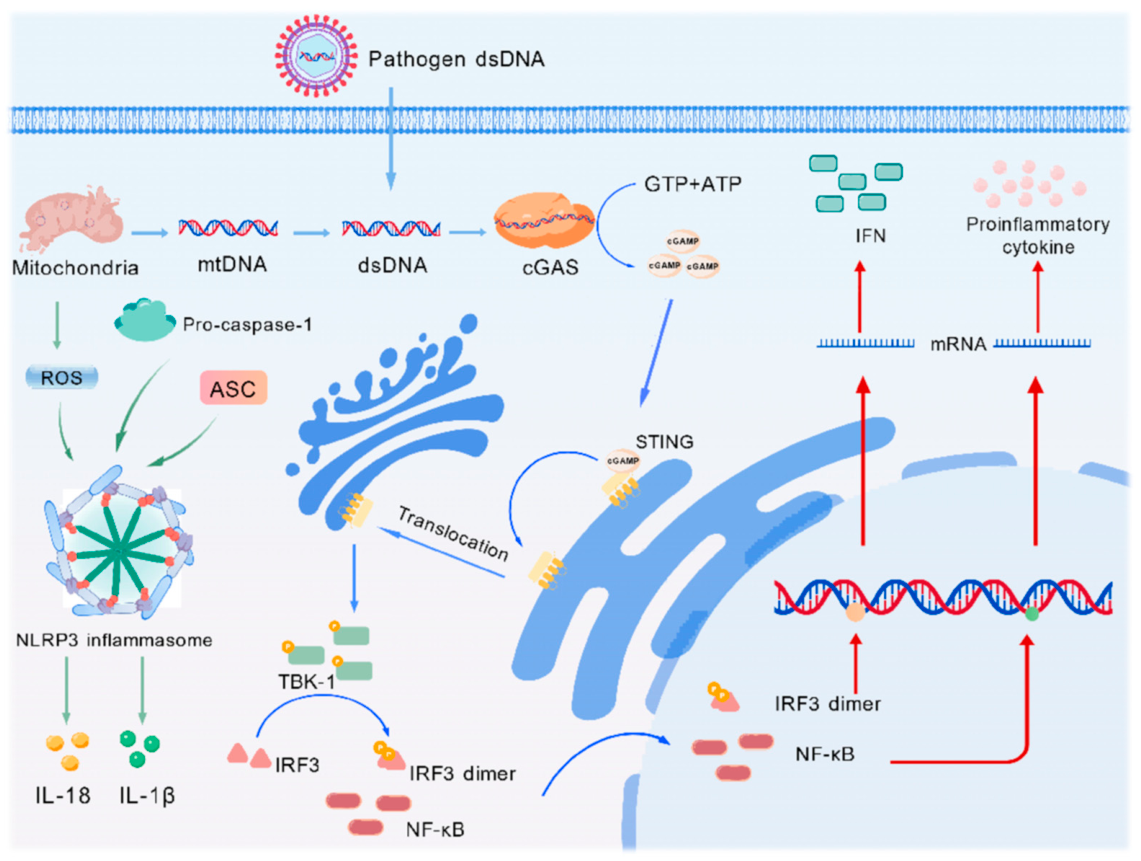
2.1. STING Structure and Canonical Activation
2.2. Regulatory Mechanisms of the STING Signaling Pathway
2.2.1. Post-Translational Modifications
2.2.2. Metabolic and Microenvironmental Regulation
2.2.3. Phase Separation and Other Emerging Regulatory Mechanisms
2.3. Crosstalk Between STING and Other Inflammatory Signaling Pathways
2.3.1. Direct Crosstalk with the NF-κB Pathway
2.3.2. Indirect Crosstalk with Inflammasome and Cell Death Pathways
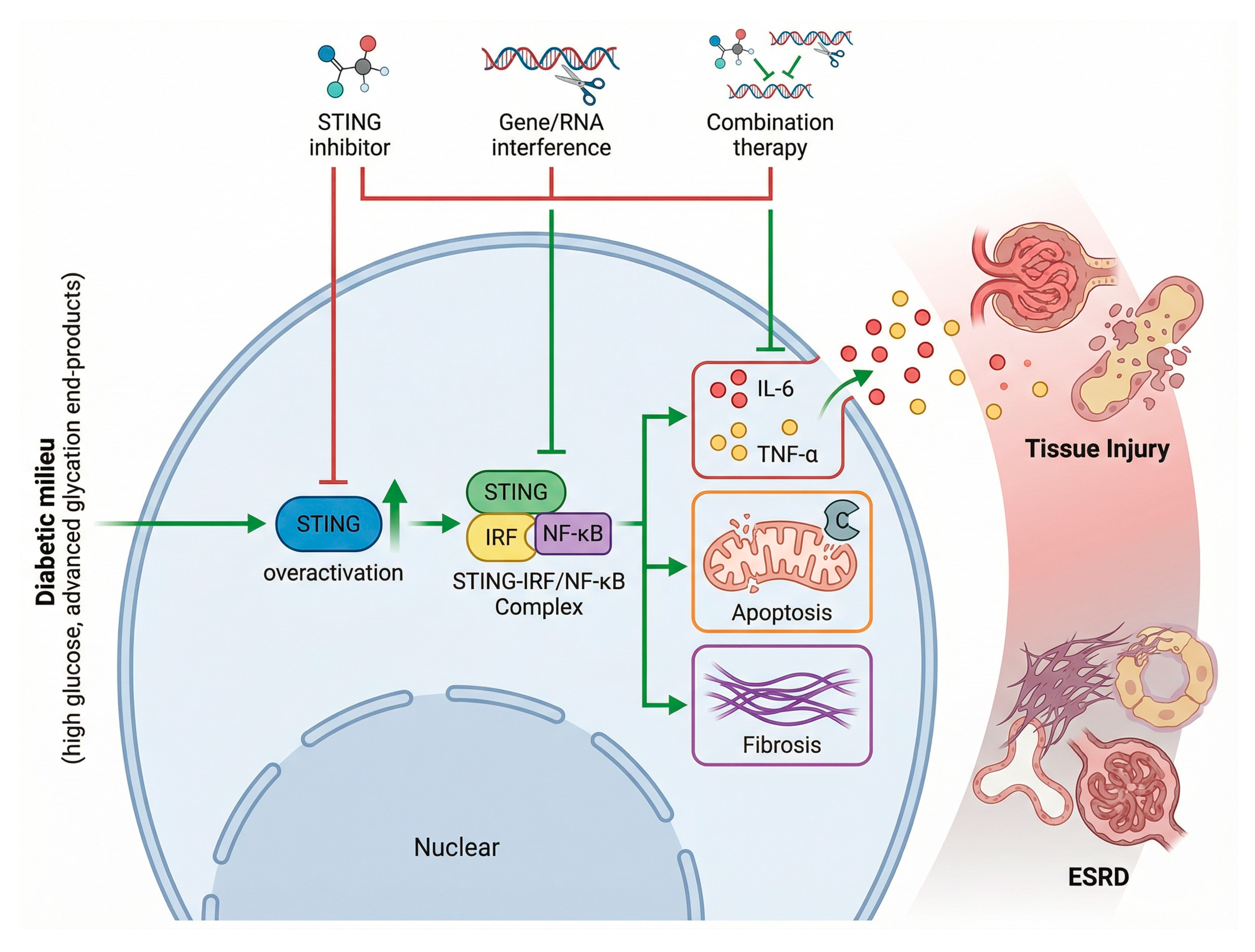
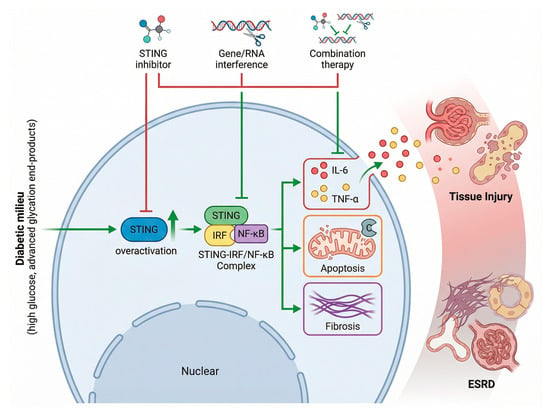
3. STING Signaling Pathway Activation and Pathogenic Effects in DN
3.1. High Glucose-Induced cGAS-STING Activation as the Initiating Trigger
3.2. STING-Driven Glomerular Inflammation and Tissue Injury
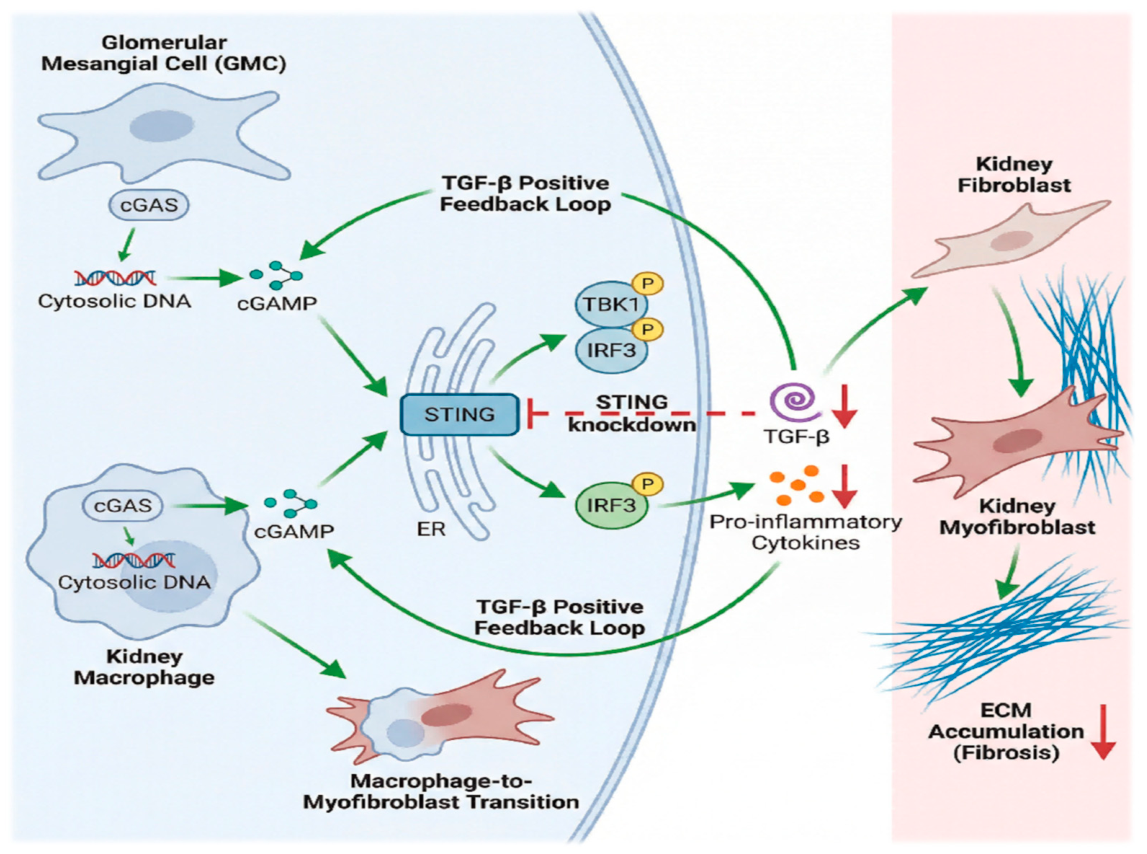
3.3. STING-Mediated Renal Interstitial Fibrosis and Tissue Remodeling
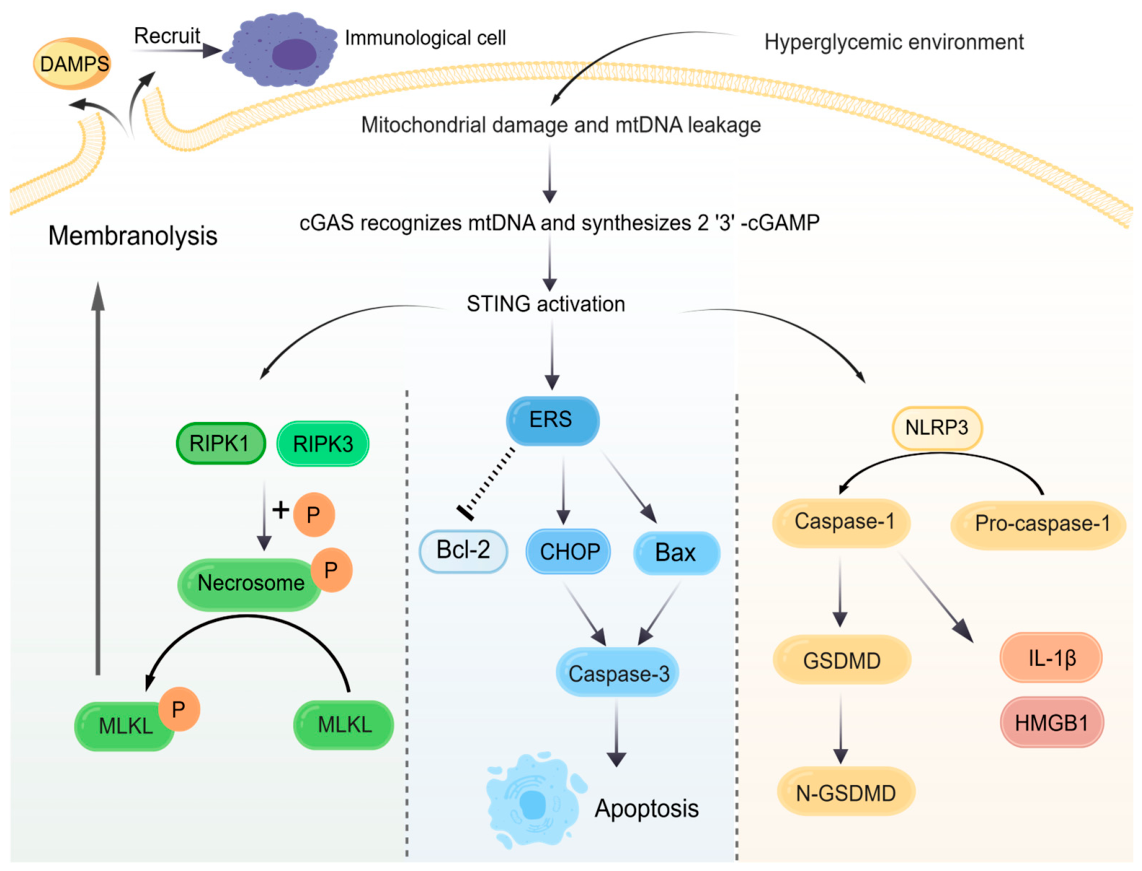
3.4. STING-Induced Renal Cells: Apoptosis, Necroptosis, and Pyroptosis
4. STING-Targeted Therapeutic Strategies for DN
4.1. Small-Molecule STING Inhibitors and Pathway Modulators
4.1.1. Direct STING Inhibitors
4.1.2. Indirect cGAS-STING Signaling Axis Modulators
4.1.3. Challenges in STING-Targeted Therapy
4.2. Gene-Based Interventions in STING Regulation
4.3. Combination Therapy Strategies and Preclinical Studies
4.4. Biomarkers for Monitoring STING Activation and Patient Selection
4.4.1. Blood-Based Biomarkers
4.4.2. Urine-Based Biomarkers
4.4.3. Clinical Prospects and Challenges
5. Conclusions
Author Contributions
Funding
Institutional Review Board Statement
Informed Consent Statement
Data Availability Statement
Acknowledgments
Conflicts of Interest
Abbreviations
| Bax | Bcl-2-associated X protein |
| Caspase-1 | Cysteine-aspartic acid protease 1 |
| CDNs | Cyclic dinucleotides |
| cGAMP | Cyclic guanosine monophosphate-adenosine monophosphate |
| cGAS | Cyclic guanosine monophosphate synthase |
| CHOP | C/EBP homologous protein |
| CTT | C-terminal tail |
| DAMPs | Damage-associated molecular patterns |
| DN | Diabetic nephropathy |
| dsDNA | Double-stranded DNA |
| ECM | Extracellular matrix |
| EMT | Epithelial–mesenchymal transition |
| ER | Endoplasmic reticulum |
| ERS | Endoplasmic reticulum stress |
| ESRD | End-stage renal disease |
| EVs | Extracellular vesicles |
| FASN | Fatty acid synthetase |
| GFR | Glomerular filtration rate |
| GLP-1 | Glucagon-like peptide-1 |
| GMCs | Glomerular mesangial cells |
| GSDMD | Gasdermin D |
| HG | High glucose |
| HMGB1 | High mobility group protein 1 |
| hPSCs | Human pluripotent stem cells |
| IDI1 | Isopentenyl diphosphate isomerase 1 |
| IFN | Interferon |
| IKK | I kappa B kinase |
| IL | Interleukin |
| iPSCs | Induced pluripotent stem cells |
| IRF | Interferon regulatory factor |
| LBD | Ligand-binding domain |
| MCP-1 | Monocyte Chemoattractant Protein-1 |
| mtDNA | Mitochondrial DNA |
| NF-κB | Nuclear factor kappa-B |
| NLRP3 | NOD-like receptor thermal protein domain associated protein 3 |
| PCSK9 | Protease-kexin 9 |
| PPP6C | Protein phosphatase 6 |
| RAAS | Renin–angiotensin–aldosterone system |
| RIPK | Receptor interaction protein kinase |
| RNAi | RNA interference |
| ROS | Reactive oxygen species |
| SGLT2 | Sodium-dependent glucose transporters 2 |
| STING | Stimulator of interferon genes |
| TBK1 | TANK-binding kinase 1 |
| TBK1 | TANK binding kinase 1 |
| TGF-β | Transforming growth factor-β |
| TNF-α | Tumor necrosis factor-α |
| TRIM | Tripartite motif containing |
References
- Genitsaridi, I.; Salpea, P.; Salim, A.; Sajjadi, S.F.; Tomic, D.; James, S.; Thirunavukkarasu, S.; Issaka, A.; Chen, L.; Basit, A.; et al. 11th edition of the IDF Diabetes Atlas: Global, regional, and national diabetes prevalence estimates for 2024 and projections for 2050. Lancet Diabetes Endocrinol. 2026, 14, 149–156. [Google Scholar] [CrossRef] [PubMed]
- Zhang, L.; Jiang, L.; Xu, R.; Zhang, X.; Zhang, B.; Yue, R. Epidemiological research on diabetic nephropathy at global, regional, and national levels from 1990 to 2021: An analysis derived from the global burden of disease 2021 study. Front. Endocrinol. 2025, 16, 1647064. [Google Scholar] [CrossRef]
- Chen, Y.; Lee, K.; Ni, Z.; He, J.C. Diabetic Kidney Disease: Challenges, Advances, and Opportunities. Kidney Dis. 2020, 6, 215–225. [Google Scholar] [CrossRef]
- 4. Tritar, M.; Sasu, D. The rate of progression of chronic kidney disease based on etiology. In Medicina Internă în Tranziţie de la Medicina Bazată pe Dovezi la Medicina Personalizată; CEP Medicina: Emeryville, CA, USA, 2026.
- Kattan, S.W.; Basri, A.M.; Alhashmi, M.H.; Almars, A.I.; Alhasani, R.H.; Alsharif, I.; Sindi, I.A.; Mufti, A.H.; Abumansour, I.S.; Elhawary, N.A.; et al. Tracing the molecular landscape of diabetic nephropathy: Insights from machine learning and experiment verification. J. Diabetes Investig. 2025, 16, 1473–1486. [Google Scholar] [CrossRef]
- Wani, Z.A.; Ahmed, S.; Saleh, A.; Anna, V.R.; Fahelelbom, K.M.; Raju, S.K.; Abu-Rayyan, A.; Bhat, A.R. Biomarkers in diabetic nephropathy: A comprehensive review of their role in early detection and disease progression monitoring. Diabetes Res. Clin. Pr. 2025, 226, 112292. [Google Scholar] [CrossRef] [PubMed]
- Speeckaert, R.; Delrue, C.; Speeckaert, M.M. Residual Renal Risk in Diabetic Nephropathy Despite Contemporary Therapies. J. Clin. Med. 2026, 15, 921. [Google Scholar] [CrossRef] [PubMed]
- Chaudhry, K.; Karalliedde, J. Chronic kidney disease in type 2 diabetes: The size of the problem, addressing residual renal risk and what we have learned from the CREDENCE trial. Diabetes Obes. Metab. 2024, 26, 25–34. [Google Scholar] [CrossRef]
- Rani, P.; Nagaraju, S.P.; Swaminathan, S.M.; Bhojaraja, M.V.; Prabhu, A.R.; Rangaswamy, D.; Rao, I.R.; Shenoy, S.V. Prevalence and Predictors of Rapid Estimated Glomerular Filtration Rate Decline in Patients with Non-albuminuric Diabetic Kidney Disease: A Single-centre Retrospective Cohort Study. Niger. Postgrad. Med. J. 2026, 33, 38–43. [Google Scholar] [CrossRef]
- Acoba, D.; Levin, A.; Witasp, A.; Ebefors, K.; Mölne, J.; Greasley, P.J.; Nyström, J.; Wernerson, A.; Reznichenko, A. Kidney transcriptomics signature of prospective rapid diabetic kidney disease progression. BMC Nephrol. 2025, 26, 504. [Google Scholar] [CrossRef]
- Liu, P.; Zhang, Z.; Chen, Q. Roles of ferroptosis in the development of diabetic nephropathy. J. Zhejiang Univ. Med. Sci. 2024, 53, 708–714. [Google Scholar] [CrossRef]
- Jung, S.W.; Moon, J.-Y. The role of inflammation in diabetic kidney disease. Korean J. Intern. Med. 2021, 36, 753–766. [Google Scholar] [CrossRef]
- Song, K.; Heng, L.; Yan, N. STING: A multifaced player in cellular homeostasis. Hum. Mol. Genet. 2025, 34, R68–R74. [Google Scholar] [CrossRef]
- Zhou, J.; Zhuang, Z.; Li, J.; Feng, Z. Significance of the cGAS-STING Pathway in Health and Disease. Int. J. Mol. Sci. 2023, 24, 13316. [Google Scholar] [CrossRef]
- Sun, Z.; Hornung, V. cGAS–STING signaling. Curr. Biol. 2022, 32, R730–R734. [Google Scholar] [CrossRef]
- Chen, C.; Xu, P. Cellular functions of cGAS-STING signaling. Trends Cell Biol. 2023, 33, 630–648. [Google Scholar] [CrossRef] [PubMed]
- Chauvin, S.D.; Stinson, W.A.; Platt, D.J.; Poddar, S.; Miner, J.J. Regulation of cGAS and STING signaling during inflammation and infection. J. Biol. Chem. 2023, 299, 104866. [Google Scholar] [CrossRef]
- Liu, X.; Zhang, C.; Fu, Y.; Xie, L.; Kong, Y.; Yang, X. Inflammation, Apoptosis, and Fibrosis in Diabetic Nephropathy: Molecular Crosstalk in Proximal Tubular Epithelial Cells and Therapeutic Implications. Curr. Issues Mol. Biol. 2025, 47, 885. [Google Scholar] [CrossRef]
- Decout, A.; Katz, J.D.; Venkatraman, S.; Ablasser, A. The cGAS–STING pathway as a therapeutic target in inflammatory diseases. Nat. Rev. Immunol. 2021, 21, 548–569. [Google Scholar] [CrossRef]
- Shang, G.; Zhang, C.; Chen, Z.J.; Bai, X.-C.; Zhang, X. Cryo-EM structures of STING reveal its mechanism of activation by cyclic GMP–AMP. Nature 2019, 567, 389–393. [Google Scholar] [CrossRef] [PubMed]
- Hussain, B.; Xie, Y.; Jabeen, U.; Lu, D.; Yang, B.; Wu, C.; Shang, G. Activation of STING Based on Its Structural Features. Front. Immunol. 2022, 13, 808607. [Google Scholar] [CrossRef] [PubMed]
- Taguchi, T. Membrane traffic governs the STING inflammatory signalling. J. Biochem. 2023, 174, 483–490. [Google Scholar] [CrossRef]
- Takasu, M.; Kishi, S.; Nagasu, H.; Kidokoro, K.; Brooks, C.R.; Kashihara, N. The Role of Mitochondria in Diabetic Kidney Disease and Potential Therapeutic Targets. Kidney Int. Rep. 2025, 10, 328–342. [Google Scholar] [CrossRef] [PubMed]
- Ergun, S.L.; Fernandez, D.; Weiss, T.M.; Li, L. STING Polymer Structure Reveals Mechanisms for Activation, Hyperactivation, and Inhibition. Cell 2019, 178, 290–301.e10. [Google Scholar] [CrossRef]
- Liu, S.; Yang, B.; Hou, Y.; Cui, K.; Yang, X.; Li, X.; Chen, L.; Liu, S.; Zhang, Z.; Jia, Y.; et al. The mechanism of STING autoinhibition and activation. Mol. Cell 2023, 83, 1502–1518.e10. [Google Scholar] [CrossRef] [PubMed]
- Mitrofanova, A.; Fontanella, A.; Tolerico, M.; Mallela, S.; David, J.M.; Zuo, Y.; Boulina, M.; Kim, J.-J.; Santos, J.; Ge, M.; et al. Activation of Stimulator of IFN Genes (STING) Causes Proteinuria and Contributes to Glomerular Diseases. J. Am. Soc. Nephrol. 2022, 33, 2153–2173. [Google Scholar] [CrossRef] [PubMed]
- Zang, N.; Cui, C.; Guo, X.; Song, J.; Hu, H.; Yang, M.; Xu, M.; Wang, L.; Hou, X.; He, Q.; et al. cGAS-STING activation contributes to podocyte injury in diabetic kidney disease. iScience 2022, 25, 105145. [Google Scholar] [CrossRef]
- Yang, Y.; Huang, Y.; Zeng, Z. Advances in cGAS-STING Signaling Pathway and Diseases. Front. Cell Dev. Biol. 2022, 10, 800393. [Google Scholar] [CrossRef]
- Shinde, O.; Li, P. The molecular mechanism of dsDNA sensing through the cGAS-STING pathway. Adv. Immunol. 2024, 162, 1–21. [Google Scholar] [CrossRef]
- Skopelja-Gardner, S.; An, J.; Elkon, K.B. Role of the cGAS–STING pathway in systemic and organ-specific diseases. Nat. Rev. Nephrol. 2022, 18, 558–572. [Google Scholar] [CrossRef]
- Qi, S.; Wang, C.; Zhang, R.; Zhu, J.; Hou, X.; Jiang, Y.; Li, J.; Ren, M.; Li, M.; Hou, F. Human STING Is Regulated by an Autoinhibitory Mechanism for Type I Interferon Production. J. Innate Immun. 2022, 14, 518–531. [Google Scholar] [CrossRef]
- You, J.; Xu, A.; Wang, Y.; Tu, G.; Huang, R.; Wu, S. The STING signaling pathways and bacterial infection. Apoptosis Int. J. Program. Cell Death 2025, 30, 389–400. [Google Scholar] [CrossRef]
- Ding, H.; Zhou, Y.; Yin, Z.; Tai, S. Role of cGAS-STING signaling pathway in cardiometabolic diseases. J. Cent. South Univ. Med. Sci. 2023, 48, 1086–1097. [Google Scholar] [CrossRef]
- Wang, K.; Wen, Y.; Fu, X.; Wei, S.; Liu, S.; Chen, M. mtDNA regulates cGAS-STING signaling pathway in adenomyosis. Free Radic. Biol. Med. 2024, 216, 80–88. [Google Scholar] [CrossRef]
- Xia, L.; Yan, X.; Zhang, H. Mitochondrial DNA-activated cGAS-STING pathway in cancer: Mechanisms and therapeutic implications. Biochim. Biophys. Acta Rev. Cancer 2025, 1880, 189249. [Google Scholar] [CrossRef]
- Nandakumar, R.; Tschismarov, R.; Meissner, F.; Prabakaran, T.; Krissanaprasit, A.; Farahani, E.; Zhang, B.-C.; Assil, S.; Martin, A.; Bertrams, W.; et al. Intracellular bacteria engage a STING–TBK1–MVB12b pathway to enable paracrine cGAS–STING signalling. Nat. Microbiol. 2019, 4, 701–713. [Google Scholar] [CrossRef] [PubMed]
- Zhu, H.; Zhang, R.; Yi, L.; Tang, Y.-D.; Zheng, C. UNC93B1 attenuates the cGAS–STING signaling pathway by targeting STING for autophagy–lysosome degradation. J. Med. Virol. 2022, 94, 4490–4501. [Google Scholar] [CrossRef] [PubMed]
- Kang, J.; Wu, J.; Liu, Q.; Wu, X.; Zhao, Y.; Ren, J. Post-Translational Modifications of STING: A Potential Therapeutic Target. Front. Immunol. 2022, 13, 888147. [Google Scholar] [CrossRef] [PubMed]
- Ni, G.; Ma, Z.; Wong, J.P.; Zhang, Z.; Cousins, E.; Major, M.B.; Damania, B. PPP6C Negatively Regulates STING-Dependent Innate Immune Responses. mBio 2020, 11, e01728–20. [Google Scholar] [CrossRef]
- Fu, L.; Ding, H.; Bai, Y.; Cheng, L.; Hu, S.; Guo, Q. IDI1 inhibits the cGAS-Sting signaling pathway in hepatocellular carcinoma. Heliyon 2024, 10, e27205. [Google Scholar] [CrossRef]
- Kang, J.; Wu, J.; Liu, Q.; Jiang, H.; Li, W.; Li, Y.; Li, X.; Ni, C.; Wu, L.; Liu, M.; et al. FASN regulates STING palmitoylation via malonyl-CoA in macrophages to alleviate sepsis-induced liver injury. Biochim. Biophys. Acta Mol. Basis Dis. 2024, 1870, 167299. [Google Scholar] [CrossRef]
- Yuan, Q.; Tang, B.; Zhang, C. Signaling pathways of chronic kidney diseases, implications for therapeutics. Signal Transduct. Target. Ther. 2022, 7, 182. [Google Scholar] [CrossRef] [PubMed]
- Han, X.; Ma, G.; Peng, R.; Xu, J.; Sheng, L.; Liu, H.; Sui, Q.; Li, J.; Gu, Y.; Yu, J.; et al. Discovery of an Orally Bioavailable STING Inhibitor with In Vivo Anti-Inflammatory Activity in Mice with STING-Mediated Inflammation. J. Med. Chem. 2025, 68, 2963–2980. [Google Scholar] [CrossRef] [PubMed]
- Kim, J.; Kim, H.-S.; Chung, J.H. Molecular mechanisms of mitochondrial DNA release and activation of the cGAS-STING pathway. Exp. Mol. Med. 2023, 55, 510–519. [Google Scholar] [CrossRef]
- Bryant, J.D.; Lei, Y.; VanPortfliet, J.J.; Winters, A.D.; West, A.P. Correction: Assessing Mitochondrial DNA Release into the Cytosol and Subsequent Activation of Innate Immune-related Pathways in Mammalian Cells. Curr. Protoc. 2024, 2, e372, Correction in Curr. Protoc. 2024, 4, e1106. https://doi.org/10.1002/cpz1.1106. [Google Scholar] [CrossRef]
- Deng, Y.; Gao, H.; Wu, Q. T-2 Toxin Induces Immunosenescence in RAW264.7 Macrophages by Activating the HIF-1α/cGAS-STING Pathway. J. Agric. Food Chem. 2024, 72, 24046–24057. [Google Scholar] [CrossRef]
- Wen, Z.; He, X.; Wang, J.; Wang, H.; Li, T.; Wen, S.; Ren, Z.; Cai, N.; Yang, J.; Li, M.; et al. Hyperlipidemia induces proinflammatory responses by activating STING pathway through IRE1α-XBP1 in retinal endothelial cells. J. Nutr. Biochem. 2023, 112, 109213. [Google Scholar] [CrossRef] [PubMed]
- Li, Y.; Zhao, D.; Chen, D.; Sun, Q. Targeting protein condensation in cGAS-STING signaling pathway. BioEssays News Rev. Mol. Cell. Dev. Biol. 2024, 46, e2400091. [Google Scholar] [CrossRef]
- Liang, J.; Yin, H. STAM transports STING oligomers into extracellular vesicles, down-regulating the innate immune response. J. Extracell. Vesicles 2023, 12, e12316. [Google Scholar] [CrossRef]
- Wang, M.; Xu, P.; Wu, Q. Cell-to-cell communications of cGAS-STING pathway in tumor immune microenvironment. J. Zhejiang Univ. Med. Sci. 2024, 53, 15–24. [Google Scholar] [CrossRef]
- Zhang, B.-C.; Pedersen, A.; Reinert, L.S.; Li, Y.; Narita, R.; Idorn, M.; Hu, L.; Skouboe, M.K.; Li, S.; Maimaitili, M.; et al. STING signals to NF-κB from late endolysosomal compartments using IRF3 as an adaptor. Nat. Immunol. 2025, 26, 1916–1930. [Google Scholar] [CrossRef]
- Fischer, T.D.; Bunker, E.N.; Zhu, P.-P.; Le Guerroué, F.; Hadjian, M.; Dominguez-Martin, E.; Scavone, F.; Cohen, R.; Yao, T.; Wang, Y.; et al. STING induces HOIP-mediated synthesis of M1 ubiquitin chains to stimulate NF-κB signaling. EMBO J. 2025, 44, 141–165. [Google Scholar] [CrossRef] [PubMed]
- Liu, J.; Zhou, J.; Luan, Y.; Li, X.; Meng, X.; Liao, W.; Tang, J.; Wang, Z. cGAS-STING, inflammasomes and pyroptosis: An overview of crosstalk mechanism of activation and regulation. Cell Commun. Signal. 2024, 22, 22. [Google Scholar] [CrossRef] [PubMed]
- Ding, L.; Zhang, R.; Du, W.; Wang, Q.; Pei, D. The role of cGAS-STING signaling pathway in ferroptosis. J. Adv. Res. 2025, 76, 219–231. [Google Scholar] [CrossRef] [PubMed]
- Zhou, J.; Yang, Y.; Fang, Y.; Du, X.; Ying, Z.; Rao, C. Targeting cGAS-STING signaling and cell death modes in cancer and autoimmune diseases. Cytokine Growth Factor Rev. 2025, 85, 56–80. [Google Scholar] [CrossRef]
- Ding, Z.; Wang, R.; Li, Y.; Wang, X. MLKL activates the cGAS-STING pathway by releasing mitochondrial DNA upon necroptosis induction. Mol. Cell 2025, 85, 2610–2625.e5. [Google Scholar] [CrossRef]
- El-Deeb, O.S.; Hafez, Y.M.; Eltokhy, A.K.; Awad, M.M.; El-Shaer, R.A.A.; Ghafar, M.T.A.; Atef, M.M. Stimulator of interferon genes/Interferon regulatory factor 3 (STING-IRF3) and inflammasome-activation mediated pyroptosis biomarkers: A network of integrated pathways in diabetic nephropathy. J. Diabetes Metab. Disord. 2023, 22, 1471–1480. [Google Scholar] [CrossRef]
- Song, L.; Zhang, W.; Tang, S.-Y.; Luo, S.-M.; Xiong, P.-Y.; Liu, J.-Y.; Hu, H.-C.; Chen, Y.-Q.; Jia, B.; Yan, Q.-H.; et al. Natural products in traditional Chinese medicine: Molecular mechanisms and therapeutic targets of renal fibrosis and state-of-the-art drug delivery systems. Biomed. Pharmacother. 2024, 170, 116039. [Google Scholar] [CrossRef]
- Wang, J.; Li, J.; Zhang, X.; Zhang, M.; Hu, X.; Yin, H. Molecular mechanisms of histone deacetylases and inhibitors in renal fibrosis progression. Front. Mol. Biosci. 2022, 9, 986405. [Google Scholar] [CrossRef]
- Flemming, N.B.; Gallo, L.A.; Forbes, J.M. Mitochondrial Dysfunction and Signaling in Diabetic Kidney Disease: Oxidative Stress and Beyond. Semin. Nephrol. 2018, 38, 101–110. [Google Scholar] [CrossRef]
- Ye, S.; Zhang, M.; Zheng, X.; Li, S.; Fan, Y.; Wang, Y.; Peng, H.; Chen, S.; Yang, J.; Tan, L.; et al. YAP1 preserves tubular mitochondrial quality control to mitigate diabetic kidney disease. Redox Biol. 2024, 78, 103435. [Google Scholar] [CrossRef]
- Tuttle, K.R.; Bakris, G.L.; Bilous, R.W.; Chiang, J.L.; de Boer, I.H.; Goldstein-Fuchs, J.; Hirsch, I.B.; Kalantar-Zadeh, K.; Narva, A.S.; Navaneethan, S.D.; et al. Diabetic kidney disease: A report from an ADA Consensus Conference. Diabetes Care 2014, 64, 510–533. [Google Scholar] [CrossRef]
- Hu, M.-M.; Shu, H.-B. Mitochondrial DNA-triggered innate immune response: Mechanisms and diseases. Cell. Mol. Immunol. 2023, 20, 1403–1412. [Google Scholar] [CrossRef]
- Xu, X.; Pang, Y.; Fan, X. Mitochondria in oxidative stress, inflammation and aging: From mechanisms to therapeutic advances. Signal Transduct. Target. Ther. 2025, 10, 190. [Google Scholar] [CrossRef]
- Amador-Martínez, I.; Aparicio-Trejo, O.E.; Bernabe-Yepes, B.; Aranda-Rivera, A.K.; Cruz-Gregorio, A.; Sánchez-Lozada, L.G.; Pedraza-Chaverri, J.; Tapia, E. Mitochondrial Impairment: A Link for Inflammatory Responses Activation in the Cardiorenal Syndrome Type 4. Int. J. Mol. Sci. 2023, 24, 15875. [Google Scholar] [CrossRef]
- Khedr, S.; Dissanayake, L.V.; Alsheikh, A.J.; Zietara, A.; Spires, D.R.; Kerketta, R.; Mathison, A.J.; Urrutia, R.; Palygin, O.; Staruschenko, A. Role of cGAS/STING pathway in aging and sexual dimorphism in diabetic kidney disease. J. Clin. Investig. 2024, 10, e174126. [Google Scholar] [CrossRef] [PubMed]
- Feng, Z.; Liao, X.; Peng, J.; Quan, J.; Zhang, H.; Huang, Z.; Yi, B. PCSK9 causes inflammation and cGAS / STING pathway activation in diabetic nephropathy. FASEB J. Off. Publ. Fed. Am. Soc. Exp. Biol. 2023, 37, e23127. [Google Scholar] [CrossRef]
- Xian, H.; Watari, K.; Sanchez-Lopez, E.; Offenberger, J.; Onyuru, J.; Sampath, H.; Ying, W.; Hoffman, H.M.; Shadel, G.S.; Karin, M. Oxidized DNA fragments exit mitochondria via mPTP- and VDAC-dependent channels to activate NLRP3 inflammasome and interferon signaling. Immunity 2022, 55, 1370–1385.e8. [Google Scholar] [CrossRef]
- Cao, Y.; Chen, X.; Zhu, Z.; Luo, Z.; Hao, Y.; Yang, X.; Feng, J.; Zhang, Z.; Hu, J.; Jian, Y.; et al. STING contributes to lipopolysaccharide-induced tubular cell inflammation and pyroptosis by activating endoplasmic reticulum stress in acute kidney injury. Cell Death Dis. 2024, 15, 217. [Google Scholar] [CrossRef]
- Jin, X.; He, T.; Zhang, T.; Wang, X.; Chen, X.; Cong, B.; Gao, W. Research on Sinomenine Inhibiting the cGAS-STING Signaling Pathway to Alleviate Renal Inflammatory Injury in db/db Mice. Pharmaceuticals 2025, 18, 934. [Google Scholar] [CrossRef] [PubMed]
- Liang, L.; Zeng, J.; Liu, R.; Zheng, Z.; Lyu, D.; Zhang, X.; Wen, M.; Li, M.; Xiao, H.; Sun, X.; et al. Polydatin attenuates diabetic renal inflammatory fibrosis via the inhibition of STING pathway. Biochem. Pharmacol. 2024, 226, 116373. [Google Scholar] [CrossRef] [PubMed]
- Feng, L.; Zhang, F.; Cao, J.; Xiong, W. Role of cGAS-STING pathway in fibrotic disease. Pharmacol. Res. 2025, 221, 107971. [Google Scholar] [CrossRef] [PubMed]
- Wu, J.; Cheng, S.; Lee, G.; Agborbesong, E.; Li, X.; Zhou, X.; Li, X. STING Promotes the Progression of ADPKD by Regulating Mitochondrial Function, Inflammation, Fibrosis, and Apoptosis. Biomolecules 2024, 14, 1215. [Google Scholar] [CrossRef]
- Zeng, H.; Gao, Y.; Yu, W.; Liu, J.; Zhong, C.; Su, X.; Wen, S.; Liang, H. Pharmacological Inhibition of STING/TBK1 Signaling Attenuates Myeloid Fibroblast Activation and Macrophage to Myofibroblast Transition in Renal Fibrosis. Front. Pharmacol. 2022, 13, 940716. [Google Scholar] [CrossRef] [PubMed]
- Gao, Y.; Wei, T.; Mu, L.; Liu, C.; Zeng, Y.; Guo, X.; Zhang, Y.; Yuan, Z.; Cheng, J. Targeting STING and protecting mitochondrial function with Nephropathy II decoction to alleviate renal fibrosis. Phytomed. Int. J. Phytother. Phytopharm. 2025, 142, 156785. [Google Scholar] [CrossRef]
- Wang, H.; Mao, X.; Huang, Y.; Tan, X.; Yang, Y.; Huang, M.; Jiang, Z.; Long, Y.; Fang, X.; Xu, Y. STING Promotes Renal Fibrosis of Diabetic Kidney Disease via ID1-Dependent Epithelial-Mesenchymal Transition. Diabetes Metab. J. 2025. [Google Scholar] [CrossRef]
- Kelepouras, K.; Saggau, J.; Bonasera, D.; Kiefer, C.; Locci, F.; Rakhsh-Khorshid, H.; Grauvogel, L.; Varanda, A.B.; Peifer, M.; Loricchio, E.; et al. STING induces ZBP1-mediated necroptosis independently of TNFR1 and FADD. Nature 2025, 647, 735–746. [Google Scholar] [CrossRef]
- Liang, Z.; Xiang, J.; Yang, G.; Liu, X.; Li, L.; Li, Y.; Lu, Y.; Kang, L.; Chen, Y.; Ma, C.; et al. Energy-sensing molecule RORγ regulates cholesterol metabolism and immune signaling in diabetic kidney disease and aging. Nat. Commun. 2026, 17, 2906. [Google Scholar] [CrossRef]
- Yun, J.; Shan, J.; Li, J. Targeting the TFAM-cGAS-STING axis: A mitochondrial-inflammatory link in the pathogenesis and treatment of diabetic kidney disease. Int. Urol. Nephrol. 2026, 58, 179–187. [Google Scholar] [CrossRef] [PubMed]
- Myakala, K.; Wang, X.X.; Shults, N.V.; Krawczyk, E.; Jones, B.A.; Yang, X.; Rosenberg, A.Z.; Ginley, B.; Sarder, P.; Brodsky, L.; et al. NAD metabolism modulates inflammation and mitochondria function in diabetic kidney disease. J. Biol. Chem. 2023, 299, 104975. [Google Scholar] [CrossRef] [PubMed]
- Zhang, X.; Wu, J.; Liu, Q.; Li, X.; Yang, Y.; Wu, L.; Wu, X.; Zhao, Y.; Ren, J. RIPK3–MLKL necroptotic signalling amplifies STING pathway and exacerbates lethal sepsis. Clin. Transl. Med. 2023, 13, e1334. [Google Scholar] [CrossRef]
- Xiao, Y.; Zhao, C.; Tai, Y.; Li, B.; Lan, T.; Lai, E.; Dai, W.; Guo, Y.; Gan, C.; Kostallari, E.; et al. STING mediates hepatocyte pyroptosis in liver fibrosis by Epigenetically activating the NLRP3 inflammasome. Redox Biol. 2023, 62, 102691. [Google Scholar] [CrossRef] [PubMed]
- Oduro, P.K.; Zheng, X.; Wei, J.; Yang, Y.; Wang, Y.; Zhang, H.; Liu, E.; Gao, X.; Du, M.; Wang, Q. The cGAS–STING signaling in cardiovascular and metabolic diseases: Future novel target option for pharmacotherapy. Acta Pharm. Sin. B 2022, 12, 50–75. [Google Scholar] [CrossRef]
- Huang, L.; Chen, X.; Shao, Y.; Deng, S.; Wang, C.; Chen, J.; Xie, Y.; Yuan, S.; Tang, L. Elevation of ISG15 promotes diabetic kidney disease by modulating renal tubular epithelial cell pyroptosis. Clin. Transl. Med. 2025, 15, e70337. [Google Scholar] [CrossRef]
- Zhang, C.; Shang, G.; Gui, X.; Zhang, X.; Bai, X.-C.; Chen, Z.J. Structural basis of STING binding with and phosphorylation by TBK1. Nature 2019, 567, 394–398. [Google Scholar] [CrossRef]
- Zhu, Z.; Cao, Y.; Jian, Y.; Hu, H.; Yang, Q.; Hao, Y.; Jiang, H.; Luo, Z.; Yang, X.; Li, W.; et al. CerS6 links ceramide metabolism to innate immune responses in diabetic kidney disease. Nat. Commun. 2025, 16, 1528. [Google Scholar] [CrossRef]
- Haag, S.M.; Gulen, M.F.; Reymond, L.; Gibelin, A.; Abrami, L.; Decout, A.; Heymann, M.; van der Goot, F.G.; Turcatti, G.; Behrendt, R.; et al. Targeting STING with covalent small-molecule inhibitors. Nature 2018, 559, 269–273. [Google Scholar] [CrossRef]
- Mukai, K.; Konno, H.; Akiba, T.; Uemura, T.; Waguri, S.; Kobayashi, T.; Barber, G.N.; Arai, H.; Taguchi, T. Activation of STING requires palmitoylation at the Golgi. Nat. Commun. 2016, 7, 11932. [Google Scholar] [CrossRef] [PubMed]
- Jiang, W.; Yang, X.; Liu, H.; Wang, C.; Niu, H.; Yu, W. STING-targeting PROTACs: Emerging therapeutic tools for enhanced immunotherapy in inflammatory diseases. Front. Immunol. 2025, 16, 1631132. [Google Scholar] [CrossRef] [PubMed]
- Temizoz, B.; Shibahara, T.; Hioki, K.; Hayashi, T.; Kobiyama, K.; Lee, M.S.J.; Surucu, N.; Sag, E.; Kumanogoh, A.; Yamamoto, M.; et al. 5,6-dimethylxanthenone-4-acetic acid (DMXAA), a partial STING agonist, competes for human STING activation. Front. Immunol. 2024, 15, 1353336. [Google Scholar] [CrossRef]
- Luke, J.J.; Piha-Paul, S.A.; Medina, T.; Verschraegen, C.F.; Varterasian, M.; Brennan, A.M.; Riese, R.J.; Sokolovska, A.; Strauss, J.F.; Hava, D.L.; et al. Phase I Study of SYNB1891, an Engineered E. coli Nissle Strain Expressing STING Agonist, with and without Atezolizumab in Advanced Malignancies. Clin. Cancer Res. Off. J. Am. Assoc. Cancer Res. 2023, 29, 2435–2444. [Google Scholar] [CrossRef]
- Meric-Bernstam, F.; Sweis, R.F.; Kasper, S.; Hamid, O.; Bhatia, S.; Dummer, R.; Stradella, A.; Long, G.V.; Spreafico, A.; Shimizu, T.; et al. Combination of the STING Agonist MIW815 (ADU-S100) and PD-1 Inhibitor Spartalizumab in Advanced/Metastatic Solid Tumors or Lymphomas: An Open-Label, Multicenter, Phase Ib Study. Clin. Cancer Res. Off. J. Am. Assoc. Cancer Res. 2023, 29, 110–121. [Google Scholar] [CrossRef] [PubMed]
- Jacoby, J.; Mahalingam, D.; Alistar, A.; Garmey, E.; Kazmi, S.; Mooneyham, T.; Sun, L.; Yap, T.A.; Vu, P.; Moser, J. Phase 1 first-in-human dose-escalation study of IMSA101, a novel cyclic di-nucleotide STING agonist, for patients with advanced solid tumor malignancies. J. Immunother. Cancer 2025, 13, e011572. [Google Scholar] [CrossRef] [PubMed]
- Aval, L.M.; Pease, J.E.; Sharma, R.; Pinato, D.J. Challenges and Opportunities in the Clinical Development of STING Agonists for Cancer Immunotherapy. J. Clin. Med. 2020, 9, 3323. [Google Scholar] [CrossRef]
- Gu, C.; Chen, Y.M. Emerging Mechanistic Roles of STING Signaling in Kidney Diseases. Am. J. Pathol. 2026, 196, 644–656. [Google Scholar] [CrossRef]
- Traber, G.M.; Yu, A.-M. RNAi-Based Therapeutics and Novel RNA Bioengineering Technologies. J. Pharmacol. Exp. Ther. 2023, 384, 133–154. [Google Scholar] [CrossRef] [PubMed]
- Liu, D.; Cao, D.; Han, R. Recent advances in therapeutic gene-editing technologies. Mol. Ther. 2025, 33, 2619–2644. [Google Scholar] [CrossRef]
- Wang, S.-W.; Gao, C.; Zheng, Y.-M.; Yi, L.; Lu, J.-C.; Huang, X.-Y.; Cai, J.-B.; Zhang, P.-F.; Cui, Y.-H.; Ke, A.-W. Current applications and future perspective of CRISPR/Cas9 gene editing in cancer. Mol. Cancer 2022, 21, 57. [Google Scholar] [CrossRef]
- Yang, X.; Chen, Z.; Luo, Z.; Yang, D.; Hao, Y.; Hu, J.; Feng, J.; Zhu, Z.; Luo, Q.; Zhang, Z.; et al. STING deletion alleviates podocyte injury through suppressing inflammation by targeting NLRP3 in diabetic kidney disease. Cell. Signal. 2023, 109, 110777. [Google Scholar] [CrossRef]
- Qi, J.; Luo, Q.; Zhang, Q.; Wu, M.; Zhang, L.; Qin, L.; Xue, Q.; Nie, X. Yi-Shen-Xie-Zhuo formula alleviates cisplatin-induced AKI by regulating inflammation and apoptosis via the cGAS/STING pathway. J. Ethnopharmacol. 2023, 309, 116327. [Google Scholar] [CrossRef]
- Bharti, A.; Mudge, J. Therapeutic applications of CRISPR-Cas9 gene editing. Front. Genome Ed. 2025, 7, 1724291. [Google Scholar] [CrossRef]
- Xu, W.; Yi, F.; Liao, H.; Zhu, C.; Zou, X.; Dong, Y.; Zhou, W.; Sun, Z.; Yin, J. The Potential and Challenges of Human Pluripotent Stem Cells in the Treatment of Diabetic Nephropathy. Front. Biosci. 2025, 30, 28283. [Google Scholar] [CrossRef]
- D’AMbrosio, V.; Huimei, C.; Vo, N.; Siew, K.; Evans, R.D.R.; Freedman, B.; Pesce, F. CRISPR and gene editing for kidney diseases: Where are we? Clin. Kidney J. 2025, 18, sfaf246. [Google Scholar] [CrossRef]
- Chen, C.; Xu, B.; Li, W.; Chen, J.; Yang, M.; Gao, L.; Zhou, J. New perspectives on the treatment of diabetic nephropathy: Challenges and prospects of mesenchymal stem cell therapy. Eur. J. Pharmacol. 2025, 998, 177543. [Google Scholar] [CrossRef]
- Yoon, J.; Shin, M.; Lee, J.-Y.; Lee, S.-N.; Choi, J.-H.; Choi, J.-W. RNA interference (RNAi)-based plasmonic nanomaterials for cancer diagnosis and therapy. J. Control. Release Off. J. Control. Release Soc. 2022, 342, 228–240. [Google Scholar] [CrossRef]
- Hu, K.; Wang, P.; Zhao, Y.; Zhang, T.; Zhao, L.; Su, Y.; Wen, H.; Liu, C.; Zou, G.; Wei, L.; et al. Hypoxia-responsive modules via tunable hydrophobicity reversal enhance renal-targeted release of CD36-interfering nanoparticles to ameliorate acute kidney injury. J. Control. Release Off. J. Control. Release Soc. 2026, 389, 114453. [Google Scholar] [CrossRef]
- Hickman, P.G.; Asokan, A.; Wilson, M.H. Rewriting Renal Fate: The Evolving Landscape of Adeno-Associated Virus-Mediated Kidney Gene Therapies. Kidney360 2026, 7, 422–425. [Google Scholar] [CrossRef]
- Omura, S.N.; Nakagawa, R.; Kajimoto, S.; Okazaki, S.; Ishiguro, S.; Mori, H.; Onishi, K.; Kashiwakura, Y.; Hiramoto, T.; Horinaka, K.; et al. Engineering a compact high-fidelity Staphylococcus aureus Cas9 variant with broader targeting range and mechanistic insights into its activation. Nat. Commun. 2026, 17, 3584. [Google Scholar] [CrossRef]
- Jummah, N.; Kamila, H.S.; Satrialdi; Artarini, A.A.; Sadaqa, E.; Anindyajati; Mudhakir, D. DOTAP-Based Hybrid Nanostructured Lipid Carriers for CRISPR–Cas9 RNP Delivery Targeting TGFB1 in Diabetic Nephropathy. Pharmaceutics 2026, 18, 94. [Google Scholar] [CrossRef]
- Cheng, A.S.; Li, L.X.; Zhou, J.X.; Harris, P.C.; Calvet, J.P.; Li, X. In vivo base editing rescues ADPKD in a humanized mouse model. Nat. Commun. 2025, 16, 11212. [Google Scholar] [CrossRef]
- Kasianchuk, N.; Dobrowolska, K.; Harkava, S.; Bretcan, A.; Zarębska-Michaluk, D.; Jaroszewicz, J.; Flisiak, R.; Rzymski, P. Gene-Editing and RNA Interference in Treating Hepatitis B: A Review. Viruses 2023, 15, 2395. [Google Scholar] [CrossRef]
- Rahman, K.; Jamal, M.; Chen, X.; Zhou, W.; Yang, B.; Zou, Y.; Xu, W.; Lei, Y.; Wu, C.; Cao, X.; et al. Reprogramming Mycobacterium tuberculosis CRISPR System for Gene Editing and Genome-wide RNA Interference Screening. Genom. Proteom. Bioinform. 2022, 20, 1180–1196. [Google Scholar] [CrossRef]
- Kale, A.; Sharma, A.; Anders, H.-J.; Gaikwad, A.B. Diabetes and Cardiorenal Complications: A Clinical Review of Existing Therapies and Novel Combinations, Focusing on SGLT2 Inhibitors. Curr. Diabetes Rev. 2023, 19, e160822207546. [Google Scholar] [CrossRef] [PubMed]
- Gong, J.; Gao, X.; Ge, S.; Li, H.; Wang, R.; Zhao, L. The Role of cGAS-STING Signalling in Metabolic Diseases: From Signalling Networks to Targeted Intervention. Int. J. Biol. Sci. 2024, 20, 152–174. [Google Scholar] [CrossRef]
- Kashgary, A.; Zaki, M.E.S.; Elwahab, A.M.A.; Abdelsalam, M.; Nada, A.M. Study of Neutrophil Gelatinase Associated Lipocalin and Kidney Injury Molecule-1 in Patients with Type 2 Diabetes Mellitus Nephropathy. Clin. Lab. 2024, 70, 563–570. [Google Scholar] [CrossRef] [PubMed]
- Lv, Z.; Lang, Y.; Liu, B.; Wang, R. FTO-Mediated m6A Modification of EGR1 mRNA Promotes Podocyte Injury and Inflammation via STING1 in Diabetic Kidney Disease. J. Am. Soc. Nephrol. 2025, 36, 10–1681. [Google Scholar] [CrossRef]



| Cell Death Pathway | Key Mediators | Affected Cell Types in DN |
|---|---|---|
| Apoptosis | Caspase-3, CHOP, Bax | Tubular epithelial cells, Podocytes |
| Pyroptosis | NLRP3, Caspase-1, GSDMD | Tubular epithelial cells, Podocytes |
| Necroptosis | RIPK1/3, MLKL | Tubular epithelial cells |
| Inhibitor | Target | Molecular Mechanism | Specificity/Applicable Model | Therapeutic Effects in DN or Inflammatory Models |
|---|---|---|---|---|
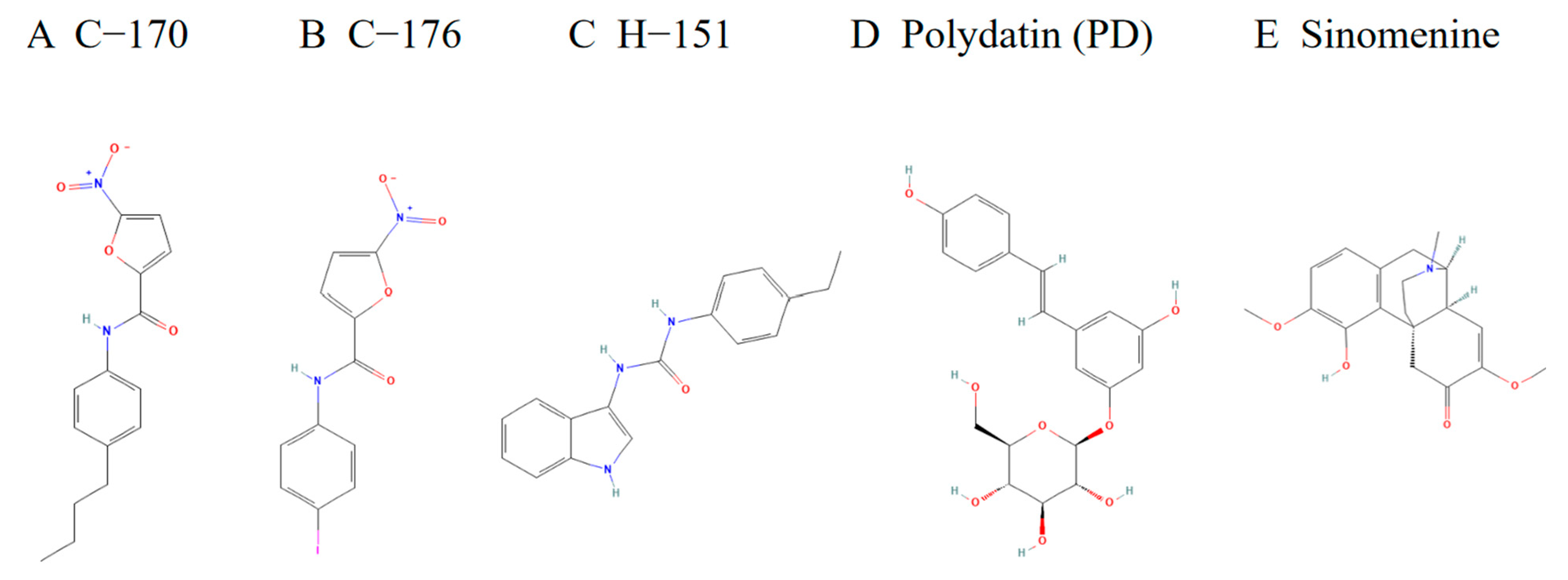
| C-170 | Cys91 site of human and murine STING | Block palmitoylation, inhibit STING activation | human and murine | Inhibit type I IFN and pro-inflammatory factor production, alleviating inflammatory responses |
| C-176 | Cys91 site of murine STING | Inhibit STING palmitoylation and activation | murine | Improved systemic inflammation and lowered levels of IL-1β, TNF-α, etc. |
| H-151 | STING key cysteine residue | Block STING activation and inhibit IRF3 phosphorylation | human and murine, commonly used in human cells | Reduces the expression of type I IFN and pro-inflammatory cytokines |
| PD | direct binding to STING | Reduce STING expression thereby inhibiting TBK1 phosphorylation and NF-κB nuclear translocation | no species-specificity has been established | Inhibit pro-inflammatory and fibrotic factor production |
| Sinomenine | indirect inhibition of the cGAS-STING pathway | Downregulate p-TBK1, p-IRF3, and NF-κB activity | non-direct STING inhibitors | Reduce renal injury and decrease the expression of inflammatory mediators |
Disclaimer/Publisher’s Note: The statements, opinions and data contained in all publications are solely those of the individual author(s) and contributor(s) and not of MDPI and/or the editor(s). MDPI and/or the editor(s) disclaim responsibility for any injury to people or property resulting from any ideas, methods, instructions or products referred to in the content. |
© 2026 by the authors. Licensee MDPI, Basel, Switzerland. This article is an open access article distributed under the terms and conditions of the Creative Commons Attribution (CC BY) license.
Share and Cite
Zhang, X.-Y.; Hu, Y.; Tang, M.-T. The Role and Therapeutic Potential of the STING Signaling Pathway in the Pathogenesis of Diabetic Nephropathy. Pharmaceuticals 2026, 19, 927. https://doi.org/10.3390/ph19060927
Zhang X-Y, Hu Y, Tang M-T. The Role and Therapeutic Potential of the STING Signaling Pathway in the Pathogenesis of Diabetic Nephropathy. Pharmaceuticals. 2026; 19(6):927. https://doi.org/10.3390/ph19060927
Chicago/Turabian StyleZhang, Xin-Yuan, Yan Hu, and Ming-Tan Tang. 2026. "The Role and Therapeutic Potential of the STING Signaling Pathway in the Pathogenesis of Diabetic Nephropathy" Pharmaceuticals 19, no. 6: 927. https://doi.org/10.3390/ph19060927
APA StyleZhang, X.-Y., Hu, Y., & Tang, M.-T. (2026). The Role and Therapeutic Potential of the STING Signaling Pathway in the Pathogenesis of Diabetic Nephropathy. Pharmaceuticals, 19(6), 927. https://doi.org/10.3390/ph19060927