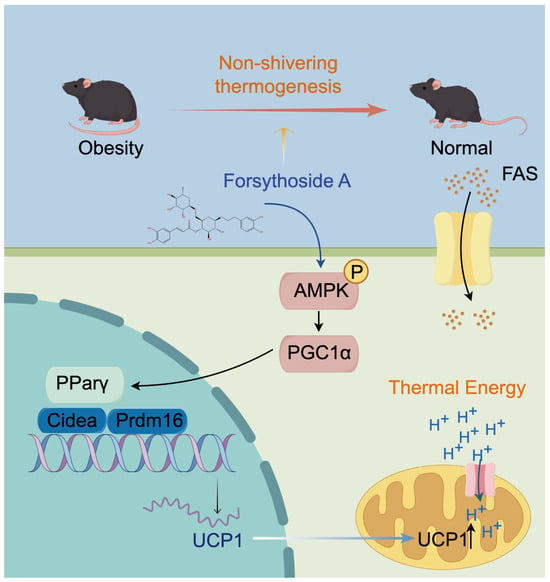
Forsythoside A Attenuates High-Fat Diet-Induced Obesity by Regulating Thermogenesis and Browning of White Adipose Tissue Through Activation of the AMPK Signaling Pathway
 ,
,
Abstract
1. Introduction
2. Results
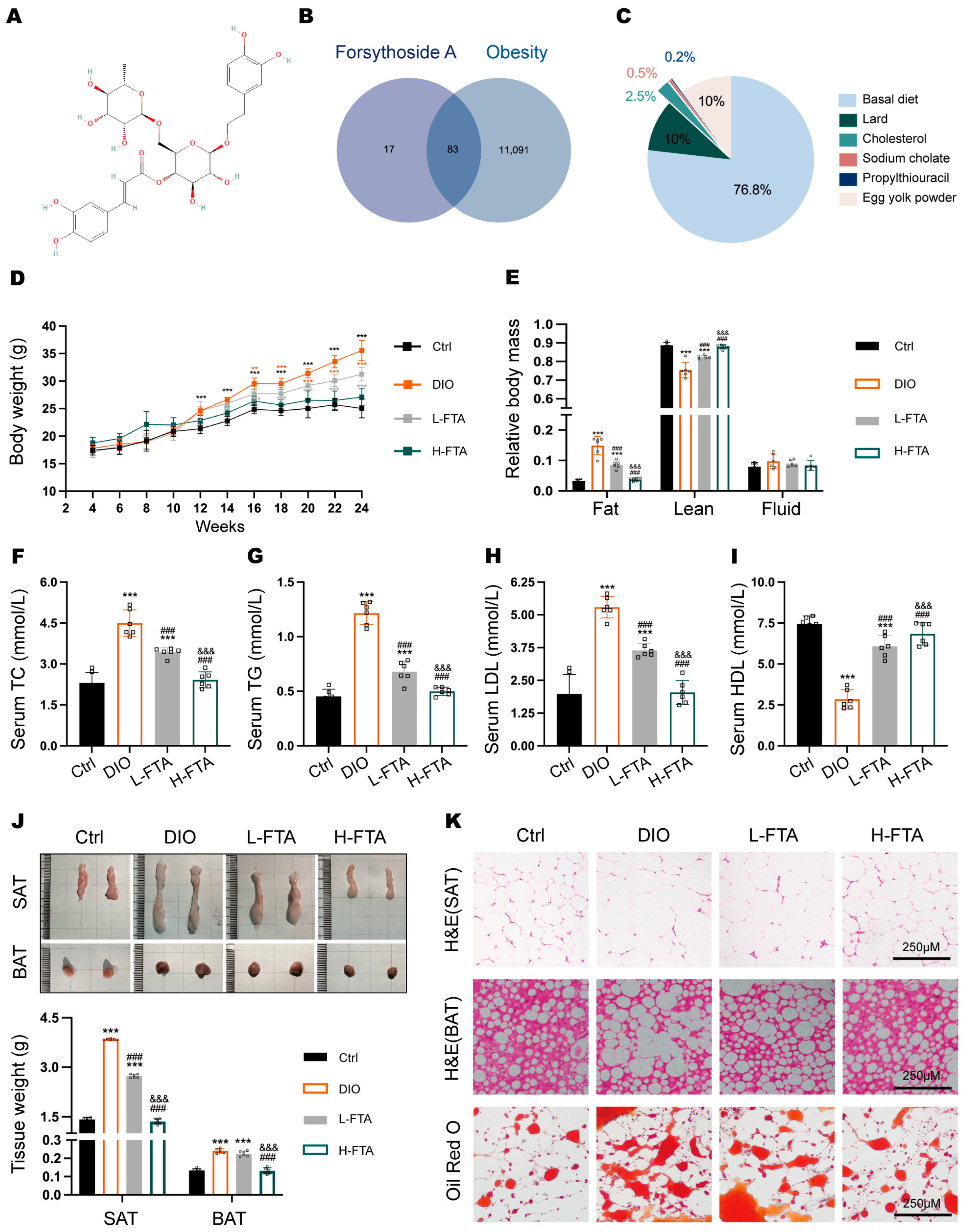
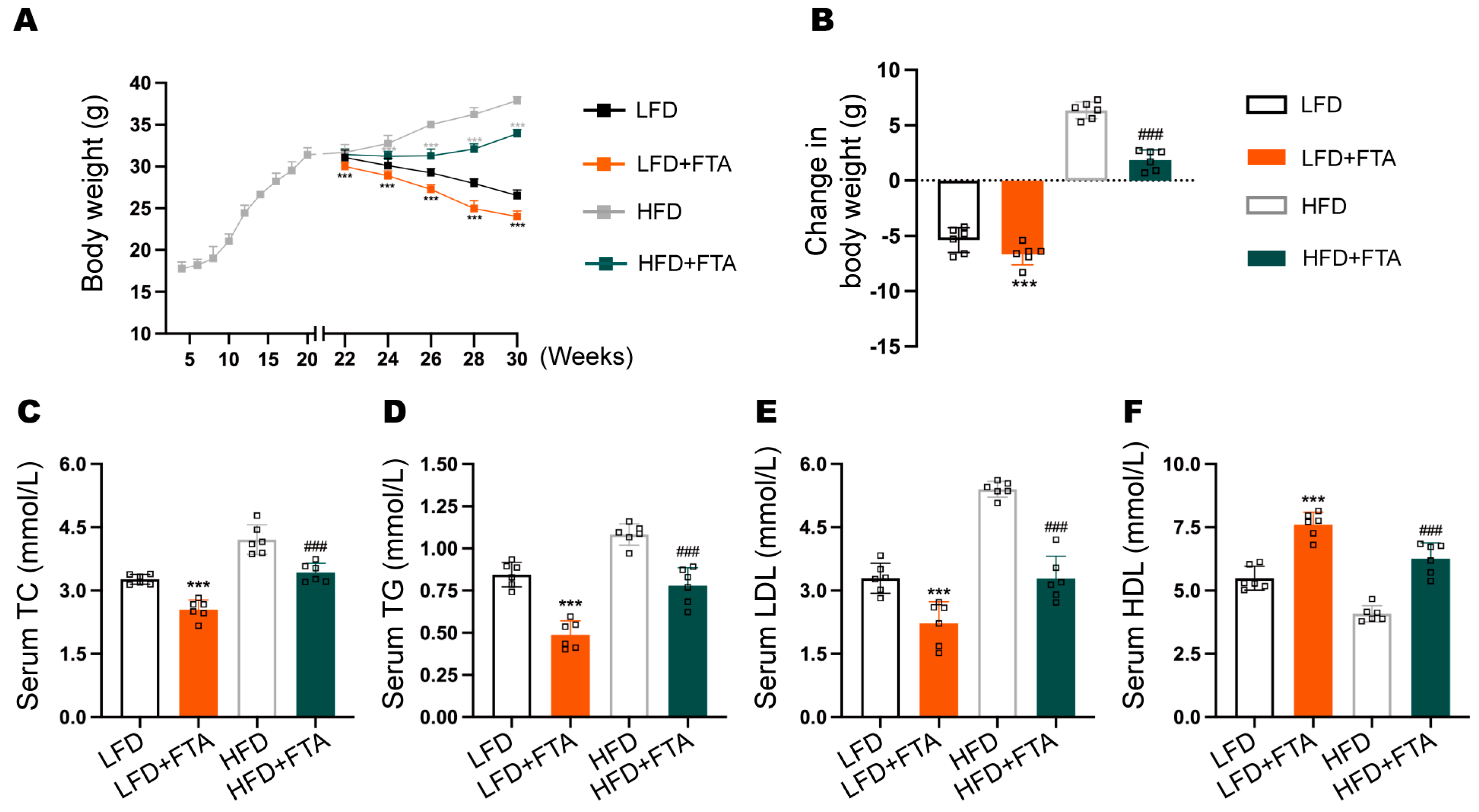
2.1. FTA Alleviates Adipose Deposition in DIO Mice
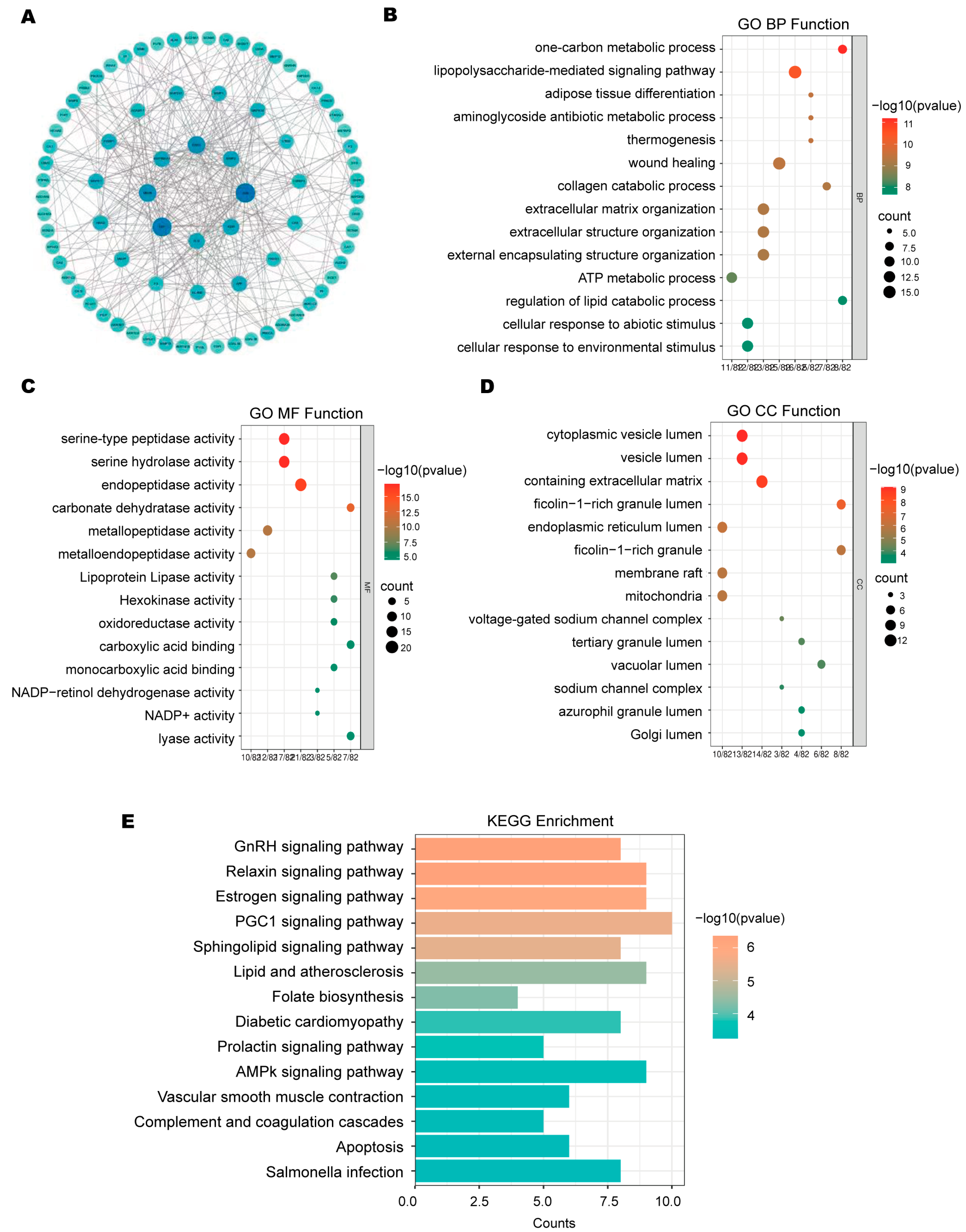
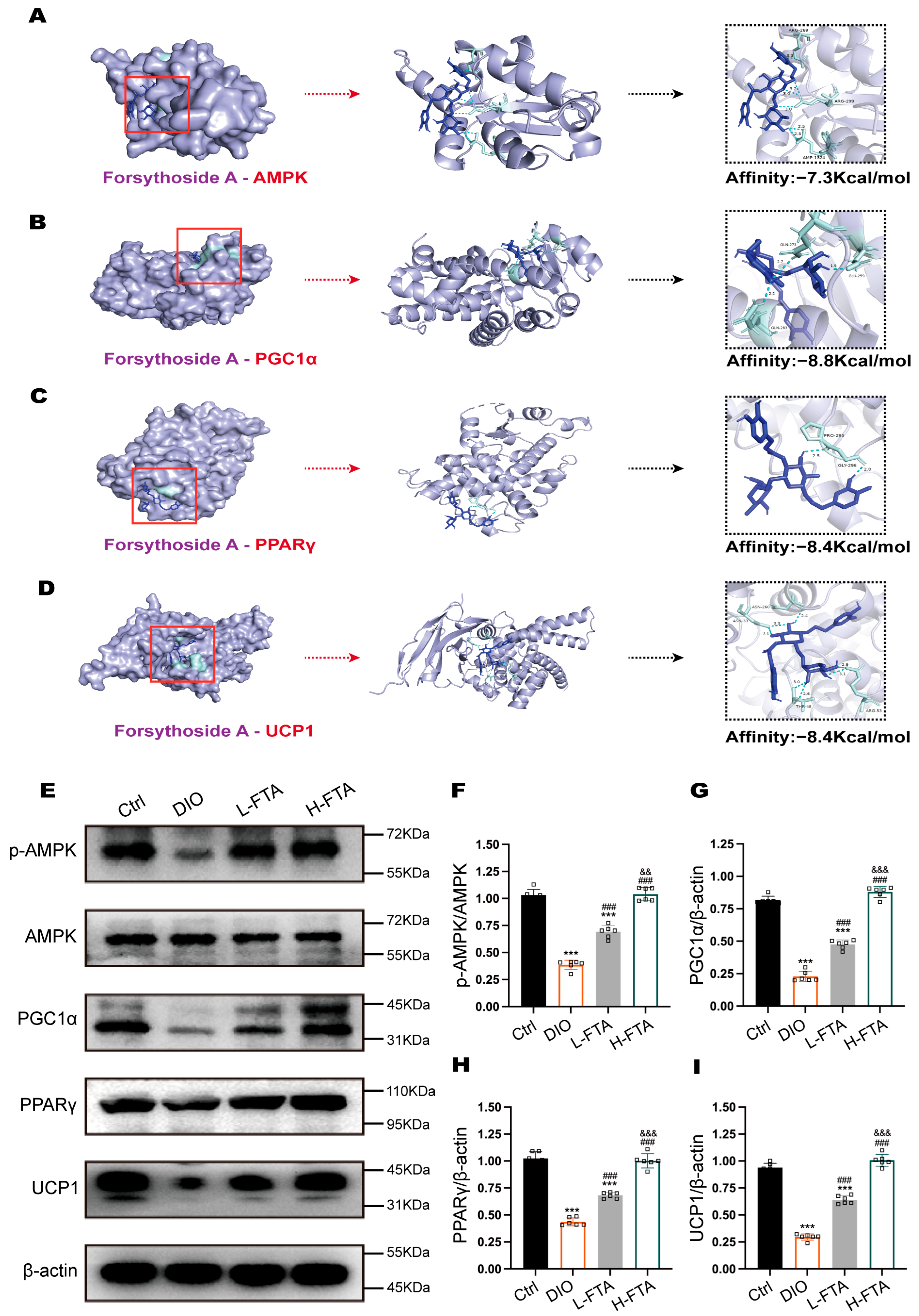
2.2. Network Pharmacology Reveals the Mechanisms of FTA Ameliorates Diet-Induced Obesity
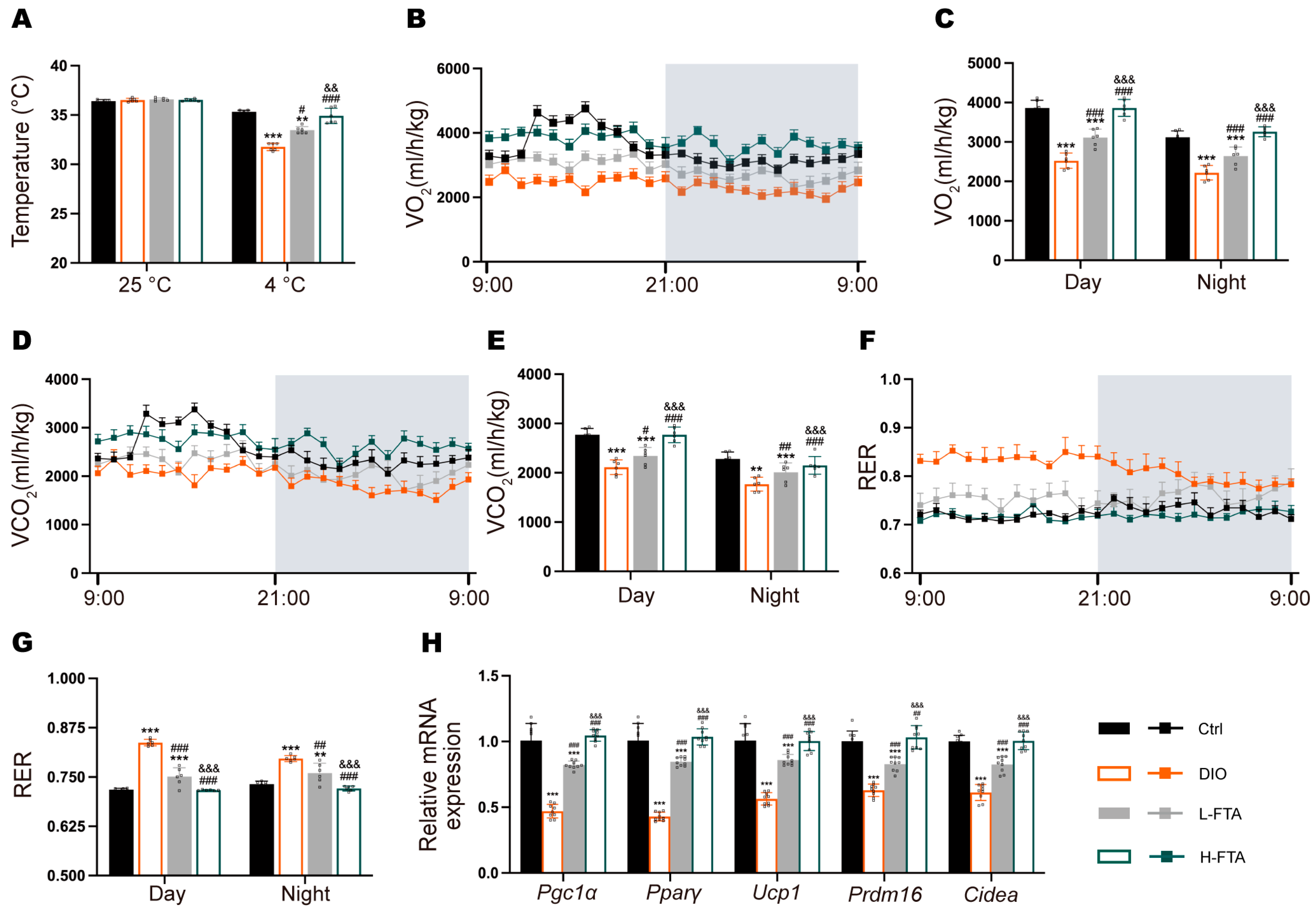
2.3. FTA Increases Thermogenesis and Promotes the Browning of WAT in Mice via the AMPK Pathway
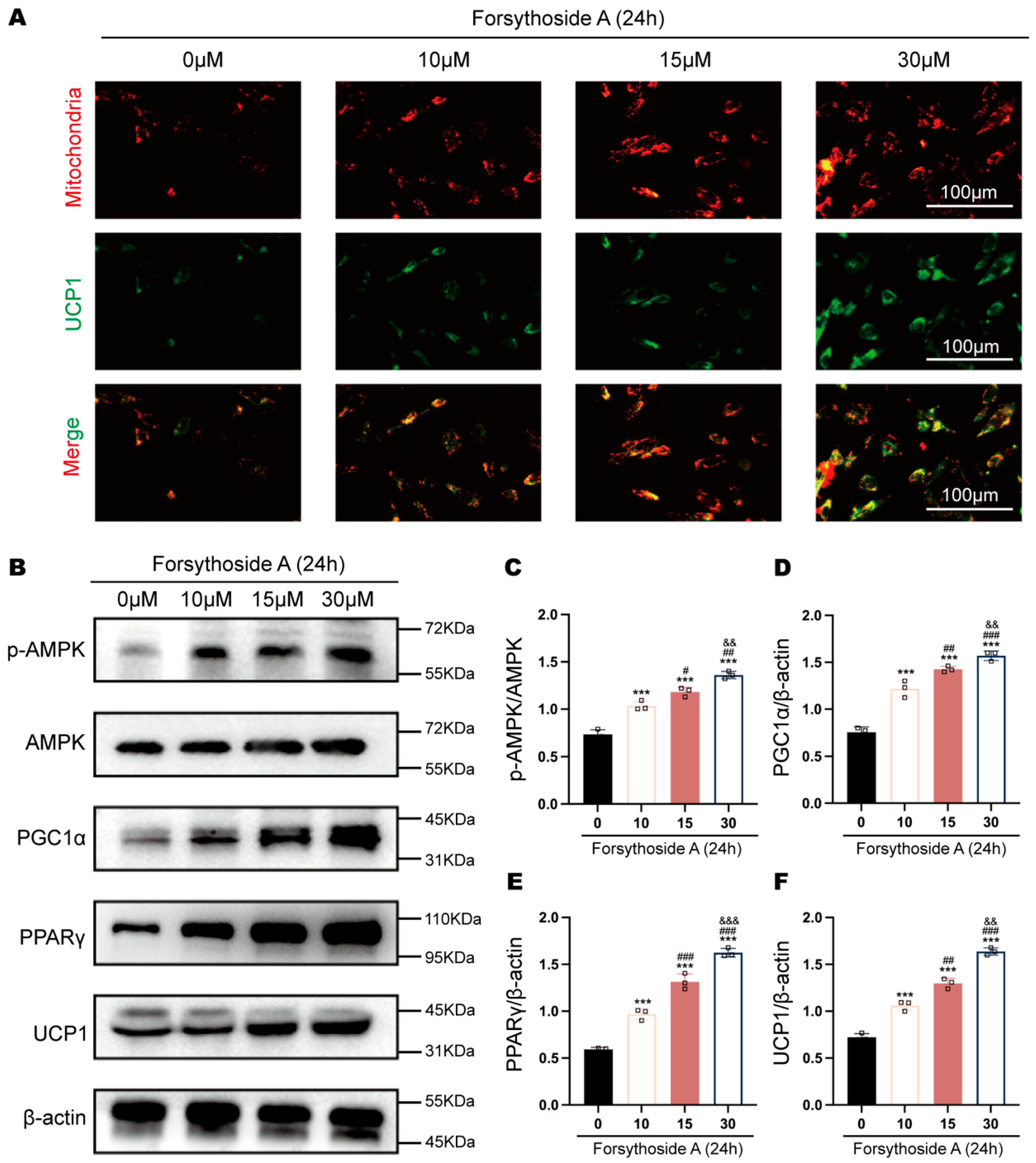
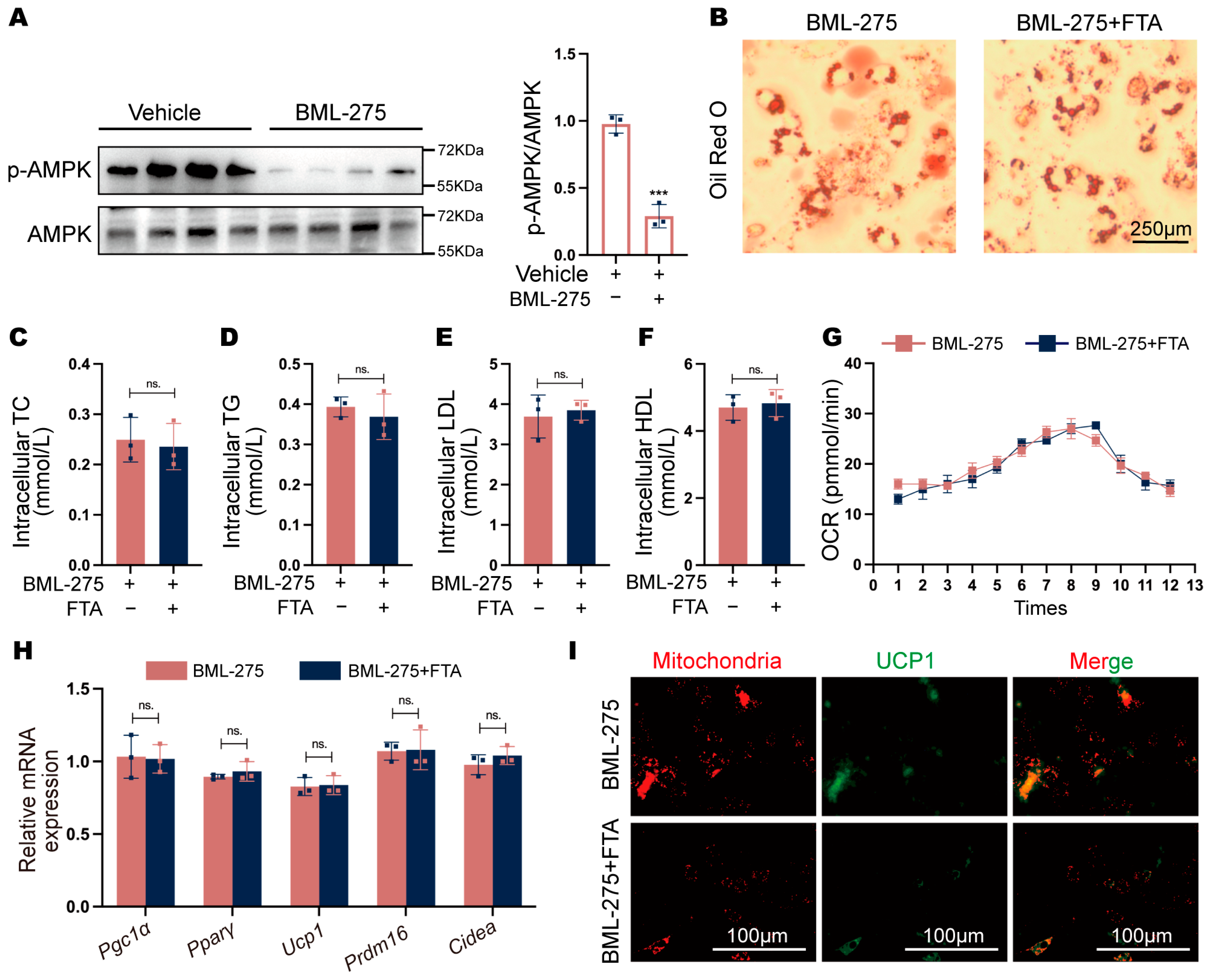
2.4. FTA Increases Cellular Thermogenesis via AMPK in 3T3-L1 Cells
2.5. FTA Reduces Pre-Established Obesity in Mice
3. Discussion
4. Materials and Methods
4.1. Chemistry
4.2. Animal Protocol
4.2.1. General Conditions and Grouping of Experimental Animals
4.2.2. The Formula of the HFD
4.3. Body Fat Rate and Organ Ratio
4.4. Biochemical Measurement of Lipids
4.5. H&E Staining
4.6. Oil Red O Staining
4.7. Network Pharmacology
4.7.1. The Collection of Targets
4.7.2. Enrichment Analysis
4.7.3. Associated Targets PPI Network
4.8. Molecular Docking
4.9. Energy Metabolism Index
4.10. Cell Culture and Differentiation
4.11. Oxygen Consumption Rate (OCR) Assay
4.12. UCP1 Immunofluorescence and Mitochondrial Staining
4.13. Western Blot
4.14. qRT-PCR
4.15. Statistical Analysis
5. Conclusions
Author Contributions
Funding
Institutional Review Board Statement
Data Availability Statement
Acknowledgments
Conflicts of Interest
Abbreviations
References
- Seravalle, G.; Grassi, G. Obesity and hypertension. Pharmacol. Res. 2017, 122, 65–79. [Google Scholar] [CrossRef]
- Hall, K.D.; Guo, J. Obesity Energetics: Body Weight Regulation and the Effects of Diet Composition. Gastroenterology 2017, 152, 1718–1727.e1713. [Google Scholar] [CrossRef]
- Marcelin, G.; Gautier, E.L.; Clément, K. Adipose Tissue Fibrosis in Obesity: Etiology and Challenges. Annu. Rev. Physiol. 2022, 84, 135–155. [Google Scholar] [CrossRef]
- Koenen, M.; Hill, M.A.; Cohen, P.; Sowers, J.R. Obesity, Adipose Tissue and Vascular Dysfunction. Circ. Res. 2021, 128, 951–968. [Google Scholar] [CrossRef]
- Pilkington, A.C.; Paz, H.A.; Wankhade, U.D. Beige Adipose Tissue Identification and Marker Specificity-Overview. Front. Endocrinol. 2021, 12, 599134. [Google Scholar] [CrossRef]
- Machado, S.A.; Pasquarelli-do-Nascimento, G.; da Silva, D.S.; Farias, G.R.; de Oliveira Santos, I.; Baptista, L.B.; Magalhães, K.G. Browning of the white adipose tissue regulation: New insights into nutritional and metabolic relevance in health and diseases. Nutr. Metab. 2022, 19, 61. [Google Scholar] [CrossRef] [PubMed]
- Ghesmati, Z.; Rashid, M.; Fayezi, S.; Gieseler, F.; Alizadeh, E.; Darabi, M. An update on the secretory functions of brown, white, and beige adipose tissue: Towards therapeutic applications. Rev. Endocr. Metab. Disord. 2024, 25, 279–308. [Google Scholar] [CrossRef]
- Frigolet, M.E.; Gutiérrez-Aguilar, R. The colors of adipose tissue. Gac. Med. Mex. 2020, 156, 142–149. [Google Scholar] [CrossRef]
- Cypess, A.M. Reassessing Human Adipose Tissue. N. Engl. J. Med. 2022, 386, 768–779. [Google Scholar] [CrossRef] [PubMed]
- Blondin, D.P. Human thermogenic adipose tissue. Curr. Opin. Genet. Dev. 2023, 80, 102054. [Google Scholar] [CrossRef] [PubMed]
- Conway, B.; Rene, A. Obesity as a disease: No lightweight matter. Obes. Rev. 2004, 5, 145–151. [Google Scholar] [CrossRef]
- Perdomo, C.M.; Cohen, R.V.; Sumithran, P.; Clément, K.; Frühbeck, G. Contemporary medical, device, and surgical therapies for obesity in adults. Lancet 2023, 401, 1116–1130. [Google Scholar] [CrossRef]
- Li, C.; Zhang, H.; Li, X. The Mechanism of Traditional Chinese Medicine for the Treatment of Obesity. Diabetes Metab. Syndr. Obes. 2020, 13, 3371–3381. [Google Scholar] [CrossRef]
- Dong, Z.; Lu, X.; Tong, X.; Dong, Y.; Tang, L.; Liu, M. Forsythiae fructus: A Review on its Phytochemistry, Quality Control, Pharmacology and Pharmacokinetics. Molecules 2017, 22, 1466. [Google Scholar] [CrossRef] [PubMed]
- Zhang, L.; Lang, F.; Feng, J.; Wang, J. Review of the therapeutic potential of Forsythiae Fructus on the central nervous system: Active ingredients and mechanisms of action. J. Ethnopharmacol. 2024, 319, 117275. [Google Scholar] [CrossRef] [PubMed]
- Wang, Z.; Xia, Q.; Liu, X.; Liu, W.; Huang, W.; Mei, X.; Luo, J.; Shan, M.; Lin, R.; Zou, D.; et al. Phytochemistry, pharmacology, quality control and future research of Forsythia suspensa (Thunb.) Vahl: A review. J. Ethnopharmacol. 2018, 210, 318–339. [Google Scholar] [CrossRef] [PubMed]
- Gong, L.; Wang, C.; Zhou, H.; Ma, C.; Zhang, Y.; Peng, C.; Li, Y. A review of pharmacological and pharmacokinetic properties of Forsythiaside A. Pharmacol. Res. 2021, 169, 105690. [Google Scholar] [CrossRef] [PubMed]
- Zhang, X.; Wang, D.; Ren, X.; Atanasov, A.G.; Zeng, R.; Huang, L. System Bioinformatic Approach Through Molecular Docking, Network Pharmacology and Microarray Data Analysis to Determine the Molecular Mechanism Underlying the Effects of Rehmanniae Radix Praeparata on Cardiovascular Diseases. Curr. Protein Pept. Sci. 2019, 20, 964–975. [Google Scholar] [CrossRef]
- Feng, Y.; Li, Z.; Qian, J.; Han, B.; Yan, S.; Fang, B.; Huang, S. Forsythoside a as a potential therapeutic agent for non-alcoholic fatty liver disease: From target identification to in vitro and in vivo validation. In Natural Product Research; Taylor & Francis: Abingdon, UK, 2025; pp. 1–10. [Google Scholar]
- Singh, S.; Dulai, P.S.; Zarrinpar, A.; Ramamoorthy, S.; Sandborn, W.J. Obesity in IBD: Epidemiology, pathogenesis, disease course and treatment outcomes. Nat. Rev. Gastroenterol. Hepatol. 2017, 14, 110–121. [Google Scholar] [CrossRef]
- Piché, M.E.; Tchernof, A.; Després, J.P. Obesity Phenotypes, Diabetes, and Cardiovascular Diseases. Circ. Res. 2020, 126, 1477–1500. [Google Scholar] [CrossRef]
- Faccioli, N.; Poitou, C.; Clément, K.; Dubern, B. Current Treatments for Patients with Genetic Obesity. J. Clin. Res. Pediatr. Endocrinol. 2023, 15, 108–119. [Google Scholar] [CrossRef]
- Hidalgo-Lozada, G.M.; Villarruel-López, A.; Nuño, K.; García-García, A.; Sánchez-Nuño, Y.A.; Ramos-García, C.O. Clinically Effective Molecules of Natural Origin for Obesity Prevention or Treatment. Int. J. Mol. Sci. 2024, 25, 2671. [Google Scholar] [CrossRef]
- Niu, W.; Zhang, D.; Zhang, H.; Qi, L.; Wang, D.; Gong, L.; Jiang, Y. Banxia Baizhu Tianma Decoction attenuates obesity via regulating adipocyte-immune cell communication. J. Ethnopharmacol. 2026, 361, 121246. [Google Scholar] [CrossRef] [PubMed]
- Wang, Z.; Ren, X.; Peng, Z.; Zeng, M.; Wang, Z.; Chen, Q.; Chen, J.; Dai, X.; Christian, M.; Qie, X.; et al. Flavonoid-rich extracts of Nelumbo nucifera leaves alleviate obesity in HFD-fed mice via microbiota-dependent modulation of brown fat thermogenesis. J. Ethnopharmacol. 2026, 354, 120513. [Google Scholar] [CrossRef] [PubMed]
- Lin, S.X.; Li, X.Y.; Chen, Q.C.; Ni, Q.; Cai, W.F.; Jiang, C.P.; Yi, Y.K.; Liu, L.; Liu, Q.; Shen, C.Y. Eriodictyol regulates white adipose tissue browning and hepatic lipid metabolism in high fat diet-induced obesity mice via activating AMPK/SIRT1 pathway. J. Ethnopharmacol. 2025, 337, 118761. [Google Scholar] [CrossRef]
- Park, J.; Nurkolis, F.; Won, H.; Yang, J.; Oh, D.; Jo, H.; Choi, J.; Chung, S.; Kurniawan, R.; Kim, B. Could Natural Products Help in the Control of Obesity? Current Insights and Future Perspectives. Molecules 2023, 28, 6604. [Google Scholar] [CrossRef]
- Li, W.; Zhong, Y.; Lin, Z.; Deng, Z.; Long, D.; Li, M.; Li, C.; Mao, G.; Kang, Y. Forsythoside A mitigates osteoarthritis and inhibits chondrocyte senescence by promoting mitophagy and suppressing NLRP3 inflammasome via the Nrf2 pathway. Phytomedicine 2024, 135, 156052. [Google Scholar] [CrossRef]
- Zhang, Q.; Zhang, B.; Yang, F.; Hu, Y.; Fan, R.; Wang, M.; Chen, S. Forsythoside A regulates pulmonary fibrosis by inhibiting endothelial-to-mesenchymal transition and lung fibroblast proliferation via the PTPRB signaling. Phytomedicine 2024, 130, 155715. [Google Scholar] [CrossRef]
- Frühbeck, G.; Gómez-Ambrosi, J.; Muruzábal, F.J.; Burrell, M.A. The adipocyte: A model for integration of endocrine and metabolic signaling in energy metabolism regulation. Am. J. Physiol. Endocrinol. Metab. 2001, 280, E827–E847. [Google Scholar] [CrossRef] [PubMed]
- Harms, M.; Seale, P. Brown and beige fat: Development, function and therapeutic potential. Nat. Med. 2013, 19, 1252–1263. [Google Scholar] [CrossRef]
- Sun, Q.; He, M.; Zhang, M.; Zeng, S.; Chen, L.; Zhou, L.; Xu, H. Ursolic acid: A systematic review of its pharmacology, toxicity and rethink on its pharmacokinetics based on PK-PD model. Fitoterapia 2020, 147, 104735. [Google Scholar] [CrossRef]
- Tan, D.X.; Manchester, L.C.; Fuentes-Broto, L.; Paredes, S.D.; Reiter, R.J. Significance and application of melatonin in the regulation of brown adipose tissue metabolism: Relation to human obesity. Obes. Rev. 2011, 12, 167–188. [Google Scholar] [CrossRef] [PubMed]
- Lee, Y.K.; Lee, W.S.; Hwang, J.T.; Kwon, D.Y.; Surh, Y.J.; Park, O.J. Curcumin exerts antidifferentiation effect through AMPKalpha-PPAR-gamma in 3T3-L1 adipocytes and antiproliferatory effect through AMPKalpha-COX-2 in cancer cells. J. Agric. Food Chem. 2009, 57, 305–310. [Google Scholar] [CrossRef] [PubMed]
- Singh, B.; Singh, J.P.; Kaur, A.; Singh, N. Phenolic composition, antioxidant potential and health benefits of citrus peel. Food Res. Int. 2020, 132, 109114. [Google Scholar] [CrossRef]
- Yau, W.W.; Yen, P.M. Thermogenesis in Adipose Tissue Activated by Thyroid Hormone. Int. J. Mol. Sci. 2020, 21, 3020. [Google Scholar] [CrossRef]
- Cannon, B.; Nedergaard, J. Metabolic consequences of the presence or absence of the thermogenic capacity of brown adipose tissue in mice (and probably in humans). Int. J. Obes. 2010, 34, S7–S16. [Google Scholar] [CrossRef]
- Spiegelman, B.M. Banting Lecture 2012: Regulation of adipogenesis: Toward new therapeutics for metabolic disease. Diabetes 2013, 62, 1774–1782. [Google Scholar] [CrossRef]
- Li, P. Cidea, brown fat and obesity. Mech. Ageing Dev. 2004, 125, 337–338. [Google Scholar] [CrossRef]
- Tonphu, K.; Mueangaun, S.; Lerkdumnernkit, N.; Sengking, J.; Tocharus, J.; Benjakul, S.; Mittal, A.; Tocharus, C. Chitooligosaccharide-epigallocatechin gallate conjugate ameliorates lipid accumulation and promotes browning of white adipose tissue in high fat diet fed rats. Chem. Biol. Interact. 2025, 406, 111316. [Google Scholar]
- Balogun, O.; Kang, H.W. Garlic Scape (Allium sativum L.) Extract Decreases Adipogenesis by Activating AMK-Activated Protein Kinase During the Differentiation in 3T3-L1 Adipocytes. J. Med. Food 2022, 25, 24–32. [Google Scholar] [CrossRef] [PubMed]
- Yuan, J.; Nian, Y.; Wang, X.; Shi, Q.; Shui, S.; Cai, H.; Lin, Y.; Zhang, X.; Wang, F.; Chen, J.; et al. Actein ameliorates diet-induced obesity through the activation of AMPK-mediated white fat browning. Phytomedicine 2024, 134, 156009. [Google Scholar] [CrossRef]
- Zhang, Z.; Zhang, H.; Li, B.; Meng, X.; Wang, J.; Zhang, Y.; Yao, S.; Ma, Q.; Jin, L.; Yang, J.; et al. Berberine activates thermogenesis in white and brown adipose tissue. Nat. Commun. 2014, 5, 5493. [Google Scholar] [CrossRef]
- Herzig, S.; Shaw, R.J. AMPK: Guardian of metabolism and mitochondrial homeostasis. Nat. Rev. Mol. Cell Biol. 2018, 19, 121–135. [Google Scholar] [CrossRef]
- Liu, H.; Xu, Y.; Hu, F. AMPK in the Ventromedial Nucleus of the Hypothalamus: A Key Regulator for Thermogenesis. Front. Endocrinol. 2020, 11, 578830. [Google Scholar] [CrossRef] [PubMed]
- Beiroa, D.; Imbernon, M.; Gallego, R.; Senra, A.; Herranz, D.; Villarroya, F.; Serrano, M.; Fernø, J.; Salvador, J.; Escalada, J.; et al. GLP-1 agonism stimulates brown adipose tissue thermogenesis and browning through hypothalamic AMPK. Diabetes 2014, 63, 3346–3358. [Google Scholar] [CrossRef]
- Martínez-Sánchez, N.; Moreno-Navarrete, J.M.; Contreras, C.; Rial-Pensado, E.; Fernø, J.; Nogueiras, R.; Diéguez, C.; Fernández-Real, J.M.; López, M. Thyroid hormones induce browning of white fat. J. Endocrinol. 2017, 232, 351–362. [Google Scholar] [CrossRef] [PubMed]
- van der Vaart, J.I.; Boon, M.R.; Houtkooper, R.H. The Role of AMPK Signaling in Brown Adipose Tissue Activation. Cells 2021, 10, 1122. [Google Scholar] [CrossRef]
- Chen, S.; Liu, X.; Peng, C.; Tan, C.; Sun, H.; Liu, H.; Zhang, Y.; Wu, P.; Cui, C.; Liu, C.; et al. The phytochemical hyperforin triggers thermogenesis in adipose tissue via a Dlat-AMPK signaling axis to curb obesity. Cell Metab. 2021, 33, 565–580.e567. [Google Scholar] [CrossRef]
- Xu, Y.; Wang, N.; Tan, H.Y.; Li, S.; Zhang, C.; Zhang, Z.; Feng, Y. Panax notoginseng saponins modulate the gut microbiota to promote thermogenesis and beige adipocyte reconstruction via leptin-mediated AMPKα/STAT3 signaling in diet-induced obesity. Theranostics 2020, 10, 11302–11323. [Google Scholar] [CrossRef]
- Zhang, X.; Zhang, H.; Gao, Y.; Hao, Z.; Liu, J.; Zhou, G.; Liu, F.; Li, X.; Tong, C.; Wang, X. Forsythoside A regulates autophagy and apoptosis through the AMPK/mTOR/ULK1 pathway and alleviates inflammatory damage in MAC-T cells. Int. Immunopharmacol. 2023, 118, 110053. [Google Scholar] [CrossRef] [PubMed]
- Kim, Y.E.; Bak, S.B.; Kim, M.J.; Bae, S.J.; Lee, W.Y.; Kim, Y.W. Forsythiaside A Activates AMP-Activated Protein Kinase and Regulates Oxidative Stress via Nrf2 Signaling. Int. J. Mol. Sci. 2023, 24, 17033. [Google Scholar] [CrossRef]
- Malik, N.; Shaw, R.J. The AMPK Pathway: Molecular Rejuvenation of Metabolism and Mitochondria. Annu. Rev. Cell Dev. Biol. 2025, 41, 375–402. [Google Scholar] [CrossRef]
- Saito, S.; Furuno, A.; Sakurai, J.; Park, H.R.; Shin-ya, K.; Tomida, A. Compound C prevents the unfolded protein response during glucose deprivation through a mechanism independent of AMPK and BMP signaling. PLoS ONE 2012, 7, e45845. [Google Scholar] [CrossRef]
- Gjermeni, E.; Kirstein, A.S.; Kolbig, F.; Kirchhof, M.; Bundalian, L.; Katzmann, J.L.; Laufs, U.; Blüher, M.; Garten, A.; Le Duc, D. Obesity-An Update on the Basic Pathophysiology and Review of Recent Therapeutic Advances. Biomolecules 2021, 11, 1426. [Google Scholar] [CrossRef] [PubMed]
- Lu, X.; Jin, Y.; Li, D.; Zhang, J.; Han, J.; Li, Y. Multidisciplinary Progress in Obesity Research. Genes 2022, 13, 1772. [Google Scholar] [CrossRef]
- Meng, Q.; Zhong, M.; Zhao, J.; Xu, H.; Jiang, W.; Lin, C.; Karishma, G.; Wang, F.; Xu, F.; Li, Y. Artesunate reduces oxidative stress and inflammation in NAFLD by activating the Nrf2 pathway. Biochem. Pharmacol. 2026, 245, 117643. [Google Scholar] [CrossRef] [PubMed]
- Li, Y.; Li, W.; Zhu, X.; Xu, N.; Meng, Q.; Jiang, W.; Zhang, L.; Yang, M.; Xu, F.; Li, Y. VEGFB ameliorates insulin resistance in NAFLD via the PI3K/AKT signal pathway. J. Transl. Med. 2024, 22, 976. [Google Scholar] [CrossRef] [PubMed]
- Li, Y.; Meng, Q.; Liu, J.; Kang, Z.; Xu, A.; Xu, Y.; Yang, M.; Luan, H.; Li, X.; Zhang, Y.; et al. Forchlorfenuron exposure induces cardiotoxicity via NF-κB/NLRP3-mediated inflammasome activation independent of Septin2 inhibition. Free Radic. Biol. Med. 2026, 244, 348–366. [Google Scholar] [CrossRef]
- Szychowski, K.A.; Skóra, B.; Kryshchyshyn-Dylevych, A.; Kaminskyy, D.; Tobiasz, J.; Lesyk, R.B.; Gmiński, J. 4-Thiazolidinone-based derivatives do not affect differentiation of mouse embryo fibroblasts (3T3-L1 cell line) into adipocytes. Chem. Biol. Interact. 2021, 345, 109538. [Google Scholar] [CrossRef]
- Plitzko, B.; Loesgen, S. Measurement of Oxygen Consumption Rate (OCR) and Extracellular Acidification Rate (ECAR) in Culture Cells for Assessment of the Energy Metabolism. Bio Protoc. 2018, 8, e2850. [Google Scholar] [CrossRef]
- Uysal Yeler, G.; Sivaslıoğlu, A.; Gülsün, T.; Göktaş, Z. Effects of Luteolin and Apigenin on Adipogenesis Markers PPARγ and FABP4 and Thermogenesis Marker UCP1 in 3T3-L1 Preadipocyte Cell Line. Int. J. Mol. Sci. 2025, 27, 139. [Google Scholar] [CrossRef] [PubMed]





| Antibody | Dilution | Source | Company |
|---|---|---|---|
| AMPK | 1:1000 | Rabbit | Proteintech (Rosemont, IL, USA) |
| P-AMPK | 1:1000 | Rabbit | Proteintech |
| PGC-1α | 1:1000 | Rabbit | Proteintech |
| PPARγ | 1:1000 | Mouse | Proteintech |
| UCP1 | 1:500 | Mouse | Proteintech |
| β-actin | 1:2000 | Mouse | Proteintech |
| Anti-Mouse IgG | 1:5000 | Goat | Abcam (Cambridge, UK) |
| Anti-Rabbit IgG | 1:5000 | Goat | Abcam |
| Cene | Forward | Reverse |
|---|---|---|
| PParγ | CCTCTCCGTGATGGAAGACC1 | CCATTGGGTCAGCTCTTGTG |
| PRDM16 | GATGGGAGATGCTGACGGAT | TGATCTGACACATGGCGAG |
| Cidea | CGGGAATAGCCAGAGTCACC1 | TGTGCATCGGATGTCGTAGG |
| PGC1α | ATGTGTCGCCTTCTTGCTCT | ATCTACTGCCTGGGGACC1TT |
| UCP1 | AATCAGCTTTGCTTCCCTCA | GCTTTGTGCTTGCATTCTGA |
Disclaimer/Publisher’s Note: The statements, opinions and data contained in all publications are solely those of the individual author(s) and contributor(s) and not of MDPI and/or the editor(s). MDPI and/or the editor(s) disclaim responsibility for any injury to people or property resulting from any ideas, methods, instructions or products referred to in the content. |
© 2026 by the authors. Licensee MDPI, Basel, Switzerland. This article is an open access article distributed under the terms and conditions of the Creative Commons Attribution (CC BY) license.
Share and Cite
Meng, Q.; Xu, H.; Zhong, M.; Mu, Y.; Zhao, X.; Lin, C.; Xu, F.; Yang, M.; Sun, H.; Xu, Y.; et al. Forsythoside A Attenuates High-Fat Diet-Induced Obesity by Regulating Thermogenesis and Browning of White Adipose Tissue Through Activation of the AMPK Signaling Pathway. Pharmaceuticals 2026, 19, 852. https://doi.org/10.3390/ph19060852
Meng Q, Xu H, Zhong M, Mu Y, Zhao X, Lin C, Xu F, Yang M, Sun H, Xu Y, et al. Forsythoside A Attenuates High-Fat Diet-Induced Obesity by Regulating Thermogenesis and Browning of White Adipose Tissue Through Activation of the AMPK Signaling Pathway. Pharmaceuticals. 2026; 19(6):852. https://doi.org/10.3390/ph19060852
Chicago/Turabian StyleMeng, Qinyu, Hong Xu, Mengru Zhong, Yuanzhi Mu, Xinyu Zhao, Chenru Lin, Fang Xu, Meizi Yang, Hui Sun, Yingjiang Xu, and et al. 2026. "Forsythoside A Attenuates High-Fat Diet-Induced Obesity by Regulating Thermogenesis and Browning of White Adipose Tissue Through Activation of the AMPK Signaling Pathway" Pharmaceuticals 19, no. 6: 852. https://doi.org/10.3390/ph19060852
APA StyleMeng, Q., Xu, H., Zhong, M., Mu, Y., Zhao, X., Lin, C., Xu, F., Yang, M., Sun, H., Xu, Y., & Li, Y. (2026). Forsythoside A Attenuates High-Fat Diet-Induced Obesity by Regulating Thermogenesis and Browning of White Adipose Tissue Through Activation of the AMPK Signaling Pathway. Pharmaceuticals, 19(6), 852. https://doi.org/10.3390/ph19060852