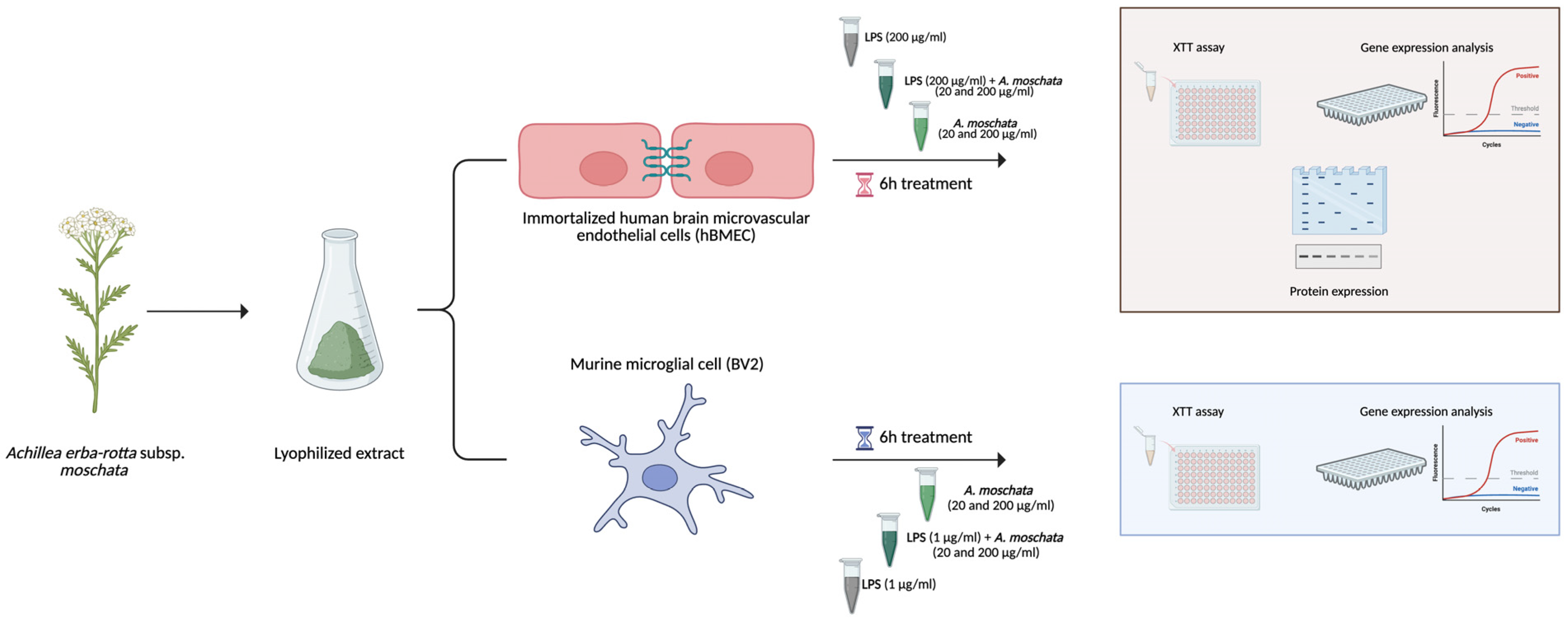
Achillea erba-rotta subsp. moschata (Wulfen) I. Richardson Modulates Inflammatory and Antioxidant Pathways in Brain Endothelial and Microglial Cells

 , , , , , , , , and
Abstract
1. Introduction
2. Results
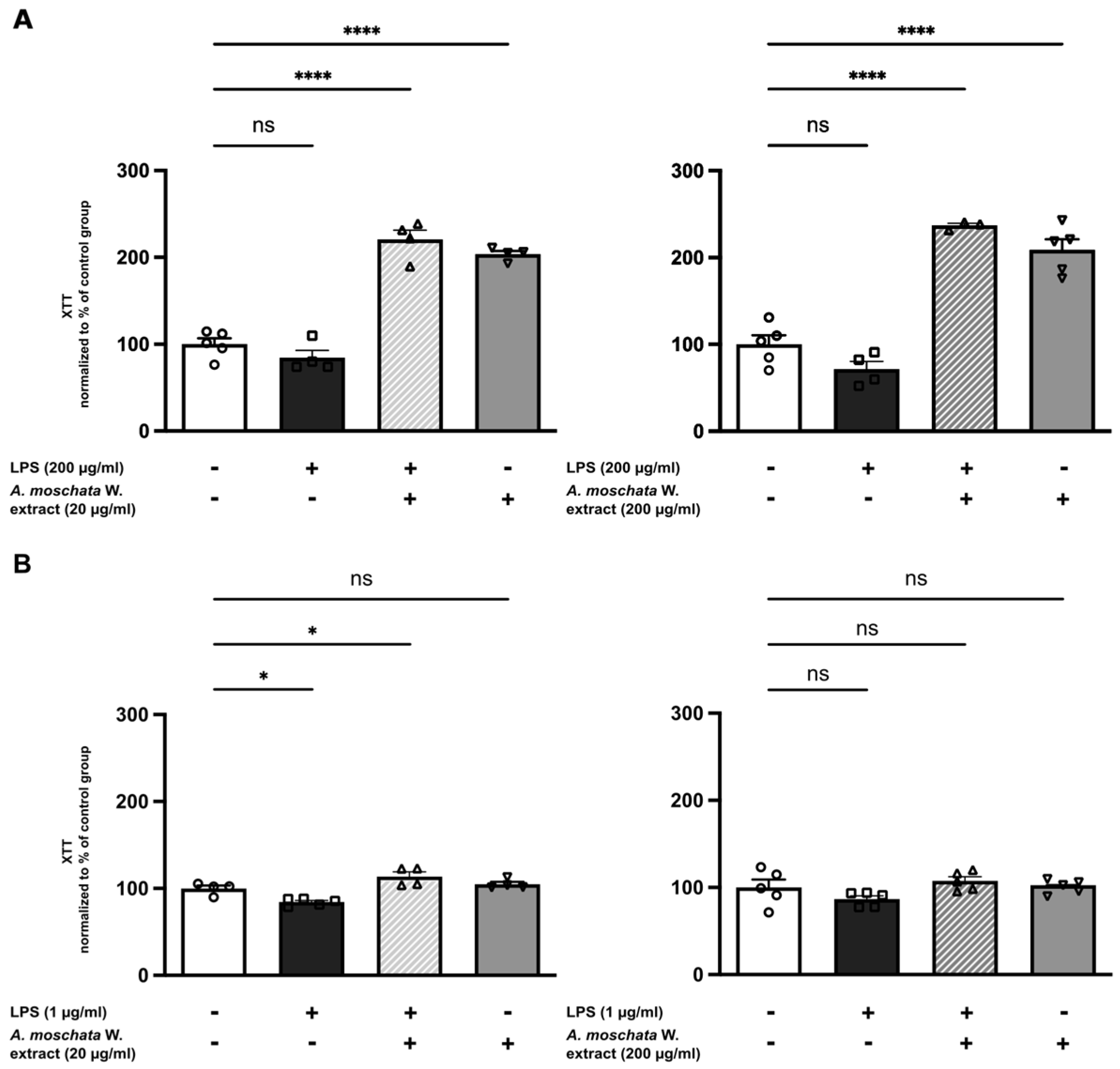
2.1. Effect of A. erba-rotta subsp. moschata Extract on XTT Assay in hBMEC and BV2 Cells
2.2. Effects of A. erba-rotta subsp. moschata Extract in Human Brain Microvascular Endothelial Cells
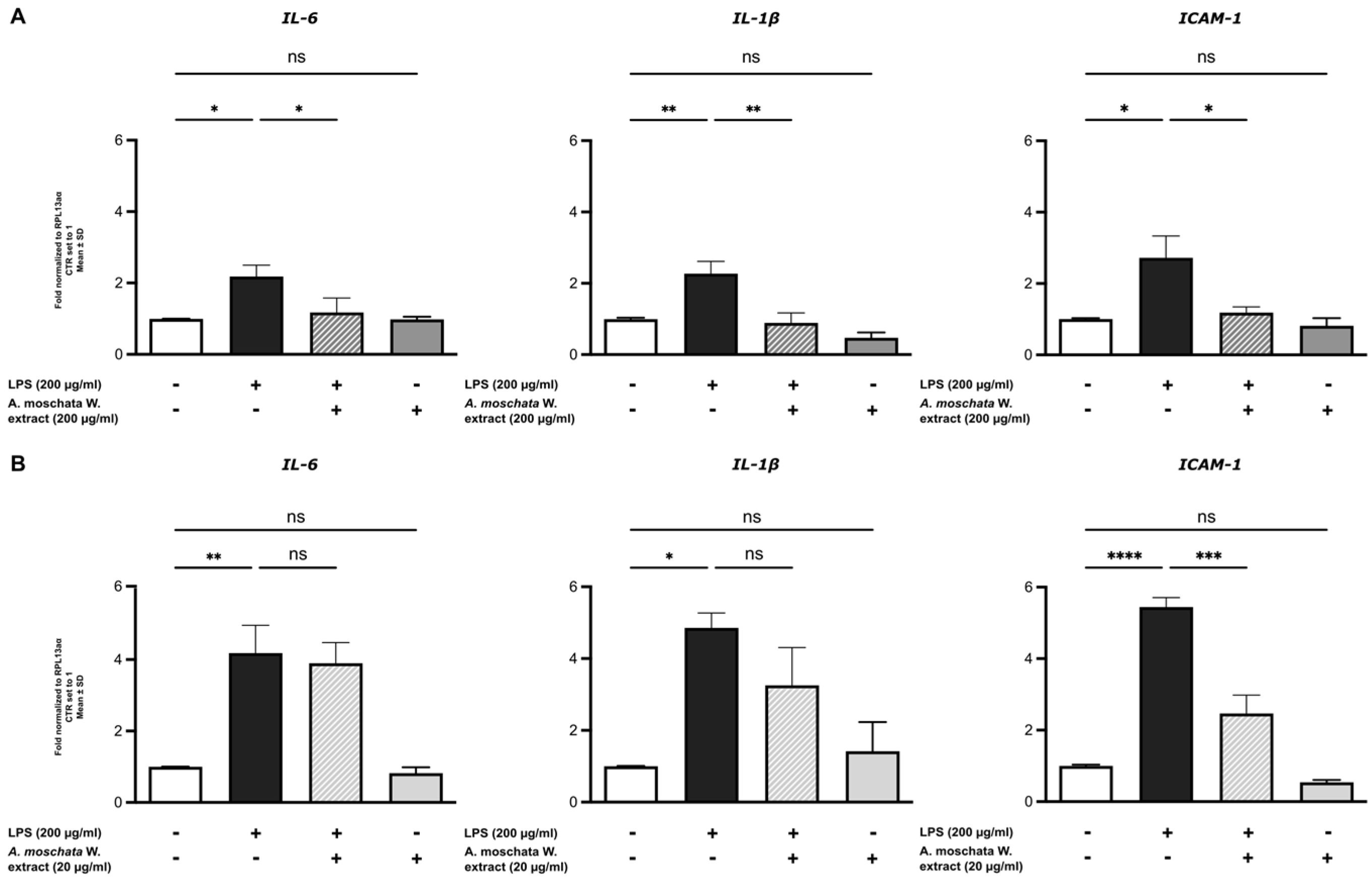
2.2.1. Modulation of Inflammatory Mediators and Adhesion Molecules
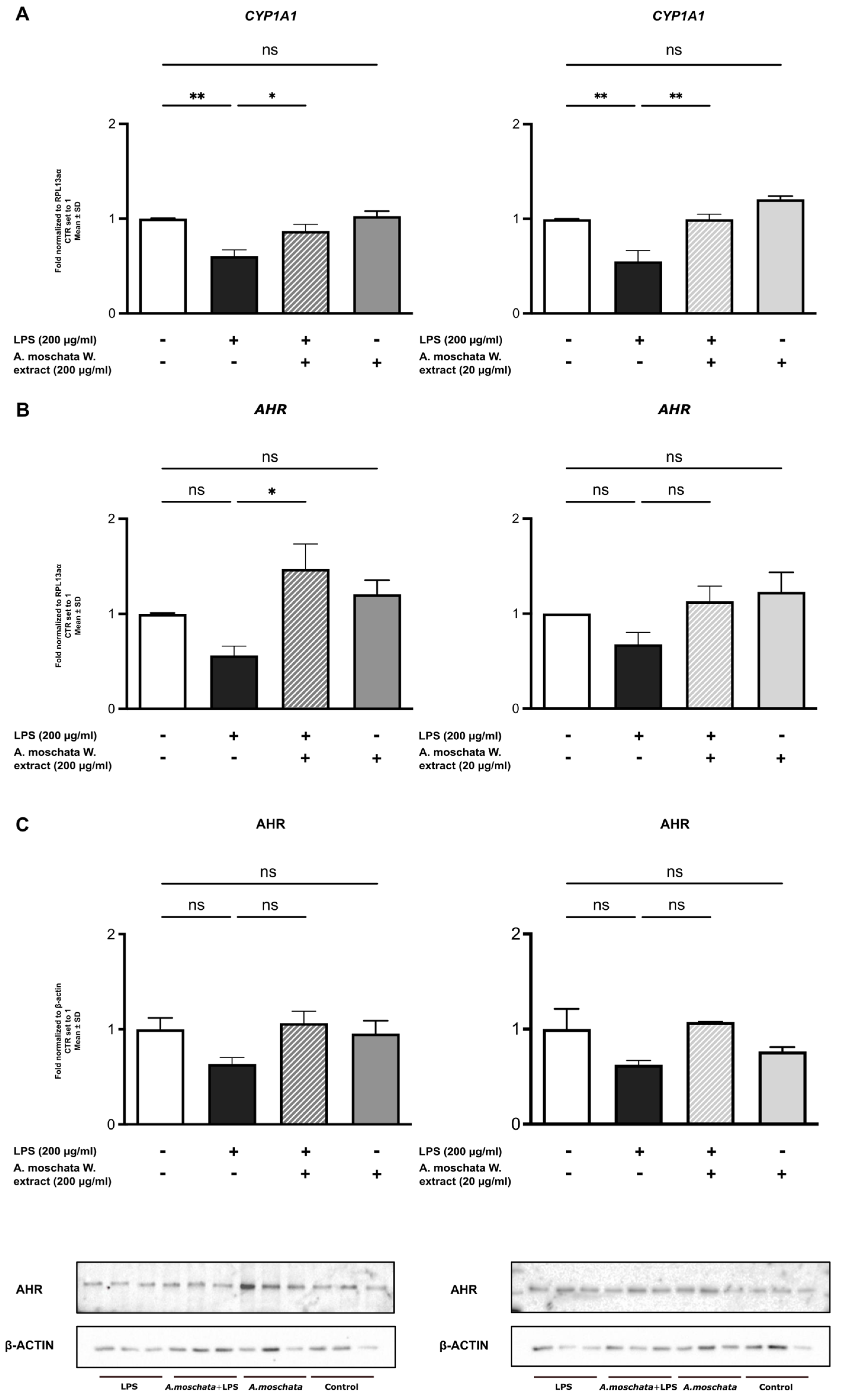
2.2.2. Induction of AhR-Pathway Following A. erba-rotta subsp. moschata Extract Treatment
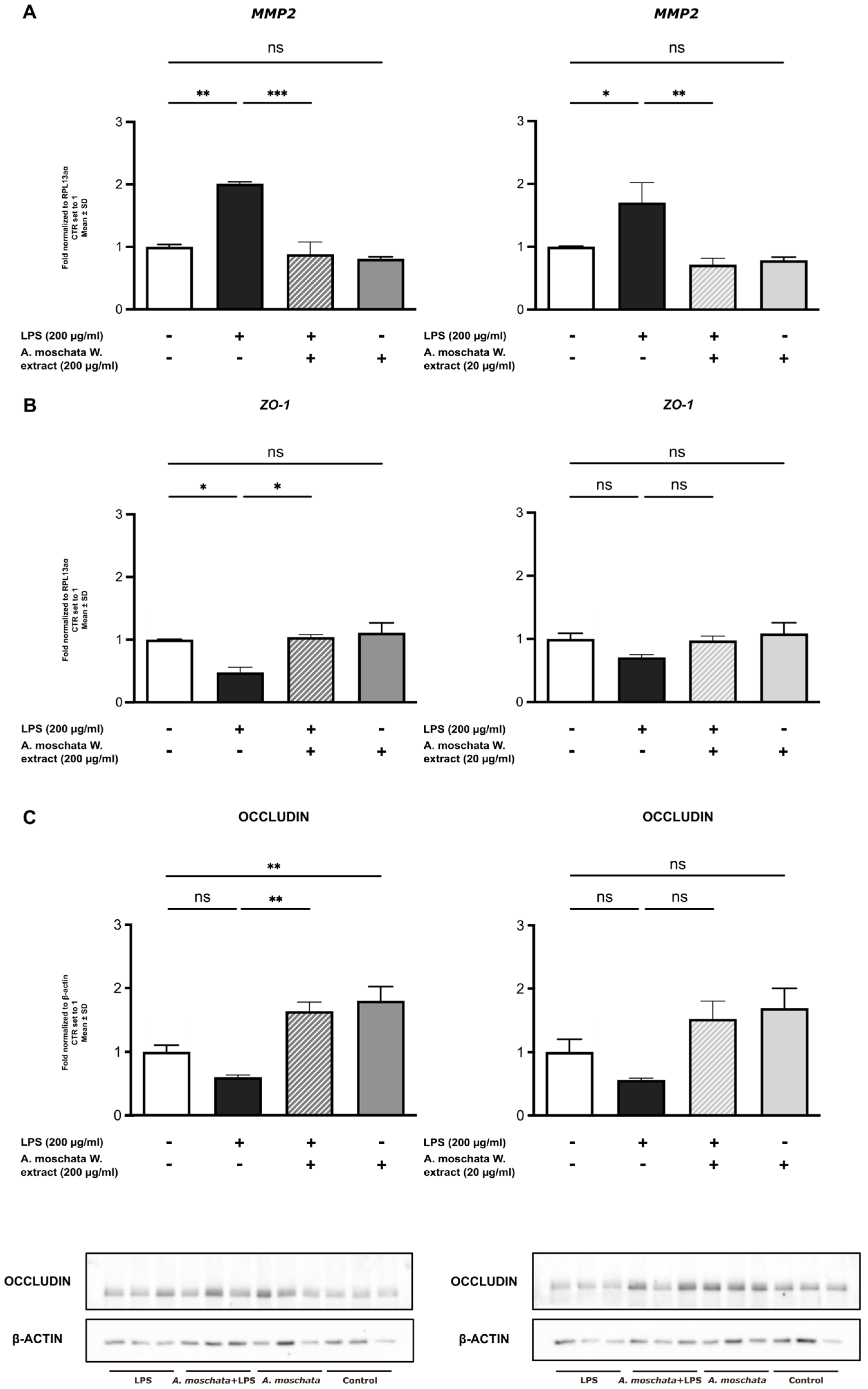
2.2.3. A. erba-rotta subsp. moschata Modulates Tight Junctions’ Expression Pathways
2.3. Effects of A. erba-rotta subsp. moschata Extract in Murine Microglial Cells
2.3.1. Reduction in Pro-Inflammatory Cytokines
2.3.2. A. erba-rotta subsp. moschata Improves Antioxidant Pathway
2.3.3. Upregulation of TGF-β Expression
3. Discussion
Study Limitations and Future Directions
4. Material and Methods
4.1. Plant Material
4.2. Preparation of the Extract
4.3. Phytochemical Characterisation
4.4. Cell Culture
4.5. Cell Treatments
4.6. RNA Isolation and Quantitative RT-PCR
4.7. Western Blot Analysis
4.8. Cell Viability (XTT)
4.9. Statistical Analysis
5. Conclusions
Supplementary Materials
Author Contributions
Funding
Institutional Review Board Statement
Informed Consent Statement
Data Availability Statement
Acknowledgments
Conflicts of Interest
References
- Giri, P.M.; Banerjee, A.; Ghosal, A.; Layek, B. Neuroinflammation in Neurodegenerative Disorders: Current Knowledge and Therapeutic Implications. Int. J. Mol. Sci. 2024, 25, 3995. [Google Scholar] [CrossRef]
- Adamu, A.; Li, S.; Gao, F.; Xue, G. The role of neuroinflammation in neurodegenerative diseases: Current understanding and future therapeutic targets. Front. Aging Neurosci. 2024, 16, 1347987. [Google Scholar] [CrossRef] [PubMed]
- Kwon, H.S.; Koh, S.-H. Neuroinflammation in neurodegenerative disorders: The roles of microglia and astrocytes. Transl. Neurodegener. 2020, 9, 42. [Google Scholar] [CrossRef] [PubMed]
- Gao, C.; Jiang, J.; Tan, Y.; Chen, S. Microglia in neurodegenerative diseases: Mechanism and potential therapeutic targets. Signal Transduct. Target. Ther. 2023, 8, 359. [Google Scholar] [CrossRef] [PubMed]
- Muzio, L.; Viotti, A.; Martino, G. Microglia in Neuroinflammation and Neurodegeneration: From Understanding to Therapy. Front. Neurosci. 2021, 15, 742065. [Google Scholar] [CrossRef]
- Stolp, H.B.; Dziegielewska, K.M. Review: Role of developmental inflammation and blood–brain barrier dysfunction in neurodevelopmental and neurodegenerative diseases. Neuropathol. Appl. Neurobiol. 2009, 35, 132–146. [Google Scholar] [CrossRef]
- Echeverry, C.; Pazos, M.; Torres-Pérez, M.; Prunell, G. Plant-derived compounds and neurodegenerative diseases: Different mechanisms of action with therapeutic potential. Neuroscience 2025, 566, 149–160. [Google Scholar] [CrossRef]
- Goyal, R.; Mittal, P.; Gautam, R.K.; Kamal, M.A.; Perveen, A.; Garg, V.; Alexiou, A.; Saboor, M.; Haque, S.; Farhana, A.; et al. Natural products in the management of neurodegenerative diseases. Nutr. Metab. 2024, 21, 26. [Google Scholar] [CrossRef]
- Nahar, L.; Charoensup, R.; Kalieva, K.; Habibi, E.; Guo, M.; Wang, D.; Kvasnica, M.; Onder, A.; Sarker, S.D. Natural products in neurodegenerative diseases: Recent advances and future outlook. Front. Pharmacol. 2025, 16, 1529194. [Google Scholar] [CrossRef]
- Faysal, M.; Dehbia, Z.; Zehravi, M.; Sweilam, S.H.; Haque, M.A.; Kumar, K.P.; Chakole, R.D.; Shelke, S.P.; Sirikonda, S.; Nafady, M.H.; et al. Flavonoids as Potential Therapeutics Against Neurodegenerative Disorders: Unlocking the Prospects. Neurochem. Res. 2024, 49, 1926–1944. [Google Scholar] [CrossRef]
- Devi, S.; Kumar, V.; Singh, S.K.; Dubey, A.K.; Kim, J.-J. Flavonoids: Potential Candidates for the Treatment of Neurodegenerative Disorders. Biomedicines 2021, 9, 99. [Google Scholar] [CrossRef]
- Rębas, E. Role of Flavonoids in Protecting Against Neurodegenerative Diseases—Possible Mechanisms of Action. Int. J. Mol. Sci. 2025, 26, 4763. [Google Scholar] [CrossRef] [PubMed]
- Rzemieniec, J.; Marino, M.; Mercuriali, B.; Castiglioni, L.; Gelosa, P.; Muluhie, M.; Del Bo’, C.; Riso, P.; Sironi, L. Modulation of miRNAs by Phytochemicals in Cerebral Ischemia: A Systematic Review of In Vitro and In Vivo Studies. Phytother. Res. 2025, 39, 4327–4347. [Google Scholar] [CrossRef]
- Dourado, N.S.; Souza, C.D.S.; De Almeida, M.M.A.; Bispo Da Silva, A.; Dos Santos, B.L.; Silva, V.D.A.; De Assis, A.M.; Da Silva, J.S.; Souza, D.O.; Costa, M.D.F.D.; et al. Neuroimmunomodulatory and Neuroprotective Effects of the Flavonoid Apigenin in in vitro Models of Neuroinflammation Associated With Alzheimer’s Disease. Front. Aging Neurosci. 2020, 12, 119. [Google Scholar] [CrossRef]
- Charrière, K.; Schneider, V.; Perrignon-Sommet, M.; Lizard, G.; Benani, A.; Jacquin-Piques, A.; Vejux, A. Exploring the Role of Apigenin in Neuroinflammation: Insights and Implications. Int. J. Mol. Sci. 2024, 25, 5041. [Google Scholar] [CrossRef]
- Ha, S.K.; Lee, P.; Park, J.A.; Oh, H.R.; Lee, S.Y.; Park, J.-H.; Lee, E.H.; Ryu, J.H.; Lee, K.R.; Kim, S.Y. Apigenin inhibits the production of NO and PGE2 in microglia and inhibits neuronal cell death in a middle cerebral artery occlusion-induced focal ischemia mice model. Neurochem. Int. 2008, 52, 878–886. [Google Scholar] [CrossRef]
- Barda, C.; Grafakou, M.-E.; Tomou, E.-M.; Skaltsa, H. Phytochemistry and Evidence-Based Traditional Uses of the Genus Achillea L.: An Update (2011–2021). Sci. Pharm. 2021, 89, 50. [Google Scholar] [CrossRef]
- Elmann, A.; Mordechay, S.; Erlank, H.; Telerman, A.; Rindner, M.; Ofir, R. Anti-Neuroinflammatory effects of the extract of Achillea fragrantissima. BMC Complement. Altern. Med. 2011, 11, 98. [Google Scholar] [CrossRef]
- Larijani, G.; Ramezani, S.; Hatami, S.; Ahmadirad, N.; Vaez, S.; Amini, N. Evaluation of the neuroprotective effect of alcoholic extract of Achillea santolina L. flower on the degeneration of spinal cord alpha motor neurons after sciatica nerve injury in rat. J. Curr. Biomed. Rep. 2022, 3, 187–193. [Google Scholar] [CrossRef]
- Pignatti, S. Flora d’Italia; Seconda Edizione in 4 Volumi; Edagricole: Milano, Italy, 2017; Volume 1, ISBN 978-88-506-5242-6. [Google Scholar]
- Vitalini, S.; Madeo, M.; Tava, A.; Iriti, M.; Vallone, L.; Avato, P.; Cocuzza, C.; Simonetti, P.; Argentieri, M. Chemical Profile, Antioxidant and Antibacterial Activities of Achillea moschata Wulfen, an Endemic Species from the Alps. Molecules 2016, 21, 830. [Google Scholar] [CrossRef]
- Vitalini, S.; Garzoli, S.; Sisto, F.; Pezzani, R.; Argentieri, M.P.; Scarafoni, A.; Ciappellano, S.; Zorzan, M.; Capraro, J.; Collazuol, D.; et al. Digestive and gastroprotective effects of Achillea erba-rotta subsp. moschata (Wulfen) I.Richardson (syn. A. moschata Wulfen) (Asteraceae): From traditional uses to preclinical studies. J. Ethnopharmacol. 2022, 298, 115670. [Google Scholar] [CrossRef]
- Argentieri, M.P.; Madeo, M.; Avato, P.; Iriti, M.; Vitalini, S. Polyphenol content and bioactivity of Achillea moschata from the Italian and Swiss Alps. Z. Für Naturforschung C 2020, 75, 57–64. [Google Scholar] [CrossRef]
- Bottoni, M.; Milani, F.; Colombo, L.; Nallio, K.; Colombo, P.S.; Giuliani, C.; Bruschi, P.; Fico, G. Using Medicinal Plants in Valmalenco (Italian Alps): From Tradition to Scientific Approaches. Molecules 2020, 25, 4144. [Google Scholar] [CrossRef]
- Bottoni, M.; Baron, G.; Gado, F.; Milani, F.; Santagostini, L.; Colombo, L.; Colombo, P.S.; Caporali, E.; Spada, A.; Biagi, M.; et al. Achillea moschata Wulfen: From Ethnobotany to Phytochemistry, Morphology, and Biological Activity. Molecules 2022, 27, 8318. [Google Scholar] [CrossRef] [PubMed]
- Bottoni, M.; Martinelli, G.; Maranta, N.; Sabato, E.; Milani, F.; Colombo, L.; Colombo, P.S.; Piazza, S.; Sangiovanni, E.; Giuliani, C.; et al. From Primary Data to Ethnopharmacological Investigations on Achillea erba-rotta subsp. moschata (Wulfen) I.Richardson as a Remedy against Gastric Ailments in Valmalenco (Italy). Plants 2024, 13, 539. [Google Scholar] [CrossRef]
- Rzemieniec, J.; Litwa, E.; Wnuk, A.; Lason, W.; Krzeptowski, W.; Kajta, M. Selective Aryl Hydrocarbon Receptor Modulator 3,3′-Diindolylmethane Impairs AhR and ARNT Signaling and Protects Mouse Neuronal Cells Against Hypoxia. Mol. Neurobiol. 2016, 53, 5591–5606. [Google Scholar] [CrossRef] [PubMed]
- Rzemieniec, J.; Bratek, E.; Wnuk, A.; Przepiórska, K.; Salińska, E.; Kajta, M. Neuroprotective effect of 3,3′-Diindolylmethane against perinatal asphyxia involves inhibition of the AhR and NMDA signaling and hypermethylation of specific genes. Apoptosis 2020, 25, 747–762. [Google Scholar] [CrossRef] [PubMed]
- Rzemieniec, J.; Castiglioni, L.; Gelosa, P.; Muluhie, M.; Mercuriali, B.; Sironi, L. Nuclear Receptors in Myocardial and Cerebral Ischemia—Mechanisms of Action and Therapeutic Strategies. Int. J. Mol. Sci. 2021, 22, 12326. [Google Scholar] [CrossRef]
- Castañeda-Arellano, R.; García-Lara, L.; Angeles-López, Q.D.; Pérez-Severiano, F.; Elizondo-Azuela, G.; Dueñas-Jimenez, S.H.; González-Pozos, S.; Aguilar-García, I.G.; Segovia, J. The absence or the pharmacological blockade of the aryl hydrocarbon receptor promotes neuroprotection in the hippocampus after an ischemic insult. PLoS ONE 2025, 20, e0338936. [Google Scholar] [CrossRef]
- Juricek, L.; Coumoul, X. The Aryl Hydrocarbon Receptor and the Nervous System. Int. J. Mol. Sci. 2018, 19, 2504. [Google Scholar] [CrossRef]
- Zhou, M.; Wang, C.M.; Yang, W.-L.; Wang, P. Microglial CD14 activated by iNOS contributes to neuroinflammation in cerebral ischemia. Brain Res. 2013, 1506, 105–114. [Google Scholar] [CrossRef]
- Zhang, W.; Xiao, D.; Mao, Q.; Xia, H. Role of neuroinflammation in neurodegeneration development. Signal Transduct. Target. Ther. 2023, 8, 267. [Google Scholar] [CrossRef] [PubMed]
- Justo, A.F.O.; Suemoto, C.K. The modulation of neuroinflammation by inducible nitric oxide synthase. J. Cell Commun. Signal. 2022, 16, 155–158. [Google Scholar] [CrossRef] [PubMed]
- Bock, K.W. Aryl hydrocarbon receptor (AHR)-mediated inflammation and resolution: Non-genomic and genomic signaling. Biochem. Pharmacol. 2020, 182, 114220. [Google Scholar] [CrossRef]
- Yang, Y.; Wang, N.; Xu, L.; Liu, Y.; Huang, L.; Gu, M.; Wu, Y.; Guo, W.; Sun, H. Aryl hydrocarbon receptor dependent anti-inflammation and neuroprotective effects of tryptophan metabolites on retinal ischemia/reperfusion injury. Cell Death Dis. 2023, 14, 92. [Google Scholar] [CrossRef] [PubMed]
- Guyot, E.; Chevallier, A.; Barouki, R.; Coumoul, X. The AhR twist: Ligand-dependent AhR signaling and pharmaco-toxicological implications. Drug Discov. Today 2013, 18, 479–486. [Google Scholar] [CrossRef]
- Chen, Y.; Wang, Y.; Fu, Y.; Yin, Y.; Xu, K. Modulating AHR function offers exciting therapeutic potential in gut immunity and inflammation. Cell Biosci. 2023, 13, 85. [Google Scholar] [CrossRef]
- Allemailem, K.S.; Almatroudi, A.; Alharbi, H.O.A.; AlSuhaymi, N.; Alsugoor, M.H.; Aldakheel, F.M.; Khan, A.A.; Rahmani, A.H. Apigenin: A Bioflavonoid with a Promising Role in Disease Prevention and Treatment. Biomedicines 2024, 12, 1353. [Google Scholar] [CrossRef]
- Wan, C.; Liang, Q.; Ma, Y.; Wang, Y.; Sun, L.; Lai, J.; Wu, J.; Chen, Z. Luteolin: A natural product with multiple mechanisms for atherosclerosis. Front. Pharmacol. 2025, 16, 1503832. [Google Scholar] [CrossRef]
- Busbee, P.B.; Rouse, M.; Nagarkatti, M.; Nagarkatti, P.S. Use of natural AhR ligands as potential therapeutic modalities against inflammatory disorders. Nutr. Rev. 2013, 71, 353–369. [Google Scholar] [CrossRef]
- Goya-Jorge, E.; Jorge Rodríguez, M.E.; Veitía, M.S.-I.; Giner, R.M. Plant Occurring Flavonoids as Modulators of the Aryl Hydrocarbon Receptor. Molecules 2021, 26, 2315. [Google Scholar] [CrossRef] [PubMed]
- Liu, X.; Su, P.; Meng, S.; Aschner, M.; Cao, Y.; Luo, W.; Zheng, G.; Liu, M. Role of matrix metalloproteinase-2/9 (MMP2/9) in lead-induced changes in an in vitro blood-brain barrier model. Int. J. Biol. Sci. 2017, 13, 1351–1360. [Google Scholar] [CrossRef] [PubMed]
- Lu, A.; Suofu, Y.; Guan, F.; Broderick, J.P.; Wagner, K.R.; Clark, J.F. Matrix metalloproteinase-2 deletions protect against hemorrhagic transformation after 1 h of cerebral ischemia and 23 h of reperfusion. Neuroscience 2013, 253, 361–367. [Google Scholar] [CrossRef] [PubMed]
- Takata, F.; Nakagawa, S.; Matsumoto, J.; Dohgu, S. Blood-Brain Barrier Dysfunction Amplifies the Development of Neuroinflammation: Understanding of Cellular Events in Brain Microvascular Endothelial Cells for Prevention and Treatment of BBB Dysfunction. Front. Cell. Neurosci. 2021, 15, 661838. [Google Scholar] [CrossRef]
- Coisne, C.; Engelhardt, B. Tight Junctions in Brain Barriers During Central Nervous System Inflammation. Antioxid. Redox Signal. 2011, 15, 1285–1303. [Google Scholar] [CrossRef]
- Stamatovic, S.M.; Johnson, A.M.; Keep, R.F.; Andjelkovic, A.V. Junctional proteins of the blood-brain barrier: New insights into function and dysfunction. Tissue Barriers 2016, 4, e1154641. [Google Scholar] [CrossRef]
- Yang, J.; Ran, M.; Li, H.; Lin, Y.; Ma, K.; Yang, Y.; Fu, X.; Yang, S. New insight into neurological degeneration: Inflammatory cytokines and blood–brain barrier. Front. Mol. Neurosci. 2022, 15, 1013933. [Google Scholar] [CrossRef]
- Massagué, J.; Sheppard, D. TGF-β signaling in health and disease. Cell 2023, 186, 4007–4037. [Google Scholar] [CrossRef]
- Spittau, B.; Dokalis, N.; Prinz, M. The Role of TGFβ Signaling in Microglia Maturation and Activation. Trends Immunol. 2020, 41, 836–848. [Google Scholar] [CrossRef]
- Guo, S.; Wang, H.; Yin, Y. Microglia Polarization From M1 to M2 in Neurodegenerative Diseases. Front. Aging Neurosci. 2022, 14, 815347. [Google Scholar] [CrossRef]
- Bradford, M.M. A Rapid and Sensitive Method for the Quantitation of Microgram Quantities of Protein Utilizing the Principle of Protein-Dye Binding. Anal. Biochem. 1976, 72, 248–254. [Google Scholar] [CrossRef]



| (A) | ||
| Primer | Sequence Forward (3′-5′) | Sequence Reverse (5′-3′) |
| IL-6 | GGTACATCCTCGACGGCATCT | GTGCCTCTTTGCTGCTTTCAC |
| IL-1β | CACGATGCACCTGTACGATCA | GTTGCTCCATATCCTGTCCCT |
| AhR | CAGTACTGCCAGGCCAACA | TGTGTGGTAGTCTGAGTGTTATTTATG |
| CYP1A1 | GCTGACTTCATCCCTATTCTTCG | TTTTGTAGTGCTCCTTGACCATCT |
| ICAM-1 | TGTGACCAGCCCAAGTTGTT | AGTCCAGTACACGGTGAGG |
| ZO-1 | TATTATGGCACATCAGCACG | TGGGCAAACAGACCAAGC |
| RPL13α | GGATGAACACCAACCCTTCC | AACACCTTGAGACGGTCCAG |
| (B) | ||
| IL-6 | CAAAGCCAGAGTCCTTCAGA | GCCACTCCTTCTGTGACTCC |
| TNF-α | GCCTCTTCTCATTCCTGCTT | AGGGTCTGGGCCATAGAACT |
| iNOS | ACCAAGCTGAACTTGAGCGA | GCCCCATAGGAAAAGACTGC |
| Nrf2 | ACAGTGCTCCTATGCGTGAA | GAGCCTCTAAGCGGCTTGAA |
| HO-1 | TGCTAGCCTGGTGCAAGATA | GCCAACAGGAAGCTGGAGAGT |
| RPL13α | ACAGCCACTCTGGAGGAGAA | GAGTCCGTTGGTCTTGAGGA |
| Antigen | Host | Dilution | Polyacrylamide Gel | Company | Catalogue Number |
|---|---|---|---|---|---|
| Occludin | rabbit | 1:1000 | 10% | Cell Signalling (Danvers, MA, USA) | 91131 |
| AhR | rabbit | 1:500 | 10% | Novus Biologicals, (Englewood, CO, USA) | NB100-2289 |
| β-actin | mouse | 1:500 | 10% | Sigma Aldrich (Germany) | A5441 |
Disclaimer/Publisher’s Note: The statements, opinions and data contained in all publications are solely those of the individual author(s) and contributor(s) and not of MDPI and/or the editor(s). MDPI and/or the editor(s) disclaim responsibility for any injury to people or property resulting from any ideas, methods, instructions or products referred to in the content. |
© 2026 by the authors. Licensee MDPI, Basel, Switzerland. This article is an open access article distributed under the terms and conditions of the Creative Commons Attribution (CC BY) license.
Share and Cite
Mercuriali, B.; Bottoni, M.; Milani, F.; Muluhie, M.; Santagostini, L.; Giuliani, C.; Rzemieniec, J.; Castiglioni, L.; Fico, G.; Sironi, L. Achillea erba-rotta subsp. moschata (Wulfen) I. Richardson Modulates Inflammatory and Antioxidant Pathways in Brain Endothelial and Microglial Cells. Pharmaceuticals 2026, 19, 832. https://doi.org/10.3390/ph19060832
Mercuriali B, Bottoni M, Milani F, Muluhie M, Santagostini L, Giuliani C, Rzemieniec J, Castiglioni L, Fico G, Sironi L. Achillea erba-rotta subsp. moschata (Wulfen) I. Richardson Modulates Inflammatory and Antioxidant Pathways in Brain Endothelial and Microglial Cells. Pharmaceuticals. 2026; 19(6):832. https://doi.org/10.3390/ph19060832
Chicago/Turabian StyleMercuriali, Benedetta, Martina Bottoni, Fabrizia Milani, Majeda Muluhie, Laura Santagostini, Claudia Giuliani, Joanna Rzemieniec, Laura Castiglioni, Gelsomina Fico, and Luigi Sironi. 2026. "Achillea erba-rotta subsp. moschata (Wulfen) I. Richardson Modulates Inflammatory and Antioxidant Pathways in Brain Endothelial and Microglial Cells" Pharmaceuticals 19, no. 6: 832. https://doi.org/10.3390/ph19060832
APA StyleMercuriali, B., Bottoni, M., Milani, F., Muluhie, M., Santagostini, L., Giuliani, C., Rzemieniec, J., Castiglioni, L., Fico, G., & Sironi, L. (2026). Achillea erba-rotta subsp. moschata (Wulfen) I. Richardson Modulates Inflammatory and Antioxidant Pathways in Brain Endothelial and Microglial Cells. Pharmaceuticals, 19(6), 832. https://doi.org/10.3390/ph19060832