Investigation of the Effects of Saffron on Neuroprotection and Circadian Rhythm in an In Vitro Parkinson’s Model

Abstract
1. Introduction
2. Results
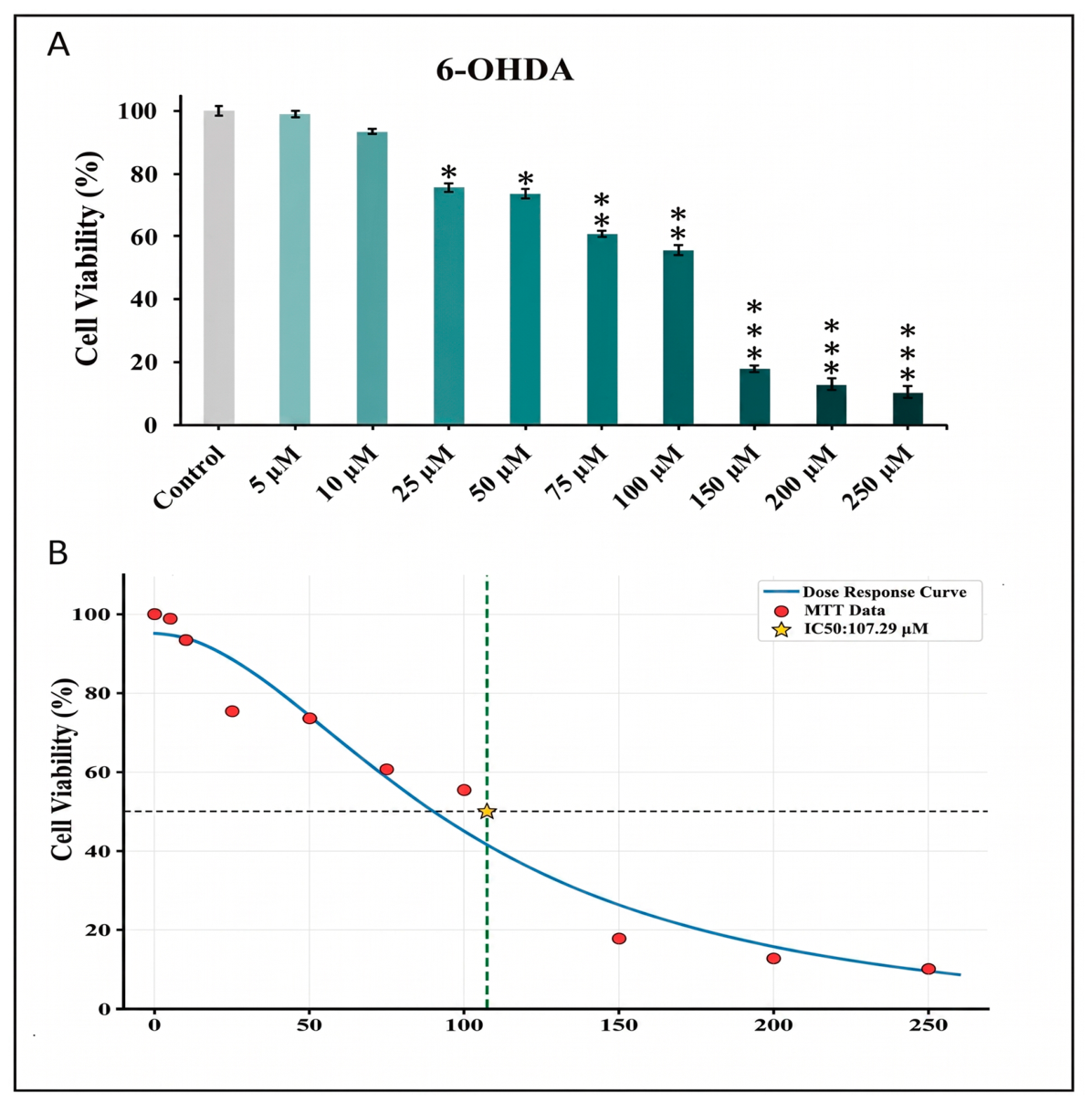
2.1. Effects of 6-OHDA on Cell Viability in SH-SY5Y Cells
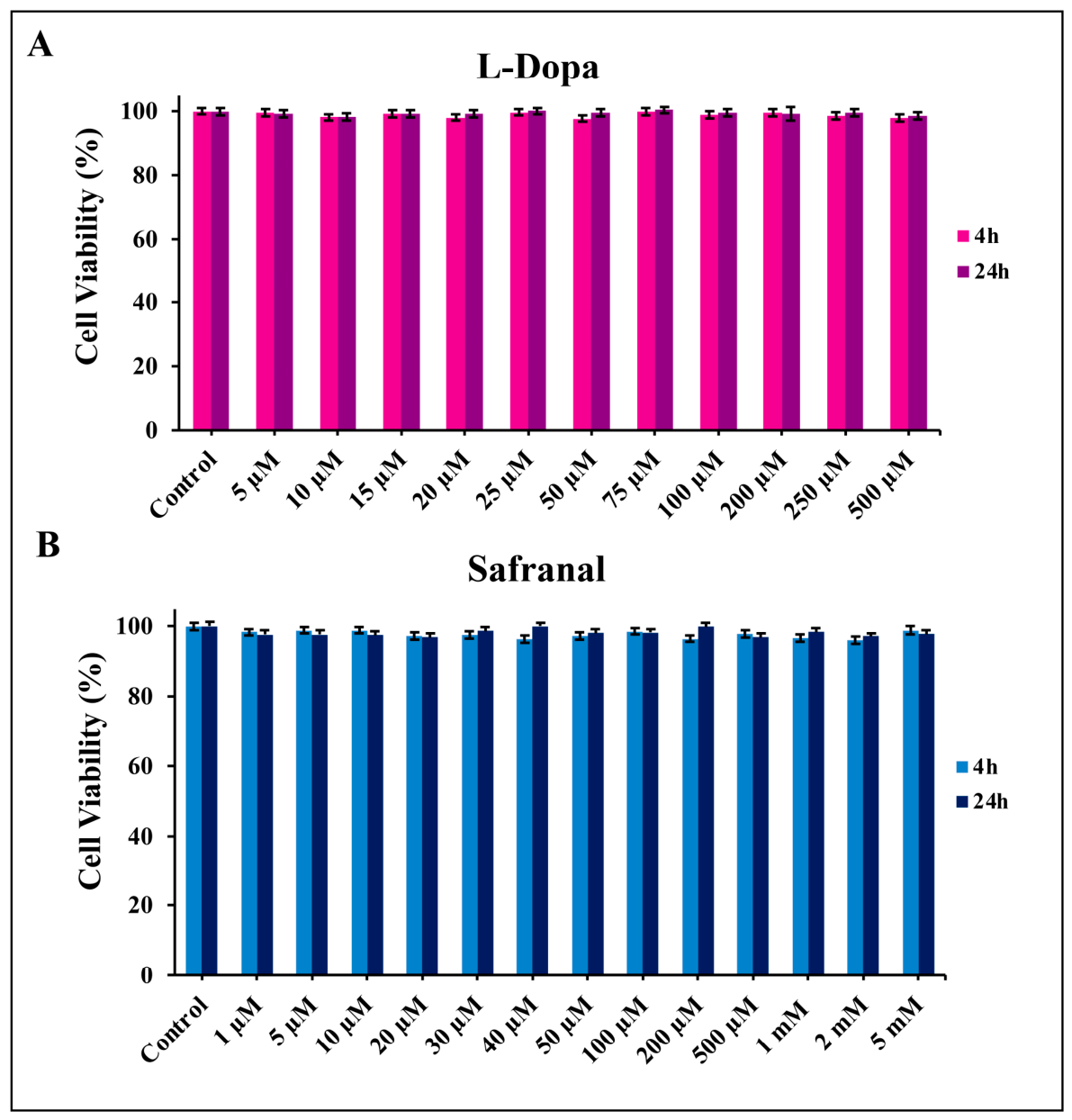
2.2. Effects of L-Dopa and Safranal Alone Without 6-OHDA on Cell Viability in SH-SY5Y Cells
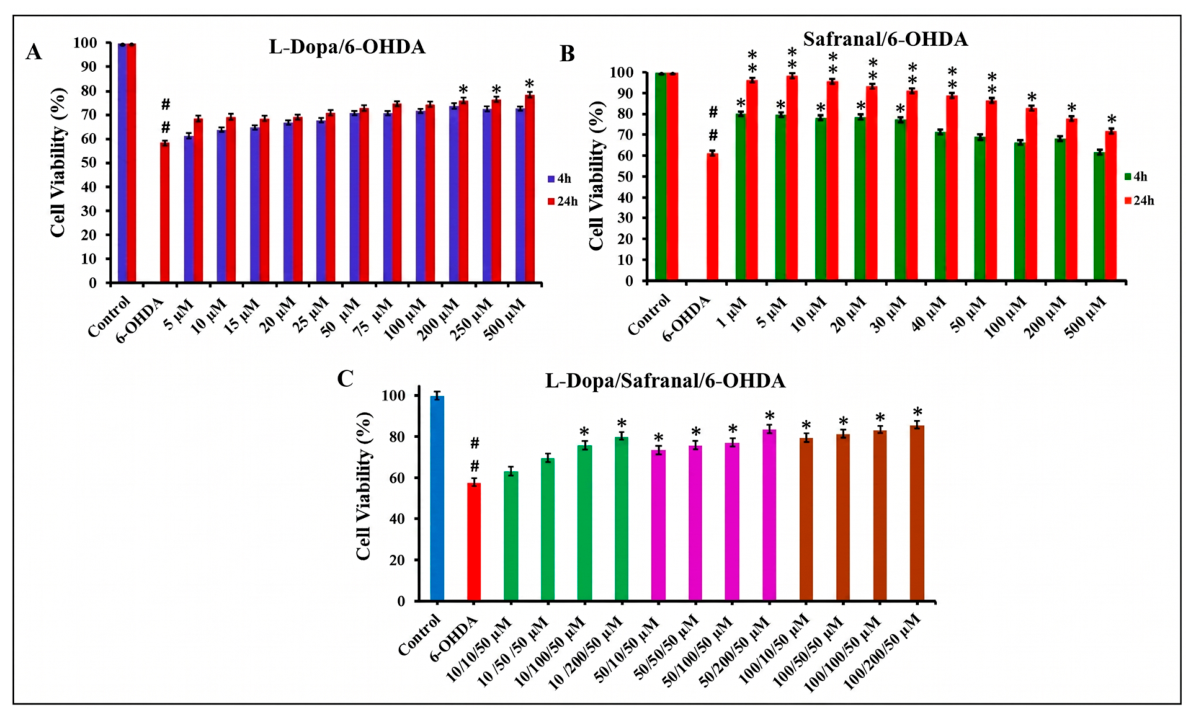
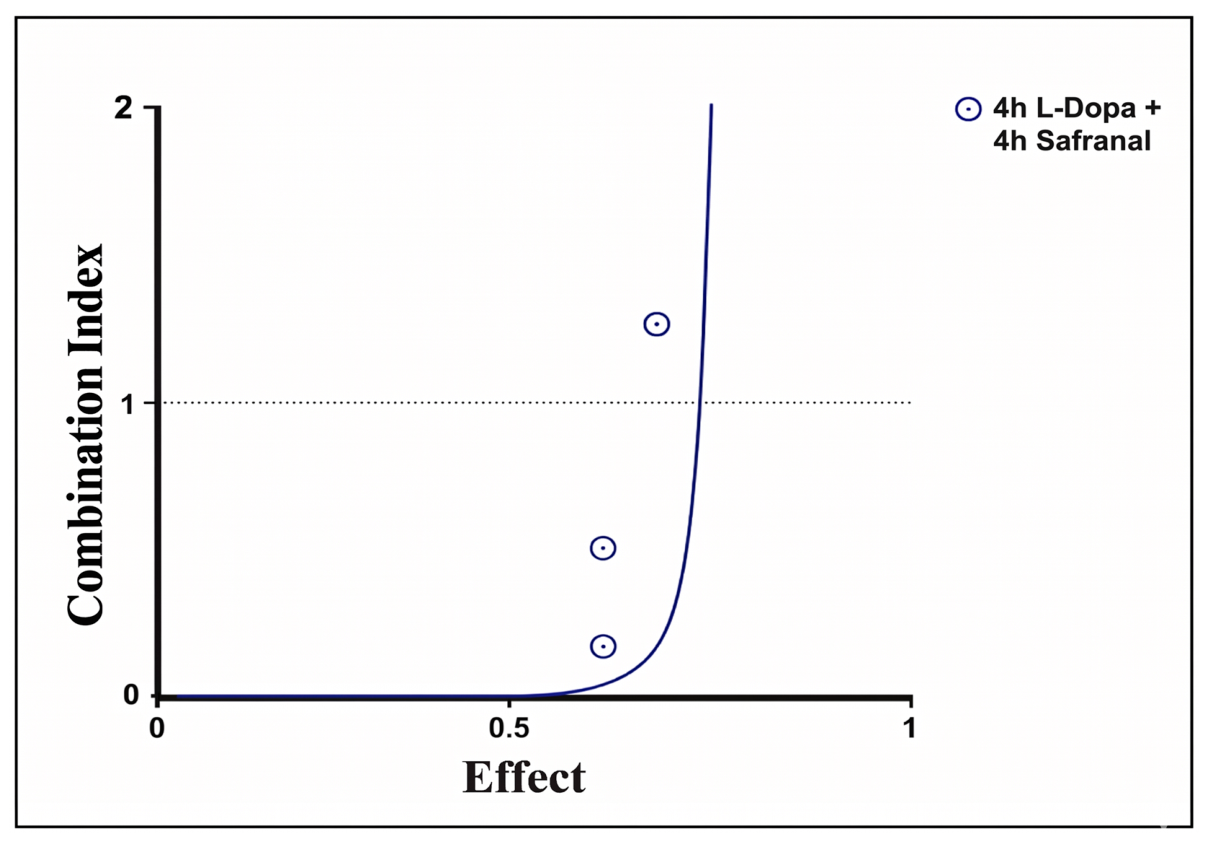
2.3. Effects of L-Dopa and Safranal, Alone and in Combination, on 6-OHDA-Induced Cell Viability in SH-SY5Y Cells
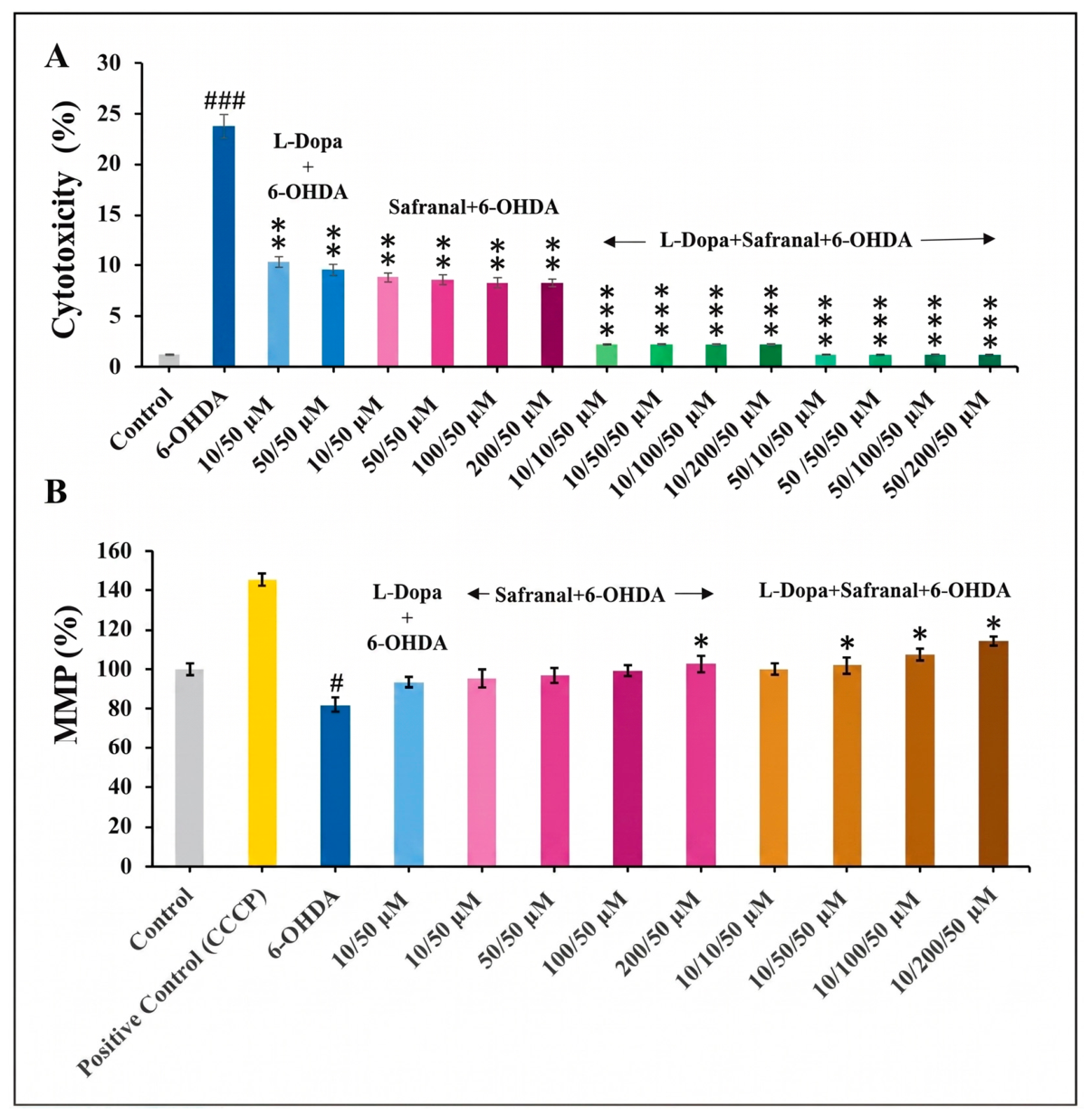
2.4. Effects of L-Dopa and Safranal, Alone and in Combination, on 6-OHDA-Induced Cytotoxicity and Mitochondrial Membrane Potential in SH-SY5Y Cells
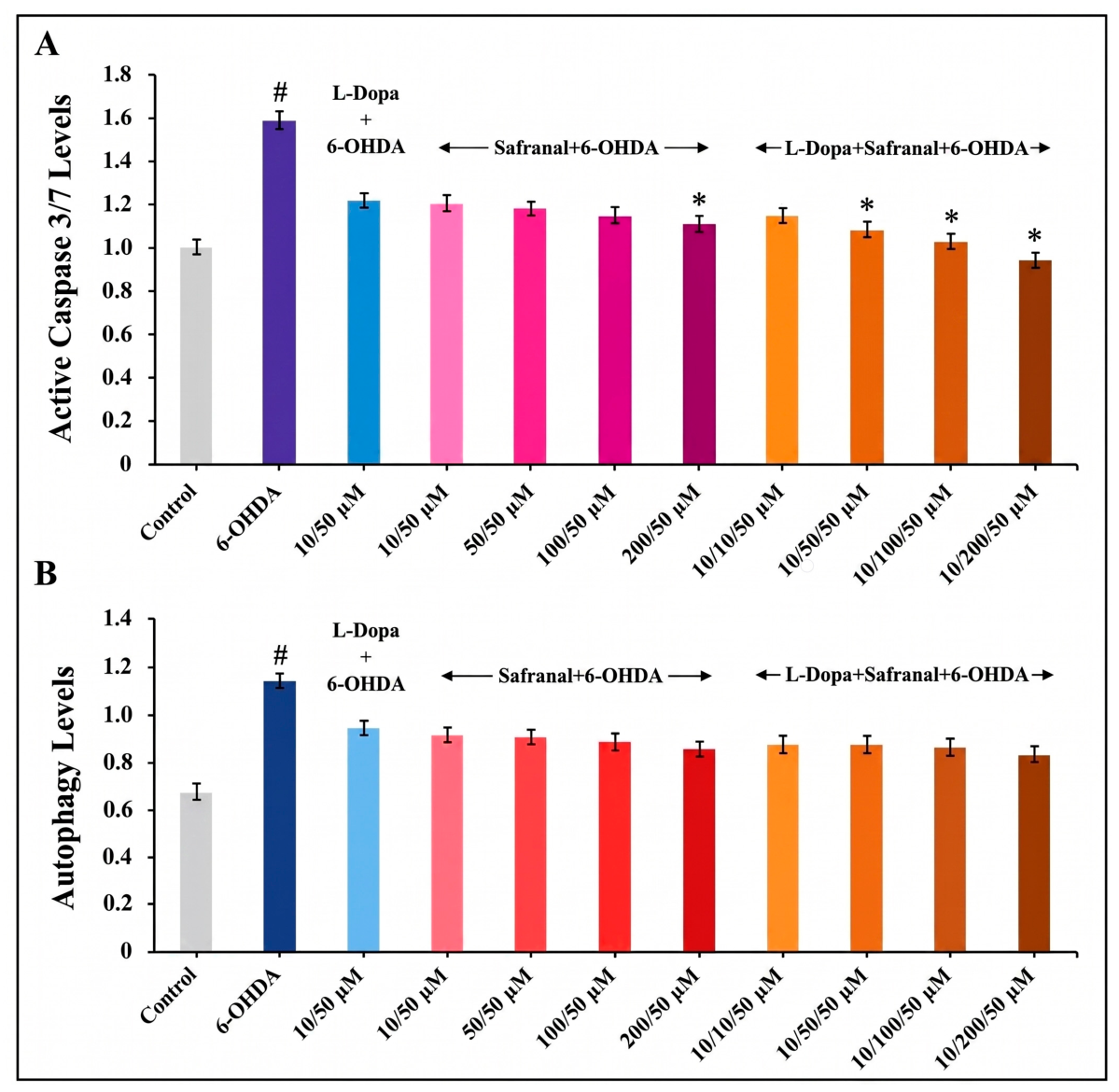
2.5. Effect of L-Dopa andSafranal, Alone and in Combination, on 6-OHDA-Induced Caspase-3/7 Activity and Autophagy-Associated Marker Levels in SH-SY5Y Cells
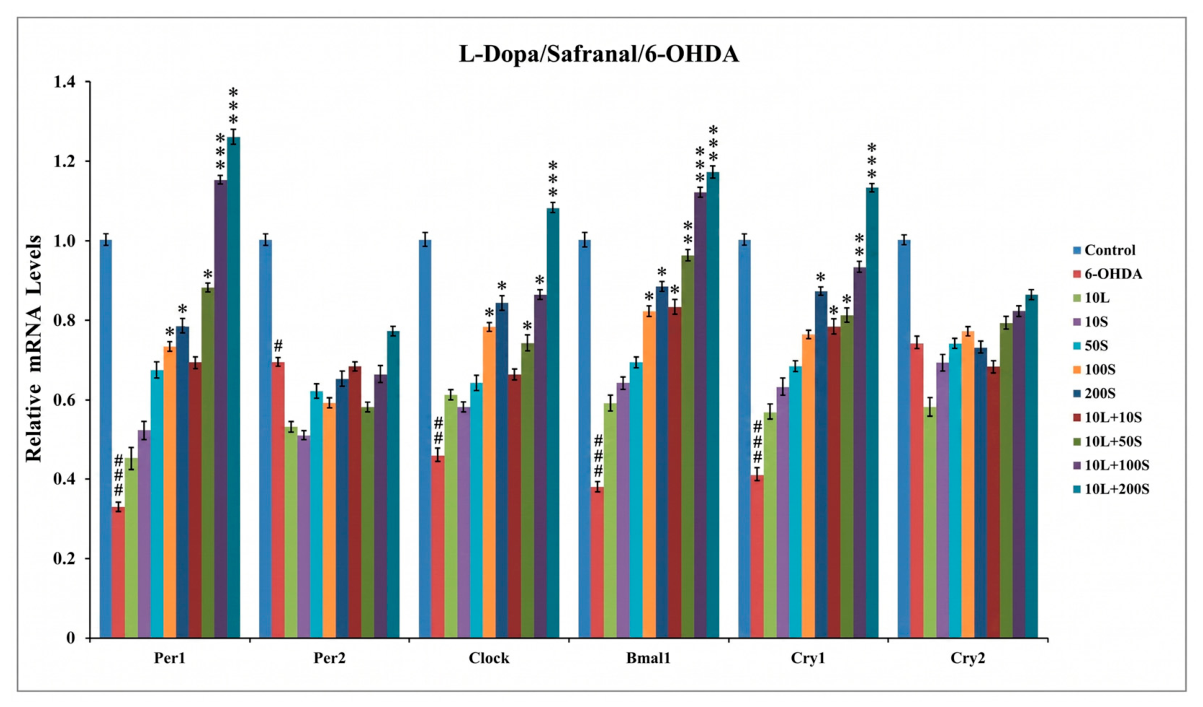
2.6. Effects of L-Dopa and Safranal on 6-OHDA-Induced mRNA Expression Levles of Circadian Clock Genes in SH-SY5Y Cells
3. Discussion
4. Materials and Methods
4.1. Reagents and Chemicals
4.2. Cell Culture
4.3. In Vitro PD Model
4.4. Cell Viability Assay
4.5. Half-Maximal Inhibitory Concentration Analysis
4.6. Cytotoxicity Assay
4.7. Caspase-3/7 Activity Assay
4.8. Mitochondrial Membrane Potential Assay
4.9. Autophagy Detection
4.10. RNA Isolation and Quantitative Real-Time Polymerase Chain Reaction Analysis
4.11. Statistical Analyses
5. Conclusions
Author Contributions
Funding
Institutional Review Board Statement
Informed Consent Statement
Data Availability Statement
Acknowledgments
Conflicts of Interest
Abbreviations
| PD | Parkinson’s disease |
| 6-OHDA | 6-hydroxydopamine |
| CI | Combination Index |
| IC50 | Half-maximal inhibitory concentration |
| MTT | 3-(4,5-dimethylthiazol-2-yl)-2,5-diphenyltetrazolium bromide |
| DMEM | Dulbecco’s Modified Eagle Medium |
| DMSO | Dimethyl sulfoxide |
| FBS | Fetal bovine serum |
| ATCC | American Type Culture Collection |
| PBS | Phosphate-buffered saline |
| L-Dopa | Levodopa |
| qPCR | Quantitative real-time polymerase chain reaction |
| cDNA | Complementary DNA |
| NF-κB | Nuclear factor kappa-light-chain-enhancer of activated B cells |
| PER1 | Period circadian regulator 1 |
| PER2 | Period circadian regulator 2 |
| CLOCK | Circadian locomotor output cycles kaput |
| BMAL1 | Basic helix-loop-helix ARNT-like 1 |
| CRY1 | Cryptochrome circadian regulator 1 |
| CRY2 | Cryptochrome circadian regulator 2 |
| β-actin | Beta-actin |
References
- Silva, J.; Alves, C.; Martins, A.; Susano, P.; Simões, M.; Guedes, M.; Rehfeldt, S.; Pintéus, S.; Gaspar, H.; Rodrigues, A.; et al. Loliolide, a new therapeutic option for neurological diseases? In vitro neuroprotective and anti-inflammatory activities of a monoterpenoid lactone isolated from Codium tomentosum. Int. J. Mol. Sci. 2021, 22, 1888. [Google Scholar] [CrossRef]
- Yalçin, M.; Grande, V.; Outeiro, T.; Relógio, A. Circadian clock dysfunction in Parkinson’s disease: Mechanisms, consequences, and therapeutic strategy. NPJ Park. Dis. 2025, 11, 213. [Google Scholar] [CrossRef] [PubMed]
- Lucchesi, M.; Biso, L.; Bonaso, M.; Longoni, B.; Buchignani, B.; Battini, R.; Santorelli, F.; Doccini, S.; Scarselli, M. Mitochondrial dysfunction in genetic and non-genetic Parkinson’s disease. Int. J. Mol. Sci. 2025, 26, 4451. [Google Scholar] [CrossRef]
- Jankovic, J.; Tan, E. Parkinson’s disease: Etiopathogenesis and treatment. J. Neurol. Neurosurg. Psychiatry 2020, 91, 795–808. [Google Scholar] [CrossRef]
- Di Biase, L.; Pecoraro, P.; Carbone, S.; Caminiti, M.; Lazzaro, V. Levodopa-induced dyskinesias in Parkinson’s disease: An overview on pathophysiology, clinical manifestations, therapy management strategies and future directions. J. Clin. Med. 2023, 12, 4427. [Google Scholar] [CrossRef]
- Lababidi, J.; Azzazy, H. Revamping Parkinson’s disease therapy using PLGA-based drug delivery systems. NPJ Park. Dis. 2025, 11, 248. [Google Scholar] [CrossRef]
- Hunt, J.; Coulson, E.; Rajnarayanan, R.; Oster, H.; Videnovic, A.; Rawashdeh, O. Sleep and circadian rhythms in Parkinson’s disease and preclinical models. Mol. Neurodegener. 2022, 17, 2. [Google Scholar] [CrossRef] [PubMed]
- Shoaib, S.; Ansari, M.A.; Fatease, A.A.; Safhi, A.Y.; Hani, U.; Jahan, R.; Alomary, M.N.; Ansari, M.N.; Ahmed, N.; Wahab, S.; et al. Plant-derived bioactive compounds in the management of neurodegenerative disorders: Challenges, future directions and molecular mechanisms involved in neuroprotection. Pharmaceutics 2023, 15, 749. [Google Scholar] [CrossRef]
- El Midaoui, A.; Ghzaiel, I.; Vervandier-Fasseur, D.; Ksila, M.; Zarrouk, A.; Nury, T.; Khallouki, F.; El Hessni, A.; Ibrahimi, S.O.; Latruffe, N.; et al. Saffron (Crocus sativus L.): A source of nutrients for health and for the treatment of neuropsychiatric and age-related diseases. Nutrients 2022, 14, 597. [Google Scholar] [CrossRef]
- Ben El Caid, M.; Ait Haddou, M.; El Asri, O.; Aboudlou, L.; Atyane, L.H.; Ramteke, V.; Ait Hammou, R. Neuroprotective potential of saffron metabolites in Parkinson’s disease. PharmaNutrition 2025, 33, 100448. [Google Scholar] [CrossRef]
- Van Wamelen, D.; Rukavina, K.; Podlewska, A.; Chaudhuri, K. Advances in the pharmacological and non-pharmacological management of non-motor symptoms in Parkinson’s disease: An update since 2017. Curr. Neuropharmacol. 2022, 21, 1786–1805. [Google Scholar] [CrossRef]
- Pan, P.K.; Qiao, L.Y.; Wen, X.N. Safranal prevents rotenone-induced oxidative stress and apoptosis in an in vitro model of Parkinson’s disease through regulating Keap1/Nrf2 signaling pathway. Cell. Mol. Biol. 2016, 62, 11–17. [Google Scholar] [CrossRef]
- Chia, S.; Tan, E.; Chao, Y. Historical Perspective: Models of Parkinson’s Disease. Int. J. Mol. Sci. 2020, 21, 2464. [Google Scholar] [CrossRef]
- Stevanovic, D.; Vučićević, L.; Misirkic-Marjanovic, M.; Martinović, T.; Mandic, M.; Harhaji-Trajković, L.; Trajković, V. Trehalose attenuates in vitro neurotoxicity of 6-hydroxydopamine by reducing oxidative stress and activation of MAPK/AMPK signaling pathways. Int. J. Mol. Sci. 2024, 25, 10659. [Google Scholar] [CrossRef]
- Siwecka, N.; Galita, G.; Granek, Z.; Wiese, W.; Majsterek, I.; Rozpędek-Kamińska, W. IRE1/JNK is the leading UPR pathway in 6-OHDA-induced degeneration of differentiated SH-SY5Y cells. Int. J. Mol. Sci. 2024, 25, 7679. [Google Scholar] [CrossRef] [PubMed]
- Zhuang, X.; Wang, S.; Tan, Y.; Song, J.; Zhu, Z.; Wang, Z.; Wu, M.; Cai, C.; Huang, Z.; Tan, J.; et al. Pharmacological enhancement of TFEB-mediated autophagy alleviated neuronal death in oxidative stress-induced Parkinson’s disease models. Cell Death Dis. 2020, 11, 128. [Google Scholar] [CrossRef] [PubMed]
- Wang, W.; Han, R.; He, H.; Li, J.; Chen, S.; Gu, Y.; Xie, C. Administration of quercetin improves mitochondria quality control and protects the neurons in 6-OHDA-lesioned Parkinson’s disease models. Aging 2021, 13, 11738–11751. [Google Scholar] [CrossRef]
- Barata-Antunes, S.; Teixeira, F.; Mendes-Pinheiro, B.; Domingues, A.; Vilaça-Faria, H.; Marote, A.; Silva, D.; Sousa, R.; Salgado, A. Impact of Aging on the 6-OHDA-Induced Rat Model of Parkinson’s Disease. Int. J. Mol. Sci. 2020, 21, 3459. [Google Scholar] [CrossRef]
- Kaji, H.; Matsui-Yuasa, I.; Matsumoto, K.; Kojima-Yuasa, A. Sesaminol prevents Parkinson’s disease by activating the Nrf2-ARE signaling pathway. Heliyon 2020, 6, e05342. [Google Scholar] [CrossRef]
- Simões, A.T.; Gonçalves, R.A.; Agostinho, P.; Cunha, R.A.; Oliveira, C.R. Evaluation of 6-hydroxydopamine and rotenone in vitro neurotoxicity on differentiated SH-SY5Y cells using applied computational statistics. Int. J. Mol. Sci. 2022, 23, 3009. [Google Scholar] [CrossRef] [PubMed]
- Pichla, M.; Pulaski, Ł.; Kania, K.D.; Stefaniuk, I.; Cieniek, B.; Pieńkowska, N.; Bartosz, G.; Sadowska-Bartosz, I. Nitroxide radical-containing redox nanoparticles protect neuroblastoma SH-SY5Y cells against 6-hydroxydopamine toxicity. Oxidative Med. Cell. Longev. 2020, 2020, 9260748. [Google Scholar] [CrossRef]
- Lai, M.; Liu, W.; Liou, S.; Liu, I. p-Hydroxybenzyl Alcohol Antagonized the ROS-Dependent JNK/Jun/Caspase-3 Pathway to Produce Neuroprotection in a Cellular Model of Parkinson’s Disease. Nutrients 2022, 14, 5002. [Google Scholar] [CrossRef] [PubMed]
- Chen, H.; Liang, F.; Gu, P.; Xu, B.; Xu, H.; Wang, W.; Hou, J.; Xie, D.; Chai, X.; An, S. Exosomes derived from mesenchymal stem cells repair a Parkinson’s disease model by inducing autophagy. Cell Death Dis. 2020, 11, 288. [Google Scholar] [CrossRef] [PubMed]
- Tirmenshtein, M.A.; Hu, C.X.; Scicchitano, M.S.; Narayanan, P.K.; McFarland, D.C.; Thomas, H.C.; Schwartz, L.W. Effects of 6-hydroxydopamine on mitochondrial function and glutathione status in SH-SY5Y human neuroblastoma cells. Toxicol. In Vitr. 2005, 19, 471–479. [Google Scholar] [CrossRef]
- Ceccarini, M.; Ceccarelli, V.; Codini, M.; Fettucciari, K.; Calvitti, M.; Cataldi, S.; Albi, E.; Vecchini, A.; Beccari, T. The Polyunsaturated Fatty Acid EPA, but Not DHA, Enhances Neurotrophic Factor Expression through Epigenetic Mechanisms and Protects against Parkinsonian Neuronal Cell Death. Int. J. Mol. Sci. 2022, 23, 16176. [Google Scholar] [CrossRef]
- Silva, J.; Alves, C.; Pinteus, S.; Mendes, S.; Pedrosa, R. Neuroprotective effects of seaweeds against 6-hydroxydopamine-induced cell death on an in vitro human neuroblastoma model. BMC Complement. Altern. Med. 2018, 18, 58. [Google Scholar] [CrossRef]
- Iglesias-González, J.; Sanchez-Iglesias, S.; Mendez-Alvarez, E.; Rose, S.; Hikima, A.; Jenner, P.; Soto-Otero, R. Differential Toxicity of 6-Hydroxydopamine in SH-SY5Y Human Neuroblastoma Cells and Rat Brain Mitochondria: Protective Role of Catalase and Superoxide Dismutase. Neurochem. Res. 2012, 37, 2150–2160. [Google Scholar] [CrossRef]
- Zhong, S.; Chen, Y.; Fang, M.; Zhu, X.; Zhao, Y.; Liu, X. Low-Dose Levodopa Protects Nerve Cells from Oxidative Stress and Up-Regulates Expression of pCREB and CD39. PLoS ONE 2014, 9, e95387. [Google Scholar] [CrossRef]
- Xie, L.; Hu, L.; Teo, X.; Tiong, C.; Tazzari, V.; Sparatore, A.; Soldato, P.; Dawe, G.; Bian, J. Therapeutic Effect of Hydrogen Sulfide-Releasing L-Dopa Derivative ACS84 on 6-OHDA-Induced Parkinson’s Disease Rat Model. PLoS ONE 2013, 8, e60200. [Google Scholar] [CrossRef]
- Ferlazzo, N.; Cirmi, S.; Maugeri, A.; Russo, C.; Lombardo, G.; Gangemi, S.; Calapai, G.; Mollace, V.; Navarra, M. Neuroprotective Effect of Bergamot Juice in 6-OHDA-Induced SH-SY5Y Cell Death, an In Vitro Model of Parkinson’s Disease. Pharmaceutics 2020, 12, 326. [Google Scholar] [CrossRef]
- Magalingam, K.; Somanath, S.; Md, S.; Haleagrahara, N.; Fu, J.; Selvaduray, K.; Radhakrishnan, A. Tocotrienols protect differentiated SH-SY5Y human neuroblastoma cells against 6-hydroxydopamine-induced cytotoxicity by ameliorating dopamine biosynthesis and dopamine receptor D2 gene expression. Nutr. Res. 2021, 98, 27–40. [Google Scholar] [CrossRef]
- Rehfeldt, S.; Silva, J.; Alves, C.; Pintéus, S.; Pedrosa, R.; Laufer, S.; Goettert, M. Neuroprotective Effect of Luteolin-7-O-Glucoside against 6-OHDA-Induced Damage in Undifferentiated and RA-Differentiated SH-SY5Y Cells. Int. J. Mol. Sci. 2022, 23, 2914. [Google Scholar] [CrossRef]
- Chou, T.-C.; Talalay, P. Quantitative analysis of dose-effect relationships: The combined effects of multiple drugs or enzyme inhibitors. Adv. Enzym. Regul. 1984, 22, 27–55. [Google Scholar] [CrossRef]
- Calabrese, V.; Cornelius, C.; Dinkova-Kostova, A.; Calabrese, E.; Mattson, M. Cellular Stress Responses, The Hormesis Paradigm, and Vitagenes: Novel Targets for Therapeutic Intervention in Neurodegenerative Disorders. Antioxid. Redox Signal. 2010, 13, 1763–1811. [Google Scholar] [CrossRef]
- Calabrese, E. Dose-Response Features of Neuroprotective Agents: An Integrative Summary. Crit. Rev. Toxicol. 2008, 38, 253–348. [Google Scholar] [CrossRef] [PubMed]
- Kornienko, J.; Smirnova, I.; Pugovkina, N.; Ivanova, J.; Shilina, M.; Grinchuk, T.; Shatrova, A.; Aksenov, N.; Zenin, V.; Nikolsky, N.; et al. High doses of synthetic antioxidants induce premature senescence in cultivated mesenchymal stem cells. Sci. Rep. 2019, 9, 1296. [Google Scholar] [CrossRef] [PubMed]
- Zhao, Y.; Pan, C.; Liu, Y.; Xiong, T.; Gao, T.; Ma, W.; He, X.; Yu, P.; Mao, L. Ultrasensitive and Selective Iontronic H2O2 Nanosensor Reveals the Biphasic Redox Dynamics Invoked by l-DOPA at a Single-Cell Level. ACS Sens. 2025, 10, 8947–8956. [Google Scholar] [CrossRef]
- Lou, H.; Jing, X.; Wei, X.; Shi, H.; Ren, D.; Zhang, X. Naringenin protects against 6-OHDA-induced neurotoxicity via activation of the Nrf2/ARE signaling pathway. Neuropharmacology 2014, 79, 380–388. [Google Scholar] [CrossRef]
- Avagliano, C.; Russo, R.; De Caro, C.; Cristiano, C.; La Rana, G.; Piegari, G.; Paciello, O.; Citraro, R.; Russo, E.; De Sarro, G.; et al. Palmitoylethanolamide protects mice against 6-OHDA-induced neurotoxicity and endoplasmic reticulum stress: In vivo and in vitro evidence. Pharmacol. Res. 2016, 113, 276–289. [Google Scholar] [CrossRef]
- Tang, H.; Zheng, Z.; Wang, H.; Wang, L.; Zhao, G.; Wang, P. Vitamin K2 Modulates Mitochondrial Dysfunction Induced by 6-Hydroxydopamine in SH-SY5Y Cells via Mitochondrial Quality-Control Loop. Nutrients 2022, 14, 1504. [Google Scholar] [CrossRef] [PubMed]
- Wei, L.; Ding, L.; Mo, M.; Lei, M.; Zhang, L.; Chen, K.; Xu, P. Wnt3a protects SH-SY5Y cells against 6-hydroxydopamine toxicity by restoration of mitochondria function. Transl. Neurodegener. 2015, 4, 11. [Google Scholar] [CrossRef]
- Li, L.-Y.; Gao, L.; Song, Y.-Z.; Qin, Z.-H.; Liang, Z. Activated cathepsin L is associated with the switch from autophagy to apoptotic death of SH-SY5Y cells exposed to 6-hydroxydopamine. Biochem. Biophys. Res. Commun. 2016, 470, 579–585. [Google Scholar] [CrossRef]
- Kwon, S.; Lee, S.; Park, Y.; Ra, M.; Lee, Y.; Pang, C.; Kim, K. Suppression of 6-Hydroxydopamine-Induced Oxidative Stress by Hyperoside Via Activation of Nrf2/HO-1 Signaling in Dopaminergic Neurons. Int. J. Mol. Sci. 2019, 20, 5832. [Google Scholar] [CrossRef]
- Kim, D.; Kim, S.; Cho, E.; Kwak, H.; Han, I. Protective effect of increased O-GlcNAc cycling against 6-OHDA induced Parkinson’s disease pathology. Cell Death Dis. 2024, 15, 287. [Google Scholar] [CrossRef] [PubMed]
- Perlikowska, R.; Silva, J.; Alves, C.; Susano, P.; Pedrosa, R. The Therapeutic Potential of Naturally Occurring Peptides in Counteracting SH-SY5Y Cells Injury. Int. J. Mol. Sci. 2022, 23, 11778. [Google Scholar] [CrossRef]
- Wu, C.; Chang, H.; Cheng, Y.; Lan, W.; Yang, S.; Ching, H. Aqueous Extract of Davallia mariesii Attenuates 6-Hydroxydopamine-Induced Oxidative Damage and Apoptosis in B35 Cells Through Inhibition of Caspase Cascade and Activation of PI3K/AKT/GSK-3β Pathway. Nutrients 2018, 10, 1449. [Google Scholar] [CrossRef] [PubMed]
- Chung, Y.; Lee, J.; Jung, S.; Lee, Y.; Cho, J.; Oh, Y. Dysregulated autophagy contributes to caspase-dependent neuronal apoptosis. Cell Death Dis. 2018, 9, 1189. [Google Scholar] [CrossRef]
- Yun, H.; Jo, Y.; Kim, J.; Shin, Y.; Kim, S.; Choi, T. Roles of Autophagy in Oxidative Stress. Int. J. Mol. Sci. 2020, 21, 3289. [Google Scholar] [CrossRef]
- Kuatov, R.; Takano, J.; Arie, H.; Kominami, M.; Tateishi, N.; Wakabayashi, K.; Takemoto, D.; Izumo, T.; Nakao, Y.; Nakamura, W.; et al. Urolithin A Modulates PER2 Degradation via SIRT1 and Enhances the Amplitude of Circadian Clocks in Human Senescent Cells. Nutrients 2024, 17, 20. [Google Scholar] [CrossRef]
- Musiek, E.S.; Lim, M.M.; Yang, G.; Bauer, A.Q.; Qi, L.; Lee, Y.; Roh, J.H.; Ortiz-Gonzalez, X.; Dearborn, J.T.; Culver, J.P.; et al. Circadian clock proteins regulate neuronal redox homeostasis and neurodegeneration. J. Clin. Investig. 2013, 123, 5389–5400. [Google Scholar] [CrossRef]
- Sulaimani, N.; Houghton, M.; Bonham, M.; Williamson, G. Effects of (Poly)phenols on Circadian Clock Gene–Mediated Metabolic Homeostasis in Cultured Mammalian Cells: A Scoping Review. Adv. Nutr. 2024, 15, 100232. [Google Scholar] [CrossRef]
- Lee, J.H.; Sancar, A. Regulation of apoptosis by the circadian clock through NF-kappaB signaling. Proc. Natl. Acad. Sci. USA 2011, 108, 12036–12041. [Google Scholar] [CrossRef] [PubMed] [PubMed Central]
- Su, H.; Sun, Y.; Yang, M.; Wu, C.; Hsu, C. Dihydroisotanshinone I and BMAL-SIRT1 Pathway in an In Vitro 6-OHDA-Induced Model of Parkinson’s Disease. Int. J. Mol. Sci. 2023, 24, 11088. [Google Scholar] [CrossRef]
- Blum, D.; Torch, S.; Lambeng, N.; Nissou, M.; Benabid, A.; Sadoul, R.; Verna, J. Molecular pathways involved in the neurotoxicity of 6-OHDA, dopamine and MPTP: Contribution to the apoptotic theory in Parkinson’s disease. Prog. Neurobiol. 2001, 65, 135–172. [Google Scholar] [CrossRef]
- Bock, F.; Tait, S. Mitochondria as multifaceted regulators of cell death. Nat. Rev. Mol. Cell Biol. 2019, 21, 85–100. [Google Scholar] [CrossRef] [PubMed]
- Wang, Y.; Lv, D.; Liu, W.; Li, S.; Chen, J.; Shen, Y.; Wang, F.; Hu, L.; Liu, C. Disruption of the Circadian Clock Alters Antioxidative Defense via the SIRT1-BMAL1 Pathway in 6-OHDA-Induced Models of Parkinson’s Disease. Oxidative Med. Cell. Longev. 2018, 2018, 4854732. [Google Scholar] [CrossRef] [PubMed]
- Jhamb, S.K.; Goyal, A.; Pandey, A.; Bhowmik, A. A review of cytotoxicity testing methods and in vitro study of biodegradable Mg-1%Sn-2%HA composite by elution method. J. Mater. Sci. Mater. Med. 2025, 36, 92. [Google Scholar] [CrossRef]
- Livak, K.; Schmittgen, T. Analysis of relative gene expression data using real-time quantitative PCR and the 2(-Delta Delta C(T)) Method. Methods 2001, 25, 402–408. [Google Scholar] [CrossRef]
- Pfaffl, M. A new mathematical model for relative quantification in real-time RT-PCR. Nucleic Acids Res. 2001, 29, e45. [Google Scholar] [CrossRef] [PubMed]
- George, D.; Mallery, P. IBM SPSS Statistics 26 Step by Step; Routledge: Abingdon, UK, 2019. [Google Scholar] [CrossRef]
- Kim, H. Statistical notes for clinical researchers: Post-hoc multiple comparisons. Restor. Dent. Endod. 2015, 40, 172–176. [Google Scholar] [CrossRef]
- Mishra, P.; Singh, U.; Pandey, C.M.; Mishra, P.; Pandey, G. Application of Student’s t-test, analysis of variance, and covariance. Ann. Card. Anaesth. 2019, 22, 407–411. [Google Scholar] [CrossRef]



| Gene | Forward Primer (5′-3′) | Reverse Primer (5′-3′) |
|---|---|---|
| PER1 | TGGCTATCCACAAGAAGATTC | GGTCAAAGGGCTGGCCCG |
| PER2 | GGCCATCCACAAAAAGATCCTGC | GAAACCGAATGGGAGAATAGTCG |
| CLOCK | TGCGAGGAACAATAGACCCAA | ATGGCCTATGTGTGCGTTGTA |
| BMAL1 | GGCTCATAGATGCAAAAACTGG | CTCCAGAACATAATCGAGATGG |
| CRY1 | CCGTCTGTTTGTGATTCGTG | AAGTTAGAGGCGGTTGTCCA |
| CRY2 | GGAGGCTGGTGTGGAAGTAG | CGTAGGTCTCGTCGTGGTTC |
| β-actin | AAGGAGCCCCACGAGAAAAAT | ACCGAACTTGCATTGATTCCAG |
Disclaimer/Publisher’s Note: The statements, opinions and data contained in all publications are solely those of the individual author(s) and contributor(s) and not of MDPI and/or the editor(s). MDPI and/or the editor(s) disclaim responsibility for any injury to people or property resulting from any ideas, methods, instructions or products referred to in the content. |
© 2026 by the authors. Licensee MDPI, Basel, Switzerland. This article is an open access article distributed under the terms and conditions of the Creative Commons Attribution (CC BY) license.
Share and Cite
Aksoy, A.; Usta, D.D.; Yar, A.S. Investigation of the Effects of Saffron on Neuroprotection and Circadian Rhythm in an In Vitro Parkinson’s Model. Pharmaceuticals 2026, 19, 773. https://doi.org/10.3390/ph19050773
Aksoy A, Usta DD, Yar AS. Investigation of the Effects of Saffron on Neuroprotection and Circadian Rhythm in an In Vitro Parkinson’s Model. Pharmaceuticals. 2026; 19(5):773. https://doi.org/10.3390/ph19050773
Chicago/Turabian StyleAksoy, Ayse, Duygu Deniz Usta, and Atiye Seda Yar. 2026. "Investigation of the Effects of Saffron on Neuroprotection and Circadian Rhythm in an In Vitro Parkinson’s Model" Pharmaceuticals 19, no. 5: 773. https://doi.org/10.3390/ph19050773
APA StyleAksoy, A., Usta, D. D., & Yar, A. S. (2026). Investigation of the Effects of Saffron on Neuroprotection and Circadian Rhythm in an In Vitro Parkinson’s Model. Pharmaceuticals, 19(5), 773. https://doi.org/10.3390/ph19050773