

Iontophoresis-Based Topical Drug Delivery for Dermatologic Conditions: A Systematic Review

 ,
,  ,
, 
Abstract
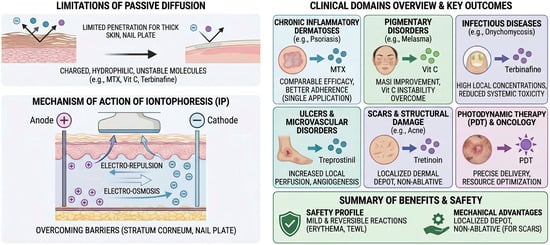
1. Introduction
2. Methods
2.1. Study Design
2.2. Inclusion and Exclusion Criteria
2.3. Search Strategy
2.4. Data Extraction and Study Selection
2.5. Quality Assessment
2.6. Data Synthesis and Analysis
3. Results
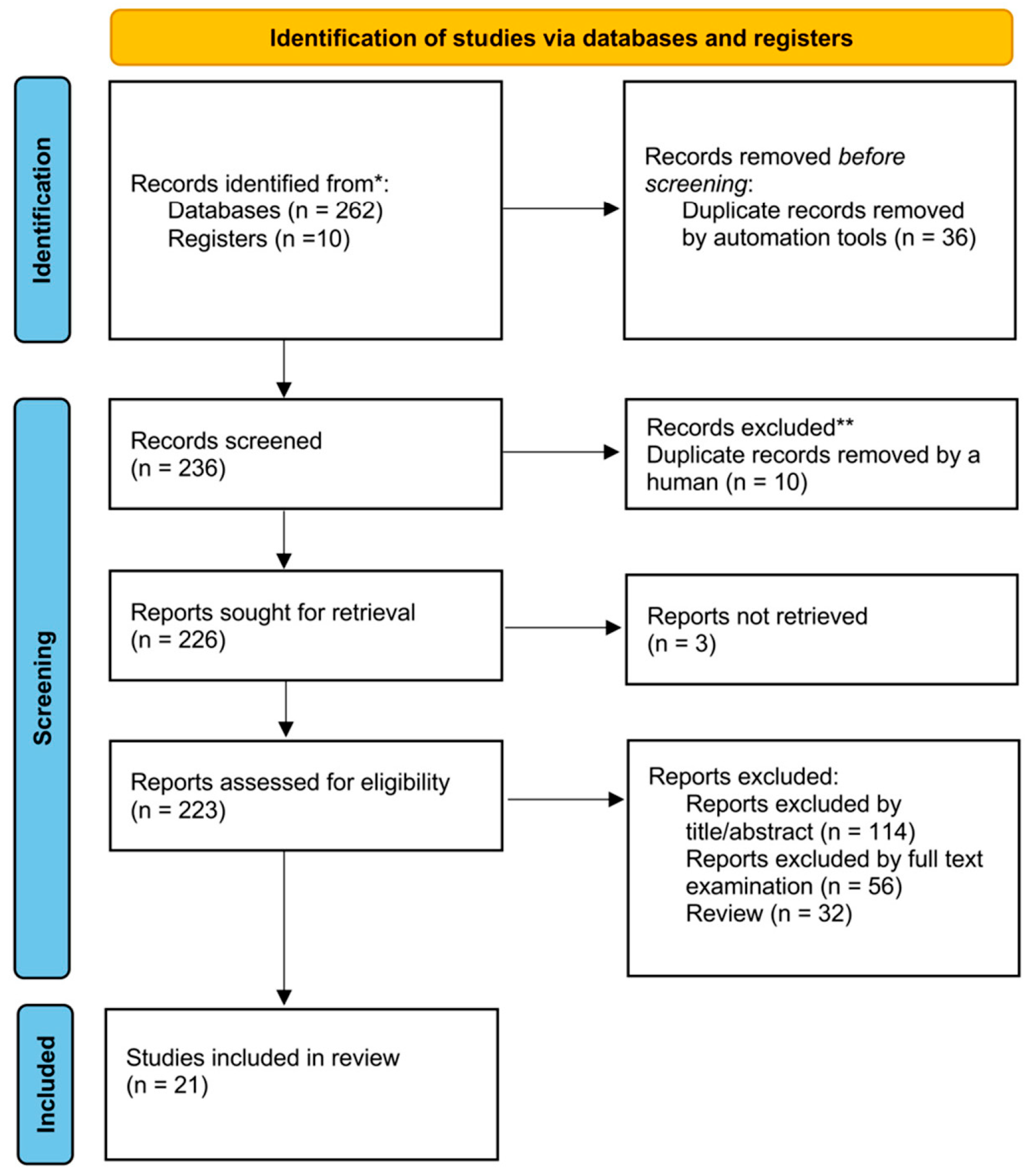
3.1. Study Selection
3.2. General Characteristics of the Included Studies

| Study | Participants | Condition | Intervention | Comparator | Protocol | Current Density | Polarity | Drug Charge | Main Results | Follow-Up | Adverse Events |
|---|---|---|---|---|---|---|---|---|---|---|---|
| Inflammatory dermatoses | |||||||||||
| Saki et al. [13], 2018 | n = 16; mean age 34.3 y; F/M = 11/5 | Nail psoriasis | Triamcinolone acetonide iontophoresis | Topical calcipotriol/betamethasone dipropionate | 20 min/session; monthly for 6 months; pulsed delivery with 0.2-s pulse duration | NR; 4 mA total current, pulsed, 20 min | NR | Neutral/non-ionized, I; triamcinolone acetonide | Both groups improved significantly; no significant between-group difference in nail bed, nail matrix, or total NAPSI | 6 months | NR |
| Haseena et al. [7], 2017 | n = 28; mean age 42.2 y; F/M = 11/17 | Palmoplantar psoriasis | Methotrexate iontophoresis | Coal tar ointment | 15 min/session; 6 sessions | NR; 5–10 mA total current, 15 min | Cathodal, R | Negative/anionic, R; methotrexate | Greater ESIF improvement with methotrexate iontophoresis than coal tar (63.9% vs. 47.7%; p < 0.001) | 8 weeks | Mild pruritus in 1 patient; no hematologic, renal, or hepatic abnormalities |
| Andanooru et al. [14], 2020 | n = 50; mean age 42.3 y; F/M = 22/28 | Palmar psoriasis | Methotrexate iontophoresis | Clobetasol propionate 0.05% ointment | Once weekly for 6 weeks | 0.004–0.217 mA/cm2, mean ≈ 0.081 mA/cm2, C from 0.2–12 mA and 8.5 × 6.5 cm electrode | Cathodal, R | Negative/anionic, R; methotrexate | Satisfactory improvement in 32% vs. 48%; no significant between-group difference (p = 0.25) | 6 weeks | Burn injury in 48% of iontophoresis group; none in comparator group |
| Tupker et al. [23], 2013 | n = 48 in 3 groups | Chronic foot eczema | Iontophoresis + bath-PUVA | Bath-PUVA alone; topical fluticasone | 10 min/session; 3 times/week for 8 weeks | NR; max 30 mA total, 10 min | NA/NR | NA; tap-water iontophoresis, no iontophoretic drug | Eczema score and DLQI improved in all groups; no significant between-group difference | 8 weeks | Burning and mild erythema in PUVA groups; none in steroid group |
| Infectious diseases | |||||||||||
| Morrel et al. [15], 2006 | n = 200; mean age 34 y; F/M = 114/86 | Herpes labialis | Acyclovir 5% cream iontophoresis | Placebo cream + iontophoresis | Single 10-min application of 250 mg acyclovir 5% cream; clinic-initiated at erythema or papule/edema stage | NR; 10 min treatment, current not reported | Anodal/positive active electrode, R | NR; acyclovir charge not specified | Median healing time shorter with active treatment (113 h vs. 148 h; p = 0.02); greater benefit at erythema stage (49 h vs. 120 h; p < 0.03) | 10 days | Electrical sensation, skin burn, transient erythema; all infrequent |
| Amichai et al. [27], 2010 | n = 38; mean age 46.2 y; F/M = 16/22 | Onychomycosis | Terbinafine 1% gel patch with iontophoresis | Identical patch without current | Patch applied overnight for 6–8 h/day, 5 days/week for 4 weeks | 0.1 mA/cm2, R; 100 µA/cm2 | Anodal/positive active electrode, R | Positive/cationic, I; terbinafine HCl at gel pH 4.6 | Higher nail terbinafine concentrations, better mycologic outcome, and greater clinical improvement with active iontophoresis | 8 weeks | Mild tingling; mild local irritation in 2 patients; no systemic AEs |
| Ulcerative and vascular disorders | |||||||||||
| Guigui et al. [8], 2025 | n = 4; mean age 66 y; F/M = 1/3 | Chronic diabetic foot ulcers | Treprostinil hydrogel iontophoresis | None | Single 30-min ascending-dose session | 0.2 mA/cm2, R; 30 min | Cathodal, R | Negative/anionic, I; treprostinil | Technically feasible up to 0.25 mg/mL; plasma levels below lower limit of quantification at all time points | Up to 8 h, plus 48-h safety check | Four AEs total; judged unrelated; no iontophoresis-related safety concerns |
| Gherardini et al. [17], 1998 | n = 66; mean age 60.8 y; F/M = 41/24 | Venous ulcers | CGRP/VIP iontophoresis | Placebo iontophoresis | 20 min/session; 3 sessions/week for 12 weeks | NR | NR | NR; CGRP/VIP peptide charge not stated | Greater ulcer area reduction (74% vs. 44%) and higher complete healing (60% vs. 41%); p < 0.05 | 12 weeks | NR |
| Guigui et al. [18], 2020 | Healthy volunteers: n = 12; SSc patients: n = 5 | Systemic sclerosis-related digital ulcers | Treprostinil hydrogel iontophoresis | Placebo hydrogel iontophoresis | Healthy volunteers: 20–120 min/session; SSc-DU patients: 60 min/session | NR as mA/cm2; individualized current/charge protocol | Cathodal, R | Negative/anionic, I; treprostinil | Increased cutaneous blood flow in healthy volunteers; acceptable tolerability in SSc-DU patients; no healing outcomes assessed | Up to 8 h, plus 48-h phone follow-up | Healthy volunteers: multiple grade 1–2 local AEs; SSc-DU patients: 2 mild local AEs; no systemic AEs |
| Roustit et al. [19], 2014 | Healthy subjects: n = 22; SSc patients: n = 12 | Systemic sclerosis | Treprostinil iontophoresis | Placebo iontophoresis | Sequential dose-escalation protocols; finger-pad application in SSc patients | Reported as 40–240 mC/cm2; 240 mC/cm2 over 20 min ≈ 0.20 mA/cm2, C | Cathodal, R | Negative/anionic, I; treprostinil | Significant increase in skin blood flow in healthy subjects (p = 0.006) and SSc patients (p = 0.023); lower response in severe microangiopathy | 10 days | Transient erythema; occasional petechiae/hematoma; mild headache in 2 patients |
| Pigmentary disorders | |||||||||||
| Huh et al. [20], 2003 | n = 29; mean age 36.5 y; all female | Melasma | Vitamin C iontophoresis | Placebo iontophoresis | 8 min/session; weekly for 12 weeks | NR; 0.3–0.5 mA total, 8 min | Cathodal/negative active electrode, R | Negative/anionic, R; vitamin C derivative/MAP | Significant improvement on treated side by objective colorimetry; significant between-side difference (p = 0.03) | 12 weeks | Mild and transient electrical shock, itching, erythema, burning, and dryness |
| Taylor et al. [9], 2013 | n = 35; mean age 47.6 y; F/M = 34/1 | Melasma/post-inflammatory hyperpigmentation | Full-face iontophoresis mask + vitamin C derivative + skin-care regimen | Baseline comparison | 1 h/session; 3 times/week for 1–2 months | 0.0018 mA/cm2, R; mask output 1.8 µA/cm2 | Cathodal/negative active pad, R | Negative/anionic, R; vitamin C | Mean pigmentation improvement 73%; MASI mean improvement 15.7; texture +62%; wrinkles +39% | Mean 26 months | Minor acne breakout in 1 patient; treatment generally well tolerated |
| Sobhi et al. [21], 2012 | n = 14; mean age 37.5 y; all female | Melasma | Nanosome vitamin C iontophoresis | Glycolic acid 70% peel | 0.5 mL/session; 10 min/session; 6 sessions | NR; reported as 5 mA × 10 min, area NR | Cathodal/negative mode, R | Negative/anionic, I; vitamin C formulation | Greater MASI reduction on vitamin C side than peel side, but no significant between-side difference due to small sample | 6 weeks | Mild erythema and tingling |
| Guo et al. [22], 2024 | n = 30; mean age 39 y; all female | Melasma | Tranexamic acid essence + iontophoresis | Placebo iontophoresis | Twice weekly for 3 months | NR; voltage/power reported, no current density | NR | Zwitterionic/pH-dependent, I; tranexamic acid, not specified in paper | Significant MASI reduction and increased skin brightness versus placebo (p < 0.05; L-value p = 0.037) | 12 weeks | None reported |
| Acne-related conditions and scarring | |||||||||||
| Schmidt et al. [10], 1995 | Estriol group: n = 18, all female; tretinoin group: n = 28, F/M = 19/9 | Atrophic acne scars | Estriol iontophoresis or tretinoin iontophoresis | Baseline comparison | 15 min/session; twice weekly for 3 months | NR; 3 mA total, 15 min | Cathodal for acidic solutions, R | Estriol: neutral/weakly polar, I; tretinoin: negative/anionic, I | Improvement in 100% of estriol group and 93% of tretinoin group; no systemic hormonal changes | 3 months | Estriol: none; tretinoin: dryness and dermatitis |
| Schmidt et al. [11], 1999 | n = 32; mean age 31.5 y; F/M = 19/13 | Atrophic acne scars | Tretinoin iontophoresis | Baseline comparison | 20 min/session; twice weekly for 3 months | NR; 3 mA total, 20 min | Cathodal, R | Negative/anionic, I; tretinoin/retinoic acid | Significant decrease in scar depth in 94%; no significant increase in epidermal thickness or proliferation markers | 6–12 months | Transient flushing; dryness in 32%; fine scaling in 4 cases |
| Kurokawa et al. [12], 2017 | n = 31; mean age 22.6 y; F/M = 22/9 | Post-inflammatory hyperpigmentation, erosions/red papules, and atrophic acne scars in acne vulgaris | Chemical peeling followed by iontophoresis | Baseline comparison | 3–4 cycles at 1–2-month intervals; total treatment duration 3–6 months | NR; current not reported | NR | Negative/anionic phosphate derivatives, I; APPS/TPNa | Excellent improvement in most PIH and erosion/red papule cases; less effect on atrophic scars | 3–6 months | Mild redness and irritation in 4 cases |
| Premalignant lesions | |||||||||||
| Choi et al. [16], 2017 | n = 41; mean age 69 y; F/M = 22/19 | Actinic keratosis | Iontophoresis-assisted AFL-PDT with short incubation | Conventional AFL-PDT (2-h or 3-h incubation) | 10 min iontophoresis followed by further incubation; MAL after Er:YAG AFL and red-light illumination | 0.50 mA/cm2, R; 10 min | Anodal/positive active electrode, R | Positive/cationic, R; MAL | Complete response comparable to conventional 3-h protocol at 3 and 12 months; lower recurrence than 2-h conventional protocol | 3–12 months | Mild-to-moderate local phototoxic reactions; no systemic AEs |
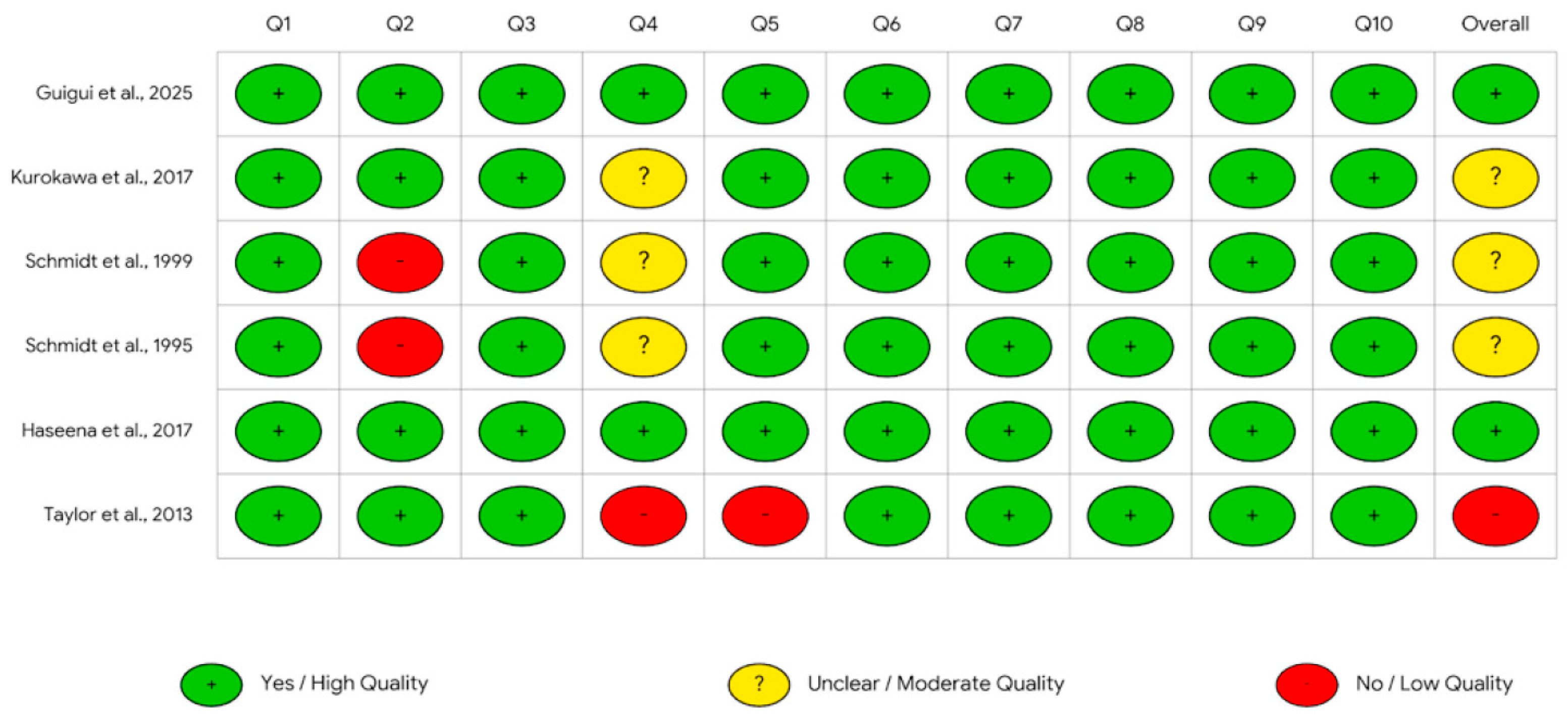
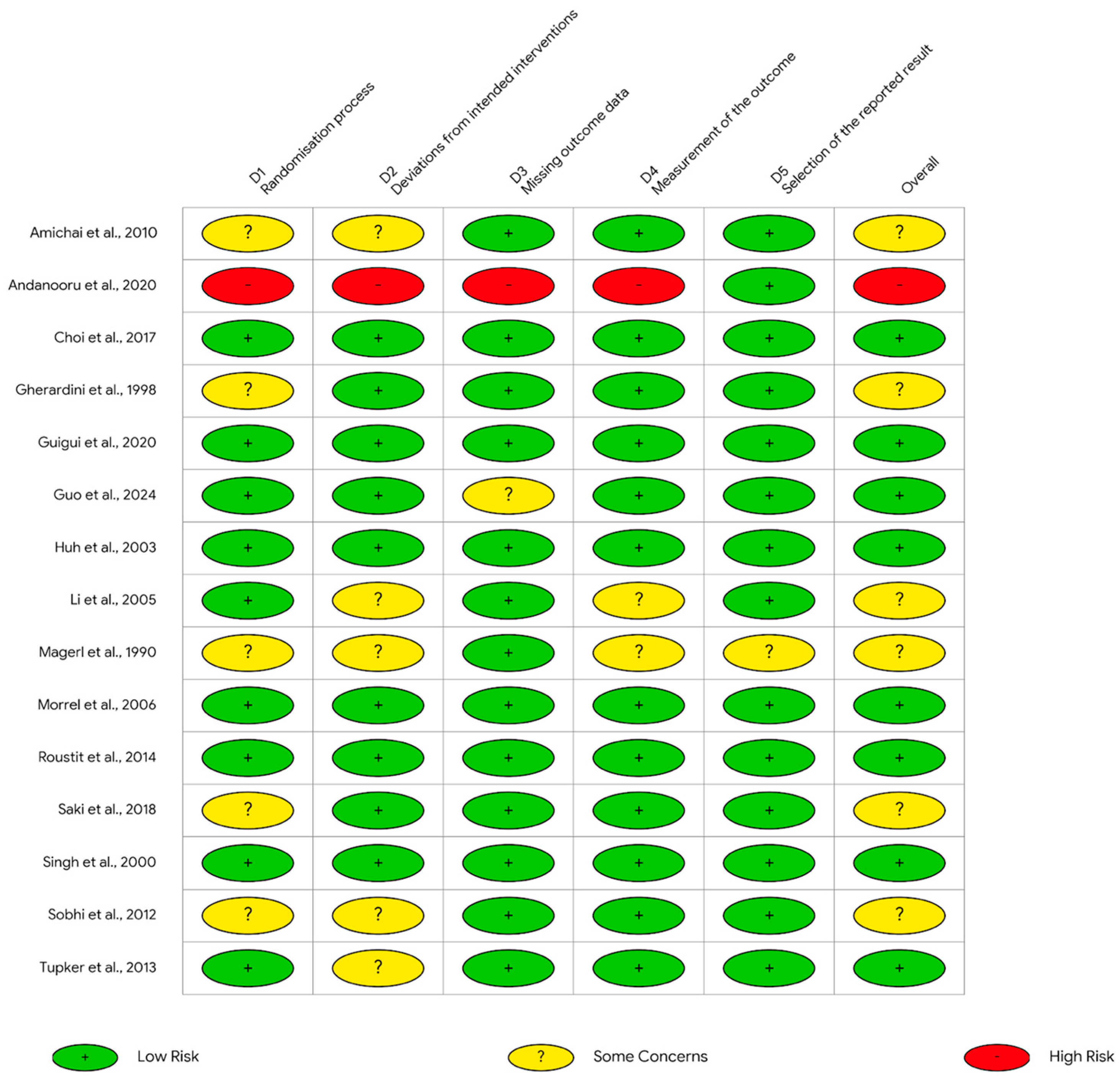
3.3. Methodological Quality and Risk of Bias
3.4. Characteristics of the Intervention
Descriptive Subgroup Synthesis
3.5. Description of Each Study
3.5.1. Randomized Clinical Trials
| Study | Participants | Condition | Intervention | Comparator | Protocol | Current Density | Polarity | Drug Charge | Main Results | Follow-Up | Adverse Events |
|---|---|---|---|---|---|---|---|---|---|---|---|
| Magerl et al. [24], 1990 | Winter experiment: n = 48; summer: n = 23; body regions: n = 20; itch discrimination: n = 6 | Cutaneous physiologic response | Histamine iontophoresis | Within-subject comparison | Acute testing at multiple body sites; seasonal/itch subexperiments; 5-mm chamber | NR; reported charge range 0.05–30 mC; test pulse 10 mC; 5 mm chamber | Anodal histamine delivery | Cationic | Responses varied by season, gender, and body region; stronger responses in warmer months and at selected sites | Acute assessment | Minimal transient erythema and mild burning; no systemic AEs |
| Li et al. [25], 2005 | n = 24 healthy volunteers; mean age 31 y; F/M = 12/12 | Cutaneous side effects | Iontophoresis with or without SDS pretreatment | Passive occlusion; iontophoresis alone; surfactant alone | Single 3 h exposure; SDS 0.5% pretreatment for 1 h where applicable | 0.25 mA/cm2; 3 h; 2.5 cm2 cell; total current 0.625 mA | Anode/cathode system; surfactant pretreatment at anodal site | NA; no active drug | Iontophoresis alone caused minimal irritation; SDS pretreatment increased erythema and TEWL; barrier recovery within 24 h | 8 days | Mild erythema with iontophoresis alone; more marked irritation with SDS pretreatment |
| Singh et al. [26], 2000 | n = 40 healthy volunteers; 10 each Caucasian, Black, Hispanic, Asian; equal sex distribution | Cutaneous irritation/barrier function | Saline iontophoresis | Saline patch alone | Single 4 h patch exposure; post-treatment irritation/barrier assessment | 0.20 mA/cm2; 4 h; 6.5 cm2 patch; total current 1.3 mA | Central anode/perimeter cathode | NA; saline only | TEWL increased slightly at 60 min then returned to baseline; erythema resolved by 24 h; irritation somewhat lower in Black participants | 24 h | Mild transient erythema; occasional transient papules; no systemic AEs |
3.5.2. Non-Randomized Clinical Trials
4. Discussion
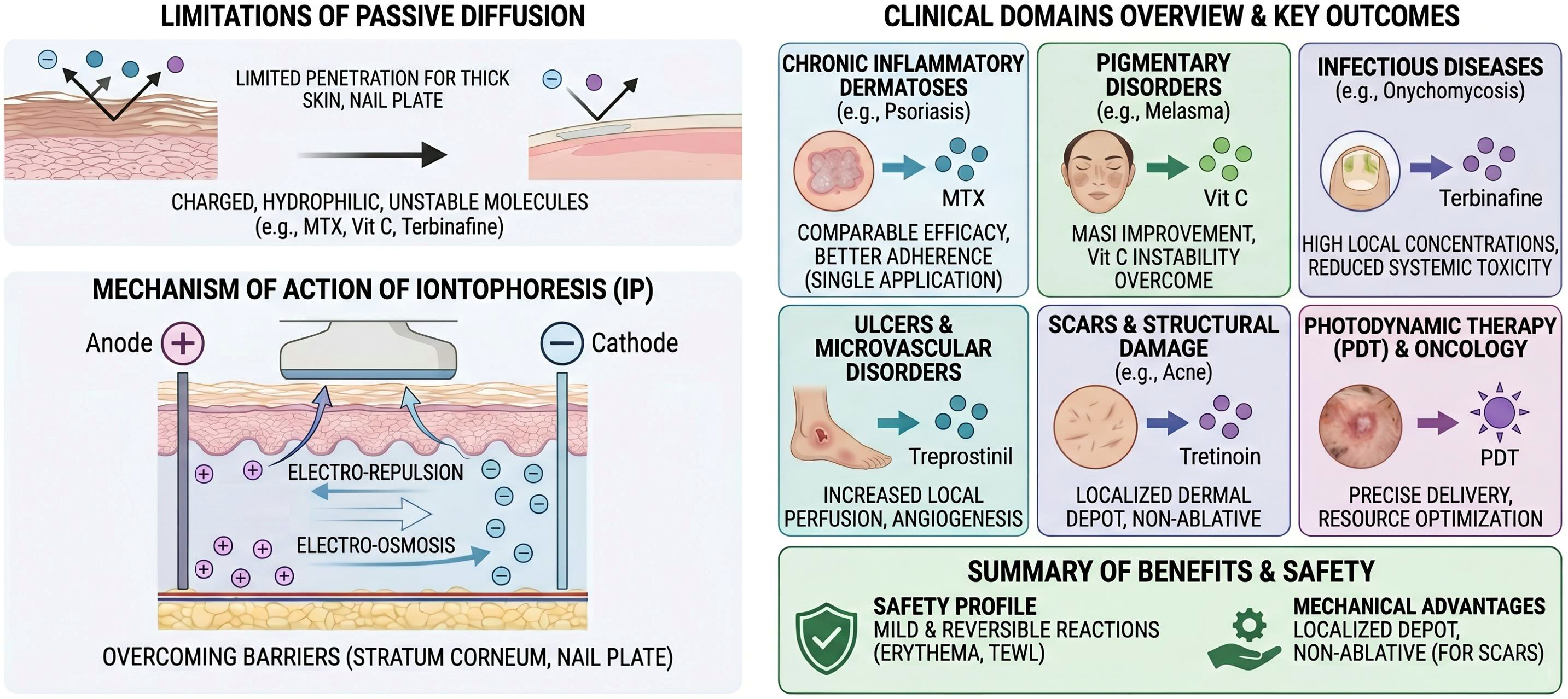
4.1. Inflammatory Chronic Dermatoses
4.2. Pigmentary Disorders
4.3. Infectious Diseases
4.4. Ulcers and Microvascular Disorders
4.5. Scarring and Structural Dermal Damage
4.6. Photodynamic Therapy and Oncologic Dermatology
4.7. Safety and Cutaneous Physiology
4.8. Comparison with Alternative Penetration-Enhancement Platforms and Translational Considerations
4.9. Limitations of the Evidence and of the Review Process
5. Conclusions
Supplementary Materials
Author Contributions
Funding
Institutional Review Board Statement
Informed Consent Statement
Data Availability Statement
Acknowledgments
Conflicts of Interest
Abbreviations
| AE | Adverse Event |
| AFL-PDT | Ablative Fractional Laser Photodynamic Therapy |
| CENTRAL | Cochrane Central Register of Controlled Trials |
| CGRP | Calcitonin Gene-Related Peptide |
| DLQI | Dermatology Life Quality Index |
| ESIF | Erythema, Scaling, Induration, Fissuring |
| JBI | Joanna Briggs Institute |
| MASI | Melasma Area and Severity Index |
| NAPSI | Nail Psoriasis Severity Index |
| PDT | Photodynamic Therapy |
| PIH | Post-Inflammatory Hyperpigmentation |
| PRISMA | Preferred Reporting Items for Systematic Reviews and Meta-Analyses |
| PROSPERO | International Prospective Register of Systematic Reviews |
| PUVA | Psoralen plus Ultraviolet A |
| QUADAS-2 | Quality Assessment of Diagnostic Accuracy Studies-2 |
| RCTs | Randomized Clinical Trials |
| RoB 2 | Version 2 of the Cochrane Risk-of-Bias tool |
| SSc-DU | Systemic Sclerosis-related Digital Ulcers |
| TXA | Tranexamic Acid |
| VIP | Vasoactive Intestinal Peptide |
References
- Phatale, V.; Vaiphei, K.K.; Jha, S.; Patil, D.; Agrawal, M.; Alexander, A. Overcoming Skin Barriers through Advanced Transdermal Drug Delivery Approaches. J. Control. Release 2022, 351, 361–380. [Google Scholar] [CrossRef]
- Paudel, K.S.; Milewski, M.; Swadley, C.L.; Brogden, N.K.; Ghosh, P.; Stinchcomb, A.L. Challenges and Opportunities in Dermal/Transdermal Delivery. Ther. Deliv. 2010, 1, 109–131. [Google Scholar] [CrossRef]
- Kalia, Y.N.; Naik, A.; Garrison, J.; Guy, R.H. Iontophoretic Drug Delivery. Adv. Drug Deliv. Rev. 2004, 56, 619–658. [Google Scholar] [CrossRef] [PubMed]
- Kanikkannan, N. Iontophoresis-Based Transdermal Delivery Systems. BioDrugs 2002, 16, 339–347. [Google Scholar] [CrossRef]
- Ita, K. Transdermal Iontophoretic Drug Delivery: Advances and Challenges. J. Drug Target. 2016, 24, 386–391. [Google Scholar] [CrossRef] [PubMed]
- Liatsopoulou, A.; Varvaresou, A.; Mellou, F.; Protopapa, E. Iontophoresis in Dermal Delivery: A Review of Applications in Dermato-cosmetic and Aesthetic Sciences. Int. J. Cosmet. Sci. 2023, 45, 117–132. [Google Scholar] [CrossRef]
- Haseena, K.; George, S.; Riyaz, N.; Sasidharanpillai, S.; Puthussery, P. Methotrexate Iontophoresis versus Coal Tar Ointment in Palmoplantar Psoriasis: A Pilot Study. Indian J. Dermatol. Venereol. Leprol. 2017, 83, 569. [Google Scholar] [CrossRef]
- Guigui, A.; Hodaj, E.; Muller, M.; Stanke-Labesque, F.; Blaise, S.; Cracowski, J.; Roustit, M. Treprostinil Iontophoresis in Diabetic Foot Ulcers: A Single Ascending Dose Safety Study. Fundam. Clin. Pharmacol. 2025, 39, e70054. [Google Scholar] [CrossRef]
- Taylor, M.B.; Yanaki, J.S.; Draper, D.O.; Shurtz, J.C.; Coglianese, M. Successful Short-Term and Long-Term Treatment of Melasma and Postinflammatory Hyperpigmentation Using Vitamin C with a Full-Face Iontophoresis Mask and a Mandelic/Malic Acid Skin Care Regimen. J. Drugs Dermatol. 2013, 12, 45–50. [Google Scholar]
- Schmidt, J.B.; Binder, M.; Macheiner, W.; Bieglmayer, C. New Treatment of Atrophic Acne Scars by Iontophoresis with Estriol and Tretinoin. Int. J. Dermatol. 1995, 34, 53–57. [Google Scholar] [CrossRef] [PubMed]
- Schmidt, J.B.; Donath, P.; Hannes, J.; Perl, S.; Neumayer, R.; Reiner, A. Tretinoin-iontophoresis in Atrophic Acne Scars. Int. J. Dermatol. 1999, 38, 149–153. [Google Scholar] [CrossRef]
- Kurokawa, I.; Oiso, N.; Kawada, A. Adjuvant Alternative Treatment with Chemical Peeling and Subsequent Iontophoresis for Postinflammatory Hyperpigmentation, Erosion with Inflamed Red Papules and Non-inflamed Atrophic Scars in Acne Vulgaris. J. Dermatol. 2017, 44, 401–405. [Google Scholar] [CrossRef]
- Saki, N.; Hosseinpoor, S.; Heiran, A.; Mohammadi, A.; Zeraatpishe, M. Comparing the Efficacy of Triamcinolone Acetonide Iontophoresis versus Topical Calcipotriol/Betamethasone Dipropionate in Treating Nail Psoriasis: A Bilateral Controlled Clinical Trial. Dermatol. Res. Pract. 2018, 2018, 2637691. [Google Scholar] [CrossRef]
- Andanooru Chandrappa, N.K.; Channakeshavaiah Ravikumar, B.; Rangegowda, S.M. Iontophoretic Delivery of Methotrexate in the Treatment of Palmar Psoriasis: A Randomised Controlled Study. Australas. J. Dermatol. 2020, 61, 140–146. [Google Scholar] [CrossRef]
- Morrel, E.M.; Spruance, S.L.; Goldberg, D.I. Iontophoretic Acyclovir Cold Sore Study Group. Topical Iontophoretic Administration of Acyclovir for the Episodic Treatment of Herpes Labialis: A Randomized, Double-Blind, Placebo-Controlled, Clinic-Initiated Trial. Clin. Infect. Dis. 2006, 43, 460–467. [Google Scholar] [CrossRef]
- Choi, S.-H.; Kim, T.-H.; Song, K.-H. Efficacy of Iontophoresis-Assisted Ablative Fractional Laser Photodynamic Therapy with Short Incubation Time for the Treatment of Actinic Keratosis: 12-Month Follow-up Results of a Prospective, Randomised, Comparative Trial. Photodiagn. Photodyn. Ther. 2017, 18, 105–110. [Google Scholar] [CrossRef] [PubMed]
- Gherardini, G.; Gürlek, A.; Evans, G.R.D.; Milner, S.M.; Matarasso, A.; Wassler, M.; Jernbeck, J.; Lundeberg, T. Venous Ulcers: Improved Healing by Iontophoretic Administration of Calcitonin Gene-Related Peptide and Vasoactive Intestinal Polypeptide. Plast. Reconstr. Surg. 1998, 101, 90–93. [Google Scholar] [CrossRef]
- Guigui, A.; Mazet, R.; Blaise, S.; Cracowski, C.; Beau-Guillaumot, M.; Kotzki, S.; Roustit, M.; Cracowski, J. Treprostinil Hydrogel Iontophoresis in Systemic Sclerosis-Related Digital Skin Ulcers: A Safety Study. J. Clin. Pharma 2020, 60, 758–767. [Google Scholar] [CrossRef] [PubMed]
- Roustit, M.; Gaillard-Bigot, F.; Blaise, S.; Stanke-Labesque, F.; Cracowski, C.; Seinturier, C.; Jourdil, J.-F.; Imbert, B.; Carpentier, P.H.; Cracowski, J.-L. Cutaneous Iontophoresis of Treprostinil in Systemic Sclerosis: A Proof-of-Concept Study. Clin. Pharmacol. Ther. 2014, 95, 439–445. [Google Scholar] [CrossRef] [PubMed]
- Huh, C.-H.; Seo, K.-I.; Park, J.-Y.; Lim, J.-G.; Eun, H.-C.; Park, K.-C. A Randomized, Double-Blind, Placebo-Controlled Trial of Vitamin C Iontophoresis in Melasma. Dermatology 2003, 206, 316–320. [Google Scholar] [CrossRef]
- Sobhi, R.M.; Sobhi, A.M. A Single-blinded Comparative Study between the Use of Glycolic Acid 70% Peel and the Use of Topical Nanosome Vitamin C Iontophoresis in the Treatment of Melasma. J. Cosmet. Dermatol. 2012, 11, 65–71. [Google Scholar] [CrossRef] [PubMed]
- Guo, L.; Liu, X.; Liu, Q.; Xie, X.; Jiang, X. Treatment of Melasma with Tranexamic Acid Essence Combined with Iontophoresis: A Randomized, Double-Blind, Placebo-Controlled Clinical Trial. Drug Des. Dev. Ther. 2024, 18, 3659–3666. [Google Scholar] [CrossRef] [PubMed]
- Tupker, R.; Coenraads, P.; Zanen, P.; Schuttelaar, M. Randomized Controlled Observer-Blinded Treatment of Chronic Foot Eczema with Iontophoresis and Bath-PUVA. Acta Derm. Venereol. 2013, 93, 456–460. [Google Scholar] [CrossRef] [PubMed]
- Magerl, W.; Westerman, R.A.; Möhner, B.; Handwerker, H.O. Properties of Transdermal Histamine Iontophoresis: Differential Effects of Season, Gender, and Body Region. J. Investig. Dermatol. 1990, 94, 347–352. [Google Scholar] [CrossRef]
- Li, G.L.; Van Steeg, T.J.; Putter, H.; Van Der Spek, J.; Pavel, S.; Danhof, M.; Bouwstra, J.A. Cutaneous Side-Effects of Transdermal Iontophoresis with and without Surfactant Pretreatment: A Single-Blinded, Randomized Controlled Trial. Br. J. Dermatol. 2005, 153, 404–412. [Google Scholar] [CrossRef]
- Singh, J.; Gross, M.; Sage, B.; Davis, H.T.; Maibach, H.I. Effect of Saline Iontophoresis on Skin Barrier Function and Cutaneous Irritation in Four Ethnic Groups. Food Chem. Toxicol. 2000, 38, 717–726. [Google Scholar] [CrossRef]
- Amichai, B.; Nitzan, B.; Mosckovitz, R.; Shemer, A. Iontophoretic Delivery of Terbinafine in Onychomycosis: A Preliminary Study: Iontophoretic Delivery of Terbinafine in Onychomycosis. Br. J. Dermatol. 2010, 162, 46–50. [Google Scholar] [CrossRef]
- Page, M.J.; McKenzie, J.E.; Bossuyt, P.M.; Boutron, I.; Hoffmann, T.C.; Mulrow, C.D.; Shamseer, L.; Tetzlaff, L.M.; Akl, E.; Brennan, S.; et al. The PRISMA 2020 statement: An updated guideline for reporting systematic reviews. BMJ 2021, 372, n71. [Google Scholar] [CrossRef]


Disclaimer/Publisher’s Note: The statements, opinions and data contained in all publications are solely those of the individual author(s) and contributor(s) and not of MDPI and/or the editor(s). MDPI and/or the editor(s) disclaim responsibility for any injury to people or property resulting from any ideas, methods, instructions or products referred to in the content. |
© 2026 by the authors. Licensee MDPI, Basel, Switzerland. This article is an open access article distributed under the terms and conditions of the Creative Commons Attribution (CC BY) license.
Share and Cite
Piscazzi, F.; D’Oria, F.; Ramirez, M.A.; Ardigò, M. Iontophoresis-Based Topical Drug Delivery for Dermatologic Conditions: A Systematic Review. Pharmaceuticals 2026, 19, 765. https://doi.org/10.3390/ph19050765
Piscazzi F, D’Oria F, Ramirez MA, Ardigò M. Iontophoresis-Based Topical Drug Delivery for Dermatologic Conditions: A Systematic Review. Pharmaceuticals. 2026; 19(5):765. https://doi.org/10.3390/ph19050765
Chicago/Turabian StylePiscazzi, Francesco, Francesco D’Oria, Maria Alejandra Ramirez, and Marco Ardigò. 2026. "Iontophoresis-Based Topical Drug Delivery for Dermatologic Conditions: A Systematic Review" Pharmaceuticals 19, no. 5: 765. https://doi.org/10.3390/ph19050765
APA StylePiscazzi, F., D’Oria, F., Ramirez, M. A., & Ardigò, M. (2026). Iontophoresis-Based Topical Drug Delivery for Dermatologic Conditions: A Systematic Review. Pharmaceuticals, 19(5), 765. https://doi.org/10.3390/ph19050765