Oral GLP-1-Based Therapeutics in the Obesity–Metabolic Syndrome–Diabetes Continuum: Translational Advances, Clinical Barriers, and Emerging Strategies

 , , ,
, , , 
Abstract
1. Introduction
2. Pharmacological Basis of GLP-1 RAs
2.1. Renal Protection and Weight Loss
2.2. Anti-Inflammatory, Natriuretic and Cardiovascular Effects
2.3. Pharmacokinetic Challenges
3. Parenteral GLP-1 Formulations: Current Landscape
3.1. Marketed Injectable GLP-1 RAs (Table 1)
3.2. Formulation Strategies: Depot Systems, PEGylation, Albumin Binding (Table 2)

| Formulation Strategy | Molecular Mechanism | Pharmacokinetic Impact | Clinical Advantages | Translational Limitations | Refs. |
|---|---|---|---|---|---|
| Immediate-Release Peptide | Native or minimally modified peptide | Rapid absorption; short plasma half-life | Rapid onset of glycemic effect | Frequent dosing; proteolytic degradation; low persistence | [54,55,56] |
| Fatty-Acid Acylation (e.g., liraglutide, semaglutide) | Reversible albumin binding via lipid side chain | Prolonged half-life; reduced renal clearance | Once-daily or weekly dosing; improved durability | Precise structural optimization required to preserve receptor affinity | [57,58,59,60,61,62] |
| Albumin Fusion (e.g., albiglutide) | Genetic fusion to albumin increases molecular size | Reduced renal filtration; extended systemic exposure | Once-weekly administration | Large molecular size limits tissue diffusion; potential immunogenicity | [63,64,65,66,67,68] |
| Fc-Fusion Technology (e.g., dulaglutide) | Fusion to IgG Fc domain increases size and stability | FcRn-mediated recycling prolongs half-life | Stable weekly pharmacokinetic profile | Complex biologic manufacturing; structural stability considerations | [69,70,71] |
| Depot/Sustained-Release Systems | Subcutaneous microsphere or matrix-based slow release | Gradual systemic exposure over days to weeks | Reduced injection frequency | Local injection-site reactions; formulation complexity; scalability challenges | [72,73,74] |
3.3. Clinical Outcomes and Real-World Adherence Limitations
4. Scientific Barriers to Oral Delivery of Peptide Drugs
4.1. Bioavailability Constraints
4.2. Translational Constraints of SNAC-Enabled Gastric Absorption
5. Enabling Technologies for Oral GLP-1 Formulations
5.1. Absorption Enhancers
5.2. Nanocarriers and Permeation Enhancers
5.3. Mucoadhesive and Targeted Delivery Systems
5.4. Device-Based and Mechanical Delivery Systems
5.5. Small-Molecule Oral GLP-1 RAs
5.6. Comparative Translational Perspective
6. Oral GLP-1 RAs: Clinical Evidence
6.1. PIONEER Program: Efficacy and Safety
6.2. Cardiovascular and Renal Outcomes
6.3. Real-World Evidence and Adherence
6.4. Comparative Perspective: Oral vs. Injectable GLP-1
7. GLP-1/GIP Dual Agonists: Ongoing Clinical Trials and Translational Implications
8. Formulation Shift Impact on Renal Therapeutics
8.1. Pharmacokinetic Profiling
8.2. Adverse Effects
8.3. Translational Prospective on Renal Therapeutics
9. Regulatory, Manufacturing, and Access Considerations
9.1. Regulatory Expectations for Oral Peptide Formulations
9.2. Scale-Up, Cost, and Cold-Chain Independence
9.3. Market Access and Affordability in Low- and Middle-Income Countries
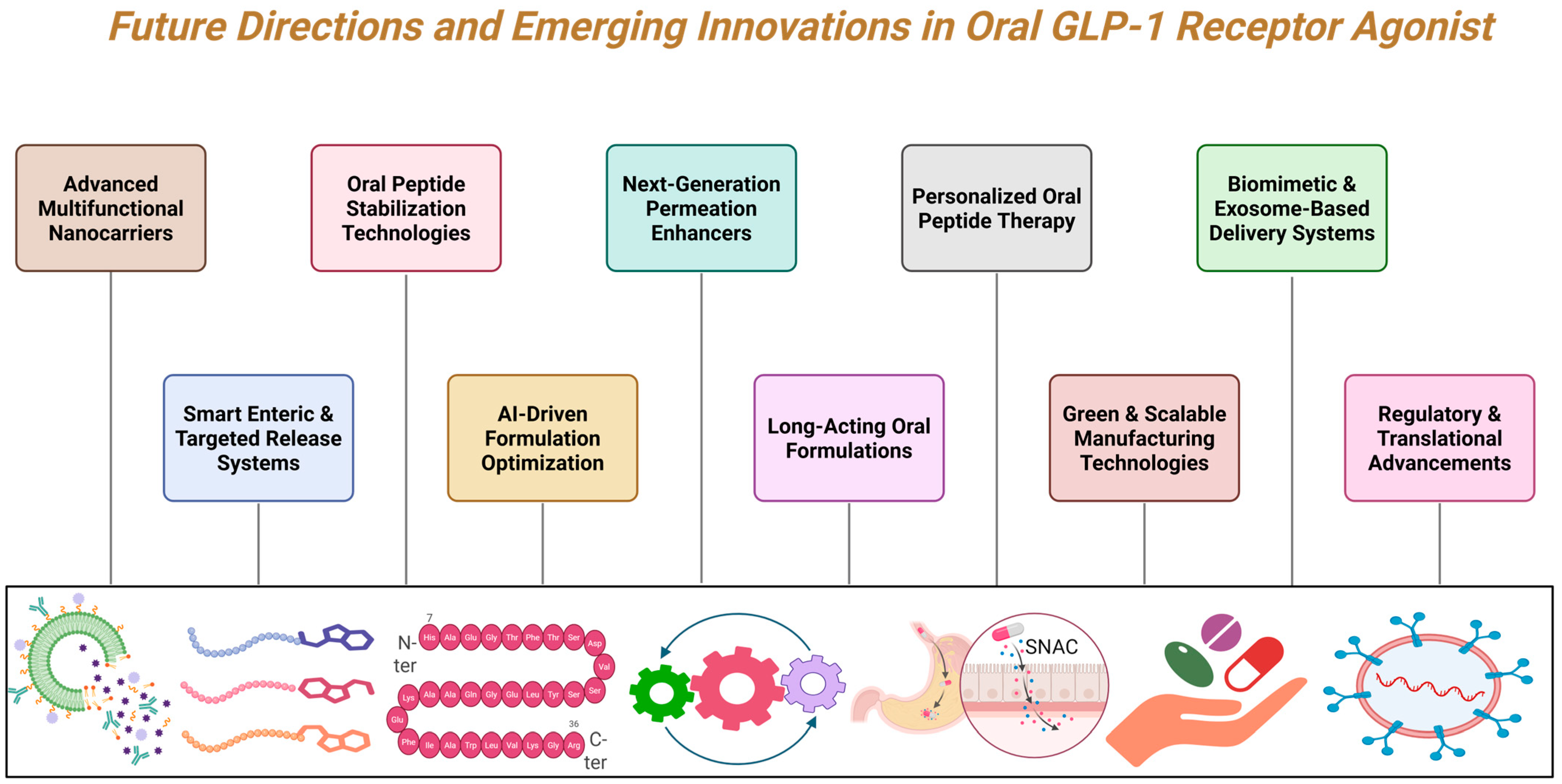
10. Future Perspectives and Emerging Trends
11. Despite Substantial Progress, Critical Questions Remain: Future Research Priorities
11.1. Long-Term Renal Outcome Data Gaps
11.2. Safety of Absorption Enhancers
11.3. Translational Hurdles from Bench to Bedside
11.4. Unmet Clinical and Developmental Needs
12. Conclusions
Funding
Institutional Review Board Statement
Informed Consent Statement
Data Availability Statement
Acknowledgments
Conflicts of Interest
References
- Penno, G.; Solini, A.; Orsi, E.; Bonora, E.; Fondelli, C.; Trevisan, R.; Vedovato, M.; Cavalot, F.; Zerbini, G.; Lamacchia, O.; et al. Insulin resistance, diabetic kidney disease, and all-cause mortality in individuals with type 2 diabetes: A prospective cohort study. BMC Med. 2021, 19, 66. [Google Scholar] [CrossRef]
- Kalra, S.; Baruah, M.P.; Sahay, R.K.; Unnikrishnan, A.G.; Uppal, S.; Adetunji, O. Glucagon-like peptide-1 receptor agonists in the treatment of type 2 diabetes: Past, present, and future. Indian J. Endocrinol. Metab. 2016, 20, 254–267. [Google Scholar] [CrossRef]
- Alqallaf, A.; Swan, P.; Docherty, N.G. Renal insulin resistance in type 2 diabetes mellitus and progression of chronic kidney disease: Potential pathogenic mechanisms. Expert Rev. Endocrinol. Metab. 2022, 17, 523–532. [Google Scholar] [CrossRef]
- Latif, W.; Lambrinos, K.J.; Rodriguez, R. Compare and contrast the glucagon-like peptide-1 receptor agonists (GLP1RAs). In StatPearls; StatePearls Publishing: Treasure Island, FL, USA, 2021. [Google Scholar]
- Ma, X.; Liu, Z.; Ilyas, I.; Little, P.J.; Kamato, D.; Sahebka, A.; Chen, Z.; Luo, S.; Zheng, X.; Weng, J.; et al. GLP-1 receptor agonists (GLP-1RAs): Cardiovascular actions and therapeutic potential. Int. J. Biol. Sci. 2021, 17, 2050. [Google Scholar] [CrossRef]
- Xu, D.; Nair, A.; Sigston, C.; Ho, C.; Li, J.; Yang, D.; Liao, X.; Chen, W.; Kuang, M.; Li, Y.; et al. Potential roles of glucagon-like peptide 1 receptor agonists (GLP-1 RAs) in nondiabetic populations. Cardiovasc. Ther. 2022, 2022, 6820377. [Google Scholar] [CrossRef] [PubMed]
- Uccellatore, A.; Genovese, S.; Dicembrini, I.; Mannucci, E.; Ceriello, A. Comparison review of short-acting and long-acting glucagon-like peptide-1 receptor agonists. Diabetes Ther. 2015, 6, 239–256. [Google Scholar] [CrossRef]
- Zheng, Z.; Zong, Y.; Ma, Y.; Tian, Y.; Pang, Y.; Zhang, C.; Gao, J. Glucagon-like peptide-1 receptor: Mechanisms and advances in therapy. Signal Transduct. Target. Ther. 2024, 9, 234. [Google Scholar] [CrossRef]
- Gentilella, R.; Pechtner, V.; Corcos, A.; Consoli, A. Glucagon-like peptide-1 receptor agonists in type 2 diabetes treatment: Are they all the same? Diabetes/Metab. Res. Rev. 2019, 35, e3070. [Google Scholar] [CrossRef] [PubMed]
- Levin, P.A.; Nguyen, H.; Wittbrodt, E.T.; Kim, S.C. Glucagon-like peptide-1 receptor agonists: A systematic review of comparative effectiveness research. Diabetes Metab. Syndr. Obes. Targets Ther. 2017, 10, 123–139. [Google Scholar] [CrossRef]
- Cheng, D.; Yang, S.; Zhao, X.; Wang, G. The role of glucagon-like peptide-1 receptor agonists (GLP-1 RA) in diabetes-related neurodegenerative diseases. Drug Des. Dev. Ther. 2023, 16, 665–684. [Google Scholar] [CrossRef]
- Sfairopoulos, D.; Liatis, S.; Tigas, S.; Liberopoulos, E. Clinical pharmacology of glucagon-like peptide-1 receptor agonists. Hormones 2018, 17, 333–350. [Google Scholar] [CrossRef]
- Solis-Herrera, C.; Kane, M.P.; Triplitt, C. Current understanding of sodium n-(8-[2-hydroxylbenzoyl] amino) caprylate (SNAC) as an absorption enhancer: The oral semaglutide experience. Clin. Diabetes 2024, 42, 74–86. [Google Scholar] [CrossRef]
- Hamza, A.; Șaramet, G. Actualities in endocrine pharmacology: Advances in the development of oral formulations for calcitonin and semaglutide. Acta Endocrinol. 2020, 16, 383–387. [Google Scholar] [CrossRef]
- Granhall, C.; Bækdal, T.A.; Breitschaft, A.; Søndergaard, F.L.; Anderson, T.W.; Thomsen, M. Absence of QTc prolongation with sodium N-(8-[2-hydroxybenzoyl] amino) caprylate (SNAC), an absorption enhancer co-formulated with the GLP-1 analogue semaglutide for oral administration. Diabetes Ther. 2021, 12, 2599–2610. [Google Scholar] [CrossRef]
- Rabbani, S.A.; El-Tanani, M.; Kumar, R.; Saini, M.; El-Tanani, Y.; Sharma, S.; Aljabali, A.A.A.; Hajeer, E.; Rizzo, M. Repurposing Diabetes Therapies in CKD: Mechanistic Insights, Clinical Outcomes and Safety of SGLT2i and GLP-1 RAs. Pharmaceuticals 2025, 18, 1130. [Google Scholar] [CrossRef]
- Brunton, S.A.; Wysham, C.H. GLP-1 receptor agonists in the treatment of type 2 diabetes: Role and clinical experience to date. Postgrad. Med. 2020, 132, 3–14. [Google Scholar] [CrossRef] [PubMed]
- Vitale, M.; Haxhi, J.; Cirrito, T.; Pugliese, G. Renal protection with glucagon-like peptide-1 receptor agonists. Curr. Opin. Pharmacol. 2020, 54, 91–101. [Google Scholar] [CrossRef]
- Ibrahim, M.; Ba-Essa, E.M.; Alvarez, J.A.; Baker, J.; Bruni, V.; Cahn, A.; Ceriello, A.; Cosentino, F.; Davies, M.J.; De Domenico, F.; et al. Obesity and its management in primary care setting. J. Diabetes Complicat. 2025, 39, 109045. [Google Scholar] [CrossRef] [PubMed]
- Janić, M.; Janez, A.; El-Tanani, M.; Rizzo, M. Obesity: Recent Advances and Future Perspectives. Biomedicines 2025, 13, 368. [Google Scholar] [CrossRef]
- Sun, F.; Wu, S.; Guo, S.; Yu, K.; Yang, Z.; Li, L.; Zhang, Y.; Ji, L.; Zhan, S. Effect of GLP-1 receptor agonists on waist circumference among type 2 diabetes patients: A systematic review and network meta-analysis. Endocrine 2015, 48, 794–803. [Google Scholar] [CrossRef] [PubMed]
- Pantea, I.; Repanovici, A.; Andreescu, O. The influence of GLP1 on body weight and glycemic management in patients with Diabetes—A scientometric investigation and visualization study. Medicina 2024, 60, 1761. [Google Scholar] [CrossRef] [PubMed]
- Sposito, A.C.; Berwanger, O.; de Carvalho, L.S.F.; Saraiva, J.F.K. GLP-1RAs in type 2 diabetes: Mechanisms that underlie cardiovascular effects and overview of cardiovascular outcome data. Cardiovasc. Diabetol. 2018, 17, 157. [Google Scholar] [CrossRef]
- Nikolic, D.; Giglio, R.V.; Rizvi, A.A.; Patti, A.M.; Montalto, G.; Maranta, F.; Cianflone, D.; Stoian, A.P.; Rizzo, M. Liraglutide Reduces Carotid Intima-Media Thickness by Reducing Small Dense Low-Density Lipoproteins in a Real-World Setting of Patients with Type 2 Diabetes: A Novel Anti-Atherogenic Effect. Diabetes Ther. 2021, 12, 261–274. [Google Scholar] [CrossRef]
- Ros-Madrid, I.; Cano-Mármol, R.P.; Ferrer-Gomez, M.; Ramos-Molina, B. Anti-inflammatory properties of GLP-1 receptor agonists and other ancillary benefits from a pharmacological perspective. Can. J. Physiol. Pharmacol. 2025, 103, 369–377. [Google Scholar] [CrossRef]
- Jakhar, K.; Vaishnavi, S.; Kaur, P.; Singh, P.; Munshi, A. Pharmacogenomics of GLP-1 receptor agonists: Focus on pharmacological profile. Eur. J. Pharmacol. 2022, 936, 175356. [Google Scholar] [CrossRef]
- Wei, Z.; Xu, W.; Wang, Y.; Tian, Y.; Wang, Z.; Jing, S.; Liu, W.; Shen, S.; Qin, C.; Zhang, X.; et al. Comparative cardiovascular outcomes and safety of hypoglycemic drug classes in patients with type 2 diabetes and hypertension: A multicenter cohort analysis. Cardiovasc. Diabetol. 2025, 24, 343. [Google Scholar] [CrossRef]
- Zayed, M.F.; Khayat, N.O.; Alsibyani, R.W.; Alshami, R.Z.; Alsubahi, R.A.; Alamoudi, M.K. An insight into pharmaceutical design and pharmacokinetic characteristics of GLP-1 RAs. Curr. Pharm. Des. 2025, 32, 1095–1106. [Google Scholar] [CrossRef]
- Patel, S.; Niazi, S.K. Emerging Frontiers in GLP-1 Therapeutics: A Comprehensive Evidence Base. Pharmaceutics 2025, 17, 1036. [Google Scholar] [CrossRef] [PubMed]
- Triplitt, C.; DeFronzo, R.A. Exenatide: First-in-class incretin mimetic for the treatment of type 2 diabetes mellitus. Expert Rev. Endocrinol. Metab. 2006, 1, 329–341. [Google Scholar] [CrossRef]
- LaRue, S.; Malloy, J. Evaluation of the dual-chamber pen design for the injection of exenatide once weekly for the treatment of type 2 diabetes. J. Diabetes Sci. Technol. 2015, 9, 815–821. [Google Scholar] [CrossRef]
- Janez, A.; Muzurovic, E.; Stoian, A.P.; Haluzik, M.; Guja, C.; Czupryniak, L.; Duvnjak, L.; Lalic, N.; Tankova, T.; Bogdanski, P.; et al. Translating results from the cardiovascular outcomes trials with glucagon-like peptide-1 receptor agonists into clinical practice: Recommendations from a Eastern and Southern Europe diabetes expert group. Int. J. Cardiol. 2022, 365, 8–18. [Google Scholar] [CrossRef]
- Aldahi, W.A.; Alenezi, A.; Alessa, T.; Alhamdan, R.; Al-Humood, K.A.; Alqallaf, A.; Alotaibi, T.; Alrajab, H.; Alshammari, A.M.; Alyousef, A.M.; et al. Modern Management of CKM Syndrome: Use of GLP-1 Receptor Agonists in a Multidisciplinary Setting-Expert Group Recommendations from Kuwait. Diabetes Ther. 2026, 17, 373–389. [Google Scholar] [CrossRef]
- Gentilella, R.; Bianchi, C.; Rossi, A.; Rotella, C.M. Exenatide: A review from pharmacology to clinical practice. Diabetes Obes. Metab. 2009, 11, 544–556. [Google Scholar] [CrossRef]
- Leon, N.; LaCoursiere, R.; Yarosh, D.; Patel, R.S. Lixisenatide (Adlyxin): A once-daily incretin mimetic injection for type-2 diabetes. Pharm. Ther. 2017, 42, 676. [Google Scholar]
- Newsome, J.S. Lixisenatide: A new option for managing type 2 diabetes. J. Pharm. Technol. 2017, 33, 195–203. [Google Scholar] [CrossRef]
- Sadhu, A.R. Comments: ICER Draft Scoping Document for the Assessment of Treatments for Type 2 Diabetes. Available online: https://icer.org/wp-content/uploads/2020/10/ICER_Diabetes_Draft_Scope_Public_Comments_053119.pdf (accessed on 2 May 2026).
- Chatterjee, R.; Galave, V.S.B.; Jindal, A.B. Current status of Liraglutide delivery systems for the management of type 2 diabetes mellitus. Drug Deliv. Transl. Res. 2025, 15, 4479–4500. [Google Scholar] [CrossRef] [PubMed]
- Fala, L. Tanzeum (Albiglutide): A once-weekly GLP-1 receptor agonist subcutaneous injection approved for the treatment of patients with type 2 diabetes. Am. Health Drug Benefits 2015, 8, 126. [Google Scholar]
- Davis, P.N.; Ndefo, U.A.; Oliver, A.; Payton, E. Albiglutide: A once-weekly glucagon-like peptide-1 receptor agonist for type 2 diabetes mellitus. Am. J. Health-Syst. Pharm. 2015, 72, 1097–1103. [Google Scholar] [CrossRef]
- Smith, L.L.; Mosley, J.F.; Parke, C.; Brown, J.; Barris, L.S.; Phan, L.D. Dulaglutide (Trulicity): The third once-weekly GLP-1 agonist. Pharm. Ther. 2016, 41, 357. [Google Scholar]
- Fala, L. Trulicity (dulaglutide): A new GLP-1 receptor agonist once-weekly subcutaneous injection approved for the treatment of patients with type 2 diabetes. Am. Health Drug Benefits 2015, 8, 131. [Google Scholar] [PubMed]
- Chubb, B.; Gupta, P.; Gupta, J.; Nuhoho, S.; Kallenbach, K.; Orme, M. Once-daily oral semaglutide versus injectable GLP-1 RAs in people with type 2 diabetes inadequately controlled on basal insulin: Systematic review and network meta-analysis. Diabetes Ther. 2021, 12, 1325–1339. [Google Scholar] [CrossRef]
- Nuhoho, S.; Gupta, J.; Hansen, B.B.; Fletcher-Louis, M.; Dang-Tan, T.; Paine, A. Orally administered semaglutide versus GLP-1 RAs in patients with type 2 diabetes previously receiving 1–2 oral antidiabetics: Systematic review and network meta-analysis. Diabetes Ther. 2019, 10, 2183–2199. [Google Scholar] [CrossRef]
- Ross, S.A.; Ballantine, J. Early use of glucagon-like peptide-1 receptor agonists (GLP-1 RAs) in type 2 diabetes. Curr. Med. Res. Opin. 2013, 29, 1617–1626. [Google Scholar] [CrossRef]
- Miyasaka, K. New drug for type 2 diabetes: Introduction of oral Semaglutide (Rybelsus® tablets), an oral GLP-1 receptor agonist. Folia Pharmacol. Jpn. 2022, 157, 146–154. [Google Scholar] [CrossRef]
- Brønden, A.; Knop, F.K.; Christensen, M.B. Clinical pharmacokinetics and pharmacodynamics of albiglutide. Clin. Pharmacokinet. 2017, 56, 719–731. [Google Scholar] [CrossRef] [PubMed]
- Li, Y.; Rosenblit, P.D. Glucagon-like peptide-1 receptor agonists and cardiovascular risk reduction in type 2 diabetes mellitus: Is it a class effect? Curr. Cardiol. Rep. 2018, 20, 113. [Google Scholar] [CrossRef]
- Andersen, A.; Lund, A.; Knop, F.K.; Vilsbøll, T. Glucagon-like peptide 1 in health and disease. Nat. Rev. Endocrinol. 2018, 14, 390–403. [Google Scholar] [CrossRef] [PubMed]
- Tomlinson, B.; Hu, M.; Zhang, Y.; Chan, P.; Liu, Z.M. An overview of new GLP-1 receptor agonists for type 2 diabetes. Expert Opin. Investig. Drugs 2016, 25, 145–158. [Google Scholar] [CrossRef]
- Inman, T.R.; Plyushko, E.; Austin, N.P.; Johnson, J.L. The role of basal insulin and GLP-1 receptor agonist combination products in the management of type 2 diabetes. Ther. Adv. Endocrinol. Metab. 2018, 9, 151–155. [Google Scholar] [CrossRef]
- Dar, S.; Tahrani, A.A.; Piya, M.K. The role of GLP-1 receptor agonists as weight loss agents in patients with and without type 2 diabetes. Pract. Diabetes 2015, 32, 297–300b. [Google Scholar] [CrossRef]
- Tibble, C.A.; Cavaiola, T.S.; Henry, R.R. Longer acting GLP-1 receptor agonists and the potential for improved cardiovascular outcomes: A review of current literature. Expert Rev. Endocrinol. Metab. 2013, 8, 247–259. [Google Scholar] [CrossRef]
- Stevenson, C.L.; Rhodes, C.A.; Prestrelski, S.J. Delivery of peptides and proteins via long acting injections and implants. In Long Acting Injections and Implants; Springer: Boston, MA, USA, 2011; pp. 409–427. [Google Scholar]
- Tan, H.; Su, W.; Zhang, W.; Wang, P.; Sattler, M.; Zou, P. Recent advances in half-life extension strategies for therapeutic peptides and proteins. Curr. Pharm. Des. 2018, 24, 4932–4946. [Google Scholar] [CrossRef]
- Han, J.; Chen, X.; Zhao, L.; Fu, J.; Sun, L.; Zhang, Y.; Zhou, F.; Fei, Y. Lithocholic acid-based peptide delivery system for an enhanced pharmacological and pharmacokinetic profile of xenopus GLP-1 analogs. Mol. Pharm. 2018, 15, 2840–2856. [Google Scholar] [CrossRef] [PubMed]
- Deng, Y.; Park, A.; Zhu, L.; Xie, W.; Pan, C.Q. Effect of semaglutide and liraglutide in individuals with obesity or overweight without diabetes: A systematic review. Ther. Adv. Chronic Dis. 2022, 13, 20406223221108064. [Google Scholar] [CrossRef] [PubMed]
- Rubino, D.M.; Greenway, F.L.; Khalid, U.; O’Neil, P.M.; Rosenstock, J.; Sørrig, R.; Wadden, T.A.; Wizert, A.; Garvey, W.T. Effect of weekly subcutaneous semaglutide vs daily liraglutide on body weight in adults with overweight or obesity without diabetes: The STEP 8 randomized clinical trial. JAMA 2022, 327, 138–150. [Google Scholar] [CrossRef]
- Frimann, T.M.; Ko, S.K.; Harris, P.; Bukrinski, J.T.; Peters, G.H. In-silico study of the interactions between acylated glucagon like-peptide-1 analogues and the native receptor. J. Biomol. Struct. Dyn. 2023, 41, 5007–5021. [Google Scholar]
- Xie, Z.; Yang, S.; Deng, W.; Li, J.; Chen, J. Efficacy and safety of liraglutide and semaglutide on weight loss in people with obesity or overweight: A systematic review. Clin. Epidemiol. 2022, 14, 1463–1476. [Google Scholar] [CrossRef]
- Alsugair, H.A.; Alshugair, I.F.; Alharbi, T.J.; Bin Rsheed, A.M.; Tourkmani, A.M.; Al-Madani, W. Weekly semaglutide vs. liraglutide efficacy profile: A network meta-analysis. Healthcare 2021, 9, 1125. [Google Scholar] [CrossRef]
- Ruggiero, R.; Longo, M.; Mascolo, A.; Di Nuzzo, M.; Laino, L.V.; Caruso, P.; D’Amato, R.; Rafaniello, C.; Maiorino, M.I.; Esposito, K.; et al. Real-world safety comparison of liraglutide and semaglutide in weight management: Insights from European pharmacovigilance data. Eur. J. Pharmacol. 2025, 1004, 178004. [Google Scholar] [CrossRef] [PubMed]
- Ramírez-Andersen, H.S.; Behrens, C.; Buchardt, J.; Fels, J.J.; Folkesson, C.G.; Jianhe, C.; Nørskov-Lauritsen, L.; Nielsen, P.F.; Reslow, M.; Rischel, C.; et al. Long-acting human growth hormone analogue by noncovalent albumin binding. Bioconjugate Chem. 2018, 29, 3129–3143. [Google Scholar] [CrossRef]
- Rosenstock, J.; Reusch, J.; Bush, M.; Yang, F.; Stewart, M.; Albiglutide Study Group. Potential of albiglutide, a long-acting GLP-1 receptor agonist, in type 2 diabetes: A randomized controlled trial exploring weekly, biweekly, and monthly dosing. Diabetes Care 2009, 32, 1880–1886. [Google Scholar] [CrossRef]
- Trujillo, J.M.; Nuffer, W. Albiglutide: A new GLP-1 receptor agonist for the treatment of type 2 diabetes. Ann. Pharmacother. 2014, 48, 1494–1501. [Google Scholar] [CrossRef]
- Hernandez, A.F.; Green, J.B.; Janmohamed, S.; D’Agostino, R.B.; Granger, C.B.; Jones, N.P.; Leiter, L.A.; Rosenberg, A.E.; Sigmon, K.N.; Somerville, M.C.; et al. Albiglutide and cardiovascular outcomes in patients with type 2 diabetes and cardiovascular disease (Harmony Outcomes): A double-blind, randomised placebo-controlled trial. Lancet 2018, 392, 1519–1529. [Google Scholar] [CrossRef]
- Nauck, M.A.; Stewart, M.W.; Perkins, C.; Jones-Leone, A.; Yang, F.; Perry, C.; Reinhardt, R.R.; Rendell, M. Efficacy and safety of once-weekly GLP-1 receptor agonist albiglutide (HARMONY 2): 52 week primary endpoint results from a randomised, placebo-controlled trial in patients with type 2 diabetes mellitus inadequately controlled with diet and exercise. Diabetologia 2016, 59, 266–274. [Google Scholar] [CrossRef]
- Chen, H.; Wang, G.; Lang, L.; Jacobson, O.; Kiesewetter, D.O.; Liu, Y.; Ma, Y.; Zhang, X.; Wu, H.; Zhu, L.; et al. Chemical conjugation of evans blue derivative: A strategy to develop long-acting therapeutics through albumin binding. Theranostics 2016, 6, 243. [Google Scholar] [CrossRef]
- Yokoyama, M.; Suzuki, E.; Nakai, D. Impact of degradation in subcutaneous tissue and lymphatic fluid on absorption of Fc-fusion proteins following subcutaneous administration. Drug Metab. Pharmacokinet. 2025, 64, 101500. [Google Scholar] [CrossRef]
- Rao, Y.; Yu, S.; Wang, B.Z.; Cui, S.; Gou, K.M. Production of Fc-fused receptor agonists for glucagon-like peptide-1/glucose-dependent insulinotropic polypeptide (GLP-1/GIP) in the milk of transgenic mice. Transgenic Res. 2025, 34, 38. [Google Scholar] [CrossRef] [PubMed]
- Wu, X.; Qiao, J.; Xiao, F.; Guo, L. Enhancing GLP-1 expression via IVT mRNA and fusion protein technology for diabetes therapy. J. Pharm. Sci. 2025, 114, 103829. [Google Scholar] [CrossRef]
- Luginbuhl, K.M.; Schaal, J.L.; Umstead, B.; Mastria, E.M.; Li, X.; Banskota, S.; Arnold, S.; Feinglos, M.; D’aLessio, D.; Chilkoti, A. One-week glucose control via zero-order release kinetics from an injectable depot of glucagon-like peptide-1 fused to a thermosensitive biopolymer. Nat. Biomed. Eng. 2017, 1, 0078. [Google Scholar] [CrossRef] [PubMed]
- Amiram, M.; Luginbuhl, K.M.; Li, X.; Feinglos, M.N.; Chilkoti, A. A depot-forming glucagon-like peptide-1 fusion protein reduces blood glucose for five days with a single injection. J. Control. Release 2013, 172, 144–151. [Google Scholar] [CrossRef] [PubMed][Green Version]
- Lee, J.W.; Park, J.H.; Yu, G.W.; You, J.W.; Han, M.J.; Kang, M.J.; Ho, M.J. Sustained-release intra-articular drug delivery: PLGA systems in clinical context and evolving strategies. Pharmaceutics 2025, 17, 1350. [Google Scholar] [CrossRef]
- Morieri, M.L.; Avogaro, A.; Fadini, G.P. Long-acting injectable GLP-1 receptor agonists for the treatment of adults with type 2 diabetes: Perspectives from clinical practice. Diabetes Metab. Syndr. Obes. 2020, 13, 4221–4234. [Google Scholar] [CrossRef] [PubMed]
- Thomsen, R.W.; Mailhac, A.; Løhde, J.B.; Pottegård, A. Real-world evidence on the utilization, clinical and comparative effectiveness, and adverse effects of newer GLP-1RA-based weight-loss therapies. Diabetes Obes. Metab. 2025, 27, 66–88. [Google Scholar] [CrossRef]
- Medhati, P.; Shin, T.H.; Wasden, K.; Mathur, V.; Apovian, C.; Nimeri, A.; Sheu, E.G.; Tavakkoli, A. GLP-1RA in the real world: 1-year compliance and outcomes of semaglutide use in patients with or without previous history of bariatric surgery. Ann. Surg. 2025; ahead of print. [CrossRef]
- Hurwitz, S.R.; Lanes, S.; Quimbo, T.; Papazian, A.; White, J.; Fisher, V.; Cziraky, M.J.; Crowley, M.J.; Willey, V.J. Comparative safety of glucagon-like peptide 1 receptor agonists (GLP-1-RAs) in Type 2 Diabetes and chronic weight management: A real-world data study. Pharmacoepidemiol. Drug Saf. 2025, 34, e70214. [Google Scholar] [CrossRef] [PubMed]
- Carls, G.S.; Tuttle, E.; Tan, R.D.; Huynh, J.; Yee, J.; Edelman, S.V.; Polonsky, W.H. Understanding the gap between efficacy in randomized controlled trials and effectiveness in real-world use of GLP-1 RA and DPP-4 therapies in patients with type 2 diabetes. Diabetes Care 2017, 40, 1469–1478. [Google Scholar] [CrossRef]
- Tan, X.; Divino, V.; Amamoo, J.; Xie, L.; Coyle, K.B.; Gamble, C.L.; Guevarra, M.; Paprocki, Y.; King, A.A. Real-world effectiveness of once-weekly glucagon-like peptide-1 receptor agonists (OW GLP-1RAs) in comparison with dipeptidyl peptidase-4 inhibitors (DPP-4is) for glycemic control and weight outcomes in type 2 diabetes mellitus (RELATE). Clin. Drug Investig. 2024, 44, 271–284. [Google Scholar] [CrossRef]
- Palanca, A.; Ampudia-Blasco, F.J.; Calderón, J.M.; Sauri, I.; Martinez-Hervas, S.; Trillo, J.L.; Redón, J.; Real, J.T. Real-world evaluation of GLP-1 receptor agonist therapy persistence, adherence and therapeutic inertia among obese adults with type 2 diabetes. Diabetes Ther. 2023, 14, 723–736. [Google Scholar] [CrossRef]
- Weiss, T.; Carr, R.D.; Pal, S.; Yang, L.; Sawhney, B.; Boggs, R.; Rajpathak, S.; Iglay, K. Real-world adherence and discontinuation of glucagon-like peptide-1 receptor agonists therapy in type 2 diabetes mellitus patients in the United States. Patient Prefer. Adherence 2020, 14, 2337–2345. [Google Scholar] [CrossRef]
- Lingvay, I.; Kirk, A.R.; Lophaven, S.; Wolden, M.L.; Shubrook, J.H. Outcomes in GLP-1 RA-experienced patients switching to once-weekly semaglutide in a real-world setting: The retrospective, observational EXPERT study. Diabetes Ther. 2021, 12, 879–896. [Google Scholar] [CrossRef]
- Rea, F.; Ciardullo, S.; Savaré, L.; Perseghin, G.; Corrao, G. Comparing medication persistence among patients with type 2 diabetes using sodium-glucose cotransporter 2 inhibitors or glucagon-like peptide-1 receptor agonists in real-world setting. Diabetes Res. Clin. Pract. 2021, 180, 109035. [Google Scholar] [CrossRef]
- Polonsky, W.H.; Arora, R.; Faurby, M.; Fernandes, J.; Liebl, A. Higher rates of persistence and adherence in patients with type 2 diabetes initiating once-weekly vs daily injectable glucagon-like peptide-1 receptor agonists in US clinical practice (STAY study). Diabetes Ther. 2022, 13, 175–187. [Google Scholar] [CrossRef]
- Yang, C.Y.; Chen, Y.R.; Ou, H.T.; Kuo, S. Cost-effectiveness of GLP-1 receptor agonists versus insulin for the treatment of type 2 diabetes: A real-world study and systematic review. Cardiovasc. Diabetol. 2021, 20, 21. [Google Scholar] [CrossRef] [PubMed]
- Mody, R.; Grabner, M.; Yu, M.; Turner, R.; Kwan, A.Y.; York, W.; Fernández Landó, L. Real-world effectiveness, adherence and persistence among patients with type 2 diabetes mellitus initiating dulaglutide treatment. Curr. Med. Res. Opin. 2018, 34, 995–1003. [Google Scholar] [CrossRef]
- Connolly, D.; Collins, E.; Ren, H.; Wan Yau Ming, S.; Davidson, J.; Bain, S. Real-world comparisons between glucagon-like peptide-1 receptor agonists and other glucose-lowering agents in type 2 diabetes: Retrospective analyses of cardiovascular and economic outcomes in England. Diabetes Ther. 2025, 16, 955–975. [Google Scholar] [CrossRef] [PubMed]
- Hamman, J.H.; Enslin, G.M.; Kotzé, A.F. Oral delivery of peptide drugs: Barriers and developments. BioDrugs 2005, 19, 165–177. [Google Scholar] [CrossRef]
- Chen, X.; Dai, W.; Li, H.; Yan, Z.; Liu, Z.; He, L. Targeted drug delivery strategy: A bridge to the therapy of diabetic kidney disease. Drug Deliv. 2023, 30, 2160518. [Google Scholar] [CrossRef]
- Neumiller, J.J.; Alicic, R.Z.; Tuttle, K.R. Overcoming barriers to implementing new therapies for diabetic kidney disease: Lessons learned. Adv. Chronic Kidney Dis. 2021, 28, 318–327. [Google Scholar] [CrossRef]
- Baral, K.C.; Choi, K.Y. Barriers and strategies for oral peptide and protein therapeutics delivery: Update on clinical advances. Pharmaceutics 2025, 17, 397. [Google Scholar] [CrossRef]
- Milla, P.; Dosio, F.; Cattel, L. PEGylation of proteins and liposomes: A powerful and flexible strategy to improve the drug delivery. Curr. Drug Metab. 2012, 13, 105–119. [Google Scholar] [CrossRef]
- Roointan, A.; Xu, R.; Corrie, S.; Hagemeyer, C.E.; Alt, K. Nanotherapeutics in kidney disease: Innovations, challenges, and future directions. J. Am. Soc. Nephrol. 2025, 36, 500–518. [Google Scholar] [CrossRef]
- Nee, R.; Yuan, C.M.; Narva, A.S.; Yan, G.; Norris, K.C. Overcoming barriers to implementing new guideline-directed therapies for chronic kidney disease. Nephrol. Dial. Transplant. 2023, 38, 532–541. [Google Scholar] [CrossRef]
- Ramos, A.M.; Fernandez-Fernandez, B.; Pérez-Gómez, M.V.; Julio, S.M.C.; Sanchez-Niño, M.D.; Sanz, A.; Ruiz-Ortega, M.; Ortiz, A. Design and optimization strategies for the development of new drugs that treat chronic kidney disease. Expert Opin. Drug Discov. 2020, 15, 101–115. [Google Scholar] [CrossRef]
- Petrosyan, R.; Caballero, A.E.; Henry, T.L.; Puchalski, A.R. Navigating disparities and overcoming barriers to access Diabetic Kidney Disease therapies: A proposed multifactorial approach. Nephron 2026, 150, 131–140. [Google Scholar] [CrossRef] [PubMed]
- Jensen, L.; Helleberg, H.; Roffel, A.D.; van Lier, J.J.; Bjørnsdottir, I.; Pedersen, P.J.; Rowe, E.; Karsbøl, J.D.; Pedersen, M.L. Absorption, metabolism and excretion of the GLP-1 analogue semaglutide in humans and nonclinical species. Eur. J. Pharm. Sci. 2017, 104, 31–41. [Google Scholar] [CrossRef]
- Kommineni, N.; Sainaga Jyothi, V.G.; Butreddy, A.; Raju, S.; Shapira, T.; Khan, W.; Angsantikul, P.; Domb, A.J. SNAC for enhanced oral bioavailability: An updated review. Pharm. Res. 2023, 40, 633–650. [Google Scholar] [CrossRef]
- Granhall, C.; Donsmark, M.; Blicher, T.M.; Golor, G.; Søndergaard, F.L.; Thomsen, M.; Bækdal, T.A. Safety and pharmacokinetics of single and multiple ascending doses of the novel oral human GLP-1 analogue, oral semaglutide, in healthy subjects and subjects with type 2 diabetes. Clin. Pharmacokinet. 2019, 58, 781–791. [Google Scholar] [CrossRef]
- Niman, S.; Hardy, J.; Goldfaden, R.F.; Reid, J.; Sheikh-Ali, M.; Sutton, D.; Choksi, R. A review on the efficacy and safety of oral semaglutide. Drugs RD 2021, 21, 133–148. [Google Scholar] [CrossRef]
- Marbury, T.C.; Flint, A.; Jacobsen, J.B.; Derving Karsbøl, J.; Lasseter, K. Pharmacokinetics and tolerability of a single dose of semaglutide, a human glucagon-like peptide-1 analog, in subjects with and without renal impairment. Clin. Pharmacokinet. 2017, 56, 1381–1390. [Google Scholar] [CrossRef] [PubMed]
- Shapira-Furman, T.; Bar-Hai, A.; Hoffman, A.; Domb, A.J. The synthesis of SNAC phenolate salts and the effect on oral bioavailability of semaglutide. Molecules 2024, 29, 3909. [Google Scholar] [CrossRef] [PubMed]
- Lee, T.S.; Park, E.J.; Choi, M.; Oh, H.S.; An, Y.; Kim, T.; Kim, T.H.; Shin, B.S.; Shin, S. Novel LC-MS/MS analysis of the GLP-1 analog semaglutide with its application to pharmacokinetics and brain distribution studies in rats. J. Chromatogr. B 2023, 1221, 123688. [Google Scholar] [CrossRef]
- Zhong, P.; Zeng, H.; Huang, M.; He, G.; Chen, Z. Efficacy and safety of subcutaneous and oral semaglutide administration in patients with type 2 diabetes: A meta-analysis. Front. Pharmacol. 2021, 12, 695182. [Google Scholar] [CrossRef]
- El-Tanani, M.K.; Green, C.D. Interaction between estradiol and growth factors in the regulation of specific gene expression in MCF-7 human breast cancer cells. J. Steroid Biochem. Mol. Biol. 1997, 60, 269–276. [Google Scholar] [CrossRef] [PubMed]
- Moonschi, F.H.; Hughes, C.B.; Mussman, G.M.; Fowlkes, J.L.; Richards, C.I.; Popescu, I. Advances in micro-and nanotechnologies for the GLP-1-based therapy and imaging of pancreatic beta-cells. Acta Diabetol. 2018, 55, 405–418. [Google Scholar] [CrossRef] [PubMed]
- Antza, C.; Nirantharakumar, K.; Doundoulakis, I.; Tahrani, A.A.; Toulis, K.A. The development of an oral GLP-1 receptor agonist for the management of type 2 diabetes: Evidence to date. Drug Des. Dev. Ther. 2019, 13, 2985–2996. [Google Scholar] [CrossRef]
- Holler, N.; Ruseska, I.; Schachner-Nedherer, A.L.; Zimmer, A.; Petschacher, C. Oral treatment of obesity by GLP-1 and its analogs. Pharmaceutics 2025, 17, 1596. [Google Scholar] [CrossRef] [PubMed]
- Khan, M.S.; Bhutani, U.; Venugopal, H.; Saini, A.K.; Naidu, V.R.; Kollipara, S. Emerging Therapies in Metabolic Health: A Comprehensive Review of GLP-1, GIP, and Glucagon Agonists. J. Pept. Sci. 2026, 32, e70083. [Google Scholar] [CrossRef]
- Alzahrani, A.M.; Alshobragi, G.A.; Alshehri, A.M.; Alzahrani, M.S.; Alshehri, H.A.; Alzhrani, R.M.; Basudan, S.; Alkatheeri, A.A.; Almutairi, S.A.; Alzahrani, Y.A. Molecular pharmacology of glucagon-like peptide 1-based therapies in the management of type two diabetes mellitus and obesity. Integr. Pharm. Res. Pract. 2025, 14, 59–72. [Google Scholar] [CrossRef]
- Alluri, A.A.; Guntupalli, Y.; Suvarna, S.S.; Prystupa, Y.; Khetan, S.P.; Vejandla, B.; Babu Swathi, N.L. Incretin-based therapies: Advancements, challenges, and future directions in type 2 diabetes management. J. Basic Clin. Physiol. Pharmacol. 2025, 36, 95–111. [Google Scholar] [CrossRef]
- Min, J.S.; Jo, S.J.; Lee, S.; Kim, D.Y.; Kim, D.H.; Lee, C.B.; Bae, S.K. A Comprehensive Review on the Pharmacokinetics and Drug− Drug Interactions of Approved GLP-1 Receptor Agonists and a Dual GLP-1/GIP Receptor Agonist. Drug Des. Dev. Ther. 2025, 19, 3509–3537. [Google Scholar] [CrossRef]
- Poudwal, S.; Misra, A.; Shende, P. Role of lipid nanocarriers for enhancing oral absorption and bioavailability of insulin and GLP-1 receptor agonists. J. Drug Target. 2021, 29, 834–847. [Google Scholar] [CrossRef]
- Pinto, S.F.T.; Santos, H.A.; Sarmento, B.F.C.C. New insights into nanomedicines for oral delivery of glucagon-like peptide-1 analogs. WIREs Nanomed. Nanobiotechnol. 2024, 16, e1952. [Google Scholar] [CrossRef]
- Aljabali, A.A.; Rezigue, M.; Alsharedeh, R.H.; Obeid, M.A.; Mishra, V.; Serrano-Aroca, A.; El-Tanani, M.; Tambuwala, M.M. Protein-based nanomaterials: A new tool for targeted drug delivery. Ther. Deliv. 2022, 13, 321–338. [Google Scholar] [CrossRef]
- Ma, S.; We, L.; Yang, H.; Deng, S.; Jevnikar, A.M. Emerging technologies to achieve oral delivery of GLP-1 and GLP-1 analogs for treatment of type 2 diabetes mellitus (T2DM). Can. J. Biotechnol. 2017, 1, 1. [Google Scholar] [CrossRef]
- Dangana, R.S.; Okon, M.B.; Orire, I.E.; Sanusi, I.O.; Terkimbi, S.D.; Aja, P.M.; Abubakar, I.B.; Anyim, G. Systematic review of peptide nanoparticles for improved diabetes outcomes: Insights and opportunities. Discov. Nano 2025, 20, 41. [Google Scholar] [CrossRef]
- Behzadifar, S.; Barras, A.; Plaisance, V.; Pawlowski, V.; Szunerits, S.; Abderrahmani, A.; Boukherroub, R. Polymer-based nanostructures for pancreatic beta-cell imaging and non-invasive treatment of diabetes. Pharmaceutics 2023, 15, 1215. [Google Scholar] [CrossRef]
- Maher, S.; Brayden, D.J.; Casettari, L.; Illum, L. Application of permeation enhancers in oral delivery of macromolecules: An update. Pharmaceutics 2019, 11, 41. [Google Scholar] [CrossRef]
- Berg, S.; Edlund, H.; Goundry, W.R.; Bergström, C.A.; Davies, N.M. Considerations in the developability of peptides for oral administration when formulated together with transient permeation enhancers. Int. J. Pharm. 2022, 628, 122238. [Google Scholar] [CrossRef]
- Girdhar, K.; Thakur, S.; Gaur, P.; Choubey, A.; Dogra, S.; Dehury, B.; Kumar, S.; Biswas, B.; Dwivedi, D.K.; Ghosh, S.; et al. Design, synthesis, and biological evaluation of a small molecule oral agonist of the glucagon-like-peptide-1 receptor. J. Biol. Chem. 2022, 298, 101889. [Google Scholar] [CrossRef] [PubMed]
- Colston, K.J.; Faivre, K.T.; Schneebeli, S.T. Permeation enhancer-induced membrane defects assist the oral absorption of peptide drugs. Nat. Commun. 2025, 16, 9512. [Google Scholar] [CrossRef] [PubMed]
- Gao, Z.; Wei, Y.; Ma, G. A review of recent research and development on GLP-1 receptor agonists-sustained-release microspheres. J. Mater. Chem. B 2023, 11, 11184–11197. [Google Scholar] [CrossRef]
- Chen, H.; Lu, Y.; Shi, S.; Zhang, Q.; Cao, X.; Sun, L.; An, D.; Zhang, X.; Kong, X.; Liu, J. Design and Development of a New Glucagon-Like Peptide-1 Receptor Agonist to Obtain High Oral Bioavailability: Chen, Lu, Shi, Zhang, Cao, Sun, An, Zhang, Kong and Liu. Pharm. Res. 2022, 39, 1891–1906. [Google Scholar] [CrossRef]
- Bucheit, J.D.; Pamulapati, L.G.; Carter, N.; Malloy, K.; Dixon, D.L.; Sisson, E.M. Oral semaglutide: A review of the first oral glucagon-like peptide 1 receptor agonist. Diabetes Technol. Ther. 2020, 22, 10–18. [Google Scholar] [CrossRef] [PubMed]
- Trujillo, J.M.; Nuffer, W.; Smith, B.A. GLP-1 receptor agonists: An updated review of head-to-head clinical studies. Ther. Adv. Endocrinol. Metab. 2021, 12, 2042018821997320. [Google Scholar] [CrossRef] [PubMed]
- An, X.; Sun, W.; Wen, Z.; Duan, L.; Zhang, Y.; Kang, X.; Ji, H.; Sun, Y.; Jiang, L.; Zhao, X.; et al. Comparison of the efficacy and safety of GLP-1 receptor agonists on cardiovascular events and risk factors: A review and network meta-analysis. Diabetes Obes. Metab. 2025, 27, 1735–1751. [Google Scholar] [CrossRef]
- El-Tanani, M.; Satyam, S.M.; Rabbani, S.A.; El-Tanani, Y.; Aljabali, A.A.; Al Faouri, I.; Rehman, A. Revolutionizing drug delivery: The impact of advanced materials science and technology on precision medicine. Pharmaceutics 2025, 17, 375. [Google Scholar] [CrossRef]
- Aroda, V.R. A review of GLP-1 receptor agonists: Evolution and advancement, through the lens of randomised controlled trials. Diabetes Obes. Metab. 2018, 20, 22–33. [Google Scholar] [CrossRef]
- Kapoor, I.; Sarvepalli, S.M.; D’Alessio, D.; Grewal, D.S.; Hadziahmetovic, M. GLP-1 receptor agonists and diabetic retinopathy: A meta-analysis of randomized clinical trials. Surv. Ophthalmol. 2023, 68, 1071–1083. [Google Scholar] [CrossRef]
- Aroda, V.R.; Erhan, U.; Jelnes, P.; Meier, J.J.; Abildlund, M.T.; Pratley, R.; Vilsbøll, T.; Husain, M. Safety and tolerability of semaglutide across the SUSTAIN and PIONEER phase IIIa clinical trial programmes. Diabetes Obes. Metab. 2023, 25, 1385–1397. [Google Scholar] [CrossRef]
- Aroda, V.R.; Ahmann, A.; Cariou, B.; Chow, F.; Davies, M.; Jódar, E.; Mehta, R.; Woo, V.; Lingvay, I. Comparative efficacy, safety, and cardiovascular outcomes with once-weekly subcutaneous semaglutide in the treatment of type 2 diabetes: Insights from the SUSTAIN 1–7 trials. Diabetes Metab. 2019, 45, 409–418. [Google Scholar] [CrossRef]
- Sorli, C.; Harashima, S.I.; Tsoukas, G.M.; Unger, J.; Karsbøl, J.D.; Hansen, T.; Bain, S.C. Efficacy and safety of once-weekly semaglutide monotherapy versus placebo in patients with type 2 diabetes (SUSTAIN 1): A double-blind, randomised, placebo-controlled, parallel-group, multinational, multicentre phase 3a trial. Lancet Diabetes Endocrinol. 2017, 5, 251–260. [Google Scholar] [CrossRef]
- Aroda, V.R.; Capehorn, M.S.; Chaykin, L.; Frias, J.P.; Lausvig, N.L.; Macura, S.; Lüdemann, J.; Madsbad, S.; Rosenstock, J.; Tabak, O.; et al. Impact of baseline characteristics and beta-cell function on the efficacy and safety of subcutaneous once-weekly semaglutide: A patient-level, pooled analysis of the SUSTAIN 1-5 trials. Diabetes Obes. Metab. 2020, 22, 303–314. [Google Scholar] [CrossRef]
- Ahmann, A.J.; Capehorn, M.; Charpentier, G.; Dotta, F.; Henkel, E.; Lingvay, I.; Holst, A.G.; Annett, M.P.; Aroda, V.R. Efficacy and safety of once-weekly semaglutide versus exenatide ER in subjects with type 2 diabetes (SUSTAIN 3): A 56-week, open-label, randomized clinical trial. Diabetes Care 2018, 41, 258–266. [Google Scholar] [CrossRef] [PubMed]
- Hu, S.; Su, X.; Fan, G. Efficacy and tolerability of the Subcutaneous Semaglutide for type 2 Diabetes patients: An updated systematic review and meta-analysis. Diabetol. Metab. Syndr. 2023, 15, 218. [Google Scholar] [CrossRef]
- Frías, J.P.; Auerbach, P.; Bajaj, H.S.; Fukushima, Y.; Lingvay, I.; Macura, S.; Søndergaard, A.L.; I Tankova, T.; Tentolouris, N.; Buse, J.B. Efficacy and safety of once-weekly semaglutide 2·0 mg versus 1·0 mg in patients with type 2 diabetes (SUSTAIN FORTE): A double-blind, randomised, phase 3B trial. Lancet Diabetes Endocrinol. 2021, 9, 563–574. [Google Scholar] [CrossRef] [PubMed]
- DeSouza, C.; Cariou, B.; Garg, S.; Lausvig, N.; Navarria, A.; Fonseca, V. Efficacy and safety of semaglutide for type 2 diabetes by race and ethnicity: A post hoc analysis of the SUSTAIN trials. J. Clin. Endocrinol. Metab. 2020, 105, 543–556. [Google Scholar] [CrossRef]
- Capehorn, M.; Catarig, A.-M.; Furberg, J.K.; Janez, A.; Price, H.; Tadayon, S.; Vergès, B.; Marre, M. Efficacy and safety of once-weekly semaglutide 1.0 mg vs once-daily liraglutide 1.2 mg as add-on to 1–3 oral antidiabetic drugs in subjects with type 2 diabetes (SUSTAIN 10). Diabetes Metab. 2020, 46, 100–109. [Google Scholar] [CrossRef]
- Thethi, T.K.; Pratley, R.; Meier, J.J. Efficacy, safety and cardiovascular outcomes of once-daily oral semaglutide in patients with type 2 diabetes: The PIONEER programme. Diabetes Obes. Metab. 2020, 22, 1263–1277. [Google Scholar] [CrossRef]
- Aroda, V.R.; Bauer, R.; Christiansen, E.; Haluzík, M.; Kallenbach, K.; Montanya, E.; Rosenstock, J.; Meier, J.J. Efficacy and safety of oral semaglutide by subgroups of patient characteristics in the PIONEER phase 3 programme. Diabetes Obes. Metab. 2022, 24, 1338–1350. [Google Scholar] [CrossRef]
- Pratley, R.; Amod, A.; Hoff, S.T.; Kadowaki, T.; Lingvay, I.; Nauck, M.; Pedersen, K.B.; Saugstrup, T.; Meier, J.J. Oral semaglutide versus subcutaneous liraglutide and placebo in type 2 diabetes (PIONEER 4): A randomised, double-blind, phase 3a trial. Lancet 2019, 394, 39–50. [Google Scholar] [CrossRef] [PubMed]
- Mosenzon, O.; Blicher, T.M.; Rosenlund, S.; Eriksson, J.W.; Heller, S.; Hels, O.H.; Pratley, R.; Sathyapalan, T.; Desouza, C.; Abramof, R.; et al. Efficacy and safety of oral semaglutide in patients with type 2 diabetes and moderate renal impairment (PIONEER 5): A placebo-controlled, randomised, phase 3a trial. Lancet Diabetes Endocrinol. 2019, 7, 515–527. [Google Scholar] [CrossRef] [PubMed]
- Yamada, Y.; Yabe, D.; Hertz, C.L.; Horio, H.; Nakamura, J.; Nielsen, A.M.; Seino, Y. Efficacy and safety of oral semaglutide by baseline age in J apanese patients with type 2 diabetes: A subgroup analysis of the PIONEER 9 and 10 J apan trials. Diabetes Obes. Metab. 2022, 24, 321–326. [Google Scholar] [CrossRef]
- Wang, W.; Bain, S.C.; Bian, F.; Chen, R.; Gabery, S.; Huang, S.; Jensen, T.B.; Luo, B.; Yuan, G.; Ning, G.; et al. Efficacy and safety of oral semaglutide monotherapy vs placebo in a predominantly Chinese population with type 2 diabetes (PIONEER 11): A double-blind, Phase IIIa, randomised trial. Diabetologia 2024, 67, 1783–1799. [Google Scholar] [CrossRef]
- Janez, A.; Muzurovic, E.; Bogdanski, P.; Czupryniak, L.; Fabryova, L.; Fras, Z.; Guja, C.; Haluzik, M.; Kempler, P.; Lalic, N.; et al. Modern Management of Cardiometabolic Continuum: From Overweight/Obesity to Prediabetes/Type 2 Diabetes Mellitus. Recommendations from the Eastern and Southern Europe Diabetes and Obesity Expert Group. Diabetes Ther. 2024, 15, 1865–1892. [Google Scholar] [CrossRef] [PubMed]
- Lewis, A.L.; McEntee, N.; Holland, J.; Patel, A. Development and approval of rybelsus (oral semaglutide): Ushering in a new era in peptide delivery. Drug Deliv. Transl. Res. 2022, 12, 1–6. [Google Scholar] [CrossRef]
- Won, H.; Cho, J.Y.; Lee, S. Clinical development of oral semaglutide for the treatment of type 2 diabetes mellitus: Focusing on early phase clinical trials. Transl. Clin. Pharmacol. 2025, 33, 1. [Google Scholar] [CrossRef]
- Pratt, E.; Ma, X.; Liu, R.; Robins, D.; Haupt, A.; Coskun, T.; Sloop, K.W.; Benson, C. Orforglipron (LY3502970), a novel, oral non-peptide glucagon-like peptide-1 receptor agonist: A Phase 1a, blinded, placebo-controlled, randomized, single-and multiple-ascending-dose study in healthy participants. Diabetes Obes. Metab. 2023, 25, 2634–2641. [Google Scholar] [CrossRef]
- Kansakar, U.; Jankauskas, S.S.; Pande, S.; Mone, P.; Varzideh, F.; Santulli, G. Orforglipron: A Comprehensive Review of an Oral Small-Molecule GLP-1 Receptor Agonist for Obesity and Type 2 Diabetes. Int. J. Mol. Sci. 2026, 27, 1409. [Google Scholar] [CrossRef] [PubMed]
- Dong, G.; Ye, Q.; Li, W.; Zhang, S.; Yang, Z.; Zhang, R.; Deng, T.; Li, H.; Zhang, Y.; Zhang, X.; et al. Discovery and evaluation of DA-302168S as an efficacious oral small-molecule glucagon-like peptide-1 receptor agonist. J. Med. Chem. 2025, 68, 9555–9583. [Google Scholar] [CrossRef]
- Mao, T.; Meng, Q.; Zhang, H.; Zhang, J.J.; Shi, S.; Guan, Z.; Jiang, X.; Zhang, F.; Lei, H.; Lin, X. 760-P: Discovery of GSBR-1290, a highly potent, orally available, novel Small molecule GLP-1 receptor agonist. Diabetes 2023, 72, 760-P. [Google Scholar] [CrossRef]
- Coll, B.L.A.I.; Zhang, J.; Chen, L.I.B.O.; Ibarra, L.; Yue, H.; Barth, A.; Bach, M.A. 767-P: A phase 1b/2a study of the safety and tolerability of GSBR-1290, a novel oral small molecule glucagon-like peptide 1 receptor agonist (GLP-1RA), in healthy overweight/obese volunteers (HOV) and participants with type 2 diabetes mellitus (T2DM). Diabetes 2024, 73, 767-P. [Google Scholar] [CrossRef]
- Haggag, A.Z.; Xu, J.; Butcher, L.; Pagnussat, S.; Davies, G.; Lundqvist, S.; Wang, W.; Van Zuydam, N.; Nelander, K.; Jha, A.; et al. Non-clinical and first-in-human characterization of ECC5004/AZD5004, a novel once-daily, oral small-molecule GLP-1 receptor agonist. Diabetes Obes. Metab. 2025, 27, 551–562. [Google Scholar] [CrossRef] [PubMed]
- Sun, J.; Xiao, Y.; Xing, W.; Jiang, W.; Hu, X.; Li, H.; Liu, Z.; Jin, Q.; Ren, P.; Zhang, H.; et al. Pharmacodynamic and pharmacokinetic profiles of a novel GLP-1 receptor biased agonist-SAL0112. Biomed. Pharmacother. 2024, 177, 116965. [Google Scholar] [CrossRef]
- Jennings, S. ObesityWeek 2024: Viking Therapeutics Presents New Positive Data from VK2735 Obesity Program: Results from the VENTURE Phase 2 Trial and a Phase I Oral Formulation Study Found That VK2735, a Dual GLP-1 and GIP Receptor Agonist, Demonstrated Promise in Treating Obesity. Patient Care. 2024. Available online: https://www.patientcareonline.com/view/obesityweek-2024-viking-therapeutics-presents-new-positive-data-from-vk2735-obesity-program (accessed on 2 May 2026).
- Bays, H.E.; Toth, P.; Alkhouri, N.; Pullman, J.; Freilich, B.; Neutel, J.; Summer, K.; Stubbe, S.; Hedges, P.; Lian, B. Weekly Subcutaneous VK2735, a GIP/GLP-1 Receptor Dual Agonist, for Weight Management: Phase 2, Randomized, 13-Week VENTURE Study. Obesity 2026, 34, 537–549. [Google Scholar] [CrossRef] [PubMed]
- Halsey, G. Viking Advances GLP-1/GIP Agonist VK2735 into Late Stage Clinical Program for Obesity. Patient Care. 2025. Available online: https://www.patientcareonline.com/view/viking-advances-glp-1-gip-agonist-vk2735-into-late-stage-clinical-program-for-obesity (accessed on 2 May 2026).
- Modesto, K.; Chung, K.; Ji, S.; Stubbe, S.; Albers, K.; Lian, B. VANQUISH-2: Phase 3, Randomized, Double-blind, Placebo-controlled, Trial of weekly subcutaneous administration of VK2735 in Obese or Overweight Adults with Type 2 Diabetes. Circulation 2025, 152, A4367152. [Google Scholar] [CrossRef]
- Karakasis, P.; Patoulias, D.; Pamporis, K.; Stachteas, P.; Bougioukas, K.I.; Klisic, A.; Fragakis, N.; Rizzo, M. Safety and efficacy of the new, oral, small-molecule, GLP-1 receptor agonists orforglipron and danuglipron for the treatment of type 2 diabetes and obesity: Systematic review and meta-analysis of randomized controlled trials. Metabolism 2023, 149, 155710. [Google Scholar] [CrossRef] [PubMed]
- Je, I.G.; Kim, T.K.; Lee, H.J.; Lee, M.Y.; An, K.M.; Park, J.T.; Kim, K.Y. YN1548: A novel small-molecule agonist of human glucagon-like peptide-1 receptor for the treatment of type 2 diabetes mellitus and obesity. Eur. J. Pharmacol. 2025, 1006, 178143. [Google Scholar] [CrossRef]
- Rabbani, S.; Narayana, S.; Singh, Y.K. Enhancing Load Range of Concurrent Dual-band Real to Real Matching Network Using Load Shifters. In Proceedings of the 2022 IEEE Microwaves, Antennas, and Propagation Conference (MAPCON), Bangalore, India, 12–16 December 2022; pp. 316–321. [Google Scholar]
- Nauck, M.A.; D‘Alessio, D.A. Tirzepatide, a dual GIP/GLP-1 receptor co-agonist for the treatment of type 2 diabetes with unmatched effectiveness regrading glycaemic control and body weight reduction. Cardiovasc. Diabetol. 2022, 21, 169. [Google Scholar] [CrossRef]
- Fisman, E.Z.; Tenenbaum, A. The dual glucose-dependent insulinotropic polypeptide (GIP) and glucagon-like peptide-1 (GLP-1) receptor agonist tirzepatide: A novel cardiometabolic therapeutic prospect. Cardiovasc. Diabetol. 2021, 20, 225. [Google Scholar] [CrossRef]
- Zhou, Q.; Lei, X.; Fu, S.; Liu, P.; Long, C.; Wang, Y.; Li, Z.; Xie, Q.; Chen, Q. Efficacy and safety of tirzepatide, dual GLP-1/GIP receptor agonists, in the management of type 2 diabetes: A systematic review and meta-analysis of randomized controlled trials. Diabetol. Metab. Syndr. 2023, 15, 222. [Google Scholar] [CrossRef]
- Karakasis, P.; Patoulias, D.; Fragakis, N.; Klisic, A.; Rizzo, M. Effect of tirzepatide on albuminuria levels and renal function in patients with type 2 diabetes mellitus: A systematic review and multilevel meta-analysis. Diabetes Obes. Metab. 2024, 26, 1090–1104. [Google Scholar] [CrossRef]
- Frías, J.P. Tirzepatide: A glucose-dependent insulinotropic polypeptide (GIP) and glucagon-like peptide-1 (GLP-1) dual agonist in development for the treatment of type 2 diabetes. Expert Rev. Endocrinol. Metab. 2020, 15, 379–394. [Google Scholar] [CrossRef] [PubMed]
- Min, T.; Bain, S.C. The role of tirzepatide, dual GIP and GLP-1 receptor agonist, in the management of type 2 diabetes: The SURPASS clinical trials. Diabetes Ther. 2021, 12, 143–157. [Google Scholar] [CrossRef]
- Chavda, V.P.; Ajabiya, J.; Teli, D.; Bojarska, J.; Apostolopoulos, V. Tirzepatide, a new era of dual-targeted treatment for diabetes and obesity: A mini-review. Molecules 2022, 27, 4315. [Google Scholar] [CrossRef] [PubMed]
- Wang, L. Designing a dual GLP-1R/GIPR agonist from tirzepatide: Comparing residues between tirzepatide, GLP-1, and GIP. Drug Des. Dev. Ther. 2023, 16, 1547–1559. [Google Scholar] [CrossRef]
- Rizvi, A.A.; Rizzo, M. The emerging role of dual GLP-1 and GIP receptor agonists in glycemic management and cardiovascular risk reduction. Diabetes Metab. Syndr. Obes. Targets Ther. 2022, 15, 1023–1030. [Google Scholar] [CrossRef]
- Zou, X.; He, Y.; Gao, Y.; Wang, J.; Zhang, J.Z. Understanding the activation mechanism of GLP-1R/GIPR by dual agonist Tirzepatide via molecular dynamics and protein-peptide binding. Int. J. Biol. Macromol. 2025, 321, 146141. [Google Scholar] [CrossRef]
- Dong, W.; Bai, J.; Yuan, Q.; Zhang, Y.; Zhang, Y.; Zhang, Z.; Yang, M.; Li, H.; Zhao, Z.; Jiang, H. Mazdutide, a dual agonist targeting GLP-1R and GCGR, mitigates diabetes-associated cognitive dysfunction: Mechanistic insights from multi-omics analysis. eBioMedicine 2025, 117, 105791. [Google Scholar] [CrossRef]
- Zhang, J.; Sanan, S.; Csanalosi, M.; Zheng, C.; Pfeiffer, A.F. Novel dual and triple agonists targeting GLP-1, GIP, Glucagon, and GDF15 for type 2 diabetes and obesity management. Endocrinology 2025, 166, bqaf130. [Google Scholar] [CrossRef] [PubMed]
- Wen, J.; Nadora, D.; Truong, A.; Bernstein, E.; How-Volkman, C.; Razick, A.; Razick, D.; Karabala, M.; Frezza, E. Next generation dual GLP-1/GIP, GLP-1/glucagon, and triple GLP-1/GIP/glucagon agonists: A literature review. Nutr. Metab. Cardiovasc. Dis. 2025, 35, 104213. [Google Scholar] [CrossRef]
- Jiang, Y.; Zhu, H.; Gong, F. Why does GLP-1 agonist combined with GIP and/or GCG agonist have greater weight loss effect than GLP-1 agonist alone in obese adults without type 2 diabetes? Diabetes Obes. Metab. 2025, 27, 1079–1095. [Google Scholar] [CrossRef]
- Liu, Z.; Yu, S.; Jin, X.; Sheng, L.; YanMu, M.R.; Gao, J.; Lu, J.; Lei, T. The Clinical Application of GLP-1RAs and GLP-1/GIP Dual Receptor Agonists Based on Pharmacological Mechanisms: A Review. Drug Des. Dev. Ther. 2025, 19, 10383–10409. [Google Scholar] [CrossRef]
- Rabbani, S.A.; El-Tanani, M.; Janić, M.; Janež, A.; Tanani, Y.; Hajeer, E.; Matalka, M.; Rizzo, M.; Kumar, R. Modulating Metabolic Health and Physiological Functions: Advances in Dietary Interventions Targeting Gut Microbiota. Ther. Clin. Risk Manag. 2025, 21, 1701–1733. [Google Scholar] [CrossRef]
- Saini, M.; Rohilla, S.; Kumar, R. Revolutionizing Therapeutic Approaches Against Pathophysiology of Alzheimer’s Disease: A Therapeutic Review. Curr. Aging Sci. 2025; in press. [CrossRef]
- Pelle, M.C.; Provenzano, M.; Zaffina, I.; Pujia, R.; Giofrè, F.; Lucà, S.; Andreucci, M.; Sciacqua, A.; Arturi, F. Role of a dual glucose-dependent insulinotropic peptide (GIP)/glucagon-like peptide-1 receptor agonist (twincretin) in glycemic control: From pathophysiology to treatment. Life 2021, 12, 29. [Google Scholar] [CrossRef]
- Scheen, A.J. Dual GIP/GLP-1 receptor agonists: New advances for treating type-2 diabetes. Ann. D’endocrinol. 2023, 84, 316–321. [Google Scholar] [CrossRef]
- Coskun, T.; Sloop, K.W.; Loghin, C.; Alsina-Fernandez, J.; Urva, S.; Bokvist, K.B.; Cui, X.; Briere, D.A.; Cabrera, O.; Roell, W.C.; et al. LY3298176, a novel dual GIP and GLP-1 receptor agonist for the treatment of type 2 diabetes mellitus: From discovery to clinical proof of concept. Mol. Metab. 2018, 18, 3–14. [Google Scholar] [CrossRef]
- Roberts, D.M.; Sevastos, J.; Carland, J.E.; Stocker, S.L.; Lea-Henry, T.N. Clinical pharmacokinetics in kidney disease: Application to rational design of dosing regimens. Clin. J. Am. Soc. Nephrol. 2018, 13, 1254–1263. [Google Scholar] [CrossRef]
- Pawar, S.S.; Rasal, P.B.; Kulkarni, K.H.; Pawar, S.B. Semaglutide: A Comprehensive Review of its Pharmacology, Clinical Applications, and Future Therapeutic Potential. J. Drug Deliv. Ther. 2025, 15, 103. [Google Scholar] [CrossRef]
- Chun, K.J.; Jung, H.H. SGLT2 inhibitors and kidney and cardiac outcomes according to estimated GFR and albuminuria levels: A meta-analysis of randomized controlled trials. Kidney Med. 2021, 3, 732–744. [Google Scholar] [CrossRef] [PubMed]
- Giugliano, D.; Longo, M.; Scappaticcio, L.; Bellastella, G.; Maiorino, M.I.; Esposito, K. SGLT-2 inhibitors and cardiorenal outcomes in patients with or without type 2 diabetes: A meta-analysis of 11 CVOTs. Cardiovasc. Diabetol. 2021, 20, 236. [Google Scholar] [CrossRef] [PubMed]
- Li, X.; Zhang, Q.; Zhu, L.; Wang, G.; Ge, P.; Hu, A.; Sun, X. Effects of SGLT2 inhibitors on cardiovascular, renal, and major safety outcomes in heart failure: A meta-analysis of randomized controlled trials. Int. J. Cardiol. 2021, 332, 119–126. [Google Scholar] [CrossRef]
- Rabbani, S.A.; El-Tanani, M.; Sharma, S.; Rabbani, S.S.; El-Tanani, Y.; Kumar, R.; Saini, M. Generative artificial intelligence in healthcare: Applications, implementation challenges, and future directions. BioMedInformatics 2025, 5, 37. [Google Scholar] [CrossRef]
- Kelly, M.S.; Lewis, J.; Huntsberry, A.M.; Dea, L.; Portillo, I. Efficacy and renal outcomes of SGLT2 inhibitors in patients with type 2 diabetes and chronic kidney disease. Postgrad. Med. 2019, 131, 31–42. [Google Scholar] [CrossRef] [PubMed]
- Zelniker, T.A.; Wiviott, S.D.; Raz, I.; Im, K.; Goodrich, E.L.; Bonaca, M.P.; Mosenzon, O.; Kato, E.; Cahn, A.; Furtado, R.H.M.; et al. SGLT2 inhibitors for primary and secondary prevention of cardiovascular and renal outcomes in type 2 diabetes: A systematic review and meta-analysis of cardiovascular outcome trials. Lancet 2019, 393, 31–39. [Google Scholar] [CrossRef]
- Aroda, V.R.; Rosenstock, J.; Terauchi, Y.; Altuntas, Y.; Lalic, N.M.; Morales Villegas, E.C.; Jeppesen, O.K.; Christiansen, E.; Hertz, C.L.; Haluzík, M. PIONEER 1: Randomized clinical trial of the efficacy and safety of oral semaglutide monotherapy in comparison with placebo in patients with type 2 diabetes. Diabetes Care 2019, 42, 1724–1732. [Google Scholar] [CrossRef] [PubMed]
- Morton, J.I.; Marquina, C.; Shaw, J.E.; Liew, D.; Polkinghorne, K.R.; Ademi, Z.; Magliano, D.J. Projecting the incidence and costs of major cardiovascular and kidney complications of type 2 diabetes with widespread SGLT2i and GLP-1 RA use: A cost-effectiveness analysis. Diabetologia 2023, 66, 642–656. [Google Scholar] [CrossRef] [PubMed]
- Basch, C.H.; Yousaf, H.; Hillyer, G.C. Online purchasing options for GLP-1 agonists: Accessibility, marketing practices, and consumer safety concerns. J. Med. Surg. Public Health 2025, 5, 100183. [Google Scholar] [CrossRef]
- Mattingly, T.J.; Conti, R.M. Marketing and safety concerns for compounded GLP-1 receptor agonists. JAMA Health Forum 2025, 6, e245015. [Google Scholar] [CrossRef]
- Hach, M.; Engelund, D.K.; Mysling, S.; Mogensen, J.E.; Schelde, O.; Haselmann, K.F.; Lamberth, K.; Vilhelmsen, T.K.; Malmstrøm, J.; Højlys-Larsen, K.B.; et al. Impact of manufacturing process and compounding on properties and quality of follow-On GLP-1 polypeptide drugs. Pharm. Res. 2024, 41, 1991–2014. [Google Scholar] [CrossRef]
- Zheng, Y.; Fang, X.; Gao, J. Re-engineering insulin for oral delivery: Structural modifications, advanced formulation strategies, and future directions. Drug Deliv. 2026, 33, 2624192. [Google Scholar] [CrossRef]
- Saldívar-Cerón, H.I.; Vargas-Camacho, J.A.; León-Cabrera, S.; Briseño-Díaz, P.; Castañeda-Ramírez, A.E.; Muciño-Galicia, A.E.; Díaz-Domínguez, M.R. Oral small-molecule GLP-1 receptor agonists: Mechanistic insights and emerging therapeutic strategies. Sci. Pharm. 2025, 93, 26. [Google Scholar] [CrossRef]
- Rabbani, S.A.; El-Tanani, M.; Sharma, S.; El-Tanani, Y.; Kumar, R.; Saini, M.; Yadav, M.; Khan, M.A.; Parvez, S. RNA-Based therapies for neurodegenerative diseases targeting pathogenic proteins. Eur. J. Neurosci. 2025, 61, e70110. [Google Scholar] [CrossRef]
- Csóka, I.; Ismail, R.; Jójárt-Laczkovich, O.; Pallagi, E. Regulatory considerations, challenges and risk-based approach in nanomedicine development. Curr. Med. Chem. 2021, 28, 7461–7476. [Google Scholar] [CrossRef]
- Ke, Z.; Ma, Q.; Ye, X.; Wang, Y.; Jin, Y.; Zhao, X.; Su, Z. Peptide GLP-1 receptor agonists: From injection to oral delivery strategies. Biochem. Pharmacol. 2024, 229, 116471. [Google Scholar] [CrossRef]
- Abdelrahman, R.M.; Musa, T.H.; Arbab, I.A.; Suliman, M.H.; Ahmed, E.O.; Mohamed, A.N.; Musa, H.H.; Jalal, M.; Gasmallah, S.I. Harnessing GLP-1 Receptor Agonists for Obesity Treatment: Prospects and Obstacles on the Horizon. J. Obes. 2025, 2025, 9919810. [Google Scholar] [CrossRef]
- Matchett, K.B.; McFarlane, S.; Hamilton, S.E.; Eltuhamy, Y.S.; Davidson, M.A.; Murray, J.T.; Faheem, A.M.; El-Tanani, M. Ran GTPase in nuclear envelope formation and cancer metastasis. In Cancer Biology and the Nuclear Envelope: Recent Advances May Elucidate Past Paradoxes; Springer: New York, NY, USA, 2014; pp. 323–351. [Google Scholar]
- Basu, S.; Brown, C.; Beran, D.; Flood, D.; Seigle, J.; Manne-Goehler, J.; Mezhrahid, J.; Yudkin, J.S.; Davies, J.; Lipska, K.J.; et al. Expanding access to newer medicines for people with type 2 diabetes mellitus in low-and middle-income countries: A microsimulation and price target analysis. Lancet Diabetes Endocrinol. 2021, 9, 825–836. [Google Scholar]
- Ansari, M.A.; Chauhan, W.; Shoaib, S.; Alyahya, S.A.; Ali, M.; Ashraf, H.; Alomary, M.N.; Al-Suhaimi, E.A. Emerging therapeutic options in the management of diabetes: Recent trends, challenges and future directions. Int. J. Obes. 2023, 47, 1179–1199. [Google Scholar] [CrossRef]
- Sharma, D.; Verma, S.; Vaidya, S.; Kalia, K.; Tiwari, V. Recent updates on GLP-1 agonists: Current advancements & challenges. Biomed. Pharmacother. 2018, 108, 952–962. [Google Scholar] [CrossRef] [PubMed]
- Moiz, A.; Filion, K.B.; Tsoukas, M.A.; Yu, O.H.; Peters, T.M.; Eisenberg, M.J. The expanding role of GLP-1 receptor agonists: A narrative review of current evidence and future directions. eClinicalMedicine 2025, 86, 103363. [Google Scholar] [CrossRef]
- Chukwuma, D.C., Sr. The Challenges, Issues and Opportunities of Glp-1/Glp Receptor Agonists in Research and Patient Care. J. Curr. Trends Clin. Case Rep. 2025, 6, 1–12. [Google Scholar]
- Xu, Y.; Drucker, D.J.; Traverso, G.; Beloqui, A. Innovative molecules and delivery technologies enabling the future of GLP-1-based therapies. Endocr. Rev. 2026, 47, 1–23. [Google Scholar] [CrossRef] [PubMed]
- Lee, M.M.; Sattar, N.; Pop-Busui, R.; Deanfield, J.; Emerson, S.S.; Inzucchi, S.E.; Mann, J.F.; Marx, N.; Mulvagh, S.L.; Poulter, N.R.; et al. Cardiovascular and kidney outcomes and mortality with long-acting injectable and oral glucagon-like peptide 1 receptor agonists in individuals with type 2 diabetes: A systematic review and meta-analysis of randomized trials. Diabetes Care 2025, 48, 846–859. [Google Scholar] [CrossRef] [PubMed]
- Nassar, M.; Nassar, O.; Abosheaishaa, H.; Misra, A. Comparative outcomes of systemic diseases in people with type 2 diabetes, or obesity alone treated with and without GLP-1 receptor agonists: A retrospective cohort study from the Global Collaborative Network: Author list. J. Endocrinol. Investig. 2025, 48, 483–497. [Google Scholar] [CrossRef]
- Cheang, J.Y.; Moyle, P.M. Glucagon-like peptide-1 (GLP-1)-based therapeutics: Current status and future opportunities beyond type 2 diabetes. ChemMedChem 2018, 13, 662–671. [Google Scholar] [CrossRef] [PubMed]



| Brand Name | Company | Dosing Frequency | Formulation Strategy | HbA1c Reduction (%) | Weight Reduction (kg) | Cardiovascular Outcome Data | Limitations | Refs. |
|---|---|---|---|---|---|---|---|---|
| Exenatide (Byetta) | Amylin/Eli Lilly (Indianapolis, ID, USA) | Twice daily SC | Immediate-release peptide | ~0.8–1.0 | 2–3 | No proven CV benefit | Injection burden; high GI intolerance; low long-term persistence | [31,34] |
| Lixisenatide (Adlyxin) | Sanofi (Paris, France) | Once daily SC | Modified short-acting peptide | ~0.9 | Modest | CV neutral (ELIXA) | Limited weight impact; modest uptake | [35,36] |
| Liraglutide (Victoza) | Novo Nordisk (Bagsværd, Denmark) | Once daily SC | Fatty-acid acylation (albumin binding) | ~1.1–1.8 | 3–5 | CV risk reduction (LEADER) | Daily injection; cold chain; moderate persistence | [37,38] |
| Albiglutide (Tanzeum/Eperzan) | GlaxoSmithKline (London, UK) | Once weekly SC | Albumin-fusion peptide | ~0.8–1.6 | Modest | CV benefit (HARMONY) | Withdrawn due to commercial uptake limitations | [39,40] |
| Dulaglutide (Trulicity) | Eli Lilly (Indianapolis, ID, USA) | Once weekly SC | Fc-fusion large molecule | ~1.3–1.8 | 2–3 | CV risk reduction (REWIND) | Improved adherence vs. daily; injection aversion persists | [41,42] |
| Semaglutide (Ozempic) | Novo Nordisk (Bagsværd, Denmark) | Once weekly SC | Fatty-acid enhanced albumin binding | ~1.5–2.3 | 4–6 | CV benefit (SUSTAIN-6) | High efficacy supports persistence; injection remains a barrier | [43,44,45] |
| Semaglutide (Rybelsus) | Novo Nordisk (Bagsværd, Denmark) | Oral (daily) | SNAC absorption enhancer | - | - | Ongoing CV/renal evaluation | Removes the injection barrier; fasting requirements; GI AEs | [46,47,48] |
| Study | Route | Duration (Weeks) | Dose (mg) | Comparator | HbA1c Reduction (%) | Weight Reduction (kg) | Clinical Context | Refs. |
|---|---|---|---|---|---|---|---|---|
| SUSTAIN 1 | SC | 30 | 0.5 | Placebo | −1.43 | −2.75 | Monotherapy | [132,133,134] |
| 1.0 | Placebo | −1.53 | −3.56 | Dose-dependent | ||||
| SUSTAIN 2 | SC | 56 | 0.5 | Sitagliptin | −0.77 | −2.35 | Superior to DPP-4 | [132,135] |
| 1.0 | Sitagliptin | −1.06 | −4.20 | Durable efficacy | ||||
| SUSTAIN 3 | SC | 56 | 1.0 | Exenatide ER | −0.62 | −3.78 | Weekly GLP-1 comparator | [135,136] |
| SUSTAIN 4 | SC | 30 | 0.5 (+insulin) | Insulin glargine | −0.38 | −4.62 | Weight advantage vs. insulin | [135,137] |
| 1.0 (+insulin) | Insulin glargine | −0.81 | −6.33 | High efficacy | ||||
| SUSTAIN 5 | SC | 30 | 0.5 (+insulin) | Placebo | −1.35 | −2.31 | Add-on insulin | [132,135] |
| 1.0 (+insulin) | Placebo | −1.75 | −5.06 | Strong metabolic effect | ||||
| SUSTAIN 6 | SC | 104 | 0.5 | Placebo | −0.70 | −2.90 | CV outcome trial | [138,139] |
| 1.0 | Placebo | −1.00 | −4.30 | Long-term durability | ||||
| SUSTAIN 7 | SC | 40 | 0.5 | Dulaglutide | −0.40 | −2.26 | Head-to-head GLP-1 | [139,140] |
| 1.0 | Dulaglutide | −0.41 | −3.55 | Comparable/superior | ||||
| PIONEER 1 | Oral | 26 | 3 | Placebo | −0.7 | −0.2 | Monotherapy | [132,141] |
| 7 | Placebo | −1.2 | −1.0 | Dose response | ||||
| 14 | Placebo | −1.4 | −2.6 | Approved oral dose | ||||
| PIONEER 2 | Oral | 52 | 14 | Empagliflozin | −0.5 | −0.9 | Vs. SGLT2 | [141,142] |
| PIONEER 3 | Oral | 78 | 3 | Sitagliptin | 0.1 | −0.8 | Low dose | [142] |
| 7 | Sitagliptin | −0.3 | −1.6 | Superior to DPP-4 | ||||
| 14 | Sitagliptin | −0.7 | −2.4 | Durable effect | ||||
| PIONEER 4 | Oral | 52 | 14 | Placebo | −1.4 | −3.8 | Robust metabolic effect | [143] |
| 14 | Liraglutide 1.8 mg | −0.3 | −1.9 | Comparable to SC GLP-1 | ||||
| PIONEER 5 | Oral | 26 | 14 | Placebo | −1.0 | −2.6 | Moderate CKD population | [144] |
| PIONEER 7 | Oral | 52 | 3–14 | Sitagliptin | — | −2.1 | Flexible titration | [145] |
| Phase II | Oral | 26 | 2.5 | Placebo | −0.4 | −0.9 | Early proof-of-concept | [145,146] |
| 5 | Placebo | −0.9 | −1.5 | |||||
| 10 | Placebo | −1.2 | −3.6 | Comparable to SC 0.5 mg | ||||
| 20 | Placebo | −1.4 | −5.0 | Approaching SC 1.0 mg | ||||
| 40 | Placebo | −1.6 | −5.7 | Exposure plateau |
| Parameter | Oral GLP-1 Receptor Agonists | Injectable GLP-1 Receptor Agonists | Critical Interpretation/Clinical Implication | Refs. |
|---|---|---|---|---|
| Bioavailability & Pharmacokinetics | Very low (<1%) and highly variable absorption; dependent on gastric conditions and strict dosing requirements | Near-complete systemic bioavailability; predictable and stable exposure | Injectable formulations provide more reliable pharmacokinetic profiles; oral agents introduce exposure variability that may affect real-world effectiveness | [88,96] |
| Dosing & Administration | Daily dosing under strict conditions (fasting, limited water, delayed food intake) | Daily or once-weekly subcutaneous administration with fewer restrictions | Oral therapy removes injection burden but introduces behavioral complexity; convenience is not absolute | [142] |
| Adherence & Persistence | Improved acceptance due to non-invasive route; adherence may be compromised by dosing complexity | Needle aversion may reduce initiation; once-weekly formulations improve persistence | Adherence depends on both psychological and practical factors; oral ≠ universally better adherence | [143] |
| Glycemic Efficacy (HbA1c Reduction) | Comparable efficacy at higher doses in controlled trials (e.g., PIONEER program) | Consistently robust and dose-dependent HbA1c reduction across agents | Trial-based equivalence may not fully translate into real-world settings due to variability in oral absorption | [132] |
| Weight Reduction | Clinically meaningful weight loss, dose-dependent | Greater and more consistent weight loss, especially with long-acting agents | Injectable agents maintain a slight advantage in magnitude and consistency of weight reduction | [138,139,140,147] |
| Cardiovascular Outcome Evidence | Demonstrated safety; long-term outcome data still emerging | Strong, well-established CV benefit across multiple large trials | Injectable GLP-1 RAs currently hold a clear evidence advantage in hard clinical endpoints | [141] |
| Renal Outcomes | Promising signals (albuminuria reduction, eGFR stability); long-term data limited | Established renal protective effects in multiple studies | Oral formulations require further validation to confirm equivalence in renal protection | [132] |
| Safety & Tolerability | Similar GI adverse effects; variability in exposure may influence tolerability | Similar GI profile; more stable exposure may improve tolerability consistency | Safety profiles are broadly comparable, but variability in oral exposure may affect patient experience | [142] |
| Real-World Effectiveness | Influenced by dosing adherence and physiological variability | More consistent effectiveness due to stable exposure and simpler regimens (weekly dosing) | Real-world effectiveness may favor injectables despite theoretical convenience of oral therapy | [143] |
| Logistics & Accessibility | No cold-chain requirement; easier storage and distribution | Requires cold-chain and injection devices | Oral formulations offer advantages in scalability and access, especially in resource-limited settings | [80] |
| Clinical Positioning | Suitable for early-stage disease or patients unwilling to initiate injections | Preferred in advanced disease requiring consistent and maximal therapeutic effect | Supports a stratified, patient-centered approach rather than direct substitution | [145] |
| Company | Molecular Class | Receptor Profile | Development Status (2025) | Dosing Strategy | Key Difference | Renal/Cardiometabolic Positioning | Target Strategy | Refs. |
|---|---|---|---|---|---|---|---|---|
| Novo Nordisk–Oral Semaglutide (Rybelsus®/oral Wegovy®) | Peptide + SNAC enhancer | GLP-1 selective | Approved (T2DM); obesity indication under review | Once daily (fasting required) | First validated oral peptide GLP-1; gastric absorption platform | CV benefit established (injectable extrapolation); albuminuria reduction signals; CKD safety demonstrated | Near-term market leader; obesity expansion pivotal (2025–2026) | [148,149] |
| Eli Lilly–Orforglipron | Small-molecule non-peptide | GLP-1 selective (TM pocket binding) | Phase III | Once daily; food-independent | No enhancer required; scalable chemical synthesis | Strong metabolic efficacy; renal outcomes pending | Potential major market shift post-2026 | [150,151] |
| Structure Therapeutics–GSBR-1290 | Small-molecule non-peptide | GLP-1 selective | Phase II | Once daily | Biased signaling potential; oral stability | Early weight reduction; renal data not reported | Mid-term challenger dependent on durability | [152,153,154] |
| AstraZeneca/Eccogene–ECC5004 | Small-molecule oral | GLP-1 selective | Phase I–II | Once daily | integration with AZ cardiometabolic | Strategic combination potential with SGLT2 platform | Longer development horizon | [155,156] |
| Roche/Carmot–CT-966 | Small-molecule oral | GLP-1 selective | Early clinical | Once daily | Platform-driven metabolic expansion | Cardiometabolic positioning; renal endpoints undefined | Long-term entrant | [156] |
| Viking Therapeutics–VK2735 (oral) | Dual agonist small molecule | GLP-1 + GIP | Advancing clinical development | Once daily | Oral dual agonism; tirzepatide-like ambition | Potential superior metabolic efficacy; renal unknown | High-risk, high-impact candidate | [157,158,159,160] |
| Merck/Hansoh–HS-10535 | Small-molecule oral | GLP-1 selective | Early stage | Once daily | Expands metabolic portfolio; non-peptide scaffold | Early-stage; renal data absent | Strategic diversification | [161,162] |
| Phase III | ||||||||
|---|---|---|---|---|---|---|---|---|
| Trial ID | Molecule | Phase | Status | Population/Indication | Study Design/Comparator | Primary Endpoint | Key Secondary Endpoints | Sponsor |
| NCT05869903 | Orforglipron (LY3502970) | Phase 3 | Active, not recruiting | Obesity/overweight with comorbidities | Placebo-controlled | % body weight change (72 wk) | HbA1c change, ≥10% weight loss | Eli Lilly |
| NCT06649045 | Orforglipron | Phase 3 | Active, not recruiting | Obesity + obstructive sleep apnea | Placebo-controlled | % body weight change (52 wk) | AHI, HbA1c | Eli Lilly |
| NCT06672549 | Orforglipron | Phase 3 | Recruiting | Pediatric obesity (12–17 yrs) | Platform trial vs. placebo | BMI z-score change | Weight, safety | Eli Lilly |
| NCT06672939 | Orforglipron | Phase 3 | Recruiting | Adolescent obesity | Placebo-controlled | % body weight change | BMI, safety | Eli Lilly |
| NCT05803421 | Orforglipron | Phase 3 | Active, not recruiting | T2D + obesity/overweight | vs. insulin glargine | HbA1c change (52 wk) | Weight change, A1c ≤ 7% | Eli Lilly |
| NCT06948435 | Orforglipron | Phase 3 | Recruiting | Hypertension + obesity | Placebo-controlled | % body weight change | BP change, safety | Eli Lilly |
| NCT06952530 | Orforglipron | Phase 3 | Recruiting | Hypertension + obesity | Placebo-controlled | % body weight change | BP change | Eli Lilly |
| NCT06972472 | Orforglipron | Phase 3 | Recruiting | T2D + obesity | Placebo-controlled | % body weight change | HbA1c, safety | Eli Lilly |
| NCT07153471 | Orforglipron | Phase 3 | Recruiting | Obesity + knee osteoarthritis | Placebo-controlled | % body weight change | WOMAC pain score | Eli Lilly |
| NCT07202884 | Orforglipron | Phase 3 | Recruiting | Women with obesity + stress urinary incontinence | Placebo-controlled | Incontinence episodes | Weight loss, safety | Eli Lilly |
| NCT07241390 | Orforglipron | Phase 3 | Recruiting | ASCVD/CKD + obesity | CV outcomes trial | MACE composite | Renal outcomes, weight | Eli Lilly |
| Phase II | ||||||||
| Trial ID | Molecule | Phase | Status | Population | Design | Primary Endpoint | Secondary | Sponsor |
| EUCTR 2021-002805-88 | Orforglipron | Phase 2 | Ongoing | Obesity + comorbidities | Placebo-controlled | % weight change (16 wk) | Safety, metabolism | Lilly Europe |
| EUCTR 2021-002806-29 | Orforglipron | Phase 2 | Ongoing | T2D | vs. placebo + dulaglutide | HbA1c change (24 wk) | Weight loss | Lilly Europe |
| NCT06567327 | Danuglipron (PF-06882961) | Phase 2 | Discontinued | T2D ± statins | Dose optimization | PK parameters | Safety, dose selection | Pfizer |
| Phase I | ||||||||
| Trial ID | Molecule | Phase | Status | Population | Design | Primary Endpoint | Secondary | |
| NCT07140055 | BLX-7006 | Phase 1 | Recruiting | Healthy adults | Safety, PK | PD measures | Biolexis | |
| NCT05814107 | CT-996 | Phase 1 | Partially completed | Overweight/obese | Safety, tolerability | Weight loss (exploratory) | Genentech/Roche | |
Disclaimer/Publisher’s Note: The statements, opinions and data contained in all publications are solely those of the individual author(s) and contributor(s) and not of MDPI and/or the editor(s). MDPI and/or the editor(s) disclaim responsibility for any injury to people or property resulting from any ideas, methods, instructions or products referred to in the content. |
© 2026 by the authors. Licensee MDPI, Basel, Switzerland. This article is an open access article distributed under the terms and conditions of the Creative Commons Attribution (CC BY) license.
Share and Cite
Rabbani, S.A.; Saini, M.; El-Tanani, M.; Kumar, R.; Matalka, I.; El-Tanani, Y.; Sharma, S.; Rizzo, M. Oral GLP-1-Based Therapeutics in the Obesity–Metabolic Syndrome–Diabetes Continuum: Translational Advances, Clinical Barriers, and Emerging Strategies. Pharmaceuticals 2026, 19, 732. https://doi.org/10.3390/ph19050732
Rabbani SA, Saini M, El-Tanani M, Kumar R, Matalka I, El-Tanani Y, Sharma S, Rizzo M. Oral GLP-1-Based Therapeutics in the Obesity–Metabolic Syndrome–Diabetes Continuum: Translational Advances, Clinical Barriers, and Emerging Strategies. Pharmaceuticals. 2026; 19(5):732. https://doi.org/10.3390/ph19050732
Chicago/Turabian StyleRabbani, Syed Arman, Manita Saini, Mohamed El-Tanani, Rakesh Kumar, Ismail Matalka, Yahia El-Tanani, Shrestha Sharma, and Manfredi Rizzo. 2026. "Oral GLP-1-Based Therapeutics in the Obesity–Metabolic Syndrome–Diabetes Continuum: Translational Advances, Clinical Barriers, and Emerging Strategies" Pharmaceuticals 19, no. 5: 732. https://doi.org/10.3390/ph19050732
APA StyleRabbani, S. A., Saini, M., El-Tanani, M., Kumar, R., Matalka, I., El-Tanani, Y., Sharma, S., & Rizzo, M. (2026). Oral GLP-1-Based Therapeutics in the Obesity–Metabolic Syndrome–Diabetes Continuum: Translational Advances, Clinical Barriers, and Emerging Strategies. Pharmaceuticals, 19(5), 732. https://doi.org/10.3390/ph19050732