2.1. Data Management, Curation, and Chemical Space Coverage
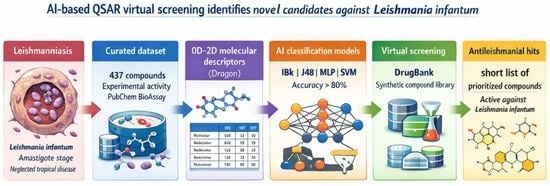
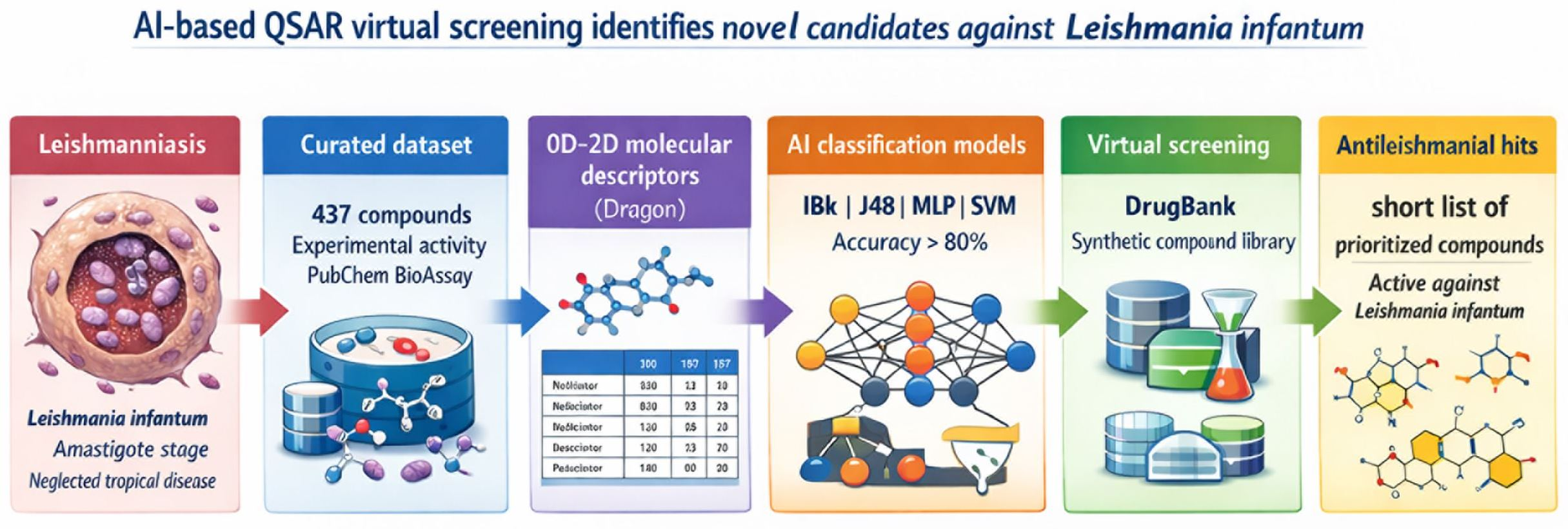
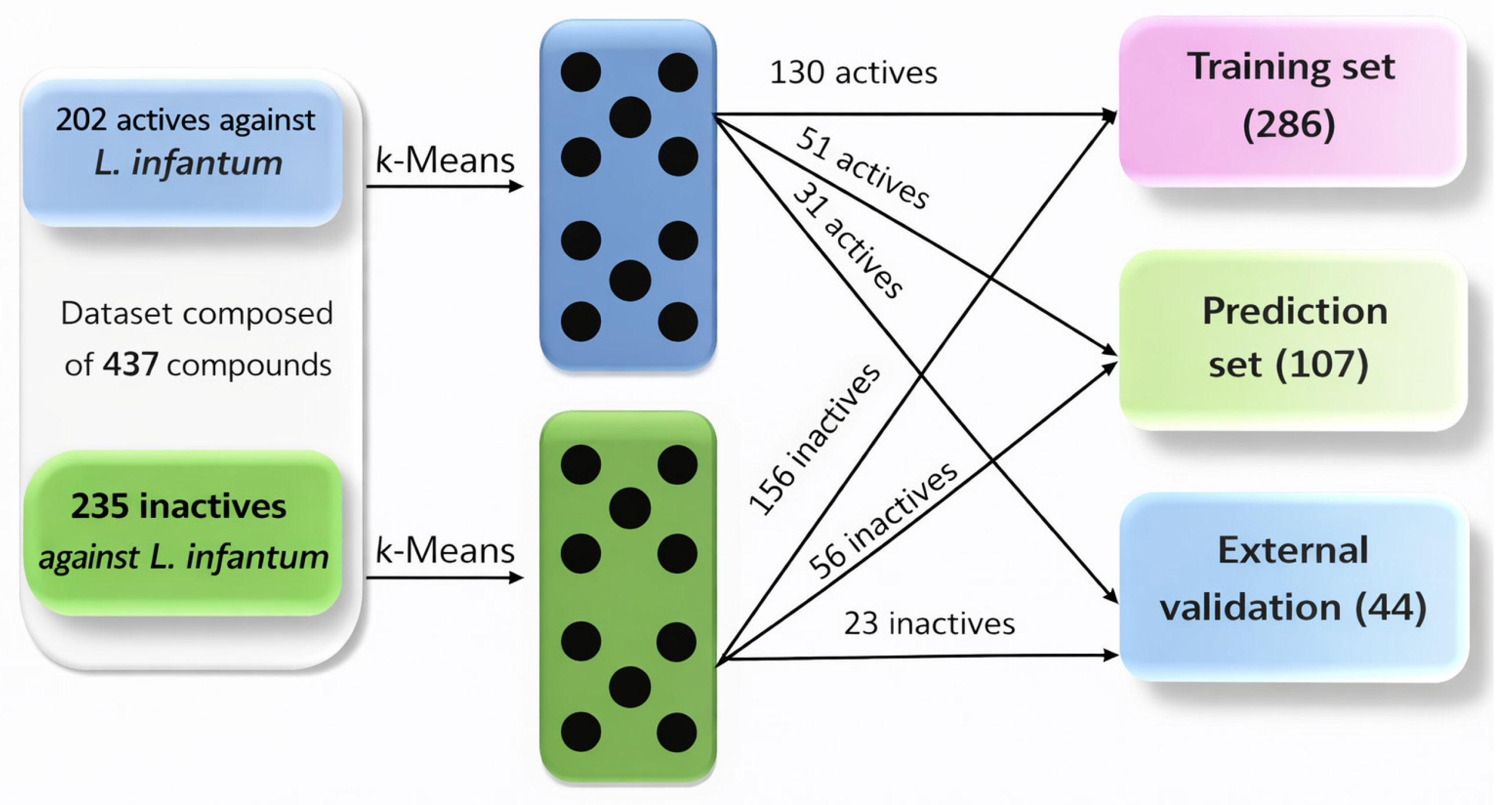
The construction of a robust and predictive QSAR model critically depends on the quality, consistency, and representativeness of the underlying dataset. In this study, an initial collection of 934 compounds was retrieved from PubChem bioassays reporting activity against Leishmania species. Following a rigorous curation process aimed at minimizing experimental noise and annotation inconsistencies, a final dataset of 437 compounds active against Leishmania infantum amastigotes was obtained, comprising 202 active and 235 inactive molecules. Activity classification was primarily based on IC50 values while also considering reported mechanisms of action and structural patterns, thereby reducing the risk of mislabeling compounds tested under heterogeneous experimental conditions.
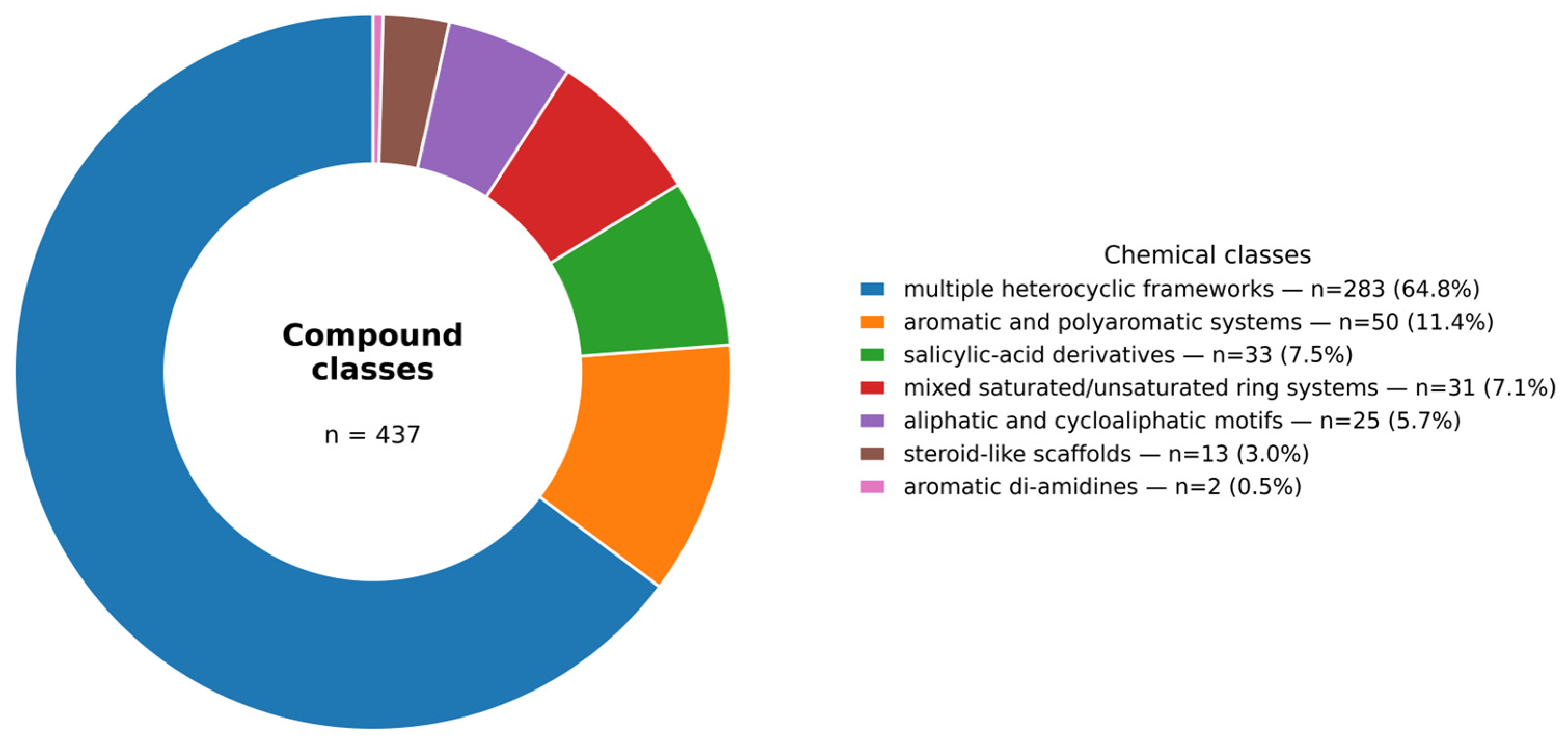
The curated dataset exhibits a high degree of chemical and structural diversity, including multiple heterocyclic frameworks, aromatic and polyaromatic systems, aliphatic and cycloaliphatic motifs, steroid-like scaffolds, salicylic-acid derivatives, aromatic diamidines, substituted pyrimidines, and mixed saturated/unsaturated ring systems. The distribution of compounds in these major chemical classes is illustrated in
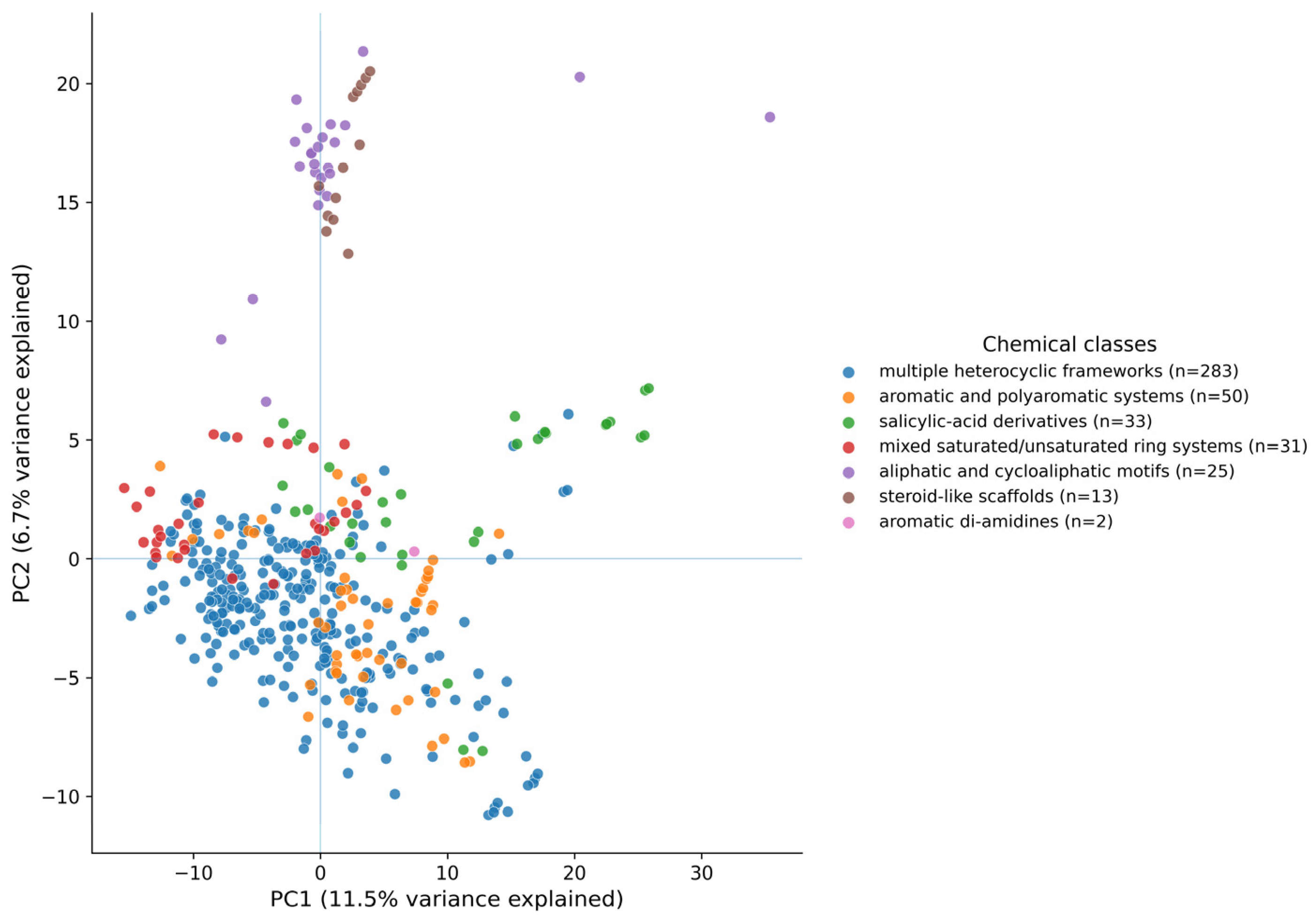
Figure 1. As shown in the figure, the dataset is not dominated by a single type of scaffold but instead includes multiple structural classes, which supports the chemical heterogeneity of the compound collection. Such diversity is essential for developing QSAR models with broad applicability domains, particularly in neglected disease research, where chemical space exploration remains limited. The structural heterogeneity observed here provides a solid foundation for machine learning-based classification and reduces the likelihood of model bias toward narrow scaffold families. This structural diversity is further supported by the PCA-based chemical space analysis (
Figure 2), which shows that the compounds occupy a large region of the descriptor space used for the development of the model.
Molecular representation was achieved through the calculation of 2489 zero- to two-dimensional molecular descriptors using DRAGON software [
35]. These descriptors encompass constitutional properties, substructure fragment counts, functional group frequencies, topological indices, and connectivity-related parameters, collectively capturing both global and local molecular features. To mitigate multicollinearity and reduce the risk of overfitting, a correlation filter (|r| > 0.9) was applied, resulting in a reduced set of 1187 non-redundant descriptors. This dimensionality reduction step is particularly important for classification problems involving moderately sized datasets, as excessive descriptor redundancy can artificially inflate model performance while degrading generalizability.
2.3. Descriptor Selection and Algorithm-Specific Model Optimization
Given the heterogeneity of the descriptor space and the fundamentally different learning principles underlying each classification algorithm, descriptor selection was carried out independently for each model using the WEKA platform. Multiple evaluators, filters, and search strategies were applied to identify compact yet informative subsets of descriptors tailored to each algorithm.
Starting from the initial pool of 1187 filtered descriptors, preliminary reduced subsets were obtained for each classifier. These initial subsets consisted of 18 descriptors for IBk, 13 for J48, 20 for MLP, and 33 for SVM. These subsets were subsequently refined to obtain the final descriptor sets used for model construction. This algorithm-specific feature selection strategy is particularly important in comparative QSAR studies, as enforcing a single descriptor subset across heterogeneous machine learning algorithms often leads to suboptimal model performance and potentially misleading comparisons.
The novelty of the present modeling work is further emphasized by the limited availability of comparable classification studies based on artificial intelligence targeting
Leishmania species. In this context, the work of Flores-Balmaseda et al. (2015) [
39] represents the primary benchmark for comparison. The present study extends upon previous efforts by incorporating a carefully curated dataset, multiple layers of validation, and consensus modeling strategies.
After selecting the descriptors, the hyperparameters of each machine learning algorithm were optimized using the WEKA platform. For each classifier, a batch exploration of multiple combinations of parameters within predefined ranges was performed. The model optimization was performed using only the training set. The external test set was not used in the model optimization process and was reserved exclusively for the final evaluation of predictive performance. The use of an independent external validation set follows the best practices recommended for the development of QSAR models and provides a robust assessment of the predictive performance of the models, in accordance with the validation principles proposed by the Organization for Economic Co-operation and Development (OECD) [
40].
The final models were built using optimized hyperparameters specific to each algorithm. The IBk classifier was configured with k = 3 nearest neighbors using the Manhattan distance. The J48 decision tree was generated using a pruning confidence factor of 0.09 and a minimum of five instances per leaf. The MLP model consisted of a single hidden layer containing 13 neurons and was trained for 500 epochs with a learning rate of 1.0 and momentum of 0.8. The SVM model was implemented using the SMO (sequential minimal optimization) algorithm with a radial basis function (RBF) kernel, with cost (C) and gamma parameters optimized during model development. The structural characteristics and hyperparameters of the developed models are summarized in
Table S2 (Supporting Information), while the complete WEKA command-line configurations used for model training and testing are detailed in
Table S1.
2.5. External and Internal Validation of Model Robustness
The primary criterion for the acceptance or rejection of a classification model relies on its performance on the external prediction set, which reflects the model’s predictive performance on unseen compounds. As previously described, the performance of each developed machine learning (ML) model was systematically evaluated using both validation and external datasets. The comparative results obtained for all models are summarized in
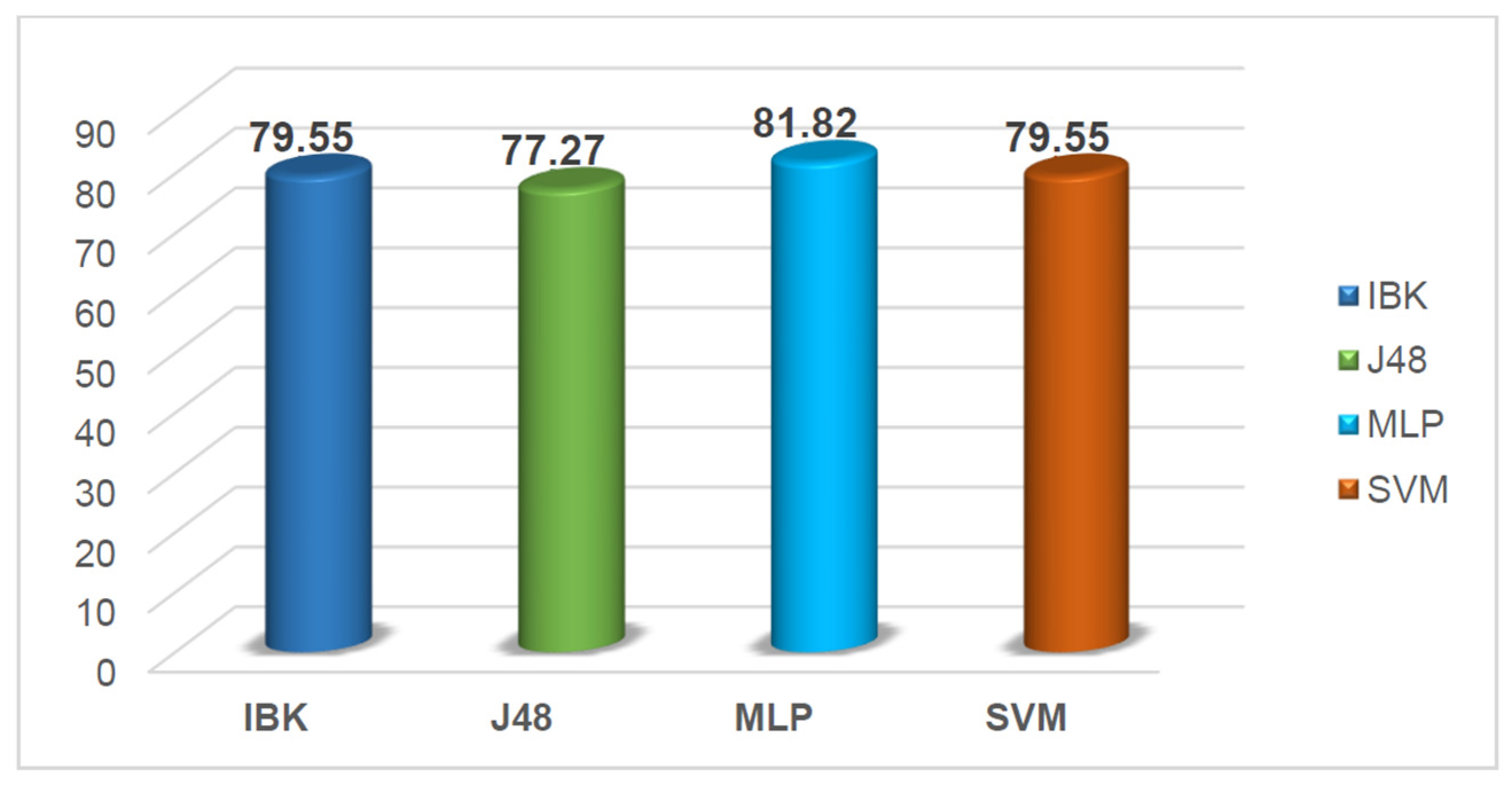
Table 5. External validation using an independent set of 44 compounds provided an additional assessment of the predictive behavior of the developed models. As reported in
Table 5 and
Figure 5, the MLP model achieved the highest external accuracy (81.82%), indicating a relatively balanced classification performance. In contrast, the SVM model achieved 100% specificity, correctly classifying all inactive compounds in the external set. However, this result should be interpreted with caution due to the relatively small size of the external dataset. Moreover, the high specificity was accompanied by a lower sensitivity (57.14%) and a moderate MCC (0.64), indicating that the model tends to favor inactive predictions and may generate a higher number of false negatives. Therefore, rather than indicating apparent high predictive performance, the observed performance suggests that the SVM model prioritizes minimizing false positives. This behavior may be advantageous in screening scenarios where avoiding false positives is critical, but it also highlights the importance of considering complementary models with more balanced sensitivity–specificity profiles. According to the OECD principles for the validation of QSAR models, model performance should be interpreted by considering multiple statistical metrics rather than a single indicator [
40].
Internal validation was conducted using
10-fold cross-validation on the training set, following established best practices [
41,
42]. The results summarized in
Table 6 and
Table 7 demonstrate that all models maintain stable performance across folds, with no evidence of severe overfitting. Notably, the SVM model exhibits the smallest discrepancies between training and cross-validation metrics, leading the authors to identify it as the most robust and reproducible model overall, despite its lower raw accuracy.
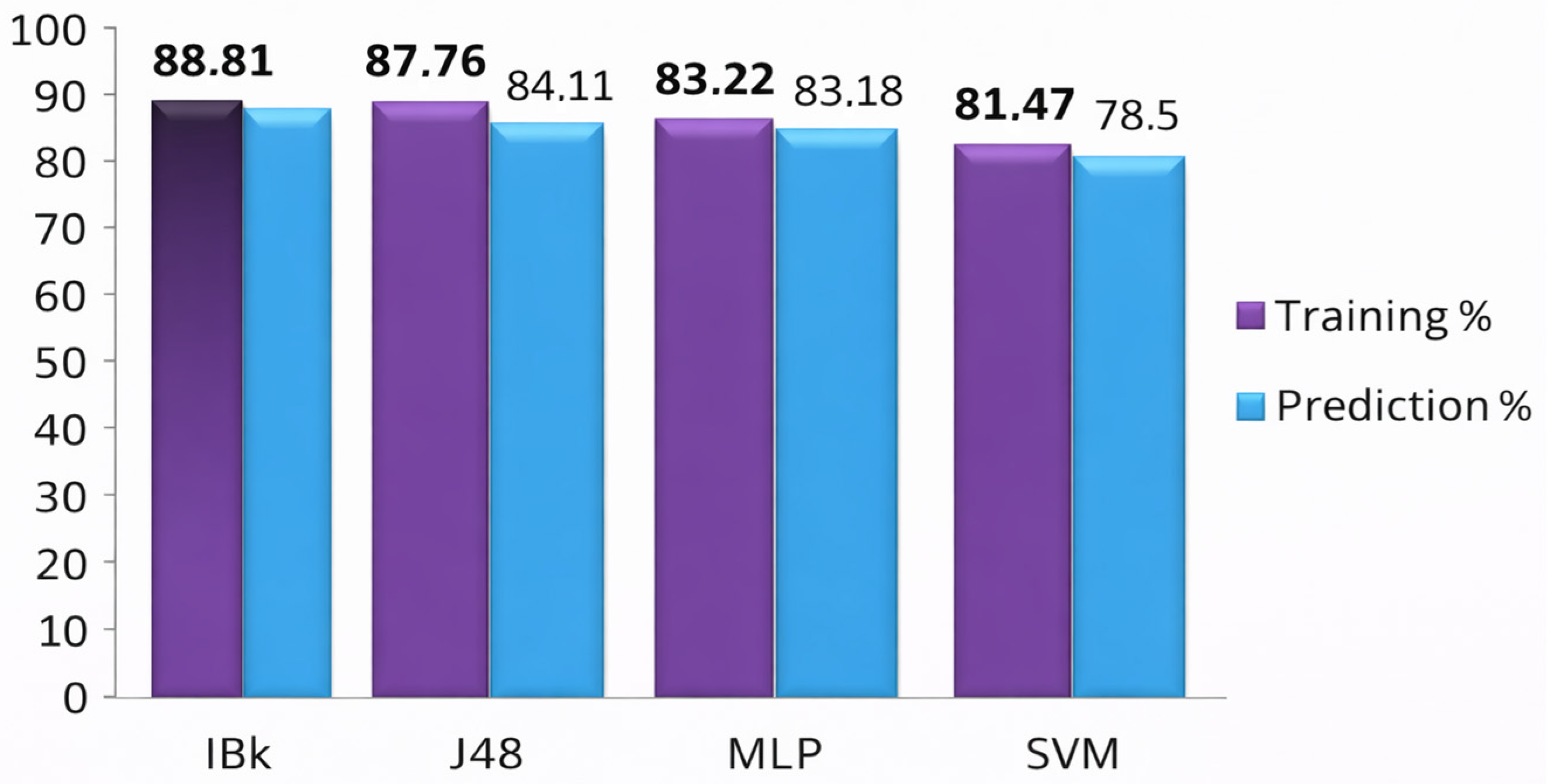
The comparative performance of the four machine learning classifiers highlights distinct trade-offs between predictive accuracy, sensitivity, and specificity (
Table 7). The IBk model exhibited the highest overall quality (Q) under cross-validation (88.81%), accompanied by a strong balance between sensitivity (86.92%) and specificity (88.28%), indicating a robust ability to correctly classify both active and inactive compounds. However, its external sensitivity decreased notably (76.92%), together with an increased false-positive rate (FPR = 23.08%), suggesting a reduced generalization capability when applied to unseen data. In contrast, the J48 decision tree demonstrated a more conservative behavior, reflected in a lower cross-validation Q value (78.67%) but a markedly improved specificity in the external set (91.30%) and a reduced FPR (6.41%), which is advantageous for minimizing false-positive predictions. The MLP model showed moderate and more homogeneous performance across validation schemes, although it presented the highest FPR during cross-validation (23.08%), indicating a tendency to overpredict active compounds. Finally, the SVM classifier achieved a favorable compromise between specificity and error control, yielding the lowest FPR in both cross-validation (7.05%) and external validation (3.85%), albeit at the expense of lower sensitivity, particularly in the external set (63.85%). Overall, these results emphasize that while IBk achieves the highest classification performance, SVM and J48 provide more stringent classification with reduced false positives, which may be preferable in virtual screening campaigns where reliability and experimental cost reduction are critical.
2.6. Virtual Screening and Consensus-Based Hit Prioritization
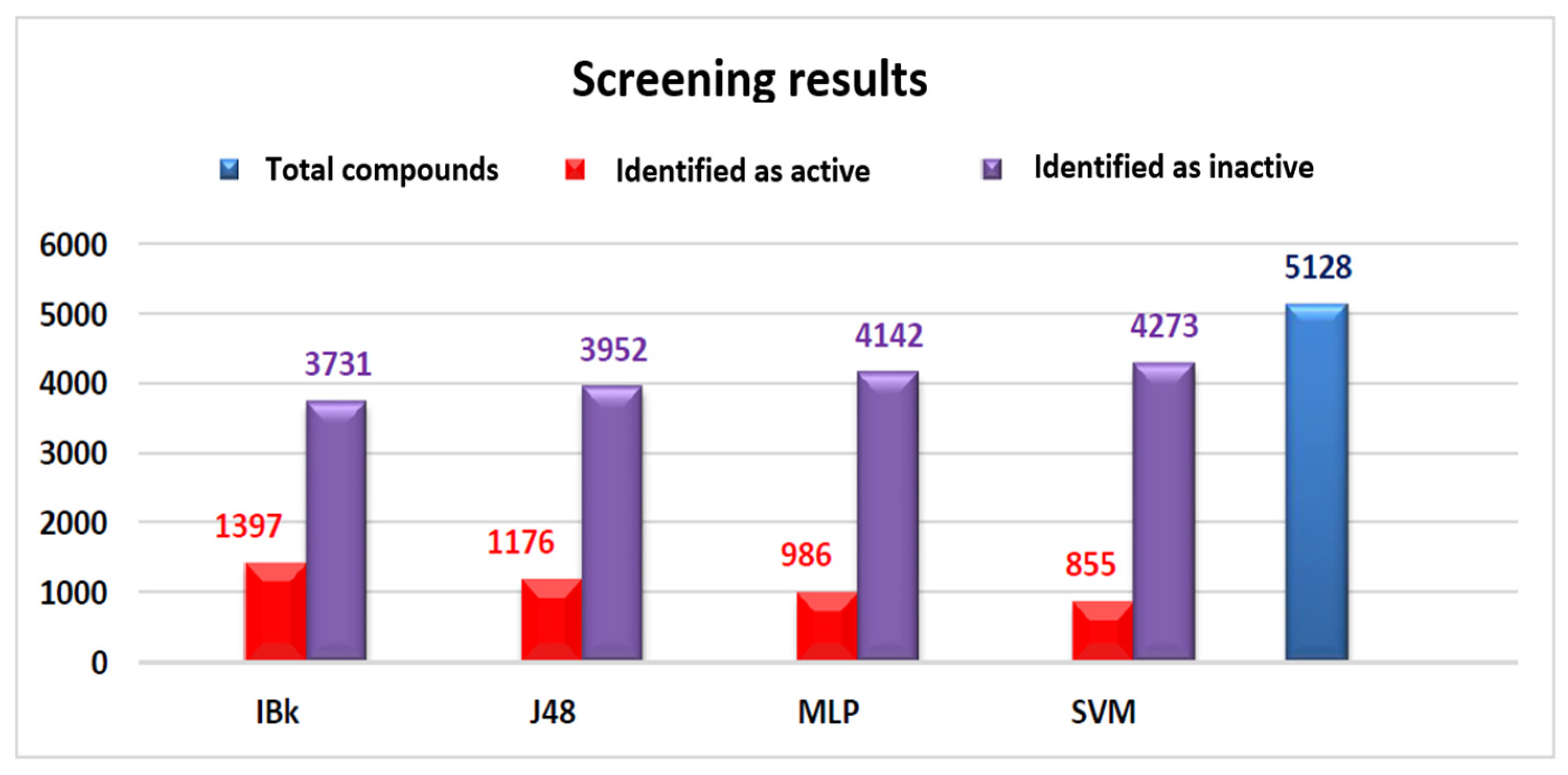
The validated models were subsequently applied to a virtual screening campaign involving 5128 compounds, including 4660 DrugBank molecules [
43,
44,
45] and 468 synthetic compounds from collaborating laboratories. Individual model predictions varied substantially, as shown in
Figure 6, reflecting the distinct decision strategies of each classifier.
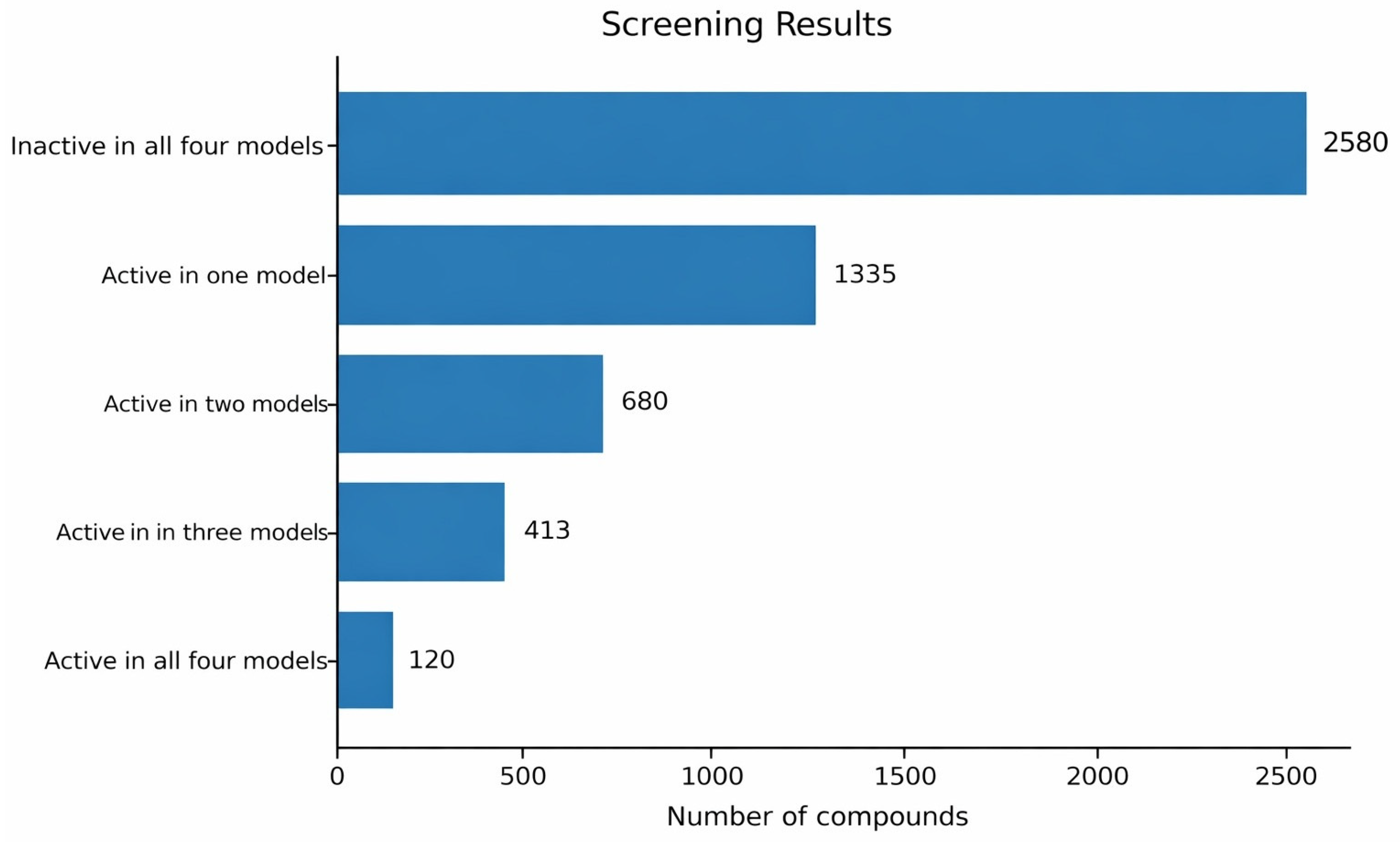
To increase confidence in the predicted hits, a consensus modeling approach was adopted. As summarized in
Figure 7, 1335 compounds were predicted active by at least one model, while 120 compounds were predicted active by all four models, including 115 DrugBank compounds and five synthetic candidates. This progressive reduction highlights the effectiveness of consensus modeling in prioritizing a manageable and high-confidence subset of candidates for experimental validation, substantially reducing the number of compounds that would otherwise require experimental screening.
From a translational standpoint, the identification of DrugBank compounds within the four-model consensus is particularly significant, as these molecules may benefit from existing pharmacokinetic and safety data, thereby accelerating downstream experimental and clinical evaluation.
An examination of the descriptors selected across the different machine learning models provides insight into the structural features associated with antileishmanial activity. Several models include Kier–Hall valence connectivity indices (e.g., X0Av, X1Av, X2v, and X3Av), which describe molecular size, branching patterns, and overall topological complexity. These descriptors are usually related to physicochemical properties that influence membrane permeability and the ability of compounds to interact with biological targets in protozoan parasites.
Information theory-based descriptors, such as SIC5 and CIC5, capture aspects of molecular symmetry and structural diversity, suggesting that the spatial distribution of atoms and substituents may influence biological activity. In addition, Burden matrix eigenvalues (e.g., SpMin4_Bh(m), SpMax1_Bh(m), SpMin1_Bh(v), and SpMin4_Bh(e)) encode electronic and steric properties derived from atomic masses, electronegativity, polarizability, and van der Waals volumes, which are often associated with electronic distribution and intermolecular interactions involved in ligand–target binding.
Fragment-based descriptors and functional group counts further highlight chemically meaningful features within the dataset. In particular, descriptors associated with tertiary amines, amidine-type functionalities, and halogenated fragments indicate that specific chemical groups may contribute to activity by modulating lipophilicity, polarity, hydrogen-bonding capacity, and electrostatic interactions with biological targets.
Interestingly, several of the functional groups captured by the selected descriptors are also present in compounds identified among the predicted hits during the virtual screening, including molecules containing amine-based functionalities, heteroaromatic systems, and highly polar phosphate-containing groups such as those present in bisphosphonates.
It is important to note that the predicted hits include compounds belonging to several pharmacologically relevant categories, such as approved drugs, bioactive molecules in the investigational phase, synthetic compounds, and endogenous metabolites. The presence of approved drugs among the predicted compounds highlights the pharmacological diversity of the screened dataset and supports the biological plausibility of the computational predictions.
Among the approved drugs identified within the consensus set are disulfiram (DB00822), an aldehyde dehydrogenase inhibitor used for the treatment of alcohol use disorder, and several nitrogen-containing bisphosphonates such as alendronate (DB00630) and pamidronic acid (DB00282), which are widely used in the treatment of osteoporosis and disorders associated with increased bone resorption. The identification of bisphosphonate derivatives is particularly noteworthy because this class of compounds has previously demonstrated antiparasitic activity. In particular, aromatic bisphosphonate derivatives have been reported to inhibit parasite replication in
Trypanosoma,
Leishmania,
Toxoplasma, and
Plasmodium, in some cases exhibiting IC
50 values in the nanomolar to low micromolar range [
46].
Among the predicted compounds, other approved or clinically used drugs have been identified, such as the antiviral agent foscarnet (DB00529), the antineoplastic drugs pipobroman (DB00236) and busulfan (DB01008), the farnesyltransferase inhibitor lonafarnib (DB06448), and the marine-derived anticancer compound trabectedin (DB05109). The presence of multiple drugs with well-characterized pharmacological profiles highlights the potential opportunities for drug repurposing in the discovery of antileishmanial drugs.
The dataset also includes several bioactive molecules in the research or experimental phase that are currently under clinical or preclinical evaluation. Examples include 1-oleoyl-2-palmitoylphosphatidylcholine (DB05456), which has been investigated as a therapeutic candidate for acute coronary syndromes, QS-21 (DB05400), an immunological adjuvant evaluated in several clinical trials, and bevirimat (DB06581), which has been explored as a maturation inhibitor for HIV treatment. The presence of these molecules further illustrates the chemical and pharmacological diversity detected through computational screening.
In addition to the DrugBank-derived molecules, five synthetic compounds from collaborating laboratories were also predicted as active by all four models. One of these molecules contains a halogenated heteroaromatic core bearing two tert-butyl-substituted phenyl groups, a scaffold that combines high lipophilicity with electron-withdrawing substituents that may improve membrane permeability and protein binding. The remaining compounds share a triarylmethane-based scaffold functionalized with dimethylamino-substituted aromatic rings and a glycosyl moiety.
Triarylmethane derivatives are well known for their antimicrobial and antiparasitic properties, while the presence of dimethylamino aromatic groups may facilitate interactions with biological targets [
47,
48]. In addition, glycosylation and acetylation patterns may modulate physicochemical properties such as solubility, lipophilicity, and cellular uptake [
49]. The identification of these compounds by all four models highlights their potential as promising candidates for further experimental evaluation.
Furthermore, the set of predicted hits contains small molecules with diverse structures and heterocyclic scaffolds commonly found in antimicrobial and antiparasitic drug discovery libraries. This structural diversity suggests that the models can identify compounds spanning multiple regions of biologically relevant chemical space, an important requirement for the discovery of structurally diverse antileishmanial candidates. Taken together, these descriptors suggest that antileishmanial activity in the analyzed dataset is influenced by a combination of molecular topology, electronic properties, and pharmacologically relevant functional groups.
From a translational perspective, it is important to recognize that drug discovery is inherently a multi-stage process in which computational predictions, in vitro assays, and in vivo studies provide complementary information. While experimental validation is essential, early-stage computational prioritization plays a critical role in reducing the number of candidate compounds and guiding subsequent biological evaluation. In this context, the present framework enables the identification of a reduced set of high-confidence candidates from large chemical libraries, thereby supporting more efficient downstream experimental efforts.
Therefore, the compounds prioritized in this study represent testable hypotheses that can guide future experimental validation efforts aimed at identifying novel antileishmanial agents.
Taken together, these results demonstrate that the integration of diversity-aware data splitting, algorithm-specific descriptor selection, multi-level validation, and consensus modeling yields a consistent and scientifically sound QSAR framework capable of supporting the identification and prioritization of novel antileishmanial candidates. The complementary strengths of the evaluated classifiers—accuracy-driven methods (IBk and J48), a balanced neural network model (MLP), and a margin-based support vector machine (SMO)—justify their combined use in virtual screening pipelines and provide a rational basis for prioritizing compounds for experimental testing.





 ,
,