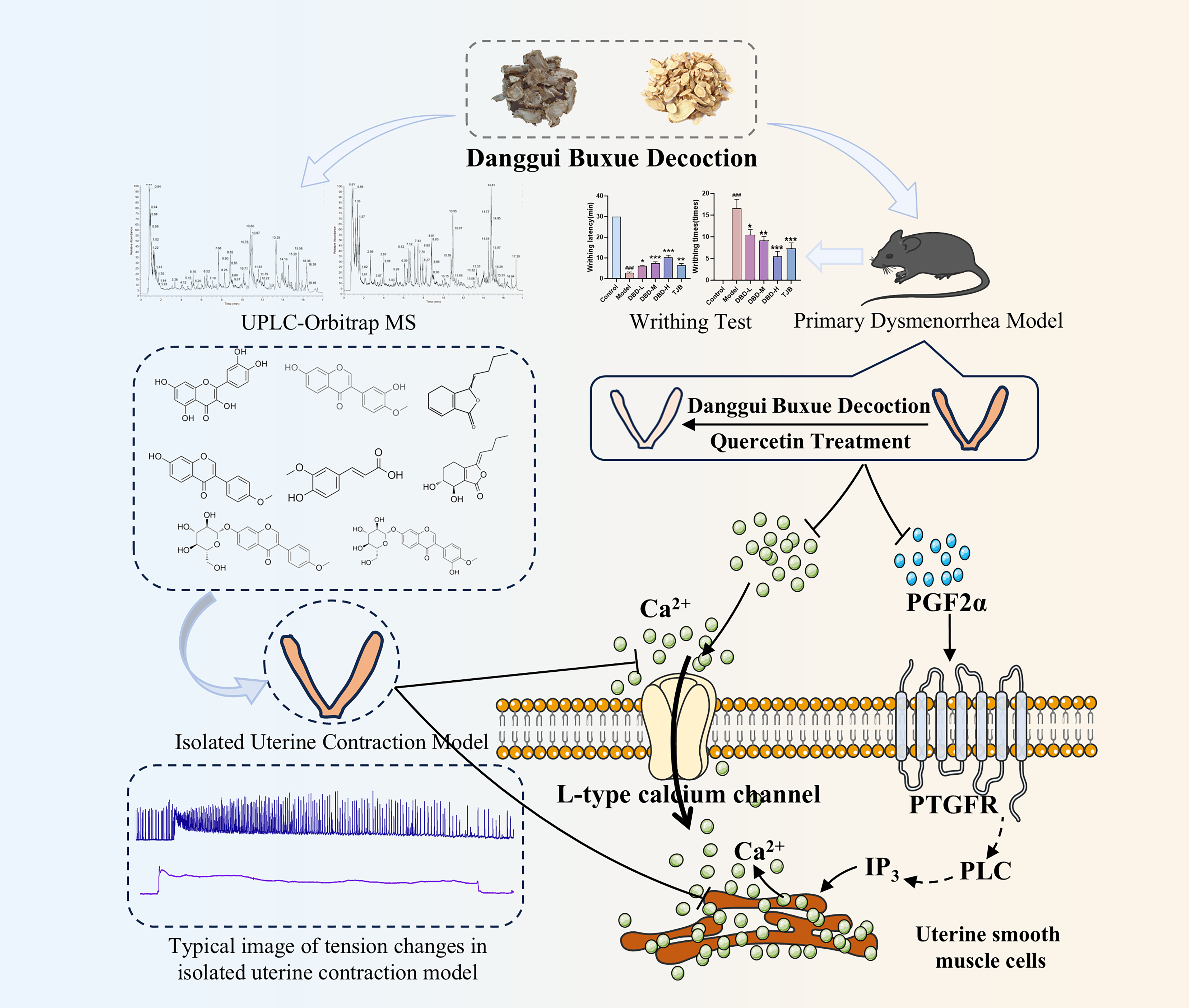
Danggui Buxue Decoction and Its Active Constituents Inhibit Drug-Induced Uterine Contractions via L-Type Calcium Channels and the IP3/Ca2+ Pathway
Abstract
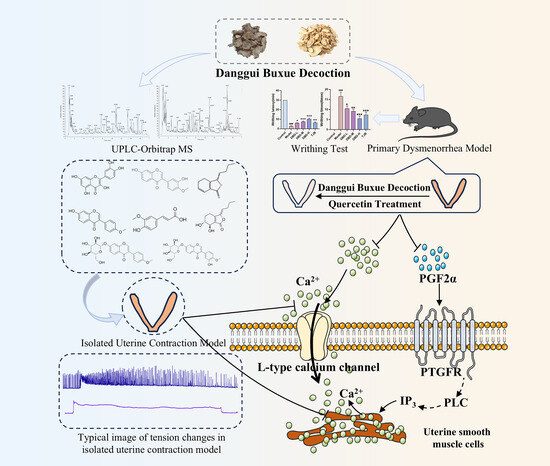
1. Introduction
2. Results
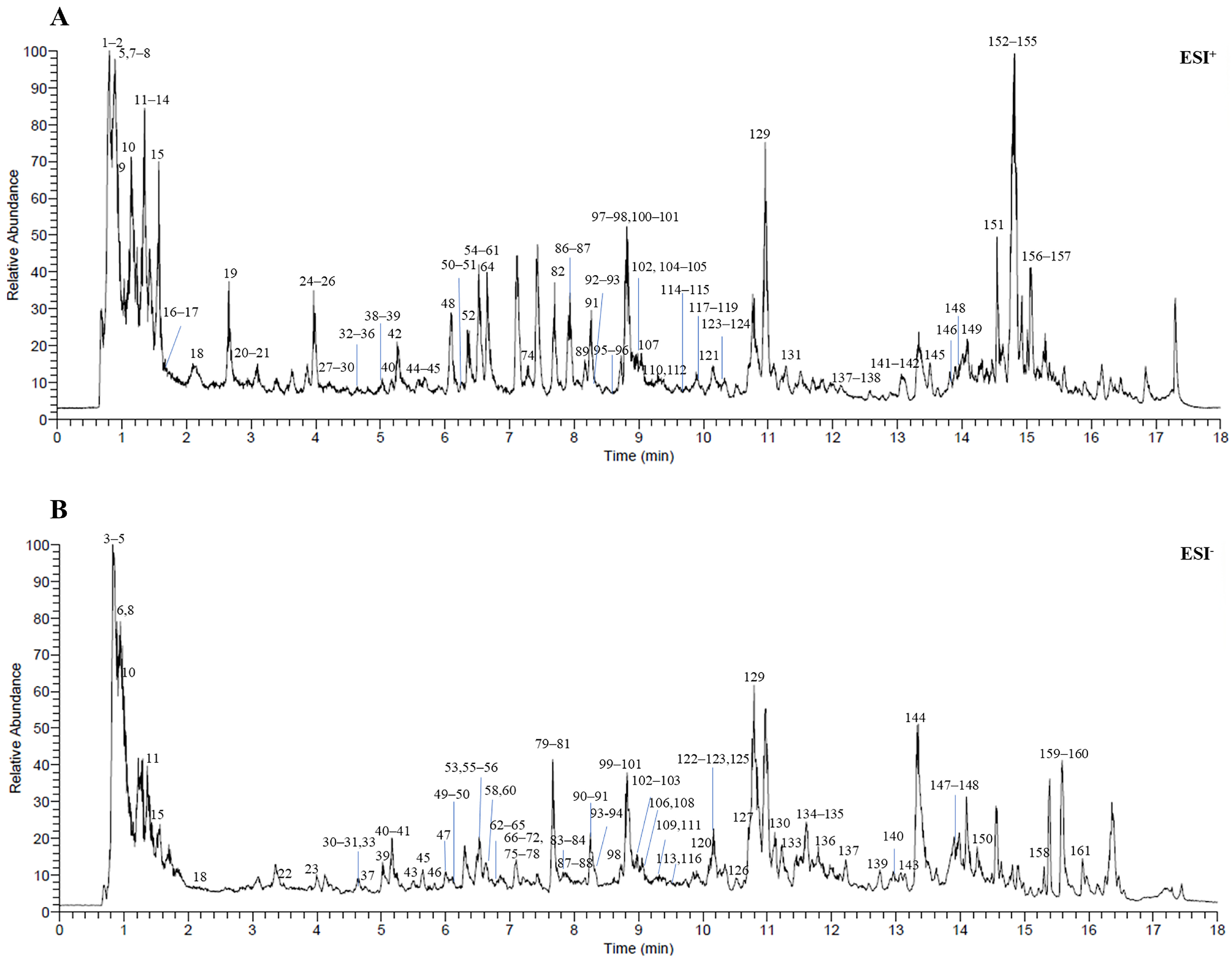
2.1. UPLC–Orbitrap MS Analysis of DBD and Identification of the Main Components
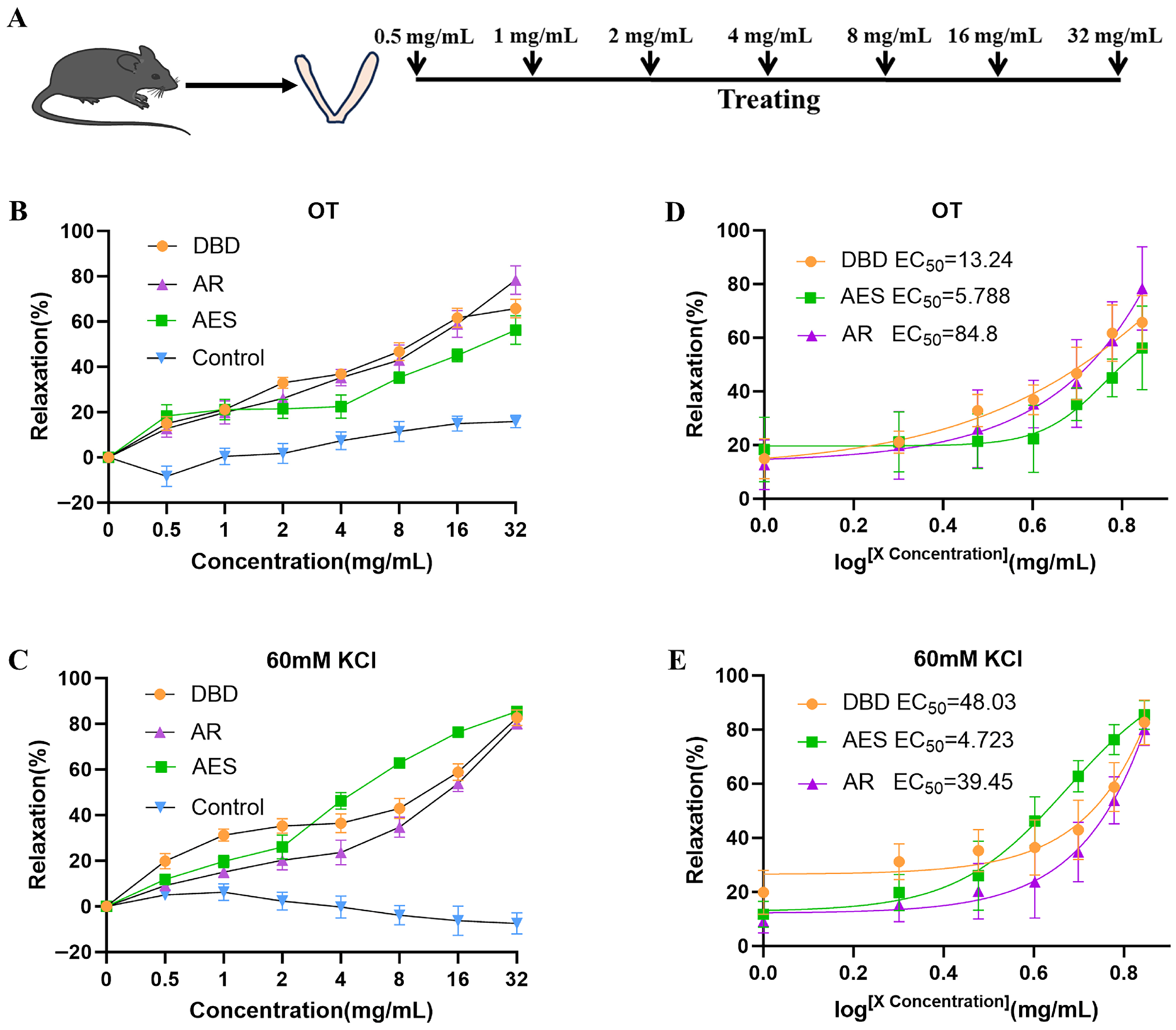
2.2. DBD, AR and AES Effectively Relaxed OT (50 ng/mL) or KCl (60 mM)-Induced Uterine Contractions
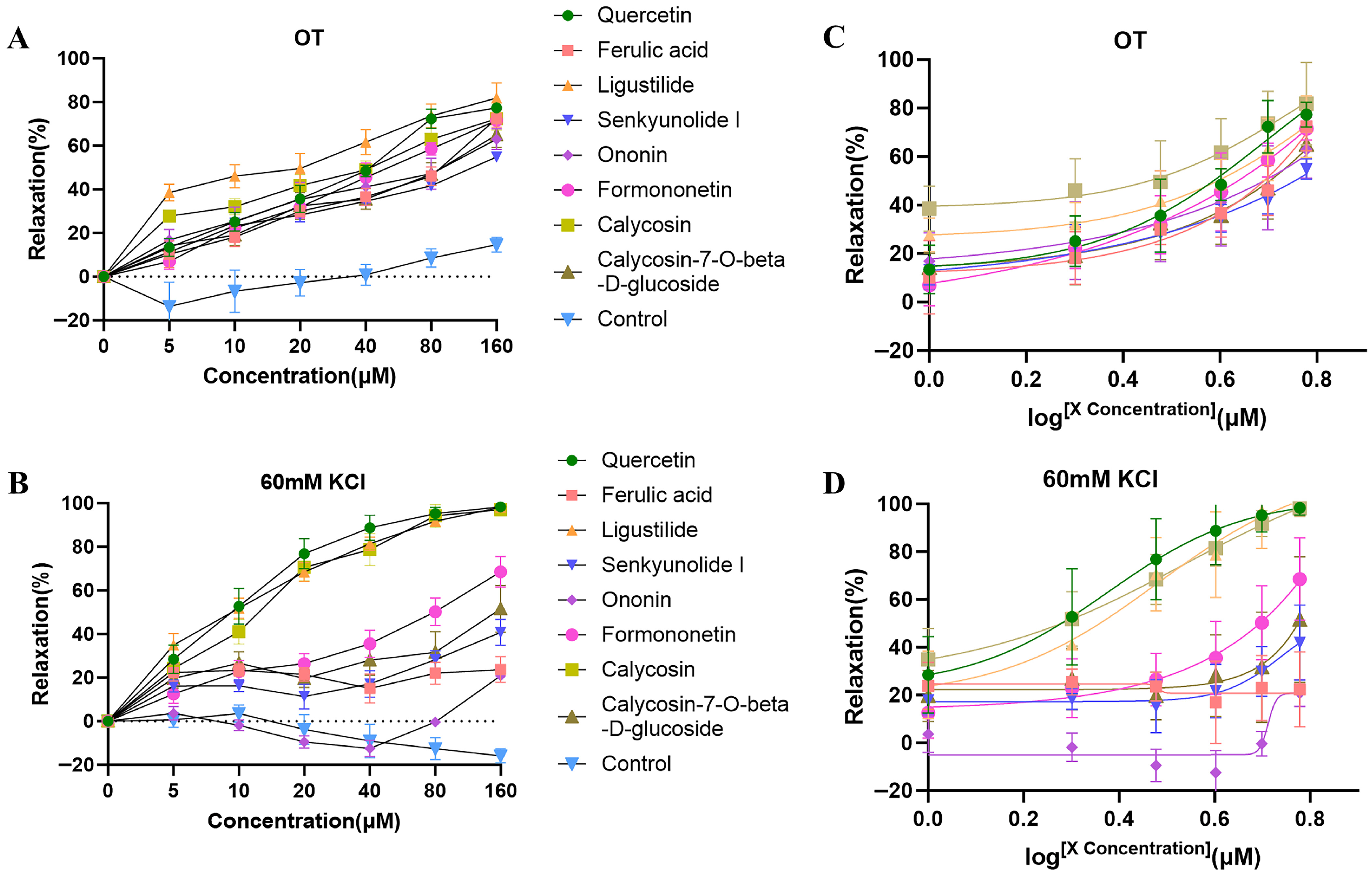
2.3. The Eight Active Constituents of DBD-Relaxed OT (50 ng/mL) or KCl (60 mM)-Induced Uterine Contraction
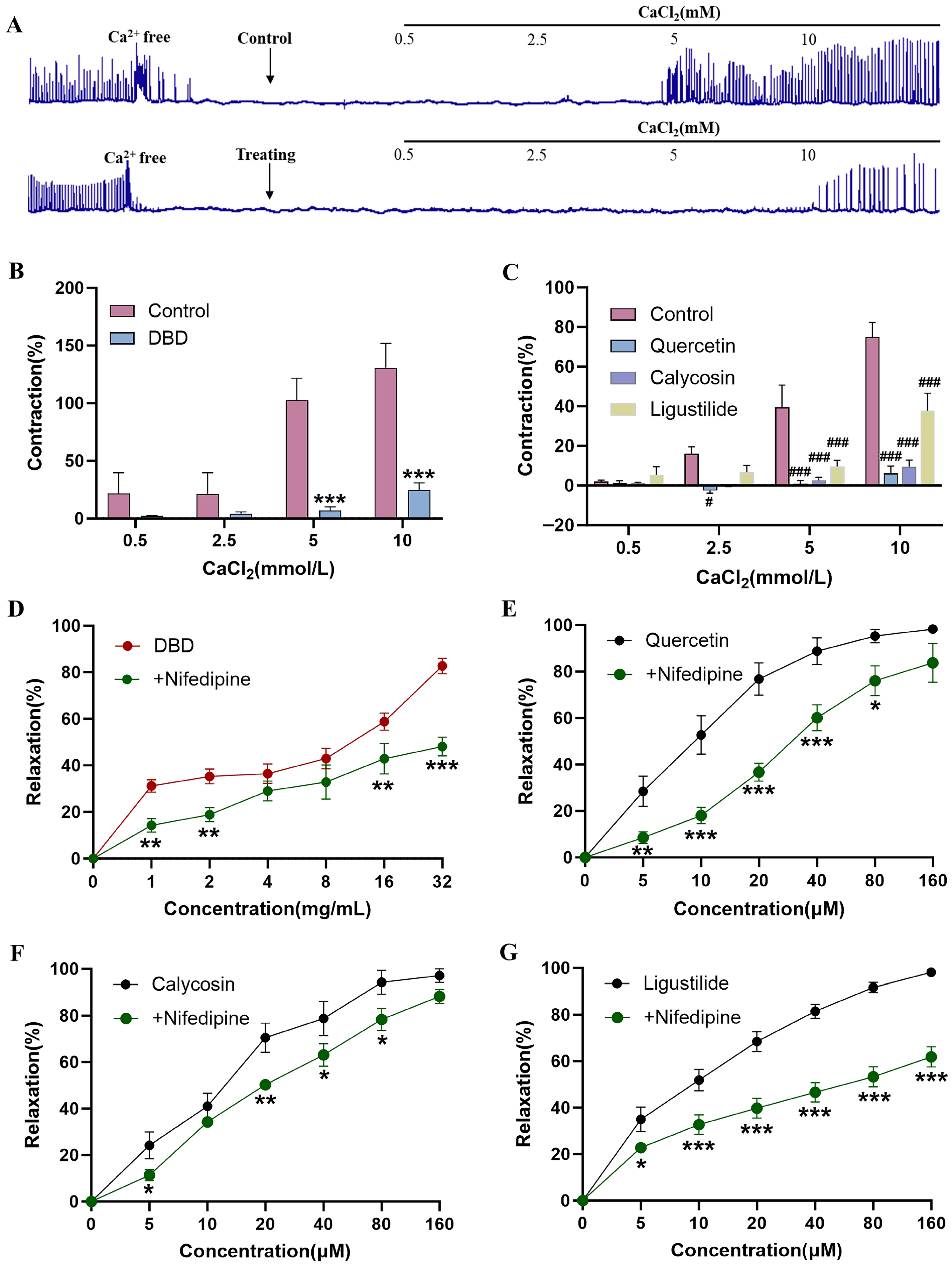
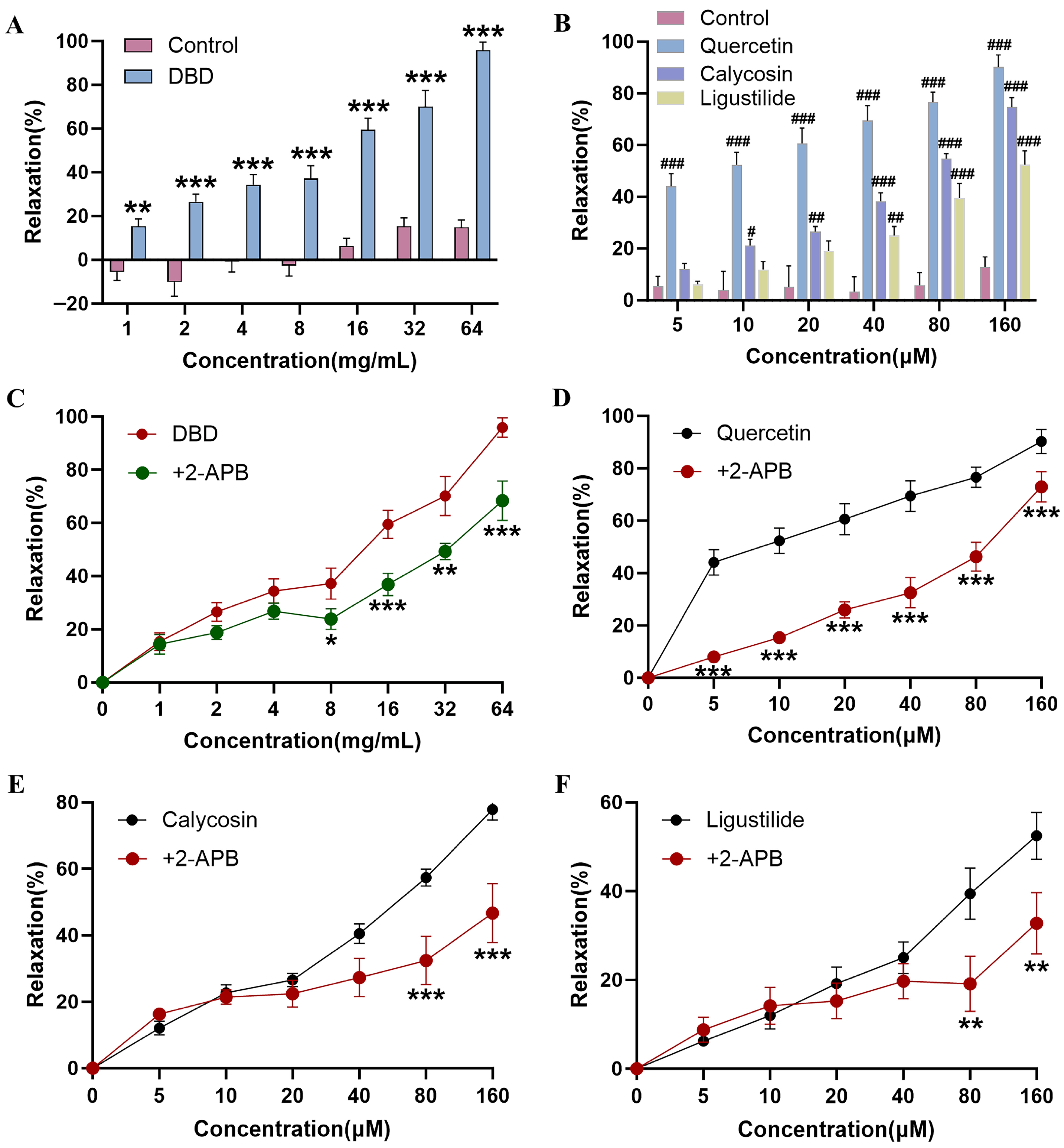
2.4. DBD, Quercetin, Calycosin and Ligustilide Reduce Ca2+ Levels
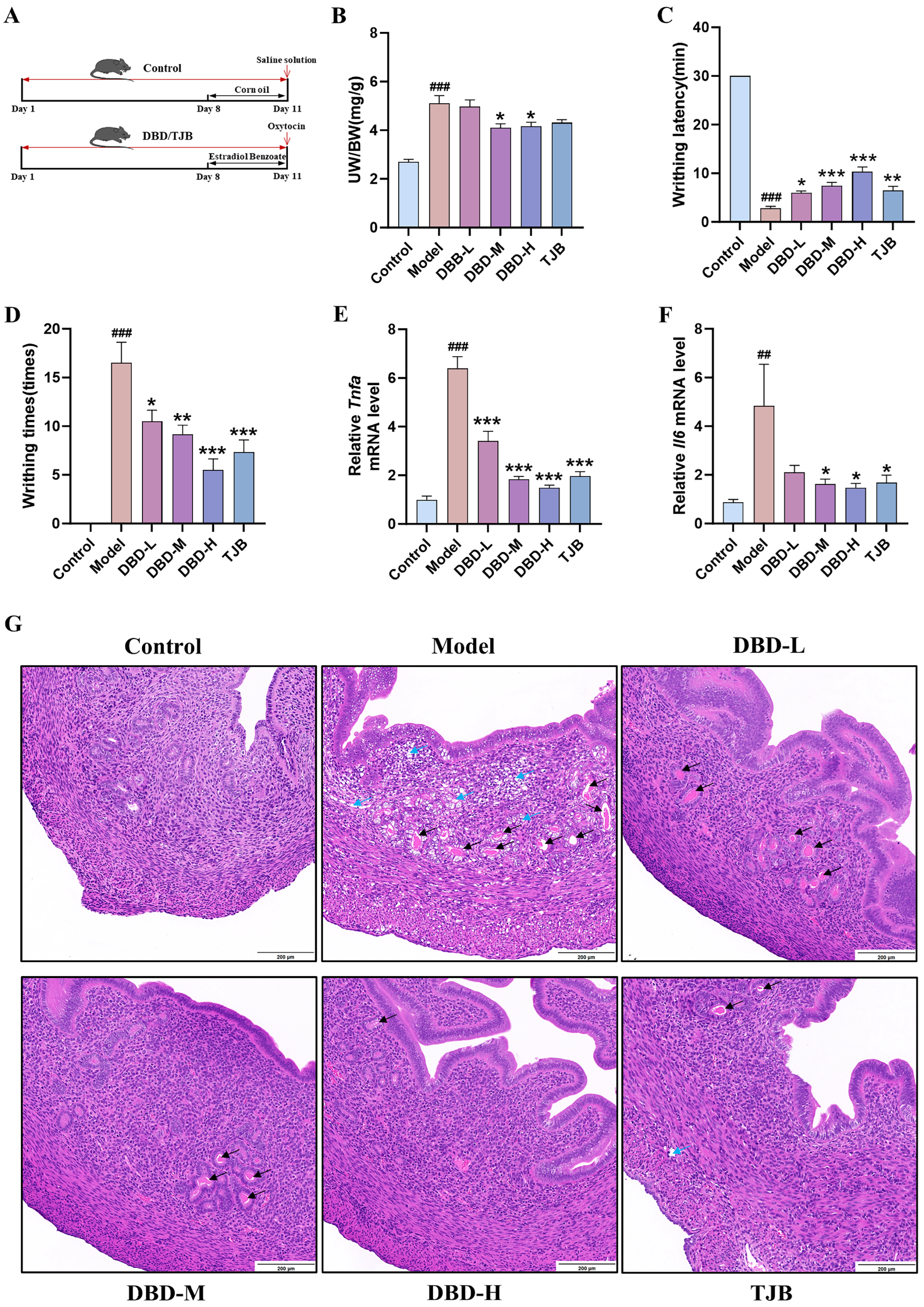
2.5. DBD Alleviates Pain and Uterine Inflammation in Dysmenorrhea Mice
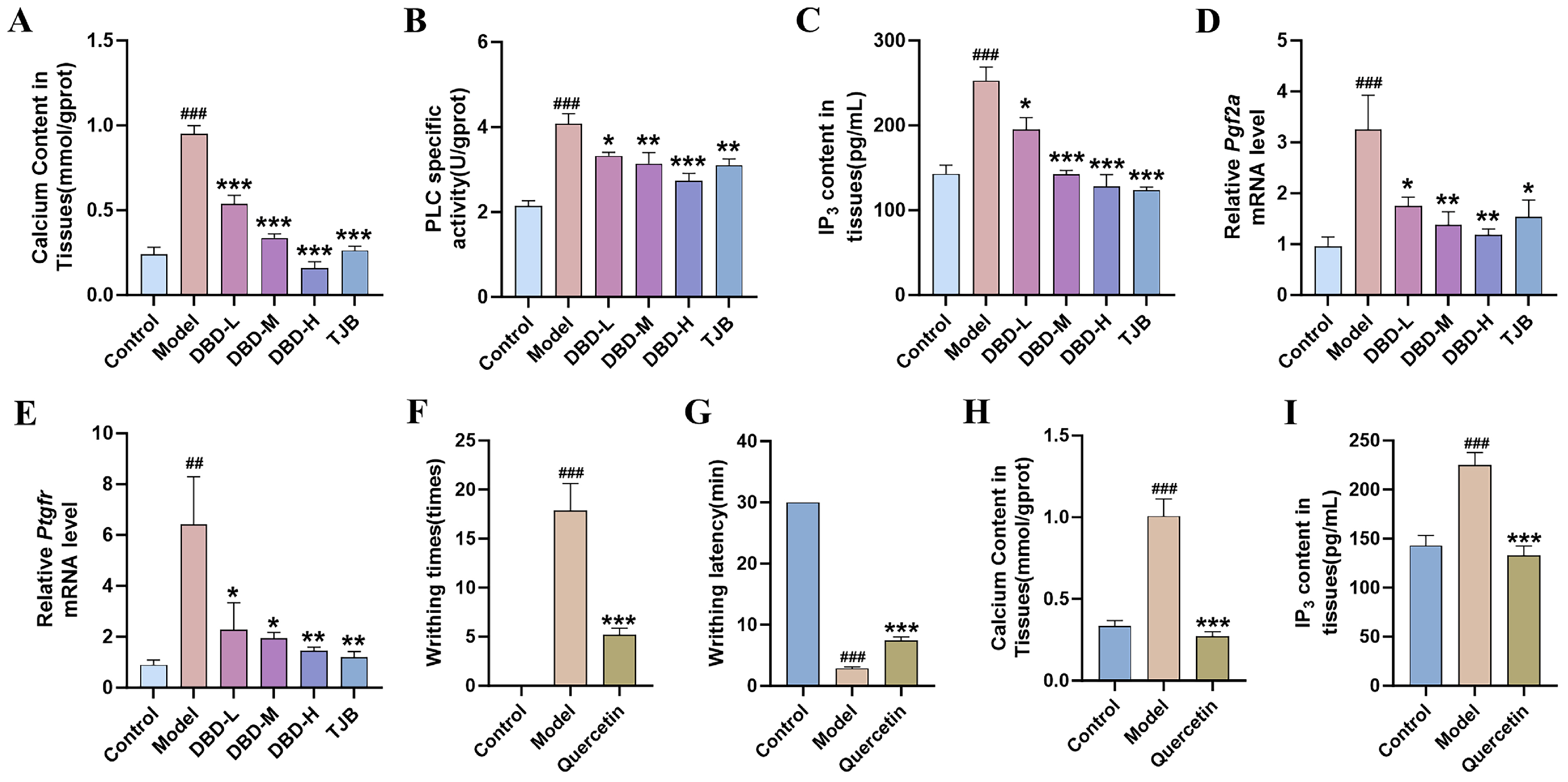
2.6. DBD and Quercetin Alleviate Dysmenorrhea by Reducing Ca2+ Levels
3. Discussion
4. Materials and Methods
4.1. Chemicals and Reagents
4.2. Preparation of DBD
4.3. Animals
4.4. Qualitive Analysis of Constituents in DBD Extract by UPLC–Orbitrap MS Technology
4.5. Preparation of Uterine Muscle Strips
4.6. Assessment of Drug-Induced Uterine Contractions
4.7. Effect of DBD and Its Active Constituents on Ca2+-Dependent Contractions
4.8. The Effect of DBD and Its Active Constituents on Extracellular Calcium Influx
4.9. The Effect of DBD and Its Active Constituents on Intracellular Calcium Release
4.10. Oxytocin-Induced Writhing Test
4.11. Biochemical Analysis
4.12. Histological Analysis
4.13. Real-Time qPCR
4.14. Statistical Data
5. Conclusions
Supplementary Materials
Author Contributions
Funding
Institutional Review Board Statement
Informed Consent Statement
Data Availability Statement
Conflicts of Interest
Abbreviations
| DBD | Danggui Buxue Decoction |
| OT | Oxytocin |
| NSAIDs | Non-steroidal anti-inflammatory drugs |
| AES | Angelica sinensis |
| AR | Astragalus membranaceus |
| K-H | Krebs–Henseleit |
| IP3R | Inositol trisphosphate receptor |
| HE | Haematoxylin and eosin |
| PTGFR | Prostaglandin F receptor |
| IP3 | Inositol 1,4,5-trisphosphate |
| PLC | Phospholipase C |
References
- Dawood, M.Y. Primary dysmenorrhea: Advances in pathogenesis and management. Obstet. Gynecol. 2006, 108, 428–441. [Google Scholar] [CrossRef]
- Guimarães, I.; Póvoa, A.M. Primary dysmenorrhea: Assessment and treatment. Rev. Bras. Ginecol. Obs. 2020, 42, 501–507. [Google Scholar] [CrossRef] [PubMed]
- Kho, K.A.; Shields, J.K. Diagnosis and management of primary dysmenorrhea. JAMA 2020, 323, 268–269. [Google Scholar] [CrossRef]
- Amin, S.M.; El-Sayed, M.M.; El-Monshed, A.H.; Khedr, M.A.; Atta, M.H.R. The hidden link: Dysmenorrhea, emotion regulation, and attitudes toward marriage in female nursing students. BMC Nurs. 2024, 23, 721. [Google Scholar] [CrossRef]
- Ferries-Rowe, E.; Corey, E.; Archer, J.S. Primary dysmenorrhea: Diagnosis and therapy. Obstet. Gynecol. 2020, 136, 1047–1058. [Google Scholar] [CrossRef]
- de Arruda, G.T.; Barbosa-Silva, J.; Driusso, P.; Pathmanathan, C.; Armijo-Olivo, S.; Avila, M.A. Worldwide prevalence of dysmenorrhea: A systematic review and meta-analysis across 70 countries. Pain 2026, 167, 41–55. [Google Scholar] [CrossRef]
- Gutman, G.; Nunez, A.T.; Fisher, M. Dysmenorrhea in adolescents. Curr. Probl. Pediatr. Adolesc. Health Care 2022, 52, 101186. [Google Scholar] [CrossRef]
- Schoep, M.E.; Nieboer, T.E.; van der Zanden, M.; Braat, D.D.M.; Nap, A.W. The impact of menstrual symptoms on everyday life: A survey among 42,879 women. Am. J. Obstet. Gynecol. 2019, 220, e561–e569-569.e567. [Google Scholar] [CrossRef]
- Wong, C.L. Health-related quality of life among chinese adolescent girls with dysmenorrhoea. Reprod. Health 2018, 15, 80. [Google Scholar] [CrossRef] [PubMed]
- Zarei, S.; Mohammad-Alizadeh-Charandabi, S.; Mirghafourvand, M.; Javadzadeh, Y.; Effati-Daryani, F. Effects of calcium-vitamin d and calcium-alone on pain intensity and menstrual blood loss in women with primary dysmenorrhea: A randomized controlled trial. Pain Med. 2017, 18, 3–13. [Google Scholar] [CrossRef] [PubMed]
- Hill-Eubanks, D.C.; Werner, M.E.; Heppner, T.J.; Nelson, M.T. Calcium signaling in smooth muscle. Cold Spring Harb. Perspect. Biol. 2011, 3, a004549. [Google Scholar] [CrossRef]
- Burdyga, T.; Wray, S.; Noble, K. In situ calcium signaling: No calcium sparks detected in rat myometrium. Ann. N. Y. Acad. Sci. 2007, 1101, 85–96. [Google Scholar] [CrossRef]
- Sanborn, B.M. Hormonal signaling and signal pathway crosstalk in the control of myometrial calcium dynamics. Semin. Cell Dev. Biol. 2007, 18, 305–314. [Google Scholar] [CrossRef]
- Fang, X.; Bogdanov, V.; Davis, J.P.; Kekenes-Huskey, P.M. Molecular insights into the mlck activation by cam. J. Chem. Inf. Model. 2023, 63, 7487–7498. [Google Scholar] [CrossRef]
- Wray, S.; Arrowsmith, S. Uterine excitability and ion channels and their changes with gestation and hormonal environment. Annu. Rev. Physiol. 2021, 83, 331–357. [Google Scholar] [CrossRef]
- Wrobel, M.H.; Mlynarczuk, J. Chloroorganic (ddt) and organophosphate (malathion) insecticides impair the motor function of the bovine cervix. Toxicol. Appl. Pharmacol. 2021, 427, 115667. [Google Scholar] [CrossRef] [PubMed]
- Marjoribanks, J.; Ayeleke, R.O.; Farquhar, C.; Proctor, M. Nonsteroidal anti-inflammatory drugs for dysmenorrhoea. Cochrane Database Syst. Rev. 2015, 2015, Cd001751. [Google Scholar] [CrossRef]
- Oladosu, F.A.; Tu, F.F.; Hellman, K.M. Nonsteroidal antiinflammatory drug resistance in dysmenorrhea: Epidemiology, causes, and treatment. Am. J. Obstet. Gynecol. 2018, 218, 390–400. [Google Scholar] [CrossRef]
- Ren, J.; Wang, X.; Sun, Y.; Yang, L.; Sun, H.; Sun, Y.; Kong, L.; Yan, G.; Han, Y.; Wang, X. Integrated metabolomics and lipidomics investigation of the mechanism of danggui sini decoction on improving lipid homeostasis in primary dysmenorrhea. Phytomedicine 2024, 135, 156034. [Google Scholar] [CrossRef] [PubMed]
- Li, X.; Wang, X.; Zhou, M.; Liu, J.; Song, X.; Bi, K.; Cheng, X.; Wang, D. Wenjing decoction exerts analgesic effects on cold coagulation and stasis pd through bdnf/trkb/creb pathway. J. Ethnopharmacol. 2025, 352, 120220. [Google Scholar] [CrossRef] [PubMed]
- Xie, Y.; Xu, H.; Gu, Z. Ge-gen decoction alleviates primary dysmenorrhoea symptoms in a rat model. J. Obstet. Gynaecol. 2024, 44, 2337691. [Google Scholar] [CrossRef]
- Gong, A.G.; Lau, K.M.; Xu, M.L.; Lin, H.Q.; Dong, T.T.; Zheng, K.Y.; Zhao, K.J.; Tsim, K.W. The estrogenic properties of danggui buxue tang, a chinese herbal decoction, are triggered predominantly by calycosin in mcf-7 cells. J. Ethnopharmacol. 2016, 189, 81–89. [Google Scholar] [CrossRef]
- Ma, C.C.; Jiang, Y.H.; Wang, Y.; Xu, R.R. The latest research advances of danggui buxue tang as an effective prescription for various diseases: A comprehensive review. Curr. Med. Sci. 2022, 42, 913–924. [Google Scholar] [CrossRef]
- Kwan, K.K.L.; Dong, T.T.X.; Tsim, K.W.K. Danggui buxue tang, a chinese herbal decoction containing astragali radix and angelicae sinensis radix, improves mitochrondial bioenergetics in osteoblast. Phytomedicine 2021, 88, 153605. [Google Scholar] [CrossRef]
- Shi, X.Q.; Zhu, Z.H.; Yue, S.J.; Tang, Y.P.; Chen, Y.Y.; Pu, Z.J.; Tao, H.J.; Zhou, G.S.; Yang, Y.; Guo, M.J.; et al. Integration of organ metabolomics and proteomics in exploring the blood enriching mechanism of danggui buxue decoction in hemorrhagic anemia rats. J. Ethnopharmacol. 2020, 261, 113000. [Google Scholar] [CrossRef]
- Li, C.; Zhu, F.; Xu, C.; Xiao, P.; Wen, J.; Zhang, X.; Wu, B. Dangguibuxue decoction abolishes abnormal accumulation of erythroid progenitor cells induced by melanoma. J. Ethnopharmacol. 2019, 242, 112035. [Google Scholar] [CrossRef]
- Hua, Y.L.; Ma, Q.; Yuan, Z.W.; Zhang, X.S.; Yao, W.L.; Ji, P.; Hu, J.J.; Wei, Y.M. A novel approach based on metabolomics coupled with network pharmacology to explain the effect mechanisms of danggui buxue tang in anaemia. Chin. J. Nat. Med. 2019, 17, 275–290. [Google Scholar] [CrossRef]
- Wang, J.; Cheng, C.; Gao, Y.; Li, Y.; Zhang, X.; Yao, D.; Zhang, Y. Danggui buxue decoction alleviates inflammation and oxidative stress in mice with escherichia coli-induced mastitis. Vet. Sci. 2025, 12, 227. [Google Scholar] [CrossRef] [PubMed]
- An, W.; Tian, Q.; Guo, P.; Chen, M.; Zhang, T.; Yang, P.; Zhang, S. Danggui buxue decoction and its components dilate coronary artery through activating the inward rectification k(+) channels pathway. J. Ethnopharmacol. 2025, 338, 119064. [Google Scholar] [CrossRef] [PubMed]
- Guo, Y.; Zhang, Y.; Hou, Y.; Guo, P.; Wang, X.; Zhang, S.; Yang, P. Anticonstriction effect of mca in rats by danggui buxue decoction. Front. Pharmacol. 2021, 12, 749915. [Google Scholar] [CrossRef] [PubMed]
- Wei, W.L.; Zeng, R.; Gu, C.M.; Qu, Y.; Huang, L.F. Angelica sinensis in china-a review of botanical profile, ethnopharmacology, phytochemistry and chemical analysis. J. Ethnopharmacol. 2016, 190, 116–141. [Google Scholar] [CrossRef] [PubMed]
- Ma, J.; Huang, J.; Hua, S.; Zhang, Y.; Zhang, Y.; Li, T.; Dong, L.; Gao, Q.; Fu, X. The ethnopharmacology, phytochemistry and pharmacology of angelica biserrata—A review. J. Ethnopharmacol. 2019, 231, 152–169. [Google Scholar] [CrossRef]
- Lin, H.Q.; Gong, A.G.; Wang, H.Y.; Duan, R.; Dong, T.T.; Zhao, K.J.; Tsim, K.W. Danggui buxue tang (astragali radix and angelicae sinensis radix) for menopausal symptoms: A review. J. Ethnopharmacol. 2017, 199, 205–210. [Google Scholar] [CrossRef]
- Gong, G.; Ganesan, K.; Liu, Y.; Huang, Y.; Luo, Y.; Wang, X.; Zhang, Z.; Zheng, Y. Danggui buxue tang improves therapeutic efficacy of doxorubicin in triple negative breast cancer via ferroptosis. J. Ethnopharmacol. 2024, 323, 117655. [Google Scholar] [CrossRef]
- Duan, S.; Niu, L.; Yin, T.; Li, L.; Gao, S.; Yuan, D.; Hu, M. A novel strategy for screening bioavailable quality markers of traditional chinese medicine by integrating intestinal absorption and network pharmacology: Application to wu ji bai feng pill. Phytomedicine 2020, 76, 153226. [Google Scholar] [CrossRef]
- Duan, S.N.; Qi, W.; Zhang, S.W.; Huang, K.K.; Yuan, D. Simultaneous quantification combined with multivariate statistical analysis of multiple chemical markers of wu ji bai feng pill by uhplc-ms/ms. J. Food Drug Anal. 2019, 27, 275–283. [Google Scholar] [CrossRef]
- Li, B.F.; Hui, J.R.; Liu, Z.B. Tcm master guo chengjie’s experience in treating primary dysmenorrhea by combining ai fu nuan gong wan with acupuncture. Lishizhen Med. Mater. Medica Res. 2022, 33, 3011–3012. [Google Scholar]
- Su, K.H.; Su, S.Y.; Ko, C.Y.; Cheng, Y.C.; Huang, S.S.; Chao, J. Ethnopharmacological survey of traditional chinese medicine pharmacy prescriptions for dysmenorrhea. Front. Pharmacol. 2021, 12, 746777. [Google Scholar] [CrossRef] [PubMed]
- Zierau, O.; Zheng, K.Y.; Papke, A.; Dong, T.T.; Tsim, K.W.; Vollmer, G. Functions of danggui buxue tang, a chinese herbal decoction containing astragali radix and angelicae sinensis radix, in uterus and liver are both estrogen receptor-dependent and -independent. Evid.-Based Complement. Altern. Med. 2014, 2014, 438531. [Google Scholar] [CrossRef]
- Liu, J.; Feng, R.; Dai, O.; Ni, H.; Liu, L.S.; Shu, H.Z.; Lu, Y.; Peng, C.; Xiong, L. Isoindolines and phthalides from the rhizomes of ligusticum chuanxiong and their relaxant effects on the uterine smooth muscle. Phytochemistry 2022, 198, 113159. [Google Scholar] [CrossRef] [PubMed]
- Zygmuntowicz, A.; Markiewicz, W.; Grabowski, T.; Burmańczuk, A.; Vyniarska, A.; Jaroszewski, J.J. Quercetin affects uterine smooth muscle contractile activity in gilts. PLoS ONE 2021, 16, e0252438. [Google Scholar] [CrossRef]
- Zhao, H.; Qi, M.; Gong, Y.; Chen, H.; Wang, D.; Fan, J.; Wang, Y.; Wang, J. Danggui buxue decoction: Comparative pharmacokinetic research on six bio-active components in different states by ultra-performance liquid chromatography-tandem mass spectrometry after oral administration. J. Sep. Sci. 2023, 46, e2200794. [Google Scholar] [CrossRef]
- Shi, X.; Tang, Y.; Zhu, H.; Li, W.; Li, Z.; Li, W.; Duan, J.A. Comparative tissue distribution profiles of five major bioactive components in normal and blood deficiency rats after oral administration of danggui buxue decoction by uplc-tq/ms. J. Pharm. Biomed. Anal. 2014, 88, 207–215. [Google Scholar] [CrossRef]
- Wen, X.D.; Qi, L.W.; Li, P.; Bao, K.D.; Yan, X.W.; Yi, L.; Li, C.Y. Simultaneous determination of calycosin-7-o-beta-d-glucoside, ononin, astragaloside iv, astragaloside i and ferulic acid in rat plasma after oral administration of danggui buxue tang extract for their pharmacokinetic studies by liquid chromatography-mass spectrometry. J. Chromatogr. B Anal. Technol. Biomed. Life Sci. 2008, 865, 99–105. [Google Scholar] [CrossRef]
- Peng, Y.; Zheng, X.; Fan, Z.; Zhou, H.; Zhu, X.; Wang, G.; Liu, Z. Paeonol alleviates primary dysmenorrhea in mice via activating cb2r in the uterus. Phytomedicine 2020, 68, 153151. [Google Scholar] [CrossRef]
- Du, J.; Bai, B.; Kuang, X.; Yu, Y.; Wang, C.; Ke, Y.; Xu, Y.; Tzang, A.H.; Qian, Z.M. Ligustilide inhibits spontaneous and agonists- or k+ depolarization-induced contraction of rat uterus. J. Ethnopharmacol. 2006, 108, 54–58. [Google Scholar] [CrossRef] [PubMed]
- Wu, C.-H.; Shieh, T.-M.; Wang, K.-L.; Huang, T.-C.; Hsia, S.-M. Quercetin, a main flavonoid in onion, inhibits the pgf2α-induced uterine contraction in vitro and in vivo. J. Funct. Foods 2015, 19, 495–504. [Google Scholar] [CrossRef]
- Bi, Y.; Li, H.; Diao, M.; Liu, Q.; Huang, L.; Tao, Y.; Wan, Y.; Lin, X. Piezo1 overexpression in the uterus contributes to myometrium contraction and inflammation-associated preterm birth. J. Transl. Med. 2024, 22, 1140. [Google Scholar] [CrossRef] [PubMed]
- Zakrzewski, P.K. Calcium homeostasis machinery in the human uterus—A potential therapeutic target in endometrial cancer. Int. J. Mol. Sci. 2025, 26, 10253. [Google Scholar] [CrossRef] [PubMed]
- Azlan, A.; Salamonsen, L.A.; Hutchison, J.; Evans, J. Endometrial inflammasome activation accompanies menstruation and may have implications for systemic inflammatory events of the menstrual cycle. Hum. Reprod. 2020, 35, 1363–1376. [Google Scholar] [CrossRef]
- Maybin, J.A.; Critchley, H.O.; Jabbour, H.N. Inflammatory pathways in endometrial disorders. Mol. Cell. Endocrinol. 2011, 335, 42–51. [Google Scholar] [CrossRef]
- Kyathanahalli, C.N.; Tu, F.F.; Hellman, K.M. Inflammatory mechanisms of dysmenorrhea: Novel insights from menstrual effluent in an adolescent cohort. BJOG 2025, 132, 1626–1634. [Google Scholar] [CrossRef]
- Iacovides, S.; Avidon, I.; Baker, F.C. What we know about primary dysmenorrhea today: A critical review. Hum. Reprod. Update 2015, 21, 762–778. [Google Scholar] [CrossRef]
- Jusuf, E.C.; Octaviani, D.; Husain, M.G.; Jumrah. The influence of physical activity, body mass index and urinary levels of prostaglandin (pgf2α) with the incidence of primary dysmenorrhea in adolescents. J. Obstet. Gynaecol. Res. 2024, 50, 909–913. [Google Scholar] [CrossRef] [PubMed]
- Tahir, A.; Sinrang, A.W.; Jusuf, E.C.; Syamsuddin, S.; Stang; Arsyad, A. The influence of macronutrient intake, stress and prostaglandin levels (pgf2α) of urine with the incidence of dysmenorrhea in adolescents. Gac. Sanit. 2021, 35, s298–s301. [Google Scholar] [CrossRef] [PubMed]
- Ruan, Y.C.; Zhou, W.; Chan, H.C. Regulation of smooth muscle contraction by the epithelium: Role of prostaglandins. Physiology 2011, 26, 156–170. [Google Scholar] [CrossRef]
- Lv, X.; Gao, K.; Nie, J.; Zhang, X.; Zhang, S.; Ren, Y.; Sun, X.; Li, Q.; Huang, J.; Liu, L.; et al. Structures of human prostaglandin f(2α) receptor reveal the mechanism of ligand and g protein selectivity. Nat. Commun. 2023, 14, 8136. [Google Scholar] [CrossRef] [PubMed]
- Channuwong, P.; Yuan, Y.; Yao, S.; Bauermann, F.V.; Cheng, H.; Suantawee, T.; Adisakwattana, S. Malvidin-3-glucoside induces insulin secretion by activating the plc/ip(3) pathway and enhancing ca(2+) influx in ins-1 pancreatic β-cells. Sci. Rep. 2025, 15, 12529. [Google Scholar] [CrossRef]
- Malik, M.; Roh, M.; England, S.K. Uterine contractions in rodent models and humans. Acta Physiol. 2021, 231, e13607. [Google Scholar] [CrossRef]
- Jian, X.; Shi, C.; Luo, W.; Zhou, L.; Jiang, L.; Liu, K. Therapeutic effects and molecular mechanisms of quercetin in gynecological disorders. Biomed. Pharmacother. 2024, 173, 116418. [Google Scholar] [CrossRef]
- Yang, X.; Tian, Y.; Liu, J.; Kou, Y.; Xie, Y.; Wang, S.; Zhao, Y. Peony pollen protects against primary dysmenorrhea in mice by inhibiting inflammatory response and regulating the cox2/pge2 pathway. Int. J. Mol. Sci. 2023, 24, 17245. [Google Scholar] [CrossRef]
- Hong, F.; He, G.; Zhang, M.; Yu, B.; Chai, C. The establishment of a mouse model of recurrent primary dysmenorrhea. Int. J. Mol. Sci. 2022, 23, 6128. [Google Scholar] [CrossRef]
- Sun, L.; Liu, L.; Zong, S.; Wang, Z.; Zhou, J.; Xu, Z.; Ding, G.; Xiao, W.; Kou, J. Traditional chinese medicine guizhi fuling capsule used for therapy of dysmenorrhea via attenuating uterus contraction. J. Ethnopharmacol. 2016, 191, 273–279. [Google Scholar] [CrossRef]
- Hsia, S.M.; Kuo, Y.H.; Chiang, W.; Wang, P.S. Effects of adlay hull extracts on uterine contraction and ca2+ mobilization in the rat. Am. J. Physiol. Endocrinol. Metab. 2008, 295, E719–E726. [Google Scholar] [CrossRef]
- Zizzo, M.G.; Cicio, A.; Bruno, M.; Serio, R. Inhibitory effect and underlying mechanism of essential oil of Prangos ferulacea lindl (L.) on spontaneous and induced uterine contractions in non-pregnant rats. Biomed. Pharmacother. 2023, 167, 115570. [Google Scholar] [CrossRef]
- Ma, Q.; Wang, Y.; Zhang, W.; Du, Z.; Tian, Z.; Li, H. The mechanism involved in the inhibition of resveratrol and genistein on the contractility of isolated rat uterus smooth muscle. Nutrients 2024, 16, 3417. [Google Scholar] [CrossRef]
- Chiang, Y.F.; Hung, H.C.; Chen, H.Y.; Huang, K.C.; Lin, P.H.; Chang, J.Y.; Huang, T.C.; Hsia, S.M. The inhibitory effect of extra virgin olive oil and its active compound oleocanthal on prostaglandin-induced uterine hypercontraction and pain-ex vivo and in vivo study. Nutrients 2020, 12, 3012. [Google Scholar] [CrossRef]
- Wong, J.; Chiang, Y.F.; Shih, Y.H.; Chiu, C.H.; Chen, H.Y.; Shieh, T.M.; Wang, K.L.; Huang, T.C.; Hong, Y.H.; Hsia, S.M. Salvia sclarea l. Essential oil extract and its antioxidative phytochemical sclareol inhibit oxytocin-induced uterine hypercontraction dysmenorrhea model by inhibiting the ca(2+)-mlck-mlc20 signaling cascade: An ex vivo and in vivo study. Antioxidants 2020, 9, 991. [Google Scholar] [CrossRef] [PubMed]
- Wang, L.; Jia, C.; Yu, Z.; Liu, X.; Kang, L.; Cong, Y.; Shan, Y.; Zhao, Z.; Ma, B.; Cong, Y. Pennogenin tetraglycoside induces rat myometrial contraction and mlc20 phosphorylation via plc-ip(3) and rhoa/rho kinase signaling pathways. PLoS ONE 2012, 7, e51536. [Google Scholar] [CrossRef]
- Yang, L.; Chai, C.Z.; Yue, X.Y.; Yan, Y.; Kou, J.P.; Cao, Z.Y.; Yu, B.Y. Ge-gen decoction attenuates oxytocin-induced uterine contraction and writhing response: Potential application in primary dysmenorrhea therapy. Chin. J. Nat. Med. 2016, 14, 124–132. [Google Scholar] [CrossRef] [PubMed]
- Yang, L.; Cao, Z.; Yu, B.; Chai, C. An in vivo mouse model of primary dysmenorrhea. Exp. Anim. 2015, 64, 295–303. [Google Scholar] [CrossRef] [PubMed]
- Macêdo, C.A.F.; Paiva, G.O.; Menezes, P.M.N.; Ribeiro, T.F.; Brito, M.C.; Vilela, D.A.D.; Duarte Filho, L.; Ribeiro, F.; Lucchese, A.M.; Lima, J.T.; et al. Lippia origanoides essential oil induces tocolytic effect in virgin rat uterus and inhibits writhing in a dysmenorrhea mouse model. J. Ethnopharmacol. 2022, 290, 115099. [Google Scholar] [CrossRef] [PubMed]
- Gao, S.J.; Li, X.L.; Gao, R.; Tan, W.H.; Li, W.; Liu, L. Danggui buxue decoction alleviates primary dysmenorrhea in rats by regulating the mek1/2/erk1/2/nf-κb pathway. Fitoterapia 2025, 180, 106315. [Google Scholar] [CrossRef] [PubMed]
- Li, G.; Ren, Y.; Li, E.; Deng, K.; Qu, C.; Zhang, J.; Zhang, L.; Wang, X.; Lian, J.; Zhou, H.; et al. Quercetin inhibits mesothelial-mesenchymal transition and alleviates postoperative peritoneal adhesions by blocking the tgf-β1/pi3k/akt pathway. J. Ethnopharmacol. 2024, 319, 117242. [Google Scholar] [CrossRef]



| No. | RT (min) | Compounds | Formula | Ion Mode | m/z | Error | MS/MS Fragment Ions | Source |
|---|---|---|---|---|---|---|---|---|
| 1 | 0.73 | Canavanine | C5H12N4O3 | [M + H]+ | 177.0980 | −0.49 | 160.0716, 118.0498, 102.0548, 76.0504 | AR |
| 2 | 0.76 | Arginine | C6H14N4O2 | [M + H]+ | 175.1190 | −0.07 | 158.0926, 130.0976, 116.0706, 70.0652, 60.0557 | AES, AR |
| 3 | 0.80 | Aspartic acid | C4H7NO4 | [M − H]− | 132.0300 | +1.04 | 115.0037, 88.0403 | AES, AR |
| 4 | 0.86 | Inosine | C10H12N4O5 | [M − H]− | 267.0720 | −0.53 | 249.0620, 113.0245, 99.0087 | AES |
| 5 | 0.89 | Raffinose | C18H32O16 | [M + H]+ | 505.1770 | +0.84 | - | AES, AR |
| [M − H]− | 503.1620 | +1.02 | 323.0988, 221.0666, 179.0561, 89.0245 | AES, AR | ||||
| 6 | 0.90 | Malic acid | C4H6O5 | [M − H]− | 133.0141 | +0.96 | 115.0037, 89.0244, 71.0139 | AES, AR |
| 7 | 0.90 | Adenine | C5H5N5 | [M + H]+ | 136.0618 | +0.06 | 119.0353 | AES, AR |
| 8 | 0.94 | Sucrose | C12H22O11 | [M + H]+ | 343.1236 | +0.33 | 163.0604, 145.0497, 127.0391, 97.0286, 85.0285 | AES, AR |
| [M − H]− | 341.1085 | +0.65 | 179.0561, 119.0350, 101.0244, 89.0244 | AES, AR | ||||
| 9 | 0.96 | Mycose | C12H22O11 | [M + H]+ | 343.1236 | +0.24 | 163.0604, 145.0497, 127.0391, 97.0286, 85.0285, 69.0336 | AES, AR |
| 10 | 0.98 | Citric acid | C6H8O7 | [M + H]+ | 193.0347 | +2.18 | - | AES, AR |
| [M − H]− | 191.0195 | +0.90 | 129.0194, 111.0088, 87.0088 | AES, AR | ||||
| 11 | 1.31 | Tyrosine | C9H11NO3 | [M + H]+ | 182.0811 | −0.22 | 165.0547, 147.0442, 136.0758, 123.0441, 91.0452 | AES, AR |
| [M − H]− | 180.0665 | +0.98 | 163.0401, 119.0503, 93.0346 | AES, AR | ||||
| 12 | 1.32 | Adenosine | C10H13N5O4 | [M + H]+ | 268.104 | 0.00 | 136.0618 | AES, AR |
| 13 | 1.35 | Guanosine | C10H13N5O5 | [M + H]+ | 284.0989 | 0.00 | 152.0567 | AES, AR |
| 14 | 1.36 | Guanine | C5H5N5O | [M + H]+ | 152.0567 | +0.02 | 135.0301, 110.0347 | AES, AR |
| 15 | 1.56 | Leucine | C6H13NO2 | [M + H]+ | 132.1019 | −0.27 | 86.0964 | AES, AR |
| [M − H]− | 130.0872 | +0.95 | 88.0405 | AES, AR | ||||
| 16 | 1.68 | Xanthosine | C10H12N4O6 | [M + H]+ | 285.0831 | +0.38 | - | AR |
| 17 | 1.69 | Arg-Ile | C12H25N5O3 | [M + H]+ | 288.2030 | +0.05 | 271.1767, 175.1190, 70.0651 | AES, AR |
| 18 | 2.10 | Piscidic acid | C11H12O7 | [M + H]+ | 257.0658 | +0.86 | - | AR |
| [M − H]− | 255.0509 | +0.99 | 193.0502, 179.0349, 165.0557, 149.0604 | AR | ||||
| 19 | 2.65 | Phenylalanine | C9H11NO2 | [M + H]+ | 166.0862 | −0.09 | 120.0807 | AES, AR |
| 20 | 3.07 | Pantothenate | C9H17NO5 | [M + H]+ | 220.1180 | +0.00 | 202.1077, 184.0968, 124.0757, 90.0549 | AES, AR |
| 21 | 3.09 | Succinoadenosine | C14H17N5O8 | [M + H]+ | 384.1150 | +0.00 | 252.0727, 192.0516, 162.0774, 136.0617 | AES, AR |
| 22 | 3.43 | Pyrocatechuic acid | C7H6O4 | [M − H]− | 153.0193 | +1.06 | - | AR |
| 23 | 3.95 | Vanillin | C8H8O3 | [M − H]− | 151.0400 | +1.01 | 123.0451, 121.0295, 107.0502 | AES |
| 24 | 3.97 | Tryptophan | C11H12N2O2 | [M + H]+ | 205.0971 | −0.31 | 188.0706, 146.0600, 118.0650 | AES |
| 25 | 3.97 | 3-Indoleacrylic acid | C11H9NO2 | [M + H]+ | 188.0705 | −0.39 | 170.0597, 146.0600, 118.0650 | AES, AR |
| 26 | 3.98 | Indole-3-carboxaldehyde | C9H7NO | [M + H]+ | 146.0600 | +0.00 | 118.0651, 100.0757, 91.0545 | AES, AR |
| 27 | 4.22 | Pratensein-Glc-Glc | C28H32O16 | [M + H]+ | 625.1766 | +0.41 | 463.1219, 301.0706 | AR |
| 28 | 4.24 | Complanatuside | C28H32O16 | [M + H]+ | 625.1765 | +0.22 | 301.0706 | AR |
| 29 | 4.46 | 4-Hydroxybenzoic acid | C7H6O3 | [M + H]+ | 139.0389 | −0.22 | 121.0284 | AR |
| 30 | 4.58 | Chlorogenic acid isomer | C16H18O9 | [M + H]+ | 355.1025 | +0.51 | 163.0390, 135.0441 | AES, AR |
| [M − H]− | 353.0876 | +0.88 | 191.0560, 179.0349, 135.0452 | AES, AR | ||||
| 31 | 4.60 | Chlorogenic acid | C16H18O9 | [M − H]− | 353.0876 | +0.84 | 191.056 | AES, AR |
| 32 | 4.61 | Umbelliferone | C9H6O3 | [M + H]+ | 163.0390 | +0.12 | 145.0284, 135.0440, 117.0334 | AES |
| 33 | 4.64 | Guaiacol | C7H8O2 | [M + H]+ | 125.0597 | −0.21 | 107.0491, 97.0284 | AES |
| [M − H]− | 123.0451 | +1.03 | 105.7571, 95.0139 | AES | ||||
| 34 | 4.65 | Chlorogenic acid | C16H18O9 | [M + H]+ | 355.1024 | +0.26 | 163.039 | AES, AR |
| 35 | 4.65 | Sinapic acid | C11H12O5 | [M + H]+ | 225.0757 | −0.09 | - | AES |
| 36 | 4.66 | Chlorogenic acid isomer | C16H18O9 | [M + H]+ | 355.1024 | +0.26 | 163.039 | AES, AR |
| 37 | 4.73 | Chlorogenic acid isomer | C16H18O9 | [M − H]− | 353.0876 | +0.91 | 191.0560, 179.0349, 173.0455, 135.0452 | AES, AR |
| 38 | 5.01 | Phthalic anhydride | C8H4O3 | [M + H]+ | 149.0233 | +0.00 | 131.0855, 121.0284, 91.0541, 65.0386 | AES |
| 39 | 5.04 | Caffeic acid | C9H8O4 | [M + H]+ | 181.0495 | +0.03 | 135.0918 | AES, AR |
| [M − H]− | 179.0349 | +0.99 | 135.0452 | AES, AR | ||||
| 40 | 5.19 | Vanillic acid | C8H8O4 | [M + H]+ | 169.0495 | +0.09 | 151.0390, 123.0807, 79.0541 | AES |
| [M − H]− | 167.0348 | +0.91 | 123.0452 | AES | ||||
| 41 | 5.21 | Icariside F2 | C18H26O10 | [M − H]− | 401.1452 | +1.00 | 269.1030, 161.0455, 113.0244, 101.0244 | AES |
| 42 | 5.29 | Riboflavin | C17H20N4O6 | [M + H]+ | 377.1456 | +0.18 | 234.0875, 216.0767, 172.0868 | AR |
| 43 | 5.55 | Rhamnocitrin 3-Oglucoside | C22H22O11 | [M − H]− | 461.1091 | +1.29 | 299.0560, 284.0324, 255.0299 | AR |
| 44 | 5.57 | Aspartic acid | C4H7NO4 | [M + H]+ | 134.0448 | −0.11 | 116.0645 | AES, AR |
| 45 | 5.64 | Pratensein-7-O-β-D-glucoside | C22H22O11 | [M + H]+ | 463.1236 | +0.31 | 301.0706, 286.0480, 241.0500, 213.0547 | AR |
| [M − H]− | 461.1091 | +1.23 | 299.0560, 284.0324, 255.0299 | AR | ||||
| 46 | 5.75 | 5-Feruoylquinic acid | C17H20O9 | [M − H]− | 367.1037 | +1.31 | 191.0560, 173.0454, 134.0373, 93.0346 | AES |
| 47 | 5.96 | (+) Lariciresinol-4′-O-β-D-Apiofuranosyl-(1-2)-β-D-Glucopyranosyl | C31H42O15 | [M − H]− | 653.2451 | +1.12 | 623.2345, 329.1394 | AR |
| 48 | 6.07 | Vanillin | C8H8O3 | [M + H]+ | 153.0546 | +0.06 | 125.0597, 111.0440, 93.0334, 65.0386 | AES |
| 49 | 6.10 | Sinapic acid | C11H12O5 | [M − H]− | 223.0611 | +0.97 | 208.0376, 193.0142, 149.0246 | AR |
| 50 | 6.19 | Rhamnocitrin 3-neohesperidoside isomer | C28H32O15 | [M + H]+ | 609.1813 | −0.09 | 285.0758, 270.0523 | AR |
| [M − H]− | 607.1669 | +1.18 | 413.1089, 283.0605, 193.0505, 137.0244 | AR | ||||
| 51 | 6.25 | Dimethyl azelate | C11H20O4 | [M + H]+ | 217.1434 | −0.03 | - | AES |
| 52 | 6.35 | Sissotrin | C22H22O10 | [M + H]+ | 447.1284 | −0.41 | - | AR |
| 53 | 6.49 | Liquiritin | C21H22O9 | [M − H]− | 417.1192 | +1.19 | 255.0663, 135.0088, 119.0503 | AR |
| 54 | 6.53 | Calycosin-7-O-β-D-glucoside | C22H22O10 | [M + H]+ | 447.1285 | −0.21 | 285.0757, 270.05231, 253.04971, 225.05463, 137.02345 | AR |
| 55 | 6.53 | Ferulic acid | C10H10O4 | [M − H]− | 193.0505 | +0.96 | 178.0272, 149.0609, 134.0374 | AES, AR |
| 56 | 6.54 | Isoferulic Acid | C10H10O4 | [M − H]− | 193.0505 | +0.98 | 178.0272, 149.0609, 134.0374 | AES, AR |
| 57 | 6.56 | Senkyunolide I | C12H16O4 | [M + H]+ | 225.1121 | −0.20 | 207.1015, 165.0910 | AES |
| 58 | 6.57 | N-Acetylphenylalanine | C11H13NO3 | [M + H]+ | 208.0968 | +0.00 | - | AES, AR |
| [M − H]− | 206.0822 | +1.00 | 164.0717, 147.0452, 91.0554 | AES, AR | ||||
| 59 | 6.57 | 7-Methoxycoumarin isomer | C10H8O3 | [M + H]+ | 177.0546 | −0.06 | 149.0597, 145.0284, 117.0334, 89.0385 | AES |
| 60 | 6.57 | Dimethyl phthalate | C10H10O4 | [M + H]+ | 195.0652 | +0.02 | 177.0546, 171.1538, 145.0284, 117.0334 | AES |
| [M − H]− | 193.0505 | +0.96 | 178.0272, 149.0609, 134.0374 | AES | ||||
| 61 | 6.58 | 7-Methoxycoumarin isomer | C10H8O3 | [M + H]+ | 177.0546 | +0.05 | 149.0597, 145.0284, 117.0334, 89.0385 | AES |
| 62 | 6.69 | Tamarixin | C22H22O12 | [M − H]− | 477.1039 | +1.19 | 315.0457, 271.0230 | AR |
| 63 | 6.70 | N-Acetyltryptophan | C13H14N2O3 | [M − H]− | 245.0931 | +0.99 | 203.0827, 116.0353, 98.0248, 74.0248 | AES, AR |
| 64 | 6.72 | Apigenin-7-O-β-D-glucoside | C21H20O10 | [M + H]+ | 433.1131 | +0.48 | 332.1817, 271.0602 | AR |
| [M − H]− | 431.0982 | +0.91 | 269.0457, 239.0342, 211.1095 | AR | ||||
| 65 | 6.96 | Apigenin-5-O-β-D-glucopyranoside | C21H20O10 | [M − H]− | 431.0986 | +3.08 | 385.1786, 268.0376, 239.0352, 205.0870 | AR |
| 66 | 7. 00 | 1,3- Dicaffeoylquinic acid | C25H24O12 | [M − H]− | 515.1195 | +1.11 | 353.0879, 335.0711, 191.0559, 179.0349, 173.0454, 135.0451 | AES |
| 67 | 7.03 | 3′-methoxy-5′-hydroxy-isoflavaone-7-O-β-Dglucopyranoside | C22H22O10 | [M − H]− | 445.1140 | +1.12 | 283.0609, 281.0454, 268.0374, 253.0505, 239.0348 | AR |
| 68 | 7.11 | (+)-7-epi-Syringaresinol 4′-glucoside | C28H36O13 | [M − H]− | 579.2081 | +0.85 | 417.1555, 387.1084, 353.1025, 181.0506, 166.0270, 151.0036 | AR |
| 69 | 7.19 | Genistin | C21H20O10 | [M − H]− | 431.0986 | +1.33 | 268.0376, 239.0352, 205.0870 | AR |
| 70 | 7.19 | 9-(2,3-dihydroxypropoxy)-9-oxononanoic acid | C12H22O6 | [M − H]− | 261.1342 | +0.96 | 187.0976, 169.0867, 125.0972 | AR |
| 71 | 7.19 | Isomucronulatol-7,2′-di-glucoside | C29H38O15 | [M − H]− | 625.2138 | +1.11 | 463.1611, 301.1082 | AR |
| 72 | 7.19 | Isomucronulatol-7,2′-di-glucoside isomer | C29H38O15 | [M − H]− | 625.2138 | +1.11 | 463.1611, 301.1082 | AR |
| 73 | 7.29 | Calycosin-7-O-β-Dglucoside-6″-Omalonate | C25H24O13 | [M + H]+ | 533.1290 | +0.01 | 285.0755, 270.0522 | AR |
| 74 | 7.34 | 4′-methoxykaempferol-3-O-β-Dglucoside | C22H22O11 | [M + H]+ | 463.1235 | +0.03 | 301.0706, 286.0473, 241.0498, 213.0542 | AR |
| 75 | 7.39 | Licoagroside D or isomer | C22H24O10 | [M − H]− | 447.1299 | +1.28 | 285.0768, 270.0533 | AR |
| 76 | 7.41 | Licoagroside D or isomer | C22H24O10 | [M − H]− | 447.1298 | +1.22 | 285.0768, 270.0533 | AR |
| 77 | 7.48 | Hesperetin 7-Oglucoside | C22H24O11 | [M − H]− | 463.1248 | +1.30 | 301.0721, 191.0349 | AR |
| 78 | 7.56 | 1,4-Dicaffeoylquinic acid | C25H24O12 | [M − H]− | 515.1196 | +1.17 | 353.0879, 191.0559, 179.0349, 173.0454 | AES |
| 79 | 7.65 | Azelaic acid | C9H16O4 | [M − H]− | 187.0974 | +0.92 | 169.0871, 143.1078, 125.0973 | AES, AR |
| 80 | 7.66 | 7-Methoxycoumarin | C10H8O3 | [M − H]− | 175.0402 | +1.22 | 160.0167, 132.0218 | AES |
| 81 | 7.69 | Senkyunolide S | C12H16O5 | [M − H]− | 239.0924 | +1.02 | 195.1026, 154.0272, 111.0452, 101.0608 | AES |
| 82 | 7.76 | Z-6,7-epoxyligustilide | C12H14O3 | [M + H]+ | 207.1015 | −0.10 | 189.0912, 161.0961, 119.0854 | AES |
| 83 | 7.82 | Salicylic acid | C7H6O3 | [M − H]− | 137.0242 | +0.93 | 93.0346 | AR |
| 84 | 7.82 | 4-Hydroxybenzoic acid | C7H6O3 | [M − H]− | 137.0242 | +0.94 | 93.0346 | AR |
| 85 | 7.97 | Calycosin-7-O-β-D-(6″-O-acetyl)-glucoside | C24H24O11 | [M + H]+ | 489.1392 | +0.11 | 285.0756, 270.0523, 225.0547 | AR |
| 86 | 7.98 | Ononin-Glc | C28H32O14 | [M + H]+ | 593.1865 | +0.06 | 269.0809, 254.0567, 213.0916 | AR |
| 87 | 8.00 | Glycyroside | C27H30O13 | [M + H]+ | 563.1761 | +0.31 | 269.0807, 254.0574 | AR |
| [M − H]− | 561.1611 | +0.86 | 267.0661, 252.0427 | AR | ||||
| 88 | 8.13 | Unknown | C28H34O14 | [M − H]− | 593.1877 | +1.19 | 505.1718, 417.1558, 402.1324, 387.1083,181.0506, 166.0271 | AR |
| 89 | 8.14 | Senkyunolide F | C12H14O3 | [M + H]+ | 207.1015 | −0.49 | 189.0912, 161.0961, 119.0854 | AES |
| 90 | 8.17 | Pratensein | C16H12O6 | [M − H]− | 299.0561 | +1.11 | 284.0329, 255.0301 | AR |
| 91 | 8.25 | Ononin | C22H22O9 | [M + H]+ | 431.1333 | −0.76 | 269.0807, 254.0573 | AR |
| [M − H]− | 429.1190 | +1.04 | - | AR | ||||
| 92 | 8.32 | Afrormosin 7-O-glucoside | C23H24O10 | [M + H]+ | 461.1444 | +0.34 | 299.0912 | AR |
| 93 | 8.33 | Daidzein | C15H10O4 | [M + H]+ | 255.0652 | +0.06 | 199.0753, 137.0232 | AR |
| [M − H]− | 253.0505 | +0.99 | 225.0552 | AR | ||||
| 94 | 8.39 | 3-Hydro-9,10-diMPPen-Glc | C28H34O14 | [M − H]− | 593.1877 | +1.19 | 299.0923, 284.0689, 269.0453 | AR |
| 95 | 8.49 | 6,7-Epoxyligustilide | C12H14O3 | [M + H]+ | 207.1015 | −0.54 | 189.0912, 161.0961 | AES |
| 96 | 8.56 | Liquiritigenin | C15H12O4 | [M + H]+ | 257.0808 | +0.02 | 147.0441, 137.0233, 119.0493 | AR |
| 97 | 8.71 | Methylinissolin-3-O-β-D-glucoside | C23H26O10 | [M + H]+ | 463.1599 | +0.01 | 301.1073, 269.0808, 167.0703 | AR |
| 98 | 8.71 | Methylnissolin | C17H16O5 | [M + H]+ | 301.1070 | −0.29 | 269.0811, 167.0703 | AR |
| [M − H]− | 299.0924 | +0.98 | 284.0691, 269.0455, 241.0508, 158.0572 | AR | ||||
| 99 | 8.76 | Prunin | C21H22O10 | [M − H]− | 433.1140 | +1.12 | 271.0611, 256.0375, 243.0663 | AR |
| 100 | 8.80 | Calycosin | C16H12O5 | [M + H]+ | 285.0756 | −0.56 | 270.0525, 253.0498, 225.0544 | AR |
| [M − H]- | 283.0609 | +0.81 | 268.0377, 211.0401 | AR | ||||
| 101 | 8.80 | 5,7-Dihydroxy-4-methoxyisoflavone | C16H12O5 | [M + H]+ | 285.0756 | −0.56 | 270.0525, 253.0498, 225.0544, 137.0231 | AR |
| 102 | 8.95 | Isomucronulatol-7-O-β-D-glucoside | C23H28O10 | [M + H]+ | 465.1756 | +0.10 | 303.1219, 167.0706, 123.0440 | AR |
| [M − H]− | 463.1610 | +1.17 | 301.1084, 286.0849, 271.0615, 179.0717, 164.0479, 135.0452 | AR | ||||
| 103 | 9.01 | 3,9-dihydroxyligustilide | C12H16O4 | [M − H]− | 223.0975 | +1.04 | 179.1077, 137.0972, 95.0503 | AES |
| 104 | 9.03 | Formononetin-7-O-β-D-glucoside-6″-Omalonate | C25H24O12 | [M + H]+ | 517.1339 | −0.28 | 269.0807, 254.0573 | AR |
| 105 | 9.03 | Formononetin-7-O-β-D-glucoside-6″-Omalonate isomer | C25H24O12 | [M + H]+ | 517.1339 | −0.28 | 269.0807, 254.0573 | AR |
| 106 | 9.03 | 3,4-Dicaffeoylquinic acid | C25H24O12 | [M − H]− | 515.1196 | +1.23 | 353.0879, 335.0711, 191.0559, 179.0349, 173.0454, 135.0451 | AES |
| 107 | 9.06 | Rhamnocitrin 3-Oglucoside | C22H22O11 | [M + H]+ | 463.1236 | +0.18 | 301.0706, 231.0652, 167.0342 | AR |
| 108 | 9.08 | 4′-methoxykaempferol-3-O-β-Dglucoside | C22H22O11 | [M − H]− | 461.1090 | +1.20 | 299.0562, 165.0193 | AR |
| 109 | 9.29 | Senkyunolide H-7-Acetate | C14H18O5 | [M − H]− | 265.1081 | +1.07 | 247.1340, 221.1182 | AES |
| 110 | 9.30 | Dihydrocapsaicin | C18H29NO3 | [M + H]+ | 308.2220 | −0.00 | 290.2120, 262.2169, 179.1305 | AR |
| 111 | 9.41 | Senkyunolide J or isomer | C12H18O4 | [M − H]− | 225.1131 | +0.96 | 207.1027, 181.1234, 163.1130 | AES |
| 112 | 9.55 | Astragaloside IV, V, VI or VII | C47H78O19 | [M + H]+ | 947.5213 | +0.31 | 569.3848, 455.3523, 437.3412, 419.3307, 143.1067 | AR |
| 113 | 9.59 | Isomucronulatolacetyl-Glc | C25H30O11 | [M − H]− | 505.1714 | +1.01 | 445.1506, 301.1081, 271.0613, 121.0295 | AR |
| 114 | 9.65 | glucoside-6″-Omalonate | C26H28O13 | [M + H]+ | 549.1604 | +0.24 | 301.1077, 167.0704 | AR |
| 115 | 9.73 | Genistein | C15H10O5 | [M + H]+ | 271.0601 | +0.07 | 229.0858, 153.0182, 121.0284 | AR |
| 116 | 9.83 | Senkyunolide D | C12H14O4 | [M − H]− | 221.0818 | +0.96 | 177.092 | AR |
| 117 | 9.87 | Afrormosin | C17H14O5 | [M + H]+ | 299.0914 | −0.10 | 283.0600, 266.0573, 255.0655, 237.0546 | AR |
| 118 | 9.87 | 6″-O-acetylononin | C24H24O10 | [M + H]+ | 473.1442 | −0.05 | 269.0808 | AR |
| 119 | 9.97 | Pendulone | C17H16O6 | [M + H]+ | 317.1019 | −0.11 | 299.0912, 289.1075, 183.0650, 163.0390, 135.0440, 107.0490 | AR |
| [M − H]− | 315.0875 | +1.18 | 285.0396, 109.0295 | AR | ||||
| 120 | 10.04 | Kumatakenin | C17H14O6 | [M − H]− | 313.0719 | +1.21 | 298.0484, 283.0248, 255.0300, 227.0350 | AR |
| 121 | 10.16 | Pratensein | C16H12O6 | [M + H]+ | 301.0707 | +0.05 | 269.0448, 241.0496, 167.0703 | AR |
| 122 | 10.17 | 9,12,13-Trihydroxyoctadeca-10,15-dienoic acid | C18H32O5 | [M − H]− | 327.2176 | +1.02 | 309.2069, 291.1967, 229.1447, 211.1340, 171.1027 | AR |
| 123 | 10.17 | 7-Methyl-kaempferol | C16H12O6 | [M + H]+ | 301.0707 | +0.05 | 286.0472, 269.0448, 241.0496, 167.0703 | AR |
| [M − H]− | 299.0561 | +1.11 | 284.0329, 255.0301 | AR | ||||
| 124 | 10.19 | Methylnissolin-3-O-β-D-(6′-O-acetyl)-glucoside | C25H28O11 | [M + H]+ | 505.1704 | −0.06 | 301.1070, 167.0703 | AR |
| 125 | 10.20 | 3,7,8-trihydroxy-4-methoxyisoflavone | C16H12O6 | [M − H]− | 299.0561 | +1.11 | 2840329, 267.0291, 256.0370, 255.0307 | AR |
| 126 | 10.50 | 9,10,11-Trihydroxyoctadeca-12,15-dienoic acid | C18H32O5 | [M − H]− | 327.2177 | +1.14 | 309.2069, 291.1967, 229.1447, 211.1340, 183.1390, 171.1027 | AR |
| 127 | 10.79 | 9,10,13-trihydroxy-11-octadecenoic acid | C18H34O5 | [M − H]− | 329.2332 | +0.97 | 229.1445, 211.1340, 171.1027 | AR |
| 128 | 10.93 | (Z)-5,8,11-trihydroxyoctadec-9-enoic acid | C18H32O5 | [M − H]− | 329.2332 | +0.93 | 291.1967, 229.1447, 211.1340, 171.1027 | AR |
| 129 | 10.95 | Formononetin | C16H12O4 | [M + H]+ | 269.0806 | −0.88 | 254.0574, 237.0549, 213.0911 | AR |
| [M − H]− | 267.0661 | +0.89 | 252.0429, 223.0403, 195.0451 | AR | ||||
| 130 | 11.13 | Senkyunolide F | C12H14O3 | [M − H]− | 205.0867 | +0.81 | 187.0772, 161.0971 | AR |
| 131 | 11.20 | Butylphthalide | C12H14O2 | [M + H]+ | 191.1066 | −0.09 | 173.0959, 163.1118, 149.0597, 145.1012, 135.0441 | AES |
| 132 | 11.22 | Senkyunolide K | C12H16O3 | [M − H]− | 207.1024 | +0.88 | 163.1128, 159.0817 | AES |
| 133 | 11.39 | Odoratin | C17H14O6 | [M − H]− | 313.0719 | +1.21 | 298.0452, 193.0506, 134.0374 | AR |
| 134 | 11.61 | 6,7-Epoxyligustilide | C12H14O3 | [M − H]− | 205.0866 | +0.69 | 161.0972, 106.0424 | AR |
| 135 | 11.69 | Senkyunolide G | C12H16O3 | [M − H]− | 207.1026 | +1.03 | 163.1021, 161.0972, 106.0124 | AES |
| 136 | 11.84 | Coniferyl ferulate | C20H20O6 | [M − H]− | 355.1187 | +1.07 | 311.1292, 267.1392, 223.1486, 189.0918, 167.0352, 123.0453 | AR |
| 137 | 12.19 | Senkyunolide E or isomer | C12H12O3 | [M + H]+ | 205.0859 | −0.15 | 187.0753, 169.0634, 159.0806 | AES |
| [M − H]− | 203.0711 | +0.87 | 182.9877, 174.0323, 160.0166 | AR | ||||
| 138 | 12.30 | Soyasaponin I | C48H78O18 | [M + H]+ | 943.5261 | −0.03 | 599.3937, 441.3727, 423.3622 | AR |
| [M − H]− | 941.5103 | −0.19 | 795.1194, 615.3898 | AR | ||||
| 139 | 12.74 | Senkyunolide E or isomer | C12H12O3 | [M − H]− | 203.0712 | +0.93 | 174.0321, 159.0814 | AR |
| 140 | 12.90 | Agroastragaloside IV | C49H80O20 | [M − H]− | 987.5162 | +0.25 | - | AR |
| 141 | 13.06 | Astragaloside I | C45H72O16 | [M + H]+ | 869.4891 | −0.19 | 653.4056, 455.3528, 437.3419, 419.3309 | AR |
| 142 | 13.08 | Senkyunolide A | C12H16O2 | [M + H]+ | 193.1223 | −0.19 | 175.1118, 147.1168, 137.0597, 105.0698 | AES |
| 143 | 13.18 | Astroolesaponins A | C48H76O18 | [M − H]− | 939.4955 | +0.69 | 921.4890, 613.3750, 455.3525 | AR |
| 144 | 13.32 | 9-Octadecenedioic acid | C18H32O4 | [M − H]− | 311.2226 | +0.91 | 293.2125, 275.2008, 223.1705 | AR |
| 145 | 13.50 | Isoastragaloside I | C45H72O16 | [M + H]+ | 869.4888 | −0.62 | 653.4056, 455.3528, 437.3419, 419.3309, 217.0707, 199.0603 | AR |
| 146 | 13.80 | Neoastragaloside I | C45H72O16 | [M + H]+ | 869.4896 | +0.29 | 653.4056, 455.3528, 437.3419 | AR |
| 147 | 13.90 | 9,10-dihydroxy-12Zoctadecenoic acid | C18H34O4 | [M − H]− | 313.2383 | +1.00 | 295.2278, 277.2173, 183.1390 | AES, AR |
| 148 | 13.91 | 13-Hydroxy-9,11-octadecadienoic acid | C18H32O3 | [M + H]+ | 297.2424 | −0.17 | 279.2318, 261.2215, 243.2112, 184.0993, 147.1168 | AES, AR |
| [M − H]− | 295.2278 | +0.98 | 277.2174, 195.1391 | AR | ||||
| 149 | 14.05 | 10-Angeloylbutylphthalide | C17H20O4 | [M + H]+ | 289.1434 | −0.02 | 189.0910, 171.0804 | AES |
| 150 | 14.27 | Capsidiol or isomer | C15H24O2 | [M − H]− | 235.1703 | +1.01 | 214.9946, 191.0714, 163.0767, 145.9308 | AR |
| 151 | 14.53 | Tokinolide C | C24H28O4 | [M + H]+ | 381.2061 | +0.22 | 335.2009, 191.1067, 173.0961 | AES |
| 152 | 14.78 | Tokinolide B | C24H28O4 | [M + H]+ | 381.2060 | −0.04 | 335.2009, 191.1067, 173.0961 | AES |
| 153 | 14.79 | Riligustilide | C24H28O4 | [M + H]+ | 381.2060 | −0.04 | 191.1066, 173.0961 | AES |
| 154 | 14.79 | E, E′-3. 3′,8. 8′-isodiligustilide | C24H26O4 | [M + H]+ | 379.1904 | +0.04 | 361.1801, 191.1066 | AES |
| 155 | 14.80 | Ligustilide | C12H14O2 | [M + H]+ | 191.1066 | −0.14 | 173.0961, 163.1118, 145.1012 | AES |
| 156 | 15.01 | Levistolide A | C24H28O4 | [M + H]+ | 381.2060 | −0.12 | 191.1067, 173.0961 | AES |
| 157 | 15.06 | Angelicide | C24H28O4 | [M + H]+ | 381.2059 | −0.44 | 365.9087,191.1067, 173.0961 | AES |
| 158 | 15.30 | Linolenic acid | C18H30O2 | [M − H]− | 277.2173 | +1.08 | 259.2053, 205.1598 | AR |
| 159 | 15.56 | Quercetin | C15H10O7 | [M − H]− | 301.0356 | +4.22 | - | AR |
| 160 | 15.57 | Linoleic acid | C18H32O2 | [M − H]− | 279.2328 | +0.96 | 261.2234, 227.1188 | AES, AR |
| 161 | 15.90 | Palmitic acid | C16H32O2 | [M − H]− | 255.2329 | +1.00 | 154.3097 | AR |
| Components | EC50 (μM) (OT (50 ng/mL)) | EC50 (μM) (KCl (60 mM)) |
|---|---|---|
| Quercetin | 35.49 | 8.911 |
| Ligustilide | 47.23 | 11.15 |
| Calycosin | 59.82 | 12.10 |
| Ferulic acid | >160 | 19.80 |
| Senkyunolide I | >160 | 81.52 |
| Ononin | >160 | 87.73 |
| Formononetin | >160 | >160 |
| Calycosin-7-O-beta-D-glucoside | >160 | >160 |
| Name | Forward Primer | Reverse Primer |
|---|---|---|
| Il6 | CGGAGAGGAGACTTCACAGAGGA | TTTCCACGATTTCCCAGAGAACA |
| Pgf2a | GCCTTCTTGGGACTGATGCT | AGCCTCCGACTTGTGAAGTG |
| Ptgfr | CAAACACAACCTGCCAGACG | AGCAGAAACGATGCCTTGGA |
| Tnfa | CCCTCACACTCAGATCATCTTCT | GCTACGACGTGGGCTACAG |
| Actb | GGCTGTATTCCCCTCCATCG | CCAGTTGGTAACAATGCCATGT |
Disclaimer/Publisher’s Note: The statements, opinions and data contained in all publications are solely those of the individual author(s) and contributor(s) and not of MDPI and/or the editor(s). MDPI and/or the editor(s) disclaim responsibility for any injury to people or property resulting from any ideas, methods, instructions or products referred to in the content. |
© 2026 by the authors. Licensee MDPI, Basel, Switzerland. This article is an open access article distributed under the terms and conditions of the Creative Commons Attribution (CC BY) license.
Share and Cite
Liu, M.; He, T.; An, W.; Guo, P.; Zhou, T.; Chen, Y.; Tian, X.; Wu, M.; Zhang, T.; Zhang, S. Danggui Buxue Decoction and Its Active Constituents Inhibit Drug-Induced Uterine Contractions via L-Type Calcium Channels and the IP3/Ca2+ Pathway. Pharmaceuticals 2026, 19, 520. https://doi.org/10.3390/ph19030520
Liu M, He T, An W, Guo P, Zhou T, Chen Y, Tian X, Wu M, Zhang T, Zhang S. Danggui Buxue Decoction and Its Active Constituents Inhibit Drug-Induced Uterine Contractions via L-Type Calcium Channels and the IP3/Ca2+ Pathway. Pharmaceuticals. 2026; 19(3):520. https://doi.org/10.3390/ph19030520
Chicago/Turabian StyleLiu, Mingming, Taiping He, Wenqiao An, Pengmei Guo, Tang Zhou, Yufei Chen, Xiaojuan Tian, Mingxu Wu, Ting Zhang, and Sanyin Zhang. 2026. "Danggui Buxue Decoction and Its Active Constituents Inhibit Drug-Induced Uterine Contractions via L-Type Calcium Channels and the IP3/Ca2+ Pathway" Pharmaceuticals 19, no. 3: 520. https://doi.org/10.3390/ph19030520
APA StyleLiu, M., He, T., An, W., Guo, P., Zhou, T., Chen, Y., Tian, X., Wu, M., Zhang, T., & Zhang, S. (2026). Danggui Buxue Decoction and Its Active Constituents Inhibit Drug-Induced Uterine Contractions via L-Type Calcium Channels and the IP3/Ca2+ Pathway. Pharmaceuticals, 19(3), 520. https://doi.org/10.3390/ph19030520