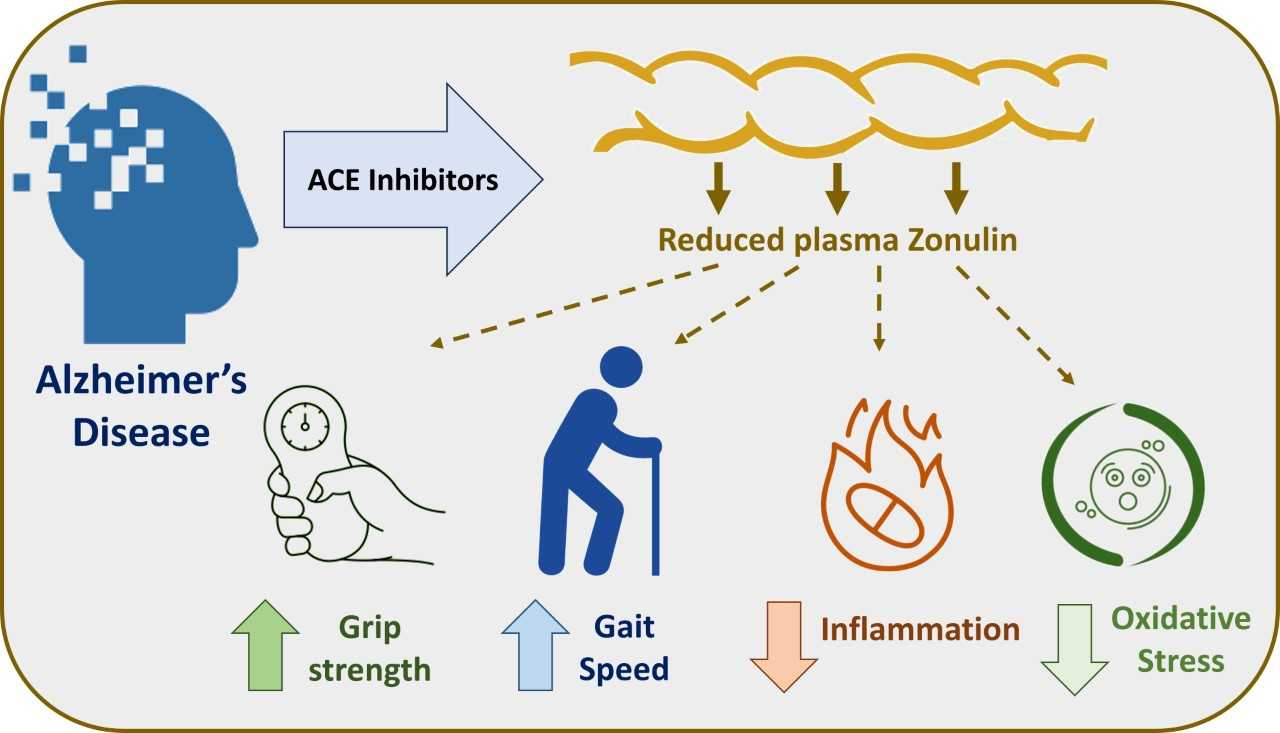
ACE Inhibitors Boost Mobility and Muscle Strength by Reducing Intestinal Permeability in Older Adults with Alzheimer’s Disease

 , , , and
Abstract
1. Introduction
2. Results
2.1. Characteristics of the Participants
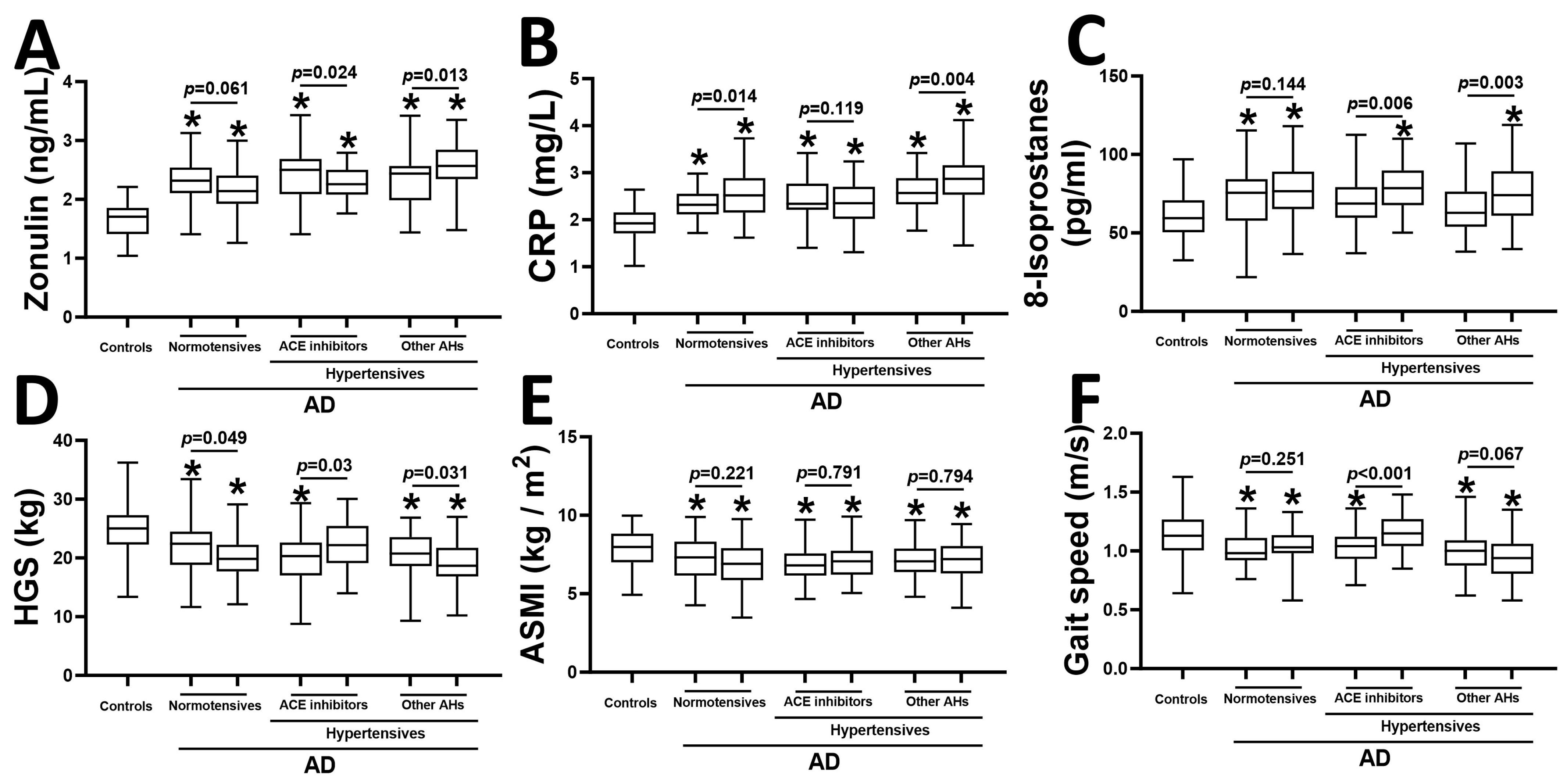
2.2. Plasma Biomarkers and Sarcopenia Parameters
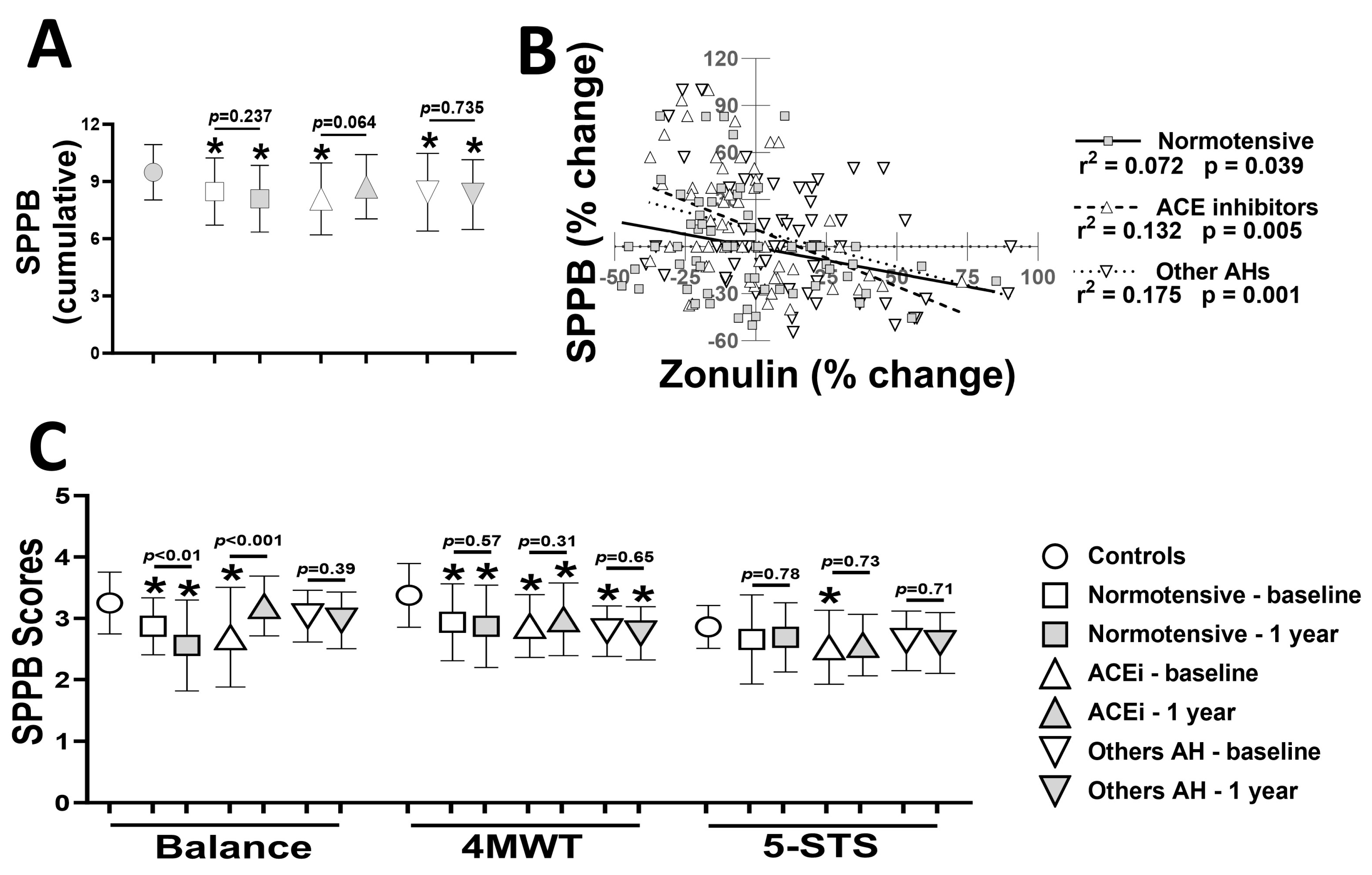
2.3. SPPB Scores and Their Associations with Plasma Zonulin
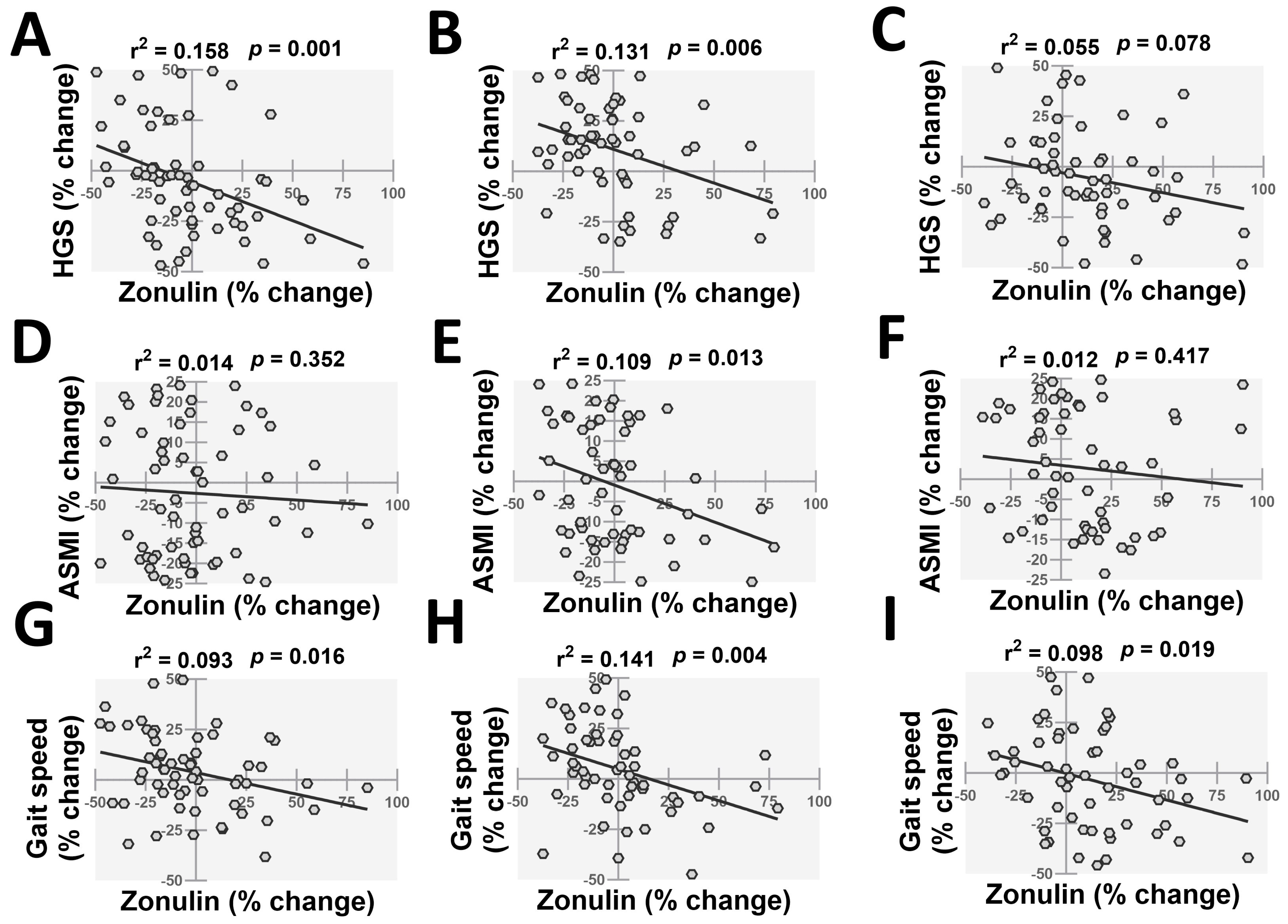
2.4. The Dynamic Associations of Plasma Zonulin with Sarcopenia Parameters
2.5. Associations of Plasma Zonulin with MMSE, Sarcopenia Parameters, Physical Capacity, and Plasma Biochemistry
3. Discussion
4. Materials and Methods
4.1. Study Design & Participants
4.2. Ethics Approval
4.3. HGS and Body Composition
4.4. Measurement of Physical Capacity
4.5. Measurement of Circulating Biomarkers
4.6. Statistical Analysis
Author Contributions
Funding
Institutional Review Board Statement
Informed Consent Statement
Data Availability Statement
Acknowledgments
Conflicts of Interest
References
- Lennon, M.J.; Koncz, R.; Sachdev, P.S. Hypertension and Alzheimer’s disease: Is the picture any clearer? Curr. Opin. Psychiatry 2021, 34, 142–148. [Google Scholar] [CrossRef] [PubMed]
- Sierra, C. Hypertension and the Risk of Dementia. Front. Cardiovasc. Med. 2020, 7, 5. [Google Scholar] [CrossRef]
- Karim, A.; Iqbal, M.S.; Muhammad, T.; Ahmad, F.; Qaisar, R. Elevated plasma zonulin and CAF22 are correlated with sarcopenia and functional dependency at various stages of Alzheimer’s diseases. Neurosci. Res. 2022, 184, 47–53. [Google Scholar] [CrossRef]
- Lang, T.; Streeper, T.; Cawthon, P.; Baldwin, K.; Taaffe, D.R.; Harris, T.B. Sarcopenia: Etiology, clinical consequences, intervention, and assessment. Osteoporos. Int. 2010, 21, 543–559. [Google Scholar] [CrossRef]
- Coelho-Junior, H.J.; Gambassi, B.B.; Irigoyen, M.C.; Goncalves, I.O.; Oliveira, P.L.L.; Schwingel, P.A.; Alves, C.H.L.; Asano, R.Y.; Uchida, M.C.; Rodrigues, B. Hypertension, Sarcopenia, and Global Cognitive Function in Community-Dwelling Older Women: A Preliminary Study. J. Aging Res. 2018, 2018, 9758040. [Google Scholar] [CrossRef]
- Yogesh, M.; Nagda, J.; Patel, N.S.; Varu, J. Gripping insights: Prevalence of hypertension and its association with relative muscle strength-a cross-sectional study in an adult Indian population. J. Health Popul. Nutr. 2024, 43, 215. [Google Scholar] [CrossRef]
- Morris, J.K.; Honea, R.A.; Vidoni, E.D.; Swerdlow, R.H.; Burns, J.M. Is Alzheimer’s disease a systemic disease? Biochim. Biophys. Acta 2014, 1842, 1340–1349. [Google Scholar] [CrossRef]
- Kowalski, K.; Mulak, A. Brain-Gut-Microbiota Axis in Alzheimer’s Disease. J. Neurogastroenterol. Motil. 2019, 25, 48–60. [Google Scholar] [CrossRef]
- Karim, A.; Muhammad, T.; Ustrana, S.; Qaisar, R. Intestinal permeability marker zonulin as a predictor of sarcopenia in chronic obstructive pulmonary disease. Respir. Med. 2021, 189, 106662. [Google Scholar] [CrossRef] [PubMed]
- Seethaler, B.; Basrai, M.; Neyrinck, A.M.; Nazare, J.A.; Walter, J.; Delzenne, N.M.; Bischoff, S.C. Biomarkers for assessment of intestinal permeability in clinical practice. Am. J. Physiol. Gastrointest. Liver Physiol. 2021, 321, G11–G17. [Google Scholar] [CrossRef] [PubMed]
- Fasano, A. Intestinal permeability and its regulation by zonulin: Diagnostic and therapeutic implications. Clin. Gastroenterol. Hepatol. 2012, 10, 1096–1100. [Google Scholar] [CrossRef] [PubMed]
- Camilleri, M. Leaky gut: Mechanisms, measurement and clinical implications in humans. Gut 2019, 68, 1516–1526. [Google Scholar] [CrossRef]
- Santisteban, M.M.; Qi, Y.; Zubcevic, J.; Kim, S.; Yang, T.; Shenoy, V.; Cole-Jeffrey, C.T.; Lobaton, G.O.; Stewart, D.C.; Rubiano, A.; et al. Hypertension-Linked Pathophysiological Alterations in the Gut. Circ. Res. 2017, 120, 312–323. [Google Scholar] [CrossRef]
- Ntlahla, E.E.; Mfengu, M.M.; Engwa, G.A.; Nkeh-Chungag, B.N.; Sewani-Rusike, C.R. Gut permeability is associated with hypertension and measures of obesity but not with Endothelial Dysfunction in South African youth. Afr. Health Sci. 2021, 21, 1172–1184. [Google Scholar] [CrossRef]
- Qaisar, R.; Bhaskaran, S.; Premkumar, P.; Ranjit, R.; Natarajan, K.S.; Ahn, B.; Riddle, K.; Claflin, D.R.; Richardson, A.; Brooks, S.V.; et al. Oxidative stress-induced dysregulation of excitation-contraction coupling contributes to muscle weakness. J. Cachexia Sarcopenia Muscle 2018, 9, 1003–1017. [Google Scholar] [CrossRef]
- Fazal, K.; Perera, G.; Khondoker, M.; Howard, R.; Stewart, R. Associations of centrally acting ACE inhibitors with cognitive decline and survival in Alzheimer’s disease. BJPsych Open 2017, 3, 158–164. [Google Scholar] [CrossRef]
- Ata, A.M.; Kara, M.; Ekiz, T.; Kara, O.; Culha, M.A.; Ricci, V.; Koyuncu, E.G.; Ozcan, F.; Kaymak, B.; Ozcakar, L. Reassessing Sarcopenia in Hypertension: STAR and ACE Inhibitors Excel. Int. J. Clin. Pract. 2021, 75, e13800. [Google Scholar] [CrossRef] [PubMed]
- Salmenkari, H.; Korpela, R.; Vapaatalo, H. Renin-angiotensin system in intestinal inflammation-Angiotensin inhibitors to treat inflammatory bowel diseases? Basic. Clin. Pharmacol. Toxicol. 2021, 129, 161–172. [Google Scholar] [CrossRef]
- Sueyoshi, R.; Ignatoski, K.M.; Daignault, S.; Okawada, M.; Teitelbaum, D.H. Angiotensin converting enzyme-inhibitor reduces colitis severity in an IL-10 knockout model. Dig. Dis. Sci. 2013, 58, 3165–3177. [Google Scholar] [CrossRef] [PubMed]
- Qaisar, R.; Karim, A.; Iqbal, M.S.; Alkahtani, S.A.; Ahmad, F.; Kamli, H. ACE Inhibitors Improve Skeletal Muscle by Preserving Neuromuscular Junctions in Patients with Alzheimer’s Disease. J. Alzheimers Dis. 2023, 94, 641–650. [Google Scholar] [CrossRef]
- Scheffler, L.; Crane, A.; Heyne, H.; Tönjes, A.; Schleinitz, D.; Ihling, C.; Stumvoll, M.; Freire, R.; Fiorentino, M.; Fasano, A.; et al. Widely Used Commercial ELISA Does Not Detect Precursor of Haptoglobin2, but Recognizes Properdin as a Potential Second Member of the Zonulin Family. Front. Endocrinol. 2018, 9, 22. [Google Scholar] [CrossRef]
- Kingsley, J.; Torimoto, K.; Hashimoto, T.; Eguchi, S. Angiotensin II inhibition: A potential treatment to slow the progression of sarcopenia. Clin. Sci. 2021, 135, 2503–2520. [Google Scholar] [CrossRef] [PubMed]
- Yang, T.; Aquino, V.; Lobaton, G.O.; Li, H.; Colon-Perez, L.; Goel, R.; Qi, Y.; Zubcevic, J.; Febo, M.; Richards, E.M.; et al. Sustained Captopril-Induced Reduction in Blood Pressure Is Associated With Alterations in Gut-Brain Axis in the Spontaneously Hypertensive Rat. J. Am. Heart Assoc. 2019, 8, e010721. [Google Scholar] [CrossRef] [PubMed]
- Liu, C.; Cheung, W.H.; Li, J.; Chow, S.K.; Yu, J.; Wong, S.H.; Ip, M.; Sung, J.J.Y.; Wong, R.M.Y. Understanding the gut microbiota and sarcopenia: A systematic review. J. Cachexia Sarcopenia Muscle 2021, 12, 1393–1407. [Google Scholar] [CrossRef] [PubMed]
- Elfowiris, A.; Banigesh, A. Evaluation of Antioxidant Therapeutic Value of ACE Inhibitor as Adjunct Therapy on Type 2 Diabetes Mellitus Patients with Cardiovascular Disease. ACS Pharmacol. Transl. Sci. 2022, 5, 413–418. [Google Scholar] [CrossRef]
- Keller, K.; Kane, A.; Heinze-Milne, S.; Grandy, S.A.; Howlett, S.E. Chronic Treatment With the ACE Inhibitor Enalapril Attenuates the Development of Frailty and Differentially Modifies Pro- and Anti-inflammatory Cytokines in Aging Male and Female C57BL/6 Mice. J. Gerontol. A Biol. Sci. Med. Sci. 2019, 74, 1149–1157. [Google Scholar] [CrossRef]
- Bicket, D.P. Using ACE inhibitors appropriately. Am. Fam. Physician 2002, 66, 461–468. [Google Scholar]
- Parikh, M.A.; Aaron, C.P.; Hoffman, E.A.; Schwartz, J.E.; Madrigano, J.; Austin, J.H.M.; Kalhan, R.; Lovasi, G.; Watson, K.; Stukovsky, K.H.; et al. Angiotensin-Converting Inhibitors and Angiotensin II Receptor Blockers and Longitudinal Change in Percent Emphysema on Computed Tomography. The Multi-Ethnic Study of Atherosclerosis Lung Study. Ann. Am. Thorac. Soc. 2017, 14, 649–658. [Google Scholar] [CrossRef]
- Steagall, W.K.; Stylianou, M.; Pacheco-Rodriguez, G.; Moss, J. Angiotensin-converting enzyme inhibitors may affect pulmonary function in lymphangioleiomyomatosis. JCI Insight 2019, 4, e126703. [Google Scholar] [CrossRef]
- Rygiel, K. Can angiotensin-converting enzyme inhibitors impact cognitive decline in early stages of Alzheimer’s disease? An overview of research evidence in the elderly patient population. J. Postgrad. Med. 2016, 62, 242–248. [Google Scholar] [CrossRef]
- Delfinis, L.J.; Bellissimo, C.A.; Gandhi, S.; DiBenedetto, S.N.; Garibotti, M.C.; Thuhan, A.K.; Tsitkanou, S.; Rosa-Caldwell, M.E.; Rahman, F.A.; Cheng, A.J.; et al. Muscle weakness precedes atrophy during cancer cachexia and is linked to muscle-specific mitochondrial stress. JCI Insight 2022, 7, e155147. [Google Scholar] [CrossRef]
- Qaisar, R.; Karim, A.; Elmoselhi, A.B. Muscle unloading: A comparison between spaceflight and ground-based models. Acta Physiol. 2020, 228, e13431. [Google Scholar] [CrossRef]
- Ahmad, F.; Karim, A.; Khan, J.; Qaisar, R. Angiotensin-converting enzyme inhibitors attenuate circulating CAF22 and physical decline in congestive heart failure: Diagnostic implications of CAF22. Br. J. Clin. Pharmacol. 2025, 91, 409–419. [Google Scholar] [CrossRef]
- Rossios, C.; Bashir, T.; Achison, M.; Adamson, S.; Akpan, A.; Aspray, T.; Avenell, A.; Band, M.M.; Burton, L.A.; Cvoro, V.; et al. ACE I/D genotype associates with strength in sarcopenic men but not with response to ACE inhibitor therapy in older adults with sarcopenia: Results from the LACE trial. PLoS ONE 2023, 18, e0292402. [Google Scholar] [CrossRef] [PubMed]
- Xirouchakis, E.; Kranidioti, H.; Hadziyanni, E.; Kourikou, A.; Reppas, C.; Vertzoni, M.; Papadopoulos, N.; Deutsch, M.; Papatheodoridis, G.; Manolakopoulos, S. The effect of propranolol on gastrointestinal motility and permeability in patients with cirrhosis and significant portal hypertension. BMC Gastroenterol. 2024, 24, 420. [Google Scholar] [CrossRef] [PubMed]
- Alexander, R.T.; Dimke, H. Molecular mechanisms of loop diuretics on renal calcium and magnesium transport. Acta Physiol. 2024, 240, e14138. [Google Scholar] [CrossRef]
- Maqoud, F.; Tricarico, D.; Mallamaci, R.; Orlando, A.; Russo, F. The Role of Ion Channels in Functional Gastrointestinal Disorders (FGID): Evidence of Channelopathies and Potential Avenues for Future Research and Therapeutic Targets. Int. J. Mol. Sci. 2023, 24, 11074. [Google Scholar] [CrossRef] [PubMed]
- Vaishya, R.; Misra, A.; Vaish, A.; Ursino, N.; D’Ambrosi, R. Hand grip strength as a proposed new vital sign of health: A narrative review of evidences. J. Health Popul. Nutr. 2024, 43, 7. [Google Scholar] [CrossRef]
- Studenski, S.; Perera, S.; Patel, K.; Rosano, C.; Faulkner, K.; Inzitari, M.; Brach, J.; Chandler, J.; Cawthon, P.; Connor, E.B.; et al. Gait speed and survival in older adults. JAMA 2011, 305, 50–58. [Google Scholar] [CrossRef]
- Cruz-Jentoft, A.J.; Bahat, G.; Bauer, J.; Boirie, Y.; Bruyere, O.; Cederholm, T.; Cooper, C.; Landi, F.; Rolland, Y.; Sayer, A.A.; et al. Sarcopenia: Revised European consensus on definition and diagnosis. Age Ageing 2019, 48, 601. [Google Scholar] [CrossRef]
- Kalibala, J.; Pechere-Bertschi, A.; Desmeules, J. Gender Differences in Cardiovascular Pharmacotherapy-the Example of Hypertension: A Mini Review. Front. Pharmacol. 2020, 11, 564. [Google Scholar] [CrossRef]
- Sullivan, J.C. Sex and the renin-angiotensin system: Inequality between the sexes in response to RAS stimulation and inhibition. Am. J. Physiol. Regul. Integr. Comp. Physiol. 2008, 294, R1220–R1226. [Google Scholar]
- Nebel, R.; Aggarwal, N.; Barnes, L.; Gallagher, A.; Goldstein, J.; Kantarci, J.; Mallampalli, M.; Mormino, E.; Scott, L.; Yu, W.H.; et al. Understanding the impact of sex and gender in Alzheimer’s disease: A call to action. Alzheimer’s Dement. 2018, 14, 1171–1183. [Google Scholar] [CrossRef]
- Schmieder, R.E. Mechanisms for the clinical benefits of angiotensin II receptor blockers. Am. J. Hypertens. 2005, 18, 720–730. [Google Scholar] [CrossRef]
- Ogawa, Y.; Kaneko, Y.; Sato, T.; Shimizu, S.; Kanetaka, H.; Hanyu, H. Sarcopenia and Muscle Functions at Various Stages of Alzheimer Disease. Front. Neurol. 2018, 9, 710. [Google Scholar] [CrossRef]
- Sobestiansky, S.; Michaelsson, K.; Cederholm, T. Sarcopenia prevalence and associations with mortality and hospitalisation by various sarcopenia definitions in 85-89 year old community-dwelling men: A report from the ULSAM study. BMC Geriatr. 2019, 19, 318. [Google Scholar]
- World Medical Association. World Medical Association Declaration of Helsinki: Ethical principles for medical research involving human subjects. JAMA 2013, 310, 2191–2194. [Google Scholar] [CrossRef]
- Qaisar, R.; Karim, A.; Muhammad, T. Plasma CAF22 Levels as a Useful Predictor of Muscle Health in Patients with Chronic Obstructive Pulmonary Disease. Biology 2020, 9, 166. [Google Scholar] [CrossRef] [PubMed]
- Welch, S.A.; Ward, R.E.; Beauchamp, M.K.; Leveille, S.G.; Travison, T.; Bean, J.F. The Short Physical Performance Battery (SPPB): A Quick and Useful Tool for Fall Risk Stratification Among Older Primary Care Patients. J. Am. Med. Dir. Assoc. 2021, 22, 1646–1651. [Google Scholar] [PubMed]
- Landi, F.; Russo, A.; Cesari, M.; Pahor, M.; Bernabei, R.; Onder, G. HDL-cholesterol and physical performance: Results from the ageing and longevity study in the sirente geographic area (ilSIRENTE Study). Age Ageing 2007, 36, 514–520. [Google Scholar] [CrossRef] [PubMed]
- Karim, A.; Muhammad, T.; Shahid Iqbal, M.; Qaisar, R. A multistrain probiotic improves handgrip strength and functional capacity in patients with COPD: A randomized controlled trial. Arch. Gerontol. Geriatr. 2022, 102, 104721. [Google Scholar] [CrossRef] [PubMed]
- Karim, A.; Muhammad, T.; Shah, I.; Khan, J.; Qaisar, R. A multistrain probiotic reduces sarcopenia by modulating Wnt signaling biomarkers in patients with chronic heart failure. J. Cardiol. 2022, 80, 449–455. [Google Scholar] [CrossRef] [PubMed]



| Controls (n = 64) | Normotensive (n = 61) | Hypertensive (n = 102) | |||||
|---|---|---|---|---|---|---|---|
| ACE Inhibitors (n = 55) | Other Anti-Hypertensive (n = 57) | ||||||
| Baseline | One Year | Baseline | One Year | Baseline | One Year | ||
| Age (years) | 74.6 ± 4.5 | 76.3 ± 3.8 | 77.3. ± 3.9 | 74.9 ± 4.2 | 75.9 ± 4.2 | 76.1 ± 4.7 | 77.1 ± 4.7 |
| BMI (Kg/m2) | 24.1 ± 2.4 | 24.6 ± 3.1 | 25.1 ± 3.8 | 25.4 ± 3.7 | 25.2 ± 3.9 | 26.4 ± 3.4 | 26.8 ± 3.4 |
| ASM (Kg) | 26.9 ± 3.6 | 23.5 ± 2.5 * | 23.1 ± 2.8 * | 24.4 ± 3.3 | 24.8 ± 3.8 | 24 ± 2.3 | 23.8 ± 2.6 * |
| Percent fat | 28.4 ± 3.5 | 27.3 ± 4.2 * | 27.8 ± 4.2 | 28.4 ± 3.7 | 27 ± 4.5 * | 26.8 ± 3.5 * | 27.3 ± 4.3 |
| Phase angle | 5.93 ± 0.8 | 5.73 ± 0.5 * | 5.82 ± 0.5 | 5.71 ± 0.6 * | 5.84 ± 0.6 # | 5.68 ± 0.5 * | 5.61 ± 0.6 * |
| Daily steps count | 8271 ± 1483 | 4751 ± 1518 * | 4162 ± 1041 * | 5381 ± 1273 * | 5841 ± 1501 * | 4813 ± 953 * | 4619 ± 1051 * |
| Creatine kinase (IU/L) | 185.7 ± 37.8 | 252.6 ± 56.1 * | 268.3 ± 42.6 * | 247.2 ± 38.5 * | 236.3 ± 48.2 * | 229.6 ± 38.6 * | 248.5 ± 39.5 *# |
| MMSE scores | 26.4 ± 2.1 | 16.5 ± 2.6 * | 16.9 ± 2.9 * | 17.5 ± 3.1 * | 16.2 ± 2.7 * | 16.1 ± 2.6 * | 15.6 ± 2.7 * |
| Charlson comorbidity index | 0.68 ± 0.12 | 1.35 ± 0.43 | 1.38 ± 0.45 | 1.53 ± 0.38 | 1.5 ± 0.37 | 1.48 ± 0.4 | 1.5 ± 0.41 |
| Sarcopenia cases, n (%) | 13 (20.31) | 16 (26.2) | 18 (29.5) | 15 (25.5) | 15 (25.5) | 18 (31.7) | 19 (33.3) |
| Controls (n = 64) | Normotensive (n = 61) | Hypertensive (n = 102) | |||||
|---|---|---|---|---|---|---|---|
| ACE Inhibitors (n = 55) | Other Anti-Hypertensive (n = 57) | ||||||
| Baseline | One Year | Baseline | One Year | Baseline | One Year | ||
| MMSE | 0.019 | 0.041 | 0.028 | 0.071 | 0.123 * | 0.057 | 0.036 |
| HGS | 0.096 * | 0.173 * | 0.127 * | 0.214 * | 0.149 * | 0.107 | 0.083 |
| ASMI | 0.017 | 0.008 | 0.029 | 0.128 * | 0.094 | 0.025 | 0.024 |
| Gait speed | 0.107 * | 0.097 | 0.082 | 0.187 * | 0.119 * | 0.11 * | 0.063 |
| Cumulative SPPB | 0.069 | 0.079 | 0.061 | 0.155 * | 0.133 * | 0.077 | 0.112 * |
| CK | 0.106 * | 0.127 * | 0.053 | 0.097 | 0.176 * | 0.041 | 0.056 |
| CRP | 0.086 | 0.198 * | 0.217 * | 0.201 * | 0.179 * | 0.153 * | 0.185 * |
| 8-isoprostanes | 0.063 | 0.084 | 0.091 | 0.151 * | 0.183 * | 0.078 | 0.049 |
Disclaimer/Publisher’s Note: The statements, opinions and data contained in all publications are solely those of the individual author(s) and contributor(s) and not of MDPI and/or the editor(s). MDPI and/or the editor(s) disclaim responsibility for any injury to people or property resulting from any ideas, methods, instructions or products referred to in the content. |
© 2026 by the authors. Licensee MDPI, Basel, Switzerland. This article is an open access article distributed under the terms and conditions of the Creative Commons Attribution (CC BY) license.
Share and Cite
Qaisar, R.; Karim, A.; Iqbal, M.S.; Ahmad, F.; Saeed, K.; Alkahtani, S.A. ACE Inhibitors Boost Mobility and Muscle Strength by Reducing Intestinal Permeability in Older Adults with Alzheimer’s Disease. Pharmaceuticals 2026, 19, 304. https://doi.org/10.3390/ph19020304
Qaisar R, Karim A, Iqbal MS, Ahmad F, Saeed K, Alkahtani SA. ACE Inhibitors Boost Mobility and Muscle Strength by Reducing Intestinal Permeability in Older Adults with Alzheimer’s Disease. Pharmaceuticals. 2026; 19(2):304. https://doi.org/10.3390/ph19020304
Chicago/Turabian StyleQaisar, Rizwan, Asima Karim, M. Shahid Iqbal, Firdos Ahmad, Khalid Saeed, and Shaea A. Alkahtani. 2026. "ACE Inhibitors Boost Mobility and Muscle Strength by Reducing Intestinal Permeability in Older Adults with Alzheimer’s Disease" Pharmaceuticals 19, no. 2: 304. https://doi.org/10.3390/ph19020304
APA StyleQaisar, R., Karim, A., Iqbal, M. S., Ahmad, F., Saeed, K., & Alkahtani, S. A. (2026). ACE Inhibitors Boost Mobility and Muscle Strength by Reducing Intestinal Permeability in Older Adults with Alzheimer’s Disease. Pharmaceuticals, 19(2), 304. https://doi.org/10.3390/ph19020304