From a Multi-Omics Signature to a Therapeutic Candidate: Computational Prediction and Experimental Validation in Liver Fibrosis


 and
and
Abstract
1. Introduction
2. Results
2.1. Identification of Molecular Features in LF Progression via Multi-Algorithm Consensus Machine Learning
2.2. The Six-Gene Signature Demonstrates Robust Predictive Power Across Etiologies and Consistent Expression Patterns
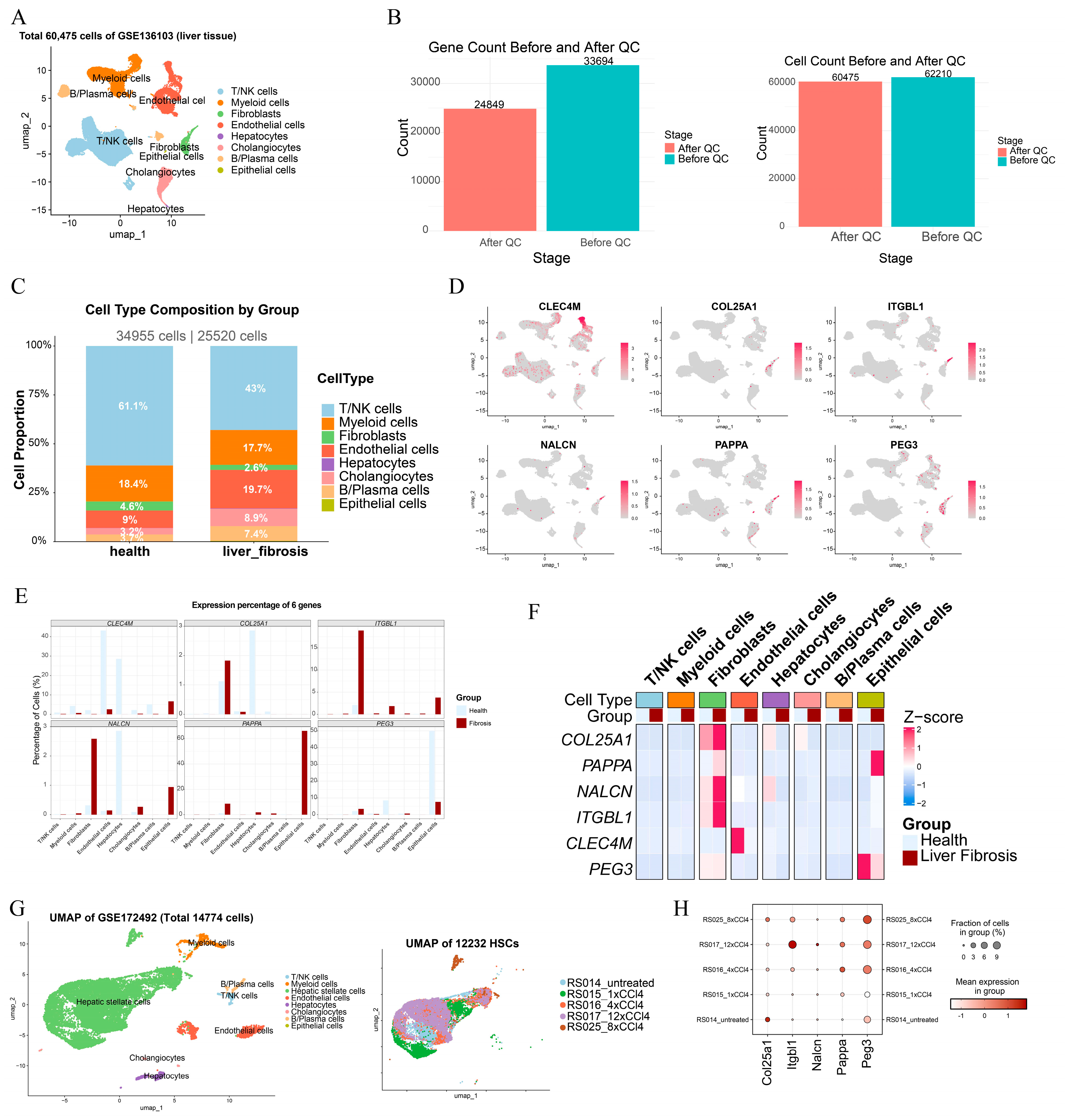
2.3. Single-Cell Transcriptomics Resolves Cellular Heterogeneity and Maps the Cellular Origins of the Six-Gene Signature
2.4. Drug Repositioning Prediction via CMap Identifies Potential Therapeutic Compounds for LF
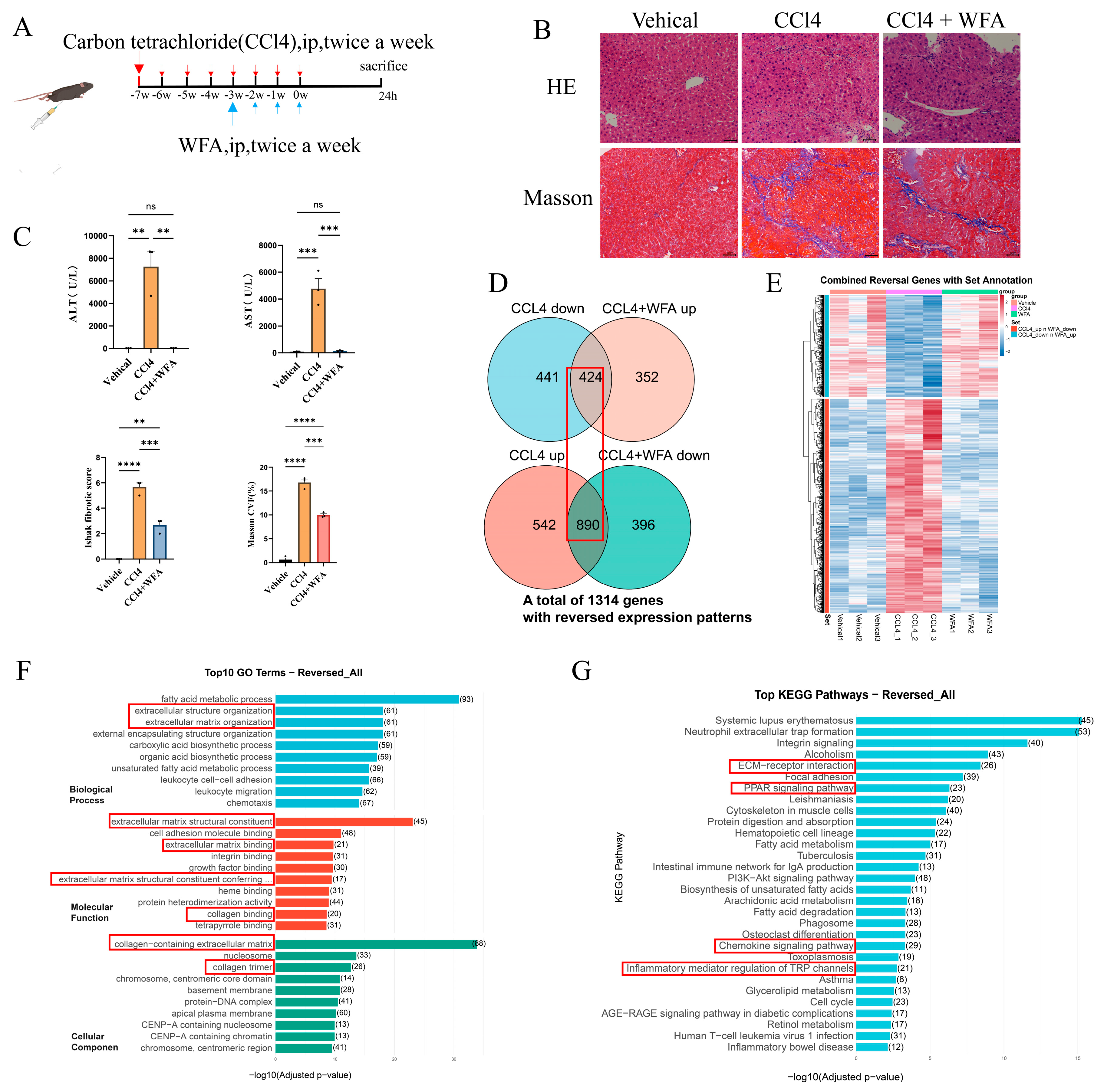
2.5. WFA Significantly Ameliorates CCl4-Induced LF in Mice and Is Associated with Broad Transcriptomic Reversal of Fibrotic Programs
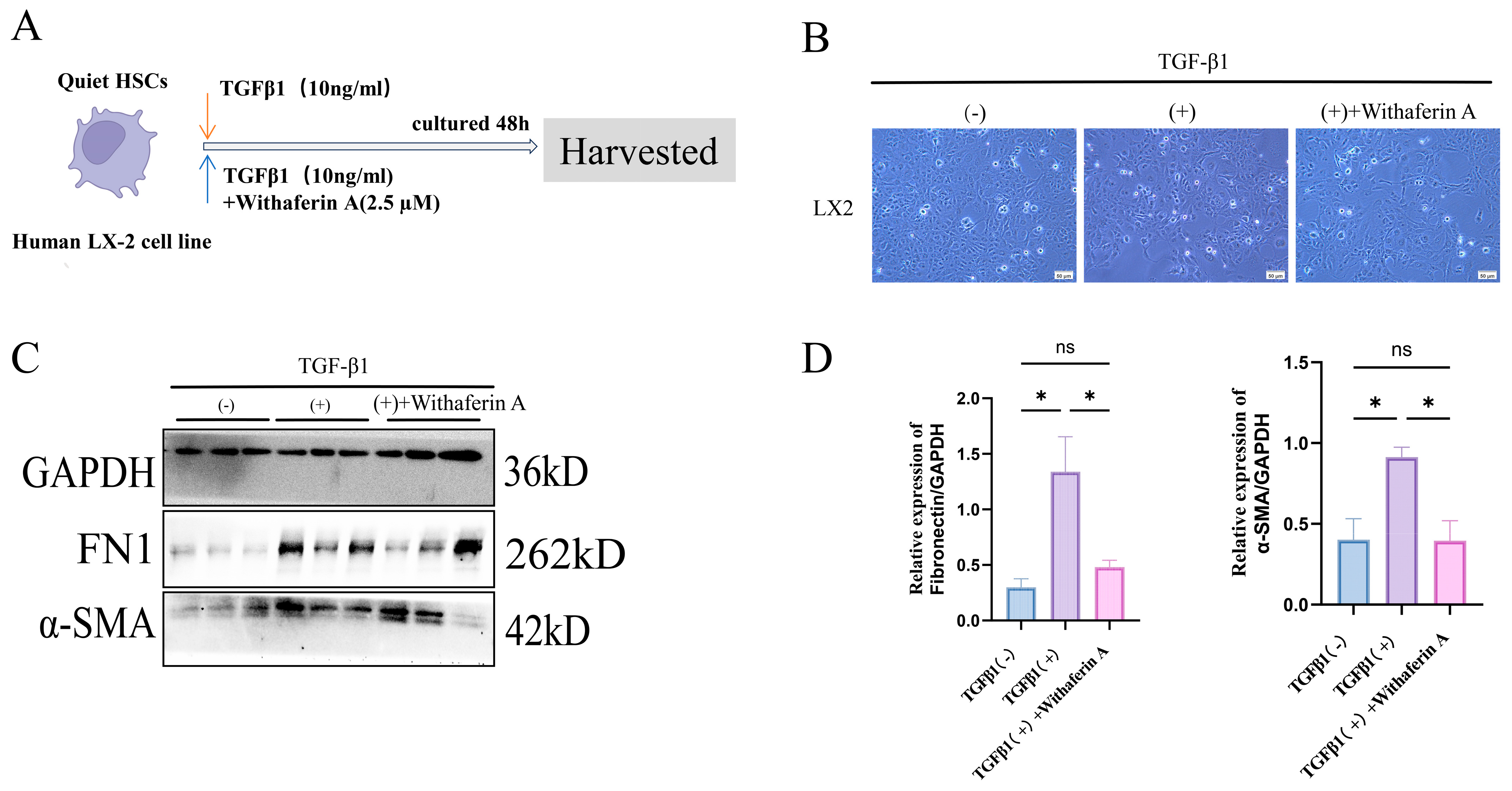
2.6. WFA Suppresses TGF-β1-Induced Activation of Human HSC Cell Line and Reduces ECM Production In Vitro
3. Discussion
4. Materials and Methods
4.1. Data Acquisition
4.2. Machine Learning
4.3. scRNA-Seq Analysis
4.4. CMap Analysis and Drug Repositioning
4.5. Molecular Docking
4.6. Experimental Animals
4.7. Histopathological Assessment of Liver Tissues
4.8. Serum Biochemical Analysis
4.9. RNA Sequencing and Bioinformatic Analysis
4.10. Cell Culture
4.11. Western Blot Analysis
4.12. Statistical Analysis
5. Conclusions
Supplementary Materials
Author Contributions
Funding
Institutional Review Board Statement
Informed Consent Statement
Data Availability Statement
Conflicts of Interest
Abbreviations
References
- Parola, M.; Pinzani, M. Liver fibrosis: Pathophysiology, pathogenetic targets and clinical issues. Mol. Asp. Med. 2019, 65, 37–55. [Google Scholar] [CrossRef]
- Devarbhavi, H.; Asrani, S.K.; Arab, J.P.; Nartey, Y.A.; Pose, E.; Kamath, P.S. Global burden of liver disease: 2023 update. J. Hepatol. 2023, 79, 516–537. [Google Scholar] [CrossRef]
- Huang, D.Q.; Terrault, N.A.; Tacke, F.; Gluud, L.L.; Arrese, M.; Bugianesi, E.; Loomba, R. Global epidemiology of cirrhosis—Aetiology, trends and predictions. Nat. Rev. Gastroenterol. Hepatol. 2023, 20, 388–398. [Google Scholar] [CrossRef]
- Tham, E.K.J.; Tan, D.J.H.; Danpanichkul, P.; Ng, C.H.; Syn, N.; Koh, B.; Lim, R.Y.Z.; Wijarnpreecha, K.; Teng, M.L.P.; Nah, B.K.Y.; et al. The Global Burden of Cirrhosis and Other Chronic Liver Diseases in 2021. Liver Int. 2025, 45, e70001. [Google Scholar] [CrossRef]
- Rumgay, H.; Arnold, M.; Ferlay, J.; Lesi, O.; Cabasag, C.J.; Vignat, J.; Laversanne, M.; McGlynn, K.A.; Soerjomataram, I. Global burden of primary liver cancer in 2020 and predictions to 2040. J. Hepatol. 2022, 77, 1598–1606. [Google Scholar] [CrossRef]
- Li, Q.; Ding, C.; Cao, M.; Yang, F.; Yan, X.; He, S.; Cao, M.; Zhang, S.; Teng, Y.; Tan, N.; et al. Global epidemiology of liver cancer 2022: An emphasis on geographic disparities. Chin. Med. J. 2024, 137, 2334–2342. [Google Scholar] [CrossRef]
- Rinella, M.E.; Lazarus, J.V.; Ratziu, V.; Francque, S.M.; Sanyal, A.J.; Kanwal, F.; Romero, D.; Abdelmalek, M.F.; Anstee, Q.M.; Arab, J.P.; et al. A multisociety Delphi consensus statement on new fatty liver disease nomenclature. J. Hepatol. 2023, 79, 1542–1556. [Google Scholar] [CrossRef]
- Younossi, Z.M.; Golabi, P.; Paik, J.M.; Henry, A.; Van Dongen, C.; Henry, L. The global epidemiology of nonalcoholic fatty liver disease (NAFLD) and nonalcoholic steatohepatitis (NASH): A systematic review. Hepatology 2023, 77, 1335–1347. [Google Scholar] [CrossRef]
- Wu, Y.; Zheng, Q.; Zou, B.; Yeo, Y.H.; Li, X.; Li, J.; Xie, X.; Feng, Y.; Stave, C.D.; Zhu, Q.; et al. The epidemiology of NAFLD in Mainland China with analysis by adjusted gross regional domestic product: A meta-analysis. Hepatol. Int. 2020, 14, 259–269. [Google Scholar] [CrossRef]
- Zhou, F.; Zhou, J.; Wang, W.; Zhang, X.J.; Ji, Y.X.; Zhang, P.; She, Z.G.; Zhu, L.; Cai, J.; Li, H. Unexpected Rapid Increase in the Burden of NAFLD in China from 2008 to 2018: A Systematic Review and Meta-Analysis. Hepatology 2019, 70, 1119–1133. [Google Scholar] [CrossRef]
- Loomba, R.; Seguritan, V.; Li, W.; Long, T.; Klitgord, N.; Bhatt, A.; Dulai, P.S.; Caussy, C.; Bettencourt, R.; Highlander, S.K.; et al. Gut Microbiome-Based Metagenomic Signature for Non-invasive Detection of Advanced Fibrosis in Human Nonalcoholic Fatty Liver Disease. Cell Metab. 2017, 25, 1054–1062.e1055. [Google Scholar] [CrossRef]
- Sanyal, A.J.; Van Natta, M.L.; Clark, J.; Neuschwander-Tetri, B.A.; Diehl, A.; Dasarathy, S.; Loomba, R.; Chalasani, N.; Kowdley, K.; Hameed, B.; et al. Prospective Study of Outcomes in Adults with Nonalcoholic Fatty Liver Disease. N. Engl. J. Med. 2021, 385, 1559–1569. [Google Scholar] [CrossRef]
- Sicras-Mainar, A.; Aller, R.; Crespo, J.; Calleja, J.L.; Turnes, J.; Romero Gómez, M.; Augustín, S. Overall clinical and economic impact of non-alcoholic fatty liver disease. Rev. Esp. Enferm. Dig. 2021, 113, 396–403. [Google Scholar] [CrossRef]
- Zamani, M.; Alizadeh-Tabari, S.; Ajmera, V.; Singh, S.; Murad, M.H.; Loomba, R. Global Prevalence of Advanced Liver Fibrosis and Cirrhosis in the General Population: A Systematic Review and Meta-analysis. Clin. Gastroenterol. Hepatol. 2025, 23, 1123–1134. [Google Scholar] [CrossRef]
- Vilar-Gomez, E.; Calzadilla-Bertot, L.; Wai-Sun Wong, V.; Castellanos, M.; Aller-de la Fuente, R.; Metwally, M.; Eslam, M.; Gonzalez-Fabian, L.; Alvarez-Quiñones Sanz, M.; Conde-Martin, A.F.; et al. Fibrosis Severity as a Determinant of Cause-Specific Mortality in Patients with Advanced Nonalcoholic Fatty Liver Disease: A Multi-National Cohort Study. Gastroenterology 2018, 155, 443–457.e417. [Google Scholar] [CrossRef]
- Campana, L.; Iredale, J.P. Regression of Liver Fibrosis. Semin. Liver Dis. 2017, 37, 1–10. [Google Scholar] [CrossRef]
- Rockey, D.C. Current and future anti-fibrotic therapies for chronic liver disease. Clin. Liver Dis. 2008, 12, 939–962. [Google Scholar] [CrossRef]
- Roehlen, N.; Crouchet, E.; Baumert, T.F. Liver Fibrosis: Mechanistic Concepts and Therapeutic Perspectives. Cells 2020, 9, 875. [Google Scholar] [CrossRef]
- Jangra, A.; Kothari, A.; Sarma, P.; Medhi, B.; Omar, B.J.; Kaushal, K. Recent Advancements in Antifibrotic Therapies for Regression of Liver Fibrosis. Cells 2022, 11, 1500. [Google Scholar] [CrossRef]
- Yang, Y.; Yang, W.; Tang, B.; Li, Y.; Zhang, T. Multi-algorithm consensus classification identifies three distinct acute liver failure subtypes with differential treatment responses: A multi-database cohort study. J. Adv. Res. 2025, 82, 667–683. [Google Scholar] [CrossRef]
- Liu, X.; Li, D.; Zhang, Y.; Liu, H.; Chen, P.; Zhao, Y.; Sun, G.; Zhao, W.; Dong, G. Multi-Algorithm-Integrated Tertiary Lymphoid Structure Gene Signature for Immune Landscape Characterization and Prognosis in Colorectal Cancer Patients. Biomedicines 2024, 12, 2644. [Google Scholar] [CrossRef]
- Bataller, R.; Brenner, D.A. Liver fibrosis. J. Clin. Investig. 2005, 115, 209–218. [Google Scholar] [CrossRef] [PubMed]
- Liao, J.; Yi, H.; Wang, H.; Yang, S.; Jiang, D.; Huang, X.; Zhang, M.; Shen, J.; Lu, H.; Niu, Y. CDCM: A correlation-dependent connectivity map approach to rapidly screen drugs during outbreaks of infectious diseases. Brief. Bioinform. 2024, 26, bbae659. [Google Scholar] [CrossRef]
- Lamb, J.; Crawford, E.D.; Peck, D.; Modell, J.W.; Blat, I.C.; Wrobel, M.J.; Lerner, J.; Brunet, J.P.; Subramanian, A.; Ross, K.N.; et al. The Connectivity Map: Using gene-expression signatures to connect small molecules, genes, and disease. Science 2006, 313, 1929–1935. [Google Scholar] [CrossRef]
- Subramanian, A.; Narayan, R.; Corsello, S.M.; Peck, D.D.; Natoli, T.E.; Lu, X.; Gould, J.; Davis, J.F.; Tubelli, A.A.; Asiedu, J.K.; et al. A Next Generation Connectivity Map: L1000 Platform and the First 1,000,000 Profiles. Cell 2017, 171, 1437–1452.e1417. [Google Scholar] [CrossRef]
- Higashi, T.; Friedman, S.L.; Hoshida, Y. Hepatic stellate cells as key target in liver fibrosis. Adv. Drug Deliv. Rev. 2017, 121, 27–42. [Google Scholar] [CrossRef]
- Xia, Y.; Yan, M.; Wang, P.; Hamada, K.; Yan, N.; Hao, H.; Gonzalez, F.J.; Yan, T. Withaferin A in the Treatment of Liver Diseases: Progress and Pharmacokinetic Insights. Drug Metab. Dispos. 2022, 50, 685–693. [Google Scholar] [CrossRef]
- Lee, I.C.; Choi, B.Y. Withaferin-A—A Natural Anticancer Agent with Pleitropic Mechanisms of Action. Int. J. Mol. Sci. 2016, 17, 290. [Google Scholar] [CrossRef]
- Zhang, W.; Ma, X.; Tian, W.; Teng, Y.; Ji, M. Cellular senescence defining the disease characteristics of Crohn’s disease. Front. Immunol. 2025, 16, 1616531. [Google Scholar] [CrossRef]
- Choi, J.; Nguyen, V.H.; Przybyszewski, E.; Song, J.; Carroll, A.; Michta, M.; Almazan, E.; Simon, T.G.; Chung, R.T. Statin Use and Risk of Hepatocellular Carcinoma and Liver Fibrosis in Chronic Liver Disease. JAMA Intern. Med. 2025, 185, 522–530. [Google Scholar] [CrossRef]
- Codotto, G.; Blarasin, B.; Tiribelli, C.; Bellarosa, C.; Licastro, D. Decoding Liver Fibrosis: How Omics Technologies and Innovative Modeling Can Guide Precision Medicine. Int. J. Mol. Sci. 2025, 26, 2658. [Google Scholar] [CrossRef]
- Liu, C.; Shen, J.; Li, J.; Li, Z.; Zheng, M.H.; Bian, H.; Zhou, X.; Ni, W.; Meng, Z.; Lv, J.; et al. DiabetesLiver score: A non-invasive algorithm for advanced liver fibrosis and liver-related outcomes in type 2 diabetes mellitus population. Med 2025, 6, 100700. [Google Scholar] [CrossRef]
- Madsen, B.S.; Thiele, M.; Detlefsen, S.; Kjaergaard, M.; Møller, L.S.; Trebicka, J.; Nielsen, M.J.; Gudmann, N.S.; Leeming, D.J.; Karsdal, M.A.; et al. PRO-C3 and ADAPT algorithm accurately identify patients with advanced fibrosis due to alcohol-related liver disease. Aliment. Pharmacol. Ther. 2021, 54, 699–708. [Google Scholar] [CrossRef] [PubMed]
- Cao, Z.; Li, Z.; Wang, H.; Liu, Y.; Xu, Y.; Mo, R.; Ren, P.; Chen, L.; Lu, J.; Li, H.; et al. Algorithm of Golgi protein 73 and liver stiffness accurately diagnoses significant fibrosis in chronic HBV infection. Liver Int. 2017, 37, 1612–1621. [Google Scholar] [CrossRef] [PubMed]
- Xu, M.Y.; Qu, Y.; Li, Z.; Li, F.; Xiao, C.Y.; Lu, L.G. A 6 gene signature identifies the risk of developing cirrhosis in patients with chronic hepatitis B. Front. Biosci. (Landmark Ed.) 2016, 21, 479–486. [Google Scholar] [CrossRef][Green Version]
- Luukkonen, P.K.; Porthan, K.; Ahlholm, N.; Rosqvist, F.; Dufour, S.; Zhang, X.M.; Lehtimäki, T.E.; Seppänen, W.; Orho-Melander, M.; Hodson, L.; et al. The PNPLA3 I148M variant increases ketogenesis and decreases hepatic de novo lipogenesis and mitochondrial function in humans. Cell Metab. 2023, 35, 1887–1896.e1885. [Google Scholar] [CrossRef]
- Chen, V.L.; Oliveri, A.; Miller, M.J.; Wijarnpreecha, K.; Du, X.; Chen, Y.; Cushing, K.C.; Lok, A.S.; Speliotes, E.K. PNPLA3 Genotype and Diabetes Identify Patients with Nonalcoholic Fatty Liver Disease at High Risk of Incident Cirrhosis. Gastroenterology 2023, 164, 966–977.e917. [Google Scholar] [CrossRef]
- Zhao, Z.; Sun, J.; You, Q.; Lan, Z.; Zhu, Y. Letter to the Editor: Is fecal acetate a viable pan-etiological predictor of outcomes in HCC immunotherapy? Hepatology 2025. [Google Scholar] [CrossRef]
- Shinwari, J.M.; Khan, A.; Awad, S.; Shinwari, Z.; Alaiya, A.; Alanazi, M.; Tahir, A.; Poizat, C.; Al Tassan, N. Recessive mutations in COL25A1 are a cause of congenital cranial dysinnervation disorder. Am. J. Hum. Genet. 2015, 96, 147–152. [Google Scholar] [CrossRef]
- Drummond, E.; Kavanagh, T.; Pires, G.; Marta-Ariza, M.; Kanshin, E.; Nayak, S.; Faustin, A.; Berdah, V.; Ueberheide, B.; Wisniewski, T. The amyloid plaque proteome in early onset Alzheimer’s disease and Down syndrome. Acta Neuropathol. Commun. 2022, 10, 53. [Google Scholar] [CrossRef]
- Forsell, C.; Björk, B.F.; Lilius, L.; Axelman, K.; Fabre, S.F.; Fratiglioni, L.; Winblad, B.; Graff, C. Genetic association to the amyloid plaque associated protein gene COL25A1 in Alzheimer’s disease. Neurobiol. Aging 2010, 31, 409–415. [Google Scholar] [CrossRef]
- Almet, A.A.; Liu, Y.; Nie, Q.; Plikus, M.V. Integrated Single-Cell Analysis Reveals Spatially and Temporally Dynamic Heterogeneity in Fibroblast States during Wound Healing. J. Investig. Dermatol. 2025, 145, 645–659.e625. [Google Scholar] [CrossRef]
- Cochet-Bissuel, M.; Lory, P.; Monteil, A. The sodium leak channel, NALCN, in health and disease. Front. Cell Neurosci. 2014, 8, 132. [Google Scholar] [CrossRef]
- Kschonsak, M.; Chua, H.C.; Noland, C.L.; Weidling, C.; Clairfeuille, T.; Bahlke, O.; Ameen, A.O.; Li, Z.R.; Arthur, C.P.; Ciferri, C.; et al. Structure of the human sodium leak channel NALCN. Nature 2020, 587, 313–318. [Google Scholar] [CrossRef]
- Wang, M.; Gong, Q.; Zhang, J.; Chen, L.; Zhang, Z.; Lu, L.; Yu, D.; Han, Y.; Zhang, D.; Chen, P.; et al. Characterization of gene expression profiles in HBV-related liver fibrosis patients and identification of ITGBL1 as a key regulator of fibrogenesis. Sci. Rep. 2017, 7, 43446. [Google Scholar] [CrossRef]
- Shi, F.; Tan, W.; Huang, W.; Ye, F.; Wang, M.; Wang, Y.; Zhang, X.; Yu, D. HBV activates hepatic stellate cells through RUNX2/ITGBL1 axis. Virol. J. 2025, 22, 120. [Google Scholar] [CrossRef]
- Ye, F.; Huang, W.; Xue, Y.; Tang, E.; Wang, M.; Shi, F.; Wei, D.; Han, Y.; Chen, P.; Zhang, X.; et al. Serum Levels of ITGBL1 as an Early Diagnostic Biomarker for Hepatocellular Carcinoma with Hepatitis B Virus Infection. J. Hepatocell. Carcinoma 2021, 8, 285–300. [Google Scholar] [CrossRef] [PubMed]
- Zhang, Y.; Fan, A.; Li, Y.; Liu, Z.; Yu, L.; Guo, J.; Hou, J.; Li, X.; Chen, W. Single-cell RNA sequencing reveals that HSD17B2 in cancer-associated fibroblasts promotes the development and progression of castration-resistant prostate cancer. Cancer Lett. 2023, 566, 216244. [Google Scholar] [CrossRef] [PubMed]
- Yu, Q.; Gao, K. CLEC4M overexpression inhibits progression and is associated with a favorable prognosis in hepatocellular carcinoma. Mol. Med. Rep. 2020, 22, 2245–2252. [Google Scholar] [CrossRef] [PubMed]
- Luo, L.; Chen, L.; Ke, K.; Zhao, B.; Wang, L.; Zhang, C.; Wang, F.; Liao, N.; Zheng, X.; Liu, X.; et al. High expression levels of CLEC4M indicate poor prognosis in patients with hepatocellular carcinoma. Oncol. Lett. 2020, 19, 1711–1720. [Google Scholar] [CrossRef] [PubMed]
- Zhang, M.; Zhang, J. PEG3 mutation is associated with elevated tumor mutation burden and poor prognosis in breast cancer. Biosci. Rep. 2020, 40, BSR20201648. [Google Scholar] [CrossRef]
- Qiu, T.; Ding, Y.; Qin, J.; Ren, D.; Xie, M.; Qian, Q.; Wang, Y.; Ma, L.; Jing, A.; Yang, J.; et al. Epigenetic reactivation of PEG3 by EZH2 inhibitors suppresses renal clear cell carcinoma progress. Cell. Signal. 2023, 107, 110662. [Google Scholar] [CrossRef]
- Xiang, D.; Wang, M.; Wu, H.; Chen, X.; Chen, T.; Yu, D.; Xiong, L.; Xu, H.; Luo, M.; Zhang, S.; et al. Selinexor targeting XPO1 promotes PEG3 nuclear accumulation and suppresses cholangiocarcinoma progression. Cancer Chemother. Pharmacol. 2024, 94, 669–683. [Google Scholar] [CrossRef]
- Zhang, Z.; Wen, H.; Peng, B.; Weng, J.; Zeng, F. Downregulated microRNA-129-5p by Long Non-coding RNA NEAT1 Upregulates PEG3 Expression to Aggravate Non-alcoholic Steatohepatitis. Front. Genet. 2020, 11, 563265. [Google Scholar] [CrossRef] [PubMed]
- Zhu, Y.; Hu, Y.; Cheng, X.; Li, Q.; Niu, Q. Elevated miR-129-5p attenuates hepatic fibrosis through the NF-κB signaling pathway via PEG3 in a carbon CCl4 rat model. J. Mol. Histol. 2021, 52, 491–501. [Google Scholar] [CrossRef] [PubMed]
- Conover, C.A.; Oxvig, C. The Pregnancy-Associated Plasma Protein-A (PAPP-A) Story. Endocr. Rev. 2023, 44, 1012–1028. [Google Scholar] [CrossRef]
- Rojas-Rodriguez, R.; Ziegler, R.; DeSouza, T.; Majid, S.; Madore, A.S.; Amir, N.; Pace, V.A.; Nachreiner, D.; Alfego, D.; Mathew, J.; et al. PAPPA-mediated adipose tissue remodeling mitigates insulin resistance and protects against gestational diabetes in mice and humans. Sci. Transl. Med. 2020, 12, eaay4145. [Google Scholar] [CrossRef]
- Bungau, S.; Vesa, C.M.; Abid, A.; Behl, T.; Tit, D.M.; Purza, A.L.; Pasca, B.; Todan, L.M.; Endres, L. Withaferin A-A Promising Phytochemical Compound with Multiple Results in Dermatological Diseases. Molecules 2021, 26, 2407. [Google Scholar] [CrossRef]
- Liang, Y.; Jiang, Q.; Zou, H.; Zhao, J.; Zhang, J.; Ren, L. Withaferin A: A potential selective glucocorticoid receptor modulator with anti-inflammatory effect. Food Chem. Toxicol. 2023, 179, 113949. [Google Scholar] [CrossRef]
- Chen, X.; Zhu, N.; Wu, Y.; Zhang, Y.; Zhang, Y.; Jin, K.; Zhou, Z.; Chen, G.; Wang, J. Withaferin A, a natural thioredoxin reductase 1 (TrxR1) inhibitor, synergistically enhances the antitumor efficacy of sorafenib through ROS-mediated ER stress and DNA damage in hepatocellular carcinoma cells. Phytomedicine 2024, 128, 155317. [Google Scholar] [CrossRef]
- Hamada, K.; Wang, P.; Xia, Y.; Yan, N.; Takahashi, S.; Krausz, K.W.; Hao, H.; Yan, T.; Gonzalez, F.J. Withaferin A alleviates ethanol-induced liver injury by inhibiting hepatic lipogenesis. Food Chem. Toxicol. 2022, 160, 112807. [Google Scholar] [CrossRef]
- Jadeja, R.N.; Urrunaga, N.H.; Dash, S.; Khurana, S.; Saxena, N.K. Withaferin-A Reduces Acetaminophen-Induced Liver Injury in Mice. Biochem. Pharmacol. 2015, 97, 122–132. [Google Scholar] [CrossRef]
- Xia, Y.; Wang, P.; Yan, N.; Gonzalez, F.J.; Yan, T. Withaferin A alleviates fulminant hepatitis by targeting macrophage and NLRP3. Cell Death Dis. 2021, 12, 174. [Google Scholar] [CrossRef]
- Sayed, N.; Khurana, A.; Saifi, M.A.; Singh, M.; Godugu, C. Withaferin A reverses bile duct ligation-induced liver fibrosis by modulating extracellular matrix deposition: Role of LOXL2/Snail1, vimentin, and NFκB signaling. Biofactors 2019, 45, 959–974. [Google Scholar] [CrossRef] [PubMed]
- Barrett, T.; Wilhite, S.E.; Ledoux, P.; Evangelista, C.; Kim, I.F.; Tomashevsky, M.; Marshall, K.A.; Phillippy, K.H.; Sherman, P.M.; Holko, M.; et al. NCBI GEO: Archive for functional genomics data sets—Update. Nucleic Acids Res. 2013, 41, D991–D995. [Google Scholar] [CrossRef] [PubMed]
- Chen, M.; Guo, C.; Ouyang, K.; Liu, N. Diagnostic role of the fibrosis-4 index and nonalcoholic fatty liver disease fibrosis score as a noninvasive tool for liver fibrosis scoring. Medicine 2024, 103, e40214. [Google Scholar] [CrossRef]
- Sempoux, C.; Rahier, J. Histological scoring of chronic hepatitis. Acta Gastroenterol. Belg. 2004, 67, 290–293. [Google Scholar]
- Chen, X.; Zhang, H.; Guo, D.; Yang, S.; Liu, B.; Hao, Y.; Liu, Q.; Zhang, T.; Meng, F.; Sun, L.; et al. Risk of intraoperative hemorrhage during cesarean scar ectopic pregnancy surgery: Development and validation of an interpretable machine learning prediction model. eClinicalMedicine 2024, 78, 102969. [Google Scholar] [CrossRef]
- Butler, A.; Hoffman, P.; Smibert, P.; Papalexi, E.; Satija, R. Integrating single-cell transcriptomic data across different conditions, technologies, and species. Nat. Biotechnol. 2018, 36, 411–420. [Google Scholar] [CrossRef]
- Durmaz, A.; Scott, J.G. Stability of scRNA-Seq Analysis Workflows is Susceptible to Preprocessing and is Mitigated by Regularized or Supervised Approaches. Evol. Bioinform. Online 2022, 18, 11769343221123050. [Google Scholar] [CrossRef]
- Osorio, D.; Cai, J.J. Systematic determination of the mitochondrial proportion in human and mice tissues for single-cell RNA-sequencing data quality control. Bioinformatics 2021, 37, 963–967. [Google Scholar] [CrossRef]
- Zhao, Y.; Chen, X.; Chen, J.; Qi, X. Decoding Connectivity Map-based drug repurposing for oncotherapy. Brief. Bioinform. 2023, 24, bbad142. [Google Scholar] [CrossRef]
- Stolfi, P.; Manni, L.; Soligo, M.; Vergni, D.; Tieri, P. Designing a Network Proximity-Based Drug Repurposing Strategy for COVID-19. Front. Cell Dev. Biol. 2020, 8, 545089. [Google Scholar] [CrossRef]
- Cheng, J.; Yang, L.; Kumar, V.; Agarwal, P. Systematic evaluation of connectivity map for disease indications. Genome Med. 2014, 6, 540. [Google Scholar] [CrossRef]
- The UniProt Consortium. UniProt: The universal protein knowledgebase. Nucleic Acids Res. 2017, 45, D158–D169. [Google Scholar] [CrossRef]
- The UniProt Consortium. UniProt: The Universal Protein Knowledgebase in 2023. Nucleic Acids Res. 2023, 51, D523–D531. [Google Scholar] [CrossRef] [PubMed]
- Trott, O.; Olson, A.J. AutoDock Vina: Improving the speed and accuracy of docking with a new scoring function, efficient optimization, and multithreading. J. Comput. Chem. 2010, 31, 455–461. [Google Scholar] [CrossRef]
- Lei, Z.; Luan, F.; Zou, J.; Zhang, X.; Zhai, B.; Xin, B.; Sun, J.; Guo, D.; Wang, J.; Shi, Y. Traditional uses, phytochemical constituents, pharmacological properties, and quality control of Pseudostellaria heterophylla (Miq.) Pax. J. Ethnopharmacol. 2025, 337, 118871. [Google Scholar] [CrossRef]
- Seeliger, D.; de Groot, B.L. Ligand docking and binding site analysis with PyMOL and Autodock/Vina. J. Comput. Aided Mol. Des. 2010, 24, 417–422. [Google Scholar] [CrossRef]
- Patel, D.P.; Yan, T.; Kim, D.; Dias, H.B.; Krausz, K.W.; Kimura, S.; Gonzalez, F.J. Withaferin A Improves Nonalcoholic Steatohepatitis in Mice. J. Pharmacol. Exp. Ther. 2019, 371, 360–374. [Google Scholar] [CrossRef] [PubMed]
- Ishak, K.; Baptista, A.; Bianchi, L.; Callea, F.; De Groote, J.; Gudat, F.; Denk, H.; Desmet, V.; Korb, G.; MacSween, R.N.; et al. Histological grading and staging of chronic hepatitis. J. Hepatol. 1995, 22, 696–699. [Google Scholar] [CrossRef]
- Schneider, C.A.; Rasband, W.S.; Eliceiri, K.W. NIH Image to ImageJ: 25 years of image analysis. Nat. Methods 2012, 9, 671–675. [Google Scholar] [CrossRef] [PubMed]
- Schindelin, J.; Arganda-Carreras, I.; Frise, E.; Kaynig, V.; Longair, M.; Pietzsch, T.; Preibisch, S.; Rueden, C.; Saalfeld, S.; Schmid, B.; et al. Fiji: An open-source platform for biological-image analysis. Nat. Methods 2012, 9, 676–682. [Google Scholar] [CrossRef] [PubMed]
- Brown, J.; Pirrung, M.; McCue, L.A. FQC Dashboard: Integrates FastQC results into a web-based, interactive, and extensible FASTQ quality control tool. Bioinformatics 2017, 33, 3137–3139. [Google Scholar] [CrossRef] [PubMed]
- Lee, D.H.; Lim, I.H.; Sung, E.G.; Kim, J.Y.; Song, I.H.; Park, Y.K.; Lee, T.J. Withaferin A inhibits matrix metalloproteinase-9 activity by suppressing the Akt signaling pathway. Oncol. Rep. 2013, 30, 933–938. [Google Scholar] [CrossRef]
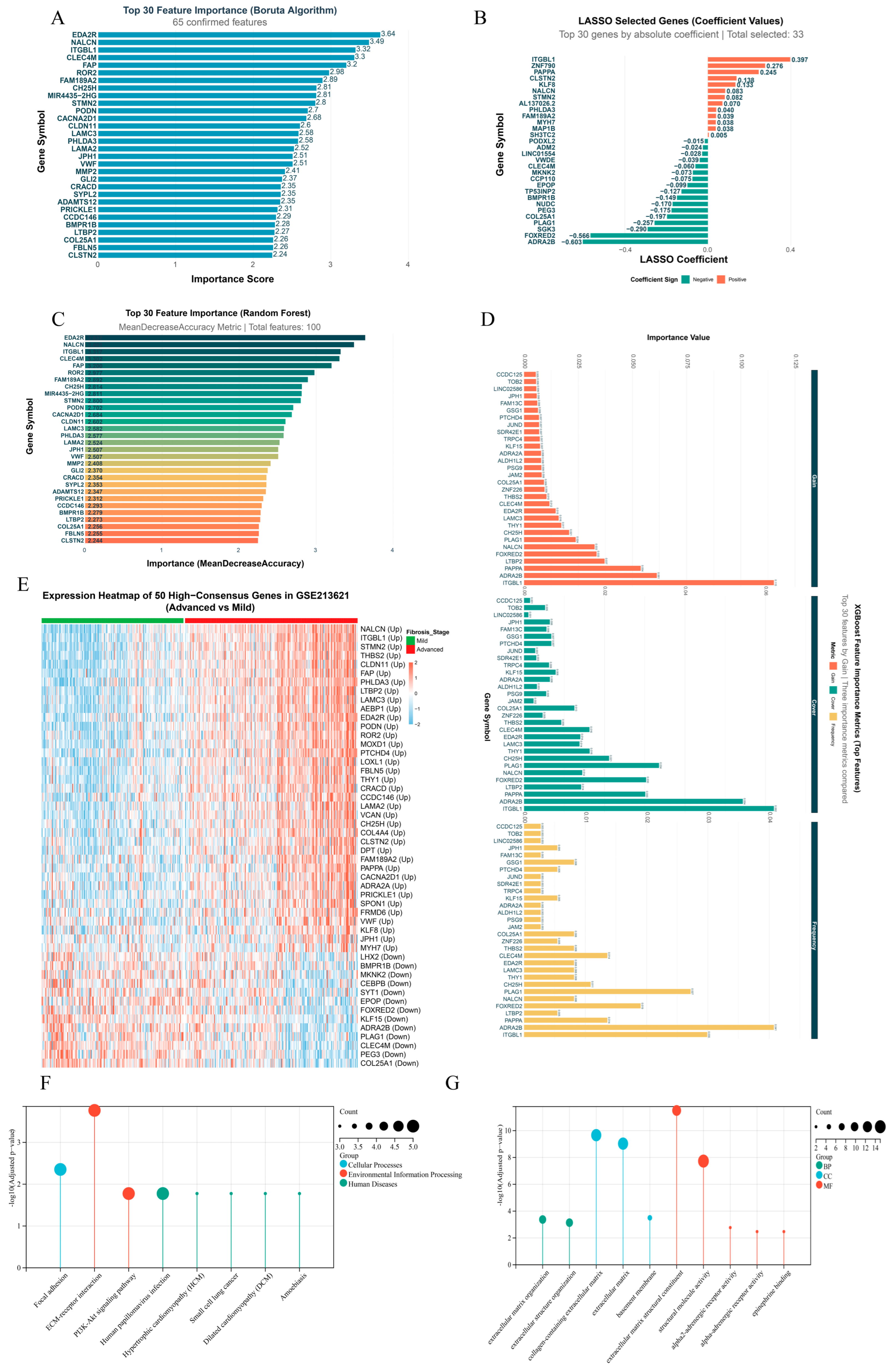
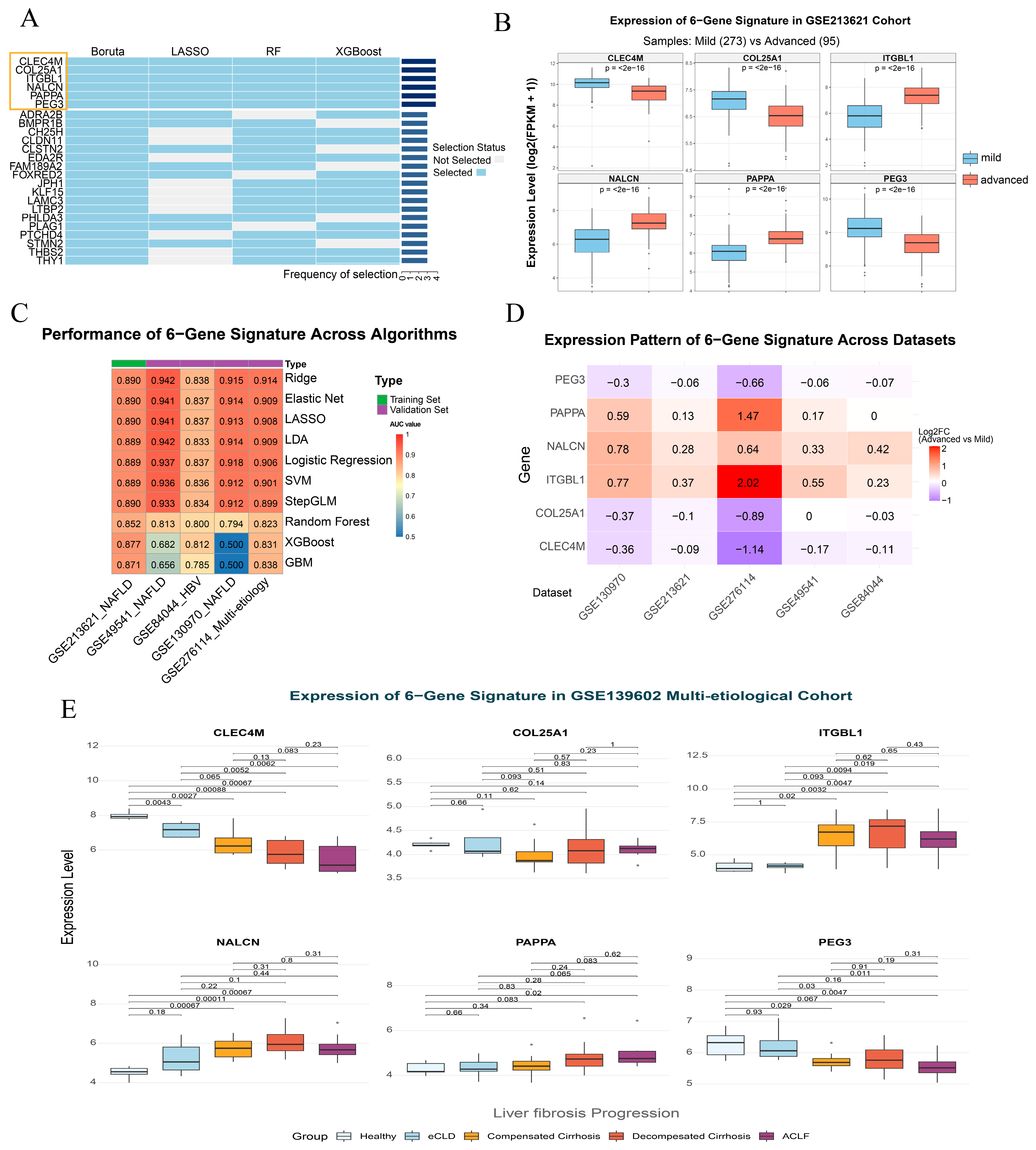




| Algorithm | Number of Selected Genes/Features | Key Parameters/Metrics |
|---|---|---|
| Boruta | 65 | Importance score (Z-score) > shadow features |
| LASSO | 33 | λ = lambda.1se (selected via 10-fold cross-validation) |
| Random Forest | 100 | Mean Decrease Accuracy (MDA) |
| XGBoost | 50 | Gain, Cover, Frequency |
| Algorithm Category | Algorithm | GSE213621 (NAFLD-Training, 10-Fold CV) | GSE49541 (NAFLD) | GSE84044 (HBV) | GSE130970 (NAFLD) | GSE276114 (Multi-Etiology) | Mean AUC (±SD) | Rank |
|---|---|---|---|---|---|---|---|---|
| Regularized Linear Models | Ridge Regression | 0.890 | 0.942 | 0.838 | 0.915 | 0.914 | 0.900 ± 0.039 | 1 |
| Regularized Linear Models | Elastic Net | 0.890 | 0.941 | 0.837 | 0.914 | 0.909 | 0.898 ± 0.039 | 2 |
| Regularized Linear Models | LASSO | 0.890 | 0.941 | 0.837 | 0.913 | 0.908 | 0.898 ± 0.039 | 3 |
| Linear Classifiers | Linear Discriminant Analysis | 0.889 | 0.942 | 0.833 | 0.914 | 0.909 | 0.897 ± 0.041 | 4 |
| Linear Classifiers | Logistic Regression | 0.889 | 0.937 | 0.837 | 0.918 | 0.906 | 0.897 ± 0.038 | 5 |
| Linear Classifiers | SVM (Linear Kernel) | 0.889 | 0.936 | 0.836 | 0.912 | 0.901 | 0.895 ± 0.037 | 6 |
| Stepwise Models | Stepwise Logistic Regression | 0.890 | 0.933 | 0.834 | 0.912 | 0.899 | 0.894 ± 0.037 | 7 |
| Ensemble Learning | Random Forest | 0.852 | 0.813 | 0.800 | 0.794 | 0.823 | 0.817 ± 0.023 | 8 |
| Ensemble Learning | XGBoost | 0.877 | 0.682 | 0.812 | 0.500 | 0.831 | 0.740 ± 0.153 | 9 |
| Ensemble Learning | Gradient Boosting Machine | 0.871 | 0.656 | 0.785 | 0.500 | 0.838 | 0.730 ± 0.152 | 10 |
| Gene | Group | T/NK Cells | Myeloid Cells | Fibroblasts | Endothelial Cells | Hepatocytes | Cholangiocytes | B/Plasma Cells | Epithelial Cells |
|---|---|---|---|---|---|---|---|---|---|
| COL25A1 | Health | 0.75 | 0.63 | 51.50 | 3.88 | 24.17 | 20.03 | 0.00 | 0.00 |
| Liver fibrosis | 0.00 | 0.00 | 98.64 | 1.36 | 0.00 | 0.00 | 0.00 | 0.00 | |
| PAPPA | Health | 2.07 | 0.00 | 80.68 | 0.54 | 0.00 | 13.43 | 3.11 | 0.00 |
| Liver fibrosis | 0.15 | 0.05 | 15.27 | 0.06 | 0.40 | 0.85 | 0.00 | 83.21 | |
| NALCN | Health | 2.15 | 2.19 | 33.64 | 20.11 | 38.14 | 1.96 | 0.00 | 0.00 |
| Liver fibrosis | 0.33 | 1.46 | 81.78 | 4.93 | 0.00 | 4.00 | 0.00 | 6.90 | |
| ITGBL1 | Health | 0.81 | 0.47 | 97.26 | 1.46 | 0.00 | 0.00 | 0.27 | 0.00 |
| Liver fibrosis | 0.08 | 0.34 | 93.53 | 0.35 | 0.70 | 0.21 | 0.10 | 4.84 | |
| CLEC4M | Health | 0.44 | 1.13 | 0.86 | 93.13 | 2.19 | 1.15 | 0.70 | 0.00 |
| Liver fibrosis | 2.32 | 3.36 | 2.45 | 59.79 | 0.00 | 1.67 | 1.14 | 26.96 | |
| PEG3 | Health | 0.00 | 0.66 | 11.21 | 2.35 | 3.57 | 2.88 | 0.00 | 79.32 |
| Liver fibrosis | 0.00 | 0.22 | 38.75 | 4.36 | 0.00 | 5.08 | 0.00 | 51.43 |
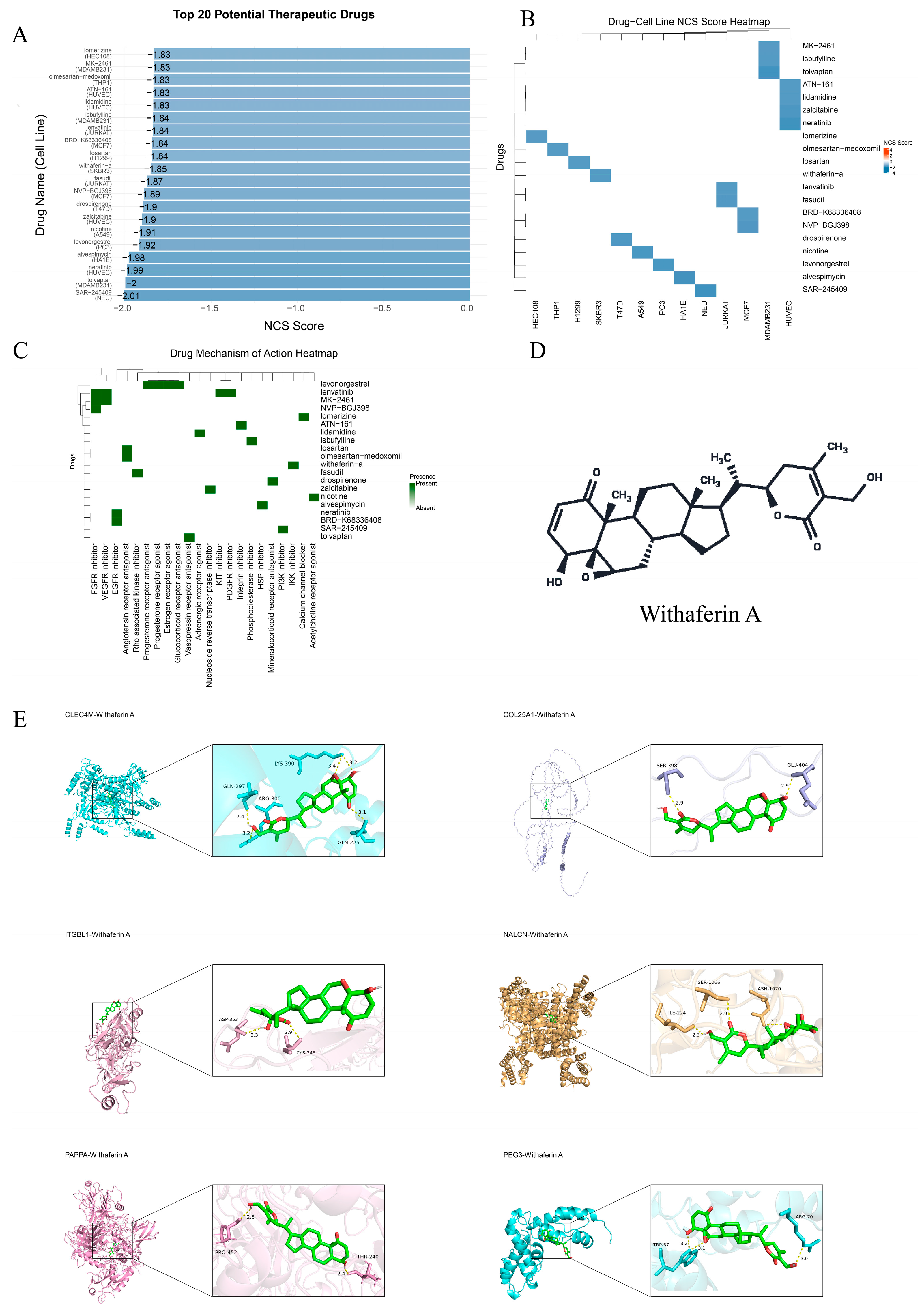
| Target Protein | Binding Free Energy (kcal/mol) | Key Interaction Sites | Interaction Mode and Priority |
|---|---|---|---|
| NALCN | −9.9 | ILE-224 (2.3 Å H-bond), SER-1066, ASN-1070 | Highest affinity. Dominated by a single strong H-bond, suggesting the most probable primary target. |
| CLEC4M | −8.9 | GLN-297, ARG-300, LYS-390, GLN-225 (5 H-bond network) | High stability. Multi-point H-bond network indicates robust binding; a high-potential target. |
| PEG3 | −8.9 | TRP-37 (hydrophobic/π-π stacking), other H-bonds (3.0–3.2 Å) | Hydrophobic-driven. High binding energy mainly from aromatic ring interactions; a key binding mode. |
| PAPPA | −8.6 | PRO-452 (2.4 Å H-bond), THR-240 (2.5 Å H-bond) | High efficiency. “Few but strong” H-bond pattern suggests specific binding potential. |
| ITGBL1 | −7.1 | ASP-353 (2.3 Å H-bond) | Moderate affinity. Significantly weaker binding; likely a secondary or auxiliary target. |
| COL25A1 | −6.4 | SER-398, GLU-404 (weak H-bonds) | Weak affinity. Loose binding mode suggests non-specific interaction. |
| Dataset | Platforms | Technology | Samples | Fibrosis Stage * | Etiology | Healthy Controls | Species |
|---|---|---|---|---|---|---|---|
| GSE213621 | GPL16791 | RNA-seq | 368 | health + mild (n = 273), advanced (n = 95) | NAFLD | 69 | Human |
| GSE49541 | GPL570 | Microarray | 72 | mild (n = 40), advanced (n = 32) | NAFLD | 0 | Human |
| GSE84044 | GPL570 | Microarray | 124 | mild (n = 96), advanced (n = 28) | HBV | 0 | Human |
| GSE130970 | GPL16791 | RNA-seq | 78 | health + mild (n = 62), advanced (n = 16) | NAFLD | 6 | Human |
| GSE276114 | GPL24676 | RNA-seq | 177 | mild (n = 39), advanced (n = 138) | Multi-etiology # | 0 | Human |
| GSE139602 | GPL13667 | Microarray | 39 | Different liver disease stages | Multi-etiology | 6 | Human |
| GSE136103 | GPL20301 | scRNA-seq | 10 | Health (n = 5); Fibrosis (n = 5) | Multi-etiology | 5 | Human |
| GSE172492 | GPL24247 | scRNA-seq | 5 | Health (n = 1); Fibrosis (n = 4) | CCl4-induced | 1 | Mus musculus |
Disclaimer/Publisher’s Note: The statements, opinions and data contained in all publications are solely those of the individual author(s) and contributor(s) and not of MDPI and/or the editor(s). MDPI and/or the editor(s) disclaim responsibility for any injury to people or property resulting from any ideas, methods, instructions or products referred to in the content. |
© 2026 by the authors. Licensee MDPI, Basel, Switzerland. This article is an open access article distributed under the terms and conditions of the Creative Commons Attribution (CC BY) license.
Share and Cite
Qin, Y.; Ma, S.; Hong, H.; Zhong, D.; Liang, Y.; Su, Y.; Chen, Y.; Chen, X.; Zhu, Y.; Huang, X. From a Multi-Omics Signature to a Therapeutic Candidate: Computational Prediction and Experimental Validation in Liver Fibrosis. Pharmaceuticals 2026, 19, 495. https://doi.org/10.3390/ph19030495
Qin Y, Ma S, Hong H, Zhong D, Liang Y, Su Y, Chen Y, Chen X, Zhu Y, Huang X. From a Multi-Omics Signature to a Therapeutic Candidate: Computational Prediction and Experimental Validation in Liver Fibrosis. Pharmaceuticals. 2026; 19(3):495. https://doi.org/10.3390/ph19030495
Chicago/Turabian StyleQin, Yingying, Shuoshuo Ma, Haoyuan Hong, Deyuan Zhong, Yuxin Liang, Yuhao Su, Yahui Chen, Xing Chen, Yizhun Zhu, and Xiaolun Huang. 2026. "From a Multi-Omics Signature to a Therapeutic Candidate: Computational Prediction and Experimental Validation in Liver Fibrosis" Pharmaceuticals 19, no. 3: 495. https://doi.org/10.3390/ph19030495
APA StyleQin, Y., Ma, S., Hong, H., Zhong, D., Liang, Y., Su, Y., Chen, Y., Chen, X., Zhu, Y., & Huang, X. (2026). From a Multi-Omics Signature to a Therapeutic Candidate: Computational Prediction and Experimental Validation in Liver Fibrosis. Pharmaceuticals, 19(3), 495. https://doi.org/10.3390/ph19030495