Geopropolis from Melipona orbignyi and Melipona quadrifasciata anthidioides Enhances Oxidative Stress Resistance and Lifespan in Caenorhabditis elegans


 ,
,  ,
,  , and
, and 
Abstract
1. Introduction
2. Results
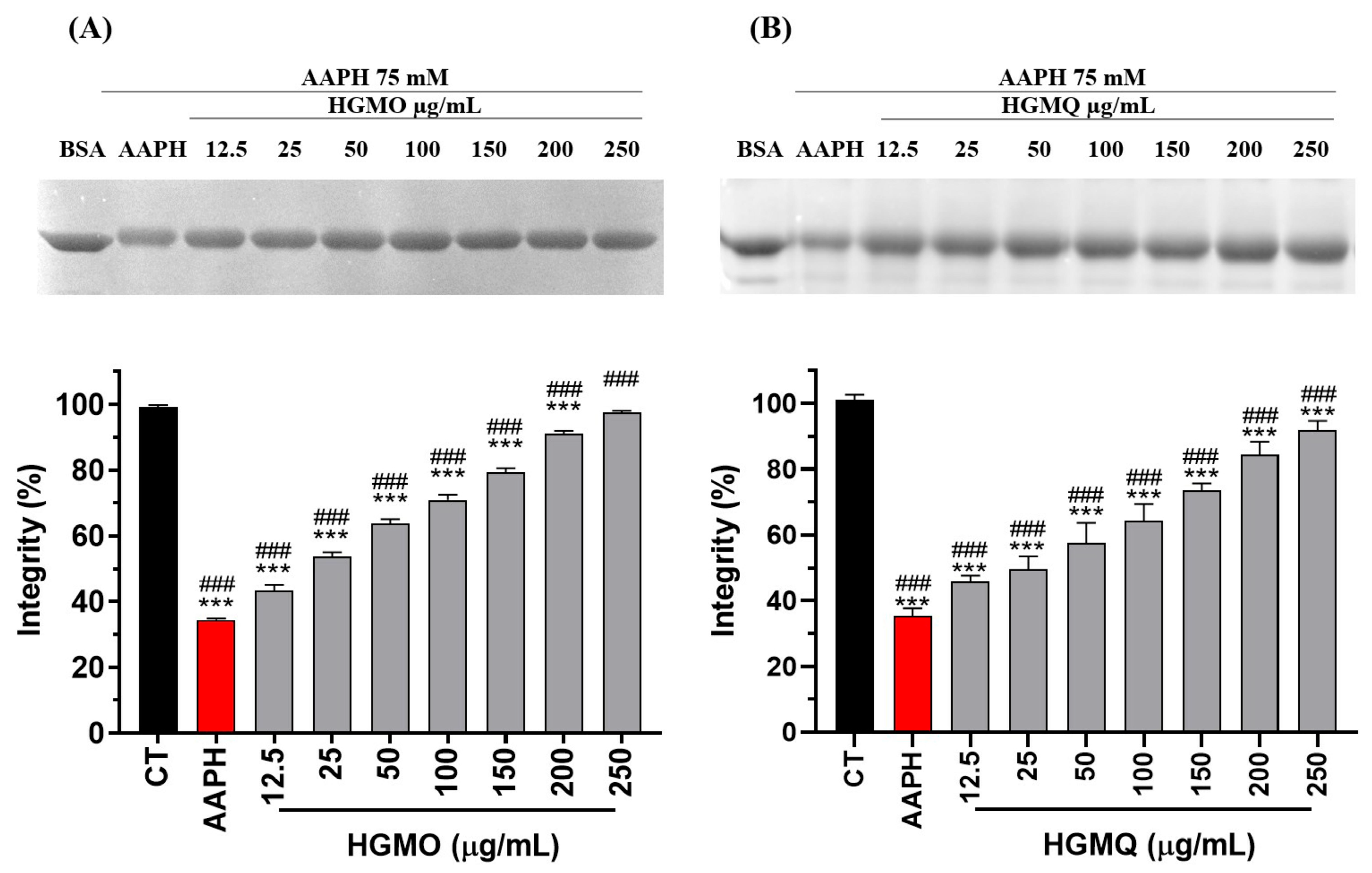
2.1. Protein Oxidation
2.2. DNA-Induced Oxidative Damage
2.3. In Vivo Tests Using the Caenorhabditis elegans Model
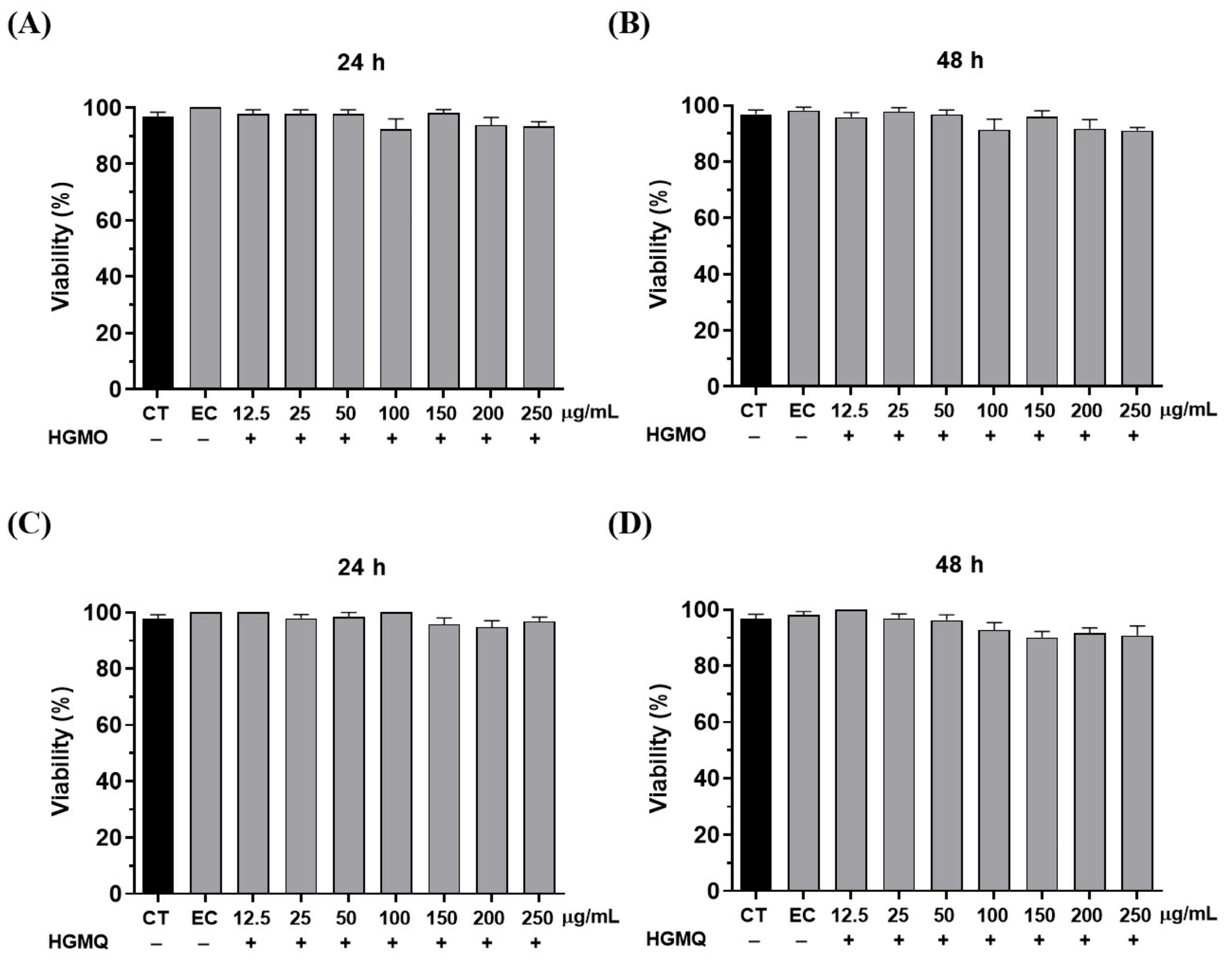
2.3.1. Toxicity
2.3.2. Protection Against Oxidative Stress Induced by Juglone
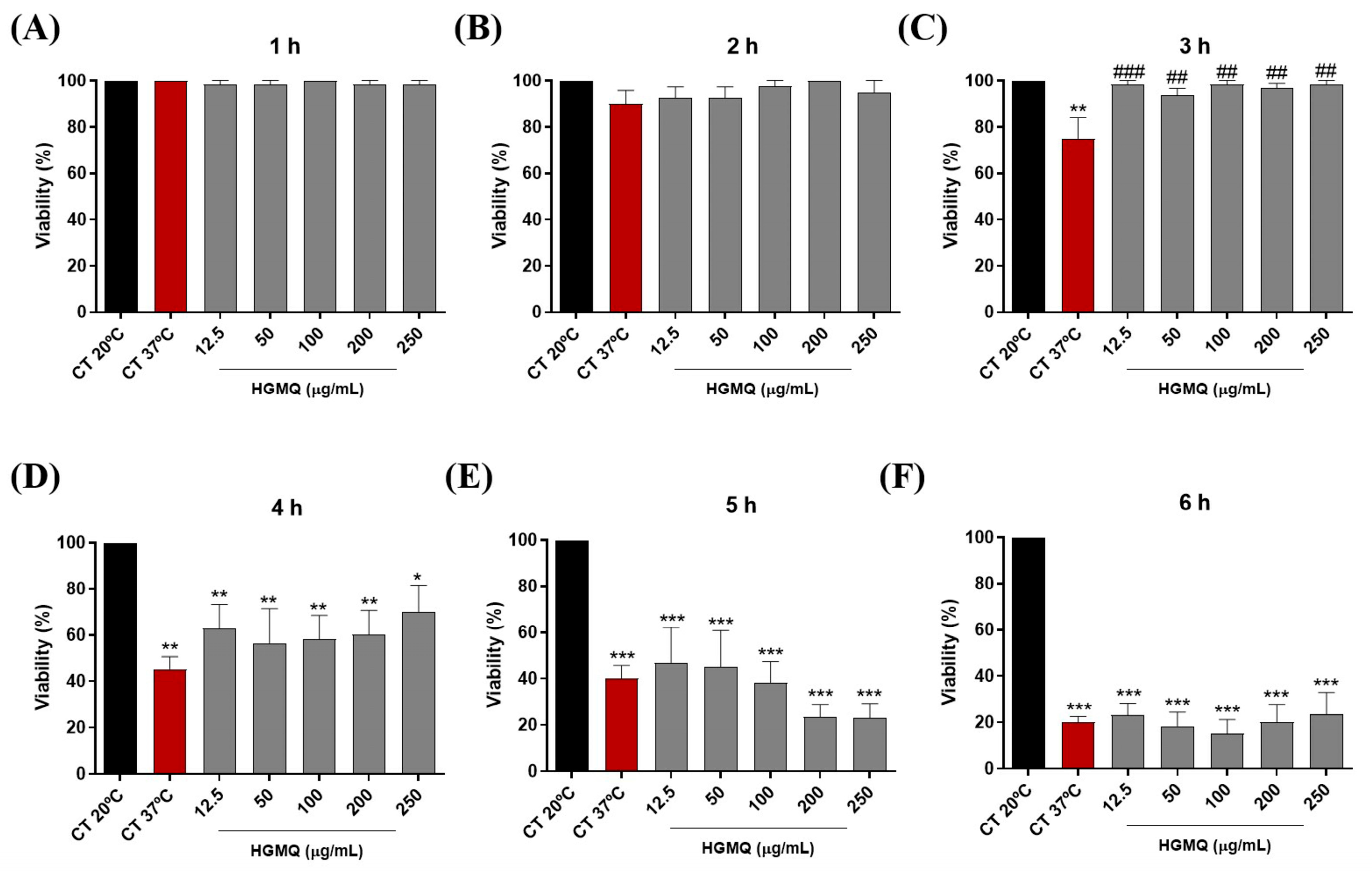
2.3.3. Protection Against Thermal Stress
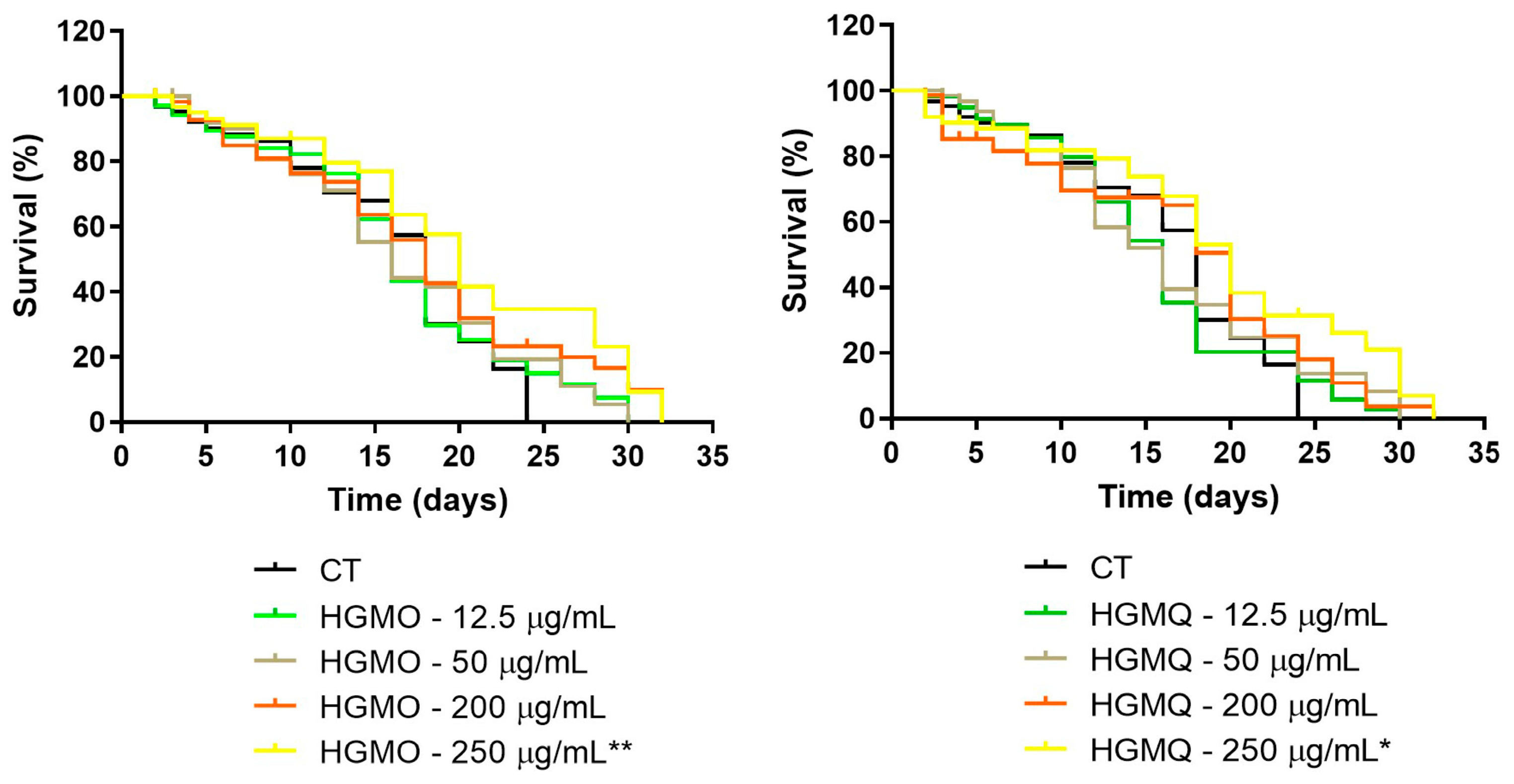
2.3.4. Longevity Assay
3. Discussion
4. Materials and Methods
4.1. Chemicals and Reagents
4.2. Geopropolis Sample Collection and Preparation of Hydroethanolic Extracts
4.3. Macromolecule Protection Assays
4.3.1. Protein Oxidation
4.3.2. DNA-Induced Oxidative Damage
4.4. In Vivo Assays Using the Caenorhabditis elegans Model
4.4.1. Cultivation and Maintenance of C. elegans
4.4.2. Acute Toxicity Assessment
4.4.3. Protection Against Oxidative Stress Induced by Juglone
4.4.4. Protection Against Thermal Stress
4.4.5. Longevity Assay
4.5. Statistical Analysis
5. Conclusions
Supplementary Materials
Author Contributions
Funding
Institutional Review Board Statement
Informed Consent Statement
Data Availability Statement
Conflicts of Interest
References
- Kozlov, A.V.; Javadov, S.; Sommer, N. Cellular ROS and antioxidants: Physiological and pathological role. Antioxidants 2024, 13, 602. [Google Scholar] [CrossRef] [Scilit]
- Fatma, H.; Jameel, M.; Siddique, H.R. An update on phytochemicals in redox homeostasis: “Virtuous or Evil” in cancer chemoprevention? Chemistry 2023, 5, 201–222. [Google Scholar] [CrossRef] [Scilit]
- Singh, A.; Kukreti, R.; Saso, L.; Kukreti, S. Oxidative stress: A key modulator in neurodegenerative diseases. Molecules 2019, 24, 1583. [Google Scholar] [CrossRef] [Scilit]
- Remigante, A.; Morabito, R. Cellular and molecular mechanisms in oxidative stress-related diseases. Int. J. Mol. Sci. 2022, 23, 8017. [Google Scholar] [CrossRef] [Scilit]
- Hajam, Y.A.; Rani, R.; Ganie, S.Y.; Sheikh, T.A.; Javaid, D.; Qadri, S.S.; Pramodh, S.; Alsulimani, A.; Alkhanani, M.F.; Harakeh, S.; et al. Oxidative stress in human pathology and aging: Molecular mechanisms and perspectives. Cells 2022, 11, 552. [Google Scholar] [CrossRef] [Scilit]
- World Health Organization. Noncommunicable Diseases. Available online: https://www.who.int/health-topics/noncommunicable-diseases#tab=tab_1 (accessed on 20 August 2025).
- Nediani, C.; Ruzzolini, J.; Dinu, M. Oxidative stress and inflammation as targets for novel preventive and therapeutic approaches in non-communicable diseases III. Antioxidants 2024, 13, 1404. [Google Scholar] [CrossRef] [Scilit] [PubMed]
- Chiang, J.C.; Chen, W.M.; Newman, C.; Chen, B.P.; Lee, H. Lysophosphatidic acid receptor 3 promotes mitochondrial homeostasis against oxidative stress: Potential therapeutic approaches for Hutchinson–Gilford progeria syndrome. Antioxidants 2022, 11, 351. [Google Scholar] [CrossRef] [Scilit]
- Goh, J.; Wong, E.; Soh, J.; Maier, A.B.; Kennedy, B.K. Targeting the molecular & cellular pillars of human aging with exercise. FEBS J. 2023, 290, 649–668. [Google Scholar] [CrossRef] [Scilit]
- Nogueira-Neto, P. Vida e Criação de Abelhas Indígenas Sem Ferrão, 1st ed.; Edição Nogueirapis: São Paulo, Brazil, 1997; 446p. [Google Scholar]
- Oliveira, L.P.G.; Conte, F.L.; de Oliveira Cardoso, E.; Conti, B.J.; Santiago, K.B.; de Assis Golim, M.; Sforcin, J.M. A new chemotherapeutic approach using doxorubicin simultaneously with geopropolis favoring monocyte functions. Life Sci. 2019, 217, 81–90. [Google Scholar] [CrossRef] [Scilit] [PubMed]
- Santos, C.M.; Campos, J.F.; dos Santos, H.F.; Balestieri, J.B.P.; Silva, D.B.; de Picoli Souza, K.; Carollo, C.A.; Estevinho, L.M.; Santos, E.L.D. Chemical composition and pharmacological effects of geopropolis produced by Melipona quadrifasciata anthidioides. Oxid. Med. Cell. Longev. 2017, 2017, 8320804. [Google Scholar] [CrossRef] [Scilit] [PubMed]
- Honorio, M.S.; Sartori, A.A.; Ripari, N.; Santiago, K.B.; Sforcin, J.M. Anti-inflammatory action of geopropolis produced by stingless bees on human peripheral blood mononuclear cells. Hum. Immunol. 2024, 85, 110825. [Google Scholar] [CrossRef] [Scilit]
- Silva, P.G.D.; Chaves, E.J.F.; Silva, T.M.S.; Rocha, G.B.; Dantas, W.M.; Oliveira, R.N.D.; Pena, L.J. Antiviral activity of flavonoids from geopropolis of the Brazilian Jandaira bee against Zika and dengue viruses. Pharmaceutics 2023, 15, 2494. [Google Scholar] [CrossRef] [Scilit] [PubMed]
- Sousa-Fontoura, D.M.; Olinda, R.G.; Viana, G.A.; Costa, K.M.F.M.; Batista, J.S.; Serrano, R.M.; Silva, O.M.D.; Camara, C.A.; Silva, T.M.S. Wound healing activity and chemical composition of geopropolis from Melipona subnitida. Rev. Bras. Farmacogn. 2020, 30, 367–373. [Google Scholar] [CrossRef] [Scilit]
- Dutra, R.P.; Bezerra, J.L.; Silva, M.C.P.D.; Batista, M.C.A.; Patrício, F.J.B.; Nascimento, F.R.F.; Ribeiro, M.N.S.; Guerra, R.N.M. Antileishmanial activity and chemical composition from Brazilian geopropolis produced by stingless bee Melipona fasciculata. Rev. Bras. Farmacogn. 2019, 29, 287–293. [Google Scholar] [CrossRef] [Scilit]
- Batista, J.S.; da Silva Teofilo, T.; de Araujo Junior, H.N.; Felix, N.S.; de Paiva, K.A.R.; Neves, T.A.; dos Santos Reboucas, L.; de Medeiros, G.V.D.; de Freitas Mendonca Costa, K.M.; Felix Xavier, F.A.; et al. Gastroprotective effect of the hydroethanolic extract of geopropolis produced by Melipona subnitida (Meliponinae, Apidae) in Wistar rats. Vet. Med. 2025, 70, 134. [Google Scholar] [CrossRef] [Scilit]
- Paz, M.M.d.; Sette, K.M.; dos Santos, R.E.; Barbosa e Vasconcelos, A.L.; Costa, D.C.F.d.; Amaral, A.C.F.; Rodrigues, I.A.; Pereira Rangel, L. Brazilian stingless bee geopropolis exhibits antioxidant properties and anticancer potential against hepatocellular carcinoma cells. Antioxidants 2025, 14, 141. [Google Scholar] [CrossRef] [Scilit] [PubMed]
- Santos, H.F.d.; Campos, J.F.; Santos, C.M.d.; Balestieri, J.B.P.; Silva, D.B.; Carollo, C.A.; De Picoli Souza, K.; Estevinho, L.M.; Dos Santos, E.L. Chemical profile and antioxidant, anti-inflammatory, antimutagenic and antimicrobial activities of geopropolis from the stingless bee Melipona orbignyi. Int. J. Mol. Sci. 2017, 18, 953. [Google Scholar] [CrossRef] [Scilit]
- Gabriel, M.B.; Carneiro, M.J.; de Camargo, R.C.; Sawaya, A.C. The chemical composition and antioxidant activity of mandaçaia (Melipona quadrifasciata) geopropolis varies more due to region than month of collection. Nat. Prod. Res. 2022, 36, 1626–1630. [Google Scholar] [CrossRef] [Scilit]
- Sorokina, M.; Steinbeck, C. Review on natural products databases: Where to find data in 2020. J. Cheminform. 2020, 12, 20. [Google Scholar] [CrossRef] [Scilit]
- Souza, R.C.D.S.; Yuyama, L.K.O.; Aguiar, J.P.L.; Oliveira, F.P.M. Valor nutricional do mel e pólen de abelhas sem ferrão da região amazônica. Acta Amazon. 2004, 34, 333–336. [Google Scholar] [CrossRef] [Scilit]
- Tramutola, A.; Lanzillotta, C.; Perluigi, M.; Butterfield, D.A. Oxidative stress, protein modification and Alzheimer disease. Brain Res. Bull. 2017, 133, 88–96. [Google Scholar] [CrossRef] [Scilit]
- Lobo, V.; Patil, A.; Phatak, A.; Chandra, N. Free radicals, antioxidants and functional foods: Impact on human health. Pharmacogn. Rev. 2010, 4, 118. [Google Scholar] [CrossRef] [Scilit]
- Mayo, J.C.; Tan, D.X.; Sainz, R.M.; Lopez-Burillo, S.; Reiter, R.J. Oxidative damage to catalase induced by peroxyl radicals: Functional protection by melatonin and other antioxidants. Free Radic. Res. 2003, 37, 543–553. [Google Scholar] [CrossRef] [Scilit]
- Cecarini, V.; Gee, J.; Fioretti, E.; Amici, M.; Angeletti, M.; Eleuteri, A.M.; Keller, J.N. Protein oxidation and cellular homeostasis: Emphasis on metabolism. Biochim. Biophys. Acta Mol. Cell Res. 2007, 1773, 93–104. [Google Scholar] [CrossRef] [Scilit] [PubMed]
- Selvaraj, N.R.; Nandan, D.; Nair, B.G.; Nair, V.A.; Venugopal, P.; Aradhya, R. Oxidative stress and redox imbalance: Common mechanisms in cancer stem cells and neurodegenerative diseases. Cells 2025, 14, 511. [Google Scholar] [CrossRef] [Scilit] [PubMed]
- Rajan, I.; Narayanan, N.; Rabindran, R.; Jayasree, P.R.; Manish Kumar, P.R. Zingerone protects against stannous chloride-induced and hydrogen peroxide-induced oxidative DNA damage in vitro. Biol. Trace Elem. Res. 2013, 155, 455–459. [Google Scholar] [CrossRef] [Scilit]
- Collin, F. Chemical basis of reactive oxygen species reactivity and involvement in neurodegenerative diseases. Int. J. Mol. Sci. 2019, 20, 2407. [Google Scholar] [CrossRef] [Scilit] [PubMed]
- Wu, X.; Dhanasekaran, S. Protective effect of leaf extract of Abutilon indicum on DNA damage and peripheral blood lymphocytes in combating the oxidative stress. Saudi Pharm. J. 2020, 28, 943–950. [Google Scholar] [CrossRef] [Scilit]
- Savina, N.V.; Nikitchenko, N.V.; Kuzhir, T.D.; Rolevich, A.I.; Krasny, S.A.; Goncharova, R.I. The cellular response to oxidatively induced DNA damage and polymorphism of some DNA repair genes associated with clinicopathological features of bladder cancer. Oxid. Med. Cell. Longev. 2016, 2016, 5710403. [Google Scholar] [CrossRef] [Scilit]
- Schumacher, B.; Pothof, J.; Vijg, J.; Hoeijmakers, J.H. The central role of DNA damage in the ageing process. Nature 2021, 592, 695–703. [Google Scholar] [CrossRef] [Scilit]
- Zhao, L.; Yu, M.; Sun, M.; Xue, X.; Wang, T.; Cao, W.; Sun, L. Rapid determination of major compounds in the ethanol extract of geopropolis from Malaysian stingless bees, Heterotrigona itama, by UHPLC-Q-TOF/MS and NMR. Molecules 2017, 22, 1935. [Google Scholar] [CrossRef] [Scilit]
- Ferreira, B.L.; Gonzaga, L.V.; Vitali, L.; Micke, G.A.; Maltez, H.F.; Ressureição, C.; Costa, A.C.O.; Fett, R. Southern-Brazilian geopropolis: A potential source of polyphenolic compounds and assessment of mineral composition. Food Res. Int. 2019, 126, 108683. [Google Scholar] [CrossRef] [Scilit]
- Coelho, G.R.; Mendonça, R.Z.; Vilar, K.D.S.; Figueiredo, C.A.; Badari, J.C.; Taniwaki, N.; Namiyama, G.; de Oliveira, M.I.; Curti, S.P.; Silva, P.E.; et al. Antiviral action of hydromethanolic extract of geopropolis from Scaptotrigona postica against antiherpes simplex virus (HSV-1). Evid. Based Complement. Alternat. Med. 2015, 2015, 296086. [Google Scholar] [CrossRef] [Scilit]
- Yan, Z.; Zhong, Y.; Duan, Y.; Chen, Q.; Li, F. Antioxidant mechanism of tea polyphenols and its impact on health benefits. Anim. Nutr. 2020, 6, 115–123. [Google Scholar] [CrossRef] [Scilit] [PubMed]
- Sjakste, N.; Djelić, N.; Dzintare, M.; Živković, L. DNA-binding and DNA-protecting activities of small natural organic molecules and food extracts. Chem.-Biol. Interact. 2020, 323, 109030. [Google Scholar] [CrossRef] [Scilit] [PubMed]
- Kim, D.K.; Kim, T.H.; Lee, S.J. Mechanisms of aging-related proteinopathies in Caenorhabditis elegans. Exp. Mol. Med. 2016, 48, e263. [Google Scholar] [CrossRef] [Scilit]
- Hunt, P.R. The C elegans model in toxicity testing. J. Appl. Toxicol. 2017, 37, 50–59. [Google Scholar] [CrossRef] [Scilit] [PubMed]
- Ayuda-Durán, B.; González-Manzano, S.; González-Paramás, M.A.; Santos-Buelga, C. Caenorhabditis elegans as a model organism to evaluate the antioxidant effects of phytochemicals. Molecules 2020, 25, 3194. [Google Scholar] [CrossRef] [Scilit]
- Abdullah, N.A.; Ja’afar, F.; Yasin, H.M.; Taha, H.; Petalcorin, M.I.; Mamit, M.H.; Kusrini, E.; Usman, A. Physicochemical analyses, antioxidant, antibacterial, and toxicity of propolis particles produced by the stingless bee Heterotrigona itama found in Brunei Darussalam. Heliyon 2019, 5, e02476. [Google Scholar] [CrossRef] [Scilit] [PubMed]
- Arteman, K.D.S.; da Rocha, P.D.S.; Leite, D.F.; Oliveira, A.S.; da Silva, I.V.; Jorge, N.G.; da Silva Soutilha, A.; dos Santos, H.F.; da Silva Baldivia, D.; Balestieri, J.B.P.; et al. Plebeia catamarcensis and Tetragonisca fiebrigi (Hymenoptera, Apidae) propolis promotes longevity and anti-Alzheimer effects in Caenorhabditis elegans. PLoS ONE 2025, 20, e0321487. [Google Scholar] [CrossRef] [Scilit] [PubMed]
- Cunha, M.G.; Sardi, J.D.C.O.; Freires, I.A.; Franchin, M.; Rosalen, P.L. Antimicrobial, anti-adherence and antibiofilm activity against Staphylococcus aureus of a 4-phenyl coumarin derivative isolated from Brazilian geopropolis. Microb. Pathog. 2020, 139, 103855. [Google Scholar] [CrossRef] [Scilit] [PubMed]
- Przybysz, A.J.; Choe, K.P.; Roberts, L.J.; Strange, K. Increased age reduces DAF-16 and SKN-1 signaling and the hormetic response of Caenorhabditis elegans to the xenobiotic juglone. Mech. Ageing Dev. 2009, 130, 357–369. [Google Scholar] [CrossRef] [Scilit] [PubMed]
- Wang, P.; Zhang, S.D.; Jiao, J.; Wang, W.; Yu, L.; Zhao, X.L.; Fu, Y.J. ROS-mediated p53 activation by juglone enhances apoptosis and autophagy in vivo and in vitro. Toxicol. Appl. Pharmacol. 2019, 379, 114647. [Google Scholar] [CrossRef] [Scilit]
- Back, P.; Braeckman, B.P.; Matthijssens, F. ROS in aging Caenorhabditis elegans: Damage or signaling? Oxid. Med. Cell. Longev. 2012, 2012, 608478. [Google Scholar] [CrossRef] [Scilit]
- Mathew, R.; Bhadra, M.P.; Bhadra, U. Insulin/insulin-like growth factor-1 signalling (IIS) based regulation of lifespan across species. Biogerontology 2017, 18, 35–53. [Google Scholar] [CrossRef] [Scilit] [PubMed]
- Tullet, J.M.; Green, J.W.; Au, C.; Benedetto, A.; Thompson, M.A.; Clark, E.; Gilliat, A.F.; Young, A.; Schmeisser, K.; Gems, D. The SKN-1/Nrf2 transcription factor can protect against oxidative stress and increase lifespan in Caenorhabditis elegans by distinct mechanisms. Aging Cell 2017, 16, 1191–1194. [Google Scholar] [CrossRef] [Scilit] [PubMed]
- Martel, J.; Wu, C.Y.; Peng, H.H.; Ko, Y.F.; Yang, H.C.; Young, J.D.; Ojcius, D.M. Plant and fungal products that extend lifespan in Caenorhabditis elegans. Microb. Cell 2020, 7, 255. [Google Scholar] [CrossRef] [Scilit] [PubMed]
- Emami, N.K.; Jung, U.; Voy, B.; Dridi, S. Radical response: Effects of heat stress-induced oxidative stress on lipid metabolism in the avian liver. Antioxidants 2021, 10, 35. [Google Scholar] [CrossRef] [Scilit] [PubMed]
- Brunquell, J.; Morris, S.; Lu, Y.; Cheng, F.; Westerheide, S.D. The genome-wide role of HSF-1 in the regulation of gene expression in Caenorhabditis elegans. BMC Genom. 2016, 17, 559. [Google Scholar] [CrossRef] [Scilit] [PubMed]
- Kyriakou, E.; Taouktsi, E.; Syntichaki, P. The thermal stress coping network of the nematode Caenorhabditis elegans. Int. J. Mol. Sci. 2022, 23, 14907. [Google Scholar] [CrossRef] [Scilit] [PubMed]
- Jovic, K.; Sterken, M.G.; Grilli, J.; Bevers, R.P.; Rodriguez, M.; Riksen, J.A.G.; Allesina, S.; Kammenga, J.E.; Basten Snoek, L. Temporal dynamics of gene expression in heat-stressed Caenorhabditis elegans. PLoS ONE 2017, 12, e0189445. [Google Scholar] [CrossRef] [Scilit]
- Oh, S.W.; Mukhopadhyay, A.; Svrzikapa, N.; Jiang, F.; Davis, R.J.; Tissenbaum, H.A. JNK regulates lifespan in Caenorhabditis elegans by modulating nuclear translocation of forkhead transcription factor/DAF-16. Proc. Natl. Acad. Sci. USA 2005, 102, 4494–4499. [Google Scholar] [CrossRef] [Scilit]
- Tepper, R.G.; Ashraf, J.; Kaletsky, R.; Kleemann, G.; Murphy, C.T.; Bussemaker, H.J. PQM-1 complements DAF-16 as a key transcriptional regulator of DAF-2-mediated development and longevity. Cell 2013, 154, 676–690. [Google Scholar] [CrossRef] [Scilit]
- Ge, Y.; Chen, H.; Wang, J.; Liu, G.; Cui, S.W.; Kang, J.; Jiang, Y.; Wang, H. Naringenin prolongs lifespan and delays aging mediated by IIS and MAPK in Caenorhabditis elegans. Food Funct. 2021, 12, 12127–12141. [Google Scholar] [CrossRef] [Scilit] [PubMed]
- Wolf, M.; Nunes, F.; Henkel, A.; Heinick, A.; Paul, R.J. The MAP kinase JNK-1 of Caenorhabditis elegans: Location, activation, and influences over temperature-dependent insulin-like signaling, stress responses, and fitness. J. Cell. Physiol. 2008, 214, 721–729. [Google Scholar] [CrossRef] [Scilit] [PubMed]
- Sobeh, M.; Mahmoud, M.F.; Abdelfattah, M.A.; Cheng, H.; El-Shazly, A.M.; Wink, M. A proanthocyanidin-rich extract from Cassia abbreviata exhibits antioxidant and hepatoprotective activities in vivo. J. Ethnopharmacol. 2018, 213, 38–47. [Google Scholar] [CrossRef] [Scilit] [PubMed]




| Treatment (µg/mL) | Mean Lifespan a (Days) | Maximum Lifespan a (Days) | p Value (Log-Rank) vs. Control b | Hazard Ratio c (Treated vs. Control) | Total Number of Nematodes | |||||
|---|---|---|---|---|---|---|---|---|---|---|
| HGMO | HGMQ | HGMO | HGMQ | HGMO | HGMQ | HGMO | HGMQ | HGMO | HGMQ | |
| 0 | 18 | 18 | 24 | 24 | - | - | - | - | 60 (2) | 60 (2) |
| 12.5 | 16 | 16 | 30 | 30 | 0.7563 | 0.8620 | 0.92 | 1.05 | 60 (2) | 60 (2) |
| 50 | 16 | 16 | 30 | 30 | 0.3390 | 0.7451 | 0.78 | 0.92 | 60 (2) | 60 (2) |
| 200 | 18 | 20 | 32 | 32 | 0.1725 | 0.2352 | 0.70 | 0.74 | 60 (2) | 60 (2) |
| 250 | 20 | 20 | 32 | 32 | 0.0068 ** | 0.0285 * | 0.48 | 0.55 | 60 (2) | 60 (2) |
Disclaimer/Publisher’s Note: The statements, opinions and data contained in all publications are solely those of the individual author(s) and contributor(s) and not of MDPI and/or the editor(s). MDPI and/or the editor(s) disclaim responsibility for any injury to people or property resulting from any ideas, methods, instructions or products referred to in the content. |
© 2026 by the authors. Licensee MDPI, Basel, Switzerland. This article is an open access article distributed under the terms and conditions of the Creative Commons Attribution (CC BY) license.
Share and Cite
dos Santos, H.F.; Campos, J.F.; Balestieri, J.B.P.; Leite, D.F.; Oliveira, A.S.; Botelho, W.H.; da Rocha, P.d.S.; Baldivia, D.d.S.; Balogun, S.O.; de Picoli Souza, K.; et al. Geopropolis from Melipona orbignyi and Melipona quadrifasciata anthidioides Enhances Oxidative Stress Resistance and Lifespan in Caenorhabditis elegans. Pharmaceuticals 2026, 19, 433. https://doi.org/10.3390/ph19030433
dos Santos HF, Campos JF, Balestieri JBP, Leite DF, Oliveira AS, Botelho WH, da Rocha PdS, Baldivia DdS, Balogun SO, de Picoli Souza K, et al. Geopropolis from Melipona orbignyi and Melipona quadrifasciata anthidioides Enhances Oxidative Stress Resistance and Lifespan in Caenorhabditis elegans. Pharmaceuticals. 2026; 19(3):433. https://doi.org/10.3390/ph19030433
Chicago/Turabian Styledos Santos, Helder Freitas, Jaqueline Ferreira Campos, José Benedito Perrella Balestieri, Daniel Ferreira Leite, Alex Santos Oliveira, Wellington Henrique Botelho, Paola dos Santos da Rocha, Debora da Silva Baldivia, Sikiru Olaitan Balogun, Kely de Picoli Souza, and et al. 2026. "Geopropolis from Melipona orbignyi and Melipona quadrifasciata anthidioides Enhances Oxidative Stress Resistance and Lifespan in Caenorhabditis elegans" Pharmaceuticals 19, no. 3: 433. https://doi.org/10.3390/ph19030433
APA Styledos Santos, H. F., Campos, J. F., Balestieri, J. B. P., Leite, D. F., Oliveira, A. S., Botelho, W. H., da Rocha, P. d. S., Baldivia, D. d. S., Balogun, S. O., de Picoli Souza, K., & dos Santos, E. L. (2026). Geopropolis from Melipona orbignyi and Melipona quadrifasciata anthidioides Enhances Oxidative Stress Resistance and Lifespan in Caenorhabditis elegans. Pharmaceuticals, 19(3), 433. https://doi.org/10.3390/ph19030433