Rethinking Nature’s Pharmacy: AI Era and Natural Product Drug Discovery

 ,
,
Abstract
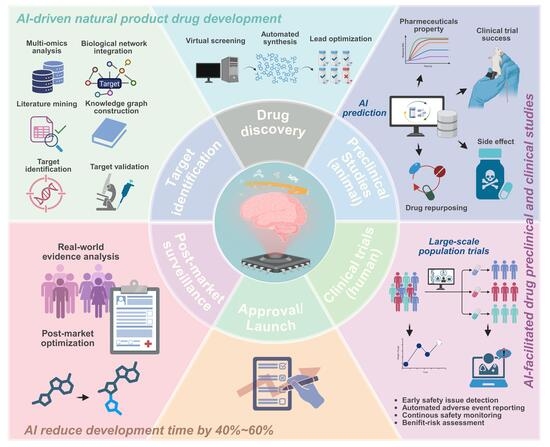
1. Introduction
1.1. Natural Products (NPs): A Historical Foundation of Medicine
1.2. Bottlenecks of Traditional NP Drug Discovery
1.3. AI: The Catalyst for a New Paradigm
2. AI in Initial Discovery and Identification of NP Leads
2.1. Unearthing NPs Through Omics Mining and Textual Data
2.2. Accelerating Characterization and Dereplication of NPs
2.3. Translational Pathways and Regulatory Considerations for AI in NP Discovery
3. Preclinical Development: From Target Engagement to Lead Optimization
3.1. Predicting Targets and Mechanisms of Action
3.2. Assessing Bioactivity, ADMET, and Toxicity Profiles
3.3. Lead Optimization and De Novo Design
3.4. AI and NP-Based Drug Delivery Systems
4. AI in Clinical Translation and Post-Market Surveillance for NPs
4.1. Drug Repurposing of NPs
4.2. Personalized Phytotherapy and Precision Medicine
4.3. Quality Control and Standardization
5. Challenges and Enabling Infrastructure
5.1. Data Ecosystem
5.2. Algorithmic and Methodological Hurdles
5.3. Critical Data Hurdles: Bias, Noise, and the Path to FAIR Data
5.4. Ethical, Regulatory, and Sustainability Considerations
6. Conclusions and Future Course
6.1. Critical Appraisal: Limitations, Failures, and Unresolved Challenges
6.2. Towards Rigorous Science: Reproducibility and Benchmarking
6.2.1. The Reproducibility Challenge
6.2.2. The Imperative for Comparative Benchmarking
6.2.3. Synthesis and Path Forward
6.3. Future Perspectives on AI-Driven Natural Product Discovery
Author Contributions
Funding
Institutional Review Board Statement
Informed Consent Statement
Data Availability Statement
Acknowledgments
Conflicts of Interest
References
- Newman, D.J.; Cragg, G.M. Natural Products as Sources of New Drugs over the Nearly Four Decades from 01/1981 to 09/2019. J. Nat. Prod. 2020, 83, 770–803. [Google Scholar] [CrossRef]
- Mullowney, M.W.; Duncan, K.R.; Elsayed, S.S.; Garg, N.; van der Hooft, J.J.J.; Martin, N.I.; Meijer, D.; Terlouw, B.R.; Biermann, F.; Blin, K.; et al. Artificial intelligence for natural product drug discovery. Nature reviews. Drug Discov. 2023, 22, 895–916. [Google Scholar] [CrossRef] [PubMed]
- Dias, D.A.; Urban, S.; Roessner, U. A Historical Overview of Natural Products in Drug Discovery. Metabolites 2012, 2, 303–336. [Google Scholar] [CrossRef] [PubMed]
- Patwardhan, B.; Vaidya, A.D. Natural products drug discovery: Accelerating the clinical candidate development using reverse pharmacology approaches. Indian J. Exp. Biol. 2010, 48, 220–227. [Google Scholar]
- Chaachouay, N.; Zidane, L. Plant-Derived Natural Products: A Source for Drug Discovery and Development. Drugs Drug Candidates 2024, 3, 184–207. [Google Scholar] [CrossRef]
- Bharate, S.B.; Lindsley, C.W. Natural Products Driven Medicinal Chemistry. J. Med. Chem. 2024, 67, 20723–20730. [Google Scholar] [CrossRef] [PubMed]
- Gaynes, R. The Discovery of Penicillin—New Insights After More Than 75 Years of Clinical Use. Emerg. Infect. Dis. J. 2017, 23, 849. [Google Scholar] [CrossRef]
- Imani, S.; Moradi, S.; Faraj, T.A.; Hassanpoor, P.; Musapour, N.; Najmaldin, S.K.; Abdulhamd, A.H.; Mohammadi, A.T.; Taha, C.H.; Aminnezhad, S. Nanoparticle technologies in precision oncology and personalized vaccine development: Challenges and advances. Int. J. Pharm. X 2025, 10, 100353. [Google Scholar] [CrossRef]
- Smith, E.R.; Chen, Z.-S.; Xu, X.-X. 11—Paclitaxel and cancer treatment: Non-mitotic mechanisms of paclitaxel action in cancer therapy. In Paclitaxel; Swamy, M.K., Pullaiah, T., Chen, Z.-S., Eds.; Academic Press: Cambridge, MA, USA, 2022; pp. 269–286. [Google Scholar]
- Meshnick, S.R.; Thomas, A.; Ranz, A.; Xu, C.M.; Pan, H.Z. Artemisinin (qinghaosu): The role of intracellular hemin in its mechanism of antimalarial action. Mol. Biochem. Parasitol. 1991, 49, 181–189. [Google Scholar] [CrossRef]
- Posadino, A.M.; Giordo, R.; Pintus, G.; Mohammed, S.A.; Orhan, I.E.; Fokou, P.V.T.; Sharopov, F.; Adetunji, C.O.; Gulsunoglu-Konuskan, Z.; Ydyrys, A.; et al. Medicinal and mechanistic overview of artemisinin in the treatment of human diseases. Biomed. Pharmacother. 2023, 163, 114866. [Google Scholar] [CrossRef]
- Kinch, M.S. 2015 in review: FDA approval of new drugs. Drug Discov. Today 2016, 21, 1046–1050. [Google Scholar] [CrossRef]
- Domingo-Fernández, D.; Gadiya, Y.; Preto, A.J.; Krettler, C.A.; Mubeen, S.; Allen, A.; Healey, D.; Colluru, V. Natural Products Have Increased Rates of Clinical Trial Success throughout the Drug Development Process. J. Nat. Prod. 2024, 87, 1844–1851. [Google Scholar] [CrossRef]
- Atanasov, A.G.; Zotchev, S.B.; Dirsch, V.M.; International Natural Product Sciences Taskforce; Supuran, C.T. Natural products in drug discovery: Advances and opportunities. Nature reviews. Drug Discov. 2021, 20, 200–216. [Google Scholar] [CrossRef]
- Lewis, K.; Lee, R.E.; Brötz-Oesterhelt, H.; Hiller, S.; Rodnina, M.V.; Schneider, T.; Weingarth, M.; Wohlgemuth, I. Sophisticated natural products as antibiotics. Nature 2024, 632, 39–49. [Google Scholar] [CrossRef]
- Ciardiello, J.J.; Stewart, H.L.; Sore, H.F.; Galloway, W.R.J.D.; Spring, D.R. A novel complexity-to-diversity strategy for the diversity-oriented synthesis of structurally diverse and complex macrocycles from quinine. Bioorganic Med. Chem. 2017, 25, 2825–2843. [Google Scholar] [CrossRef]
- Yonchev, D.; Dimova, D.; Stumpfe, D.; Vogt, M.; Bajorath, J. Redundancy in two major compound databases. Drug Discov. Today 2018, 23, 1183–1186. [Google Scholar] [CrossRef]
- Peron, A.P.; Mariucci, R.G.; de Almeida, I.V.; Düsman, E.; Mantovani, M.S.; Vicentini, V.E. Evaluation of the cytotoxicity, mutagenicity and antimutagenicity of a natural antidepressant, Hypericum perforatum L. (St. John’s wort), on vegetal and animal test systems. BMC Complement. Altern. Med. 2013, 13, 97. [Google Scholar] [CrossRef] [PubMed]
- Saldívar-González, F.I.; Aldas-Bulos, V.D.; Medina-Franco, J.L.; Plisson, F. Natural product drug discovery in the artificial intelligence era. Chem. Sci. 2021, 13, 1526–1546. [Google Scholar] [CrossRef] [PubMed]
- Basnet, B.B.; Zhou, Z.Y.; Wei, B.; Wang, H. Advances in AI-based strategies and tools to facilitate natural product and drug development. Crit. Rev. Biotechnol. 2025, 45, 1527–1558. [Google Scholar] [CrossRef] [PubMed]
- Arora, S.; Chettri, S.; Percha, V.; Kumar, D.; Latwal, M. Artifical intelligence: A virtual chemist for natural product drug discovery. J. Biomol. Struct. Dyn. 2024, 42, 3826–3835. [Google Scholar] [CrossRef]
- Ishikawa, M.; Hashimoto, Y. Improvement in Aqueous Solubility in Small Molecule Drug Discovery Programs by Disruption of Molecular Planarity and Symmetry. J. Med. Chem. 2011, 54, 1539–1554. [Google Scholar] [CrossRef] [PubMed]
- Meijer, D.; Beniddir, M.A.; Coley, C.W.; Mejri, Y.M.; Öztürk, M.; van der Hooft, J.J.J.; Medema, M.H.; Skiredj, A. Empowering natural product science with AI: Leveraging multimodal data and knowledge graphs. Nat. Prod. Rep. 2025, 42, 654–662. [Google Scholar] [CrossRef]
- Ocana, A.; Pandiella, A.; Privat, C.; Bravo, I.; Luengo-Oroz, M.; Amir, E.; Gyorffy, B. Integrating artificial intelligence in drug discovery and early drug development: A transformative approach. Biomark. Res. 2025, 13, 45. [Google Scholar] [CrossRef] [PubMed]
- Sahayasheela, V.J.; Lankadasari, M.B.; Dan, V.M.; Dastager, S.G.; Pandian, G.N.; Sugiyama, H. Artificial intelligence in microbial natural product drug discovery: Current and emerging role. Nat. Prod. Rep. 2022, 39, 2215–2230. [Google Scholar] [CrossRef]
- Hannigan, G.D.; Prihoda, D.; Palicka, A.; Soukup, J.; Klempir, O.; Rampula, L.; Durcak, J.; Wurst, M.; Kotowski, J.; Chang, D.; et al. A deep learning genome-mining strategy for biosynthetic gene cluster prediction. Nucleic Acids Res. 2019, 47, e110. [Google Scholar] [CrossRef]
- Hjörleifsson Eldjárn, G.; Ramsay, A.; van der Hooft, J.J.J.; Duncan, K.R.; Soldatou, S.; Rousu, J.; Daly, R.; Wandy, J.; Rogers, S. Ranking microbial metabolomic and genomic links in the NPLinker framework using complementary scoring functions. PLoS Comput. Biol. 2021, 17, e1008920. [Google Scholar] [CrossRef] [PubMed]
- Yang, Z.; Yin, Y.; Kong, C.; Chi, T.; Tao, W.; Zhang, Y.; Xu, T. ShennongAlpha: An AI-driven sharing and collaboration platform for intelligent curation, acquisition, and translation of natural medicinal material knowledge. Cell Discov. 2025, 11, 32. [Google Scholar] [CrossRef]
- ShennongAlpha. ShennongAlpha Knowledge. Available online: https://shennongalpha.westlake.edu.cn/ (accessed on 4 February 2026).
- Kautsar, S.A.; Blin, K.; Shaw, S.; Weber, T.; Medema, M.H. BiG-FAM: The biosynthetic gene cluster families database. Nucleic Acids Res. 2021, 49, D490–D497. [Google Scholar] [CrossRef]
- Halper, S.M.; Cetnar, D.P.; Salis, H.M. An Automated Pipeline for Engineering Many-Enzyme Pathways: Computational Sequence Design, Pathway Expression-Flux Mapping, and Scalable Pathway Optimization, in Synthetic Metabolic Pathways: Methods and Protocols; Jensen, M.K., Keasling, J.D., Eds.; Springer: New York, NY, USA, 2018; pp. 39–61. [Google Scholar]
- Usuyama, N.; Wong, C.; Zhang, S.; Naumann, T.; Poon, H. Biomedical Natural Language Processing in the Era of Large Language Models. Annu. Rev. Biomed. Data Sci. 2025, 8, 471–490. [Google Scholar] [CrossRef]
- Directory, S. AI and the Future of Herbal Medicine Authentication. 2025. Available online: https://prism.sustainability-directory.com/scenario/ai-and-the-future-of-herbal-medicine-authentication/ (accessed on 4 February 2026).
- Laxmi Priya, S.; Jerlin Anusha, P.; Gowri Vidhya, N. Streamlined Ayurvedic Species Detection Using VGG16 and Neural Networks Chatbot Integration. In Proceedings of the 2024 International Conference on Innovative Computing, Intelligent Communication and Smart Electrical Systems (ICSES), Chennai, India, 12–13 December 2024. [Google Scholar]
- Cho, H.; Kim, B.; Choi, W.; Lee, D.; Lee, H. Plant phenotype relationship corpus for biomedical relationships between plants and phenotypes. Sci. Data 2022, 9, 235. [Google Scholar] [CrossRef]
- Tang, J.-L.; Liu, B.-Y.; Ma, K.-W. Traditional Chinese medicine. Lancet 2008, 372, 1938–1940. [Google Scholar] [CrossRef]
- Cheng, J.-T. Review: Drug Therapy in Chinese Traditional Medicine. J. Clin. Pharmacol. 2000, 40, 445–450. [Google Scholar] [CrossRef] [PubMed]
- Zhou, E.; Shen, Q.; Hou, Y. Integrating artificial intelligence into the modernization of traditional Chinese medicine industry: A review. Front. Pharmacol. 2024, 15, 1181183. [Google Scholar] [CrossRef]
- Zhang, P.; Zhang, D.; Zhou, W.; Wang, L.; Wang, B.; Zhang, T.; Li, S. Network pharmacology: Towards the artificial intelligence-based precision traditional Chinese medicine. Brief. Bioinform. 2023, 25, bbad518. [Google Scholar] [CrossRef]
- Lv, Q.; Chen, G.; He, H.; Yang, Z.; Zhao, L.; Zhang, K.; Chen, C.Y. TCMBank-the largest TCM database provides deep learning-based Chinese-Western medicine exclusion prediction. Signal Transduct. Target. Ther. 2023, 8, 127. [Google Scholar] [CrossRef] [PubMed]
- Zhang, N.D.; Han, T.; Huang, B.K.; Rahman, K.; Jiang, Y.P.; Xu, H.T.; Qin, L.P.; Xin, H.L.; Zhang, Q.Y.; Li, Y.M. Traditional Chinese medicine formulas for the treatment of osteoporosis: Implication for antiosteoporotic drug discovery. J. Ethnopharmacol. 2016, 189, 61–80. [Google Scholar] [CrossRef] [PubMed]
- Lv, Q.; Chen, G.; He, H.; Yang, Z.; Zhao, L.; Chen, H.Y.; Chen, C.Y. TCMBank: Bridges between the largest herbal medicines, chemical ingredients, target proteins, and associated diseases with intelligence text mining. Chem. Sci. 2023, 14, 10684–10701. [Google Scholar] [CrossRef]
- Oxford University Africa Oxford Initiative (AUOI). AI and the Future of Work in Africa; Oxford University Africa Oxford Initiative (AUOI): Oxford, UK, 2024. [Google Scholar]
- Luna-Viramontes, N.I.; Morlett-Paredes, A.; Ordoñez-Lozano, I.; de la Cruz-López, F.; Gonzalez-Chavez, V.E.; Vargas-Hernández, G.; Pérez-Pérez, E.G.; Méndez-Llaca, R.E.; Villanueva-Fierro, I.; Ortiz-Butron, R.; et al. Brain banks in Latin America: Infrastructure for diagnosis, research, and scientific equity in Mexico and the Caribbean. Alzheimer’s Dement. J. Alzheimer’s Assoc. 2025, 21, e70819. [Google Scholar] [CrossRef]
- Boer, M.D.; Melkonian, C.; Zafeiropoulos, H.; Haas, A.F.; Garza, D.R.; Dutilh, B.E. Improving genome-scale metabolic models of incomplete genomes with deep learning. iScience 2024, 27, 111349. [Google Scholar] [CrossRef]
- Kalpana, D.; Prasad, S.K. Automation in Analytical Chemistry: The Role of AI in Chromatography. Int. J. Appl. Pharm. 2024, 16, 14–21. [Google Scholar] [CrossRef]
- Ghosh, K.; Stuke, A.; Todorović, M.; Jørgensen, P.B.; Schmidt, M.N.; Vehtari, A.; Rinke, P. Deep Learning Spectroscopy: Neural Networks for Molecular Excitation Spectra. Adv. Sci. 2019, 6, 1801367. [Google Scholar] [CrossRef]
- Avcu, F.M. Theoretical and applied potential of artificial intelligence and machine learning in analysing molecular data. Turk. J. Anal. Chem. 2025, 7, 61–70. [Google Scholar] [CrossRef]
- Wu, K.; Luo, J.; Zeng, Q.; Dong, X.; Chen, J.; Zhan, C.; Chen, Z.; Lin, Y. Improvement in Signal-to-Noise Ratio of Liquid-State NMR Spectroscopy via a Deep Neural Network DN-Unet. Anal. Chem. 2021, 93, 1377–1382. [Google Scholar] [CrossRef]
- Howarth, A.; Goodman, J.M. The DP5 probability, quantification and visualisation of structural uncertainty in single molecules. Chem. Sci. 2022, 13, 3507–3518. [Google Scholar] [CrossRef]
- Dai, J.; Zhou, Z.; Zhao, Y.; Kong, F.; Zhai, Z.; Zhu, Z.; Cai, J.; Huang, S.; Xu, Y.; Sun, T. Combined usage of ligand- and structure-based virtual screening in the artificial intelligence era. Eur. J. Med. Chem. 2025, 283, 117162. [Google Scholar] [CrossRef]
- Singh, N.; Chaput, L.; Villoutreix, B.O. Virtual screening web servers: Designing chemical probes and drug candidates in the cyberspace. Brief. Bioinform. 2020, 22, 1790–1818. [Google Scholar] [CrossRef] [PubMed]
- Fang, S.; Dong, L.; Liu, L.; Guo, J.; Zhao, L.; Zhang, J.; Bu, D.; Liu, X.; Huo, P.; Cao, W.; et al. HERB: A high-throughput experiment- and reference-guided database of traditional Chinese medicine. Nucleic Acids Res. 2021, 49, D1197–D1206. [Google Scholar] [CrossRef] [PubMed]
- Gao, K.; Liu, L.; Lei, S.; Li, Z.; Huo, P.; Wang, Z.; Dong, L.; Deng, W.; Bu, D.; Zeng, X.; et al. HERB 2.0: An updated database integrating clinical and experimental evidence for traditional Chinese medicine. Nucleic Acids Res. 2025, 53, D1404–D1414. [Google Scholar] [CrossRef]
- Cheng, W.; Xia, K.; Wu, S.; Li, Y. Herb-Drug Interactions and Their Impact on Pharmacokinetics: An Update. Curr. Drug Metab. 2023, 24, 28–69. [Google Scholar] [CrossRef] [PubMed]
- Roemer, T.; Xu, D.; Singh, S.B.; Parish, C.A.; Harris, G.; Wang, H.; Davies, J.E.; Bills, G.F. Confronting the challenges of natural product-based antifungal discovery. Chem. Biol. 2011, 18, 148–164. [Google Scholar] [CrossRef] [PubMed]
- Gaudêncio, S.P.; Bayram, E.; Lukić Bilela, L.; Cueto, M.; Díaz-Marrero, A.R.; Haznedaroglu, B.Z.; Jimenez, C.; Mandalakis, M.; Pereira, F.; Reyes, F.; et al. Advanced Methods for Natural Products Discovery: Bioactivity Screening, Dereplication, Metabolomics Profiling, Genomic Sequencing, Databases and Informatic Tools, and Structure Elucidation. Mar. Drugs 2023, 21, 308. [Google Scholar] [CrossRef]
- Backman, T.W.H.; Cao, Y.; Girke, T. ChemMine tools: An online service for analyzing and clustering small molecules. Nucleic Acids Res. 2011, 39, W486–W491. [Google Scholar] [CrossRef]
- Madival, S.D.; Mishra, D.C.; Chaturvedi, K.K.; Sharma, A.; Budhlakoti, N.; Angadi, U.B.; Basavaraja, P.; Farooqi, M.S.; Srivastava, S.; Jha, G.K. NaturePred: A Tool for Revolutionizing Natural Product Classification with Artificial Intelligence. Curr. Proteom. 2024, 21, 429–436. [Google Scholar] [CrossRef]
- Li, H.; Sun, X.; Cui, W.; Xu, M.; Dong, J.; Ekundayo, B.E.; Ni, D.; Rao, Z.; Guo, L.; Stahlberg, H.; et al. Computational drug development for membrane protein targets. Nat. Biotechnol. 2024, 42, 229–242. [Google Scholar] [CrossRef]
- Sheng, J.; Zhang, T. Advancing drug development with “Fit-for-Purpose” modeling informed approaches. J. Pharmacokinet. Pharmacodyn. 2025, 52, 52. [Google Scholar] [CrossRef]
- Santra, S.; Kukreja, P.; Saxena, K.; Gandhi, S.; Singh, O.V. Navigating regulatory and policy challenges for AI enabled combination devices. Front. Med. Technol. 2024, 6, 1473350. [Google Scholar] [CrossRef] [PubMed]
- Waldron, K.; McFarland, A.; Baseman, H.; Jornitz, M. A Risk Assessment and Risk-Based Approach Review of Pre-Use/Post-Sterilization Integrity Testing (PUPSIT). PDA J. Pharm. Sci. Technol. 2025, 79, 88–97. [Google Scholar] [CrossRef]
- Chen, C.; Yaari, Z.; Apfelbaum, E.; Grodzinski, P.; Shamay, Y.; Heller, D.A. Merging data curation and machine learning to improve nanomedicines. Adv. Drug Deliv. Rev. 2022, 183, 114172. [Google Scholar] [CrossRef] [PubMed]
- Pan, X.; Jiang, S.; Zhang, X.; Wang, Z.; Wang, X.; Cao, L.; Xiao, W. Recent strategies in target identification of natural products: Exploring applications in chronic inflammation and beyond. Br. J. Pharmacol. 2025, 182, 4841–4860. [Google Scholar] [CrossRef] [PubMed]
- Periyasamy, M. AI-Driven Multi-Omics Integration for Enhanced Drug Discovery Pipelines. In Proceedings of the 2025 International Conference on Multi-Agent Systems for Collaborative Intelligence (ICMSCI), Erode, India, 20–22 January 2025. [Google Scholar]
- Ye, Q.; Guo, N.L. Guo Inferencing Bulk Tumor and Single-Cell Multi-Omics Regulatory Networks for Discovery of Biomarkers and Therapeutic Targets. Cells 2023, 12, 101. [Google Scholar] [CrossRef]
- Reker, D.; Rodrigues, T.; Schneider, P.; Schneider, G. Identifying the macromolecular targets of de novo-designed chemical entities through self-organizing map consensus. Proc. Natl. Acad. Sci. USA 2014, 111, 4067–4072. [Google Scholar] [CrossRef]
- Cockroft, N.T.; Cheng, X.; Fuchs, J.R. STarFish: A Stacked Ensemble Target Fishing Approach and its Application to Natural Products. J. Chem. Inf. Model. 2019, 59, 4906–4920. [Google Scholar] [CrossRef] [PubMed]
- Qiang, B.; Lai, J.; Jin, H.; Zhang, L.; Liu, Z. Target Prediction Model for Natural Products Using Transfer Learning. Int. J. Mol. Sci. 2021, 22, 4632. [Google Scholar] [CrossRef]
- Knopman, D.S.; Amieva, H.; Petersen, R.C.; Chételat, G.; Holtzman, D.M.; Hyman, B.T.; Nixon, R.A.; Jones, D.T. Alzheimer disease. Nature reviews. Dis. Primers 2021, 7, 33. [Google Scholar] [CrossRef] [PubMed]
- Talesa, V.N. Acetylcholinesterase in Alzheimer’s disease. Mech. Ageing Dev. 2001, 122, 1961–1969. [Google Scholar] [CrossRef] [PubMed]
- Manzoor, S.; Hoda, N. A comprehensive review of monoamine oxidase inhibitors as Anti-Alzheimer’s disease agents: A review. Eur. J. Med. Chem. 2020, 206, 112787. [Google Scholar] [CrossRef]
- Upton, N.; Chuang, T.T.; Hunter, A.J.; Virley, D.J. 5-HT6 receptor antagonists as novel cognitive enhancing agents for Alzheimer’s disease. Neurother. J. Am. Soc. Exp. Neurother. 2008, 5, 458–469. [Google Scholar] [CrossRef]
- Weininger, D. SMILES, a chemical language and information system. 1. Introduction to methodology and encoding rules. J. Chem. Inf. Comput. Sci. 1988, 28, 31–36. [Google Scholar] [CrossRef]
- Ballard, C.; Creese, B.; Gatt, A.; Doherty, P.; Francis, P.T.; Corbett, A.; Aarsland, D. Identifying novel candidates for re-purposing as potential therapeutic agents for Alzheimer’s disease. bioRxiv 2019. [Google Scholar] [CrossRef]
- Wu, T.; Lin, R.; Cui, P.; Yong, J.; Yu, H.; Li, Z. Deep learning-based drug screening for the discovery of potential therapeutic agents for Alzheimer’s disease. J. Pharm. Anal. 2024, 14, 101022. [Google Scholar] [CrossRef]
- Xia, J.; Gan, Z.; Zhang, J.; Dong, M.; Liu, S.; Cui, B.; Guo, P.; Pang, Z.; Lu, T.; Gu, N.; et al. Geometric-aware deep learning enables discovery of bifunctional ligand-based liposomes for tumor targeting therapy. Nano Today 2025, 61, 102668. [Google Scholar] [CrossRef]
- Vora, L.K.; Gholap, A.D.; Jetha, K.; Thakur, R.R.S.; Solanki, H.K.; Chavda, V.P. Artificial Intelligence in Pharmaceutical Technology and Drug Delivery Design. Pharmaceutics 2023, 15, 1916. [Google Scholar] [CrossRef]
- Gryniukova, A.; Kaiser, F.; Myziuk, I.; Alieksieieva, D.; Leberecht, C.; Heym, P.P.; Tarkhanova, O.O.; Moroz, Y.S.; Borysko, P.; Haupt, V.J. AI-Powered Virtual Screening of Large Compound Libraries Leads to the Discovery of Novel Inhibitors of Sirtuin-1. J. Med. Chem. 2023, 66, 10241–10251. [Google Scholar] [CrossRef]
- Swanson, K.; Walther, P.; Leitz, J.; Mukherjee, S.; Wu, J.C.; Shivnaraine, R.V.; Zou, J. ADMET-AI: A machine learning ADMET platform for evaluation of large-scale chemical libraries. Bioinformatics 2024, 40, btae416. [Google Scholar] [CrossRef]
- Heid, E.; Greenman, K.P.; Chung, Y.; Li, S.C.; Graff, D.E.; Vermeire, F.H.; Wu, H.; Green, W.H.; McGill, C.J. Chemprop: A Machine Learning Package for Chemical Property Prediction. J. Chem. Inf. Model. 2024, 64, 9–17. [Google Scholar] [CrossRef]
- Wishart, D.S.; Knox, C.; Guo, A.C.; Shrivastava, S.; Hassanali, M.; Stothard, P.; Chang, Z.; Woolsey, J. DrugBank: A comprehensive resource for in silico drug discovery and exploration. Nucleic Acids Res. 2006, 34, D668–D672. [Google Scholar] [CrossRef]
- Yang, Q.; Fan, L.; Hao, E.; Hou, X.; Deng, J.; Du, Z.; Xia, Z. Construction of an explanatory model for predicting hepatotoxicity: A case study of the potentially hepatotoxic components of Gardenia jasminoides. Drug Chem. Toxicol. 2025, 48, 107–119. [Google Scholar] [CrossRef] [PubMed]
- Moingeon, P.; Kuenemann, M.; Guedj, M. Artificial intelligence-enhanced drug design and development: Toward a computational precision medicine. Drug Discov. Today 2022, 27, 215–222. [Google Scholar] [CrossRef]
- Dong, J.; Wang, N.N.; Yao, Z.J.; Zhang, L.; Cheng, Y.; Ouyang, D.; Lu, A.P.; Cao, D.S. ADMETlab: A platform for systematic ADMET evaluation based on a comprehensively collected ADMET database. J. Cheminform. 2018, 10, 29. [Google Scholar] [CrossRef]
- Fu, L.; Shi, S.; Yi, J.; Wang, N.; He, Y.; Wu, Z.; Peng, J.; Deng, Y.; Wang, W.; Wu, C.; et al. ADMETlab 3.0: An updated comprehensive online ADMET prediction platform enhanced with broader coverage, improved performance, API functionality and decision support. Nucleic Acids Res. 2024, 52, W422–W431. [Google Scholar] [CrossRef] [PubMed]
- Xiong, G.; Wu, Z.; Yi, J.; Fu, L.; Yang, Z.; Hsieh, C.; Yin, M.; Zeng, X.; Wu, C.; Lu, A.; et al. ADMETlab 2.0: An integrated online platform for accurate and comprehensive predictions of ADMET properties. Nucleic Acids Res. 2021, 49, W5–W14. [Google Scholar] [CrossRef]
- Tian, Y.; Yi, J.; Wang, N.; Wu, C.; Peng, J.; Liu, S.; Yang, G.; Cao, D. DDInter 2.0: An enhanced drug interaction resource with expanded data coverage, new interaction types, and improved user interface. Nucleic Acids Res. 2025, 53, D1356–D1362. [Google Scholar] [CrossRef]
- Xiong, G.; Yang, Z.; Yi, J.; Wang, N.; Wang, L.; Zhu, H.; Wu, C.; Lu, A.; Chen, X.; Liu, S.; et al. DDInter: An online drug-drug interaction database towards improving clinical decision-making and patient safety. Nucleic Acids Res. 2022, 50, D1200–D1207. [Google Scholar] [CrossRef]
- AlJarf, R.; Rodrigues, C.H.M.; Myung, Y.; Pires, D.E.V.; Ascher, D.B. piscesCSM: Prediction of anticancer synergistic drug combinations. J. Cheminform. 2024, 16, 81. [Google Scholar] [CrossRef]
- Nasnodkar, S.; Cinar, B.; Ness, S. Artificial Intelligence in Toxicology and Pharmacology. J. Eng. Res. Rep. 2023, 25, 192–206. [Google Scholar] [CrossRef]
- Banerjee, P.; Eckert, A.O.; Schrey, A.K.; Preissner, R. ProTox-II: A webserver for the prediction of toxicity of chemicals. Nucleic Acids Res. 2018, 46, W257–W263. [Google Scholar] [CrossRef] [PubMed]
- Tran, T.T.V.; Surya Wibowo, A.; Tayara, H.; Chong, K.T. Artificial Intelligence in Drug Toxicity Prediction: Recent Advances, Challenges, and Future Perspectives. J. Chem. Inf. Model. 2023, 63, 2628–2643. [Google Scholar] [CrossRef] [PubMed]
- Hosseini, S.-R.; Zhou, X. CCSynergy: An integrative deep-learning framework enabling context-aware prediction of anti-cancer drug synergy. Brief. Bioinform. 2023, 24, bbac588. [Google Scholar] [CrossRef] [PubMed]
- Preto, A.J.; Matos-Filipe, P.; Mourão, J.; Moreira, I.S. SYNPRED: Prediction of drug combination effects in cancer using different synergy metrics and ensemble learning. GigaScience 2022, 11, giac087. [Google Scholar] [CrossRef]
- Yan, K.; Jia, R.; Guo, S. SynAI: An AI-driven cancer drugs synergism prediction platform. Bioinform. Adv. 2023, 3, vbad160. [Google Scholar] [CrossRef]
- Jorgensen, W.L. Efficient Drug Lead Discovery and Optimization. Acc. Chem. Res. 2009, 42, 724–733. [Google Scholar] [CrossRef]
- Tong, X.; Liu, X.; Tan, X.; Li, X.; Jiang, J.; Xiong, Z.; Xu, T.; Jiang, H.; Qiao, N.; Zheng, M. Generative Models for De Novo Drug Design. J. Med. Chem. 2021, 64, 14011–14027. [Google Scholar] [CrossRef]
- Yi, J.; Shi, S.; Fu, L.; Yang, Z.; Nie, P.; Lu, A.; Wu, C.; Deng, Y.; Hsieh, C.; Zeng, X.; et al. OptADMET: A web-based tool for substructure modifications to improve ADMET properties of lead compounds. Nat. Protoc. 2024, 19, 1105–1121. [Google Scholar] [CrossRef]
- Lim, J.; Ryu, S.; Kim, J.W.; Kim, W.Y. Molecular generative model based on conditional variational autoencoder for de novo molecular design. J. Cheminform. 2018, 10, 31. [Google Scholar] [CrossRef] [PubMed]
- Lee, Y.J.; Kahng, H.; Kim, S.B. Generative Adversarial Networks for De Novo Molecular Design. Mol. Inform. 2021, 40, 2100045. [Google Scholar] [CrossRef] [PubMed]
- Kadurin, A.; Nikolenko, S.; Khrabrov, K.; Aliper, A.; Zhavoronkov, A. druGAN: An Advanced Generative Adversarial Autoencoder Model for de Novo Generation of New Molecules with Desired Molecular Properties in Silico. Mol. Pharm. 2017, 14, 3098–3104. [Google Scholar] [CrossRef]
- Lv, Q.; Zhou, F.; Liu, X.; Zhi, L. Artificial intelligence in small molecule drug discovery from 2018 to 2023: Does it really work? Bioorganic Chem. 2023, 141, 106894. [Google Scholar] [CrossRef]
- Duo, L.; Liu, Y.; Ren, J.; Tang, B.; Hirst, J.D. Artificial intelligence for small molecule anticancer drug discovery. Expert Opin. Drug Discov. 2024, 19, 933–948. [Google Scholar] [CrossRef]
- Yoshimori, A.; Kawasaki, E.; Kanai, C.; Tasaka, T. Strategies for Design of Molecular Structures with a Desired Pharmacophore Using Deep Reinforcement Learning. Chem. Pharm. Bull. 2020, 68, 227–233. [Google Scholar] [CrossRef]
- Horwood, J.; Noutahi, E. Molecular Design in Synthetically Accessible Chemical Space via Deep Reinforcement Learning. ACS Omega 2020, 5, 32984–32994. [Google Scholar] [CrossRef] [PubMed]
- Stokes, J.M.; Yang, K.; Swanson, K.; Jin, W.; Cubillos-Ruiz, A.; Donghia, N.M.; MacNair, C.R.; French, S.; Carfrae, L.A.; Bloom-Ackermann, Z.; et al. A Deep Learning Approach to Antibiotic Discovery. Cell 2020, 180, 688–702.e13. [Google Scholar] [CrossRef]
- Sterling, T.; Irwin, J.J. ZINC 15—Ligand Discovery for Everyone. J. Chem. Inf. Model. 2015, 55, 2324–2337. [Google Scholar] [CrossRef]
- Wong, F.; Zheng, E.J.; Valeri, J.A.; Donghia, N.M.; Anahtar, M.N.; Omori, S.; Li, A.; Cubillos-Ruiz, A.; Krishnan, A.; Jin, W.; et al. Discovery of a structural class of antibiotics with explainable deep learning. Nature 2024, 626, 177–185. [Google Scholar] [CrossRef]
- Xing, J.; Jiang, L.; Fu, C.; Liu, J.Q.; Zhou, X.; Zhang, J.; Zhang, Y.L.; He, Y.C.; Zhao, W.D. A novel predictive model and therapeutic potential of quercetin derivatives in chronic kidney disease progression. Biochem. Pharmacol. 2025, 239, 117024. [Google Scholar] [CrossRef] [PubMed]
- Gori, M.; Giannitelli, S.M.; Zancla, A.; Mozetic, P.; Trombetta, M.; Merendino, N.; Rainer, A. Quercetin and hydroxytyrosol as modulators of hepatic steatosis: A NAFLD-on-a-chip study. Biotechnol. Bioeng. 2021, 118, 142–152. [Google Scholar] [CrossRef]
- Hosseini, A.; Razavi, B.M.; Banach, M.; Hosseinzadeh, H. Quercetin and metabolic syndrome: A review. Phytother. Res. PTR 2021, 35, 5352–5364. [Google Scholar] [CrossRef] [PubMed]
- Derosa, G.; Maffioli, P.; D’Angelo, A.; Di Pierro, F. A role for quercetin in coronavirus disease 2019 (COVID-19). Phytother. Res. PTR 2021, 35, 1230–1236. [Google Scholar] [CrossRef]
- Dabeek, W.M.; Marra, M.V. Dietary Quercetin and Kaempferol: Bioavailability and Potential Cardiovascular-Related Bioactivity in Humans. Nutrients 2019, 11, 2288. [Google Scholar] [CrossRef]
- Periferakis, A.; Periferakis, K.; Badarau, I.A.; Petran, E.M.; Popa, D.C.; Caruntu, A.; Costache, R.S.; Scheau, C.; Caruntu, C.; Costache, D.O. Kaempferol: Antimicrobial Properties, Sources, Clinical, and Traditional Applications. Int. J. Mol. Sci. 2022, 23, 15054. [Google Scholar] [CrossRef] [PubMed]
- Luo, Y.; Liu, X.Y.; Yang, K.; Huang, K.; Hong, M.; Zhang, J.; Wu, Y.; Nie, Z. Toward Unified AI Drug Discovery with Multimodal Knowledge. Health Data Sci. 2024, 4, 0113. [Google Scholar] [CrossRef]
- Ye, M.; Bhat, G.; Johnston, K.A.; Tan, H.; Garnick, M. Proprietary Rel-Ease drug delivery technology: Opportunity for sustained delivery of peptides, proteins and small molecules. Expert Opin. Drug Deliv. 2006, 3, 663–675. [Google Scholar] [CrossRef]
- Oku, N. Innovations in Liposomal DDS Technology and Its Application for the Treatment of Various Diseases. Biol. Pharm. Bull. 2017, 40, 119–127. [Google Scholar] [CrossRef]
- Priyanka, K.M.; Varghese, S.A.; Naveen, N.R. Revolutionizing Hyperlipidaemia Treatment: Magnetic Nanoparticle-Based Delivery Systems. Recent Adv. Drug Deliv. Formul. 2025. advance online publication. [Google Scholar] [CrossRef]
- Hornick, T.; Mao, C.; Koynov, A.; Yawman, P.; Thool, P.; Salish, K.; Giles, M.; Nagapudi, K.; Zhang, S. In silico formulation optimization and particle engineering of pharmaceutical products using a generative artificial intelligence structure synthesis method. Nat. Commun. 2024, 15, 9622. [Google Scholar] [CrossRef]
- Large, D.E.; Abdelmessih, R.G.; Fink, E.A.; Auguste, D.T. Liposome composition in drug delivery design, synthesis, characterization, and clinical application. Adv. Drug Deliv. Rev. 2021, 176, 113851. [Google Scholar] [CrossRef]
- Feng, L.; Wang, X.; Guo, X.; Shi, L.; Su, S.; Li, X.; Wang, J.; Tan, N.; Ma, Y.; Wang, Z. Identification of Novel Target DCTPP1 for Colorectal Cancer Therapy with the Natural Small-Molecule Inhibitors Regulating Metabolic Reprogramming. Angew. Chem. 2024, 63, e202402543. [Google Scholar] [CrossRef]
- Qi, Y.; Ding, L.; Zhang, S.; Yao, S.; Ong, J.; Li, Y.; Wu, H.; Du, P. A plant immune protein enables broad antitumor response by rescuing microRNA deficiency. Cell 2022, 185, 1888–1904.e24. [Google Scholar] [CrossRef]
- Wu, X.; Yu, Y.; Wang, M.; Dai, D.; Yin, J.; Liu, W.; Kong, D.; Tang, S.; Meng, M.; Gao, T.; et al. AAV-delivered muscone-induced transgene system for treating chronic diseases in mice via inhalation. Nat. Commun. 2024, 15, 1122. [Google Scholar] [CrossRef] [PubMed]
- Dynotx. National Standards Dynamic Network. Available online: https://www.dynotx.com/ (accessed on 4 February 2026).
- Ogden, P.J.; Kelsic, E.D.; Sinai, S.; Church, G.M. Comprehensive AAV capsid fitness landscape reveals a viral gene and enables machine-guided design. Science 2019, 366, 1139–1143. [Google Scholar] [CrossRef] [PubMed]
- Li, F.; Han, J.; Cao, T.; Lam, W.; Fan, B.; Tang, W.; Chen, S.; Fok, K.L.; Li, L. Design of self-assembly dipeptide hydrogels and machine learning via their chemical features. Proc. Natl. Acad. Sci. USA 2019, 116, 11259–11264. [Google Scholar] [CrossRef]
- Damiati, S.A.; Damiati, S. Microfluidic Synthesis of Indomethacin-Loaded PLGA Microparticles Optimized by Machine Learning. Front. Mol. Biosci. 2021, 8, 677547. [Google Scholar] [CrossRef] [PubMed]
- Pun, F.W.; Ozerov, I.V.; Zhavoronkov, A. AI-powered therapeutic target discovery. Trends Pharmacol. Sci. 2023, 44, 561–572. [Google Scholar] [CrossRef]
- Delamarche, E.; Temiz, Y.; Lovchik, R.D.; Christiansen, M.G.; Schuerle, S. Capillary Microfluidics for Monitoring Medication Adherence. Angew. Chem. 2021, 60, 17784–17796. [Google Scholar] [CrossRef]
- Cao, J.; Lu, W.; Lv, Y.; Li, M.; Tang, Y.; Feng, Y. Mitochondria-targeted nanocarriers for smart response delivery of natural products: A review. J. Drug Target. 2026, 1–17, advance online publication. [Google Scholar] [CrossRef]
- Dumontet, C.; Reichert, J.M.; Senter, P.D.; Lambert, J.M.; Beck, A. Antibody-drug conjugates come of age in oncology. Nat. Rev. Drug Discov. 2023, 22, 641–661. [Google Scholar] [CrossRef]
- Phuna, Z.X.; Kumar, P.A.; Haroun, E.; Dutta, D.; Lim, S.H. Antibody-drug conjugates: Principles and opportunities. Life Sci. 2024, 347, 122676. [Google Scholar] [CrossRef] [PubMed]
- Li, X.; Lai, Y.; Wan, G.; Zou, J.; He, W.; Yang, P. Approved natural products-derived nanomedicines for disease treatment. Chin. J. Nat. Med. 2024, 22, 1100–1116. [Google Scholar] [CrossRef]
- Pinzi, L.; Bisi, N.; Rastelli, G. How drug repurposing can advance drug discovery: Challenges and opportunities. Front. Drug Discov. 2024, 4, 1460100. [Google Scholar] [CrossRef]
- Bender, A.; Cortes-Ciriano, I. Artificial intelligence in drug discovery: What is realistic, what are illusions? Part 2: A discussion of chemical and biological data. Drug Discov. Today 2021, 26, 1040–1052. [Google Scholar] [CrossRef]
- Karaa, W.B.A.; Alkhammash, E.H.; Bchir, A. Drug Disease Relation Extraction from Biomedical Literature Using NLP and Machine Learning. Mob. Inf. Syst. 2021, 2021, 9958410. [Google Scholar] [CrossRef]
- Mohanty, S.; Harun Ai Rashid, M.; Mridul, M.; Mohanty, C.; Swayamsiddha, S. Application of Artificial Intelligence in COVID-19 drug repurposing. Diabetes Metab. Syndr. 2020, 14, 1027–1031. [Google Scholar] [CrossRef] [PubMed]
- Joshi, C.P.; Baldi, A.; Kumar, N.; Pradhan, J. Harnessing network pharmacology in drug discovery: An integrated approach. Naunyn-Schmiedeberg’s Arch. Pharmacol. 2025, 398, 4689–4703. [Google Scholar] [CrossRef]
- Prati, F.; Uliassi, E.; Bolognesi, M.L. Two diseases, one approach: Multitarget drug discovery in Alzheimer’s and neglected tropical diseases. MedChemComm 2014, 5, 853–861. [Google Scholar] [CrossRef]
- Guo, P.; Jiang, M.; Hu, S.; Jiang, Q.; Li, L.; Wu, J.; Ma, Y.; Wu, Z. Advancing the modernization of traditional Chinese medicine through artificial intelligence and multimodal data integration. Chin. Med. 2026, 21, 54. [Google Scholar] [CrossRef]
- Muhammad, B.L.; Kim, H.S.; Aliyu, I.; Shehu, H.A.; Ki, J.S. Artificial Intelligence (AI) in Saxitoxin Research: The Next Frontier for Understanding Marine Dinoflagellate Toxin Biosynthesis and Evolution. Toxins 2026, 18, 26. [Google Scholar] [CrossRef]
- Wang, A.; Luo, Q.; Tan, X.; Yao, Y.; Peng, X.; Luo, H.; Hu, Y. Development and application of artificial intelligence in traditional Chinese medicine research and development. Chin. Med. 2026, 21, 17. [Google Scholar] [CrossRef]
- Lin, A.; Che, C.; Jiang, A.; Qi, C.; Glaviano, A.; Zhao, Z.; Zhang, Z.; Liu, Z.; Zhou, Z.; Cheng, Q.; et al. Protein Spatial Structure Meets Artificial Intelligence: Revolutionizing Drug Synergy-Antagonism in Precision Medicine. Adv. Sci. 2025, 12, e07764. [Google Scholar] [CrossRef]
- Peng, Z.; Ding, Y.; Zhang, P.; Lv, X.; Li, Z.; Zhou, X.; Huang, S. Artificial Intelligence Application for Anti-tumor Drug Synergy Prediction. Curr. Med. Chem. 2024, 31, 6572–6585. [Google Scholar] [CrossRef] [PubMed]
- Rani, P.; Dutta, K.; Kumar, V. Artificial intelligence techniques for prediction of drug synergy in malignant diseases: Past, present, and future. Comput. Biol. Med. 2022, 144, 105334. [Google Scholar] [CrossRef] [PubMed]
- Serrano, D.R.; Luciano, F.C.; Anaya, B.J.; Ongoren, B.; Kara, A.; Molina, G.; Ramirez, B.I.; Sánchez-Guirales, S.A.; Simon, J.A.; Tomietto, G.; et al. Artificial Intelligence (AI) Applications in Drug Discovery and Drug Delivery: Revolutionizing Personalized Medicine. Pharmaceutics 2024, 16, 1328. [Google Scholar] [CrossRef]
- Li, W.; Ge, X.; Liu, S.; Xu, L.; Zhai, X.; Yu, L. Opportunities and challenges of traditional Chinese medicine doctors in the era of artificial intelligence. Front. Med. 2024, 10, 1336175. [Google Scholar] [CrossRef]
- Panigrahi, B.S.; Dogra, A.; Sivakumar, K.; Divakar, S.; Bagal, T.S.; Upadbye, M. Big data and AI in natural product drug discovery: Uncovering hidden medicinal chemistry gems. In Proceedings of the 2024 9th International Conference on Science Technology Engineering and Mathematics (ICONSTEM), Chennai, India, 4–5 April 2024; IEEE: New York, NY, USA, 2024; p. 900. [Google Scholar] [CrossRef]
- Qureshi, R.; Khan, M.A.; Hameed, I.A. Artificial intelligence and biosensors in healthcare and its clinical relevance: A review. IEEE Access 2023, 11, 61600–61620. [Google Scholar] [CrossRef]
- Gayathri, R.; Sangeetha, S.K.B.; Sangeetha, R.; Mary, G.L.R.; Mathivanan, S.K.; Moorthy, U. Dynamic AI-enhanced therapeutic framework for precision medicine using multi-modal data and patient-centric reinforcement learning. IEEE Access 2025, 13, 77709–77733. [Google Scholar] [CrossRef]
- Song, Z.; Chen, G.-X.; Chen, C.Y.-C. AI empowering traditional Chinese medicine? Chem. Sci. 2024, 15, 16844–16886. [Google Scholar] [CrossRef]
- Lobo, V.B.; Chandra, J.L. Convergence of blockchain and artificial intelligence to decentralize healthcare systems. In Proceedings of the 2020 Fourth International Conference on Computing Methodologies and Communication (ICCMC), Erode, India, 11–13 March 2020; IEEE: New York, NY, USA, 2020; pp. 1140–1145. [Google Scholar] [CrossRef]
- Garapati, K.; Maram, S.S.; Manikandan, V.M.; Ahmed, S. A comprehensive approach for healthcare decision-making through integrated data mining and NLP-enhanced drug recommendation systems. In Proceedings of the 2024 International Conference on Intelligent Computing and Emerging Communication Technologies (ICEC), Guntur, India, 23–25 November 2024; IEEE: New York, NY, USA, 2024; pp. 1–6. [Google Scholar] [CrossRef]
- Rotake, S.B.; Hatwar, P.R.; Bakal, R.L.; Meshram, S.I. The role of artificial intelligence in drug discovery. J. Drug Deliv. Ther. 2025, 15, 102–108. [Google Scholar] [CrossRef]
- Carreras-Puigvert, J.; Spjuth, O. Artificial intelligence for high content imaging in drug discovery. Curr. Opin. Struct. Biol. 2024, 87, 102842. [Google Scholar] [CrossRef] [PubMed]
- Huanbutta, K.; Burapapadh, K.; Kraisit, P.; Sriamornsak, P.; Ganokratanaa, T.; Suwanpitak, K.; Sangnim, T. Artificial intelligence-driven pharmaceutical industry: A paradigm shift in drug discovery, formulation development, manufacturing, quality control, and post-market surveillance. Eur. J. Pharm. Sci. Off. J. Eur. Fed. Pharm. Sci. 2024, 203, 106938. [Google Scholar] [CrossRef]
- Sharma, S.; Naman, S.; Baldi, A. Recognition and quality mapping of traditional herbal drugs: Way forward towards artificial intelligence. Tradit. Med. Res. 2025, 10, 106938. [Google Scholar] [CrossRef]
- Scheeder, C.; Heigwer, F.; Boutros, M. Machine learning and image-based profiling in drug discovery. Curr. Opin. Syst. Biol. 2018, 10, 43–52. [Google Scholar] [CrossRef] [PubMed]
- Tang, Q.; Ratnayake, R.; Seabra, G.; Jiang, Z.; Fang, R.; Cui, L.; Ding, Y.; Kahveci, T.; Bian, J.; Li, C.; et al. Morphological profiling for drug discovery in the era of deep learning. Brief. Bioinform. 2024, 25, bbae284. [Google Scholar] [CrossRef] [PubMed]
- Visan, A.I.; Negut, I. Integrating Artificial Intelligence for Drug Discovery in the Context of Revolutionizing Drug Delivery. Life 2024, 14, 233. [Google Scholar] [CrossRef]
- Álvarez-Machancoses, Ó.; Fernández-Martínez, J.L. Using artificial intelligence methods to speed up drug discovery. Expert Opin. Drug Discov. 2019, 14, 769–777. [Google Scholar] [CrossRef] [PubMed]
- Ruehle, B. Natural language processing for automated workflow and knowledge graph generation in self-driving labs. Digit. Discov. 2025, 4, 1534–1543. [Google Scholar] [CrossRef]
- Behr, A.S.; Chernenko, D.; Koßmann, D.; Neyyathala, A.; Hanf, S.; Schunk, S.A.; Kockmann, N. Generating knowledge graphs through text mining of catalysis research related literature. Catal. Sci. Technol. 2024, 14, 5699–5713. [Google Scholar] [CrossRef]
- Kelm, J.M.; Ferrer, M.; Bittner, M.I.; Lal-Nag, M. Data standards in drug discovery: A long way to go. Drug Discov. Today 2024, 29, 103879. [Google Scholar] [CrossRef]
- Ghosh, S.; Matsuoka, Y.; Kitano, H. Connecting the dots: Role of standardization and technology sharing in biological simulation. Drug Discov. Today 2010, 15, 1024–1031. [Google Scholar] [CrossRef]
- Gold, E.R.; Cook-Deegan, R. AI drug development’s data problem. Science 2025, 388, 131. [Google Scholar] [CrossRef] [PubMed]
- Gangwal, A.; Ansari, A.; Ahmad, I.; Azad, A.K.; Wan Sulaiman, W.M.A. Current strategies to address data scarcity in artificial intelligence-based drug discovery: A comprehensive review. Comput. Biol. Med. 2024, 179, 108734. [Google Scholar] [CrossRef]
- Cahan, E.M.; Khatri, P. Data Heterogeneity: The Enzyme to Catalyze Translational Bioinformatics? J. Med. Internet Res. 2020, 22, e18044. [Google Scholar] [CrossRef]
- Waller, C.L.; Shah, A.; Nolte, M. Strategies to support drug discovery through integration of systems and data. Drug Discov. Today 2007, 12, 634–639. [Google Scholar] [CrossRef]
- Yang, X.; Wang, Y.; Byrne, R.; Schneider, G.; Yang, S. Concepts of Artificial Intelligence for Computer-Assisted Drug Discovery. Chem. Rev. 2019, 119, 10520–10594. [Google Scholar] [CrossRef]
- Edith Chan, A.W. The shape of artificial intelligence: Just a black box? Chem. Biol. Drug Des. 2020, 96, 882–885. [Google Scholar] [CrossRef]
- Haas, C.M.; Jasti, N.; Dosey, A.; Allen, J.D.; Gillespie, R.; McGowan, J.; Leaf, E.M.; Crispin, M.; DeForest, C.A.; Kanekiyo, M.; et al. From sequence to scaffold: Computational design of protein nanoparticle vaccines from AlphaFold2-predicted building blocks. Proc. Natl. Acad. Sci. USA 2025, 122, e2409566122. [Google Scholar] [CrossRef]
- Parekh, V.A.; Amina, M.; Islam, M.L.; Patil, P.C.; Ali, M.A.; Wabaidur, S.M.; Islam, M.A. Identification of phosphodiesterase 10 A modulators for neurodegenerative and psychiatric disorders: Combination of physics-based virtual screening and machine learning approaches. Comput. Biol. Chem. 2026, 121, 108875. [Google Scholar] [CrossRef]
- Marzouk, M.A. Pyrimidine derivatives as multifaceted antidiabetic agents: A comprehensive review of structure-activity relationships, mechanisms, and clinical potential. Eur. J. Med. Chem. 2025, 296, 117859. [Google Scholar] [CrossRef]
- Meng, F.; Martínez González, M.; Chuiko, V.; Tehrani, A.; Al Nabulsi, A.R.; Broscius, A.; Khaleel, H.; López-Pérez, K.; Miranda-Quintana, R.A.; Ayers, P.W.; et al. Selector: A General Python Library for Diverse Subset Selection. J. Chem. Inf. Model. 2026, 66, 1275–1285. [Google Scholar] [CrossRef] [PubMed]
- Ghislat, G.; Hernandez-Hernandez, S.; Piyawajanusorn, C.; Ballester, P.J. Data-centric challenges with the application and adoption of artificial intelligence for drug discovery. Expert Opin. Drug Discov. 2024, 19, 1297–1307. [Google Scholar] [CrossRef] [PubMed]
- Manan, A.; Baek, E.; Ilyas, S.; Lee, D. Digital Alchemy: The Rise of Machine and Deep Learning in Small-Molecule Drug Discovery. Int. J. Mol. Sci. 2025, 26, 6807. [Google Scholar] [CrossRef]
- Panchalingam, S.; Kasivelu, G.; Jayaraman, M.; Jeyaraman, J. Machine learning guided structural dynamics identifies translation elongation factor 1 (EEF1A1) as an immunological biomarker and marine natural products as therapeutic leads for rheumatoid arthritis with major depressive disorder. Comput. Biol. Med. 2026, 203, 111480. [Google Scholar] [CrossRef]
- Lavecchia, A. Navigating the frontier of drug-like chemical space with cutting-edge generative AI models. Drug Discov. Today 2024, 29, 104133. [Google Scholar] [CrossRef] [PubMed]
- Hashmi, O.K.; Aghayeva, S.; Uddin, R. Interpretable machine learning models for QSAR-based prediction of anti-Salmonella typhi activity. Future Med. Chem. 2026, 1–15, advance online publication. [CrossRef]
- Blin, K.; Loureiro, C.; Louwen, N.L.L.; Navarro-Muñoz, J.C.; Gerstmans, H.; Robinson, S.L.; Rutz, A.; Reitz, Z.L.; Doering, D.T.; van der Hooft, J.J.J.; et al. Strategies for community-sourced biocuration in bioinformatics: A case study on MIBiG 4.0. Brief. Bioinform. 2025, 26, bbaf659. [Google Scholar] [CrossRef]
- Friso, F.; Mendive, F.; Soffiato, M.; Bombardelli, V.; Hesketh, A.; Heinrich, M.; Menghini, L.; Politi, M. Implementation of Nagoya Protocol on access and benefit-sharing in Peru: Implications for researchers. J. Ethnopharmacol. 2020, 259, 112885. [Google Scholar] [CrossRef]
- Houmenou, C.T.; Sokhna, C.; Fenollar, F.; Mediannikov, O. Advancements and challenges in bioinformatics tools for microbial genomics in the last decade: Toward the smart integration of bioinformatics tools, digital resources, and emerging technologies for the analysis of complex biological data. Infect. Genet. Evol. J. Mol. Epidemiol. Evol. Genet. Infect. Dis. 2025, 136, 105859. [Google Scholar] [CrossRef]
- Blankespoor, J. Risks of Using AI in Herbalism. 2025. Available online: https://chestnutherbs.com/risks-of-using-ai-in-herbalism/ (accessed on 4 February 2026).
- Ahmed, S.A.; Pinjari, N.S. A Review of Sustainable Paradigms in Contemporary Drug Discovery and Development: Review Article. J. Pharma Insights Res. 2025, 3, 1–18. [Google Scholar] [CrossRef]
- Warokar, P.; Lote, S. Ethical and Regulatory Consideration in AI-Assisted Drug Development. In Proceedings of the 2024 2nd DMIHER International Conference on Artificial Intelligence in Healthcare, Education and Industry (IDICAIEI), Wardha, India, 29–30 November 2024. [Google Scholar]
- Zhang, C.; You, J.; Lin, R.; Ye, Y.; Cheng, C.; Wang, H.; Li, D.; Wang, J.; Chen, S. Engineering Self-Assembled PEEK Scaffolds with Marine-Derived Exosomes and Bacteria-Targeting Aptamers for Enhanced Antibacterial Functions. J. Funct. Biomater. 2025, 17, 23. [Google Scholar] [CrossRef]
- Kotkondawar, R.R.; Sutar, S.R.; Kiwelekar, A.W.; Kadam, V.J.; Jadhav, S.M. A generative framework for enhancing drug target interaction prediction in drug discovery. Sci. Rep. 2025, 15, 35588. [Google Scholar] [CrossRef] [PubMed]
- Qu, J.; Ju, S.; Zhang, M.; Yin, R.; Zhang, L.; Zhang, J.; Pan, Y.; Wang, L.; Liu, Y. Research Hotspots and Trends of Artificial Intelligence in Drug Discovery: A Review and Bibliometric Analysis. Mini Rev. Med. Chem. 2026. advance online publication. [Google Scholar] [CrossRef] [PubMed]
- Carriel, C.C.; Halberg-Spencer, S.A.; Kotvanova, M.; Pyne, S.; Park, S.C.; Seo, H.W.; Schmidt, A.; Calise, D.G.; Ané, J.M.; Keller, N.P.; et al. A network-based model of Aspergillus fumigatus elucidates regulators of development and defensive natural products of an opportunistic pathogen. Nucleic Acids Res. 2026, 54, gkaf1439. [Google Scholar] [CrossRef] [PubMed]
- Li, X.; Xing, J.; Zhang, S.; Zhou, J. Editorial: Advancing drug discovery with AI: Drug-target interactions, mechanisms of action, and screening. Front. Pharmacol. 2025, 16, 1721323. [Google Scholar] [CrossRef]
- Gupta, R.; Srivastava, D.; Sahu, M.; Tiwari, S.; Ambasta, R.K.; Kumar, P. Artificial intelligence to deep learning: Machine intelligence approach for drug discovery. Mol. Divers. 2021, 25, 1315–1360. [Google Scholar] [CrossRef] [PubMed]
- Niu, T.; Zhu, Y.; Mou, M.; Fu, T.; Yang, H.; Sun, H.; Liu, Y.; Zhu, F.; Zhang, Y.; Liu, Y. Identification of natural product-based drug combination (NPDC) using artificial intelligence. Chin. J. Nat. Med. 2025, 23, 1377–1390. [Google Scholar] [CrossRef]
- Polini, A.; Moroni, L. The convergence of high-tech emerging technologies into the next stage of organ-on-a-chips. Biomater. Biosyst. 2021, 1, 100012. [Google Scholar] [CrossRef] [PubMed]
- De Chiara, F.; Ferret-Miñana, A.; Ramón-Azcón, J. The Synergy between Organ-on-a-Chip and Artificial Intelligence for the Study of NAFLD: From Basic Science to Clinical Research. Biomedicines 2021, 9, 248. [Google Scholar] [CrossRef]
- Kandula, S.K.; Katam, N.; Kangari, P.R.; Hijmal, A.; Gurrala, R.; Mahmoud, M. Quantum computing potentials for drug discovery. In Proceedings of the 2023 International Conference on Computational Science and Computational Intelligence (CSCI), Las Vegas, NV, USA, 13–15 December 2023; IEEE: New York, NY, USA, 2023; pp. 1467–1473. [Google Scholar] [CrossRef]
- Srivastava, R. Quantum computing in drug discovery. Inf. Syst. Smart City 2023, 3, 294. [Google Scholar] [CrossRef]
- Thomford, N.E.; Senthebane, D.A.; Rowe, A.; Munro, D.; Seele, P.; Maroyi, A.; Dzobo, K. Natural Products for Drug Discovery in the 21st Century: Innovations for Novel Drug Discovery. Int. J. Mol. Sci. 2018, 19, 1578. [Google Scholar] [CrossRef]
- Wang, Y.; Hu, Z.; Chang, J.; Yu, B. Thinking on the Use of Artificial Intelligence in Drug Discovery. J. Med. Chem. 2025, 68, 4996–4999. [Google Scholar] [CrossRef] [PubMed]


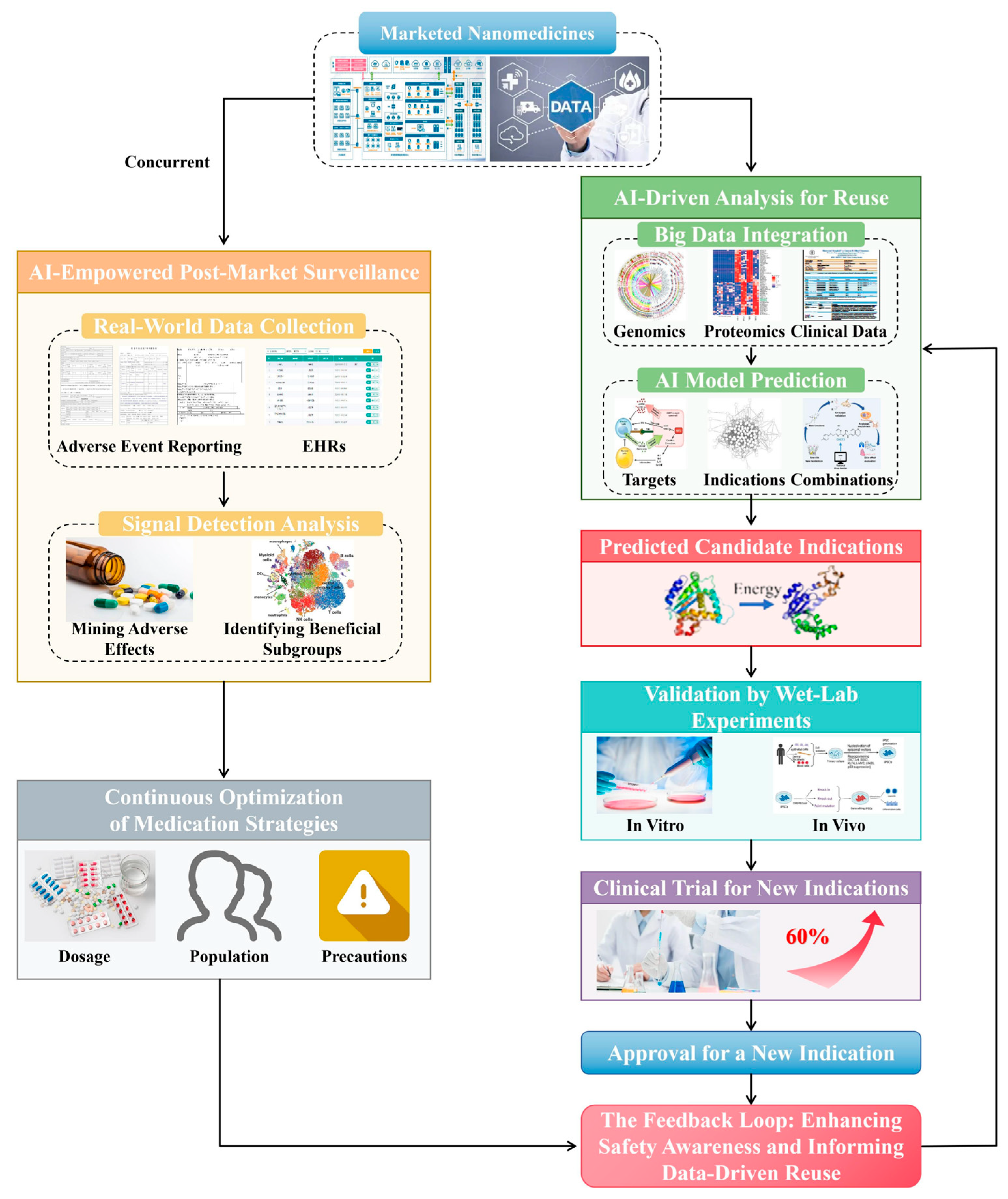
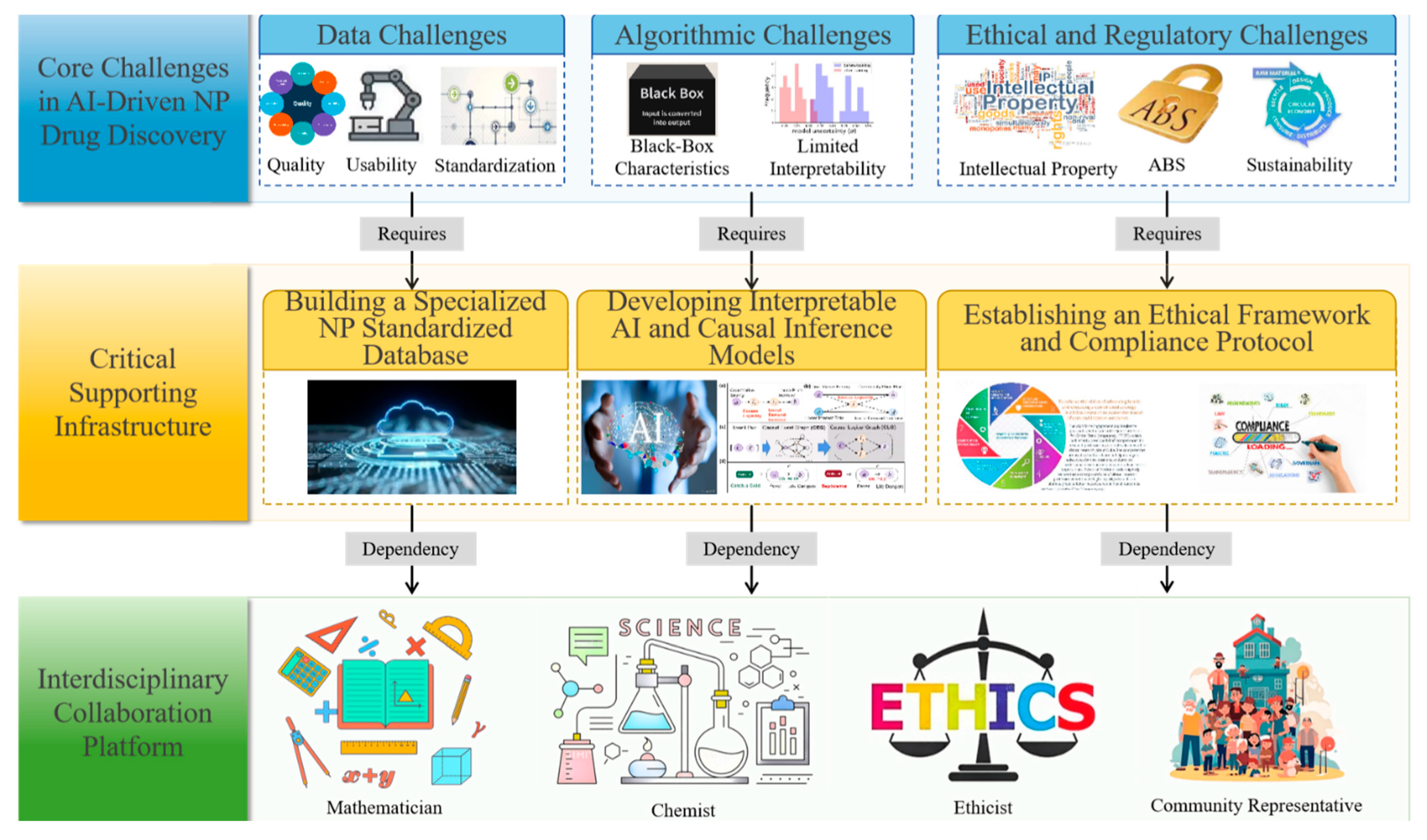

| Traditional Bottleneck | AI-Driven Solution | Key AI Technology | Ref. |
|---|---|---|---|
| Time-consuming isolation and characterization | Spectral data analysis, automated workflow | Deep Neural Networks and Computer Vision | [19] |
| Dereplication, redundant discovery | AI-powered databases, classification and clustering | Unsupervised Learning (e.g., K-means) | [19] |
| Poor Drugability (solubility and bioavailability) | In silico AMET prediction | Graph Neural Networks, QSAR models | [22] |
| Limited supply and low yields from source | Biosynthetic engineering via in silico design | Reinforcement Learning, Generative Models, Variational Autoencoders | [23] |
| Inadequate understanding of mechanisms | Multi-Omics data integration and Network analysis | Deep (Reinforcement) Learning and Knowledge Graphs | [24] |
| Stage of Preclinical Pipeline | AI Tool/Model | Underlying Algorithm(s) | Function/Application | Applicability Domain and Notes | Validation Level | Typical Data Requirements | Ref. |
|---|---|---|---|---|---|---|---|
| Target Prediction | SPiDER, STarFish, TiGER | Self-organizing maps, Ensemble methods (RF, k-NN) | Identifies innovative molecules and their targets; predicts drug side effects and repurposing options | General small molecules; not specific to natural products. | Primarily in silico; some tools have limited experimental validation. | Chemical structures, bioactivity databases, and omics data. | [68,69,70] |
| ADMET Screening | ADMET-AI, PiscesCSM, ProTox-II | Graph Neural Networks, Machine learning models | Predicts absorption, distribution, metabolism, excretion, and toxicity; filters vast chemical libraries for druggability | General chemical libraries; applicability may vary with chemical space. | Mostly in silico; some tools benchmarked with experimental datasets. | Molecular descriptors, SMILES strings, and historical ADMET data. | [81,85,86,87,88,90] |
| Bioactivity and Synergy Prediction | CCSynergy, SynAI, SynPred | Deep Neural Networks (DNNs), QSAR | Predicts and ranks the biological activities of compounds; predicts synergistic interactions for combination therapies | General drug pairs; limited validation for natural product combinations. | Predominantly in silico; few tools validated in cell-based assays. | Dose–response matrices, drug structures, genomic profiles. | [95,96,97,98] |
| Lead Optimization and De Novo Design | GANs, VAEs, OptADMET | Generative AI, Reinforcement Learning | Designs novel molecules with optimized properties; refines molecular synthesis paths through iterative learning | General de novo design; may require tuning for natural product-like chemical space. | Proof-of-concept in silico; experimental validation rare. | Chemical libraries, property labels (e.g., solubility, potency). | [95,96,114] |
| Methodology | Key Strengths | Major Limitations | Ref. |
|---|---|---|---|
| Virtual Screening | LBVS: Fast, efficient for analog discovery. SBVS: Target-agnostic, enables novel scaffold discovery. | LBVS: High scaffold bias, poor generalization. SBVS: Challenged by flexibility/scoring inaccuracies. | [14] |
| De Novo Generation | Explores novel chemical space; enables multi-property optimization. | Outputs often lack synthetic tractability; validation is complex. | [175] |
| ADMET Prediction | Enables early attrition risk assessment; cost-efficient. | Models limited by data quality/coverage; unreliable for novel chemotypes. | [176] |
| Explainable AI (XAI) | Increases trust and transparency; provides actionable insights for chemists. | Explanations can be non-unique; may reduce model performance. | [177] |
| Integrated Systems | Models complex biology; links molecular to phenotypic effects. | Requires heterogeneous data; complex to build and validate. | [178] |
Disclaimer/Publisher’s Note: The statements, opinions and data contained in all publications are solely those of the individual author(s) and contributor(s) and not of MDPI and/or the editor(s). MDPI and/or the editor(s) disclaim responsibility for any injury to people or property resulting from any ideas, methods, instructions or products referred to in the content. |
© 2026 by the authors. Licensee MDPI, Basel, Switzerland. This article is an open access article distributed under the terms and conditions of the Creative Commons Attribution (CC BY) license.
Share and Cite
Paerhati, Y.; Aikebaier, A.; Dilimulati, D.; Baishan, A.; Yusufujiang, N.; Qiu, X.; Wusiman, Y.; Zhou, W. Rethinking Nature’s Pharmacy: AI Era and Natural Product Drug Discovery. Pharmaceuticals 2026, 19, 301. https://doi.org/10.3390/ph19020301
Paerhati Y, Aikebaier A, Dilimulati D, Baishan A, Yusufujiang N, Qiu X, Wusiman Y, Zhou W. Rethinking Nature’s Pharmacy: AI Era and Natural Product Drug Discovery. Pharmaceuticals. 2026; 19(2):301. https://doi.org/10.3390/ph19020301
Chicago/Turabian StylePaerhati, Yipaerguli, Alifeiye Aikebaier, Dilihuma Dilimulati, Alhar Baishan, Nazhakaiti Yusufujiang, Xiaoxiao Qiu, Yilixiati Wusiman, and Wenting Zhou. 2026. "Rethinking Nature’s Pharmacy: AI Era and Natural Product Drug Discovery" Pharmaceuticals 19, no. 2: 301. https://doi.org/10.3390/ph19020301
APA StylePaerhati, Y., Aikebaier, A., Dilimulati, D., Baishan, A., Yusufujiang, N., Qiu, X., Wusiman, Y., & Zhou, W. (2026). Rethinking Nature’s Pharmacy: AI Era and Natural Product Drug Discovery. Pharmaceuticals, 19(2), 301. https://doi.org/10.3390/ph19020301