
Protective Role of Menthol Against Doxorubicin-Induced Cardiac Injury Through Suppression of TLR4/MAPK/NF-κB Signaling and Oxidative Stress
 , , , and
Abstract
1. Introduction
2. Results
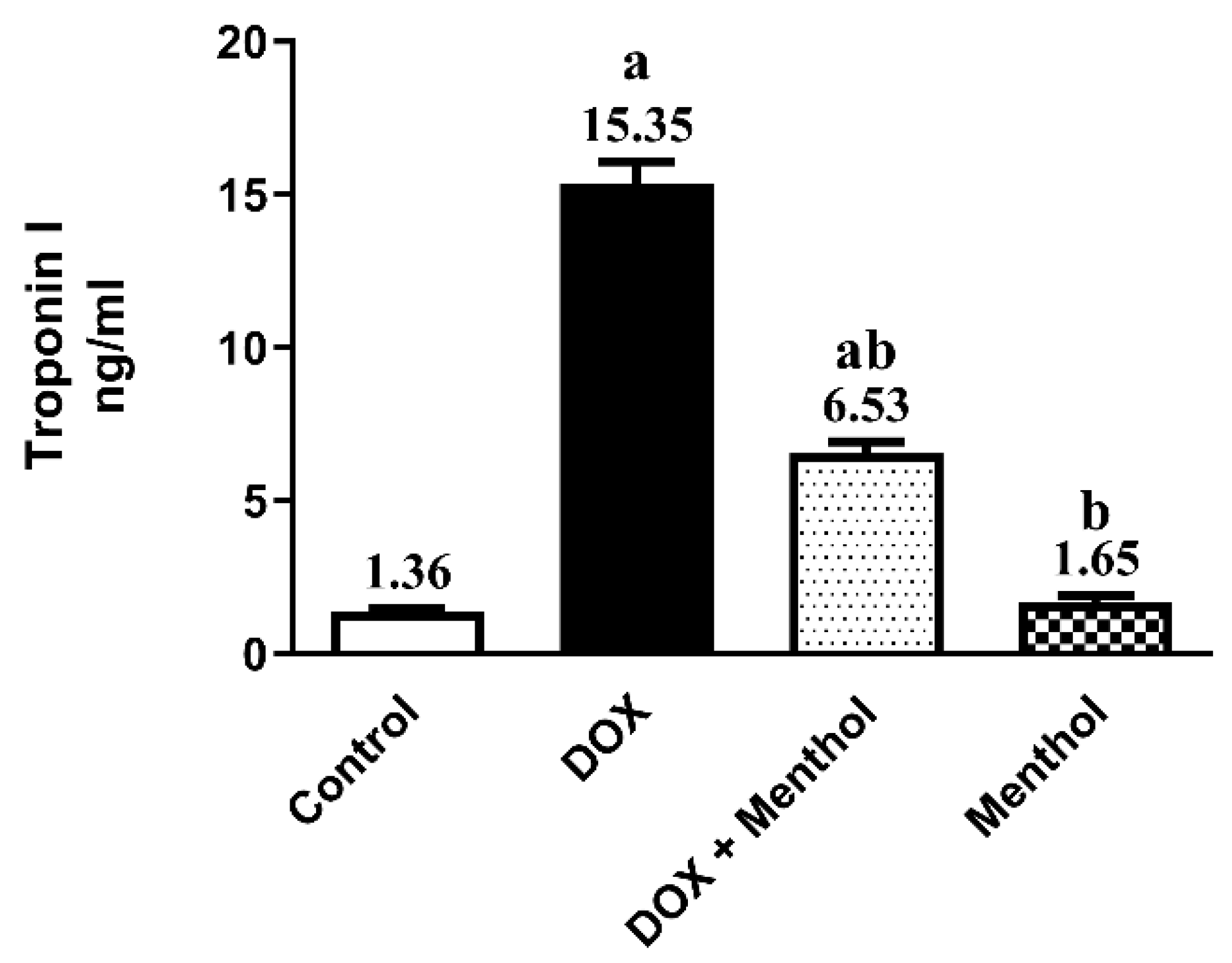
2.1. Impact of Menthol on Serum Level of Troponin-1 DIC
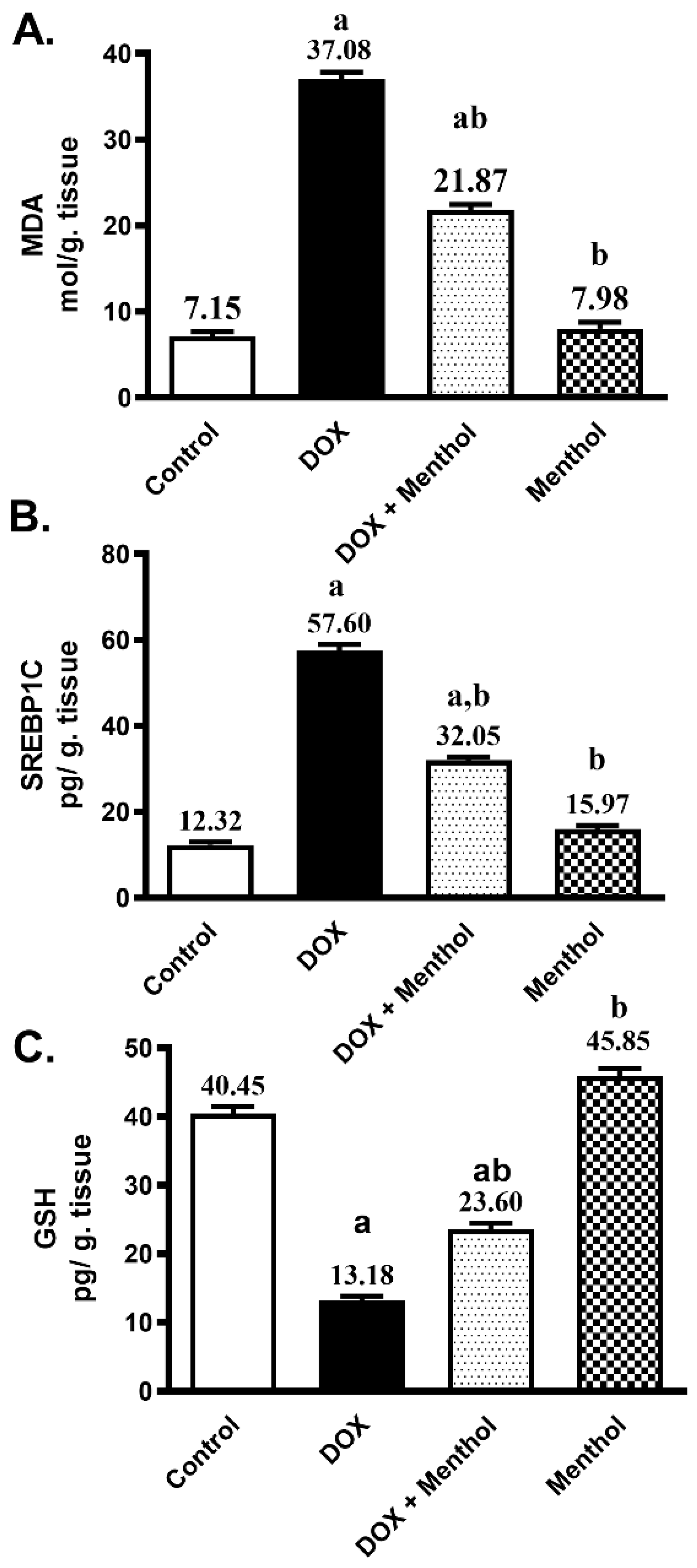
2.2. Impacts of Menthol on OS Markers Towards DIC
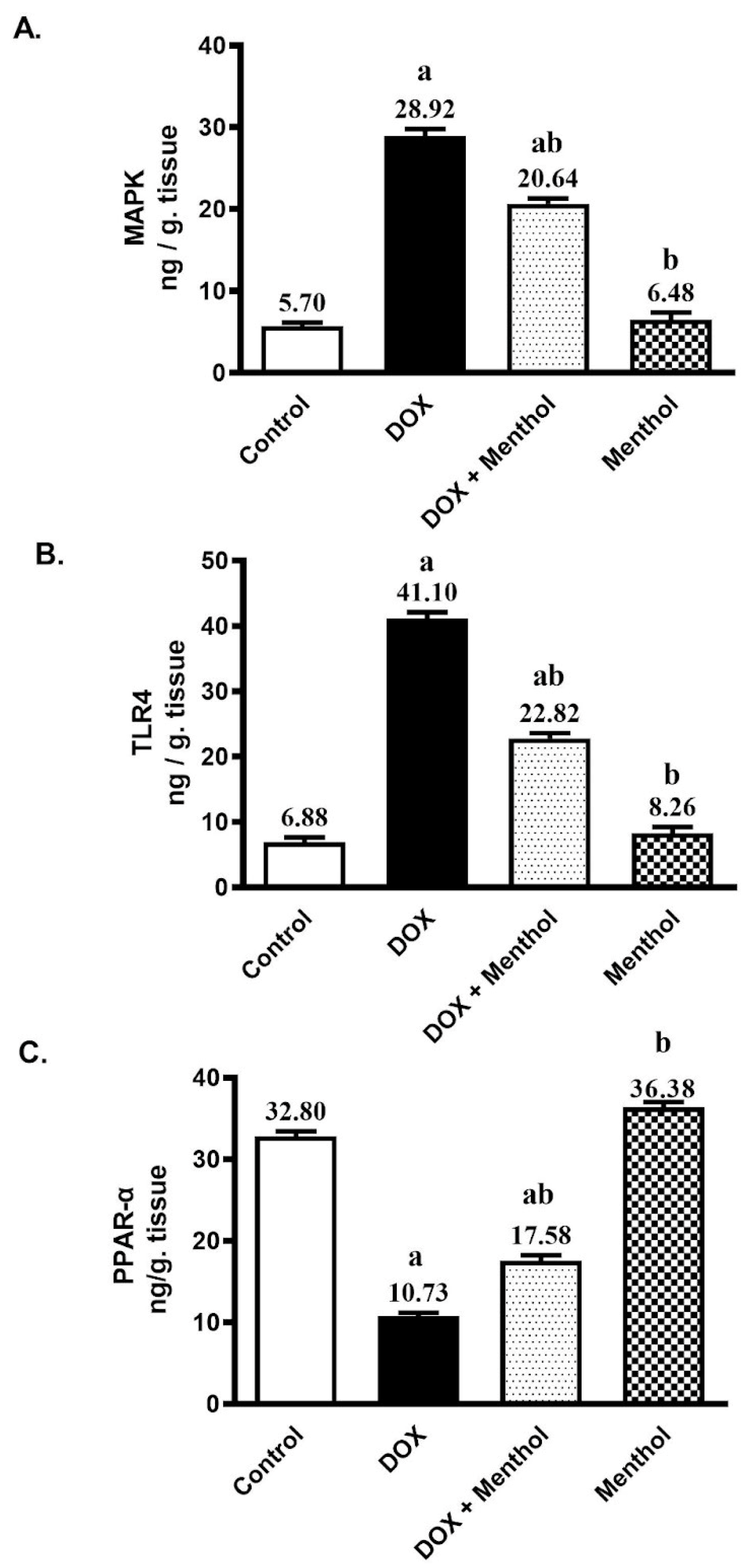
2.3. Impacts of Menthol on Inflammatory Markers Towards DIC
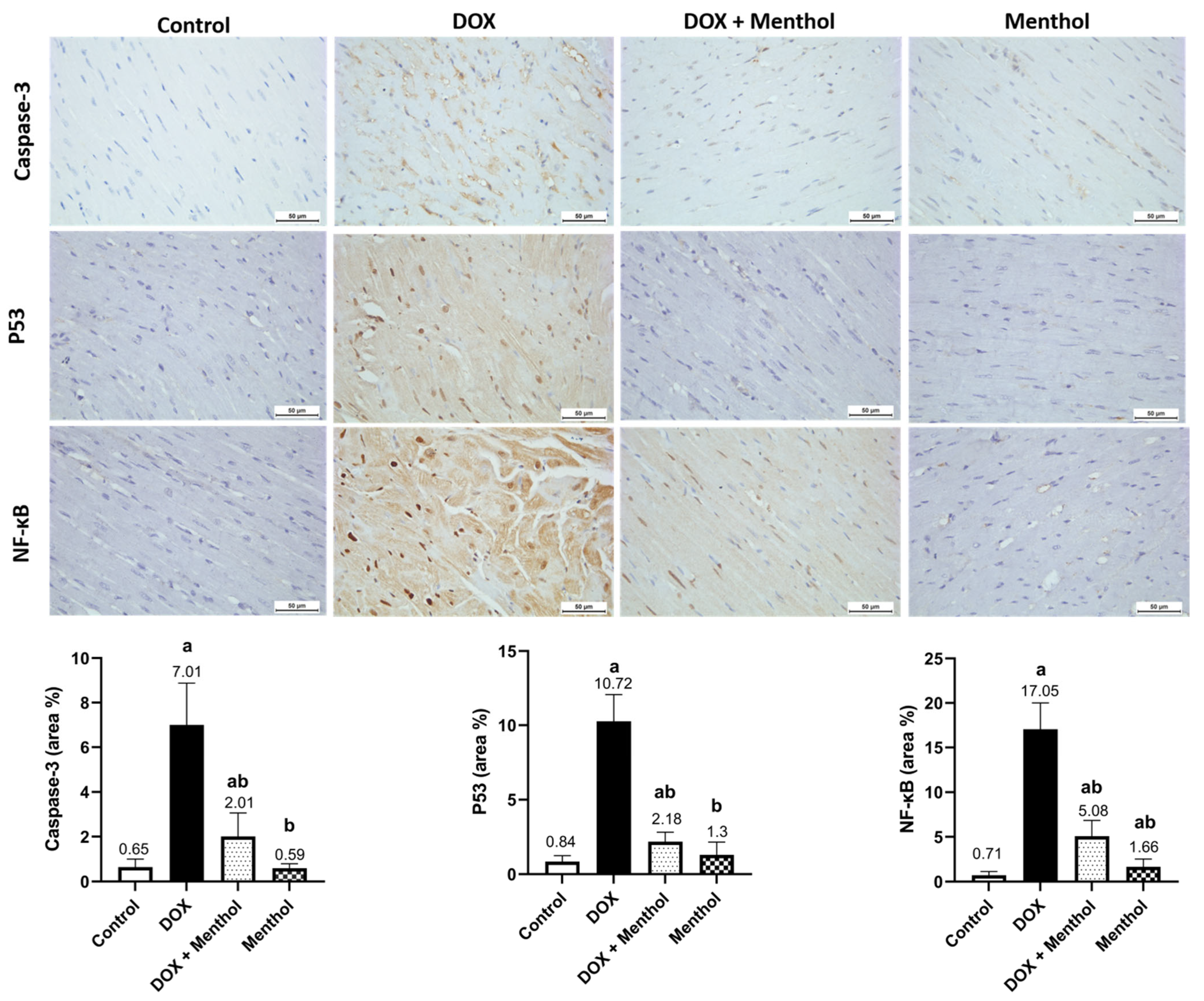
2.4. Evaluation of Immunohistochemistry Changes
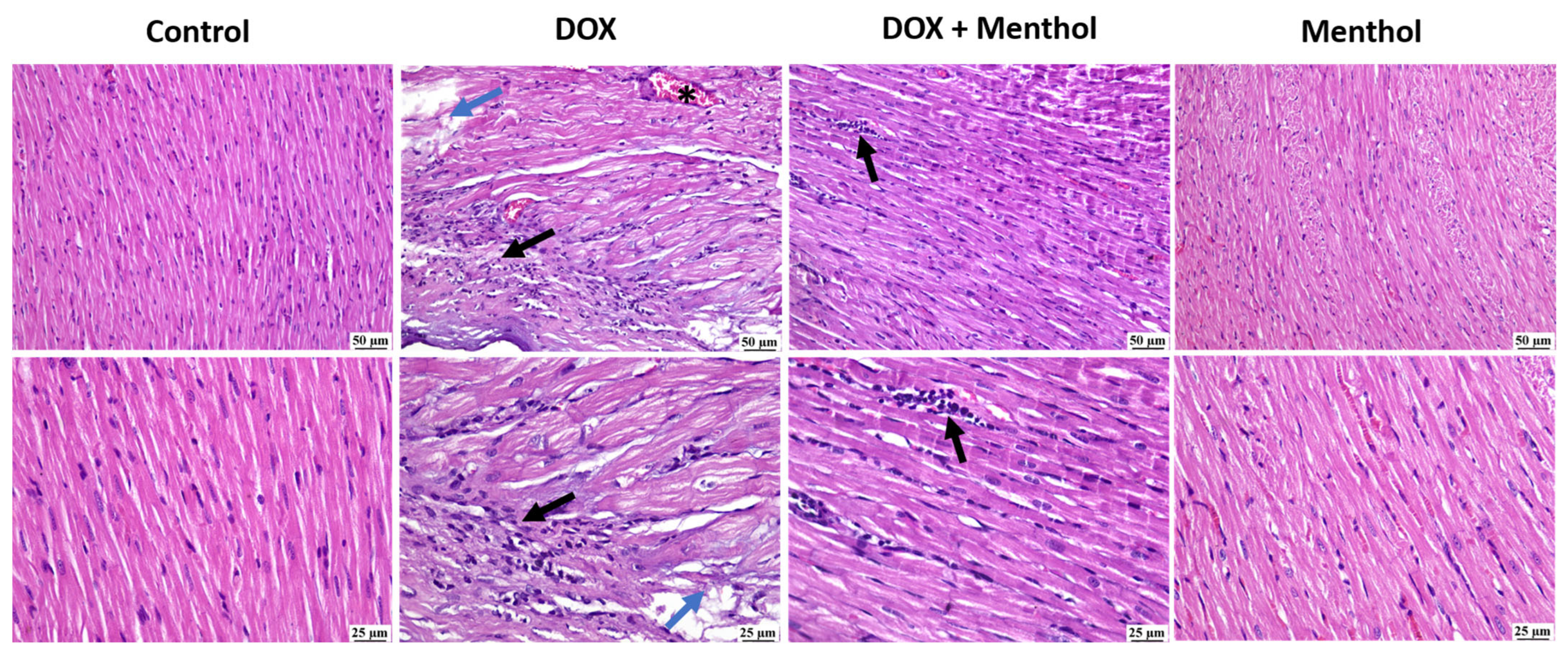
2.5. Evaluation of Histological Changes
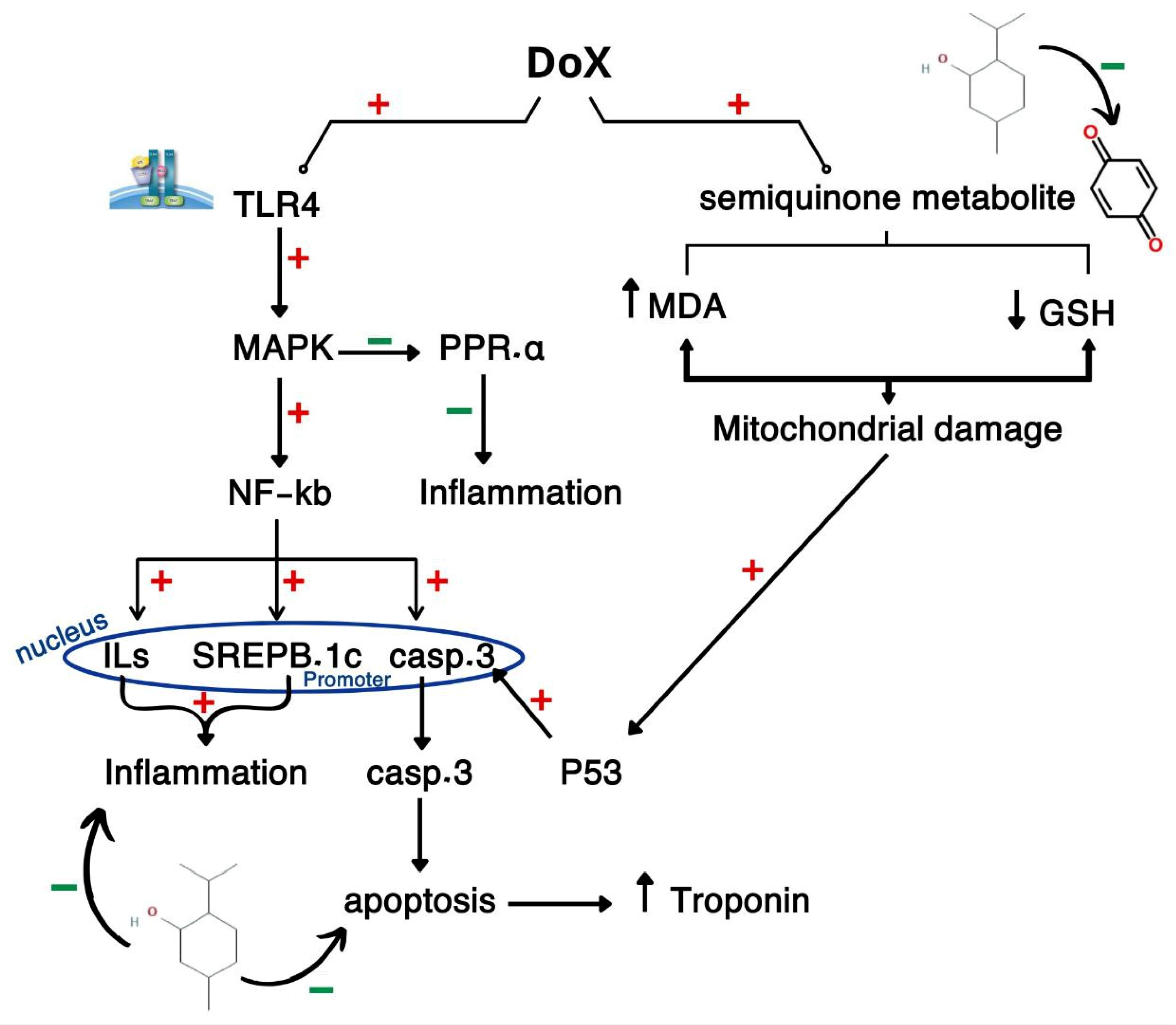
3. Discussion
4. Materials and Methods
4.1. Animals
4.2. Drugs and Chemicals
4.3. Experimental Design
4.4. Sampling and Tissue Collection
4.5. Quantitative Determination of the Rats’ Serum Levels of Troponin
4.6. Biochemical Assays in Cardiac Tissues
4.7. Immunohistochemistry (IHC)
4.8. Quantitative Evaluation of IHC Staining
4.9. The Histopathological Examination
4.10. Statistical Analysis
5. Conclusions
Author Contributions
Funding
Institutional Review Board Statement
Data Availability Statement
Acknowledgments
Conflicts of Interest
Abbreviations
| DOX | Doxorubicin |
| DIC | Doxorubicin-induced cardiotoxicity |
| MDA | Malondialdehyde |
| GSH | Glutathione |
| TLR4 | Toll-like receptor 4 |
| MAPK | Mitogen-activated protein kinase |
| NF-κB | Nuclear factor kappa B |
| ROS | Reactive oxygen species |
| OS | Oxidative stress |
| PPAR-α | Peroxisome proliferator-activated receptor alpha |
| TNF-α | Tumor necrosis factor alpha |
| IL-6 | Interleukin 6 |
| IL-1β | Interleukin 1 beta |
| ELISA | Enzyme-Linked Immunosorbent Assay |
| ANOVA | Analysis of variance |
| P.O | Per Os |
| i.p. | Intraperitoneal |
| SREBP-1c | Sterol Regulatory Element-Binding Protein-1c |
References
- Octavia, Y.; Tocchetti, C.G.; Gabrielson, K.L.; Janssens, S.; Crijns, H.J.; Moens, A.L. Doxorubicin-Induced Cardiomyopathy: From Molecular Mechanisms to Therapeutic Strategies. J. Mol. Cell Cardiol. 2012, 52, 1213–1225. [Google Scholar] [CrossRef]
- Zhang, S.; Liu, X.; Bawa-Khalfe, T.; Lu, L.-S.; Lyu, Y.L.; Liu, L.F.; Yeh, E.T.H. Identification of the Molecular Basis of Doxorubicin-Induced Cardiotoxicity. Nat. Med. 2012, 18, 1639–1642. [Google Scholar] [CrossRef]
- Hrynchak, I.; Sousa, E.; Pinto, M.; Costa, V.M. The Importance of Drug Metabolites Synthesis: The Case-Study of Cardiotoxic Anticancer Drugs. Drug Metab. Rev. 2017, 49, 158–196. [Google Scholar] [CrossRef]
- Kong, C.-Y.; Guo, Z.; Song, P.; Zhang, X.; Yuan, Y.-P.; Teng, T.; Yan, L.; Tang, Q.-Z. Underlying the Mechanisms of Doxorubicin-Induced Acute Cardiotoxicity: Oxidative Stress and Cell Death. Int. J. Biol. Sci. 2022, 18, 760–770. [Google Scholar] [CrossRef] [PubMed]
- Songbo, M.; Lang, H.; Xinyong, C.; Bin, X.; Ping, Z.; Liang, S. Oxidative Stress Injury in Doxorubicin-Induced Cardiotoxicity. Toxicol. Lett. 2019, 307, 41–48. [Google Scholar] [CrossRef]
- Renu, K.; V G, A.; P B, T.P.; Arunachalam, S. Molecular Mechanism of Doxorubicin-Induced Cardiomyopathy—An Update. Eur. J. Pharmacol. 2018, 818, 241–253. [Google Scholar] [CrossRef] [PubMed]
- Varga, Z.V.; Ferdinandy, P.; Liaudet, L.; Pacher, P. Drug-Induced Mitochondrial Dysfunction and Cardiotoxicity. Am. J. Physiol. Heart Circ. Physiol. 2015, 309, H1453–H1467. [Google Scholar] [CrossRef]
- Kitakata, H.; Endo, J.; Ikura, H.; Moriyama, H.; Shirakawa, K.; Katsumata, Y.; Sano, M. Therapeutic Targets for DOX-Induced Cardiomyopathy: Role of Apoptosis vs. Ferroptosis. Int. J. Mol. Sci. 2022, 23, 1414. [Google Scholar] [CrossRef]
- Bansal, N.; Adams, M.J.; Ganatra, S.; Colan, S.D.; Aggarwal, S.; Steiner, R.; Amdani, S.; Lipshultz, E.R.; Lipshultz, S.E. Strategies to Prevent Anthracycline-Induced Cardiotoxicity in Cancer Survivors. Cardiooncology 2019, 5, 18. [Google Scholar] [CrossRef] [PubMed]
- Truong, J.; Yan, A.T.; Cramarossa, G.; Chan, K.K.W. Chemotherapy-Induced Cardiotoxicity: Detection, Prevention, and Management. Can. J. Cardiol. 2014, 30, 869–878. [Google Scholar] [CrossRef]
- Graffagnino, J.; Kondapalli, L.; Arora, G.; Hawi, R.; Lenneman, C.G. Strategies to Prevent Cardiotoxicity. Curr. Treat. Options Oncol. 2020, 21, 32. [Google Scholar] [CrossRef]
- Costanzo, V.; Ratre, Y.K.; Andretta, E.; Acharya, R.; Bhaskar, L.V.K.S.; Verma, H.K. A Comprehensive Review of Cancer Drug-Induced Cardiotoxicity in Blood Cancer Patients: Current Perspectives and Therapeutic Strategies. Curr. Treat. Options Oncol. 2024, 25, 465–495. [Google Scholar] [CrossRef] [PubMed]
- Ayyappan, J.P.; Lizardo, K.; Wang, S.; Yurkow, E.; Nagajyothi, J.F. Inhibition of SREBP Improves Cardiac Lipidopathy, Improves Endoplasmic Reticulum Stress, and Modulates Chronic Chagas Cardiomyopathy. J. Am. Heart Assoc. 2020, 9, e014255. [Google Scholar] [CrossRef] [PubMed]
- Montaigne, D.; Butruille, L.; Staels, B. PPAR Control of Metabolism and Cardiovascular Functions. Nat. Rev. Cardiol. 2021, 18, 809–823. [Google Scholar] [CrossRef] [PubMed]
- Li, K.; Chen, W.; Ma, L.; Yan, L.; Wang, B. Approaches for Reducing Chemo/Radiation-Induced Cardiotoxicity by Nanoparticles. Environ. Res. 2024, 244, 117264. [Google Scholar] [CrossRef]
- Sharma, R.; Kashyap, J.; Olanrewaju, O.A.; Jabbar, A.; Someshwar, F.; Saeed, H.; Varrassi, G.; Qadeer, H.A.; Kumar, S.; Cheema, A.Y.; et al. Cardio-Oncology: Managing Cardiovascular Complications of Cancer Therapies. Cureus 2023, 15, e51038. [Google Scholar] [CrossRef]
- Seifert, C.F.; Nesser, M.E.; Thompson, D.F. Dexrazoxane in the Prevention of Doxorubicin-Induced Cardiotoxicity. Ann. Pharmacother. 1994, 28, 1063–1072. [Google Scholar] [CrossRef]
- Liu, Y.; Li, A.; Feng, X.; Jiang, X.; Sun, X.; Huang, W.; Zhu, X.; Zhao, Z. L-Menthol Alleviates Cigarette Smoke Extract Induced Lung Injury in Rats by Inhibiting Oxidative Stress and Inflammation via Nuclear Factor Kappa B, P38 MAPK and Nrf2 Signalling Pathways. RSC Adv. 2018, 8, 9353–9363. [Google Scholar] [CrossRef]
- Shaltout, F. Egypfian Medicinal Plants and Respiratory Disease. J. Agric. Educ. Res. 2024, 2, 1–7. [Google Scholar]
- Matouk, A.I.; El-Daly, M.; Habib, H.A.; Senousy, S.; Naguib Abdel Hafez, S.M.; Kasem, A.W.; Almalki, W.H.; Alzahrani, A.; Alshehri, A.; Ahmed, A.-S.F. Protective Effects of Menthol against Sepsis-Induced Hepatic Injury: Role of Mediators of Hepatic Inflammation, Apoptosis, and Regeneration. Front. Pharmacol. 2022, 13, 952337. [Google Scholar] [CrossRef]
- Wang, Q.; Yang, Y.; Chen, K.; Li, D.; Tang, B.; Peng, K.; Wang, Z.; Yang, P.; Yang, D.; Yang, Y. Dietary Menthol Attenuates Inflammation and Cardiac Remodeling After Myocardial Infarction via the Transient Receptor Potential Melastatin 8. Am. J. Hypertens. 2020, 33, 223–233. [Google Scholar] [CrossRef]
- Nagarajan, A.; Doss, V.A. Antihypertrophic Effect of Menthol from Mentha x Piperita ConcerningCardiac Hypertrophy: A Review. NPJ 2023, 13, e290422204272. [Google Scholar] [CrossRef]
- Esmaeili, Y.; Dabiri, A.; Mashayekhi, F.; Rahimmanesh, I.; Bidram, E.; Karbasi, S.; Rafienia, M.; Javanmard, S.H.; Ertas, Y.N.; Zarrabi, A.; et al. Smart Co-Delivery of Plasmid DNA and Doxorubicin Using MCM-Chitosan-PEG Polymerization Functionalized with MUC-1 Aptamer against Breast Cancer. Biomed. Pharmacother. 2024, 173, 116465. [Google Scholar] [CrossRef] [PubMed]
- Vitale, R.; Marzocco, S.; Popolo, A. Role of Oxidative Stress and Inflammation in Doxorubicin-Induced Cardiotoxicity: A Brief Account. Int. J. Mol. Sci. 2024, 25, 7477. [Google Scholar] [CrossRef]
- Tabbasam, R.; Khursid, S.; Ishaq, Y.; Farrukh, S.Y. Synergistic Cytotoxic Effects of Doxorubicin Loaded Silver, Gold and Zinc Oxide Nanoparticles in HepG2 Liver Cancer Cells. BioNanoSci. 2024, 15, 105. [Google Scholar] [CrossRef]
- Buchalska, B.; Kamińska, K.; Kowara, M.; Sobiborowicz-Sadowska, A.; Cudnoch-Jędrzejewska, A. Doxorubicin or Epirubicin Versus Liposomal Doxorubicin Therapy-Differences in Cardiotoxicity. Cardiovasc. Toxicol. 2025. [Google Scholar] [CrossRef]
- Tan, N.; Luo, H.; Li, W.; Ling, G.; Wei, Y.; Wang, W.; Wang, Y. The Dual Function of Autophagy in Doxorubicin-Induced Cardiotoxicity: Mechanism and Natural Products. Semin. Cancer Biol. 2025, 109, 83–90. [Google Scholar] [CrossRef] [PubMed]
- Baniahmad, B.; Safaeian, L.; Vaseghi, G.; Rabbani, M.; Mohammadi, B. Cardioprotective Effect of Vanillic Acid against Doxorubicin-Induced Cardiotoxicity in Rat. Res. Pharm. Sci. 2020, 15, 87–96. [Google Scholar] [CrossRef]
- Linders, A.N.; Dias, I.B.; Ovchinnikova, E.S.; Vermeer, M.C.S.C.; Hoes, M.F.; Markousis Mavrogenis, G.; Deiman, F.E.; Arevalo Gomez, K.F.; Bliley, J.M.; Nehme, J.; et al. Evaluation of Senescence and Its Prevention in Doxorubicin-Induced Cardiotoxicity Using Dynamic Engineered Heart Tissues. JACC CardioOncol 2023, 5, 298–315. [Google Scholar] [CrossRef]
- Khames, A.; Khalaf, M.M.; Gad, A.M.; Abd El-Raouf, O.M.; Kandeil, M.A. Nicorandil Combats Doxorubicin-Induced Nephrotoxicity via Amendment of TLR4/P38 MAPK/NFκ-B Signaling Pathway. Chem. Biol. Interact. 2019, 311, 108777. [Google Scholar] [CrossRef]
- Shi, S.; Chen, Y.; Luo, Z.; Nie, G.; Dai, Y. Role of Oxidative Stress and Inflammation-Related Signaling Pathways in Doxorubicin-Induced Cardiomyopathy. Cell Commun. Signal 2023, 21, 61. [Google Scholar] [CrossRef]
- Zhang, Y.; Liang, X.; Bao, X.; Xiao, W.; Chen, G. Toll-like Receptor 4 (TLR4) Inhibitors: Current Research and Prospective. Eur. J. Med. Chem. 2022, 235, 114291. [Google Scholar] [CrossRef] [PubMed]
- Kim, H.-J.; Kim, H.; Lee, J.-H.; Hwangbo, C. Toll-like Receptor 4 (TLR4): New Insight Immune and Aging. Immun. Ageing 2023, 20, 67. [Google Scholar] [CrossRef] [PubMed]
- Khames, A.; Gad, A.M.; Abd El-raouf, O.M.; Kandeil, M.A.; Khalaf, M.M. Sodium Thiosulphate Shows Promising Anti-Inflammatory Role against Doxorubicin-Induced Renal Injury Depending on Tlr4 Pathway Inhibition. Plant Arch 2020, 20, 2948–2958. [Google Scholar]
- Ferré, P.; Phan, F.; Foufelle, F. SREBP-1c and Lipogenesis in the Liver: An Update1. Biochem. J. 2021, 478, 3723–3739. [Google Scholar] [CrossRef]
- Li, N.; Li, X.; Ding, Y.; Liu, X.; Diggle, K.; Kisseleva, T.; Brenner, D.A. SREBP Regulation of Lipid Metabolism in Liver Disease, and Therapeutic Strategies. Biomedicines 2023, 11, 3280. [Google Scholar] [CrossRef]
- Zhai, M.; Zhang, C.; Cui, J.; Liu, J.; Li, Y.; Xie, K.; Luo, E.; Tang, C. Electromagnetic Fields Ameliorate Hepatic Lipid Accumulation and Oxidative Stress: Potential Role of CaMKKβ/AMPK/SREBP-1c and Nrf2 Pathways. Biomed. Eng. Online 2023, 22, 51. [Google Scholar] [CrossRef] [PubMed]
- Qiu, T.; Shi, J.-X.; Cheng, C.; Jiang, H.; Ruan, H.-N.; Li, J.; Liu, C.-M. Hepatoprotective Effect of Avicularin on Lead-Induced Steatosis, Oxidative Stress, and Inflammation in Mice Associated with the MAPK/HSP60/NLRP3 and SREBP1c Pathway. Toxicol Res. 2023, 12, 417–424. [Google Scholar] [CrossRef]
- Thakur, M.; Tupe, R.S. Lipoxin and Glycation in SREBP Signaling: Insight into Diabetic Cardiomyopathy and Associated Lipotoxicity. Prostaglandins Other Lipid Mediat. 2023, 164, 106698. [Google Scholar] [CrossRef]
- Zhu, W.; Chen, M.; Wang, Y.; Chen, Y.; Zhang, Y.; Wang, Y.; Liu, P.; Li, P. Regulation of Renal Lipid Deposition in Diabetic Nephropathy on Morroniside via Inhibition of NF-KB/TNF-a/SREBP1c Signaling Pathway. Chem. Biol. Interact. 2023, 385, 110711. [Google Scholar] [CrossRef]
- Gao, Y.; Nan, X.; Shi, X.; Mu, X.; Liu, B.; Zhu, H.; Yao, B.; Liu, X.; Yang, T.; Hu, Y.; et al. SREBP1 Promotes the Invasion of Colorectal Cancer Accompanied Upregulation of MMP7 Expression and NF-κB Pathway Activation. BMC Cancer 2019, 19, 685. [Google Scholar] [CrossRef]
- Zhang, N.; Chu, E.S.H.; Zhang, J.; Li, X.; Liang, Q.; Chen, J.; Chen, M.; Teoh, N.; Farrell, G.; Sung, J.J.Y.; et al. Peroxisome Proliferator Activated Receptor Alpha Inhibits Hepatocarcinogenesis through Mediating NF-κB Signaling Pathway. Oncotarget 2014, 5, 8330–8340. [Google Scholar] [CrossRef]
- Shen, W.; Gao, Y.; Lu, B.; Zhang, Q.; Hu, Y.; Chen, Y. Negatively Regulating TLR4/NF-κB Signaling via PPARα in Endotoxin-Induced Uveitis. Biochim. Biophys. Acta 2014, 1842, 1109–1120. [Google Scholar] [CrossRef]
- Rahmatollahi, M.; Baram, S.M.; Rahimian, R.; Saeedi Saravi, S.S.; Dehpour, A.R. Peroxisome Proliferator-Activated Receptor-α Inhibition Protects Against Doxorubicin-Induced Cardiotoxicity in Mice. Cardiovasc. Toxicol. 2016, 16, 244–250. [Google Scholar] [CrossRef] [PubMed]
- Arab, H.H.; Eid, A.H.; Alsufyani, S.E.; Ashour, A.M.; Alnefaie, A.M.; Alsharif, N.M.; Alshehri, A.M.; Almalawi, A.A.; Alsowat, A.A.; Abd El Aal, H.A.; et al. Activation of AMPK/mTOR-Driven Autophagy and Suppression of the HMGB1/TLR4 Pathway with Pentoxifylline Attenuates Doxorubicin-Induced Hepatic Injury in Rats. Pharmaceuticals 2024, 17, 681. [Google Scholar] [CrossRef] [PubMed]
- Wang, S.; Zhang, X.; Hou, Y.; Zhang, Y.; Chen, J.; Gao, S.; Duan, H.; Gu, S.; Yu, S.; Cai, Y. SIRT6 Activates PPARα to Improve Doxorubicin-Induced Myocardial Cell Aging and Damage. Chem. Biol. Interact. 2024, 392, 110920. [Google Scholar] [CrossRef] [PubMed]
- Renu, K.; Pureti, L.P.; Vellingiri, B.; Gopalakrishnan, A.V. Toxic Effects and Molecular Mechanism of Doxorubicin on Different Organs—an Update. Toxin. Rev. 2022, 41, 650–674. [Google Scholar] [CrossRef]
- Shimizu, Y.; Hamada, K.; Guo, T.; Hasegawa, C.; Kuga, Y.; Takeda, K.; Yagi, T.; Koyama, H.; Takagi, H.; Aotani, D.; et al. Role of PPARα in Inflammatory Response of C2C12 Myotubes. Biochem. Biophys. Res. Commun. 2024, 694, 149413. [Google Scholar] [CrossRef]
- Titus, C.; Hoque, M.T.; Bendayan, R. PPAR Agonists for the Treatment of Neuroinflammatory Diseases. Trends Pharmacol. Sci. 2024, 45, 9–23. [Google Scholar] [CrossRef]
- Elhemiely, A.A.; El-Fayoumi, S.H.; Gadelmawla, M.H.A.; Mahran, N.A.; Gad, A.M. Hesperidin Reduces Hepatic Injury Induced by Doxorubicin in Rat Model Through Its Antioxidative and Anti-Inflammatory Effects, Focusing on SIRT-1/NRF-2 Pathways. J. Biochem. Mol. Toxicol. 2025, 39, e70465. [Google Scholar] [CrossRef]
- Yun, C.; Kim, S.H.; Kwon, D.; Byun, M.R.; Chung, K.W.; Lee, J.; Jung, Y.-S. Doxorubicin Attenuates Free Fatty Acid-Induced Lipid Accumulation via Stimulation of P53 in HepG2 Cells. Biomol. Ther. 2024, 32, 94–103. [Google Scholar] [CrossRef]
- Yang, Y.; Ren, J.; Zhang, J.; Shi, H.; Wang, J.; Yan, Y. FTO Ameliorates Doxorubicin-Induced Cardiotoxicity by Inhibiting Ferroptosis via P53-P21/Nrf2 Activation in a HuR-Dependent m6A Manner. Redox Biol. 2024, 70, 103067. [Google Scholar] [CrossRef] [PubMed]
- Osman, N.N.; Balamash, K.S.A.; Aljedaani, M.S. Impact of Peppermint and Thyme in Ameliorating Cardiac and Hepatic Disorders Induced by Feeding Rats Repeatedly Heated Fried Oil. Int. J. Pharm. Phytopharm. Res. 2019, 9, 10–20. [Google Scholar] [CrossRef]
- Nagarajan, A.; Doss, V.A. Antihypertrophic Effect of Menthol from Mentha x Piperita Concerning Cardiac Hypertrophy: A Review. Nat. Prod. J. 2023, 13, 40–54. [Google Scholar] [CrossRef]
- Khames, A.; Khalaf, M.M.; Gad, A.M.; Abd El-Raouf, O.M. Ameliorative Effects of Sildenafil and/or Febuxostat on Doxorubicin-Induced Nephrotoxicity in Rats. Eur. J. Pharmacol. 2017, 805, 118–124. [Google Scholar] [CrossRef]
- Almatroodi, S.; Alsahli, M.; Almatroudi, A.; Khan, A.; Rahmani, A.; Rahmani, A. Peppermint, (Mentha × Piperita): Role in Management of Diseases through Modulating Various Biological Activities. Phcog. J. 2021, 13, 822–827. [Google Scholar] [CrossRef]
- Wulandari, D.D.; Nidianti, E.; Andini, A.; Nailah, I.; Fillia, S. A Combination of Eucalyptus, Peppermint, and Lavender Essential Oil Ameliorates Serum Lipid Peroxidation and Endogenous Antioxidant Enzymes in Allergic Asthma Rat Model. Afr. J. Biol. Sci. 2024, 6, 688–697. [Google Scholar]
- Goudarzi, M.A.; Radfar, M.; Goudarzi, Z. Peppermint as a Promising Treatment Agent in Inflammatory Conditions: A Comprehensive Systematic Review of Literature. Phytother. Res. 2024, 38, 187–195. [Google Scholar] [CrossRef]
- Reale, M.; Costantini, E.; Aielli, L.; Rienzo, A.D.; Biase, G.D.; Stefano, A.D.; Cacciatore, I. Exploring the Therapeutic Potential of Cinnamoyl Derivatives in Attenuating Inflammation in Lipopolysaccharide-Induced Caco-2 Cells. Future Med. Chem. 2024, 16, 1395–1411. [Google Scholar] [CrossRef]
- Takasawa, S.; Kimura, K.; Miyanaga, M.; Uemura, T.; Hachisu, M.; Miyagawa, S.; Ramadan, A.; Sukegawa, S.; Kobayashi, M.; Kimura, S.; et al. The Powerful Potential of Amino Acid Menthyl Esters for Anti-Inflammatory and Anti-Obesity Therapies. Immunology 2024, 173, 76–92. [Google Scholar] [CrossRef] [PubMed]
- Rozza, A.L.; Meira de Faria, F.; Souza Brito, A.R.; Pellizzon, C.H. The Gastroprotective Effect of Menthol: Involvement of Anti-Apoptotic, Antioxidant and Anti-Inflammatory Activities. PLoS One 2014, 9, e86686. [Google Scholar] [CrossRef]
- Mantawy, E.M.; El-Bakly, W.M.; Esmat, A.; Badr, A.M.; El-Demerdash, E. Chrysin Alleviates Acute Doxorubicin Cardiotoxicity in Rats via Suppression of Oxidative Stress, Inflammation and Apoptosis. Eur. J. Pharmacol. 2014, 728, 107–118. [Google Scholar] [CrossRef]
- Ruskin, D.N.; Anand, R.; LaHoste, G.J. Chronic Menthol Attenuates the Effect of Nicotine on Body Temperature in Adolescent Rats. Nicotine Tob. Res. 2008, 10, 1753–1759. [Google Scholar] [CrossRef]
- Arab, H.H.; Alsufyani, S.E.; Ashour, A.M.; Gad, A.M.; Elhemiely, A.A.; Gadelmawla, M.H.A.; Mahmoud, M.A.; Khames, A. Targeting JAK2/STAT3, NLRP3/Caspase-1, and PK2/PKR2 Pathways with Arbutin Ameliorates Lead Acetate-Induced Testicular Injury in Rats. Pharmaceuticals 2024, 17, 909. [Google Scholar] [CrossRef] [PubMed]
- Abdel-Wahhab, K.G.; Ashry, M.; Hassan, L.K.; El-Azma, M.H.; Elqattan, G.M.; Gadelmawla, M.H.A.; Mannaa, F.A. Hepatic and Immune Modulatory Effectiveness of Lactoferrin Loaded Selenium Nanoparticles on Bleomycin Induced Hepatic Injury. Sci. Rep. 2024, 14, 21066. [Google Scholar] [CrossRef] [PubMed]
- Ibrahim, S.G.; Abu-Dief, A.M.; Gad, A.M.; Gad, E.S.; Alzahrani, A.Y.A.; Alraih, A.M.; Barnawi, I.O.; Mansour, M.; Gadelmawla, M.H.A.; Khames, A. Methylene Blue Mitigates Doxorubicin-Induced Cardiotoxicity via KEAP1/NRF2/GPX-4/Caspase3 Modulation. Int. J. Mol. Sci. 2025, 26, 7680. [Google Scholar] [CrossRef] [PubMed]
- Abdel-Wahhab, K.G.; Ashry, M.; Hassan, L.K.; Gadelmawla, M.H.A.; Elqattan, G.M.; El-Fakharany, E.M.; Mannaaa, F.A. Nano-Chitosan/Bovine Lactoperoxidase and Lactoferrin Formulation Modulates the Hepatic Deterioration Induced by 7,12-Dimethylbenz[a]Anthracene. Comp. Clin. Pathol. 2023, 32, 981–991. [Google Scholar] [CrossRef]
- Alrashdi, B.M.; Askar, H.; Germoush, M.O.; Fouda, M.; Massoud, D.; Alzwain, S.; Abdelsater, N.; Salim, L.M.S.; Gadelmawla, M.H.A.; Ashry, M. Cardioprotective, Anti-Inflammatory, and Antioxidative Outcome of Costus against Bleomycin-Induced Cardiotoxicity in Rat Model. J. Genet. Eng. Biotechnol. 2025, 23, 100466. [Google Scholar] [CrossRef]


Disclaimer/Publisher’s Note: The statements, opinions and data contained in all publications are solely those of the individual author(s) and contributor(s) and not of MDPI and/or the editor(s). MDPI and/or the editor(s) disclaim responsibility for any injury to people or property resulting from any ideas, methods, instructions or products referred to in the content. |
© 2025 by the authors. Licensee MDPI, Basel, Switzerland. This article is an open access article distributed under the terms and conditions of the Creative Commons Attribution (CC BY) license.
Share and Cite
Mansour, M.; Ashour, A.M.; Gad, A.M.; Khames, A.; Ibrahim, S.G.; Gadelmawla, M.H.A.; Gad, E.S. Protective Role of Menthol Against Doxorubicin-Induced Cardiac Injury Through Suppression of TLR4/MAPK/NF-κB Signaling and Oxidative Stress. Pharmaceuticals 2026, 19, 59. https://doi.org/10.3390/ph19010059
Mansour M, Ashour AM, Gad AM, Khames A, Ibrahim SG, Gadelmawla MHA, Gad ES. Protective Role of Menthol Against Doxorubicin-Induced Cardiac Injury Through Suppression of TLR4/MAPK/NF-κB Signaling and Oxidative Stress. Pharmaceuticals. 2026; 19(1):59. https://doi.org/10.3390/ph19010059
Chicago/Turabian StyleMansour, Mona, Ahmed M. Ashour, Amany M. Gad, Ali Khames, Shaimaa G. Ibrahim, Mohamed H. A. Gadelmawla, and Enas S. Gad. 2026. "Protective Role of Menthol Against Doxorubicin-Induced Cardiac Injury Through Suppression of TLR4/MAPK/NF-κB Signaling and Oxidative Stress" Pharmaceuticals 19, no. 1: 59. https://doi.org/10.3390/ph19010059
APA StyleMansour, M., Ashour, A. M., Gad, A. M., Khames, A., Ibrahim, S. G., Gadelmawla, M. H. A., & Gad, E. S. (2026). Protective Role of Menthol Against Doxorubicin-Induced Cardiac Injury Through Suppression of TLR4/MAPK/NF-κB Signaling and Oxidative Stress. Pharmaceuticals, 19(1), 59. https://doi.org/10.3390/ph19010059