Analysis of Research Progress on the Chemical Constituents and Pharmacological Activities of Er-Shiwei Roudoukou Wan


Abstract
1. Introduction
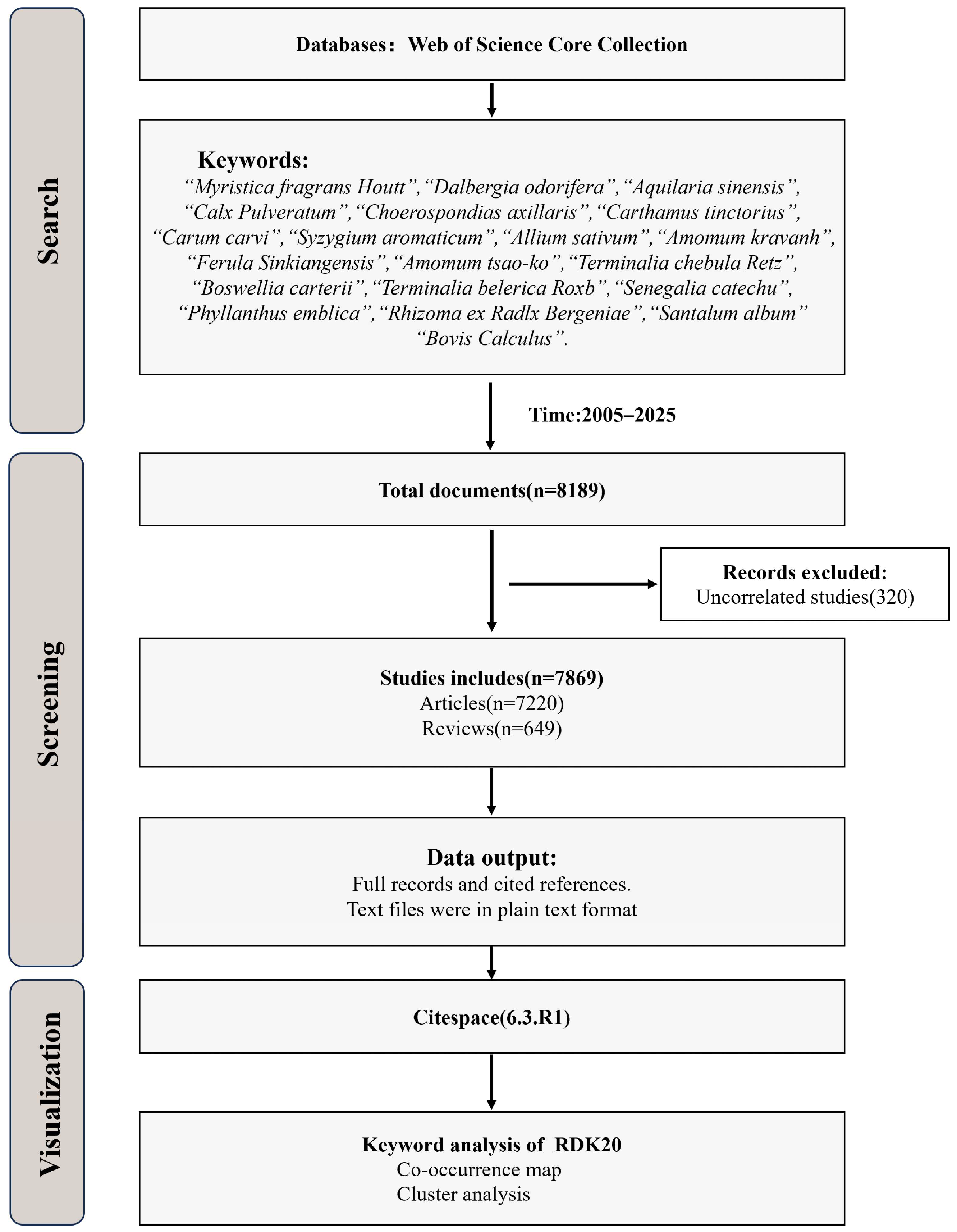
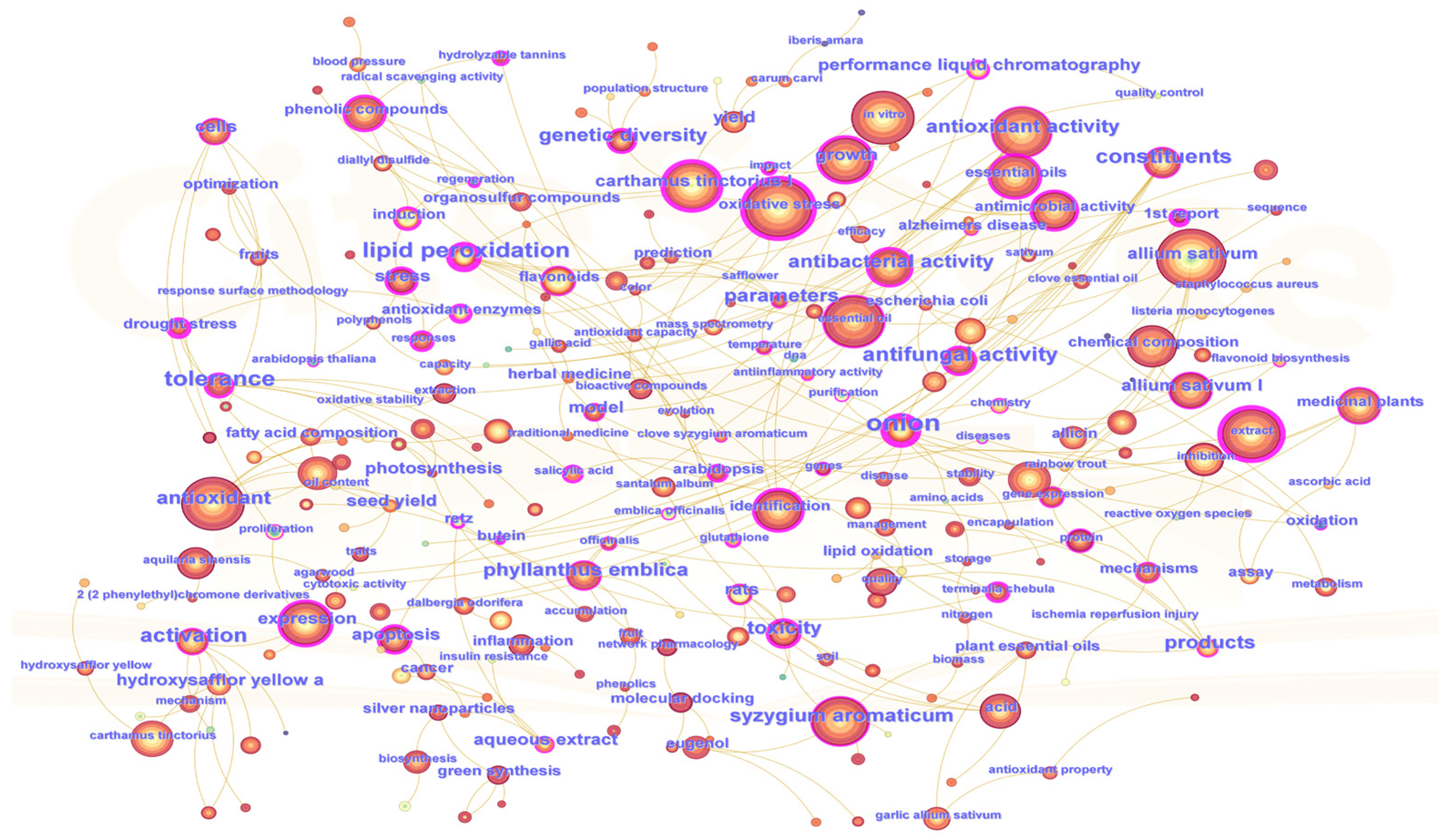
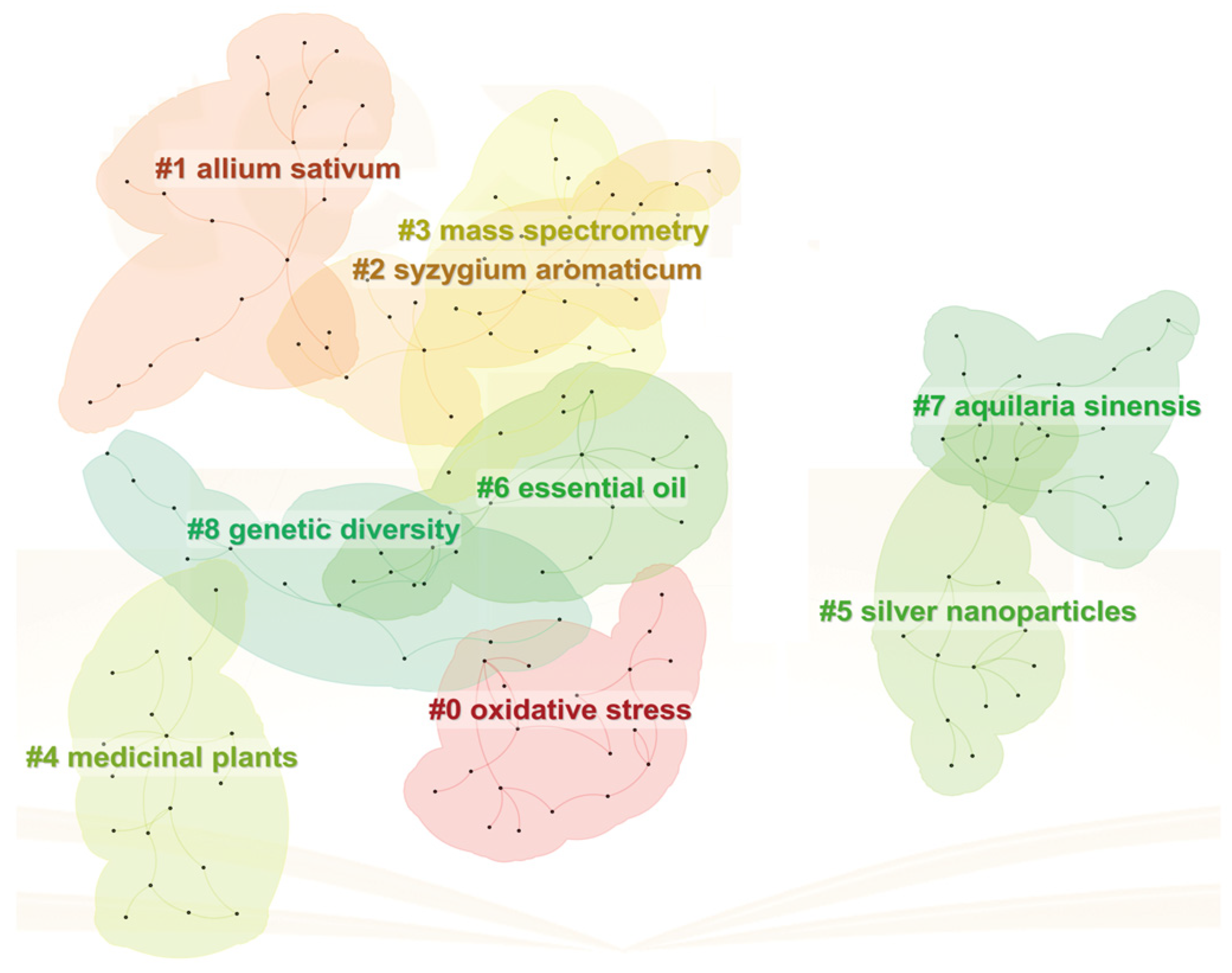
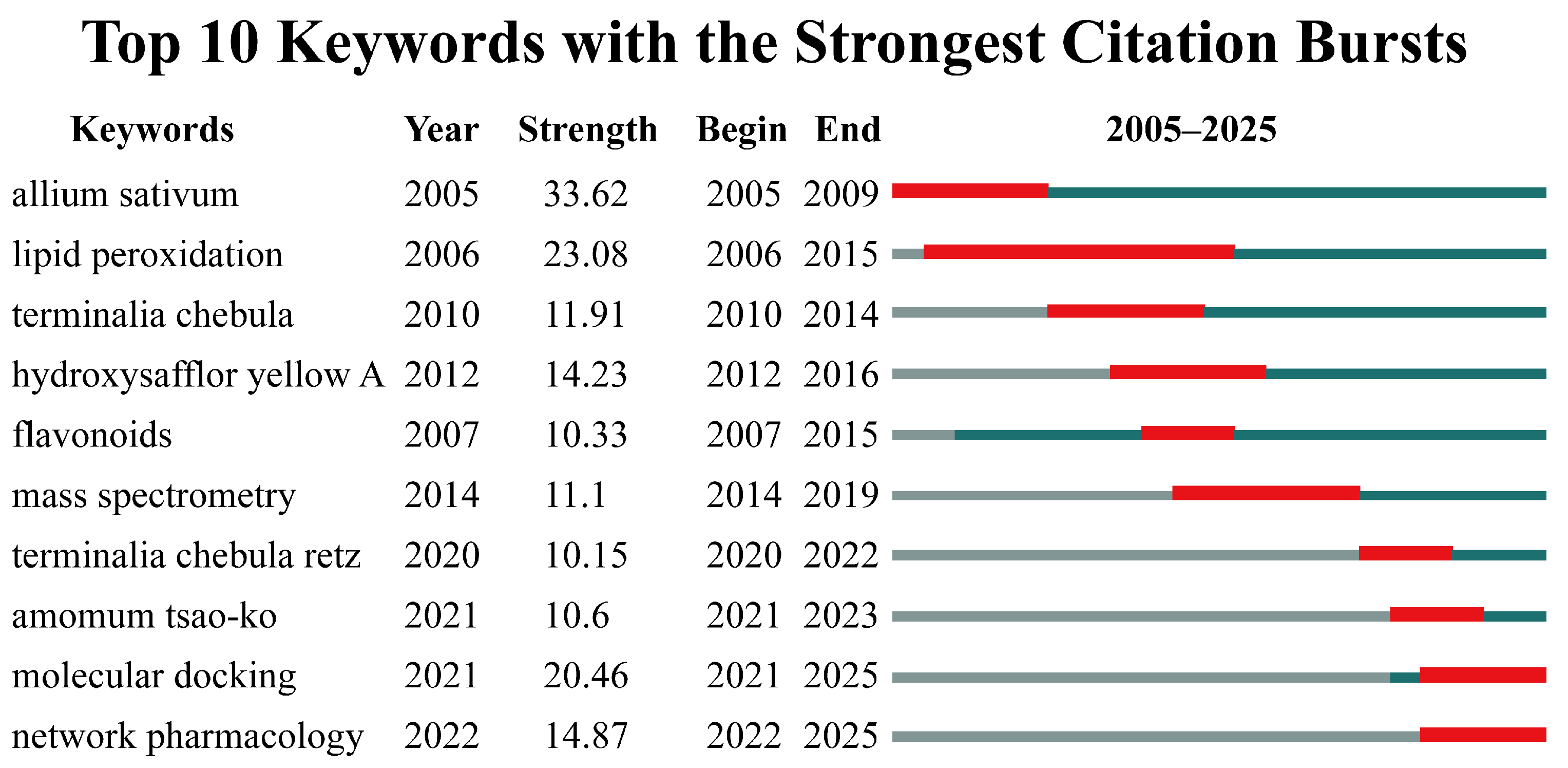
2. Overview of Ershiwei Roudoukou Wan-Related Research Based on Bibliometric Analysis
3. Clinical Application
3.1. Cholecardia Syndrome
3.2. Ninglong Syndrome
3.3. Gynecological Conditions
3.4. Other Applications
3.5. Summary of Clinical Application
4. Chemical Composition
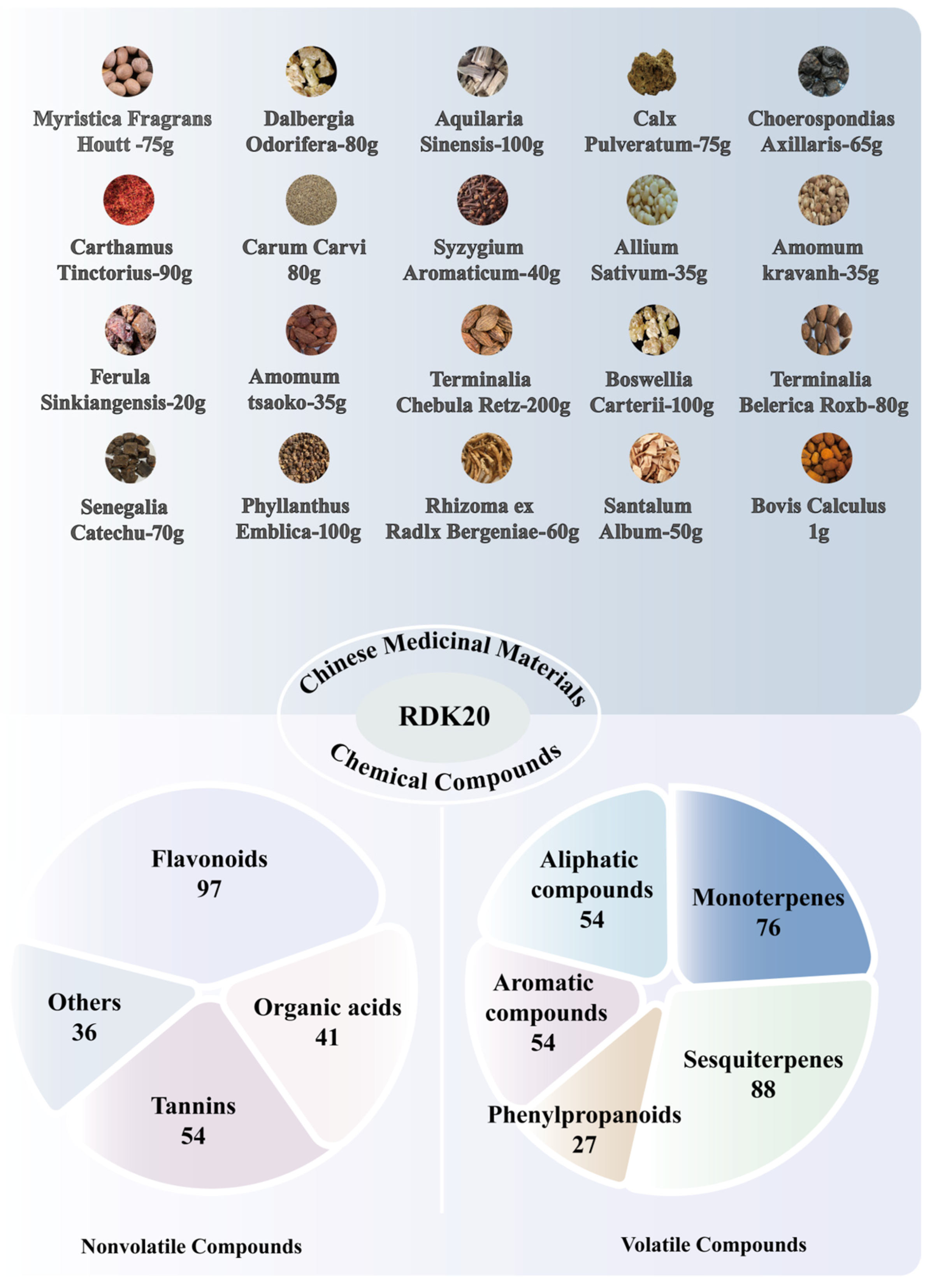
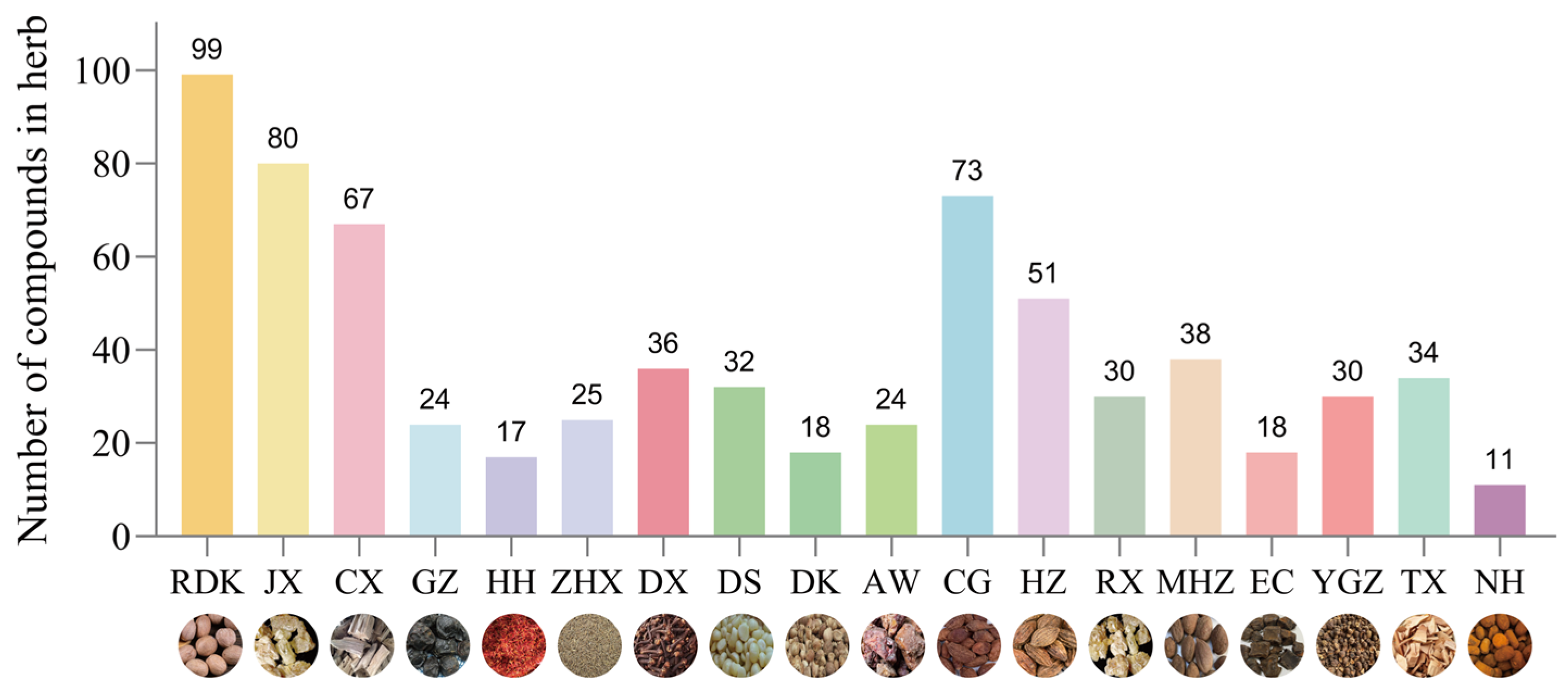
4.1. Chemical Constituents of the Whole Formula
4.2. Chemical Constituents of the Single-Flavor Drugs
4.2.1. Non-Volatile Constituents
Flavonoids
Organic Acids
Tannins
Polysaccharides
4.2.2. Volatile Constituents (Essential Oils)
Terpenoids
Phenylpropanoids
4.2.3. Summary and Compositional Features
5. Pharmacological Activities
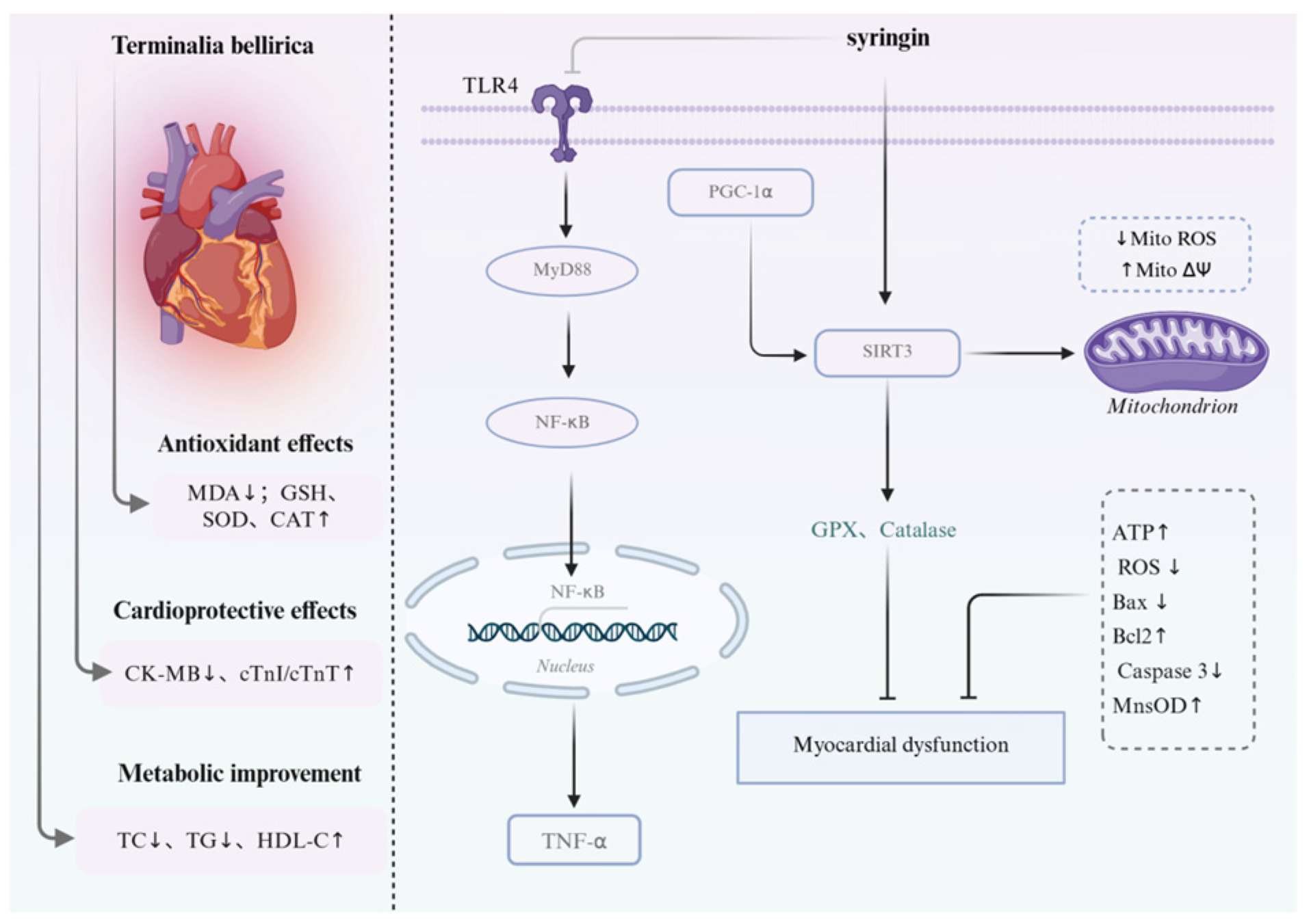
5.1. Cardiovascular Protection
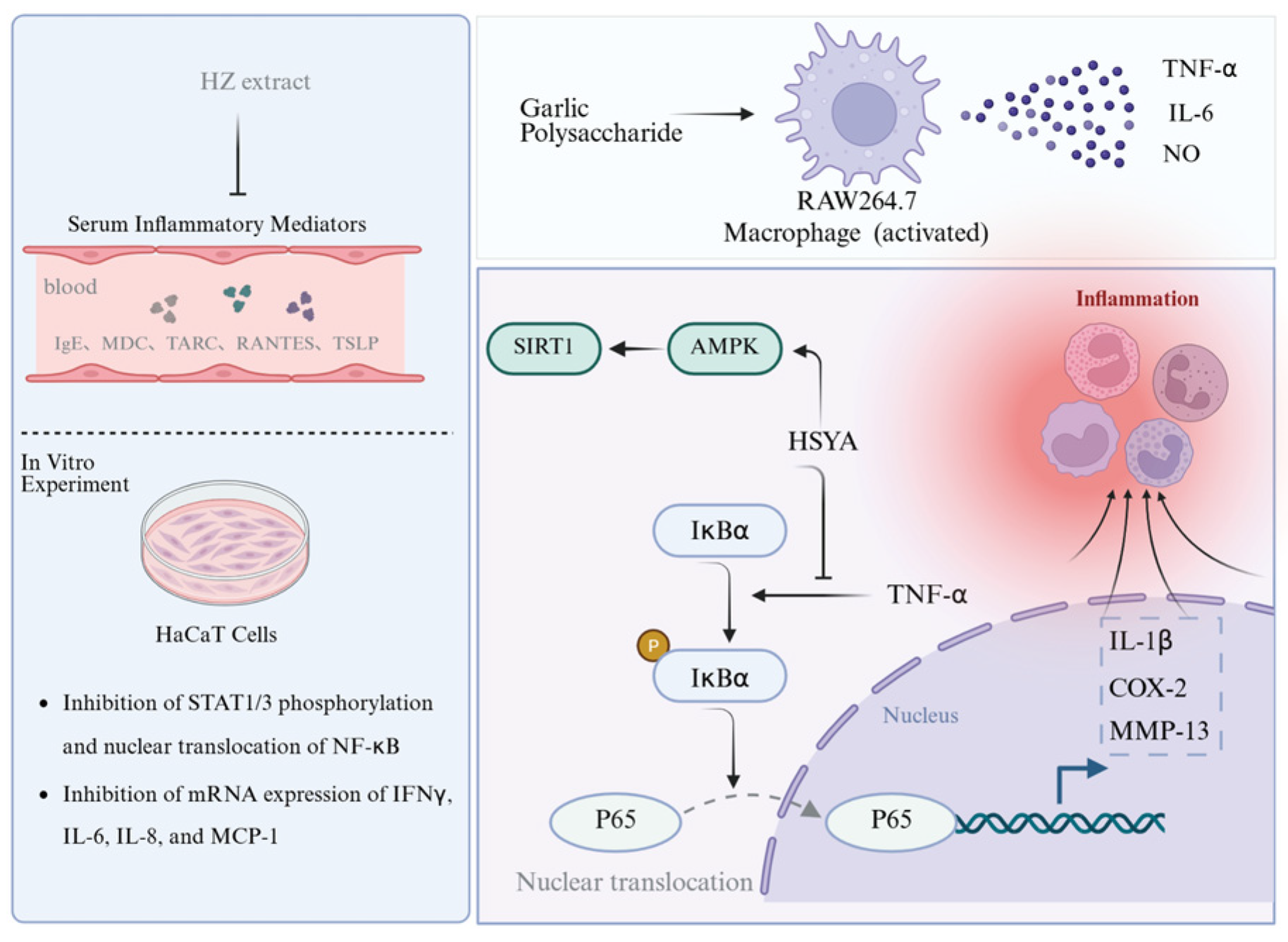
5.2. Immunomodulatory and Anti-Inflammatory Activities
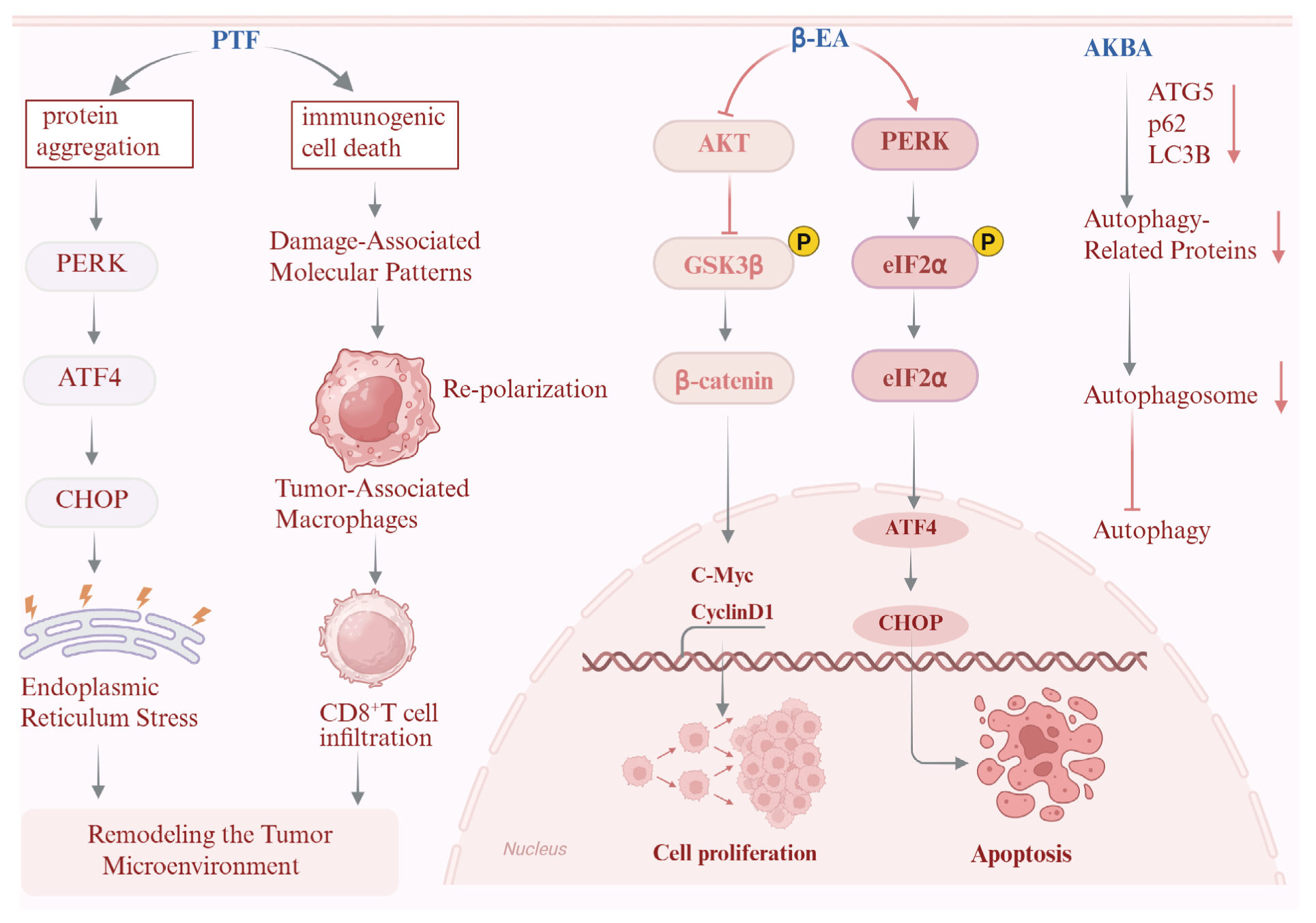
5.3. Antitumor Activities
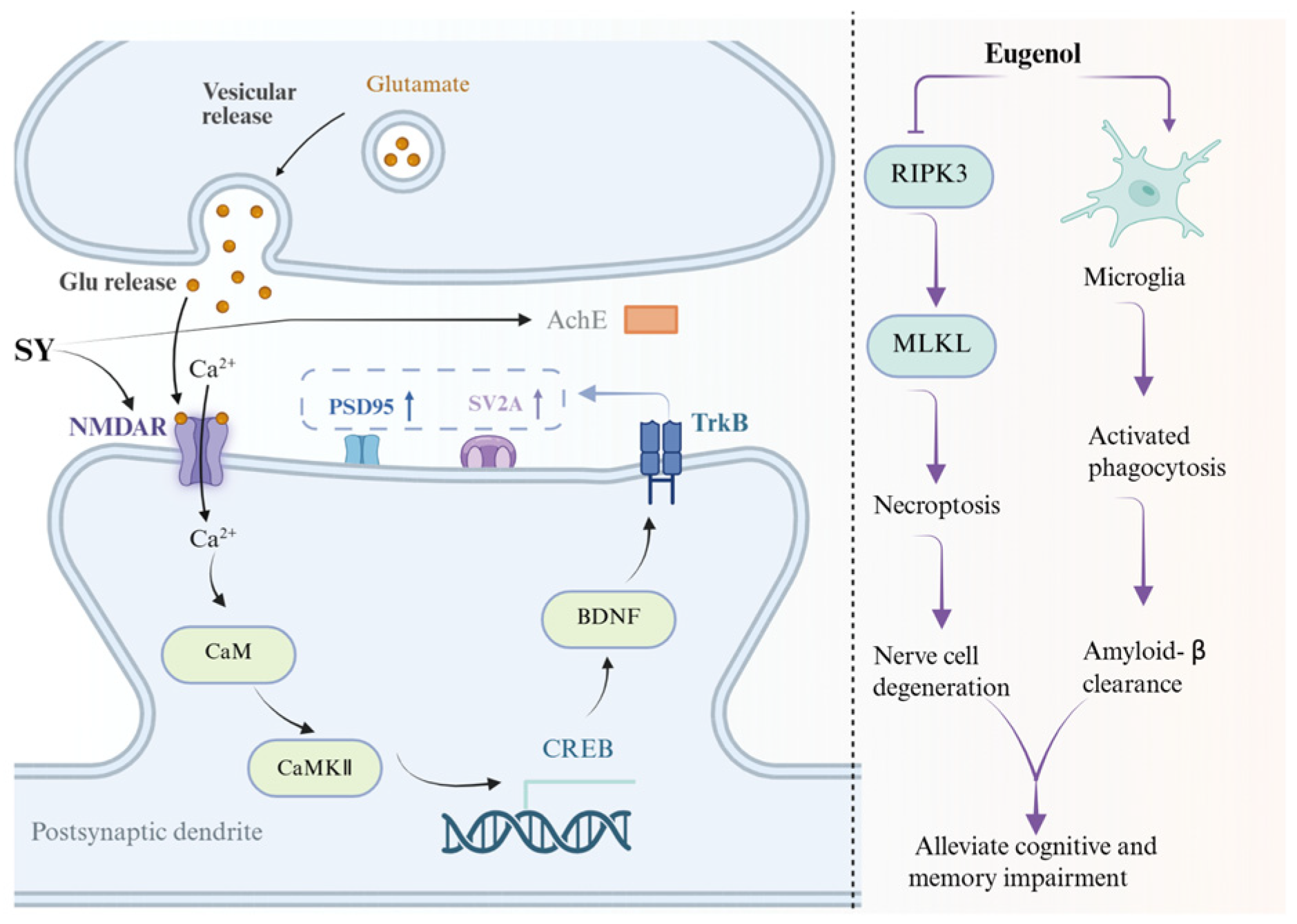
5.4. Neuroprotective Effects
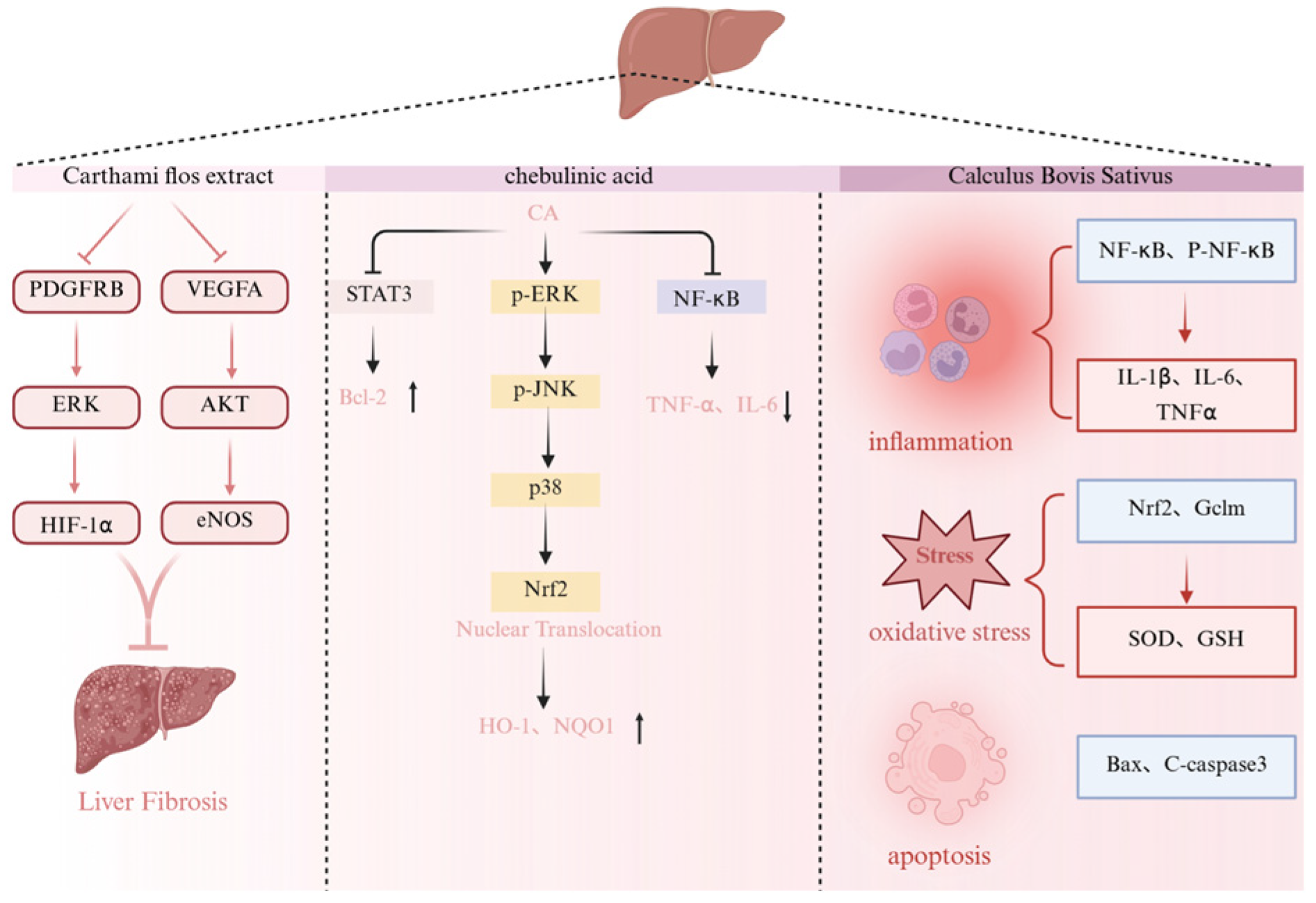
5.5. Hepatoprotective Effects
5.6. Hypoglycemic Effects
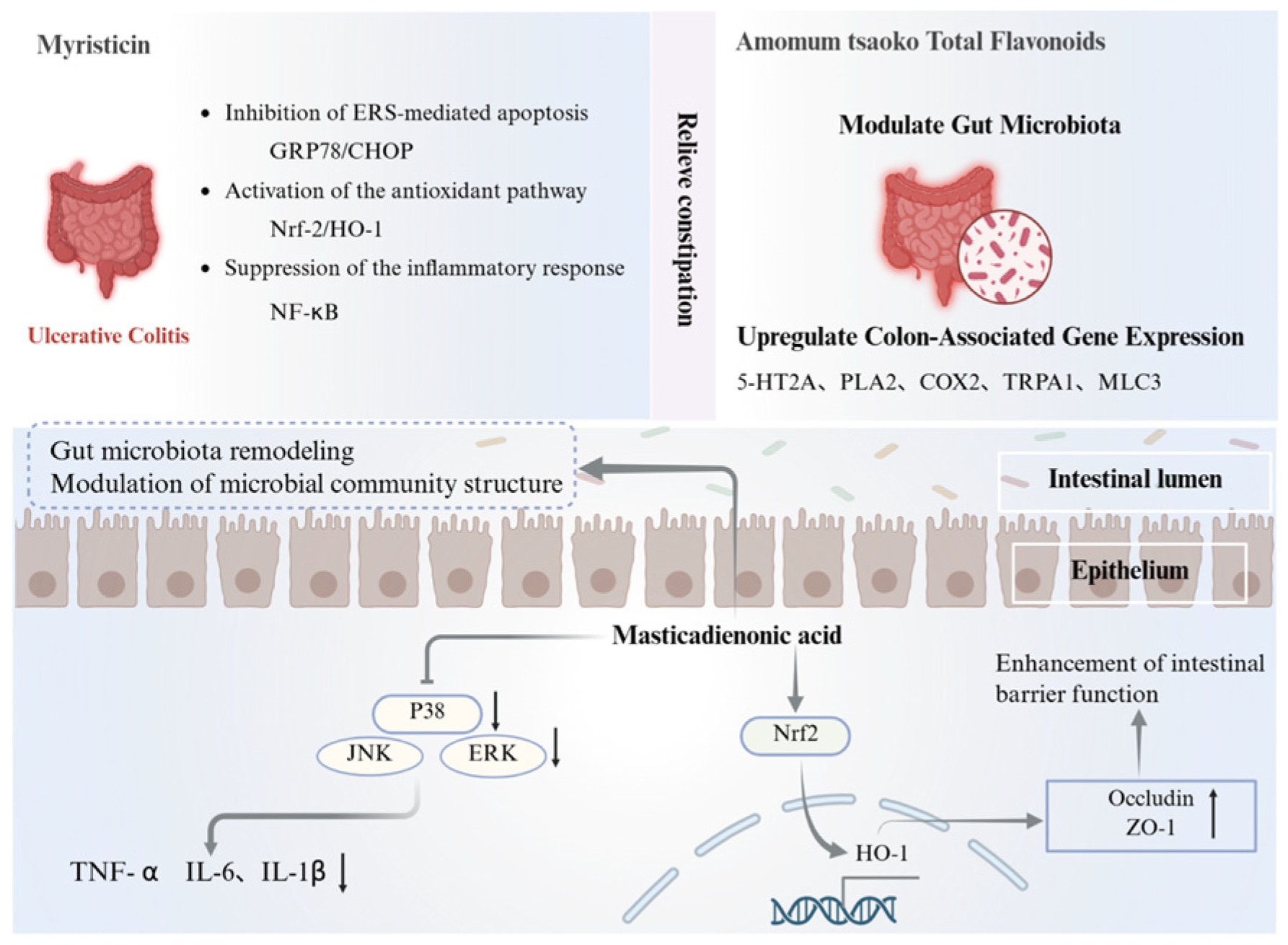
5.7. Gastrointestinal Protective Effects
5.8. Other Pharmacological Activities

| Source Plants | Extracts/ Compounds | Pharmacological Effects | Model/Cell Line | Results | Doses | Ref. |
|---|---|---|---|---|---|---|
| Myristica fragrans Houtt | Volatile Oil | Anticancer | Novikoff rat hepatoma cells | Cx43 ↓ | 79.4 μg/mL | [81] |
| Myristicin | Gastrointestinal protection | Ulcerative colitis rat model | GRP78 ↓, CHOP ↓, Nrf-2 ↑, HO-1 ↑, MPO ↓, | 150 mg/kg | [176] | |
| Methanol extract | Anticancer | Ehrlich ascites carcinoma model | hemoglobin ↑, hematocrit ↑ | 50 and 100 mg/kg | [152] | |
| Ethanol extract | Hypoglycemic | Rat skeletal muscle L6 cells | p-AMPK Glucose Uptake ↑ | 10 μg/mL | [173] | |
| Myrifratin D | Autophagy regulation | Human embryonic kidney 293 cells | LC3-II ↑, p62 ↑ | 10 and 20 μM | [181] | |
| Dalbergia odorifera | Flavonoids | Cardiovascular protection | Myocardial ischemia model | CK ↓, ALT ↓, GSH ↑, Na+-K+-ATPases ↑ | 100 mg/kg | [136] |
| Choerospondias axillaris | Methanol extract | Lipid-lowering | Hyperlipidemia rat model | LDL-C ↓, VLDL-C ↓, TC ↓, TG ↓, | 200 mg/kg, 400 mg/kg | [186] |
| Terminalia chebula Retz | Methanol extract | Cardiac protection | Cardiotoxicity model induced by doxorubicin and isoproterenol | CK-MB ↓, MDA ↓, GSH ↑, | 250 mg/kg | [139] |
| 50% ethanol extract | Neuroprotection | Cognitive impairment model induced by methamphetamine | ERK ↑, Nrf2 ↑, MDA ↓, γ-H2AX ↓ | 10 mg/kg, 100 mg/kg | [159] | |
| Aqueous extract | Anti-inflammatory | Mouse atopic dermatitis model | IgE ↓, MDC ↓, TARC ↓, RANTES ↓, TSLP ↓, STAT1/3 ↓, NF-κB ↓ | 100 mg/kg | [148] | |
| Syzygium aromaticum | Clove saponin | Cardiac protection | Type 2 diabetes rat model | IL-1β ↓, TNF-α ↓, BNP ↓, CK-MB ↓, cTnI ↓ | 50 mg/kg | [140] |
| Eugenol | Neuroprotection | 5xFAD transgenic mouse model of Alzheimer’s disease | Aβ ↓, IL-6 ↓, IL-1β ↓, MACRO ↑, CD36 ↑ | 10 mg/kg, 30 mg/kg | [167] | |
| Phenolic compounds | Hypoglycemic | Diabetic mouse model | α-glucosidase activity ↓ | 100 mg/kg, 200 mg/kg | [93] | |
| Total flavonoids | Gastrointestinal regulation | Slow transit constipation model | 5-HT ↑, 5-HT2A ↑, PLA2 ↑, COX2 ↑, TRPA1 ↑, MLC3 ↑, iNOS ↓ | 150 mg/kg | [94] | |
| Terminalia belerica Roxb | Polyphenols | Anti-inflammatory | LPS-induced inflammatory mouse model | NQO1 ↑, GCLM ↑, TNF-α ↓, IL-6 ↓ | 400 mg/kg | [146] |
| Tannins | Anticancer | Hepa1-6 orthotopic hepatocellular carcinoma mouse model | Fn1 ↓, Col1a1 ↓, Acta2 ↓, IL-6 ↑, TNF-α ↑, IL-1β ↑, iNOS ↑ | 2 g/kg | [155] | |
| Carthamus tinctorius | Hydroxysafflor yellow A | Anti-inflammatory | Rat chondrocytes | IL-1β ↓, PTGS2 ↓, MMP-13 ↓, COL2A1 ↑, ACAN ↑ | 10 µM | [149] |
| Hydroxysafflor yellow A | Neuroprotection | Mouse model of impairment in learning, memory acquisition, consolidation, and retrieval | ChAT ↑, Ach ↑, AChE ↓, BDNF ↑, PSD95 ↑, SV2A ↑, NMDAR2B ↑ | 30 and 100 mg/kg | [157] | |
| Hydroxysafflor yellow A | — | Traumatic brain injury model | IL-18 ↓, IFN-γ ↓, GFAP ↓, NLRP3 ↓, ASC ↓, LC3 II/LC3 I ↑, P62 ↓ | 9 mg/kg | [165] | |
| Aqueous extract | Hepatoprotective | CCl4-induced liver fibrosis model | ALT ↓, AST ↓, ALP ↓, γ-GT ↓, α-SMA ↓, HYP ↓, Col-IV ↓, PDGFRB ↓, p-MEK ↓, p-ERK1/2 ↓, HIF-1α ↓, VEGFA ↓, CD31 ↓, CD34 ↓, vWF ↓ | 1, 2, 4 g/kg | [170] | |
| Hydroxysafflor yellow A | Hepatoprotective | Ethanol-induced liver injury model | Nrf2 ↑, HO-1 ↑, NQO-1 ↑, GCLM ↑, Keap1 ↓, p-PI3K ↓, p-Akt ↓, p-mTOR ↓, PPARα ↑ | 2.5 mg/kg, 7.5 mg/kg | [171] | |
| Boswellia carterii | β-Oleanolic acid | Anticancer | Human osteosarcoma cells | Bcl-2 ↓, Bax ↑, Cyclin D1 ↓, c-Myc ↓, β-catenin ↓, Bip/GRP78 ↑, p-PERK ↑, ATF4 ↑, CHOP ↑ | 7.5, 15, and 30 μM | [150] |
| 3-O-acetyl-11-keto-β-boswellic acid | — | U87-MG orthotopic glioma model | ATG5 ↓, P62 ↓, LC3-II ↓, ATG3 ↓, ATG7 ↓, ATG12 ↓, ATG16 ↓ | 100 mg/kg | [154] | |
| masticadienonic acid | Gastrointestinal regulation | Acute colitis mouse model | TNFα ↓, IL-1β ↓, IL-6 ↓, ZO-1 ↑, occludin ↑ | 10 mg/kg, 100 mg/kg | [178] | |
| β-Oleanolic acid | Antiviral | HSV-1 | ICP27 ↓, DNA-Pol ↓, TNF-α ↓, IL-1β ↓, IL-6 ↓ | 30 μg/mL | [184] | |
| Ferula Sinkiangensis | Ferulasinkian A | Anticancer | Human pancreatic cancer cell line | Promotes nuclear condensation and fragmentation | 10 μM | [133] |
| Kellerin | Neuroprotection | Middle cerebral artery occlusion (MCAO) model | TNF-α ↓, IL-6 ↓, iNOS ↓, p-IκBα ↓, IκBα ↑ | 3.5, 7, 14 mg/kg | [158] | |
| Ferulic acid | Analgesic | Ethanol-induced alcoholic liver injury model | PGE2 ↓, SP ↓, CRP ↓, IBA-1 ↓, RhoA ↓, iNOS ↓, IL1β ↓, COX2 ↓, Rock1 ↓, TRPV1 ↓, TRPA1 ↓, p-p38MAPK ↓ | 50 mg/kg/bid | [185] | |
| Phyllanthus emblica | 60% ethanol extract | — | Lewis lung cancer cells, A549 cells, and RAW 264.7 cells | Tgf-β1 ↓, Cd 206 ↓, IL-6 ↓, Ccl5 ↑, Cxcl 9 ↑, PERK/ATF4/CHOP ↑ | 320 μg/mL | [153] |
| ethanol extract | Anti-obesity | 3T3-L1 preadipocytes | PPARγ ↓, CEBPα ↓, FABP4 ↓, BAX ↑, BCL2 ↓ | 10, 25, 50, 100, and 200 µg/mL | [179] | |
| Gallic acid | Hypoglycemic | — | PPAR-γ ↑, Glut4 ↑ | 2–20 µM | [175] | |
| Senegalia catechu | Aqueous extract | Neuroprotection | H2O2-induced damage in human SH-SY5Y neuroblastoma cells | ROS ↓, MDA ↓, Bax/Bcl-2 ratio ↓, caspase-3 ↓ | 100 and 200 µg/mL | [160] |
| ethanol extract | Hypoglycemic | 3T3-L1 adipocyte model | α-glucosidase (IC50: 0.3353 ± 0.1215 μg/mL) | [90] | ||
| Calculus Bovis | In vitro cultured bezoar | Neuroprotection | Hyperlipidemia-related vascular dementia model | Bax ↓, Bcl-2 ↑, SOD ↑, NO ↑, MDA ↓ | 0.06, 0.12 g/kg | [161] |
| Hepatoprotective | Estrogen-induced cholestasis model | TNFα ↓, IL-1 ↓, IL-6 ↓, MDA ↓, GSH ↑ | 150 mg/kg | [169] | ||
| Santalum album | ethanol extract | Neuroprotection | Human neuroblastoma cell line | TLR2 ↑, TLR4 ↑, IFN-β ↑, IFN-α ↑, IL-6 ↓, CXCL8 ↓, CCL2 ↓, IP-10 ↓ | 50 μg/mL, 200 μg/mL | [164] |
5.9. Summary
6. Discussion
Supplementary Materials
Author Contributions
Funding
Institutional Review Board Statement
Data Availability Statement
Acknowledgments
Conflicts of Interest
Abbreviations
| PGC1α | Proliferator-activated receptor-gamma coactivator-1 alpha |
| SIRT3 | sirtuins-3 |
| TLR4 | Toll-like receptor-4 |
| MyD88 | myeloid differentiation primary response-88 |
| NF-κB | nuclear factor-kappa B |
| ATP | Adenosine Triphosphate |
| ROS | reactive oxygen species |
| BAX | Bcl-2-associated X protein |
| Bcl2 | B-cell lymphoma 2 |
| MnsOD | manganese superoxide dismutase |
| Mito ROS | mitochondrial reactive oxygen species |
| Mito ∆Ψ | mitochondrial membrane potential |
| GPX | glutathione peroxidase |
| CK-MB | creatine kinase-myocardial band |
| IL-6 | interleukin-6 |
| IL-1β | interleukin-1 beta |
| lgE | Immunoglobulin E |
| MDC | Macrophage-Derived Chemokine |
| TARC | Thymus and Activation-Regulated Chemokine |
| RANTES | Regulated on Activation, Normal T-cell Expressed and Secreted |
| TSLP | Thymic Stromal Lymphopoietin |
| STAT1/3 | Signal Transducer and Activator of Transcription 1/3 |
| IFN-γ | Interferon-γ |
| IL-8 | interleukin-8 |
| MCP-1 | Monocyte Chemoattractant Protein-1 |
| AMPK | Adenosine Monophosphate-Activated Protein Kinase |
| HYSA | Hydroxysafflor yellow A |
| MMP-13 | matrix metalloproteinase-13 |
| COX-2 | cyclooxygenase-2 |
| IκBα | Inhibitor of Kappa B Alpha |
| NO | nitric oxide |
| PERK | protein kinase R-like endoplasmic reticulum kinase |
| ATF4 | activating transcription factor |
| CHOP | C/Enhancer-Binding Protein Homologous Protein |
| β-EA | β-boswellic acid |
| AKT | Protein Kinase B |
| GSK3β | Glycogen Synthase Kinase 3 Beta |
| C-Myc | Cellular Myelocytomatosis oncogene |
| eIF2α | Eukaryotic Translation Initiation Factor 2 Subunit Alpha |
| AKBA | 3-O-acetyl-11-keto-b-boswellic acid |
| ATG5 | Autophagy Related 5 |
| LC3B | Microtubule-associated protein 1A/1B-light chain 3B |
| SY | Safflower yellow |
| NMDAR | N-methyl-D-aspartate receptor |
| CaM | Calmodulin |
| CaMK | Calmodulin-dependent kinase |
| CREB | Cyclic AMP-responsive element-binding protein |
| BDNF | Brain-derived neurotrophic factor |
| TrkB | Tropomyosin receptor kinase B |
| AChE | Acetylcholinesterase |
| PSD95 | Postsynaptic density 95 |
| SV2A | Synaptic vesicle glycoprotein 2A |
| RIPK3 | Receptor-Interacting Protein Kinase 3 |
| MLKL | Mixed Lineage Kinase Domain-Like protein |
| PDGFRB | platelet-derived growth factor receptor beta |
| VEGFA | vascular endothelial growth factor A |
| ERK | extracellular regulated protein kinases |
| HIF-1α | hypoxia inducible factor 1 alpha |
| eNOS | endothelial nitric oxide synthase |
| STAT3 | Signal Transducer and Activator of Transcription 3 |
| p-ERK | phospho-extracellular regulated protein kinases |
| p-JNK | phospho-c-Jun N-terminal Kinase |
| Nrf2 | Nuclear factor erythroid 2-related factor 2 |
| HO-1 | Heme oxygenase-1 |
| NQO1 | NAD(P)H quinone oxidoreductase-1 |
| Gclm | glutamate cysteine modified linker |
| SOD | Superoxide dismutase |
| GSH | glutathione |
| 5-HT2A | 5-hydroxytryptamine receptor 2A |
| PLA2 | Phospholipase A2 |
| TRPA1 | Transient receptor potential A1 |
| MLC3 | Myosin light chain 3 |
| JNK | c-Jun N-terminal Kinase |
| ZO-1 | Zonula occludens-1 |
| Cx43 | Connexin 43 |
| GRP78 | Glucose-Regulated Protein 78 |
| MPO | Myeloperoxidase |
| p-AMPK | phosphorylated 5′ AMP-activated protein kinase |
| LC3-II | Microtubule-associated protein 1A/1B-light chain 3-phosphatidylethanolamine conjugate |
| CK | Creatine kinase |
| ALT | Alanine aminotransferase |
| LDL-C | Low-density lipoprotein cholesterol |
| VLDL-C | Very-low-density lipoprotein cholesterol |
| TC | Total cholesterol |
| TG | Triglycerides |
| MDA | Malondialdehyde |
| γ-H2AX | Phosphorylated histone H2AX |
| TNF-α | Tumor necrosis factor-alpha |
| BNP | B-type natriuretic peptide |
| cTnI | Cardiac troponin I |
| Aβ | Amyloid-beta peptide |
| MACRO | Macrophage receptor with collagenous structure |
| CD36 | Cluster of Differentiation 36 |
| IgG | Immunoglobulin G |
| iNOS | Inducible nitric oxide synthase |
| p-p65 | Phosphorylated NF-κB p65 subunit |
| 5-HT | 5-hydroxytryptamine |
| Fn1 | Fibronectin 1 |
| Col1a1 | Collagen type I alpha 1 chain |
| Acta2 | Actin, alpha-2 smooth muscle |
| PTGS2 | Prostaglandin-endoperoxide synthase 2 |
| COL2A1 | Collagen type II alpha 1 chain |
| ACAN | Aggrecan |
| ChAT | Choline acetyltransferase |
| Ach | Acetylcholine |
| NMDAR2B | N-methyl-D-aspartate receptor subunit 2B |
| GFAP | Glial fibrillary acidic protein |
| NLRP3 | NOD-like receptor family pyrin domain-containing 3 |
| ASC | Apoptosis-associated speck-like protein containing a CARD |
| AST | Aspartate aminotransferase |
| ALP | Alkaline phosphatase |
| γ-GT | Gamma-glutamyl transferase |
| α-SMA | Alpha-smooth muscle actin |
| HYP | Hydroxyproline |
| Col-IV | Collagen type IV |
| p-MEK | Phosphorylated mitogen-activated protein kinase kinase |
| p-ERK1/2 | Phosphorylated extracellular signal-regulated kinases 1/2 |
| CD31 | Cluster of differentiation 31 |
| CD34 | Cluster of differentiation 34 |
| vWF | von Willebrand factor |
| Keap1 | Kelch-like ECH-associated protein 1 |
| NQO-1 | NAD(P)H quinone oxidoreductase 1 |
| p-PI3K | Phosphorylated phosphatidylinositol-3-kinase |
| p-Akt | Phosphorylated protein kinase B |
| p-mTOR | Phosphorylated mechanistic target of rapamycin |
| PPARα | Peroxisome proliferator-activated receptor alpha |
| ICP27 | Infected-cell protein 27 |
| DNA-Pol | DNA polymerase |
| p-IκBα | Phosphorylated inhibitor of nuclear factor kappa B alpha |
| PGE2 | Prostaglandin E2 |
| SP | Substance P |
| CRP | C-reactive protein |
| IBA-1 | Ionized calcium-binding adapter molecule 1 |
| RhoA | Ras homolog family member A |
| Rock1 | Rho-associated coiled-coil-containing protein kinase 1 |
| TRPV1 | Transient receptor potential vanilloid 1 |
| p38MAPK | p38 mitogen-activated protein kinases |
| Tgf-β1 | Transforming Growth Factor-β1 |
| Cd206 | Mannose Receptor C-type 1 |
| Ccl5 | C-C motif chemokine ligand 5 |
| Cxcl9 | C-X-C motif chemokine ligand 9 |
| PPARγ | Peroxisome proliferator-activated receptor gamma |
| CEBPα | CCAAT/enhancer-binding protein alpha |
| FABP4 | Fatty acid-binding protein 4 |
| PPAR-γ | Peroxisome proliferator-activated receptor gamma |
| Glut4 | Glucose transporter type 4 |
| IL-1 | Interleukin-1 |
| TLR2 | Toll-like receptor 2 |
| IFN-β | Interferon-beta |
| IFN-α | Interferon-alpha |
| CXCL8 | C-X-C motif chemokine ligand 8 |
| CCL2 | C-C motif chemokine ligand 2 |
| IP-10 | Interferon-gamma-inducible protein 10 |
References
- Hou, L.E.; Zhao, H.W.; Qi, D.M.; Cheng, X.R. Tracing the Origin and Research Progress of the Tibetan Medicine “Ershiwei Roudoukou Wan. Chin. J. Pharmacol. Toxicol. 2023, 37, 40–48. (In Chinese) [Google Scholar]
- Gonpo, Y.Y. Four Medical Tantras; Tibet People’s Publishing House: Lhasa, China, 1983. (In Chinese) [Google Scholar]
- Wang, Z.Z. The intellectual base and research fronts of IL-18: A bibliometric review of the literature from WoSCC (2012–2022). Cell Prolif. 2024, 57, e13684. [Google Scholar] [CrossRef] [Scilit] [PubMed]
- Cairang, N. Clinical Observation on Tibetan Medicine Triple Therapy for 66 Cases of Cholecystocardiac Syndrome. Asia-Pac. Tradit. Med. 2016, 12, 21–22. (In Chinese) [Google Scholar]
- Sang, L.; Baima, C. Prescription Analysis by the Renowned Tibetan Medicine Expert Gesang Bazhu for the Treatment of “Ninglong Syndrome”. J. Med. Pharm. Chin. Minor. 2020, 26, 64–65. (In Chinese) [Google Scholar] [CrossRef]
- Li, X.Y.; Zhaxi, Y.Z. Tibetan Medicine in the Treatment of Cardiovascular Neurosis. J. Med. Pharm. Chin. Minor. 2014, 20, 55. (In Chinese) [Google Scholar] [CrossRef]
- Editorial Group of “Guidelines for Preventive Intervention in Key Populations of Perimenopausal Syndrome (Menopausal Syndrome)”; Peking Union Medical College Hospital; Chinese Academy of Medical Sciences. Guidelines for the prevention and treatment of perimenopausal syndrome (climacteric syndrome): Disease prevention in key population. J. Beijing Univ. Tradit. Chin. Med. 2023, 46, 1048–1062. (In Chinese)
- Cai, X.Q. Clinical Observation on Tibetan Medicine for 60 Cases of Perimenopausal Syndrome. J. Med. Pharm. Chin. Minor. 2011, 17, 18–19. (In Chinese) [Google Scholar] [CrossRef]
- Maocairang, L.; Xiuqing, C. Tibetan Medicine in the Treatment of 40 Cases of Menstrual Headache. Electron. J. Clin. Med. Lit. 2014, 1, 778–779. (In Chinese) [Google Scholar] [CrossRef]
- Davis, H.E.; McCorkell, L.; Vogel, J.M.; Topol, E.J. Long COVID: Major findings, mechanisms and recommendations. Nat. Rev. Microbiol. 2023, 21, 133–146. [Google Scholar] [CrossRef] [Scilit]
- Pei, J.Y.Z.; Song, Z.; Jia, Z.; Cheng, C.; Dingzeng, S.; Silang, L.; Chenglie, X.; Chilie, D. Clinical Characteristics of “Long-COVID” in a Plateau Hypoxic Environment and the Application of Tibetan Medicine in Treatment. Xizang Sci. Technol. 2024, 46, 71–75. (In Chinese) [Google Scholar]
- Kang, X.L.; Gu, J.; Tan, R. Content Determination of Hydroxysaffor Yellow A in Tibetan Medicine Ershiwei Roudoukou Wan. China Pharm. 2015, 24, 39–40. (In Chinese) [Google Scholar]
- Yang, Q.; Kang, X.; Zhou, X.; Ping, A.; Gu, J.; Tan, R. Content Determination of Dehydrodiisoeugenol in Ershiwei Roudoukou Pulvis by RP-HPLC. China Pharm. 2015, 26, 3834–3835. (In Chinese) [Google Scholar]
- Mei, W.; Ping, A.; Xue-shan, Z.; Rui, T. Quality Standard for Ershiwei Roudoukou Pills. Chin. J. Exp. Tradit. Med. Formulae 2013, 19, 111–114. (In Chinese) [Google Scholar]
- Bujor, A.; Hanganu, A.; Tecuceanu, V.; Madalan, A.M.; Tudose, M.; Marutescu, L.; Popa, M.; Chifiriuc, C.M.; Zarafu, I.; Ionita, P. Biological Evaluation and Structural Analysis of Some Aminodiphenylamine Derivatives. Antioxidants 2023, 12, 713. [Google Scholar] [CrossRef] [Scilit]
- Newman, J.A.; Iuzzolino, L.; Tan, M.; Orth, P.; Bruhn, J.; Lee, A.Y. From Powders to Single Crystals: A Crystallographer’s Toolbox for Small-Molecule Structure Determination. Mol. Pharm. 2022, 19, 2133–2141. [Google Scholar] [CrossRef] [Scilit]
- Uddin, A.H.; Khalid, R.S.; Alaama, M.; Abdualkader, A.M.; Kasmuri, A.; Abbas, S.A. Comparative study of three digestion methods for elemental analysis in traditional medicine products using atomic absorption spectrometry. J. Anal. Sci. Technol. 2016, 7, 1–7. [Google Scholar] [CrossRef] [Scilit]
- Hamm, S.; Bleton, J.; Connan, J.; Tchapla, A. A chemical investigation by headspace SPME and GC-MS of volatile and semi-volatile terpenes in various olibanum samples. Phytochemistry 2005, 66, 1499–1514. [Google Scholar] [CrossRef] [Scilit]
- Kim, T.H.; Ito, H.; Hayashi, K.; Hasegawa, T.; Machiguchi, T.; Yoshida, T. Aromatic constituents from the heartwood of Santalum album L. Chem. Pharm. Bull. 2005, 53, 641–644. [Google Scholar] [CrossRef] [Scilit]
- Liu, R.X.; Li, L.; Wang, Q.; Wang, W.; Bi, K.S.; Guo, D.A. Simultaneous determination of nine flavonoids in Dalbergia odorifera by LC. Chromatographia 2005, 61, 409–413. [Google Scholar] [CrossRef] [Scilit]
- Yu, X.L.; Wang, W.; Yang, M. Antioxidant activities of compounds isolated from Dalbergia odorifera T. Chen and their inhibition effects on the decrease of glutathione level of rat lens induced by UV irradiation. Food Chem. 2006, 104, 715–720. [Google Scholar] [CrossRef] [Scilit]
- Zhao, M.; Liu, X.; Cui, C.; Luo, W. Composition and Antimicrobial Activity of Essential Oil from Phyllanthus emblica L. by Supercritical CO2 Extraction. J. South China Univ. Technol. (Nat. Sci. Ed.) 2007, 35, 116–120. [Google Scholar]
- Gao, H.; Huang, Y.N.; Gao, B.; Kawabata, J. Chebulagic Acid Is a Potent α-Glucosidase Inhibitor. Biosci. Biotechnol. Biochem. 2008, 72, 601–603. [Google Scholar] [CrossRef] [Scilit] [PubMed]
- Jiang, J.S. Studies on the Chemical Constituents and Bioactivities of Carthamus tinctorius L. Ph.D. Thesis, Peking Union Medical College, Beijing, China, 2009. (In Chinese) [Google Scholar]
- Li, X.C.; Wang, H.Q.; Liu, C.; Chen, R.Y. Chemical constituents of Acacia catechu. China J. Chin. Mater. Medica 2010, 35, 1425–1427. (In Chinese) [Google Scholar]
- Pfundstein, B.; El Desouky, S.K.; Hull, W.E.; Haubner, R.; Erben, G.; Owen, R.W. Polyphenolic compounds in the fruits of Egyptian medicinal plants (Terminalia bellerica, Terminalia chebula and Terminalia horrida): Characterization, quantitation and determination of antioxidant capacities. Phytochemistry 2010, 71, 1132–1148. [Google Scholar] [CrossRef] [Scilit]
- Yu, L.Q.; Shirai, N.; Suzuki, H.; Sugane, N.; Hosono, T.; Nakajima, Y.; Kajiwara, M.; Takatori, K. The effect of methanol extracts of tsao-ko (Amomum tsao-ko Crevost et Lemaire) on digestive enzyme and antioxidant activity in vitro, and plasma lipids and glucose and liver lipids in mice. J. Nutr. Sci. Vitaminol. 2010, 56, 171–176. [Google Scholar] [CrossRef] [Scilit]
- Feng, J.; Yang, X.-W.; Wang, R.-F. Bio-assay guided isolation and identification of α-glucosidase inhibitors from the leaves of Aquilaria sinensis. Phytochemistry 2011, 72, 242–247. [Google Scholar] [CrossRef] [Scilit]
- Sciarrone, D.; Costa, R.; Ragonese, C.; Tranchida, P.Q.; Tedone, L.; Santi, L.; Dugo, P.; Dugo, G.; Mondello, L. Application of a multidimensional gas chromatography system with simultaneous mass spectrometric and flame ionization detection to the analysis of sandalwood oil. J. Chromatogr. A 2011, 1218, 137–142. [Google Scholar] [CrossRef] [Scilit]
- Song, W.F.; Liao, M.J.; Luo, S.Y. Analyze on chemical compositions of Dalbergia odorifera essential oils extracted by CO2-supercritical-fluid-extraction and steam distillation extraction. J. Chin. Med. Mater. 2011, 34, 1725–1727. (In Chinese) [Google Scholar]
- Matsuo, Y.; Mimaki, Y. α-Santalol derivatives from Santalum album and their cytotoxic activities. Phytochemistry 2012, 77, 304–311. [Google Scholar] [CrossRef] [Scilit]
- Pillai, P.S.; Roziahanim, M.; Shah, A.M.A.M.; Sabariah, I.; Nin, M.C. Chemical composition, antioxidant and cytotoxicity activities of the essential oils of Myristica fragrans and Morinda citrifolia. J. Sci. Food Agric. 2012, 92, 593–597. [Google Scholar] [CrossRef] [Scilit]
- Yang, B.; Kortesniemi, M.; Liu, P.; Karonen, M.; Salminen, J.P. Analysis of hydrolyzable tannins and other phenolic compounds in emblic leafflower (Phyllanthus emblica L.) fruits by high performance liquid chromatography-electrospray ionization mass spectrometry. J Agric Food Chem 2012, 60, 8672–8683. [Google Scholar] [CrossRef] [Scilit] [PubMed]
- Zhang, X.H.; Silva, J.A.T.d.; Jia, Y.X.; Zhao, J.T.; Ma, G.H. Chemical composition of volatile oils from the pericarps of Indian sandalwood (Santalum album) by different extraction methods. Nat. Prod. Commun. 2012, 7, 93–96. [Google Scholar] [CrossRef] [Scilit] [PubMed]
- Zhao, X.B.; Mei, W.L.; Gong, M.F.; Bai, H.J.; Dai, H.F. Study on chemical compositions and antibacterial activity of the volatile oil from Dalbergiae odoriferae. Guangdong Agric. Sci. 2012, 39, 95–99. [Google Scholar] [CrossRef]
- Elgersma, A.; Søegaard, K.; Jensen, S.K. Fatty acids, α-tocopherol, β-carotene, and lutein contents in forage legumes, forbs, and a grass-clover mixture. J. Agric. Food Chem. 2013, 61, 11913–11920. [Google Scholar] [CrossRef] [Scilit]
- Lee, C.; Lee, J.W.; Jin, Q.; Jang, D.S.; Lee, S.-J.; Lee, D. Inhibitory constituents of the heartwood of Dalbergia odorifera on nitric oxide production in RAW 264.7 macrophages. Bioorg. Med. Chem. Lett. 2013, 23, 4263–4266. [Google Scholar] [CrossRef] [Scilit]
- Misra, B.B.; Das, S.S.; Dey, S. Volatile profiling from heartwood of East Indian sandalwood tree. J. Pharm. Res. 2013, 7, 299–303. [Google Scholar] [CrossRef] [Scilit]
- Singh, G.; Kumar, P. Extraction, gas chromatography–mass spectrometry analysis and screening of fruits of Terminalia chebula Retz. for its antimicrobial potential. Pharmacogn. Res. 2013, 5, 162–168. [Google Scholar] [CrossRef] [Scilit]
- Zhao, C.F.; Liu, Y.Q.; Cong, D.L.; Zhang, H.; Yu, J.J.; Jiang, Y. Screening and determination for potential α-glucosidase inhibitory constituents from Dalbergia odorifera T. Chen using ultrafiltration-LC/ESI-MS(n). Biomed. Chromatogr. BMC 2013, 27, 1621–1629. [Google Scholar] [CrossRef] [Scilit]
- Braun, N.A.; Sim, S.; Kohlenberg, B.; Lawrence, B.M. Hawaiian sandalwood: Oil composition of Santalum paniculatum and comparison with other sandal species. Nat. Prod. Commun. 2014, 9, 1365–1368. [Google Scholar] [CrossRef] [Scilit]
- Chang, W.L.; Cheng, B.C. One new and nine known flavonoids from Choerospondias axillaries and their in vitro antitumor, anti-hypoxia and antibacterial activities. Molecules 2014, 19, 21363–21377. [Google Scholar] [CrossRef] [Scilit]
- Cortés-Rojas, D.F.; Souza, C.R.F.d.; Oliveira, W.P. Clove (Syzygium aromaticum): A precious spice. Asian Pac. J. Trop. Biomed. 2014, 4, 90–96. [Google Scholar] [CrossRef] [Scilit] [PubMed]
- Divya, K.; Ramalakshmi, K.; Murthy, P.S.; Rao, L.J.M. Volatile oils from Ferula asafoetida varieties and their antimicrobial activity. LWT—Food Sci. Technol. 2014, 59, 774–779. [Google Scholar] [CrossRef] [Scilit]
- Yue, S.J.; Tang, Y.P.; Xu, C.M.; Li, S.J.; Zhu, Y.; Duan, J.A. Two new quinochalcone C-glycosides from the florets of Carthamus tinctorius. Int. J. Mol. Sci. 2014, 15, 16760–16771. [Google Scholar] [CrossRef] [Scilit] [PubMed]
- Zhang, T.T.; Lu, C.L.; Jiang, J.G. Bioactivity evaluation of ingredients identified from the fruits of Amomum tsaoko Crevost et Lemaire, a Chinese spice. Food Funct. 2014, 5, 1747–1754. [Google Scholar] [CrossRef] [Scilit]
- Li, G.Z.; Li, X.J.; Cao, L.; Zhang, L.J.; Shen, L.G.; Zhu, J.; Wang, J.C.; Si, J.Y. Chemical constituents from seeds of Ferula sinkiangensis. Chin. Tradit. Herb. Drugs 2015, 46, 1730–1736. (In Chinese) [Google Scholar]
- Qu, C.; Yue, S.J.; Lin, H.; Kai, J.; Shang, G.X.; Tang, Y.P. Chemical constituents of Carthamus tinctorius. Chin. Tradit. Herb. Drugs 2015, 46, 1872–1877. (In Chinese) [Google Scholar]
- Wang, S.-L.; Hwang, T.-L.; Chung, M.-I.; Sung, P.-J.; Shu, C.-W.; Cheng, M.-J.; Chen, J.-J. New flavones, a 2-(2-phenylethyl)-4 H-chromen-4-one derivative, and anti-inflammatory constituents from the stem barks of Aquilaria sinensis. Molecules 2015, 20, 20912–20925. [Google Scholar] [CrossRef] [Scilit]
- Zhang, T.T.; Lu, C.L.; Jiang, J.G. Antioxidant and anti-tumour evaluation of compounds identified from fruit of Amomum tsaoko Crevost et Lemaire. J. Funct. Foods 2015, 18, 423–431. [Google Scholar] [CrossRef] [Scilit]
- Bai, X.; Zeng, Q.Q.; Ma, J.L.; Sun, L.Q.; Lu, Y.C. Chemical composition and antibacterial activity analysis of Carum carvi L. by supercritical CO2 extraction technique. China Food Addit. 2016, 2, 106–111. (In Chinese) [Google Scholar]
- Mushtaq, S.; Aga, M.A.; Qazi, P.H.; Ali, M.N.; Shah, A.M.; Lone, S.A.; Shah, A.; Hussain, A.; Rasool, F.; Dar, H.; et al. Isolation, characterization and HPLC quantification of compounds from Aquilegia fragrans Benth: Their in vitro antibacterial activities against bovine mastitis pathogens. J. Ethnopharmacol. 2016, 178, 9–12. [Google Scholar] [CrossRef] [Scilit]
- de Oliveira, M.S.; da Costa, W.A.; Pereira, D.S.; Botelho, J.R.S.; Menezes, T.O.d.A.; Andrade, E.H.d.A.; da Silva, S.H.M.; Filho, A.P.d.S.S.; de Carvalho, R.N. Chemical composition and phytotoxic activity of clove (Syzygium aromaticum) essential oil obtained with supercritical CO2. J. Supercrit. Fluids 2016, 118, 185–193. [Google Scholar] [CrossRef] [Scilit]
- Singh, A.; Bajpai, V.; Kumar, S.; Kumar, B.; Srivastava, M.; Rameshkumar, K.B. Comparative profiling of phenolic compounds from different plant parts of six Terminalia species by liquid chromatography–tandem mass spectrometry with chemometric analysis. Ind. Crops Prod. 2016, 87, 236–246. [Google Scholar] [CrossRef] [Scilit]
- Yang, L.M.; Yang, L.J.; Jia, P.; Lan, W.; Zhang, Y.J.; Wang, S.X. HPLC-Q-TOF-MS/MS-based analysis of chemical constituents in Choerospondiatis fructus. Acad. J. Nav. Med. Univ. 2016, 37, 159–166. [Google Scholar] [CrossRef]
- Abdalaziz, M.N.; Ali, M.M.; Gahallah, M.D.; Garbi, M.I.; Kabbashi, A.S. Evaluation of fixed oil, seed extracts, of Carum carvi L. Int. J. Comput. Theor. Chem. 2017, 5, 1–8. [Google Scholar] [CrossRef] [Scilit]
- Lee, D.Y.; Kim, H.W.; Yang, H.; Sung, S.H. Hydrolyzable tannins from the fruits of Terminalia chebula Retz and their α-glucosidase inhibitory activities. Phytochemistry 2017, 137, 109–116. [Google Scholar] [CrossRef] [Scilit]
- Li, F.; He, Z.S.; Ye, Y. Isocartormin, a novel quinochalcone C-glycoside from Carthamus tinctorius. Acta Pharm. Sin. B 2017, 7, 527–531. [Google Scholar] [CrossRef] [Scilit]
- Pan, C.; Ju, X.R.; Xu, Z.J.; Yuan, J. Study on the Extraction Technology of Garlic Oil with Ethanol Solvent and Analysis of Aroma Components by GC-MS. China Condiment 2017, 42, 19–23. (In Chinese) [Google Scholar]
- Rajmohamed, M.A.; Natarajan, S.; Palanisamy, P.; Abdulkader, A.M.; Govindaraju, A. Antioxidant and Cholinesterase Inhibitory Activities of Ethyl Acetate Extract of Terminalia chebula: Cell-free In vitro and In silico Studies. Pharmacogn. Mag. 2017, 13, S437–S445. [Google Scholar] [CrossRef] [Scilit]
- Sarabhai, S.; Sharma, P.; Capalash, N. Ellagic acid derivatives from Terminalia chebula Retz. downregulate the expression of quorum sensing genes to attenuate Pseudomonas aeruginosa PAO1 virulence. PLoS ONE 2017, 8, e53441. [Google Scholar] [CrossRef] [Scilit]
- Tursun, E. Study on the Chemical Constituents from Safflower and Acorn. Master’s Thesis, Tarim University, Alar, China, 2017. (In Chinese) [Google Scholar]
- Dan, C.; Jiao, W. Chemical Constituents of Caryophylli Flos. J. Chin. Med. Mater. 2018, 41, 1108–1113. [Google Scholar] [CrossRef]
- Li, H.M.; Qu, Y.F.; Zhang, J.W.; Zhang, J.Z. Spasmolytic activity of Aquilariae Lignum Resinatum extract on gastrointestinal motility involves muscarinic receptors, calcium channels and NO release. Pharm. Biol. 2018, 56, 559–566. [Google Scholar] [CrossRef] [Scilit] [PubMed]
- Wang, M.R.; Li, W.; Luo, S.; Zhao, X.; Ma, C.H.; Liu, S.X. GC-MS Study of the Chemical Components of Different Aquilaria sinensis (Lour.) Gilgorgans and Agarwood from Different Asian Countries. Molecules 2018, 23, 2168. [Google Scholar] [CrossRef] [Scilit] [PubMed]
- Mohankumar, A.; Kalaiselvi, D.; Levenson, C.; Shanmugam, G.; Thiruppathi, G.; Nivitha, S.; Sundararaj, P. Antioxidant and stress modulatory efficacy of essential oil extracted from plantation-grown Santalum album L. Ind. Crops Prod. 2019, 140, 111623. [Google Scholar] [CrossRef] [Scilit]
- Wang, S.H.; Cheng, J.T.; Guo, C.; Cui, W.J.; Shi, J.; Liu, A. Chemical constituents of Phyllanthus emblica and its anti-inflammation activities. Chin. Tradit. Herb. Drugs 2019, 50, 4873–4878. [Google Scholar]
- Wolosik, K.; Markowska, A. Amaranthus Cruentus Taxonomy, Botanical Description, and Review of its Seed Chemical Composition. Nat. Prod. Commun. 2019, 14, 1934578X1984414. [Google Scholar] [CrossRef] [Scilit]
- Yang, X.; Shen, C.; Li, H.M.; Wang, N.N.; Ma, J.L. Combined chromatographic strategy based on macroporous resin, high-speed counter-current chromatography and preparative HPLC for systematic separation of seven antioxidants from the fruit of Terminalia billerica. J. Sep. Sci. 2019, 42, 3191–3199. [Google Scholar] [CrossRef] [Scilit]
- Yu, W. Study on the Extraction and Isolation of Chemical Constituents from Carthamus tinctorius and Their Distribution in Rats. Master’s Thesis, Inner Mongolia University, Hohhot, China, 2019. (In Chinese) [Google Scholar]
- Cai, J.L.; Chen, P.P.; Lan, B.M.; Lin, T. Study on extraction, component analysis and bacteriostasis effect of garlic essential oil. Jiangsu Agric. Sci. 2020, 48, 186–190. [Google Scholar] [CrossRef]
- Gupta, A.; Kumar, R.; Bhattacharyya, P.; Bishayee, A.; Pandey, A.K. Terminalia bellirica (Gaertn.) roxb. (Bahera) in health and disease: A systematic and comprehensive review. Phytomedicine 2020, 77, 153278. [Google Scholar] [CrossRef] [Scilit]
- Hadidi, M.; Pouramin, S.; Adinepour, F.; Haghani, S.; Jafari, S.M. Chitosan nanoparticles loaded with clove essential oil: Characterization, antioxidant and antibacterial activities. Carbohydr. Polym. 2020, 236, 116075. [Google Scholar] [CrossRef] [Scilit]
- Liu, W.X.; Cheng, X.L.; Guo, X.H.; Hu, X.R.; Wei, F.; Ma, S.C. Identification of Calculus Bovis and its mixed varieties by ultra-high-performance liquid chromatography/quadrupole time-of-flight mass spectrometry (UHPLC-Q/TOF-MS) combined with the principal component analysis (PCA) method. J. Pharm. Biomed. Anal. 2020, 179, 112979. [Google Scholar] [CrossRef] [Scilit]
- Peng, D.-Q.; Yu, Z.-X.; Wang, C.-H.; Gong, B.; Liu, Y.-Y.; Wei, J.-H. Chemical constituents and anti-inflammatory effect of incense smoke from agarwood determined by GC-MS. Int. J. Anal. Chem. 2020, 2020, 4575030. [Google Scholar] [CrossRef] [Scilit]
- Shi, L. Study on the Chemical Constituents and In Vitro Anticancer Activity of Tibetan Medicine Terminalia chebula. Ph.D. Thesis, Beijing University of Chinese Medicine, Beijing, China, 2020. (In Chinese) [Google Scholar]
- Tiwana, G.; Cock, I.E.; White, A.; Cheesman, M.J. Use of specific combinations of the triphala plant component extracts to potentiate the inhibition of gastrointestinal bacterial growth. J. Ethnopharmacol. 2020, 260, 112937. [Google Scholar] [CrossRef] [Scilit] [PubMed]
- Tu, Y.Y.; Huang, Y.X.; Qiu, F. Analysis of the Components of Santalum album and Its Incense Smoke by Thermal Desorption-GC/MS. Chin. Tradit. Pat. Med. 2020, 42, 243–247. (In Chinese) [Google Scholar]
- Zhang, H.; Duan, C.P.; Luo, X.; Feng, Z.M.; Yang, Y.N.; Zhang, X. Two new quinochalcone glycosides from the safflower yellow pigments. J. Asian Nat. Prod. Res. 2020, 22, 1130–1137. [Google Scholar] [CrossRef] [Scilit]
- Liu, F.S.; Zhang, T.T.; Xu, J.; Jing, Q.X.; Gong, C. New tirucallane-type triterpenoids from the resin of Boswellia carterii and their NO inhibitory activities. Chin. J. Nat. Med. 2021, 19, 686–692. [Google Scholar] [CrossRef] [Scilit]
- Mickus, R.; Jančiukė, G.; Raškevičius, V.; Mikalayeva, V.; Matulytė, I.; Marksa, M.; Maciūnas, K.; Bernatonienė, J.; Skeberdis, V.A. The effect of nutmeg essential oil constituents on Novikoff hepatoma cell viability and communication through Cx43 gap junctions. Biomed. Pharmacother. 2021, 135, 111229. [Google Scholar] [CrossRef] [Scilit]
- Sun, K.; Su, C.N.; Li, W.J.; Gong, Z.; Sha, C.J. Quality markers based on phytochemical analysis and anti-inflammatory screening: An integrated strategy for the quality control of Dalbergia odorifera by UHPLC-Q-Orbitrap HRMS. Phytomedicine 2021, 84, 153511. [Google Scholar] [CrossRef] [Scilit]
- Nikolic, V.; Nikolic, L.; Dinic, A.; Gajic, I.; Urosevic, M.; Stanojevic, L.; Stanojevic, J.; Danilovic, B. Chemical Composition, Antioxidant and Antimicrobial Activity of Nutmeg (Myristica fragrans; Houtt.) Seed Essential Oil. J. Essent. Oil Bear. Plants 2021, 24, 218–227. [Google Scholar] [CrossRef] [Scilit]
- Liao, L.K.; Yang, S.T.; Li, R.Y.; Zhou, W.; Xiao, Y.; Yuan, Y.; Cha, Y.S.; He, G.F.; Li, J.H. Anti-inflammatory effect of essential oil from Amomum Tsaoko Crevost et Lemarie. J. Funct. Foods 2022, 93, 105087. [Google Scholar] [CrossRef] [Scilit]
- Liu, Y.; Wang, M.; Cao, Y.; Zeng, M.; Zhang, Q.; Ren, Y.; Chen, X.; He, C.; Fan, X.; Zheng, X.; et al. Chemical Constituents from the Flowers of Carthamus tinctorius L. and Their Lung Protective Activity. Molecules 2022, 27, 3573. [Google Scholar] [CrossRef] [Scilit]
- Omidpanah, S.; Vahedi-Mazdabadi, Y.; Manayi, A.; Rastegari, A.; Hariri, R.; Mortazavi-Ardestani, E.; Eftekhari, M.; Khanavi, M.; Akbarzadeh, T.; Saeedi, M. Phytochemical investigation and anticholinesterase activity of ethyl acetate fraction of Myristica fragrans Houtt. seeds. Nat. Prod. Res. 2022, 36, 610–616. [Google Scholar] [CrossRef] [Scilit] [PubMed]
- Liu, R.-H.; Yin, Q.-Q.; Meng, X.-W.; Zhu, Q.; Liu, Y.; Yu, H.-H.; Lin, L.-H.; Shao, F.; Chen, L.-Y. Quality evaluation of Dalbergiae Odoriferae Lignum by HPLC fingerprint and multi-component quantitative analysis. China J. Chin. Mater. Medica 2022, 47, 959–966. [Google Scholar] [CrossRef] [Scilit]
- Wang, J.L.; Meng, X.H.; Zheng, Y.D.; Sang, C.Y.; Wang, W.F.; Ma, J.Y. (±)-Ferulasin, unusual sesquiterpene chromones from Ferula sinkiangensis. Tetrahedron 2022, 122, 132953. [Google Scholar] [CrossRef] [Scilit]
- Yan, X.Y.; Li, Q.J.; Jing, L.; Wu, S.Y.; Duan, W.; Chen, Y.; Chen, D.Y.; Pan, X.Q. Current advances on the phytochemical composition, pharmacologic effects, toxicology, and product development of Phyllanthi fructus. Front. Pharmacol. 2022, 13, 1017268. [Google Scholar] [CrossRef] [Scilit]
- Zhang, K.; Chen, X.L.; Zhao, X.; Ni, J.Y.; Wang, H.L.; Han, M.; Zhang, Y.M. Antidiabetic potential of Catechu via assays for α-glucosidase, α-amylase, and glucose uptake in adipocytes. J. Ethnopharmacol. 2022, 291, 115118. [Google Scholar] [CrossRef] [Scilit]
- Chang, Z.R.; Xue, Q.; He, M.Y.; Liu, C.Y.; Gao, P. Research Progress on Carum carvi and Prediction of Its Quality Markers. J. Chin. Med. Mater. 2023, 2620–2627. [Google Scholar] [CrossRef]
- Fan, H.Q. Identification of Phenolic Compound in Amomum tsaoko Crevost et Lemaire and Their Hypoglycemic Activity. Master’s Thesis, Nanchang University, Nanchang, China, 2023. (In Chinese) [Google Scholar]
- Fan, H.Q.; Chen, M.S.; Dai, T.T.; Deng, L.Z.; Liu, C.M.; Zhou, W. Phenolic compounds profile of Amomum tsaoko Crevost et Lemaire and their antioxidant and hypoglycemic potential. Food Biosci. 2023, 52, 102508. [Google Scholar] [CrossRef] [Scilit]
- Hu, Y.F.; Gao, X.Y.; Zhao, Y.; Liu, S.F.; Luo, K.L.; Fu, X.; Li, J.Y. Flavonoids in Amomum tsaoko Crevost et Lemarie Ameliorate Loperamide-Induced Constipation in Mice by Regulating Gut Microbiota and Related Metabolites. Int. J. Mol. Sci. 2023, 24, 7191. [Google Scholar] [CrossRef] [Scilit]
- Paat, F.J.; Wantasen, S.; Toding, M.M.; E Pakasi, S.; Tumbelaka, S.; Kaligis, J.B.; Turang, D.A.S.; Porong, J.V.; Linggi, R.J. GC-MS method for identification of organic chemical compounds nutmeg flesh of North Minahasa local varieties. IOP Conf. Ser. Earth Environ. Sci. 2023, 1241, 012004. [Google Scholar] [CrossRef] [Scilit]
- Kumar, S.A.; Laxman, S.; Sultan, Z.; Dhiraj, S.; Ranjan, M.; Kumar, R.R.; Sayeed, A. LC-MS/MS-based Targeted Metabolomic Profiling of Aqueous and Hydro-alcoholic Extracts of Pistacia integerrima Linn. Quercus infectoria Olivier and Terminalia chebula Retz. Pharmacogn. Mag. 2023, 19, 222–230. [Google Scholar] [CrossRef] [Scilit]
- Li, N.N.; Li, S.Q.; Wang, Q.R.; Yang, S.Y.; Hou, Y.N.; Gao, Y. A novel visualization method for the composition analysis of processed garlic by MALDI-TOF imaging mass spectrometry (MSI) and Q-TOF LC-MS/MS. Food Res. Int. 2023, 168, 112746. [Google Scholar] [CrossRef] [Scilit] [PubMed]
- Li, X.D.; Luo, X.M.; Ma, Z.; Wu, Y.; Gong, P.Y. Research progress on chemical constructions and pharmacological effects of Terminaliae Belliricae Fructus and predictive analysis of its quality markers. Chin. Tradit. Herb. Drugs 2023, 54, 976–990. (In Chinese) [Google Scholar]
- Li, Y.J.; Liang, C.C.; Jin, L.; Chen, J. Inhibition mechanisms of four ellagitannins from Terminalia chebula fruits on acetylcholinesterase by inhibition kinetics, spectroscopy and molecular docking analyses. Spectrochim. Acta Part A Mol. Biomol. Spectrosc. 2023, 302, 123115. [Google Scholar] [CrossRef] [Scilit] [PubMed]
- Mingkwan, N.T.; Ariyaphong, W.; Kanjana, J.; Noppamas, S.; Seewaboon, S. Antioxidant and Antitumorigenic Activitiesof the Standardized Water Extract From Fruit of Terminalia chebula Retz. var. chebula. Nat. Prod. Commun. 2023, 18, 1934578X231176925. [Google Scholar] [CrossRef] [Scilit]
- Okiki, P.A.; Nwobi, C.P.; Akpor, O.B.; Adewole, E.; Agbana, R.D. Assessment of nutritional and medicinal properties of nutmeg. Sci. Afr. 2023, 19, e01548. [Google Scholar] [CrossRef] [Scilit]
- Ren, H.T.; Lian, Q.; Zhou, H.C.; Wu, L.Z.; Fan, Y.H. Analysis and Evaluation of Fatty Acid Composition in Amomum tsao-ko Seed Oil in Different Producing Areas of Yunnan. Trop. Agric. Sci. Technol. 2023, 46, 29–34. [Google Scholar] [CrossRef]
- Wang, R.-Y.; Xia, H.; Wang, Y.-X.; Huang, H.; Wang, B.-K.; Du, M.; Song, Y.-L.; Zhao, Y.-F.; Zheng, J.; Huo, H.-X.; et al. Chemical constituents of diterpenoids from Boswellia carterii. China J. Chin. Mater. Medica 2023, 48, 2464–2470. [Google Scholar] [CrossRef] [Scilit]
- Shareena, S.; Vimal, N.; Luis, C. Protective Role of Phenolic Compounds from Whole Cardamom (Elettaria cardamomum (L.) Maton) against LPS-Induced Inflammation in Colon and Macrophage Cells. Nutrients 2023, 15, 2965. [Google Scholar] [CrossRef] [Scilit]
- Song, Z.B.; Chen, T.; Wang, S.; Shen, C.; Ma, Y.M.; Li, A.J.; Chen, Z.; Li, Y.L. Large-scale preparation of five polar polyphenols including three isomers from Phyllanthus emblica Linn. by preparative high-speed counter-current chromatography. J. Sep. Sci. 2023, 46, 2200748. [Google Scholar] [CrossRef] [Scilit]
- Sun, H.F.; Lv, Q.; Ji, X.; Fang, C.; Fei, J.X.; Liu, X.J.; Liu, J.X.; Liu, X.H. Three New Antioxidative Phenolics From Phyllanthus emblica L. Fruit. Nat. Prod. Commun. 2023, 18, 1934578X231155717. [Google Scholar] [CrossRef] [Scilit]
- Thi, O.V.; Viet, P.N.; Sun, M.B.; Young, Y.S.; Ah, K.J. Insights into the inhibitory activities of neolignans and diarylnonanoid derivatives from nutmeg (Myristica fragrans Houtt.) seeds on soluble epoxide hydrolase using in vitro and in silico approaches. J. Enzym. Inhib. Med. Chem. 2023, 38, 2251099. [Google Scholar] [CrossRef] [Scilit] [PubMed]
- Thi, V.Y.; Dien, D.; Minh, T.D.; Nam, T.T.; Hoi, N.; Thanh, D.T.; Quoc, D.T.; Thi, N.H.; A, O.I. The antimicrobial activity and essential oil constituents of the leaves and trunks of Aquilaria banaensis P.H.Hô (Thymelaeceae) from Vietnam. Nat. Prod. Res. 2023, 38, 744–752. [Google Scholar] [CrossRef] [Scilit]
- Wu, P.L.; Sun, L.; Qi, S.Y.; Zeng, T.X.; Hou, Z.Y.; Yang, Y.; Xu, L.J.; Wei, J.H.; Xiao, P.G. Extraction process, chemical profile, and biological activity of aromatic oil from agarwood leaf (Aquilaria sinensis) by supercritical carbon dioxide extraction. J. CO2 Util. 2023, 77, 102615. [Google Scholar] [CrossRef] [Scilit]
- Wu, J.; Hassan, S.S.U.; Zhang, X.; Li, T.; Rehman, A. Discovery of potent anti-MRSA components from Dalbergia odorifera through UPLC-Q-TOF-MS and targeting PBP2a protein through in-depth transcriptomic, in vitro, and in-silico studies. J. Pharm. Anal. 2024, 14, 100938. [Google Scholar] [CrossRef] [Scilit] [PubMed]
- Zhang, X.; Wang, L.X.; Hao, R.; Huang, J.J.; Zargar, M. Sesquiterpenoids in Agarwood: Biosynthesis, Microbial Induction, and Pharmacological Activities. J. Agric. Food Chem. 2024, 72, 23039–23052. [Google Scholar] [CrossRef] [Scilit]
- Zhao, Y.Y.; Xi, C.; Liu, D.H.; Ren, X.Q.; Fan, J.Y.; Tangthianchaichana, J.; Lu, Y.; Wu, H. Chemical components with antibacterial properties found in sanchen powder from traditional Tibetan medicine. J. Ethnopharmacol. 2024, 326, 117981. [Google Scholar] [CrossRef] [Scilit]
- Balkrishna, A.; Maheswari, P.R.; Joshi, M.; Varshney, Y.; Jangid, H.; Kabdwal, M.; Lochab, S.; Nain, P.; Varshney, A. In-depth chromatographic and spectrally defined phytocompounds in super-critical-CO2 extracted Phyllanthus emblica seeds oil show robust anti-microbial/biofilm effects in the non-mutagenic manner. Appl. Food Res. 2025, 5, 101116. [Google Scholar] [CrossRef] [Scilit]
- Wong, X.K.; Alasalvar, C.; Bo, S.; Pan, J.; Chang, S.K. Unlocking the power of nutmeg: Nutritional composition, phytochemicals, and health benefits revealed through chemometrics and multi-omics advances. Food Res. Int. 2025, 218, 116798. [Google Scholar] [CrossRef] [Scilit]
- Li, F.; Yang, W.; Yang, M.; Wang, Y.; Zhang, J. Differences between two plants fruits: Amomum tsaoko and Amomum maximum, using the SPME-GC–MS and FT-NIR to classification. Arab. J. Chem. 2024, 17, 105665. [Google Scholar] [CrossRef] [Scilit]
- Ma, R.; Liu, H.; Shi, F.; Fu, Y.; Wei, P.; Liu, Z. The chemical composition and antioxidant activity of essential oils and extracts of Dalbergia odorifera leaves. Holzforschung 2020, 74, 755–763. [Google Scholar] [CrossRef] [Scilit]
- Jiao, Y.Y.; Mei, W.L.; Dai, H.F.; Chen, H.Q.; Yuan, J.Z.; Qu, Y.L.; Wang, H. Study on the chemical constituents of Dalbergiae odoriferae Lignum. Nat. Prod. Res. Dev. 2022, 34, 1493–1498. [Google Scholar] [CrossRef]
- Duval, A.; Avérous, L. Characterization and Physicochemical Properties of Condensed Tannins from Acacia catechu. J. Agric. Food Chem. 2016, 64, 1751–1760. [Google Scholar] [CrossRef] [Scilit] [PubMed]
- Zhu, X.X.; Bai, L.; Liu, X.Q.; Liang, Y.H.; Lin, L.M.; Feng, W.H. Research progress of tannins in traditional Chinese medicines in recent ten years. China J. Chin. Mater. Medica 2021, 46, 6353–6365. [Google Scholar] [CrossRef] [Scilit]
- Fraga-Corral, M.; García-Oliveira, P.; Pereira, A.G.; Lourenço-Lopes, C.; Jimenez-Lopez, C.; Prieto, M.A.; Simal-Gandara, J. Technological Application of Tannin-Based Extracts. Molecules 2020, 25, 614. [Google Scholar] [CrossRef] [Scilit]
- Wang, C.; Li, J.; Cao, Y.; Huang, J.L.; Lin, H.Y.; Zhao, T.T.; Liu, L. Extraction and characterization of pectic polysaccharides from Choerospondias axillaris peels: Comparison of hot water and ultrasound-assisted extraction methods. Food Chem. 2023, 401, 134156. [Google Scholar] [CrossRef] [Scilit]
- Li, Q.; Liu, J.M.; Wan, H.Q.; Zhang, M. Inherent molecular characteristics and effect of garlic polysaccharides on dough micro- and mesoscopic properties. Food Chem. X 2023, 19, 100757. [Google Scholar] [CrossRef] [Scilit]
- Li, G.Q.; Chen, P.F.; Zhao, Y.T.; Zeng, Q.H.; Ou, S.Y.; Zhang, Y.H.; Wang, P.C. Isolation, structural characterization and anti-oxidant activity of a novel polysaccharide from garlic bolt. Carbohydr. Polym. 2021, 267, 118194. [Google Scholar] [CrossRef] [Scilit]
- Dan, Y.; Chao, L.; Qiang, H.; Xiong, F.; Hao, D. Current advances in the anti-inflammatory effects and mechanisms of natural polysaccharides. Crit. Rev. Food Sci. Nutr. 2023, 63, 5890–5910. [Google Scholar] [CrossRef] [Scilit]
- Chen, Y.Y.; Chen, S.Y.; Chang, H.Y.; Liu, Y.C.; Chuang, B.F.; Yen, G.C. Phyllanthus emblica L. polysaccharides ameliorate colitis via microbiota modulation and dual inhibition of the RAGE/NF-κB and MAPKs signaling pathways in rats. Int. J. Biol. Macromol. 2024, 258(Pt. 2), 129043. [Google Scholar] [CrossRef] [Scilit]
- Jeong, H.K.; Lee, D.; Kim, H.P.; Baek, S.H. Structure analysis and antioxidant activities of an amylopectin-type polysaccharide isolated from dried fruits of Terminalia chebula. Carbohydr. Polym. 2019, 211, 100–108. [Google Scholar] [CrossRef] [Scilit]
- Cui, D.P.; Zhao, D.W.; Huang, S.B. Structural characterization of a safflower polysaccharide and its promotion effect on steroid-induced osteonecrosis in vivo. Carbohydr. Polym. 2020, 233, 115856. [Google Scholar] [CrossRef] [Scilit]
- Hosain, N.A.; Ghosh, R.; Bryant, D.L.; Arivett, B.A.; Farone, A.L.; Kline, P.C. Isolation, structure elucidation, and immunostimulatory activity of polysaccharide fractions from Boswellia carterii frankincense resin. Int. J. Biol. Macromol. 2019, 133, 76–85. [Google Scholar] [CrossRef] [Scilit]
- Patra, M.; Das, D.; Dey, S.; Koschella, A.; Heinze, T. Structural and chemical insights into the prebiotic property of hemicellulosic polysaccharide from Santalum album L. Carbohydr. Polym. 2023, 321, 121291. [Google Scholar] [CrossRef] [Scilit] [PubMed]
- Ibrahim, M.A.; Cantrell, C.L.; Jeliazkova, E.A.; Astatkie, T.; Zheljazkov, V.D. Utilization of Nutmeg (Myristica fragrans Houtt.) Seed Hydrodistillation Time to Produce Essential Oil Fractions with Varied Compositions and Pharmacological Effects. Molecules 2020, 25, 565. [Google Scholar] [CrossRef] [Scilit] [PubMed]
- Iacobellis, N.S.; Lo Cantore, P.; Capasso, F.; Senatore, F. Antibacterial activity of Cuminum cyminum L. and Carum carvi L. essential oils. J. Agric. Food Chem. 2005, 53, 57–61. [Google Scholar] [CrossRef] [Scilit] [PubMed]
- Brahmi, M.; Adli, D.E.H.; Kaoudj, I.; Alkholifi, F.K.; Arabi, W.; Sohbi, S.; Ziani, K.; Kahloula, K.; Slimani, M.; Sweilam, S.H. Chemical Composition, In Vivo, and In Silico Molecular Docking Studies of the Effect of Syzygium aromaticum (Clove) Essential Oil on Ochratoxin A-Induced Acute Neurotoxicity. Plants 2025, 14, 130. [Google Scholar] [CrossRef] [Scilit]
- Wang, J.L.; Sang, C.Y.; Wang, J.; Li, P.L.; Chai, T. Sesquiterpene coumarins from Ferula sinkiangensis and their anti-pancreatic cancer effects. Phytochemistry 2023, 214, 113824. [Google Scholar] [CrossRef] [Scilit]
- Tan, P.; Zhou, Y.-F.; Huang, H.-Z.; Zhu, W.; Bao, X.-M.; Lin, J.-Z.; Zhang, D.; Zhao, J.-N. Analysis of volatile compounds in Chebulae fructus based on head space-solid phase microextraction-gas chromatography-triple quadrupole mass spectrometry. Chin. Tradit. Herb. Drugs 2021, 52, 3398–3407. (In Chinese) [Google Scholar]
- Obiștioiu, D.; Hulea, A.; Cocan, I.; Alexa, E.; Negrea, M.; Popescu, I.; Herman, V.; Imbrea, I.M.; Heghedus-Mindru, G.; Suleiman, M.A.; et al. Boswellia Essential Oil: Natural Antioxidant as an Effective Antimicrobial and Anti-Inflammatory Agent. Antioxidants 2023, 12, 1807. [Google Scholar] [CrossRef] [Scilit]
- Wang, C.H.; Gong, B.; Wu, Y.L.; Bai, C.W.; Yang, M.H.; Zhao, X.S.; Wei, J.H. Pharmacokinetics and molecular docking of the cardioprotective flavonoids in Dalbergia odorifera. J. Sep. Sci. 2024, 47, e2300614. [Google Scholar] [CrossRef] [Scilit]
- Sk, K.; Vs, A.; Paul–Prasanth, B.; Ab, R.S.; P, U.D. Aqueous extract of large cardamom inhibits vascular damage, oxidative stress, and metabolic changes in fructose-fed hypertensive rats. Clin. Exp. Hypertens. 2021, 43, 622–632. [Google Scholar] [CrossRef] [Scilit] [PubMed]
- Tooba, K.; Homa, M.; Vahideh, T.; Bita, B.; Asghar, Z.; Zeynab, R.; Reyhane, H. The anti-dyslipidemia property of saffron petal hydroalcoholicextract in cardiovascular patients: A double-blinded randomized clinical trial. Clin. Nutr. ESPEN 2023, 55, 314–319. [Google Scholar] [CrossRef] [Scilit]
- Chaudhary, R.; Singh, R.; Verma, R.; Kumar, P.; Kumar, N.; Singh, L.; Kumar, S.S. Investigation on protective effect of Terminalia bellirica (Roxb.) against drugs induced cardiotoxicity in wistar albino rats. J. Ethnopharmacol. 2020, 261, 113080. [Google Scholar] [CrossRef] [Scilit] [PubMed]
- Yao, J.P.; Li, Y.; Jin, Y.P.; Chen, Y.; Tian, L.L.; He, W.X. Synergistic cardioptotection by tilianin and syringin in diabetic cardiomyopathy involves interaction of TLR4/NF-κB/NLRP3 and PGC1a/SIRT3 pathways. Int. Immunopharmacol. 2021, 96, 107728. [Google Scholar] [CrossRef] [Scilit]
- Gray, J.I.; Farber, D.L. Tissue-Resident Immune Cells in Humans. Annu. Rev. Immunol. 2022, 40, 195–220. [Google Scholar] [CrossRef] [Scilit]
- Gombart, A.F.; Pierre, A.; Maggini, S. A Review of Micronutrients and the Immune System-Working in Harmony to Reduce the Risk of Infection. Nutrients 2020, 12, 236. [Google Scholar] [CrossRef] [Scilit]
- Wu, J.F.; Yu, G.X.; Zhang, X.S.; Staiger, M.P.; Gupta, T.B.; Yao, H. A fructan-type garlic polysaccharide upregulates immune responses in macrophage cells and in immunosuppressive mice. Carbohydr. Polym. 2024, 344, 122530. [Google Scholar] [CrossRef] [Scilit]
- Zeng, Z.H.; Lv, W.J.; Jing, Y.S.; Chen, Z.Y.; Song, L.Y.; Liu, T.; Yu, R.M. Structural characterization and biological activities of a novel polysaccharide from Phyllanthus emblica. Drug Discov. Ther. 2017, 11, 54–63. [Google Scholar] [CrossRef] [Scilit]
- Soumya, K.; Haridas, K.R.; James, J.; Kumar, V.B.S.; Edatt, L.; Sudheesh, S. Study of In vitro antioxidant and DNA damage protection activity of a novel luteolin derivative isolated from Terminalia chebula. J. Taibah Univ. Sci. 2019, 13, 755–763. [Google Scholar] [CrossRef] [Scilit]
- Tanaka, M.; Kishimoto, Y.; Sasaki, M.; Sato, A.; Kamiya, T.; Kondo, K.; Iida, K. Terminalia bellirica (Gaertn.) Roxb. Extract and Gallic Acid Attenuate LPS-Induced Inflammation and Oxidative Stress via MAPK/NF-κB and Akt/AMPK/Nrf2 Pathways. Oxid. Med. Cell Longev. 2018, 2018, 9364364. [Google Scholar] [CrossRef] [Scilit]
- Neupane, S.; Bajracharya, S.; Thada, S.; Bakabal, A.; Khadka, R.B.; Devkota, H.P.; Pandey, J. Total Phenolic and Flavonoid Contents, and Preliminary Antioxidant, Xanthine Oxidase Inhibitory and Antibacterial Activities of Fruits of Lapsi (Choerospondias axillaris Roxb.), an Underutilized Wild Fruit of Nepal. Appl. Sci. 2023, 13, 8945. [Google Scholar] [CrossRef] [Scilit]
- Kim, H.J.; Song, H.-K.; Park, S.H.; Jang, S.; Park, K.-S.; Song, K.H.; Lee, S.K.; Kim, T. Terminalia chebula Retz. extract ameliorates the symptoms of atopic dermatitis by regulating anti-inflammatory factors in vivo and suppressing STAT1/3 and NF-ĸB signaling in vitro. Phytomedicine 2022, 104, 154318. [Google Scholar] [CrossRef] [Scilit] [PubMed]
- Wang, C.L.; Gao, Y.; Zhang, Z.K.; Chi, Q.J.; Liu, Y.J.; Yang, L.; Xu, K. Safflower yellow alleviates osteoarthritis and prevents inflammation by inhibiting PGE2 release and regulating NF-κB/SIRT1/AMPK signaling pathways. Phytomedicine 2020, 78, 153305. [Google Scholar] [CrossRef] [Scilit] [PubMed]
- Zhao, A.; Zhang, Z.J.; Zhou, Y.F.; Li, X.; Li, X.T.; Ma, B.; Zhang, Q. β-Elemonic acid inhibits the growth of human Osteosarcoma through endoplasmic reticulum (ER) stress-mediated PERK/eIF2α/ATF4/CHOP activation and Wnt/β-catenin signal suppression. Phytomedicine 2020, 69, 153183. [Google Scholar] [CrossRef] [Scilit] [PubMed]
- Akeem, A.; Bin, M.K.; Zaini, A.M.; Sofiman, O.A.; Hui, Y.T.; Marina, M.S. Mutagenic and antimutagenic assessment of methanol leaf extract of Myristica fragrans (Houtt.) using in vitro and in vivo genetic assays. Drug Chem. Toxicol. 2012, 35, 412–422. [Google Scholar] [CrossRef] [Scilit]
- Chandrakana, B.; Alak, M.; Soumita, D.; Nafisha, Y.; Bauri, A.K.; Subrata, C.; Mitali, C. Anti-tumor effect of fruit rind of Myristica malabarica in an Ehrlich ascites carcinoma model. Int. J. Basic Clin. Pharmacol. 2019, 8, 383. [Google Scholar] [CrossRef] [Scilit]
- Hu, Q.; Wang, S.K.; Cheng, R.Y.; Liu, Y.Q.; Chang, Z.H.; Huang, Y.; Chen, Y.X.; Luo, X.W. Tannins in Phyllanthus emblica L. improves cisplatin efficacy in lung cancer cells by boosting endoplasmic reticulum stress to trigger immunogenic cell death. Phytomedicine 2024, 123, 155219. [Google Scholar] [CrossRef] [Scilit]
- Li, W.; Ren, L.W.; Zheng, X.J.; Liu, J.Y.; Wang, J.H.; Ji, T.F.; Du, G.H. 3-O-Acetyl-11-keto- β -boswellic acid ameliorated aberrant metabolic landscape and inhibited autophagy in glioblastoma. Acta Pharm. Sin. B 2020, 10, 301–312. [Google Scholar] [CrossRef] [Scilit]
- Chang, Z.H.; Zhang, Q.N.; Hu, Q.; Liu, Y.Q.; Zhang, L.Z. Tannins in Terminalia bellirica inhibits hepatocellular carcinoma growth via re-educating tumor-associated macrophages and restoring CD8(+)T cell function. Biomed. Pharmacother. 2022, 154, 113543. [Google Scholar] [CrossRef] [Scilit]
- Allan, J.M.; Anna, B.; James, G.D. Boswellia carterii oleoresin extracts induce caspase-mediated apoptosis and G1 cell cycle arrest in human leukaemia subtypes. Front. Pharmacol. 2023, 14, 1282239. [Google Scholar] [CrossRef] [Scilit]
- Qi, Y.; Wang, Y.; Ni, M.; He, Y.; Li, L.; Hu, Y. Safflower yellow alleviates cognitive impairment in mice by modulating cholinergic system function, oxidative stress, and CREB/BDNF/TrkB signaling pathway. J. Ethnopharmacol. 2025, 340, 118986. [Google Scholar] [CrossRef] [Scilit] [PubMed]
- Mi, Y.; Jiao, K.; Xu, J.K.; Wei, K.; Liu, J.Y.; Meng, Q.Q. Kellerin from Ferula sinkiangensis exerts neuroprotective effects after focal cerebral ischemia in rats by inhibiting microglia-mediated inflammatory responses. J. Ethnopharmacol. 2020, 269, 113718. [Google Scholar] [CrossRef] [Scilit] [PubMed]
- Qing, Z.; Qi, X.; Kuan, L.; Zheng, L.; Mei, Z.; Xiang, T. Terminalia chebula extracts ameliorate methamphetamine-induced memory deficits via activating the ERK and Nrf2 pathway. Brain Res. Bull. 2022, 184, 76–87. [Google Scholar] [CrossRef] [Scilit] [PubMed]
- Chiaino, E.; Stella, R.; Peggion, C.; Micucci, M.; Budriesi, R.; Mattioli, L.B.; Marzetti, C.; Pessina, F.; Valoti, M.; Frosini, M. Acacia catechu Willd. Extract Protects Neuronal Cells from Oxidative Stress-Induced Damage. Antioxidants 2021, 11, 81. [Google Scholar] [CrossRef] [Scilit]
- Zhong, X.M.; Ren, X.C.; Lou, Y.L.; Chen, M.J.; Li, G.Z.; Gong, X.Y.; Huang, Z. Effects of in-vitro cultured calculus bovis on learning and memory impairments of hyperlipemia vascular dementia rats. J. Ethnopharmacol. 2016, 192, 390–397. [Google Scholar] [CrossRef] [Scilit]
- Cuong, T.D.; Hung, T.M.; Han, H.Y.; Sik Roh, H.; Seok, J.-H.; Lee, J.K.; Jeong, J.Y.; Choi, J.S.; Kim, J.A.; Min, B.S. Potent acetylcholinesterase inhibitory compounds from Myristica fragrans. Nat. Prod. Commun. 2014, 9, 1934578X1400900418. [Google Scholar] [CrossRef] [Scilit]
- Fatemeh, P.; Soraya, M.; Ayeh, N.; Mohammad, K.; Sepide, G.; Maryam, F. Comparison of intranasal and intraperitoneal administration of Eugenia caryophyllata (clove) essential oil on spatial memory, anxiety-like behavior and locomotor activity in a pilocarpine-induced status epilepticus rat model. BMC Complement. Med. Ther. 2022, 22, 231. [Google Scholar] [CrossRef] [Scilit]
- Kanmani, S.; Liu, Q.F.; ByungSoo, K. Santalum album extract exhibits neuroprotective effect against the TLR3-mediated neuroinflammatory response in human SH-SY5Y neuroblastoma cells. Phytother. Res. PTR 2021, 35, 1991–2004. [Google Scholar] [CrossRef] [Scilit]
- Lai, Z.L.; Li, C.; Ma, H.H.; Hua, S.T.; Liu, Z.Z.; Huang, S.X.; Liu, K.L.; Li, J.H.; Feng, Z.M. Hydroxysafflor yellow a confers neuroprotection against acute traumatic brain injury by modulating neuronal autophagy to inhibit NLRP3 inflammasomes. J. Ethnopharmacol. 2023, 308, 116268. [Google Scholar] [CrossRef] [Scilit]
- Huang, P.; Wu, S.P.; Wang, N.; Seto, S.W.; Chang, D. Hydroxysafflor yellow A alleviates cerebral ischemia reperfusion injury by suppressing apoptosis via mitochondrial permeability transition pore. Phytomedicine 2021, 85, 153532. [Google Scholar] [CrossRef] [Scilit]
- Jung, M.J.; Kim, N.; Jeon, S.H.; Gee, M.S.; Kim, J.W.; Lee, J.K. Eugenol relieves the pathological manifestations of Alzheimer’s disease in 5×FAD mice. Phytomedicine 2023, 118, 154930. [Google Scholar] [CrossRef] [Scilit]
- Feng, X.H.; Xu, H.Y.; Wang, J.Y.; Duan, S.; Wang, Y.C.; Ma, C.M. In vivo hepatoprotective activity and the underlying mechanism of chebulinic acid from Terminalia chebula fruit. Phytomedicine 2021, 83, 153479. [Google Scholar] [CrossRef] [Scilit] [PubMed]
- Xiang, D.; Liu, Y.N.; Zu, Y.; Yang, J.Y.; He, W.X.; Zhang, C.L.; Liu, D. Calculus Bovis Sativus alleviates estrogen cholestasis-induced gut and liver injury in rats by regulating inflammation, oxidative stress, apoptosis, and bile acid profiles. J. Ethnopharmacol. 2023, 302, 115854. [Google Scholar] [CrossRef] [Scilit] [PubMed]
- Xue, X.Y.; Zhao, X.T.; Wang, J.; Wang, C.; Ma, C.; Zhang, Y.F. Carthami flos extract against carbon tetrachloride-induced liver fibrosis via alleviating angiogenesis in mice. Phytomedicine 2023, 108, 154517. [Google Scholar] [CrossRef] [Scilit] [PubMed]
- Wang, W.; Liu, M.; Fu, X.; Qi, M.; Zhu, F.; Fan, F.; Wang, Y.; Zhang, K.; Chu, S. Hydroxysafflor yellow A ameliorates alcohol-induced liver injury through PI3K/Akt and STAT3/NF-κB signaling pathways. Phytomedicine 2024, 132, 155814. [Google Scholar] [CrossRef] [Scilit]
- Hasbullah; Faridah, D.N.; Indrasti, D.; Dewi, F.N.A.; Andarwulan, N. In vitro antioxidant and antidiabetic activity of mace from Myristica fragrans houtt. Ann. Univ. Dunarea De Jos Galati. Fascicle VI. Food Technol. 2023, 47, 95–110. [Google Scholar] [CrossRef] [Scilit]
- Yoshioka, Y.; Kono, R.; Kuse, M.; Yamashita, Y.; Ashida, H. Phenylpropanoids and neolignans isolated from Myristica fragrans enhance glucose uptake in myotubes. Food Funct. 2022, 13, 3879–3893. [Google Scholar] [CrossRef] [Scilit]
- Darabi, S.; Hasanvand, A.; Nourollahi, A. Assessment of the effects of anti-inflammatory of garlic; nettle leaves and olives extracts in STZ-induced diabetic rat. Complement. Med. J. Fac. Nurs. Midwifery 2016, 1, 1452–1460. [Google Scholar]
- Variya, B.C.; Bakrania, A.K.; Patel, S.S. Antidiabetic potential of gallic acid from Emblica officinalis: Improved glucose transporters and insulin sensitivity through PPAR-γ and Akt signaling. Phytomedicine 2020, 73, 152906. [Google Scholar] [CrossRef] [Scilit]
- El-Fadl, H.M.I.A.; Mohamed, M.F. Targeting endoplasmic reticulum stress, Nrf-2/HO-1, and NF-κB by myristicin and its role in attenuation of ulcerative colitis in rats. Life Sci. 2022, 311, 121187. [Google Scholar] [CrossRef] [Scilit]
- Kim, H.; Bu, Y.; Lee, B.-J.; Bae, J.; Park, S.; Kim, J.; Lee, K.; Cha, J.-M.; Ryu, B.; Ko, S.-J.; et al. Myristica fragrans seed extract protects against dextran sulfate sodium-induced colitis in mice. J. Med. Food 2013, 16, 953–956. [Google Scholar] [CrossRef] [Scilit] [PubMed]
- Cui, H.; Li, X.; An, X.-R.; Liu, W.; Yuan, T. Masticadienonic acid from Chios mastic gum mitigates colitis in mice via modulating inflammatory response, gut barrier integrity and microbiota. Phytomedicine 2023, 108, 154518. [Google Scholar] [CrossRef] [Scilit] [PubMed]
- Balusamy, S.R.; Veerappan, K.; Ranjan, A.; Kim, Y.-J.; Chellappan, D.K.; Dua, K.; Lee, J.; Perumalsamy, H. Phyllanthus emblica fruit extract attenuates lipid metabolism in 3T3-L1 adipocytes via activating apoptosis mediated cell death. Phytomedicine 2020, 66, 153129. [Google Scholar] [CrossRef] [Scilit] [PubMed]
- Zakaria, Z.A.; Rahim, M.H.A.; Sani, M.H.M.; Omar, M.H.; Ching, S.M.; Kadir, A.A.; Ahmed, Q.U. Antinociceptive activity of petroleum ether fraction obtained from methanolic extract of Clinacanthus nutans leaves involves the activation of opioid receptors and NO-mediated/cGMP-independent pathway. BMC Complement. Altern. Med. 2019, 19, 79. [Google Scholar] [CrossRef] [Scilit]
- Shen, R.S.; Cao, D.; Chen, F.L.; Wu, X.J.; Gao, J.; Bai, L.P. New Monoterpene-Conjugated Phenolic Constituents from Nutmeg and Their Autophagy Modulating Activities. J. Agric. Food Chem. 2022, 70, 9684–9693. [Google Scholar] [CrossRef] [Scilit]
- Liu, H.; Yan, Q.S.; Zou, D.L.; Bu, X.L.; Zhang, B.J.; Ma, X.C.; Leng, A.J.; Zhang, H.L.; Li, D.W.; Wang, C. Identification and bioactivity evaluation of ingredients from the fruits of Amomum tsaoko Crevost et Lemaire. Phytochem. Lett. 2018, 28, 111–115. [Google Scholar] [CrossRef] [Scilit]
- Dharmaratne, M.P.J.; Manoraj, A.; Thevanesam, V.; Ekanayake, A.; Kumar, N.S.; Liyanapathirana, V.; Abeyratne, E.; Bandara, B.M.R. Terminalia bellirica fruit extracts: In-vitro antibacterial activity against selected multidrug-resistant bacteria, radical scavenging activity and cytotoxicity study on BHK-21 cells. BMC Complement. Altern. Med. 2018, 18, 325. [Google Scholar] [CrossRef] [Scilit]
- Goswami, D.; Mahapatra, A.D.; Banerjee, S.; Kar, A.; Ojha, D.; Mukherjee, P.K.; Chattopadhyay, D. Boswellia serrata oleo-gum-resin and β-boswellic acid inhibits HSV-1 infection in vitro through modulation of NF-κB and p38 MAP kinase signaling. Phytomedicine 2018, 51, 94–103. [Google Scholar] [CrossRef] [Scilit]
- Zhang, D.; Jing, B.; Chen, Z.N.; Li, X.; Shi, H.M.; Zheng, Y.C. Ferulic acid alleviates sciatica by inhibiting peripheral sensitization through the RhoA/p38MAPK signalling pathway. Phytomedicine 2022, 106, 154420. [Google Scholar] [CrossRef] [Scilit]
- Khadka, J.; Cyriac, K.S.; Al-Shami, A.S.; Elyasi, Z.; Babukutty, B.E. Evaluation of Antihyperlipidemic Activity of Choerospondias axillaris in Rats. J. Pharm. Res. Int. 2022, 34, 1–11. [Google Scholar] [CrossRef] [Scilit]
- Editorial Committee of Chinese Materia Medica; National Administration of Traditional Chinese Medicine. Chinese Materia Medica (Complete 10-Volume Set), 1st ed.; Shanghai Scientific & Technical Publishers: Shanghai, China, 1999. (In Chinese) [Google Scholar]
- Lu, W.; Chen, Z.; Wen, J. Flavonoids and ischemic stroke-induced neuroinflammation: Focus on the glial cells. Biomed. Pharmacother. 2024, 170, 115847. [Google Scholar] [CrossRef] [Scilit]
- Rong, X.; Shen, C.; Shu, Q. Interplay between traditional Chinese medicine polysaccharides and gut microbiota: The elusive “polysaccharides-bond-bacteria-enzyme” equation. Phytother. Res. 2024, 38, 4695–4715. [Google Scholar] [CrossRef] [Scilit]
- Hu, F.J.; Tang, Y.M.; Hu, B.Y.; Yang, F.N.; Jin, W.; Miao, Y.F.; Lu, Y. Mechanistic insights into the multi-target anti-atherosclerotic actions of rhubarb: A traditional remedy revisited. Chin. Med. 2025, 20, 173. [Google Scholar] [CrossRef] [Scilit]
- Salehi, A.; Ghanadian, M.; Zolfaghari, B.; Jassbi, A.R.; Fattahian, M.; Reisi, P.; Csupor, D.; Khan, I.A.; Ali, Z. Neuropharmacological Potential of Diterpenoid Alkaloids. Pharmaceuticals 2023, 16, 747. [Google Scholar] [CrossRef] [Scilit]
- Li, C.; Jia, W.W.; Yang, J.L.; Cheng, C.; Olaleye, O.E. Multi-compound and drug-combination pharmacokinetic research on Chinese herbal medicines. Acta Pharmacol. Sin. 2022, 43, 3080–3095. [Google Scholar] [CrossRef] [Scilit]





Disclaimer/Publisher’s Note: The statements, opinions and data contained in all publications are solely those of the individual author(s) and contributor(s) and not of MDPI and/or the editor(s). MDPI and/or the editor(s) disclaim responsibility for any injury to people or property resulting from any ideas, methods, instructions or products referred to in the content. |
© 2025 by the authors. Licensee MDPI, Basel, Switzerland. This article is an open access article distributed under the terms and conditions of the Creative Commons Attribution (CC BY) license.
Share and Cite
Hao, K.; Chen, L.; Wu, Z.; Danzeng, C.; Cheng, X. Analysis of Research Progress on the Chemical Constituents and Pharmacological Activities of Er-Shiwei Roudoukou Wan. Pharmaceuticals 2026, 19, 52. https://doi.org/10.3390/ph19010052
Hao K, Chen L, Wu Z, Danzeng C, Cheng X. Analysis of Research Progress on the Chemical Constituents and Pharmacological Activities of Er-Shiwei Roudoukou Wan. Pharmaceuticals. 2026; 19(1):52. https://doi.org/10.3390/ph19010052
Chicago/Turabian StyleHao, Kai, Lingxiao Chen, Zongyao Wu, Cizhen Danzeng, and Xiaorui Cheng. 2026. "Analysis of Research Progress on the Chemical Constituents and Pharmacological Activities of Er-Shiwei Roudoukou Wan" Pharmaceuticals 19, no. 1: 52. https://doi.org/10.3390/ph19010052
APA StyleHao, K., Chen, L., Wu, Z., Danzeng, C., & Cheng, X. (2026). Analysis of Research Progress on the Chemical Constituents and Pharmacological Activities of Er-Shiwei Roudoukou Wan. Pharmaceuticals, 19(1), 52. https://doi.org/10.3390/ph19010052