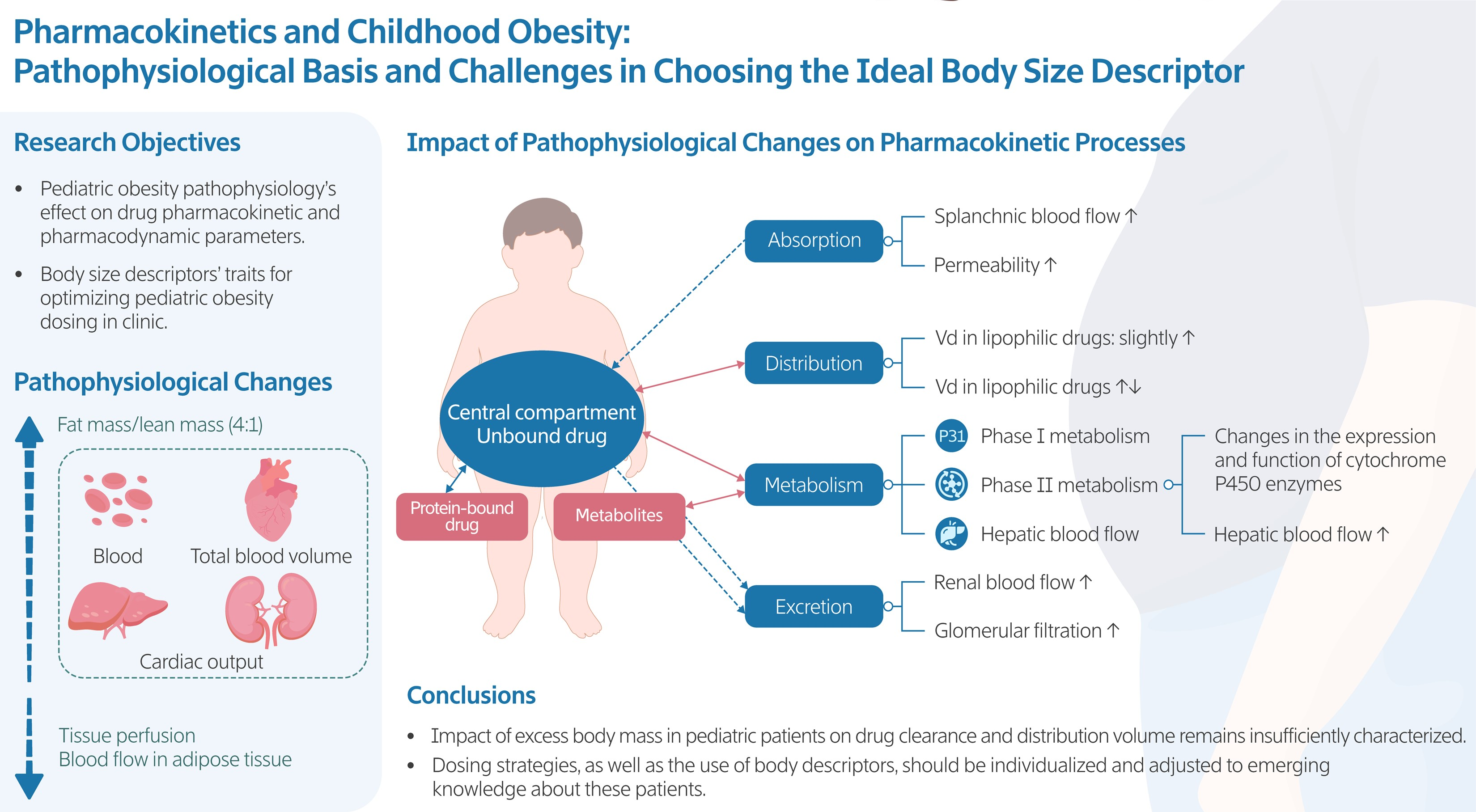
Pharmacokinetics and Childhood Obesity: Pathophysiological Basis and Challenges in Choosing the Ideal Body Size Descriptor

 , , , , , and
Abstract
1. Introduction
2. Conceptualization of Obesity and Overweight in Pediatric Patients
3. Pathophysiological Changes in Obese Pediatric Patients
4. Impact of Pathophysiological Changes on Pharmacokinetic and Pharmacodynamic Processes
4.1. Absorption
4.2. Distribution
4.2.1. The Apparent Volume of Distribution
4.2.2. Plasma Protein Binding
4.3. Metabolism
4.3.1. Phase I Metabolism
CYP3A4
CYP2E1
Other Cytochrome CYP450 Enzymes
Xanthine Oxidase: Another Enzyme Involved in Phase I Metabolism
4.3.2. Phase II Metabolism
Uridine Diphosphate Glucuronosyltransferase (UGT)
4.3.3. Other Phase II Metabolic Enzymes
4.3.4. Hepatic Blood Flow
4.4. Excretion
4.4.1. Glomerular Filtration
4.4.2. Tubular Secretion
4.4.3. Tubular Reabsorption
4.5. Pharmacodynamic Alterations Associated with Obesity
5. Body Size and Composition Descriptors
5.1. Total Body Weight
5.2. Body Surface Area
5.3. Ideal Body Weight
5.4. Adjusted Body Weight
5.5. Lean Body Weight and Fat-Free Mass
5.6. Allometric Methods
5.7. Normal Fat Mass
5.8. Clinical Decision Framework for Body Size Descriptor Selection
6. Opportunities and Future Directions
7. Conclusions
Author Contributions
Funding
Institutional Review Board Statement
Informed Consent Statement
Data Availability Statement
Acknowledgments
Conflicts of Interest
Abbreviations
| ADME | Absorption, distribution, metabolism and excretion |
| AI | Artificial intelligence |
| AjBW | Adjusted body weight |
| AUC | Area under the plasma concentration–time curve |
| BMI | Body mass index |
| BSA | Body surface area |
| CDC | Centers for Disease and Control |
| CKiD | Chronic kidney disease in children |
| Cl | Total body clearance |
| Cmax | Maximum concentration |
| Ffat | Fraction of fat mass |
| FFM | Fat free mass |
| IBW | Ideal body weight |
| Ig | Immunoglobulin |
| ka | Absorption rate |
| LBW | Lean body weight |
| ML | Machine learning |
| NAFLD | Non-alcoholic fatty liver disease |
| NASH | Non-alcoholic steatosis liver |
| NFM | Normal fat mass |
| PBPK | Physiologically based pharmacokinetics |
| PD | Pharmacodynamics |
| PK | Pharmacokinetics |
| PopPK | Population pharmacokinetics |
| QSP | Quantitative systems pharmacology |
| TDM | Therapeutic drug monitoring |
| TBW | Total body weight |
| UGT | Uridine Diphosphate Glucuronosyltransferase |
| Vd | Apparent volume of distribution |
| WHO | World Health Organization |
References
- Zhang, X.; Liu, J.; Ni, Y.; Yi, C.; Fang, Y.; Ning, Q.; Shen, B.; Zhang, K.; Liu, Y.; Yang, L.; et al. Global Prevalence of Overweight and Obesity in Children and Adolescents: A Systematic Review and Meta-Analysis. JAMA Pediatr. 2024, 178, 800–813. [Google Scholar] [CrossRef]
- UNICEF. Feeding Profit. How Food Environments Are Failing Children. Child Nutrition Report 2025. Available online: https://www.unicef.org/reports/feeding-profit (accessed on 15 September 2025).
- World Health Organization. Obesity and Overweight. Available online: https://www.who.int/news-room/fact-sheets/detail/obesity-and-overweight (accessed on 7 May 2025).
- GBD 2021 Adult BMI Collaborators. Global, regional, and national prevalence of child and adolescent overweight and obesity, 1990-2021, with forecasts to 2050: A forecasting study for the Global Burden of Disease Study 2021. Lancet 2025, 405, 785–812. [Google Scholar] [CrossRef] [PubMed]
- Marcus, C.; Danielsson, P.; Hagman, E. Pediatric obesity-Long-term consequences and effect of weight loss. J. Intern. Med. 2022, 292, 870–891. [Google Scholar] [CrossRef] [PubMed]
- Zhang, F.F.; Parsons, S.K. Obesity in Childhood Cancer Survivors: Call for Early Weight Management. Adv. Nutr. 2015, 6, 611–619. [Google Scholar] [CrossRef] [PubMed]
- Valerio, G.; Maffeis, C.; Saggese, G.; Ambruzzi, M.A.; Balsamo, A.; Bellone, S.; Bergamini, M.; Bernasconi, S.; Bona, G.; Calcaterra, V.; et al. Diagnosis, treatment and prevention of pediatric obesity: Consensus position statement of the Italian Society for Pediatric Endocrinology and Diabetology and the Italian Society of Pediatrics. Ital. J. Pediatr. 2018, 44, 88. [Google Scholar] [CrossRef]
- Halvorson, E.E.; Irby, M.B.; Skelton, J.A. Pediatric obesity and safety in inpatient settings: A systematic literature review. Clin. Pediatr. 2014, 53, 975–987. [Google Scholar] [CrossRef]
- Procaccini, D.; Kim, J.M.; Lobner, K.; Rowcliffe, M.; Mollenkopf, N. Medication Errors in Overweight and Obese Pediatric Patients: A Narrative Review. Jt. Comm. J. Qual. Patient Saf. 2022, 48, 154–164. [Google Scholar] [CrossRef]
- van den Anker, J.; Reed, M.D.; Allegaert, K.; Kearns, G.L. Developmental Changes in Pharmacokinetics and Pharmacodynamics. J. Clin. Pharmacol. 2018, 58, S10–S25. [Google Scholar] [CrossRef]
- Gaeta, F.; Conti, V.; Pepe, A.; Vajro, P.; Filippelli, A.; Mandato, C. Drug dosing in children with obesity: A narrative updated review. Ital. J. Pediatr. 2022, 48, 168. [Google Scholar] [CrossRef]
- Kyler, K.E.; Wagner, J.; Hosey-Cojocari, C.; Watt, K.; Shakhnovich, V. Drug Dose Selection in Pediatric Obesity: Available Information for the Most Commonly Prescribed Drugs to Children. Pediatr. Drugs 2019, 21, 357–369. [Google Scholar] [CrossRef]
- Burke, C.N.; Voepel-Lewis, T.; Wagner, D.; Lau, I.; Baldock, A.; Malviya, S.; Nafiu, O. A retrospective description of anesthetic medication dosing in overweight and obese children. Pediatr. Anesth. 2014, 24, 857–862. [Google Scholar] [CrossRef]
- Ameer, B.; Weintraub, M.A. Dosing Common Medications in Hospitalized Pediatric Patients with Obesity: A Review. Obesity 2020, 28, 1013–1022. [Google Scholar] [CrossRef] [PubMed]
- Ross, E.L.; Heizer, J.; Mixon, M.A.; Jorgensen, J.; Valdez, C.A.; Czaja, A.S.; Reiter, P.D. Development of recommendations for dosing of commonly prescribed medications in critically ill obese children. Am. J. Health Syst. Pharm. 2015, 72, 542–556. [Google Scholar] [CrossRef] [PubMed]
- Xiong, Y.; Fukuda, T.; Knibbe, C.A.J.; Vinks, A.A. Drug Dosing in Obese Children: Challenges and Evidence-Based Strategies. Pediatr. Clin. N. Am. 2017, 64, 1417–1438. [Google Scholar] [CrossRef]
- Neonatal & Paediatric Pharmacy Group. How Should Medicines Be Dosed in Children Who Are Obese? Available online: https://nppg.org.uk/wp-content/uploads/2024/08/UKMIQA-drug-dosing-in-childhood-obesity.pdf (accessed on 1 May 2023).
- Rowe, S.; Siegel, D.; Benjamin, D.K., Jr. Best Pharmaceuticals for Children Act—Pediatric Trials Network Administrative Core, C. Gaps in Drug Dosing for Obese Children: A Systematic Review of Commonly Prescribed Emergency Care Medications. Clin. Ther. 2015, 37, 1924–1932. [Google Scholar] [CrossRef]
- Writers, A.M. Dosage adjustment in obese children, even for common drugs, is largely unclear and a treat-to-effect approach may work best. Drugs Ther. Perspect. 2020, 36, 341–346. [Google Scholar] [CrossRef]
- Mpody, C.; Owusu-Bediako, K.; Raman, V.T.; Nafiu, O.O. Pediatric obesity and perioperative medicine. Curr. Opin. Anesthesiol. 2021, 34, 299–305. [Google Scholar] [CrossRef]
- Kendrick, J.G.; Carr, R.R.; Ensom, M.H. Pharmacokinetics and drug dosing in obese children. J. Pediatr. Pharmacol. Ther. 2010, 15, 94–109. [Google Scholar] [CrossRef]
- Kendrick, J.G.; Carr, R.R.; Ensom, M.H. Pediatric Obesity: Pharmacokinetics and Implications for Drug Dosing. Clin. Ther. 2015, 37, 1897–1923. [Google Scholar] [CrossRef]
- Harskamp-van Ginkel, M.W.; Hill, K.D.; Becker, K.C.; Testoni, D.; Cohen-Wolkowiez, M.; Gonzalez, D.; Barrett, J.S.; Benjamin, D.K., Jr.; Siegel, D.A.; Banks, P.; et al. Drug Dosing and Pharmacokinetics in Children With Obesity: A Systematic Review. JAMA Pediatr. 2015, 169, 678–685. [Google Scholar] [CrossRef]
- Zhang, T.; Krekels, E.H.J.; Smit, C.; Knibbe, C.A.J. Drug pharmacokinetics in the obese population: Challenging common assumptions on predictors of obesity-related parameter changes. Expert Opin. Drug Metab. Toxicol. 2022, 18, 657–674. [Google Scholar] [CrossRef]
- Krekels, E.H.J.; Knibbe, C.A.J. Pharmacokinetics and Pharmacodynamics of Drugs in Obese Pediatric Patients: How to Map Uncharted Clinical Territories. In Pediatric Pharmacotherapy; Handbook of Experimental Pharmacology; Springer: Cham, Switzerland, 2020; Volume 261, pp. 231–255. [Google Scholar] [CrossRef]
- Hampl, S.E.; Hassink, S.G.; Skinner, A.C.; Armstrong, S.C.; Barlow, S.E.; Bolling, C.F.; Avila Edwards, K.C.; Eneli, I.; Hamre, R.; Joseph, M.M.; et al. Clinical Practice Guideline for the Evaluation and Treatment of Children and Adolescents With Obesity. Pediatrics 2023, 151, e2022060640. [Google Scholar] [CrossRef]
- Jebeile, H.; Kelly, A.S.; O’Malley, G.; Baur, L.A. Obesity in children and adolescents: Epidemiology, causes, assessment, and management. Lancet Diabetes Endocrinol. 2022, 10, 351–365. [Google Scholar] [CrossRef]
- Cuda, S.E.; Censani, M. Assessment, differential diagnosis, and initial clinical evaluation of the pediatric patient with obesity: An Obesity Medical Association (OMA) Clinical Practice Statement 2022. Obes. Pillars 2022, 1, 100010. [Google Scholar] [CrossRef] [PubMed]
- World Health Organization. Child Growth Standards. Available online: https://www.who.int/tools/child-growth-standards/who-multicentre-growth-reference-study (accessed on 1 January 2025).
- Gerhart, J.G.; Balevic, S.; Sinha, J.; Perrin, E.M.; Wang, J.; Edginton, A.N.; Gonzalez, D. Characterizing Pharmacokinetics in Children With Obesity-Physiological, Drug, Patient, and Methodological Considerations. Front. Pharmacol. 2022, 13, 818726. [Google Scholar] [CrossRef] [PubMed]
- Gulati, A.K.; Kaplan, D.W.; Daniels, S.R. Clinical tracking of severely obese children: A new growth chart. Pediatrics 2012, 130, 1136–1140. [Google Scholar] [CrossRef]
- National Center for Health Statistics. CDC Growth Charts. Available online: https://www.cdc.gov/growthcharts/cdc-growth-charts.htm (accessed on 1 February 2025).
- Bell, K.A.; Wagner, C.L.; Perng, W.; Feldman, H.A.; Shypailo, R.J.; Belfort, M.B. Validity of Body Mass Index as a Measure of Adiposity in Infancy. J. Pediatr. 2018, 196, 168–174.e1. [Google Scholar] [CrossRef]
- Roy, S.M.; Spivack, J.G.; Faith, M.S.; Chesi, A.; Mitchell, J.A.; Kelly, A.; Grant, S.F.; McCormack, S.E.; Zemel, B.S. Infant BMI or Weight-for-Length and Obesity Risk in Early Childhood. Pediatrics 2016, 137, e20153492. [Google Scholar] [CrossRef] [PubMed]
- Hills, A.P.; Norris, S.A.; Byrne, N.M.; Jayasinghe, S.; Murphy-Alford, A.J.; Loechl, C.U.; Ismail, L.I.C.; Kurpad, A.V.; Kuriyan, R.; Nyati, L.H.; et al. Body composition from birth to 2 years. Eur. J. Clin. Nutr. 2024, 78, 923–927. [Google Scholar] [CrossRef]
- Toro-Ramos, T.; Paley, C.; Pi-Sunyer, F.X.; Gallagher, D. Body composition during fetal development and infancy through the age of 5 years. Eur. J. Clin. Nutr. 2015, 69, 1279–1289. [Google Scholar] [CrossRef]
- Wells, J.C.; Fewtrell, M.S.; Williams, J.E.; Haroun, D.; Lawson, M.S.; Cole, T.J. Body composition in normal weight, overweight and obese children: Matched case-control analyses of total and regional tissue masses, and body composition trends in relation to relative weight. Int. J. Obes. 2006, 30, 1506–1513. [Google Scholar] [CrossRef]
- Mulla, H.; Johnson, T.N. Dosing dilemmas in obese children. Arch. Dis. Child. Educ. Pract. Ed. 2010, 95, 112–117. [Google Scholar] [CrossRef] [PubMed]
- Anderson, B.J. My child is unique; the pharmacokinetics are universal. Pediatr. Anesth. 2012, 22, 530–538. [Google Scholar] [CrossRef]
- Raes, A.; Van Aken, S.; Craen, M.; Donckerwolcke, R.; Vande Walle, J. A reference frame for blood volume in children and adolescents. BMC Pediatr. 2006, 6, 3. [Google Scholar] [CrossRef]
- Martin, J.H.; Saleem, M.; Looke, D. Therapeutic drug monitoring to adjust dosing in morbid obesity—A new use for an old methodology. Br. J. Clin. Pharmacol. 2012, 73, 685–690. [Google Scholar] [CrossRef]
- Gunaratne, N.; Deplewski, D. Metabolic Consequences of Pediatric Obesity: A Review of Pathophysiology, Screening, and Treatment. Pediatr. Ann. 2023, 52, e62–e67. [Google Scholar] [CrossRef] [PubMed]
- Jia, S.; Ye, X.; Wu, T.; Wang, Z.; Wu, J. Global prevalence of metabolic dysfunction-associated fatty liver disease in children and adolescents with overweight and obesity: A systematic review and meta-analysis. BMC Gastroenterol. 2025, 25, 691. [Google Scholar] [CrossRef] [PubMed]
- Armani, S.; Geier, A.; Forst, T.; Merle, U.; Alpers, D.H.; Lunnon, M.W. Effect of changes in metabolic enzymes and transporters on drug metabolism in the context of liver disease: Impact on pharmacokinetics and drug-drug interactions. Br. J. Clin. Pharmacol. 2024, 90, 942–958. [Google Scholar] [CrossRef]
- Hertis Petek, T.; Homsak, E.; Svetej, M.; Marcun Varda, N. Systemic Inflammation and Oxidative Stress in Childhood Obesity: Sex Differences in Adiposity Indices and Cardiovascular Risk. Biomedicines 2024, 13, 58. [Google Scholar] [CrossRef]
- Umano, G.R.; Pistone, C.; Tondina, E.; Moiraghi, A.; Lauretta, D.; Miraglia Del Giudice, E.; Brambilla, I. Pediatric Obesity and the Immune System. Front. Pediatr. 2019, 7, 487. [Google Scholar] [CrossRef]
- Kovesdy, C.P.; Furth, S.L.; Zoccali, C. Obesity and kidney disease: Hidden consequences of the epidemic. Afr. J. Prim. Health Care Fam. Med. 2017, 9, a1435. [Google Scholar] [CrossRef] [PubMed]
- Barlaba, A.; Grella, C.; Tammaro, M.; Petrone, D.; Guarino, S.; Miraglia Del Giudice, E.; Marzuillo, P.; Di Sessa, A. Kidney function evaluation in children and adolescents with obesity: A not-negligible need. Eur. J. Pediatr. 2024, 183, 3655–3664. [Google Scholar] [CrossRef]
- Di Ludovico, A.; Pucci, C.; Grassi, G.; Chabert, G.L.; Ledda, G.; Mascioli, I.; La Bella, S.; Ciarelli, F.; Breda, L.; Giannini, C.; et al. Obesity-related kidney disease: A review on ultrasound applications. Ital. J. Pediatr. 2025, 51, 251. [Google Scholar] [CrossRef]
- Buxton, I. Farmacocinética: Dinámica de la absorción distribucion, metabolismo y eliminacion de fármacos. In Goodman & Gilman’s. The Pharmacological Basis of Therapeutics, 13th ed.; McGRAW-HILL INTERAMERICANA EDITORES, S.A. de C.V.: Mexico City, Mexico, 2018; pp. 31–47. [Google Scholar]
- Knibbe, C.A.; Brill, M.J.; van Rongen, A.; Diepstraten, J.; van der Graaf, P.H.; Danhof, M. Drug disposition in obesity: Toward evidence-based dosing. Annu. Rev. Pharmacol. Toxicol. 2015, 55, 149–167. [Google Scholar] [CrossRef]
- Brill, M.J.; Diepstraten, J.; van Rongen, A.; van Kralingen, S.; van den Anker, J.N.; Knibbe, C.A. Impact of obesity on drug metabolism and elimination in adults and children. Clin. Pharmacokinet. 2012, 51, 277–304. [Google Scholar] [CrossRef]
- Zhang, T.; Calvier, E.A.M.; Krekels, E.H.J.; Knibbe, C.A.J. The Impact of Drug Properties and Severity of Obesity on Renal Drug Clearance Through Glomerular Filtration and Active Tubular Secretion: A Systematic Analysis Using PBPK Modeling. Pharm. Res. 2025, 42, 1079–1088. [Google Scholar] [CrossRef]
- Brown, J.C. Epinephrine, auto-injectors, and anaphylaxis: Challenges of dose, depth, and device. Ann. Allergy Asthma Immunol. 2018, 121, 53–60. [Google Scholar] [CrossRef]
- Duong, M.; Botchway, A.; Dela Cruz, J.; Austin, R.; McDaniel, K.; Jaeger, C. Skin to Intramuscular Compartment Thigh Measurement by Ultrasound in Pediatric Population. West. J. Emerg. Med. 2017, 18, 479–486. [Google Scholar] [CrossRef]
- Shapiro, R. Subcutaneous immunoglobulin (16 or 20%) therapy in obese patients with primary immunodeficiency: A retrospective analysis of administration by infusion pump or subcutaneous rapid push. Clin. Exp. Immunol. 2013, 173, 365–371. [Google Scholar] [CrossRef] [PubMed]
- Matson, K.L.; Horton, E.R.; Capino, A.C.; Advocacy Committee for the Pediatric Pharmacy Advocacy Group. Medication Dosage in Overweight and Obese Children. J. Pediatr. Pharmacol. Ther. 2017, 22, 81–83. [Google Scholar] [CrossRef] [PubMed]
- Roy, H.; Bertoldi, C.; Farrell, C.; Rousseau, E. Prescribing drugs to overweight and obese children: Balancing efficacy and safety. Paediatr. Child. Health 2021, 26, e236–e239. [Google Scholar] [CrossRef]
- Anderson, B.J.; Holford, N.H. Understanding dosing: Children are small adults, neonates are immature children. Arch. Dis. Child. 2013, 98, 737–744. [Google Scholar] [CrossRef]
- Gerhart, J.G.; Carreno, F.O.; Edginton, A.N.; Sinha, J.; Perrin, E.M.; Kumar, K.R.; Rikhi, A.; Hornik, C.P.; Harris, V.; Ganguly, S.; et al. Development and Evaluation of a Virtual Population of Children with Obesity for Physiologically Based Pharmacokinetic Modeling. Clin. Pharmacokinet. 2022, 61, 307–320. [Google Scholar] [CrossRef]
- Maharaj, A.R.; Wu, H.; Zimmerman, K.O.; Speicher, D.G.; Sullivan, J.E.; Watt, K.; Al-Uzri, A.; Payne, E.H.; Erinjeri, J.; Lin, S.; et al. Dosing of Continuous Fentanyl Infusions in Obese Children: A Population Pharmacokinetic Analysis. J. Clin. Pharmacol. 2020, 60, 636–647. [Google Scholar] [CrossRef] [PubMed]
- van Rongen, A.; Vaughns, J.D.; Moorthy, G.S.; Barrett, J.S.; Knibbe, C.A.; van den Anker, J.N. Population pharmacokinetics of midazolam and its metabolites in overweight and obese adolescents. Br. J. Clin. Pharmacol. 2015, 80, 1185–1196. [Google Scholar] [CrossRef]
- Gade, C.; Sverrisdottir, E.; Dalhoff, K.; Sonne, J.; Johansen, M.O.; Christensen, H.R.; Burhenne, J.; Mikus, G.; Holm, J.C.; Lund, T.M.; et al. Midazolam Pharmacokinetics in Obese and Non-obese Children and Adolescents. Clin. Pharmacokinet. 2020, 59, 643–654. [Google Scholar] [CrossRef]
- Gade, C.; Dalhoff, K.; Petersen, T.S.; Riis, T.; Schmeltz, C.; Chabanova, E.; Christensen, H.R.; Mikus, G.; Burhenne, J.; Holm, J.C.; et al. Higher chlorzoxazone clearance in obese children compared with nonobese peers. Br. J. Clin. Pharmacol. 2018, 84, 1738–1747. [Google Scholar] [CrossRef] [PubMed]
- Anderson, B.J.; Cortinez, L.I. Perioperative Acetaminophen Dosing in Obese Children. Children 2023, 10, 625. [Google Scholar] [CrossRef]
- Hakim, M.; Anderson, B.J.; Walia, H.; Tumin, D.; Michalsky, M.P.; Syed, A.; Tobias, J.D. Acetaminophen pharmacokinetics in severely obese adolescents and young adults. Pediatr. Anesth. 2019, 29, 20–26. [Google Scholar] [CrossRef] [PubMed]
- van Rongen, A.; Valitalo, P.A.J.; Peeters, M.Y.M.; Boerma, D.; Huisman, F.W.; van Ramshorst, B.; van Dongen, E.P.A.; van den Anker, J.N.; Knibbe, C.A.J. Morbidly Obese Patients Exhibit Increased CYP2E1-Mediated Oxidation of Acetaminophen. Clin. Pharmacokinet. 2016, 55, 833–847. [Google Scholar] [CrossRef]
- Chiney, M.S.; Schwarzenberg, S.J.; Johnson, L.A. Altered xanthine oxidase and N-acetyltransferase activity in obese children. Br. J. Clin. Pharmacol. 2011, 72, 109–115. [Google Scholar] [CrossRef]
- Zuccaro, P.; Guandalini, S.; Pacifici, R.; Pichini, S.; Di Martino, L.; Guiducci, M.; Giuliano, M.; Di Tullio, M.T.; Pettoello Mantovani, M. Fat body mass and pharmacokinetics of oral 6-mercaptopurine in children with acute lymphoblastic leukemia. Ther. Drug Monit. 1991, 13, 37–41. [Google Scholar] [CrossRef] [PubMed]
- Barshop, N.J.; Capparelli, E.V.; Sirlin, C.B.; Schwimmer, J.B.; Lavine, J.E. Acetaminophen pharmacokinetics in children with nonalcoholic fatty liver disease. J. Pediatr. Gastroenterol. Nutr. 2011, 52, 198–202. [Google Scholar] [CrossRef]
- Browning, B.; Thormann, K.; Donaldson, A.; Halverson, T.; Shinkle, M.; Kletzel, M. Busulfan dosing in children with BMIs ≥85% undergoing HSCT: A new optimal strategy. Biol. Blood Marrow Transplant. 2011, 17, 1383–1388. [Google Scholar] [CrossRef][Green Version]
- Nassar, L.; Hadad, S.; Gefen, A.; Shachor-Meyouhas, Y.; Mashiach, T.; Krivoy, N.; Kassis, I. Prospective evaluation of the dosing regimen of vancomycin in children of different weight categories. Curr. Drug Saf. 2012, 7, 375–381. [Google Scholar] [CrossRef]
- van Dam, M.; Pottel, H.; Vreugdenhil, A.C.E. Creatinine-based GFR-estimating equations in children with overweight and obesity. Pediatr. Nephrol. 2022, 37, 2393–2403. [Google Scholar] [CrossRef] [PubMed]
- van Dam, M.; Pottel, H.; Vreugdenhil, A.C.E. Relation between obesity-related comorbidities and kidney function estimation in children. Pediatr. Nephrol. 2023, 38, 1867–1876. [Google Scholar] [CrossRef]
- Lewis, T.V.; Harrison, D.L.; Gildon, B.L.; Carter, S.M.; Turman, M.A. Applicability of the Schwartz Equation and the Chronic Kidney Disease in Children Bedside Equation for Estimating Glomerular Filtration Rate in Overweight Children. Pharmacotherapy 2016, 36, 598–606. [Google Scholar] [CrossRef] [PubMed]
- Correia-Costa, L.; Schaefer, F.; Afonso, A.C.; Bustorff, M.; Guimaraes, J.T.; Guerra, A.; Barros, H.; Azevedo, A. Normalization of glomerular filtration rate in obese children. Pediatr. Nephrol. 2016, 31, 1321–1328. [Google Scholar] [CrossRef]
- Hanafy, S.; Pinsk, M.; Jamali, F. Effect of obesity on response to cardiovascular drugs in pediatric patients with renal disease. Pediatr. Nephrol. 2009, 24, 815–821. [Google Scholar] [CrossRef]
- Huttunen, R.; Syrjanen, J. Obesity and the risk and outcome of infection. Int. J. Obes. 2013, 37, 333–340. [Google Scholar] [CrossRef]
- Bartelink, I.H.; Rademaker, C.M.; Schobben, A.F.; van den Anker, J.N. Guidelines on paediatric dosing on the basis of developmental physiology and pharmacokinetic considerations. Clin. Pharmacokinet. 2006, 45, 1077–1097. [Google Scholar] [CrossRef]
- Williams, K.; Thomson, D.; Seto, I.; Contopoulos-Ioannidis, D.G.; Ioannidis, J.P.; Curtis, S.; Constantin, E.; Batmanabane, G.; Hartling, L.; Klassen, T.; et al. Standard 6: Age groups for pediatric trials. Pediatrics 2012, 129, S153–S160. [Google Scholar] [CrossRef]
- Haycock, G.B.; Schwartz, G.J.; Wisotsky, D.H. Geometric method for measuring body surface area: A height-weight formula validated in infants, children, and adults. J. Pediatr. 1978, 93, 62–66. [Google Scholar] [CrossRef]
- Mosteller, R.D. Simplified calculation of body-surface area. N. Engl. J. Med. 1987, 317, 1098. [Google Scholar] [CrossRef] [PubMed]
- Traub, S.L.; Kichen, L. Estimating ideal body mass in children. Am. J. Hosp. Pharm. 1983, 40, 107–110. [Google Scholar] [CrossRef] [PubMed]
- Rudd, G.D.; Hull, J.H.; Morris, C.R.; Bryan, C.K. Estimating creatinine clearance in children: Comparison of three methods. Am. J. Hosp. Pharm. 1980, 37, 1514–1517. [Google Scholar] [CrossRef]
- Kang, K.; Absher, R.; Farrington, E.; Ackley, R.; So, T.Y. Evaluation of Different Methods Used to Calculate Ideal Body Weight in the Pediatric Population. J. Pediatr. Pharmacol. Ther. 2019, 24, 421–430. [Google Scholar] [CrossRef]
- Callaghan, L.C.; Walker, J.D. An aid to drug dosing safety in obese children: Development of a new nomogram and comparison with existing methods for estimation of ideal body weight and lean body mass. Anaesthesia 2015, 70, 176–182. [Google Scholar] [CrossRef]
- Janmahasatian, S.; Duffull, S.B.; Ash, S.; Ward, L.C.; Byrne, N.M.; Green, B. Quantification of lean bodyweight. Clin. Pharmacokinet. 2005, 44, 1051–1065. [Google Scholar] [CrossRef] [PubMed]
- Al-Sallami, H.S.; Goulding, A.; Grant, A.; Taylor, R.; Holford, N.; Duffull, S.B. Prediction of Fat-Free Mass in Children. Clin. Pharmacokinet. 2015, 54, 1169–1178. [Google Scholar] [CrossRef]
- Anderson, B.J.; Holford, N.H. What is the best size predictor for dose in the obese child? Pediatr. Anesth. 2017, 27, 1176–1184. [Google Scholar] [CrossRef]
- Holford, N.H.G.; Anderson, B.J. Allometric size: The scientific theory and extension to normal fat mass. Eur. J. Pharm. Sci. 2017, 109, S59–S64. [Google Scholar] [CrossRef]
- Sawyer, M.; Ratain, M.J. Body surface area as a determinant of pharmacokinetics and drug dosing. Investig. New Drugs 2001, 19, 171–177. [Google Scholar] [CrossRef]
- El Edelbi, R.; Lindemalm, S.; Eksborg, S. Estimation of body surface area in various childhood ages—Validation of the Mosteller formula. Acta Paediatr. 2012, 101, 540–544. [Google Scholar] [CrossRef]
- Pai, M.P. Drug dosing based on weight and body surface area: Mathematical assumptions and limitations in obese adults. Pharmacotherapy 2012, 32, 856–868. [Google Scholar] [CrossRef] [PubMed]
- Besci, O.; Deveci Sevim, R.; Yuksek Acinikli, K.; Akin Kagizmanli, G.; Ersoy, S.; Demir, K.; Unuvar, T.; Bober, E.; Anik, A.; Abaci, A. Growth Hormone Dosing Estimations Based on Body Weight Versus Body Surface Area. J. Clin. Res. Pediatr. Endocrinol. 2023, 15, 268–275. [Google Scholar] [CrossRef]
- Gerhart, J.G.; Carreno, F.O.; Loop, M.S.; Lee, C.R.; Edginton, A.N.; Sinha, J.; Kumar, K.R.; Kirkpatrick, C.M.; Hornik, C.P.; Gonzalez, D.; et al. Use of Real-World Data and Physiologically-Based Pharmacokinetic Modeling to Characterize Enoxaparin Disposition in Children With Obesity. Clin. Pharmacol. Ther. 2022, 112, 391–403. [Google Scholar] [CrossRef] [PubMed]
- Derbalah, A.; Duffull, S.; Sherwin, C.M.; Job, K.; Al-Sallami, H. Optimal dosing of enoxaparin in overweight and obese children. Br. J. Clin. Pharmacol. 2022, 88, 5348–5358. [Google Scholar] [CrossRef]
- Eleveld, D.J.; Koomen, J.V.; Absalom, A.R.; Su, H.; Hannivoort, L.N.; Struys, M. Allometric Scaling in Pharmacokinetic Studies in Anesthesiology. Anesthesiology 2022, 136, 609–617. [Google Scholar] [CrossRef] [PubMed]
- Anderson, B.J.; Holford, N.H. Tips and traps analyzing pediatric PK data. Pediatr. Anesth. 2011, 21, 222–237. [Google Scholar] [CrossRef]
- Holford, S.H.N. NextDose: A Web-Based Bayesian Dose Forecasting Tool. Available online: https://nextdose.org/about (accessed on 1 September 2025).
- Vancomycin Hydrochloride. In MerativeTM Micromedex® DRUGDEX® (Electronic Version); Merative: Ann Arbor, MI, USA; Available online: https://www.micromedexsolutions.com/ (accessed on 6 December 2025).
- Rybak, M.J.; Le, J.; Lodise, T.P.; Levine, D.P.; Bradley, J.S.; Liu, C.; Mueller, B.A.; Pai, M.P.; Wong-Beringer, A.; Rotschafer, J.C.; et al. Therapeutic monitoring of vancomycin for serious methicillin-resistant Staphylococcus aureus infections: A revised consensus guideline and review by the American Society of Health-System Pharmacists, the Infectious Diseases Society of America, the Pediatric Infectious Diseases Society, and the Society of Infectious Diseases Pharmacists. Am. J. Health Syst. Pharm. 2020, 77, 835–864. [Google Scholar] [CrossRef] [PubMed]
- Green, B.; Duffull, S.B. What is the best size descriptor to use for pharmacokinetic studies in the obese? Br. J. Clin. Pharmacol. 2004, 58, 119–133. [Google Scholar] [CrossRef]
- Lim, S.Y.; Pettit, R.S. Pharmacokinetic considerations in pediatric pharmacotherapy. Am. J. Health Syst. Pharm. 2019, 76, 1472–1480. [Google Scholar] [CrossRef]
- Simeoli, R.; Dorlo, T.P.C.; Hanff, L.M.; Huitema, A.D.R.; Dreesen, E. Editorial: Therapeutic Drug Monitoring (TDM): A Useful Tool for Pediatric Pharmacology Applied to Routine Clinical Practice. Front. Pharmacol. 2022, 13, 931843. [Google Scholar] [CrossRef]
- Ortega, C.; Reyes, B.A. Farmacocinética clínica en pediatría. In Farmacia Pediátrica Hospitalaria; Molina, E.V., Ed.; Elsevier: Madrid, Spain, 2011; pp. 47–62. [Google Scholar]
- Ghobadi, C.; Johnson, T.N.; Aarabi, M.; Almond, L.M.; Allabi, A.C.; Rowland-Yeo, K.; Jamei, M.; Rostami-Hodjegan, A. Application of a systems approach to the bottom-up assessment of pharmacokinetics in obese patients: Expected variations in clearance. Clin. Pharmacokinet. 2011, 50, 809–822. [Google Scholar] [CrossRef]
- Barrett, J.S.; Della Casa Alberighi, O.; Laer, S.; Meibohm, B. Physiologically based pharmacokinetic (PBPK) modeling in children. Clin. Pharmacol. Ther. 2012, 92, 40–49. [Google Scholar] [CrossRef] [PubMed]
- Burhanuddin, K.; Mohammed, A.; Badhan, R.K.S. The Impact of Paediatric Obesity on Drug Pharmacokinetics: A Virtual Clinical Trials Case Study with Amlodipine. Pharmaceutics 2024, 16, 489. [Google Scholar] [CrossRef]
- Friedrich, C. What Is QSP and Why Does It Exist?: A Brief History. Handb. Exp. Pharmacol. 2025, 289, 3–20. [Google Scholar] [CrossRef] [PubMed]
- Li, Q.Y.; Tang, B.H.; Wu, Y.E.; Yao, B.F.; Zhang, W.; Zheng, Y.; Zhou, Y.; van den Anker, J.; Hao, G.X.; Zhao, W. Machine Learning: A New Approach for Dose Individualization. Clin. Pharmacol. Ther. 2024, 115, 727–744. [Google Scholar] [CrossRef]

| Age Group | 2–5 Years | 5–18 Years | |
|---|---|---|---|
| Index | Weight for Height | BMI | |
| Percentile * | Equivalence Z-Score (Standard Deviation) | ||
| >85th percentile | z-score + 1 | Risk of being overweight | Overweight |
| >97th percentile | z-score + 2 | Overweight | Obesity |
| >99th percentile | z-score + 3 | Obesity | Severe obesity |
| Status | Percentile |
|---|---|
| Normal weight | BMI > 5th to <85th |
| Overweight | BMI ≥ 85th to <95th |
| Class I obesity | BMI ≥ 95th to <120% of the 95th |
| Class II obesity * | BMI 120–140% |
| Class III obesity * | BMI ≥ 140% |
| Process | Pathophysiological Change | Affected PK Parameter and Expected Change | Observations |
|---|---|---|---|
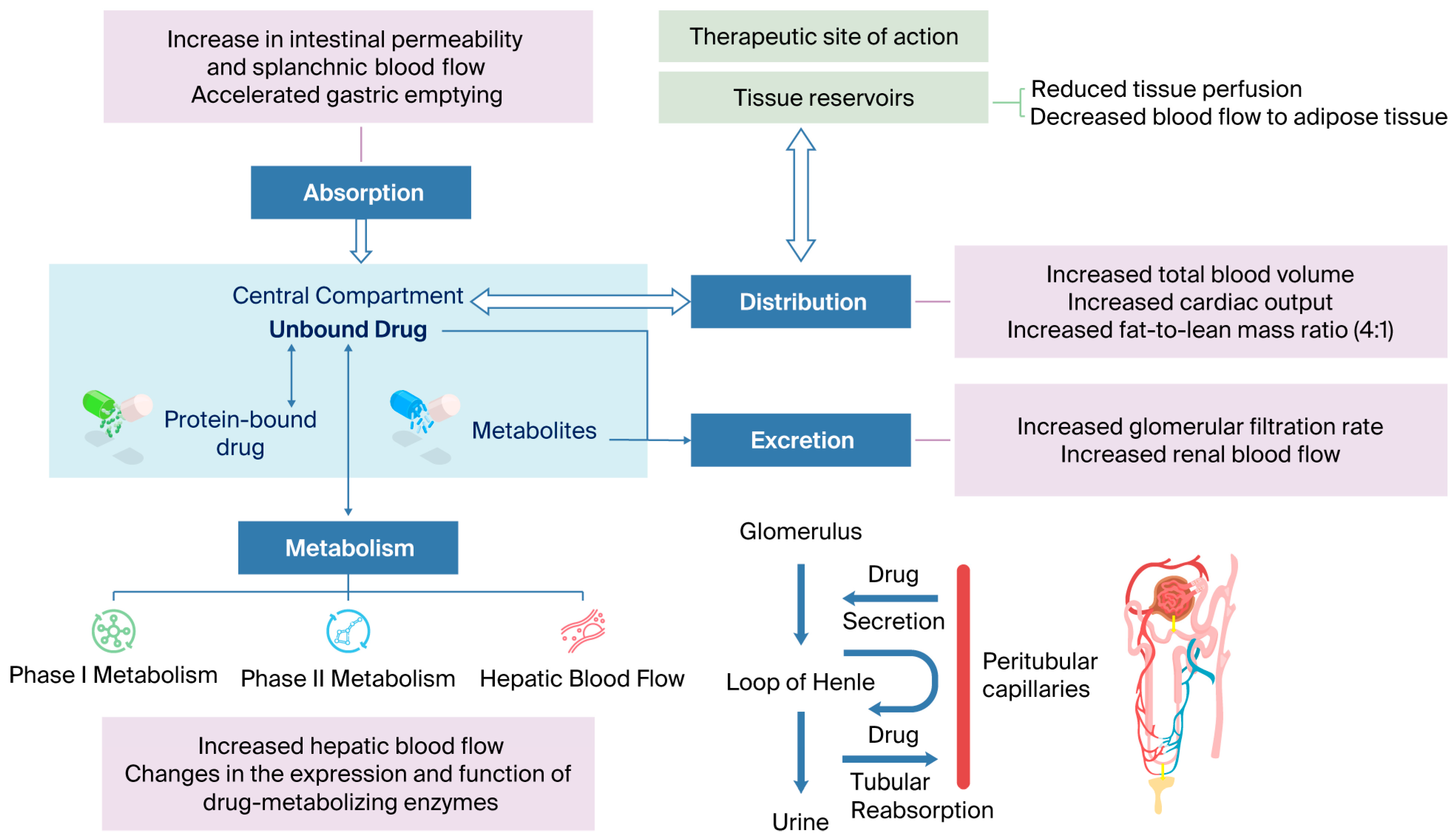
| Absorption [16,51] | Increased gastric emptying Increased intestinal permeability Increased splanchnic blood flow | F ↔ ka ↑ | Clinical relevance of absorption changes should be evaluated in obesity Limited information in pediatrics |
| Distribution [16,24,30,38] | Increase in total blood volume Increase in cardiac output Changes in organ volume and blood flow Increase in fat mass/lean mass ratio | Vd in low-lipophilicity drugs: slightly ↑ Vd in lipophilic drugs ↑↓ Plasma proteins Albumin ↔ α1-acid glycoprotein ↑ | Caution with drugs that have a high degree of lipophilicity Limited information in pediatrics |
| Metabolism [24,30,51,52] | Increased hepatic blood flow Changes in the expression and function of metabolizing enzymes | Cl hepatic Phase I metabolism CYP3A4 ↓ CYP2E1 ↑ CYP2D6 ↑ Xanthine oxidase ↑ Phase II metabolism ↑ Glucuronosyltransferase N-acetyltransferase Glutathione S-transferase | Alteration in hepatic Cl depends on the metabolic pathway Limited information in pediatrics |
| Excretion [30,51,52,53] | Increased size and renal blood flow | Cl Glomerular filtration ↑ Tubular secretion ↑ Tubular reabsorption ↔ | Increase in renal Cl Limited information in pediatrics |
| Size Descriptor * | Calculation | Application |
|---|---|---|
| Total body weight (kg) | Current patient weight | It could be useful in the dosage of drugs with moderate or high lipophilicity ** |
| Body mass index (kg/m2) | Calculation based on growth curves by age and gender Patients aged 2–20 years | To categorize degrees of obesity |
| Body surface area (m2) [81,82] | Haycock’s formula: 0.024265 × TBW (kg)0.5378 × height (cm)0.3964 Mosteller’s formula: (weight × height/3600)1/2 | Dosage of antineoplastic agents |
| Ideal body weight (kg) [83,84,85,86] | Simplified Traub’s formula: IBW = [height in centimeters)2 × 1.65] ÷ 1000 Reverse BMI method: IBW = BMI50 × [height (m)]2 # Calculation of BMI50 according to the 50th percentile of the growth charts by age and sex or Calculation of BMI50 according to Callahan and Walker’s formula (see main text) | It could be useful for the dosage of some hydrophilic drugs ** |
| Adjusted body weight (kg) | AjBW = IBW + factor (TBW − IBW) The factor varies between 0.25 and 0.4 | It could be useful for the dosage of some drugs that are partially distributed in adipose tissue ** |
| Fat-free mass kg (see main text)/lean body weight (kg) [87,88] | LBW = 3.8 (ECV: extracellular fluid volume) ECV = 0.0215 × TBW0.6469 × height0.7236 Simplified formula: LBW: IBW + 0.29 (TBW − IBW) | It could be useful for the dosage of some hydrophilic drugs ** |
| Normal fat mass (kg) [89,90] | NFM = FFM + Ffat (TBW − FFM) Ffat is specific to each drug | Theoretical descriptor for calculating doses for a wide range of ages, weights, and body compositions |
Disclaimer/Publisher’s Note: The statements, opinions and data contained in all publications are solely those of the individual author(s) and contributor(s) and not of MDPI and/or the editor(s). MDPI and/or the editor(s) disclaim responsibility for any injury to people or property resulting from any ideas, methods, instructions or products referred to in the content. |
© 2025 by the authors. Licensee MDPI, Basel, Switzerland. This article is an open access article distributed under the terms and conditions of the Creative Commons Attribution (CC BY) license.
Share and Cite
Hernández-Gago, Y.; Sánchez-Hernández, J.G.; Minagorre, P.J.A.; Rodríguez-Marrodán, B.; Hernández Sabater, L.; Poy, M.J.C.; Negrín, A.C.R. Pharmacokinetics and Childhood Obesity: Pathophysiological Basis and Challenges in Choosing the Ideal Body Size Descriptor. Pharmaceuticals 2026, 19, 16. https://doi.org/10.3390/ph19010016
Hernández-Gago Y, Sánchez-Hernández JG, Minagorre PJA, Rodríguez-Marrodán B, Hernández Sabater L, Poy MJC, Negrín ACR. Pharmacokinetics and Childhood Obesity: Pathophysiological Basis and Challenges in Choosing the Ideal Body Size Descriptor. Pharmaceuticals. 2026; 19(1):16. https://doi.org/10.3390/ph19010016
Chicago/Turabian StyleHernández-Gago, Yolanda, José Germán Sánchez-Hernández, Pedro J. Alcala Minagorre, Belén Rodríguez-Marrodán, Laura Hernández Sabater, María José Cabañas Poy, and Ana Cristina Rodríguez Negrín. 2026. "Pharmacokinetics and Childhood Obesity: Pathophysiological Basis and Challenges in Choosing the Ideal Body Size Descriptor" Pharmaceuticals 19, no. 1: 16. https://doi.org/10.3390/ph19010016
APA StyleHernández-Gago, Y., Sánchez-Hernández, J. G., Minagorre, P. J. A., Rodríguez-Marrodán, B., Hernández Sabater, L., Poy, M. J. C., & Negrín, A. C. R. (2026). Pharmacokinetics and Childhood Obesity: Pathophysiological Basis and Challenges in Choosing the Ideal Body Size Descriptor. Pharmaceuticals, 19(1), 16. https://doi.org/10.3390/ph19010016