Phosphatidylinositol-3-Kinase (PI3K) and Histone Deacetylase (HDAC) Multitarget Inhibitors: An Update on Clinical and Preclinical Candidates



Abstract
1. Introduction
1.1. Phosphatidylinositol-3-Kinases (PI3K)
1.2. Histone Deacetylases (HDAC)
2. PI3K and HDAC Signalling Pathway Inhibition
3. Multitarget PI3K/HDAC Inhibitors in Clinical Phase
4. Multitarget PI3K/HDAC Inhibitors in Pre-Clinical Phase
4.1. Multitarget PI3K/HDAC Inhibitors Bearing Hydroxamic Acid Group
4.2. Multitarget PI3K/HDAC Inhibitors Bearing o-Aminobenzamide Group
5. Summary and Outlook
Author Contributions
Funding
Institutional Review Board Statement
Informed Consent Statement
Data Availability Statement
Conflicts of Interest
References
- Giordano, S.; Petrelli, A. From Single- to Multi-Target Drugs in Cancer Therapy: When Aspecificity Becomes an Advantage. Curr. Med. Chem. 2008, 15, 422–432. [Google Scholar] [CrossRef] [Scilit]
- Hopkins, A.L. Network Pharmacology: The next Paradigm in Drug Discovery. Nat. Chem. Biol. 2008, 4, 682–690. [Google Scholar] [CrossRef] [Scilit] [PubMed]
- Medina-Franco, J.L.; Giulianotti, M.A.; Welmaker, G.S.; Houghten, R.A. Shifting from the Single to the Multitarget Paradigm in Drug Discovery. Drug Discov. Today 2013, 18, 495–501. [Google Scholar] [CrossRef] [Scilit]
- Fu, R.; Sun, Y.; Sheng, W.; Liao, D. Designing Multi-Targeted Agents: An Emerging Anticancer Drug Discovery Paradigm. Eur. J. Med. Chem. 2017, 136, 195–211. [Google Scholar] [CrossRef] [Scilit]
- Zhou, J.; Jiang, X.; He, S.; Jiang, H.; Feng, F.; Liu, W.; Qu, W.; Sun, H. Rational Design of Multitarget-Directed Ligands: Strategies and Emerging Paradigms. J. Med. Chem. 2019, 62, 8881–8914. [Google Scholar] [CrossRef] [Scilit] [PubMed]
- Morphy, R.; Rankovic, Z. Designed Multiple Ligands. An Emerging Drug Discovery Paradigm. J. Med. Chem. 2005, 48, 6523–6543. [Google Scholar] [CrossRef] [Scilit]
- Yesilkanal, A.E.; Johnson, G.L.; Ramos, A.F.; Rosner, M.R. New Strategies for Targeting Kinase Networks in Cancer. J. Biol. Chem. 2021, 297, 101128. [Google Scholar] [CrossRef] [Scilit] [PubMed]
- Anighoro, A.; Bajorath, J.; Rastelli, G. Polypharmacology: Challenges and Opportunities in Drug Discovery. J. Med. Chem. 2014, 57, 7874–7887. [Google Scholar] [CrossRef] [Scilit]
- Costantino, L.; Barlocco, D. Designed Multiple Ligands: Basic Research vs Clinical Outcomes. Curr. Med. Chem. 2012, 19, 3353–3387. [Google Scholar] [CrossRef] [Scilit]
- Courtney, K.D.; Corcoran, R.B.; Engelman, J.A. The PI3K Pathway As Drug Target in Human Cancer. J. Clin. Oncol. 2010, 28, 1075–1083. [Google Scholar] [CrossRef] [Scilit]
- Yang, J.; Nie, J.; Ma, X.; Wei, Y.; Peng, Y.; Wei, X. Targeting PI3K in Cancer: Mechanisms and Advances in Clinical Trials. Mol. Cancer 2019, 18, 26. [Google Scholar] [CrossRef] [Scilit]
- Katso, R.; Okkenhaug, K.; Ahmadi, K.; White, S.; Timms, J.; Waterfield, M.D. Cellular Function of Phosphoinositide 3-Kinases: Implications for Development, Immunity, Homeostasis, and Cancer. Annu. Rev. Cell Dev. Biol. 2001, 17, 615–675. [Google Scholar] [CrossRef] [Scilit] [PubMed]
- Thorpe, L.M.; Yuzugullu, H.; Zhao, J.J. PI3K in Cancer: Divergent Roles of Isoforms, Modes of Activation and Therapeutic Targeting. Nat. Rev. Cancer 2015, 15, 7–24. [Google Scholar] [CrossRef] [Scilit]
- Engelman, J.A. Targeting PI3K Signalling in Cancer: Opportunities, Challenges and Limitations. Nat. Rev. Cancer 2009, 9, 550–562. [Google Scholar] [CrossRef] [Scilit]
- Markham, A. Idelalisib: First Global Approval. Drugs 2014, 74, 1701–1707. [Google Scholar] [CrossRef] [Scilit] [PubMed]
- Markham, A. Copanlisib: First Global Approval. Drugs 2017, 77, 2057–2062. [Google Scholar] [CrossRef] [Scilit] [PubMed]
- Blair, H.A. Duvelisib: First Global Approval. Drugs 2018, 78, 1847–1853. [Google Scholar] [CrossRef] [Scilit]
- Markham, A. Alpelisib: First Global Approval. Drugs 2019, 79, 1249–1253. [Google Scholar] [CrossRef] [Scilit]
- Dhillon, S.; Keam, S.J. Umbralisib: First Approval. Drugs 2021, 81, 857–866. [Google Scholar] [CrossRef] [Scilit]
- Blair, H.A. Inavolisib: First Approval. Drugs 2025, 85, 271–278. [Google Scholar] [CrossRef] [Scilit]
- Skanland, S.S.; Brown, J.R. PI3K Inhibitors in Chronic Lymphocytic Leukemia: Where Do We Go from Here? Haematologica 2022, 108, 9–21. [Google Scholar] [CrossRef] [Scilit] [PubMed]
- Skånland, S.S.; Okkenhaug, K.; Davids, M.S. PI3K Inhibitors in Hematology: When One Door Closes…. Clin. Cancer Res. 2024, 30, 3667–3675. [Google Scholar] [CrossRef] [Scilit]
- Yu, M.; Chen, J.; Xu, Z.; Yang, B.; He, Q.; Luo, P.; Yan, H.; Yang, X. Development and Safety of PI3K Inhibitors in Cancer. Arch. Toxicol. 2023, 97, 635–650. [Google Scholar] [CrossRef] [Scilit]
- Wright, S.C.E.; Vasilevski, N.; Serra, V.; Rodon, J.; Eichhorn, P.J.A. Mechanisms of Resistance to PI3K Inhibitors in Cancer: Adaptive Responses, Drug Tolerance and Cellular Plasticity. Cancers 2021, 13, 1538. [Google Scholar] [CrossRef] [Scilit]
- Saini, K.S.; Loi, S.; de Azambuja, E.; Metzger-Filho, O.; Saini, M.L.; Ignatiadis, M.; Dancey, J.E.; Piccart-Gebhart, M.J. Targeting the PI3K/AKT/MTOR and Raf/MEK/ERK Pathways in the Treatment of Breast Cancer. Cancer Treat. Rev. 2013, 39, 935–946. [Google Scholar] [CrossRef] [Scilit]
- Piao, J.; Chen, L.; Quan, T.; Li, L.; Quan, C.; Piao, Y.; Jin, T.; Lin, Z. Superior Efficacy of Co-Treatment with the Dual PI3K/MTOR Inhibitor BEZ235 and Histone Deacetylase Inhibitor Trichostatin A against NSCLC. Oncotarget 2016, 7, 60169–60180. [Google Scholar] [CrossRef] [Scilit] [PubMed]
- Ozaki, K.; Kosugi, M.; Baba, N.; Fujio, K.; Sakamoto, T.; Kimura, S.; Tanimura, S.; Kohno, M. Blockade of the ERK or PI3K–Akt Signaling Pathway Enhances the Cytotoxicity of Histone Deacetylase Inhibitors in Tumor Cells Resistant to Gefitinib or Imatinib. Biochem. Biophys. Res. Commun. 2010, 391, 1610–1615. [Google Scholar] [CrossRef] [Scilit]
- Wozniak, M.B.; Villuendas, R.; Bischoff, J.R.; Aparicio, C.B.; Martinez Leal, J.F.; de La Cueva, P.; Rodriguez, M.E.; Herreros, B.; Martin-Perez, D.; Longo, M.I.; et al. Vorinostat Interferes with the Signaling Transduction Pathway of T-Cell Receptor and Synergizes with Phosphoinositide-3 Kinase Inhibitors in Cutaneous T-Cell Lymphoma. Haematologica 2010, 95, 613–621. [Google Scholar] [CrossRef] [Scilit] [PubMed]
- Falkenberg, K.J.; Johnstone, R.W. Histone Deacetylases and Their Inhibitors in Cancer, Neurological Diseases and Immune Disorders. Nat. Rev. Drug. Discov. 2014, 13, 673–691. [Google Scholar] [CrossRef] [Scilit]
- Reichert, N.; Choukrallah, M.-A.; Matthias, P. Multiple Roles of Class I HDACs in Proliferation, Differentiation, and Development. Cell. Mol. Life Sci. 2012, 69, 2173–2187. [Google Scholar] [CrossRef] [Scilit]
- Minucci, S.; Pelicci, P.G. Histone Deacetylase Inhibitors and the Promise of Epigenetic (and More) Treatments for Cancer. Nat. Rev. Cancer 2006, 6, 38–51. [Google Scholar] [CrossRef] [Scilit] [PubMed]
- Seto, E.; Yoshida, M. Erasers of Histone Acetylation: The Histone Deacetylase Enzymes. Cold Spring Harb. Perspect. Biol. 2014, 6, a018713. [Google Scholar] [CrossRef] [Scilit]
- Witt, O.; Deubzer, H.E.; Milde, T.; Oehme, I. HDAC Family: What Are the Cancer Relevant Targets? Cancer Lett. 2009, 277, 8–21. [Google Scholar] [CrossRef] [Scilit]
- Marks, P.A.; Breslow, R. Dimethyl Sulfoxide to Vorinostat: Development of This Histone Deacetylase Inhibitor as an Anticancer Drug. Nat. Biotechnol. 2007, 25, 84–90. [Google Scholar] [CrossRef] [Scilit]
- Yang, L.P.H. Romidepsin. Drugs 2011, 71, 1469–1480. [Google Scholar] [CrossRef] [Scilit]
- Poole, R.M. Belinostat: First Global Approval. Drugs 2014, 74, 1543–1554. [Google Scholar] [CrossRef] [Scilit]
- Garnock-Jones, K.P. Panobinostat: First Global Approval. Drugs 2015, 75, 695–704. [Google Scholar] [CrossRef] [Scilit] [PubMed]
- Lu, X.; Ning, Z.; Li, Z.; Cao, H.; Wang, X. Development of Chidamide for Peripheral T-Cell Lymphoma, the First Orphan Drug Approved in China. Intractable Rare Dis. Res. 2016, 5, 185–191. [Google Scholar] [CrossRef] [Scilit]
- Lamb, Y.N. Givinostat: First Approval. Drugs 2024, 84, 849–856. [Google Scholar] [CrossRef] [Scilit] [PubMed]
- Bondarev, A.D.; Attwood, M.M.; Jonsson, J.; Chubarev, V.N.; Tarasov, V.V.; Schiöth, H.B. Recent Developments of HDAC Inhibitors: Emerging Indications and Novel Molecules. Br. J. Clin. Pharmacol. 2021, 87, 4577–4597. [Google Scholar] [CrossRef] [Scilit]
- Slingerland, M.; Guchelaar, H.-J.; Gelderblom, H. Histone Deacetylase Inhibitors. Anticancer Drugs 2014, 25, 140–149. [Google Scholar] [CrossRef] [Scilit]
- Mercurio, C.; Minucci, S.; Pelicci, P.G. Histone Deacetylases and Epigenetic Therapies of Hematological Malignancies. Pharmacol. Res. 2010, 62, 18–34. [Google Scholar] [CrossRef] [Scilit] [PubMed]
- Zeng, H.; Qu, J.; Jin, N.; Xu, J.; Lin, C.; Chen, Y.; Yang, X.; He, X.; Tang, S.; Lan, X.; et al. Feedback Activation of Leukemia Inhibitory Factor Receptor Limits Response to Histone Deacetylase Inhibitors in Breast Cancer. Cancer Cell 2016, 30, 459–473. [Google Scholar] [CrossRef] [Scilit]
- Ellis, L.; Ku, S.; Ramakrishnan, S.; Lasorsa, E.; Azabdaftari, G.; Godoy, A.; Pili, R. Combinatorial Antitumor Effect of HDACs and the PI3K-Akt-MTOR Pathway Inhibition in a Pten Deficient Model of Prostate Cancer. Oncotarget 2013, 4, 2225–2236. [Google Scholar] [CrossRef] [Scilit]
- Qiao, X.; Ma, J.; Knight, T.; Su, Y.; Edwards, H.; Polin, L.; Li, J.; Kushner, J.; Dzinic, S.H.; White, K.; et al. The Combination of CUDC-907 and Gilteritinib Shows Promising in Vitro and in Vivo Antileukemic Activity against FLT3-ITD AML. Blood Cancer J. 2021, 11, 111. [Google Scholar] [CrossRef] [Scilit]
- Qian, C.; Lai, C.-J.; Bao, R.; Wang, D.-G.; Wang, J.; Xu, G.-X.; Atoyan, R.; Qu, H.; Yin, L.; Samson, M.; et al. Cancer Network Disruption by a Single Molecule Inhibitor Targeting Both Histone Deacetylase Activity and Phosphatidylinositol 3-Kinase Signaling. Clin. Cancer Res. 2012, 18, 4104–4113. [Google Scholar] [CrossRef] [Scilit]
- Arts, J.; King, P.; Marin, A.; Floren, W.; Belin, A.; Janssen, L.; Pilatte, I.; Roux, B.; Decrane, L.; Gilissen, R.; et al. JNJ-26481585, a Novel Second-Generation Oral Histone Deacetylase Inhibitor, Shows Broad-Spectrum Preclinical Antitumoral Activity. Clin. Cancer Res. 2009, 15, 6841–6851. [Google Scholar] [CrossRef] [Scilit]
- Folkes, A.J.; Ahmadi, K.; Alderton, W.K.; Alix, S.; Baker, S.J.; Box, G.; Chuckowree, I.S.; Clarke, P.A.; Depledge, P.; Eccles, S.A.; et al. The Identification of 2-(1H-Indazol-4-Yl)-6-(4-Methanesulfonyl-Piperazin-1-Ylmethyl)-4-Morpholin-4-Yl-Thieno[3,2-d]Pyrimidine (GDC-0941) as a Potent, Selective, Orally Bioavailable Inhibitor of Class I PI3 Kinase for the Treatment of Cancer. J. Med. Chem. 2008, 51, 5522–5532. [Google Scholar] [CrossRef] [Scilit] [PubMed]
- Andrs, M.; Korabecny, J.; Jun, D.; Hodny, Z.; Bartek, J.; Kuca, K. Phosphatidylinositol 3-Kinase (PI3K) and Phosphatidylinositol 3-Kinase-Related Kinase (PIKK) Inhibitors: Importance of the Morpholine Ring. J. Med. Chem. 2015, 58, 41–71. [Google Scholar] [CrossRef] [Scilit] [PubMed]
- Turke, A.B.; Song, Y.; Costa, C.; Cook, R.; Arteaga, C.L.; Asara, J.M.; Engelman, J.A. MEK Inhibition Leads to PI3K/AKT Activation by Relieving a Negative Feedback on ERBB Receptors. Cancer Res. 2012, 72, 3228–3237. [Google Scholar] [CrossRef] [Scilit]
- Younes, A.; Berdeja, J.G.; Patel, M.R.; Flinn, I.; Gerecitano, J.F.; Neelapu, S.S.; Kelly, K.R.; Copeland, A.R.; Akins, A.; Clancy, M.S.; et al. Safety, Tolerability, and Preliminary Activity of CUDC-907, a First-in-Class, Oral, Dual Inhibitor of HDAC and PI3K, in Patients with Relapsed or Refractory Lymphoma or Multiple Myeloma: An Open-Label, Dose-Escalation, Phase 1 Trial. Lancet Oncol. 2016, 17, 622–631. [Google Scholar] [CrossRef] [Scilit]
- Landsburg, D.J.; Barta, S.K.; Ramchandren, R.; Batlevi, C.; Iyer, S.; Kelly, K.; Micallef, I.N.; Smith, S.M.; Stevens, D.A.; Alvarez, M.; et al. Fimepinostat (CUDC-907) in Patients with Relapsed/Refractory Diffuse Large B Cell and High-grade B-cell Lymphoma: Report of a Phase 2 Trial and Exploratory Biomarker Analyses. Br. J. Haematol. 2021, 195, 201–209. [Google Scholar] [CrossRef] [Scilit]
- Fan, F.; Liu, P.; Bao, R.; Chen, J.; Zhou, M.; Mo, Z.; Ma, Y.; Liu, H.; Zhou, Y.; Cai, X.; et al. A Dual PI3K/HDAC Inhibitor Induces Immunogenic Ferroptosis to Potentiate Cancer Immune Checkpoint Therapy. Cancer Res. 2021, 81, 6233–6245. [Google Scholar] [CrossRef] [Scilit]
- BEBT-908, the World’s First (First-in-Class) Dual-Target Anti-Cancer Drug, Was Approved for Marketing by the State Food and Drug Administration. Available online: https://www.bebettermed.com/#pipeline (accessed on 28 December 2025).
- Chen, Y.; Wang, X.; Xiang, W.; He, L.; Tang, M.; Wang, F.; Wang, T.; Yang, Z.; Yi, Y.; Wang, H.; et al. Development of Purine-Based Hydroxamic Acid Derivatives: Potent Histone Deacetylase Inhibitors with Marked in Vitro and in Vivo Antitumor Activities. J. Med. Chem. 2016, 59, 5488–5504. [Google Scholar] [CrossRef] [Scilit] [PubMed]
- Chen, D.; Soh, C.K.; Goh, W.H.; Wang, H. Design, Synthesis, and Preclinical Evaluation of Fused Pyrimidine-Based Hydroxamates for the Treatment of Hepatocellular Carcinoma. J. Med. Chem. 2018, 61, 1552–1575. [Google Scholar] [CrossRef] [Scilit]
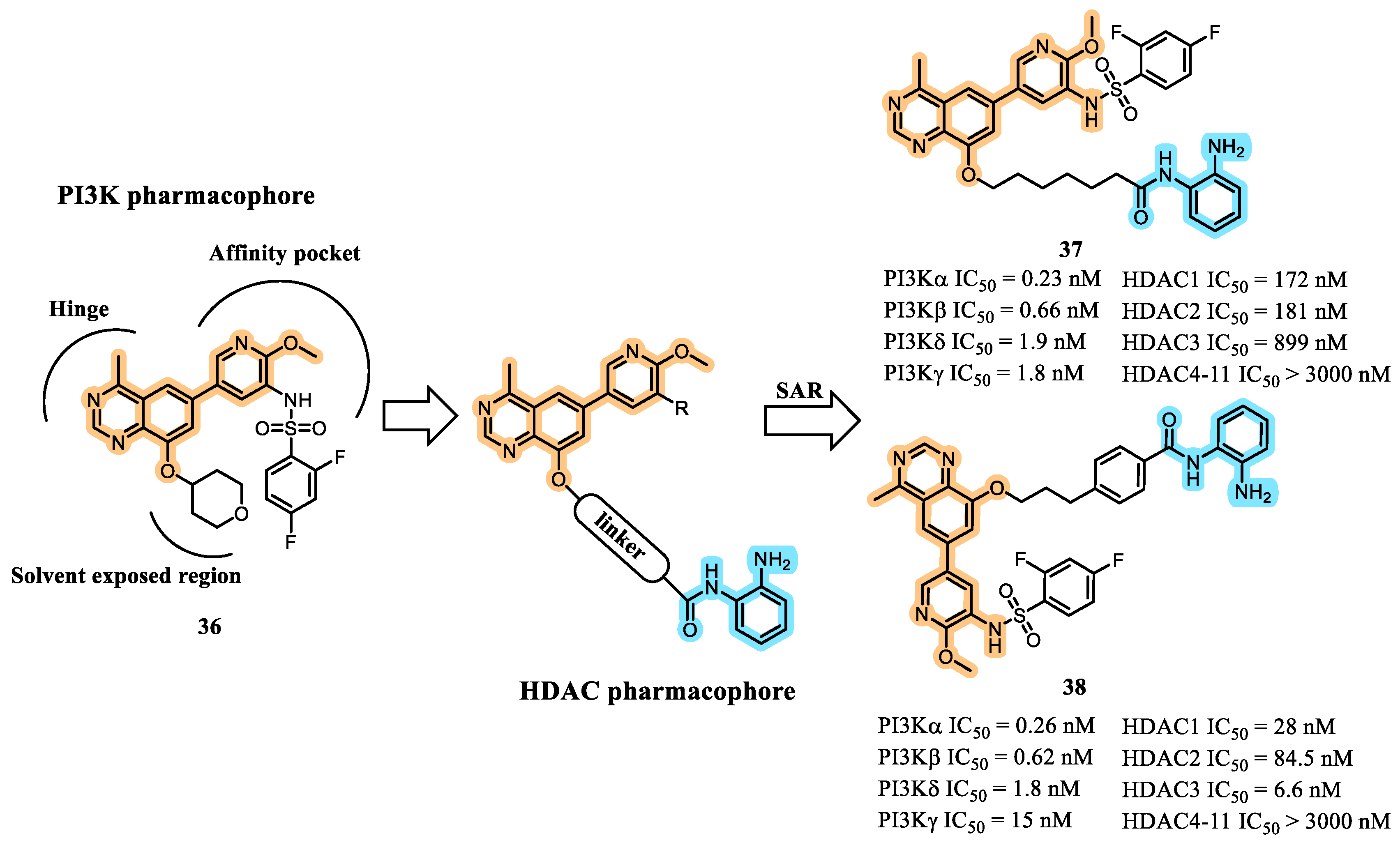
- Zhang, K.; Lai, F.; Lin, S.; Ji, M.; Zhang, J.; Zhang, Y.; Jin, J.; Fu, R.; Wu, D.; Tian, H.; et al. Design, Synthesis, and Biological Evaluation of 4-Methyl Quinazoline Derivatives as Anticancer Agents Simultaneously Targeting Phosphoinositide 3-Kinases and Histone Deacetylases. J. Med. Chem. 2019, 62, 6992–7014. [Google Scholar] [CrossRef] [Scilit] [PubMed]
- Thakur, A.; Tawa, G.J.; Henderson, M.J.; Danchik, C.; Liu, S.; Shah, P.; Wang, A.Q.; Dunn, G.; Kabir, M.; Padilha, E.C.; et al. Design, Synthesis, and Biological Evaluation of Quinazolin-4-One-Based Hydroxamic Acids as Dual PI3K/HDAC Inhibitors. J. Med. Chem. 2020, 63, 4256–4292. [Google Scholar] [CrossRef] [Scilit]
- Aldana-Masangkay, G.I.; Sakamoto, K.M. The Role of HDAC6 in Cancer. BioMed Res. Int. 2011, 2011, 875824. [Google Scholar] [CrossRef] [Scilit]
- Li, Y.; Shin, D.; Kwon, S.H. Histone Deacetylase 6 Plays a Role as a Distinct Regulator of Diverse Cellular Processes. FEBS J. 2013, 280, 775–793. [Google Scholar] [CrossRef] [Scilit] [PubMed]
- Kalin, J.H.; Bergman, J.A. Development and Therapeutic Implications of Selective Histone Deacetylase 6 Inhibitors. J. Med. Chem. 2013, 56, 6297–6313. [Google Scholar] [CrossRef] [Scilit]
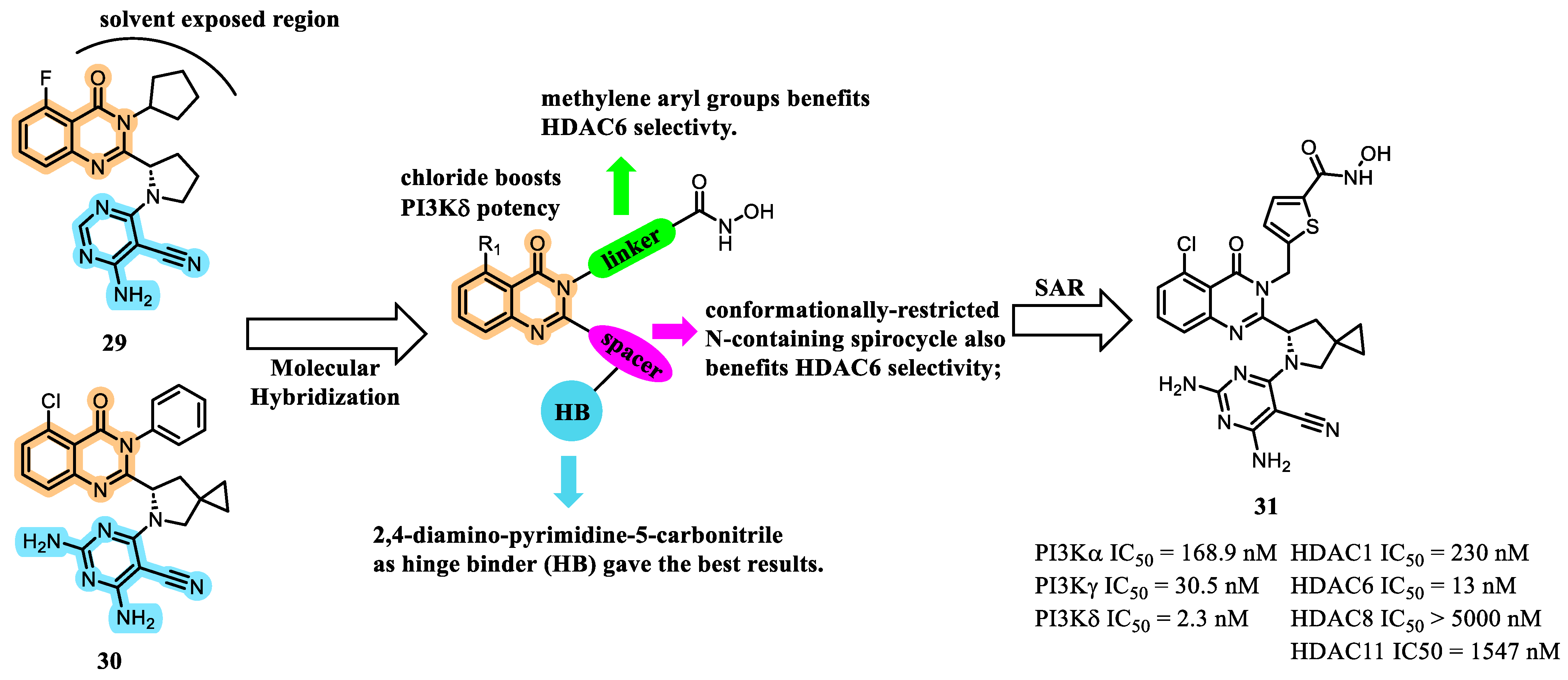
- Li, Z.; Zhao, C.; He, G.; Wang, Y.; Wang, Y.; Ma, X. Identification of PI3K/HDAC Dual-Targeted Inhibitors with Subtype Selectivity as Potential Therapeutic Agents against Solid Tumors: Building HDAC6 Potency in a Quinazolinone-Based PI3Kδ-Selective Template. Bioorg. Med. Chem. 2022, 73, 117028. [Google Scholar] [CrossRef] [Scilit]
- Zhang, Y.; Kwon, S.; Yamaguchi, T.; Cubizolles, F.; Rousseaux, S.; Kneissel, M.; Cao, C.; Li, N.; Cheng, H.-L.; Chua, K.; et al. Mice Lacking Histone Deacetylase 6 Have Hyperacetylated Tubulin but Are Viable and Develop Normally. Mol. Cell. Biol. 2008, 28, 1688–1701. [Google Scholar] [CrossRef] [Scilit] [PubMed]
- Ali, K.; Soond, D.R.; Piñeiro, R.; Hagemann, T.; Pearce, W.; Lim, E.L.; Bouabe, H.; Scudamore, C.L.; Hancox, T.; Maecker, H.; et al. Inactivation of PI(3)K P110δ Breaks Regulatory T-Cell-Mediated Immune Tolerance to Cancer. Nature 2014, 510, 407–411. [Google Scholar] [CrossRef] [Scilit] [PubMed]
- Hennessy, B.T.; Smith, D.L.; Ram, P.T.; Lu, Y.; Mills, G.B. Exploiting the PI3K/AKT Pathway for Cancer Drug Discovery. Nat. Rev. Drug. Discov. 2005, 4, 988–1004. [Google Scholar] [CrossRef] [Scilit] [PubMed]
- Shen, S.; Kozikowski, A.P. Why Hydroxamates May Not Be the Best Histone Deacetylase Inhibitors—What Some May Have Forgotten or Would Rather Forget? ChemMedChem 2016, 11, 15–21. [Google Scholar] [CrossRef] [Scilit]
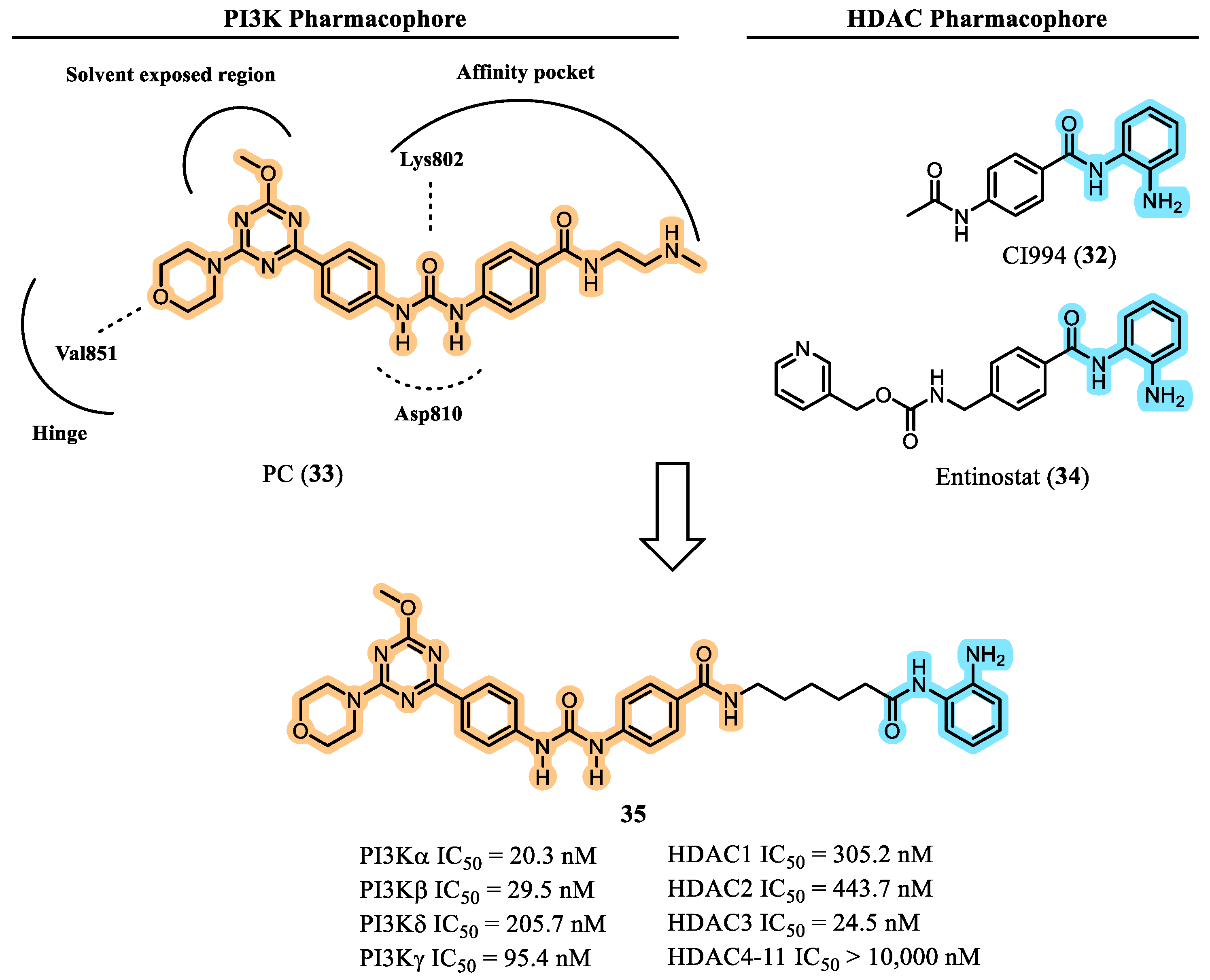
- Deng, J.; Hou, B.; Hou, X.; Chen, Y.; Zhang, T.; Chen, H.; Wang, Y.; Li, X. Discovery of Benzamide-Based PI3K/HDAC Dual Inhibitors with Marked pro-Apoptosis Activity in Lymphoma Cells. Eur. J. Med. Chem. 2023, 262, 115915. [Google Scholar] [CrossRef] [Scilit]
- Zhang, K.; Huang, R.; Ji, M.; Lin, S.; Lai, F.; Wu, D.; Tian, H.; Bi, J.; Peng, S.; Hu, J.; et al. Rational Design and Optimization of Novel 4-Methyl Quinazoline Derivatives as PI3K/HDAC Dual Inhibitors with Benzamide as Zinc Binding Moiety for the Treatment of Acute Myeloid Leukemia. Eur. J. Med. Chem. 2024, 264, 116015. [Google Scholar] [CrossRef] [Scilit]



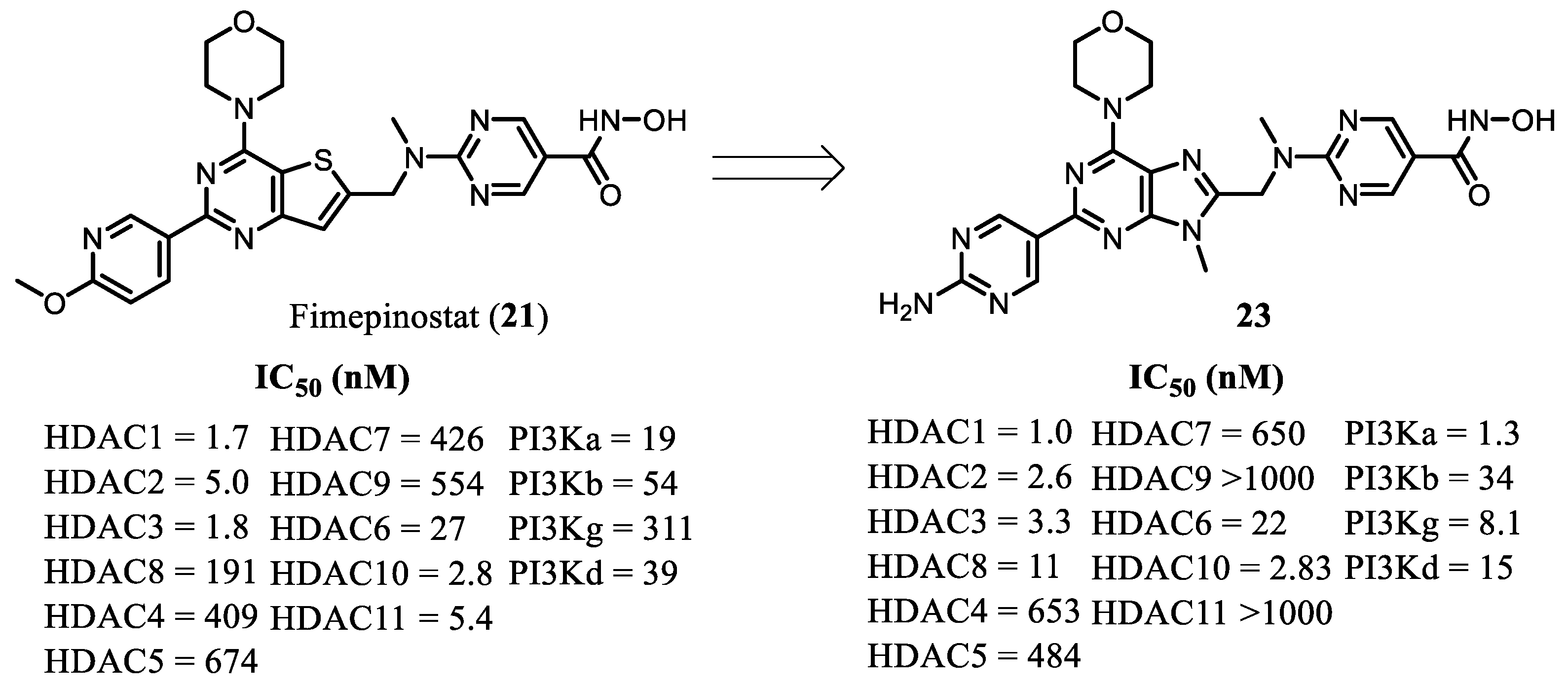
| IC50 (nM) | |||||||||||
|---|---|---|---|---|---|---|---|---|---|---|---|
| HDACs | |||||||||||
| Compound | 1 | 2 | 3 | 8 | 4 | 5 | 7 | 9 | 6 | 10 | 11 |
| Quisinostat (20) | 0.11 | 0.33 | 4.86 | 4.26 | 0.64 | 3.69 | 119 | 32.1 | 76.8 | 0.46 | 0.37 |
| Fimepinostat (21) | 1.7 | 5.0 | 1.8 | 191 | 409 | 674 | 426 | 554 | 27 | 2.8 | 5.4 |
| PI3Ks | |||||||||||
| Compound | α | β | δ | γ | |||||||
| Pictilisib (19) | 8 | 31 | 4 | 55 | |||||||
| Fimepinostat (21) | 19 | 54 | 39 | 311 | |||||||
| Inhibitor | Realizador | Indication | Phase | NCT Number | Start Date |
|---|---|---|---|---|---|
| Fimepinostat (21) | University of California, Los Angeles | Cushing disease | II | NCT05971758 | 16 January 2025 |
| University of California, San Francisco | Diffuse Intrinsic Pontine Glioma, Recurrent Medulloblastoma, or Recurrent High-Grade Glioma | I | NCT03893487 | 7 August 2019 | |
| Dana-Farber Cancer Institute | Solid Tumors, Brain Tumors or Lynphoma | I | NCT02909777 | October 2016 | |
| Ifupinostat (22) | BeBetter Med Inc. | DLBCL R/R | III | NCT06792253 | 6 January 2025 |
| BeBetter Med Inc. | DLBCL R/R | II | NCT06074107 | 15 June 2020 | |
| BeBetter Med Inc. | DLBCL R/R | I | NCT06164327 | 1 December 2023 |
Disclaimer/Publisher’s Note: The statements, opinions and data contained in all publications are solely those of the individual author(s) and contributor(s) and not of MDPI and/or the editor(s). MDPI and/or the editor(s) disclaim responsibility for any injury to people or property resulting from any ideas, methods, instructions or products referred to in the content. |
© 2026 by the authors. Licensee MDPI, Basel, Switzerland. This article is an open access article distributed under the terms and conditions of the Creative Commons Attribution (CC BY) license.
Share and Cite
Lima, A.D.S.; Lima, L.M. Phosphatidylinositol-3-Kinase (PI3K) and Histone Deacetylase (HDAC) Multitarget Inhibitors: An Update on Clinical and Preclinical Candidates. Pharmaceuticals 2026, 19, 130. https://doi.org/10.3390/ph19010130
Lima ADS, Lima LM. Phosphatidylinositol-3-Kinase (PI3K) and Histone Deacetylase (HDAC) Multitarget Inhibitors: An Update on Clinical and Preclinical Candidates. Pharmaceuticals. 2026; 19(1):130. https://doi.org/10.3390/ph19010130
Chicago/Turabian StyleLima, Alef D. S., and Lídia M. Lima. 2026. "Phosphatidylinositol-3-Kinase (PI3K) and Histone Deacetylase (HDAC) Multitarget Inhibitors: An Update on Clinical and Preclinical Candidates" Pharmaceuticals 19, no. 1: 130. https://doi.org/10.3390/ph19010130
APA StyleLima, A. D. S., & Lima, L. M. (2026). Phosphatidylinositol-3-Kinase (PI3K) and Histone Deacetylase (HDAC) Multitarget Inhibitors: An Update on Clinical and Preclinical Candidates. Pharmaceuticals, 19(1), 130. https://doi.org/10.3390/ph19010130