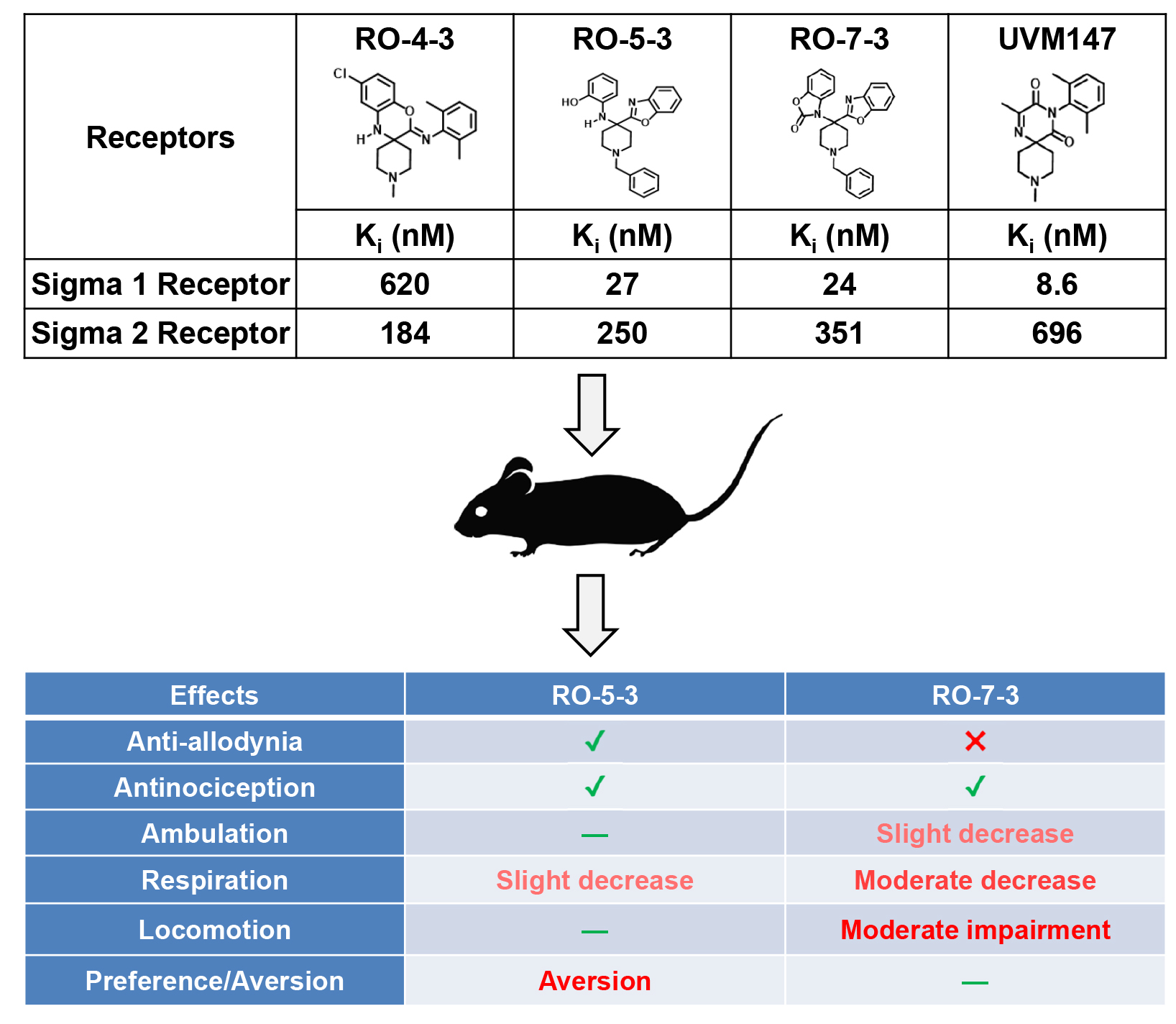
Characterization of Novel Sigma Receptor Ligands Derived from Multicomponent Reactions as Efficacious Treatments for Neuropathic Pain
 , , , , and
Abstract
1. Introduction
2. Results
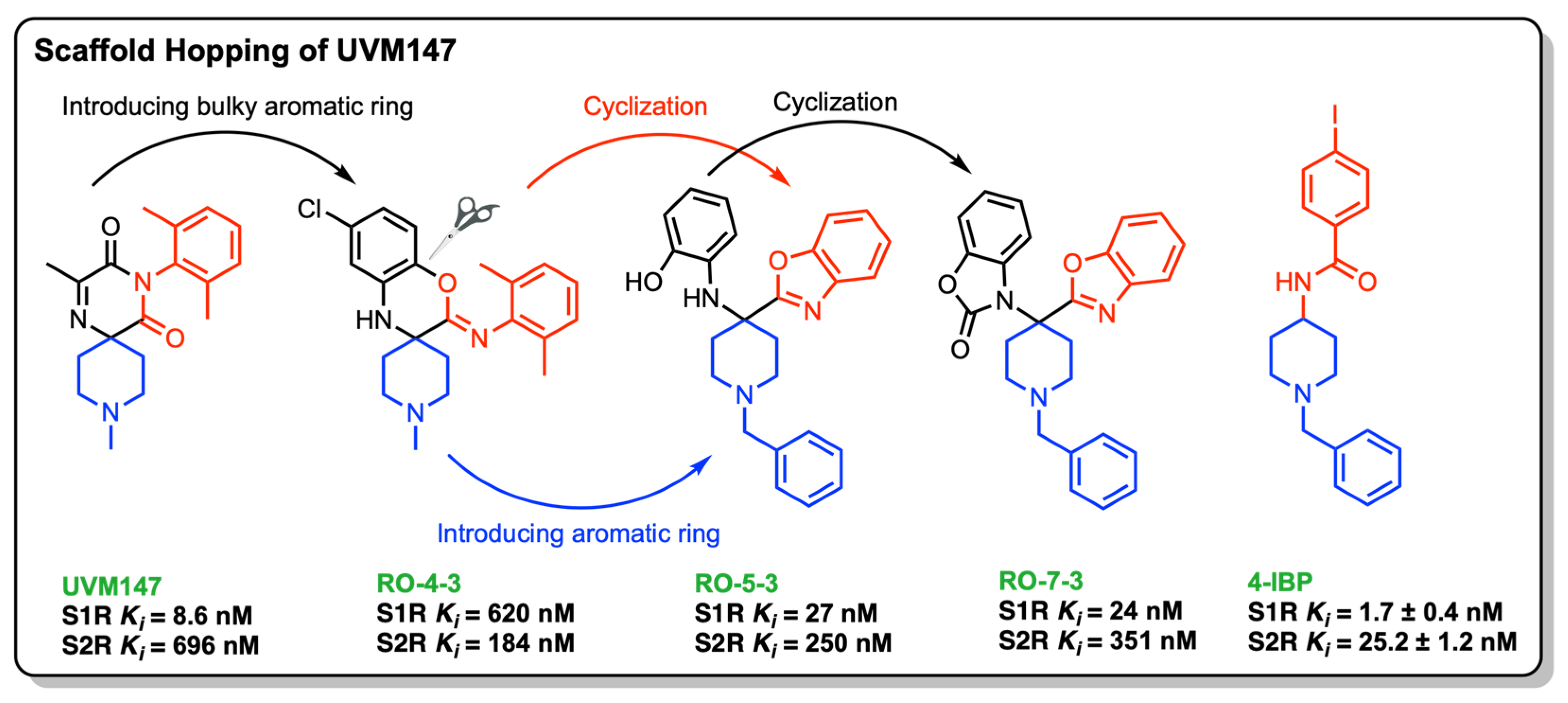
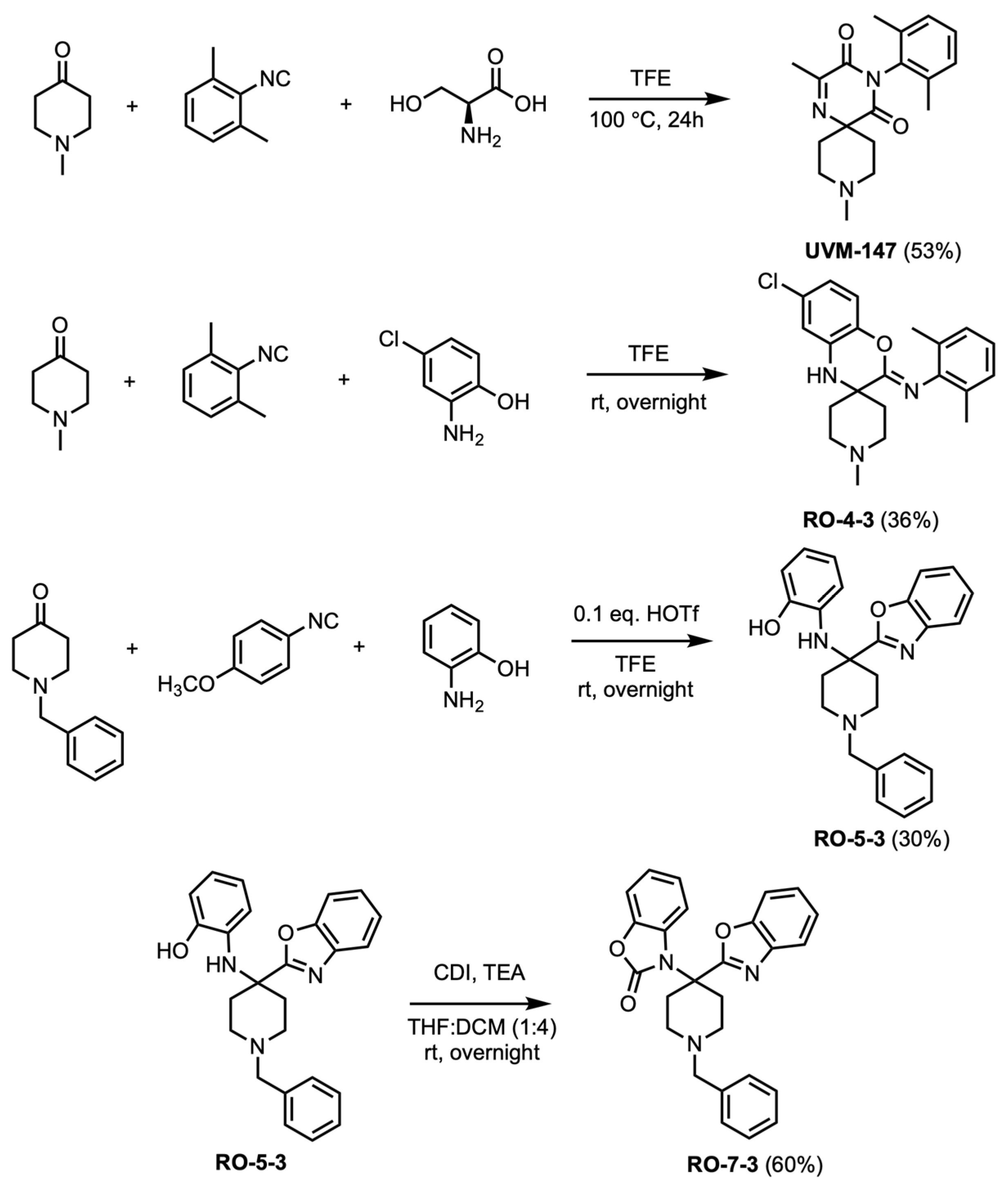
2.1. Generation of Novel S1R Ligands Through Scaffold Hopping
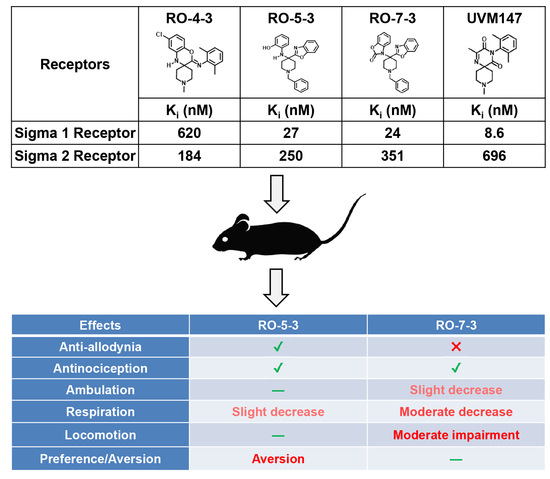
2.2. Competition Radioligand Binding and Selectivity for Sigma 1 (S1R) and Sigma 2 (S2R) Receptor
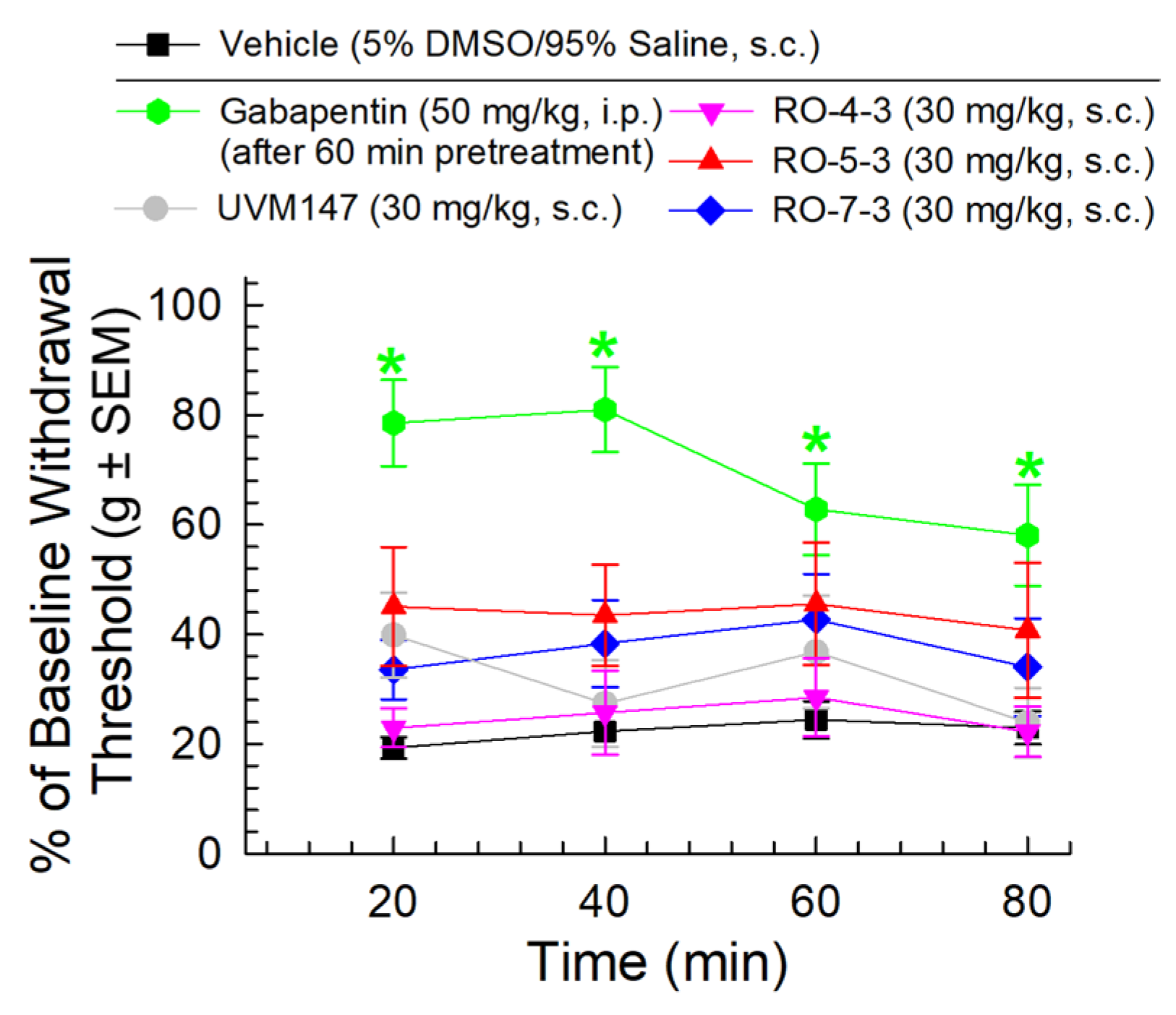
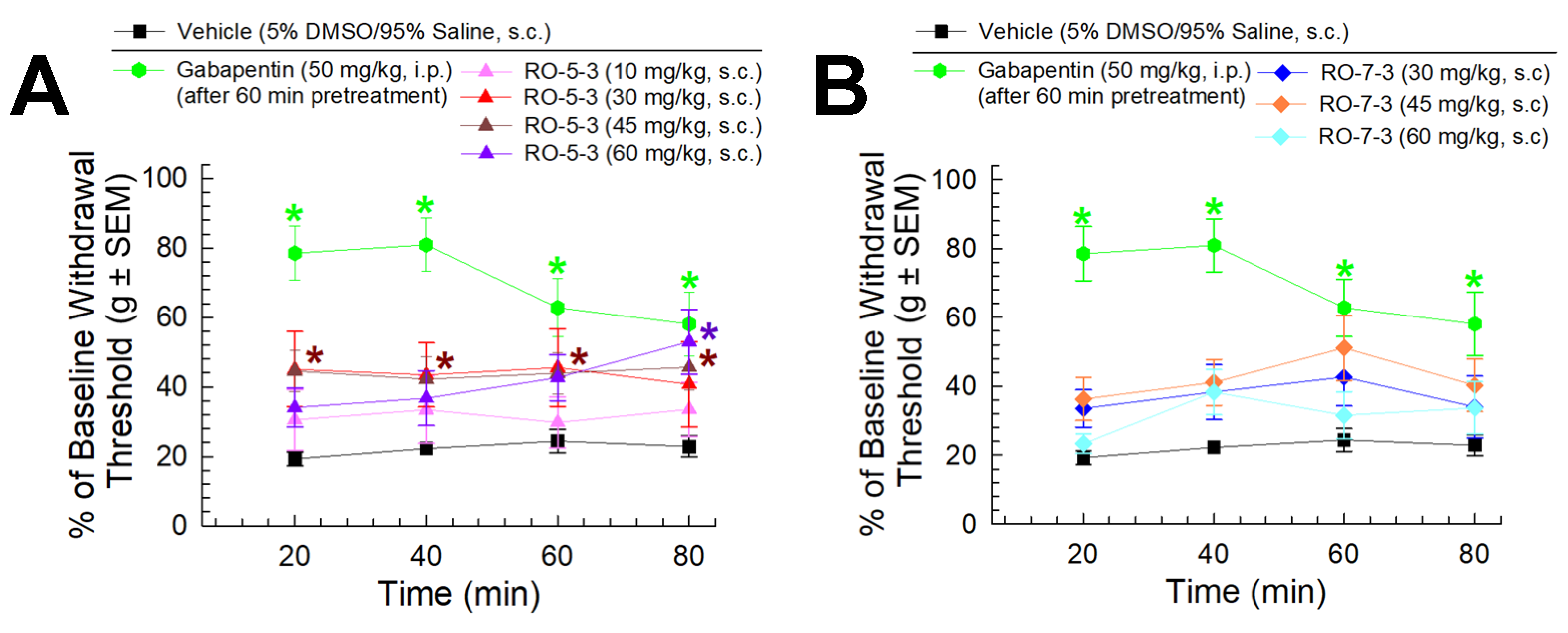
2.3. Alleviation of Mechanical Allodynia in the Mouse Chronic Constriction Injury Model of Neuropathic Pain
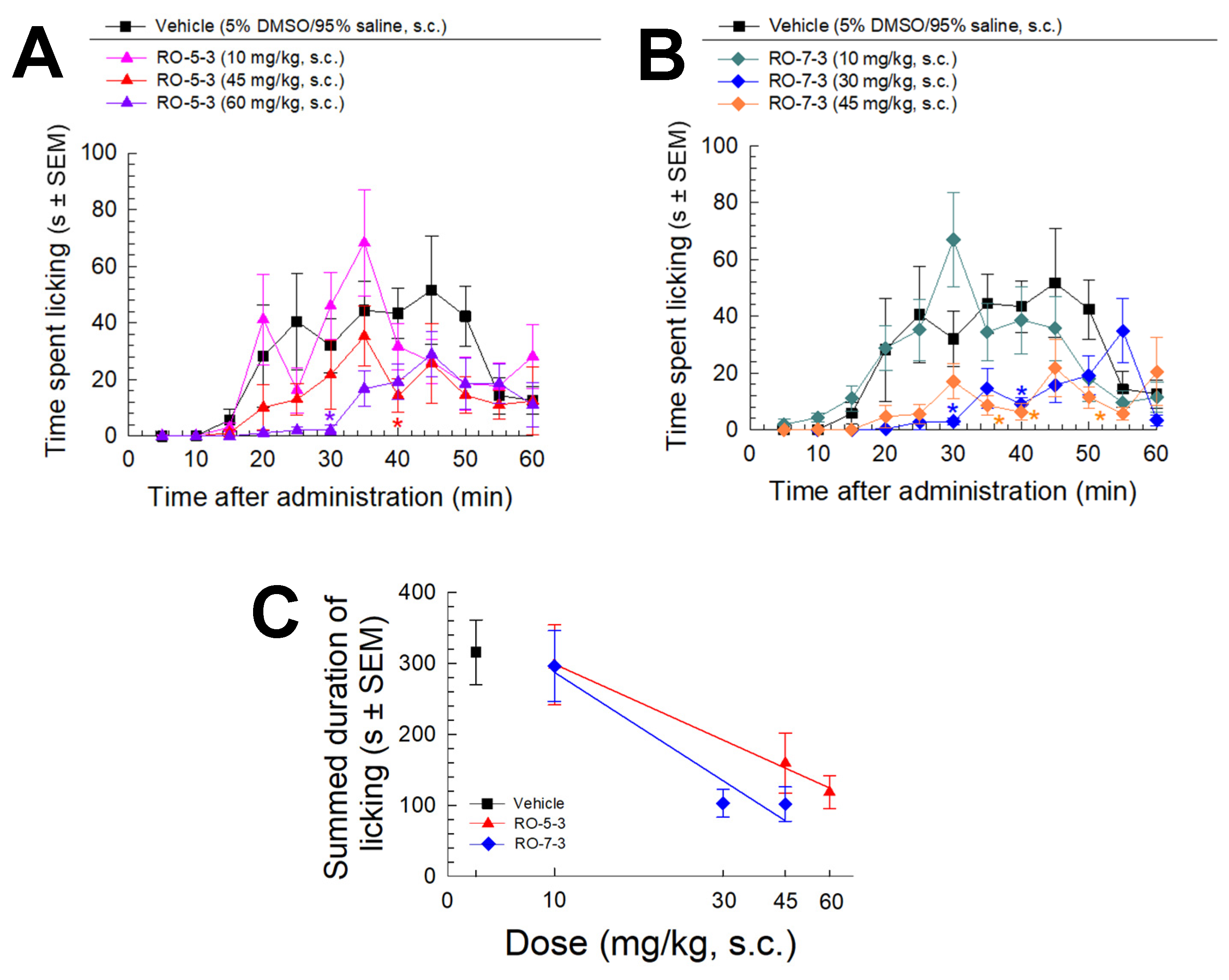
2.4. RO-5-3 and RO-7-3 Induce Dose-Dependent Antinociception in the Mouse Formalin Model of Inflammatory Nociception
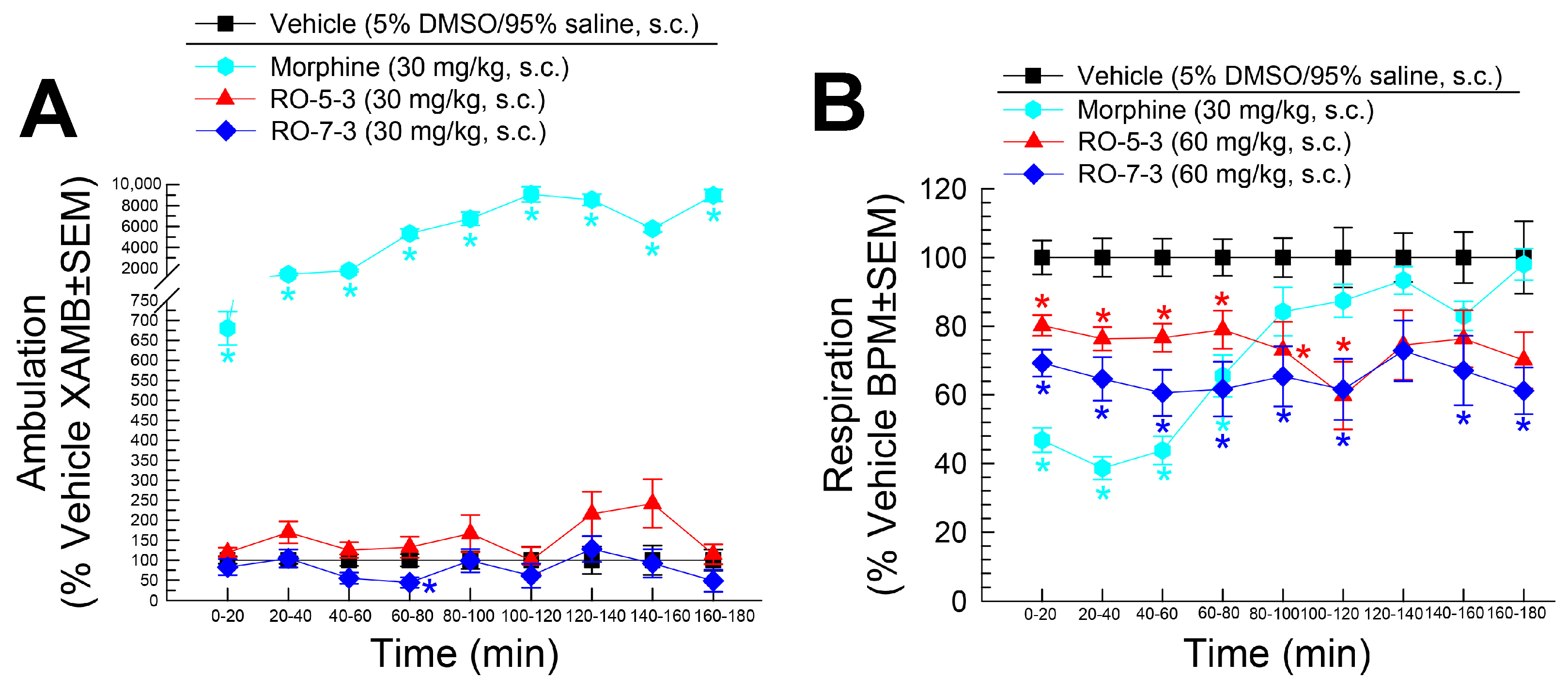
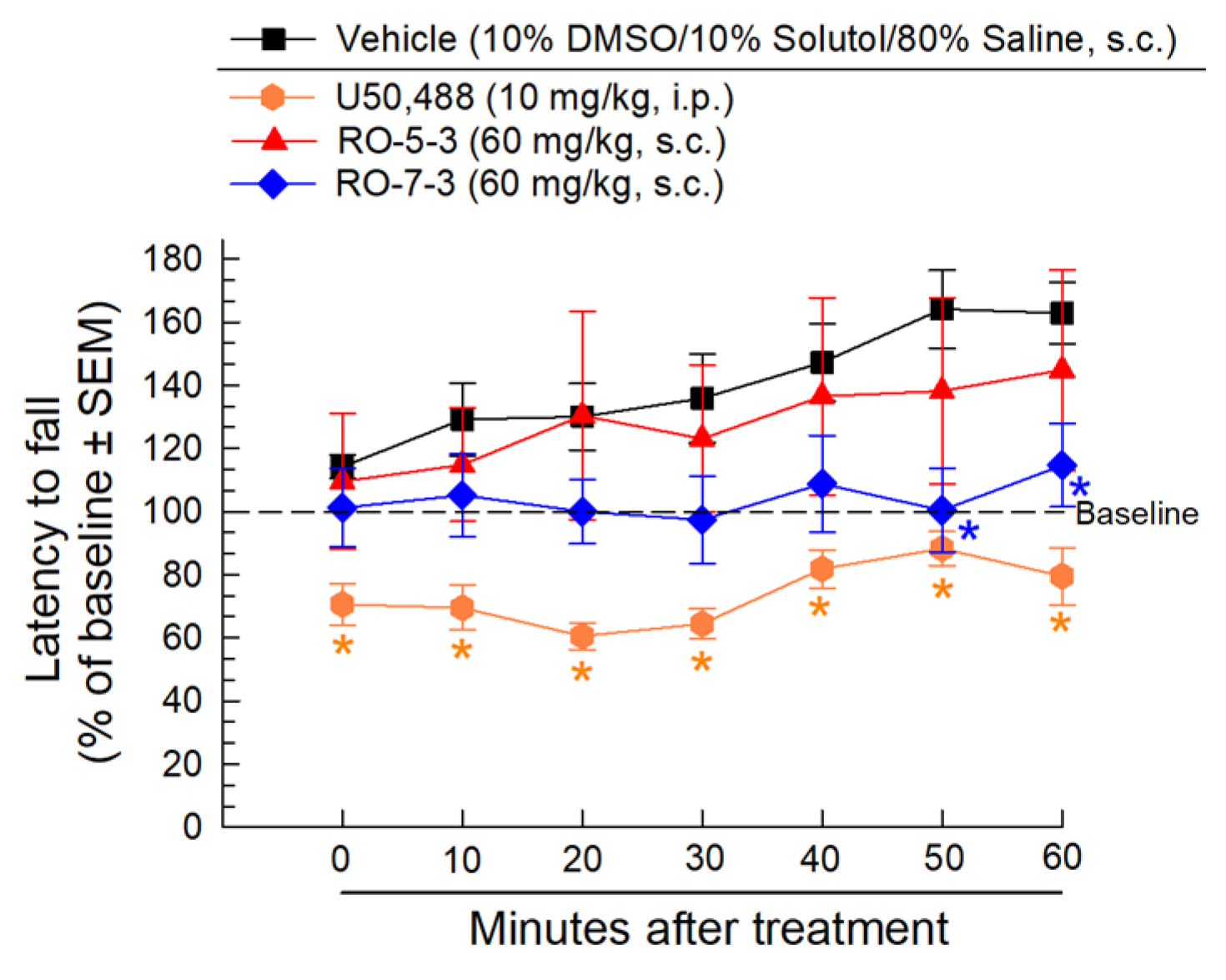
2.5. Evaluation of RO-5-3 and RO-7-3 for Potential Respiratory and Locomotor Impairment
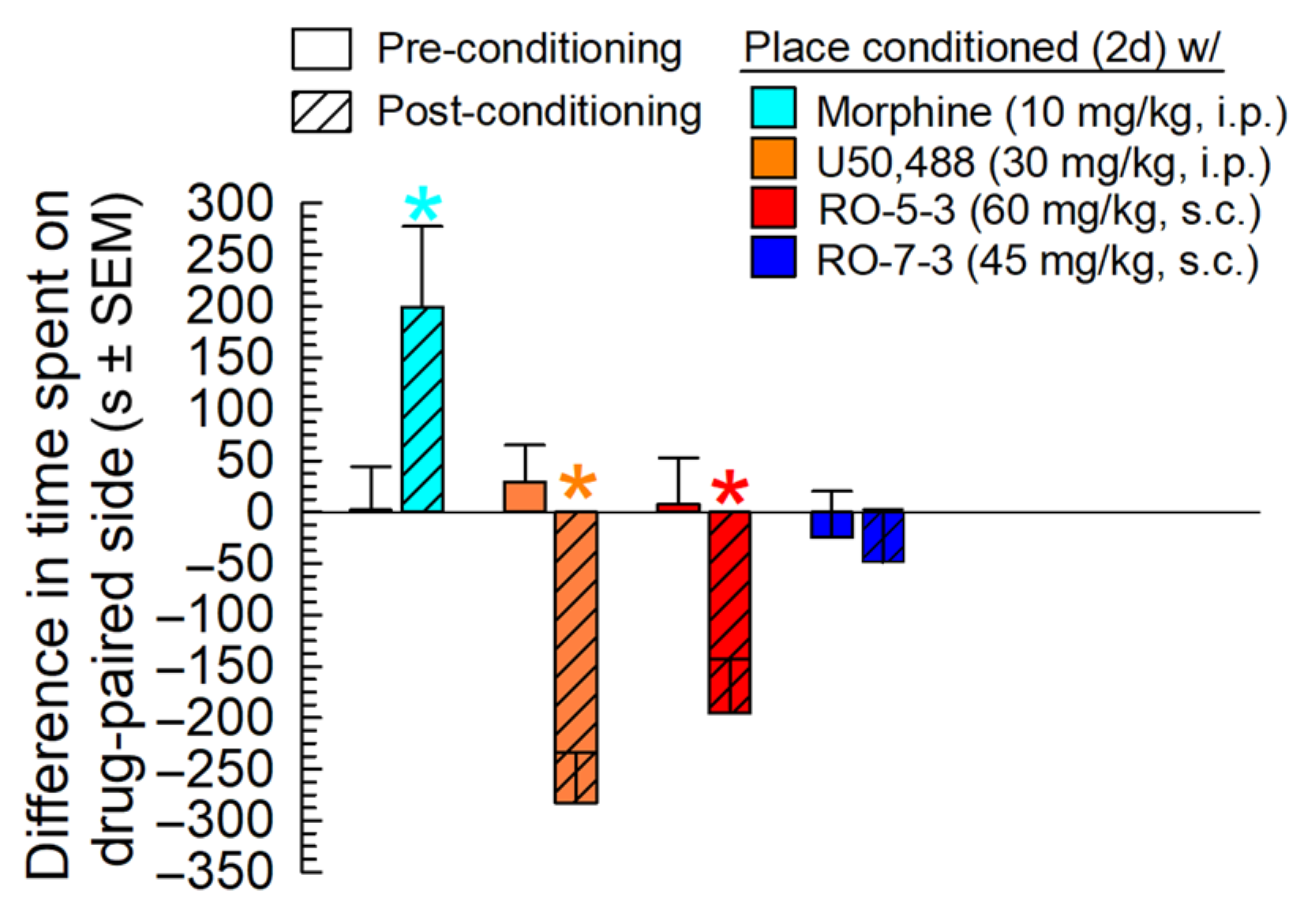
2.6. Evaluation of RO-5-3 and RO-7-3 in the Mouse Conditioned Place Preference Assay
3. Discussion
4. Materials and Methods
4.1. Chemistry
4.1.1. Synthesis of 4-(2,6-Dimethylphenyl)-2,9-dimethyl-1,4,9-triazaspiro[5.5]undec-1-ene-3,5-dione (UVM147 CAS No: 2262446-43-3)
4.1.2. Synthesis of (E/Z)-6-Chloro-N-(2,6-dimethylphenyl)-1′-methyl-2H,4H-spiro[benzo[b][1,4]oxazine-3,4′-piperidin]-2-imine (RO-4-3)
4.1.3. Synthesis of 2-((4-(Benzo[d]oxazol-2-yl)-1-benzylpiperidin-4-yl)amino)phenol (RO-5-3)
4.1.4. Synthesis of 3-(4-(Benzo[d]oxazol-2-yl)-1-benzylpiperidin-4-yl)benzo[d]oxazol-2(3H)-one (RO-7-3)
4.2. Evaluation of Compound Affinity with Radioligand Competitive Binding Assays
4.3. Animal Subjects
4.4. Drug Preparation and Administration
4.5. Behavioral Assays
4.5.1. Chronic Constriction Injury
4.5.2. Formalin Assay
4.5.3. Measurement of Respiration and Locomotion
4.5.4. Rotarod Assay
4.5.5. Conditioned Place Preference
4.6. Statistical Analysis
5. Conclusions
Supplementary Materials
Author Contributions
Funding
Institutional Review Board Statement
Informed Consent Statement
Data Availability Statement
Conflicts of Interest
Abbreviations
| ANOVA | Analysis of variance |
| CCI | Chronic Constriction Injury |
| CI | Confidence interval |
| CPP | Conditioned place preference |
| DMSO | Dimethyl sulfoxide |
| DOR | Delta opioid receptor |
| HATU | 2-(1H-7-Azabenzotriazol-1-yl)-1,1,3,3-tetramethyluronium hexafluorophosphate |
| HOBt | Hydroxybenzotriazole |
| i.c.v. | Intracerebroventricular |
| i.p. | Intraperitoneal |
| ITR | Inverted terminal repeat |
| KOR | Kappa opioid receptor |
| MOR | Mu opioid receptor |
| ND | Not determined |
| NMDA | N-methyl-D-aspartate |
| RM | Repeated measures |
| SEM | Standard error of the mean |
| SR | Sigma receptor |
| S1R | Sigma-1 receptor |
| S2R | Sigma-2 receptor |
| SNC-80 | (+)-4-[(αR)-α-((2S,5R)-4-Allyl-2,5-dimethyl-1-piperazinyl)-3-methoxybenzyl]-N,N-diethylbenzamide |
| TFA | Trifluoroacetic acid |
| U50,488 | (±)-trans-3,4-Dichloro-N-methyl-N-[2-(1-pyrrolidinyl)cyclohexyl]benzeneacetamide |
| UHPLC | Ultrahigh performance liquid chromatography |
| WWTW | Warm-water tail withdrawal |
References
- Nicholson, B.; Verma, S. Comorbidities in chronic neuropathic pain. Pain Med. 2004, 5, S9–S27. [Google Scholar] [CrossRef]
- Dosenovic, S.; Nikolic, Z.; Ivancev, B.; Jelicic Kadic, A.; Puljak, L. Awareness and acceptability of Initiative on Methods, Measurement, and Pain Assessment in Clinical Trials core outcome set for chronic pain among surveyed neuropathic pain authors. J. Comp. Eff. Res. 2019, 8, 671–683. [Google Scholar] [CrossRef]
- Colloca, L.; Ludman, T.; Bouhassira, D.; Baron, R.; Dickenson, A.H.; Yarnitsky, D.; Freeman, R.; Truini, A.; Attal, N.; Finnerup, N.B.; et al. Neuropathic pain. Nat. Rev. Dis. Primers 2017, 3, 17002. [Google Scholar] [CrossRef]
- van Hecke, O.; Austin, S.K.; Khan, R.A.; Smith, B.H.; Torrance, N. Neuropathic pain in the general population: A systematic review of epidemiological studies. Pain 2014, 155, 654–662. [Google Scholar] [CrossRef]
- Kocot-Kępska, M.; Zajączkowska, R.; Mika, J.; Wordliczek, J.; Dobrogowski, J.; Przeklasa-Muszyńska, A. Peripheral Mechanisms of Neuropathic Pain-the Role of Neuronal and Non-Neuronal Interactions and Their Implications for Topical Treatment of Neuropathic Pain. Pharmaceuticals 2021, 14, 77. [Google Scholar] [CrossRef] [PubMed]
- Felix, R.; Corzo-Lopez, A.; Sandoval, A. Voltage-Gated Ion Channels in Neuropathic Pain Signaling. Life 2025, 15, 888. [Google Scholar] [CrossRef] [PubMed]
- Gao, N.; Li, M.; Wang, W.; Liu, Z.; Guo, Y. The dual role of TRPV1 in peripheral neuropathic pain: Pain switches caused by its sensitization or desensitization. Front. Mol. Neurosci. 2024, 17, 1400118. [Google Scholar] [CrossRef]
- Malcangio, M. Role of the immune system in neuropathic pain. Scand. J. Pain 2019, 20, 33–37. [Google Scholar] [CrossRef]
- Cruccu, G.; Truini, A. A review of neuropathic pain: From Guidelines to Clinical Practice. Pain Ther. 2017, 6, 35–42. [Google Scholar] [CrossRef]
- Moisset, X. Neuropathic pain: Evidence based recommendations. Presse Medicale 2024, 53, 104232. [Google Scholar] [CrossRef] [PubMed]
- Finnerup, N.B.; Attal, N.; Haroutounian, S.; McNicol, E.; Baron, R.; Dworkin, R.H.; Gilron, I.; Haanpää, M.; Hansson, P.; Jensen, T.S.; et al. Pharmacotherapy for neuropathic pain in adults: A systematic review and meta-analysis. Lancet Neurol. 2015, 14, 162–173. [Google Scholar] [CrossRef]
- Volkow, N.; Benveniste, H.; McLellan, A.T. Use and Misuse of Opioids in Chronic Pain. Ann. Rev. Med. 2018, 69, 451–465. [Google Scholar] [CrossRef]
- Ray, W.A.; Chung, C.P.; Murray, K.T.; Hall, K.; Stein, C.M. Prescription of long-acting opioids and mortality in patients with chronic noncancer pain. JAMA 2016, 315, 2415–2423. [Google Scholar] [CrossRef] [PubMed]
- Thouaye, M.; Yalcin, I. Neuropathic pain: From actual pharmacological treatments to new therapeutic horizons. Pharmacol. Ther. 2023, 251, 108546. [Google Scholar] [CrossRef]
- Bouhassira, D.; Attal, N. Emerging therapies for neuropathic pain: New molecules or new indications for old treatments? Pain 2018, 159, 576–582. [Google Scholar] [CrossRef]
- Linciano, P.; Rossino, G.; Listro, R.; Rossi, D.; Collina, S. Sigma-1 receptor antagonists: Promising players in fighting neuropathic pain. Pharm. Pat. Anal. 2020, 9, 77–85. [Google Scholar] [CrossRef] [PubMed]
- Sánchez-Fernández, C.; Entrena, J.M.; Baeyens, J.M.; Cobos, E.J. Sigma-1 receptor antagonists: A new class of neuromodulatory analgesics. In Sigma Receptors: Their Role in Disease and as Therapeutic Targets; Advances in Experimental Medicine and Biology; Springer: Cham, Switzerland, 2017; Volume 964, pp. 109–132. [Google Scholar] [CrossRef]
- Martin, W.R.; Eades, C.G.; Thompson, J.A.; Huppler, R.E.; Gilbert, P.E. The effects of morphine- and nalorphine- like drugs in the nondependent and morphine-dependent chronic spinal dog. J. Pharmacol. Exp. Ther. 1976, 197, 517–532. [Google Scholar] [CrossRef] [PubMed]
- Hanner, M.; Moebius, F.F.; Flandorfer, A.; Knaus, H.G.; Striessnig, J.; Kempner, E.; Glossmann, H. Purification, molecular cloning, and expression of the mammalian sigma1-binding site. Proc. Natl. Acad. Sci. USA 1996, 93, 8072–8077. [Google Scholar] [CrossRef]
- Alon, A.; Schmidt, H.R.; Wood, M.D.; Sahn, J.J.; Martin, S.F.; Kruse, A.C. Identification of the gene that codes for the σ2 receptor. Proc. Natl. Acad. Sci. USA 2017, 114, 7160–7165. [Google Scholar] [CrossRef]
- Kim, H.W.; Roh, D.H.; Yoon, S.Y.; Seo, H.S.; Kwon, Y.B.; Han, H.J.; Kim, K.W.; Beitz, A.J.; Lee, J.H. Activation of the spinal sigma-1 receptor enhances NMDA-induced pain via PKC- and PKA-dependent phosphorylation of the NR1 subunit in mice. Br. J. Pharmacol. 2008, 154, 1125–1134. [Google Scholar] [CrossRef]
- Roh, D.H.; Choi, S.R.; Yoon, S.Y.; Kang, S.Y.; Moon, J.Y.; Kwon, S.G.; Han, H.J.; Beitz, A.J.; Lee, J.H. Spinal neuronal NOS activation mediates sigma-1 receptor-induced mechanical and thermal hypersensitivity in mice: Involvement of PKC-dependent GluN1 phosphorylation. Br. J. Pharmacol. 2011, 163, 1707–1720. [Google Scholar] [CrossRef]
- Shin, S.M.; Wang, F.; Qiu, C.; Itson-Zoske, B.; Hogan, Q.H.; Yu, H. Sigma-1 receptor activity in primary sensory neurons is a critical driver of neuropathic pain. Gene Ther. 2022, 29, 1–15. [Google Scholar] [CrossRef]
- Romero, L.; Zamanillo, D.; Nadal, X.; Sánchez-Arroyos, R.; Rivera-Arconada, I.; Dordal, A.; Montero, A.; Muro, A.; Bura, A.; Segalés, C.; et al. Pharmacological properties of S1RA, a new sigma-1 receptor antagonist that inhibits neuropathic pain and activity-induced spinal sensitization. Br. J. Pharmacol. 2012, 166, 2289–2306. [Google Scholar] [CrossRef] [PubMed]
- Bravo-Caparrós, I.; Perazzoli, G.; Yeste, S.; Cikes, D.; Baeyens, J.M.; Cobos, E.J.; Nieto, F.R. Sigma-1 receptor inhibition reduces neuropathic pain induced by partial sciatic nerve transection in mice by opioid-dependent and -independent mechanisms. Front. Pharmacol. 2019, 10, 613. [Google Scholar] [CrossRef] [PubMed]
- Ruiz-Cantero, M.C.; González-Cano, R.; Tejada, M.Á.; Santos-Caballero, M.; Perazzoli, G.; Nieto, F.R.; Cobos, E.J. Sigma-1 receptor: A drug target for the modulation of neuroimmune and neuroglial interactions during chronic pain. Pharmacol. Res. 2021, 163, 105339. [Google Scholar] [CrossRef]
- Merlos, M.; Romero, L.; Zamanillo, D.; Plata-Salamán, C.; Vela, J.M. Sigma-1 receptor and pain. In Sigma Proteins: Evolution of the Concept of Sigma Receptors; Handbook of Experimental Pharmacology; Springer: Cham, Switzerland, 2017; Volume 244, pp. 131–161. [Google Scholar] [CrossRef]
- Bruna, J.; Videla, S.; Argyriou, A.A.; Velasco, R.; Villoria, J.; Santos, C.; Nadal, C.; Cavaletti, G.; Alberti, P.; Briani, C.; et al. Efficacy of a novel sigma-1 receptor antagonist for oxaliplatin-induced neuropathy: A randomized, double-blind, placebo-controlled phase IIa clinical trial. Neurotherapeutics 2018, 15, 178–189. [Google Scholar] [CrossRef] [PubMed]
- Bruna, J.; Velasco, R. Sigma-1 receptor: A new player in neuroprotection against chemotherapy-induced peripheral neuropathy. Neural Regen. Res. 2018, 13, 775–778. [Google Scholar] [CrossRef]
- Entrena, J.M.; Cobos, E.J.; Nieto, F.R.; Cendán, C.M.; Gris, G.; Del Pozo, E.; Zamanillo, D.; Baeyens, J.M. Sigma-1 receptors are essential for capsaicin-induced mechanical hypersensitivity: Studies with selective sigma-1 ligands and sigma-1 knockout mice. Pain 2009, 143, 252–261. [Google Scholar] [CrossRef]
- Uprety, R.; Váradi, A.; Allaoa, A.; Redel-Traub, G.N.; Palmer, T.C.; Feinberg, E.N.; Ferris, A.C.; Pande, V.S.; Pasternak, G.W.; Majumdar, S. Synthesis of spiro-2,6-dioxopiperazine and spiro-2,6-dioxopyrazine scaffolds using amino acids in a three-component reaction to generate potential Sigma-1 (σ1) receptor selective ligands. Eur. J. Med. Chem. 2019, 164, 241–251. [Google Scholar] [CrossRef]
- Besnard, J.; Ruda, G.F.; Setola, V.; Abecassis, K.; Rodriguiz, R.M.; Huang, X.P.; Norval, S.; Sassano, M.F.; Shin, A.I.; Webster, L.A.; et al. Automated design of ligands to polypharmacological profiles. Nature 2012, 492, 215–220. [Google Scholar] [CrossRef]
- Váradi, A.; Palmer, T.C.; Notis, P.R.; Redel-Traub, G.N.; Afonin, D.; Subrath, J.J.; Pasternak, G.W.; Hu, C.; Sharma, I.; Majumdar, S. Three-component coupling approach for the synthesis of diverse heterocycles utilizing reactive nitrilium trapping. Org. Lett. 2014, 16, 1668–1671. [Google Scholar] [CrossRef]
- Váradi, A.; Palmer, T.C.; Notis Dardashti, R.; Majumdar, S. Isocyanide-based multicomponent reactions for the synthesis of heterocycles. Molecules 2015, 21, E19. [Google Scholar] [CrossRef]
- John, C.S.; Vilner, B.J.; Bowen, W.D. Synthesis and characterization of [125I]-N-(N-benzylpiperidin-4-yl)-4- iodobenzamide, a new sigma receptor radiopharmaceutical: High-affinity binding to MCF-7 breast tumor cells. J. Med. Chem. 1994, 37, 1737–1739. [Google Scholar] [CrossRef]
- Kovács, F.; Huliák, I.; Árva, H.; Kocsis, M.; Kiricsi, M.; Frank, É. Aromatic scaffold-integrated hybrids of estradiol and benzoxazol-2-ones: Synthesis and in vitro anticancer activity of N-substituted regioisomeric pairs. RSC Adv. 2025, 15, 23954–23965. [Google Scholar] [CrossRef]
- Hoot, M.R.; Sim-Selley, L.J.; Poklis, J.L.; Abdullah, R.A.; Scoggins, K.L.; Selley, D.E.; Dewey, W.L. Chronic constriction injury reduces cannabinoid receptor 1 activity in the rostral anterior cingulate cortex of mice. Brain Res. 2010, 1339, 18–25. [Google Scholar] [CrossRef] [PubMed]
- Bennett, G.J.; Xie, Y.K. A peripheral mononeuropathy in rat that produces disorders of pain sensation like those seen in man. Pain 1988, 33, 87–107. [Google Scholar] [CrossRef]
- Xu, M.; Petraschka, M.; McLaughlin, J.P.; Westenbroek, R.E.; Caron, M.G.; Lefkowitz, R.J.; Czyzyk, T.A.; Pintar, J.E.; Terman, G.W.; Chavkin, C. Neuropathic pain activates the endogenous kappa opioid system in mouse spinal cord and induces opioid receptor tolerance. J. Neurosci. 2004, 24, 4576–4584. [Google Scholar] [CrossRef]
- Cirino, T.J.; Eans, S.O.; Medina, J.M.; Wilson, L.L.; Mottinelli, M.; Intagliata, S.; McCurdy, C.R.; McLaughlin, J.P. Characterization of sigma 1 receptor antagonist CM-304 and its analog, AZ-66: Novel therapeutics against allodynia and induced pain. Front. Pharmacol. 2019, 10, 678. [Google Scholar] [CrossRef] [PubMed]
- Gilron, I. Gabapentin and pregabalin for chronic neuropathic and early postsurgical pain: Current evidence and future directions. Curr. Opin. Anaesthesiol. 2007, 20, 456–472. [Google Scholar] [CrossRef]
- De Vry, J.; Kuhl, E.; Franken-Kunkel, P.; Eckel, G. Pharmacological characterization of the chronic constriction injury model of neuropathic pain. Eur. J. Pharmacol. 2004, 491, 137–148. [Google Scholar] [CrossRef] [PubMed]
- Wilson, L.L.; Alleyne, A.R.; Eans, S.O.; Cirino, T.J.; Stacy, H.M.; Mottinelli, M.; Intagliata, S.; McCurdy, C.R.; McLaughlin, J.P. Characterization of CM-398, a novel, selective sigma-2 receptor ligand, as a potential therapeutic for neuropathic pain. Molecules 2022, 27, 3617–3633. [Google Scholar] [CrossRef]
- Wilson, L.L.; Eans, S.O.; Ramadan-Siraj, I.; Modica, M.N.; Romeo, G.; Intagliata, S.; McLaughlin, J.P. Examination of the novel sigma-1 receptor antagonist, SI 1/28, for antinociceptive and anti-allodynic efficacy against multiple types of nociception with fewer liabilities of use. Int. J. Mol. Sci. 2022, 23, 615. [Google Scholar] [CrossRef]
- Roh, D.H.; Kim, H.W.; Yoon, S.Y.; Seo, H.S.; Kwon, Y.B.; Kim, K.W.; Han, H.J.; Beitz, A.J.; Na, H.S.; Lee, J.H. Intrathecal injection of the sigma(1) receptor antagonist BD1047 blocks both mechanical allodynia and increases in spinal NR1 expression during the induction phase of rodent neuropathic pain. Anesthesiology 2008, 109, 879–889. [Google Scholar] [CrossRef]
- Barcelon, E.E.; Cho, W.H.; Jun, S.B.; Lee, S.J. Brain Microglial Activation in Chronic Pain-Associated Affective Disorder. Front. Neurosci. 2019, 13, 213. [Google Scholar] [CrossRef]
- Choi, J.G.; Choi, S.R.; Kang, D.W.; Kim, J.; Park, J.B.; Lee, J.H.; Kim, H.W. Sigma-1 receptor increases intracellular calcium in cultured astrocytes and contributes to mechanical allodynia in a model of neuropathic pain. Brain Res. Bull. 2022, 178, 69–81. [Google Scholar] [CrossRef]
- Vidal-Torres, A.; Fernández-Pastor, B.; Carceller, A.; Vela, J.M.; Merlos, M.; Zamanillo, D. Effects of the selective sigma-1 receptor antagonist S1RA on formalin-induced pain behavior and neurotransmitter release in the spinal cord in rats. J. Neurochem. 2014, 129, 484–494. [Google Scholar] [CrossRef] [PubMed]
- McCall, W.D.; Tanner, K.D.; Levine, J.D. Formalin induces biphasic activity in C-fibers in the rat. Neurosci. Lett. 1996, 208, 45–48. [Google Scholar] [CrossRef] [PubMed]
- Wheeler-Aceto, H.; Cowan, A. Standardization of the rat paw formalin test for the evaluation of analgesics. Psychopharmacology 1991, 104, 35–44. [Google Scholar] [CrossRef] [PubMed]
- Abbott, F.V.; Franklin, K.B.J.; Westbrook, F.R. The formalin test: Scoring properties of the first and second phases of the pain response in rats. Pain 1995, 60, 91–102. [Google Scholar] [CrossRef]
- Baba, H.; Doubell, T.P.; Woolf, C.J. Peripheral inflammation facilitates Abeta fiber-mediated synaptic input to the substantia gelatinosa of the adult rat spinal cord. J. Neurosci. 1999, 19, 859–867. [Google Scholar] [CrossRef]
- Zamanillo, D.; Romero, L.; Merlos, M.; Vela, J.M. Sigma 1 receptor: A new therapeutic target for pain. Eur. J. Pharmacol. 2013, 716, 78–93. [Google Scholar] [CrossRef]
- Drews, E.; Zimmer, A. Central sensitization needs sigma receptors. Pain 2009, 145, 269–270. [Google Scholar] [CrossRef] [PubMed]
- Puente, B.; Nadal, X.; Portillo-Salido, E.; Sánchez-Arroyos, R.; Ovalle, S.; Palacios, G.; Muro, A.; Romero, L.; Entrena, J.M.; Baeyens, J.M.; et al. Sigma-1 receptors regulate activity-induced spinal sensitization and neuropathic pain after peripheral nerve injury. Pain 2009, 145, 294–303. [Google Scholar] [CrossRef]
- Boom, M.; Niesters, M.; Sarton, E.; Aarts, L.; Smith, T.W.; Dahan, A. Non-analgesic effects of opioids: Opioid-induced respiratory depression. Curr. Pharm. Des. 2012, 18, 5994–6004. [Google Scholar] [CrossRef]
- Evoy, K.E.; Morrison, M.D.; Saklad, S.R. Abuse and misuse of pregabalin and gabapentin. Drugs 2017, 77, 403–426. [Google Scholar] [CrossRef]
- Flórez, J.; Delgado, G.; Armijo, J.A. Adrenergic and serotonergic mechanisms in morphine-induced respiratory depression. Psychopharmacologia 1972, 24, 258–274. [Google Scholar] [CrossRef]
- Manzanedo, C.; Aguilar, M.A.; Miñarro, J. The effects of dopamine D2 and D3 antagonists on spontaneous motor activity and morphine-induced hyperactivity in male mice. Psychopharmacology 1999, 143, 82–88. [Google Scholar] [CrossRef] [PubMed]
- Imam, M.Z.; Kuo, A.; Smith, M.T. Countering opioid-induced respiratory depression by non-opioids that are respiratory stimulants. F1000Research 2020, 9, 91. [Google Scholar] [CrossRef]
- Mei, J.; Pasternak, G.W. Modulation of brainstem opiate analgesia in the rat by sigma 1 receptors: A microinjection study. J. Pharmacol. Exp. Ther. 2007, 322, 1278–1285. [Google Scholar] [CrossRef]
- Zhang, L.S.; Wang, J.; Chen, J.C.; Tao, Y.M.; Wang, Y.H.; Xu, X.J.; Chen, J.; Xu, Y.G.; Xi, T.; Hu, X.W.; et al. Novel κ-opioid receptor agonist MB-1C-OH produces potent analgesia with less depression and sedation. Acta Pharmacol. Sin. 2015, 36, 565–571. [Google Scholar] [CrossRef] [PubMed]
- Dunn, A.D.; Reed, B.; Guariglia, C.; Dunn, A.M.; Hillman, J.M.; Kreek, M.J. Structurally related kappa opioid receptor agonists with substantial differential signaling bias: Neuroendocrine and behavioral effects in C57BL6 mice. Int. J. Neuropsychopharmacol. 2018, 21, 847–857. [Google Scholar] [CrossRef]
- Seth, P.; Scholl, L.; Rudd, R.A.; Bacon, S. Overdose deaths involving opioids, cocaine, and psychostimulants—United States, 2015-2016. MMWR Morb. Mortal. Wkly. Rep. 2018, 67, 349–358. [Google Scholar] [CrossRef]
- Seth, P.; Rudd, R.A.; Noonan, R.K.; Haegerich, T.M. Quantifying the epidemic of prescription opioid overdose deaths. Am. J. Public Health 2018, 108, 500–502. [Google Scholar] [CrossRef]
- McKendrick, G.; Graziane, N.M. Drug-induced conditioned place preference and its practical use in substance use disorder research. Front. Behav. Neurosci. 2020, 14, 582147. [Google Scholar] [CrossRef]
- Vezina, P.; Stewart, J. Morphine conditioned place preference and locomo-tion: The effect of confinement during training. Psychopharmacology 1987, 93, 257–260. [Google Scholar] [CrossRef] [PubMed]
- Shippenberg, T.S.; Herz, A. Place preference conditioning reveals the involvement of D1-dopamine receptors in the motivational properties of mu- and kappa-opioid agonists. Brain Res. 1987, 436, 169–172. [Google Scholar] [CrossRef]
- Abadias, M.; Escriche, M.; Vaqué, A.; Sust, M.; Encina, G. Safety, tolerability and pharmacokinetics of single and multiple doses of a novel sigma-1 receptor antagonist in three randomized phase I studies. Br. J. Clin. Pharmacol. 2013, 75, 103–117. [Google Scholar] [CrossRef]
- Fraser, M.R.; Levine, M. A Public Health Guide to Ending the Opioid Epidemic. In A Comprehensive Approach to Addressing the Opioid Crisis; Oxford University Press: Oxford, UK, 2019. [Google Scholar]
- Gálvez, R.; Mayoral, V.; Cebrecos, J.; Medel, F.J.; Morte, A.; Sust, M.; Vaqué, A.; Montes-Pérez, A.; Neira-Reina, F.; Cánovas, L.; et al. E-52862-A selective sigma-1 receptor antagonist, in peripheral neuropathic pain: Two randomized, double-blind, phase 2 studies in patients with chronic postsurgical pain and painful diabetic neuropathy. Eur. J. Pain 2025, 29, e4755. [Google Scholar] [CrossRef]
- Wong, E.H.; Knight, A.R.; Woodruff, G.N. [3H]MK-801 labels a site on the N-methyl-D-aspartate receptor channel complex in rat brain membranes. J. Neurochem. 1988, 50, 274–281. [Google Scholar] [CrossRef] [PubMed]
- Palmer, C.P.; Aydar, E.; Jackson, M.B. σ Receptor modulation of ion channels. In Sigma Receptors: Chemistry, Cell Biology and Clinical Implications; Su, T.-P., Matsumoto, R.R., Bowen, W.D., Eds.; Springer: Boston, MA, USA, 2007; pp. 127–149. [Google Scholar]
- Merlos, M.; Burgueño, J.; Portillo-Salido, E.; Plata-Salamán, C.R.; Vela, J.M. Pharmacological modulation of the sigma 1 receptor and the treatment of pain. In Sigma Receptors: Their Role in Disease and as Therapeutic Targets; Advances in Experimental Medicine and Biology; Springer: Cham, Switzerland, 2017; Volume 964, pp. 85–107. [Google Scholar] [CrossRef]
- Reilley, K.J.; Giulianotti, M.; Dooley, C.T.; Nefzi, A.; McLaughlin, J.P.; Houghten, R.A. Identification of two novel, potent, low-liability antinociceptive compounds from the direct in vivo screening of a large mixture-based combinatorial library. AAPS J. 2010, 12, 318–329. [Google Scholar] [CrossRef] [PubMed]
- Eans, S.O.; Ganno, M.L.; Mizrachi, E.; Houghten, R.A.; Dooley, C.T.; McLaughlin, J.P.; Nefzi, A. Parallel synthesis of hexahydrodiimidazodiazepines heterocyclic peptidomimetics and their in vitro and in vivo activities at μ (MOR), δ (DOR), and κ (KOR) opioid receptors. J. Med. Chem. 2015, 58, 4905–4917. [Google Scholar] [CrossRef]
- Brabant, C.; Quertemont, E.; Tirelli, E. Influence of the dose and the num-ber of drug-context pairings on the magnitude and the long-lasting retention of cocaine-induced conditioned place preference in C57BL/6J mice. Psychopharmacology 2005, 180, 33–40. [Google Scholar] [CrossRef]
- Orsini, C.; Bonito-Oliva, A.; Conversi, D.; Cabib, S. Susceptibility to con-ditioned place preference induced by addictive drugs in mice of the C57BL/6 and DBA/2 inbred strains. Psychopharmacology 2005, 181, 327–336. [Google Scholar] [CrossRef] [PubMed]
- Feehan, A.K.; Morgenweck, J.; Zhang, X.; Amgott-Kwan, A.T.; Zadina, J.E. Novel Endomorphin Analogs Are More Potent and Longer-Lasting Analgesics in Neuropathic, Inflammatory, Postoperative, and Visceral Pain Relative to Morphine. J. Pain 2017, 18, 1526–1541. [Google Scholar] [CrossRef] [PubMed]
- Intagliata, S.; Sharma, A.; King, T.I.; Mesangeau, C.; Seminerio, M.; Chin, F.T.; Wilson, L.L.; Matsumoto, R.R.; McLaughlin, J.P.; Avery, B.A.; et al. Discovery of a highly selective sigma-2 receptor ligand, 1-(4-(6,7-Dimethoxy-3,4-dihydroisoquinolin-2(1H)-yl)butyl)-3-methyl-1H-benzo[d]imidazol-2(3H)-one (CM398), with drug-like properties and atinociceptive effects In Vivo. AAPS J. 2020, 22, 94. [Google Scholar] [CrossRef]
- Varga, B.R.; Bernhard, S.M.; El Daibani, A.; Zaidi, S.A.; Lam, J.H.; Aguilar, J.; Appourchaux, K.; Nazarova, A.L.; Kouvelis, A.; Shinouchi, R.; et al. Structure-guided design of partial agonists at an opioid receptor. Nat. Comm. 2025, 16, 2518. [Google Scholar] [CrossRef]
- Kilkenny, C.; Browne, W.J.; Cuthi, I.; Emerson, M.; Altman, D.G. Improving bioscience research reporting: The ARRIVE guidelines for reporting animal research. Vet. Clin. Pathol. 2012, 41, 27–31. [Google Scholar] [CrossRef] [PubMed]
- Cheng, H.Y.; Pitcher, G.M.; Laviolette, S.R.; Whishaw, I.Q.; Tong, K.I.; Kockeritz, L.K.; Wada, T.; Joza, N.A.; Crackower, M.; Goncalves, J.; et al. DREAM is a critical transcriptional repressor for pain modulation. Cell 2002, 108, 31–43. [Google Scholar] [CrossRef]
- Faouzi, A.; Wang, H.; Zaidi, S.A.; DiBerto, J.F.; Che, T.; Qu, Q.; Robertson, M.J.; Madasu, M.; El-Daibani, A.E.; Varga, B.R.; et al. Structure-based design of bitopic ligands for the μ-opioid receptor. Nature 2023, 613, 767–774. [Google Scholar] [CrossRef]
- Varga, B.R.; Uprety, R.; Paul, B.; Knoll, A.; Ramos-Gonzalez, N.; Appourchaux, K.; Taylor, T.; Uzrek, B.; Shinouchi, R.; Eans, S.O.; et al. Synthesis and pharmacology of a morphinan derived dual mu-kappa opioid receptor agonist analgesic. ACS Chem. Neurosci. 2025, 16, 2714–2737. [Google Scholar] [CrossRef]





| Receptors | RO-4-3 | RO-5-3 | RO-7-3 | UVM147 | |||
| pKi ± SEM | Ki (nM) | pKi ± SEM | Ki (nM) | pKi ± SEM | Ki (nM) | Ki (nM) | |
| 5-HT2BR | 5.58 ± 0.07 | 2633 | - | - | - | - | 231 |
| 5-HT2CR | 5.63 ± 0.06 | 2364 | - | - | - | - | - |
| 5-HT6R | 5.89 ± 0.05 | 1296 | - | - | 5.83 ± 0.09 | 1469 | - |
| 5-HT7R | 5.39 ± 0.09 | 4116 | - | - | 6.33 ± 0.08 | 467 | 2765 |
| D1R | 6.15 ± 0.06 | 701 | - | - | - | - | - |
| D3R | - | - | - | - | 5.42 ± 0.06 | 3837 | - |
| D4R | - | - | - | - | - | - | 1283 |
| DAT | - | - | - | - | - | - | 2562 |
| SERT | 6.24 ± 0.05 | 572 | - | - | 5.91 ± 0.05 | 1235 | - |
| NET | 6.39 ± 0.08 | 407 | - | - | - | - | - |
| MOR | 5.96 ± 0.05 | 1084 | 5.52 ± 0.04 | 3048 | 5.83 ± 0.07 | 1490 | - |
| DOR | - | - | - | - | 5.6 ± 0.07 | 2489 | - |
| KOR | 5.96 ± 0.08 | 1107 | 5.84 ± 0.06 | 1457 | 6.2 ± 0.01 | 621 | 1707 |
| H1R | 6.1 ± 0.1 | 797 | - | - | - | - | - |
| H2R | 6.04 ± 0.05 | 915 | 6.16 ± 0.09 | 690 | 5.9 ± 0.06 | 1246 | 823 |
| α2A AR | - | - | - | - | 5.6 ± 0.1 | 2732 | 3364 |
| α2B AR | - | - | 5.99 ± 0.06 | 1010 | - | - | - |
| α2C AR | - | - | 6.35 ± 0.07 | 443 | 5.4 ± 0.1 | 3966 | - |
| S1R | 6.21 ± 0.7 | 620 | 7.57 ± 0.07 | 27 | 7.63 ± 0.08 | 24 | 8.6 |
| S2R | 6.73 ± 0.06 | 184 | 6.6 ± 0.08 | 250 | 6.5 ± 0.1 | 351 | 696 |
Disclaimer/Publisher’s Note: The statements, opinions and data contained in all publications are solely those of the individual author(s) and contributor(s) and not of MDPI and/or the editor(s). MDPI and/or the editor(s) disclaim responsibility for any injury to people or property resulting from any ideas, methods, instructions or products referred to in the content. |
© 2026 by the authors. Licensee MDPI, Basel, Switzerland. This article is an open access article distributed under the terms and conditions of the Creative Commons Attribution (CC BY) license.
Share and Cite
Shinouchi, R.; Turgutalp, B.; Ople, R.S.; Eans, S.O.; Williams, A.K.; Hammond, H.R.; Varadi, A.; Dardashti, R.N.; Majumdar, S.; McLaughlin, J.P. Characterization of Novel Sigma Receptor Ligands Derived from Multicomponent Reactions as Efficacious Treatments for Neuropathic Pain. Pharmaceuticals 2026, 19, 117. https://doi.org/10.3390/ph19010117
Shinouchi R, Turgutalp B, Ople RS, Eans SO, Williams AK, Hammond HR, Varadi A, Dardashti RN, Majumdar S, McLaughlin JP. Characterization of Novel Sigma Receptor Ligands Derived from Multicomponent Reactions as Efficacious Treatments for Neuropathic Pain. Pharmaceuticals. 2026; 19(1):117. https://doi.org/10.3390/ph19010117
Chicago/Turabian StyleShinouchi, Ryosuke, Bengisu Turgutalp, Rohini S. Ople, Shainnel O. Eans, Ashai K. Williams, Haylee R. Hammond, Andras Varadi, Rebecca Notis Dardashti, Susruta Majumdar, and Jay P. McLaughlin. 2026. "Characterization of Novel Sigma Receptor Ligands Derived from Multicomponent Reactions as Efficacious Treatments for Neuropathic Pain" Pharmaceuticals 19, no. 1: 117. https://doi.org/10.3390/ph19010117
APA StyleShinouchi, R., Turgutalp, B., Ople, R. S., Eans, S. O., Williams, A. K., Hammond, H. R., Varadi, A., Dardashti, R. N., Majumdar, S., & McLaughlin, J. P. (2026). Characterization of Novel Sigma Receptor Ligands Derived from Multicomponent Reactions as Efficacious Treatments for Neuropathic Pain. Pharmaceuticals, 19(1), 117. https://doi.org/10.3390/ph19010117