Sirtuins in Women’s Health


Abstract
1. Introduction
2. Polycystic Ovarian Syndrome (PCOS)
2.1. SIRT1
2.2. Other Sirtuins

| Sirtuin Isoform | Expression | Affected Pathways or Interactions | Pathological Outcomes | Therapeutic Intervention | Ref. |
|---|---|---|---|---|---|
| SIRT1 | Downregulated | Downregulation of SIRT1-AMPK sxis | Hormonal dysregulation, oxidative stress, IR | Quercetin, resveratrol, and melatonin treatments activate SIRT1-AMPK axis | [17,20,23,24,25,26,27,28,29,30,31,32] |
| Decreased SIRT1-mediated deacetylation of NF-κB | Inflammation, oxidative stress, metabolic dysregulation | Scoparone, sulforaphane, and diacerein treatments inhibit or induce degradation of NF-κB | [17,20,25,26,27,28,29,31] | ||
| Downregulation of PDK4 | Impaired decidualization | SRT1720 (SIRT1 activator) and A76 (AMPK activator) restore decidualization ability | [17,34] | ||
| SIRT2 | Downregulated | Decreased expression of LDHA, PKM2, Hk2 | Impaired glucose metabolism | Metformin, resveratrol, DNPs, and NMN treatment upregulate SIRT2 | [18,21,35] |
| Decreased SIRT2-mediated deacetylation of DKK1, downregulation of TGF-β1/Smad3 pathway | Diminished proliferation and increased cellular apoptosis | [36] | |||
| SIRT3 | Upregulated | Increased SIRT3-mediated deacetylation of FOXO1, activation of FOXO1/PGC-1α pathway | Mitigation of oxidative stress | Metformin, berberine, and BSTJF treatments increase SIRT3 expression | [19,37,38,39,40] |
3. Endometriosis (EM)
3.1. SIRT1
3.2. SIRT3
| Sirtuin Isoform | Expression | Affected Pathways or Interactions | Pathological Outcome | Therapeutic Intervention | Ref. |
|---|---|---|---|---|---|
| SIRT1 | Upregulated | SIRT1 downregulates the p53/p38 MAPK pathway through deacetylation of p53 |
| [48] | |
| SIRT1/PGR direct interaction suppresses the expression of progesterone target genes | Progesterone resistance | [48,50,57] | |||
| Downregulated | SIRT1-mediated deacetylation leads to degradation of FOXO-1 | Upregulation of autophagy-related proteins | BWHD Treatment restores SIRT1 levels and attenuates autophagy | [53] | |
| SIRT3 | Downregulated | Reduction in SIRT3-mediated deacetylation and activation of ROS regulating proteins | Decreased ability to neutralize ROS | [52,58] |
4. Preeclampsia (PE)
4.1. SIRT1
4.2. SIRT2
4.3. SIRT3
4.4. SIRT5
4.5. SIRT6
| Sirtuin Isoform | Expression | Affected Pathways or Interactions | Pathological Outcome | Therapeutic Intervention | Ref. |
|---|---|---|---|---|---|
| SIRT1 | Downregulated | SIRT1 suppresses NF-κB activated by CD74 | Decreased EVT invasion | SIRT1 activators: | [59,61,62,66,67] |
| SIRT1 deacetylates and activates transcription factors that activate the SHH pathway | Increased oxidative stress | ||||
| SIRT1 suppresses hypoxia-driven sFlt-1 release while upregulating PIGF expression | Reduction in placental growth due to impaired angiogenesis | ||||
| SIRT2 | Downregulated | Reduced SIRT2 mediated stabilization of PGC1α/ NRF1/TFAM signaling | Dysfunction of mitochondrial biogenesis | [73] | |
| SIRT2 indirectly regulates the transcription of ACKR2 | Reduced trophoblast motility | [74] | |||
| SIRT3 | Downregulated | Reduced deacetylation and activation of MnSOD | Reduced trophoblast motility | [75] | |
| SIRT5 | Downregulated | Increased succinylation of PRKAA2 | Apoptosis of placental cells | [77] | |
| SIRT6 | Not reported | SIRT6 deacetylates NRF2 and promotes NRF2/HO-1 pathway | Dysregulation of SIRT6 may increase oxidative stress and ferroptosis | [78] |
5. Gestational Diabetes Mellitus (GDM)
5.1. SIRT1
5.2. SIRT6
5.3. SIRT7
| Sirtuin Isoform | Expression | Affected Pathways or Interactions | Pathological Outcome | Therapeutic Intervention | Ref. |
|---|---|---|---|---|---|
| SIRT1 | Downregulated | SIRT1 deacetylatesSTAT3 and regulates STAT3/SOCS3/IRS-1/AKT pathway | Insulin signaling pathway dysfunction |
 | [80,81,83,84] |
| SIRT1 positively regulates transcription of FKBPL and modulates FKBPL/HSP90/CD44/Notch pathway | Glucocorticoid receptor signaling dysfunction | ||||
| SIRT1 activates PPARγ/QKI5/PI3K/AKT pathway by deacetylating QKI5 and promoting PPARγ expression | Inflammation and insulin resistance | ||||
| SIRT6 | Downregulated | SIRT6 modulates the acetylation status of Caveolin-1 | Accumulation of LDL in vascular walls | [86] | |
| SIRT7 | Upregulated | - | High BMI and TG levels | [87] |
6. Postpartum Depression (PPD)
7. Fertility
7.1. Ovaries
7.2. Uterus
7.3. Oocyte
| Sirtuin Isoform | Affected Organ/Cells | Expression | Outcome | Therapeutic Intervention | Ref. |
|---|---|---|---|---|---|
| SIRT1 | Ovaries | Downregulated | DOR and POI | Treatment with PQQ or MSC-mito | [94,97] |
| Uterus | Downregulated | Defects in decidualization | Treatment with BJTD | [99,100] | |
| Oocytes | Downregulated | POA | Treatment with resveratrol or NR to restore SIRT1 expression and activity | [102,103] |
8. Cancer
8.1. Cervical Cancer
8.2. Breast Cancer
8.2.1. SIRT1
8.2.2. SIRT2
8.2.3. SIRT3
8.2.4. SIRT5
8.2.5. SIRT6
8.2.6. SIRT7
8.3. Uterine and Endometrial Cancer
8.3.1. SIRT1
8.3.2. SIRT2
8.3.3. SIRT6
8.3.4. SIRT7
8.4. Ovarian Cancer (OC)
8.4.1. SIRT1
8.4.2. SIRT2
8.4.3. SIRT3
8.4.4. SIRT4 and SIRT6
| Sirtuin Isoform | Expression | Affected Pathway/Mechanism | Pathological Outcomes | Therapeutic Intervention | Ref. | |
|---|---|---|---|---|---|---|
| Cervical Cancer | SIRT1 | Upregulated | Promotes PD-L1 expression | Immune evasion | EX527 | [104] |
| Triggers Wnt/β-catenin pathway through MALAT1/miR-124/SIRT1 axis | Tumor growth | [105] | ||||
| Suppression of p53 by deacetylation | Tumor proliferation, invasion, and cisplatin resistance | EX527 | [110] | |||
| Upregulation of CD38 mediated NAD salvage pathway | Metabolic reprogramming for tumor survival and EMT | NAM | [111] | |||
| SIRT3 | Downregulated | Disrupts fatty acid metabolism through inhibition of ACCI | Enhanced tumor growth, poor prognosis | [112] | ||
| SIRT4 | Downregulated | Glutamine-metabolism-regulating activity of SIRT4 suppressed by PIKECA mutation | Increased glutamine utilization, proliferation, radioresistance | PIK3 Inhibitor (BYL719) | [113,114] | |
| SIRT7 | Upregulated | SIRT7 positive feedback loop with USP39 and FOXM1 | Dysregulation of autophagy and oxidative stress | [115] | ||
| Impaired DNA repair due to SIRT7 phosphorylation by ATM | Chemoresistance and genomic instability | [116] | ||||
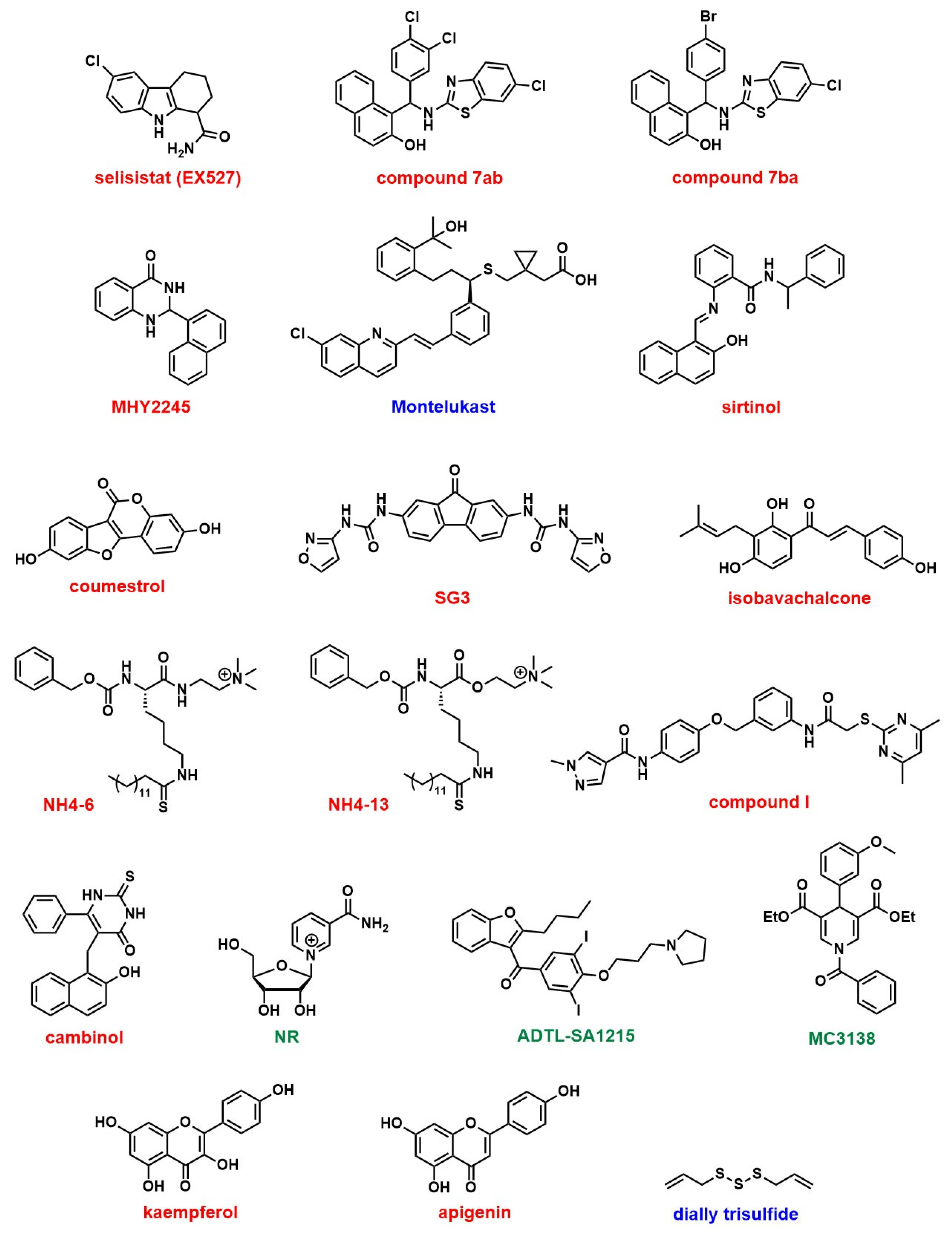
| Breast Cancer | SIRT1 | Upregulated | Impaired DNA damage response | Tumor progression | [117] | |
| Suppression of p53 by deacetylation | Evasion of apoptosis and autophagy | Benzothiazole derivatives, MHY2245 | [121,122] | |||
| Increased vimentin expression through SIRT1/AKT axis | EMT, angiogenesis | Montelukast + Sirtinol | [123] | |||
| Amplified ER and GPER signaling in ER+ cells | Oncogenesis, proliferation, chemoresistance | Sirtinol, CHIC 35, and EX 527 | [124] | |||
| SIRT2 | Upregulated | α-Tubulin hyperacetylation, suppressed STAT3/c-Myc and Snail/MMP pathways | Tumor proliferation | SG3 and Isobavachalcone | [128,129] | |
| Disrupted post-translational regulation of NAT1 caused increase NAT1 activity | Disrupted acetylation profiles of key proteins | EX527, Sirtinol | [130] | |||
| SIRT3 | Downregulated | Mitochondiral dysfunction due to hyperacetylation of MnSOD and NRF2 | Chemoresistance to cisplatin and DOX Paclitaxel induced peripheral neuropathy | NR ADTL-SA1215 | [136,138,139] | |
| SIRT5 | Downregulated | Reduced glutaminase activity | Increased glutamine utilization, proliferation, chemoresistance | MC3188 | [142] | |
| SIRT6 | Upregulated | Repressed transcription of tumor suppressor TBX3 Upregulation of MMP-9 through the MAPK, NF-κB, and AP-1 pathways | Enhanced metastasis | [144,145] | ||
| Unknown | Development of stem-like features | Kaempferol and apigenin | [146] | |||
| SIRT7 | Upregulated (early) | SIRT7 is involved in p38-MAPK pathway | May have tumor-suppressive or -promoting role | [148] | ||
| Downregulated (metastatic) | SIRT7 inhibits TGF- β signaling, epigenetically represses TIE2/TEK, and maintains chromosomal stabilty | Predominantly exerts anti-metastatic effects | [148,149,150] | |||
| Uterine/Endometrial Cancer | SIRT1 | Upregulated | Deacetylation of BECNI to promote autophagy | Higher metastasis Development of chemo and radio-resistance | [158,159] | |
| SIRT2 | Upregulated | Activation of MEK/ERK pathway | Metastasis and EMT | [162] | ||
| SIRT7 | Upregulated | Promotes proteolytic degradation of tumor suppressor PTEN by deacetylation | Metastasis and poor prognosis | [164] | ||
| Ovarian Cancer | SIRT1 | Upregulated | Involved in AMPK/SIRT1/PGC1α pathway Upregulates CD24 expression | May exert tumor-promoting or tumor-suppressing effect | EX-527 | [171,173,174] |
| SIRT2 | Upregulated | Deacetylation and stabilization transcription factor Slug | Cancer cell migration, invasion, and EMT | AGK2 | [176] | |
| SIRT3 | Downregulated | SIRT3 downregulates HIF-1α pathway | Angiogenesis, tumor progression | [177] |
9. Menopause
9.1. SIRT1
9.2. SIRT3
10. Osteoporosis (OP)
10.1. SIRT1
10.2. SIRT2
10.3. SIRT3
10.4. SIRT7
| Sirtuin Isoform | Expression | Affected Pathways or Interaction | Pathological Outcomes | Therapeutic Intervention | Ref. | |
|---|---|---|---|---|---|---|
| Menopause | SIRT1 | Downregulated | Downregulation of SIRT1/LKB1/AMPK/ULK1 and Erα/SIRT1/PGC-1β signaling pathway | Arterial senescence and NAFLD-induced liver damage | 17β-estradiol or resveratrol treatment | [186,190,191,192,193] |
| Increased apoptotic markers | Apoptosis | Calorie restriction, HIIT and RT | [194,195] | |||
| SIRT3 | Downregulated | Decreased SIRT3-mediated deacetylation of SOD | Increased oxidative stress, depression, and anxiety | Kaempferol treatment | [196] | |
| Osteoporosis | SIRT1 | Downregulated | Downregulation of Wnt/β-catenin pathway | Osteogenic senescence | Implantation of Icariin/porous magnesium alloy scaffold | [213] |
| PGC1α-SIRT1 interaction | Increased oxidative stress and senescence | Resveratrol treatment | [204] | |||
| Decrease in SIRT1-mediated NRF2 acetylation and AMPK-SIRT1-NF-κB signaling | Reduction in new bone formation and osteogenic senescence | Segetalin B, ED-71, ellagic acid, CS, and gCTRP3 treatments | [205,206,207,208,209,210,211,212] | |||
 | ||||||
| SIRT2 | Downregulated | Upregulation of miR-26 | Promotion of proliferation and inhibition of apoptosis | [214] | ||
| SIRT3 | Downregulated | Increased RANKL-induced ROS levels and activated NF-kB pathway | Bone resorption and osteoclastogenesis | Bilobalide and metformin treatment | [202,203] | |
| SIRT7 | Downregulated | Upregulation of NF-kB pathway | BMSC senescence | Bone loss | [216,217,218,219,220,221] | |
11. Conclusions and Perspectives
Funding
Institutional Review Board Statement
Informed Consent Statement
Data Availability Statement
Conflicts of Interest
References
- Wu, Q.J.; Zhang, T.N.; Chen, H.H.; Yu, X.F.; Lv, J.L.; Liu, Y.Y.; Liu, Y.S.; Zheng, G.; Zhao, J.Q.; Wei, Y.F.; et al. The sirtuin family in health and disease. Signal Transduct. Target. Ther. 2022, 7, 402. [Google Scholar] [CrossRef]
- Wang, M.; Lin, H. Understanding the Function of Mammalian Sirtuins and Protein Lysine Acylation. Annu. Rev. Biochem. 2021, 90, 245–285. [Google Scholar] [CrossRef] [PubMed]
- Lassi, Z.S.; Wade, J.M.; Ameyaw, E.K. Stages and future of women’s health: A call for a life-course approach. Womens Health 2025, 21, 17455057251331721. [Google Scholar] [CrossRef]
- Pataky, M.W.; Young, W.F.; Nair, K.S. Hormonal and Metabolic Changes of Aging and the Influence of Lifestyle Modifications. Mayo Clin. Proc. 2021, 96, 788–814. [Google Scholar] [CrossRef]
- Bozdag, G.; Mumusoglu, S.; Zengin, D.; Karabulut, E.; Yildiz, B.O. The prevalence and phenotypic features of polycystic ovary syndrome: A systematic review and meta-analysis. Hum. Reprod. 2016, 31, 2841–2855. [Google Scholar] [CrossRef]
- Palomba, S.; Santagni, S.; Falbo, A.; La Sala, G.B. Complications and challenges associated with polycystic ovary syndrome: Current perspectives. Int. J. Womens Health 2015, 7, 745–763. [Google Scholar] [CrossRef]
- Azziz, R.; Carmina, E.; Dewailly, D.; Diamanti-Kandarakis, E.; Escobar-Morreale, H.F.; Futterweit, W.; Janssen, O.E.; Legro, R.S.; Norman, R.J.; Taylor, A.E.; et al. The Androgen Excess and PCOS Society criteria for the polycystic ovary syndrome: The complete task force report. Fertil. Steril. 2009, 91, 456–488. [Google Scholar] [CrossRef]
- Dokras, A. Mood and anxiety disorders in women with PCOS. Steroids 2012, 77, 338–341. [Google Scholar] [CrossRef]
- McCartney, C.R.; Marshall, J.C. CLINICAL PRACTICE. Polycystic Ovary Syndrome. N. Engl. J. Med. 2016, 375, 54–64. [Google Scholar] [CrossRef] [PubMed]
- Brutocao, C.; Zaiem, F.; Alsawas, M.; Morrow, A.S.; Murad, M.H.; Javed, A. Psychiatric disorders in women with polycystic ovary syndrome: A systematic review and meta-analysis. Endocrine 2018, 62, 318–325. [Google Scholar] [CrossRef] [PubMed]
- Diamanti-Kandarakis, E.; Dunaif, A. Insulin resistance and the polycystic ovary syndrome revisited: An update on mechanisms and implications. Endocr. Rev. 2012, 33, 981–1030. [Google Scholar] [CrossRef]
- Gonzalez, F. Inflammation in Polycystic Ovary Syndrome: Underpinning of insulin resistance and ovarian dysfunction. Steroids 2012, 77, 300–305. [Google Scholar] [CrossRef]
- Gilbert, E.W.; Tay, C.T.; Hiam, D.S.; Teede, H.J.; Moran, L.J. Comorbidities and complications of polycystic ovary syndrome: An overview of systematic reviews. Clin. Endocrinol. 2018, 89, 683–699. [Google Scholar] [CrossRef]
- Teede, H.J.; Misso, M.L.; Costello, M.F.; Dokras, A.; Laven, J.; Moran, L.; Piltonen, T.; Norman, R.J.; International, P.N. Recommendations from the international evidence-based guideline for the assessment and management of polycystic ovary syndrome. Fertil. Steril. 2018, 110, 364–379. [Google Scholar] [CrossRef]
- Stanczak, N.A.; Grywalska, E.; Dudzinska, E. The latest reports and treatment methods on polycystic ovary syndrome. Ann. Med. 2024, 56, 2357737. [Google Scholar] [CrossRef]
- Houtkooper, R.H.; Pirinen, E.; Auwerx, J. Sirtuins as regulators of metabolism and healthspan. Nat. Rev. Mol. Cell Biol. 2012, 13, 225–238. [Google Scholar] [CrossRef]
- Wu, M.; Zhang, J.; Gu, R.; Dai, F.; Yang, D.; Zheng, Y.; Tan, W.; Jia, Y.; Li, B.; Cheng, Y. The role of Sirtuin 1 in the pathophysiology of polycystic ovary syndrome. Eur. J. Med. Res. 2022, 27, 158. [Google Scholar] [CrossRef] [PubMed]
- Hu, R.; Nong, W.; Huo, P.; Hu, L.; Jiang, W.; Yang, Z.; Liao, A.; Chen, X.; Huang, Z.; Lei, X. Dendrobium nobile-derived polysaccharides stimulate the glycolytic pathway by activating SIRT2 to regulate insulin resistance in polycystic ovary syndrome granulosa cells. Int. J. Biol. Macromol. 2024, 278, 134780. [Google Scholar] [CrossRef] [PubMed]
- Huang, L.; Qin, X.; Tian, C.; Ling, S.; Luo, X.; Huang, B.; Ling, Y.; Zhong, S.; Li, Z.; Qin, L. Association between mitochondrial SIRTs (SIRT3, SIRT4, and SIRT5) and PCOS. Eur. J. Med. Res. 2025, 30, 611. [Google Scholar] [CrossRef] [PubMed]
- Huo, P.; Li, M.; Le, J.; Zhu, C.; Yao, J.; Zhang, S. Resveratrol improves follicular development of PCOS rats via regulating glycolysis pathway and targeting SIRT1. Syst. Biol. Reprod. Med. 2023, 69, 153–165. [Google Scholar] [CrossRef]
- Liu, K.; Wei, H.; Nong, W.; Peng, H.; Li, Y.; Lei, X.; Zhang, S. Nampt/SIRT2/LDHA pathway-mediated lactate production regulates follicular dysplasia in polycystic ovary syndrome. Free Radic. Biol. Med. 2024, 225, 776–793. [Google Scholar] [CrossRef]
- Zhang, Q.; Ren, J.; Wang, F.; Pan, M.; Cui, L.; Li, M.; Qu, F. Mitochondrial and glucose metabolic dysfunctions in granulosa cells induce impaired oocytes of polycystic ovary syndrome through Sirtuin 3. Free Radic. Biol. Med. 2022, 187, 1–16. [Google Scholar] [CrossRef] [PubMed]
- Li, X.; He, Y.; Wu, S.; Zhang, P.; Gan, M.; Chen, L.; Zhao, Y.; Niu, L.; Zhang, S.; Jiang, Y.; et al. Regulation of SIRT1 in Ovarian Function: PCOS Treatment. Curr. Issues Mol. Biol. 2023, 45, 2073–2089. [Google Scholar] [CrossRef] [PubMed]
- Tao, X.; Chen, L.; Cai, L.; Ge, S.; Deng, X. Regulatory effects of the AMPKalpha-SIRT1 molecular pathway on insulin resistance in PCOS mice: An in vitro and in vivo study. Biochem. Biophys. Res. Commun. 2017, 494, 615–620. [Google Scholar] [CrossRef]
- Mihanfar, A.; Nouri, M.; Roshangar, L.; Khadem-Ansari, M.H. Therapeutic potential of quercetin in an animal model of PCOS: Possible involvement of AMPK/SIRT-1 axis. Eur. J. Pharmacol. 2021, 900, 174062. [Google Scholar] [CrossRef]
- Kamel, A.S.; Sayed, N.S.E.; Budzynska, B.; Skalicka-Wozniak, K.; El-Sayed, S.S. The potential effect of scoparone in autophagic disruption associated with PCOS in Letrozole rat model: Role of Nrf2 and Sirt1/LKB1/AMPK signaling. Futur. J. Pharm. Sci. 2025, 11, 43. [Google Scholar] [CrossRef]
- Chahal, S.K.; Kabra, A. Fisetin ameliorates polycystic ovary syndrome in rats via a mechanistic modulation of AMP-activated protein kinase and SIRT1 molecular pathway. Naunyn Schmiedebergs Arch. Pharmacol. 2024, 397, 10017–10029. [Google Scholar] [CrossRef]
- Zhao, J.; Tan, Y.; Feng, Z.; Zhou, Y.; Wang, F.; Zhou, G.; Yan, J.; Nie, X. Catalpol attenuates polycystic ovarian syndrome by regulating sirtuin 1 mediated NF-kappaB signaling pathway. Reprod. Biol. 2022, 22, 100671. [Google Scholar] [CrossRef]
- Kamel, A.S.; El-Sayed, S.S.; El Sayed, N.S. Sulforaphane’s role in Redefining autophagic Responses in depression associated with polycystic ovarian syndrome: Unveiling the SIRT1/AMPK/LKB1 pathway connection. Eur. J. Pharmacol. 2024, 969, 176477. [Google Scholar] [CrossRef]
- Zheng, B.; Meng, J.; Zhu, Y.; Ding, M.; Zhang, Y.; Zhou, J. Melatonin enhances SIRT1 to ameliorate mitochondrial membrane damage by activating PDK1/Akt in granulosa cells of PCOS. J. Ovarian Res. 2021, 14, 152. [Google Scholar] [CrossRef]
- Khodir, S.A.; Sweed, E.; Motawea, S.M.; Al-Gholam, M.A.; Elnaidany, S.S.; Dayer, M.Z.S.; Ameen, O. Diacerein and myo-inositol alleviate letrozole-induced PCOS via modulation of HMGB1, SIRT1, and NF-kB: A comparative study. Naunyn Schmiedebergs Arch. Pharmacol. 2025, 398, 4179–4197. [Google Scholar] [CrossRef] [PubMed]
- Liu, M.; Guo, S.; Li, X.; Tian, Y.; Yu, Y.; Tang, L.; Sun, Q.; Zhang, T.; Fan, M.; Zhang, L.; et al. Semaglutide Alleviates Ovary Inflammation via the AMPK/SIRT1/NF-kappaB Signaling Pathway in Polycystic Ovary Syndrome Mice. Drug Des. Devel Ther. 2024, 18, 3925–3938. [Google Scholar] [CrossRef]
- Zhang, J.; Xu, W.M.; Li, S.J.; Zhang, J.; Shang, Y.J.; Gui, J. The role of miRNA-339-5p in the function of vascular endothelial progenitor cells in patients with PCOS. Reprod. Biomed. Online 2022, 44, 423–433. [Google Scholar] [CrossRef]
- Hong, L.; Xiao, S.; Diao, L.; Lian, R.; Chen, C.; Zeng, Y.; Liu, S. Decreased AMPK/SIRT1/PDK4 induced by androgen excess inhibits human endometrial stromal cell decidualization in PCOS. Cell Mol. Life Sci. 2024, 81, 324. [Google Scholar] [CrossRef]
- Zhang, Z.; Huo, P.; Lei, X.; Xue, H.; Yang, X.; Le, J.; Zhang, S. Metformin activates SIRT2 to improve insulin resistance and promote granulosa cell glycolysis in a rat model of polycystic ovary syndrome. Reprod. Biomed. Online 2025, 50, 104750. [Google Scholar] [CrossRef] [PubMed]
- Chen, L.; Kong, C. SIRT2-dependent DKK1 deacetylation aggravates polycystic ovary syndrome by targeting the TGF-beta1/Smad3 signaling pathway. Gynecol. Endocrinol. 2024, 40, 2353733. [Google Scholar] [CrossRef]
- Pang, X.; Cheng, J.; Wu, T.; Sun, L. SIRT3 ameliorates polycystic ovary syndrome through FOXO1/PGC-1alpha signaling pathway. Endocrine 2023, 80, 201–211. [Google Scholar] [CrossRef]
- Wang, S.; Wang, Y.; Qin, Q.; Li, J.; Chen, Q.; Zhang, Y.; Li, X.; Liu, J. Berberine Protects Against Dihydrotestosterone-Induced Human Ovarian Granulosa Cell Injury and Ferroptosis by Regulating the Circ_0097636/MiR-186-5p/SIRT3 Pathway. Appl. Biochem. Biotechnol. 2024, 196, 5265–5282. [Google Scholar] [CrossRef]
- Zhang, Q.; Ren, J.; Wang, F.; Li, M.; Pan, M.; Zhang, H.; Qu, F. Chinese herbal medicine alleviates the pathogenesis of polycystic ovary syndrome by improving oxidative stress and glucose metabolism via mitochondrial Sirtuin 3 signaling. Phytomedicine 2023, 109, 154556. [Google Scholar] [CrossRef]
- Peng, Q.; Chen, X.; Liang, X.; Ouyang, J.; Wang, Q.; Ren, S.; Xie, H.; Wang, C.; Sun, Y.; Wu, X.; et al. Metformin improves polycystic ovary syndrome in mice by inhibiting ovarian ferroptosis. Front. Endocrinol. 2023, 14, 1070264. [Google Scholar] [CrossRef] [PubMed]
- Ellis, K.; Munro, D.; Clarke, J. Endometriosis Is Undervalued: A Call to Action. Front. Glob. Womens Health 2022, 3, 902371. [Google Scholar] [CrossRef]
- Mehedintu, C.; Plotogea, M.N.; Ionescu, S.; Antonovici, M. Endometriosis still a challenge. J. Med. Life 2014, 7, 349–357. [Google Scholar]
- Buck Louis, G.M.; Hediger, M.L.; Peterson, C.M.; Croughan, M.; Sundaram, R.; Stanford, J.; Chen, Z.; Fujimoto, V.Y.; Varner, M.W.; Trumble, A.; et al. Incidence of endometriosis by study population and diagnostic method: The ENDO study. Fertil. Steril. 2011, 96, 360–365. [Google Scholar] [CrossRef]
- Falcone, T.; Flyckt, R. Clinical Management of Endometriosis. Obstet. Gynecol. 2018, 131, 557–571. [Google Scholar] [CrossRef]
- Kvaskoff, M.; Mu, F.; Terry, K.L.; Harris, H.R.; Poole, E.M.; Farland, L.; Missmer, S.A. Endometriosis: A high-risk population for major chronic diseases? Hum. Reprod. Update 2015, 21, 500–516. [Google Scholar] [CrossRef]
- Gonzalez-Fernandez, R.; Martin-Ramirez, R.; Rotoli, D.; Hernandez, J.; Naftolin, F.; Martin-Vasallo, P.; Palumbo, A.; Avila, J. Granulosa-Lutein Cell Sirtuin Gene Expression Profiles Differ between Normal Donors and Infertile Women. Int. J. Mol. Sci. 2019, 21, 295. [Google Scholar] [CrossRef] [PubMed]
- Eisalou, M.Y.; Farahpour, M.R. Effectiveness of Gamma Oryzanol on prevention of surgical induced endometriosis development in rat model. Sci. Rep. 2022, 12, 2816. [Google Scholar] [CrossRef] [PubMed]
- Wang, M.; Wu, Y.; He, Y.; Liu, J.; Chen, Y.; Huang, J.; Qi, G.; Li, P. SIRT1 upregulation promotes epithelial-mesenchymal transition by inducing senescence escape in endometriosis. Sci. Rep. 2022, 12, 12302. [Google Scholar] [CrossRef] [PubMed]
- Wang, X.; Wang, J.; Zhao, X.; Wu, H.; Li, J.; Cheng, Y.; Guo, Q.; Cao, X.; Liang, T.; Sun, L.; et al. METTL3-mediated m6A modification of SIRT1 mRNA inhibits progression of endometriosis by cellular senescence enhancing. J. Transl. Med. 2023, 21, 407. [Google Scholar] [CrossRef]
- Kim, T.H.; Young, S.L.; Sasaki, T.; Deaton, J.L.; Schammel, D.P.; Palomino, W.A.; Jeong, J.W.; Lessey, B.A. Role of SIRT1 and Progesterone Resistance in Normal and Abnormal Endometrium. J. Clin. Endocrinol. Metab. 2022, 107, 788–800. [Google Scholar] [CrossRef]
- Marquardt, R.M.; Tran, D.N.; Lessey, B.A.; Rahman, M.S.; Jeong, J.W. Epigenetic Dysregulation in Endometriosis: Implications for Pathophysiology and Therapeutics. Endocr. Rev. 2023, 44, 1074–1095. [Google Scholar] [CrossRef]
- Kaleler, I.; Acikgoz, A.S.; Gezer, A.; Uslu, E. A potential role of Sirtuin3 and its target enzyme activities in patients with ovarian endometrioma. Gynecol. Endocrinol. 2021, 37, 1035–1040. [Google Scholar] [CrossRef] [PubMed]
- Li, Y.; An, M.; Fu, X.; Meng, X.; Ma, Y.; Liu, H.; Li, Q.; Xu, H.; Chen, J. Bushen Wenyang Huayu Decoction inhibits autophagy by regulating the SIRT1-FoXO-1 pathway in endometriosis rats. J. Ethnopharmacol. 2023, 308, 116277. [Google Scholar] [CrossRef]
- Felgueiras, R.; Neto, A.C.; Rodrigues, A.R.; Gouveia, A.M.; Almeida, H.; Neves, D. Anti-oxidant effect of metformin through AMPK/SIRT1/PGC-1alpha/SIRT3- independent GPx1 expression in the heart of mice with endometriosis. Horm. Mol. Biol. Clin. Investig. 2022, 43, 405–414. [Google Scholar] [CrossRef] [PubMed]
- Sansone, A.M.; Hisrich, B.V.; Young, R.B.; Abel, W.F.; Bowens, Z.; Blair, B.B.; Funkhouser, A.T.; Schammel, D.P.; Green, L.J.; Lessey, B.A.; et al. Evaluation of BCL6 and SIRT1 as Non-Invasive Diagnostic Markers of Endometriosis. Curr. Issues Mol. Biol. 2021, 43, 1350–1360. [Google Scholar] [CrossRef] [PubMed]
- Zhou, Y.; Zhao, X.; Zhang, L.; Xia, Q.; Peng, Y.; Zhang, H.; Yan, D.; Yang, Z.; Li, J. Iron overload inhibits cell proliferation and promotes autophagy via PARP1/SIRT1 signaling in endometriosis and adenomyosis. Toxicology 2022, 465, 153050. [Google Scholar] [CrossRef]
- Yilmaz, B.D.; Bulun, S.E. Endometriosis and nuclear receptors. Hum. Reprod. Update 2019, 25, 473–485. [Google Scholar] [CrossRef]
- Bause, A.S.; Haigis, M.C. SIRT3 regulation of mitochondrial oxidative stress. Exp. Gerontol. 2013, 48, 634–639. [Google Scholar] [CrossRef]
- Yu, H.; Chen, L.; Du, P.; Liu, X.; Xia, Y. Effects of sirtuin 1 deficiency on trophoblasts and its implications in the pathogenesis of pre-eclampsia. J. Obstet. Gynaecol. 2023, 43, 2282103. [Google Scholar] [CrossRef]
- Golanska-Wroblewska, M.; Fryczak, J.; Siejka, A. Serum levels of sirtuins, leptin and adiponectin in women with pregnancy-induced hypertension. Cytokine 2024, 179, 156612. [Google Scholar] [CrossRef]
- Lee, W.; Song, G.; Bae, H. Alpinumisoflavone ameliorates H(2)O(2)-induced intracellular damages through SIRT1 activation in pre-eclampsia cell models. Bioorg Chem. 2024, 152, 107720. [Google Scholar] [CrossRef]
- Liu, Z.; Pei, J.; Zhang, X.; Wang, C.; Tang, Y.; Liu, H.; Yu, Y.; Luo, S.; Gu, W. CD74 deficiency reduces trophoblast invasion and proliferation mediated by SIRT1 in preeclampsia. Reproduction 2023, 166, 423–435. [Google Scholar] [CrossRef]
- Su, S.; Zhong, L.; Huang, S.; Deng, L.; Pang, L. MiRNA-494 induces trophoblast senescence by targeting SIRT1. Hypertens. Pregnancy 2023, 42, 2219774. [Google Scholar] [CrossRef]
- Tasta, O.; Swiader, A.; Grazide, M.H.; Rouahi, M.; Parant, O.; Vayssiere, C.; Bujold, E.; Salvayre, R.; Guerby, P.; Negre-Salvayre, A. A role for 4-hydroxy-2-nonenal in premature placental senescence in preeclampsia and intrauterine growth restriction. Free Radic. Biol. Med. 2021, 164, 303–314. [Google Scholar] [CrossRef]
- Wang, Y.; Zhang, Y.; Wu, Y.; He, Y.; Xiang, J.; Huang, J.; Lash, G.E.; Li, P. SIRT1 regulates trophoblast senescence in premature placental aging in preeclampsia. Placenta 2022, 122, 56–65. [Google Scholar] [CrossRef]
- Pei, J.; Liu, Z.; Wang, C.; Chu, N.; Liu, L.; Tang, Y.; Liu, H.; Xiang, Q.; Cheng, H.; Li, M.; et al. Progesterone Attenuates SIRT1-Deficiency-Mediated Pre-Eclampsia. Biomolecules 2022, 12, 422. [Google Scholar] [CrossRef]
- Huang, Y.; Zheng, X.D.; Li, H. Protective role of SIRT1-mediated Sonic Hedgehog signaling pathway in the preeclampsia rat models. J. Assist. Reprod. Genet. 2021, 38, 1843–1851. [Google Scholar] [CrossRef]
- Schultz, M.B.; Rinaldi, C.; Lu, Y.; Amorim, J.A.; Sinclair, D.A. Molecular and Cellular Characterization of SIRT1 Allosteric Activators. Methods Mol. Biol. 2019, 1983, 133–149. [Google Scholar] [PubMed]
- Khadir, F.; Rahimi, Z.; Vaisi-Raygani, A.; Shakiba, E.; Pouramir, M.; Bahrehmand, F. Variants and Haplotypes of SIRT1 (rs7895833, rs7069102, and rs2273773) are Associated with the Risk of Preeclampsia and Affect the Trace Elements and Antioxidant Enzymes Levels. Biochem. Genet. 2024, 62, 2667–2685. [Google Scholar] [CrossRef]
- Dmitrenko, O.; Karpova, N.; Nurbekov, M. Increased Preeclampsia Risk in GDM Pregnancies: The Role of SIRT1 rs12778366 Polymorphism and Telomere Length. Int. J. Mol. Sci. 2025, 26, 2967. [Google Scholar] [CrossRef]
- Chen, Z.; Wu, M.; Huang, H.; Tao, H.; Zou, L.; Luo, Q. Plasma Exosomal miR-199a-5p Derived from Preeclampsia with Severe Features Impairs Endothelial Cell Function via Targeting SIRT1. Reprod. Sci. 2022, 29, 3413–3424. [Google Scholar] [CrossRef]
- Akkaya Firat, A.; Alici Davutoglu, E.; Ozel, A.; Firtina Tuncer, S.; Yilmaz, N.; Madazli, R. Serum FoxO1 and SIRT2 concentrations in healthy pregnant women and complicated by preeclampsia. Ir. J. Med. Sci. 2025, 194, 181–188. [Google Scholar] [CrossRef]
- Hou, R.; Yang, X.; Xu, Q.; Shen, C.; Zhang, L.; Huang, B.; Yang, Y.; Yu, Z.; Yin, Z.; Cao, Y.; et al. SIRT2 alleviates pre-eclampsia via prompting mitochondrial biogenesis and function. Life Sci. 2025, 371, 123566. [Google Scholar] [CrossRef]
- Yu, Y.; An, X.; Fan, D. Histone Deacetylase Sirtuin 2 Enhances Viability of Trophoblasts Through p65-Mediated MicroRNA-146a/ACKR2 Axis. Reprod. Sci. 2021, 28, 1370–1381. [Google Scholar] [CrossRef]
- Ding, Y.; Zhang, X.; Li, J.; Li, Y.; Zhang, L.; Yuan, E. SIRT3 impairment and MnSOD hyperacetylation in trophoblast dysfunction and preeclampsia. Biochim. Biophys. Acta Mol. Cell Res. 2025, 1872, 119915. [Google Scholar] [CrossRef] [PubMed]
- Yu, H.; Zhang, Y.; Liu, M.; Liao, L.; Wei, X.; Zhou, R. SIRT3 deficiency affects the migration, invasion, tube formation and necroptosis of trophoblast and is implicated in the pathogenesis of preeclampsia. Placenta 2022, 120, 1–9. [Google Scholar] [CrossRef] [PubMed]
- Ren, F.; Yang, M.; Liu, G.; Qi, Y.; Li, A.; Li, J.; Zheng, L. SIRT5-mediated PRKAA2 succinylation ameliorates apoptosis of human placental trophoblasts in hypertensive disorder complicating pregnancy. Clin. Exp. Hypertens. 2024, 46, 2358030. [Google Scholar] [CrossRef] [PubMed]
- Qi, L.; Qian, L.; Yu, X.; Qiu, K. SIRT6 mitigates oxidative stress and RSL3-induced ferroptosis in HTR-8/SVneo cells. Tissue Cell 2025, 93, 102639. [Google Scholar] [CrossRef]
- Di Tomo, P.; Alessio, N.; Falone, S.; Pietrangelo, L.; Lanuti, P.; Cordone, V.; Santini, S.J.; Di Pietrantonio, N.; Marchisio, M.; Protasi, F.; et al. Endothelial cells from umbilical cord of women affected by gestational diabetes: A suitable in vitro model to study mechanisms of early vascular senescence in diabetes. FASEB J. 2021, 35, e21662. [Google Scholar] [CrossRef]
- Alqudah, A.; Eastwood, K.A.; Jerotic, D.; Todd, N.; Hoch, D.; McNally, R.; Obradovic, D.; Dugalic, S.; Hunter, A.J.; Holmes, V.A.; et al. FKBPL and SIRT-1 Are Downregulated by Diabetes in Pregnancy Impacting on Angiogenesis and Endothelial Function. Front. Endocrinol. 2021, 12, 650328. [Google Scholar] [CrossRef]
- Wen, Y.; Wang, J.; Duan, M.; Li, Q.; Ma, J. SIRT1-Mediated Regulation of STAT3/SOCS3 Inhibits Insulin Resistance in Trophoblast Cells and Improves Gestational Diabetes Mellitus. FASEB J. 2025, 39, e70620. [Google Scholar] [CrossRef]
- Han, N.; Chang, X.Y.; Yuan, Z.L.; Wang, Y.Z. Expression and correlation analysis of silent information regulator 1 (SIRT1), sterol regulatory element-binding protein-1 (SREBP1), and pyroptosis factor in gestational diabetes mellitus. J. Matern. Fetal Neonatal Med. 2024, 37, 2311809. [Google Scholar] [CrossRef]
- He, J.; Fan, F.; Li, J.; Han, Y.; Song, Y.; Zhang, R.; Xu, Y.; Wu, H.; Fan, R. SIRT1 alleviates insulin resistance and respiratory distress in late preterm rats by activating QKI5-mediated PPARgamma/PI3K/AKT pathway. Cell Cycle 2023, 22, 2449–2466. [Google Scholar] [CrossRef]
- Zhou, T.; Fu, X.D.; Li, H.Y.; Yin, Y. Mogroside V attenuates gestational diabetes mellitus via SIRT1 pathway in a rat model. Trop. J. Pharm. Res. 2021, 20, 2533–2538. [Google Scholar]
- Zhang, R.; Feng, Y.; Nie, P.; Wang, W.; Wu, H.; Wan, X.; Xu, H.; Fu, F. Polystyrene microplastics disturb maternal glucose homeostasis and induce adverse pregnancy outcomes. Ecotoxicol. Environ. Saf. 2024, 279, 116492. [Google Scholar] [CrossRef] [PubMed]
- Zhao, Y.; Jia, X.; Yang, X.; Bai, X.; Lu, Y.; Zhu, L.; Cheng, W.; Shu, M.; Zhu, Y.; Du, X.; et al. Deacetylation of Caveolin-1 by Sirt6 induces autophagy and retards high glucose-stimulated LDL transcytosis and atherosclerosis formation. Metabolism 2022, 131, 155162. [Google Scholar] [CrossRef] [PubMed]
- Milan, K.L.; Anuradha, M.; Ramkumar, K.M. Role of miR-125b-5p in modulating placental SIRT7 expression and its implications for lipid metabolism in gestational diabetes. J. Reprod. Immunol. 2025, 167, 104422. [Google Scholar] [CrossRef] [PubMed]
- Garapati, J.; Jajoo, S.; Aradhya, D.; Reddy, L.S.; Dahiphale, S.M.; Patel, D.J. Postpartum Mood Disorders: Insights into Diagnosis, Prevention, and Treatment. Cureus 2023, 15, e42107. [Google Scholar] [CrossRef] [PubMed]
- Ye, S.; Fang, L.; Xie, S.; Hu, Y.; Chen, S.; Amin, N.; Fang, M.; Hu, Z. Resveratrol alleviates postpartum depression-like behavior by activating autophagy via SIRT1 and inhibiting AKT/mTOR pathway. Behav. Brain Res. 2023, 438, 114208. [Google Scholar] [CrossRef]
- Wang, J.; Ma, S.F.; Yun, Q.; Liu, W.J.; Guo, M.N.; Zhu, Y.Q.; Liu, Z.Z.; Qian, J.J.; Zhang, W.N. Ameliorative effect of SIRT1 in postpartum depression mediated by upregulation of the glucocorticoid receptor. Neurosci. Lett. 2021, 761, 136112. [Google Scholar] [CrossRef]
- Alam, F.; Shahid, M.; Riffat, S.; Zulkipli, I.N.; Syed, F.; Ashraf, M.; Rehman, R. SIRT1 and antioxidants in infertile females: Exploration of the role of vitamin D. PLoS ONE 2023, 18, e0287727. [Google Scholar] [CrossRef]
- Worku, D.; Verma, A. Genetic variation in bovine LAP3 and SIRT1 genes associated with fertility traits in dairy cattle. BMC Genom. Data 2024, 25, 32. [Google Scholar] [CrossRef]
- Russ, J.E.; Haywood, M.E.; Lane, S.L.; Schoolcraft, W.B.; Katz-Jaffe, M.G. Spatially resolved transcriptomic profiling of ovarian aging in mice. iScience 2022, 25, 104819. [Google Scholar] [CrossRef] [PubMed]
- An, Z.; Xie, C.; Lu, H.; Wang, S.; Zhang, X.; Yu, W.; Guo, X.; Liu, Z.; Shang, D.; Wang, X. Mitochondrial Morphology and Function Abnormality in Ovarian Granulosa Cells of Patients with Diminished Ovarian Reserve. Reprod. Sci. 2024, 31, 2009–2020. [Google Scholar] [CrossRef]
- Shi, Y.Q.; Zhu, X.T.; Zhang, S.N.; Ma, Y.F.; Han, Y.H.; Jiang, Y.; Zhang, Y.H. Premature ovarian insufficiency: A review on the role of oxidative stress and the application of antioxidants. Front. Endocrinol. 2023, 14, 1172481. [Google Scholar] [CrossRef]
- Tiosano, D.; Mears, J.A.; Buchner, D.A. Mitochondrial Dysfunction in Primary Ovarian Insufficiency. Endocrinology 2019, 160, 2353–2366. [Google Scholar] [CrossRef]
- Liu, S.; Wang, Y.; Yang, H.; Tan, J.; Zhang, J.; Zi, D. Pyrroloquinoline quinone promotes human mesenchymal stem cell-derived mitochondria to improve premature ovarian insufficiency in mice through the SIRT1/ATM/p53 pathway. Stem Cell Res. Ther. 2024, 15, 97. [Google Scholar] [CrossRef]
- Ivanov, D.; Drobintseva, A.; Rodichkina, V.; Mironova, E.; Zubareva, T.; Krylova, Y.; Morozkina, S.; Marasco, M.G.P.; Mazzoccoli, G.; Nasyrov, R.; et al. Inflammaging: Expansion of Molecular Phenotype and Role in Age-Associated Female Infertility. Biomedicines 2024, 12, 1987. [Google Scholar] [CrossRef] [PubMed]
- Zhang, J.; Hu, H.; Zhu, Y.; Jin, Y.; Zhang, H.; Fan, R.; Ye, Y.; Xin, X.; Li, D. Bushen Jianpi Tiaoxue Decoction (BJTD) ameliorates oxidative stress and apoptosis induced by uterus ageing through activation of the SIRT1/NRF2 pathway. Phytomedicine 2025, 136, 156288. [Google Scholar] [CrossRef] [PubMed]
- Hwang, Y.J.; Sung, G.J.; Marquardt, R.; Young, S.L.; Lessey, B.A.; Kim, T.H.; Cheon, Y.P.; Jeong, J.W. SIRT1 plays an important role in implantation and decidualization during mouse early pregnancy. Biol. Reprod. 2022, 106, 1072–1082. [Google Scholar] [CrossRef]
- Miao, Y.L.; Kikuchi, K.; Sun, Q.Y.; Schatten, H. Oocyte aging: Cellular and molecular changes, developmental potential and reversal possibility. Hum. Reprod. Update 2009, 15, 573–585. [Google Scholar] [CrossRef] [PubMed]
- Li, T.; Wang, Y.; Yu, Y.; Pei, W.; Fu, L.; Jin, D.; Qiao, J. The NAD(+) precursor nicotinamide riboside protects against postovulatory aging in vitro. J. Assist. Reprod. Genet. 2024, 41, 3477–3489. [Google Scholar] [CrossRef] [PubMed]
- Han, J.; Wang, S.; Wang, H.; Zhang, T.; Yang, Y.; Zhao, T.; Chen, Z.; Xia, G.; Wang, C. SIRT1 reduction contributes to doxorubicin-induced oxidative stress and meiotic failure in mouse oocytes. Toxicol. Appl. Pharmacol. 2023, 476, 116671. [Google Scholar] [CrossRef]
- Lu, X.; Jin, P.; Tang, Q.; Zhou, M.; Xu, H.; Su, C.; Wang, L.; Xu, F.; Zhao, M.; Yin, Y.; et al. NAD(+) Metabolism Reprogramming Drives SIRT1-Dependent Deacetylation Inducing PD-L1 Nuclear Localization in Cervical Cancer. Adv. Sci. 2025, 12, e2412109. [Google Scholar] [CrossRef]
- Liang, T.; Lu, T.; Jia, W.; Li, R.; Jiang, M.; Jiao, Y.; Wang, Y.; Cong, S.; Jiang, X.; Dong, L.; et al. Knockdown of lncRNA MALAT1 induces pyroptosis by regulating the miR-124/SIRT1 axis in cervical cancer cells. Int. J. Oncol. 2023, 63, 138. [Google Scholar] [CrossRef]
- Prabhakar, A.T.; James, C.D.; Youssef, A.H.; Hossain, R.A.; Hill, R.D.; Bristol, M.L.; Wang, X.; Dubey, A.; Karimi, E.; Morgan, I.M. A human papillomavirus 16 E2-TopBP1 dependent SIRT1-p300 acetylation switch regulates mitotic viral and human protein levels and activates the DNA damage response. mBio 2024, 15, e0067624. [Google Scholar] [CrossRef]
- Prabhakar, A.T.; James, C.D.; Fontan, C.T.; Otoa, R.; Wang, X.; Bristol, M.L.; Hill, R.D.; Dubey, A.; Morgan, I.M. Human Papillomavirus 16 E2 Interaction with TopBP1 Is Required for E2 and Viral Genome Stability during the Viral Life Cycle. J. Virol. 2023, 97, e0006323. [Google Scholar] [CrossRef] [PubMed]
- Saffar, H.; Nili, F.; Sarmadi, S.; Barazandeh, E.; Saffar, H. Evaluation of Sirtuin1 Overexpression by Immunohistochemistry in Cervical Intraepithelial Lesions and Invasive Squamous Cell Carcinoma. Appl. Immunohistochem. Mol. Morphol. 2023, 31, 128–131. [Google Scholar] [CrossRef]
- Wang, Y.; Wang, J.; Liu, C.; Li, M. Silent Information Regulator 1 Promotes Proliferation, Migration, and Invasion of Cervical Cancer Cells and Is Upregulated by Human Papillomavirus 16 E7 Oncoprotein. Gynecol. Obstet. Investig. 2022, 87, 22–29. [Google Scholar] [CrossRef]
- Lo Cigno, I.; Calati, F.; Girone, C.; Borgogna, C.; Venuti, A.; Boldorini, R.; Gariglio, M. SIRT1 is an actionable target to restore p53 function in HPV-associated cancer therapy. Br. J. Cancer 2023, 129, 1863–1874. [Google Scholar] [CrossRef]
- Jaiswal, S.; Mishra, V.; Majumder, S.; Wangikar, P.P.; Sengupta, S. Metabolomic profiling reveals grade-specific niacinamide accumulation and its therapeutic potential via SIRT1-CD38-EMT axis modulation in cervical cancer progression. Biochim. Biophys. Acta Mol. Cell Res. 2025, 1872, 119994. [Google Scholar] [CrossRef] [PubMed]
- Zhen, L.; Pan, W. ALKBH5 inhibits the SIRT3/ACC1 axis to regulate fatty acid metabolism via an m6A-IGF2BP1-dependent manner in cervical squamous cell carcinoma. Clin. Exp. Pharmacol. Physiol. 2023, 50, 380–392. [Google Scholar] [CrossRef]
- Jiang, W.; Ouyang, X.; Ji, Z.; Shi, W.; Wu, Y.; Yao, Q.; Wang, Y.; Yang, W.; Xiang, L.; Yang, H. The PIK3CA-E545K-SIRT4 signaling axis reduces radiosensitivity by promoting glutamine metabolism in cervical cancer. Cancer Lett. 2023, 556, 216064. [Google Scholar] [CrossRef]
- Zhang, Y.; Niu, X.; Wang, Y.; Bao, S.; Jiang, P.; Dong, X. SIRT4 Has an Anti-Cancer Role in Cervical Cancer by Inhibiting Glutamine Metabolism via the MEK/ERK/C-Myc Axis. Anticancer. Res. 2024, 44, 2861–2870. [Google Scholar] [CrossRef]
- Yu, J.; Yuan, S.; Song, J.; Yu, S. USP39 interacts with SIRT7 to promote cervical squamous cell carcinoma by modulating autophagy and oxidative stress via FOXM1. J. Transl. Med. 2023, 21, 807. [Google Scholar] [CrossRef]
- Sun, L.; Fan, G.; Zhang, Z.; Chang, D.; Zhang, X.; Zhang, T.; Geng, J.; Zhang, X.; Lin, M.; Hu, C.; et al. Phosphorylation of SIRT7 by ATM causes DNA mismatch repair downregulation and adaptive mutability during chemotherapy. Cell Rep. 2025, 44, 115269. [Google Scholar] [CrossRef]
- Rasti, G.; Becker, M.; Vazquez, B.N.; Espinosa-Alcantud, M.; Fernandez-Duran, I.; Gamez-Garcia, A.; Ianni, A.; Gonzalez, J.; Bosch-Presegue, L.; Marazuela-Duque, A.; et al. SIRT1 regulates DNA damage signaling through the PP4 phosphatase complex. Nucleic Acids Res. 2023, 51, 6754–6769. [Google Scholar] [CrossRef]
- Sayed, N.H.; Senousy, M.A.; Shaker, O.G.; Kortam, M.A. Serum lncRNA PVT1 and Its Targets miR-146a and SIRT1 as Biomarkers for the Early Detection of Breast Cancer and Its Metastasis. Biotechnol. Appl. Biochem. 2025, e2769. [Google Scholar] [CrossRef]
- Hasona, N.A.; Elsabahy, M.; Shaker, O.G.; Zaki, O.; Ayeldeen, G. The Implication of Growth Arrest-Specific 5 rs145204276 Polymorphism and Serum Expression of Sirtuin 1, Transforming Growth Factor-Beta, and microRNA-182 in Breast Cancer. Clin. Med. Insights Oncol. 2024, 18, 11795549241227415. [Google Scholar] [CrossRef] [PubMed]
- Alharbi, B.; Aldahlawi, A.; Assidi, M.; Basingab, F.; Zaher, K.; Alrahimi, J.; Mokhtar, S.; Al-Maghrabi, J.; Buhmeida, A.; Al-Sakkaf, K. The Immunohistochemical Prognostic Value of Nuclear and Cytoplasmic Silent Information Regulator 1 Protein Expression in Saudi Patients with Breast Cancer. Biomolecules 2025, 15, 50. [Google Scholar] [CrossRef] [PubMed]
- Kojja, V.; Kumar, D.; Kalavagunta, P.K.; Bhukya, B.; Tangutur, A.D.; Nayak, P.K. 2-(Diarylalkyl)aminobenzothiazole derivatives induce autophagy and apoptotic death through SIRT inhibition and P53 activation In MCF7 breast cancer cells. Comput. Biol. Chem. 2025, 116, 108395. [Google Scholar] [CrossRef] [PubMed]
- Kang, Y.J.; Jang, J.Y.; Kwon, Y.H.; Lee, J.H.; Lee, S.; Park, Y.; Jung, Y.S.; Im, E.; Moon, H.R.; Chung, H.Y.; et al. MHY2245, a Sirtuin Inhibitor, Induces Cell Cycle Arrest and Apoptosis in HCT116 Human Colorectal Cancer Cells. Int. J. Mol. Sci. 2022, 23, 1590. [Google Scholar] [CrossRef] [PubMed]
- El-Ashmawy, N.E.; Khedr, E.G.; Khedr, N.F.; El-Adawy, S.A. Suppression of epithelial-mesenchymal transition and SIRT1/AKT signaling pathway in breast cancer by montelukast. Int. Immunopharmacol. 2023, 119, 110148. [Google Scholar] [CrossRef] [PubMed]
- Parija, M.; Prakash, S.; Krishna, B.M.; Dash, S.; Mishra, S.K. SIRT1 mediates breast cancer development and tumorigenesis controlled by estrogen-related receptor beta. Breast Cancer 2024, 31, 440–455. [Google Scholar] [CrossRef]
- Wawruszak, A.; Luszczki, J.; Bartuzi, D.; Kalafut, J.; Okon, E.; Czerwonka, A.; Stepulak, A. Selisistat, a SIRT1 inhibitor, enhances paclitaxel activity in luminal and triple-negative breast cancer: In silico, in vitro, and in vivo studies. J. Enzyme Inhib. Med. Chem. 2025, 40, 2458554. [Google Scholar] [CrossRef]
- Helvaci, N.; Saracoglu, H.; Yildiz, O.G.; Kilic, E. The study of sirtuins in breast cancer patients before and after radiotherapy. Turk. J. Med. Sci. 2021, 51, 1354–1359. [Google Scholar] [CrossRef]
- Mahmoud, Y.S.; Hassanin, I.A.; Sabra, S.A.; Shehat, M.G.; Abdel-Mohsen, M.A.; Khattab, S.N.; Hussein, A.A. Lipopolysaccharide nanomedicine-based reversion of chemotherapy-induced metastatic potential of breast cancer via hampering tumoral TLR4/SIRT2 axis and IL6 secretion from tumor-associated macrophages. Int. J. Biol. Macromol. 2025, 306, 141396. [Google Scholar] [CrossRef]
- Kaya, S.G.; Eren, G.; Massarotti, A.; Gunindi, H.B.; Bakar-Ates, F.; Ozkan, E. Symmetrical 2,7-disubstituted 9H-fluoren-9-one as a novel and promising scaffold for selective targeting of SIRT2. Arch. Pharm. 2024, 357, e2400661. [Google Scholar] [CrossRef]
- Ren, Y.L.; Lei, J.T.; Zhang, T.R.; Lu, P.; Cui, D.D.; Yang, B.; Zhao, G.Y.; Peng, F.; Cao, Z.X.; Peng, C.; et al. Isobavachalcone, a natural sirtuin 2 inhibitor, exhibits anti-triple-negative breast cancer efficacy in vitro and in vivo. Phytother. Res. 2024, 38, 1815–1829. [Google Scholar] [CrossRef]
- Salazar-Gonzalez, R.A.; Doll, M.A.; Hein, D.W. Arylamine N-Acetyltransferase 1 Activity is Regulated by the Protein Acetylation Status. Front. Pharmacol. 2022, 13, 797469. [Google Scholar] [CrossRef]
- Hong, J.Y.; Fernandez, I.; Anmangandla, A.; Lu, X.; Bai, J.J.; Lin, H. Pharmacological Advantage of SIRT2-Selective versus pan-SIRT1-3 Inhibitors. ACS Chem. Biol. 2021, 16, 1266–1275. [Google Scholar] [CrossRef] [PubMed]
- Wang, H.L.; Ma, X.; Guan, X.Y.; Song, C.; Li, G.B.; Yu, Y.M.; Yang, L.L. Potential synthetic lethality for breast cancer: A selective sirtuin 2 inhibitor combined with a multiple kinase inhibitor sorafenib. Pharmacol. Res. 2022, 177, 106050. [Google Scholar] [CrossRef]
- Wawruszak, A.; Luszczki, J.; Okon, E.; Czerwonka, A.; Stepulak, A. Antagonistic Pharmacological Interaction between Sirtuin Inhibitor Cambinol and Paclitaxel in Triple-Negative Breast Cancer Cell Lines: An Isobolographic Analysis. Int. J. Mol. Sci. 2022, 23, 6458. [Google Scholar] [CrossRef] [PubMed]
- Ning, L.; Xie, N. SIRT3 Expression Predicts Overall Survival and Neoadjuvant Chemosensitivity in Triple-Negative Breast Cancer. Cancer Manag. Res. 2024, 16, 137–150. [Google Scholar] [CrossRef] [PubMed]
- Payavula, H.Y.; Jamadandu, D.; Velpula, S.; Digumarti, R.R.; Satti, V.; Annamaneni, S. VNTR Polymorphism in the Intron 5 of SIRT3 and Susceptibility to Breast Cancer. Asian Pac. J. Cancer Prev. 2023, 24, 859–865. [Google Scholar] [CrossRef] [PubMed]
- Gao, Y.; Zhu, Y.; Tran, E.L.; Tokars, V.; Dean, A.E.; Quan, S.; Gius, D. MnSOD Lysine 68 acetylation leads to cisplatin and doxorubicin resistance due to aberrant mitochondrial metabolism. Int. J. Biol. Sci. 2021, 17, 1203–1216. [Google Scholar] [CrossRef]
- Zu, Y.; Chen, X.F.; Li, Q.; Zhang, S.T.; Si, L.N. PGC-1alpha activates SIRT3 to modulate cell proliferation and glycolytic metabolism in breast cancer. Neoplasma 2021, 68, 352–361. [Google Scholar] [CrossRef]
- Sun, X.; Huang, W.; Yin, D.; Zhao, X.; Cheng, X.; Zhang, J.; Hao, Y. Nicotinamide riboside activates SIRT3 to prevent paclitaxel-induced peripheral neuropathy. Toxicol. Appl. Pharmacol. 2024, 491, 117066. [Google Scholar] [CrossRef] [PubMed]
- Zhang, J.; Zou, L.; Shi, D.; Liu, J.; Zhang, J.; Zhao, R.; Wang, G.; Zhang, L.; Ouyang, L.; Liu, B. Structure-Guided Design of a Small-Molecule Activator of Sirtuin-3 that Modulates Autophagy in Triple Negative Breast Cancer. J. Med. Chem. 2021, 64, 14192–14216. [Google Scholar] [CrossRef]
- Aventaggiato, M.; Arcangeli, T.; Vernucci, E.; Barreca, F.; Sansone, L.; Pellegrini, L.; Pontemezzo, E.; Valente, S.; Fioravanti, R.; Russo, M.A.; et al. Pharmacological Activation of SIRT3 Modulates the Response of Cancer Cells to Acidic pH. Pharmaceuticals 2024, 17, 810. [Google Scholar] [CrossRef]
- Abril, Y.L.N.; Fernandez, I.R.; Hong, J.Y.; Chiang, Y.L.; Kutateladze, D.A.; Zhao, Q.; Yang, M.; Hu, J.; Sadhukhan, S.; Li, B.; et al. Pharmacological and genetic perturbation establish SIRT5 as a promising target in breast cancer. Oncogene 2021, 40, 1644–1658. [Google Scholar] [CrossRef]
- Barreca, F.; Aventaggiato, M.; Vitiello, L.; Sansone, L.; Russo, M.A.; Mai, A.; Valente, S.; Tafani, M. SIRT5 Activation and Inorganic Phosphate Binding Reduce Cancer Cell Vitality by Modulating Autophagy/Mitophagy and ROS. Antioxidants 2023, 12, 1635. [Google Scholar] [CrossRef]
- Behnisch-Cornwell, S.; Grathwol, C.W.; Schulig, L.; Voigt, A.; Baecker, D.; Link, A.; Bednarski, P.J. Correlation Analysis of Protein Expression of 10 HDAC/Sirtuin Isoenzymes with Sensitivities of 23 Anticancer Drugs in 17 Cancer Cell Lines and Potentiation of Drug Activity by Co-Treatment with HDAC Inhibitors. Cancers 2021, 14, 187. [Google Scholar] [CrossRef]
- Andreani, C.; Bartolacci, C.; Persico, G.; Casciaro, F.; Amatori, S.; Fanelli, M.; Giorgio, M.; Galie, M.; Tomassoni, D.; Wang, J.; et al. SIRT6 promotes metastasis and relapse in HER2-positive breast cancer. Sci. Rep. 2023, 13, 22000. [Google Scholar] [CrossRef]
- Hong, O.Y.; Jang, H.Y.; Lee, Y.R.; Jung, S.H.; Youn, H.J.; Kim, J.S. Inhibition of cell invasion and migration by targeting matrix metalloproteinase-9 expression via sirtuin 6 silencing in human breast cancer cells. Sci. Rep. 2022, 12, 12125. [Google Scholar] [CrossRef]
- Sharma, A.; Sinha, S.; Keswani, H.; Shrivastava, N. Kaempferol and Apigenin suppresses the stemness properties of TNBC cells by modulating Sirtuins. Mol. Divers. 2022, 26, 3225–3240. [Google Scholar] [CrossRef] [PubMed]
- Lorenzo, P.M.; Izquierdo, A.G.; Rodriguez-Carnero, G.; Costa-Fraga, N.; Diaz-Lagares, A.; Porca, C.; de Luis, D.; Tejera, C.; De Paz, L.; Cueva, J.; et al. Nutritional ketosis modulates the methylation of cancer-related genes in patients with obesity and in breast cancer cells. J. Physiol. Biochem. 2025, 81, 483–498. [Google Scholar] [CrossRef] [PubMed]
- Ianni, A.; Kumari, P.; Tarighi, S.; Braun, T.; Vaquero, A. SIRT7: A novel molecular target for personalized cancer treatment? Oncogene 2024, 43, 993–1006. [Google Scholar] [CrossRef]
- Yang, F.; Hu, Y.; Shao, L.; Zhuang, J.; Huo, Q.; He, S.; Chen, S.; Wang, J.; Xie, N. SIRT7 interacts with TEK (TIE2) to promote adriamycin induced metastasis in breast cancer. Cell. Oncol. 2021, 44, 1405–1424. [Google Scholar] [CrossRef] [PubMed]
- Huo, Q.; Chen, S.; Zhuang, J.; Quan, C.; Wang, Y.; Xie, N. SIRT7 Downregulation Promotes Breast Cancer Metastasis Via LAP2alpha-Induced Chromosomal Instability. Int. J. Biol. Sci. 2023, 19, 1528–1542. [Google Scholar] [CrossRef]
- Manna, P.R.; Yang, S.; Reddy, P.H. Epigenetic Dysregulation and Its Correlation with the Steroidogenic Machinery Impacting Breast Pathogenesis: Data Mining and Molecular Insights into Therapeutics. Int. J. Mol. Sci. 2023, 24, 16488. [Google Scholar] [CrossRef] [PubMed]
- Clarke, M.A.; Devesa, S.S.; Harvey, S.V.; Wentzensen, N. Hysterectomy-Corrected Uterine Corpus Cancer Incidence Trends and Differences in Relative Survival Reveal Racial Disparities and Rising Rates of Nonendometrioid Cancers. J. Clin. Oncol. 2019, 37, 1895–1908. [Google Scholar] [CrossRef]
- Morice, P.; Leary, A.; Creutzberg, C.; Abu-Rustum, N.; Darai, E. Endometrial cancer. Lancet 2016, 387, 1094–1108. [Google Scholar] [CrossRef]
- Clarke, M.A.; Devesa, S.S.; Hammer, A.; Wentzensen, N. Racial and Ethnic Differences in Hysterectomy-Corrected Uterine Corpus Cancer Mortality by Stage and Histologic Subtype. JAMA Oncol. 2022, 8, 895–903. [Google Scholar] [CrossRef]
- Beyer, S.; Chen, F.; Meister, S.; Czogalla, B.; Kolben, T.M.; Hester, A.; Burges, A.; Trillsch, F.; Schmockel, E.; Mayr, D.; et al. Sirtuin1 expression and survival in endometrial and clear-cell uterine cancer. Histochem. Cell Biol. 2020, 154, 189–195. [Google Scholar] [CrossRef] [PubMed]
- Yalcin, N.; Yildirim, H.T.; Alci, A.; Gokkaya, M.; Goksu, M.; Ureyen, I.; Toptas, T. Impact of sirtuin-1 expression on progression-free survival in non-endometrioid endometrial cancer: A retrospective cohort study. Oncol. Lett. 2025, 29, 239. [Google Scholar] [CrossRef]
- Huang, S.; Li, Y.; Sheng, G.; Meng, Q.; Hu, Q.; Gao, X.; Shang, Z.; Lv, Q. Sirtuin 1 promotes autophagy and proliferation of endometrial cancer cells by reducing acetylation level of LC3. Cell Biol. Int. 2021, 45, 1050–1059. [Google Scholar] [CrossRef]
- Savardekar, A.; Fernandes, E.; Padhye-Pendse, A.; Gupta, T.; Pol, J.; Phadke, M.; Desai, S.; Jadhav, S.; Rajwade, J.; Banerjee, A. Adipocytes Promote Endometrial Cancer Progression Through Activation of the SIRT1-HMMR Signaling Axis. Mol. Carcinog. 2024, 63, 2363–2381. [Google Scholar] [CrossRef] [PubMed]
- Cai, J.; Wang, R.; Chen, Y.; Zhang, C.; Fu, L.; Fan, C. LncRNA FIRRE regulated endometrial cancer radiotherapy sensitivity via the miR-199b-5p/SIRT1/BECN1 axis-mediated autophagy. Genomics 2024, 116, 110750. [Google Scholar] [CrossRef]
- Yu, Y.; Zhang, Y.; Li, Z.; Dong, Y.; Huang, H.; Yang, B.; Zhao, E.; Chen, Y.; Yang, L.; Lu, J.; et al. An EMT-related genes signature as a prognostic biomarker for patients with endometrial cancer. BMC Cancer 2023, 23, 879. [Google Scholar] [CrossRef]
- Tang, Y.; He, Y.; Zhao, N.; Chen, Y.; Xing, J.; Tang, N. Sirtuin2 correlates with lymph node metastasis, increased FIGO stage, worse overall survival, and reduced chemosensitivity to cisplatin and paclitaxel in endometrial cancer. Ir. J. Med. Sci. 2022, 191, 147–154. [Google Scholar] [CrossRef]
- Zhao, N.; Guo, Y.; Liu, P.; Chen, Y.; Wang, Y. Sirtuin 2 promotes cell stemness and MEK/ERK signaling pathway while reduces chemosensitivity in endometrial cancer. Arch. Gynecol. Obstet. 2022, 305, 693–701. [Google Scholar] [CrossRef]
- Cai, Y.; Zhao, F. Fluvastatin suppresses the proliferation, invasion, and migration and promotes the apoptosis of endometrial cancer cells by upregulating Sirtuin 6 (SIRT6). Bioengineered 2021, 12, 12509–12520. [Google Scholar] [CrossRef] [PubMed]
- Hu, Z.; Tang, M.; Huang, Y.; Cai, B.; Sun, X.; Chen, G.; Huang, A.; Li, X.; Shah, A.R.; Jiang, L.; et al. SIRT7 facilitates endometrial cancer progression by regulating PTEN stability in an estrogen-dependent manner. Nat. Commun. 2025, 16, 2989. [Google Scholar] [CrossRef] [PubMed]
- Bray, F.; Laversanne, M.; Sung, H.; Ferlay, J.; Siegel, R.L.; Soerjomataram, I.; Jemal, A. Global cancer statistics 2022: GLOBOCAN estimates of incidence and mortality worldwide for 36 cancers in 185 countries. CA Cancer J Clin 2024, 74, 229–263. [Google Scholar] [CrossRef]
- Matsas, A.; Stefanoudakis, D.; Troupis, T.; Kontzoglou, K.; Eleftheriades, M.; Christopoulos, P.; Panoskaltsis, T.; Stamoula, E.; Iliopoulos, D.C. Tumor Markers and Their Diagnostic Significance in Ovarian Cancer. Life 2023, 13, 1689. [Google Scholar] [CrossRef]
- Lisio, M.A.; Fu, L.; Goyeneche, A.; Gao, Z.H.; Telleria, C. High-Grade Serous Ovarian Cancer: Basic Sciences, Clinical and Therapeutic Standpoints. Int. J. Mol. Sci. 2019, 20, 952. [Google Scholar] [CrossRef]
- Reid, B.M.; Permuth, J.B.; Sellers, T.A. Epidemiology of ovarian cancer: A review. Cancer Biol. Med. 2017, 14, 9–32. [Google Scholar] [CrossRef]
- Kim, J.Y.; Cho, C.H.; Song, H.S. Targeted therapy of ovarian cancer including immune check point inhibitor. Korean J. Intern. Med. 2017, 32, 798–804. [Google Scholar] [CrossRef] [PubMed]
- Grzeczka, A.; Skowronska, A.; Sepe, S.; Skowronski, M.T.; Kordowitzki, P. Sirtuins and their role in ovarian aging-related fibrosis predisposing to ovarian cancer. NPJ Aging 2025, 11, 65. [Google Scholar] [CrossRef]
- Zheng, Q.; Du, X.; Zhang, J.; Liu, Y.; Dong, W.; Dai, X.; Gu, D. Delivery of SIRT1 by cancer-associated adipocyte-derived extracellular vesicles regulates immune response and tumorigenesis of ovarian cancer cells. Clin. Transl. Oncol. 2024, 26, 190–203. [Google Scholar] [CrossRef]
- Xu, H.; Zeng, S.; Wang, Y.; Yang, T.; Wang, M.; Li, X.; He, Y.; Peng, X.; Li, X.; Qiao, Q.; et al. Cytoplasmic SIRT1 promotes paclitaxel resistance in ovarian carcinoma through increased formation and survival of polyploid giant cancer cells. J. Pathol. 2023, 261, 210–226. [Google Scholar] [CrossRef] [PubMed]
- Cluzet, V.; Airaud, E.; Tete, A.; Devillers, M.M.; Petit, F.; Leary, A.; Pierre, A.; Li, H.; Day, C.P.; Weyemi, U.; et al. Pharmacologic Inhibition of SIRT1 Limits the Growth of Tumoral and Metastatic Granulosa Cells by Affecting mTOR, Myc, and E2F Pathways. Mol. Cancer Ther. 2025, 24, 1197–1212. [Google Scholar] [CrossRef]
- Wang, Z.; Yan, Y.; Lou, Y.; Huang, X.; Liu, L.; Weng, Z.; Cui, Y.; Wu, X.; Cai, H.; Chen, X.; et al. Diallyl trisulfide alleviates chemotherapy sensitivity of ovarian cancer via the AMPK/SIRT1/PGC1alpha pathway. Cancer Sci. 2023, 114, 357–369. [Google Scholar] [CrossRef]
- Chen, F.; Kolben, T.; Meister, S.; Czogalla, B.; Kolben, T.M.; Hester, A.; Burges, A.; Trillsch, F.; Schmoeckel, E.; Mayr, D.; et al. The role of resveratrol, Sirtuin1 and RXRalpha as prognostic markers in ovarian cancer. Arch. Gynecol. Obstet. 2022, 305, 1559–1572. [Google Scholar] [CrossRef]
- Wu, A.; Li, S.; Feng, C.; He, R.; Wu, R.; Hu, Z.; Huang, J.; Wang, W.; Huang, L.; Qiu, L. Fn14 Controls the SIRT2-Mediated Deacetylation of Slug to Inhibit the Metastasis of Epithelial Ovarian Cancer. Adv. Sci. 2025, 12, e2501552. [Google Scholar] [CrossRef] [PubMed]
- Cheng, L.; Zhang, D.; Yan, W. Ultrasound-targeted microbubble destruction-mediated overexpression of Sirtuin 3 inhibits the progression of ovarian cancer. Oncol. Rep. 2021, 46, 220. [Google Scholar] [CrossRef] [PubMed]
- Wang, H.; Li, J.; Huang, R.; Fang, L.; Yu, S. SIRT4 and SIRT6 Serve as Novel Prognostic Biomarkers With Competitive Functions in Serous Ovarian Cancer. Front. Genet. 2021, 12, 666630. [Google Scholar] [CrossRef]
- Bandopadhyay, S.; Prasad, P.; Ray, U.; Das Ghosh, D.; Roy, S.S. SIRT6 promotes mitochondrial fission and subsequent cellular invasion in ovarian cancer. FEBS Open Bio 2022, 12, 1657–1676. [Google Scholar] [CrossRef]
- Jeong, H.G.; Park, H. Metabolic Disorders in Menopause. Metabolites 2022, 12, 954. [Google Scholar] [CrossRef]
- Kaminska, M.S.; Schneider-Matyka, D.; Rachubinska, K.; Panczyk, M.; Grochans, E.; Cybulska, A.M. Menopause Predisposes Women to Increased Risk of Cardiovascular Disease. J. Clin. Med. 2023, 12, 7058. [Google Scholar] [CrossRef]
- Yang, J.L.; Hodara, E.; Sriprasert, I.; Shoupe, D.; Stanczyk, F.Z. Estrogen deficiency in the menopause and the role of hormone therapy: Integrating the findings of basic science research with clinical trials. Menopause 2024, 31, 926–939. [Google Scholar] [CrossRef]
- Ji, M.X.; Yu, Q. Primary osteoporosis in postmenopausal women. Chronic Dis. Transl. Med. 2015, 1, 9–13. [Google Scholar] [CrossRef]
- Conde, D.M.; Verdade, R.C.; Valadares, A.L.R.; Mella, L.F.B.; Pedro, A.O.; Costa-Paiva, L. Menopause and cognitive impairment: A narrative review of current knowledge. World J. Psychiatry 2021, 11, 412–428. [Google Scholar] [CrossRef]
- Azizian, H.; Farhadi, Z.; Bader, M.; Alizadeh Ghalenoei, J.; Ghafari, M.A.; Mahmoodzadeh, S. GPER activation attenuates cardiac dysfunction by upregulating the SIRT1/3-AMPK-UCP2 pathway in postmenopausal diabetic rats. PLoS ONE 2023, 18, e0293630. [Google Scholar] [CrossRef] [PubMed]
- Tian, Y.; Hong, X.; Xie, Y.; Guo, Z.; Yu, Q. 17beta-Estradiol (E(2)) Upregulates the ERalpha/SIRT1/PGC-1alpha Signaling Pathway and Protects Mitochondrial Function to Prevent Bilateral Oophorectomy (OVX)-Induced Nonalcoholic Fatty Liver Disease (NAFLD). Antioxidants 2023, 12, 2100. [Google Scholar] [CrossRef]
- Karolczak, K.; Watala, C. Estradiol as the Trigger of Sirtuin-1-Dependent Cell Signaling with a Potential Utility in Anti-Aging Therapies. Int. J. Mol. Sci. 2023, 24, 13753. [Google Scholar] [CrossRef]
- Yao, Y.; Li, H.; Gu, Y.; Davidson, N.E.; Zhou, Q. Inhibition of SIRT1 deacetylase suppresses estrogen receptor signaling. Carcinogenesis 2010, 31, 382–387. [Google Scholar] [CrossRef] [PubMed]
- Moon, Y.J.; Zhang, Z.; Bang, I.H.; Kwon, O.K.; Yoon, S.J.; Kim, J.R.; Lee, S.; Bae, E.J.; Park, B.H. Sirtuin 6 in preosteoclasts suppresses age- and estrogen deficiency-related bone loss by stabilizing estrogen receptor alpha. Cell Death Differ. 2019, 26, 2358–2370. [Google Scholar] [CrossRef]
- Sasaki, Y.; Ikeda, Y.; Uchikado, Y.; Akasaki, Y.; Sadoshima, J.; Ohishi, M. Estrogen Plays a Crucial Role in Rab9-Dependent Mitochondrial Autophagy, Delaying Arterial Senescence. J. Am. Heart Assoc. 2021, 10, e019310. [Google Scholar] [CrossRef] [PubMed]
- Zhang, Y.; Gui, L.; Yin, Y.; Tong, X.; Xia, G.; Wang, Y.; Yi, J.; Tian, C.; Liu, X.; Yang, H. Network pharmacology integrated with pharmacological evaluation for investigating the mechanism of resveratrol in perimenopausal depression. Behav. Brain Res. 2025, 477, 115304. [Google Scholar] [CrossRef]
- Hammad, S.K.; Eissa, R.G.; Shaheen, M.A.; Younis, N.N. Resveratrol Ameliorates Aortic Calcification in Ovariectomized Rats via SIRT1 Signaling. Curr. Issues Mol. Biol. 2021, 43, 1057–1071. [Google Scholar] [CrossRef] [PubMed]
- Viana, F.S.; Pereira, J.A.; Crespo, T.S.; Reis Amaro, L.B.; Rocha, E.F.; Fereira, A.C.; Lelis, D.F.; Baldo, T.O.F.; Baldo, M.P.; Santos, S.H.S.; et al. Oral supplementation with resveratrol improves hormonal profile and increases expression of genes associated with thermogenesis in oophorectomy mice. Mol. Cell Endocrinol. 2024, 591, 112268. [Google Scholar] [CrossRef]
- Hajializadeh, Z.; Khaksari, M. Cardioprotective effects of calorie restriction against inflammation and apoptosis in ovariectomized obese rats: Role of classical estrogen receptors and SIRT1. Obes. Res. Clin. Pract. 2023, 17, 492–498. [Google Scholar] [CrossRef] [PubMed]
- Kazemi, S.S.; Heidarianpour, A.; Shokri, E. Effect of resistance training and high-intensity interval training on metabolic parameters and serum level of Sirtuin1 in postmenopausal women with metabolic syndrome: A randomized controlled trial. Lipids Health Dis. 2023, 22, 177. [Google Scholar] [CrossRef] [PubMed]
- Li, H.Y.; Wang, J.; Liang, L.F.; Shen, S.Y.; Li, W.; Chen, X.R.; Li, B.; Zhang, Y.Q.; Yu, J. Sirtuin 3 Plays a Critical Role in the Antidepressant- and Anxiolytic-like Effects of Kaempferol. Antioxidants 2022, 11, 1886. [Google Scholar] [CrossRef]
- Compston, J.E.; McClung, M.R.; Leslie, W.D. Osteoporosis. Lancet 2019, 393, 364–376. [Google Scholar] [CrossRef]
- Brown, C. Osteoporosis: Staying strong. Nature 2017, 550, S15–S17. [Google Scholar] [CrossRef]
- Richardson, K.K.; Adam, G.O.; Ling, W.; Warren, A.; Marques-Carvalho, A.; Thostenson, J.D.; Krager, K.; Aykin-Burns, N.; Byrum, S.D.; Almeida, M.; et al. Mitochondrial protein deacetylation by SIRT3 in osteoclasts promotes bone resorption with aging in female mice. Mol. Metab. 2024, 88, 102012. [Google Scholar] [CrossRef]
- Ling, W.; Krager, K.; Richardson, K.K.; Warren, A.D.; Ponte, F.; Aykin-Burns, N.; Manolagas, S.C.; Almeida, M.; Kim, H.N. Mitochondrial Sirt3 contributes to the bone loss caused by aging or estrogen deficiency. JCI Insight 2021, 6, e146728. [Google Scholar] [CrossRef]
- Li, Q.; Wang, H.; Zhang, J.; Kong, A.P.; Li, G.; Lam, T.P.; Cheng, J.C.; Lee, W.Y. Deletion of SIRT3 inhibits osteoclastogenesis and alleviates aging or estrogen deficiency-induced bone loss in female mice. Bone 2021, 144, 115827. [Google Scholar] [CrossRef]
- Qin, Y.; Hu, C.; Jin, J.; Chao, Y.; Wang, D.; Xia, F.; Ruan, C.; Jiang, C.; Guan, M.; Zou, C. Bilobalide ameliorates osteoporosis by influencing the SIRT3/NF-kappaB axis in osteoclasts and promoting M2 polarization in macrophages. Int. J. Biol. Macromol. 2024, 281, 136504. [Google Scholar] [CrossRef]
- Yang, K.; Pei, L.; Zhou, S.; Tao, L.; Zhu, Y. Metformin attenuates H(2)O(2)-induced osteoblast apoptosis by regulating SIRT3 via the PI3K/AKT pathway. Exp. Ther. Med. 2021, 22, 1316. [Google Scholar] [CrossRef]
- Yang, C.; Chen, L.; Guo, X.; Sun, H.; Miao, D. The Vitamin D-Sirt1/PGC1alpha Axis Regulates Bone Metabolism and Counteracts Osteoporosis. J. Orthop. Translat 2025, 50, 211–222. [Google Scholar] [CrossRef] [PubMed]
- Kou, Y.; Rong, X.; Tang, R.; Zhang, Y.; Yang, P.; Liu, H.; Ma, W.; Li, M. Eldecalcitol prevented OVX-induced osteoporosis through inhibiting BMSCs senescence by regulating the SIRT1-Nrf2 signal. Front. Pharmacol. 2023, 14, 1067085. [Google Scholar] [CrossRef] [PubMed]
- Du, H.; Tang, F.; Ma, H.; Xiong, Y.; Lin, S.; Yuan, Z.; Wu, J.; Xu, B.; Xiao, L.; Lan, X. Segetalin B promotes bone formation in ovariectomized mice by activating PLD1/SIRT1 signaling to inhibit gamma-secretase-mediated Notch1 overactivation. J. Steroid Biochem. Mol. Biol. 2025, 247, 106669. [Google Scholar] [CrossRef] [PubMed]
- Zainabadi, K.; Liu, C.J.; Caldwell, A.L.M.; Guarente, L. SIRT1 is a positive regulator of in vivo bone mass and a therapeutic target for osteoporosis. PLoS ONE 2017, 12, e0185236. [Google Scholar] [CrossRef]
- Guo, L.; Wei, P.; Li, S.; Zhou, L.; Yan, Y.; Li, D. Ellagic acid prevents ovariectomy-induced bone loss and attenuates oxidative damage of osteoblasts by activating SIRT1. J. Nat. Med. 2025, 79, 371–380. [Google Scholar] [CrossRef]
- Park, J.H.; Lee, J.; Lee, G.R.; Kwon, M.; Lee, H.I.; Kim, N.; Kim, H.J.; Lee, M.O.; Jeong, W. Cholesterol sulfate inhibits osteoclast differentiation and survival by regulating the AMPK-Sirt1-NF-kappaB pathway. J. Cell Physiol. 2023, 238, 2063–2075. [Google Scholar] [CrossRef]
- Chen, L.F.; Mu, Y.; Greene, W.C. Acetylation of RelA at discrete sites regulates distinct nuclear functions of NF-kappaB. EMBO J. 2002, 21, 6539–6548. [Google Scholar] [CrossRef]
- Yeung, F.; Hoberg, J.E.; Ramsey, C.S.; Keller, M.D.; Jones, D.R.; Frye, R.A.; Mayo, M.W. Modulation of NF-kappaB-dependent transcription and cell survival by the SIRT1 deacetylase. EMBO J. 2004, 23, 2369–2380. [Google Scholar] [CrossRef] [PubMed]
- Zhang, X.; Zhang, D.; Zhao, H.; Qin, J.; Qi, H.; Zu, F.; Zhou, Y.; Zhang, Y. gCTRP3 inhibits oophorectomy-induced osteoporosis by activating the AMPK/SIRT1/Nrf2 signaling pathway in mice. Mol. Med. Rep. 2024, 30, 133. [Google Scholar] [CrossRef] [PubMed]
- Yu, F.; Zhang, G.; Weng, J.; Jia, G.; Fang, C.; Xu, H.; Xiong, A.; Qin, H.; Qi, T.; Yang, Q.; et al. Repair of Osteoporotic Bone Defects in Rats via the Sirtuin 1-Wnt/beta-catenin Signaling Pathway by Novel Icariin/Porous Magnesium Alloy Scaffolds. Biomater. Res. 2024, 28, 0090. [Google Scholar] [CrossRef] [PubMed]
- Chen, H.; Shi, Y.; Zhu, Y.; Zheng, Z.; Xuzhou, H.; Wang, Q. Effect of Bone Marrow Stromal Cells Derived miR-26b on Chondrocytes of Osteoporosis Rats. Ann. Clin. Lab. Sci. 2024, 54, 466–473. [Google Scholar] [PubMed]
- Hu, L.; Yin, C.; Zhao, F.; Ali, A.; Ma, J.; Qian, A. Mesenchymal Stem Cells: Cell Fate Decision to Osteoblast or Adipocyte and Application in Osteoporosis Treatment. Int. J. Mol. Sci. 2018, 19, 360. [Google Scholar] [CrossRef]
- Lv, Y.; Huang, Y.; Xu, M.; Heng, B.C.; Yang, C.; Cao, C.; Hu, Z.; Liu, W.; Chi, X.; Gao, M.; et al. The miR-193a-3p-MAP3k3 Signaling Axis Regulates Substrate Topography-Induced Osteogenesis of Bone Marrow Stem Cells. Adv. Sci. 2020, 7, 1901412. [Google Scholar] [CrossRef]
- Wang, S.N.; Zhao, X.Q.; Yu, B.; Wang, B.W. miR-193a inhibits osteogenic differentiation of bone marrow-derived stroma cell via targeting HMGB1. Biochem. Biophys. Res. Commun. 2018, 503, 536–543. [Google Scholar] [CrossRef]
- Wang, W.; Chen, J.; Hui, Y.; Huang, M.; Yuan, P. Down-regulation of miR-193a-3p promotes osteoblast differentiation through up-regulation of LGR4/ATF4 signaling. Biochem. Biophys. Res. Commun. 2018, 503, 2186–2193. [Google Scholar] [CrossRef]
- Chang, J.; Liu, F.; Lee, M.; Wu, B.; Ting, K.; Zara, J.N.; Soo, C.; Al Hezaimi, K.; Zou, W.; Chen, X.; et al. NF-kappaB inhibits osteogenic differentiation of mesenchymal stem cells by promoting beta-catenin degradation. Proc. Natl. Acad. Sci. USA 2013, 110, 9469–9474. [Google Scholar] [CrossRef]
- Fukuda, M.; Yoshizawa, T.; Karim, M.F.; Sobuz, S.U.; Korogi, W.; Kobayasi, D.; Okanishi, H.; Tasaki, M.; Ono, K.; Sawa, T.; et al. SIRT7 has a critical role in bone formation by regulating lysine acylation of SP7/Osterix. Nat. Commun. 2018, 9, 2833. [Google Scholar] [CrossRef]
- Song, C.Y.; Guo, Y.; Chen, F.Y.; Liu, W.G. Resveratrol Promotes Osteogenic Differentiation of Bone Marrow-Derived Mesenchymal Stem Cells Through miR-193a/SIRT7 Axis. Calcif. Tissue Int. 2022, 110, 117–130. [Google Scholar] [CrossRef] [PubMed]
- Chang, J.; Wang, Z.; Tang, E.; Fan, Z.; McCauley, L.; Franceschi, R.; Guan, K.; Krebsbach, P.H.; Wang, C.Y. Inhibition of osteoblastic bone formation by nuclear factor-kappaB. Nat. Med. 2009, 15, 682–689. [Google Scholar] [CrossRef] [PubMed]

Disclaimer/Publisher’s Note: The statements, opinions and data contained in all publications are solely those of the individual author(s) and contributor(s) and not of MDPI and/or the editor(s). MDPI and/or the editor(s) disclaim responsibility for any injury to people or property resulting from any ideas, methods, instructions or products referred to in the content. |
© 2025 by the authors. Licensee MDPI, Basel, Switzerland. This article is an open access article distributed under the terms and conditions of the Creative Commons Attribution (CC BY) license (https://creativecommons.org/licenses/by/4.0/).
Share and Cite
Madhusudhana, R.; Hamza, A.; Boyle, E.; Pollock, S.; Cen, Y. Sirtuins in Women’s Health. Pharmaceuticals 2025, 18, 1859. https://doi.org/10.3390/ph18121859
Madhusudhana R, Hamza A, Boyle E, Pollock S, Cen Y. Sirtuins in Women’s Health. Pharmaceuticals. 2025; 18(12):1859. https://doi.org/10.3390/ph18121859
Chicago/Turabian StyleMadhusudhana, Rasajna, Abu Hamza, Emily Boyle, Shannon Pollock, and Yana Cen. 2025. "Sirtuins in Women’s Health" Pharmaceuticals 18, no. 12: 1859. https://doi.org/10.3390/ph18121859
APA StyleMadhusudhana, R., Hamza, A., Boyle, E., Pollock, S., & Cen, Y. (2025). Sirtuins in Women’s Health. Pharmaceuticals, 18(12), 1859. https://doi.org/10.3390/ph18121859