Supercritical CO2 Extraction and Tandem Mass Spectrometry of the Medicinal Plant Sagan Dalya (Rhododendron adamsii)



Abstract
1. Introduction
2. Results
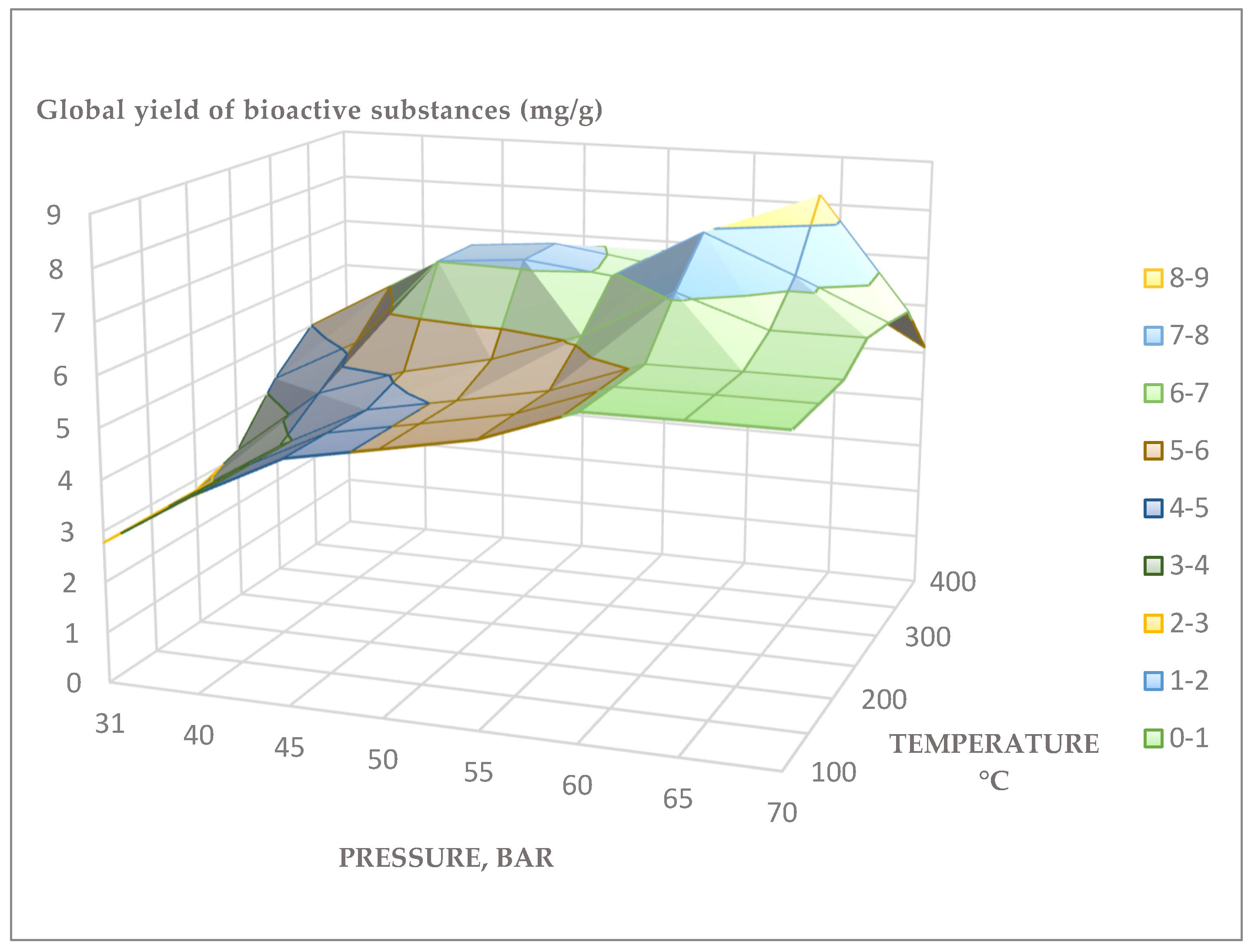
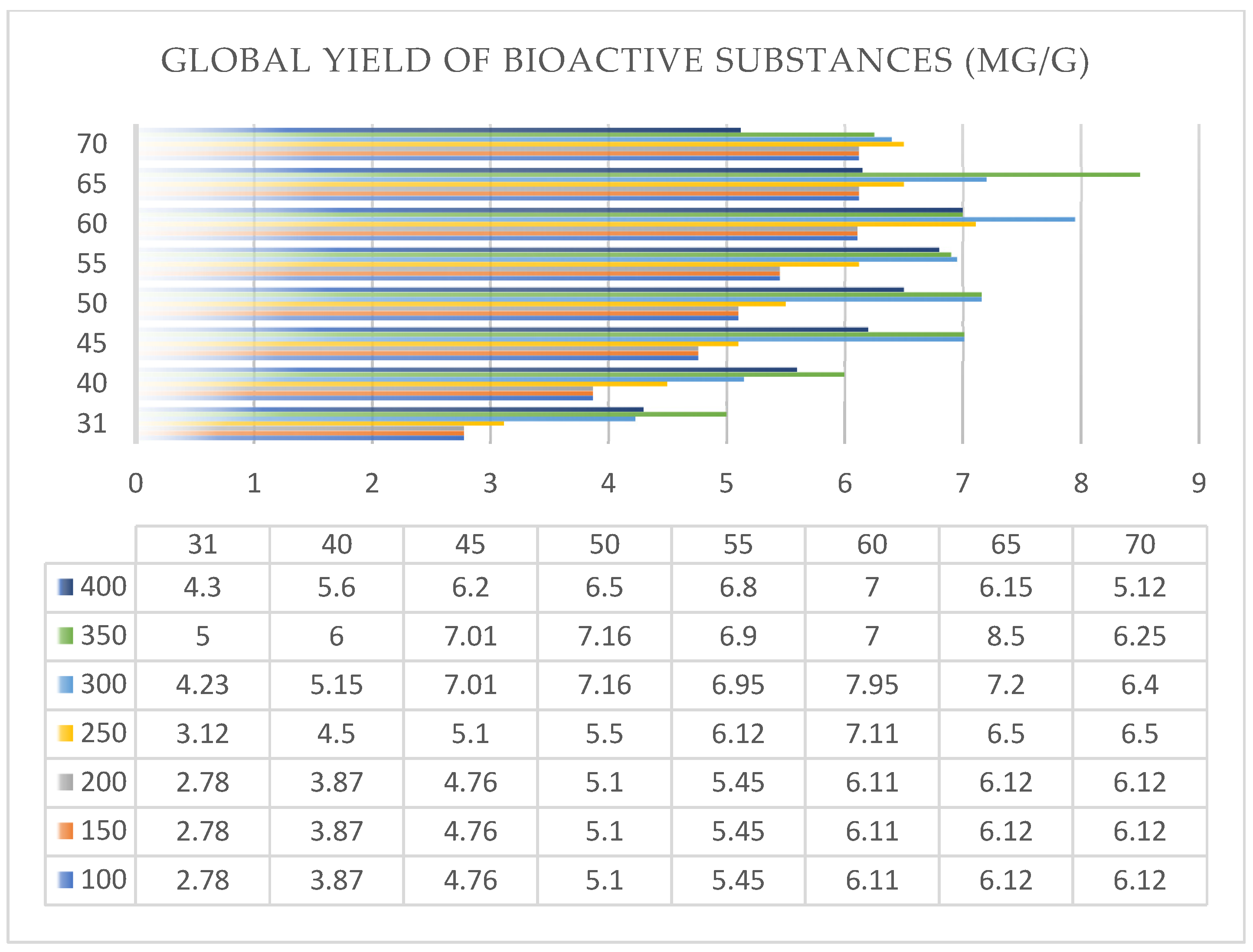
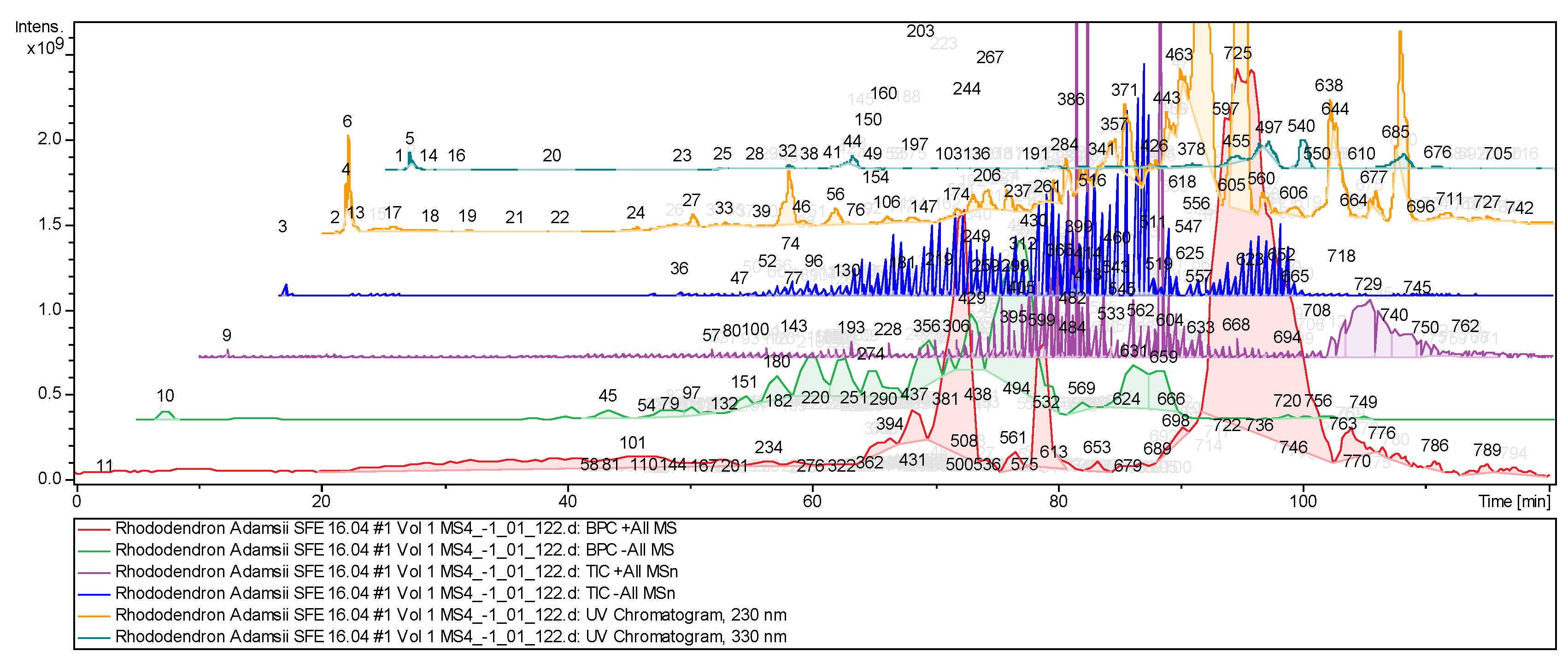
- Supercritical pressure: 300 bar, extraction temperature: 60 °C, extraction time: 1 h; the global yield of BAS was 7.95 mg/g of plant sample; the share of the co-solvent (C2H5OH) was 2%;
- Supercritical pressure: 350 bar, extraction temperature: 65 °C, extraction time: 1 h; the global yield of BAS was 8.5 mg/g of plant sample; the share of the co-solvent (C2H5OH) was 2%.
3. Discussion
4. Materials and Methods
4.1. Materials
4.2. Chemicals and Reagents
4.3. Liquid Chromatography
4.4. SC-CO2 Extraction
4.5. Mass Spectrometry
5. Conclusions
Author Contributions
Funding
Data Availability Statement
Acknowledgments
Conflicts of Interest
Appendix A

| № | Identification | Formula | Calculated Mass | Observed Mass [M-H]− | Observed Mass [M+H]+ | MS/MS Stage 2 Fragmentation | MS/MS Stage 3 Fragmentation | MS/MS Stage 4 Fragmentation | References |
|---|---|---|---|---|---|---|---|---|---|
| Group of polyphenols | |||||||||
| 1 | Caffeic acid [(2E)-3-(3,4-Dihydroxyphenyl)acrylic acid] | C9H8O4 | 180.157 | 181.08 | 163.03; 135.11 | Senecio clivicolus [55]; Radix polygoni multiflori [56]; Lepechinia [57]; Rhus coriaria [58] | |||
| 2 | Fraxetin | C10H8O5 | 208.168 | 209.00 | 193.12; 165.07 | 109.2 | Embelia [59]; Actinidia [60]; Jatropha [61]; Artemisia martjanovii [62] | ||
| 3 | Kaempferol [3,5,7-Trihydroxy-2-(4-hydro- xyphenyl)-4H-chromen-4-one] | C15H10O6 | 286.236 | 287.00 | 286.24; 204.96; 163.02 | 181.02 | 162.88 | Rh. adamsii [63,64]; Rhus coriaria [58]; Lonicera japonica [65]; Ribes meyeri [66] | |
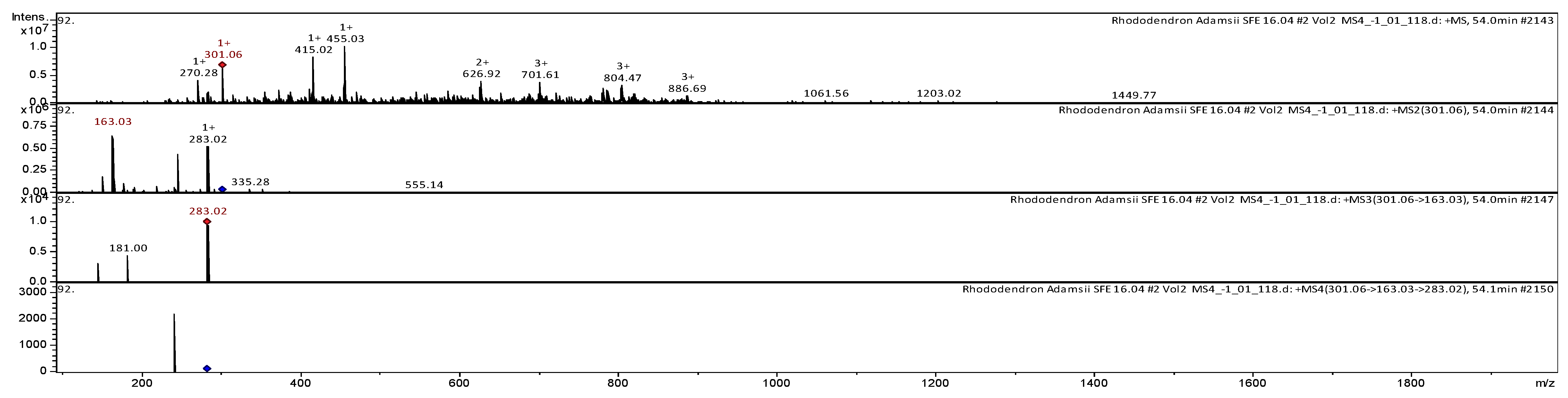
| 4 | Rhamnocitrin | C6H12O6 | 300.263 | 301.02 | 163.03; 283.02 | 283.02 181.00 | Mentha [29]; Astragali radix [30]; Lonicera caerulea [31]; Phyllanthus urinaria L. [32] | ||
| 5 | Ellagic acid [Benzoaric acid; Elagostasine; Lagistase; Eleagic acid] | C14H6O8 | 302.193 | 303.13 | 285.06 | 257.03 | 201.02 | Cicer arietinum [67]; Punica granatum [68]; Juglans regia [69]; Juglans mandshurica [33]; Myrtle [70]; Rhus coriaria [58] | |
| 6 | Quercetin [2-(3,4-Dihydroxyphenyl)-3,5,7-trihy- droxy-4H-chromen-4-one] | C15H10O7 | 302.235 | 301.02 | 303.08 | 285.01; 163.02 | 180.97; 145.00 | 162.98 | Ribes meyeri [66]; Ribes dikuscha; Ribes triste [71]; Capsicum annuum [72]; Propolis [73] |
| 7 | Hesperitin [Hesperetin] | C16H14O6 | 302.279 | 301.05 | 283.00; 217.02; 167.03 | 239.02; 149.03 | Vitis vinifera [39]; Mentha [74]; Rosmarinus officinalis [75] | ||
| 8 | Dihydroquercetin [Taxifolin; Taxifoliol] | C15H12O7 | 304.251 | 303.09 | 285.04 | 266.96; 241.09; 215.05; 135.05 | 171.02 | millet grains [34]; Ribes triste [71]; Potentilla freyniana [76]; Thymus vulgaris; Oregano [77] | |
| 9 | Isorhamnetin [Isorhamnetol; Quercetin 3′-Methyl ether] | C16H12O7 | 316.262 | 317.07 | 299.04; 177.02 | 146.98 | Phoenix dactylifera [78]; Cyperus laevigatus [79]; Spondias purpurea [80] | ||
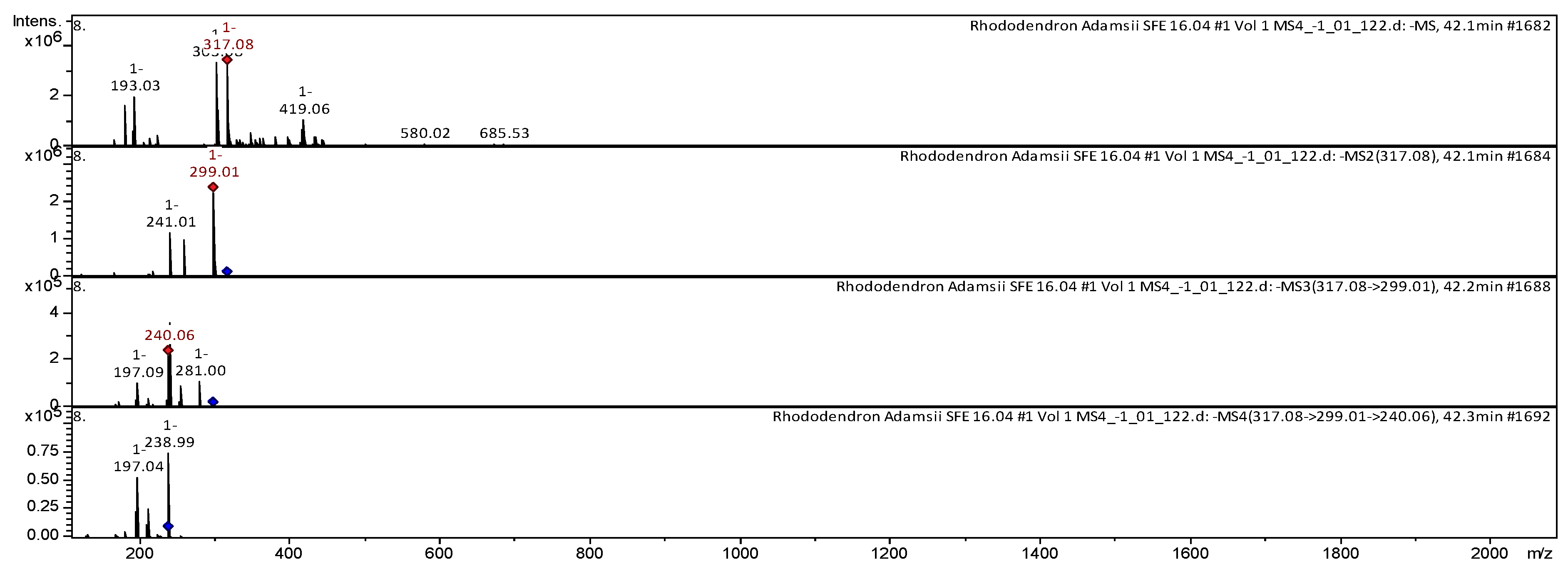
| 10 | Myricetin [3,5,7-Trihydroxy-2-(3,4,5-Trihydroxyphenyl)-4H-Chromen-4-One] | C15H10O8 | 318.235 | 317.08 | 299.01; 241.01 | 240.06; 197.09 | 238.99; 197.04 | Juglans mandshurica [33]; millet grains [34]; Rh. sichotense [35]; Inula graveolens [36]; Rh. ungernii [37]; Solanaceae [38]; Vitis vinifera [39]; Andean blueberry [40]; Taraxacum officinale [41] | |
| 11 | Quercetagetin | C15H10O8 | 318.235 | 317.08 | 299.05; 203.11 | 255.13 | F. herrerae [81] | ||
| 12 | Fertaric acid [2-O-(4-Hydroxy-3-Methoxy-trans-cinnamoyl)tartaric acid] | C14H14O9 | 326.256 | 327.08 | 271.01; 177.06; 217.03 | 149.10 | Vitis vinifera [39]; Melissa officinalis [82]; Salvia; Mint; Basilic [77] | ||
| 13 | Esculin [Aesculin; Esculoside; Polichrome] | C15H16O9 | 340.282 | 341.09 | 281.01; 217.11; 151.06 | 174.96 | Rh. sichotense [35]; Artemisia annua [83]; Stevia rebaudiana [84]; Actinidia chinensis [60] | ||
| 14 | Caffeic acid-O-hexoside [Caffeoyl-O-hexoside] | C15H18O9 | 342.298 | 343.09 | 243.01; 163.00 | Myrtle [70]; Cranberry [85]; Andean blueberry [40]; Cherimoya, papaya [86]; Rapeseed petals [87]; Phoenix dactylifera [78] | |||
| 15 | Sesamin [Fagarol; Sezamin; Asarinin] | C20H18O6 | 354.353 | 355.10 | 337.02; 231.02; 164.26 | Eleuterococcus [88]; Lignans [89]; Petroselenium crispum [77] | |||
| 16 | Fraxin (Fraxetin-8-O-glucoside) | C16H18O10 | 370.308 | 371.08 | 338.99 | 320.96; 177.03 | 224.96 | Rh. sichotense [35]; Actinidia chinensis [60]; Solanum tuberosum [90] | |
| 17 | Fraxetin-7-O-beta-glucuronide | C16H16O11 | 384.291 | 383.09 | 365.09; 190.96 | 266.97; 215.02 | 170.97 | Rh. sichotense [35]; rat plasma [91] | |
| 18 | Cyanidin-3-alpfa-L-arabinoside | C20H19O10 | 419.358 | 418.51 | 399.05; 319.02; 194.99 | 381.068 162.02 | 337.02; 253.08 | Chokeberry [92] | |
| 19 | Avicularin (Quercetin 3-Alpha-L-Arabinofuranoside; Avicularoside) | C20H18O11 | 434.350 | 433.09 | 415.07; 335.01; 176.98 | 397.06; 190.99 | 353.07; 253.99 | Rh. sichotense [35]; Ribes meyeri [66]; Cranberry [85]; Juglans mandshurica [33]; Loropetalum chinense [93] | |
| 20 | Taxifolin-O-pentoside [Dihydroquercetin pentoside] | C20H20O11 | 436.371 | 435.16 | 416.54; 300.99; 231.01 | 397.02; 205.96 | 361.11; 283.02; 188.80 | Rh. sichotense [35]; millet grains [34]; Rosa davurica [94]; Chilean currants [95] | |
| 21 | Quercitrin [Quercetin 3 L- Rhamnoside; Quercetrin] | C21H20O11 | 448.376 | 448.89 | 370.95; 282.93 | 352.95; 176.98 | 334.90; 222.92; 176.97 | Propolis [73]; Embelia [59]; Euphorbia hirta [96] | |
| Other chemical groups | |||||||||
| 22 | Tetrahydroxypentanoic acid | C5H10O6 | 166.129 | 165.06 | 147.01 | Cyperus laevigatus [79] | |||
| 23 | Glucaric acid [D-Glucaric acid; Saccharic acid; D-Glutarate] | C6H10O8 | 210.139 | 211.09 | 192.12 | 175.06; 136.12 | Soybean [97]; Cherimoya, Papaya [86] | ||
| 24 | Stearidonic acid [6,9,12,15-Octadecatetraenoic acid; Moroctic acid] | C18H28O2 | 276.414 | 277.09 | 275.04; 207.05 | 256.99 | Salviae Miltiorrhizae [98]; G. linguiforme [81]; Rhus coriaria [58]; Lonicera caerulea [99]; Jatropha [61] | ||
| 25 | Linoleic acid [Linolic acid; Telfairic acid] | C18H32O2 | 280.445 | 281.99 | 264.94; 152.01; 163.00 | 180.95; 135.06 | 162.99 | Zostera marina [100]; Jatropha [61] | |
| 26 | 3,4-Dihydroxyestran-17-one | C18H28O3 | 292.413 | 293.05 | 274.98; 146.97 | 256.99; 162.98 | 201.03 | Juglans mandshurica [63] | |
| 27 | Nonadecanoic acid [N-Nonadecanoic acid] | C19H38O2 | 298.503 | 300.09 | 243.04 | 201.02 | Rh. adamsii [7,8,9] | ||
| 28 | 3-Hydroxy-9,10-dimethoxypterocarpan | C17H16O5 | 300.306 | 300.09 | 243.04 | 201.02 | Huolisu Oral Liquid [101]; Radix astragali [30]; Chinese herbal formula Jian-Pi-Yi-Shen pill [102] | ||
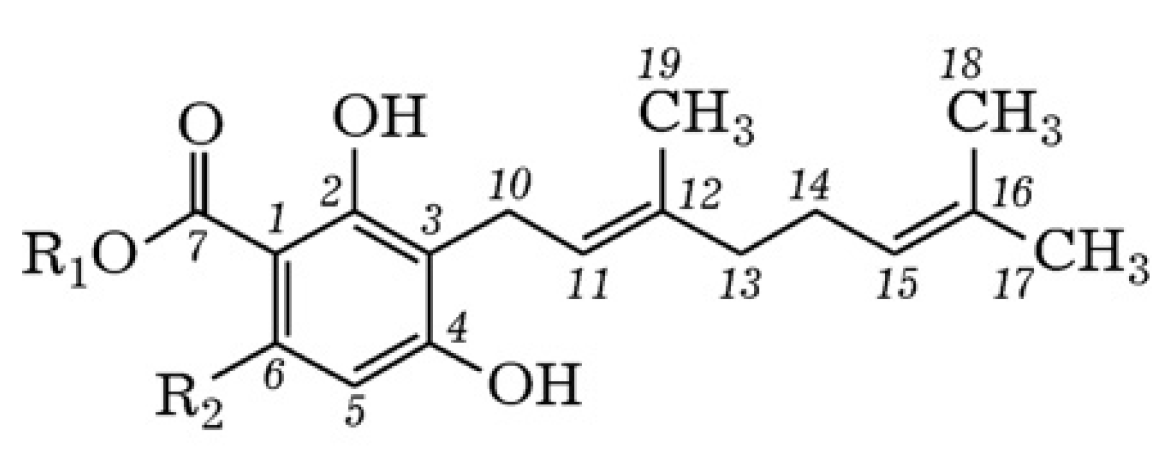
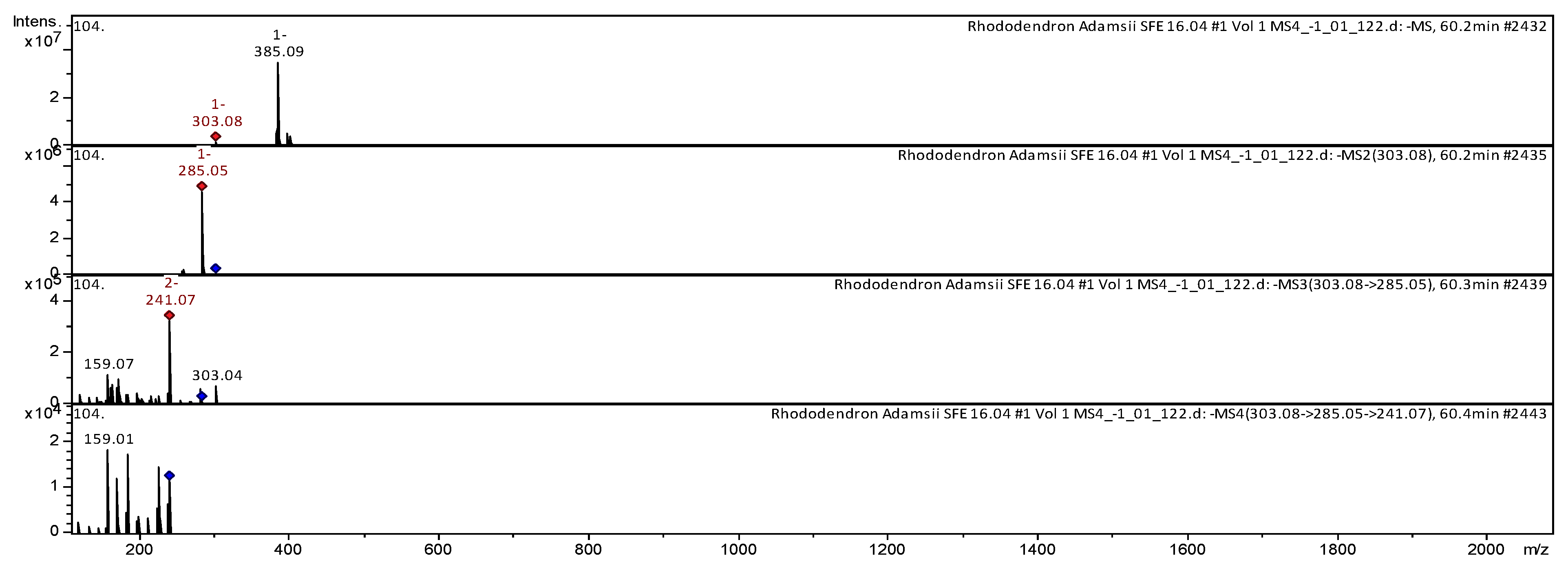
| 29 | Cannabigerorcinic acid [Cannabigerorcinolic acid; Cannabiorcogerolic acid] | C18H24O4 | 304.380 | 303.08 | 285.05 | 241.07; 159.07 | 159.01 | Rh. adamsii [7,8,9] | |
| 30 | 8-Demethyleucalyptin [5-Hydroxy-4′,7-dimetoxy-6-methylflavone; Pabalate; Sodium salicylate] | C18H16O5 | 312.316 | 311.14 | 182.99 | l. palustre [103] | |||
| 31 | Arachic acid [Arachidic acid; eicosanoic acid] | C20H40O2 | 312.530 | 311.14 | 299.01; 287.15 | 256.01; 239.21; | F. herrerae; C. edulis [81]; Cyperus laevigatus [79] | ||
| 32 | 4-O-p-coumaroyl shiikimic acid | C16H16O7 | 320.294 | 319.10 | 275.08 | 257.10; 217.13 | 257.08 | Andean blueberry [40]; Lonicera caerulea [31] | |
| 33 | Bilobalide [(-)-Bilobalide] | C15H18O8 | 326.299 | 325.11 | 182.99 | Ginkgo biloba [104]; Malus toringoides [105]; Xindxiong injection [106] | |||
| 34 | Gingerenone C | C20H22O4 | 326.386 | 327.15 | 203.06; 137.05 | 175.03 | Ventilago denticulata [107] | ||
| 35 | Mukurozidiol [Byakangellicin] | C17H18O7 | 334.321 | 335.04 | 303.06; 195.01 | 284.99; 163.00 | 135.14 | Ventilago denticulata [107] | |
| 36 | 4,17-Dimethoxy-2-oxatricyclo [13.2.2.1-3,7-]-icosa-1(17),3(20),4,6,15,18-hexaen-10-one | C21H24O4 | 340.412 | 341.09 | 281.06; 217.04; 243.06 | 137.05 | Juglans mandshurica [33] | ||
| 37 | Behenic acid [Docosanoic acid] | C22H44O2 | 340.583 | 341.05 | 323.10; 243.11; 177.04 | 159.05 | Rh. adamsii [7,8,9]; Pinus sylvestris [108] | ||
| 38 | Isochlorogenic acid | C16H18O9 | 354.309 | 355.03 | 323.00; 227.05 | 296.96; 172.96 | Actinidia chinensis [60] | ||
| 39 | Tricosanoic acid [N-Tricosanoic acid] | C23H46O2 | 354.610 | 355.08 | 322.96; 163.00 | 180.96 | 162.96 | Rh. adamsii [7,8,9] | |
| 40 | Lignoceric acid [Tetracosanoic acid] | C24H48O2 | 368.636 | 367.12 | 369.08 | 351.08; 285.02; 218.92; 162.98 | 163.02 | 144.97 | Rh. adamsii [7,8,9] |
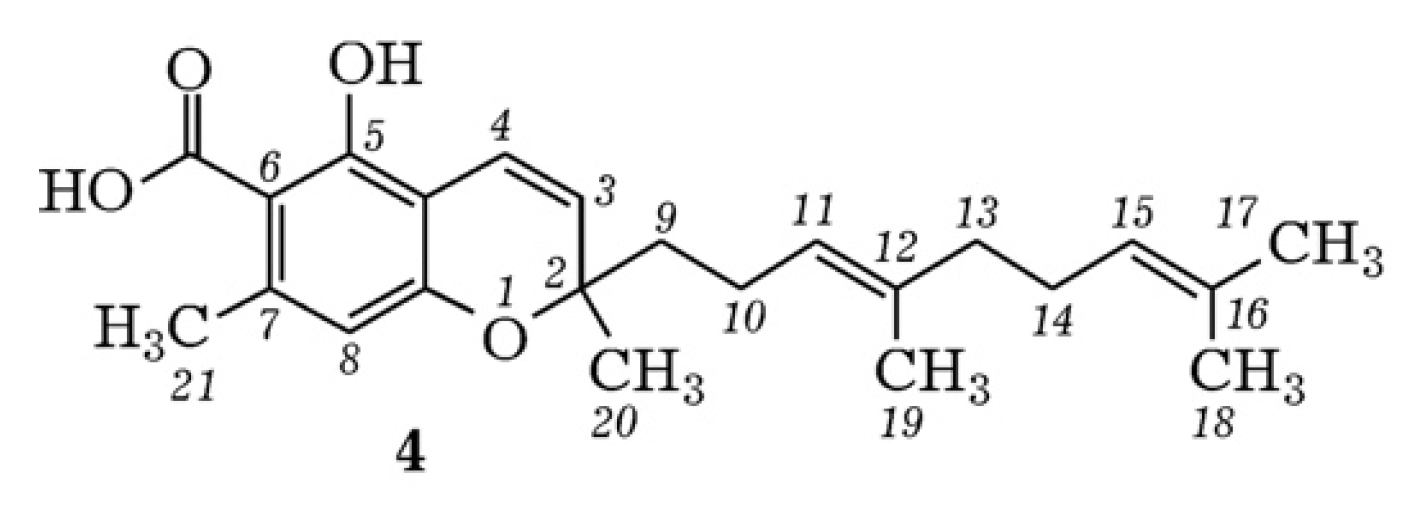
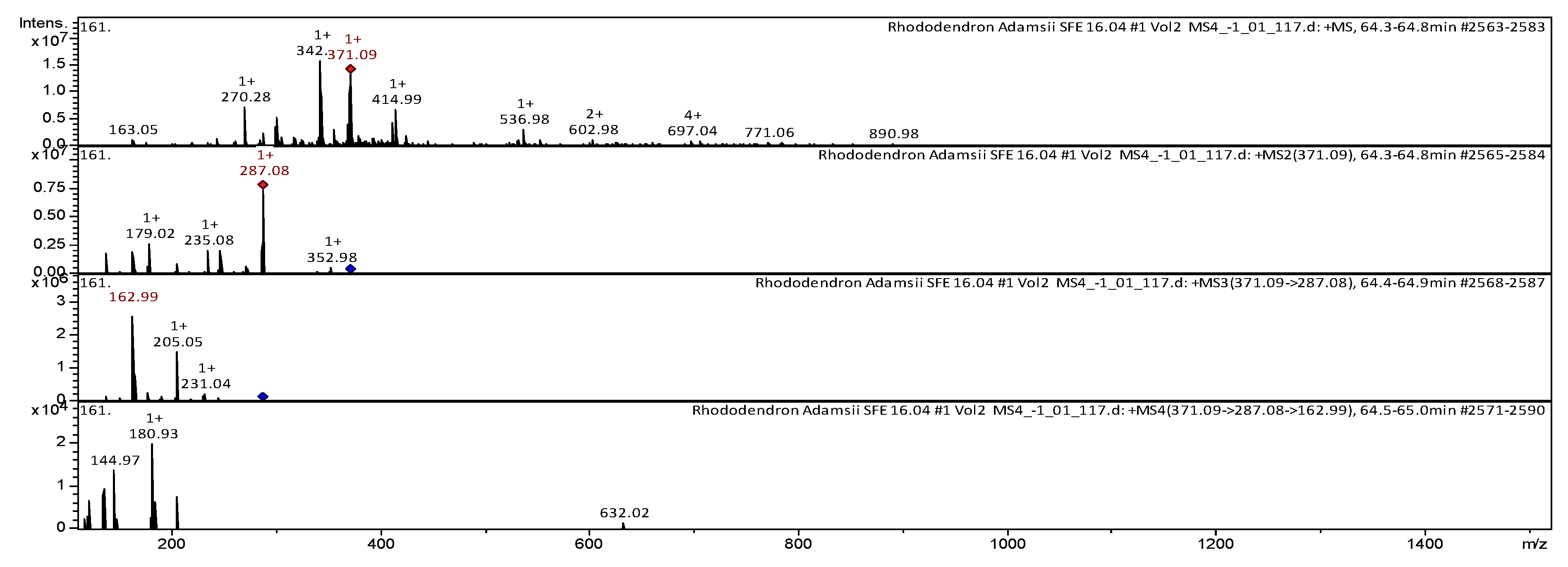
| 41 | Daurichromenic acid | C23H30O4 | 370.481 | 371.09 | 352.98; 287.08; 235.08; 179.02 | 231.04; 205.05; 162.99 | 180.93; 144.97 | Rh. adamsii [7,8,9]; Rh. sichotense [35] | |
| 42 | Pentacosanoic acid [N-Pentacosanoic acid] | C25H50O2 | 382.663 | 383.07 | 351.04; 287.99 | 229.04 | 211.03 | Rh. adamsii [7,8,9]; Rh. sichotense [35] | |
| 43 | Desmosterol [24-Dehydrocholesterol; 3beta-Cholesa-5,24-Dien-3-Ol] | C22H24O4 | 384.422 | 385.06 | 367.02; 300.92; | 282.94 | 162.89 | A. cordifolia [81] | |
| 44 | 3-(4,5-Dihydroxy-2-methyl-9,10-dioxo-9,10-dihydro-1-anthracenyl)-2,6-dihydroxy-1-benzoic acid | C22H12O8 | 404.326 | 405.03 | 372.94; 244.95 | 354.95; 229.93 | 336.95; 283.52; 216 93 | Juglans mandshurica [33] | |
| 45 | Beta-Sitosterin [Beta-Sitosterol] | C29H50O | 414.706 | 415.04 | 384.02 | 369.01 | 338.00 | Rh. sichotense [35]; F. herrerae; C. edulis [81]; Pinus sylvestris [108] | |
| 46 | Lupa-2,20(29)-dien-28-ol | C30H48O | 424.701 | 425.01 | 406.95; 202.91 | 389.01; 298.98 | 265.86; 203.86 | Juglans mandshurica [33] | |
| 47 | Lupeol [Fagarasterol; Clerodol; Monogynol B; Lupenol] | C30H50O | 426.717 | 427.04 | 409.01; 202.99 | 389.02; 247.99 | 370.96; 264.80 | Salvia [109]; Juglans mandshurica [33] | |
| 48 | Uvaol | C30H50O2 | 442.716 | 443.22 | 425.01; 233.07 | 407.02; 325.01 | 388.99; 231.11 | Rh. sichotense [35]; F. herrerae; C. edulis [81]; Olive leaves [110] | |
| 49 | 3-Oxoolean-12-en-29-oic acid | C30H46O3 | 454.684 | 455.05 | 409.00 | 390.98; 256.93 | 250.80; 212.08 | Juglans mandshurica [33] |
References
- Chamberlain, D.; Hyam, R.; Argent, G.; Fairweather, G.; Walter, K.S. The Genus Rhododendron: Its Classification and Synonymy; Royal Botanic Garden Edinburgh: Edinburgh, UK, 1996. [Google Scholar]
- Belousov, M.V.; Berezovskaya, T.P.; Komissarenko, N.F.; Tikhonova, L.A. Flavonoids of Siberian-Far-Eastern Species of Rhododendrons of the Subspecies Rhodorastrum. Chem. Nat. Compd. 1998, 34, 510–511. [Google Scholar] [CrossRef]
- Belousova, N.I.; Khan, V.A.; Berezovskaya, T.P. Intraspecies Chemical Variability of the Essential Oil of Ledum palustre. Chem. Nat. Compd. 1991, 26, 398–405. [Google Scholar] [CrossRef]
- Popov, M.G. Flora of Middle Siberia; Academy of Sciences of the USSR: Moscow, Russia, 1957. [Google Scholar]
- Chudakova, T. Plant Matters: Buddhist Medicine and Economies of Attention in Postsocialist Siberia. Am. Ethnol. 2017, 44, 341–354. [Google Scholar] [CrossRef]
- Polezhaeva, M.A.; Iunusova, D.R.; Tikhonova, N.A.; Polezhaev, A.N.; Koldaeva, M.N. Genetic Identification of Closely Related Endangered Rhododendron Species from East Asia. Russ. J. Genet. 2022, 58, 116–121. [Google Scholar] [CrossRef]
- Rogachev, A.D.; Fomenko, V.V.; Sal’nikova, O.I.; Pokrovskii, L.M.; Salakhutdinov, N.F. Comparative Analysis of Essential Oil Compositions from Leaves and Stems of Rhododendron adamsii, R. aureum, and R. dauricum. Chem. Nat. Compd. 2006, 42, 426–430. [Google Scholar] [CrossRef]
- Rogachev, A.D.; Komarova, N.I.; Morozov, S.V.; Fomenko, V.V.; Salakhutdinov, N.F. Phytochemical Study of Adams Rhododendron (Rhododendron adamsii) Rehder. The Quantitative Definition of Ursolic and Oleanolic Acids in Some Representatives of the Family Ericaceae. Chem. Sustain. Dev. 2007, 15, 561–564. [Google Scholar]
- Rogachev, A.D.; Komarova, N.I.; Korchagina, D.V.; Dolgikh, M.P.; Sorokina, I.V.; Baev, D.S.; Tolstikova, T.G.; Fomenko, V.V.; Salakhutdinov, N.F. Some Prenylated Phenols of Rhododendron adamsii: Isolation, Modification and Pharmacological Tests. Chem. Sustain. Dev. 2009, 17, 185–193. [Google Scholar]
- Mirovich, V.M.; Makarenko, S.P.; Paisova, O.I. Study of Chemical Composition of Overground Organs of Adams Rhododendron by High Performance Liquid Chromatography. Bull. East-Sib. Sci. Cent. Sib. Branch Russ. Acad. Med. Sci. 2005, 7, 164–166. [Google Scholar]
- Matos, R.L.; Vieira de Melo, S.A.B.; Cabral Albuquerque, E.C.M.; Foster, N.R. Dense CO2 Technology: Overview of Recent Applications for Drug Processing/Formulation/Delivery. Chem. Eng. Process. Process Intensif. 2019, 140, 64–77. [Google Scholar] [CrossRef]
- de Melo, M.M.R.; Oliveira, E.L.G.; Silvestre, A.J.D.; Silva, C.M. Supercritical Fluid Extraction of Triterpenic Acids from Eucalyptus globulus Bark. J. Supercrit. Fluids 2012, 70, 137–145. [Google Scholar] [CrossRef]
- Aliev, A.M.; Radjabov, G.K.; Musaev, A.M. Dynamics of Supercritical Extraction of Biological Active Substances from the Juniperus communis Var. Saxatillis. J. Supercrit. Fluids 2015, 102, 66–72. [Google Scholar] [CrossRef]
- Leone, G.P.; Balducchi, R.; Mehariya, S.; Martino, M.; Larocca, V.; Di Sanzo, G.; Iovine, A.; Casella, P.; Marino, T.; Karatza, D.; et al. Selective Extraction of ω-3 Fatty Acids from Nannochloropsis sp. Using Supercritical CO2 Extraction. Molecules 2019, 24, 2406. [Google Scholar] [CrossRef] [PubMed]
- Razgonova, M.P.; Zakharenko, A.M.; Golokhvast, K.S. Investigation of the Supercritical CO2 Extracts of Wild Ledum Palustre L. (Rhododendron Tomentosum Harmaja) and Identification of Its Metabolites by Tandem Mass Spectrometry. Russ. J. Bioorg. Chem. 2023, 49, 1645–1657. [Google Scholar] [CrossRef]
- Chemat, F.; Vian, M.A.; Cravotto, G. Green Extraction of Natural Products: Concept and Principles. Int. J. Mol. Sci. 2012, 13, 8615–8627. [Google Scholar] [CrossRef] [PubMed]
- Paes, J.; Dotta, R.; Barbero, G.F.; Martínez, J. Extraction of Phenolic Compounds and Anthocyanins from Blueberry (Vaccinium myrtillus L.) Residues Using Supercritical CO2 and Pressurized Liquids. J. Supercrit. Fluids 2014, 95, 8–16. [Google Scholar] [CrossRef]
- Brglez Mojzer, E.; Knez Hrnčič, M.; Škerget, M.; Knez, Ž.; Bren, U. Polyphenols: Extraction Methods, Antioxidative Action, Bioavailability and Anticarcinogenic Effects. Molecules 2016, 21, 901. [Google Scholar] [CrossRef]
- da Silva, R.P.F.F.; Rocha-Santos, T.A.P.; Duarte, A.C. Supercritical Fluid Extraction of Bioactive Compounds. TrAC Trends Anal. Chem. 2016, 76, 40–51. [Google Scholar] [CrossRef]
- Kupnik, K.; Leitgeb, M.; Primožič, M.; Postružnik, V.; Kotnik, P.; Kučuk, N.; Knez, Ž.; Marevci, M.K. Supercritical Fluid and Conventional Extractions of High Value-Added Compounds from Pomegranate Peels Waste: Production, Quantification and Antimicrobial Activity of Bioactive Constituents. Plants 2022, 11, 928. [Google Scholar] [CrossRef]
- Barajas-Álvarez, P.; Castillo-Herrera, G.A.; Guatemala-Morales, G.M.; Corona-González, R.I.; Arriola-Guevara, E.; Espinosa-Andrews, H. Supercritical CO2-Ethanol Extraction of Oil from Green Coffee Beans: Optimization Conditions and Bioactive Compound Identification. J. Food Sci. Technol. 2021, 58, 4514–4523. [Google Scholar] [CrossRef]
- Zuo, Y.B.; Zeng, A.W.; Yuan, X.G.; Yu, K.T. Extraction of Soybean Isoflavones from Soybean Meal with Aqueous Methanol Modified Supercritical Carbon Dioxide. J. Food Eng. 2008, 89, 384–389. [Google Scholar] [CrossRef]
- Jiao, J.; Gai, Q.-Y.; Wang, X.; Liu, J.; Lu, Y.; Wang, Z.-Y.; Xu, X.-J.; Fu, Y.-J. Effective Production of Phenolic Compounds with Health Benefits in Pigeon Pea [Cajanus cajan (L.) Millsp.] Hairy Root Cultures. J. Agric. Food Chem. 2020, 68, 8350–8361. [Google Scholar] [CrossRef]
- Nakornriab, M.; Sriseadka, T.; Wongpornchai, S. Quantification of carotenoid and flavonoid components in brans of some thai black rice cultivars using supercritical fluid extraction and high-performance liquid chromatography-mass spectrometry. J. Food Lipids 2008, 15, 488–503. [Google Scholar] [CrossRef]
- Zarena, A.S.; Manohar, B.; Udaya Sankar, K. Optimization of Supercritical Carbon Dioxide Extraction of Xanthones from Mangosteen Pericarp by Response Surface Methodology. Food Bioprocess Technol. 2012, 5, 1181–1188. [Google Scholar] [CrossRef]
- Kuvendziev, S.; Lisichkov, K.; Zeković, Z.; Marinkovski, M.; Musliu, Z.H. Supercritical Fluid Extraction of Fish Oil from Common Carp (Cyprinus carpio L.) Tissues. J. Supercrit. Fluids 2018, 133, 528–534. [Google Scholar] [CrossRef]
- Aro, H.; Järvenpää, E.P.; Könkö, K.; Sihvonen, M.; Hietaniemi, V.; Huopalahti, R. Isolation and Purification of Egg Yolk Phospholipids Using Liquid Extraction and Pilot-Scale Supercritical Fluid Techniques. Eur. Food Res. Technol. 2009, 228, 857–863. [Google Scholar] [CrossRef]
- Krishnegowda, R.; Ravindra, M.R.; Sharma, M. Application of Supercritical Fluid Extraction for Extraction or Enrichment of Phospholipids in Egg and Dairy Products: A Review. J. Food Process Eng. 2021, 44, e13692. [Google Scholar] [CrossRef]
- Li, X.; Tian, T. Phytochemical Characterization of Mentha Spicata L. Under Differential Dried-Conditions and Associated Nephrotoxicity Screening of Main Compound with Organ-on-a-Chip. Front. Pharmacol. 2018, 9, 1067. [Google Scholar] [CrossRef]
- Zhang, J.; Xu, X.-J.; Xu, W.; Huang, J.; Zhu, D.-Y.; Qiu, X.-H. Rapid Characterization and Identification of Flavonoids in Radix Astragali by Ultra-High-Pressure Liquid Chromatography Coupled with Linear Ion Trap-Orbitrap Mass Spectrometry. J. Chromatogr. Sci. 2015, 53, 945–952. [Google Scholar] [CrossRef]
- Razgonova, M.P.; Navaz, M.A.; Sabitov, A.S.; Zinchenko, Y.N.; Rusakova, E.A.; Petrusha, E.N.; Golokhvast, K.S.; Tikhonova, N.G. The Global Metabolome Profiles of Four Varieties of Lonicera caerulea, Established via Tandem Mass Spectrometry. Horticulturae 2023, 9, 1188. [Google Scholar] [CrossRef]
- Fang, S.-H.; Rao, Y.K.; Tzeng, Y.-M. Anti-Oxidant and Inflammatory Mediator’s Growth Inhibitory Effects of Compounds Isolated from Phyllanthus urinaria. J. Ethnopharmacol. 2008, 116, 333–340. [Google Scholar] [CrossRef]
- Huo, J.-H.; Du, X.-W.; Sun, G.-D.; Dong, W.-T.; Wang, W.-M. Identification and Characterization of Major Constituents in Juglans mandshurica Using Ultra Performance Liquid Chromatography Coupled with Time-of-Flight Mass Spectrometry (UPLC-ESI-Q-TOF/MS). Chin. J. Nat. Med. 2018, 16, 525–545. [Google Scholar] [CrossRef]
- Chandrasekara, A.; Shahidi, F. Bioactivities and Antiradical Properties of Millet Grains and Hulls. J. Agric. Food Chem. 2011, 59, 9563–9571. [Google Scholar] [CrossRef] [PubMed]
- Razgonova, M.; Zakharenko, A.; Ercisli, S.; Grudev, V.; Golokhvast, K. Comparative Analysis of Far East Sikhotinsky Rhododendron (Rh. sichotense) and East Siberian Rhododendron (Rh. adamsii) Using Supercritical CO2-Extraction and HPLC-ESI-MS/MS Spectrometry. Molecules 2020, 25, 3774. [Google Scholar] [CrossRef] [PubMed]
- Silinsin, M.; Bursal, E. UHPLC-MS/MS Phenolic Profiling and in Vitro Antioxidant Activities of Inula graveolens (L.) Desf. Nat. Prod. Res. 2018, 32, 1467–1471. [Google Scholar] [CrossRef] [PubMed]
- Dede, E.; Genc, N.; Elmastas, M.; Aksit, H.; Erenler, R. Chemical Constituents Isolated from Rhododendron ungernii with Antioxidant Profile. Nat. Prod. J. 2019, 9, 238–243. [Google Scholar] [CrossRef]
- Yasir, M.; Sultana, B.; Anwar, F. LC–ESI–MS/MS Based Characterization of Phenolic Components in Fruits of Two Species of Solanaceae. J. Food Sci. Technol. 2018, 55, 2370–2376. [Google Scholar] [CrossRef]
- Goufo, P.; Singh, R.K.; Cortez, I. A Reference List of Phenolic Compounds (Including Stilbenes) in Grapevine (Vitis vinifera L.) Roots, Woods, Canes, Stems, and Leaves. Antioxidants 2020, 9, 398. [Google Scholar] [CrossRef]
- Aita, S.; Capriotti, A.; Cavaliere, C.; Cerrato, A.; Giannelli Moneta, B.; Montone, C.; Piovesana, S.; Laganà, A. Andean Blueberry of the Genus Disterigma: A High-Resolution Mass Spectrometric Approach for the Comprehensive Characterization of Phenolic Compounds. Separations 2021, 8, 58. [Google Scholar] [CrossRef]
- Aabideen, Z.U.; Mumtaz, M.W.; Akhtar, M.T.; Mukhtar, H.; Raza, S.A.; Touqeer, T.; Saari, N. Anti-Obesity Attributes; UHPLC-QTOF-MS/MS-Based Metabolite Profiling and Molecular Docking Insights of Taraxacum officinale. Molecules 2020, 25, 4935. [Google Scholar] [CrossRef]
- Shah, M.; Sher, H.; Ali, H.; Howes, M.-J.R.; Langat, M.K.; Jan-Smith, E. Isolation of Cannabinoids and Triterpenoids from Rhododendron anthopogon D.Don (Ericaceae) Leaves. Nat. Prod. Res. 2025, 1–4. [Google Scholar] [CrossRef]
- Kemkuignou, B.M.; Moussa, A.Y.; Decock, C.; Stadler, M. Terpenoids and Meroterpenoids from Cultures of Two Grass-Associated Species of Amylosporus (Basidiomycota). J. Nat. Prod. 2022, 85, 846–856. [Google Scholar] [CrossRef]
- Hashimoto, T.; Quang, D.N.; Nukada, M.; Asakawa, Y. Isolation, Synthesis and Biological Activity of Grifolic Acid Derivatives from the Inedible Mushroom Albatrellus dispansus. Heterocycles 2005, 65, 2431–2439. [Google Scholar]
- Bougoure, D.S.; Cairney, J.W.G. Assemblages of Ericoid Mycorrhizal and Other Root-associated Fungi from Epacris pulchella (Ericaceae) as Determined by Culturing and Direct DNA Extraction from Roots. Environ. Microbiol. 2005, 7, 819–827. [Google Scholar] [CrossRef] [PubMed]
- Chambers, S.M.; Curlevski, N.J.A.; Cairney, J.W.G. Ericoid Mycorrhizal Fungi Are Common Root Inhabitants of Non-Ericaceae Plants in a South-Eastern Australian Sclerophyll Forest. FEMS Microbiol. Ecol. 2008, 65, 263–270. [Google Scholar] [CrossRef] [PubMed]
- Deepak, H.V.; Swamy, M.M.M.; Murai, Y.; Suga, Y.; Anetai, M.; Yo, T.; Kuragano, M.; Uwai, K.; Tokuraku, K.; Monde, K. Daurichromenic Acid from the Chinese Traditional Medicinal Plant Rhododendron dauricum Inhibits Sphingomyelin Synthase and Aβ Aggregation. Molecules 2020, 25, 4077. [Google Scholar] [CrossRef]
- Taura, F.; Iijima, M.; Lee, J.-B.; Hashimoto, T.; Asakawa, Y.; Kurosaki, F. Daurichromenic Acid-Producing Oxidocyclase in the Young Leaves of Rhododendron dauricum. Nat. Prod. Commun. 2014, 9, 1329–1332. [Google Scholar]
- Lee, K.-H. Discovery and Development of Natural Product-Derived Chemotherapeutic Agents Based on a Medicinal Chemistry Approach. J. Nat. Prod. 2010, 73, 500–516. [Google Scholar] [CrossRef]
- Saeki, H.; Hara, R.; Takahashi, H.; Iijima, M.; Munakata, R.; Kenmoku, H.; Fuku, K.; Sekihara, A.; Yasuno, Y.; Shinada, T.; et al. An Aromatic Farnesyltransferase Functions in Biosynthesis of the Anti-HIV Meroterpenoid Daurichromenic Acid. Plant Physiol. 2018, 178, 535–551. [Google Scholar] [CrossRef]
- Taura, F.; Iijima, M.; Kurosaki, F. Daurichromenic Acid and Grifolic Acid: Phytotoxic Meroterpenoids That Induce Cell Death in Cell Culture of Their Producer Rhododendron dauricum. Plant Signal. Behav. 2018, 13, e1422463. [Google Scholar] [CrossRef]
- Tafesse, F.G.; Huitema, K.; Hermansson, M.; van der Poel, S.; Van Den Dikkenberg, J.; Uphoff, A.; Somerharju, P.; Holthuis, J.C.M. Both Sphingomyelin Synthases SMS1 and SMS2 Are Required for Sphingomyelin Homeostasis and Growth in Human HeLa Cells. J. Biol. Chem. 2007, 282, 17537–17547. [Google Scholar] [CrossRef]
- Pharmacopoeia of the Eurasian Economic Union, Approved by Decision of the Board of Eurasian Economic Commission. 2020. Available online: https://eec.eaeunion.org/en/comission/department/deptexreg/formirovanie-obshchikh-rynkov/pharmacopoeia/ (accessed on 24 November 2025).
- Razgonova, M.; Zakharenko, A.; Pikula, K.; Kim, E.; Chernyshev, V.; Ercisli, S.; Cravotto, G.; Golokhvast, K. Rapid Mass Spectrometric Study of a Supercritical CO2-Extract from Woody Liana Schisandra chinensis by HPLC-SPD-ESI-MS/MS. Molecules 2020, 25, 2689. [Google Scholar] [CrossRef]
- Faraone, I.; Rai, D.K.; Chiummiento, L.; Fernandez, E.; Choudhary, A.; Prinzo, F.; Milella, L. Antioxidant Activity and Phytochemical Characterization of Senecio clivicolus Wedd. Molecules 2018, 23, 2497. [Google Scholar] [CrossRef] [PubMed]
- Luo, D.-Q.; Jia, P.; Zhao, S.-S.; Zhao, Y.; Liu, H.-J.; Wei, F.; Ma, S.-C. Identification and Differentiation of Polygonum multiflorum Radix and Polygoni multiflori Radix Preaparata through the Quantitative Analysis of Multicomponents by the Single-Marker Method. J. Anal. Methods Chem. 2019, 2019, 1–13. [Google Scholar] [CrossRef] [PubMed]
- Serrano, C.A.; Villena, G.K.; Rodríguez, E.F. Phytochemical Profile and Rosmarinic Acid Purification from Two Peruvian Lepechinia Willd. Species (Salviinae, Mentheae, Lamiaceae). Sci. Rep. 2021, 11, 7260. [Google Scholar] [CrossRef]
- Abu-Reidah, I.M.; Ali-Shtayeh, M.S.; Jamous, R.M.; Arráez-Román, D.; Segura-Carretero, A. HPLC–DAD–ESI-MS/MS Screening of Bioactive Components from Rhus coriaria L. (Sumac) Fruits. Food Chem. 2015, 166, 179–191. [Google Scholar] [CrossRef] [PubMed]
- Rini Vijayan, K.P.; Raghu, A.V. Tentative Characterization of Phenolic Compounds in Three Species of the Genus Embelia by Liquid Chromatography Coupled with Mass Spectrometry Analysis. Spectrosc. Lett. 2019, 52, 653–670. [Google Scholar] [CrossRef]
- Chen, Y.; Cai, X.; Li, G.; He, X.; Yu, X.; Yu, X.; Xiao, Q.; Xiang, Z.; Wang, C. Chemical Constituents of Radix Actinidia chinensis Planch by UPLC–QTOF–MS. Biomed. Chromatogr. 2021, 35, e5103. [Google Scholar] [CrossRef]
- Zengin, G.; Mahomoodally, M.F.; Sinan, K.I.; Ak, G.; Etienne, O.K.; Sharmeen, J.B.; Brunetti, L.; Leone, S.; Di Simone, S.C.; Recinella, L.; et al. Chemical Composition and Biological Properties of Two Jatropha Species: Different Parts and Different Extraction Methods. Antioxidants 2021, 10, 792. [Google Scholar] [CrossRef]
- Okhlopkova, Z.; Ercisli, S.; Razgonova, M.; Ivanova, N.; Antonova, E.; Egorov, Y.; Kucharova, E.; Golokhvast, K. Primary Determination of the Composition of Secondary Metabolites in the Wild and Introduced Artemisia martjanovii Krasch: Samples from Yakutia. Horticulturae 2023, 9, 1329. [Google Scholar] [CrossRef]
- Karpova, E.A.; Karakulov, A.V. Phenolic Compounds of Closely Related Rhododendron Species (Ericaceae). Turczaninowia 2011, 14, 145–149. [Google Scholar]
- Zaytseva, N.V.; Alexandrovna, P.I. Chromatographic Analysis of Chemical Composition of the Genus Rhododendron Plants Growing on the Mountain of Evota (South yakutia). J. Chem. Chem. Eng. 2014, 8, 516–523. [Google Scholar]
- Cai, Z.; Wang, C.; Zou, L.; Liu, X.; Chen, J.; Tan, M.; Mei, Y.; Wei, L. Comparison of Multiple Bioactive Constituents in the Flower and the Caulis of Lonicera Japonica Based on UFLC-QTRAP-MS/MS Combined with Multivariate Statistical Analysis. Molecules 2019, 24, 1936. [Google Scholar] [CrossRef]
- Zhao, Y.; Lu, H.; Wang, Q.; Liu, H.; Shen, H.; Xu, W.; Ge, J.; He, D. Rapid Qualitative Profiling and Quantitative Analysis of Phenolics in Ribes meyeri Leaves and Their Antioxidant and Antidiabetic Activities by HPLC-QTOF-MS/MS and UHPLC-MS/MS. J. Sep. Sci. 2021, 44, 1404–1420. [Google Scholar] [CrossRef]
- Pérez-Ramírez, I.F.; Escobedo-Alvarez, D.E.; Mendoza-Sánchez, M.; Rocha-Guzmán, N.E.; Reynoso-Camacho, R.; Acosta-Gallegos, J.A.; Ramos-Gómez, M. Phytochemical Profile and Composition of Chickpea (Cicer arietinum L.): Varietal Differences and Effect of Germination under Elicited Conditions. Plants 2023, 12, 3093. [Google Scholar] [CrossRef]
- Lantzouraki, D.Z.; Sinanoglou, V.J.; Zoumpoulakis, P.G.; Glamočlija, J.; Ćirić, A.; Soković, M.; Heropoulos, G.; Proestos, C. Antiradical–Antimicrobial Activity and Phenolic Profile of Pomegranate (Punica granatum L.) Juices from Different Cultivars: A Comparative Study. RSC Adv. 2015, 5, 2602–2614. [Google Scholar] [CrossRef]
- Medic, A.; Jakopic, J.; Hudina, M.; Solar, A.; Veberic, R. Identification and Quantification of the Major Phenolic Constituents in Juglans Regia L. Peeled Kernels and Pellicles, Using HPLC–MS/MS. Food Chem. 2021, 352, 129404. [Google Scholar] [CrossRef]
- D’Urso, G.; Sarais, G.; Lai, C.; Pizza, C.; Montoro, P. LC-MS Based Metabolomics Study of Different Parts of Myrtle Berry from Sardinia (Italy). J. Berry Res. 2017, 7, 217–229. [Google Scholar] [CrossRef]
- Razgonova, M.P.; Nawaz, M.A.; Sabitov, A.S.; Golokhvast, K.S. Genus Ribes: Ribes aureum, Ribes pauciflorum, Ribes triste, and Ribes dikuscha—Comparative Mass Spectrometric Study of Polyphenolic Composition and Other Bioactive Constituents. Int. J. Mol. Sci. 2024, 25, 10085. [Google Scholar] [CrossRef]
- Pascale, R.; Acquavia, M.A.; Cataldi, T.R.I.; Onzo, A.; Coviello, D.; Bufo, S.A.; Scrano, L.; Ciriello, R.; Guerrieri, A.; Bianco, G. Profiling of Quercetin Glycosides and Acyl Glycosides in Sun-Dried Peperoni Di Senise Peppers (Capsicum annuum L.) by a Combination of LC-ESI(-)-MS/MS and Polarity Prediction in Reversed-Phase Separations. Anal. Bioanal. Chem. 2020, 412, 3005–3015. [Google Scholar] [CrossRef]
- Belmehdi, O.; Bouyahya, A.; Jekő, J.; Cziáky, Z.; Zengin, G.; Sotkó, G.; El Baaboua, A.; Senhaji, N.S.; Abrini, J. Synergistic Interaction between Propolis Extract, Essential Oils, and Antibiotics against Staphylococcus epidermidis and Methicillin Resistant Staphylococcus aureus. Int. J. Second. Metab. 2021, 8, 195–213. [Google Scholar] [CrossRef]
- Bodalska, A.; Kowalczyk, A.; Włodarczyk, M.; Fecka, I. Analysis of Polyphenolic Composition of a Herbal Medicinal Product—Peppermint Tincture. Molecules 2019, 25, 69. [Google Scholar] [CrossRef]
- Mena, P.; Cirlini, M.; Tassotti, M.; Herrlinger, K.; Dall’Asta, C.; Del Rio, D. Phytochemical Profiling of Flavonoids, Phenolic Acids, Terpenoids, and Volatile Fraction of a Rosemary (Rosmarinus officinalis L.) Extract. Molecules 2016, 21, 1576. [Google Scholar] [CrossRef]
- Cai, W.; Li, K.; Qin, S.; Xiong, P.; Peng, J.; Shi, S.; Zhang, Z. Rapid Identification and Systematic Mechanism of Flavonoids from Potentilla freyniana Bornm. Based on UHPLC-Q-Exactive Orbitrap Mass Spectrometry and Network Pharmacology. Int. J. Anal. Chem. 2021, 2021, 6619959. [Google Scholar] [CrossRef]
- Ali, A.; Bashmil, Y.M.; Cottrell, J.J.; Suleria, H.A.R.; Dunshea, F.R. LC-MS/MS-QTOF Screening and Identification of Phenolic Compounds from Australian Grown Herbs and Their Antioxidant Potential. Antioxidants 2021, 10, 1770. [Google Scholar] [CrossRef] [PubMed]
- Ben Said, R.; Hamed, A.I.; Mahalel, U.A.; Al-Ayed, A.S.; Kowalczyk, M.; Moldoch, J.; Oleszek, W.; Stochmal, A. Tentative Characterization of Polyphenolic Compounds in the Male Flowers of Phoenix Dactylifera by Liquid Chromatography Coupled with Mass Spectrometry and DFT. Int. J. Mol. Sci. 2017, 18, 512. [Google Scholar] [CrossRef] [PubMed]
- Ayoub, I.M.; El-Baset, M.A.; Elghonemy, M.M.; Bashandy, S.A.E.; Ibrahim, F.A.A.; Ahmed-Farid, O.A.H.; El Gendy, A.E.-N.G.; Afifi, S.M.; Esatbeyoglu, T.; Farrag, A.R.H.; et al. Chemical Profile of Cyperus laevigatus and Its Protective Effects against Thioacetamide-Induced Hepatorenal Toxicity in Rats. Molecules 2022, 27, 6470. [Google Scholar] [CrossRef] [PubMed]
- Engels, C.; Gräter, D.; Esquivel, P.; Jiménez, V.M.; Gänzle, M.G.; Schieber, A. Characterization of Phenolic Compounds in Jocote (Spondias purpurea L.) Peels by Ultra High-Performance Liquid Chromatography/Electrospray Ionization Mass Spectrometry. Food Res. Int. 2012, 46, 557–562. [Google Scholar] [CrossRef]
- Hamed, A.R.; El-Hawary, S.S.; Ibrahim, R.M.; Abdelmohsen, U.R.; El-Halawany, A.M. Identification of Chemopreventive Components from Halophytes Belonging to Aizoaceae and Cactaceae Through LC/MS—Bioassay Guided Approach. J. Chromatogr. Sci. 2021, 59, 618–626. [Google Scholar] [CrossRef]
- del Mar Contreras, M.; Algieri, F.; Rodriguez-Nogales, A.; Gálvez, J.; Segura-Carretero, A. Phytochemical Profiling of Anti-inflammatory Lavandula Extracts via RP–HPLC–DAD–QTOF–MS and –MS/MS: Assessment of Their Qualitative and Quantitative Differences. Electrophoresis 2018, 39, 1284–1293. [Google Scholar] [CrossRef]
- Trifan, A.; Zengin, G.; Sinan, K.I.; Sieniawska, E.; Sawicki, R.; Maciejewska-Turska, M.; Skalikca-Woźniak, K.; Luca, S.V. Unveiling the Phytochemical Profile and Biological Potential of Five Artemisia Species. Antioxidants 2022, 11, 1017. [Google Scholar] [CrossRef]
- Lee, S.Y.; Shaari, K. LC–MS Metabolomics Analysis of Stevia rebaudiana Bertoni Leaves Cultivated in Malaysia in Relation to Different Developmental Stages. Phytochem. Anal. 2022, 33, 249–261. [Google Scholar] [CrossRef]
- Iswaldi, I.; Gómez-Caravaca, A.M.; Arráez-Román, D.; Uberos, J.; Lardón, M.; Segura-Carretero, A.; Fernández-Gutiérrez, A. Characterization by High-Performance Liquid Chromatography with Diode-Array Detection Coupled to Time-of-Flight Mass Spectrometry of the Phenolic Fraction in a Cranberry Syrup Used to Prevent Urinary Tract Diseases, Together with a Study of Its Antibacterial Activity. J. Pharm. Biomed. Anal. 2012, 58, 34–41. [Google Scholar] [CrossRef]
- Spínola, V.; Pinto, J.; Castilho, P.C. Identification and Quantification of Phenolic Compounds of Selected Fruits from Madeira Island by HPLC-DAD–ESI-MSn and Screening for Their Antioxidant Activity. Food Chem. 2015, 173, 14–30. [Google Scholar] [CrossRef]
- Yin, N.-W.; Wang, S.-X.; Jia, L.-D.; Zhu, M.-C.; Yang, J.; Zhou, B.-J.; Yin, J.-M.; Lu, K.; Wang, R.; Li, J.-N.; et al. Identification and Characterization of Major Constituents in Different-Colored Rapeseed Petals by UPLC–HESI-MS/MS. J. Agric. Food Chem. 2019, 67, 11053–11065. [Google Scholar] [CrossRef]
- Jin, L.; Schmiech, M.; El Gaafary, M.; Zhang, X.; Syrovets, T.; Simmet, T. A Comparative Study on Root and Bark Extracts of Eleutherococcus senticosus and Their Effects on Human Macrophages. Phytomedicine 2020, 68, 153181. [Google Scholar] [CrossRef] [PubMed]
- Eklund, P.C.; Backman, M.J.; Kronberg, L.Å.; Smeds, A.I.; Sjöholm, R.E. Identification of Lignans by Liquid Chromatography-electrospray Ionization Ion-trap Mass Spectrometry. J. Mass. Spectrom. 2008, 43, 97–107. [Google Scholar] [CrossRef] [PubMed]
- Oertel, A.; Matros, A.; Hartmann, A.; Arapitsas, P.; Dehmer, K.J.; Martens, S.; Mock, H.-P. Metabolite Profiling of Red and Blue Potatoes Revealed Cultivar and Tissue Specific Patterns for Anthocyanins and Other Polyphenols. Planta 2017, 246, 281–297. [Google Scholar] [CrossRef] [PubMed]
- Yasuda, T.; Fukui, M.; Nakazawa, T.; Hoshikawa, A.; Ohsawa, K. Metabolic Fate of Fraxin Administered Orally to Rats. J. Nat. Prod. 2006, 69, 755–757. [Google Scholar] [CrossRef]
- Wu, X.; Gu, L.; Prior, R.L.; McKay, S. Characterization of Anthocyanins and Proanthocyanidins in Some Cultivars of Ribes, Aronia, and Sambucus and Their Antioxidant Capacity. J. Agric. Food Chem. 2004, 52, 7846–7856. [Google Scholar] [CrossRef]
- Zhang, X.; Zhang, L.; Zhang, D.; Liu, Y.; Lin, L.; Xiong, X.; Zhang, D.; Sun, M.; Cai, M.; Yu, X.; et al. Transcriptomic and Metabolomic Profiling Provides Insights into Flavonoid Biosynthesis and Flower Coloring in Loropetalum chinense and Loropetalum chinense Var. Rubrum. Agronomy 2023, 13, 1296. [Google Scholar] [CrossRef]
- Razgonova, M.P.; Bazhenova, B.A.; Zabalueva, Y.Y.; Burkhanova, A.G.; Zakharenko, A.M.; Kupriyanov, A.N.; Sabitov, A.S.; Ercisli, S.; Golokhvast, K.S. Rosa davurica Pall., Rosa rugosa Thumb., and Rosa acicularis Lindl. Originating from Far Eastern Russia: Screening of 146 Chemical Constituents in Three Species of the Genus Rosa. Appl. Sci. 2022, 12, 9401. [Google Scholar] [CrossRef]
- Burgos-Edwards, A.; Jiménez-Aspee, F.; Theoduloz, C.; Schmeda-Hirschmann, G. Colonic Fermentation of Polyphenols from Chilean Currants (Ribes spp.) and Its Effect on Antioxidant Capacity and Metabolic Syndrome-Associated Enzymes. Food Chem. 2018, 258, 144–155. [Google Scholar] [CrossRef]
- Mekam, P.N.; Martini, S.; Nguefack, J.; Tagliazucchi, D.; Stefani, E. Phenolic Compounds Profile of Water and Ethanol Extracts of Euphorbia hirta L. Leaves Showing Antioxidant and Antifungal Properties. S. Afr. J. Bot. 2019, 127, 319–332. [Google Scholar] [CrossRef]
- Li, M.; Xu, J.; Wang, X.; Fu, H.; Zhao, M.; Wang, H.; Shi, L. Photosynthetic Characteristics and Metabolic Analyses of Two Soybean Genotypes Revealed Adaptive Strategies to Low-Nitrogen Stress. J. Plant Physiol. 2018, 229, 132–141. [Google Scholar] [CrossRef]
- Yang, S.T.; Wu, X.; Rui, W.; Guo, J.; Feng, Y.F. UPLC/Q-TOF-MS Analysis for Identification of Hydrophilic Phenolics and Lipophilic Diterpenoids from Radix Salviae miltiorrhizae. Acta Chromatogr. 2015, 27, 711–728. [Google Scholar] [CrossRef]
- Razgonova, M.P.; Nawaz, M.A.; Rusakova, E.A.; Sabitov, A.S.; Tikhonova, N.G.; Golokhvast, K.S. Comparative Analysis of the Metabolomic Profile of Honeysuckle Lonicera caerulea L. from Four Eurasian Regions by Using HPLC-ESI-MS and ESI-MS/MS Analysis. Molecules 2025, 30, 3761. [Google Scholar] [CrossRef] [PubMed]
- Papazian, S.; Parrot, D.; Burýšková, B.; Weinberger, F.; Tasdemir, D. Surface Chemical Defence of the Eelgrass Zostera marina against Microbial Foulers. Sci. Rep. 2019, 9, 3323. [Google Scholar] [CrossRef] [PubMed]
- Yin, Y.; Zhang, K.; Wei, L.; Chen, D.; Chen, Q.; Jiao, M.; Li, X.; Huang, J.; Gong, Z.; Kang, N.; et al. The Molecular Mechanism of Antioxidation of Huolisu Oral Liquid Based on Serum Analysis and Network Analysis. Front. Pharmacol. 2021, 12, 710976. [Google Scholar] [CrossRef]
- Wang, F.; Huang, S.; Chen, Q.; Hu, Z.; Li, Z.; Zheng, P.; Liu, X.; Li, S.; Zhang, S.; Chen, J. Chemical Characterisation and Quantification of the Major Constituents in the Chinese Herbal Formula Jian-Pi-Yi-Shen Pill by UPLC-Q-TOF-MS/MS and HPLC-QQQ-MS/MS. Phytochem. Anal. 2020, 31, 915–929. [Google Scholar] [CrossRef]
- Dampc, A.; Luczkiewicz, M. Rhododendron Tomentosum (Ledum Palustre). A Review of Traditional Use Based on Current Research. Fitoterapia 2013, 85, 130–143. [Google Scholar] [CrossRef]
- Xie, J.; Ding, C.; Ge, Q.; Zhou, Z.; Zhi, X. Simultaneous Determination of Ginkgolides A, B, C and Bilobalide in Plasma by LC–MS/MS and Its Application to the Pharmacokinetic Study of Ginkgo biloba Extract in Rats. J. Chromatogr. B 2008, 864, 87–94. [Google Scholar] [CrossRef]
- Fan, Z.; Wang, Y.; Yang, M.; Cao, J.; Khan, A.; Cheng, G. UHPLC-ESI-HRMS/MS Analysis on Phenolic Compositions of Different E Se Tea Extracts and Their Antioxidant and Cytoprotective Activities. Food Chem. 2020, 318, 126512. [Google Scholar] [CrossRef]
- Guo, L.; Dou, L.-L.; Duan, L.; Liu, K.; Bi, Z.-M.; Li, P.; Liu, E.-H. Comprehensive Analysis of Chemical Constituents in Xingxiong Injection by High Performance Liquid Chromatography Coupled with Mass Spectrometry. Chin. J. Nat. Med. 2015, 13, 711–720. [Google Scholar] [CrossRef] [PubMed]
- Azizah, M.; Pripdeevech, P.; Thongkongkaew, T.; Mahidol, C.; Ruchirawat, S.; Kittakoop, P. UHPLC-ESI-QTOF-MS/MS-Based Molecular Networking Guided Isolation and Dereplication of Antibacterial and Antifungal Constituents of Ventilago denticulata. Antibiotics 2020, 9, 606. [Google Scholar] [CrossRef]
- Ekeberg, D.; Flæte, P.-O.; Eikenes, M.; Fongen, M.; Naess-Andresen, C.F. Qualitative and Quantitative Determination of Extractives in Heartwood of Scots Pine (Pinus sylvestris L.) by Gas Chromatography. J. Chromatogr. A 2006, 1109, 267–272. [Google Scholar] [CrossRef]
- Bakir, D.; Akdeniz, M.; Ertas, A.; Yilmaz, M.A.; Yener, I.; Firat, M.; Kolak, U. A GC–MS Method Validation for Quantitative Investigation of Some Chemical Markers in Salvia hypargeia Fisch. & C.A. Mey. of Turkey: Enzyme Inhibitory Potential of Ferruginol. J. Food Biochem. 2020, 44, e13350. [Google Scholar] [CrossRef]
- Suárez Montenegro, Z.J.; Álvarez-Rivera, G.; Mendiola, J.A.; Ibáñez, E.; Cifuentes, A. Extraction and Mass Spectrometric Characterization of Terpenes Recovered from Olive Leaves Using a New Adsorbent-Assisted Supercritical CO2 Process. Foods 2021, 10, 1301. [Google Scholar] [CrossRef]


Disclaimer/Publisher’s Note: The statements, opinions and data contained in all publications are solely those of the individual author(s) and contributor(s) and not of MDPI and/or the editor(s). MDPI and/or the editor(s) disclaim responsibility for any injury to people or property resulting from any ideas, methods, instructions or products referred to in the content. |
© 2025 by the authors. Licensee MDPI, Basel, Switzerland. This article is an open access article distributed under the terms and conditions of the Creative Commons Attribution (CC BY) license (https://creativecommons.org/licenses/by/4.0/).
Share and Cite
Razgonova, M.P.; Zakharenko, A.M.; Golokhvast, K.S. Supercritical CO2 Extraction and Tandem Mass Spectrometry of the Medicinal Plant Sagan Dalya (Rhododendron adamsii). Pharmaceuticals 2025, 18, 1823. https://doi.org/10.3390/ph18121823
Razgonova MP, Zakharenko AM, Golokhvast KS. Supercritical CO2 Extraction and Tandem Mass Spectrometry of the Medicinal Plant Sagan Dalya (Rhododendron adamsii). Pharmaceuticals. 2025; 18(12):1823. https://doi.org/10.3390/ph18121823
Chicago/Turabian StyleRazgonova, Mayya P., Alexander M. Zakharenko, and Kirill S. Golokhvast. 2025. "Supercritical CO2 Extraction and Tandem Mass Spectrometry of the Medicinal Plant Sagan Dalya (Rhododendron adamsii)" Pharmaceuticals 18, no. 12: 1823. https://doi.org/10.3390/ph18121823
APA StyleRazgonova, M. P., Zakharenko, A. M., & Golokhvast, K. S. (2025). Supercritical CO2 Extraction and Tandem Mass Spectrometry of the Medicinal Plant Sagan Dalya (Rhododendron adamsii). Pharmaceuticals, 18(12), 1823. https://doi.org/10.3390/ph18121823