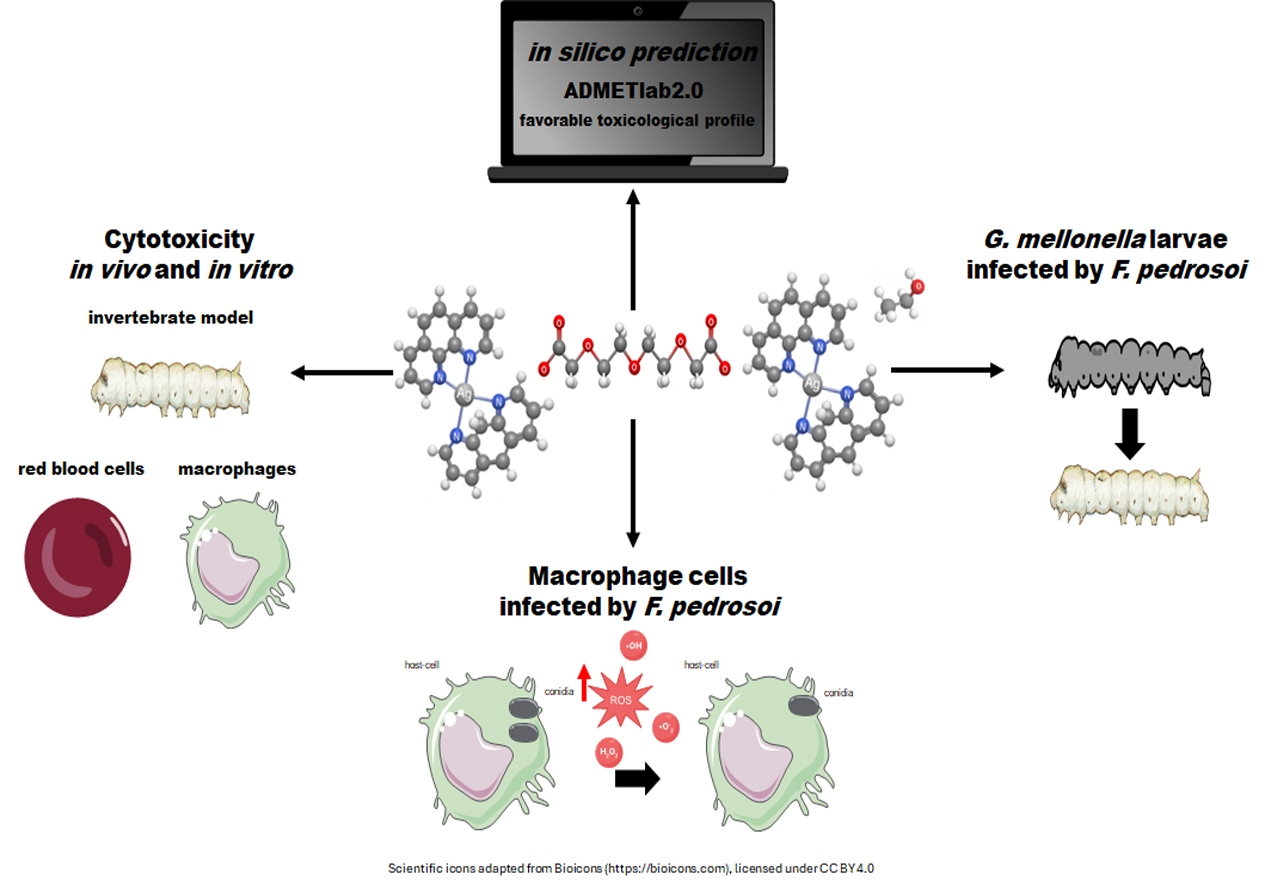
Biological Activity of Silver(I)-1,10-Phenanthroline Complexes Against Fonsecaea pedrosoi: In Silico Predictions, In Vitro Macrophage Interactions and In Vivo Efficacy in Galleria mellonella

 ,
,  , , , ,
  and
and 
Abstract
1. Introduction
2. Results and Discussion
2.1. Prediction of Compounds Pharmacokinetic and Toxicological Parameters
2.2. Toxicity of Test Complexes: In Vitro and In Vivo Approaches
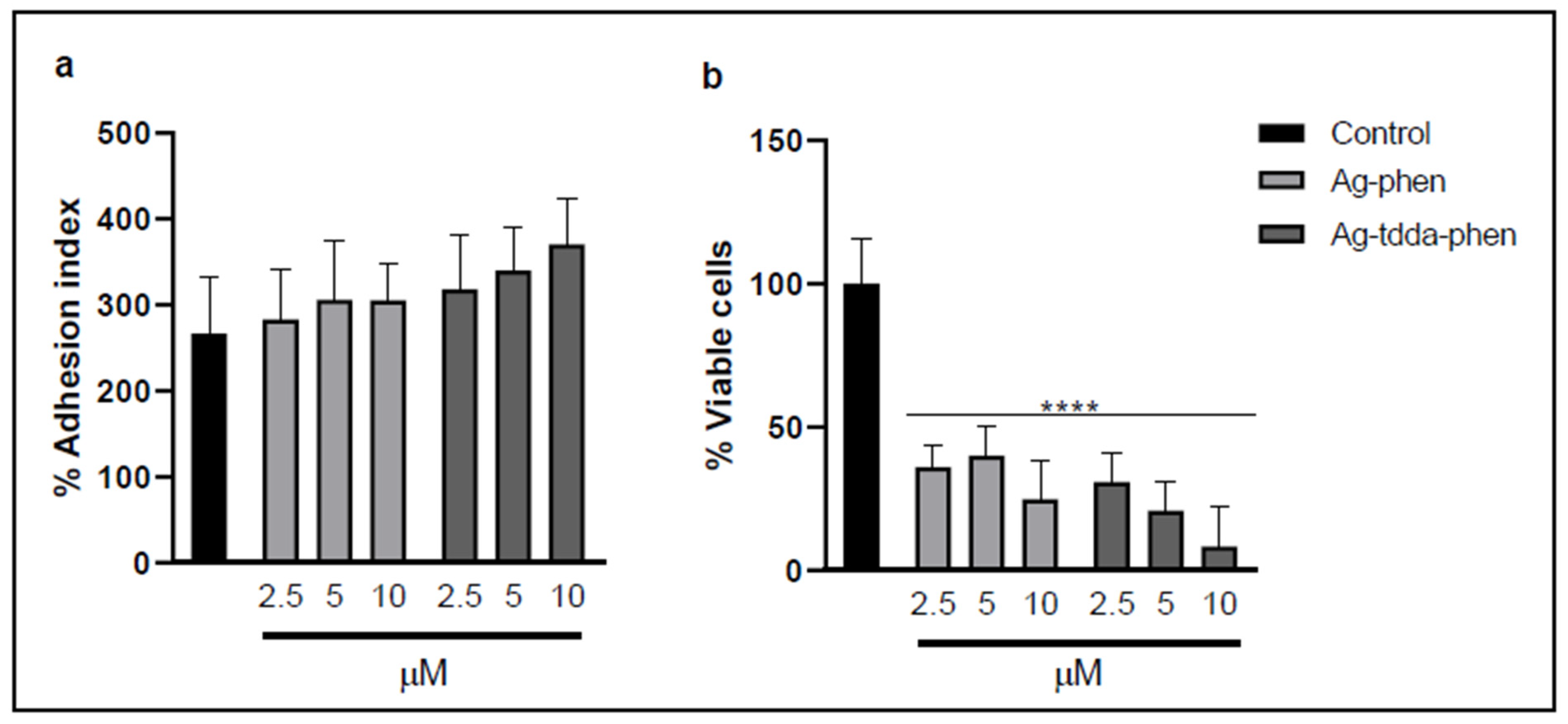
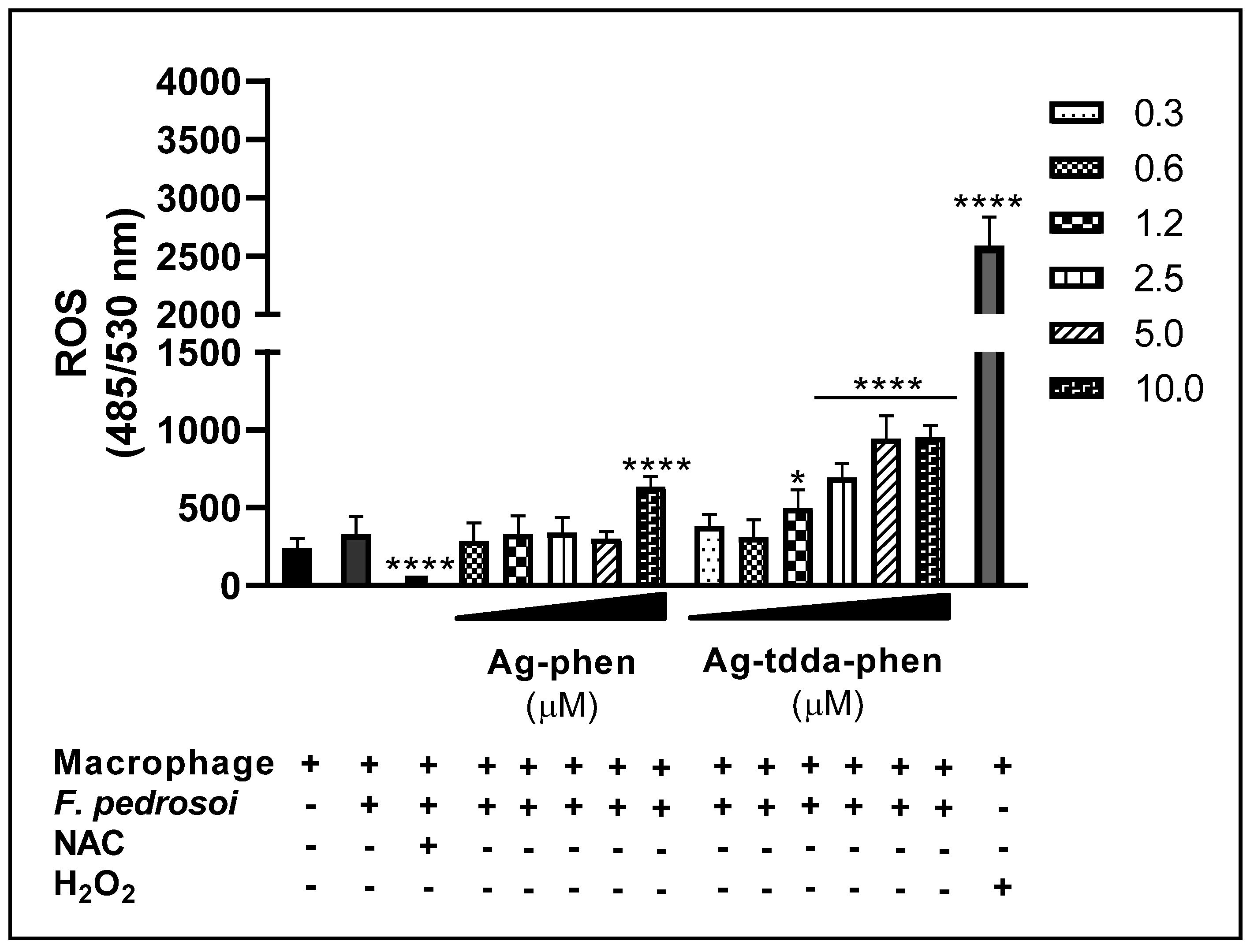
2.3. Effect of Compounds on Macrophages Infected with F. pedrosoi
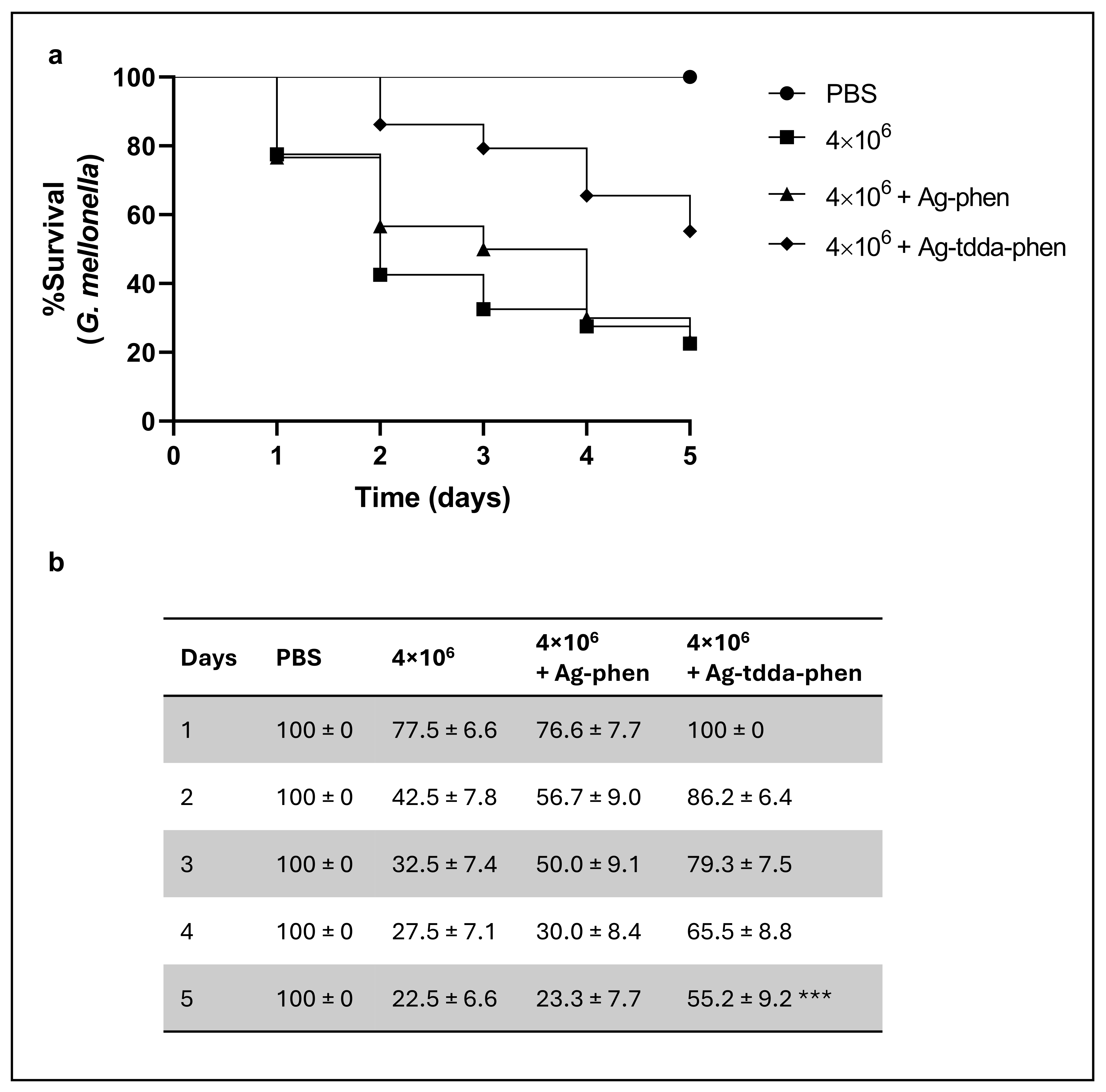
2.4. Effect of Compounds on G. mellonella Larvae Infected with F. pedrosoi
3. Materials and Methods
3.1. Fungal Growth Conditions
3.2. Compounds
3.3. In Silico Analysis
3.4. In Vitro and In Vivo Toxicity Assays
3.4.1. Erythrocytes
3.4.2. Macrophage Cells
3.4.3. Insect Larvae
3.5. Effect of Compounds on the In Vitro Interaction of F. pedrosoi and Macrophages
3.5.1. Adhesion and Killing Assays
3.5.2. Macrophage ROS Production
3.6. Effect of Compounds on G. mellonella Infected with F. pedrosoi Conidia
3.7. Statistical Analysis
4. Conclusions
Author Contributions
Funding
Institutional Review Board Statement
Informed Consent Statement
Data Availability Statement
Acknowledgments
Conflicts of Interest
Abbreviations
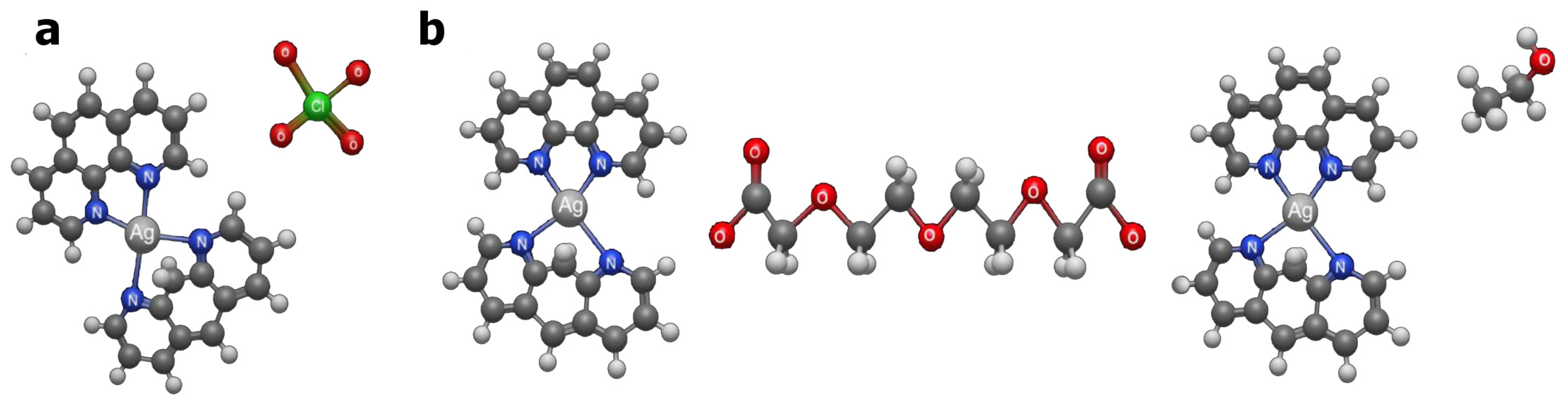
| Ag-phen | [Ag(1,10-phenanthroline)2]ClO4 |
| Ag-tdda-phen | [Ag2(3,6,9-trioxaundecanedioate)(1,10-phenanthroline)4]·EtOH |
| BBB | Blood–brain barrier |
| CaCo-2 | Human colon adenocarcinoma |
| CBM | Chromoblastomycosis |
| CL | Clearance |
| CP | Carcinogenic potency |
| CYP | Cytochrome P450 |
| DILI | Drug-induced liver injury |
| Fu | Fraction unbound |
| hERG | Human ether-à-go-go-related gene |
| HIA | Human intestinal absorption |
| H-HT | Human hepatotoxicity |
| MIC | Minimum inhibitory concentration |
| MDCK | Maden Darby canine kidney |
| MFC | Minimum fungicidal concentration |
| NAC | N-acetylcysteine |
| PBS | Phosphate-buffered saline |
| Phen | 1,10-phenantholine |
| Phendione | 1,10-phenantholine-5,6-dione |
| PPB | Plasma protein binding |
| RPMI | Roswell Park Memorial Institute |
| ROA | Rat oral acute |
| ROS | Reactive oxygen species |
| SDA | Sabouraud Dextrose Agar |
| SI | Selectivity index |
| SS | Skin sensitization |
| T½ | Half-life |
| TPSA | Topological polar surface area |
| VD | Volume of distribution |
| WHO | World Health Organization |
References
- Queiroz-Telles, A.F.; De Hoog, S.; Santos, D.W.C.L.; Salgado, C.G.; Vicente, V.A.; Bonifaz, A.; Roilides, E.; Xi, L.; Azevedo, C.M.P.S.; Silva, M.B.; et al. Chromoblastomycosis. Clin. Microbiol. Rev. 2017, 30, 233–276. [Google Scholar] [CrossRef] [PubMed]
- Tuckwell, W.; Yesudian, P.D.; Chandler, D. Chromoblastomycosis: A contemporary review of a neglected disease. Clin. Exp. Dermatol. 2025, 14, llaf201. [Google Scholar] [CrossRef] [PubMed]
- World Health Organization (WHO). WHO Report of the Tenth Meeting of the WHO Strategic and Technical Advisory Group for Neglected Tropical Diseases; WHO: Geneva, Switzerland, 2017. [Google Scholar]
- Santos, D.W.C.L.; Azevedo, C.M.P.S.; Vicente, V.A.; Queiroz-Telles, F.; Rodrigues, A.M.; De Hoog, G.S.; Denning, D.W.; Colombo, A.L. The global burden of chromoblastomycosis. PLoS Negl. Trop. Dis. 2021, 15, e0009611. [Google Scholar] [CrossRef]
- Barbosa, L.S.P.; Souza, Y.R.C.; Sasaki, C.S.; Santos, D.W.; Rossato, L. Chromoblastomycosis in Brazil: A review of 450 published cases. Rev. Soc. Bras. Med. Trop. 2024, 57, e00205-2024. [Google Scholar] [CrossRef] [PubMed]
- Brito, A.C.; Bittencourt, M.J.S. Chromoblastomycosis: An etiological, epidemiological, clinical, diagnostic, and treatment update. An. Bras. Dermatol. 2018, 93, 495–506. [Google Scholar] [CrossRef]
- Azevedo, C.M.P.S.; Marques, S.G.; Santos, D.W.C.L.; Silva, R.R.; Silva, N.F.; Santos, D.A.; Resende-Stoianoff, M.A. Squamous cell carcinoma derived from chronic chromoblastomycosis in Brazil. Clin. Infect. Dis. 2015, 60, 1500–1504. [Google Scholar] [CrossRef]
- Passero, L.F.D.; Cavallone, I.N.; Belda, W. Reviewing the etiologic agents, microbe-host relationship, immune response, diagnosis, and treatment in chromoblastomycosis. J. Immunol. Res. 2021, 2021, 1–23. [Google Scholar] [CrossRef]
- McCann, M.; Kellett, A.; Kavanagh, K.; Devereux, M.; Santos, A.L. Deciphering the antimicrobial activity of phenanthroline chelators. Curr. Med. Chem. 2012, 19, 2703–2714. [Google Scholar] [CrossRef]
- Mahalakshmi, R.; Raman, N.A. A therapeutic journey of mixed ligand complexes containing 1,10-phenantroline derivatives: A review. Int. J. Curr. Pharm. Res. 2016, 8, 1–6. [Google Scholar]
- Lin, Y.; Betts, H.; Keller, S.; Cariou, K.; Gasser, G. Recent developments of metal-based compounds against fungal pathogens. Chem. Soc. Rev. 2021, 50, 10346–10402. [Google Scholar] [CrossRef]
- Mengesha, A.M. The study of antimicrobial activities of various transition metal mixed ligand complexes containing 1,10-phenanthroline with any other ligands. Int. J. Bioorg. Chem. 2022, 7, 1–10. [Google Scholar]
- Frei, A.; Elliott, A.G.; Kan, A.; Dinh, H.; Bräse, S.; Bruce, A.E.; Bruce, M.R.; Chen, F.; Humaidy, D.; Jung, N.; et al. Metal complexes as antifungals? From a crowd-sourced compound library to the first in vivo experiments. JACS Au 2022, 2, 2277–2294. [Google Scholar] [CrossRef]
- Gandra, R.M.; Mc Carron, P.; Fernandes, M.F.; Ramos, L.S.; Mello, T.P.; Aor, A.C.; Branquinha, M.H.; McCann, M.; Devereux, M.; Santos, A.L.S. Antifungal potential of copper(II), manganese(II) and silver(I) 1,10-phenanthroline chelates against multidrug-resistant fungal species forming the Candida haemulonii complex: Impact on the planktonic and biofilm lifestyles. Front. Microbiol. 2017, 8, 1257. [Google Scholar] [CrossRef]
- O’Shaughnessy, M.; Hurley, J.; Dillon, S.C.; Herra, C.; McCarron, P.; McCann, M.; Devereux, M.; Howe, O. Antibacterial activity of metal–phenanthroline complexes against multidrug-resistant irish clinical isolates: A whole genome sequencing approach. J. Biol. Inorg. Chem. 2023, 28, 153–171. [Google Scholar] [CrossRef]
- Gandra, R.M.; McCarron, P.; Viganor, L.; Fernandes, M.F.; Kavanagh, K.; McCann, M.; Branquinha, M.H.; Santos, A.L.S.; Howe, O.; Devereux, M. In vivo activity of copper(II), manganese(II), and silver(I) 1,10-phenanthroline chelates against Candida haemulonii using the Galleria mellonella model. Front. Microbiol. 2020, 11, 470. [Google Scholar] [CrossRef]
- Giovanini, L.; Casemiro, A.L.; Corrêa, L.S.; Mendes, M.; Mello, T.P.; Souza, L.O.P.; Wagner, L.G.; Fernandes, C.; Pereira, M.M.; Souza, L.C.S.V.; et al. Toxicity assessment and antifungal potential of copper(II) and silver(I) complexes with 1,10-phenanthroline-5,6-dione against drug-resistant clinical isolates of Cryptococcus gattii and Cryptococcus neoformans. J. Fungi 2025, 11, 436. [Google Scholar] [CrossRef]
- Granato, M.Q.; Gonçalves, D.S.; Seabra, S.H.; McCann, M.; Devereux, M.; Santos, A.L.S.; Kneipp, L.F. 1,10-Phenanthroline-5,6-dione–based compounds are effective in disturbing crucial physiological events of Phialophora verrucosa. Front. Microbiol. 2017, 8, 76. [Google Scholar] [CrossRef]
- Granato, M.Q.; Mello, T.P.; Nascimento, R.S.; Pereira, M.D.; Rosa, T.L.S.A.; Pessolani, M.C.V.; McCann, M.; Devereux, M.; Branquinha, M.H.; Santos, A.L.S.; et al. Silver(I) and copper(II) complexes of 1,10-phenanthroline-5,6-dione against Phialophora verrucosa: A focus on the interaction with human macrophages and Galleria mellonella larvae. Front. Microbiol. 2021, 12, 641258. [Google Scholar] [CrossRef]
- Sousa, I.S.; Vieira, T.D.P.; Menna-Barreto, R.F.S.; Guimarães, A.J.; McCarron, P.; McCann, M.; Devereux, M.; Santos, A.L.S.; Kneipp, L.F. Silver(I) 1,10-Phenanthroline complexes are active against Fonsecaea pedrosoi viability and negatively modulate its potential virulence attributes. J. Fungi 2023, 9, 356. [Google Scholar] [CrossRef]
- Lipinski, C.A.; Lombardo, F.; Dominy, B.W.; Feeney, P.J. Experimental and computational approaches to estimate solubility and permeability in drug discovery and development settings. Adv. Drug Deliv. Rev. 2001, 46, 3–26. [Google Scholar] [CrossRef]
- Hughes, J.D.; Blagg, J.; Price, D.A.; Bailey, S.; DeCrescenzo, G.A.; Devraj, R.V.; Ellsworth, E.; Fobian, Y.M.; Gibbs, M.E.; Gilles, R.W.; et al. Physiochemical drug properties associated with in vivo toxicological outcomes. Bioorg. Med. Chem. Lett. 2008, 18, 4872–4875. [Google Scholar] [CrossRef] [PubMed]
- Aungst, B.J. Optimizing oral bioavailability in drug discovery: An overview of design and testing strategies and formulation options. J. Pharm. Sci. 2017, 106, 921–929. [Google Scholar] [CrossRef] [PubMed]
- Wu, K.; Kwon, S.H.; Zhou, X.; Fuller, C.; Wang, X.; Vadgama, J.; Wu, Y. Overcoming challenges in small-molecule drug bioavailability: A review of key factors and approaches. Int. J. Mol. Sci. 2024, 25, 13121. [Google Scholar] [CrossRef]
- Tendolkar, U.M.; Kerkar, P.; Jerajani, H.; Gogate, A.; Padhye, A.A. Phaeohyphomycotic ulcer caused by Phialophora verrucosa: Successful treatment with itraconazole. J. Infect. 1998, 36, 122–125. [Google Scholar] [CrossRef]
- Stielow, M.; Witczyńska, A.; Kubryń, N.; Fijałkowski, Ł.; Nowaczyk, J.; Nowaczyk, A. The bioavailability of drugs—The current state of knowledge. Molecules 2023, 28, 8038. [Google Scholar] [CrossRef]
- Lei, T.; Li, Y.; Song, Y.; Li, D.; Sun, H.; Hou, T. ADMET Evaluation in drug discovery: 15. Accurate prediction of rat oral acute toxicity using relevance vector machine and consensus modeling. J. Cheminform. 2016, 8, 6. [Google Scholar] [CrossRef]
- Turecka, K.; Chylewska, A.; Kawiak, A.; Waleron, K.F. Antifungal activity and mechanism of action of the Co(III) coordination complexes with diamine chelate ligands against reference and clinical strains of Candida spp. Front. Microbiol. 2018, 9, 1594. [Google Scholar] [CrossRef]
- Soares, L.A.; Gullo, F.P.; Sardi, J.D.C.O.; Pitangui, N.D.S.; Costa-Orlandi, C.B.; Sangalli-Leite, F.; Scorzoni, L.; Regasini, L.O.; Petrônio, M.S.; Souza, P.F.; et al. Anti-Trichophyton activity of protocatechuates and their synergism with fluconazole. Evid. Based Complement. Altern. Med. 2014, 2014, 957860. [Google Scholar] [CrossRef]
- Frota, H.F.; Barbosa, P.F.; Lorentino, C.M.A.; Affonso, L.R.F.; Ramos, L.S.; Oliveira, S.S.C.; Souza, L.O.P.; Abosede, O.O.; Ogunlaja, A.S.; Branquinha, M.H.; et al. Unveiling the antifungal mechanisms of CTP, a new copper(II)- theophylline/1,10-phenanthroline complex, on drug-resistant non-albicans Candida species. Biometals 2024, 37, 1237–1253. [Google Scholar] [CrossRef]
- Mello, T.P.; Aor, A.C.; Gonçalves, D.S.; Seabra, S.H.; Branquinha, M.H.; Santos, A.L.S. Assessment of biofilm formation by Scedosporium apiospermum, S. aurantiacum, S. minutisporum and Lomentospora prolificans. Biofouling 2016, 32, 737–749. [Google Scholar] [CrossRef]
- Souza, P.C.; Caloni, C.C.; Wilson, D.; Almeida, R.S. An invertebrate host to study fungal infections, mycotoxins and antifungal drugs: Tenebrio molitor. J. Fungi 2018, 4, 125. [Google Scholar] [CrossRef]
- Wright, C.L.; Kavanagh, O. Galleria mellonella as a novel in vivo model to screen natural product-derived modulators of innate immunity. Appl. Sci. 2022, 12, 6587. [Google Scholar] [CrossRef]
- Hall, R.A.; Gow, N.A.R. Mannosylation in Candida albicans: Role in cell wall function and immune recognition. Mol. Microbiol. 2013, 90, 1147–1161. [Google Scholar]
- Snarr, B.; Qureshi, S.; Sheppard, D. Immune recognition of fungal polysaccharides. J. Fungi 2017, 3, 47. [Google Scholar] [CrossRef]
- Guirao-Abad, J.P.; Sánchez-Fresneda, R.; Machado, F.; Argüelles, J.C.; Martínez-Esparza, M. Micafungin enhances the human macrophage response to Candida albicans through β-glucan exposure. Antimicrob. Agents Chemother. 2018, 62, e02161-17. [Google Scholar] [CrossRef]
- Herb, M.; Schramm, M. Functions of ROS in macrophages and antimicrobial immunity. Antioxidants 2021, 10, 313. [Google Scholar] [CrossRef]
- Tran, N.; Mills, E.L. Redox regulation of macrophages. Redox Biol. 2024, 72, 103123. [Google Scholar] [CrossRef]
- Sanfelice, R.A.S.; Silva, T.F.; Tomiotto-Pellissier, F.; Bortoleti, B.T.S.; Lazarin-Bidóia, D.; Scandorieiro, S.; Nakazato, G.; Barros, L.D.; Garcia, J.L.; Verri, W.A.; et al. Biogenic silver nanoparticles reduce Toxoplasma gondii infection and proliferation in RAW 264.7 macrophages by inducing tumor necrosis factor-alpha and reactive oxygen species production in the cells. Microbes Infect. 2022, 24, 104971. [Google Scholar] [CrossRef]
- Trevijano-Contador, N.; Zaragoza, O. Immune response of Galleria mellonella against human fungal pathogens. J. Fungi 2018, 5, 3. [Google Scholar] [CrossRef]
- Jemel, S.; Guillot, J.; Kallel, K.; Botterel, F.; Dannaoui, E. Galleria mellonella for the evaluation of antifungal efficacy against medically important fungi, a narrative review. Microorganisms 2020, 8, 390. [Google Scholar] [CrossRef]
- Shi, D.; Yang, Z.; Liao, W.; Liu, C.; Zhao, L.; Su, H.; Wang, X.; Mei, H.; Chen, M.; Song, Y.; et al. Galleria mellonella in vitro model for chromoblastomycosis shows large differences in virulence between isolates. IMA Fungus 2024, 15, 5. [Google Scholar] [CrossRef]
- Claudel, M.; Schwarte, J.V.; Fromm, K.M. New antimicrobial strategies based on metal complexes. Chemistry 2020, 2, 849–899. [Google Scholar] [CrossRef]
- Alvarez, N.; Freddi, P.; Castellani, S.; Veiga, N.; Facchin, G.; Costa-Filho, A.J. New insights into the biophysical behavior of an old molecule: Experimental and theoretical studies of the interaction between 1,10-phenanthroline and model phospholipid membranes. Braz. J. Phys. 2022, 52, 111. [Google Scholar] [CrossRef]
- McCann, M.; Coyle, B.; McKay, S.; McCormack, P.; Kavanagh, K.; Devereux, M.; McKee, V.; Kinsella, P.; O’Connor, R.; Clynes, M. Synthesis and X-Ray crystal structure of [Ag(phendio)2]ClO4 (phendio = 1,10-phenanthroline-5,6-dione) and its effects on fungal and mammalian cells. BioMetals 2004, 17, 635–645. [Google Scholar] [CrossRef] [PubMed]
- Evans, B.C.; Nelson, C.E.; Yu, S.S.; Beavers, K.R.; Kim, A.J.; Li, H.; Nelson, H.M.; Giorgio, T.D.; Duvall, C.L. Ex vivo red blood cell hemolysis assay for the evaluation of Ph-responsive endosomolytic agents for cytosolic delivery of biomacromolecular drugs. J. Vis. Exp. 2013, 9, e50166. [Google Scholar]
- Hansen, M.; Nielsen, S.; Berg, K. Re-examination and further development of a precise and rapid dye method for measuring cell growth/cell kill. Immunol. Methods 1989, 119, 203–210. [Google Scholar] [CrossRef]
- Fernandes, C.; Fonseca, F.; Goldman, G.; Pereira, M.; Kurtenbach, E. A reliable assay to evaluate the virulence of Aspergillus nidulans using the alternative animal model Galleria mellonella (Lepidoptera). Bio-Protocol 2017, 7, 641258. [Google Scholar] [CrossRef]
- Palacio, J.R.; Markert, U.R.; Martínez, P. Anti-inflammatory properties of N-acetylcysteine on lipopolysaccharide-activated macrophages. Inflamm. Res. 2011, 60, 695–704. [Google Scholar] [CrossRef]
- Oliveira, B.T.M.; Dourado, T.M.H.; Santos, P.W.S.; Bitencourt, T.A.; Tirapelli, C.R.; Colombo, A.L.; Almeida, F. Extracellular vesicles from Candida haemulonii var. vulnera modulate macrophage oxidative burst. J. Fungi 2023, 9, 562. [Google Scholar] [CrossRef]



| Pharmacokinetic Property | Compounds | ||
|---|---|---|---|
| Ag-tdda-phen | Ag-phen | Itraconazole | |
| Lipinski’s violation | Yes (≥2) | No | Yes (≥2) |
| Pfizer’s violation | No | No | No |
| HIA (%) | Low (1.0) | Low (0.98) | High (0.002) |
| F20% | Low (1.0) | Low (1.0) | High (0.002) |
| F30% | Low (1.0) | Low (1.0) | High (0.008) |
| CaCo-2 (Log cm/s) | Low (−5.976) | Low (−6.077) | High (−5.091) |
| MDCK (cm/s) | High (0.00027) | High (0.00019) | ND |
| PPB (%) | Low (62.17) | Low (58.82) | High (98.01) |
| VD (L/kg) | High (0.404) | High (1.413) | High (2.043) |
| BBB penetration (cm/s) | No (0.899) | Moderate (0.646) | Yes (0.011) |
| Fu (%) | (No) 8.144 | (No) 12.419 | Yes (0.315) |
| CYP1A2 inhibition | No (0.0) | No (0.0) | Yes (0.097) |
| CYP2C19 inhibition | No (0.0) | No (0.0) | Yes (0.697) |
| CYP2C9 inhibition | No (0.0) | No (0.001) | Yes (0.965) |
| CYP2D6 inhibition | No (0.0) | No (0.0) | Yes (0.112) |
| CYP3A4 inhibition | No (0.0) | No (0.0) | Yes (0.975) |
| CL plasma (mL/min/kg) | Low (0.612) | Low (1.732) | Moderate (8.329) |
| T1/2 | Low (0.423) | Low (0.563) | Low (0.324) |
| hERG blockade | No (0.14) | No (0.008) | Yes (0.865) |
| H-HT | Yes (1.0) | Moderate (0.32) | Yes (0.989) |
| DILI | Yes (0.99) | Yes (0.99) | Yes (0.995) |
| AMES mutagenicity | Moderate (0.604) | High (0.862) | High (0.924) |
| ROA toxicity | Low (0.183) | High (0.984) | Moderate (0.694) |
| SS | Yes (0.981) | Yes (0.991) | Yes (0.843) |
| CP | Yes (0.99) | Yes (0.969) | Yes (0.818) |
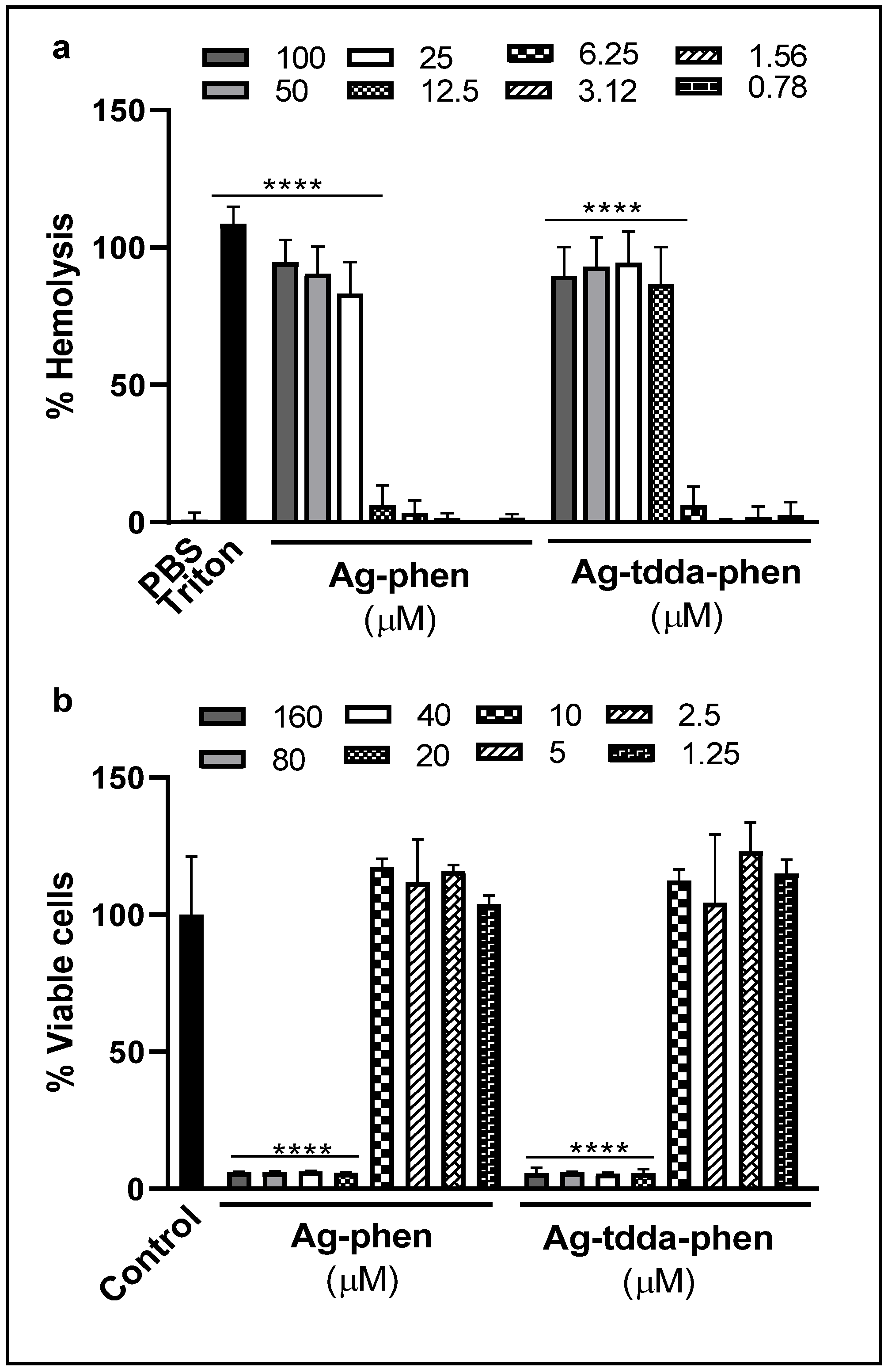
| Compound | CC50 (µM) Erythrocytes | CC50 (µM) RAW | IC50 (µM) F. pedrosoi | SI Erythrocytes | SI RAW |
|---|---|---|---|---|---|
| Ag-phen | 17.01 | >10.0 | 0.62 | 27.4 | >16.1 |
| Ag-tdda-phen | 10.03 | >10.0 | 0.31 | 32.3 | >32.2 |
Disclaimer/Publisher’s Note: The statements, opinions and data contained in all publications are solely those of the individual author(s) and contributor(s) and not of MDPI and/or the editor(s). MDPI and/or the editor(s) disclaim responsibility for any injury to people or property resulting from any ideas, methods, instructions or products referred to in the content. |
© 2025 by the authors. Licensee MDPI, Basel, Switzerland. This article is an open access article distributed under the terms and conditions of the Creative Commons Attribution (CC BY) license (https://creativecommons.org/licenses/by/4.0/).
Share and Cite
Sousa, I.S.; Giovanini, L.; Lorentino, C.M.A.; Barcellos, I.C.; McCann, M.; Devereux, M.; Santos, A.L.S.; Kneipp, L.F. Biological Activity of Silver(I)-1,10-Phenanthroline Complexes Against Fonsecaea pedrosoi: In Silico Predictions, In Vitro Macrophage Interactions and In Vivo Efficacy in Galleria mellonella. Pharmaceuticals 2025, 18, 1819. https://doi.org/10.3390/ph18121819
Sousa IS, Giovanini L, Lorentino CMA, Barcellos IC, McCann M, Devereux M, Santos ALS, Kneipp LF. Biological Activity of Silver(I)-1,10-Phenanthroline Complexes Against Fonsecaea pedrosoi: In Silico Predictions, In Vitro Macrophage Interactions and In Vivo Efficacy in Galleria mellonella. Pharmaceuticals. 2025; 18(12):1819. https://doi.org/10.3390/ph18121819
Chicago/Turabian StyleSousa, Ingrid S., Lucas Giovanini, Carolline M. A. Lorentino, Iuri C. Barcellos, Malachy McCann, Michael Devereux, André L. S. Santos, and Lucimar F. Kneipp. 2025. "Biological Activity of Silver(I)-1,10-Phenanthroline Complexes Against Fonsecaea pedrosoi: In Silico Predictions, In Vitro Macrophage Interactions and In Vivo Efficacy in Galleria mellonella" Pharmaceuticals 18, no. 12: 1819. https://doi.org/10.3390/ph18121819
APA StyleSousa, I. S., Giovanini, L., Lorentino, C. M. A., Barcellos, I. C., McCann, M., Devereux, M., Santos, A. L. S., & Kneipp, L. F. (2025). Biological Activity of Silver(I)-1,10-Phenanthroline Complexes Against Fonsecaea pedrosoi: In Silico Predictions, In Vitro Macrophage Interactions and In Vivo Efficacy in Galleria mellonella. Pharmaceuticals, 18(12), 1819. https://doi.org/10.3390/ph18121819