Thermally Conductive Biopolymers in Regenerative Medicine and Oncology: A Systematic Review

 ,
,  ,
,  and
and 
Abstract
1. Introduction
Related Work
2. Materials and Methods
2.1. PRISMA Methodology
2.1.1. Identification of Relevant Studies
2.1.2. Inclusion Criteria
- (i)
- Original clinical or preclinical (in vitro/in vivo) studies;
- (ii)
- Thermally conductive biopolymers used in hyperthermia and/or regenerative/cell-regeneration contexts;
- (iii)
- Outcomes on thermal performance (e.g., conductivity, SAR/ILP, temperature rise) and biocompatibility/safety;
- (iv)
- Publication years 2020–2025;
- (v)
- Data extractable for qualitative synthesis.
2.1.3. Exclusion Criteria
- (i)
- Studies not centered on thermally conductive biopolymers;
- (ii)
- Studies unrelated to hyperthermia or regenerative applications;
- (iii)
- Studies lacking relevant thermal or biocompatibility data;
- (iv)
- Non-original items (editorials, letters, narrative reviews, conference abstracts without complete data);
- (v)
- Duplicates;
- (vi)
- Records outside 2020–2025.
2.1.4. Selection of Bibliographic Search Variables
2.1.5. Data Selection
2.1.6. Bibliometric Map
Bibliometric Analysis
2.1.7. Analysis of Bibliometric Data with AI Tools
3. Results
3.1. Thermally Conductive Biopolymers in Oncological Treatments
3.2. Thermally Conductive Biopolymers
3.3. Clinical and Preclinical Studies
3.4. Biomedical Applications
4. Discussion
- (a)
- Biopolymer modification strategies
- (b)
- Hyperthermia applications
- (c)
- Clinical and preclinical evidence
4.1. Comparative Analysis Across Thermally Conductive Systems
4.2. Risks and Translation Constraints (Toxicity, Scalability, Regulation, and Stability)
4.3. Advantages of Thermally Conductive Biopolymers over Other Polymers in Regenerative Medicine and Oncology
4.4. Hurdles for Thermally Conductive Biopolymers in Clinical Applications
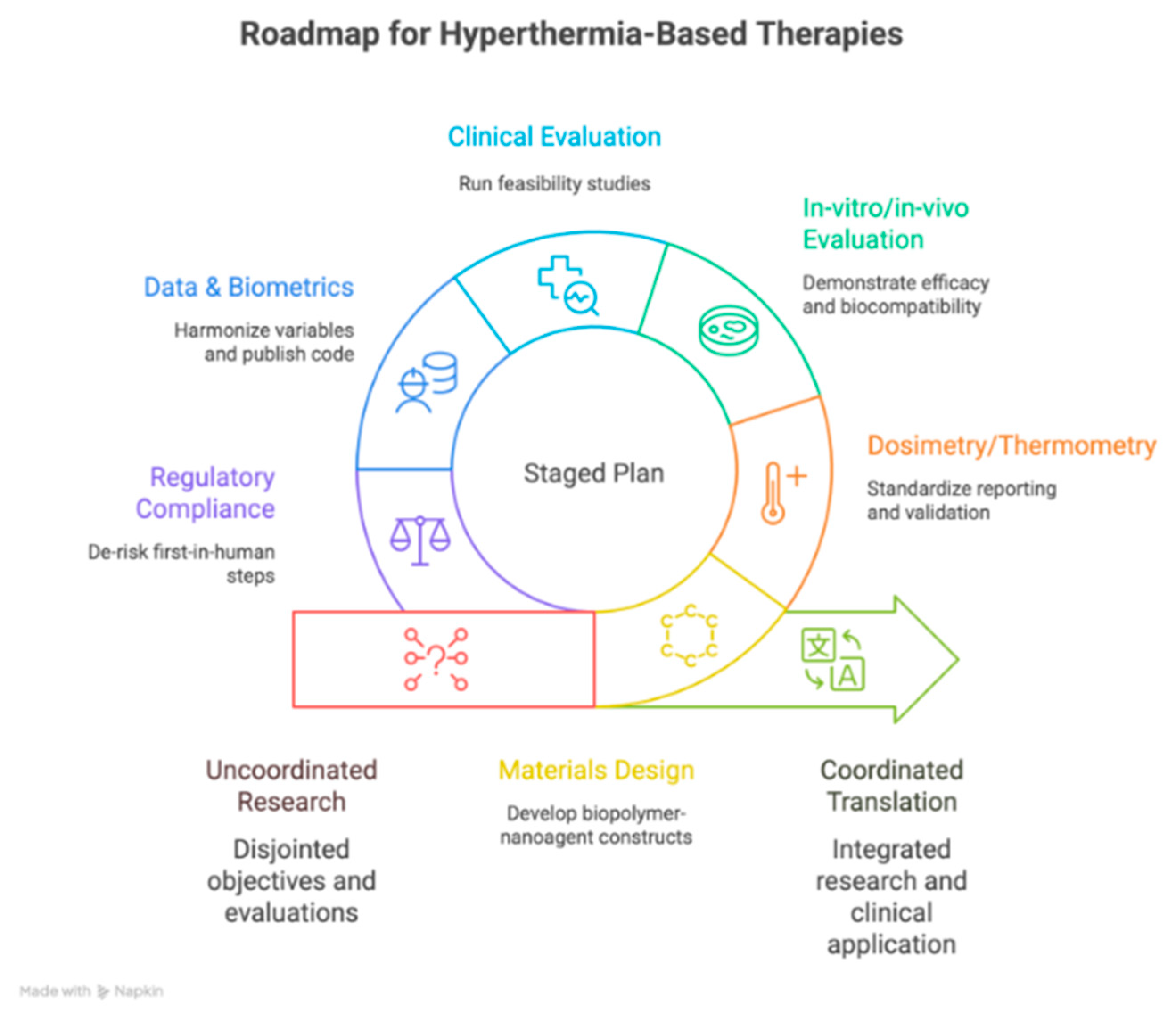
4.5. Roadmap for Interdisciplinary Collaboration
5. Conclusions
- (i)
- Long-term biocompatibility and safety. There is a paucity of longitudinal in vivo data on degradation/clearance (mass loss, ion/particle release), immunogenicity, oxidative stress, and tissue remodeling under repeated thermal cycles.
- (ii)
- Preclinical to clinical translation. In vitro and small-animal studies dominate evidence; progress requires larger animal models, quantitative pharmacokinetics/retention for carriers, and endpoints aligned to clinical realities (tumor heterogeneity, perfusion-driven heat sinks, complex tissue microenvironments).
- (iii)
- Standardized protocols and reporting. We advocate harmonized dosimetry/thermometry—including SAR/ILP with field parameters for magnetic hyperthermia, full optical descriptors for photothermal therapy, and CEM43—alongside consistent ISO-10993 [70]—aligned biocompatibility panels with immune profiling and reproducible inter-lab procedures.
Limitations and Future Directions
Author Contributions
Funding
Institutional Review Board Statement
Informed Consent Statement
Data Availability Statement
Acknowledgments
Conflicts of Interest
References
- Bala, V.M.; Lampropoulou, D.I.; Grammatikaki, S.; Kouloulias, V.; Lagopati, N.; Aravantinos, G.; Gazouli, M. Nanoparticle-mediated hyperthermia and cytotoxicity mechanisms in cancer. Int. J. Mol. Sci. 2023, 25, 296. [Google Scholar] [CrossRef]
- Szwed, M.; Marczak, A. Application of nanoparticles for magnetic hyperthermia for cancer treatment—The current state of knowledge. Cancers 2024, 16, 1156. [Google Scholar] [CrossRef]
- Dragojevic, S.; Ryu, J.S.; Hall, M.E.; Raucher, D. Targeted Drug Delivery Biopolymers Effectively Inhibit Breast Tumor Growth and Prevent Doxorubicin-Induced Cardiotoxicity. Molecules 2022, 27, 3371. [Google Scholar] [CrossRef] [PubMed] [PubMed Central]
- Fiorentini, G.; Sarti, D.; Mambrini, A.; Hammarberg Ferri, I.; Bonucci, M.; Sciacca, P.G.; Ballerini, M.; Bonanno, S.; Milandri, C.; Nani, R.; et al. Hyperthermia combined with chemotherapy vs. chemotherapy in patients with advanced pancreatic cancer: A multicenter retrospective observational comparative study. World J. Clin. Oncol. 2023, 14, 215–226. [Google Scholar] [CrossRef]
- Rahman, M.M.; Shahid, M.A.; Hossain, M.T.; Sheikh, M.S.; Rahman, M.S.; Uddin, N.; Rahim, A.; Khan, R.A.; Hossain, I. Sources, extractions, and applications of alginate: A review. Discov. Appl. Sci. 2024, 6, 443. [Google Scholar] [CrossRef]
- Sharma, N.; Gulati, S.; Bhat, J. Emerging Applications of Chitosan-Based Nanocomposites in Multifarious Cancer Diagnosis and Therapeutics. In Chitosan-Based Nanocomposite Materials: Fabrication, Characterization and Biomedical Applications; Springer: Singapore, 2022; Volume 2, pp. 165–188. [Google Scholar] [CrossRef]
- Khouri, N.G.; Bahú, J.O.; Blanco-Llamero, C.; Severino, P.; Concha, V.O.C.; Souto, E.B. Polylactic acid (PLA): Properties, synthesis, and biomedical applications—A review of the literature. J. Mol. Struct. 2024, 1309, 138243. [Google Scholar] [CrossRef]
- Theodosiou, M.; Sakellis, E.; Boukos, N.; Kusigerski, V.; Kalska-Szostko, B.; Efthimiadou, E. Iron oxide nanoflowers encapsulated in thermosensitive fluorescent liposomes for hyperthermia treatment of lung adenocarcinoma. Sci. Rep. 2022, 12, 8697. [Google Scholar] [CrossRef] [PubMed]
- Hazarika, K.P.; Borah, J.P. Estudio de biopolímero encapsulado Eu dopeado Fe3O4 nanopartículas para aplicación de hipertermia magnética. Sci. Rep. 2024, 14, 9768. [Google Scholar] [CrossRef] [PubMed]
- Mohammad, F.; Bwatanglang, I.B.; Al-Lohedan, H.A.; Shaik, J.P.; Moosavi, M.; Dahan, W.M.; Al-Tilasi, H.H.; Aldhayan, D.M.; Chavali, M.; Soleiman, A.A. Magnetically controlled drug delivery and hyperthermia effects of core-shell Cu@Mn3O4 nanoparticles towards cancer cells in vitro. Int. J. Biol. Macromol. 2023, 249, 126071. [Google Scholar] [CrossRef]
- McCarthy, B.; Cudykier, A.; Singh, R.; Levi Polyachenko, N.; Soker, S. Semiconducting polymer nanoparticles for photothermal ablation of colorectal cancer organoids. Sci. Rep. 2021, 11, 1532. [Google Scholar] [CrossRef]
- Peng, W.; Li, L.; Zhang, Y.; Su, H.; Jiang, X.; Liu, H.; Huang, X.; Zhou, L.; Shen, X.C.; Liu, C. Photothermal synergistic nitric oxide controlled release injectable self-healing adhesive hydrogel for biofilm eradication and wound healing. J. Mater. Chem. B 2024, 12, 158–175. [Google Scholar] [CrossRef]
- Iravani, S.; Nazarzadeh Zare, E.; Makvandi, P. Multifunctional MXene-based platforms for soft and bone tissue regeneration and engineering. ACS Biomater. Sci. Eng. 2024, 10, 1892–1909. [Google Scholar] [CrossRef]
- Gong, C.; Wang, J.; Tang, F.; Tong, D.; Wang, Z.; Zhou, Z.; Ruan, R.; Zhang, J.; Song, J.; Yang, H. Bionic bilayer scaffold for synchronous hyperthermia therapy of orthotopic osteosarcoma and osteochondral regeneration. ACS Appl. Mater. Interfaces 2024, 16, 8538–8553. [Google Scholar] [CrossRef]
- Luo, J.; Cui, Y.; Xu, L.; Zhang, J.; Chen, J.; Li, X.; Zeng, B.; Deng, Z.; Shao, L. Layered double hydroxides for regenerative nanomedicine and tissue engineering: Recent advances and future perspectives. J. Nanobiotechnol. 2025, 23, 370. [Google Scholar] [CrossRef]
- Guo, X.; Li, J.; Wu, Y.; Xu, L. Recent advancements in hydrogels as novel tissue engineering scaffolds for dental pulp regeneration. Int. J. Biol. Macromol. 2024, 264, 130708. [Google Scholar] [CrossRef] [PubMed]
- Xiao, L.; Gong, H.; Tan, X.; Chen, P.; Yang, Y.; Zhu, H.; Zhong, S. Physicochemical characterization and antitumor activity in vitro of a polysaccharide from Christia vespertilionis. Int. J. Biol. Macromol. 2025, 290, 139095. [Google Scholar] [CrossRef] [PubMed]
- Zhang, Y.; Xu, X.; Qiao, Y.; Zhu, Y.; Liu, H.; Zhou, Z.; Xu, D.; Zhang, L.; Lin, F. 3D-printed intelligent photothermal conversion Nb2C MXene composite scaffolds facilitate the regulation of angiogenesis-osteogenesis coupling for vascularized bone regeneration. Mater. Today Bio 2025, 31, 101647. [Google Scholar] [CrossRef]
- Chen, C.Y.; Hope Gadia Moreno, R.L.; Wang, P.Y.; Nguyen, T.S.; Wu, J.L.; Chen, K.H.; Chen, C.H.; Lin, C.Y.; Wong, P.C. 3D-Printable Photothermal and Temperature-Controlled Polycaprolactone Scaffolds Incorporating Gold Plasmonic Blackbodies for Bone Tissue Engineering. ACS Appl. Mater. Interfaces 2025, 17, 29455–29468. [Google Scholar] [CrossRef] [PubMed]
- He, J.; Li, Z.; Wang, J.; Li, T.; Chen, J.; Duan, X.; Guo, B. Photothermal antibacterial antioxidant conductive self-healing hydrogel with nitric oxide release accelerates diabetic wound healing. Compos. Part B Eng. 2023, 266, 110985. [Google Scholar] [CrossRef]
- Eivazzadeh-Keihan, R.; Mohammadi, A.; Aghamirza Moghim Aliabadi, H.; Kashtiaray, A.; Bani, M.S.; Karimi, A.H.; Maleki, A.; Mahdavi, M. A novel ternary magnetic nanobiocomposite based on tragacanth-silk fibroin hydrogel for hyperthermia and biological properties. Sci. Rep. 2024, 14, 8166. [Google Scholar] [CrossRef]
- Qamar, S.; Karim, S.; Aslam, S.; Jahangeer, M.; Nelofer, R.; Nadeem, A.A.; Qamar, S.A.; Jesionowski, T.; Bilal, M. Alginate-based bio-nanohybrids with unique properties for biomedical applications. Starch-Stärke 2024, 76, 2200100. [Google Scholar] [CrossRef]
- Tene, T.; Bellucci, S.; Guevara, M.; Romero, P.; Guapi, A.; Gahramanli, L.; Straface, S.; Caputi, L.S.; Vacacela Gomez, C. Role of graphene oxide and reduced graphene oxide in electric double-layer capacitors: A systematic review. Batteries 2024, 10, 256. [Google Scholar] [CrossRef]
- Van Eck, N.; Waltman, L. Software survey: VOSviewer, a computer program for bibliometric mapping. Scientometrics 2010, 84, 523–538. [Google Scholar] [CrossRef]
- Khan, K.S.; Kunz, R.; Kleijnen, J.; Antes, G. Five steps to conducting a systematic review. J. R. Soc. Med. 2003, 96, 118–121. [Google Scholar] [CrossRef]
- Moher, D.; Liberati, A.; Tetzlaff, J.; Altman, D.G. Preferred reporting items for systematic reviews and meta-analyses: The PRISMA statement. Int. J. Surg. 2010, 8, 336–341. [Google Scholar] [CrossRef]
- Page, M.J.; McKenzie, J.E.; Bossuyt, P.M.; Boutron, I.; Hoffmann, T.C.; Mulrow, C.D.; Shamseer, L.; Tetzlaff, J.M.; Akl, E.A.; Brennan, S.E.; et al. Declaración PRISMA 2020: Una guía actualizada para la publicación de revisiones sistemáticas. Rev. Esp. Cardiol. (Engl. Ed.) 2021, 74, 790–799. [Google Scholar] [CrossRef] [PubMed]
- Jin, L.; Guo, X.; Gao, D.; Liu, Y.; Ni, J.; Zhang, Z.; Huang, Y.; Xu, G.; Yang, Z.; Zhang, X.; et al. An NIR photothermal-responsive hybrid hydrogel for enhanced wound healing. Bioact. Mater. 2022, 16, 162–172. [Google Scholar] [CrossRef] [PubMed]
- Sivakumar, P.M.; Zarepour, A.; Akhter, S.; Perumal, G.; Khosravi, A.; Balasekar, P.; Zarrabi, A. Anionic polysaccharides as delivery carriers for cancer therapy and theranostics: An overview of significance. Int. J. Biol. Macromol. 2025, 294, 139211. [Google Scholar] [CrossRef]
- Lemine, O.M.; Elansary, M.; Algessair, S.; Madkhali, N.; Ali, R.; Oulhakem, O.; Mouhib, Y.; Alshammari, M.; Alsubaie, S.M.; Belaiche, M.; et al. Enhanced in-vitro magnetic hyperthermia performance of chitosan-coated CoFe2O4 nanoparticles. Mater. Today Commun. 2025, 46, 112852. [Google Scholar] [CrossRef]
- Radinekiyan, F.; Naimi-Jamal, M.R.; Eivazzadeh-Keihan, R.; Aghamirza Moghim Aliabadi, H.; Salimi Bani, M.; Shojaei, S.; Maleki, A. A magnetic cross-linked alginate-biobased nanocomposite with anticancer and hyperthermia activities. Carbohydr. Polym. Technol. Appl. 2024, 7, 100481. [Google Scholar] [CrossRef]
- Tork, M.A.B.; Saberifar, M.; Yekta, H.J.; Hajinejad, M.; Ravandi, H.H.; Gorji, A.; Negah, S.S. Nano-scaffold containing functional motif of stromal cell-derived factor 1 enhances neural stem cell behavior and synaptogenesis in traumatic brain injury. Sci. Rep. 2025, 15, 5811. [Google Scholar] [CrossRef] [PubMed]
- Becerra, J.; Rodriguez, M.; Leal, D.; Noris-Suarez, K.; Gonzalez, G. Chitosan-collagen-hydroxyapatite membranes for tissue engineering. J. Mater. Sci. Mater. Med. 2022, 33, 18. [Google Scholar] [CrossRef] [PubMed]
- Hajalilou, A.; Ferreira, L.P.; Jorge, M.E.M.; Reis, C.P.; Cruz, M.M. Surface-Modified Iron Oxide Nanoparticles with Natural Biopolymers for Magnetic Hyperthermia: Effect of Reducing Agents and Type of Biopolymers. J. Compos. Sci. 2024, 8, 425. [Google Scholar] [CrossRef]
- Zhou, L.; Ge, J.; Wang, M.; Chen, M.; Cheng, W.; Ji, W.; Lei, B. Injectable muscle-adhesive antioxidant conductive photothermal bioactive nanomatrix for efficiently promoting full-thickness skeletal muscle regeneration. Bioact. Mater. 2020, 6, 1605–1617. [Google Scholar] [CrossRef]
- Jiang, Q.; Xu, M.; Wang, Y.; Cai, Y.; Yang, X.; Lin, J.; He, L.; Lu, W.; Zhang, Y.; Gu, Z. Photothermal controlled-release immunomodulatory nanoplatform for reprogramming immune microenvironment of infectious diabetic ulcers. Adv. Sci. 2023, 10, 2300339. [Google Scholar] [CrossRef]
- Han, K.; Bai, Q.; Zeng, Q.; Sun, N.; Zheng, C.; Wu, W.; Zhang, Y.; Lu, T. A multifunctional mussel-inspired hydrogel with antioxidant, electrical conductivity and photothermal activity loaded with mupirocin for burn healing. Mater. Des. 2022, 217, 110598. [Google Scholar] [CrossRef]
- Liu, K.; Zhao, D.; Zhao, H.; Yu, Y.; Yang, M.; Ma, M.; Zhang, C.; Guan, F.; Yao, M. Mild hyperthermia-assisted chitosan hydrogel with photothermal antibacterial property and CAT-like activity for infected wound healing. Int. J. Biol. Macromol. 2024, 254, 128027. [Google Scholar] [CrossRef]
- Bolinas, D.K.M.; Barcena, A.J.R.; Mishra, A.; Bernardino, M.R.; Lin, V.; Heralde, F.M., III; Chintalapani, G.; Fowlkes, N.W.; Huang, S.Y.; Melancon, M.P. Mesenchymal Stem Cells Loaded in Injectable Alginate Hydrogels Promote Liver Growth and Attenuate Liver Fibrosis in Cirrhotic Rats. Gels 2025, 11, 250. [Google Scholar] [CrossRef]
- Xu, Y.; Lin, X.; Lin, Y.; Han, Y.; Wang, Z.; Zhuang, Y.; Xu, K.; Liang, J. Bioactive self-healing hydrogel based on tannic acid modified gold nano-crosslinker as an injectable brain implant for treating Parkinson’s disease. Biomater. Res. 2023, 27, 8. [Google Scholar] [CrossRef]
- Liu, B.; Jin, M.; Wang, D.A. In vitro expansion of hematopoietic stem cells in a porous hydrogel-based 3D culture system. Acta Biomater. 2023, 161, 67–79. [Google Scholar] [CrossRef] [PubMed]
- Sun, Y.; Zhou, M.; Wang, L.; Wang, J.; Li, S.; Wang, Y.; Liu, X. Graphene/chitosan tubes inoculated with dental pulp stem cells promote repair of facial nerve injury. Front. Chem. 2024, 12, 1417763. [Google Scholar] [CrossRef]
- Aly, A.A.; Ahmed, M.K. Nanofibers of cellulose acetate containing ZnO nanoparticles/graphene oxide for wound healing applications. Int. J. Pharm. 2021, 598, 120325. [Google Scholar] [CrossRef]
- Djoudi, A.; Molina-Peña, R.; Ferreira, N.; Ottonelli, I.; Tosi, G.; Garcion, E.; Boury, F. Hyaluronic acid scaffolds for loco-regional therapy in nervous system related disorders. Int. J. Mol. Sci. 2022, 23, 12174. [Google Scholar] [CrossRef]
- Zhang, S.; Zhao, B.; Zhang, D.; Yang, M.; Huang, X.; Han, L.; Chen, K.; Li, X.; Pang, R.; Shang, Y.; et al. Conductive hydrogels incorporating carbon nanoparticles: A review of synthesis, performance and applications. Particuology 2023, 83, 212–231. [Google Scholar] [CrossRef]
- Adorinni, S.; Rozhin, P.; Marchesan, S. Smart hydrogels meet carbon nanomaterials for new frontiers in medicine. Biomedicines 2021, 9, 570. [Google Scholar] [CrossRef]
- Fadeel, B.; Bussy, C.; Merino, S.; Vázquez, E.; Flahaut, E.; Mouchet, F.; Evariste, L.; Gauthier, L.; Koivisto, A.J.; Vogel, U.; et al. Safety assessment of graphene-based materials: Focus on human health and the environment. ACS Nano 2018, 12, 10582–10620. [Google Scholar] [CrossRef] [PubMed]
- Yang, K.; Feng, L.; Liu, Z. The advancing uses of nano-graphene in drug delivery. Expert Opin. Drug Deliv. 2015, 12, 601–612. [Google Scholar] [CrossRef] [PubMed]
- Teijeiro-Valiño, C.; González Gómez, M.A.; Yáñez, S.; García Acevedo, P.; Arnosa Prieto, A.; Belderbos, S.; Gsell, W.; Himmelreich, U.; Piñeiro, Y.; Rivas, J. Biocompatible magnetic gelatin nanoparticles with enhanced MRI contrast performance prepared by single-step desolvation method. Nano Express 2021, 2, 020011. [Google Scholar] [CrossRef]
- Aslibeiki, B.; Eskandarzadeh, N.; Jalili, H.; Varzaneh, A.G.; Kameli, P.; Orue, I.; Chernenko, V.; Hajalilou, A.; Ferreira, L.; Cruz, M.M. Magnetic hyperthermia properties of CoFe2O4 nanoparticles: Effect of polymer coating and interparticle interactions. Ceram. Int. 2022, 48, 27995–28005. [Google Scholar] [CrossRef]
- Radhouani, H.; Gonçalves, C.; Reis, R.L.; Oliveira, J.M. Sustainable Materials for Tissue Engineering. In Sustainable Biopolymers and Composites for Biomedical Applications; Springer Nature: Cham, Switzerland, 2025; pp. 53–79. [Google Scholar]
- Jin, A.; Shao, Y.; Wang, F.; Feng, J.; Lei, L.; Dai, M. Designing polysaccharide materials for tissue repair and regeneration. APL Mater. 2024, 12, 080601. [Google Scholar] [CrossRef]
- Darie -Niță, R.N.; Frąckowiak, S. An Overview of Potential Applications of Environmentally Friendly Hybrid Polymeric Materials. Polymers 2025, 17, 252. [Google Scholar] [CrossRef] [PubMed]
- Haririan, Y.; Asefnejad, A. Biopolymer hydrogels and synergistic blends for tailored wound healing. Int. J. Biol. Macromol. 2024, 279, 135519. [Google Scholar] [CrossRef]
- Mayekar, P.C.; Auras, R. Accelerating biodegradation: Enhancing poly (lactic acid) breakdown at mesophilic environmental conditions with biostimulants. Macromol. Rapid Commun. 2024, 45, 2300641. [Google Scholar] [CrossRef] [PubMed]
- Pandey, V.; Pandey, T. Chitosan-functionalized nanobubbles for precision oncology: Advances in targeted cancer therapeutics. J. Mater. Chem. B 2024, 12, 11076–11088. [Google Scholar] [CrossRef]
- Elbialy, N.S.; Salam, M.A.; Mohamed, N. Chitosan-MXene-gold-curcumin: Quaternary nanohybrid platform: A Chemo/Photothermal onco-strategy for improved cancer therapy. Carbohydr. Polym. Technol. Appl. 2025, 10, 100795. [Google Scholar] [CrossRef]
- Rajan, A.; Sahu, N.K. Review on magnetic nanoparticle-mediated hyperthermia for cancer therapy. J. Nanoparticle Res. 2020, 22, 319. [Google Scholar] [CrossRef]
- Yang, J.; Li, Y.; Li, X.; Ji, M.; Peng, S.; Man, J.; Zhou, L.; Li, F.; Zhang, C. Starch-fiber foaming biodegradable composites with polylactic acid hydrophobic surface. Int. J. Biol. Macromol. 2024, 267, 131406. [Google Scholar] [CrossRef]
- Thomas, M.S.; Pillai, P.K.S.; Thomas, S.; Pothen, L.A. Biopolymer-Based Nanofibers—Synthesis, Characterization, and Application in Tissue Engineering and Regenerative Medicine. In Functional Biomaterials: Design and Development for Biotechnology, Pharmacology, and Biomedicine; Wiley: Hoboken, NJ, USA, 2023; Volume 2, pp. 269–285. [Google Scholar] [CrossRef]
- Gallo, J.; Villasante, A. Recent advances in biomimetic nanocarrier-based photothermal therapy for cancer treatment. Int. J. Mol. Sci. 2023, 24, 15484. [Google Scholar] [CrossRef]
- Palmese, L.L.; Thapa, R.K.; Sullivan, M.O.; Kiick, K.L. Hybrid hydrogels for biomedical applications. Curr. Opin. Chem. Eng. 2019, 24, 143–157. [Google Scholar] [CrossRef]
- Sapareto, S.A.; Dewey, W.C. Thermal dose determination in cancer therapy. Int. J. Radiat. Oncol. Biol. Phys. 1984, 10, 787–800. [Google Scholar] [CrossRef]
- van Rhoon, G.C.; Franckena, M.; ten Hagen, T.L.M. A moderate thermal dose is sufficient for effective free and TSL based thermochemotherapy. Adv. Drug Deliv. Rev. 2020, 163–164, 145–156. [Google Scholar] [CrossRef]
- Roy, A.; Gupta, A.; Haque, B.; Qureshi, A.A.; Verma, D.; Sharma, K.; Lee, S.F.; Hee, C.W.; Verma, R. An updated review on carbon nanomaterials: Types, synthesis, functionalization and applications, degradation and toxicity. Green Process. Synth. 2024, 13, 20240150. [Google Scholar] [CrossRef]
- Lim, G.P.; Javid, F.A.; Ma, N.L.; Morsin, M.; Nayan, N.N.; Ahmad, M.R.B.; Tee, K.S. Cytotoxicity of MXene-based nanomaterials for biomedical applications: A mini review. Environ. Res. 2021, 201, 111592. [Google Scholar] [CrossRef]
- Zhang, X.; Li, L.; O’Carroll, D.; Yuan, H.; Luo, Y. Progress, challenges, and future of nanomedicine. Nano Today 2020, 35, 101008. [Google Scholar] [CrossRef]
- Wells, J.; Iacovita, C.; Tataru, L. Challenges and recommendations for magnetic hyperthermia characterization measurements. Int. J. Hyperth. 2021, 38, 447–460. [Google Scholar] [CrossRef] [PubMed]
- Havel, H.; Finch, G.; Strode, P.; Wolfgang, M.; Zale, S.; Bobe, I.; Youssef, M. The regulation of nanomaterials and nanomedicines for clinical applications: Current approaches and future perspectives. Biomater. Sci. 2020, 8, 4653–4664. [Google Scholar] [CrossRef]
- ISO 10993-1:2018; Biological Evaluation of Medical Devices—Part 1: Evaluation and Testing Within a Risk Management Process. International Organization for Standardization (ISO): Geneva, Switzerland, 2018. Available online: https://www.iso.org/standard/68936.html (accessed on 10 October 2025).
- D’Avenio, G.; Cicco, S.; De Nisco, G.; Di Rienzo, A.; Pennacchio, F. Nanostructured medical devices: Regulatory perspective and current issues. Materials 2024, 17, 1787. [Google Scholar] [CrossRef]
- Ali, M.S.; Cao, C.; Cui, D. Toxicity of gold nanoparticles (AuNPs): A review. Biochem. Biophys. Rep. 2021, 26, 100991. [Google Scholar] [CrossRef]
- Ruta, S.; Fernández-Afonso, Y.; Rannala, S.E.; Puerto Morales, M.; Veintemillas-Verdaguer, S.; Jones, C.; Gutiérrez, L.; Chantrell, R.W.; Serantes, D. Beyond Newton’s law of cooling in evaluating magnetic hyperthermia performance: A device-independent procedure. Nanoscale Adv. 2024, 6, 4207–4218. [Google Scholar] [CrossRef]
- Stepien, G.; Moros, M.; Pérez-Hernández, M.; Monge, M.; Gutiérrez, L.; Fratila, R.M.; de las Heras, M.; Menao, S.; Puente Lanzarote, J.J.; Solans, C.; et al. Effect of surface chemistry and associated protein corona on the long-term biodegradation of iron oxide nanoparticles in vivo. ACS Appl. Mater. Interfaces 2018, 10, 4548–4560. [Google Scholar] [CrossRef]
- Villuendas, H.; Vilches, C.; Quidant, R. Standardization of in vitro studies for plasmonic photothermal therapy. ACS Nanosci. Au 2023, 3, 347–352. [Google Scholar] [CrossRef] [PubMed]
- Yu, Z.; Li, Q.; Wang, J.; Yu, Y.; Wang, Y.; Zhou, Q.; Li, P. Reactive oxygen species–related nanoparticle toxicity in the biomedical field. Nanoscale Res. Lett. 2020, 15, 115. [Google Scholar] [CrossRef] [PubMed]
- Jiménez-Gaona, Y.; Vivanco-Galván, O. Thermally Conductive Biopolymers in Regenerative Medicine and Oncology: A Comprehensive Review. 2025. CRD420251165632. Available online: https://www.crd.york.ac.uk/PROSPERO/view/CRD420251165632 (accessed on 10 October 2025).



| Topic | Keywords | Boolean Operators | Advance Search |
|---|---|---|---|
| Material | Biopolymer, conductive polymer, conjugated polymer, thermal conductivity, nanocomposite | AND, OR | (“biopolymer” AND “thermal conductivity”), (“conjugated polymer” OR “nanocomposite”), (biopolymers AND medical AND oncology) |
| Properties | Biocompatible, biodegradable, thermal stability, processability | AND, OR | (“biocompatible” AND “biodegradable”), (“thermal stability” AND “processability”) |
| Mechanisms of action | Local heating, hyperthermia, controlled drug release, tissue regeneration | AND, OR | (“local heating” AND tumor), (hyperthermia AND “tissue regeneration”) |
| Medical applications | Oncology, tumor, cancer, regenerative medicine, tissue, wound | AND | (“oncology” AND biopolymer), (tumor AND “local heating”), (“tissue regeneration” AND “conductive biopolymers”), (biopolymer AND radiotherapy), (“biopolymers” AND medicine AND oncology) |
| Specific applications | hyperthermic therapy, controlled drug release, tissue engineering | AND | (“hyperthermic therapy” AND tumor), (“controlled release” AND drug AND biopolymer), (tissue AND engineering AND “biopolymers” AND immunogenicity), (“thermally conductive biopolymers” AND “combination therapy”), ((“polylactic acid” OR “PLA” OR “polylactic acid polymer”) AND (“medical application*” OR “biomedical application*”)) |
| Material properties | thermal conductivity, biocompatibility, thermal stability, processability, mechanical properties | AND, OR | (“thermal conductivity” AND biocompatibility), (“mechanical properties” AND “conductive polymer”), (biopolymer AND (conductivity OR thermal) AND medicine), (“biopolymers” AND chemical AND properties AND biomedicine) |
| Analysis Type | Analysis Unit |
|---|---|
| Co-authorship | Authors |
| Organizations | |
| Countries | |
| Co-occurrence | Keywords |
| Author Keywords | |
| Index Keywords | |
| Citation | Documents |
| Sources | |
| Authors | |
| Organizations | |
| Countries | |
| Bibliographic coupling | Documents |
| Sources | |
| Authors | |
| Organizations | |
| Countries | |
| Co-citation | Cited references |
| Cited sources | |
| Cited authors |
| Ref. | Base Biopolymer and Modification | Synthesis Method | Characterization Techniques | Evaluated Properties | Application |
|---|---|---|---|---|---|
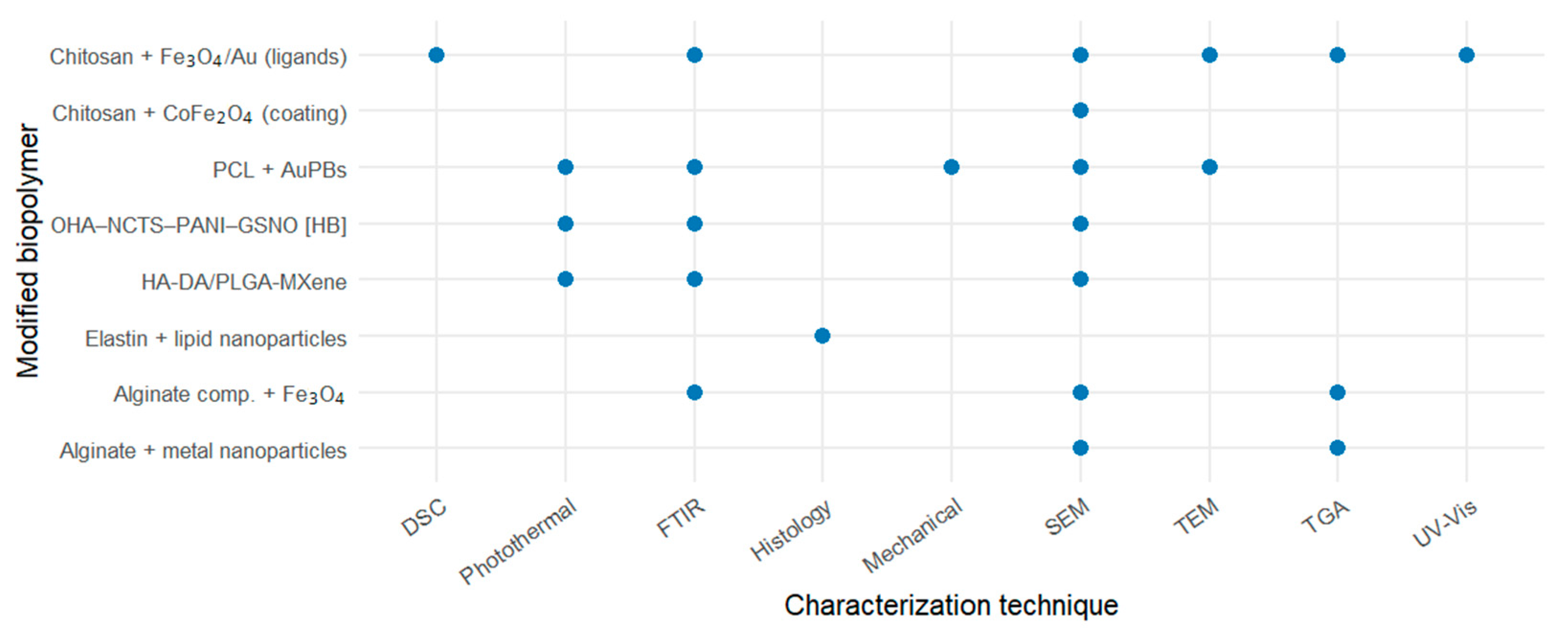
| [28] | HA-DA/PLGA-MXene | 3D printing and photocrosslinking | SEM, FTIR, XRD, angiogenic and osteogenic assay | Angiogenesis–osteogenesis, photothermal performance | Vascularized bone regeneration |
| [20] | Oxidized hyaluronic acid (OHA) + N-carboxyl chitosan (N-CTS) + polyaniline (PANI) + S-nitrosoglutathione (GSNO). | Dynamic copolymerization/crosslinking via Schiff-base bonds. | SEM, FTIR; assessment of photothermal response under NIR | In vitro biocompatibility (L929 and HUVEC > 90% viability); self-healing; conductivity/photothermal effect; sustained NO release; antibacterial activity | Diabetic wound healing (murine model) |
| [19] | PCL (polycaprolactone) + AuPBs (gold plasmonic blackbodies) → photothermal composite scaffold | 3D printing of PCL–AuPB composite | SEM, TEM, FTIR, NIR | Photothermal response (mild hyperthermia, optimal 39–41 °C), mechanical strength, and cell viability | Bone tissue engineering |
| [3] | Elastin, drug payload with lipid nanoparticles | Molecular self-assembly | In vivo assays, histology | Viability, tumor inhibition, cardioprotection | Breast cancer, targeted drug delivery |
| [29] | Alginate + metallic nanoparticles | Ionotropic gelation | SEM, thermal analysis, biological tests | Thermal properties, controlled release | Localized oncologic therapies |
| [6] | Chitosan and derivatives (CMCS/TMC, thiolated); CS–Fe3O4/Au nanocomposites; ligands (PEG, folic acid) | Ionic gelation (TPP), coprecipitation, emulsification, self-assembly, conjugation. | SEM, UV–Vis spectroscopy FTIR, 1H NMR, SEM/TEM, DLS/ζ-potential, XRD, UV–Vis, DSC/TGA; VSM (if Fe3O4) | Biocompatibility; size/ζ; encapsulation efficiency (EE%) and release; stability; photothermal/magnetic response | Drug/gene delivery; adjuvant hyperthermia; diagnostics/theranostics |
| [30] | Chitosan-coated CoFe2O4 nanoparticles | Coprecipitation of CoFe2O4 + chitosan coating | XRD (Rietveld), SEM, SQUID, heating tests under AMF | Spinel structure confirmed; ferrimagnetic behavior; effective thermal response | In vitro magnetic hyperthermia (KAIMRC2 breast cancer cells) |
| [31] | Sodium alginate + flaxseed mucilage + silk fibroin; Fe3O4 nanocomposite | Extraction of mucilage and fibroin (degumming/sericin removal) mix with alginate ionic gelation (CaCl2) → in situ coprecipitation of Fe2+/Fe3+ with NH4OH (porous matrix) | FTIR, XRD, SEM, TGA, VSM | High biocompatibility; marked antitumor activity; effective hyperthermia response; good Fe3O4 dispersion/stability in porous, flexible matrix | In vitro magnetic hyperthermia and anticancer |
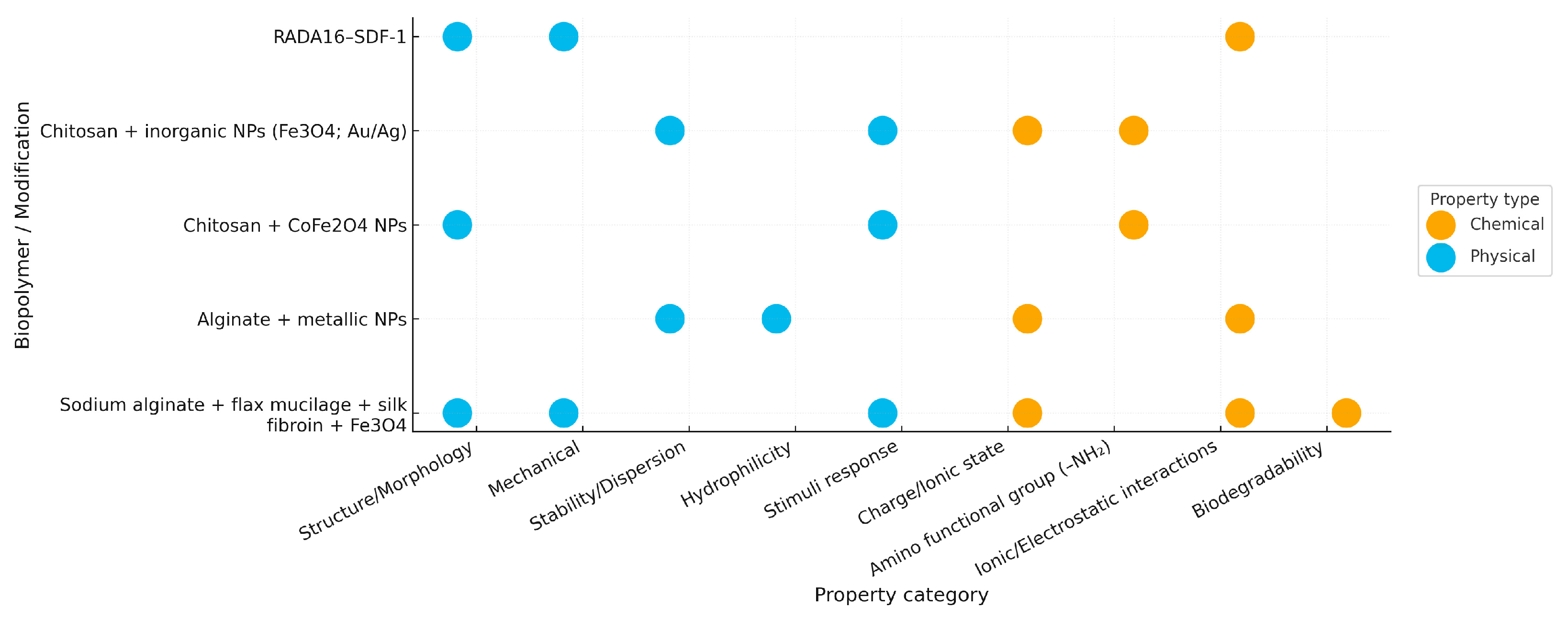
| Ref. | Biopolymer/ Modification | Physical Properties | Chemical Properties |
|---|---|---|---|
| [29] | Alginate + metallic nanoparticles | Hydrophilic nature; structural stability | Anionic surface; electrostatic interactions |
| [32] | RADA16–SDF-1 | Nanofibrillar hydrogel; Young’s modulus ≈ 3.21 kPa (like neural tissue) | Amide bonds; ionic interactions |
| [6] | Chitosan + inorganic nanoparticles (Fe3O4; Au/Ag) | Colloidal stability/dispersion; thermal response under external stimulus | Amino (–NH2) and hydroxyl (–OH) groups; positively charged in acidic media |
| [31] | Sodium alginate + flaxseed mucilage + silk fibroin; incorporation of Fe3O4 NPs | Porous, flexible matrix; enhanced mechanical properties; heating under AMF | Negative charge (–COO−); –OH/–COO− and amide groups; ionic crosslinking with Ca2+; anchoring to Fe3O4 (–COO−↔Fe); biodegradable |
| [30] | Chitosan functionalized with CoFe2O4 NPs | Spinel structure; paramagnetic behavior; ability to generate heat under AMF | –NH2 and –OH groups (high reactivity) |
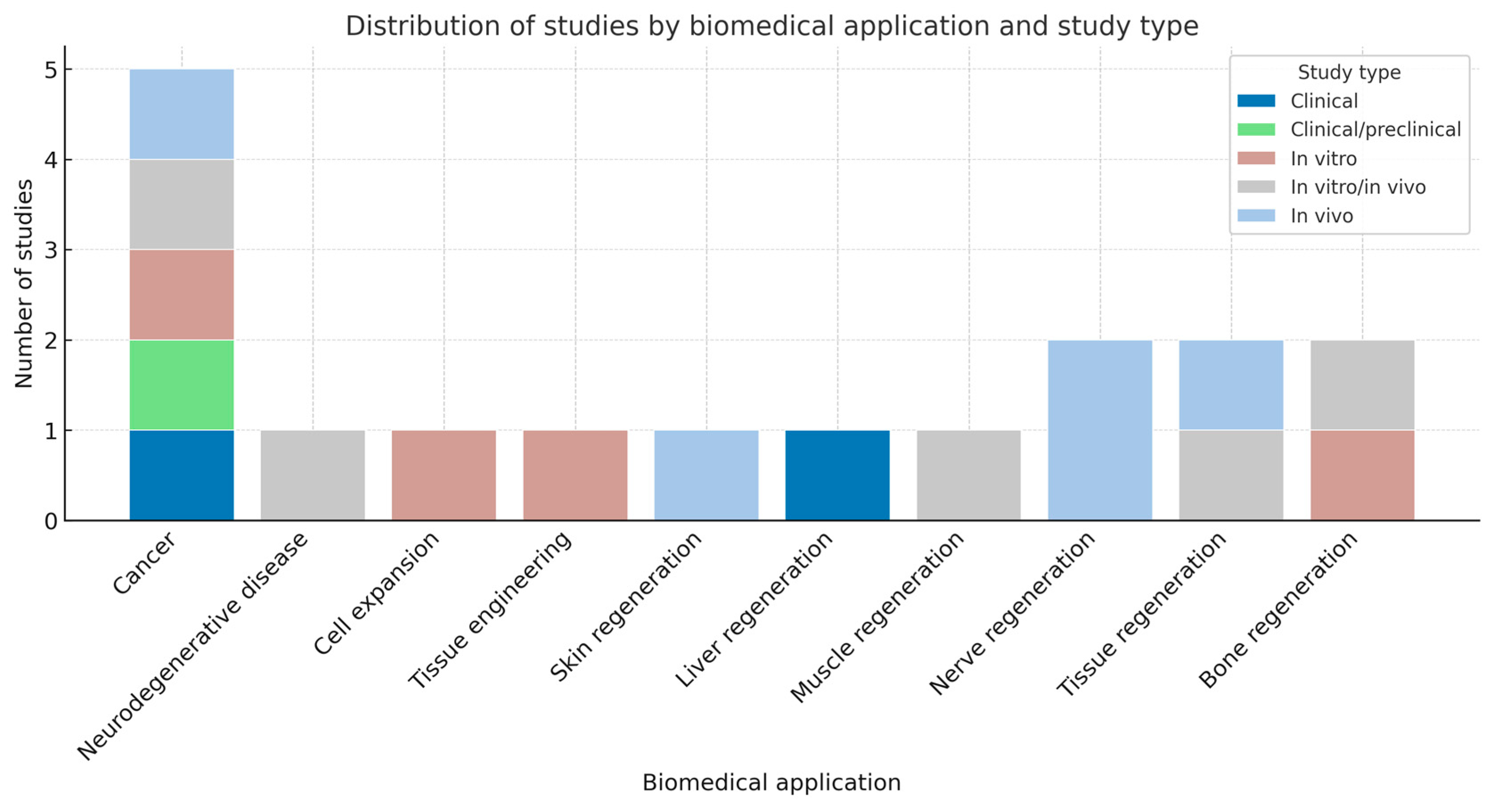
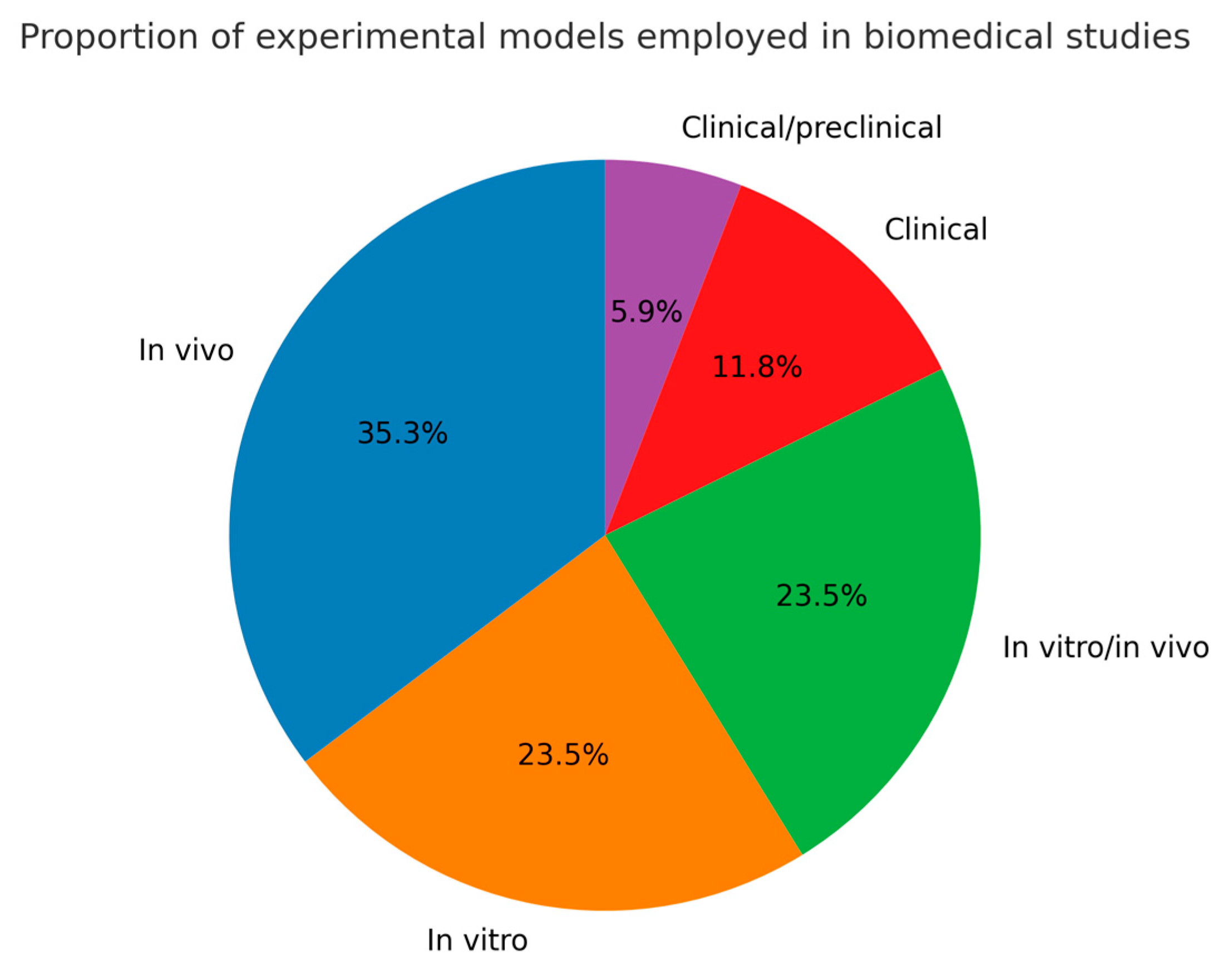
| Ref. | Study Type | Biopolymer/Modification | Experimental Model | Biomedical Application |
|---|---|---|---|---|
| [3] | In vitro/In vivo | Elastin-like polypeptide (ELP), cell-penetrating peptide SynB1, pH (Low) Insertion Peptide (pHLIP), and doxorubicin (DOX). (ELP + SynB1 + pHLIp + doxorubicin) | 4T1 cells and mice | Breast cancer—controlled chemotherapy |
| [10] | In vitro/In vivo | Cu–Mn3O4–TMC + 5-Fu | MCF-10 cells and mice | Cancer—chemo-phototherapy |
| [9] | In vitro | Eu–Fe3O4 + sodium alginate | HeLa cells | Localized hyperthermia |
| [11] | In vitro/ex vivo | HA-BSe NPs, HDAPPs | CT26 cells, 3D organoids | Colorectal cancer |
| [33] | In vitro | Chitosan + collagen + hydroxyapatite | Mesenchymal stem cells | Tissue engineering |
| [8] | In vitro | IONFs in temperature-sensitive liposomes | A549 cells | Human lung adenocarcinoma |
| [4] | Clinical | Modulated electro-hyperthermia (mEHT) | 217 pancreatic cancer patients | Hyperthermia + chemotherapy |
| [2] | Clinical/Preclinical | SPIONs coated with chitosan and aminosilane | Phase I [14], Phase II [31] GBM patients | Cancer—magnetic hyperthermia |
| [34] | In vitro/In vivo | CoFe2O4 + starch and gum | Cells and mice | Hyperthermia—thermal efficiency and compatibility |
| [18] | In vitro/In vivo | PLGA + β-TCP + MXene (Nb2C) | HUVECs/animal model | Vascularized bone regeneration |
| [35] | In vitro/In vivo | FPCP (Pluronic F127 + poly (citric acid) + polypyrrole) | C2C12 cells/mice | Muscle regeneration |
| [19] | In vitro | PCL + AuPB | Bone cells | Photothermal bone regeneration |
| [28] | In vivo | PLGA-MXene + HA-DATS hydrogel | Mice with wounds | Tissue regeneration |
| [36] | In vivo | MpGel (graphene + polydopamine + mupirocin) | Mice with diabetic ulcers | Wound healing, nerve regeneration |
| [37] | In vivo | GeIDA + PgO + mupirocin | Infected burns | Skin regeneration and antimicrobial |
| [38] | In vivo | CMCs + EGCG + Pt-PVP | Mice | Antioxidant, angiogenesis, anti-inflammatory |
| [39] | Clinical | Alginate + MSCs | Patients with cirrhosis | Liver regeneration |
| [40] | In vitro/In vivo | CMC + gold nanoparticles + tannic acid | NSCs/induced Parkinson’s | Therapy for neurodegenerative disease |
| [41] | In vitro | Alginate + gelatin | Hematopoietic stem cells | Cell expansion for transplantation |
| [42] | In vivo | G/CST + DPSCs | Rabbit facial nerve | Peripheral nerve regeneration |
| Ref. | Study | Modified Biopolymer | Efficiency Parameter | Result | Safety Parameter | Result |
|---|---|---|---|---|---|---|
| [3] | In vitro/In vivo | ELP + SynB1 + doxorubicin | Tumor volume reduction | 262 mm3 (treated) vs. 714 mm3 (control) | Cardiotoxicity | No fibrosis or myocardial damage |
| [10] | In vitro/In vivo | Cu–Mn3O4–TMC + 5-Fu | Controlled release | 91.5% at 72 h, pH 5.5 | Viability in healthy cells | >75% |
| [9] | In vitro | Eu–Fe3O4 + alginate | SAR (heating capacity) | 63.5 W/g | Cell viability | 51% decrease in HeLa cells |
| [11] | In vitro/ex vivo | HA-BSe NPs | Temperature reached | 50.8 °C | Selective cell elimination | 26% in tumor cells |
| [33] | In vitro | Chitosan + collagen + hydroxyapatite | Thermal stability | T° increased from 217 °C to 562 °C | Cell adhesion | Osteogenic differentiation confirmed |
| [4] | Clinical | Modulated electro-hyperthermia mEHT + chemotherapy | Tumor progression | 45% (treated) vs. 24% (chemo only) | Treatment tolerance | Better tolerance in combined group |
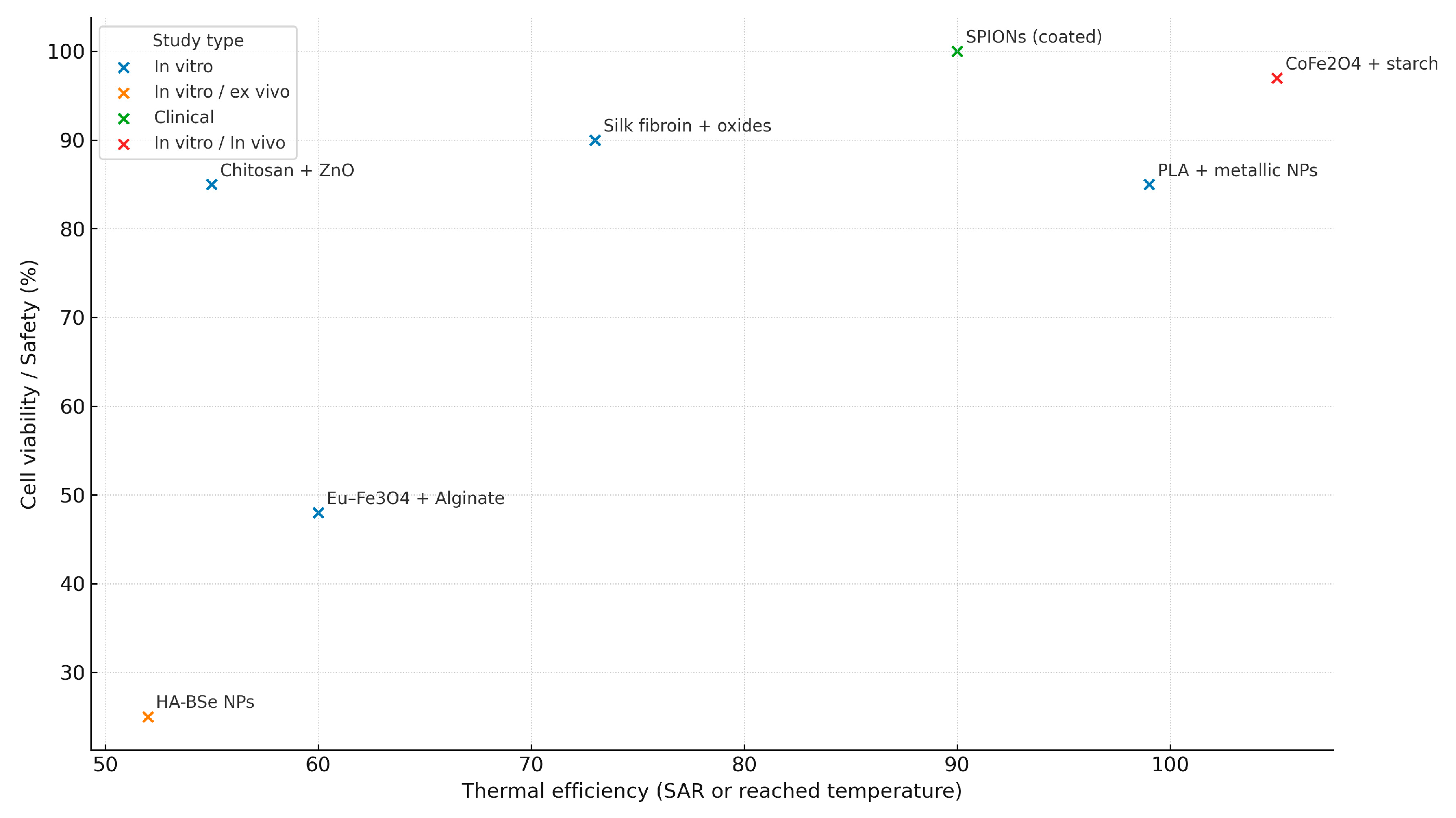
| [2] | Clinical | SPIONs with coating | Induced apoptosis | 90% of treated tumor volume | Systemic toxicity | No iron release detected |
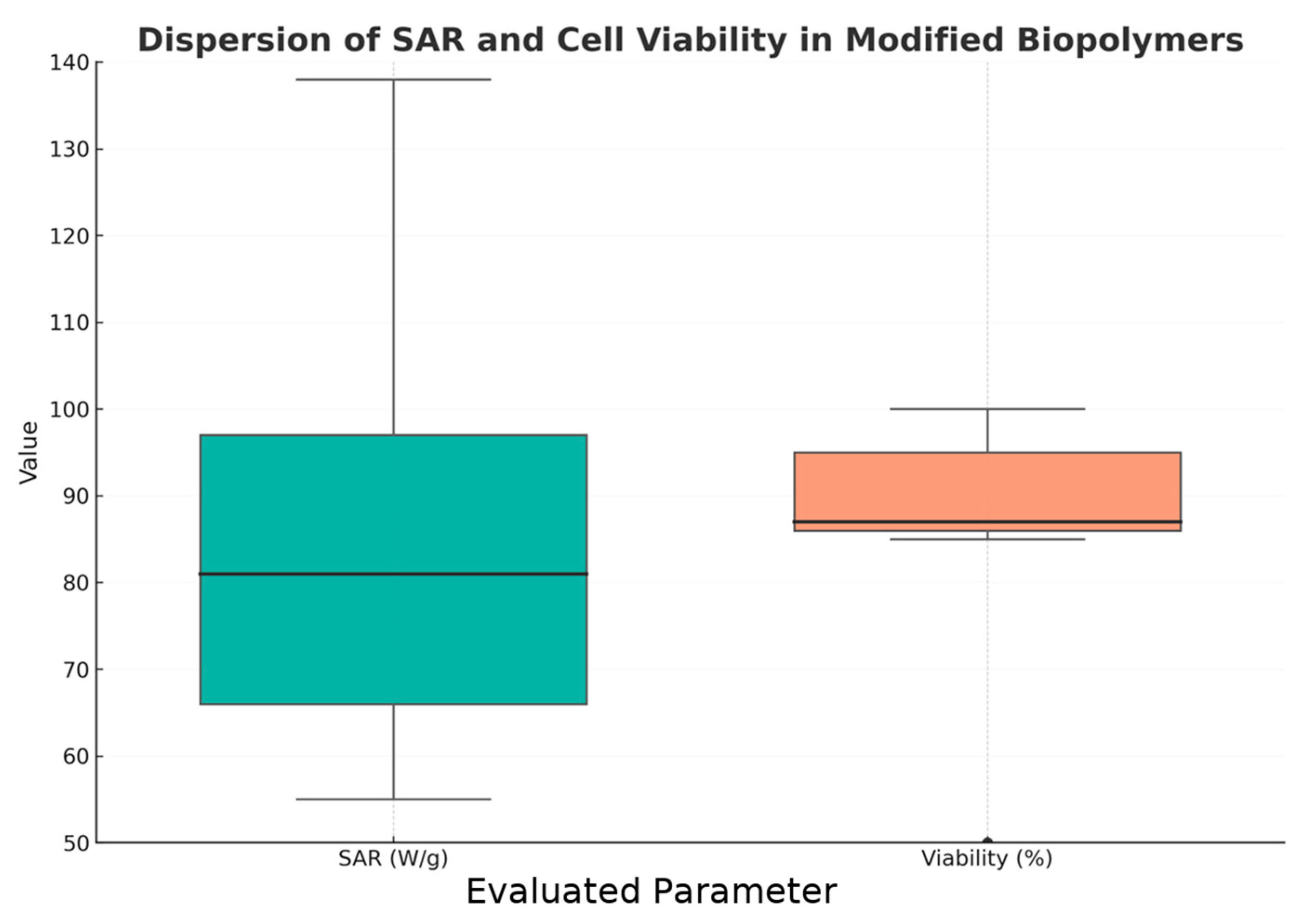
| [34] | In vitro/In vivo | CoFe2O4 + starch and gum | SAR | 72–138 W/g | Viability/hemocompatibility | 97% viability/hemolysis <5% |
| [35] | In vitro/In vivo | FPCP (Pluronic + polypyrrole) | Muscle force | 90% (treated) vs. 55% (control) | Vascularization | 58 vessels/mm2 (vs. 33 control) |
| [28] | In vivo | PLGA-MXene + HA-DATS | Wound closure | 99% at 7 days | Fibrosis and collagen organization | Better distribution and less fibrosis |
| [39] | Clinical | Alginate + MSCs | Cell viability | 89.2% | Liver fibrosis | Decreased to 4.52% (vs. 33.2% control) |
| [40] | In vitro/In vivo | CMC + Au + tannic acid | Cell survival | 90% | Inflammatory cytotoxicity | ↓ IL-1β and TNF-α |
| [30] | In vitro | Silk fibroin/metal oxides | SAR/thermal efficiency | SAR = 72.3 W/g | Cell viability | >90% viable cells |
| [6] | In vitro | Chitosan/ZnO | Heating capacity | SAR 54.3 W/g | Cytotoxicity | <15% at 200 µg/mL |
| [32] | In vitro | PLA/metallic nanoparticles | Local thermal effect | Heating efficiency in <5 min | Cytotoxicity | >85% cell viability |
| Ref. | Modified Biopolymer | Concentration/ Applied Dose | Treatment Time | Biomedical Application |
|---|---|---|---|---|
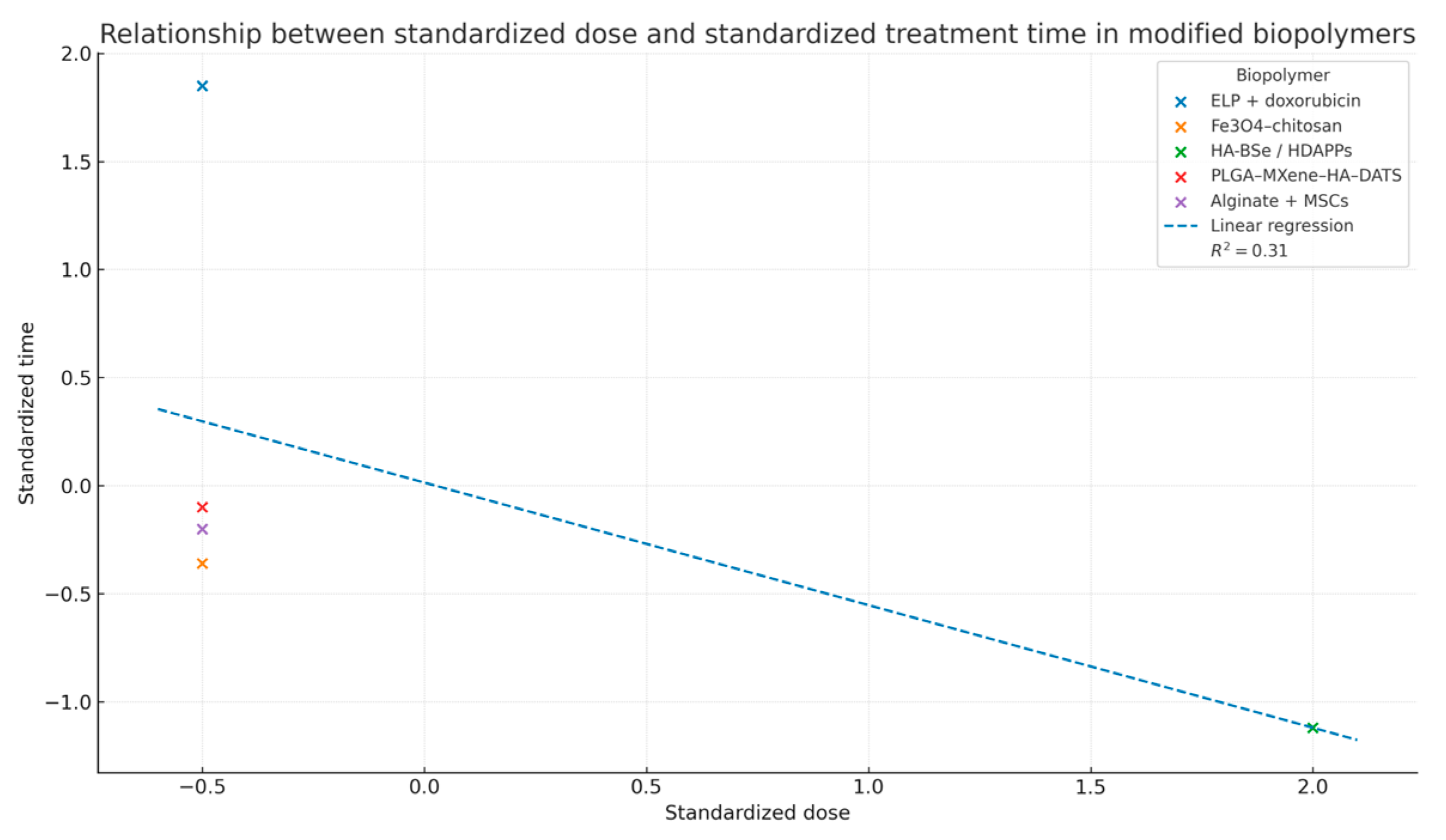
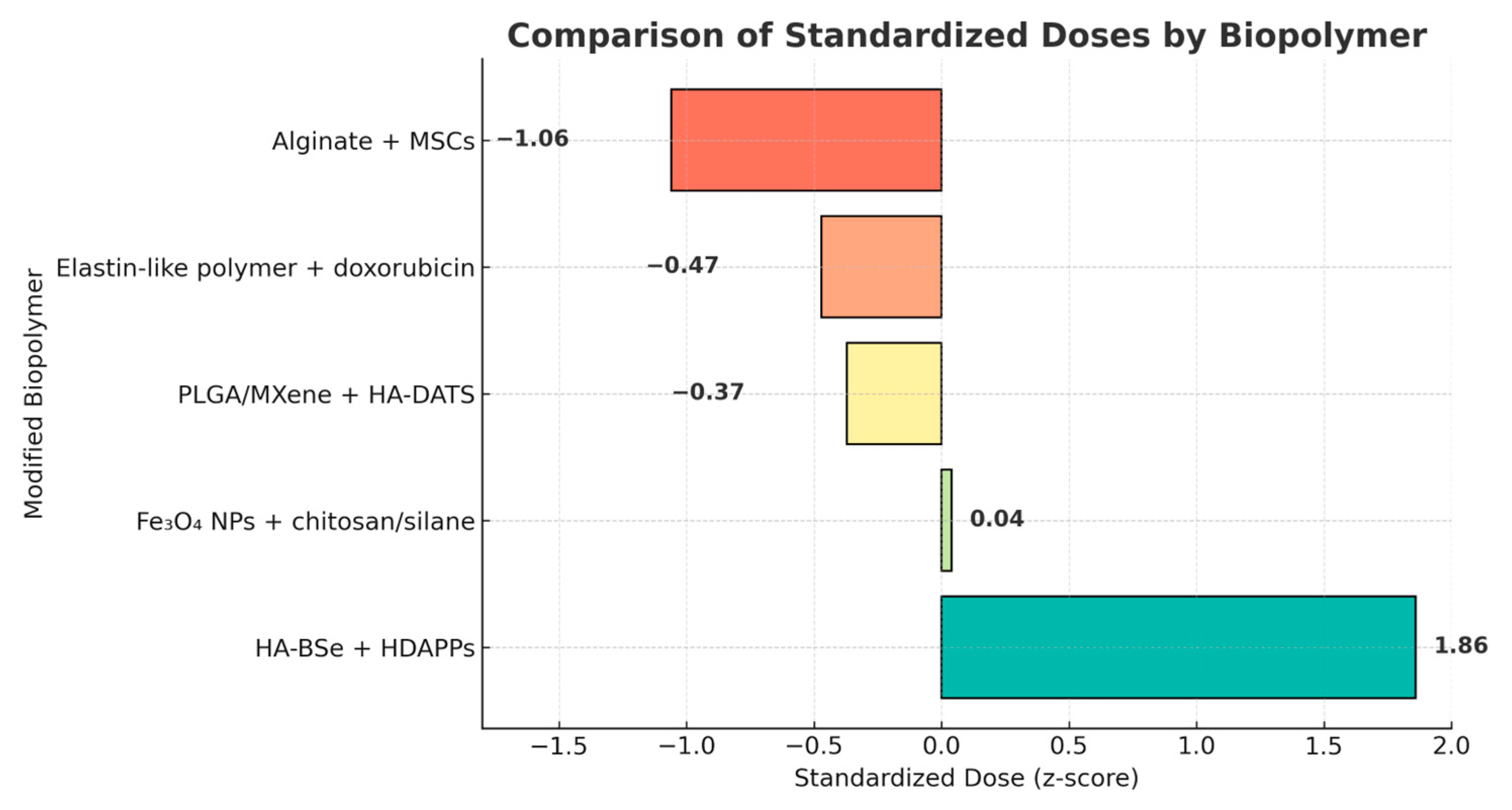
| [3] | Elastin-like polymer modified with doxorubicin | 5 mg/kg (doxorubicin) | Every 3 days for 3 weeks | Breast cancer and cardioprotection |
| [2] | Magnetic iron oxide nanoparticles coated with chitosan and aminosilane | 0.1–0.7 mL suspension (112 mg/mL) across 6 sessions (11.2–78.4 mg per patient) | 60 min per session | Hyperthermia for glioblastoma multiforme (GBM) |
| [11] | Hyaluronic-acid-coated nanoparticles (HA-BSe and HDAPPs) | 3.34 × 10¹⁰ NPs/cm3 in 3D models | 36 s (IR irradiation); 24 h incubation | Hyperthermia and phototherapy for colorectal cancer |
| [28] | Photothermal hydrogel with PLGA/MXene/Nb2C core + HA-dopamine shell with DATS | 100 ng/mg vascular endothelial growth factor (VEGF) + 50 μM diallyl Trisulfide (DATS) | 7 days | Tissue regeneration, accelerated wound healing |
| [35] | Sodium alginate hydrogel with adipose-derived mesenchymal stem cells (MSCs) | 500 μL (2% w/v alginate) with 5 × 10⁶ MSCs | 7 days | Liver regeneration in induced cirrhosis |
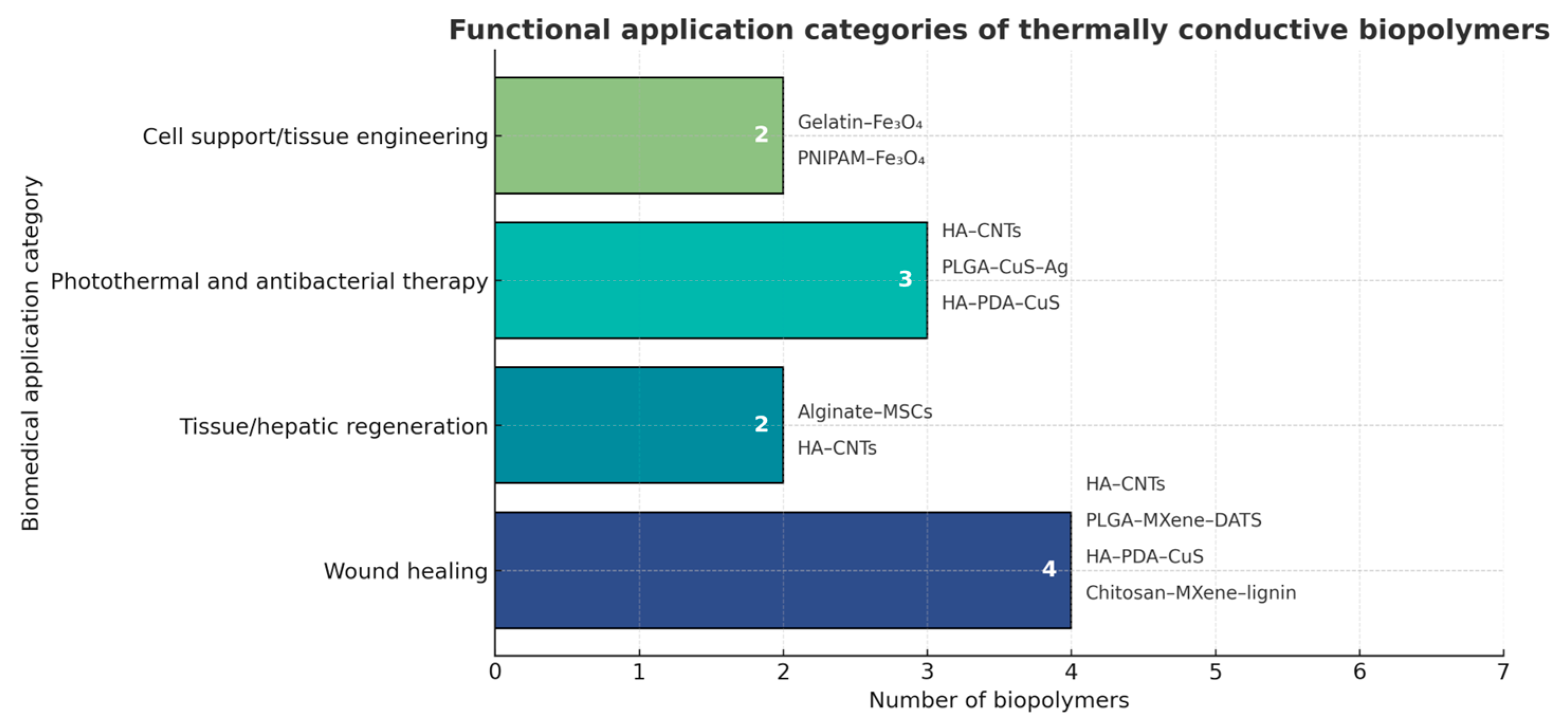
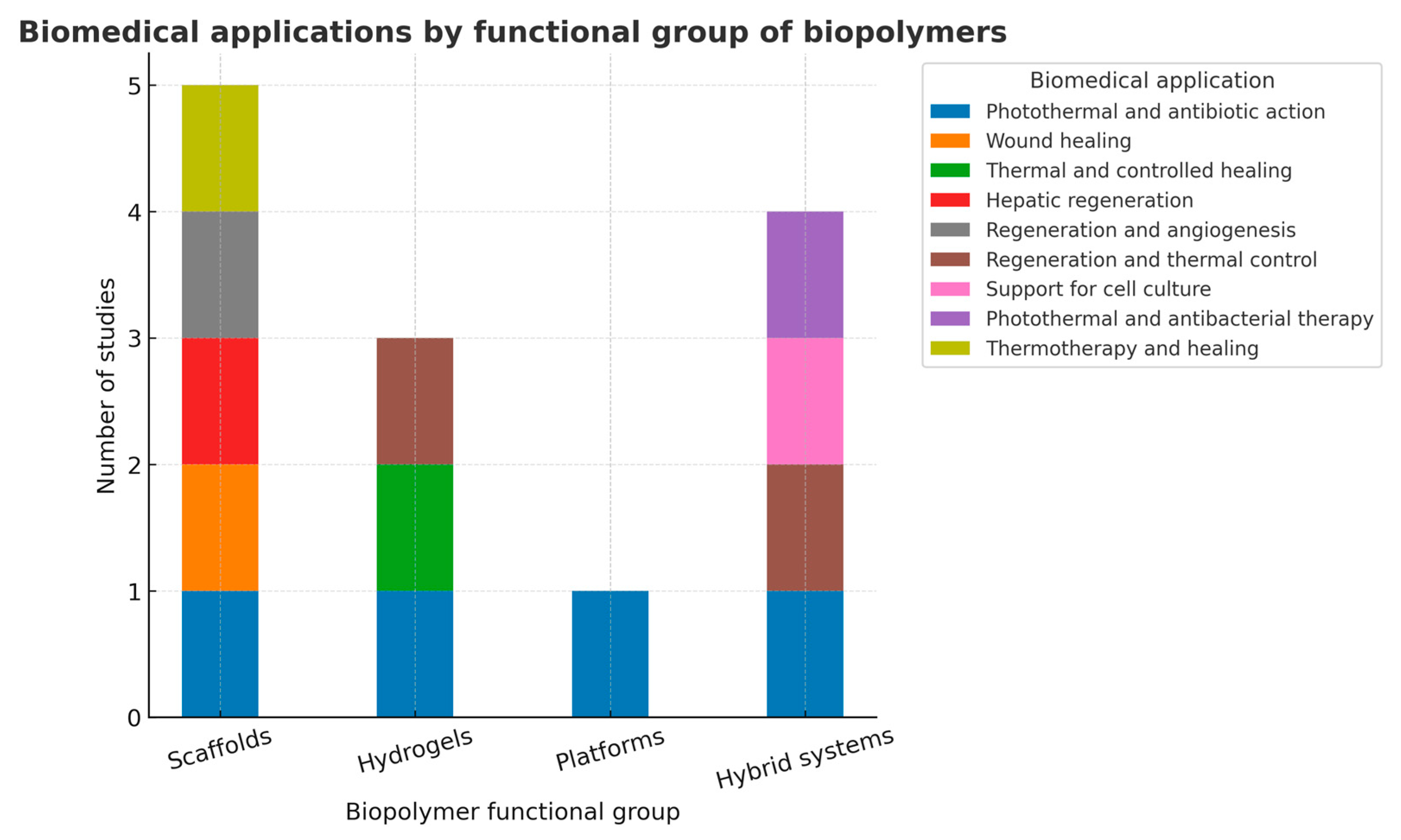
| Ref. | Modified Biopolymer | Regenerated Tissue/Organ | Biomedical Application | Functional Classification |
|---|---|---|---|---|
| [18] | Chitosan doped with MXene and lignin | Skin (chronic wound) | Accelerated wound healing | Conductive + regenerative system |
| [19] | Hyaluronic acid hydrogel + PDA + CuS | Subcutaneous tissue | Wound healing | Biocompatible photothermal scaffold |
| [35] | PLGA + CuS and Ag nanoparticles | Soft tissue | Photothermal + antibacterial therapy | Multifunctional platform |
| [28] | PLGA/MXene + modified HA hydrogel + DATS | Skin (wound) | Regeneration and angiogenesis | Core–shell system with release |
| [36] | Thermo-responsive PNIPAM + Fe3O4 hydrogel | Liver (in vitro) | Support for cell culture | Cell-support system |
| [37] | Alginate scaffold + CuS nanoparticles | Skin (burns) | Thermotherapy and wound healing | Thermo-induced scaffold |
| [38] | Hyaluronic acid hydrogel + CNTs | Skin (infected wounds) | Photothermal and antibiotic action | Conductive hybrid system |
| [39] | Alginate hydrogel with MSCs | Liver | Liver regeneration | Injectable cell scaffold |
| [40] | Gelatin + iron oxide nanoparticles | Bone tissue | Regeneration and thermal control | Magnetically sensitive system |
| [41] | PLA + carbon nanofibers | Soft tissue | Photothermal wound healing | Conductive porous scaffold |
| [42] | Gelatin methacrylate + MoS2 nanosheets | Skin | Thermal, controlled healing | Regenerative photothermal hydrogel |
| Biopolymer Matrix and Composition | Modification/Fabrication Method | Biomedical Application and Treatment | Study Type/Model | Thermal Performance (Examples) | Outcome Highlights | Clinical Status |
|---|---|---|---|---|---|---|
| HA-DA/PLGA–MXene (Nb2C) composite | 3D printing + photocrosslinking; core–shell designs | Vascularized bone regeneration via mild photothermal heating (~41–42 °C) | In vitro (angiogenic/osteogenic assays) + in vivo (bone model) | Mild photothermal response sufficient to trigger pro-angiogenic/osteogenic cues | Enhanced angiogenesis/osteogenesis; scaffold integration reported | Preclinical (in vitro/in vivo) |
| OHA + N-carboxyl chitosan + polyaniline + GSNO | Dynamic copolymerization/Schiff-base crosslinking | Diabetic wound healing with photothermal heating + NO release | In vitro (L929, HUVEC) + in vivo (murine wounds) | Photothermal response under NIR; conductive hydrogel | >90% cell viability; antibacterial; sustained NO; accelerated closure | Preclinical (in vitro/in vivo) |
| PCL + Au plasmonic blackbodies (AuPBs) | 3D-printed composite scaffold | Bone tissue engineering with mild photothermal modulation | In vitro (bone-related cells) | Optimal 39–41 °C under NIR; mechanical reinforcement | Maintained viability; improved mechanical strength | Preclinical (in vitro) |
| Elastin-like polypeptide (ELP) + doxorubicin (SynB1/pHLIP) | Molecular self-assembly of drug–polymer conjugate | Breast cancer; hyperthermia-assisted targeted chemotherapy | In vitro + in vivo (4T1 murine model) | Mild hyperthermia used to enhance tumor uptake (qualitative) | Tumor volume 262 mm3 vs. 714 mm3 control; no cardiotoxicity on histology | Preclinical (in vitro/in vivo) |
| Alginate + metallic nanoparticles | Ionotropic gelation; in situ nanoparticle formation | Localized oncologic hyperthermia/controlled release | In vitro (+selected in vivo) | Enhanced thermal properties enabling localized heating | Controlled drug release; thermal ablation potential | Preclinical |
| Chitosan-coated CoFe2O4 nanoparticles | Co-precipitation + polymer coating | Magnetic hyperthermia (AMF) | In vitro (KAIMRC2 breast cancer cells) ± in vivo | Effective heating; SAR up to ~72–138 W/g (related systems) | Ferrimagnetic behavior; cytotoxicity to tumor cells under AMF | Preclinical |
| Alginate + flaxseed mucilage + silk fibroin + Fe3O4 | Extraction + ionic gelation (CaCl2) + in situ Fe2+/Fe3+ co-precipitation | Hyperthermia-enabled anticancer platform | In vitro | Stable heating under AMF; good Fe3O4 dispersion | High biocompatibility; antitumor activity | Preclinical (in vitro) |
| Eu-doped Fe3O4 + alginate (or chitosan) | Nanoparticle embedding/coating in biopolymer | Localized magnetic hyperthermia | In vitro (HeLa cells) | SAR ≈ 63.5 W/g; efficient heating | ≈51% decrease in HeLa viability at target dose | Preclinical (in vitro) |
| SPIONs + chitosan/aminosilane coating | Surface functionalization/coating | Magnetic hyperthermia for glioblastoma (adjunct) | Clinical: Phase I (n = 14), Phase II (n = 59) | Calibrated AMF heating in situ | Apoptosis ≈90% of treated tumor volume; no iron release reported | Clinical (Phase I–II) |
| Modulated electro-hyperthermia (mEHT) + chemotherapy | Regional modulated RF heating protocol | Advanced pancreatic cancer (adjunct to chemotherapy) | Clinical (multicenter, retrospective) | Regional controlled heating per protocol | Tumor control: 45% vs. 24% (chemo only); improved tolerance | Clinical (observational) |
| PLGA + β-TCP + MXene (Nb2C) | 3D-printed composite; MXene doping | Vascularized bone regeneration (mild hyperthermia) | In vitro (HUVECs) + animal model | Mild heating (~41–42 °C) activates angiogenesis/osteogenesis | Accelerated vascularized bone formation | Preclinical (in vitro/in vivo) |
| FPCP (Pluronic F127 + poly(citric acid) + polypyrrole) | Conductive nanomatrix/hydrogel | Skeletal muscle regeneration with photothermal cues | In vitro (C2C12) + mice | On-demand thermal stimulation | Muscle force 90% vs. 55% control; vascularization 58 vs. 33 vessels/mm2 | Preclinical (in vitro/in vivo) |
| PLGA–MXene core + HA-dopamine shell + DATS | Core–shell; injectable/film hydrogel | Wound healing with photothermal + NO donor (DATS) | In vivo (murine wounds) | Photothermal activation; mild hyperthermia window | Wound closure ≈99% at 7 days; better collagen/less fibrosis | Preclinical (in vivo) |
| Graphene + polydopamine + mupirocin (MpGel) | Conductive photothermal hydrogel | Diabetic ulcer healing; photothermal + antibacterial | In vivo (murine diabetic ulcers) | Photothermal heating under NIR | Enhanced closure; infection control; nerve regeneration signals | Preclinical (in vivo) |
| Alginate hydrogel + mesenchymal stem cells (MSCs) | Injectable hydrogel cell carrier | Liver regeneration in cirrhosis | Clinical (patients with cirrhosis) | —(cell therapy focus) | Cell viability 89.2%; fibrosis ↓ to 4.52% vs. 33.2% control | Clinical (pilot/feasibility) |
Disclaimer/Publisher’s Note: The statements, opinions and data contained in all publications are solely those of the individual author(s) and contributor(s) and not of MDPI and/or the editor(s). MDPI and/or the editor(s) disclaim responsibility for any injury to people or property resulting from any ideas, methods, instructions or products referred to in the content. |
© 2025 by the authors. Licensee MDPI, Basel, Switzerland. This article is an open access article distributed under the terms and conditions of the Creative Commons Attribution (CC BY) license (https://creativecommons.org/licenses/by/4.0/).
Share and Cite
Poma-Paredes, I.; Vivanco-Galván, O.; Castillo-Malla, D.; Jiménez-Gaona, Y. Thermally Conductive Biopolymers in Regenerative Medicine and Oncology: A Systematic Review. Pharmaceuticals 2025, 18, 1708. https://doi.org/10.3390/ph18111708
Poma-Paredes I, Vivanco-Galván O, Castillo-Malla D, Jiménez-Gaona Y. Thermally Conductive Biopolymers in Regenerative Medicine and Oncology: A Systematic Review. Pharmaceuticals. 2025; 18(11):1708. https://doi.org/10.3390/ph18111708
Chicago/Turabian StylePoma-Paredes, Ivett, Oscar Vivanco-Galván, Darwin Castillo-Malla, and Yuliana Jiménez-Gaona. 2025. "Thermally Conductive Biopolymers in Regenerative Medicine and Oncology: A Systematic Review" Pharmaceuticals 18, no. 11: 1708. https://doi.org/10.3390/ph18111708
APA StylePoma-Paredes, I., Vivanco-Galván, O., Castillo-Malla, D., & Jiménez-Gaona, Y. (2025). Thermally Conductive Biopolymers in Regenerative Medicine and Oncology: A Systematic Review. Pharmaceuticals, 18(11), 1708. https://doi.org/10.3390/ph18111708