Convolutional Neural Network for Specimen-Invariant Structural Health Monitoring of FRC Under Flexural Loading

 ,
,  ,
,  ,
,  ,
,  ,
,  and
and 
Abstract
1. Introduction
- We develop a 1D-CNN architecture capable of automatically extracting discriminative features directly from EMI signals, thereby eliminating the need for manual feature engineering in the SHM of FRC beams.
- We introduce and systematically evaluate a specimen-invariant validation scheme that assesses the ability of the model to generalize across different structural specimens. This approach addresses limitations of conventional random cross-validation strategies commonly used in SHM studies and provides a more realistic evaluation of model performance in practical monitoring scenarios.
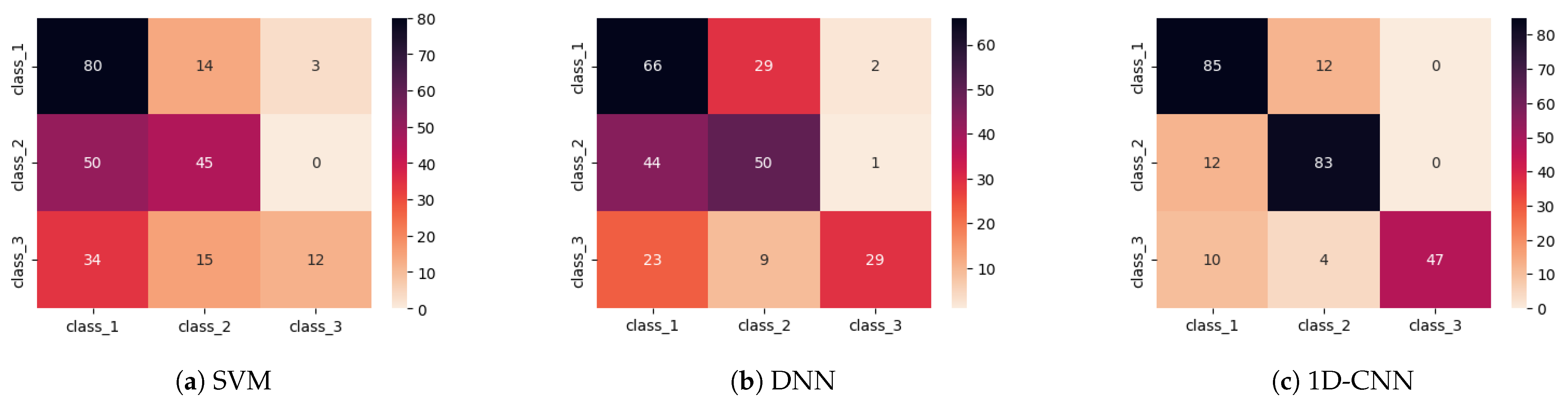
- We provide a comprehensive comparative analysis between the proposed 1D-CNN framework and conventional machine learning approaches, viz., Support Vector Machine (SVM) [54] and Deep Neural Network (DNN), demonstrating the effectiveness of convolutional feature extraction for EMI-based damage classification.
- We demonstrate the feasibility of integrating EMI-based sensing with advanced deep learning models for automated, scalable, and reliable monitoring of FRC infrastructures.
2. Methodology
2.1. Electromechanical Impedance Technique
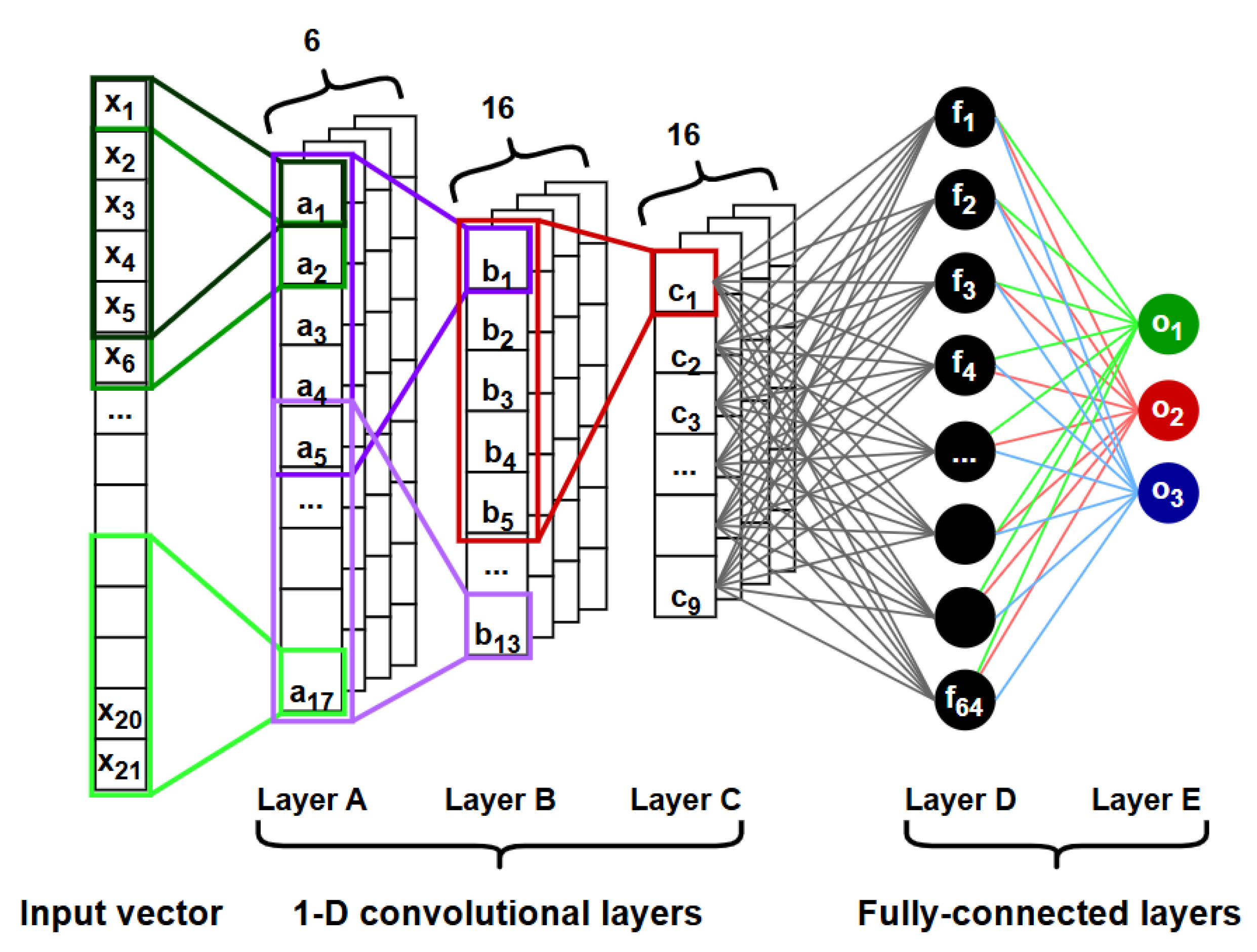
2.2. Model Architecture
3. Experimental Investigation
3.1. Materials and Specimens
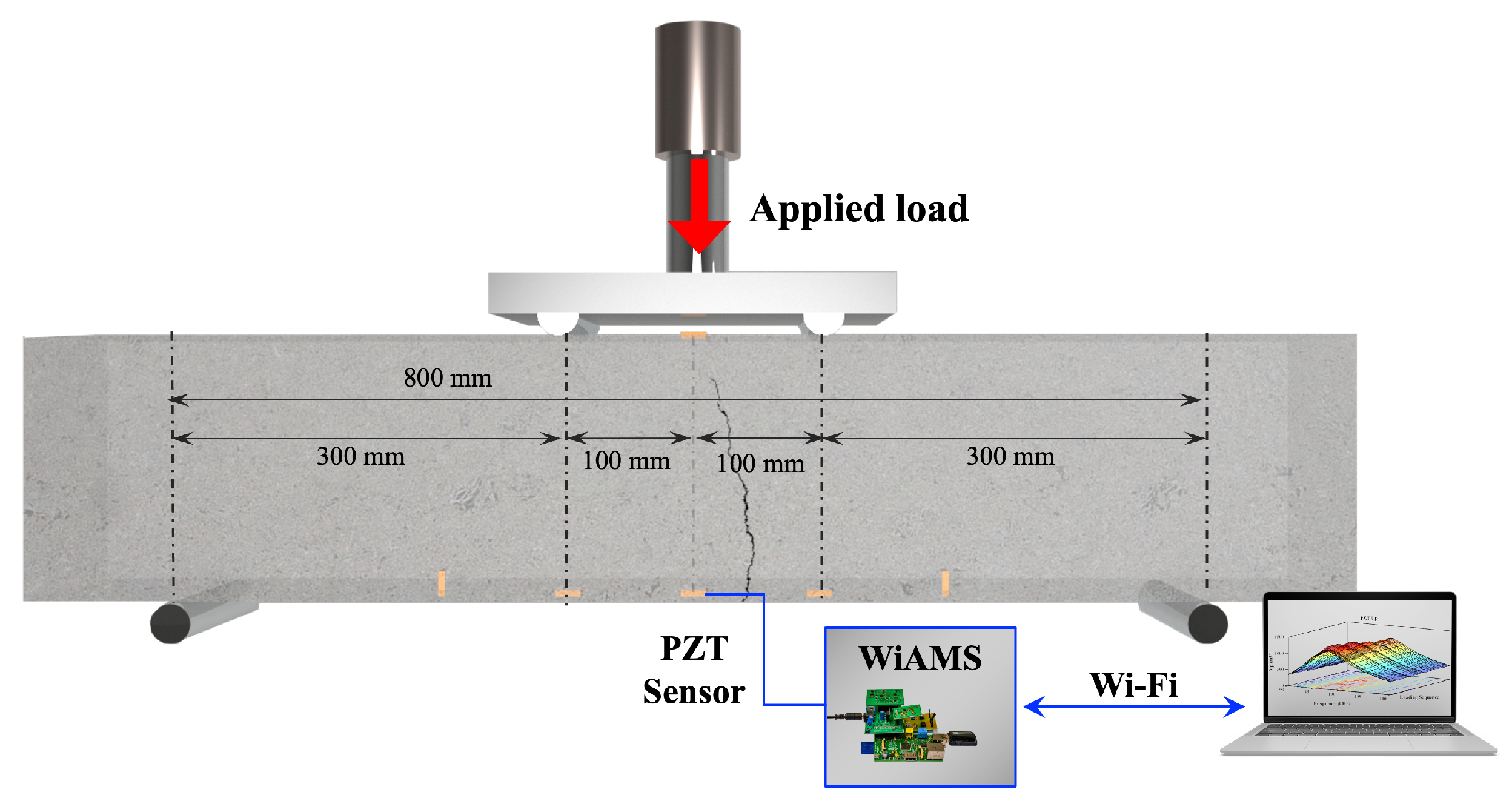
3.2. Flexural Loading and Data Acquisition for SHM
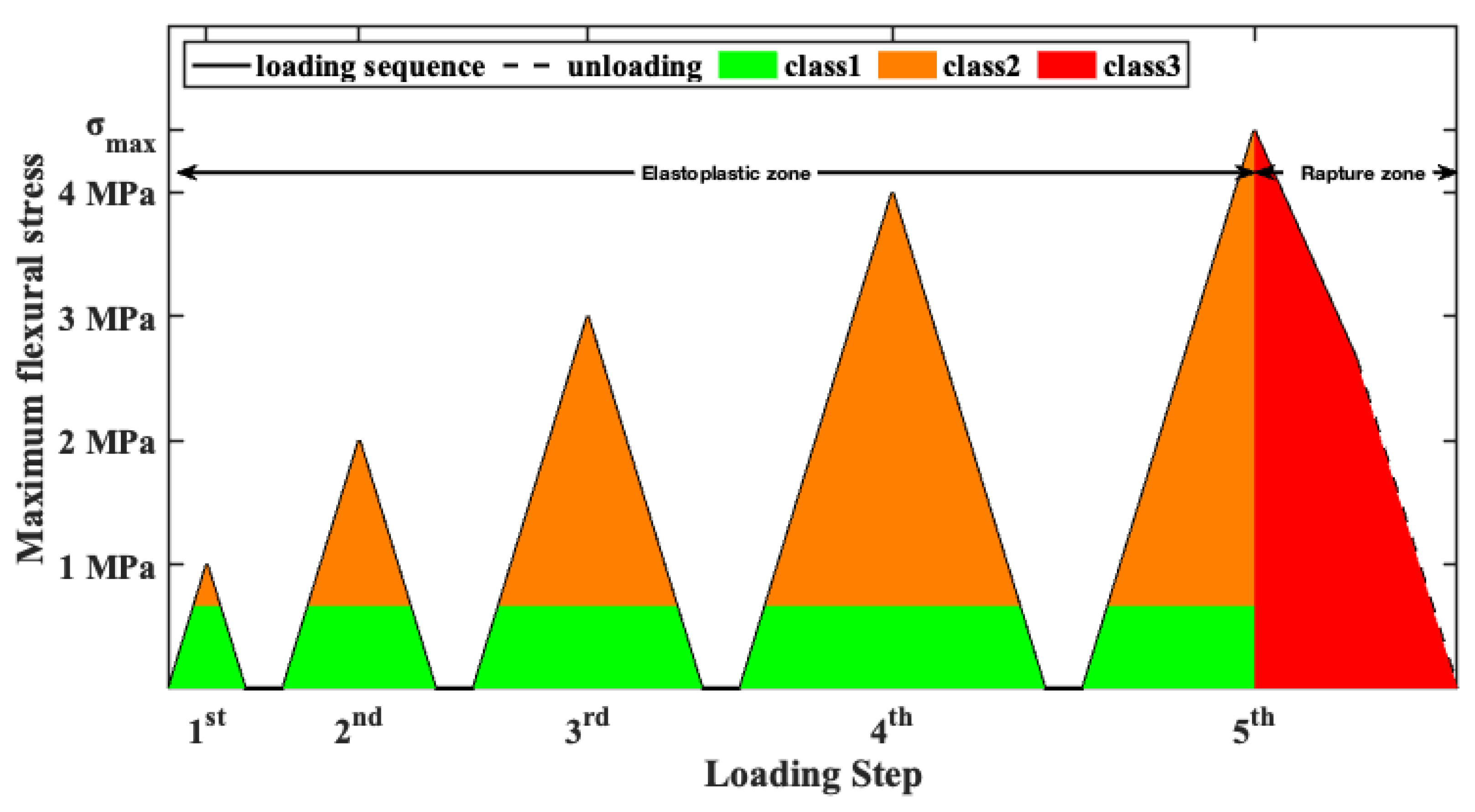
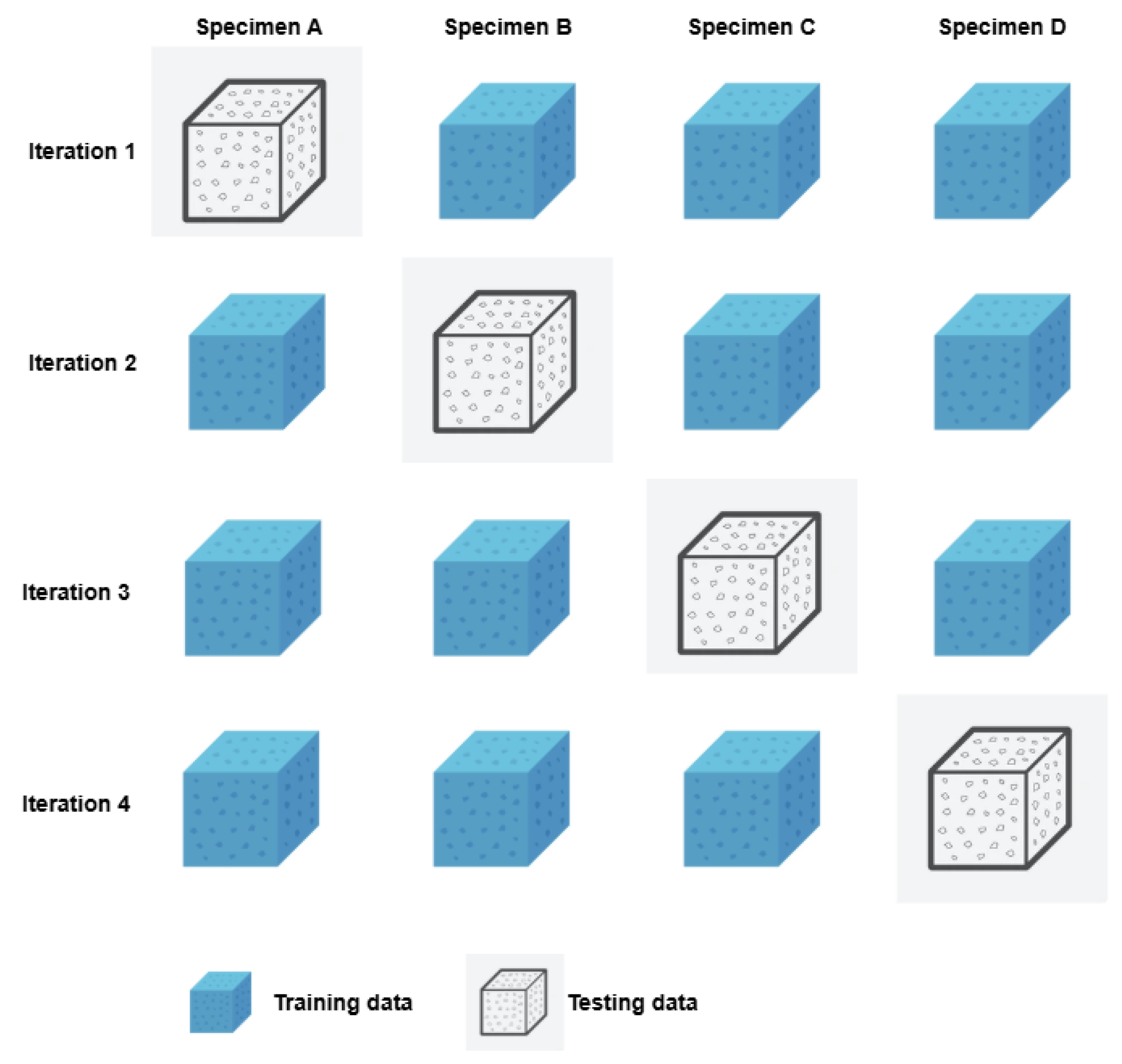
3.3. Specimen-Invariant Validation
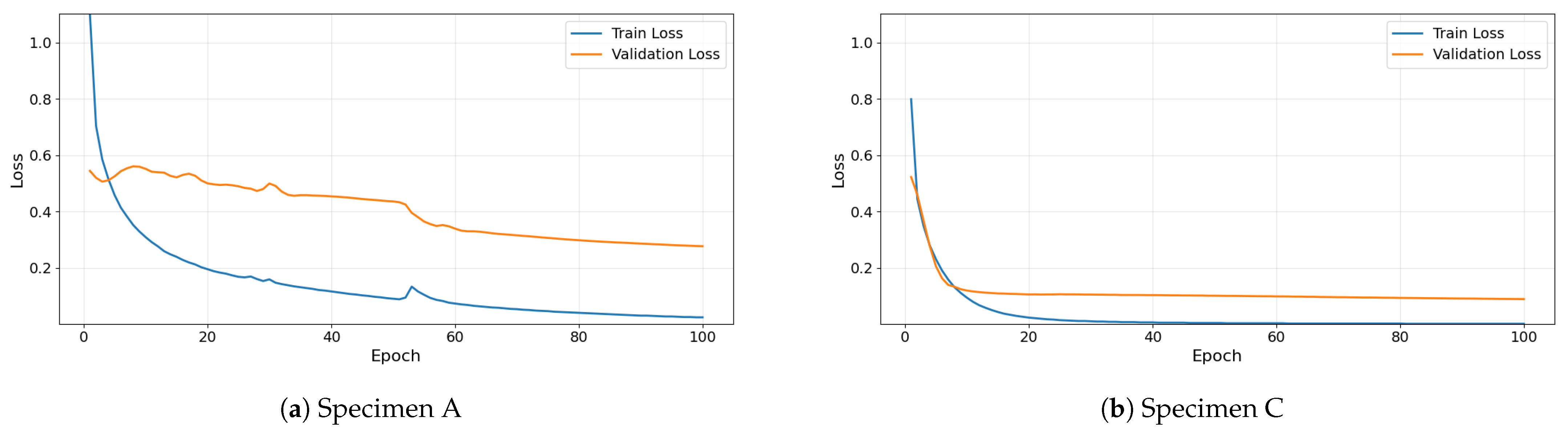
3.4. Hyperparameter Configuration and Training Setup
4. Results
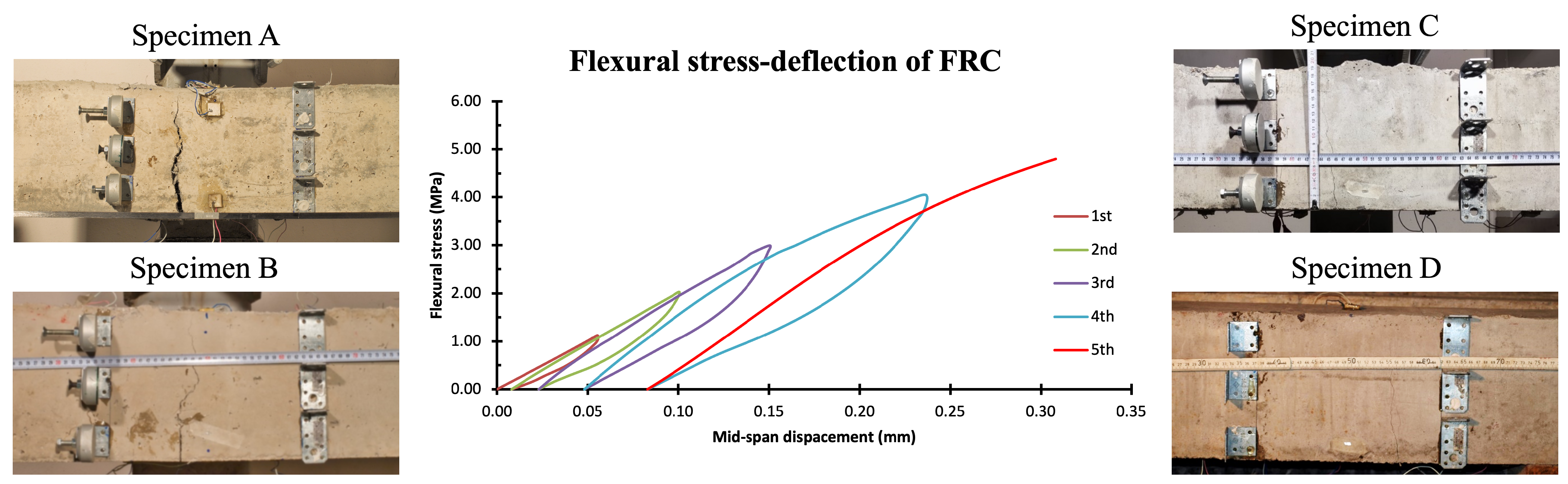
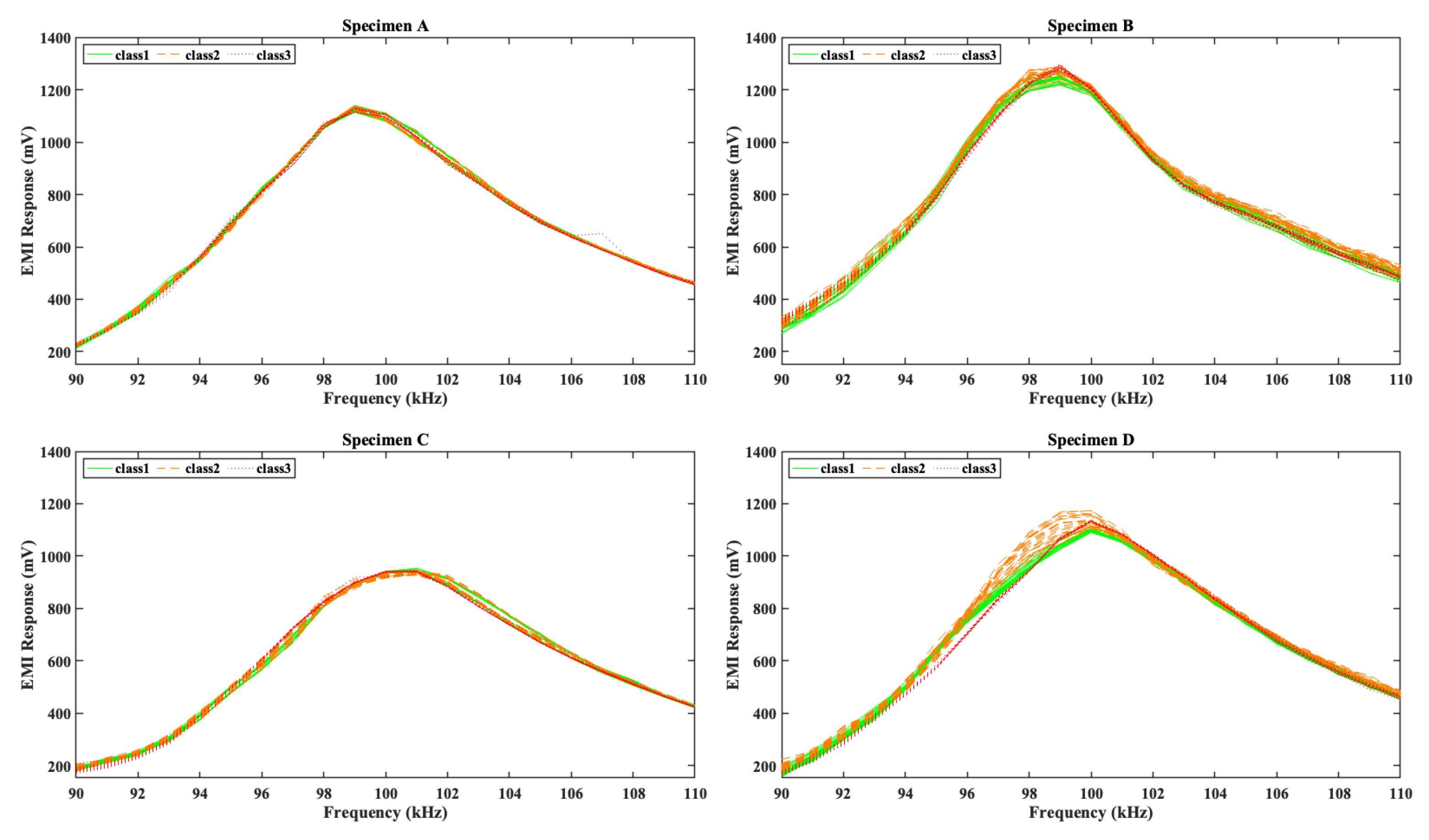
4.1. Mechanical Behavior of Specimens and EMI Signature Acquisition
4.2. Ablation Study
4.3. 1D-CNN vs. 2D-CNN
4.4. Specimen-Invariant vs. Conventional Cross-Validation
5. Conclusions
Author Contributions
Funding
Institutional Review Board Statement
Informed Consent Statement
Data Availability Statement
Conflicts of Interest
Abbreviations
| RC | Reinforced Concrete |
| FRC | Fiber-Reinforced Concrete |
| SHM | Structural Health Monitoring |
| PZT | Piezoelectric lead Zirconate Titanate |
| EMI | Electromechanical Impedance |
| CNN | Convolutional Neural Network |
| SVM | Support Vector Machine |
| DNN | Deep Neural Network |
References
- Woodward, R. Collapse of a segmental post-tensioned concrete bridge. Transp. Res. Rec. 1989, 122, 38–59. [Google Scholar]
- Kaur, N.; Goyal, S.; Anand, K.; Sahu, G.K. A cost-effective approach for assessment of pre-stressing force in bridges using piezoelectric transducers. Measurement 2021, 168, 108324. [Google Scholar] [CrossRef]
- Chalioris, C.E. Analytical approach for the evaluation of minimum fibre factor required for steel fibrous concrete beams under combined shear and flexure. Constr. Build. Mater. 2013, 43, 317–336. [Google Scholar] [CrossRef]
- Naoum, M.C.; Sapidis, G.M.; Papadopoulos, N.A.; Voutetaki, M.E. An electromechanical impedance-based application of realtime monitoring for the load-induced flexural stress and damage in fiber-reinforced concrete. Fibers 2023, 11, 34. [Google Scholar] [CrossRef]
- Signorini, C.; Volpini, V. Mechanical performance of fiber reinforced cement composites including fully-recycled plastic fibers. Fibers 2021, 9, 16. [Google Scholar] [CrossRef]
- Shafei, B.; Kazemian, M.; Dopko, M.; Najimi, M. State-of-the-art review of capabilities and limitations of polymer and glass fibers used for fiber-reinforced concrete. Materials 2021, 14, 409. [Google Scholar] [CrossRef]
- Chalioris, C.E. Steel fibrous RC beams subjected to cyclic deformations under predominant shear. Eng. Struct. 2013, 49, 104–118. [Google Scholar] [CrossRef]
- Huang, Y.; Grünewald, S.; Schlangen, E.; Luković, M. Strengthening of concrete structures with ultra high performance fiber reinforced concrete (UHPFRC): A critical review. Constr. Build. Mater. 2022, 336, 127398. [Google Scholar] [CrossRef]
- Tastani, S.; Ntampanli, E.; Savvidis, I.; Veneti, M.; Zapris, V. Strain resilient cementitious composites of unclassified calcareous fly ash and PP fibers: Performance by also considering durability effects. In Proceedings of the International Conference on Strain-Hardening Cement-Based Composites, Dresden, Germany, 18–20 September 2017; pp. 634–642. [Google Scholar]
- Mpalaskas, A.; Matikas, T.; Aggelis, D. Acoustic emission of fire damaged fiber reinforced concrete. In Proceedings of the Smart Materials and Nondestructive Evaluation for Energy Systems 2016; SPIE Press: Bellingham, WA, USA, 2016; pp. 320–328. [Google Scholar]
- Abbas, A.M.; Hussain, H.K.; Ojaimi, M.F. Shear and flexural behavior of flat slabs casted with polyolefin fiber-reinforced concrete. Fibers 2022, 10, 34. [Google Scholar] [CrossRef]
- Sapidis, G.M.; Naoum, M.C.; Papadopoulos, N.A. Electromechanical impedance-based compressive load-induced damage identification of fiber-reinforced concrete. Infrastructures 2025, 10, 60. [Google Scholar] [CrossRef]
- Haq, M.; Bhalla, S.; Naqvi, T. Piezo-impedance based fatigue damage monitoring of restrengthened concrete frames. Compos. Struct. 2022, 280, 114868. [Google Scholar] [CrossRef]
- Chalioris, C.; Papadopoulos, N.; Sapidis, G.; Naoum, M.; Golias, E. EMA-Based Monitoring Method of Strengthened Beam-Column Joints. In Proceedings of the International ISCRAM Conference, Omaha, NE, USA, 28–31 May 2023; pp. 28–31. [Google Scholar]
- Ai, D.; Yang, Z.; Li, H.; Zhu, H. Heating-time effect on electromechanical admittance of surface-bonded PZT sensor for concrete structural monitoring. Measurement 2021, 184, 109992. [Google Scholar] [CrossRef]
- Tzoura, E.; Laory, I.; Triantafillou, T.; Choutopoulou, E.; Kollia, C.; Basheer, P. Damage detection of concrete elements retrofitted with TRM or FRP jackets: A comparison between equivalent strengthening systems. In Proceedings of the CSHM-6, Belfast, UK, 26–27 May 2016; pp. 1–9. [Google Scholar]
- Tzoura, E.; Choutopoulou, E.; Triantafillou, T.; Providakis, C.; Tsantilis, A.; Papanicolaou, C.; Karabalis, D. Damage Detection of Reinforced Concrete Elements Retrofitted with FRP by Using a Wireless Measurement System. Struct. Monit. Maint. 2016, 20. Available online: https://www.ndt.net/search/docs.php3?id=18625 (accessed on 16 April 2026).
- Mpalaskas, A.; Thanasia, O.; Matikas, T.; Aggelis, D. Mechanical and fracture behavior of cement-based materials characterized by combined elastic wave approaches. Constr. Build. Mater. 2014, 50, 649–656. [Google Scholar] [CrossRef]
- Jiang, T.; Yu, D.; Xiao, M.; Li, L.; Wang, L. Monitoring bond-slip behavior of CFRP-RCESC beams using piezoelectric active sensing method. Adv. Bridge Eng. 2021, 2, 25. [Google Scholar] [CrossRef]
- Mpalaskas, A.C.; Matikas, T.E.; Aggelis, D.G.; Alver, N. Acoustic emission for evaluating the reinforcement effectiveness in steel fiber reinforced concrete. Appl. Sci. 2021, 11, 3850. [Google Scholar] [CrossRef]
- Altammar, H.; Dhingra, A.; Salowitz, N. Ultrasonic sensing and actuation in laminate structures using bondline-embedded d35 piezoelectric sensors. Sensors 2018, 18, 3885. [Google Scholar] [CrossRef]
- Sapidis, G.M.; Kansizoglou, I.; Naoum, M.C.; Papadopoulos, N.A.; Chalioris, C.E. A deep learning approach for autonomous compression damage identification in fiber-reinforced concrete using piezoelectric lead zirconate titanate transducers. Sensors 2024, 24, 386. [Google Scholar] [CrossRef]
- Na, S.; Lee, H.K. A multi-sensing electromechanical impedance method for non-destructive evaluation of metallic structures. Smart Mater. Struct. 2013, 22, 095011. [Google Scholar] [CrossRef]
- Kocherla, A.; Subramaniam, K.V. Embedded smart PZT-based sensor for internal damage detection in concrete under applied compression. Measurement 2020, 163, 108018. [Google Scholar] [CrossRef]
- Ai, D.; Li, H.; Zhu, H. Flexure-critical stress and damage identification in RC beam structure using embedded piezoelectric transducers: 2D modelling and experimental investigations. Constr. Build. Mater. 2023, 409, 134017. [Google Scholar] [CrossRef]
- Bhalla, S.; Kaur, N. Prognosis of low-strain fatigue induced damage in reinforced concrete structures using embedded piezo-transducers. Int. J. Fatigue 2018, 113, 98–112. [Google Scholar] [CrossRef]
- Pham, Q.Q.; Dang, N.L.; Kim, J.T. Smart PZT-embedded sensors for impedance monitoring in prestressed concrete anchorage. Sensors 2021, 21, 7918. [Google Scholar] [CrossRef]
- Dang, N.L.; Pham, Q.Q.; Kim, J.T. Piezoelectric-based hoop-type interface for impedance monitoring of local strand breakage in prestressed multi-strand anchorage. Struct. Control. Health Monit. 2021, 28, e2649. [Google Scholar] [CrossRef]
- Ai, D.; Luo, H.; Wang, C.; Zhu, H. Monitoring of the load-induced RC beam structural tension/compression stress and damage using piezoelectric transducers. Eng. Struct. 2018, 154, 38–51. [Google Scholar] [CrossRef]
- Yan, S.; Sun, W.; Song, G.; Gu, H.; Huo, L.S.; Liu, B.; Zhang, Y.G. Health monitoring of reinforced concrete shear walls using smart aggregates. Smart Mater. Struct. 2009, 18, 047001. [Google Scholar] [CrossRef]
- Divsholi, B.S.; Yang, Y.W.; Bing, L. Monitoring beam-column joint in concrete structures using piezo-impedance sensors. Adv. Mater. Res. 2009, 79, 59–62. [Google Scholar] [CrossRef]
- Sapidis, G.M.; Naoum, M.C.; Papadopoulos, N.A.; Golias, E.; Karayannis, C.G.; Chalioris, C.E. A novel approach to monitoring the performance of carbon-fiber-reinforced polymer retrofitting in reinforced concrete beam–column joints. Appl. Sci. 2024, 14, 9173. [Google Scholar] [CrossRef]
- Naoum, M.; Sapidis, G.; Papadopoulos, N.; Golias, E.; Chalioris, C. Structural health monitoring of reinforced concrete beam-column joints using piezoelectric transducers. In Proceedings of the International RILEM Conference on Synergising Expertise Towards Sustainability and Robustness of CBMs and Concrete Structures, Milos Island, Greece, 14–16 June 2023; pp. 945–956. [Google Scholar]
- Kocherla, A.; Subramaniam, K.V. Stress and damage localization monitoring in fiber-reinforced concrete using surface-mounted PZT sensors. Meas. Sci. Technol. 2020, 31, 024004. [Google Scholar] [CrossRef]
- Peres, R.S.; Jia, X.; Lee, J.; Sun, K.; Colombo, A.W.; Barata, J. Industrial artificial intelligence in industry 4.0-systematic review, challenges and outlook. IEEE Access 2020, 8, 220121–220139. [Google Scholar] [CrossRef]
- Kansizoglou, I.; Kokkotis, C.; Stampoulis, T.; Giannakou, E.; Siaperas, P.; Kallidis, S.; Koutra, M.; Malliou, P.; Michalopoulou, M.; Gasteratos, A. Artificial Intelligence and the Human–Computer Interaction in Occupational Therapy: A Scoping Review. Algorithms 2025, 18, 276. [Google Scholar] [CrossRef]
- Oikonomou, K.M.; Kansizoglou, I.; Gasteratos, A. Reinforcement Learning with Spiking Neural Networks for Robotic Applications: A Survey. Authorea Prepr. 2025. [Google Scholar] [CrossRef]
- Tapeh, A.T.G.; Naser, M. Artificial intelligence, machine learning, and deep learning in structural engineering: A scientometrics review of trends and best practices. Arch. Comput. Methods Eng. 2023, 30, 115–159. [Google Scholar]
- Rabi, R.R.; Monti, G. Machine learning-derived equations for seismic fragility of hollow-core bridge piers using analytical models and visible parameters. In Proceedings of the Structures; American Society of Civil Engineers: Reston, VA, USA, 2025; Volume 75, p. 108792. [Google Scholar]
- Rabi, R.R. Shear capacity assessment of hollow-core RC piers via machine learning. In Proceedings of the Structures; American Society of Civil Engineers: Reston, VA, USA, 2025; Volume 76, p. 108961. [Google Scholar]
- LeCun, Y.; Bengio, Y.; Hinton, G. Deep learning. Nature 2015, 521, 436–444. [Google Scholar] [CrossRef]
- Kansizoglou, I.; Bampis, L.; Gasteratos, A. Do neural network weights account for classes centers? IEEE Trans. Neural Netw. Learn. Syst. 2022, 34, 8815–8824. [Google Scholar] [CrossRef]
- Chakurkar, P.S.; Vora, D.; Patil, S.; Mishra, S.; Kotecha, K. Data-driven approach for AI-based crack detection: Techniques, challenges, and future scope. Front. Sustain. Cities 2023, 5, 1253627. [Google Scholar] [CrossRef]
- Hoshyar, A.N.; Samali, B.; Liyanapathirana, R.; Houshyar, A.N.; Yu, Y. Structural damage detection and localization using a hybrid method and artificial intelligence techniques. Struct. Health Monit. 2020, 19, 1507–1523. [Google Scholar] [CrossRef]
- Plevris, V.; Papazafeiropoulos, G. AI in structural health monitoring for infrastructure maintenance and safety. Infrastructures 2024, 9, 225. [Google Scholar] [CrossRef]
- Ta, Q.B.; Pham, Q.Q.; Pham, N.L.; Huynh, T.C.; Kim, J.T. Smart aggregate-based concrete stress monitoring via 1D CNN deep learning of raw impedance signals. Struct. Control. Health Monit. 2024, 2024, 5822653. [Google Scholar] [CrossRef]
- Ai, D.; Mo, F.; Cheng, J.; Du, L. Deep learning of electromechanical impedance for concrete structural damage identification using 1-D convolutional neural networks. Constr. Build. Mater. 2023, 385, 131423. [Google Scholar] [CrossRef]
- Li, J.; Weng, S.; Wu, Q.; Meng, M.; Li, X.; Zhu, H. A Review of Vibration-Based Civil Structural Damage Detection Using Deep Learning: From 2016 to 2025. Int. J. Struct. Stab. Dyn. 2025, 2730001. [Google Scholar] [CrossRef]
- Yan, Q.; Yang, Y.; Zhang, C.; Xiong, Z.; Zhong, H.; Xu, Y.; Yang, W. Intelligent monitoring of impact damage within concrete through deep learning-empowered electromechanical impedance technique. Measurement 2025, 253, 117642. [Google Scholar] [CrossRef]
- Mardanshahi, A.; Sreekumar, A.; Yang, X.; Barman, S.K.; Chronopoulos, D. Sensing techniques for structural health monitoring: A state-of-the-art review on performance criteria and new-generation technologies. Sensors 2025, 25, 1424. [Google Scholar]
- Kansizoglou, I.; Bampis, L.; Gasteratos, A. Deep feature space: A geometrical perspective. IEEE Trans. Pattern Anal. Mach. Intell. 2021, 44, 6823–6838. [Google Scholar] [CrossRef]
- Wong, T.T. Performance evaluation of classification algorithms by k-fold and leave-one-out cross validation. Pattern Recognit. 2015, 48, 2839–2846. [Google Scholar] [CrossRef]
- Vujović, Ž. Classification model evaluation metrics. Int. J. Adv. Comput. Sci. Appl. 2021, 12, 599–606. [Google Scholar] [CrossRef]
- Cortes, C.; Vapnik, V. Support-vector networks. Mach. Learn. 1995, 20, 273–297. [Google Scholar] [CrossRef]
- Narayanan, A.; Subramaniam, K.V. Sensing of damage and substrate stress in concrete using electro-mechanical impedance measurements of bonded PZT patches. SMart Mater. Struct. 2016, 25, 095011. [Google Scholar] [CrossRef]
- Zhang, C.; Yan, Q.; Panda, G.P.; Wu, W.; Song, G.; Vipulanandan, C. Real-time monitoring stiffness degradation of hardened cement paste under uniaxial compression loading through piezoceramic-based electromechanical impedance method. Constr. Build. Mater. 2020, 256, 119395. [Google Scholar] [CrossRef]
- Ai, D.; Mo, F.; Han, Y.; Wen, J. Automated identification of compressive stress and damage in concrete specimen using convolutional neural network learned electromechanical admittance. Eng. Struct. 2022, 259, 114176. [Google Scholar] [CrossRef]
- Ioffe, S.; Szegedy, C. Batch normalization: Accelerating deep network training by reducing internal covariate shift. In Proceedings of the International Conference on Machine Learning, Lille, France, 7–9 July 2015; pp. 448–456. [Google Scholar]
- ASTM C192/C192M-25a; Practice for Making and Curing Concrete Test Specimens in the Laboratory. ASTM: West Conshohocken, PA, USA, 2025. [CrossRef]
- ASTM C1609/C1609M-12; Test Method for Flexural Performance of Fiber-Reinforced Concrete (Using Beam With Third-Point Loading). ASTM: West Conshohocken, PA, USA, 2019. [CrossRef]
- Cabello-Solorzano, K.; Ortigosa de Araujo, I.; Peña, M.; Correia, L.; J. Tallón-Ballesteros, A. The impact of data normalization on the accuracy of machine learning algorithms: A comparative analysis. In Proceedings of the International Conference on Soft Computing Models in Industrial and Environmental Applications, Salamanca, Spain, 5–7 September 2023; pp. 344–353. [Google Scholar]
- Kingma, D. Adam: A method for stochastic optimization. In Proceedings of the International Conference on Learning Representations, Banff, AB, Canada, 14–16 April 2014. [Google Scholar]
- Zhang, Z.; Sabuncu, M. Generalized cross entropy loss for training deep neural networks with noisy labels. Adv. Neural Inf. Process. Syst. 2018, 31, 8792–8802. [Google Scholar]
- Glorot, X.; Bengio, Y. Understanding the difficulty of training deep feedforward neural networks. In Proceedings of the Thirteenth International Conference on Artificial Intelligence and Statistics, Sardinia, Italy, 13–15 May 2010; pp. 249–256. [Google Scholar]
- Paszke, A.; Gross, S.; Massa, F.; Lerer, A.; Bradbury, J.; Chanan, G.; Killeen, T.; Lin, Z.; Gimelshein, N.; Antiga, L.; et al. Pytorch: An imperative style, high-performance deep learning library. Adv. Neural Inf. Process. Syst. 2019, 32, 8026–8037. [Google Scholar]
- Narayanan, A.; Kocherla, A.; Subramaniam, K.V. PZT sensor array for local and distributed measurements of localized cracking in concrete. Smart Mater. Struct. 2018, 27, 075049. [Google Scholar] [CrossRef]
- Goutte, C.; Gaussier, E. A probabilistic interpretation of precision, recall and F-score, with implication for evaluation. In Proceedings of the European Conference on Information Retrieval, Online, 1 June 2005; pp. 345–359. [Google Scholar]



| Layer | Type | Input → Output | Kernel/Stride | Output Size |
|---|---|---|---|---|
| 1 | Conv1d + BN | 1 → 6 | 5 / 1 | [6, L–4] |
| 2 | Conv1d + BN | 6 → 16 | 5 / 1 | [16, L–8] |
| 3 | Conv1d + BN | 16 → 16 | 5 / 1 | [16, L–12] |
| 4 | FC + BN | 144 → 64 | – | [64] |
| 5 | FC | 64 → 3 | – | [3] |
| Parameter | Value |
|---|---|
| Epochs | 100 |
| Batch size | 32 |
| Optimizer | Adam |
| Learning rate | 0.001 |
| Loss function | Cross-Entropy |
| Weight initialization | Xavier (Glorot) |
| SVM | DNN | 1D-CNN | ||||||||||
|---|---|---|---|---|---|---|---|---|---|---|---|---|
| Validation Specimen | Acc | Prec | Rec | F1 | Acc | Prec | Rec | F1 | Acc | Prec | Rec | F1 |
| Specimen A | 44.83 | 20.10 | 44.83 | 27.75 | 44.83 | 78.14 | 44.83 | 35.66 | 63.79 | 69.64 | 63.79 | 60.91 |
| Specimen B | 46.43 | 34.22 | 46.43 | 36.07 | 78.57 | 79.11 | 78.57 | 78.71 | 83.93 | 85.28 | 83.93 | 83.97 |
| Specimen C | 34.25 | 11.73 | 34.25 | 17.47 | 34.25 | 11.73 | 34.25 | 17.47 | 90.41 | 91.69 | 90.41 | 90.35 |
| Specimen D | 90.91 | 92.32 | 90.91 | 90.79 | 69.70 | 80.91 | 69.70 | 66.69 | 98.49 | 98.55 | 98.48 | 98.49 |
| Mean | 54.11 | 39.59 | 54.11 | 43.02 | 56.84 | 62.47 | 56.84 | 49.63 | 84.15 | 86.29 | 84.15 | 83.43 |
| Standard Deviation | 25.12 | 31.79 | 25.12 | 31.04 | 20.75 | 32.05 | 20.75 | 27.02 | 14.82 | 11.64 | 14.82 | 15.62 |
| 1D-CNN | 2D-CNN | |||||||
|---|---|---|---|---|---|---|---|---|
| Validation Specimen | Acc | Prec | Rec | F1 | Acc | Prec | Rec | F1 |
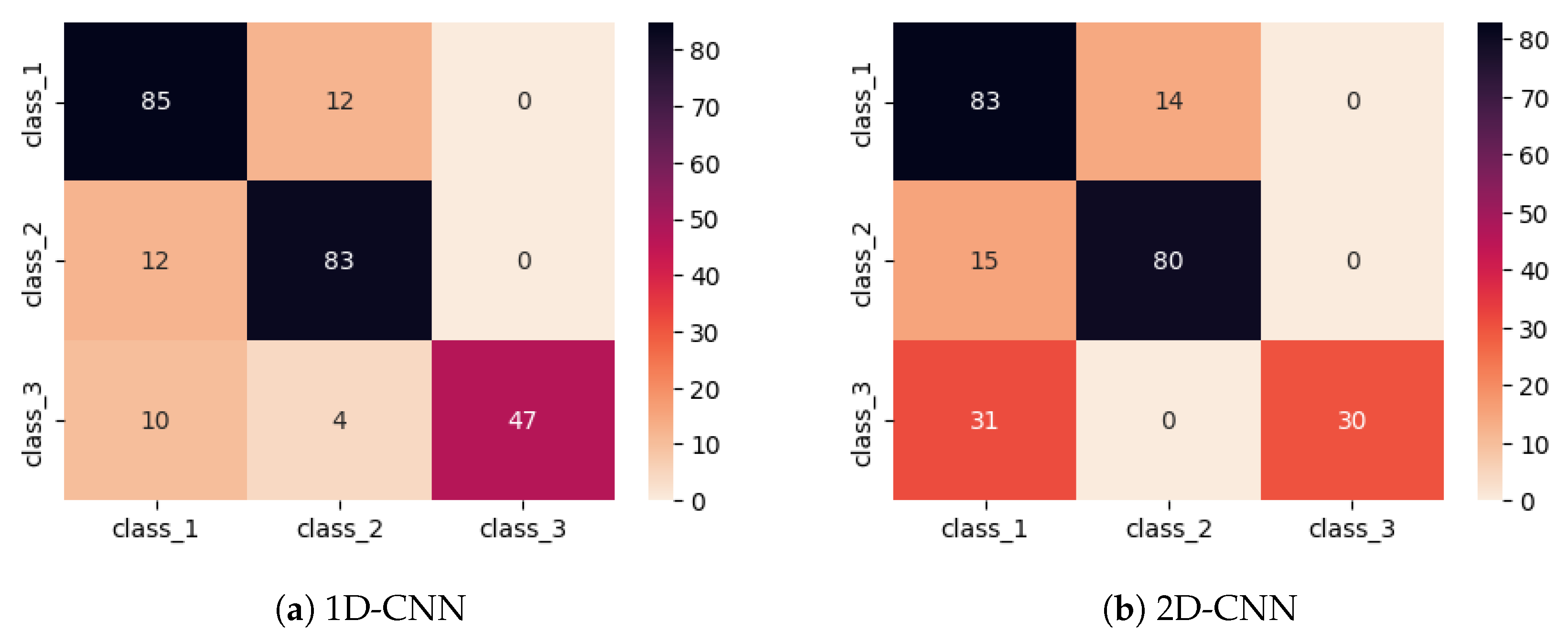
| Specimen A | 63.79 | 69.64 | 63.79 | 60.91 | 62.07 | 55.49 | 62.07 | 55.57 |
| Specimen B | 83.93 | 85.28 | 83.93 | 83.97 | 76.79 | 77.72 | 76.79 | 74.14 |
| Specimen C | 90.41 | 91.69 | 90.41 | 90.35 | 67.12 | 83.23 | 67.12 | 59.78 |
| Specimen D | 98.49 | 98.55 | 98.48 | 98.49 | 98.49 | 92.32 | 90.91 | 90.79 |
| Mean | 84.15 | 86.29 | 84.15 | 83.43 | 76.12 | 77.19 | 74.22 | 70.57 |
| Std. Dev. | 14.82 | 12.57 | 14.82 | 14.53 | 16.12 | 13.95 | 11.08 | 13.70 |
| Validation Specimen | Specimen-Invariant (%) | Random Split (%) |
|---|---|---|
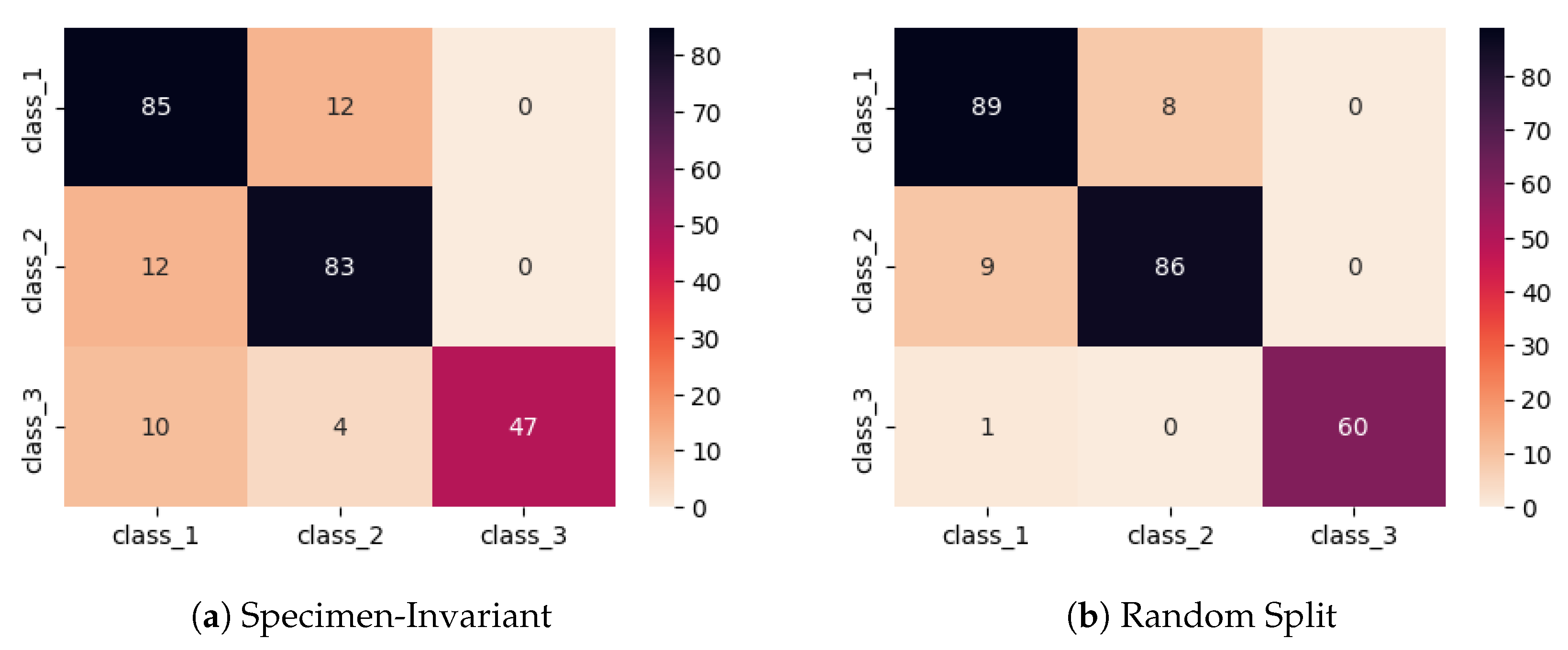
| Specimen A | 63.79 | 92.16 |
| Specimen B | 83.93 | 98.00 |
| Specimen C | 90.41 | 86.28 |
| Specimen D | 98.49 | 96.00 |
| Mean | 84.15 | 93.11 |
| Standard Deviation | 14.82 | 5.16 |
Disclaimer/Publisher’s Note: The statements, opinions and data contained in all publications are solely those of the individual author(s) and contributor(s) and not of MDPI and/or the editor(s). MDPI and/or the editor(s) disclaim responsibility for any injury to people or property resulting from any ideas, methods, instructions or products referred to in the content. |
© 2026 by the authors. Licensee MDPI, Basel, Switzerland. This article is an open access article distributed under the terms and conditions of the Creative Commons Attribution (CC BY) license.
Share and Cite
Sapidis, G.M.; Kansizoglou, I.; Naoum, M.C.; Papadopoulos, N.A.; Tsintotas, K.A.; Voutetaki, M.E.; Gasteratos, A. Convolutional Neural Network for Specimen-Invariant Structural Health Monitoring of FRC Under Flexural Loading. Sensors 2026, 26, 2788. https://doi.org/10.3390/s26092788
Sapidis GM, Kansizoglou I, Naoum MC, Papadopoulos NA, Tsintotas KA, Voutetaki ME, Gasteratos A. Convolutional Neural Network for Specimen-Invariant Structural Health Monitoring of FRC Under Flexural Loading. Sensors. 2026; 26(9):2788. https://doi.org/10.3390/s26092788
Chicago/Turabian StyleSapidis, George M., Ioannis Kansizoglou, Maria C. Naoum, Nikos A. Papadopoulos, Konstantinos A. Tsintotas, Maristella E. Voutetaki, and Antonios Gasteratos. 2026. "Convolutional Neural Network for Specimen-Invariant Structural Health Monitoring of FRC Under Flexural Loading" Sensors 26, no. 9: 2788. https://doi.org/10.3390/s26092788
APA StyleSapidis, G. M., Kansizoglou, I., Naoum, M. C., Papadopoulos, N. A., Tsintotas, K. A., Voutetaki, M. E., & Gasteratos, A. (2026). Convolutional Neural Network for Specimen-Invariant Structural Health Monitoring of FRC Under Flexural Loading. Sensors, 26(9), 2788. https://doi.org/10.3390/s26092788