A Web-Based Platform for Quantitative Assessment of Change Detection Using Rao’s Q Index in Remote Multispectral Sensing Data


Abstract
1. Introduction
2. Methods
2.1. Calculating Rao’s Q Index
2.2. Spectral Indices

| Spectral Index | Equation | Reference |
|---|---|---|
| NDVI (Normalized Difference Vegetation Index) | [51] | |
| EVI (Enhanced Vegetation Index) | [52] | |
| NBR (Normalized Burn Ratio) | [53] | |
| NDWI (Normalized Difference Water Index) | [49] | |
| NDRE (Normalized Difference Red Edge) | [54] | |
| SAVI (Soil Adjusted Vegetation Index) | [41] | |
| GNDVI (Green Normalized Difference Vegetation Index) | [42] | |
| MIRBI (Mid-Infrared Burn Index) | [55] | |
| BAIS2 (Burned Area Index for Sentinel-2) | [46] | |
| NDBI (Normalized Difference Built-up Index) | [50] | |
| NHI (Normalized Hotspot Indices) | [47] | |
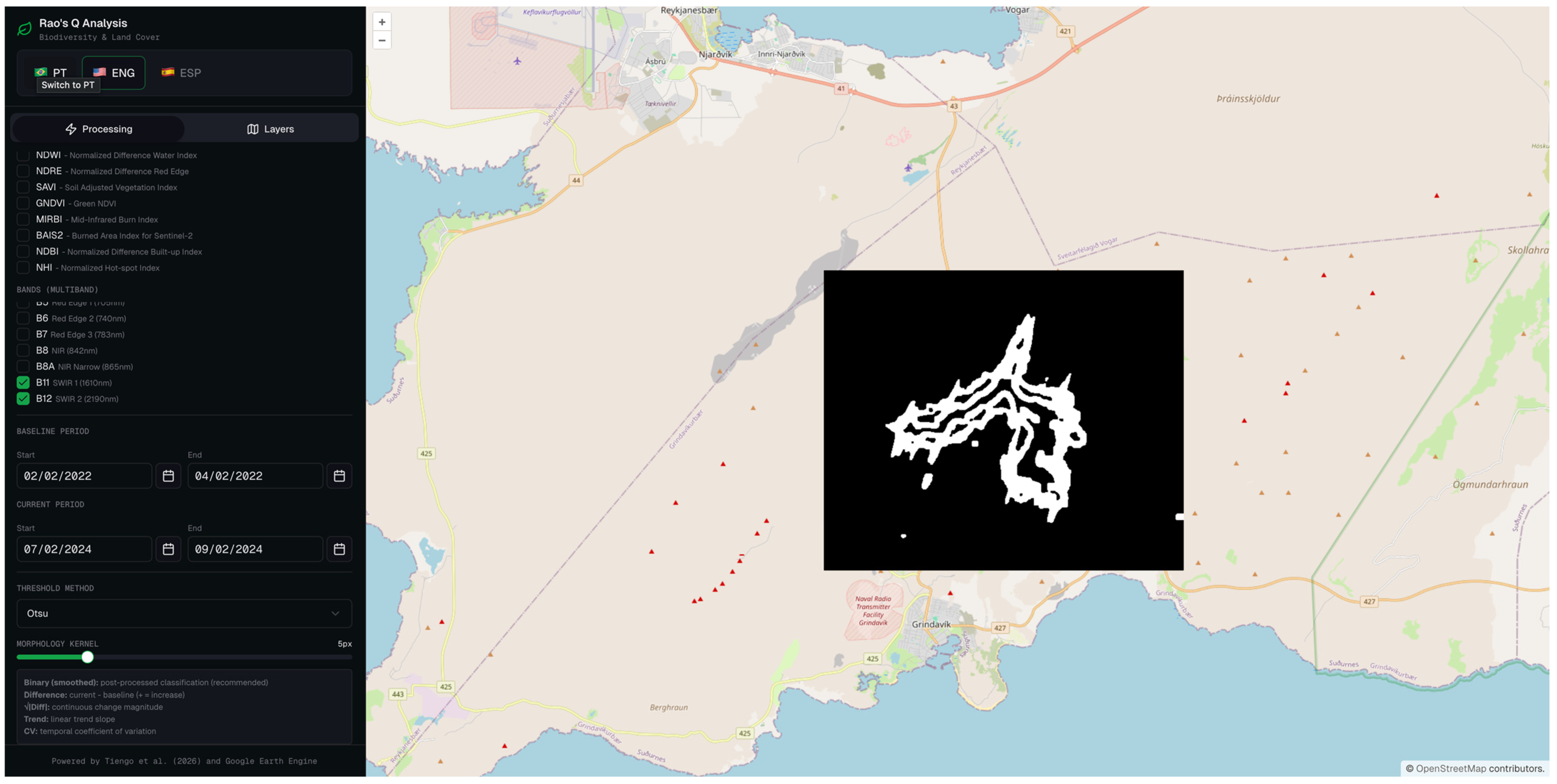
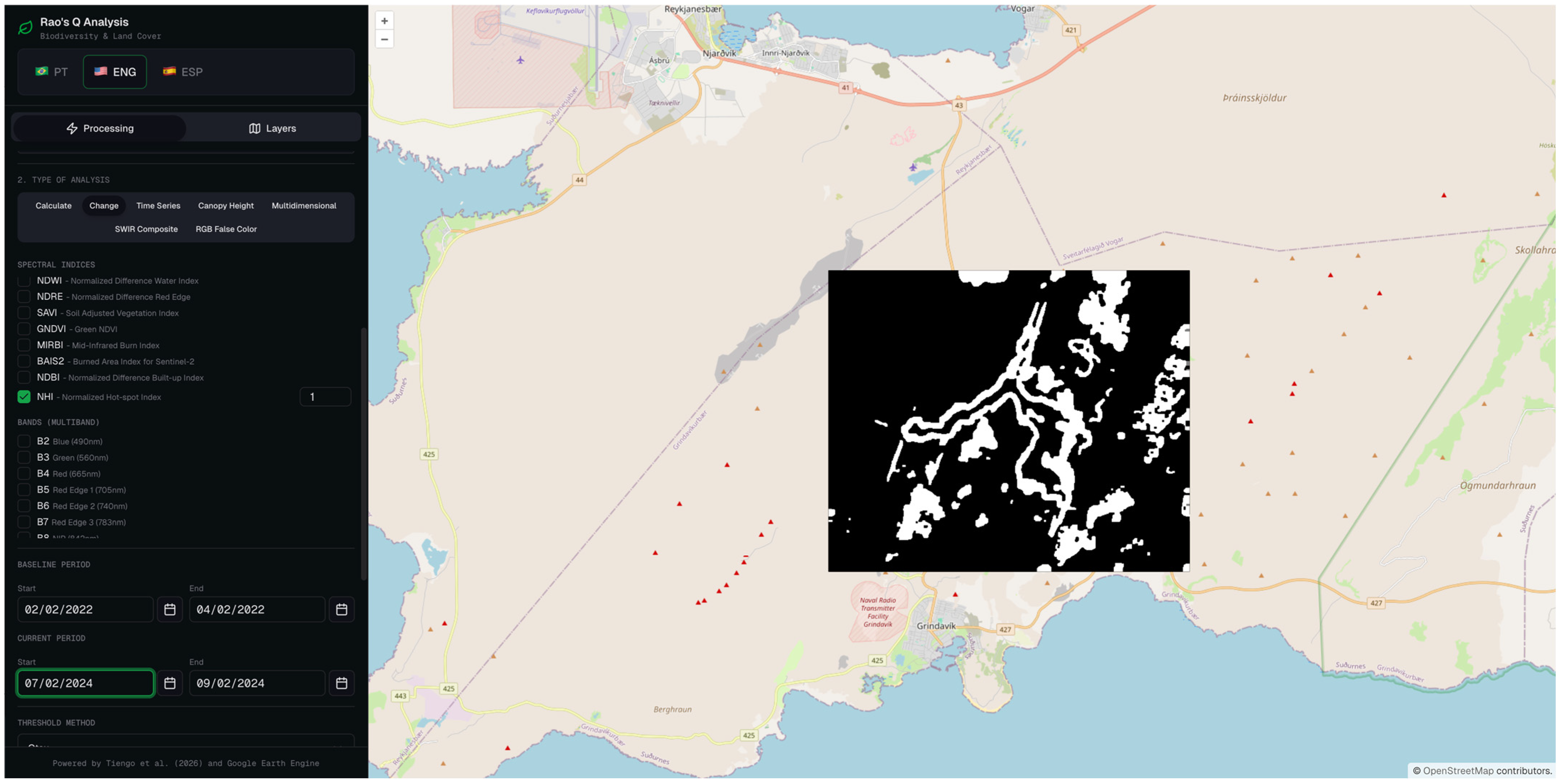
2.3. Threshold-Based Change Detection
2.4. Accuracy Assessment
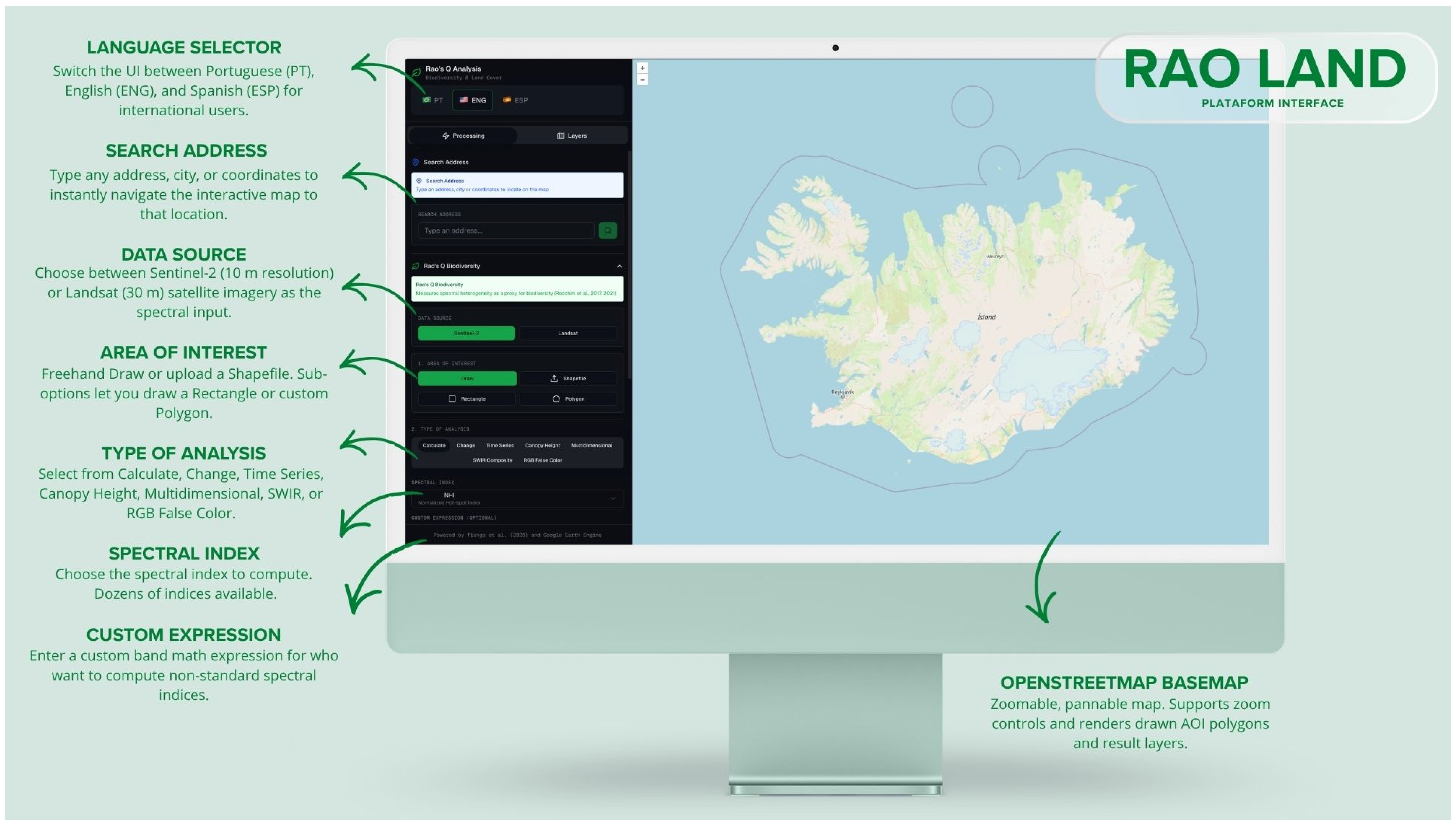
2.5. Web-Based Platform
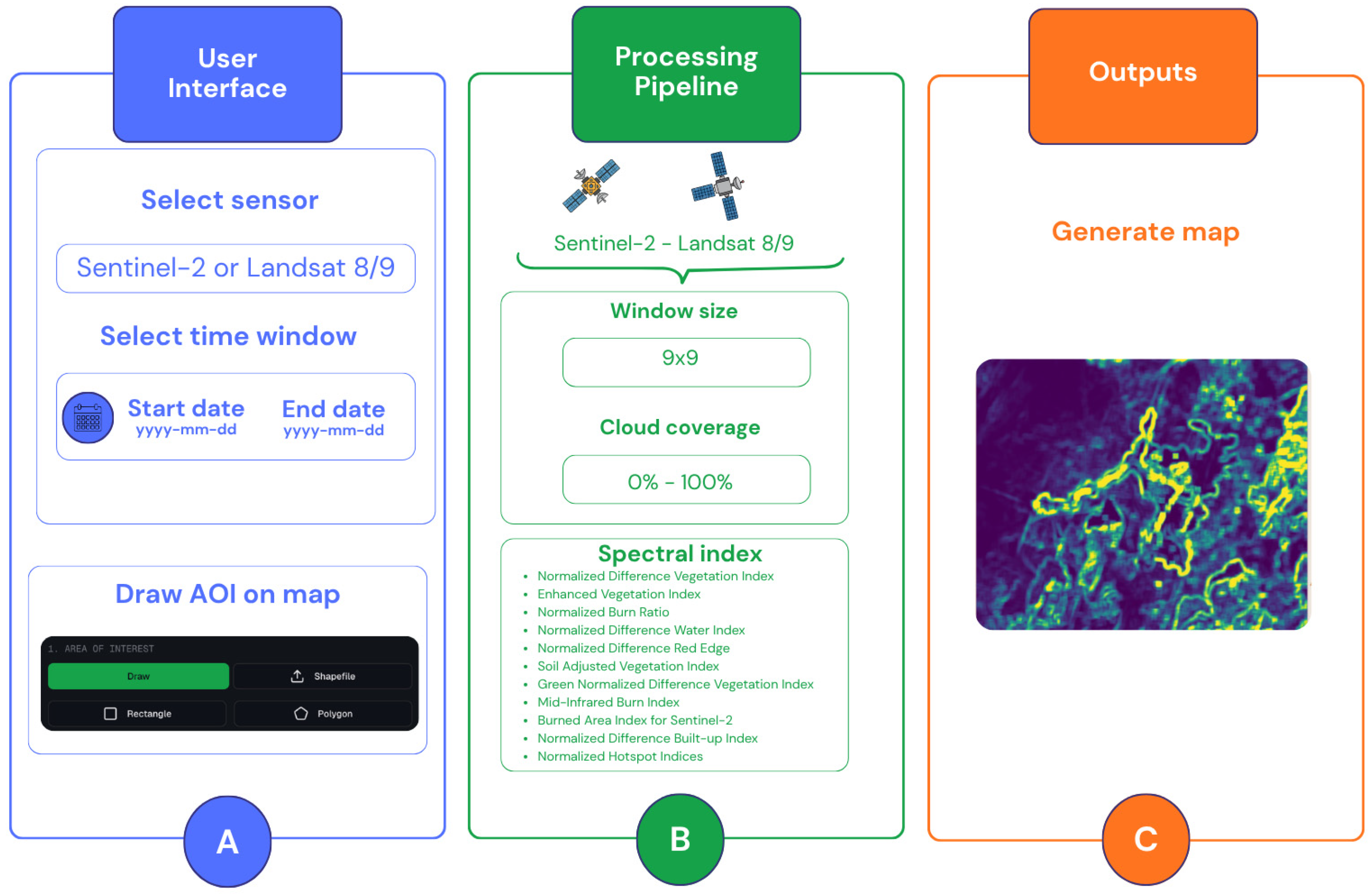
2.6. Backend Processing Pipeline
3. Use Case Demonstration
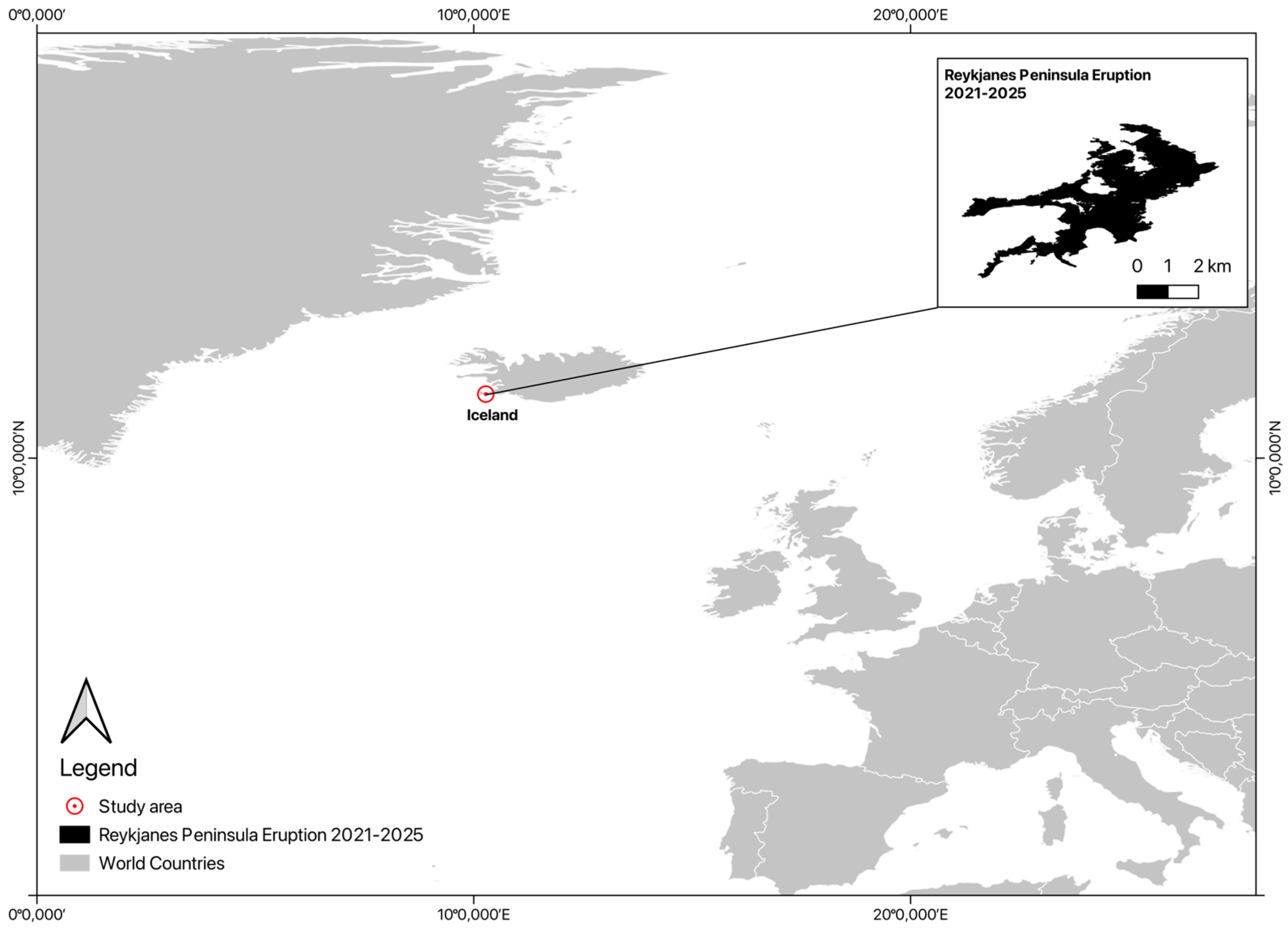
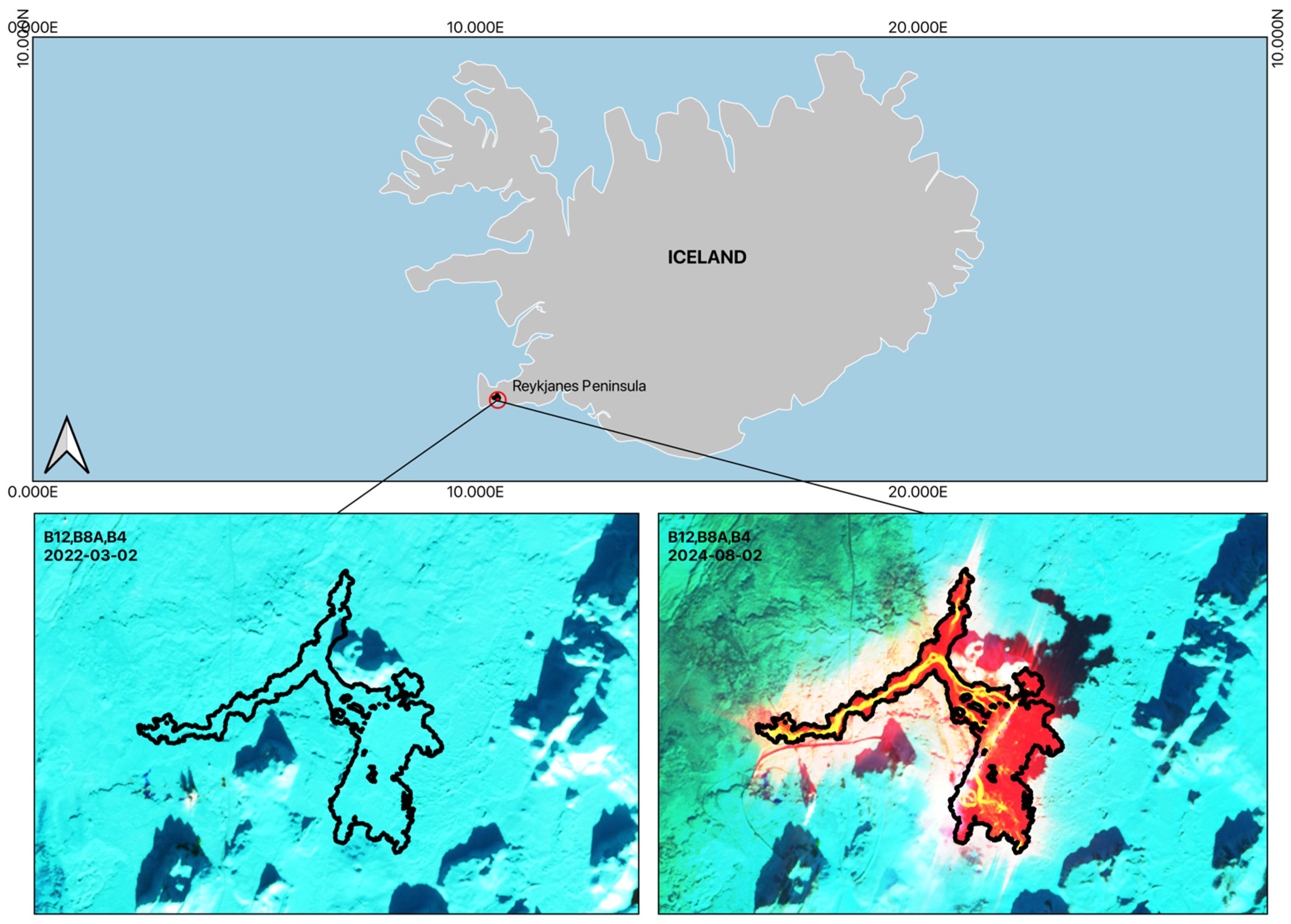
3.1. Study Area
3.2. Results
- (i)
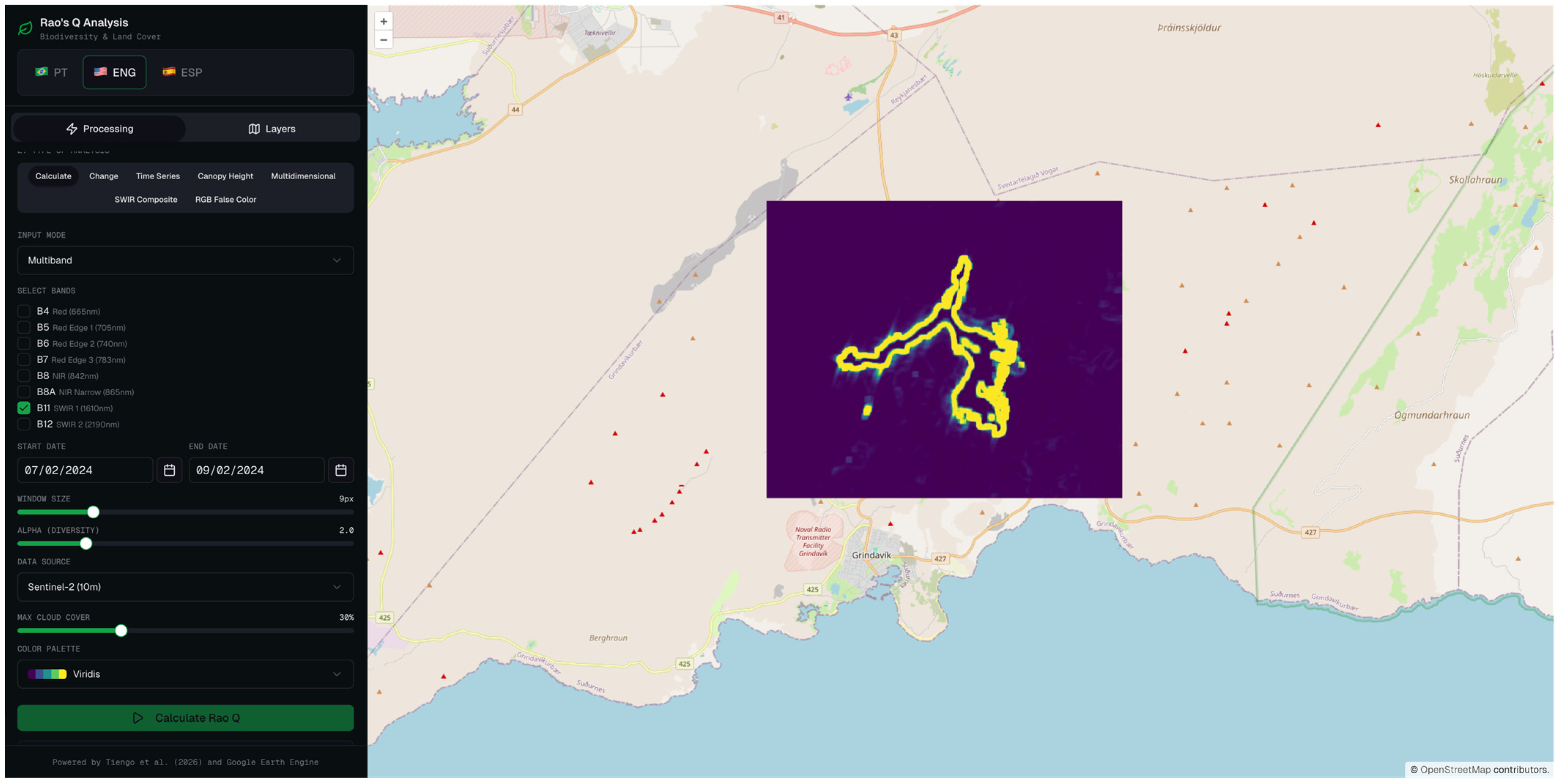
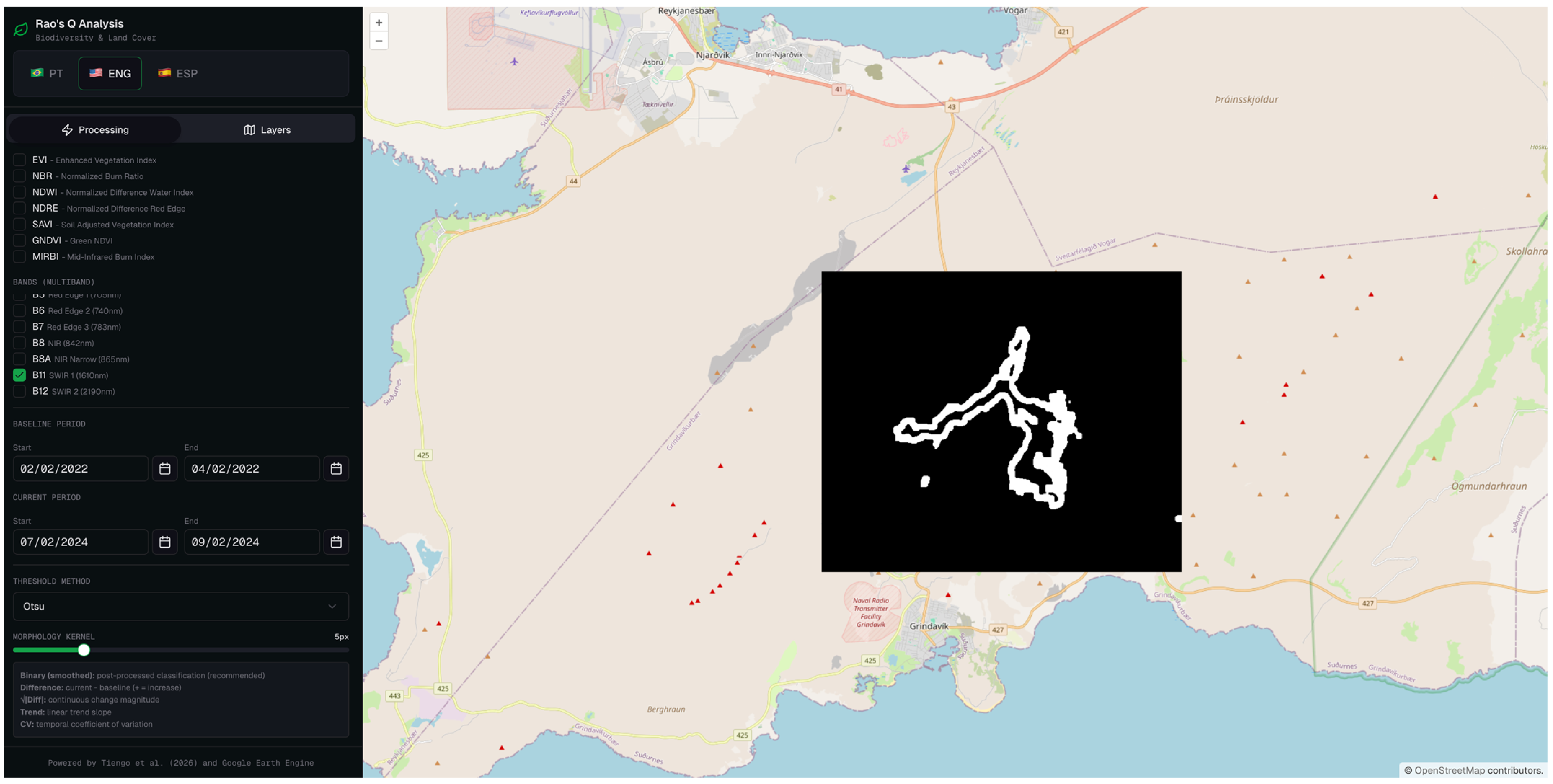
- classic Rao’s Q using band 11 (SWIR 1);
- (ii)
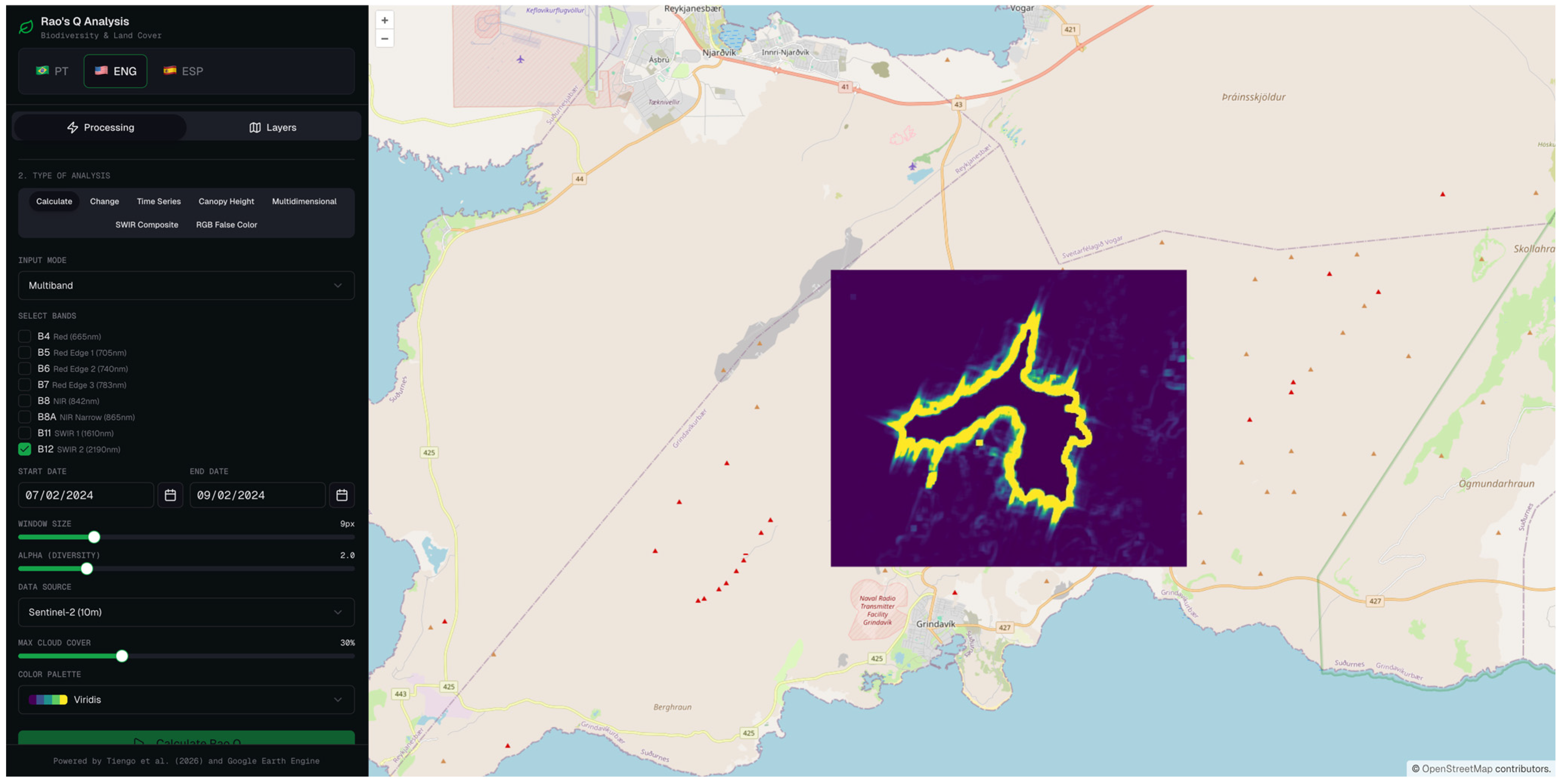
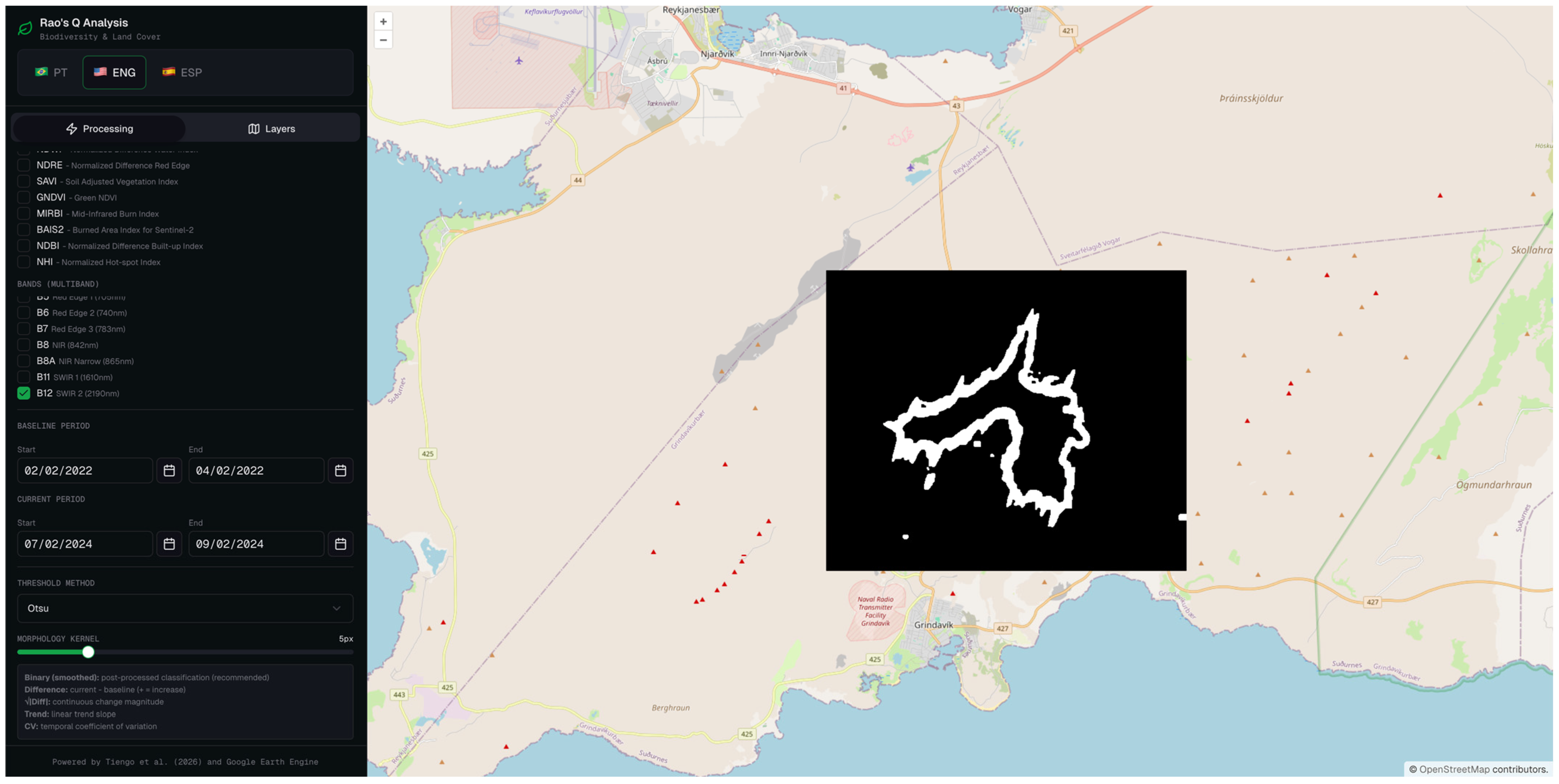
- classic Rao’s Q using band 12 (SWIR 2);
- (iii)
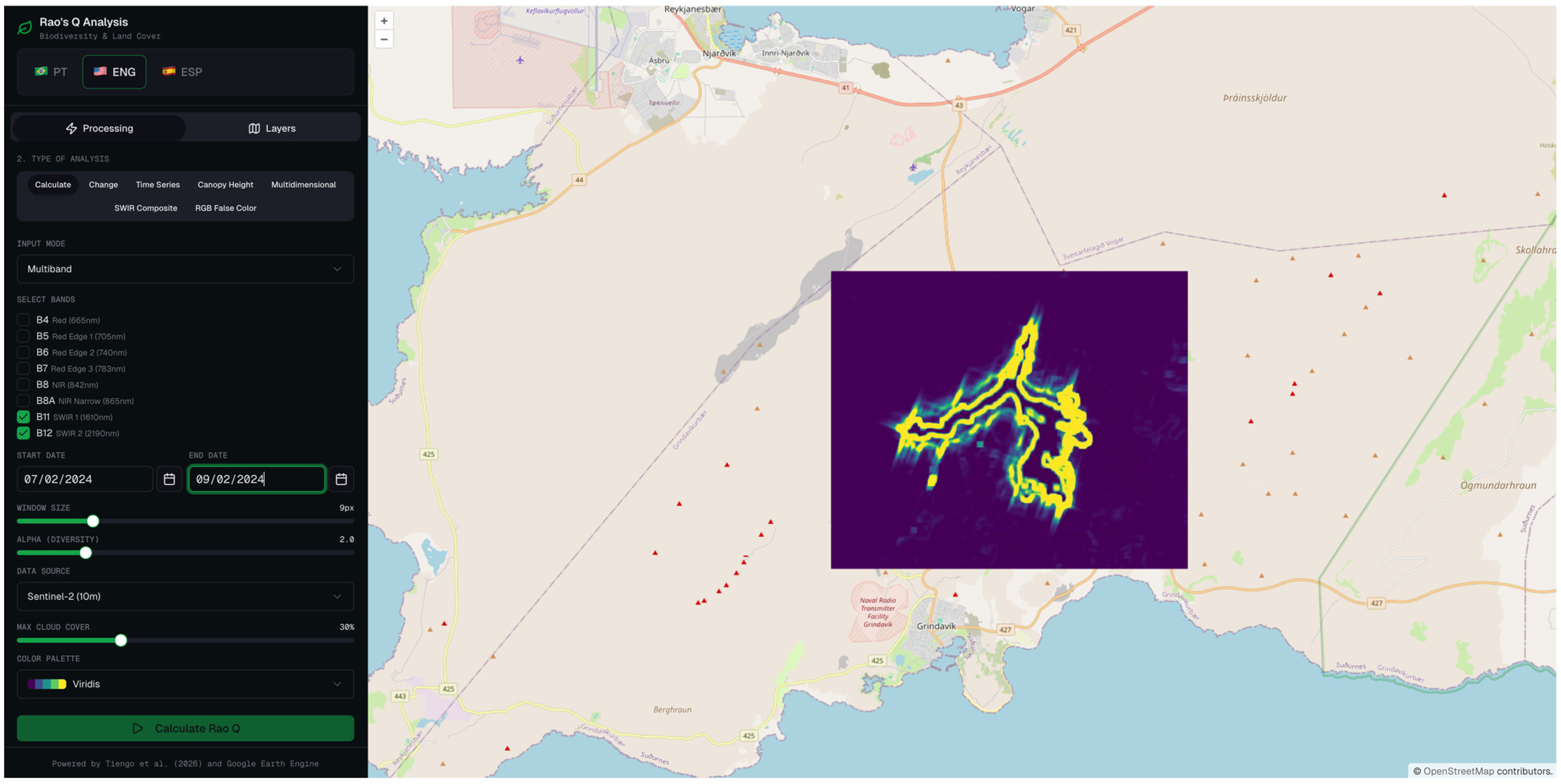
- multidimensional Rao’s Q combining bands 11 and 12;
- (iv)
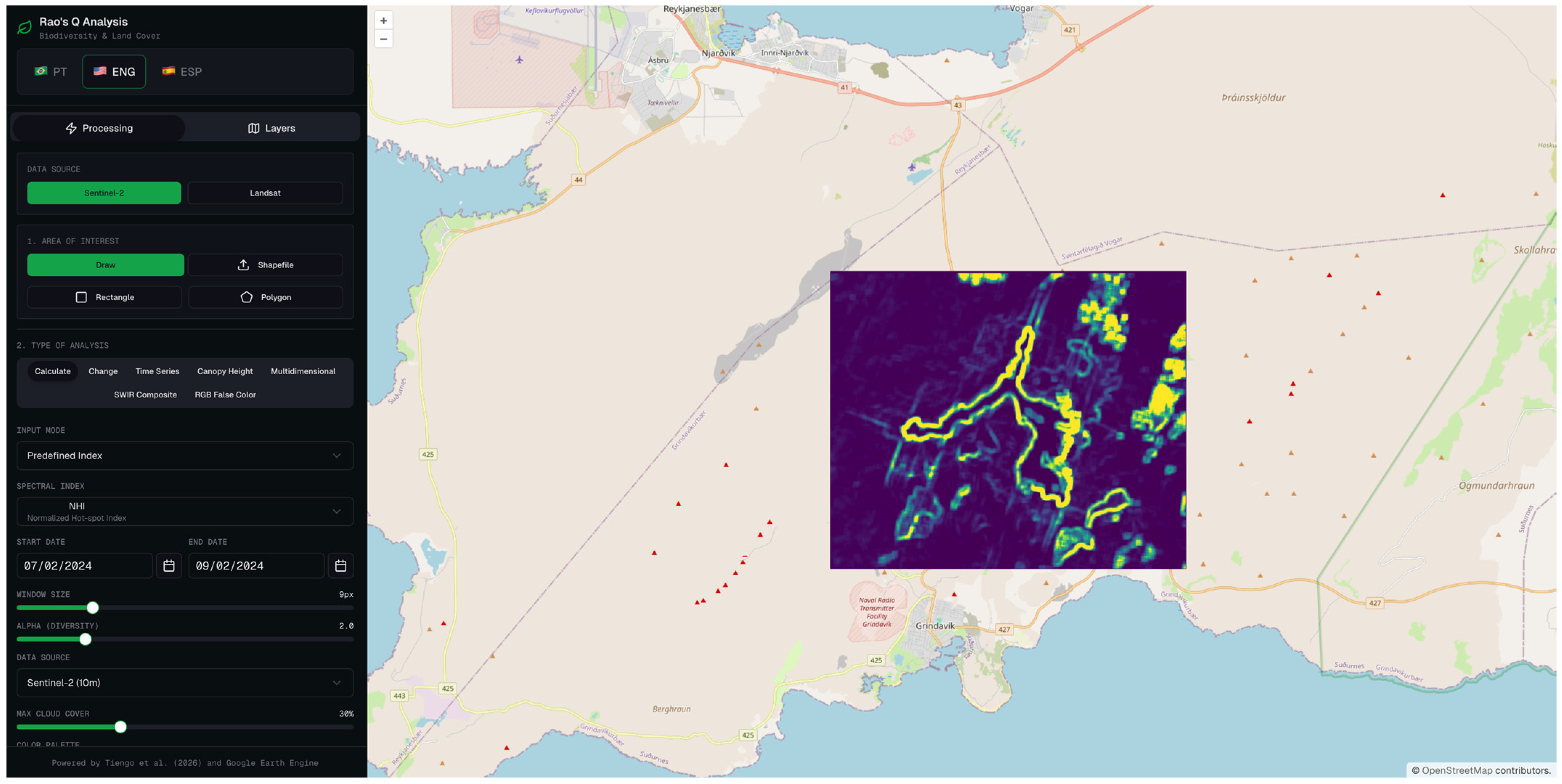
- classic Rao’s Q using the NHI defined as NHI = (B12 − B11)/(B11 + B12).
3.2.1. Rao’s Q Using 1.6 µm (SWIR 1) Wavelength
3.2.2. Rao’s Q Using 2.2 µm (SWIR 2) Wavelength
3.2.3. Rao’s Q Using NHI
3.2.4. Rao’s Q MD Using 1.6 µm (SWIR 1) and 2.2 µm (SWIR 2) Wavelength
4. Discussion
5. Conclusions
Author Contributions
Funding
Institutional Review Board Statement
Informed Consent Statement
Data Availability Statement
Conflicts of Interest
References
- Tiengo, R.; Palácios-Orueta, A.; Uchôa, J.; Gil, A. Remote Sensing Approaches for Land Use/Land Cover Change in Coastal Areas and Oceanic Islands: An Open Science-Based Systematic Review. Rev. Gest. Costeira Integr. 2023, 23, 155–177. [Google Scholar] [CrossRef]
- Tiengo, R.; Pacheco, J.; Uchôa, J.; Gil, A. Using Sentinel-1 GRD SAR Data for Volcanic Eruptions Monitoring: The Case-Study of Fogo Volcano (Cabo Verde) in 2014/2015. In Proceedings of the 3rd Intercontinental Geoinformation Days (IGD), Mersin, Turkey, 17–18 November 2021; pp. 22–25. [Google Scholar]
- Uchôa, J.; Viveiros, F.; Tiengo, R.; Gil, A. Detection of Geothermal Anomalies in Hydrothermal Systems Using ASTER Data: The Caldeiras Da Ribeira Grande Case Study (Azores, Portugal). Sensors 2023, 23, 2258. [Google Scholar] [CrossRef]
- Balamurugan, G.; Aravind, S. Land Use Land Cover Changes in Pre- and Post-Earthquake Affected Area Using Geoinformatics–Western Coast of Gujarat, India. Disaster Adv. 2015, 8, 1–14. [Google Scholar]
- Tiengo, R.; Merino-De-Miguel, S.; Uchôa, J.; Guiomar, N.; Gil, A. Burned Areas Mapping Using Sentinel-2 Data and a Rao’s Q Index-Based Change Detection Approach: A Case Study in Three Mediterranean Islands’ Wildfires (2019–2022). Remote Sens. 2025, 17, 830. [Google Scholar] [CrossRef]
- Casagli, N.; Intrieri, E.; Tofani, V.; Gigli, G.; Raspini, F. Landslide Detection, Monitoring and Prediction with Remote-Sensing Techniques. Nat. Rev. Earth Environ. 2023, 4, 51–64. [Google Scholar] [CrossRef]
- Causon Deguara, J.; Gauci, R.; Inkpen, R. Monitoring Coastal Erosion Using Remote Images: Comparison between Physically and Remotely Acquired Data on a Limestone Coast. Remote Sens. 2022, 15, 36. [Google Scholar] [CrossRef]
- Vinueza-Martinez, J.; Correa-Peralta, M.; Ramirez-Anormaliza, R.; Franco Arias, O.; Vera Paredes, D. Geographic Information Systems (GISs) Based on WebGIS Architecture: Bibliometric Analysis of the Current Status and Research Trends. Sustainability 2024, 16, 6439. [Google Scholar] [CrossRef]
- Sruthi, S.; Aslam, M.A.M. Agricultural Drought Analysis Using the NDVI and Land Surface Temperature Data; a Case Study of Raichur District. Aquat. Procedia 2015, 4, 1258–1264. [Google Scholar] [CrossRef]
- Tassi, A.; Massetti, A.; Gil, A. The Spectralrao-Monitoring Python Package: A RAO’s Q Diversity Index-Based Application for Land-Cover/Land-Use Change Detection in Multifunctional Agricultural Areas. Comput. Electron. Agric. 2022, 196, 106861. [Google Scholar] [CrossRef]
- Thunig, H.; Wolf, N.; Naumann, S.; Siegmund, A.; Jurgens, C.; Uysal, C.; Maktav, D. Land Use/Land Cover Classification for Applied Urban Planning—The Challenge of Automation. In Proceedings of the 2011 Joint Urban Remote Sensing Event; IEEE: New York, NY, USA, 2011; pp. 229–232. [Google Scholar]
- Forget, Y.; Shimoni, M.; Gilbert, M.; Linard, C. Mapping 20 Years of Urban Expansion in 45 Urban Areas of Sub-Saharan Africa. Remote Sens. 2021, 13, 525. [Google Scholar] [CrossRef]
- Hairudin, A.R.; Che Ani, A.I.; Saiful Bahri, M.A.; Abdul Maulud, K.N.; Rahman, M.A. WebGIS for Urban Building Management: A Case Study of Petaling Jaya City. PaperASIA 2025, 41, 441–448. [Google Scholar] [CrossRef]
- Tiengo, R.; Merino-De-Miguel, S.; Uchôa, J.; Gil, A. A Land Cover Change Detection Approach to Assess the Effectiveness of Conservation Projects: A Study Case on the EU-Funded LIFE Projects in São Miguel Island, Azores (2002–2021). Land 2024, 13, 666. [Google Scholar] [CrossRef]
- Reif, M.K.; Theel, H.J. Remote Sensing for Restoration Ecology: Application for Restoring Degraded, Damaged, Transformed, or Destroyed Ecosystems. Integr. Environ. Assess. Manag. 2017, 13, 614–630. [Google Scholar] [CrossRef] [PubMed]
- Randazzo, G.; Italiano, F.; Micallef, A.; Tomasello, A.; Cassetti, F.P.; Zammit, A.; D’Amico, S.; Saliba, O.; Cascio, M.; Cavallaro, F.; et al. WebGIS Implementation for Dynamic Mapping and Visualization of Coastal Geospatial Data: A Case Study of BESS Project. Appl. Sci. 2021, 11, 8233. [Google Scholar] [CrossRef]
- Su, F.; Yan, F.; Wu, W.; Fu, D.; Cao, Y.; Lyne, V.; Meadows, M.; Yao, L.; Wang, J.; Huang, Y.; et al. Advancing Intelligent Geography: Current Status, Innovations, and Future Prospects. Geogr. Sustain. 2025, 6, 100375. [Google Scholar] [CrossRef]
- Yang, W.; Liu, Y.; Shao, H.; Iravani, M.; Yu, Z.; Weber, M. Developing a Cloud-Based WebGIS Tool for Communicating Integrated Ecosystem Services Assessment Modeling to Conservation Stakeholders. J. Environ. Manag. 2025, 375, 124372. [Google Scholar] [CrossRef]
- Casal, G.; Fonseca, C.; Allegri, E.; Bianconi, A.; Boyd, E.; Cornet, C.C.; de Juan, S.; Espinoza Córdova, F.; Furlan, E.; Gil, A.; et al. Informing Implementation of Nature-Based Solutions in Marine and Coastal Environments: The MaCoBioS Blue NBS Toolbox. One Ecosyst. 2025, 10, e149010. [Google Scholar] [CrossRef]
- Azmi, N.A.; Shafri, H.Z.M.; Abidin, F.A.Z.; Shaharum, N.S.N.; Al-Habshi, M.M.A. Development of WebGIS Using Open Source Geospatial Technologies for Krau Wildlife Reserve. IOP Conf. Ser. Earth Environ. Sci. 2022, 1064, 012016. [Google Scholar] [CrossRef]
- Agrawal, S.; Gupta, R.D. Web GIS and Its Architecture: A Review. Arab. J. Geosci. 2017, 10, 518. [Google Scholar] [CrossRef]
- Wright, D.; Harder, C. GIS for Science: Applying Mapping and Spatial Analytics; Esri Press: Redlands, CA, USA, 2019; Volume 1. [Google Scholar]
- Alicandro, M.; Zollini, S.; Oxoli, D.; Pascucci, N.; Dominici, D.; Brescia, D. Design and Implementation of an Open-Source Web-GIS to Manage the Public Works of Abruzzo Region: An Example Towards the Digitalization of the Management Process of Public Administrations. Int. Arch. Photogramm. Remote Sens. Spat. Inf. Sci. 2022, XLVIII-4/W1-2022, 21–26. [Google Scholar] [CrossRef]
- Majidi Nezhad, M.; Moradian, S.; Guezgouz, M.; Shi, X.; Avelin, A.; Wallin, F. A GIS-Portal Platform from the Data Perspective to Energy Hub Digitalization Solutions- A Review and a Case Study. Renew. Sustain. Energy Rev. 2025, 223, 116019. [Google Scholar] [CrossRef]
- Netek, R.; Pohankova, T.; Bittner, O.; Urban, D. Geospatial Analysis in Web Browsers—Comparison Study on WebGIS Process-Based Applications. ISPRS Int. J. Geo-Inf. 2023, 12, 374. [Google Scholar] [CrossRef]
- Abel, D.J.; Taylor, K.; Ackland, R.; Hungerford, S. An Exploration of GIS Architectures for Internet Environments. Comput. Environ. Urban Syst. 1998, 22, 7–23. [Google Scholar] [CrossRef]
- Ajani, O.L. Mapping the Digital Divide: Using GIS and Satellite Data to Prioritize Broadband Expansion Projects. World J. Adv. Res. Rev. 2025, 26, 2159–2176. [Google Scholar] [CrossRef]
- Dritsas, E.; Trigka, M. Remote Sensing and Geospatial Analysis in the Big Data Era: A Survey. Remote Sens. 2025, 17, 550. [Google Scholar] [CrossRef]
- Su, C.; Zhong, E.; Wang, S.; Lu, H. Geospatial Information Technology: Analysis of Architectural Characteristics from Vertical and Horizontal Perspectives and Intelligent-Driven Application Modes. Int. J. Digit. Earth 2025, 18, 2528634. [Google Scholar] [CrossRef]
- Dhurandhar, P.; Tamrakar, A.; Patra, J.P. Review on GIS-Based Online Information System for Rural Development in Chhattisgarh. Int. J. Health Sci. 2022, 6, 8226–8231. [Google Scholar] [CrossRef]
- Rocchini, D.; Marcantonio, M.; Da Re, D.; Bacaro, G.; Feoli, E.; Foody, G. From Zero to Infinity: Minimum to Maximum Diversity of the Planet by Spatio-Parametric Rao’s Quadratic Entropy. Glob. Ecol. Biogeogr. 2021, 30, 1153–1162. [Google Scholar] [CrossRef]
- Khare, S.; Latifi, H.; Rossi, S. A 15-Year Spatio-Temporal Analysis of Plant β-Diversity Using Landsat Time Series Derived Rao’s Q Index. Ecol. Indic. 2021, 121, 107105. [Google Scholar] [CrossRef]
- Botta-Dukát, Z. Rao’s Quadratic Entropy as a Measure of Functional Diversity Based on Multiple Traits. J. Veg. Sci. 2005, 16, 533–540. [Google Scholar] [CrossRef]
- Purdon, A.; Mole, M.A.; Selier, J.; Kruger, J.; Mafumo, H.; Olivier, P.I. Using the Rao’s Q Diversity Index as an Indicator of Protected Area Effectiveness in Conserving Biodiversity. Ecol. Inform. 2022, 72, 101920. [Google Scholar] [CrossRef]
- Mienye, I.D.; Swart, T.G. A Comprehensive Review of Deep Learning: Architectures, Recent Advances, and Applications. Information 2024, 15, 755. [Google Scholar] [CrossRef]
- Rocchini, D.; Marcantonio, M.; Ricotta, C. Measuring Rao’s Q Diversity Index from Remote Sensing: An Open Source Solution. Ecol. Indic. 2017, 72, 234–238. [Google Scholar] [CrossRef]
- Rocchini, D.; Marcantonio, M.; Da Re, D.; Chirici, G.; Galluzzi, M.; Lenoir, J.; Ricotta, C.; Torresani, M.; Ziv, G. Time-Lapsing Biodiversity: An Open Source Method for Measuring Diversity Changes by Remote Sensing. Remote Sens. Environ. 2019, 231, 111192. [Google Scholar] [CrossRef]
- Rocchini, D.; Torresani, M.; Ricotta, C. On the Mathematical Properties of Spatial Rao’s Q to Compute Ecosystem Heterogeneity. Theor. Ecol. 2024, 17, 247–254. [Google Scholar] [CrossRef]
- Rouse, J.; Haas, R.H.; Schell, J.A.; Deering, D.W. Monitoring Vegetation Systems in the Great Plains with ERTS; NASA: Washington, DC, USA, 1974.
- Huete, A.; Didan, K.; Miura, T.; Rodriguez, E.P.; Gao, X.; Ferreira, L.G. Overview of the Radiometric and Biophysical Performance of the MODIS Vegetation Indices. Remote Sens. Environ. 2002, 83, 195–213. [Google Scholar] [CrossRef]
- Huete, A.R. A Soil-Adjusted Vegetation Index (SAVI). Remote Sens. Environ. 1988, 25, 295–309. [Google Scholar] [CrossRef]
- Gitelson, A.A.; Kaufman, Y.J.; Merzlyak, M.N. Use of a Green Channel in Remote Sensing of Global Vegetation from EOS-MODIS. Remote Sens. Environ. 1996, 58, 289–298. [Google Scholar] [CrossRef]
- Gitelson, A.A.; Merzlyak, M.N. Remote Sensing of Chlorophyll Concentration in Higher Plant Leaves. Adv. Space Res. 1998, 22, 689–692. [Google Scholar] [CrossRef]
- Key, C.; Benson, N. Landscape Assessment: Ground Measure of Severity, the Composite Burn Index; and Remote Sensing of Severity, the Normalized Burn Ratio; USDA Forest Service, Rocky Mountain Research Station: Ogden, UT, USA, 2005; pp. 1–51.
- Trigg, S.; Flasse, S. An Evaluation of Different Bi-Spectral Spaces for Discriminating Burned Shrub-Savannah. Int. J. Remote Sens. 2001, 22, 2641–2647. [Google Scholar] [CrossRef]
- Filipponi, F. BAIS2: Burned Area Index for Sentinel-2. In Proceedings of the 2nd International Electronic Conference on Remote Sensing; Sciforum Electronic Conference Series; MDPI AG: Basel, Switzerland, 2018. [Google Scholar]
- Genzano, N.; Pergola, N.; Marchese, F. A Google Earth Engine Tool to Investigate, Map and Monitor Volcanic Thermal Anomalies at Global Scale by Means of Mid-High Spatial Resolution Satellite Data. Remote Sens. 2020, 12, 3232. [Google Scholar] [CrossRef]
- Marchese, F.; Genzano, N.; Neri, M.; Falconieri, A.; Mazzeo, G.; Pergola, N. A Multi-Channel Algorithm for Mapping Volcanic Thermal Anomalies by Means of Sentinel-2 MSI and Landsat-8 OLI Data. Remote Sens. 2019, 11, 2876. [Google Scholar] [CrossRef]
- Gao, B. NDWI—A Normalized Difference Water Index for Remote Sensing of Vegetation Liquid Water from Space. Remote Sens. Environ. 1996, 58, 257–266. [Google Scholar] [CrossRef]
- Zha, Y.; Gao, J.; Ni, S. Use of Normalized Difference Built-up Index in Automatically Mapping Urban Areas from TM Imagery. Int. J. Remote Sens. 2003, 24, 583–594. [Google Scholar] [CrossRef]
- Tucker, C.J. Red and Photographic Infrared Linear Combinations for Monitoring Vegetation. Remote Sens. Environ. 1979, 8, 127–150. [Google Scholar] [CrossRef]
- Justice, C.O.; Vermote, E.; Townshend, J.R.G.; Defries, R.; Roy, D.P.; Hall, D.K.; Salomonson, V.V.; Privette, J.L.; Riggs, G.; Strahler, A.; et al. The Moderate Resolution Imaging Spectroradiometer (MODIS): Land Remote Sensing for Global Change Research. IEEE Trans. Geosci. Remote Sens. 1998, 36, 1228–1249. [Google Scholar] [CrossRef]
- Roy, D.P.; Boschetti, L.; Trigg, S.N. Remote Sensing of Fire Severity: Assessing the Performance of the Normalized Burn Ratio. IEEE Geosci. Remote Sens. Lett. 2006, 3, 112–116. [Google Scholar] [CrossRef]
- Buschmann, C.; Nagel, E. In Vivo Spectroscopy and Internal Optics of Leaves as Basis for Remote Sensing of Vegetation. Int. J. Remote Sens. 1993, 14, 711–722. [Google Scholar] [CrossRef]
- Trigg, S.; Flasse, S. Characterizing the Spectral-Temporal Response of Burned Savannah Using in Situ Spectroradiometry and Infrared Thermometry. Int. J. Remote Sens. 2000, 21, 3161–3168. [Google Scholar] [CrossRef]
- Otsu, N. A Threshold Selection Method from Gray Level Histograms. IEEE Trans. Syst. Man Cybern. 1979, 9, 62–66. [Google Scholar] [CrossRef]
- Sankur, B. Survey over Image Thresholding Techniques and Quantitative Performance Evaluation. J. Electron. Imaging 2004, 13, 146. [Google Scholar] [CrossRef]
- Wright, R.; Flynn, L.P.; Garbeil, H.; Harris, A.J.L.; Pilger, E. MODVOLC: Near-Real-Time Thermal Monitoring of Global Volcanism. J. Volcanol. Geotherm. Res. 2004, 135, 29–49. [Google Scholar] [CrossRef]
- Dozier, J. Spectral Signature of Alpine Snow Cover from the Landsat Thematic Mapper. Remote Sens. Environ. 1989, 28, 9–22. [Google Scholar] [CrossRef]
- Zack, G.W.; Rogers, W.E.; Latt, S.A. Automatic Measurement of Sister Chromatid Exchange Frequency. J. Histochem. Cytochem. 1977, 25, 741–753. [Google Scholar] [CrossRef]
- Landmælingar Íslands (LMI); Náttúrufræðistofnun Íslands (NÍ); Háskóli Íslands (HÍ); Veðurstofa Íslands. Umbrotasjá: Volcanic Eruption Map Viewer [Web Application]. Available online: https://www.natt.is/is (accessed on 4 January 2026).
- Tassi, A.; Gil, A. A Low-Cost Sentinel-2 Data and Rao’s Q Diversity Index-Based Application for Detecting, Assessing and Monitoring Coastal Land-Cover/Land-Use Changes at High Spatial Resolution. J. Coast. Res. 2020, 95, 1315. [Google Scholar] [CrossRef]
- Gorelick, N.; Hancher, M.; Dixon, M.; Ilyushchenko, S.; Thau, D.; Moore, R. Google Earth Engine: Planetary-Scale Geospatial Analysis for Everyone. Remote Sens. Environ. 2017, 202, 18–27. [Google Scholar] [CrossRef]
- Wen, M.; Wei, L.; Zhuang, X.; He, D.; Wang, S.; Wang, Y. High-Sensitivity Short-Wave Infrared Technology for Thermal Imaging. Infrared Phys. Technol. 2018, 95, 93–99. [Google Scholar] [CrossRef]
- Nádudvari, Á.; Abramowicz, A.; Maniscalco, R.; Viccaro, M. The Estimation of Lava Flow Temperatures Using Landsat Night-Time Images: Case Studies from Eruptions of Mt. Etna and Stromboli (Sicily, Italy), Kīlauea (Hawaii Island), and Eyjafjallajökull and Holuhraun (Iceland). Remote Sens. 2020, 12, 2537. [Google Scholar] [CrossRef]
- Wang, L.; Qu, J.J.; Hao, X.; Zhu, Q. Sensitivity Studies of the Moisture Effects on MODIS SWIR Reflectance and Vegetation Water Indices. Int. J. Remote Sens. 2008, 29, 7065–7075. [Google Scholar] [CrossRef]
- Cirqueira Da Silva Correia, L.F.; Arouche Silva, J.D.C.; Rocha, L.D.N.F.; Bandeira, K.D.S. Usabilidade da Ferramenta Google Earth Engine (GEE) Para Fins de Monitoramento e Combate ao Desmatamento na Região Amazônica. Rev. Multidiscip. Nordeste Min. 2025, 15, 1–12. [Google Scholar] [CrossRef]
- Jahangeer, J.; Joshi, P.; Kapoor, A.; Tang, Z. A Review of AI-Driven Google Earth Engine Applications in Surface Water Monitoring, Assessment, and Management. Discov. Geosci. 2025, 3, 140. [Google Scholar] [CrossRef] [PubMed]
- Li, S.; Tang, Z.; Ma, K.; Wang, Z.; Li, W. An Efficient Retrieval Method on Google Earth Engine and Comparison with Hybrid Methods: A Case Study of Leaf Area Index Retrieval. Int. J. Digit. Earth 2025, 18, 2496403. [Google Scholar] [CrossRef]
- Javaid, M.; Sarfraz, M.; Aftab, M.; Zaman, Q.; Rauf, H.; Alnowibet, K. WebGIS-Based Real-Time Surveillance and Response System for Vector-Borne Infectious Diseases. Int. J. Environ. Res. Public Health 2023, 20, 3740. [Google Scholar] [CrossRef]
- Avanidou, K.; Alexandridis, T.; Kavroudakis, D.; Kizos, T. Development of a Multi Scale Interactive Web-GIS System to Monitor Farming Practices: A Case Study in Lemnos Island, Greece. Smart Agric. Technol. 2023, 5, 100313. [Google Scholar] [CrossRef]
- Kuria, E.; Kimani, S.; Mindila, A. A Framework for Web GIS Development: A Review. Int. J. Comput. Appl. 2019, 178, 6–10. [Google Scholar] [CrossRef]
- Rodrigues Da Silva, A.; Estima, J.; Marques, J.; Gamito, I.; Serra, A.; Moura, L.; Ricardo, A.; Mendes, L.; Ferreira, R. A Web GIS Platform to Modeling, Simulate and Analyze Flood Events: The RiverCure Portal. ISPRS Int. J. Geo-Inf. 2023, 12, 268. [Google Scholar] [CrossRef]
- Capolupo, A.; Monterisi, C.; Saponieri, A.; Addona, F.; Damiani, L.; Archetti, R.; Tarantino, E. An Interactive WebGIS Framework for Coastal Erosion Risk Management. J. Mar. Sci. Eng. 2021, 9, 567. [Google Scholar] [CrossRef]
- Msusa, A.D.; Deus, D.; Nyalali, O.G.; Gidudu, A.; Wangabo, E.; Makuti, S.; Marandu, G. Developing a Climate-Smart Web GIS App for Multi-Hazard Early Warning against Climate-Based Disaster Risks. Int. Arch. Photogramm. Remote Sens. Spat. Inf. Sci. 2025, XLVIII-4/W16-2025, 59–66. [Google Scholar] [CrossRef]




| Spectral Metrics | OA (%) | PA (%) | UA (%) |
|---|---|---|---|
| Band 11 | 86.0 | 74.0 | 97.4 |
| Band 12 | 46.0 | 16.0 | 40.0 |
| NHI | 80.0 | 72.0 | 85.7 |
| Band 11 + Band 12 | 83.0 | 84.0 | 82.4 |
Disclaimer/Publisher’s Note: The statements, opinions and data contained in all publications are solely those of the individual author(s) and contributor(s) and not of MDPI and/or the editor(s). MDPI and/or the editor(s) disclaim responsibility for any injury to people or property resulting from any ideas, methods, instructions or products referred to in the content. |
© 2026 by the authors. Licensee MDPI, Basel, Switzerland. This article is an open access article distributed under the terms and conditions of the Creative Commons Attribution (CC BY) license.
Share and Cite
Tiengo, R.; Merino-De-Miguel, S.; Uchôa, J.; Gil, A. A Web-Based Platform for Quantitative Assessment of Change Detection Using Rao’s Q Index in Remote Multispectral Sensing Data. Sensors 2026, 26, 2665. https://doi.org/10.3390/s26092665
Tiengo R, Merino-De-Miguel S, Uchôa J, Gil A. A Web-Based Platform for Quantitative Assessment of Change Detection Using Rao’s Q Index in Remote Multispectral Sensing Data. Sensors. 2026; 26(9):2665. https://doi.org/10.3390/s26092665
Chicago/Turabian StyleTiengo, Rafaela, Silvia Merino-De-Miguel, Jéssica Uchôa, and Artur Gil. 2026. "A Web-Based Platform for Quantitative Assessment of Change Detection Using Rao’s Q Index in Remote Multispectral Sensing Data" Sensors 26, no. 9: 2665. https://doi.org/10.3390/s26092665
APA StyleTiengo, R., Merino-De-Miguel, S., Uchôa, J., & Gil, A. (2026). A Web-Based Platform for Quantitative Assessment of Change Detection Using Rao’s Q Index in Remote Multispectral Sensing Data. Sensors, 26(9), 2665. https://doi.org/10.3390/s26092665