Article

3D Simulation Study for a Pneumatic Nozzle–Cylindrical Flapper System
1
Department of Transdisciplinary Science and Engineering, Institute of Science Tokyo, Tokyo 152-8550, Japan
2
Institute of Science Tokyo, Tokyo 152-8550, Japan
*
Author to whom correspondence should be addressed.
Sensors 2026, 26(9), 2578; https://doi.org/10.3390/s26092578
Submission received: 27 February 2026 / Revised: 14 April 2026 / Accepted: 15 April 2026 / Published: 22 April 2026

Abstract

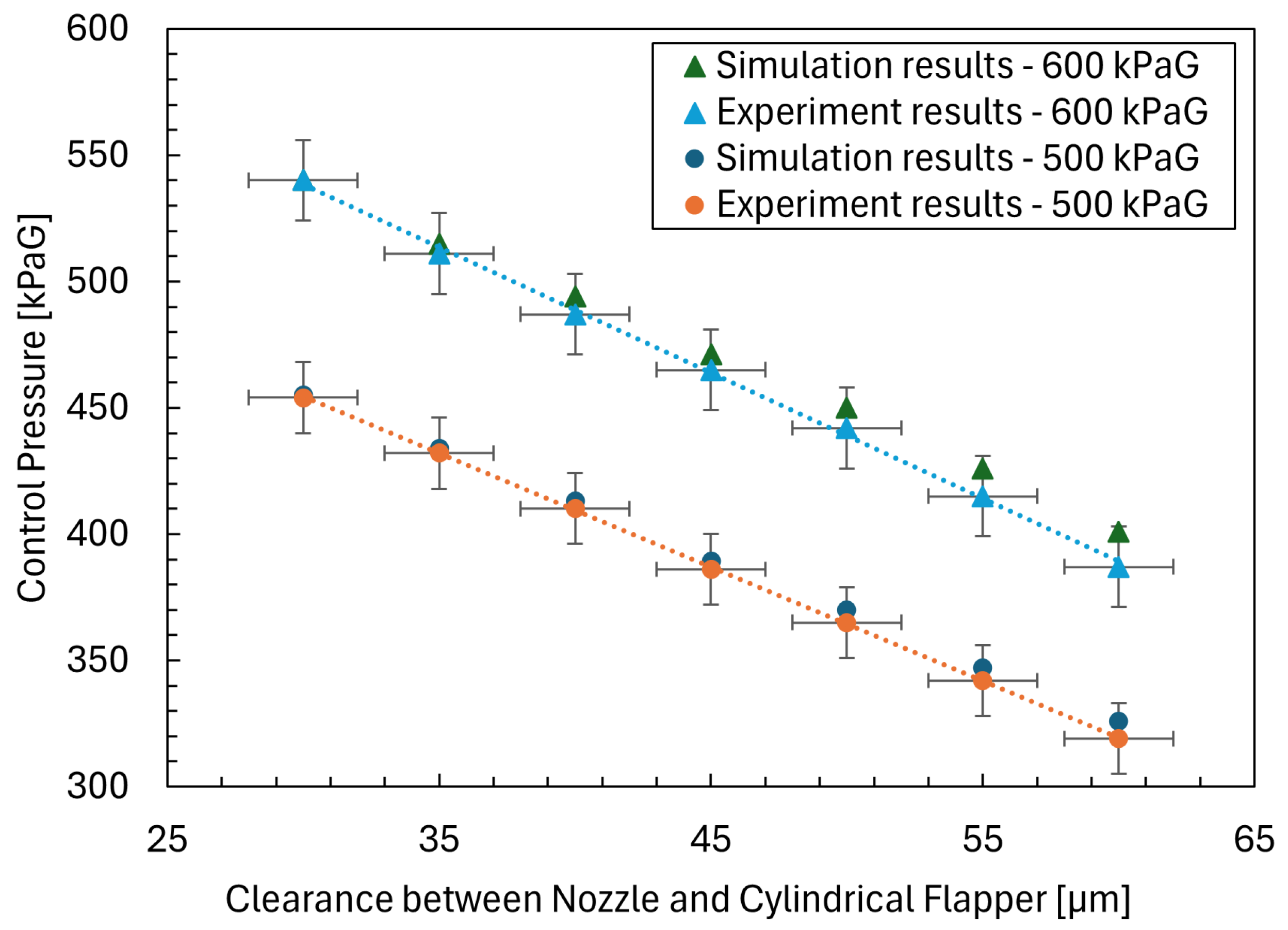
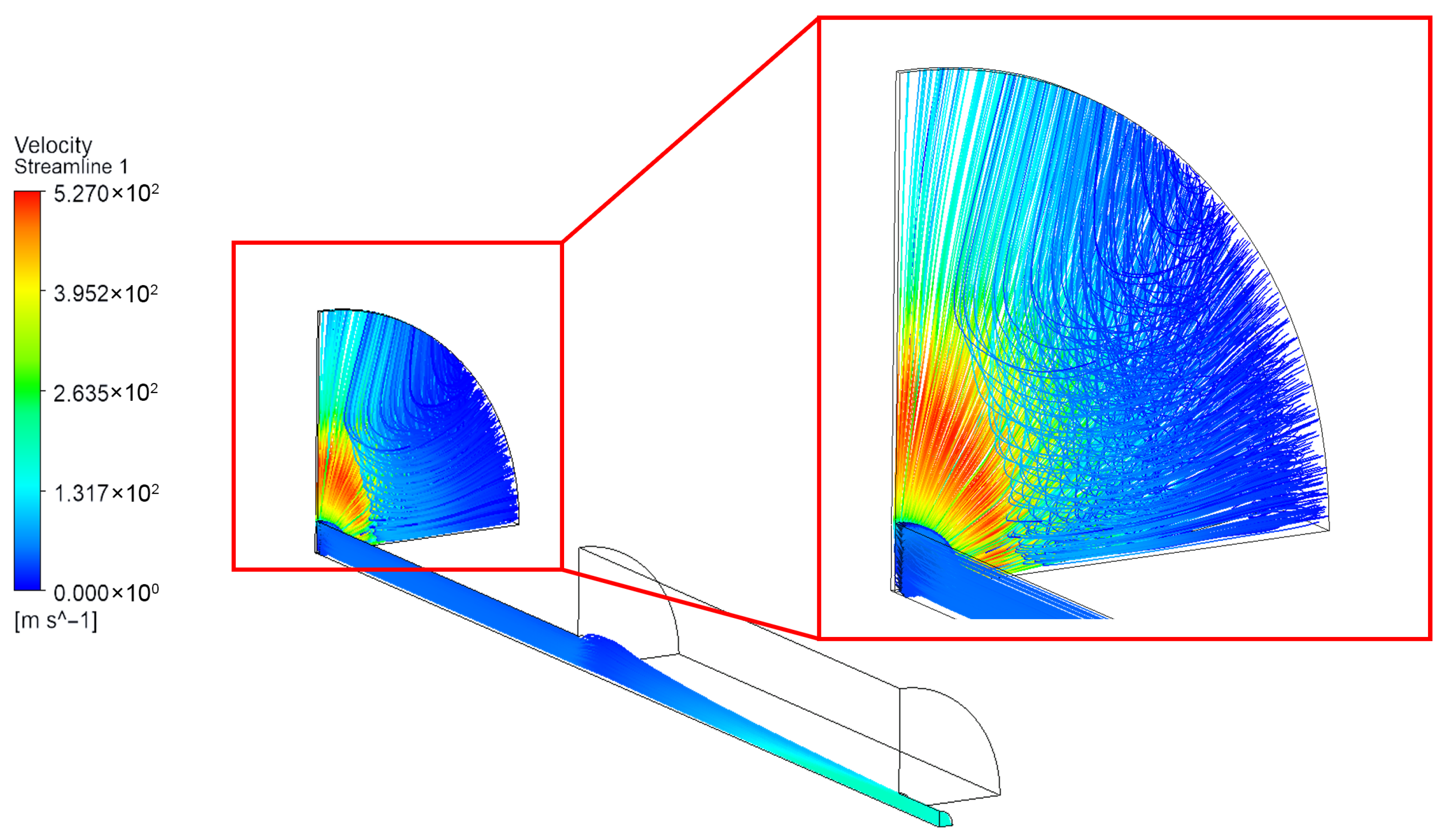
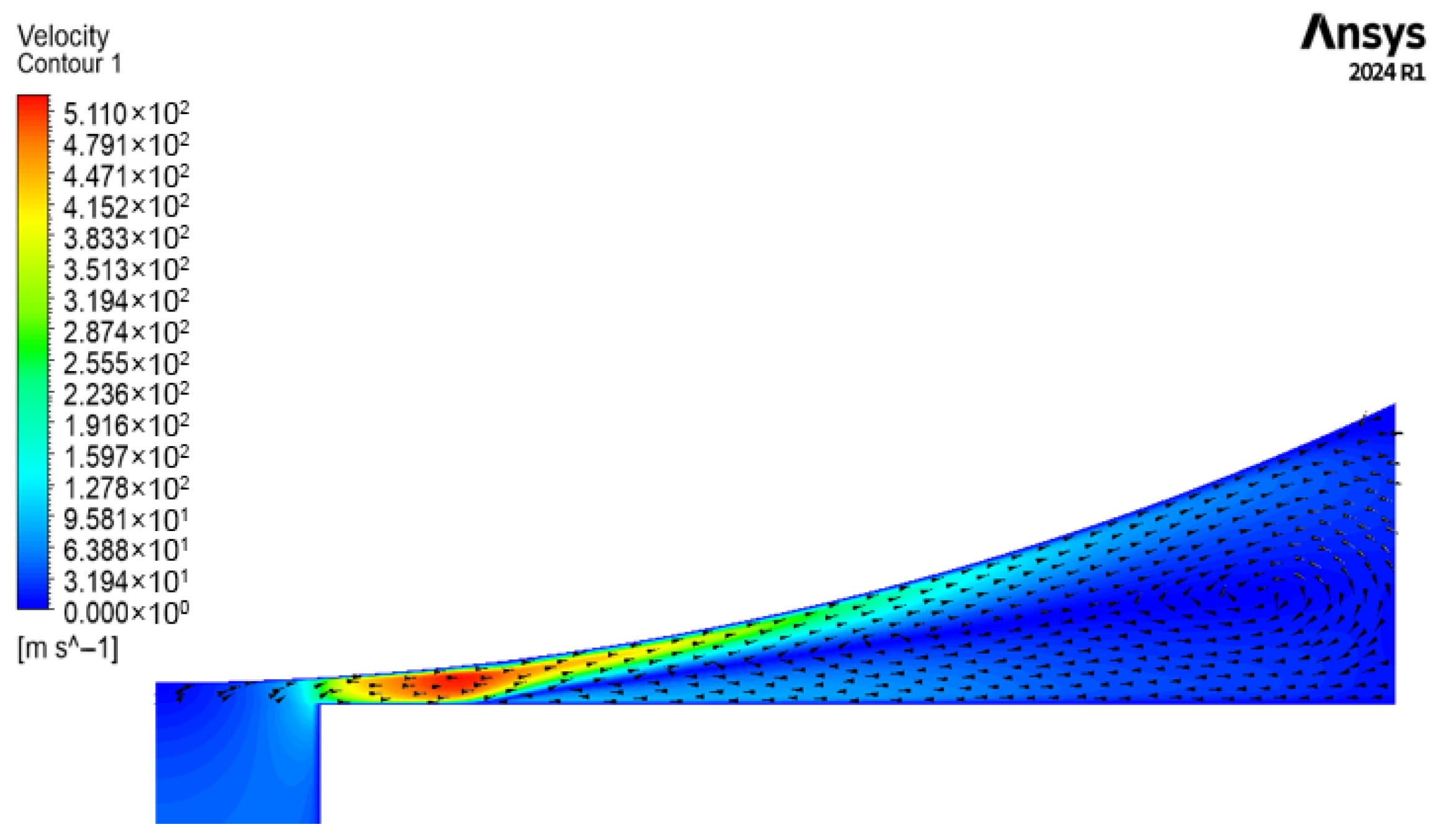
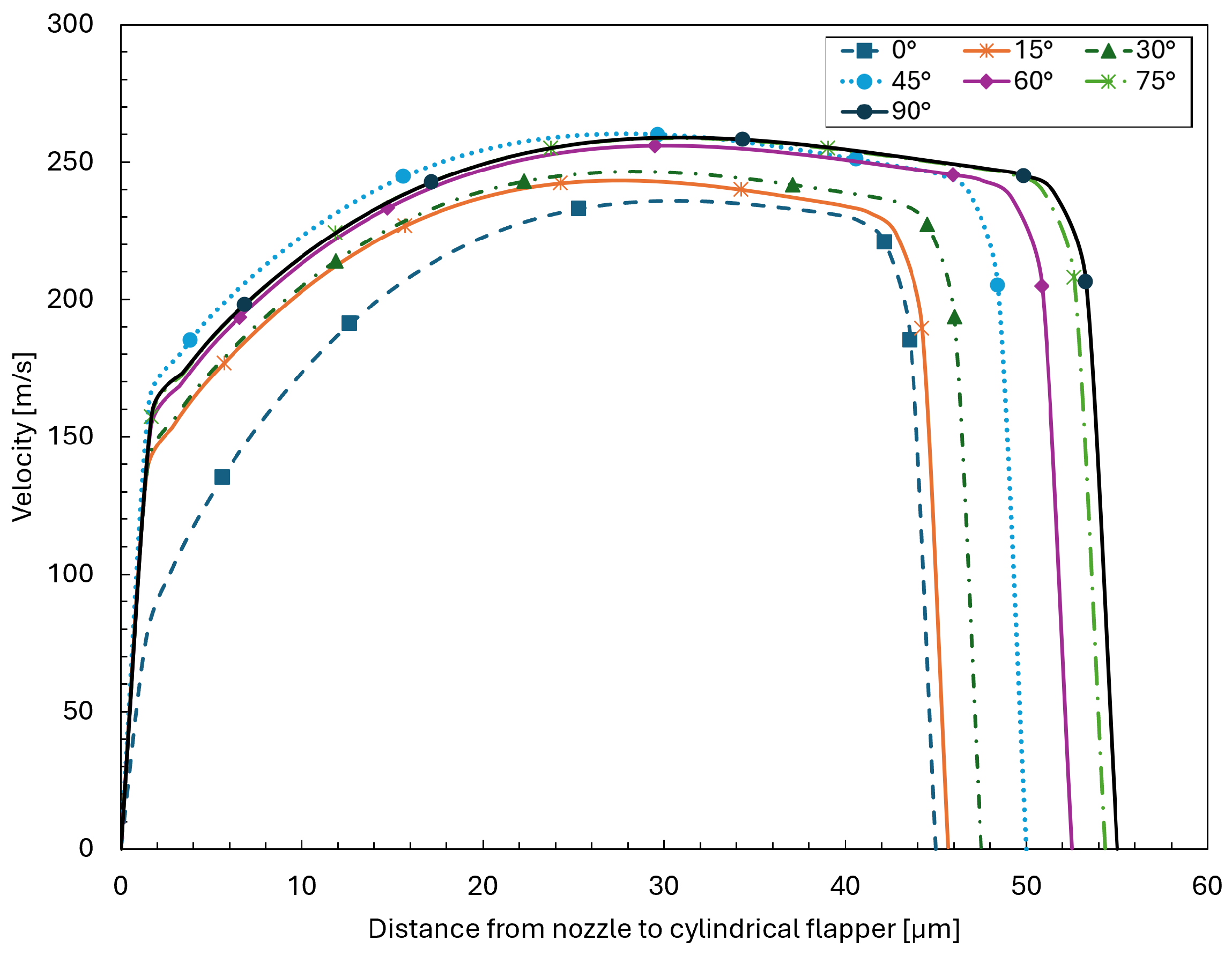
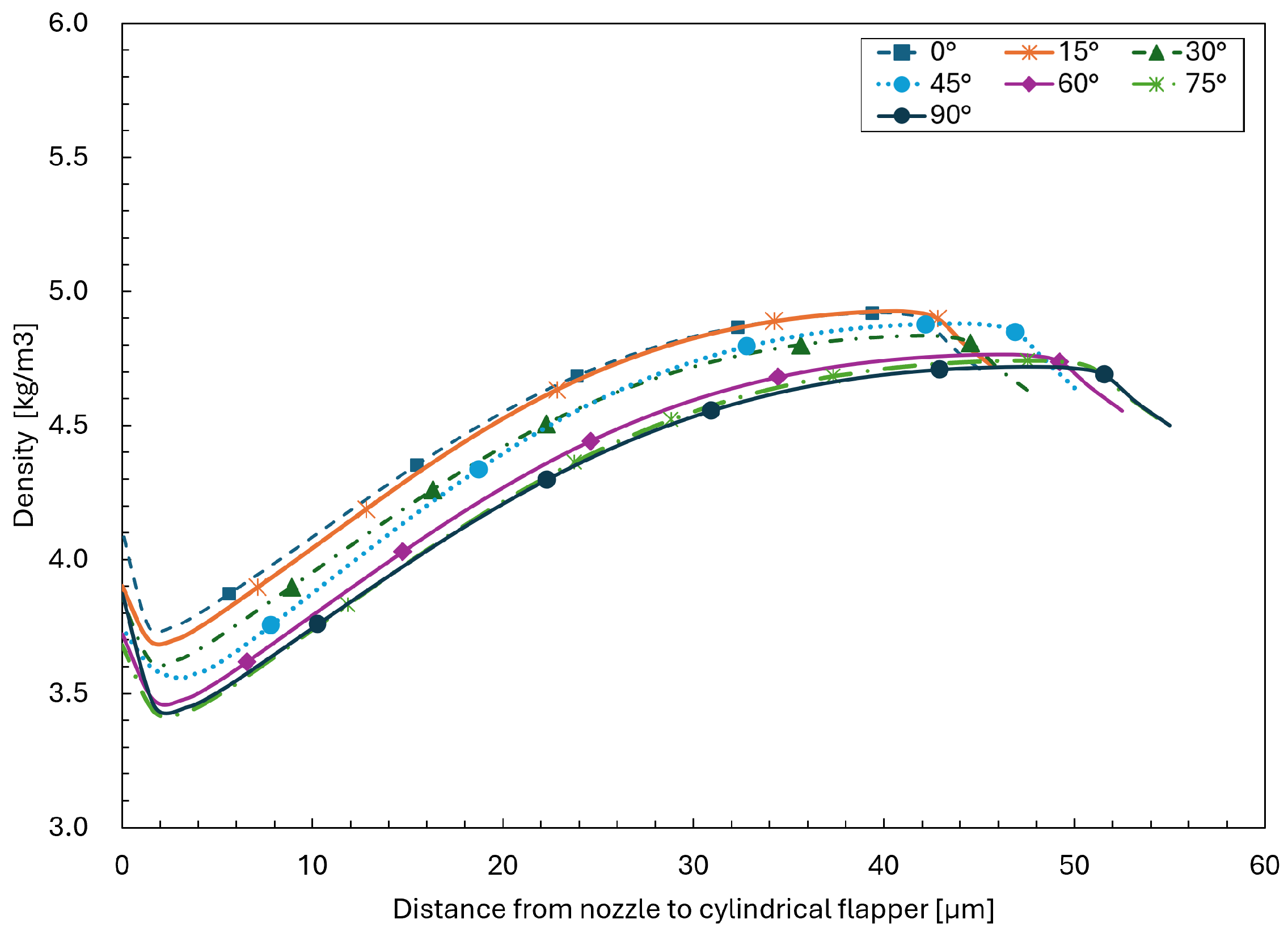
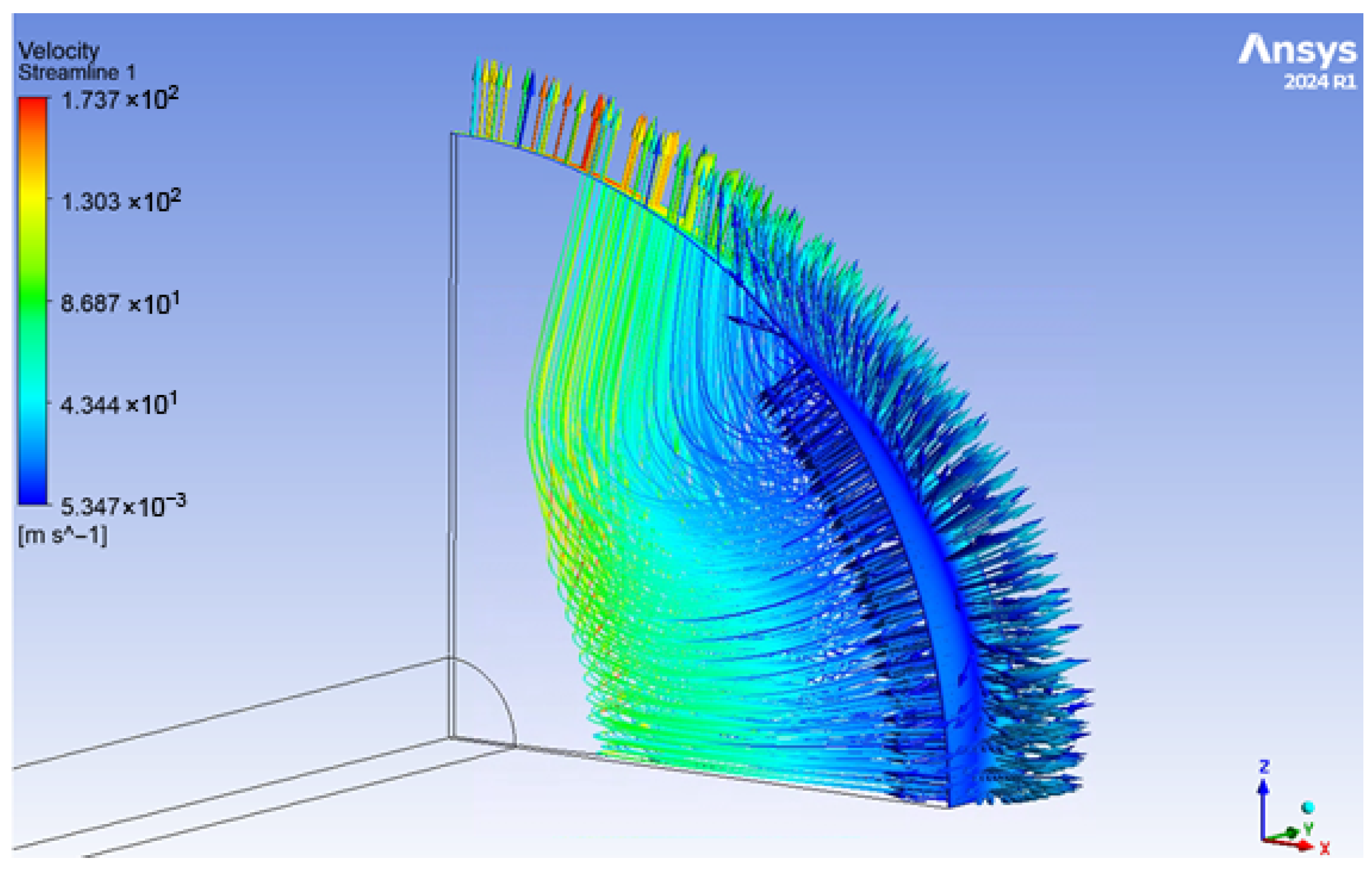
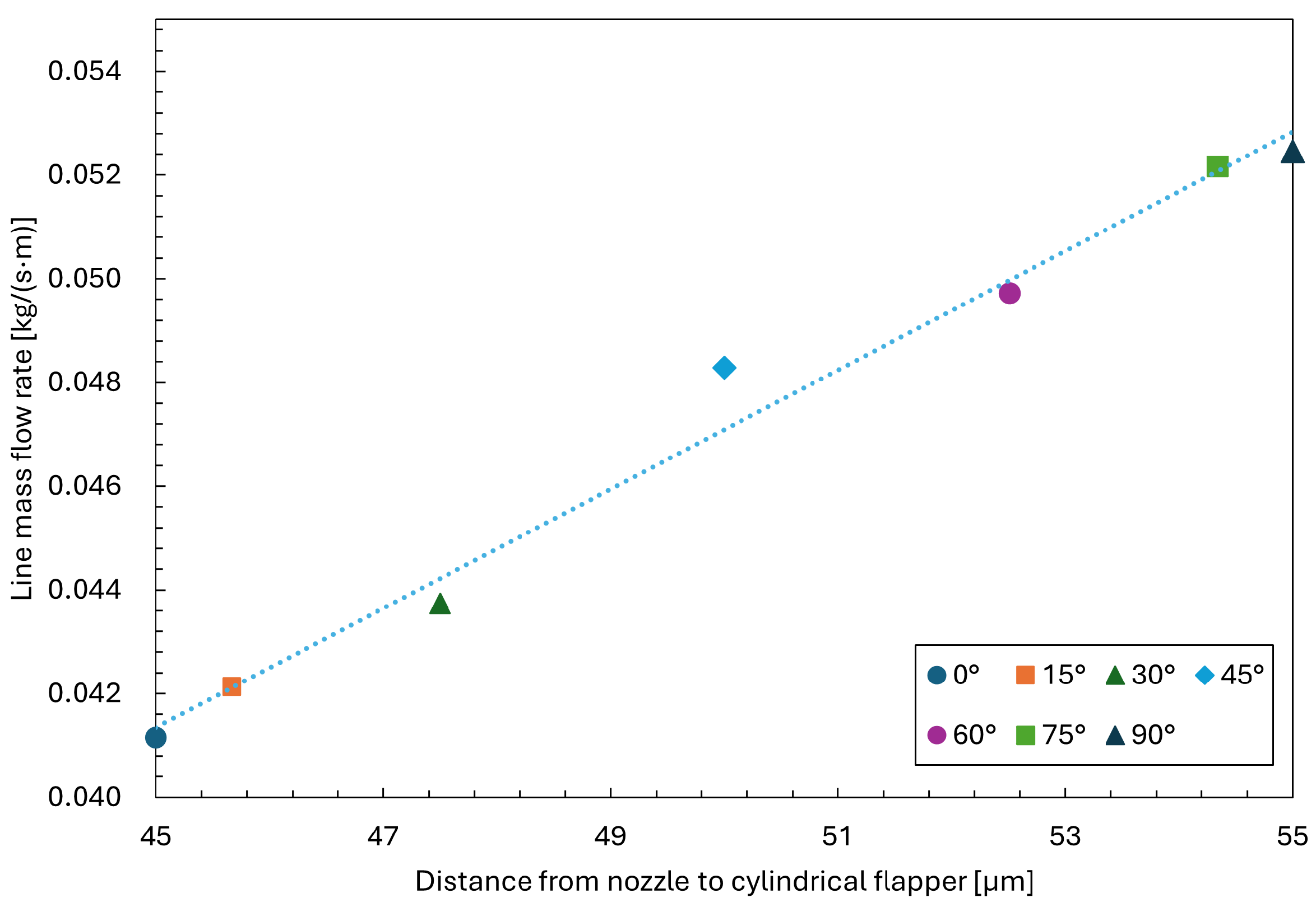
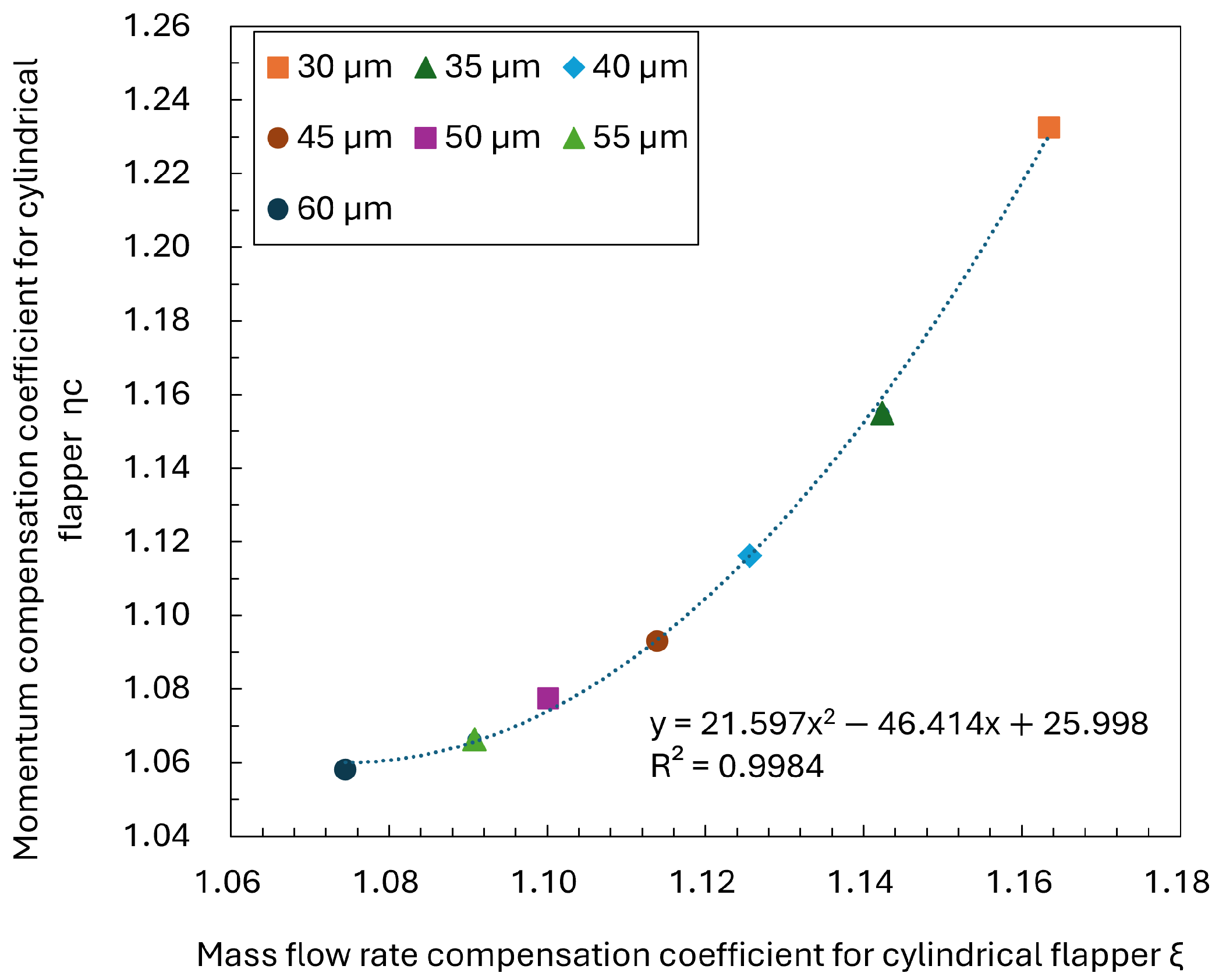
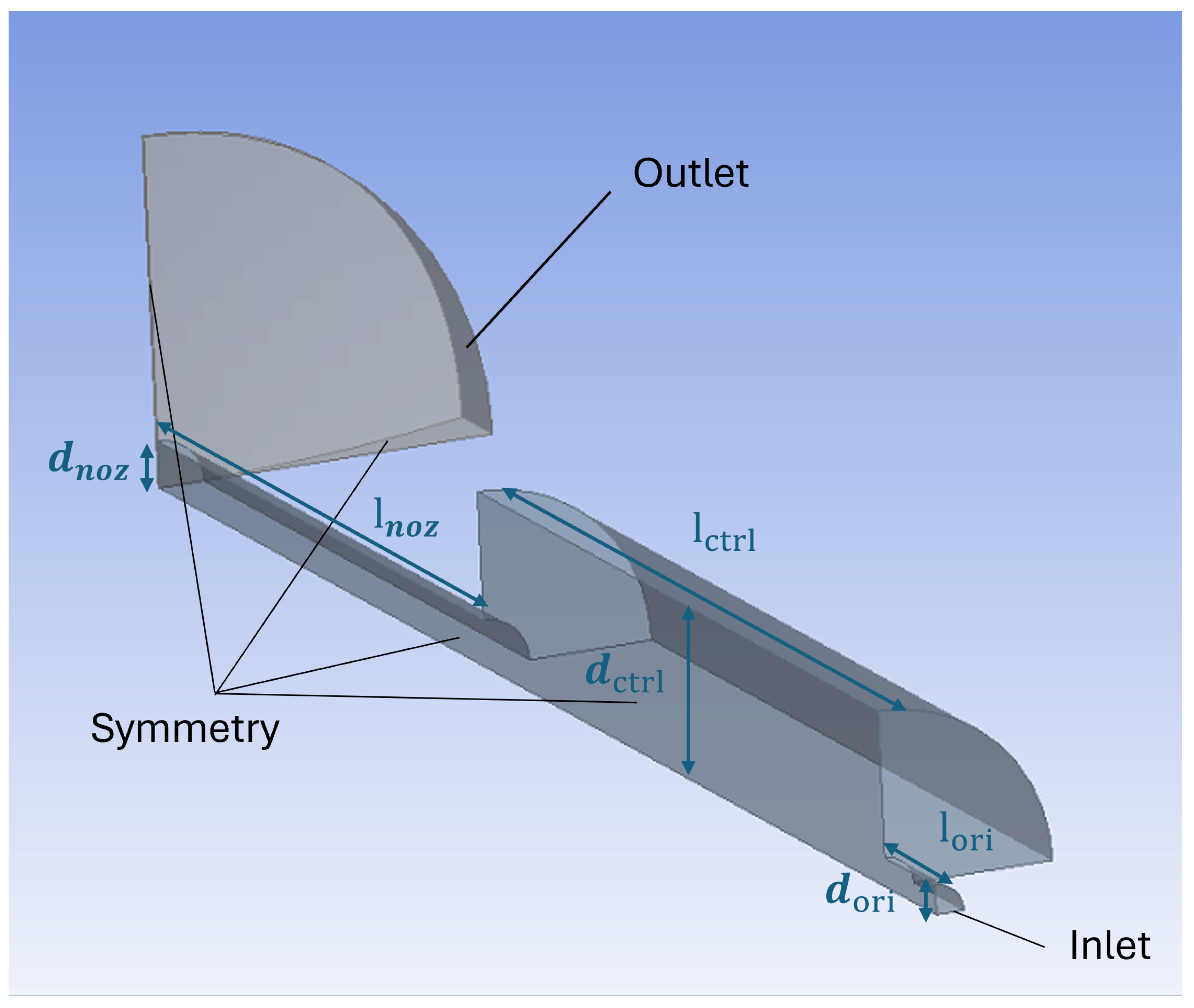
With the increasing demand for higher efficiency in semiconductor machining, air spindles with compensation systems have attracted growing attention. The pneumatic nozzle–cylindrical flapper is a promising sensing approach due to its high precision and suitability for displacement measurement of high-speed rotating bodies. However, its complex three-dimensional flow behavior leads to significant deviations from conventional nozzle–flat flapper models, limiting its practical application. This study aims to clarify the flow mechanisms governing the nozzle–cylindrical flapper system and to establish a reliable framework for predicting its static characteristics. A computational fluid dynamics model is developed to analyze gas flow within the micron-scale clearance under varying gap sizes and angular orientations, and the results are validated against experimental measurements. The analysis shows that curvature plays a dominant role in the flow behavior. Increasing curvature enhances inertia-driven acceleration and weakens viscous effects while simultaneously inducing strong recirculation due to flow wrapping around the cylindrical surface. These competing mechanisms explain the observed deviations from conventional models and cannot be captured by two-dimensional approaches. Based on the numerical results, a mass flow rate compensation coefficient is introduced and correlated with the momentum compensation coefficient. A quadratic relationship between the two coefficients is identified, indicating a common recirculation-driven mechanism. These findings support previous semi-empirical assumptions and provide a basis for predicting static characteristics with reduced reliance on experimental calibration.
Keywords: high-speed rotation spindle with aerostatic bearings; nozzle flapper; pneumatic; machining high-speed rotation spindle with aerostatic bearings; nozzle flapper; pneumatic; machining