Article

Physiological Impact of Chromatic-Weight Illusions in Augmented Reality: A Comparative sEMG Analysis of Muscle Fatigue and Stability


1
Department of Mechatronics, Shanghai Jianqiao University, Shanghai 201306, China
2
G-SCOP Lab, University Grenoble Alpes, CNRS, 38000 Grenoble, France
3
Institut für Digitale Medizin, Philipps University of Marburg, 35037 Marburg, Germany
4
Shanghai Key Laboratory of Intelligent Manufacturing and Robotics, Shanghai University, Shanghai 200072, China
5
GIPSA Lab, University Grenoble Alpes, CNRS, 38000 Grenoble, France
*
Authors to whom correspondence should be addressed.
Sensors 2026, 26(9), 2575; https://doi.org/10.3390/s26092575
Submission received: 4 March 2026 / Revised: 10 April 2026 / Accepted: 16 April 2026 / Published: 22 April 2026

Abstract

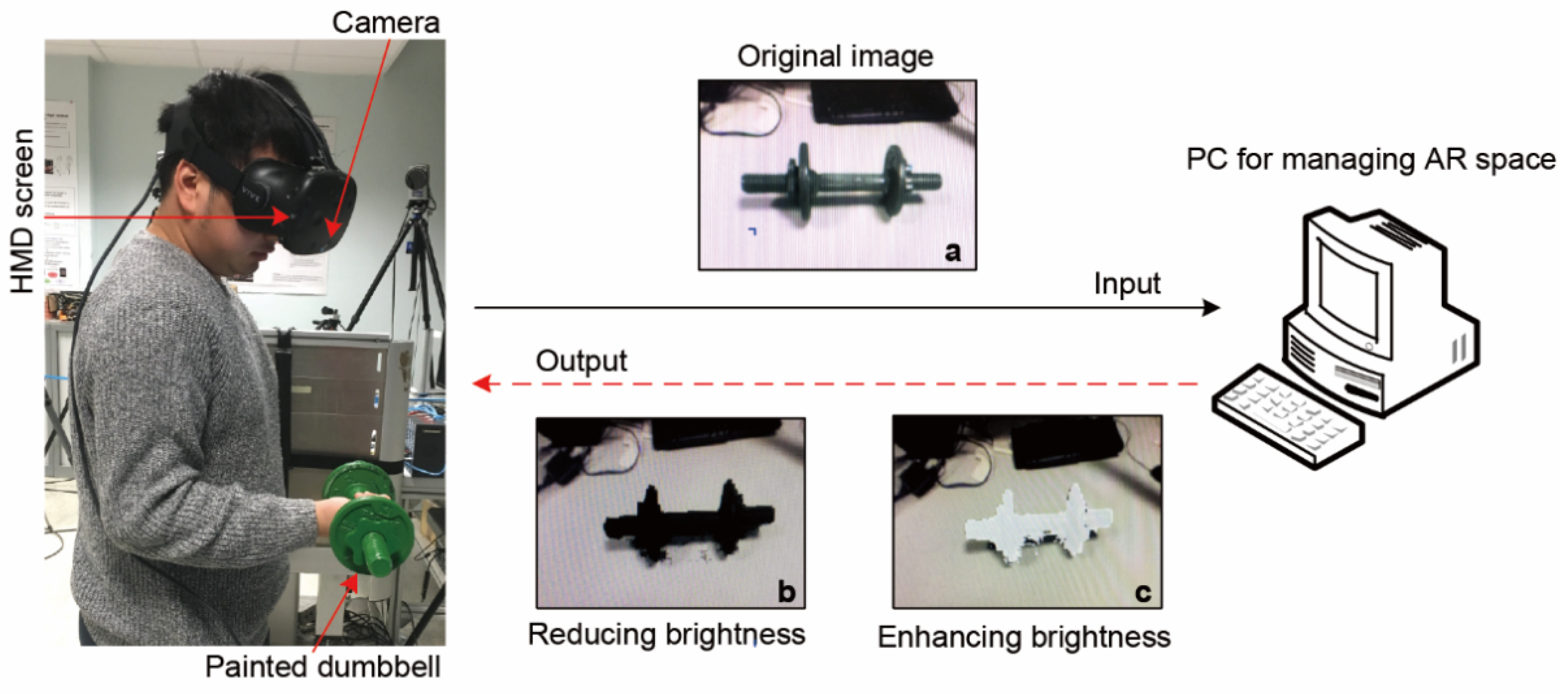
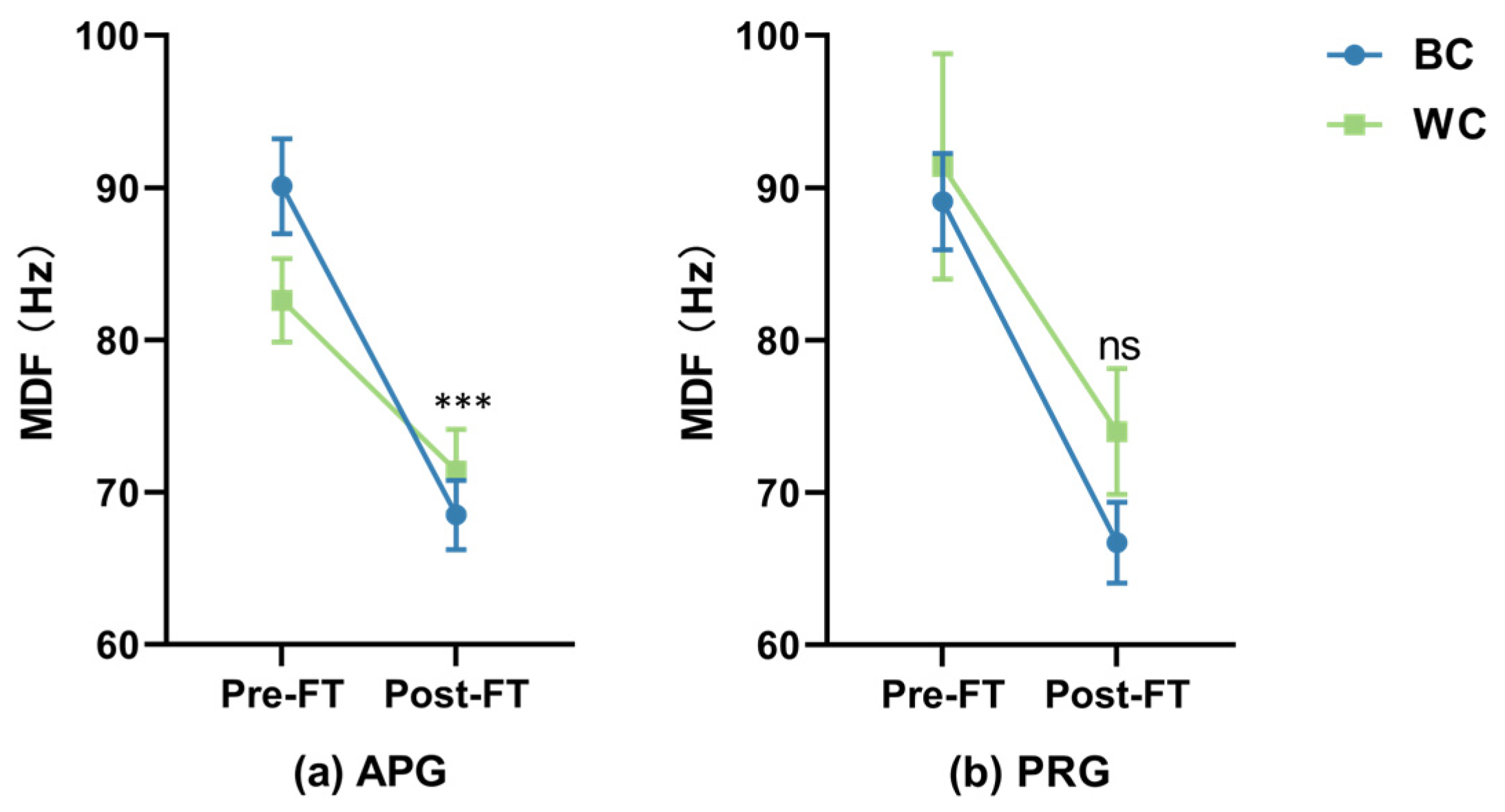
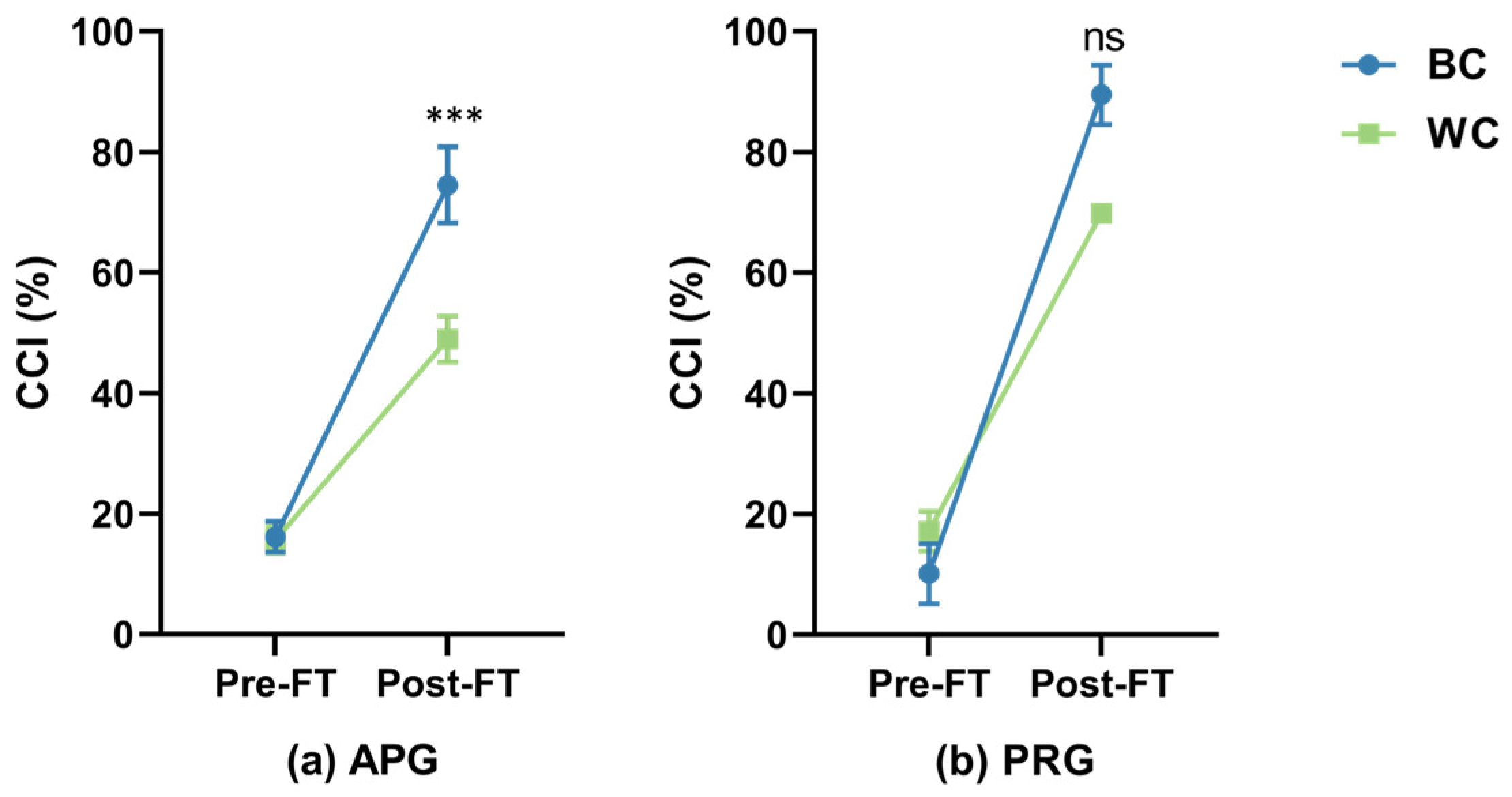
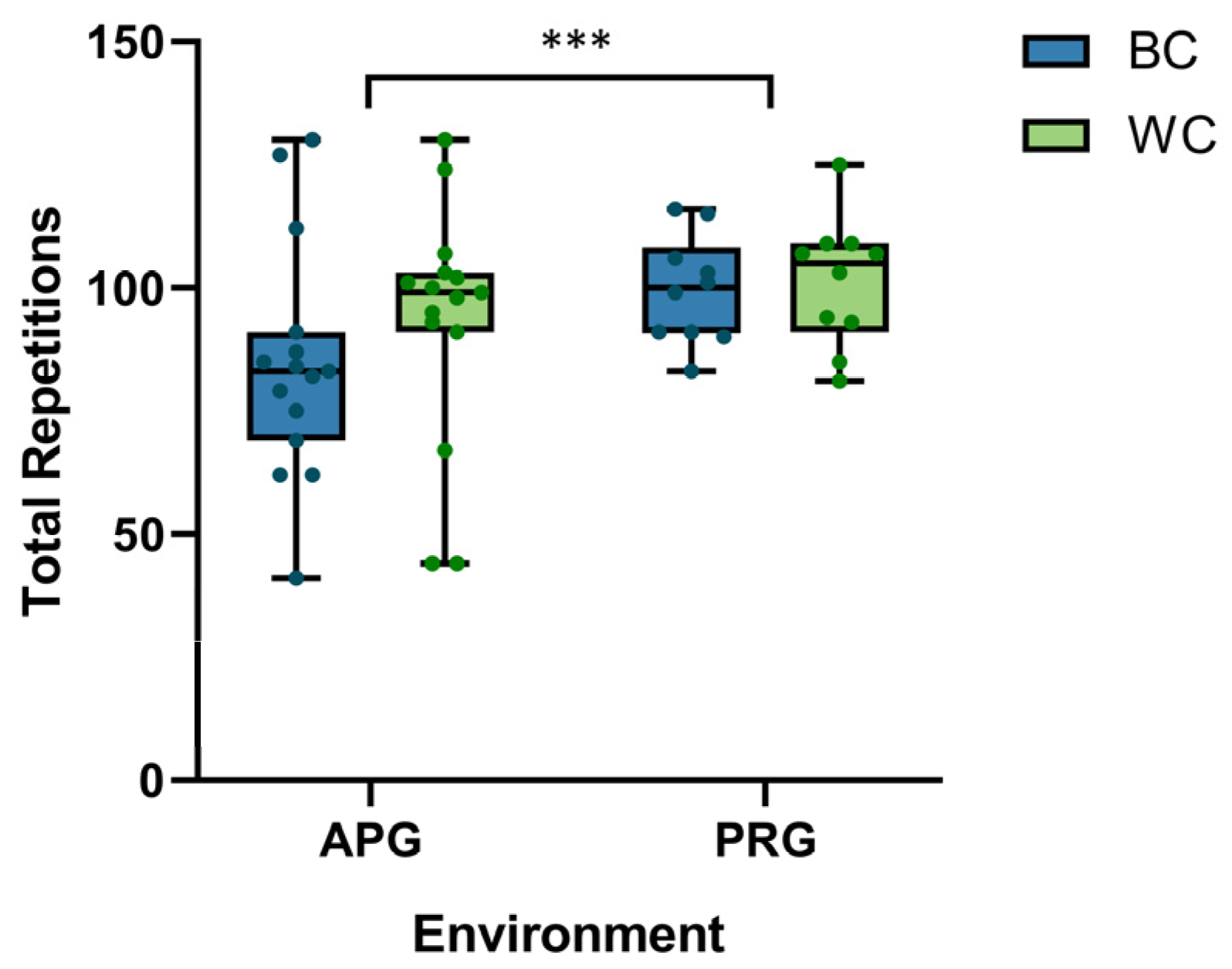
During manual operations, the human brain relies on mediated visual stimuli such as color to estimate an object’s weight and adjust muscle force through the central nervous system (CNS). This study examines the neuromuscular “reality gap” induced by the color–weight illusion (CWI) during repetitive lifting tasks in an augmented reality (AR) interface. We analyzed the median frequency (MDF) and Co-Contraction Index (CCI) of the biceps and triceps muscles to quantify physiological strain under varying luminance conditions in both AR and physical environments. The results reveal that AR significantly amplifies the CWI, with black stimuli triggering an aggressive joint-stiffening strategy in the AR group (APG). Compared with the physical reality group, the AR group showed lower overall endurance (91.4 ± 22.8 vs. 100.1 ± 12.5 repetitions) and a stronger physiological response to the black stimulus. In the AR group, the black condition was associated with a terminal CCI of 84.7 ± 25.4% and an MDF decline of approximately 21.7 Hz, whereas the corresponding contrast was attenuated in the physical reality group. These findings demonstrate a critical decoupling between behavioral output and internal physiological strain, indicating that the CNS treats virtual visual cues as high-reliability signals that increase metabolic “bio-cost” despite task completion parity. This research identifies a “masking effect” where behavioral metrics hide severe ergonomic risks, providing novel approaches for managing musculoskeletal health in industrial settings and personalizing coordination training in clinical rehabilitation.
Keywords: muscle co-contraction; muscle fatigue; augmented reality; color–weight illusion muscle co-contraction; muscle fatigue; augmented reality; color–weight illusion