Flexible Resistive Sensors for Wearable and Ergonomics Applications: A Systematic Review




Abstract
1. Introduction
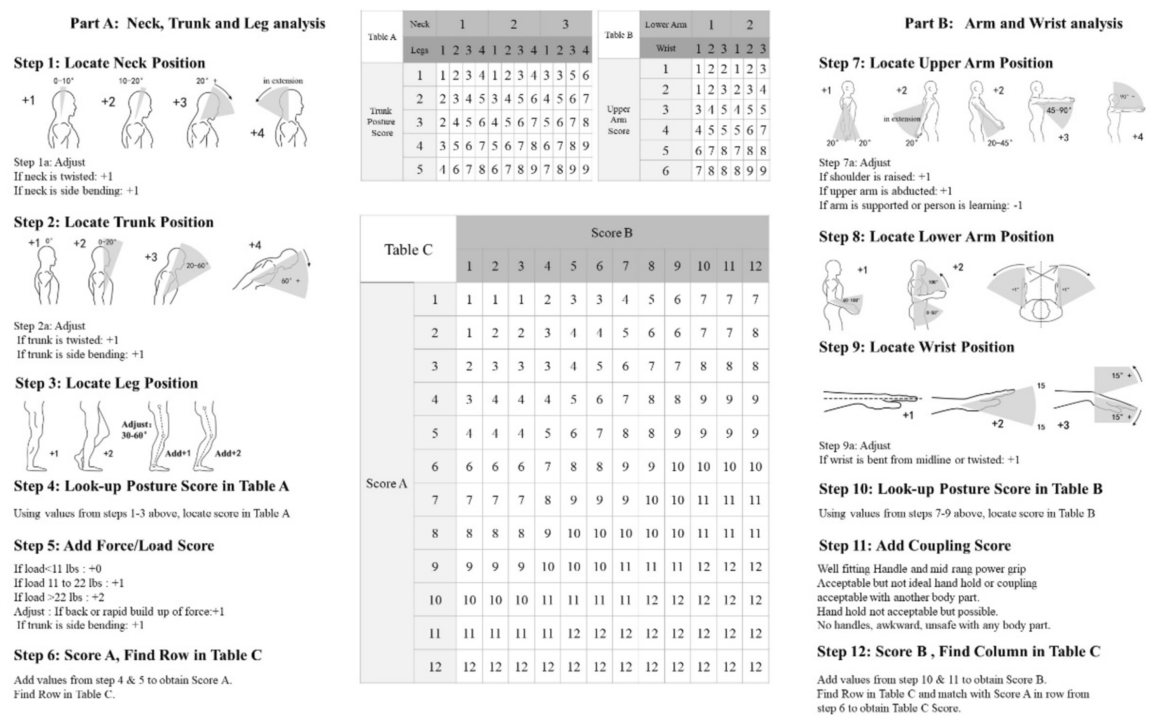
2. Ergonomics Fundamentals
3. Flexible Resistive Sensor Fundamentals
- is the gauge factor, which indicates how sensitive the sensor is to strain (dimensionless).
- is the change in electrical resistance due to deformation (in ohms, ).
- R is the original (baseline) resistance (in ohms, ).
- (strain) is the applied mechanical strain, defined as the relative change in length: (dimensionless, often expressed in %).
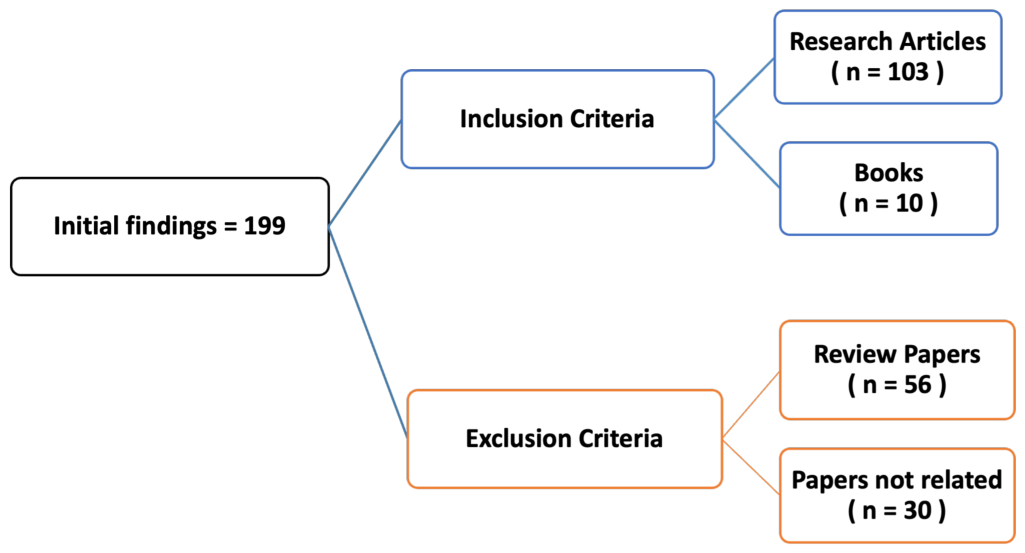
4. Search Strategy and Selection Criteria for Scholarly Articles
5. Materials
5.1. Substrates
5.2. Conductive Materials
6. Fabrication Methods
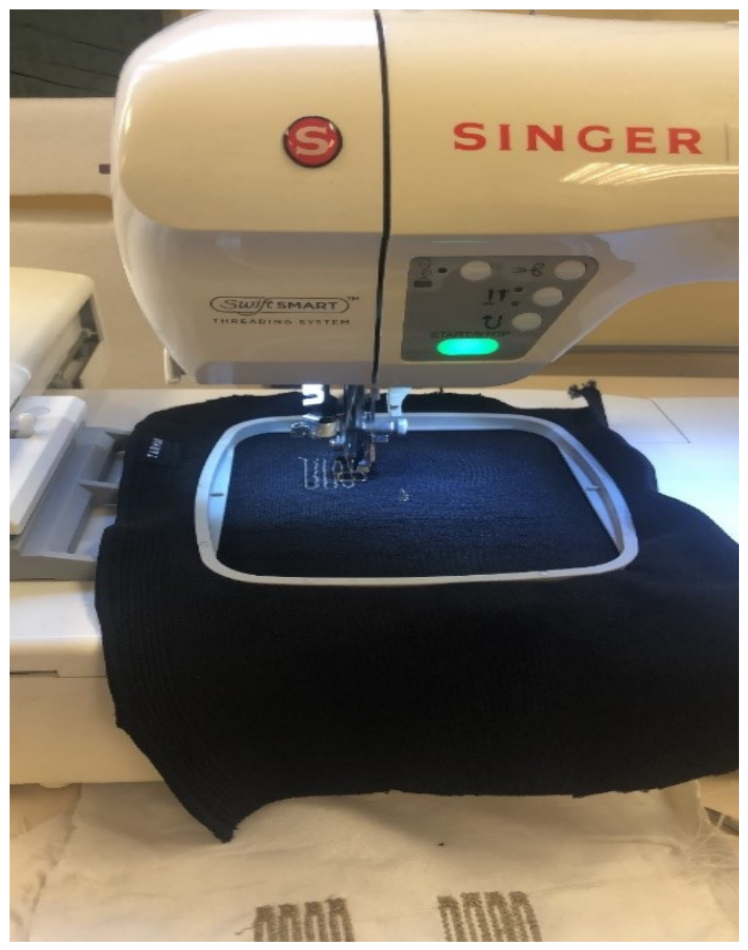
6.1. Textile Fabrication Methods
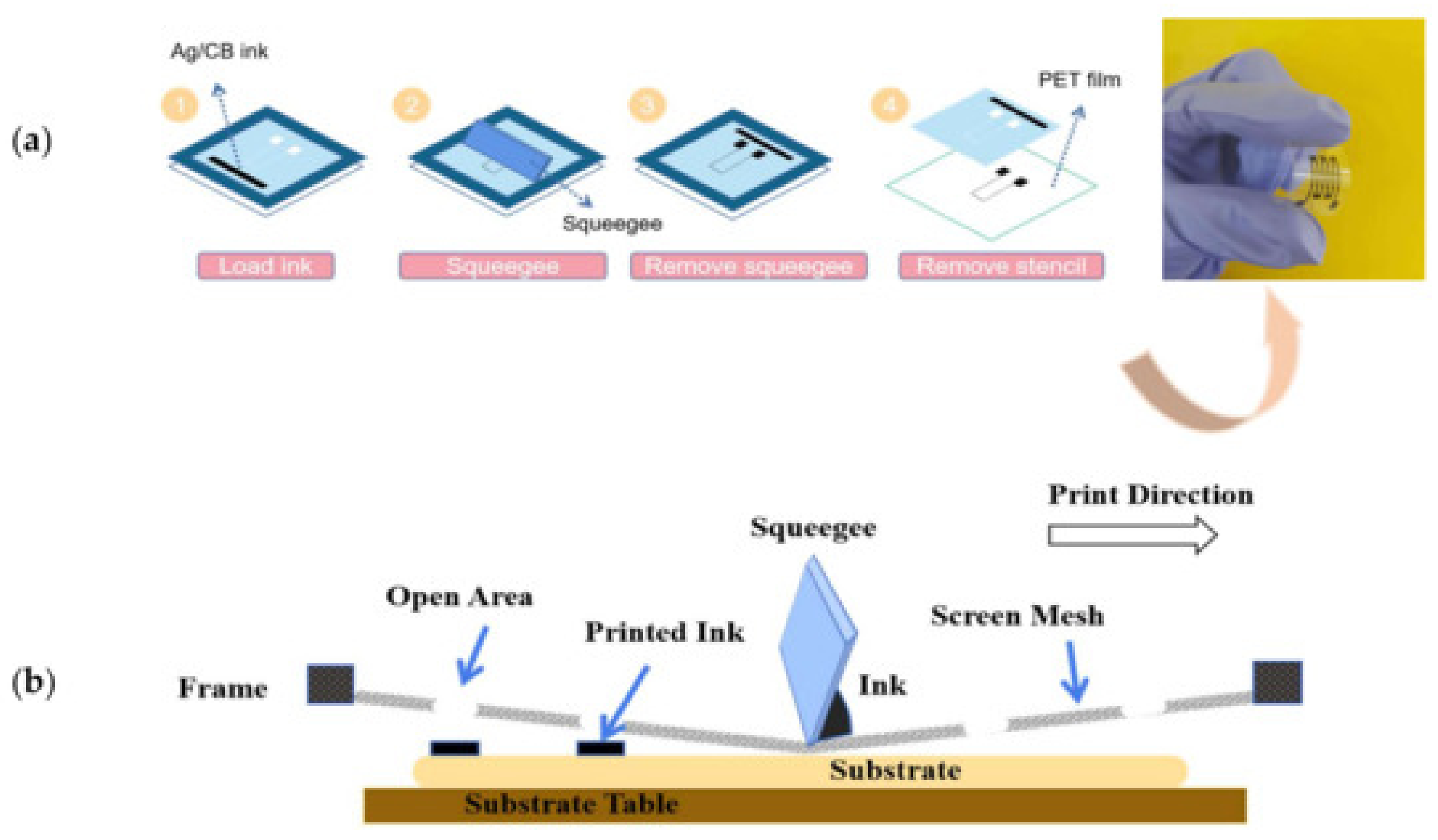
6.2. Screen Printing
6.3. Inkjet Printing
6.4. Direct Ink Writing
7. Ergonomics Applications
7.1. Single Sensor Application
7.2. Array Sensor Application
8. Discussion
- Sensitivity and stability: High-sensitivity materials (e.g., CNTs, graphene) often show increased noise, hysteresis, and drift under cyclic loading.
- Flexibility and durability: Stretchable substrates (e.g., TPU, PDMS) improve comfort but may suffer from fatigue and long-term degradation.
- Textile integration and accuracy: Fabric-based sensors introduce non-uniform strain transfer, affecting precision and repeatability.
- Fabrication and control: Scalable methods (e.g., embroidery, DIW) reduce cost but limit control over microstructure and reproducibility.
9. Future Research Directions
Supplementary Materials
Author Contributions
Funding
Institutional Review Board Statement
Informed Consent Statement
Data Availability Statement
Conflicts of Interest
References
- Arora, S.N.; Khatri, S. Prevalence of work-related musculoskeletal disorder in sitting professionals. Int. J. Community Med. Public Health 2022, 9, 892. [Google Scholar] [CrossRef]
- Ngatcha Tchounga, C.C.; Azabji Kenfack, M.; Guessogo, W.R.; Mekoulou Ndongo, J.; Bika Léle, E.C.; Ayina Ayina, C.N.; Temfemo, A.; Bongue, B.; Mandengue, S.H.; Etoundi Ngoa, L.S.; et al. Prevalence of musculoskeletal disorders among taxi drivers in Yaoundé, Cameroon: Preventive effect of physical activity. BMC Musculoskelet. Disord. 2022, 23, 1018. [Google Scholar] [CrossRef] [PubMed]
- Zhou, C.; Yu, R.; Kaner, J. Evaluating functional ability in older adults’ object retrieval behavior from kitchen furniture using OpenPose and REBA. Sci. Rep. 2024, 14, 25560. [Google Scholar] [CrossRef] [PubMed]
- Maksimović, N.; Čabarkapa, M.; Tanasković, M.; Randjelović, D. Challenging ergonomics risks with smart wearable extension sensors. Electronics 2022, 11, 3395. [Google Scholar] [CrossRef]
- Carbonaro, N.; Arcarisi, L.; Marinai, C.; Laurino, M.; Di Rienzo, F.; Vallati, C.; Tognetti, A. Exploiting resistive matrix technology to build a stretchable sensorised sock for gait analysis in daily life. Sensors 2022, 22, 1761. [Google Scholar] [CrossRef]
- Moustafa, I.M.; Abu-Ghosh, S.; Ahbouch, A.; Zadeh, S.A.M.; Kim, M.; Khowailed, I. Cognitive costs and gait parametres during single-and dual-task conditions: A comparative study in individuals with and without non-specific neck pain. PLoS ONE 2025, 20, e0318963. [Google Scholar] [CrossRef]
- Lo Presti, D.; Carnevale, A.; D’Abbraccio, J.; Massari, L.; Massaroni, C.; Sabbadini, R.; Zaltieri, M.; Di Tocco, J.; Bravi, M.; Miccinilli, S.; et al. A multi-parametric wearable system to monitor neck movements and respiratory frequency of computer workers. Sensors 2020, 20, 536. [Google Scholar] [CrossRef]
- Alam, T.; Saidane, F.; Faisal, A.A.; Khan, A.; Hossain, G. Smart- textile strain sensor for human joint monitoring. Sens. Actuators A Phys. 2022, 341, 113587. [Google Scholar] [CrossRef]
- Wang, Y.; Ali, S.; Wijekoon, J.; Gong, R.H.; Fernando, A. A wearable piezo-resistive sensor for capturing cardiorespiratory signals. Sens. Actuators A Phys. 2018, 282, 215–229. [Google Scholar] [CrossRef]
- Zahid, U.; Bukhari, M.U.; Riaz, K.; Maqbool, K.Q.; Khan, A.; Wang, B.; Bermak, A. Facile and Wearable Textile-based Temperature Sensor for Human Healthcare Monitoring. In Proceedings of the 2024 IEEE Conference on Technologies for Sustainability, SusTech 2024; Institute of Electrical and Electronics Engineers Inc.: New York, NY, USA, 2024; pp. 367–370. [Google Scholar] [CrossRef]
- Huang, J.; Yang, S.; Ye, Z.; Wang, X.; Fang, Z.; Yu, Q.; Li, B.; Wang, Y.H. Direct ink writing of silver nanowire-based flexible temperature sensors on fabric for wearable thermal monitoring. J. Mater. Chem. C 2026, 14, 4040–4052. [Google Scholar] [CrossRef]
- Zhang, X.; Maddipatla, D.; Bose, A.K.; Hajian, S.; Narakathu, B.B.; Williams, J.D.; Mitchell, M.F.; Atashbar, M.Z. Printed carbon nanotubes-based flexible resistive humidity sensor. IEEE Sens. J. 2020, 20, 12592–12601. [Google Scholar] [CrossRef]
- OQuigley, C.; Sabourin, M.; Coyle, S.; Connolly, J.; Condall, J.; Curran, K.; Corcoran, B.; Diamond, D. Characteristics of a piezo-resistive fabric stretch sensor glove for home-monitoring of rheumatoid arthritis. In Proceedings of the 11th International Conference on Wearable and Implantable Body Sensor Networks Workshops; IEEE: New York, NY, USA, 2014; pp. 23–26. [Google Scholar] [CrossRef]
- Angeli, M.A.; Caronna, F.; Cramer, T.; Gastaldi, D.; Magagnin, L.; Fraboni, B.; Vena, P. Strain Mapping Inkjet-Printed Resistive Sensors Array. IEEE Sens. J. 2020, 20, 4087–4095. [Google Scholar] [CrossRef]
- Samaddar, N.; Wani, M.I.; Maharshi, V.; Sonkusale, S.; Malik, S. A Resistance Change Detection Circuitry for Thread Based Resistive Sensors. In Proceedings of the APSCON 2023—IEEE Applied Sensing Conference; Symposium Proceedings; Institute of Electrical and Electronics Engineers Inc.: New York, NY, USA, 2023. [Google Scholar] [CrossRef]
- Hanumanth, R.C.; Varaprasad, B.; Goel, S. Direct ink writing as an eco-friendly PCB manufacturing technique for rapid prototyping. In Proceedings of the Fourth International Conference on Electrical, Computer and Communication Technologies (ICECCT); IEEE: New York, NY, USA, 2021; pp. 1–7. [Google Scholar] [CrossRef]
- Ju, B.; Kim, I.; Li, B.M.; Knowles, C.G.; Mills, A.; Grace, L.; Jur, J.S. Inkjet Printed Textile Force Sensitive Resistors for Wearable and Healthcare Devices. Adv. Healthc. Mater. 2021, 10, 2100893. [Google Scholar] [CrossRef] [PubMed]
- Reddy, N.K.; Manitha, P. Integrative Approach to Driver Fatigue and Posture Monitoring for Secure Driving. In Proceedings of the 2024 10th International Conference on Electrical Energy Systems (ICEES); IEEE: New York, NY, USA, 2024; pp. 1–5. [Google Scholar]
- Salvendy, G. Handbook of Human Factors and Ergonomics; John Wiley & Sons: Hoboken, NJ, USA, 2012; p. 1732. [Google Scholar]
- Bhise, V.D. Ergonomics in the Automotive Design Process; CRC Press: Boca Raton, FL, USA, 2012. [Google Scholar]
- Goonetilleke, R.S.; Karwowski, W. (Eds.) Advances in Physical Ergonomics and Human Factors. In Advances in Intelligent Systems and Computing; Technical Report; Springer: Berlin/Heidelberg, Germany, 2019; Volume 789. [Google Scholar]
- Lin, P.C.; Chen, Y.J.; Chen, W.S.; Lee, Y.J. Automatic real-time occupational posture evaluation and select corresponding ergonomic assessments. Sci. Rep. 2022, 12, 2139. [Google Scholar] [CrossRef]
- Hossain, M.S.; Azam, S.; Karim, A.; Montaha, S.; Quadir, R.; De Boer, F.; Altaf-Ul-Amin, M. Ergonomic risk prediction for awkward postures from 3D keypoints using deep learning. IEEE Access 2023, 11, 114497–114508. [Google Scholar] [CrossRef]
- Oyekan, J.; Chen, Y.; Turner, C.; Tiwari, A. Applying a fusion of wearable sensors and a cognitive inspired architecture to real-time ergonomics analysis of manual assembly tasks. J. Manuf. Syst. 2021, 61, 391–405. [Google Scholar] [CrossRef]
- Zhang, Y.; Guo, X.; Wang, W.; Chen, L.; Liu, L.; Liu, H.; He, Y. Highly sensitive, low hysteretic and flexible strain sensor based on ecoflex-AgNWs-MWCNTs flexible composite materials. IEEE Sens. J. 2020, 20, 14118–14125. [Google Scholar] [CrossRef]
- Estember, R.D.; Huang, C.J. Essential occupational risk and health interventions for Taiwan’s bus drivers. In Proceedings of the 2019 IEEE 6th International Conference on Industrial Engineering and Applications (ICIEA); IEEE: New York, NY, USA, 2019; pp. 273–277. [Google Scholar]
- Rupp, M.A.; Michaelis, J.R.; McConnell, D.S.; Smither, J.A. The role of individual differences on perceptions of wearable fitness device trust, usability, and motivational impact. Appl. Ergon. 2018, 70, 77–87. [Google Scholar] [CrossRef]
- Gou, J.; Zhao, M.; Wang, H.; Wu, X. DNN-Based Prediction of Standard Driving Posture for Vehicle Takeover. IEEE Access 2023, 11, 72874–72883. [Google Scholar] [CrossRef]
- Jang, S.; Choi, J.Y.; Yoo, E.S.; Lim, D.Y.; Lee, J.Y.; Kim, J.K.; Pang, C. Printable wet-resistive textile strain sensors using bead-blended composite ink for robustly integrative wearable electronics. Compos. Part B Eng. 2021, 210, 108674. [Google Scholar] [CrossRef]
- Wang, Y.; Wang, L.; Yang, T.; Li, X.; Zang, X.; Zhu, M.; Wang, K.; Wu, D.; Zhu, H. Wearable and highly sensitive graphene strain sensors for human motion monitoring. Adv. Funct. Mater. 2014, 24, 4666–4670. [Google Scholar] [CrossRef]
- Sazonov, E. Wearable Sensors: Fundamentals, Implementation and Applications, 2nd ed.; Elsevier Science & Technology: Chantilly, France, 2020. [Google Scholar] [CrossRef]
- Qi, X.; Ha, H.; Hwang, B.; Lim, S. Printability of the screen-printed strain sensor with carbon black/silver paste for sensitive wearable electronics. Appl. Sci. 2020, 10, 6983. [Google Scholar] [CrossRef]
- Nag, A. Printed Flexible Sensors: Fabrication, Characterization and Implementation, 1st ed.; Smart Sensors, Measurement and Instrumentation, 33; Springer International Publishing: Cham, Switzerland, 2019. [Google Scholar] [CrossRef]
- Martínez-Estrada, M.; Gil, I.; Fernández-García, R. An alternative method to develop embroidery textile strain sensors. Textiles 2021, 1, 504–512. [Google Scholar] [CrossRef]
- Qi, K.; Zhou, Y.; Ou, K.; Dai, Y.; You, X.; Wang, H.; He, J.; Qin, X.; Wang, R. Weavable and stretchable piezoresistive carbon nanotubes-embedded nanofibre sensing yarns for highly sensitive and multimodal wearable textile sensor. Carbon 2020, 170, 464–476. [Google Scholar] [CrossRef]
- Sun, H.; Dai, K.; Zhai, W.; Zhou, Y.; Li, J.; Zheng, G.; Li, B.; Liu, C.; Shen, C. A Highly Sensitive and Stretchable Yarn Strain Sensor for Human Motion Tracking Utilizing a Wrinkle-Assisted Crack Structure. ACS Appl. Mater. Interfaces 2019, 11, 36052–36062. [Google Scholar] [CrossRef]
- Zhang, P.; Li, W.; Zhang, Q.; Wang, X.; Lin, G.; Li, W.; Li, Y.; Zhang, K.; Huang, L. Mass-Produced Flexible Strain Sensors Based on Dip-Coating and Water Bath for Human-Computer Interaction. IEEE Sens. J. 2023, 23, 1497–1506. [Google Scholar] [CrossRef]
- Khan, A.; Ali, S.; Khan, S.; Bermak, A. Rapid fabrication of soft strain sensors by multi-nozzle electrohydrodynamic inkjet printing for wearable electronics. In Proceedings of the IEEE International Symposium on Circuits and Systems; Institute of Electrical and Electronics Engineers Inc.: New York, NY, USA, 2021; Volume 2021. [Google Scholar] [CrossRef]
- Xia, J.; He, L.; Lu, Z.; Liu, L.; Song, J.; Chen, S.; Wang, Q.; Hammad, F.A.; Tian, Y. Stretchable and sensitive strain sensors based on CB/MWCNTs–TPU for human motion capture and health monitoring. ACS Appl. Nano Mater. 2023, 6, 9736–9745. [Google Scholar] [CrossRef]
- Wang, S.; Wang, C.; Zhao, Y.; Zhang, Y.; Zhang, Y.; Xu, X.; Lin, Q.; Yao, K.; Wang, Y.; Han, F.; et al. Flexible pressure sensors with ultrahigh stress tolerance enabled by periodic microslits. Microsyst. Nanoeng. 2024, 10, 24. [Google Scholar] [CrossRef]
- Yang, J.; Ling, K.; Liu, L.; Zeng, X.; Xu, X.; Li, Z.; He, P. Printable and wearable graphene-based strain sensor with high sensitivity for human motion monitoring. IEEE Sens. J. 2022, 22, 13937–13944. [Google Scholar] [CrossRef]
- Eshkeiti, A.; Ramshani, Z.; Emamian, S.; Narakathu, B.; Avuthu, S.; Ali, M.; Chlaihawi, A.; Joyce, M.; Atashbar, M. A stretchable and wearable printed sensor for human body motion monitoring. In Proceedings of the 2015 IEEE SENSORS; IEEE: New York, NY, USA, 2015; pp. 1–4. [Google Scholar]
- Tang, J.; Wu, Y.T.; Ma, S.D.; Zhang, Y.M.; Xu, R.J.; Yan, T.; Pan, Z.J. Fabricating a smart clothing system based on strain-sensing yarn and novel stitching technology for health monitoring. Sci. China Technol. Sci. 2024, 67, 587–596. [Google Scholar] [CrossRef]
- Moraila-Martinez, C.L.; Rodríguez-Ortega, A.; Rodriguez, N.; Olguín-Iglesias, A.; Vazquez-García, R.A.; Reyes-Valderrama, M.I.; Badillo-Hernández, J.A.; Reséndiz-Trejo, Y.; Rodríguez-Lugo, V.; Alemán-Ayala, K. Biofabrication of silk fibres with enhanced conductivity through silkworm feeding with reduced graphene oxide: Implications for smart textile innovations. ACS Appl. Nano Mater. 2024, 7, 6229–6241. [Google Scholar] [CrossRef]
- Kim, K.H.; Hong, S.K.; Jang, N.S.; Ha, S.H.; Lee, H.W.; Kim, J.M. Wearable Resistive Pressure Sensor Based on Highly Flexible Carbon Composite Conductors with Irregular Surface Morphology. ACS Appl. Mater. Interfaces 2017, 9, 17499–17507. [Google Scholar] [CrossRef] [PubMed]
- Baloda, S.; Ansari, Z.A.; Singh, S.; Gupta, N. Development and Analysis of Graphene Nanoplatelets (GNPs)-Based Flexible Strain Sensor for Health Monitoring Applications. IEEE Sens. J. 2020, 20, 13302–13309. [Google Scholar] [CrossRef]
- Zhang, H.; Tao, X.M. A single-layer stitched electrotextile as flexible pressure mapping sensor. J. Text. Inst. 2012, 103, 1151–1159. [Google Scholar] [CrossRef]
- Wei, B.; Chen, G.; Wang, Q. A High-Performance Flexible Piezoresistive Sensor Based on a Nanocellulose/Carbon-Nanotube/Polyvinyl-Alcohol Composite with a Wrinkled Microstructure. IEEE Sens. J. 2022, 22, 15834–15843. [Google Scholar] [CrossRef]
- Zhang, W.; Liu, Q.; Chen, P. Flexible strain sensor based on carbon black/silver nanoparticles composite for humanmotion detection. Materials 2018, 11, 1836. [Google Scholar] [CrossRef]
- Kim, H.; Shaqeel, A.; Han, S.; Kang, J.; Yun, J.; Lee, M.; Lee, S.; Kim, J.; Noh, S.; Choi, M.; et al. In situ formation of Ag nanoparticles for fibre strain sensors: Toward textile-based wearable applications. ACS Appl. Mater. Interfaces 2021, 13, 39868–39879. [Google Scholar] [CrossRef]
- Huang, H.J.; Ning, X.; Zhou, M.B.; Sun, T.; Wu, X.; Zhang, X.P. A three-dimensional printable liquid metal-like Ag nanoparticle ink for making a super-stretchable and highly cyclic durable strain sensor. ACS Appl. Mater. Interfaces 2021, 13, 18021–18032. [Google Scholar] [CrossRef]
- Mijit, A.; Li, S.; Wang, Q.; Li, M.; Tai, Y. Silver nanowire-based flexible strain sensor for human motion detection. Sensors 2024, 24, 3329. [Google Scholar] [CrossRef]
- Amjadi, M.; Pichitpajongkit, A.; Lee, S.; Ryu, S.; Park, I. Highly stretchable and sensitive strain sensor based on silver nanowire–elastomer nanocomposite. ACS Nano 2014, 8, 5154–5163. [Google Scholar] [CrossRef]
- Kim, I.; Woo, K.; Zhong, Z.; Ko, P.; Jang, Y.; Jung, M.; Jo, J.; Kwon, S.; Lee, S.H.; Lee, S.; et al. A photonic sintering derived Ag flake/nanoparticle-based highly sensitive stretchable strain sensor for human motion monitoring. Nanoscale 2018, 10, 7890–7897. [Google Scholar] [CrossRef] [PubMed]
- Rwei, P.; Shiu, J.W.; Senel, M.; Hajiaghajani, A.; Qian, C.; Chen, C.W.; Tseng, P.; Khine, M. A Waterborne, Flexible, and Highly Conductive Silver Ink for Ultra-Rapid Fabrication of Epidermal Electronics. Sensors 2025, 25, 2092. [Google Scholar] [CrossRef]
- Soni, M.; Bhattacharjee, M.; Manjakkal, L.; Dahiya, R. Printed temperature sensor based on graphene oxide/PEDOT: PSS. In Proceedings of the 2019 IEEE International Conference on Flexible and Printable Sensors and Systems (FLEPS); IEEE: New York, NY, USA, 2019; pp. 1–3. [Google Scholar]
- Lee, J.; Pyo, S.; Jo, E.; Kim, J. A Textile-Based Resistive Tactile Sensor with High Sensitivity in a Wide Pressure Range. In Proceedings of the 2019 IEEE 32nd International Conference on Micro Electro Mechanical Systems (MEMS); IEEE: New York, NY, USA, 2019; pp. 194–197. [Google Scholar]
- Wu, X.J.; Noroozi, R.; Quiquero, D.; Poepping, T.L.; Rukhlova, M.; Li, Y.B.; Shi, H.T.H. Customizable and self-adaptive tattoo-like wearable strain sensor for human-machine interface. Chem. Eng. J. 2025, 510, 161456. [Google Scholar] [CrossRef]
- Lu, Z.; Wang, J.; Zhu, S.; Tian, Y. Mesh-Structured Multi-Carbon Composite for Flexible Strain Sensors: High-Sensitivity Strain Detection Across Wide Temperature Ranges and Underwater Environments. ACS Appl. Mater. Interfaces 2025, 17, 41134–41145. [Google Scholar] [CrossRef] [PubMed]
- Huang, X.; Wang, S.; Xie, J.; Zhang, Z.; Wu, W.; Li, B.; Xia, T. A Novel Polyaniline/Graphene Oxide Composite Film-Coated Humidity Sensor Based on a Mach-Zehnder Interferometer with Thin-Core fibre. IEEE Sens. J. 2024, 24, 20629–20637. [Google Scholar] [CrossRef]
- Wu, Y.; Zhou, Y.; Asghar, W.; Liu, Y.; Li, F.; Sun, D.; Hu, C.; Wu, Z.; Shang, J.; Yu, Z.; et al. Liquid Metal-Based Strain Sensor with Ultralow Detection Limit for Human–Machine Interface Applications. Adv. Intell. Syst. 2021, 3, 2000235. [Google Scholar] [CrossRef]
- Tangsirinaruenart, O.; Stylios, G. A novel textile stitch-based strain sensor for wearable end users. Materials 2019, 12, 1469. [Google Scholar] [CrossRef]
- Park, J.; Lee, Y.; Hong, J.; Ha, M.; Jung, Y.D.; Lim, H.; Kim, S.Y.; Ko, H. Giant tunneling piezoresistance of composite elastomers with interlocked microdome arrays for ultrasensitive and multimodal electronic skins. ACS Nano 2014, 8, 4689–4697. [Google Scholar] [CrossRef]
- Ma, Z.; Wei, A.; Li, Y.; Shao, L.; Zhang, H.; Xiang, X.; Wang, J.; Ren, Q.; Kang, S.; Dong, D.; et al. Lightweight, flexible and highly sensitive segregated microcellular nanocomposite piezoresistive sensors for human motion detection. Compos. Sci. Technol. 2021, 203, 108571. [Google Scholar] [CrossRef]
- Bai, N.; Chen, X.; Wang, H.; Zhang, C.; Zhu, J.; Wang, W.; Kang, C.; Tang, Y.; Li, Z.; Cui, B.; et al. High-sensitivity piezoresistive sensors based on functionalized carbon nanotube/TPU composite for human motion detection. Polymer 2025, 322, 128156. [Google Scholar] [CrossRef]
- Zou, X.; Li, X.; Xue, J.; Lai, K.W.C. Detection of Lower-Limb Motion Using a Kneepad Sensor Based on Textile Strain Sensor. In Proceedings of the 18th International Conference on Nano/Micro Engineered and Molecular Systems, NEMS 2023; Institute of Electrical and Electronics Engineers Inc.: New York, NY, USA, 2023; pp. 161–164. [Google Scholar] [CrossRef]
- Fan, C.; Liu, Y.; Zhang, Y. A Universal, Highly Sensitive and Seamlessly Integratable Textile Resistive Strain Sensor. Adv. Fibre Mater. 2024, 6, 1152–1161. [Google Scholar] [CrossRef]
- Park, J.; Park, S.; Ahn, S.; Cho, Y.; Park, J.J.; Shin, H. Wearable strain sensor using conductive yarn sewed on clothing for human respiratory monitoring. IEEE Sens. J. 2020, 20, 12628–12636. [Google Scholar] [CrossRef]
- Zymelka, D.; Yamashita, T.; Sun, X.; Kobayashi, T. Printed strain sensors based on an intermittent conductive pattern filled with resistive ink droplets. Sensors 2020, 20, 4181. [Google Scholar] [CrossRef] [PubMed]
- Cho, G.; Jeong, K.; Paik, M.J.; Kwun, Y.; Sung, M. Performance evaluation of textile-based electrodes and motion sensors for smart clothing. IEEE Sens. J. 2011, 11, 3183–3193. [Google Scholar] [CrossRef]
- Sadeqi, A.; Rezaei Nejad, H.; Alaimo, F.; Yun, H.; Punjiya, M.; Sonkusale, S.R. Washable Smart Threads for Strain Sensing Fabrics. IEEE Sens. J. 2018, 18, 9137–9144. [Google Scholar] [CrossRef]
- Zhou, J.; Xu, X.; Xin, Y.; Lubineau, G. Coaxial thermoplastic elastomer-wrapped carbon nanotube fibres for deformable and wearable strain sensors. Adv. Funct. Mater. 2018, 28, 1705591. [Google Scholar]
- Liu, Z.; Qi, D.; Hu, G.; Wang, H.; Jiang, Y.; Chen, G.; Luo, Y.; Loh, X.J.; Liedberg, B.; Chen, X. Surface strain redistribution on structured microfibres to enhance sensitivity of fibre-shaped stretchable strain sensors. Adv. Mater. 2018, 30, 1704229. [Google Scholar]
- Jiang, Y.; Sadeqi, A.; Miller, E.; Sonkusale, S. Head motion classification using thread-based sensor and machine learning algorithm. Sci Rep. 2021, 11, 2646. [Google Scholar]
- Mattmann, C.; Clemens, F.; Tröster, G. Sensor for measuring strain in textile. Sensors 2008, 8, 3719–3732. [Google Scholar] [CrossRef]
- Zhang, S.; He, Z.; Zhou, G.; Jung, B.M.; Kim, T.H.; Park, B.J.; Byun, J.H.; Chou, T.W. High conductive free-written thermoplastic polyurethane composite fibres utilized as weight-strain sensors. Compos. Sci. Technol. 2020, 189, 108011. [Google Scholar] [CrossRef]
- Mersch, J.; Gómez Cuaran, C.A.; Vasilev, A.; Nocke, A.; Cherif, C.; Gerlach, G. Stretchable and compliant textile strain sensors. IEEE Sens. J. 2021, 21, 25632–25640. [Google Scholar] [CrossRef]
- Pan, J.; Hao, B.; Song, W.; Chen, S.; Li, D.; Luo, L.; Xia, Z.; Cheng, D.; Xu, A.; Cai, G.; et al. Highly sensitive and durable wearable strain sensors from a core-sheath nanocomposite yarn. Compos. Part B Eng. 2020, 183, 107683. [Google Scholar] [CrossRef]
- Beniwal, A.; Ganguly, P.; Aliyana, A.K.; Khandelwal, G.; Dahiya, R. Screen-printed graphene-carbon ink based disposable humidity sensor with wireless communication. Sens. Actuators B Chem. 2023, 374, 132731. [Google Scholar] [CrossRef]
- Costa Angeli, M.A.; Madagalam, M.; Petrelli, M.; Pogliaghi, S.; Scarton, A.; Ibba, P.; Avancini, E.; Gori, F.; Biasi, R.; Petti, L.; et al. Assessing the role of iles in the performance of wearable screen-printed strain sensors for breathing rate monitoring. In Proceedings of the IEEE Sensors; Institute of Electrical and Electronics Engineers Inc.: New York, NY, USA, 2021; Volume 2021. [Google Scholar] [CrossRef]
- Lau, G.K.; Shrestha, M. Ink-jet printing of micro-electro-mechanical systems (MEMS). Micromachines 2017, 8, 194. [Google Scholar] [CrossRef]
- Ervasti, H.; Jarvinen, T.; Pitkanen, O.; Bozó, É.; Hiitola-Keinanen, J.; Huttunen, O.H.; Hiltunen, J.; Kordas, K. Inkjet-deposited single-wall carbon nanotube micropatterns on stretchable PDMS-Ag substrate–electrode structures for piezoresistive strain sensing. ACS Appl. Mater. Interfaces 2021, 13, 27284–27294. [Google Scholar] [CrossRef]
- Lee, T.; Kang, Y.; Kim, K.; Sim, S.; Bae, K.; Kwak, Y.; Park, W.; Kim, M.; Kim, J. All paper-based, multilayered, inkjet-printed tactile sensor in wide pressure detection range with high sensitivity. Adv. Mater. Technol. 2022, 7, 2100428. [Google Scholar] [CrossRef]
- Lagace, D.; Shafai, C. A Stretchable Extrusion Printed Piezoresistive Strain Sensor for Respiration Monitoring. In Proceedings of the Canadian Conference on Electrical and Computer Engineering; Institute of Electrical and Electronics Engineers Inc.: New York, NY, USA, 2024; pp. 117–118. [Google Scholar] [CrossRef]
- Lall, P.; Jang, H.; Hill, C. Fabrication and Reliability Evaluation of Additively Printed Temperature and Humidity Sensor on Additively Manufactured ABS Substrate. In Proceedings of the 23rd IEEE Intersociety Conference on Thermal and Thermomechanical Phenomena in Electronic Systems (ITherm); IEEE: New York, NY, USA, 2024; pp. 1–7. [Google Scholar] [CrossRef]
- Chen, J.; Gao, F.; Zhang, L.; Zheng, X. Direct Ink Writing Method of Fractal Wearable Flexible Sensor Based on Conductive Graphene/Polydimethylsiloxane Ink. J. Shanghai Jiaotong Univ. 2023, 30, 18–26. [Google Scholar] [CrossRef]
- Du, Y.; Sun, L.; Yang, L.; Jiang, C.; Xu, W. Flexible Piezoresistive Sensor with High Strain Sensitivity and Pressure Insensitivity for Motion Monitoring. IEEE J. Flex. Electron. 2023, 3, 4–9. [Google Scholar] [CrossRef]
- Sakuma, K.; Hu, H.; Bedell, S.W.; Webb, B.; Wright, S.; Latzko, K.; Agno, M.; Knickerbocker, J. Flexible Piezoresistive Sensors Fabricated by Spalling Technique. In Proceedings of the 2018 International Flexible Electronics Technology Conference (IFETC); IEEE: New York, NY, USA, 2018; pp. 1–2. [Google Scholar] [CrossRef]
- Pizarro, F.; Villavicencio, P.; Yunge, D.; Rodríguez, M.; Hermosilla, G.; Leiva, A. Easy-to-build textile pressure sensor. Sensors 2018, 18, 1190. [Google Scholar] [CrossRef]
- Cheng, J.; Xie, F.; Liang, Z. Electronic Modeling for Resistive Textile Matrices. IEEE Sens. J. 2022, 22, 16081–16088. [Google Scholar] [CrossRef]
- Büscher, G.H.; Kõiva, R.; Schürmann, C.; Haschke, R.; Ritter, H.J. Flexible and stretchable fabric-based tactile sensor. Robot. Auton. Syst. 2015, 63, 244–252. [Google Scholar] [CrossRef]
- Qian, Z.; Bowden, A.E.; Zhang, D.; Wan, J.; Liu, W.; Li, X.; Baradoy, D.; Fullwood, D.T. Inverse piezoresistive nanocomposite sensors for identifying human sitting posture. Sensors 2018, 18, 1745. [Google Scholar] [CrossRef] [PubMed]
- Vu, L.Q.; Kim, K.H.; Schulze, L.J.; Rajulu, S.L. Lumbar posture assessment with fabric strain sensors. Comput. Biol. Med. 2020, 118, 103624. [Google Scholar] [CrossRef] [PubMed]
- García Patiño, A.; Khoshnam, M.; Menon, C. Wearable device to monitor back movements using an inductive textile sensor. Sensors 2020, 20, 905. [Google Scholar] [CrossRef]
- Zhou, G.; Lu, M.L.; Yu, D. Tactile gloves predict load weight during lifting with deep neural networks. IEEE Sens. J. 2023, 23, 18798–18809. [Google Scholar]
- Antwi-Afari, M.F.; Li, H.; Umer, W.; Yu, Y.; Xing, X. Construction activity recognition and ergonomic risk assessment using a wearable insole pressure system. J. Constr. Eng. Manag. 2020, 146, 04020077. [Google Scholar] [CrossRef]
- Nan, N.; He, J.; You, X.; Sun, X.; Zhou, Y.; Qi, K.; Shao, W.; Liu, F.; Chu, Y.; Ding, B. A Stretchable, Highly Sensitive, and Multimodal Mechanical Fabric Sensor Based on Electrospun Conductive Nanofibre Yarn for Wearable Electronics. Adv. Mater. Technol. 2019, 4, 1800338. [Google Scholar] [CrossRef]
- Parzer, P.; Perteneder, F.; Probst, K.; Rendl, C.; Leong, J.; Schuetz, S.; Vogl, A.; Schwoediauer, R.; Kaltenbrunner, M.; Bauer, S.; et al. Resi: A highly flexible, pressure-sensitive, imperceptible textile interface based on resistive yarns. In Proceedings of the 31st Annual ACM Symposium on User Interface Software and Technology, Berlin, Germany, 14–17 October 2018; pp. 745–756. [Google Scholar]
- Opris, C.O.; Bacis, I.B.; Milea, L.; Vasile, A. Implementation of a Resistive Pressure Sensor Made with ’Linqstat’ for Automotive. In Proceedings of the International Spring Seminar on Electronics Technology; IEEE Computer Society: New York, NY, USA, 2023; Volume 2023. [Google Scholar] [CrossRef]
- Hussain, A.M. Large Area Flexible Piezoresistive Sensor Array for Smart Mattress Application. IEEE Sens. Lett. 2024, 8, 6006904. [Google Scholar] [CrossRef]
- Sapra, S.; Chandra Mukhopadhyay, S.; Nag, A.; Han, T.; Gooneratne, C.P. Localisation of thin-film resistive sensors for force sensing applications. In Proceedings of the 2019 13th International Conference on Sensing Technology (ICST); Technical Report; IEEE: New York, NY, USA, 2019; pp. 1–6. [Google Scholar]
- Qu, X.; Zhao, Y.; Chen, Z.; Wang, S.; Ren, Y.; Wang, Q.; Shao, J.; Wang, W.; Dong, X. Thermoresponsive Lignin-Reinforced Poly(Ionic Liquid) Hydrogel Wireless Strain Sensor. Research 2021, 2021, 9845482. [Google Scholar] [CrossRef]
- Choudhry, N.A.; Rasheed, A.; Ahmad, S.; Arnold, L.; Wang, L. Design, Development and Characterization of Textile Stitch-Based Piezoresistive Sensors for Wearable Monitoring. IEEE Sens. J. 2020, 20, 10485–10494. [Google Scholar] [CrossRef]
- Jian, M.; Xia, K.; Wang, Q.; Yin, Z.; Wang, H.; Wang, C.; Xie, H.; Zhang, M.; Zhang, Y. Flexible and Highly Sensitive Pressure Sensors Based on Bionic Hierarchical Structures. Adv. Funct. Mater. 2017, 27, 1606066. [Google Scholar] [CrossRef]
- Ardito, M.; Mascolo, F.; Valentini, M.; Dell’olio, F. Low-cost wireless wearable system for posture monitoring. Electronics 2021, 10, 2569. [Google Scholar] [CrossRef]
- Jin, X.; Dong, Y.; Yang, L.; Huang, W.; Cao, L.; Zhang, Z.; He, L. Ergonomic interventions to improve musculoskeletal disorders among vehicle assembly workers: A one-year longitudinal study. BMC Public Health 2025, 25, 824. [Google Scholar] [CrossRef]
- Iliev, D. Distributed System for Ergonomic Personalization of Shared Autonomous Vehicles: Proof of Concept Study. In Proceedings of the 2021 12th National Conference with International Participation (ELECTRONICA); IEEE: New York, NY, USA, 2021; pp. 1–4. [Google Scholar] [CrossRef]
- Tang, C.; Yi, W.; Zhang, Z.; Occhipinti, E.; Occhipinti, L.G. AI-driven smart sportswear for real-time fitness monitoring using textile strain sensors. IEEE Trans. Biomed. Eng. 2025, 73, 555–565. [Google Scholar] [CrossRef]
- Hou, Y.; Gao, M.; Gao, J.; Zhao, L.; Teo, E.H.T.; Wang, D.; Qi, H.J.; Zhou, K. 3D Printed Conformal Strain and Humidity Sensors for Human Motion Prediction and Health Monitoring via Machine Learning. Adv. Sci. 2023, 10, 2304132. [Google Scholar] [CrossRef]
- Ai, X.; Santamaria, V.; Chen, J.; Hu, B.; Zhu, C.; Agrawal, S.K. A deep-learning based real-time prediction of seated postural limits and its application in trunk rehabilitation. IEEE Trans. Neural Syst. Rehabil. Eng. 2022, 31, 260–270. [Google Scholar] [CrossRef] [PubMed]
- Bourahmoune, K.; Ishac, K.; Amagasa, T. Intelligent posture training: Machine-learning-powered human sitting posture recognition based on a pressure-sensing IoT cushion. Sensors 2022, 22, 5337. [Google Scholar] [CrossRef]



| Substrate | Stretchability | Typical Applications | Ref. |
|---|---|---|---|
| PDMS (Polydimethyl-siloxane) | 40–120% | Soft, biocompatible substrate for skin-mounted sensors | [29,40,45] |
| TPU (Thermoplastic Polyurethane) | 300–500% | Printed strain sensors for wearables | [37,38] |
| PU (Polyurethane) | 50–200% | Substrate for CNT-based or inkjet-printed sensors | [35,47] |
| PET (Polyethylene Terephthalate) | <10% | Printable substrate, rigid support in hybrid sensors | [46] |
| PVA (Polyvinyl Alcohol) | Up to 50% | Hydrogel-based strain or humidity sensors | [29,42,48] |
| Polyamide/Elastodiene Blend (Shieldex textile) | Up to 65% | Embroidered sensors for joint monitoring (knee, elbow) | [34] |
| Cotton–Spandex Fabric | 20–40% | Hand-stitched sensors for posture and motion sensing | [43] |
| Jeans Fabric | Low–Moderate (10–20%) | temperature sensors | [10] |
| Material | Conductivity (S/m) | Stretchability | Sensitivity | Applications | Ref. |
|---|---|---|---|---|---|
| Carbon Nanotubes (CNTs) | ≈– | Up to ∼100% | Up to 200 [GF] | Flexible strain and pressure sensors | [35,38,42,57] |
| PEDOT:PSS | ≈5– | Up to ∼50% | ≈1–10 [GF] | Printed biocompatible sensors | [56] |
| Silver Nanoparticles (AgNPs) | ≈– | Conventional: <5%; engineered: up to ∼200–800% | ≈10–50 [GF] | Inkjet or screen-printed, fibre-based, and advanced stretchable strain sensors | [15,21,49,50,51] |
| Graphene Nanoplatelets (GNPs) | 10–30% | ∼50–100 [GF] | Wearable electronics, electronic skin | [46] | |
| Carbon Black (CB) | ≈– | 10–20% | ∼10–30 [GF] | Cost-effective composites for motion detection | [39,49] |
| Polyaniline (PANI) | ≈1– | ∼10–20% | Variable (1–50 [GF]) | Humidity and strain sensors | [60] |
| Stainless Steel Threads | ≈ | <5% | ∼1–5 [GF] | Embroidered sensors in fabrics | [62] |
| Silver-coated Polyamide Yarn | ≈– | <5% | ∼24% | Embroidered sensors for joint monitoring | [34] |
| Copper Wire (0.4 mm) | ≈ | Not stretchable | Temperature sensitive | embroidered temperature sensors | [10] |
| Silver Flakes (Ag flakes) | ≈– | Up to ∼50–80% | ∼1–10 [GF] | strain sensors for human motion monitoring | [54,55] |
| Sensor Type | Fabrication Method | Substrate | Target Body Part/Application | Ref. |
|---|---|---|---|---|
| Strain (resistive) | Stitching conductive fibres into wearable band | TPU-based fibre | Wrist bending and relaxation monitoring | [72] |
| Strain (resistive) | fibre sensor stitched into elastic garment | PDMS microfibre + textile | Knee-joint motion and squat monitoring | [73] |
| Strain (resistive) | Thread-based sensor sewn into textile | Conductive thread (textile) | Head and neck motion classification | [74] |
| Strain (resistive) | Conductive yarn embroidered into textile | Textile fabric | Upper-body posture and strain monitoring | [75] |
| Strain (resistive) | Spun conductive fibre integrated into textile | TPU fibre | Wearable object deformation sensing | [76] |
| Sensor Type | Use of Resistive Sensor | Sensitivity | Materials | Fabrication Method | Ref. |
|---|---|---|---|---|---|
| Stretchable Strain Sensor | Body motion tracking (e.g., arm flexion) | 10% (flexion); 2% baseline drift | CNT ink | Screen Printing on PVA substrate | [42] |
| Textile Force Sensor (TFSR) | Finger movement and force sensing | 4.9–7.1 MPa threshold pressure | Inkjet silver ink, TPU spacer | Inkjet printing + heat press | [17] |
| Screen-Printed Strain Sensor | Breathing monitoring (sports) | 22 ± 2% (at 2.5 mm AP) | Carbon paste on TPU | Screen printing, encapsulation, heat press | [80] |
| Inkjet-Printed CNT Strain Sensor | Skin-mounted motion, vital sign monitoring | GF up to 400 (at 2.5% strain); 0.09 Pa−1 pressure sensitivity | SWCNT ink on PDMS with Ag electrodes | Inkjet printing (CNTs) + Screen printing (Ag) | [82] |
| Paper-based Resistive Tactile Sensor | Wearable pressure and motion sensing | 6.67 kPa−1 (0.05–100 kPa); 1.19 kPa−1 (300–900 kPa) | CNT sensing layer, AgNP electrodes on mulberry paper | Inkjet printing | [83] |
| Mechanism | Use of Resistive Sensor | Sensitivity | Materials | Fabrication Method | Ref. |
|---|---|---|---|---|---|
| Conductive PCB for Aerospace Applications | Embedded PCB systems | High precision, flexibility | Silver nanoparticle ink, copper conductive patterns | Direct Ink Writing (DIW) | [16] |
| Piezoresistive Strain Sensor | Respiration monitoring | GF [22.5] | Piezoresistive carbon ink, stretchable silver ink | Direct Write Extrusion | [84] |
| Temperature and Humidity Sensor | Environmental monitoring | High sensitivity, low hysteresis | Ag/AgCl ink, polyimide dielectric | Additive Printing (Voltera) | [85] |
| Fractal Flexible Strain Sensor | Motion detection, soft robotics | Highly sensitive | Graphene/PDMS ink | Direct Ink Writing (DIW) | [86] |
| Fabrication Method | Resolution/ Accuracy | Suitability for Wearable Sensors | Scalability | Cost | Process Complexity |
|---|---|---|---|---|---|
| Textile-based (Embroidery, Knitting, Stitching) | Low–Medium (≈200–500 µm) | Excellent (breathable, comfortable, washable) | High (well-integrated in garment industry) | Low | Low–Medium (manual or automated) |
| Screen Printing | Medium (≈50–100 µm) | Good (requires encapsulation for durability) | High (scalable to large-area production) | Low | Low (mesh preparation, ink waste, limited resolution) |
| Inkjet Printing | High (≈20–50 µm) | Good (thin, flexible, patterned layers) | Medium (limited by ink formulation and nozzle clogging) | Medium | Medium (requires optimised inks and substrates) |
| Direct Ink Writing (DIW) | Medium–High (≈30–100 µm) | Excellent (customised designs, stretchable sensors) | Medium (good for rapid prototyping, less for mass production) | Medium | Medium–High (ink rheology and nozzle control critical) |
| Sensor Type | Fabrication Method | Substrate | Target Body Part | Ergonomic Application | Key Contribution | Ref. |
|---|---|---|---|---|---|---|
| Pressure (resistive) | Commercial FSR integration | Textile | Hand | Load detection during lifting | Real-time load estimation using tactile gloves | [95] |
| Strain (piezoresistive) | Nanocomposite fabrication | Elastomer | Spine | Sitting posture classification | Posture differentiation based on strain response | [92] |
| Strain (resistive) | Textile-integrated sensor | Textile | Lumbar | Trunk flexion assessment | Lumbar posture monitoring with fabric strain sensors | [93] |
| Strain (textile-based) | Embroidery (copper wire) | Elastic textile | Back | Back movement monitoring | Simple embroidered e-textile for posture sensing | [94] |
| Strain (hybrid resistive) | Conductive paint embedded in fabric | Textile (PPE) | Upper body | Awkward posture detection | Wearable extension sensor integrated into workwear | [4] |
| Pressure (resistive) | Commercial pressure array | Elastomer | Foot | Gait and balance risk analysis | Insole-based pressure sensing for ergonomic assessment | [96] |
| Sensing Configuration | Use of Resistive Sensor | Sensitivity | Materials | Fabrication Method | Ref. |
|---|---|---|---|---|---|
| Contact separation | Physiological signals motion activities | 373–1560 GF | Acrylic/Copper Complex fibres (ACCFs), Spandex/Nylon Yarn, LYCRA fibre | Industrial knitting | [67] |
| Piezoresistance | Motion monitoring (walking, running, bending, sitting, standing) | 2.5 GF | PBT, Carbon Ink, PDMS | Dip coating, layering | [21] |
| RTD | Wearable health monitoring | 0.02 k/°C | Jeans Fabric, Copper Wire, Cotton Thread | Embroidery | [10] |
| Resistive strain | Elbow bending, breathing, heartbeat | 4 (from curve) | Conductive Composite Nanofibre Yarn (CCNY), Fabric 95% Cotton + 5% Spandex | Electro-spinning CCNY, hand-stitching | [43] |
| Piezoresistive | Respiratory monitoring | 8%–109% () | Conductive Yarn (Silver-plated and Unplated Nylon Twisted Around LYCRA), Fabric | Stitching | [68] |
| Sensing Configuration | Use of Resistive Sensor | Sensitivity | Materials | Fabrication Method | Ref. |
|---|---|---|---|---|---|
| Conductive-network-based | Wearables, textiles, furniture interfaces, gesture recognition | 500 (light) to 70 (strong pressure) | Copper core with carbon-based polymer coating | Wire drawing, annealing, quenching, dip coating | [98] |
| Single-layer fabric-based | Pressure mapping with detection of pressure magnitude and location | : 0.5 (uncoated), 0.9 (coated) | Stainless steel fibres (0.012 mm), nylon substrate, silicone rubber coating | Embroidery stitching, rubber coating at contacts | [47] |
| Fabric-like stretchable | Respiration, facial motion, pulse, wearables | ∼4.08 N−1; GF∼68 | GO-doped PAN/PPY on elastic yarns | Electrospinning and in situ polymerization of PPY on GO-doped PAN nanofibre yarns | [97] |
| Resistive Pressure Sensor | Vehicle passenger monitoring (weight, position) | ∼20 under 45 kg | Linqstat (Velostat) | Lamination of copper electrodes and Velostat | [99] |
| Network contact resistance change | Smart mattress systems | ∼0.1 kPa−1 | Conductive polymers | Screen printing | [100] |
| Sensing Configuration | Use of Resistive Sensor | Sensitivity | Materials | Fabrication Method | Ref. |
|---|---|---|---|---|---|
| Resistance change due to strain | Monitoring knee-joint angle | Not provided | Polyurethane yarn, silver nanowires, graphene sheets | Knitting into textile (kneepad) | [66] |
| Force Sensing application | Different points on a surface for applied force | 18.092 kPa−1 | MW-CNT and PDMS | Sensor patch fabrication by casting | [101] |
| Tensile strain (strain resistive sensor) | Human motion, temp./strain monitoring | 1.37 [GF] | Hydrogel | Ultrasound-assisted synthesis, layering technique | [102] |
| Resistive pressure | Pulse and joint movement detection | 0.3 kPa−1–0.7 kPa−1 | carbon nanotubes (VACNT) and (PDMS) | VACNTs grown on silicon, embedded and replicated | [45] |
| Applied mechanical pressure | Breath monitoring, muscle activity | 0–14 kPa−1 | Multi-filament conductive threads, aluminum sheet, laminated paper | Stitching conductive threads on fabric | [103] |
| Piezoresistive sensor arrays | Health monitoring: breath, motion, pressure | 15.1 kPa−1 | PDMS/CNTs | Micromolding | [63] |
| Piezoresistive pressure sensor | Human–machine interface applications | 19.8 kPa−1 | ACNT/G + Microstructured PDMS | CVD and leaf-based molding | [104] |
| Strain-induced resistance change | Wearable motion sensing | GF ∼100 | CNTs | Direct ink writing | [87] |
| Spalling-induced flexible substrate | Biomedical monitoring | GF∼200 | Conductive inks | Spalling fabrication technique | [88] |
| Pressure-induced conductive pathways | Robotics and prosthetics | GF∼120 | Pressure-sensitive layers | Layer-by-layer fabrication | [48] |
| Deformation-induced resistance | Joint movement monitoring | GF∼25 | Carbon black-filled silicone rubber | Mixing, molding, curing | [53] |
Disclaimer/Publisher’s Note: The statements, opinions and data contained in all publications are solely those of the individual author(s) and contributor(s) and not of MDPI and/or the editor(s). MDPI and/or the editor(s) disclaim responsibility for any injury to people or property resulting from any ideas, methods, instructions or products referred to in the content. |
© 2026 by the authors. Licensee MDPI, Basel, Switzerland. This article is an open access article distributed under the terms and conditions of the Creative Commons Attribution (CC BY) license.
Share and Cite
Tabrizi, M.; Gil, I.; Corbalan, M.; Fernández-García, R. Flexible Resistive Sensors for Wearable and Ergonomics Applications: A Systematic Review. Sensors 2026, 26, 2563. https://doi.org/10.3390/s26082563
Tabrizi M, Gil I, Corbalan M, Fernández-García R. Flexible Resistive Sensors for Wearable and Ergonomics Applications: A Systematic Review. Sensors. 2026; 26(8):2563. https://doi.org/10.3390/s26082563
Chicago/Turabian StyleTabrizi, Mina, Ignacio Gil, Montserrat Corbalan, and Raúl Fernández-García. 2026. "Flexible Resistive Sensors for Wearable and Ergonomics Applications: A Systematic Review" Sensors 26, no. 8: 2563. https://doi.org/10.3390/s26082563
APA StyleTabrizi, M., Gil, I., Corbalan, M., & Fernández-García, R. (2026). Flexible Resistive Sensors for Wearable and Ergonomics Applications: A Systematic Review. Sensors, 26(8), 2563. https://doi.org/10.3390/s26082563