On-Body and Off-Body Communications: A Comparative Study Between Hardware and Simulations

Abstract
1. Introduction
- 1.
- Configuration and evaluation of a commercial radio platform that supports key IEEE 802.15.6 narrowband PHY parameters for GMSK-based WBAN experiments.
- 2.
- A direct experimental comparison between hardware measurements and an ns-3 WBAN PHY model simulation under realistic on-body and near-body scenarios.
- 3.
- Practical validation and tuning of the ns-3 WBAN simulation model through consistency analysis against hardware measurements.
2. Background and Motivation
3. WBAN Simulation and Hardware Configuration
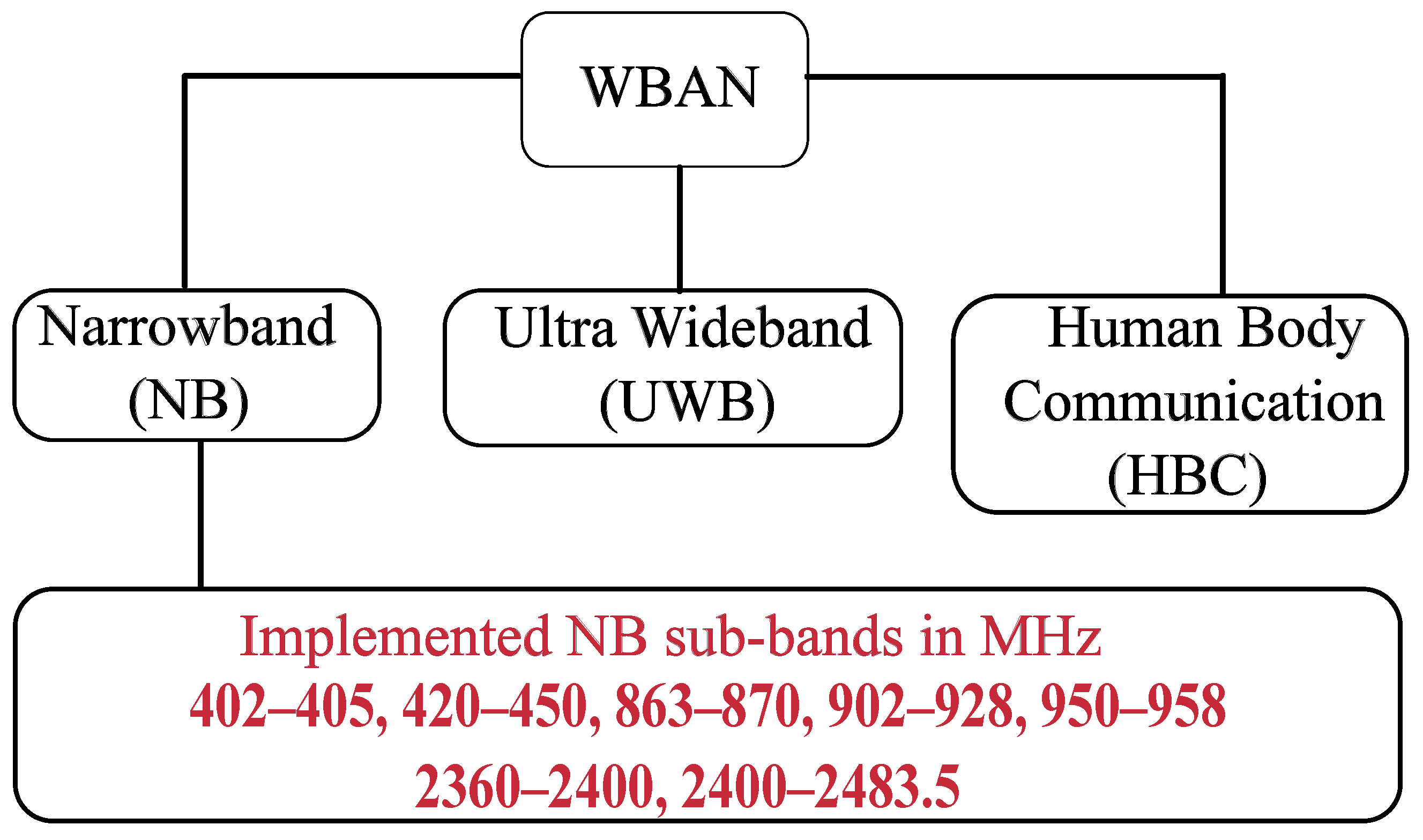
3.1. IEEE 802.15.6: WBAN Standard
3.2. WBAN Simulation Model
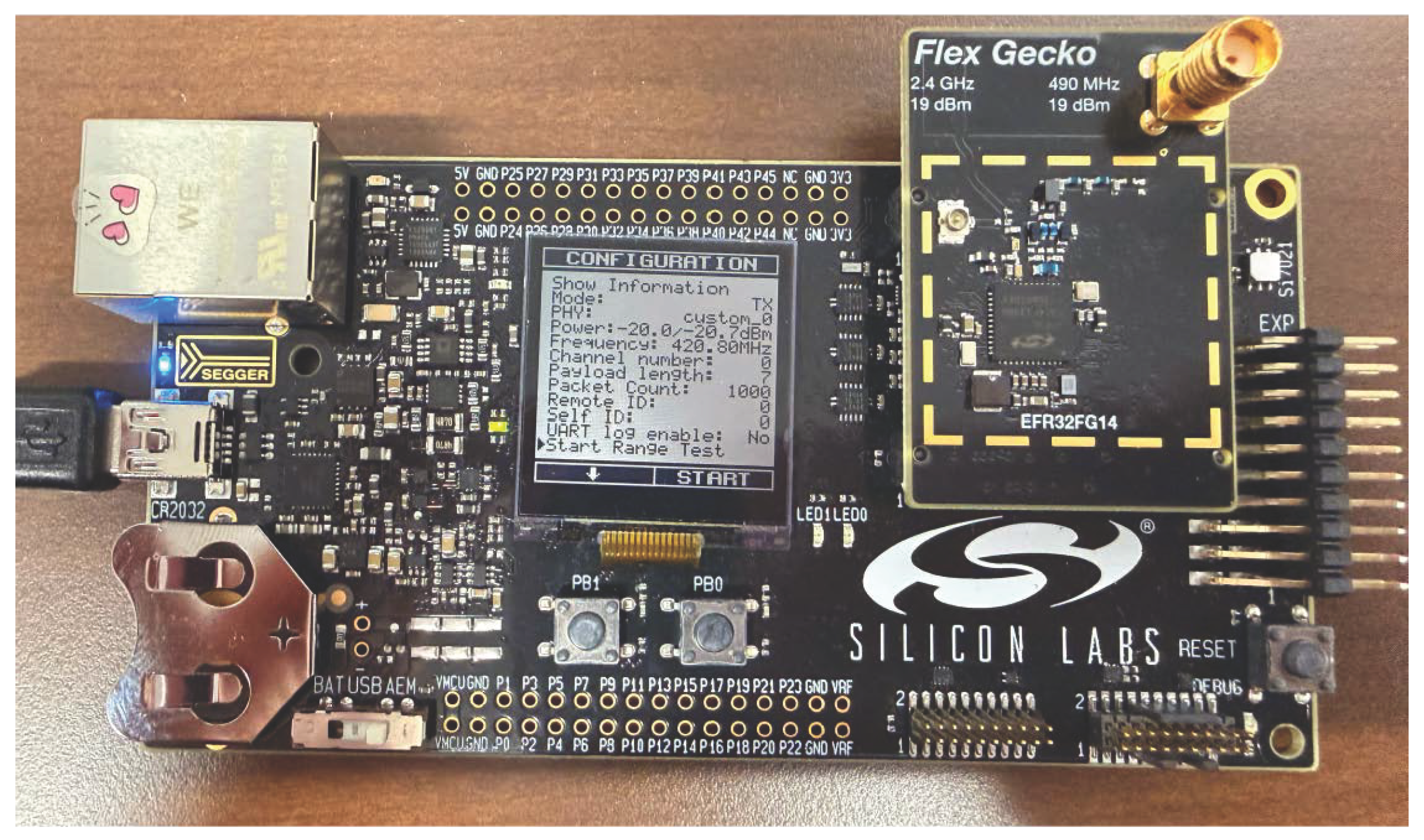
3.3. WBAN Hardware Platform and Configuration Settings
4. Evaluation
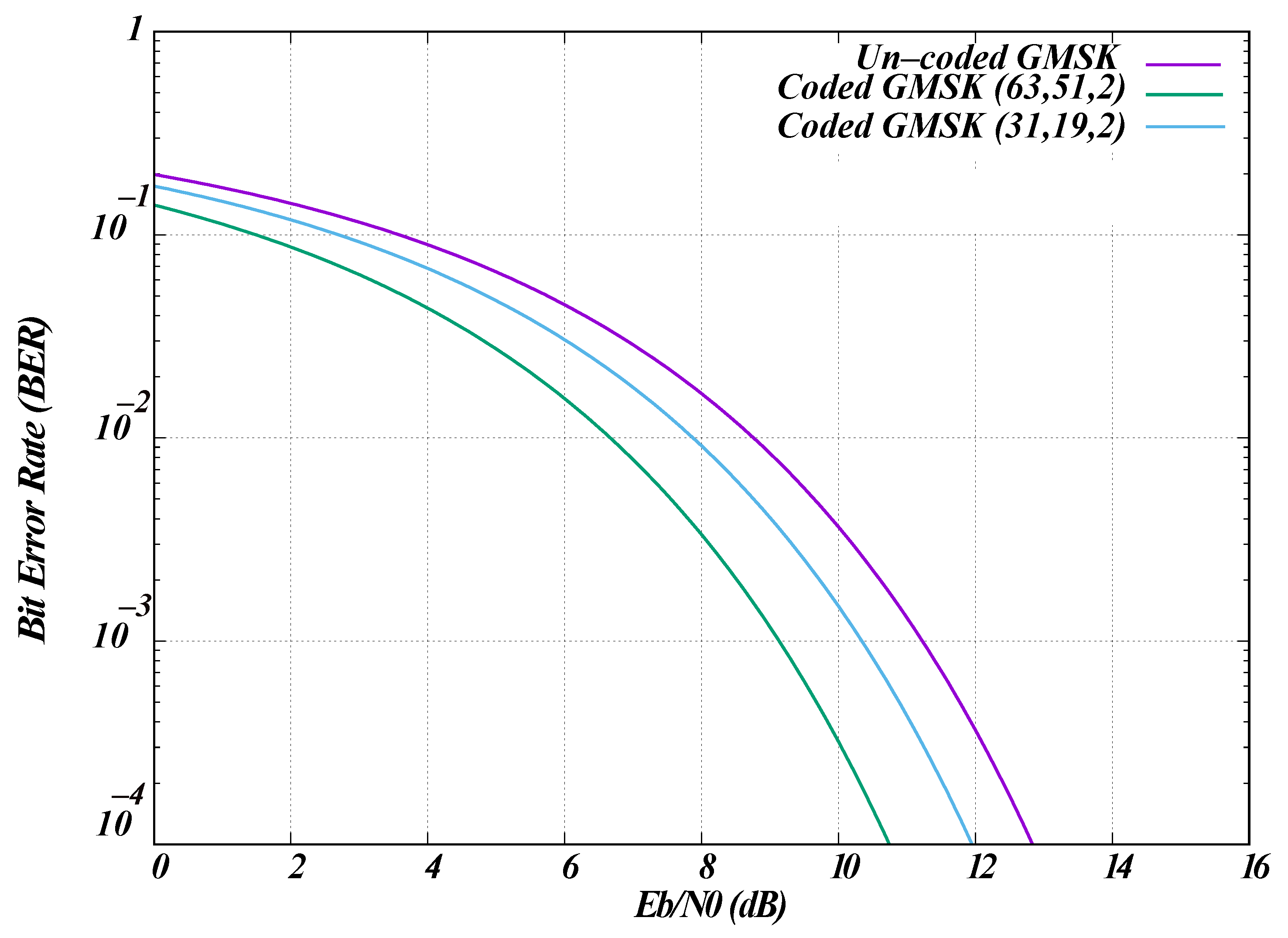
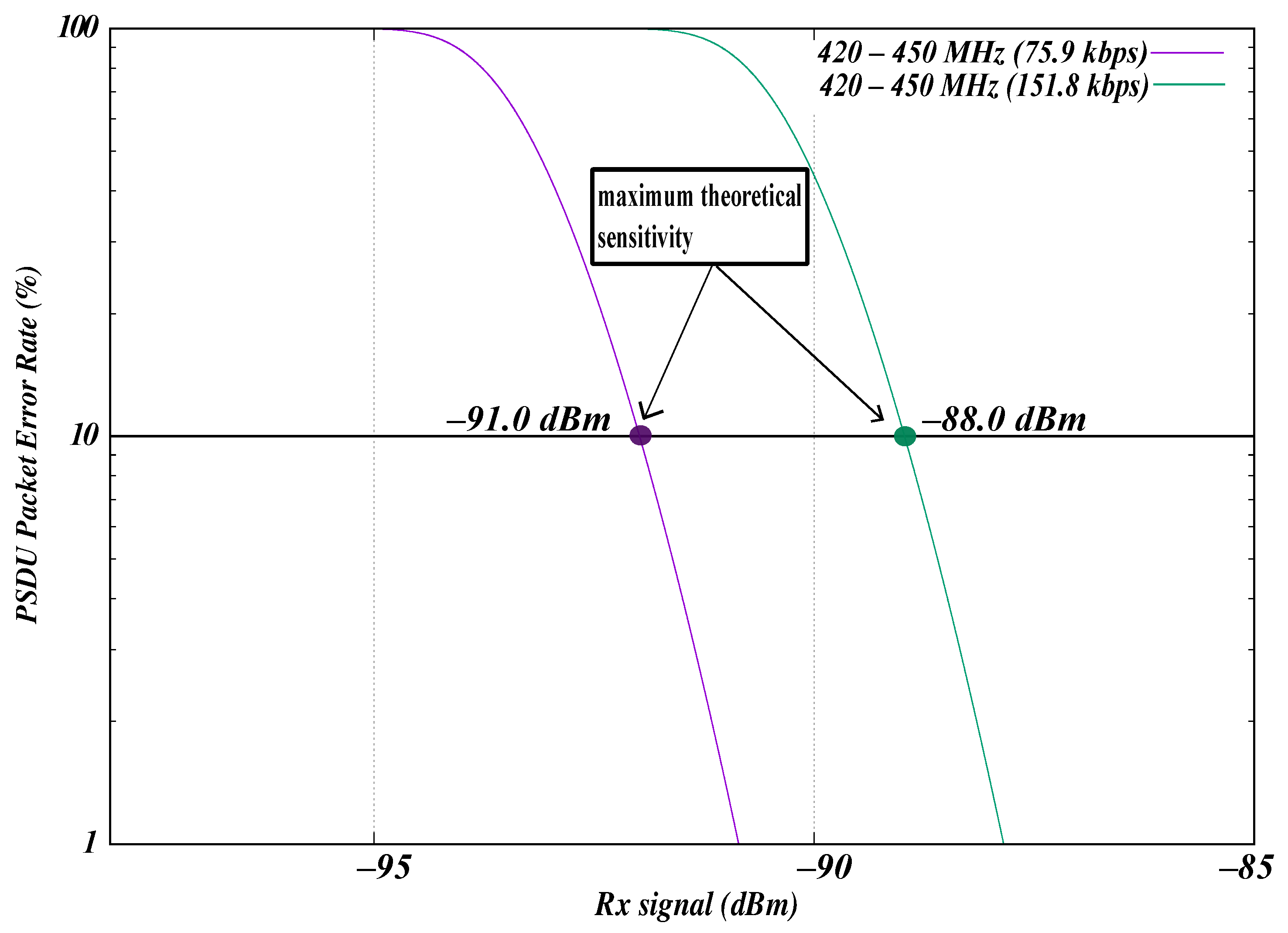
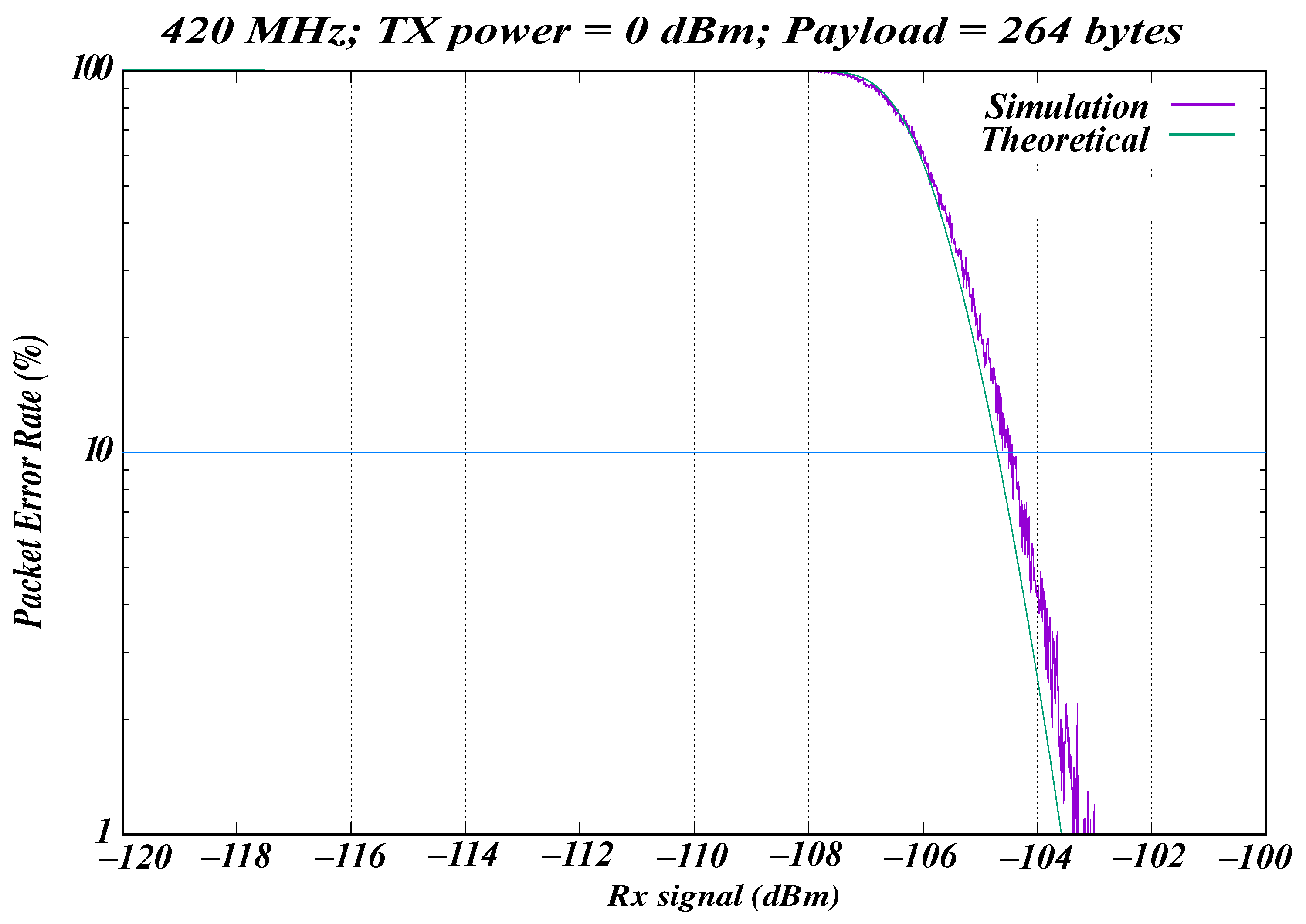
4.1. Theoretical Calculations Against ns-3 Simulation
4.2. Simulation vs. Hardware Evaluation for Off-Body WBAN
4.2.1. Experimental Setup
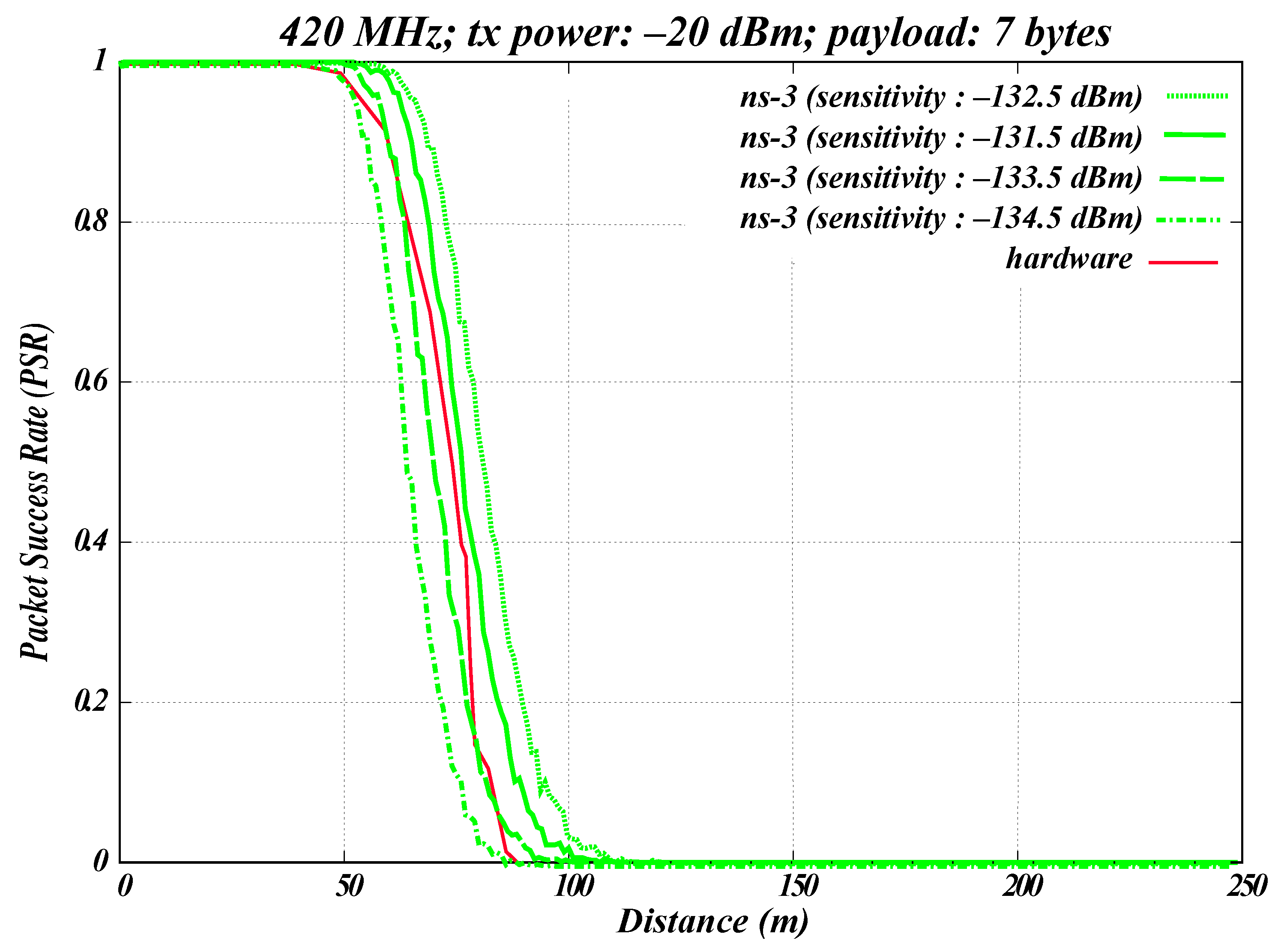
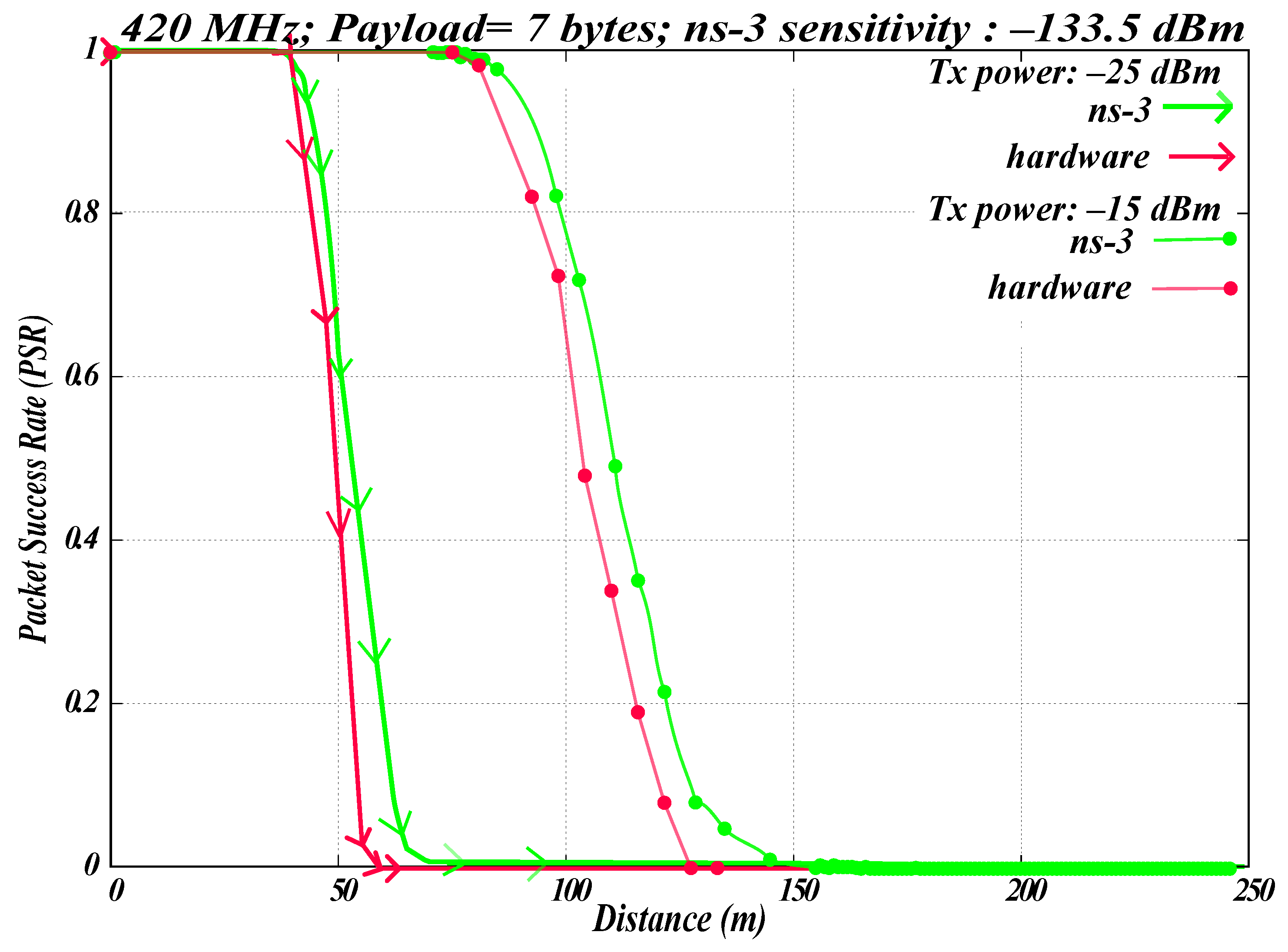
4.2.2. Evaluation
4.3. Cross-Standard Validation Using LR-WPAN (IEEE 802.15.4)
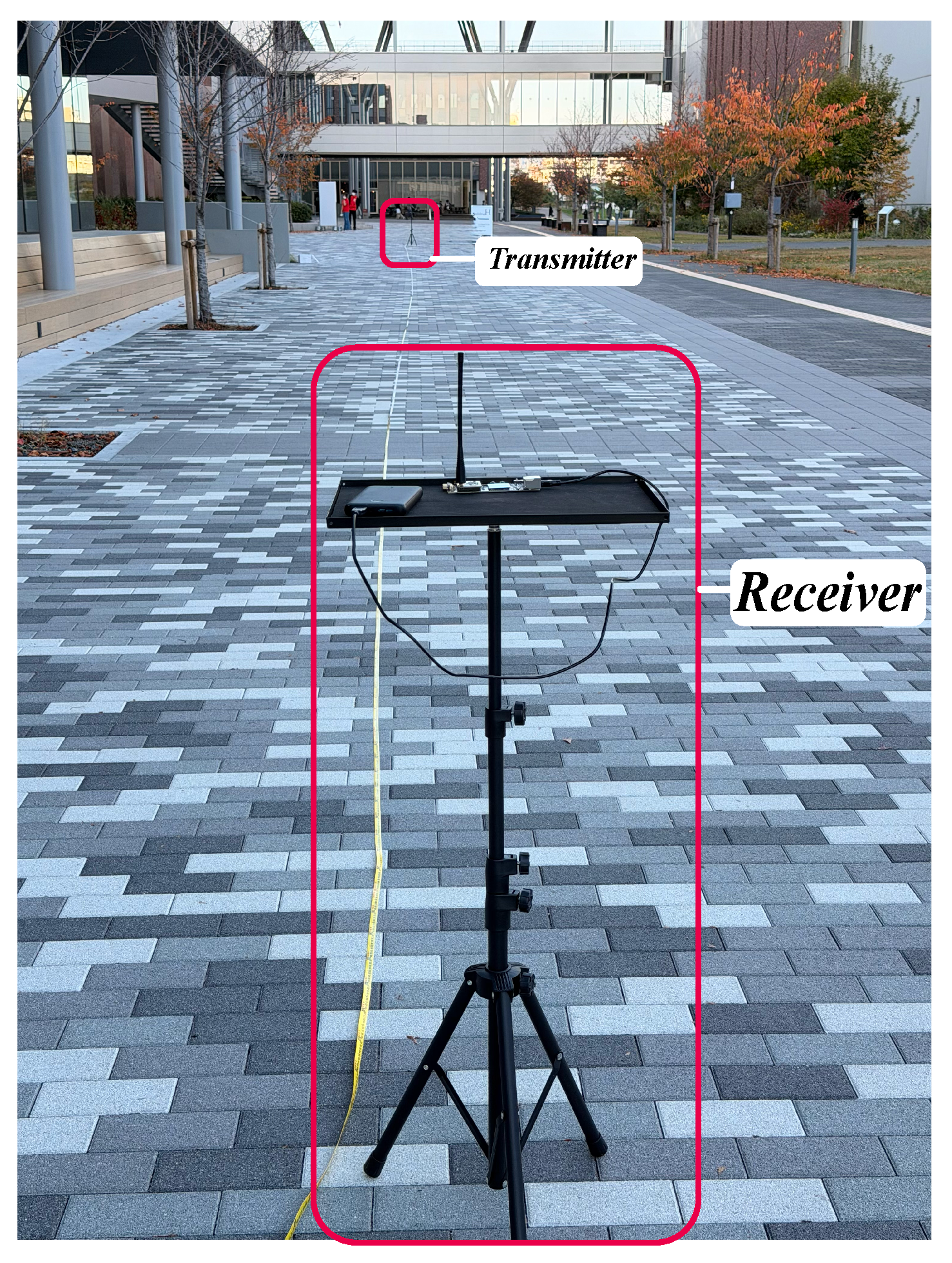
4.3.1. Experimental Setup
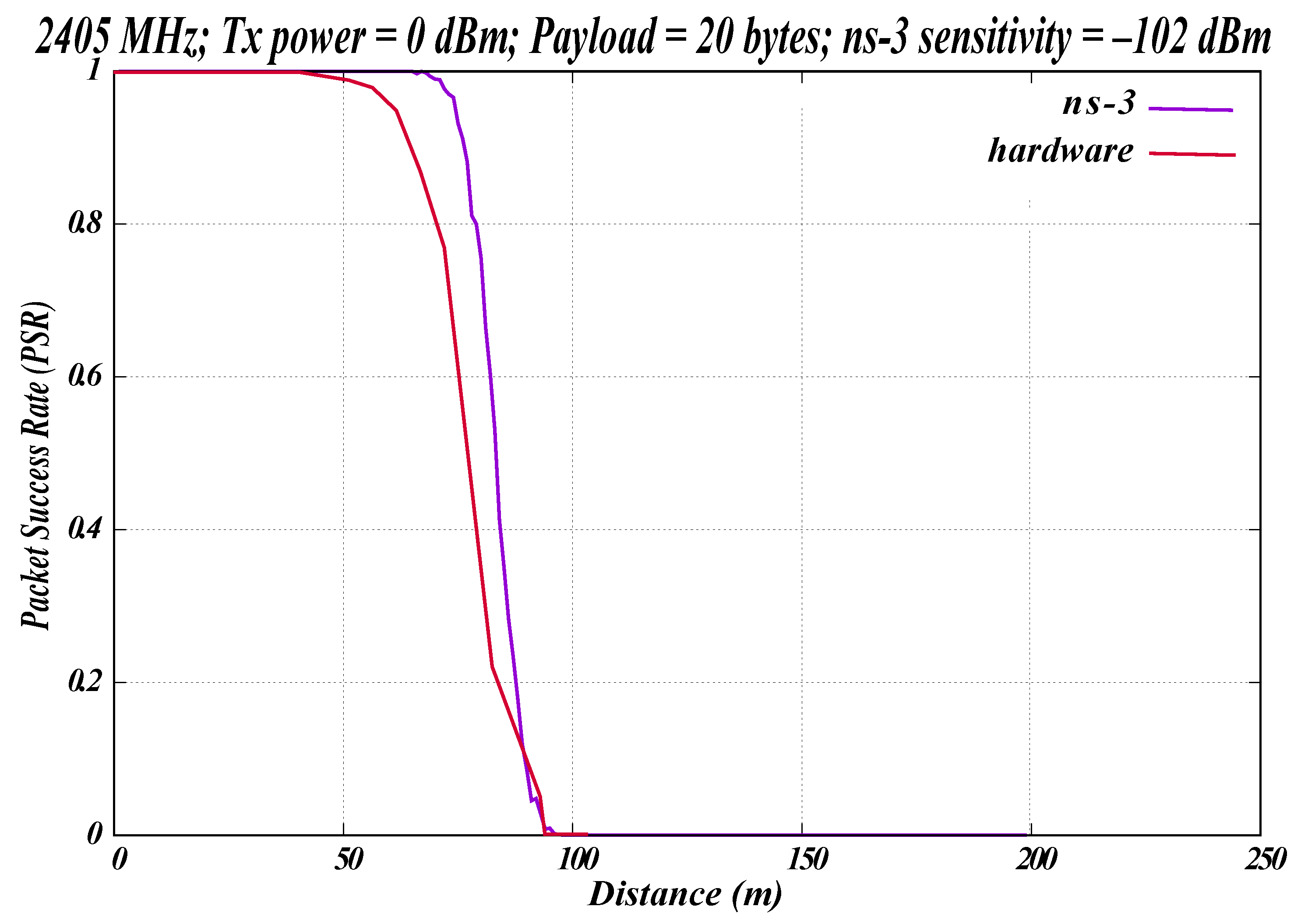
4.3.2. Evaluation
4.4. On-Body vs. Off-Body Performance Analysis Using Hardware and Body Propagation Loss Model in ns-3
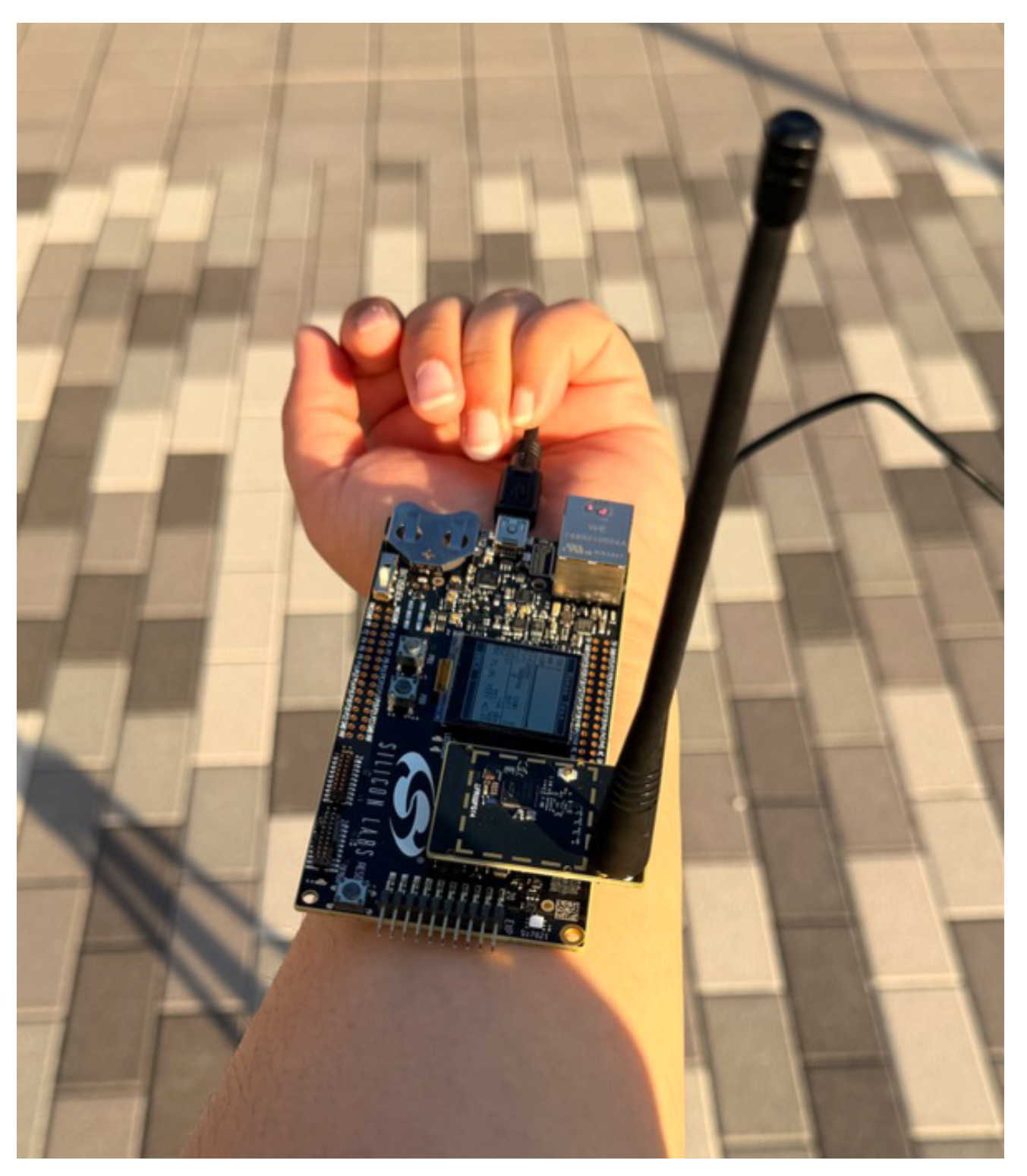
4.4.1. Experimental Setup
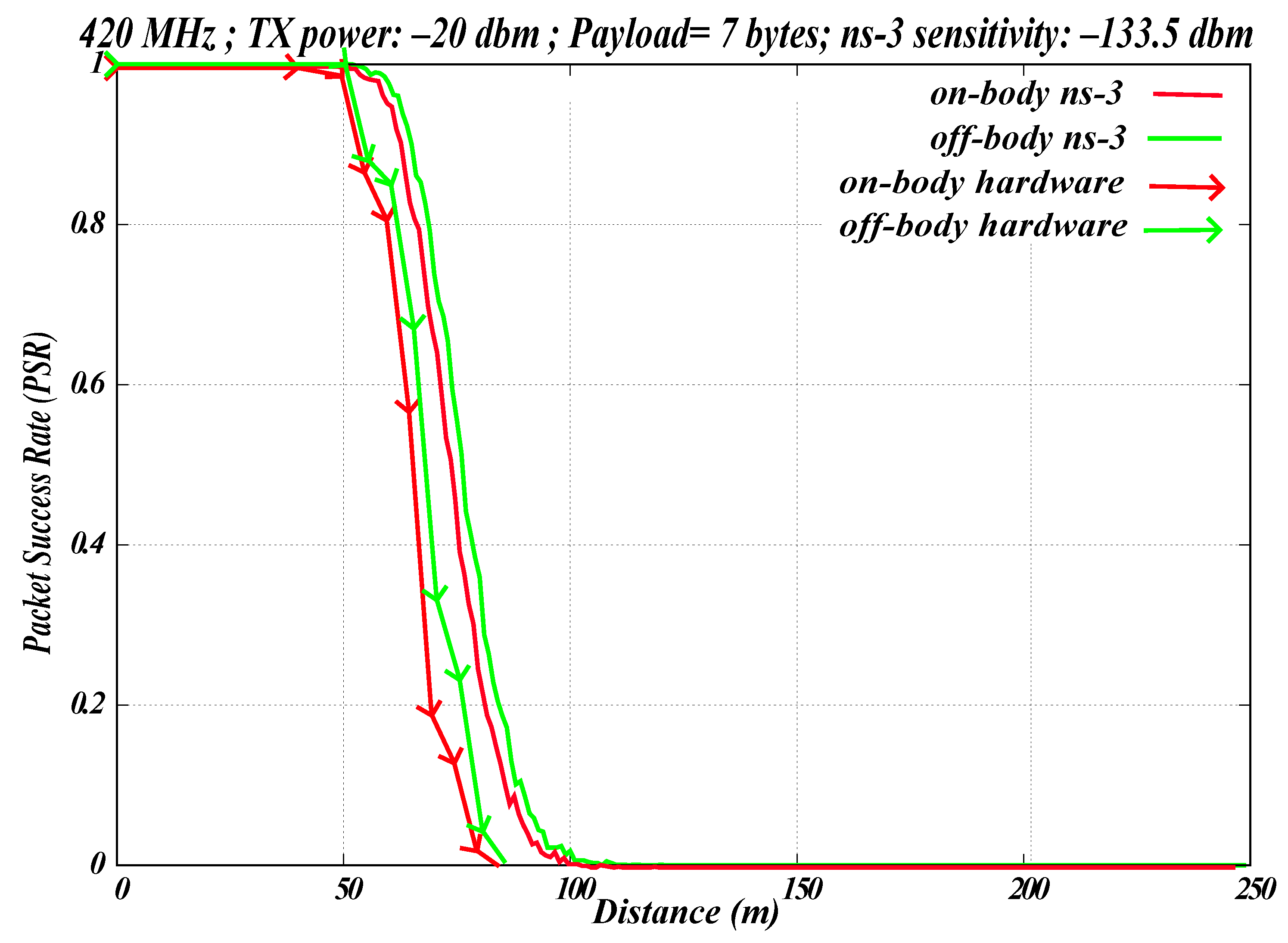
4.4.2. Evaluation
5. Limitations and Future Work
- The study focuses exclusively on PHY-layer validation of NB GMSK modulation for both hardware and simulation. Other WBAN modulation schemes, such as DBPSK, were implemented in simulation but not evaluated in hardware due to the platform’s lack of native support.
- The contribution of the paper is a practical validation of GMSK-based narrowband WBAN PHY behavior, not a comprehensive validation of all IEEE 802.15.6 PHY modes.
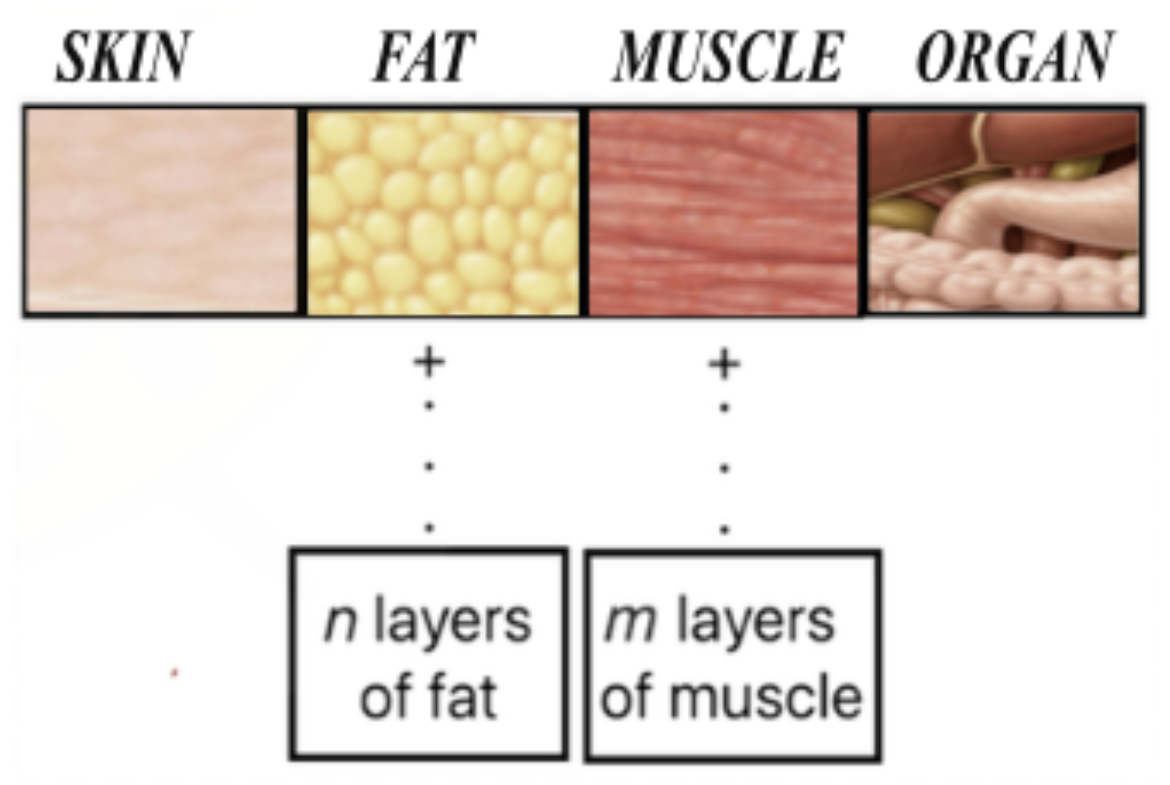
- The reported value of 0.2176 dB represents the attenuation contribution of the modeled dry-skin layer under the assumed dielectric parameters and thickness, not the total excess loss of a practical on-body propagation channel.
- The current body propagation loss model is a preliminary framework in ns-3, not an empirical description of on-body propagation.
- The simulation does not include fading, body shadowing, multipath propagation, or other environmental interference effects, which may account for discrepancies between simulation results and hardware measurements.
- The use of an effective system-level sensitivity of −133.5 dBm in the ns-3 model should not be interpreted as the intrinsic receiver sensitivity of the chipset.
- A small off-body sensitivity sweep analysis was conducted in this study to support the selection of the effective system-level sensitivity used in ns-3. However, a more extensive sensitivity analysis across additional scenarios and parameters remains for future work.
- The study utilized a relatively large sensor board, which does not fully reflect the compact and body-conformal designs expected in practical WBAN deployments. Therefore, the current serves as a proof-of-concept for PHY-level validation, not as a final wearable hardware design.
- Future work will aim to address these limitations, extend validation to more WBAN layers and modulation modes, improve the body propagation model, and explore hardware platforms that better support IEEE 802.15.6-oriented WBAN experiments.
6. Conclusions
Author Contributions
Funding
Institutional Review Board Statement
Informed Consent Statement
Data Availability Statement
Conflicts of Interest
References
- IEEE Standards Association—Standards.ieee.org. Available online: https://standards.ieee.org/ieee/802.15.6/5364/ (accessed on 30 January 2026).
- Bajwa, M.T.T.; Yousaf, A.; Quyyum, A.; Tehreem, F.; Tahir, H.M.F.; Mehmood, A. Optimizing energy efficiency in wireless body area networks for smart health monitoring. Spectr. Eng. Sci. 2025, 3, 1213–1220. [Google Scholar]
- Upadhyay, R.; Rohil, M.K. Blockchain-enabled wireless body area networks for healthcare under digital india mission: A survey. Proc. Indian Natl. Sci. Acad. 2025, 1–17. [Google Scholar] [CrossRef] [Scilit]
- Al-Azzawi, M.K.; Abid, S.H. Application of Wireless Body Area Networks and Wearable Sensors for Monitoring Sports People Health. Fusion Pract. Appl. 2026, 21, 353–368. [Google Scholar]
- Douhi, S.; Houssaini, Y.; Das, S.; Subramanian, V.; Madhav, B.T.P.; Mazroui, M.; Eddiai, A. Metamaterial-integrated wearable UWB antenna with SAR reduction and gain enhancement for Wireless Body Area Sensor Networks (WBASNs): Design and experimental verification. Sens. Actuators A Phys. 2025, 388, 116499. [Google Scholar] [CrossRef] [Scilit]
- Wu, Z.; Huang, Z.; Tang, N.; Wang, K.; Bian, C.; Li, D.; Kuraki, V.; Schmid, F. Research on sports injury rehabilitation detection based on IoT models for digital health care. Big Data 2025, 13, 144–160. [Google Scholar] [CrossRef] [Scilit] [PubMed]
- Oza, D.; Ramonet, A.G.; Yoshida, M.; Noguchi, T. IEEE 802.15. 6: Physical Layer Implementation and Evaluation of Medical Bands for ns-3. In Proceedings of the 2023 28th Asia Pacific Conference on Communications (APCC), Sydney, Australia, 19–22 November 2023; IEEE: Piscataway, NJ, USA, 2023; pp. 99–106. [Google Scholar]
- Ashraf, M.; Hassan, S.; Rubab, S.; Khan, M.A.; Tariq, U.; Kadry, S. Energy-efficient dynamic channel allocation algorithm in wireless body area network. Environ. Dev. Sustain. 2025, 27, 24135–24151. [Google Scholar] [CrossRef] [Scilit]
- Muramatsu, D. Adaptive Modulation and Coding Control Based on Human Body Channel Characteristics Under Different WBAN Scenarios. Int. J. Sens. Sens. Netw. 2025, 13, 12–21. [Google Scholar] [CrossRef] [Scilit]
- Lee, W.; Choi, M.; Kim, N. Different characteristics of radio modules in wireless body sensor network systems. In Proceedings of the IFIP International Conference on Network and Parallel Computing, Gwangju, Republic of Korea, 6–8 September 2012; Springer: Berlin/Heidelberg, Germany, 2012; pp. 308–314. [Google Scholar]
- Thotahewa, K.M.; Redoute, J.M.; Yuce, M.R. Hardware implementation of an IR-UWB coordinator node for WBAN applications. In Proceedings of the 2014 IEEE 25th Annual International Symposium on Personal, Indoor, and Mobile Radio Communication (PIMRC), Washington, DC, USA, 2–5 September 2014; IEEE: Piscataway, NJ, USA, 2014; pp. 2168–2172. [Google Scholar]
- Su, X.; Li, C.; Song, Y.; Yuan, X. WBAN on hardware: Implementation and optimization based on IEEE 802.15. 6. In Proceedings of the 2017 International Conference on Computer, Information and Telecommunication Systems (CITS), Dalian, China, 21–23 July 2017; IEEE: Piscataway, NJ, USA, 2017; pp. 147–151. [Google Scholar]
- Blomster, I.; Cassel, R. Comparative Evaluation of Transmission Power Control Algorithms in WBAN: Energy Efficiency and Packet Loss. 2025. Available online: https://www.diva-portal.org/smash/record.jsf?pid=diva2%3A1994518&dswid=6282 (accessed on 30 January 2026).
- IEEE Standards Association—Standards.ieee.org. Available online: https://standards.ieee.org/ieee/802.15.4/7029/ (accessed on 30 January 2026).
- Subono; Al Rasyid, M.U.H.; Astawa, I.G.P. Implementation of energy efficiency based on time scheduling to improve network lifetime in wireless body area network (WBAN). EMITTER Int. J. Eng. Technol. 2015, 3, 28–42. [Google Scholar]
- Mathew, P.; Augustine, L.; Kushwaha, D.; Vivian, D.; Selvakumar, D. Hardware implementation of NB PHY baseband transceiver for IEEE 802.15. 6 WBAN. In Proceedings of the 2014 International Conference on Medical Imaging, m-Health and Emerging Communication Systems (MedCom), Greater Noida, India, 7–8 November 2014; IEEE: Piscataway, NJ, USA, 2014; pp. 64–71. [Google Scholar]
- ns-3 App Store—Wireless Body Area Network—Apps.nsnam.org. Available online: https://apps.nsnam.org/app/wban/ (accessed on 10 January 2026).
- Naidu, G.B.; Bhagyalakshmi, A.; Rao, S. BER Analysis of Coherent and Non-Coherent GMSK over Coding Techniques for Cellular systems in Next Generation Communications. Ann. Rom. Soc. Cell Biol. 2021, 25, 7511–7524. [Google Scholar]
- Oza, D.; Gallegos Ramonet, A.; Yoshida, M.; Noguchi, T. Inside Human Body Propagation Model for WBAN in ns-3. In Proceedings of the 2025 International Conference on ns-3, Osaka, Japan, 19–21 August 2025; pp. 153–160. [Google Scholar]
- Lacage, M.; Henderson, T.R. Yet another network simulator. In Proceedings of the 2006 Workshop on ns-3; Association for Computing Machinery: New York, NY, USA, 2006; p. 12-es. [Google Scholar]
- Silicon Labs. EFR32FG12 Flex Gecko Proprietary Protocol SoC Family Data Sheet. Available online: https://mm.digikey.com/Volume0/opasdata/d220001/medias/docus/2186/EFR32FG12.pdf (accessed on 30 January 2026).
- Laird. Laird Antenna. Available online: https://www.micro-semiconductor.nz/datasheet/fa-EXW136TNX.pdf (accessed on 23 March 2026).
- Das, D.; Maity, S.; Chatterjee, B.; Sen, S. Enabling covert body area network using electro-quasistatic human body communication. Sci. Rep. 2019, 9, 4160. [Google Scholar] [CrossRef] [Scilit] [PubMed]
- Arab, P.; Heimlich, M.; Dutkiewicz, E. Investigation of radar localization system accuracy for human gastro intestine (GI) tract. In Proceedings of the 2013 7th International Symposium on Medical Information and Communication Technology (ISMICT), Tokyo, Japan, 6–8 March 2013; IEEE: Piscataway, NJ, USA, 2013; pp. 144–148. [Google Scholar]
- Hu, X.; Yin, W.; Du, F.; Zhang, C.; Xiao, P.; Li, G. Biomedical Applications and Challenges of In-body Implantable Antenna for Implantable Medical Devices: A Review. AEU Int. J. Electron. Commun. 2023, 174, 155053. [Google Scholar] [CrossRef] [Scilit]
- Dielectric Properties of Body Tissues: HTML Clients—Niremf.ifac.cnr.it. Available online: https://niremf.ifac.cnr.it/tissprop/htmlclie/htmlclie.php (accessed on 2 January 2026).







| Literature | Implementation | Simulation vs. Hardware | WBAN Compliant | Source Code Availability |
|---|---|---|---|---|
| Kasun et al. [11] | Custom-built hardware | No | Yes | No |
| Su et al. [12] | Custom-built hardware | No | Yes | No |
| Isak et al. [13] | Empirical dataset and simulation | Yes | Yes | No |
| Woosik et al. [10] | Commercial hardware | No | No | No |
| Subono et al. [15] | Commercial hardware | No | No | No |
| Priya et al. [16] | Custom-built hardware | No | Yes | No |
| Our Implementation | Commercial hardware and simulation | Yes | Yes | Yes [17] |
| Parameter | Value |
|---|---|
| Modulation type | GMSK (M = 2) |
| Frequency | 420–450 MHz |
| Number of channels | 12 (0 to 11) |
| BT | 0.5 |
| Preamble and PLCP data rate | 57.5 kbps |
| PSDU data rates | 75.9, 151.8, 187.5 kbps |
| Channel bandwidth | 320 kHz |
| Channel Number | Center Frequency (MHz) | Channel Spacing (MHz) |
|---|---|---|
| 0 | 420.30 | 0.50 |
| 1 | 420.80 | 3.9375 |
| 2 | 424.7375 | 0.50 |
| 3 | 425.2375 | 0.50 |
| 4 | 425.7375 | 3.7625 |
| 5 | 429.50 | 11.3125 |
| 6 | 440.8125 | 0.50 |
| 7 | 441.3125 | 3.45 |
| 8 | 444.7625 | 0.50 |
| 9 | 445.2625 | 3.6625 |
| 10 | 448.925 | 0.50 |
| 11 | 449.425 | Not applicable |
| Parameter | Value (ns-3 and Hardware) |
|---|---|
| Frequency | 420–450 MHz |
| Channel number | 0 |
| Channel bandwidth | 320 kHz |
| Modulation | GMSK (BT = 0.5) |
| Data rate | 151.8 kbps |
| Packet size | 7 bytes |
| Transmission power | −20 dBm |
| Parameter | Value (ns-3 and Hardware) |
|---|---|
| Frequency | 2400 MHz |
| Channel number | 11 |
| Modulation | OQPSK |
| Data rate | 250 kbps |
| Packet size | 20 bytes |
| Transmission power | 0 dBm |
| Sensitivity | −102 dBm [21] |
Disclaimer/Publisher’s Note: The statements, opinions and data contained in all publications are solely those of the individual author(s) and contributor(s) and not of MDPI and/or the editor(s). MDPI and/or the editor(s) disclaim responsibility for any injury to people or property resulting from any ideas, methods, instructions or products referred to in the content. |
© 2026 by the authors. Licensee MDPI, Basel, Switzerland. This article is an open access article distributed under the terms and conditions of the Creative Commons Attribution (CC BY) license.
Share and Cite
Oza, D.; Ramonet, A.G.; Yoshida, M.; Noguchi, T. On-Body and Off-Body Communications: A Comparative Study Between Hardware and Simulations. Sensors 2026, 26, 2561. https://doi.org/10.3390/s26082561
Oza D, Ramonet AG, Yoshida M, Noguchi T. On-Body and Off-Body Communications: A Comparative Study Between Hardware and Simulations. Sensors. 2026; 26(8):2561. https://doi.org/10.3390/s26082561
Chicago/Turabian StyleOza, Drishti, Alberto Gallegos Ramonet, Masami Yoshida, and Taku Noguchi. 2026. "On-Body and Off-Body Communications: A Comparative Study Between Hardware and Simulations" Sensors 26, no. 8: 2561. https://doi.org/10.3390/s26082561
APA StyleOza, D., Ramonet, A. G., Yoshida, M., & Noguchi, T. (2026). On-Body and Off-Body Communications: A Comparative Study Between Hardware and Simulations. Sensors, 26(8), 2561. https://doi.org/10.3390/s26082561