Modelling Skin Pigmentation Using the Monte Carlo Technique: A Review


Abstract
1. Introduction
2. Skin Pigmentation
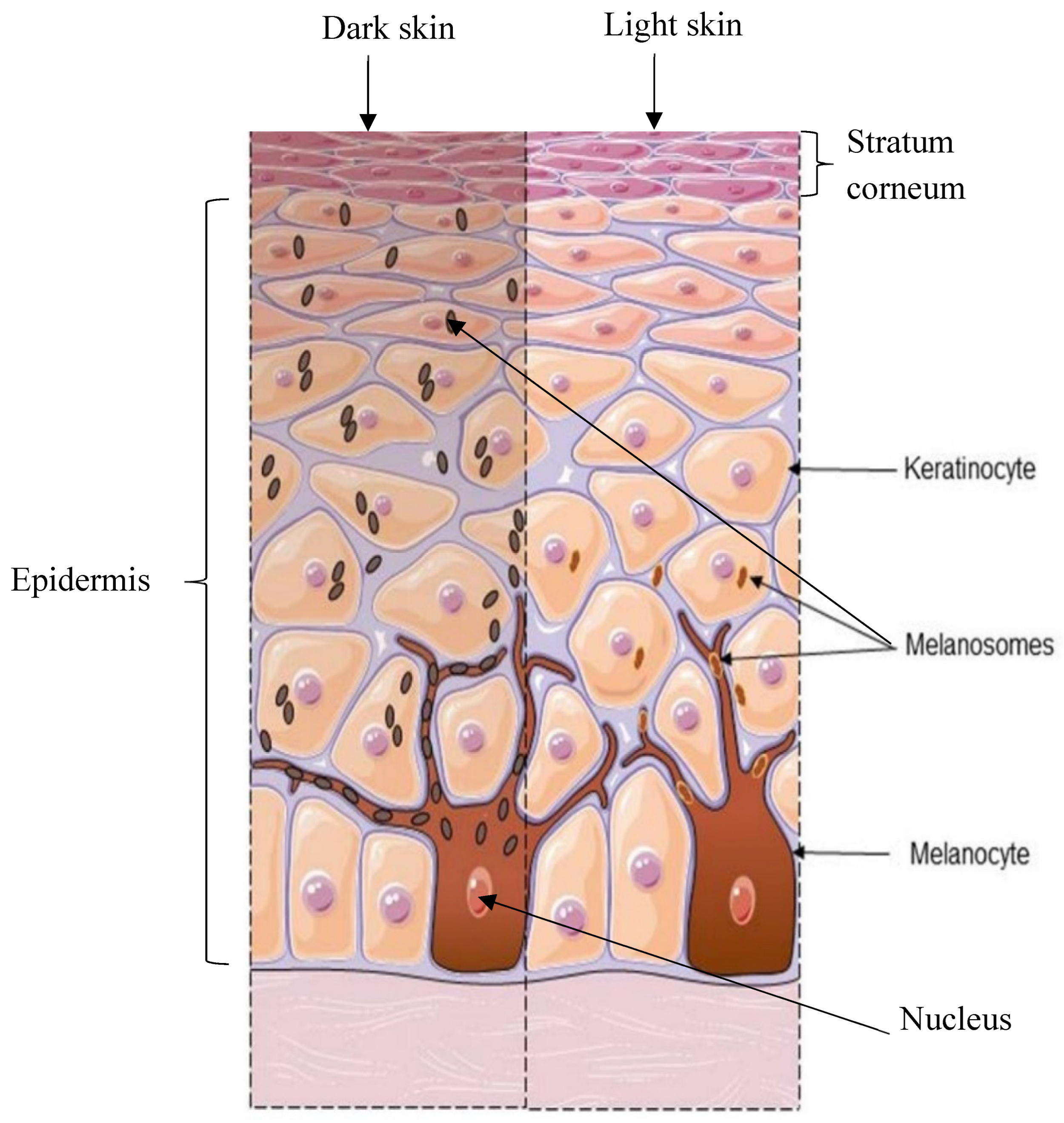
2.1. The Production of Skin Pigmentation
2.2. Measuring Skin Pigmentation

| Fitzpatrick Skin Phototype Scale [20]. |  |
| Von Luschan Chromatic Scale [12]. Red (R), Green (G), and Blue (B) values range from 0 to 255 (none to full light intensity) in the standard 8-bit system. |  |
| Monk Skin Tone Scale (MST Scale) [12]. |  |
| Massey Scale [12]. |  |
| Munsell Colour chart [12]. Values with an asterisk (*) are scaled to human perception and not actual machine measurements. Y-axis = Value, x-axis = chroma. |  |
| L*a*b* Scale [21]. Values with an asterisk (*) are scaled to human perception and not actual machine measurements. |  |
| Konica Minolta CM-700d [12]. |  |
| Dermaspectrometer [12]. Shows erythema index (E), melanin index (M), ITA, L*, a*, and b*. |  |
| Mexameter MX 18 [12]. Show melanin index (M) and erythema index (E). |  |
3. Monte Carlo Modelling
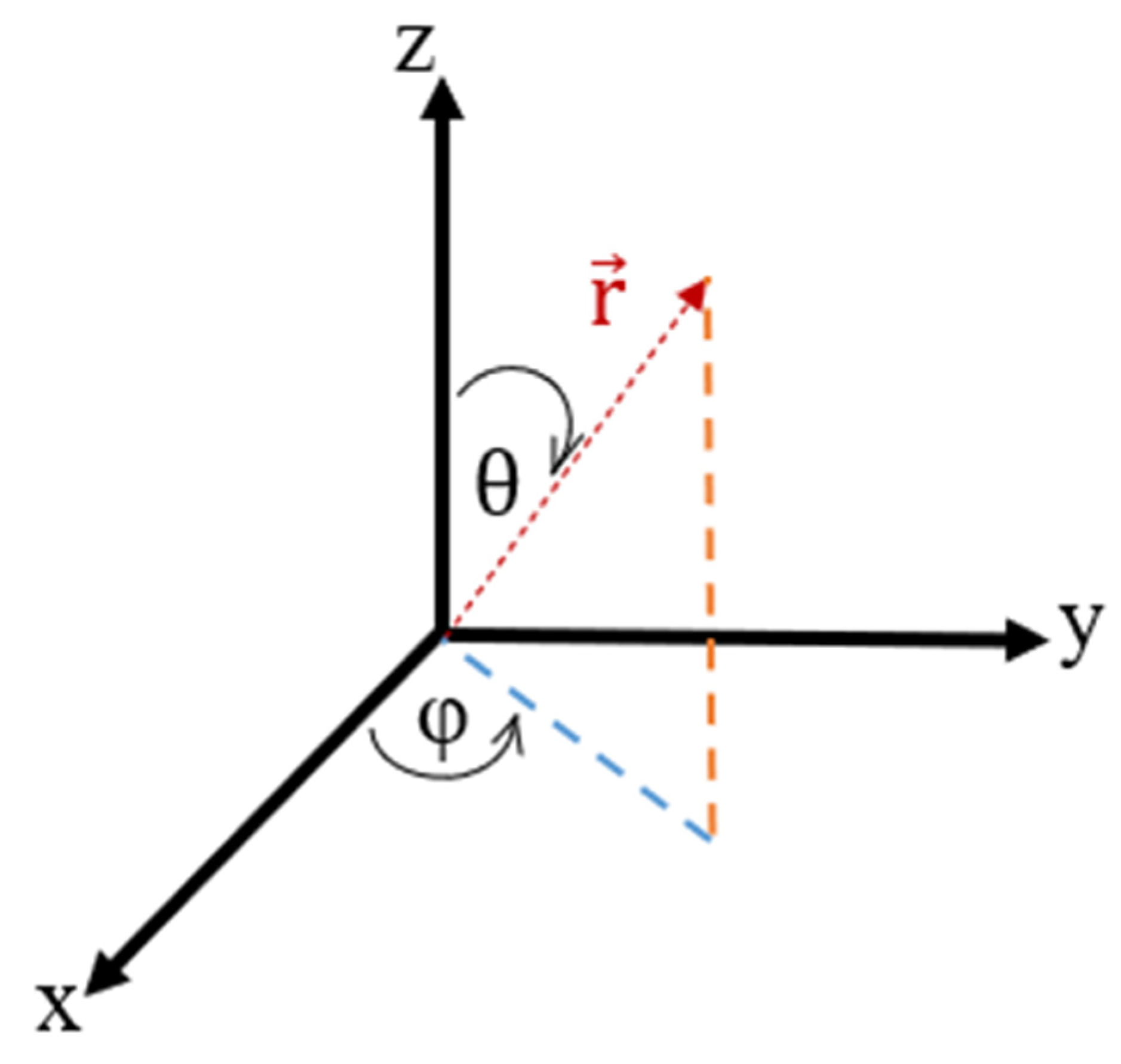
3.1. Coordinate Systems
3.2. Launching Photons
- is a random number using the PRNG;
- n is the refractive index of the incident medium;
- NA is the numerical aperture, which determines the range of angles over which the sensor can effectively collect light.
3.3. Photon Reflection
- is the initial/previous weight of the photon cluster
- is the new weight of the photon cluster
3.4. Photon Absorption and Scattering
3.4.1. Scattering
3.4.2. Absorption
3.5. Photon Detection
4. The Use of the Monte Carlo Method for Modelling Skin Pigmentation
4.1. Literature Search Outcomes
4.2. Optical Characterisation of the Epidermis
4.2.1. Analytical Equations
4.2.2. Spectrophotometry Measurements
4.2.3. Hybrid Approach
4.3. Optical Properties and Skin Classification Systems
5. Discussion
5.1. Current Practices and Future Work
5.2. Monte Carlo Algorithm Optimisation
6. Conclusions
Author Contributions
Funding
Institutional Review Board Statement
Informed Consent Statement
Data Availability Statement
Conflicts of Interest
References
- Department of Health and Social Care. “Equity in Medical Devices: Independent Review.” GOV.UK. 11 March 2024. Available online: https://www.gov.uk/government/groups/equity-in-medical-devices-independent-review (accessed on 3 November 2025).
- ‘Government Response to the Report of the Equity in Medical Devices: Independent Review’. GOV.UK. Available online: https://www.gov.uk/government/publications/government-response-to-the-report-of-the-equity-in-medical-devices-independent-review/government-response-to-the-report-of-the-equity-in-medical-devices-independent-review (accessed on 16 May 2025).
- Zou, J.; Schiebinger, L. Ensuring that biomedical AI benefits diverse populations. EBioMedicine 2021, 67, 103358. [Google Scholar] [CrossRef] [PubMed]
- Chen, R.; Huang, Z.; Lui, H.; Hamzavi, I.; McLean, D.I.; Xie, S.; Zeng, H. Monte Carlo simulation of cutaneous reflectance and fluorescence measurements—The effect of melanin contents and localization. J. Photochem. Photobiol. B Biol. 2007, 86, 219–226. [Google Scholar] [CrossRef] [PubMed]
- Cook, P.D.; Bixler, J.N.; Thomas, R.J.; Early, E.A. Prediction of tissue optical properties using the Monte Carlo modeling of photon transport in turbid media and integrating spheres. OSA Contin. 2020, 3, 1456–1476. [Google Scholar] [CrossRef]
- Chatterjee, S.; Kyriacou, P.A. Monte Carlo Analysis of Optical Interactions in Reflectance and Transmittance Finger Photoplethysmography. Sensors 2019, 19, 789. [Google Scholar] [CrossRef]
- Al-Halawani, R.; Charlton, P.H.; Qassem, M.; A Kyriacou, P. A review of the effect of skin pigmentation on pulse oximeter accuracy. Physiol. Meas. 2023, 44, 05TR01. [Google Scholar] [CrossRef]
- Hida, T.; Kamiya, T.; Kawakami, A.; Ogino, J.; Sohma, H.; Uhara, H.; Jimbow, K. Elucidation of Melanogenesis Cascade for Identifying Pathophysiology and Therapeutic Approach of Pigmentary Disorders and Melanoma. Int. J. Mol. Sci. 2020, 21, 6129. [Google Scholar] [CrossRef]
- Nasti, T.H.; Timares, L. MC1R, Eumelanin and Pheomelanin: Their role in determining the susceptibility to skin cancer. Photochem. Photobiol. 2015, 91, 188–200. [Google Scholar] [CrossRef]
- Bento-Lopes, L.; Cabaço, L.C.; Charneca, J.; Neto, M.V.; Seabra, M.C.; Barral, D.C. Melanin’s Journey from Melanocytes to Keratinocytes: Uncovering the Molecular Mechanisms of Melanin Transfer and Processing. Int. J. Mol. Sci. 2023, 24, 11289. [Google Scholar] [CrossRef]
- Thong, H.-Y.; Jee, S.-H.; Sun, C.-C.; Boissy, R. The patterns of melanosome distribution in keratinocytes of human skin as one determining factor of skin colour. Br. J. Dermatol. 2003, 149, 498–505. [Google Scholar] [CrossRef]
- Opencriticalcare.org. Skin Pigmentation Archives. Open Critical Care. Available online: https://opencriticalcare.org/faq-category/skin/ (accessed on 14 November 2024).
- Sharma, A.N.; Patel, B.C. Laser Fitzpatrick Skin Type Recommendations. In StatPearls; StatPearls Publishing: Treasure Island, FL, USA, 2024. Available online: http://www.ncbi.nlm.nih.gov/books/NBK557626/ (accessed on 28 November 2024).
- Langeveld, M.; van de Lande, L.S.; Sullivan, E.O.; van der Lei, B.; van Dongen, J.A. Skin measurement devices to assess skin quality: A systematic review on reliability and validity. Ski. Res. Technol. 2022, 28, 212–224. [Google Scholar] [CrossRef]
- Wilkes, M.; Wright, C.Y.; du Plessis, J.L.; Reeder, A. Fitzpatrick Skin Type, Individual Typology Angle, and Melanin Index in an African Population: Steps Toward Universally Applicable Skin Photosensitivity Assessments. JAMA Dermatol. 2015, 151, 902–903. [Google Scholar] [CrossRef] [PubMed]
- He, S.Y.; McCulloch, C.E.; Boscardin, W.J.; Chren, M.-M.; Linos, E.; Arron, S.T. Self-Reported Pigmentary Phenotypes and Race are Significant but Incomplete Predictors of Fitzpatrick Skin Phototype in an Ethnically Diverse Population. J. Am. Acad. Dermatol. 2014, 71, 731–737. [Google Scholar] [CrossRef] [PubMed]
- Pershing, L.K.; Tirumala, V.P.; Nelson, J.L.; Corlett, J.L.; Lin, A.G.; Meyer, L.J.; Leachman, S.A. Reflectance Spectrophotometer: The Dermatologists’ Sphygmomanometer for Skin Phototyping? J. Investig. Dermatol. 2008, 128, 1633–1640. [Google Scholar] [CrossRef] [PubMed]
- Hao, S.; Dempsey, K.; Matos, J.; Cox, C.E.; Rotemberg, V.; Gichoya, J.W.; Kibbe, W.; Hong, C.; Wong, A.-K.I. Utility of skin tone on pulse oximetry in critically ill patients: A prospective cohort study. Crit. Care Explor. 2024, 6, e1133. [Google Scholar] [CrossRef]
- McCreath, H.E.; Bates-Jensen, B.M.; Nakagami, G.; Patlan, A.; Booth, H.; Connolly, D.; Truong, C.; Woldai, A. Use of Munsell Color Charts to Measure Skin Tone Objectively in Nursing Home Residents at Risk for Pressure Ulcer Development. J. Adv. Nurs. 2016, 72, 2077–2085. [Google Scholar] [CrossRef]
- Mosca, S.; Morrone, A. Human Skin Pigmentation: From a Biological Feature to a Social Determinant. Healthcare 2023, 11, 2091. [Google Scholar] [CrossRef]
- Gevaux, L. 3D-Hyperspectral Imaging and Optical Analysis of Skin for the Human Face. Ph.D. Thesis, Université de Lyon, Lyon, France, 2019. Available online: https://theses.hal.science/tel-02881115 (accessed on 29 November 2024).
- Juan, N.P.; Valdecantos, V.N. A novel model for the study of future maritime climate using artificial neural networks and Monte Carlo simulations under the context of climate change. Ocean Model. 2024, 190, 102384. [Google Scholar] [CrossRef]
- Ozkan, O.; Kilic, S. A Monte Carlo Simulation for Reliability Estimation of Logistics and Supply Chain Networks. IFAC-PapersOnLine 2019, 52, 2080–2085. [Google Scholar] [CrossRef]
- Wang, L.; Jacques, S.L.; Zheng, L. MCML—Monte Carlo modeling of light transport in multi-layered tissues. Comput. Methods Programs Biomed. 1995, 47, 131–146. [Google Scholar] [CrossRef]
- Jacques, S.L. Monte Carlo Modeling of Light Transport in Tissue (Steady State and Time of Flight). In Optical-Thermal Response of Laser-Irradiated Tissue; Welch, A.J., van Gemert, M.J.C., Eds.; Springer: Dordrecht, The Netherlands, 2010; pp. 109–144. [Google Scholar] [CrossRef]
- Henyey, L.G.; Greenstein, J.L. Diffuse radiation in the galaxy. Astrophys. J. 1941, 93, 70–83. [Google Scholar] [CrossRef]
- Cashwell, E.D.; Everett, C.J. A Practical Manual on the Monte Carlo Method for Random Walk Problems. 1959. Available online: http://archive.org/details/a_practical_manual_on_the_Monte_Carlo_Method_for_Random_Walk_Problems (accessed on 13 December 2024).
- Huang, X.; Protheroe, M.D.; Al-Jumaily, A.M.; Chalmers, A.N.; Paul, S.P.; Fu, X. Simulation of UV power absorbed by follicular stem cells during sun exposure and possible implications for melanoma development. J. Opt. Soc. Am. A 2019, 36, 628–635. [Google Scholar] [CrossRef] [PubMed]
- Zhao, J.; Lui, H.; McLean, D.I.; Zeng, H. Chapter 12—Rapid Real-Time Raman Spectroscopy and Imaging-Guided Confocal Raman Spectroscopy for In Vivo Skin Evaluation and Diagnosis. In Imaging in Dermatology; Hamblin, M.R., Avci, P., Gupta, G.K., Eds.; Academic Press: Boston, MA, USA, 2016; pp. 119–139. [Google Scholar] [CrossRef]
- Chatterjee, S.; Budidha, K.; A Kyriacou, P. Investigating the origin of photoplethysmography using a multiwavelength Monte Carlo model. Physiol. Meas. 2020, 41, 084001. [Google Scholar] [CrossRef] [PubMed]
- Meglinskii, I.V. Monte Carlo simulation of reflection spectra of random multilayer media strongly scattering and absorbing light. Quantum Electron. 2001, 31, 1101–1107. [Google Scholar] [CrossRef]
- Maeda, T.; Arakawa, N.; Takahashi, M.; Aizu, Y. Monte Carlo simulation of spectral reflectance using a multilayered skin tissue model. Opt. Rev. 2010, 17, 223–229. [Google Scholar] [CrossRef]
- Reuss, J. Multilayer Modeling of Reflectance Pulse Oximetry. IEEE Trans. Biomed. Eng. 2005, 52, 153–159. [Google Scholar] [CrossRef]
- Akaho, R.; Hirose, M.; Ojima, N.; Igarashi, T.; Tsumura, N. Component analysis and synthesis of dark circles under the eyes using a spectral image. In Proceedings of the SPIE—Imaging, Manipulation, and Analysis of Biomolecules, Cells, and Tissues XV, San Francisco, CA, USA, 28 January–2 February 2017. [Google Scholar]
- Quintanar, L.; Fabila, D.; Stolik, S.; de la Rosa, J.M. An irradiation system for photodynamic therapy with a fiber-optic sensor for measuring tissue oxygen. In 8th Iberoamerican Optics Meeting and 11th Latin American Meeting on Optics, Lasers, and Applications; SPIE: Bellingham, WA, USA, 2013; pp. 1457–1464. [Google Scholar] [CrossRef]
- Karsten, A.E.; Singh, A. Quantifying the influence of the epidermal optical properties on laser treatment parameters. In Medical Laser Applications and Laser-Tissue Interactions VI (2013); Optica Publishing Group: Washington, DC, USA, 2013; paper 88030J; Available online: https://opg.optica.org/abstract.cfm?uri=ECBO-2013-88030J (accessed on 10 February 2025).
- Ghassemi, P.; Wang, Q.; Pfefer, T.J. Dynamic thermal effects of epidermal melanin and plasmonic nanoparticles during photoacoustic breast imaging. In Design and Quality for Biomedical Technologies IX; SPIE: Bellingham, WA, USA, 2016; pp. 82–90. [Google Scholar] [CrossRef]
- Liu, H.; Kohl-Bareis, M.; Huang, X. Design of a tissue oxygenation monitor and verification on human skin. In Proceedings of the European Conference on Biomedical Optics 2011, Munich, Germany, 22–26 May 2011; Volume 8087, p. 80871Y. [Google Scholar] [CrossRef]
- Chen, C.-T.; Tseng, S.-H.; Sung, B.-H.; Chen, Y.-Y.; Cheng, H.-C. Noninvasive transcutaneous bilirubin measurement in adults using skin diffuse reflectance. Biomed. Opt. Express 2023, 14, 5405–5417. [Google Scholar] [CrossRef]
- Fine, J.; McShane, M.J.; Coté, G.L.; Scully, C.G. A Computational Modeling and Simulation Workflow to Investigate the Impact of Patient-Specific and Device Factors on Hemodynamic Measurements from Non-Invasive Photoplethysmography. Biosensors 2022, 12, 598. [Google Scholar] [CrossRef]
- Robbins, C.M.; Tabassum, S.; Baumhauer, M.F.; Yang, J.; Antaki, J.F.; Kainerstorfer, J.M. Two-layer spatial frequency domain imaging of compression-induced hemodynamic changes in breast tissue. J. Biomed. Opt. 2021, 26, 056005. [Google Scholar] [CrossRef]
- Swearingen, J.A.; Holan, S.H.; Feldman, M.M.; Viator, J.A. Photoacoustic discrimination of vascular and pigmented lesions using classical and Bayesian methods. J. Biomed. Opt. 2010, 15, 016019. [Google Scholar] [CrossRef]
- Ajmal; Boonya-Ananta, T.; Rodriguez, A.J.; Du Le, V.N.; Ramella-Roman, J.C.; Ajmal, A. Monte Carlo analysis of optical heart rate sensors in commercial wearables: The effect of skin tone and obesity on the photoplethysmography (PPG) signal. Biomed. Opt. Express 2021, 12, 7445–7457. [Google Scholar] [CrossRef]
- Denstedt, M.; Bjorgan, A.; Milanič, M.; Randeberg, L.L. Wavelet based feature extraction and visualization in hyperspectral tissue characterization. Biomed. Opt. Express 2014, 5, 4260–4280. [Google Scholar] [CrossRef]
- Verdel, N.; Marin, A.; Milanič, M.; Majaron, B. Physiological and structural characterization of human skin in vivo using combined photothermal radiometry and diffuse reflectance spectroscopy. Biomed. Opt. Express 2019, 10, 944–960. [Google Scholar] [CrossRef]
- Althobaiti, M. In Silico Investigation of SNR and Dermis Sensitivity for Optimum Dual-Channel Near-Infrared Glucose Sensor Designs for Different Skin Colors. Biosensors 2022, 12, 805. [Google Scholar] [CrossRef] [PubMed]
- Reiser, M.; Amft, O.; Breidenassel, A. Analysis of Melanin Concentration on Reflective Pulse Oximetry Using Monte Carlo Simulations. IEEE Access 2025, 13, 24454–24462. [Google Scholar] [CrossRef]
- Else, T.R.; Hacker, L.; Gröhl, J.; Bunce, E.V.; Tao, R.; Bohndiek, S.E. Effects of skin tone on photoacoustic imaging and oximetry. J. Biomed. Opt. 2023, 29, S11506. [Google Scholar] [CrossRef] [PubMed]
- Nishidate, I. Chapter 5—Camera-based blood oxygen measurement. In Contactless Vital Signs Monitoring; Wang, W., Wang, X., Eds.; Academic Press: Cambridge, MA, USA, 2022; pp. 99–116. [Google Scholar] [CrossRef]
- Ramella-Roman, J.C.; Hidler, J.M. The impact of autonomic dysreflexia on blood flow and skin response in individuals with spinal cord injury. Adv. Opt. Technol. 2008, 2008, 797214. [Google Scholar] [CrossRef]
- Fredriksson, I.; Larsson, M.; Strömberg, T. Measurement depth and volume in laser Doppler flowmetry. Microvasc. Res. 2009, 78, 4–13. [Google Scholar] [CrossRef]
- Dremin, V.; Golubova, N.; Potapova, E.; Dunaev, A. Influence of Melanin Content on Laser Doppler Flowmetry and Tissue Reflectance Oximetry Signal Formation. J. Biomed. Photon-Eng. 2021, 7, 040306. [Google Scholar] [CrossRef]
- Burns, J.M.; Jia, W.; Nelson, J.S.; Majaron, B.; Anvari, B. Photothermal treatment of port-wine stains using erythrocyte-derived particles doped with indocyanine green: A theoretical study. J. Biomed. Opt. 2018, 23, 121616. [Google Scholar] [CrossRef]
- Yudovsky, D.; Nguyen, J.Q.M.; Durkin, A.J. In vivo spatial frequency domain spectroscopy of two layer media. J. Biomed. Opt. 2012, 17, 107006. [Google Scholar] [CrossRef]
- Larsson, M.; Ewerlöf, M.; Salerud, E.G.; Strömberg, T.; Fredriksson, I. Artificial neural networks trained on simulated multispectral data for real-time imaging of skin microcirculatory blood oxygen saturation. J. Biomed. Opt. 2024, 29, S33304. [Google Scholar] [CrossRef] [PubMed]
- Harrison-Smith, B.K.; Arefin, M.S.; Dumont, A.; Patil, C. Reducing racial bias in transcutaneous measurements with mobile phone camera based spatially resolved diffuse reflectance. In Optical Interactions with Tissue and Cells XXXIII; and Advanced Photonics in Urology; SPIE: Bellingham, WA, USA, 2022; pp. 16–21. [Google Scholar] [CrossRef]
- Li, C.; Brost, V.; Benezeth, Y.; Marzani, F.; Yang, F. Design and evaluation of a parallel and optimized light–tissue interaction-based method for fast skin lesion assessment. J. Real-Time Image Process. 2015, 15, 407–420. [Google Scholar] [CrossRef]
- Mustafa, F.H.; Jones, P.W.; McEwan, A.L. Near infrared spectroscopy for body fat sensing in neonates: Quantitative analysis by GAMOS simulations. Biomed. Eng. Online 2017, 16, 14. [Google Scholar] [CrossRef] [PubMed]
- Colas, V.; Blondel, W.; Khairallah, G.; Daul, C.; Amouroux, M. Proposal for a Skin Layer-Wise Decomposition Model of Spatially-Resolved Diffuse Reflectance Spectra Based on Maximum Depth Photon Distributions: A Numerical Study. Photonics 2021, 8, 444. [Google Scholar] [CrossRef]
- Huang, J.; Zhang, S.; Gnyawali, S.; Sen, C.K.; Xu, R.X. Second derivative multispectral algorithm for quantitative assessment of cutaneous tissue oxygenation. J. Biomed. Opt. 2015, 20, 036001. [Google Scholar] [CrossRef]
- Hernández-Quintanar, L.; Fabila-Bustos, D.A.; Hernández-Chávez, M.; Valor, A.; de la Rosa, J.M.; Stolik, S. Fiber-optic pulseoximeter for local oxygen saturation determination using a Monte Carlo multi-layer model for calibration. Comput. Methods Programs Biomed. 2020, 187, 105237. [Google Scholar] [CrossRef]
- Bolic, M. Simulating the Effects of Melanin and Air Gap Depth on the Accuracy of Reflectance Pulse Oximeters. In Proceedings of the 16th International Joint Conference on Biomedical Engineering Systems and Technologies, Lisbon, Portugal, 16–18 February 2023; SCITEPRESS—Science and Technology Publications: Setúbal, Portugal, 2023; pp. 64–71. [Google Scholar] [CrossRef]
- Naglič, P.; Vidovič, L.; Milanič, M.; Randeberg, L.L.; Majaron, B. Suitability of diffusion approximation for an inverse analysis of diffuse reflectance spectra from human skin in vivo. OSA Contin. 2019, 2, 905–922. [Google Scholar] [CrossRef]
- Zhang, X.U.; van der Zee, P.; Atzeni, I.; Faber, D.J.; van Leeuwen, T.G.; Sterenborg, H.J.C.M. Multidiameter single-fiber reflectance spectroscopy of heavily pigmented skin: Modeling the inhomogeneous distribution of melanin. J. Biomed. Opt. 2019, 24, 127001. [Google Scholar] [CrossRef]
- Hou, H.; Du, G.; Wang, Y.; Su, C.; Guo, L.; Chen, X. Noninvasive in vivo study of NADH fluorescence and its real-time intrinsic dynamical changes: Experiments and seven-layered skin model Monte Carlo simulations. J. Innov. Opt. Health Sci. 2022, 15, 2230006. [Google Scholar] [CrossRef]
- Okamoto, T.; Kumagawa, T.; Motoda, M.; Igarashi, T.; Nakao, K. Monte Carlo simulation of light reflection from cosmetic powder particles near the human skin surface. J. Biomed. Opt. 2013, 18, 61232. [Google Scholar] [CrossRef]
- Arefin, M.S.; Dumont, A.P.; Patil, C.A. Monte Carlo based simulations of racial bias in pulse oximetry. In Design and Quality for Biomedical Technologies XV; SPIE: Bellingham, WA, USA, 2022; pp. 8–12. [Google Scholar] [CrossRef]
- Swamy, S.K.N.; Liu, C.; Correia, R.; Hayes-Gill, B.R.; Morgan, S.P. Exploring the bias: How skin color influences oxygen saturation readings via Monte Carlo simulations. J. Biomed. Opt. 2024, 29, S33308. [Google Scholar] [CrossRef]
- Al-Halawani, R.; Qassem, M.; Kyriacou, P.A. Monte Carlo simulation of the effect of melanin concentration on light-tissue interactions in transmittance and reflectance finger photoplethysmography. Sci. Rep. 2024, 14, 8145. [Google Scholar] [CrossRef] [PubMed]
- Al-Halawani, R.; Chatterjee, S.; Kyriacou, P.A. Monte Carlo Simulation of the Effect of Human Skin Melanin in Light-Tissue Interactions. In Proceedings of the 2022 44th Annual International Conference of the IEEE Engineering in Medicine & Biology Society (EMBC), Glasgow, UK, 11–15 July 2022; IEEE: Piscataway, NJ, USA, 2022; pp. 1598–1601. [Google Scholar] [CrossRef]
- Al-Halawani, R.; Qassem, M.; Kyriacou, P.A. Monte Carlo simulation of the effect of melanin concentration on light–tissue interactions for transmittance pulse oximetry measurement. J. Biomed. Opt. 2024, 29, S33305. [Google Scholar] [CrossRef] [PubMed]
- Al-Halawani, R.; Qassem, M.; Kyriacou, P.A. Monte Carlo Simulation of the Effect of Melanin Concentration on Light–Tissue Interactions in Reflectance Pulse Oximetry. Sensors 2025, 25, 559. [Google Scholar] [CrossRef] [PubMed]
- Al-Halawani, R.; Qassem, M.; Kyriacou, P.A. Analysis of the Effect of Skin Pigmentation and Oxygen Saturation on Monte Carlo-Simulated Reflectance Photoplethysmography Signals. Sensors 2025, 25, 372. [Google Scholar] [CrossRef]
- Ying, Z.X.; Zhao, Y.B.; Li, D.; Shang, Y.L.; Chen, B.; Jia, W.C. The influence of morphological distribution of melanin on parameter selection in laser thermotherapy for vascular skin diseases. Lasers Med. Sci. 2020, 35, 901–917. [Google Scholar] [CrossRef]
- Skin Optics Summary. Available online: https://omlc.org/news/jan98/skinoptics.html (accessed on 17 July 2023).
- Malskies, C.R.; Eibenberger, E.; Angelopoulou, E. The Recognition of Ethnic Groups based on Histological Skin Properties; The Eurographics Association: Eindhoven, The Netherlands, 2011. [Google Scholar] [CrossRef]
- Albany Cosmetic and Laser Center; Alhallak, K. Skin, Light and their Interactions, an In-Depth Review for Modern Light-Based Skin Therapies. Clin. Dermatol. Ther. 2021, 7, 081. [Google Scholar] [CrossRef]
- Keller, M.D.; Harrison-Smith, B.; Patil, C.; Arefin, M.S. Skin colour affects the accuracy of medical oxygen sensors. Nature 2022, 610, 449–451. [Google Scholar] [CrossRef]
- Qaryan, M.; Kafian-Attari, I.; Afara, I.O. Monte Carlo simulations of light-skin interactions: Implications for therapeutic and oncological applications. Photodiagnosis Photodyn. Ther. 2025, 56, 105251. [Google Scholar] [CrossRef]
- Jacques, S.L. History of Monte Carlo modeling of light transport in tissues using mcml.c. J. Biomed. Opt. 2022, 27, 083002. [Google Scholar] [CrossRef]
- Brügmann, J.; Efremenko, D.; Trautmann, T. Enhancing Photon Transport Simulation in Earth’s Atmosphere: Acceleration of Python Monte Carlo Model Using Vectorization and Parallelization Techniques. Environ. Sci. Proc. 2023, 29, 53. [Google Scholar] [CrossRef]
- Oden, L. Lessons learned from comparing C-CUDA and Python-Numba for GPU-Computing. In Proceedings of the 2020 28th Euromicro International Conference on Parallel, Distributed and Network-Based Processing (PDP), Vasteras, Sweden, 11–13 March 2020; p. 223. [Google Scholar] [CrossRef]
- Cassidy, J.; Lilge, L.; Betz, V. FullMonte: A framework for high-performance Monte Carlo simulation of light through turbid media with complex geometry. In Biomedical Applications of Light Scattering VII; SPIE: Bellingham, WA, USA, 2013; Volume 8592. [Google Scholar] [CrossRef]


| Study | Application | Skin Type Range | Implications of Modelling Approach |
|---|---|---|---|
| Meglinski (2001) [31] | Study how different chromophores (e.g., blood volume, oxygenation, melanin, and water content) affect skin reflectance for in non-invasive optical diagnostics. | 10% melanin concentration. | Homogeneous epidermal layer neglects variation in melanin distribution, and may misrepresent how other chromophores affect reflectance. |
| Reuss (2005) [33] | Investigate how melanin absorption affects SpO2 calibration in reflectance pulse oximetry. | 5%, 10%, 20% melanin concentrations. | Captures some variation in skin pigmentation, but oversimplifies distribution which may not fully reflect melanin’s impact on SpO2 in the specified range. |
| Chen et al. (2007) [4] | Investigate the effect of melanin content and distribution on skin reflectance and fluorescence spectra for non-invasive skin diagnostics, vitiligo assessment, and melanin quantification. | Normal skin: Slightly increased melanin content. Vitiligo skin: lower melanin content. Blue vitiligo skin: Melanin relocated to the dermis instead of the epidermis. | Highlights the influence of melanin localisation on spectra. Graded melanin distributions could be used to reduce bias inherent in subjective skin categories. |
| Ramella-Roman & Hidler (2008) [50] | Estimate skin oxygen saturation using an algorithm that accounts for melanin and haemoglobin absorption during autonomic dysreflexia events. | Skin type unspecified. | A fixed or implicit melanin absorption model is likely to underestimate how skin pigmentation affects reflectance signals since variations in melanin could alter light absorption. |
| Fredriksson et al. (2009) [51] | To model how melanin concentration affects Laser Doppler Flowmetry (LDF) measurements of skin microcirculation. | 0% to 50% melanin concentrations, from very light to very dark skin. | Captures a very wide range of skin pigmentation levels. Back scattering light reaching the detector can underestimate microcirculatory perfusion if distribution and heterogeneity are not considered. |
| Swearingen et al. (2010) [42] | Improves Monte Carlo simulations for applications in non-invasive skin diagnostics, laser treatments, and optical imaging. | Different concentrations of oxyhaemoglobin, deoxyhaemoglobin, melanin, and bilirubin are varied to simulate numerous skin colour (exact number not stated). | Improves physiological representation of skin pigmentation and increases the accuracy of bio-optical outcomes across diverse skin types. Sufficient sampling of different chromophore concentrations may predict overall light–tissue interactions observed from non-homogeneous tissue layers due to the small thickness of each skin sublayer. |
| Maeda et al. (2010) [32] | Improve the accuracy of spectral reflectance modelling of skin tissue for skin optics research, dermatology, and cosmetics. | Exact melanin range is not stated. The study was conducted on Japanese skin, so melanin concentration can be assumed moderate (10–15%). | Ethnicity-based classification assumes uniform pigmentation within the group, overlooking significant intra-population variability as well as differences across skin groups, which can bias optical property estimation and reduce model reliability. |
| Liu et al. (2011) [38] | A fibre-based tissue oxygenation monitor with integrated scattering corrections to improve accuracy in skin measurements. | Volunteers categorised as white, brown, and black. | Relies on subjective, coarse groupings that do not map directly to quantitative melanin content or distribution. Can be difficult to correlate observed changes in oxygenation with skin colour. |
| Yudovsky et al. (2012) [54] | Separate the effects of melanin absorption in the epidermis from blood absorption in the dermis to improve tissue oxygenation measurements. | Melanin molarity: 0.01 and 0.06 = Light and dark skin. | Melanin molarity provides a direct, physically defined input to optical models, in comparison to melanin concentration (%) which are used to derive absorption coefficients based on empirical equations. |
| Okamoto et al. (2013) [66] | Investigates how melanin concentration, cosmetic powder particle size, and refractive index influence skin reflectance for cosmetic science, particularly foundation makeup for covering hyperpigmentation. | 5% to 10% melanin concentrations. | Range is confined to light and moderate skin types although darker skin types (20%+) are more prone to hyperpigmentation. |
| Quintanar et al. (2013) [35] | Calibrate a pulse oximeter for different melanin concentrations and skin thicknesses, and photodynamic therapy. | 3.8%, 13.5%, and 30.5% melanin concentration = Light, moderate, and dark pigmented, respectively. | Fixed concentrations assume homogeneous epidermal melanin and ignore particle-level effects, which can alter photon transport and result in inaccurate oxygenation readings or uneven light delivery during therapy. |
| Karsten & Singh (2013) [36] | Quantify the effect of epidermal absorption and thickness on fluence rate loss and adjust treatment time accordingly based on skin type. | No range specified. Uses Fitzpatrick scale (I–VI) to stratify skin colour. | Highlights that laser treatment parameters should be adjusted for different skin groups, but without explicit melanin or pigmentation quantification, it may overlook intra-group variability and other factors affecting phototype assignment, potentially limiting precision in dosing. |
| Denstedt et al. (2014) [44] | To extract spectral features from hyperspectral imaging of tissue and correlate them with physical parameters such as melanin concentration, oxygenation, and blood volume. | 0.5% and 6% melanin concentrations. | Limited skin type range may overlook effects of non-homogeneous or higher melanin distributions on the hyperspectral signals. |
| Huang et al. (2015) [60] | Reduce measurement artefacts caused by melanin concentration, scattering, and blood absorption using a multispectral imaging algorithm for noncontact and quantitative assessment of cutaneous tissue oxygen saturation. | Melanin concentrations: 2% (Caucasians), 13% (Asians), 30% (Africans). | Assigning fixed concentrations to broad ethnic categories assumes uniform pigmentation within each group, neglecting intra-population variability |
| Zhao et al. (2016) [29] | Model in vivo Raman spectroscopy of skin and analyse how light propagates and is absorbed in different layers of skin, particularly in the epidermis and dermis. Relevant to skin cancer diagnosis. | Light skin. | Could provide a baseline spectrum and reduce interference from low melanin levels to improve signal-to-noise and layer-specific analysis in the epidermis and dermis. Likely to bias the understanding of photon penetration, scattering, and Raman band intensities in highly pigmented skin, potentially affecting calibration of diagnostic thresholds for skin cancer in darker individuals. |
| Ghassemi et al. (2016) [37] | Investigate the effect of melanin content on laser-induced heating in breast cancer imaging. | Melanin concentrations: 1% (Type II—Light skin), 13.5% (Type IV—moderate skin), 30.5% (Type VI—dark skin). | Discrete melanin levels enables controlled comparison of laser-induced heating but introduces stepwise rather than continuous changes in optical absorption, which can mask nonlinear relationships between melanin and thermal response. Melanin % intervals should be smaller for such applications. |
| Akaho et al. (2017) [34] | Analyse the relationship between dark circles and chromophore concentrations (e.g., melanin, haemoglobin) for cosmetic applications. | 1–10% melanin concentration. | Confined range potentially biases cosmetic assessment and product design to light and fairly moderate individuals. Such applications require more detail when classifying pigmentation levels including hues, undertones, etc. |
| Mustafa et al. (2017) [58] | Analyse how melanin and hydration affect near-infrared (NIR) reflectance for body fat measurement in neonates. | Melanin concentrations: 1% and 30% = Caucasian and African skin, respectively. | With melanin effects being relatively weak in comparison to water attenuation in the NIR, the influence of pigmentation on signal depth and reflectance may be masked in retrieved body fat measurements when using two single extreme discrete values. Continuous melanin variation can be modelled to capture subtle effects of photon behaviour. |
| Burns et al. (2018) [53] | Evaluate light absorption at different melanin levels and explore ways to improve laser therapy outcomes for darker skin tones. | Melanin concentrations: 4%, 15%, and 50% = Lightly, moderately, and heavily pigmented skin. | Fixed concentrations assume uniform epidermal melanin and ignore non-homogeneous distributions, melanosome size effects, and individual variability in skin thickness and vascularisation, especially in heavily pigmented skin. |
| Li et al. (2018) [57] | Develop an optimised version of the Kubelka–Munk Genetic Algorithm (KMGA) for fast multispectral skin lesion assessment. | 1–43% melanin concentrations. | Intra-lesion heterogeneity or variations in lesion vs. surrounding skin may not be captured, potentially limiting accuracy in lesion classification and spectral feature extraction. |
| Hung et al. (2019) [28] | Track how UV light interacts with skin layers and calculates the absorbed UV power at different hair follicle depths. | Caucasian skin types I–II. | Only tracks UV penetration and absorption in low-melanin skin, which is not indicative of follicular UV exposure and photodamage risk in other ethnic groups due to differences in hair follicle density, diameter, and pigmentation. |
| Chatterjee & Kyriacou (2019) [6] | Analyse light–tissue interactions in reflectance and transmittance PPG. | 10% melanin concentration. | Accounts for melanin effects on the PPG signal in both modalities, but assumes homogeneous epidermal layers which does not represent real skin physiology. |
| Verdel et al. (2019) [45] | Combining Pulsed Photothermal Radiometry (PPTR) and Diffuse Reflectance Spectroscopy (DRS) with Monte Carlo modelling to assess optical and physiological properties of skin such as melanin concentration, blood content, etc. | 1.3–1.9% melanin concentrations (Caucasian skin). | Narrow melanin concentration range enables PPTR and DRS signals to be attributed primarily to epidermal melanin and blood content with minimal absorption confounding. Limits understanding of how higher melanin levels alter photon transport, heat deposition, and signal amplitude, potentially reducing the accuracy and applicability of Monte Carlo-based parameter extraction for more pigmented populations. |
| Naglič et al. (2019) [63] | Monitoring physiological changes in skin reflectance from melanin variations due to sun exposure. | No exact range specified. Example values from figures suggest melanin concentrations of around 0.5% and 1.5%. | Focusing on very light skin implies that the reflectance measurements are more sensitive to burning-related changes, making the study more suited to erythema and acute sun response, and less to long-term pigmentation changes in moderate-to-dark skin. |
| Zhang et al. (2019) [64] | A correction model to account for melanin’s inhomogeneous distribution for reflectance spectroscopy in heavily pigmented skin. | No exact range specified but simulates dark skin types IV–VI. | Layer model for non-homogeneous melanin distribution improves extraction of reliable tissue optical properties in darkly pigmented skin. |
| Chatterjee et al. (2020) [30] | Investigate the origins of the PPG signal by focusing on the impact of absorbance, reflectance, and penetration depth at multiple wavelengths and different skin layers. | 10% melanin concentration. | Establishes reference PPG signals for a given skin type, which can later be compared against other pigmented group models (also modelled homogeneously) to quantify melanin effects systematically, i.e., by using correction factors. |
| Ying et al. (2020) [74] | Investigate the effect of melanin distribution on laser therapy for port wine stain treatment and improve parameter selection for laser thermotherapy. | 10 distinct melanin distribution profiles based on melanin formation and migration. | Non-uniform distribution of melanin models local hotspots of absorption when exposed to laser light, even if average melanin content is the same. Must be accounted for in laser parameter selection or could lead to poor clinical outcomes. |
| Hernández-Quintanar et al. (2020) [61] | Improve accuracy of pulse oximetry measurements by accounting for skin thickness and melanin content. | Melanin concentrations: 3.5% (lightly pigmented skin), 13.5% (moderately pigmented skin), 30.5% (strongly pigmented skin). | Captures structural differences between skin groups, reflecting how both epidermal and dermal layer depth influence photon pathlength, absorption, and scattering. |
| Robbins et al. (2021) [41] | Enabling non-invasive monitoring of tumour response to chemotherapy in patients with different skin tones. | Absorption coefficients of 0.01–2 are simulated to cover light to dark skin types. Instead of defining melanin as a fixed percentage, the study estimates melanin content dynamically using a melanin index (MI). | MI accounts for inter-individual variability and temporal changes in skin pigmentation overtime. Enhances robustness of optical tumour monitoring across diverse ethnic groups. |
| Boonya-Ananta et al. (2021) [43] | Evaluates how skin tone and obesity affect the accuracy of PPG-based heart rate sensors in Apple Watch S5, Fitbit Versa 2, and Polar M600. | Melanin concentrations: 3% (Type I), 10% (Type II), 16% (Type III), 23% (type IV), 32% (Type V), and 42% (Type VI). | Melanin groupings enable direct comparison of sensor performance across individual phototypes. However, population intra-type variability limits generalisability across diverse population consumers. |
| Dremin et al. (2021) [52] | Assess how melanin concentration affects LDF and tissue reflectance oximetry measurements. | 1–45% melanin concentrations, from very light to very dark skin. | Uniform distribution of melanin may oversimplify photon scattering and absorption relevant to LDF signal formation. |
| Colas et al. (2021) [59] | Quantify skin layer contributions in light transport simulations to improve non-invasive skin cancer diagnostics and estimate optical properties of different skin layers. | Melanin concentrations: 1% (Phototype I, very fair), 4% (Phototype II, fair), 8% (Phototype III, moderately fair), and 11% (Phototype IV, dark). | The low value of 11% for Phototype IV (compared to similar studies) likely underestimates epidermal absorption and scattering, potentially biasing simulated photon propagation and the inferred optical properties of darker skin layers. |
| Fine et al. (2022) [40] | Investigate the effect of age, skin tone, and device wavelength on PPG signal strength and feature extraction for blood pressure estimation. | 3–30% melanin concentrations. | Uniform melanin assumptions and age-dependent epidermal thickness are likely to misrepresent local variations in absorption, affecting derivative features like AC/DC ratios or pulse waveform characteristics used for blood pressure estimation. |
| Althobaiti (2022) [46] | Optimise a dual-channel near-infrared (NIR) glucose sensor for different skin colours for signal-to-noise ratio (SNR) and dermis sensitivity. | Melanin concentrations: 2%, 10%, 20%, and 30%, representing various skin tones from light to dark. | Regional pigmentation differences may still introduce deviations from SNR model predictions. |
| Nishidate (2022) [49] | Estimation of blood oxygen saturation and haemoglobin concentration in skin using RGB measurements. | 1% to 10% melanin concentrations. | Shorter wavelengths are disproportionately attenuated by higher melanin levels, skewing the ratios and introducing systematic bias. For skin > 10% melanin, RGB signals would be increasingly dominated by epidermal absorption in comparison to blood absorption, which compromises the accuracy of SpO2 and haemoglobin estimates. |
| Harrison-Smith et al. (2022) [56] | Investigate and reduce racial bias in transcutaneous bilirubin and pulse oximetry measurements. | Light, mixed, and dark skin. No exact values specified. | Using broad skin categories without specifying pigmentation metrics highlights general trends in racial bias but limits quantitative interpretation, especially with confounding bilirubin levels on SpO2 output. |
| Hou et al. (2022) [65] | Investigates how optical property changes (due to ischemia and hyperemia) affect NADH fluorescence measurements. | Melanin concentrations: 2% (Caucasian), 13% (Asian), 30% (African). | As with the Fitzpatrick scale, assigning ethnicities to melanin levels can be problematic as these categories are social constructs, not previse biological measurement. Using them as proxies for melanin content can misrepresent actual skin optical properties in single and multi-ethnic populations. |
| Arefin et al. (2022) [67] | Investigate racial bias in pulse oximeter calibration by assessing how different racial enrolment distributions impact SpO2 calibration accuracy. | Melanin concentration is stochastically sampled along with other chromophores (blood, bilirubin) to create 1200+ skin pigmentation models. | Modelling inter-individual differences in pigmentation is likely to increase sensitivity of combined chromophore absorption by pulse oximeters, potentially improving device calibration across diverse populations. |
| Al-Halawani et al. (2022) [70] | Explores the effect of melanin concentration in the epidermis at different wavelengths in the visible range in reflective geometry. | Melanin concentrations: 5%, 10%, 15%, 20%. | Provides preliminary insights into reflectance sensitivity of superficial skin layers in isolation to other chromophores. Should capture local heterogeneity for more in-depth understanding of melanin effects. |
| Chen et al. (2023) [39] | To correct melanin and haemoglobin absorption in a non-invasive method to measure bilirubin concentration in adults for liver monitoring. | are simulated to cover light to dark skin types. | Broad coefficient range improves applicability across diverse skin tones, especially for the integration of personalised calibration or adaptive modelling in non-invasive optical diagnostics. Could model melanin non-homogeneously by assigning optical properties to individual voxels. |
| Bolic (2023) [62] | Analyse the effects of melanin concentration and air gap depth on the accuracy of reflectance-mode pulse oximeters. | Melanin concentrations: 0.3%, 3%, 8%, 12%, and 16%. | Deviations in the simulated calibration curve for 8% melanin concentration may not reflect true tissue behaviour but rather limitations in model sampling or parameterisation, emphasising the importance of validating models, particularly across a higher melanin range. |
| Else et al. (2024) [48] | Investigate how skin melanin concentration affects photoacoustic imaging (PAI) and blood oxygenation measurements. | 2% to 40% melanin concentrations (Skin Types I–VI). | Could incorporate spectrally resolved absorption and scattering coefficients that vary with both wavelength and concentration to retrieve more accurate depth and wavelength-dependent signal changes. |
| Larsson et al. (2024) [55] | Estimate blood oxygen saturation in real time from multispectral imaging for clinical applications such as ischemia detection, microcirculatory studies, and wound healing assessment. | Melanin molarity (μM) is randomised. No exact values specified. | Increases sensitivity of SpO2 estimates to skin heterogeneity, enhancing detection of subtle physiological changes. May require more advanced signal processing to mitigate stochastic noise from random sampling and ensure clinical accuracy. |
| Narayana Swamy et al. (2024) [68] | Provide solutions for overestimated oxygen saturation in heavily pigmented skin types via pulse oximeter design. | 5% and 25% melanin concentrations (Light (Type II) and dark (Type V), respectively). | The potential nonlinear behaviour of moderate and darker skin types with SpO2 is particularly important for device modifications since they often co-vary with epidermal thickness, scattering properties, and melanosome size. |
| Al-Halawani et al. (2024) [69] | Simulates the effect of light, moderate, and dark skin on key optical parameters in transmittance and reflectance finger photoplethysmography. | Melanin concentrations: 2.55%, 15.55, and 30.5%. | Accounts for light, moderate, and dark skin types. However, uniform melanin assumptions do not capture spatial heterogeneity, which may differentially affect transmittance vs. reflectance measurements. |
| Al-Halawani et al. (2024) [71] | Simulates the effect of light, moderate, and dark skin on pulse oximeter calibration curves in transmittance mode. | Melanin concentrations: 2.55%, 15.55, and 30.5%. | Establishes trends in calibration algorithms for discrete skin groups, but requires continuous, stochastic, or layered pigmentation modelling for more inclusive calibration across diverse populations. |
| Reiser et al. (2025) [47] | Assess signal loss due to melanin absorption, compare different calibration models, and suggest improvements for skin colour-adapted pulse oximeter calibration | Melanin concentrations: 2.55%, 5.5%, 10.5%, 15.5%, 20.5%, 25.5%, and 30.5%, representing various skin tones from light to dark. | Smaller incremental changes in melanin concentration captures more subtle changes in oximeter output, potentially easing data interpretation. Static melanin assumption continuous to oversimplify the extent of adaptive calibration measures required for inclusive monitoring of SpO2. |
| Al-Halawani et al. (2025) [73] | Analyses intensity changes from Monte Carlo-simulated reflectance PPG signals across light, moderate, and dark skin types at oxygen saturations of 70% and 100%. | Optical properties of light, moderate, and dark epidermis are obtained spectroscopically. | Approach for pigmentation modelling shifts from arbitrary melanin % to a more physical optical representation of absorption and scattering, which better captures how epidermal pigmentation influences photon transport. |
| Al-Halawani et al. (2025) [72] | Simulates the effect of light, moderate, and dark skin on pulse oximeter calibration curves in reflectance mode. | Melanin concentrations: 2.55%, 15.55, and 30.5%. | Enables direct comparison with previous study [72]; however, encounters the same drawbacks of the pigmentation modelling approach. |
| Wavelength (nm) | 532 | 755 | 1064 |
|---|---|---|---|
| from the literature [77] [] | 55.5 | 16.3 | 5.0 |
| from calculations (Equation (13)) [] | 55.2 | 17.2 | 5.5 |
| 515 nm | 660 nm | 880 nm | ||
|---|---|---|---|---|
| [] | = 3% | 0.196 | 0.086 | 0.033 |
| = 10% | 0.628 | 0.275 | 0.106 | |
| = 20% | 1.243 | 0.544 | 0.209 | |
| = 30% | 1.858 | 0.813 | 0.313 | |
| [] | 38.84 | 30.30 | 22.73 |
| 585 nm | 595 nm | 810 nm | 940 nm | 1064 nm | ||
|---|---|---|---|---|---|---|
| [] | Light | 6.071 | 5.738 | 2.065 | 1.266 | 0.845 |
| Moderate | 20.15 | 19.045 | 6.824 | 4.162 | 2.759 | |
| Heavy | 38.252 | 36.153 | 12.944 | 7.885 | 5.220 | |
| [] | 15.606 | 14.869 | 14.802 | 10.527 | 8.137 | |
| g | 0.8 | 0.8 | 0.91 | 0.91 | 0.91 |
Disclaimer/Publisher’s Note: The statements, opinions and data contained in all publications are solely those of the individual author(s) and contributor(s) and not of MDPI and/or the editor(s). MDPI and/or the editor(s) disclaim responsibility for any injury to people or property resulting from any ideas, methods, instructions or products referred to in the content. |
© 2026 by the authors. Licensee MDPI, Basel, Switzerland. This article is an open access article distributed under the terms and conditions of the Creative Commons Attribution (CC BY) license.
Share and Cite
Al-Halawani, R.; Qassem, M.; Kyriacou, P.A. Modelling Skin Pigmentation Using the Monte Carlo Technique: A Review. Sensors 2026, 26, 2337. https://doi.org/10.3390/s26082337
Al-Halawani R, Qassem M, Kyriacou PA. Modelling Skin Pigmentation Using the Monte Carlo Technique: A Review. Sensors. 2026; 26(8):2337. https://doi.org/10.3390/s26082337
Chicago/Turabian StyleAl-Halawani, Raghda, Meha Qassem, and Panicos A. Kyriacou. 2026. "Modelling Skin Pigmentation Using the Monte Carlo Technique: A Review" Sensors 26, no. 8: 2337. https://doi.org/10.3390/s26082337
APA StyleAl-Halawani, R., Qassem, M., & Kyriacou, P. A. (2026). Modelling Skin Pigmentation Using the Monte Carlo Technique: A Review. Sensors, 26(8), 2337. https://doi.org/10.3390/s26082337