

A Novel Artificial Intelligence-Enabled Method for Electronic Nose Design Based on Olfactometry Data


Highlights
- An innovative electronic nose system was successfully developed and validated against the TS EN 13725 dynamic olfactometry standard using n-butanol as a reference, enabling the digitalization of odor analysis traditionally dependent on human perception.
- Among the tested machine learning models, Support Vector Regression (SVR) demonstrated superior performance with a Test R2 of 0.987 and a low Test MAPE of 11.09%, effectively quantifying odor concentrations.
- The proposed methodology provides a standardized and objective instrumental alternative to highly variable and error-prone human perception-based odor measurements in environmental monitoring.
- The high generalization capability of the SVR model on independent datasets validates the system’s potential for reliable and low-cost odor quantification in industrial and environmental applications, paving the way for real-time and dynamic field-deployable odor monitoring technologies.
Abstract
1. Introduction
2. Materials and Methods
2.1. Odor and Odor Measurement
2.2. Electronic Nose
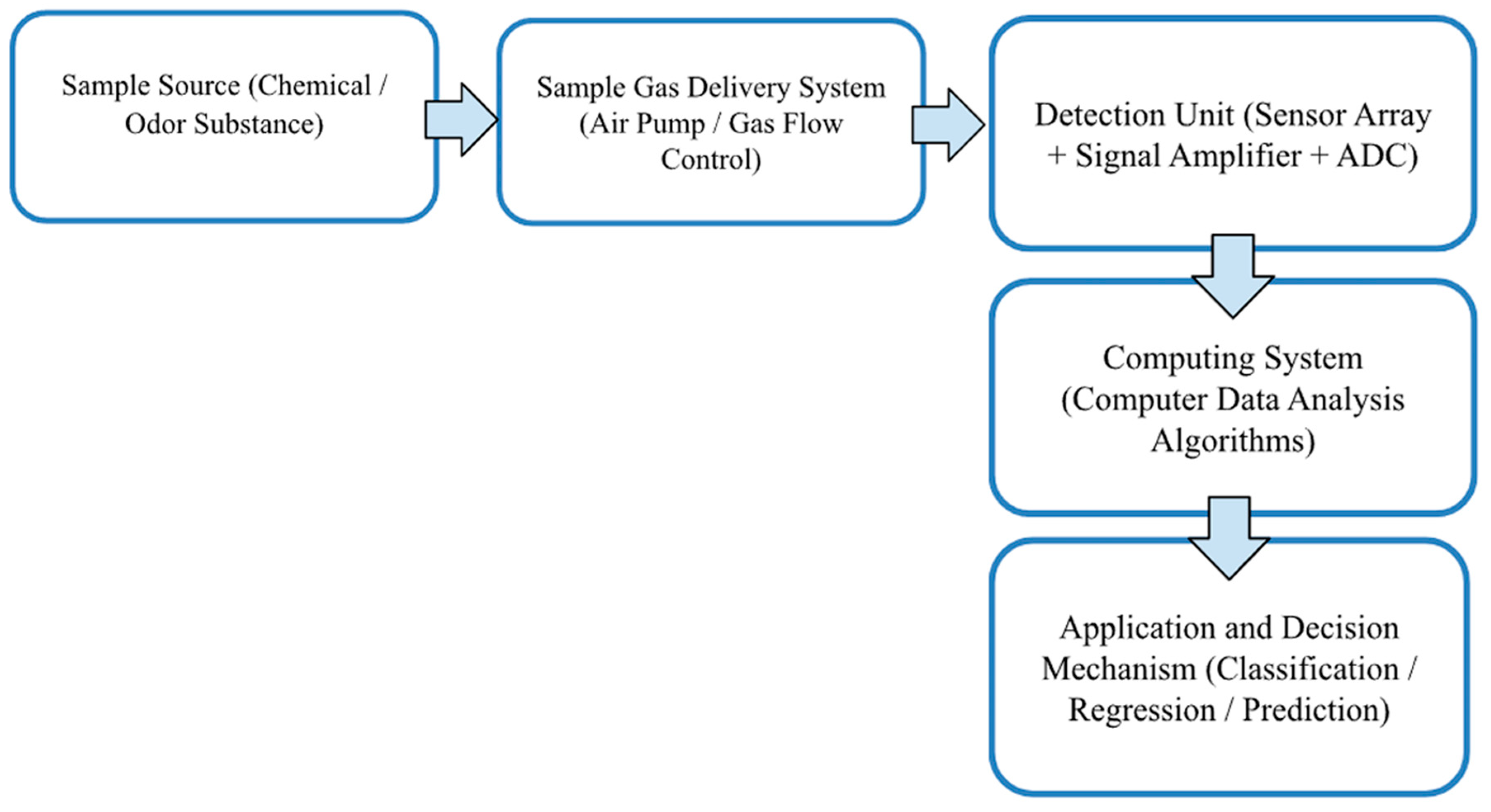
- Sample Gas Delivery Unit: Transfers volatile molecules to the sensor array.
- Detection Unit: Includes a series of sensors that convert chemical signals into electrical signals (Metal oxide sensors (MOS) are preferred for their high sensitivity, wide detection range, and low cost [27]), and an analog-to-digital converter (ADC)
- Computational System: Reads the digital signal and performs analyses.
2.2.1. Sensor Characteristics and Setup
2.2.2. Gas Sample Preparation
2.2.3. System Cleaning
2.3. Olfactometry Method Integration
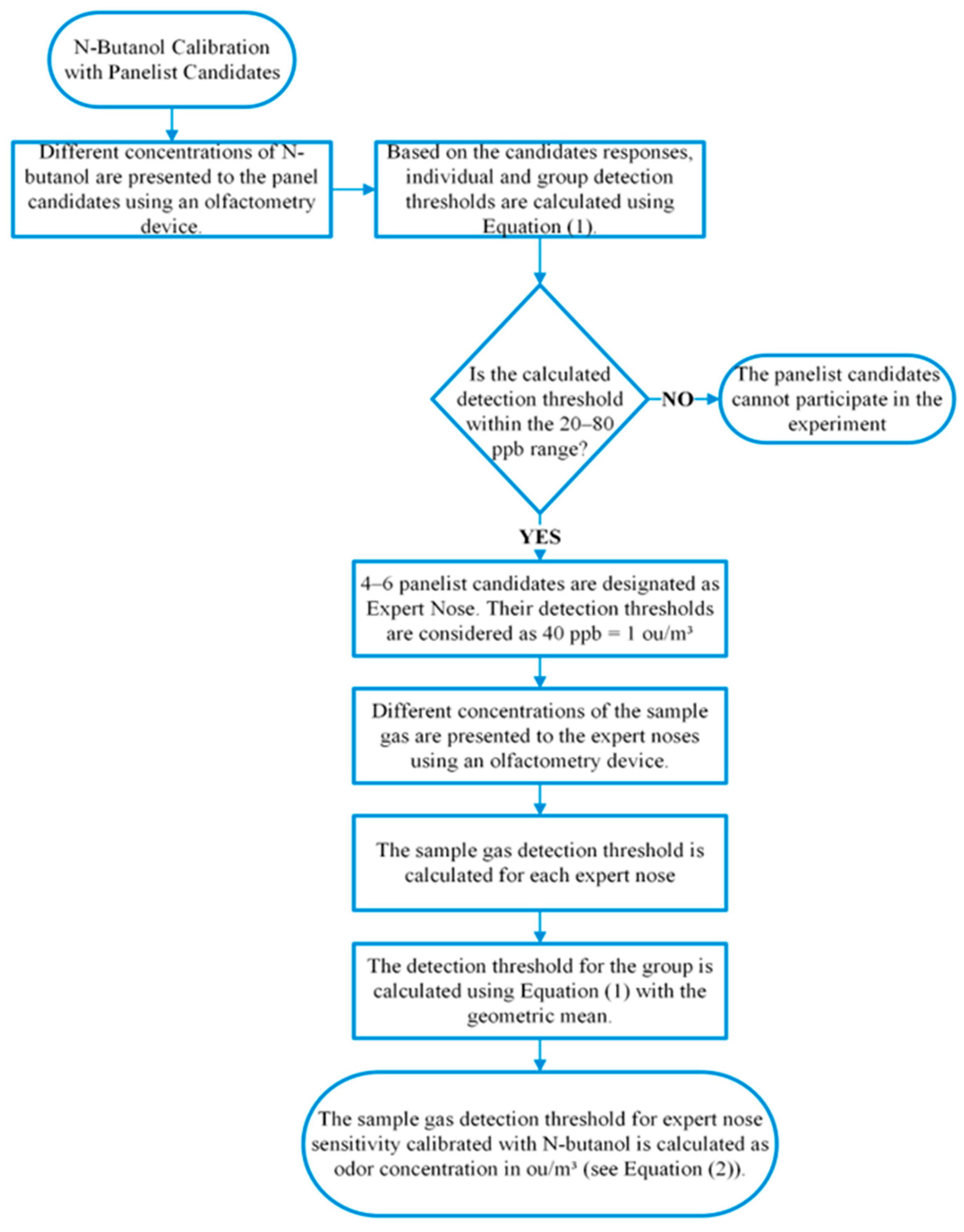
2.3.1. Panelist N-Butanol Calibration
2.3.2. Odor Concentration Measurement
2.4. Machine Learning Algorithms and Training/Testing Process
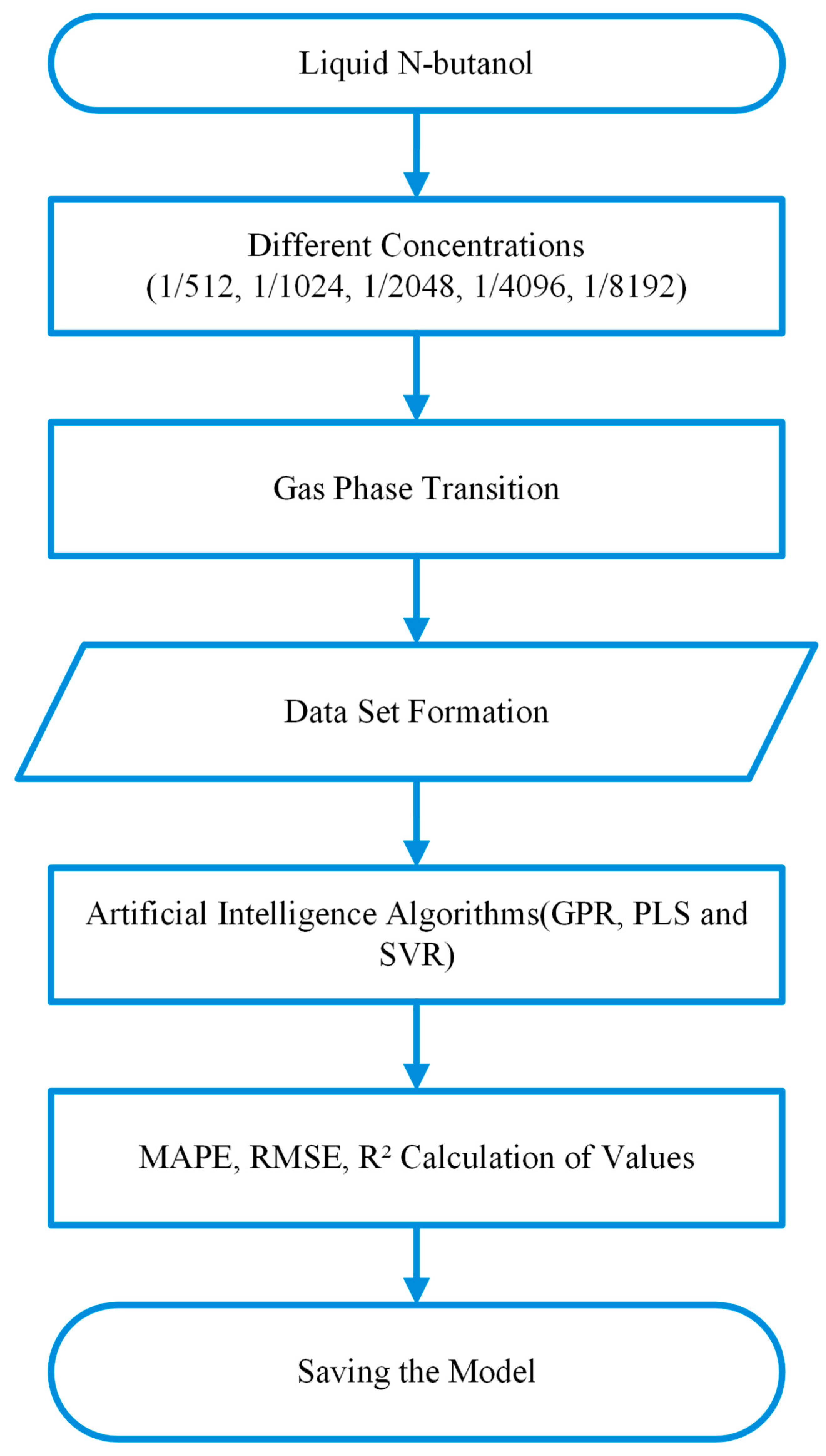
2.4.1. Training Process
- Gaussian Process Regression (GPR): Employed to capture complex nonlinear relationships effectively by modeling a probabilistic distribution over functions, thereby providing predictive uncertainty along with the regression estimates [28].
- Partial Least Squares (PLS): Utilized to represent highly correlated predictor variables with a small number of latent components that capture the underlying linear relationship with the response, enabling efficient dimensionality reduction and prediction [29].
- Support Vector Regression (SVR): Implemented as a robust supervised learning method that handles nonlinear patterns in high-dimensional spaces using kernel functions, maximizing the margin between predicted values and observed data to achieve strong generalization performance [30].

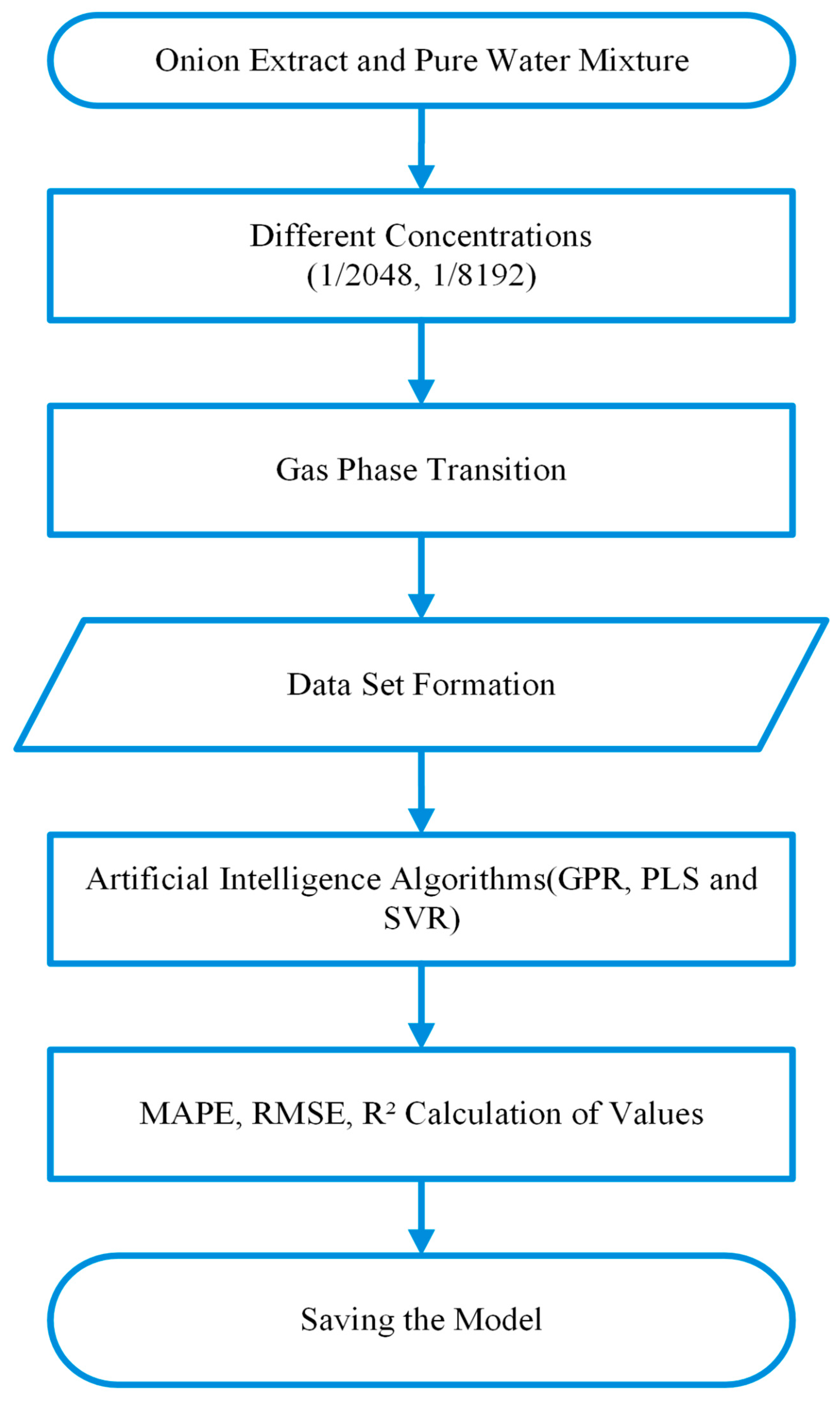
2.4.2. Testing Process
3. Results
3.1. Machine Learning Model Performance
3.2. Performance Analysis
- PLS Model: Demonstrated fast and stable modeling with excellent fit on the training set (R2: 0.997). Its strong Test R2 (0.957) suggests good generalization and computational efficiency for high-dimensional data.
- SVR Model: Showed the best generalization performance on the test set. Despite a slightly higher Training MAPE, the significant reduction in Test RMSE (0.056) and the highest Test R2 (0.987) underscore its superior capability in flexibly modeling complex, nonlinear data relationships.
- GPR Model: Exhibited a near-perfect fit on the training data (R2: 1.000, MAPE: 0.148%). However, its reduced success on the test set suggests a degree of overfitting to the training data. Nonetheless, the high test R2 (0.935) confirms its strong explanatory power.
3.3. Concentration-Dependent Prediction
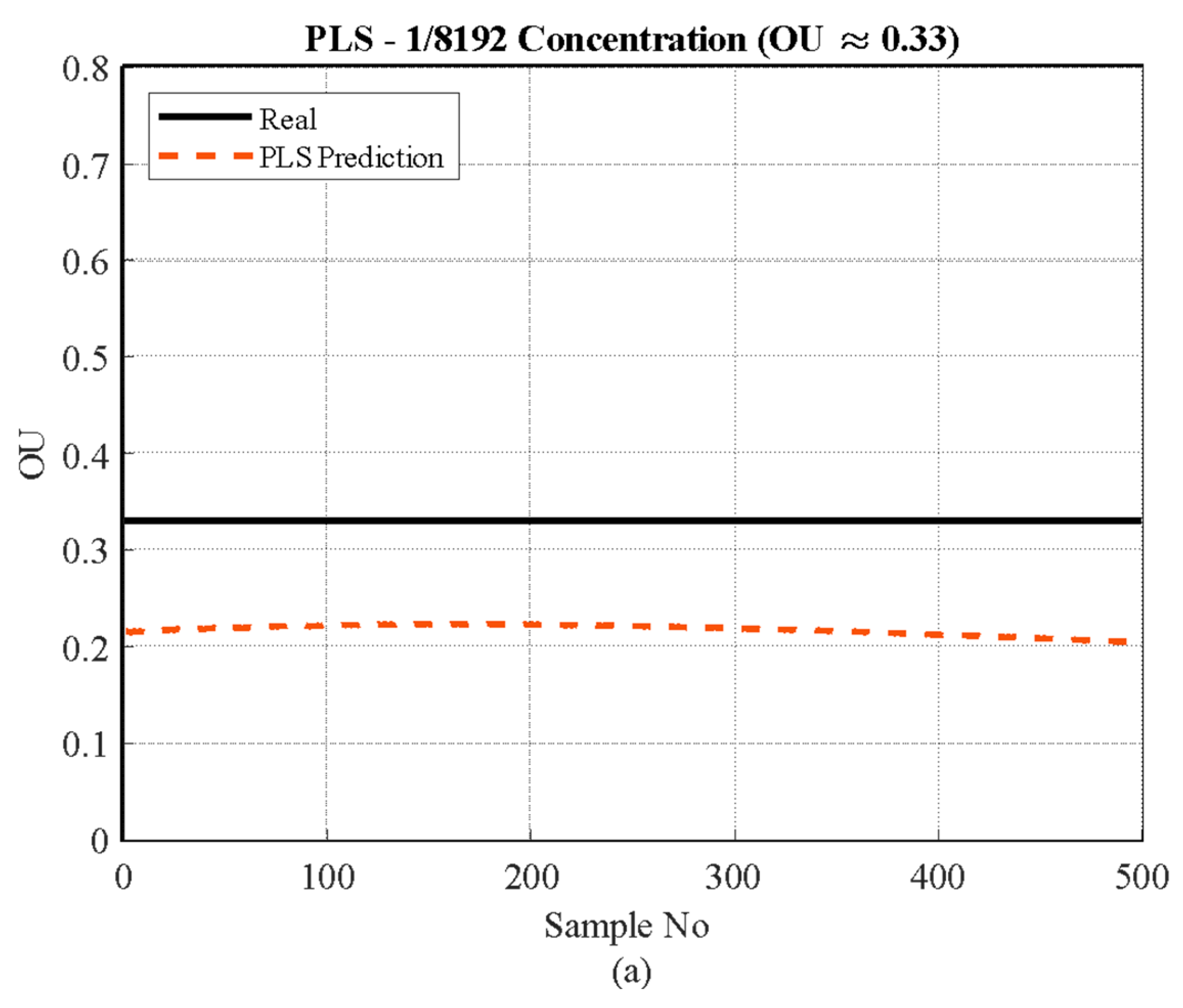
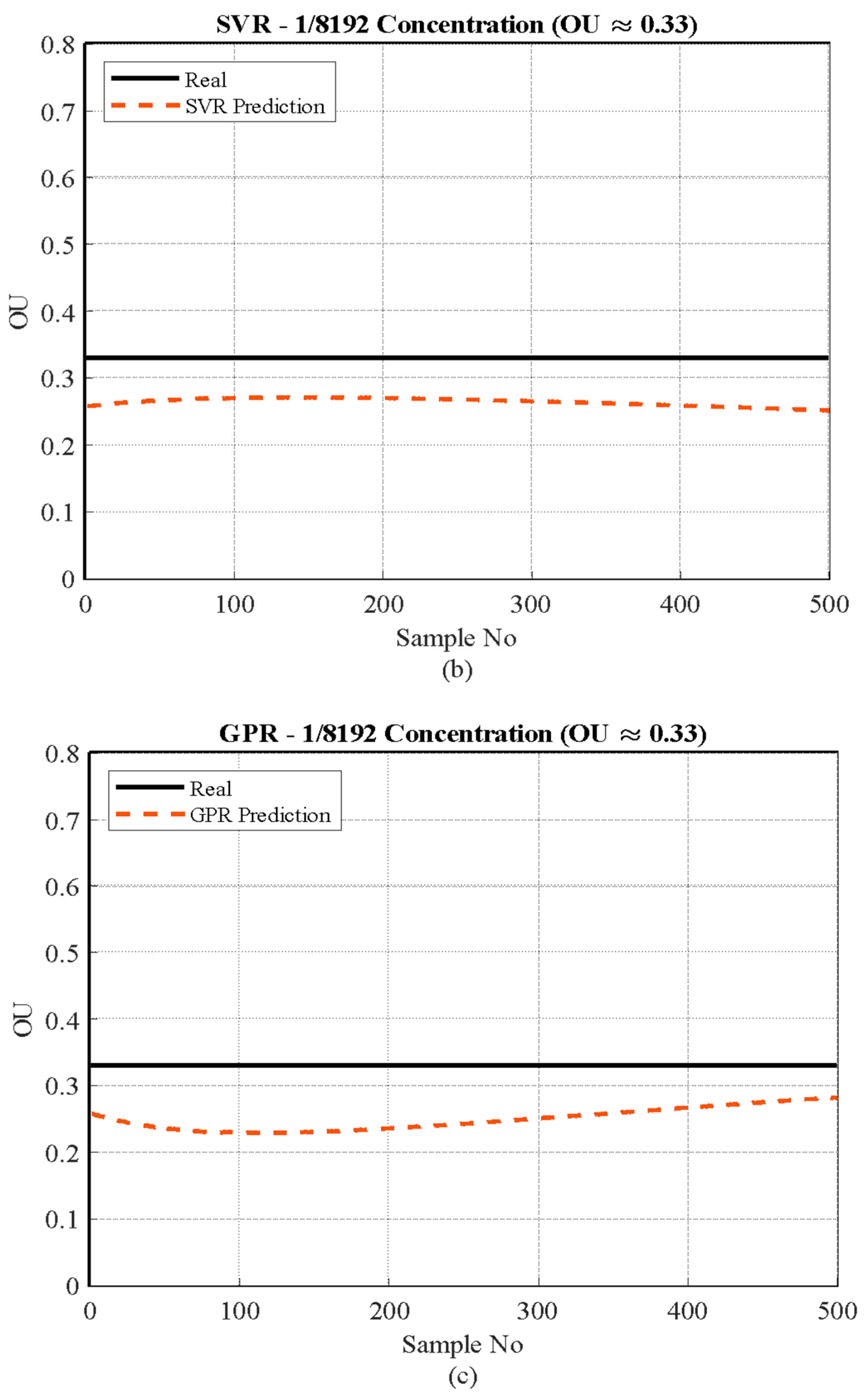
3.3.1. Low Concentration
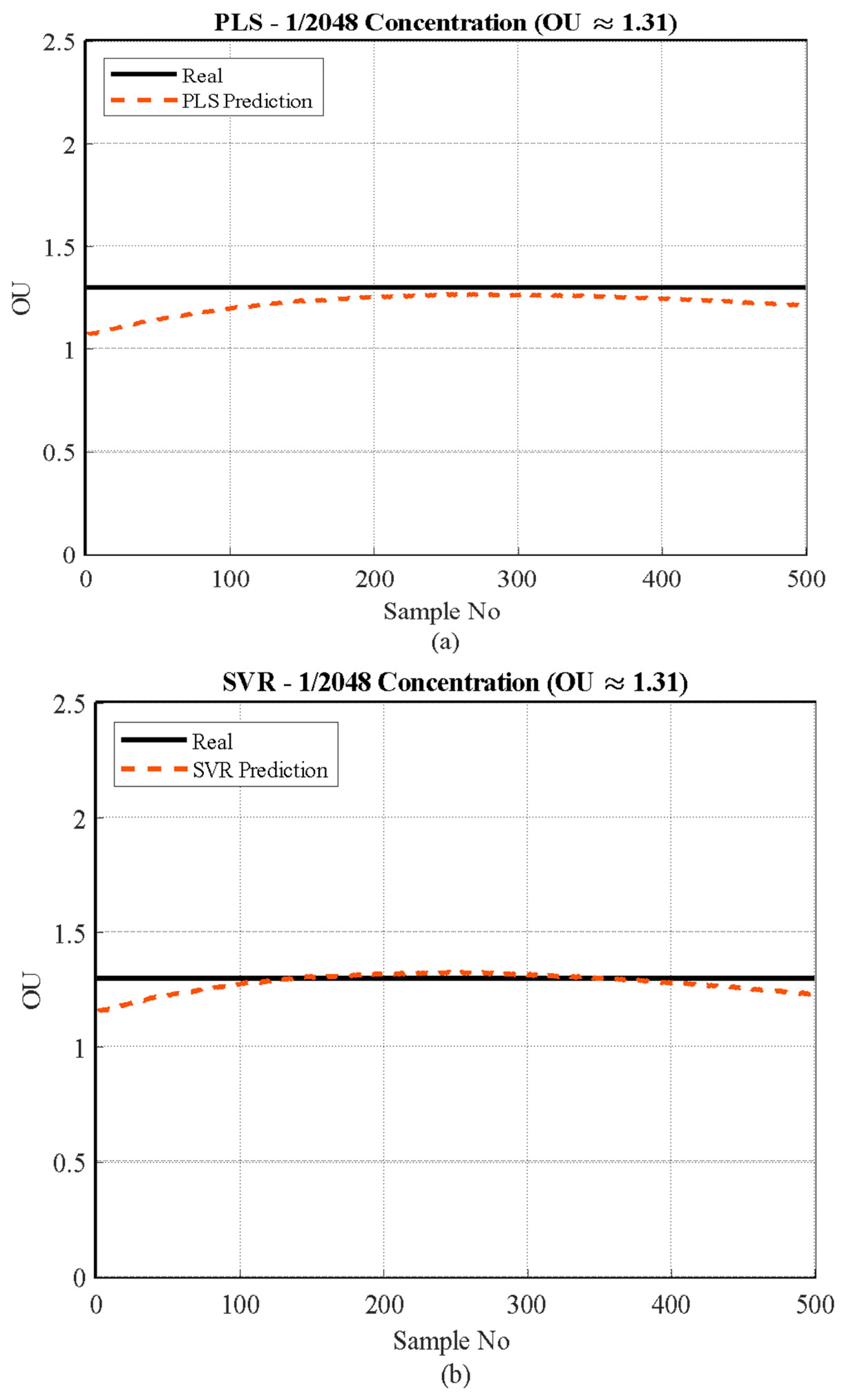
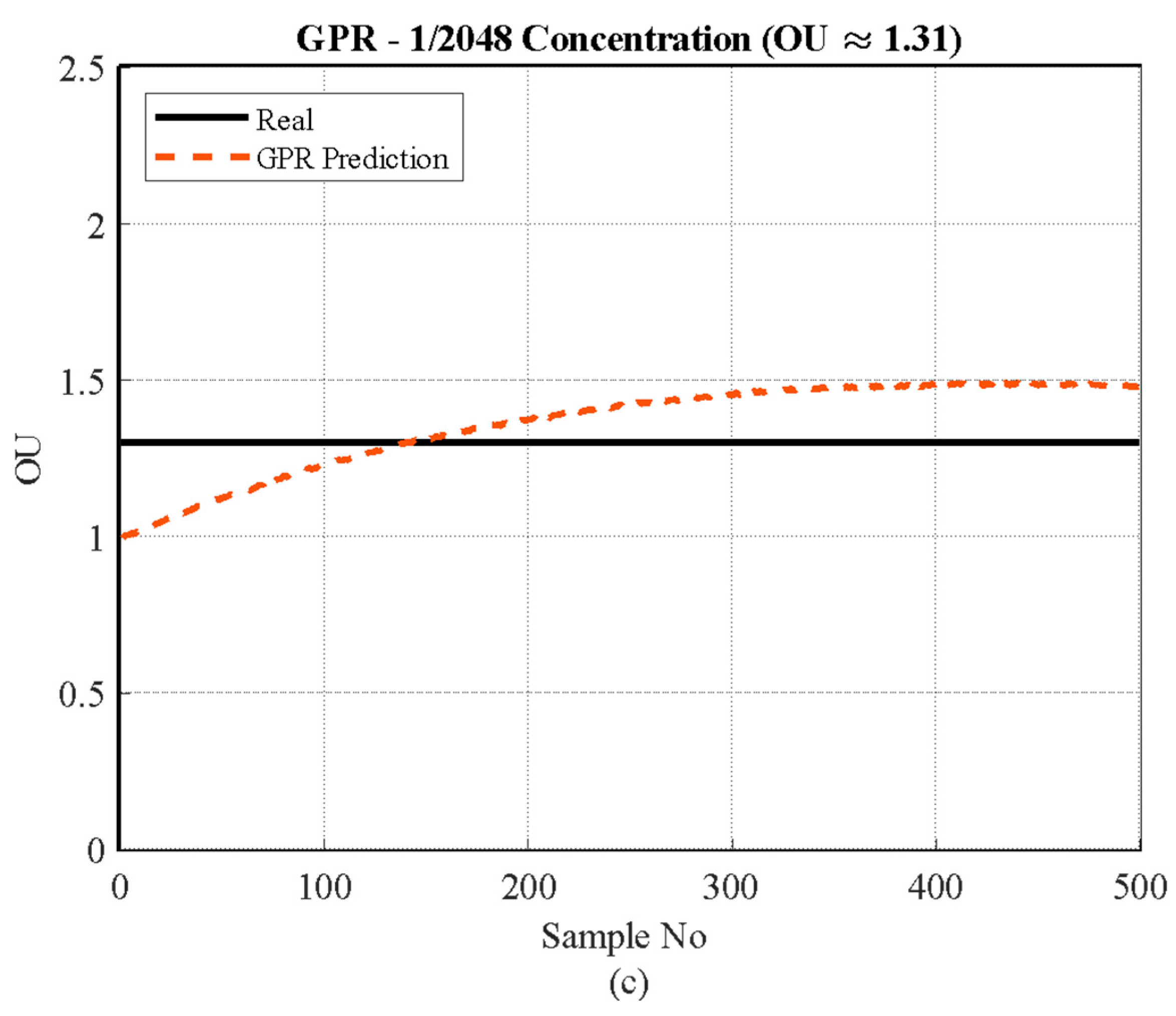
3.3.2. High Concentration
4. Discussion
Author Contributions
Funding
Institutional Review Board Statement
Informed Consent Statement
Data Availability Statement
Acknowledgments
Conflicts of Interest
References
- Ye, Z.; Liu, Y.; Li, Q. Recent progress in smart electronic nose technologies enabled with machine learning methods. Sensors 2021, 21, 7620. [Google Scholar] [CrossRef] [PubMed]
- Xing, Y.; Vincent, T.A.; Cole, M.; Gardner, J.W. Real-time thermal modulation of high bandwidth MOX gas sensors for mobile robot applications. Sensors 2019, 19, 1180. [Google Scholar] [CrossRef]
- Zhi, R.; Zhao, L.; Zhang, D. A framework for the multi-level fusion of electronic nose and electronic tongue for tea quality assessment. Sensors 2017, 17, 1007. [Google Scholar] [CrossRef]
- Rusinek, R.; Kmiecik, D.; Gawrysiak-Witulska, M.; Malaga-Toboła, U.; Tabor, S.; Findura, P.; Siger, A.; Gancarz, M. Identification of the olfactory profile of rapeseed oil as a function of heating time and ratio of volume and surface area of contact with oxygen using an electronic nose. Sensors 2021, 21, 303. [Google Scholar] [CrossRef] [PubMed]
- Güney, S.; Atasoy, A. An electronic nose system for assessing horse mackerel freshness. In Proceedings of the International Symposium on Innovations in Intelligent Systems and Applications (INISTA), Trabzon, Türkiye, 15–17 June 2011. [Google Scholar] [CrossRef]
- Mamat, M.; Samad, S.A.; Hannan, M.A. An electronic nose for reliable measurement and correct classification of beverages. Sensors 2011, 11, 6435–6458. [Google Scholar] [CrossRef] [PubMed]
- Herrero, J.L.; Lozano, J.; Santos, J.P.; Suárez, J.I. On-line classification of pollutants in water using wireless portable electronic noses. Chemosphere 2016, 152, 107–116. [Google Scholar] [CrossRef]
- Zhang, D.; Liu, J.; Jiang, C.; Liu, A.; Xia, B. Quantitative detection of formaldehyde and ammonia gas via metal oxide-modified graphene-based sensor array combining with neural network model. Sens. Actuators B Chem. 2017, 240, 55–65. [Google Scholar] [CrossRef]
- Chen, C.Y.; Lin, W.C.; Yang, H.Y. Diagnosis of ventilator-associated pneumonia using electronic nose sensor array signals. Respir. Res. 2020, 21, 45. [Google Scholar] [CrossRef]
- Saidi, T.; Zaim, O.; Moufid, M.; El Bari, N.; Ionescu, R.; Bouchikhi, B. Exhaled breath analysis using electronic nose and gas chromatography–mass spectrometry. Sens. Actuators B Chem. 2018, 257, 178–188. [Google Scholar] [CrossRef]
- Scentroid. Electronic Nose. WikiOdour. Available online: https://scentroid.com/wikiodour/electronic-nose/ (accessed on 8 October 2025).
- Güney, S.; Atasoy, A. Classification of n-butanol concentrations with k-NN algorithm and ANN in electronic nose. In Proceedings of the International Symposium on Innovations in Intelligent Systems and Applications (INISTA), Istanbul, Türkiye, 15–18 June 2011. [Google Scholar] [CrossRef]
- Borowik, P.; Pluta, P.; Tarakowski, R.; Oszako, T. Detection of Hydraulic Oil-Polluted Soil Using a Low-Cost Electronic Nose with Sample Heating. Sensors 2026, 26, 1154. [Google Scholar] [CrossRef]
- Poeta, E.; Núñez-Carmona, E.; Sberveglieri, V.; Bernal, A.; Lozano, J.; Sánchez, R. MOX Sensors for Authenticity Assessment and Adulteration Detection in Extra Virgin Olive Oil (EVOO). Sensors 2026, 26, 275. [Google Scholar] [CrossRef]
- Martínez, A.; Hernández, A.; Arroyo, P.; Lozano, J.S.; Martín, A.; Córdoba, M.d.G. Application of the E-Nose as a Non-Destructive Technique in the Early Detection of Monilinia laxa on Plum (Prunus domestica L.). Sensors 2025, 25, 7576. [Google Scholar] [CrossRef]
- TS EN 13725:2004; Air Quality: Determination of Odour Concentration by Dynamic Olfactometry. Turkish Standards Institute: Ankara, Türkiye, 2022.
- Zamora-Mendoza, B.N.; Sandoval-Flores, H.; Rodríguez-Aguilar, M.; Jiménez-González, C.; Alcántara-Quintana, L.E.; Berumen-Rodríguez, A.A.; Flores-Ramírez, R. Determination of global chemical patterns in exhaled breath for the discrimination of lung damage in postCOVID patients using olfactory technology. Talanta 2023, 256, 124299. [Google Scholar] [CrossRef]
- Giannattasio, C.; Cozzolino, R.; D’Auria, S.; Pennacchio, A. VOCs profiling and quality assessment of milk employing odorant-binding proteins-based fluorescence biosensor. Int. J. Mol. Sci. 2026, 27, 1333. [Google Scholar] [CrossRef]
- Zhu, K.; Zhang, X.; Ma, J.; Mubeen, H.M.; Zhang, T.; Lei, H.; Zhao, W.; Xu, H.; Li, M. Electronic nose, HS-GC-IMS, HS-SPME-GC-MS, and deep learning model were used to analyze and predict the changes and contents of VOCs in in-shell walnut kernels under different roasting conditions. Food Chem. 2025, 492, 145342. [Google Scholar] [CrossRef] [PubMed]
- Mimura, H.; Osaki, T.; Takamori, S.; AlSaleh, M.A.; Antony, B.; Takeuchi, S. Cell-based biohybrid sensing of a volatile aggregation pheromone component associated with the invasive red palm weevil. Biosens. Bioelectron. 2026, 302, 118537. [Google Scholar] [CrossRef]
- Mumyakmaz, B.; Karabacak, K. An E-Nose-based indoor air quality monitoring system: Prediction of combustible and toxic gas concentrations. Turk. J. Electr. Eng. Comput. Sci. 2015, 23, 729–740. [Google Scholar] [CrossRef]
- Lim, S.H.; Feng, L.; Kemling, J.W.; Musto, C.J.; Suslick, K.S. An optoelectronic nose for the detection of toxic gases. Nat. Chem. 2009, 1, 562–567. [Google Scholar] [CrossRef] [PubMed]
- Jiang, X.; Qu, D.Y.; Zhang, J.N. Confronting pressure and humidity limitations in gold nanoparticle sensors array for enhancing electronic nose technology in real-world applications. Rare Met. 2025, 44, 8789–8801. [Google Scholar] [CrossRef]
- Chen, S.; Song, Y.; Wang, C.; Wang, Z. A universal and robust framework for multiple gas recognition based on spherical normalization-coupled Mahalanobis algorithm. arXiv 2026, arXiv:2512.22792v2. [Google Scholar] [CrossRef]
- EN ISO 5492:2009; Sensory Analysis—Vocabulary. Turkish Standards Institute: Ankara, Türkiye, 2009.
- Musluoğlu, E.; Gürol, İ.; Gümüş, G. Teknoloji Insan Burnunun Yerini Mi Alıyor? Elektronik Burun. Bilim ve Teknik . 2010. Available online: https://bilimteknik.tubitak.gov.tr/e-arsiv/sayi-506/teknoloji-insan-burnunun-yerini-mi-aliyor-elektronik-burun/ (accessed on 10 October 2025).
- Deshmukh, S.; Bandyopadhyay, R.; Bhattacharyya, N.; Pandey, R.A.; Jana, A. Application of electronic nose for industrial odors and gaseous emissions measurement and monitoring—An overview. Talanta 2015, 144, 329–340. [Google Scholar] [CrossRef] [PubMed]
- Rasmussen, C.E.; Williams, C.K.I. Gaussian Processes for Machine Learning; MIT Press: Cambridge, MA, USA, 2006. [Google Scholar]
- Cook, R.D.; Forzani, L. Partial Least Squares Regression and Related Dimension Reduction Methods; Chapman & Hall/CRC: Boca Raton, FL, USA, 2024; pp. 38–40. [Google Scholar]
- Shmilovici, A. Support Vector Machines. In Data Mining and Knowledge Discovery Handbook; Maimon, O., Rokach, L., Eds.; Springer: Boston, MA, USA, 2005; pp. 243–259. [Google Scholar] [CrossRef]



| Sensor Code | Target Gas | Features | Range (ppm) |
|---|---|---|---|
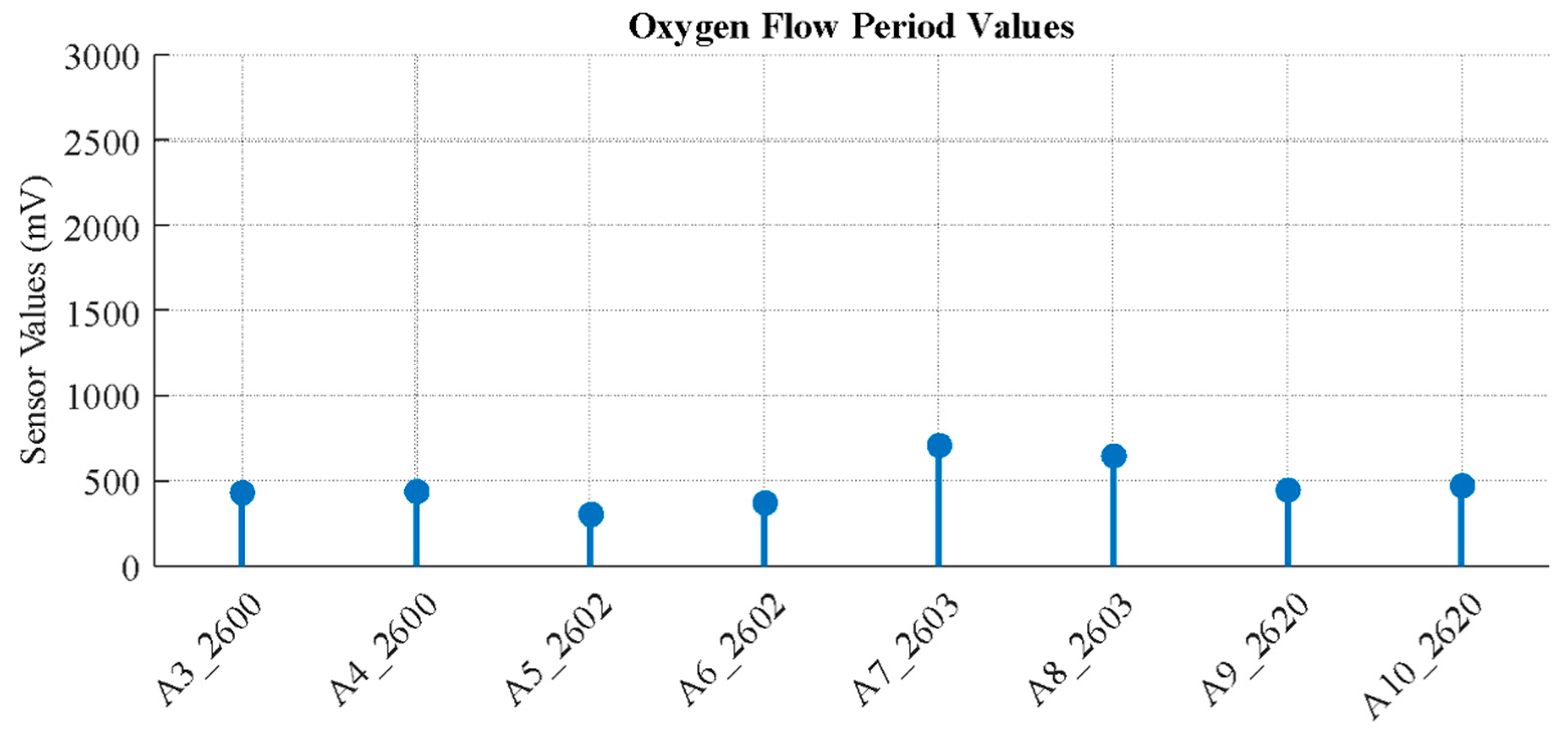
| A3_TGS2600 A4_TGS2600 | Air pollutants | High sensitivity | Hydrogen: 1–30 |
| A5_TGS2602 A6_TGS2602 | Air pollutants | High sensitivity to VOCs, H2S, and ammonia | Ethanol: 1–30 |
| A7_TGS2603 A8_TGS2603 | Air pollutants | High sensitivity to amines and sulfur-containing odors | Ethanol: 1–30 |
| A9_TGS2620 A10_TGS2620 | Alcohols | High sensitivity to organic solvent vapors | 50–5000 |
| Analysis Parameter | Panelist | Odor Unit (OU/m3) |
|---|---|---|
| n-Butanol | Participant 1 | 2047.87 |
| Participant 2 | ||
| Participant 3 | ||
| Participant 4 | ||
| Participant 5 | ||
| Participant 6 |
| Model | Train MAPE (%) | Test MAPE (%) | Train RMSE | Test RMSE | Train R2 | Test R2 |
|---|---|---|---|---|---|---|
| PLS | 6.534 | 19.823 | 0.384 | 0.101 | 0.997 | 0.957 |
| SVR | 10.891 | 11.098 | 1.709 | 0.056 | 0.95 | 0.987 |
| GPR | 0.148 | 17.556 | 0.015 | 0.124 | 1.000 | 0.935 |
| Feature | Dynamic Olfactometry (TS EN 13725) | Analytical Methods (e.g., GC-MS) | Commercial E-Noses (e.g., PEN3, Cyranose 320) | Proposed AI-Enabled E-Nose |
|---|---|---|---|---|
| Primary Objective | Odor Intensity (OU/m3) | Chemical Characterization | VOC Classification/ Relative Detection | Odor Intensity (OU/m3) |
| Analysis Time | High (Hours/Days) | High | Low (Minutes) | Low (Minutes) |
| Price/Cost | High (Recurrent human panel costs) | Very High (Capital & operational) | Medium to High (Application dependent) | Low (MOX sensors, low diversity needed) |
| Required Qualifications | High (Accredited lab, trained panel) | Very High (Analytical chemist) | Medium (Trained operator) | Low (Automated AI processing) |
| Standard Compliance | Yes (Gold Standard) | No | No | Yes (Correlated to TS EN 13725) |
| Hardware Complexity | Not Applicable (Human Nose) | Very High (Chromatographic columns, vacuum) | Medium to High (Large sensor arrays needed) | Low (Generalization via AI + base sensors) |
Disclaimer/Publisher’s Note: The statements, opinions and data contained in all publications are solely those of the individual author(s) and contributor(s) and not of MDPI and/or the editor(s). MDPI and/or the editor(s) disclaim responsibility for any injury to people or property resulting from any ideas, methods, instructions or products referred to in the content. |
© 2026 by the authors. Licensee MDPI, Basel, Switzerland. This article is an open access article distributed under the terms and conditions of the Creative Commons Attribution (CC BY) license.
Share and Cite
Teker, G.; Yonar, T.; Yiğit, E. A Novel Artificial Intelligence-Enabled Method for Electronic Nose Design Based on Olfactometry Data. Sensors 2026, 26, 2150. https://doi.org/10.3390/s26072150
Teker G, Yonar T, Yiğit E. A Novel Artificial Intelligence-Enabled Method for Electronic Nose Design Based on Olfactometry Data. Sensors. 2026; 26(7):2150. https://doi.org/10.3390/s26072150
Chicago/Turabian StyleTeker, Gizem, Taner Yonar, and Enes Yiğit. 2026. "A Novel Artificial Intelligence-Enabled Method for Electronic Nose Design Based on Olfactometry Data" Sensors 26, no. 7: 2150. https://doi.org/10.3390/s26072150
APA StyleTeker, G., Yonar, T., & Yiğit, E. (2026). A Novel Artificial Intelligence-Enabled Method for Electronic Nose Design Based on Olfactometry Data. Sensors, 26(7), 2150. https://doi.org/10.3390/s26072150