Radar-Based Monitoring: A Proof of Principle Study in a Piglet Model for a Novel Approach in Non-Contact Vital Sign Monitoring †

 , , , , , and
Abstract
1. Introduction
1.1. Current State of the Art in Vital Sign Monitoring of NICUs
1.2. Advantages of Non-Contact Methods
1.3. Radar-Based Vital Sign Monitoring
1.4. Radar Technology for Animal Monitoring
1.5. Mini-Piglets as an Animal Model
1.6. Technical Overview
1.7. Aim of This Study
2. Material and Methods
2.1. Animals
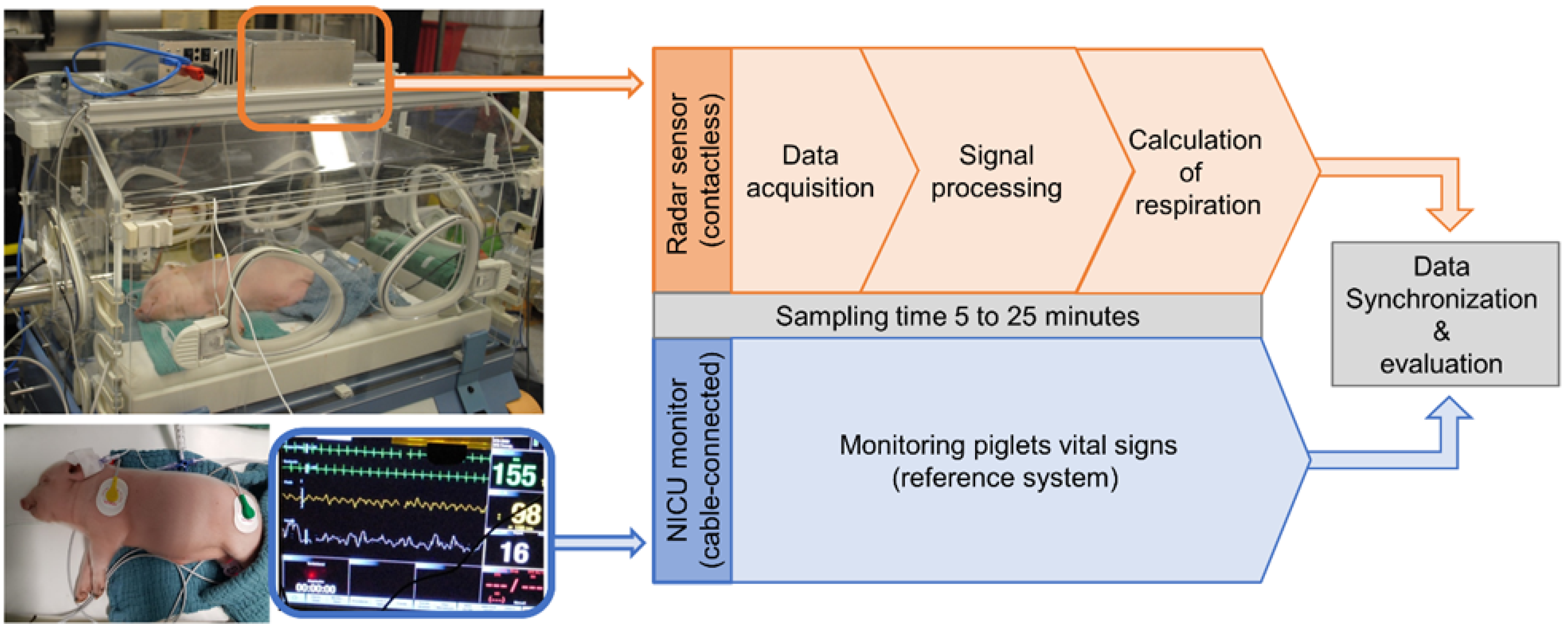
2.2. Experimental Setup
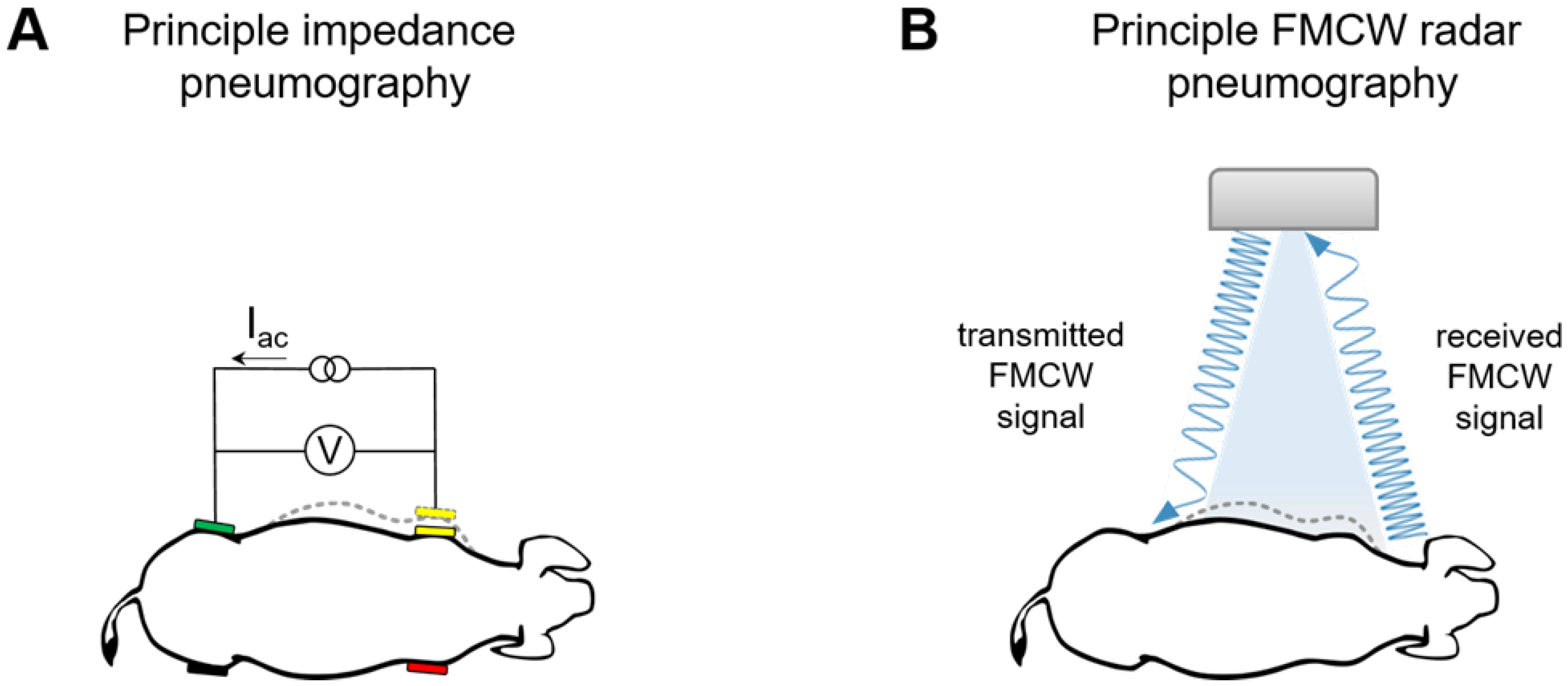
2.3. Principles of Radar Sensor System and Impedance Pneumography
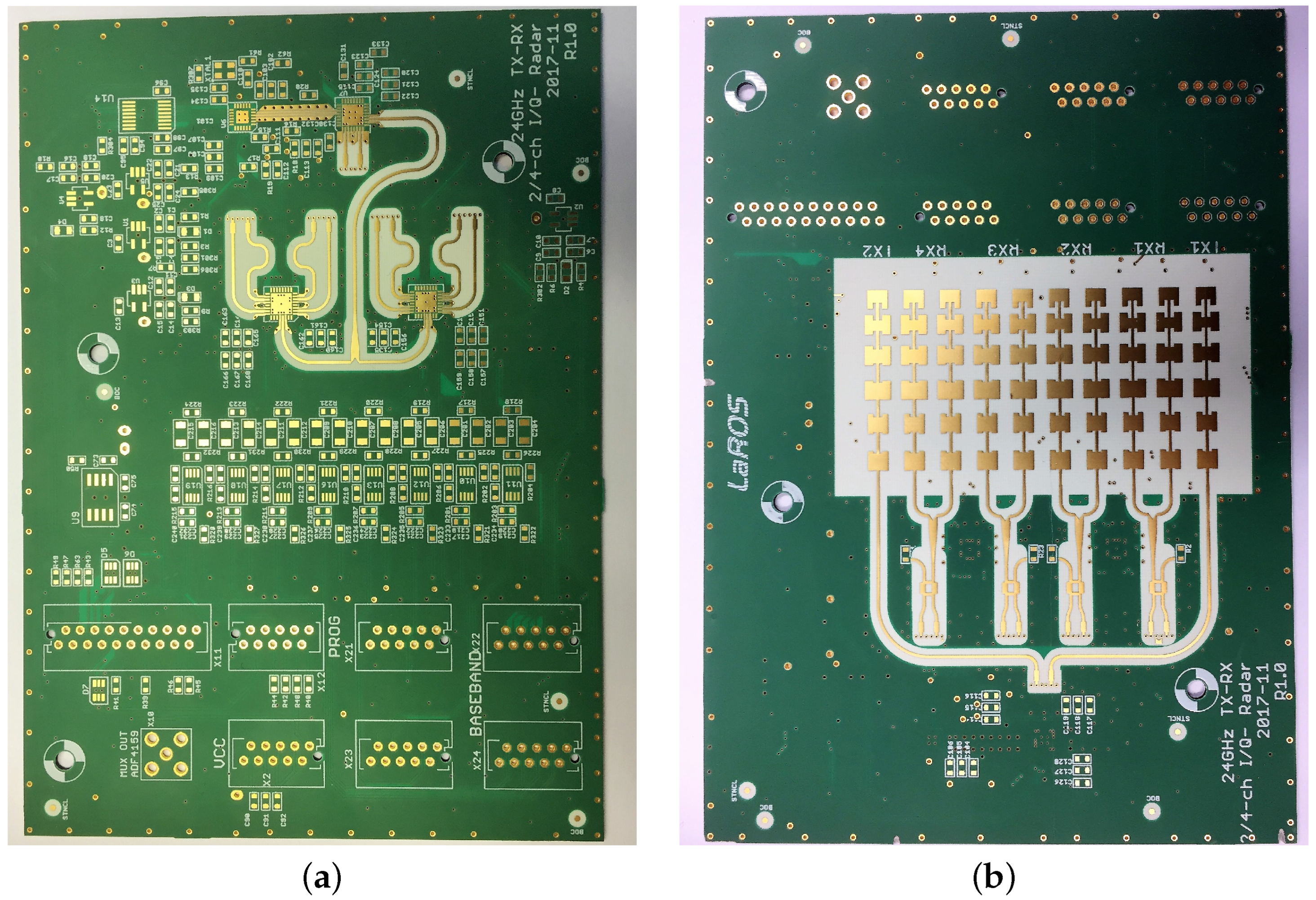
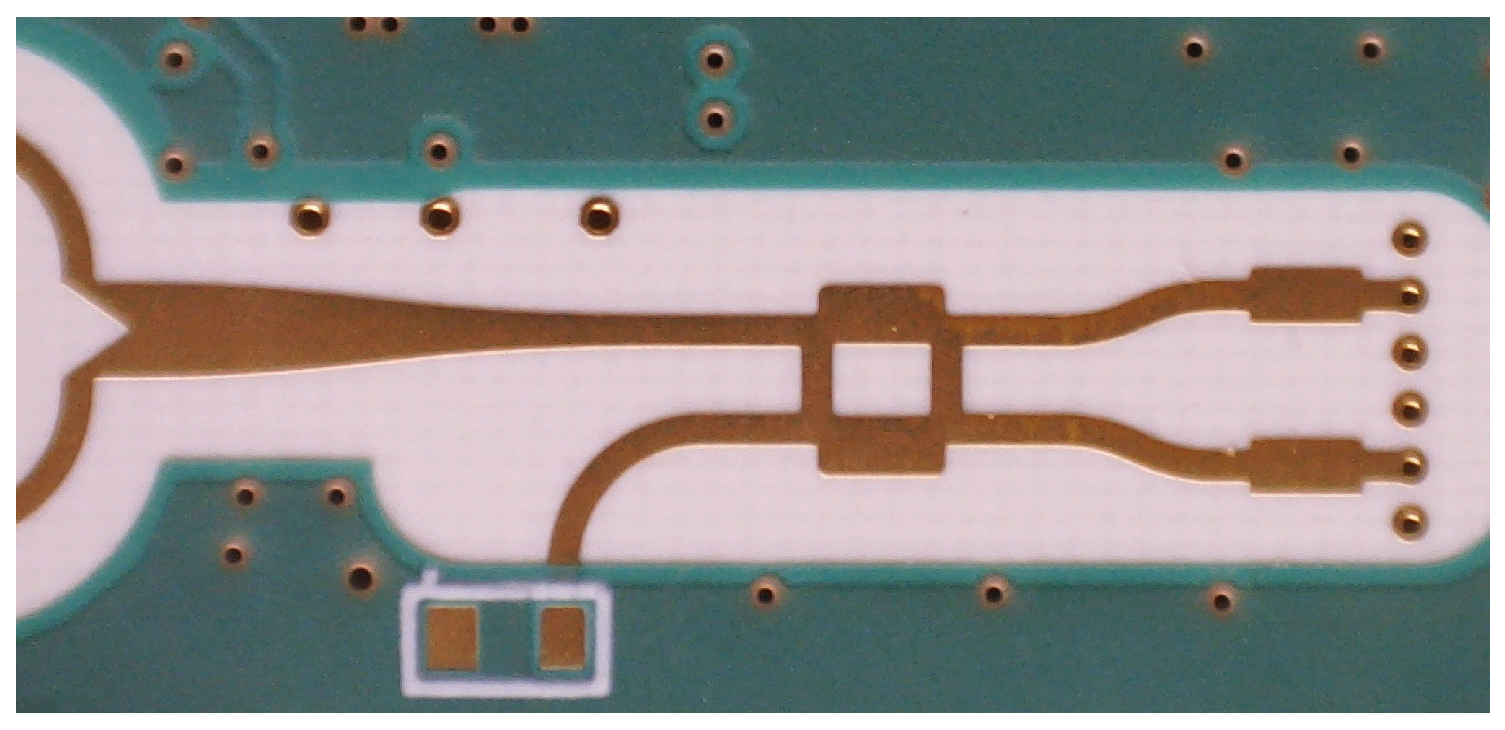
2.4. Radar Monitoring Sensor System (RaMoSS)
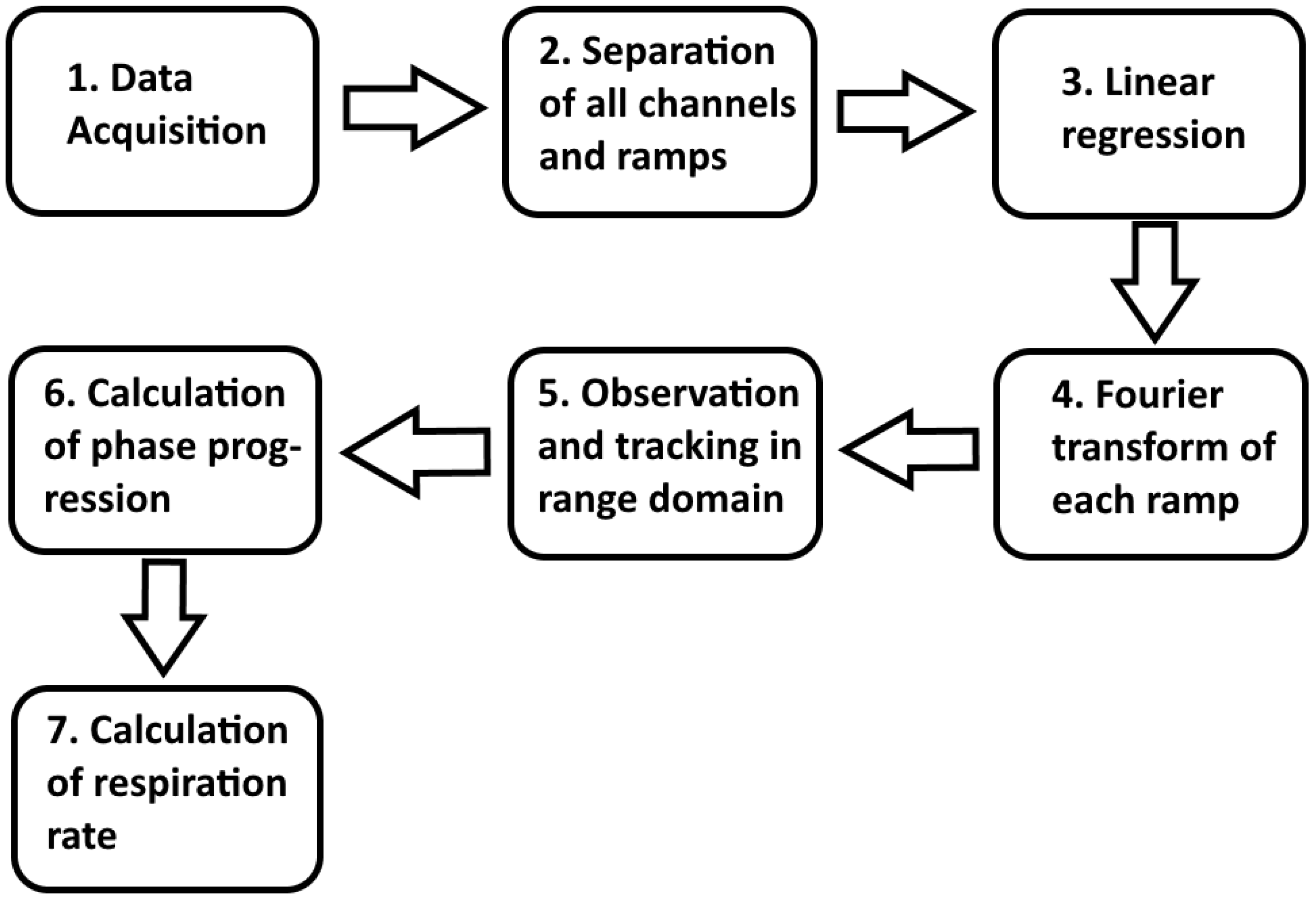
2.5. Radar Signal Processing
3. Results
3.1. Piglets as Suitable Animal Models for Human Preterm Neonates
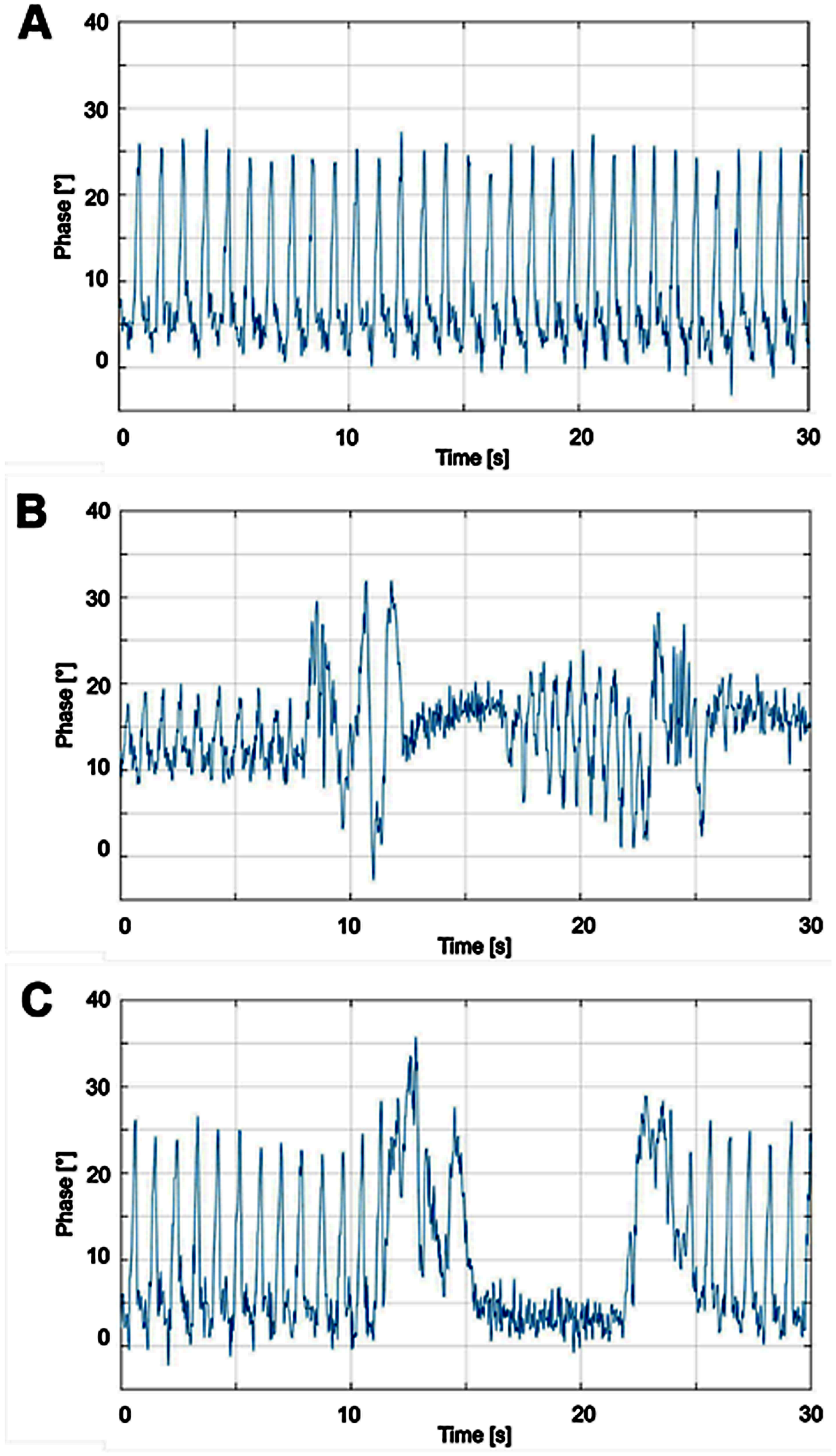
3.2. Radar-Based Monitoring Capable of Detecting Motion States and Apnea Episodes
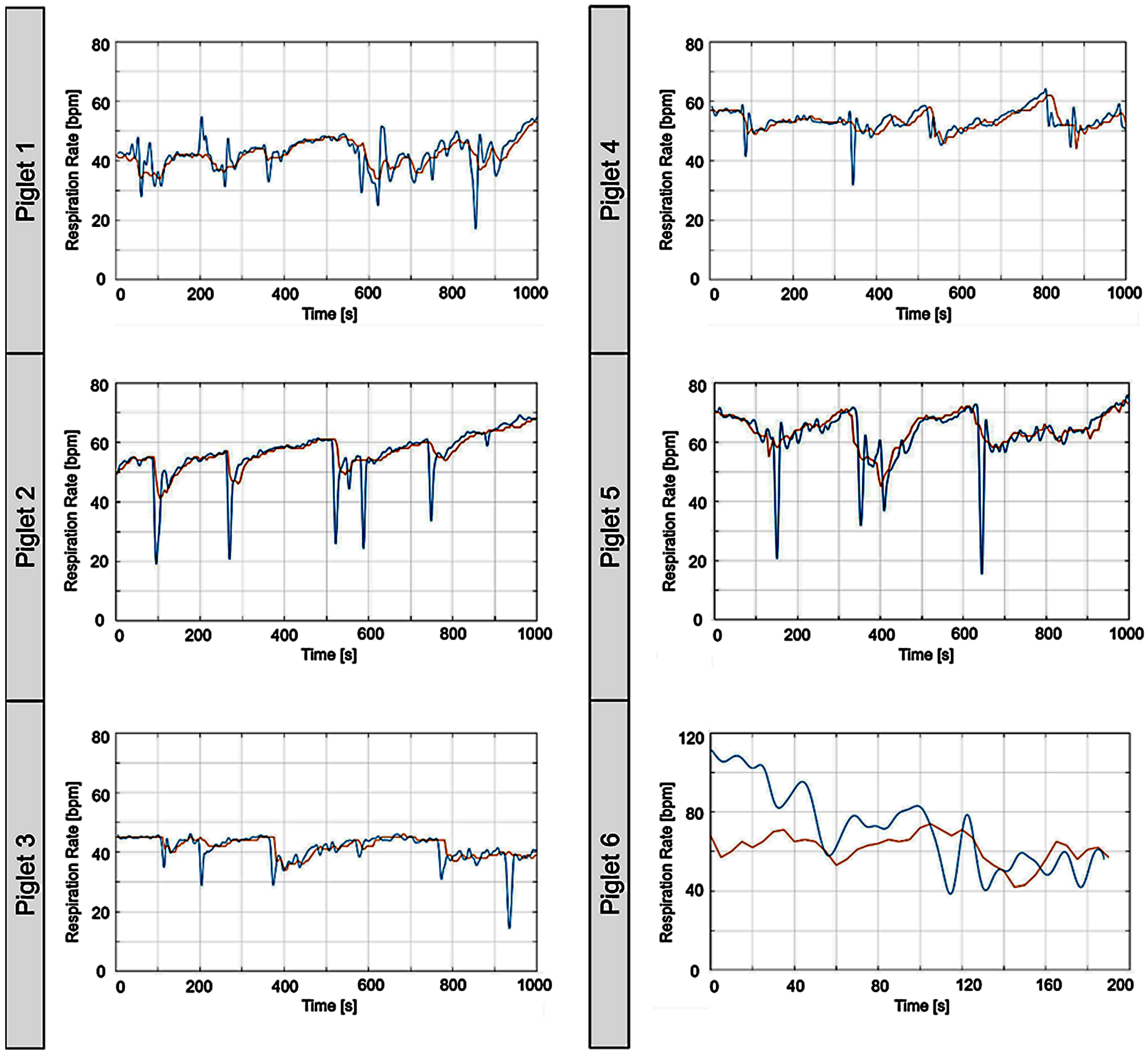
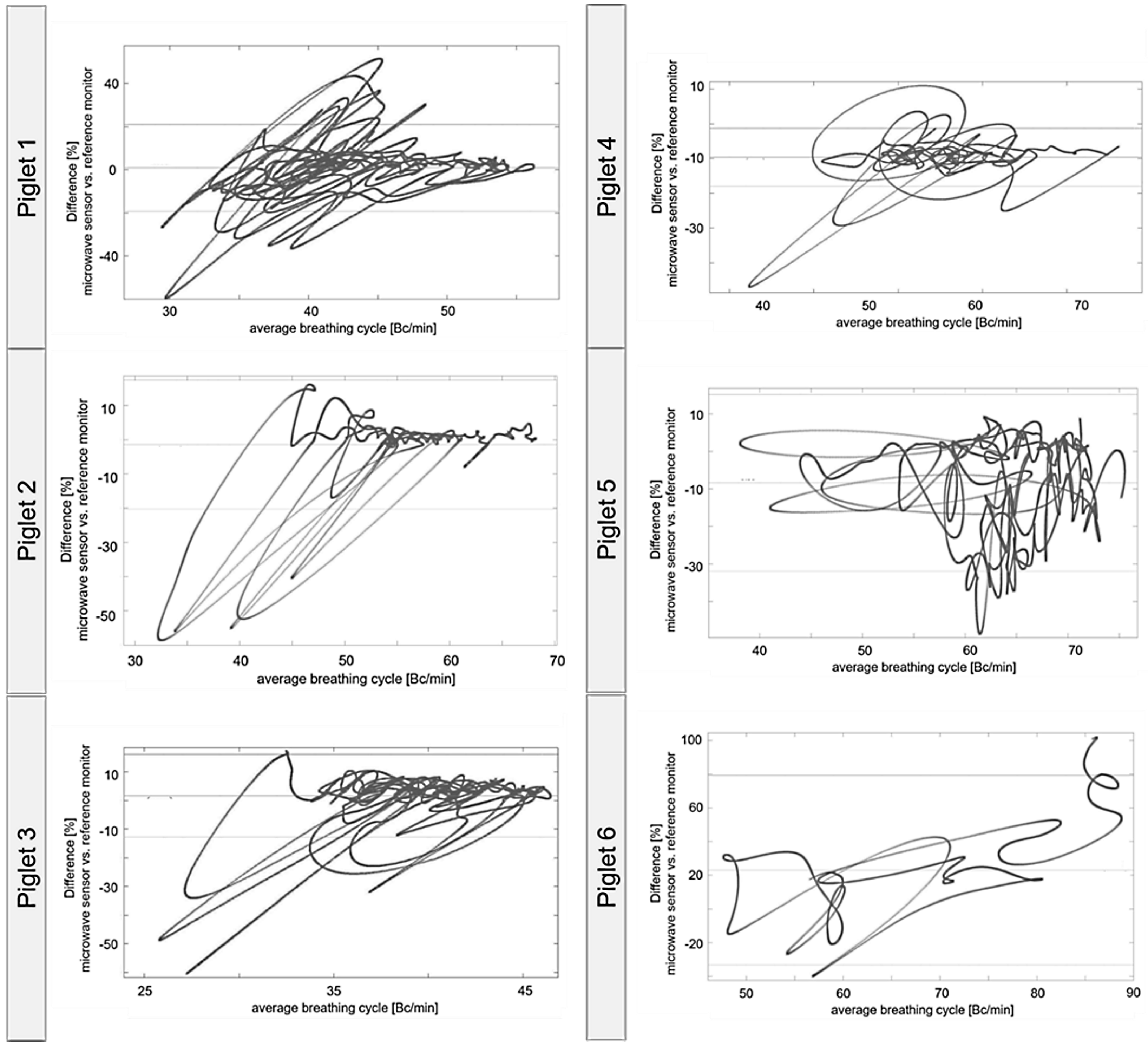
3.3. Radar System as an Alternative to Cable-Based Reference Monitoring
4. Discussion
5. Conclusions
6. Outlook
Author Contributions
Funding
Institutional Review Board Statement
Informed Consent Statement
Data Availability Statement
Acknowledgments
Conflicts of Interest
Abbreviations
| ARRIVE | Animal Research: Reporting of In Vivo Experiments |
| CI | Confidence interval |
| ECG | Electrocardiography |
| ELBW | Extremely low birth weight |
| FMCW | Frequency-modulated continuous wave |
| GHz | Gigahertz |
| I/Q | In-Phase and quadrature |
| ISM | Industrial, Scientific and Medical (band) |
| LBW | Low birth weight |
| MATLAB | Matrix Laboratory (MathWorks, Inc.) |
| NICU | Neonatal intensive care unit |
| PCB | Printed circuit board |
| PPG | Photoplethysmography |
| RaMoSS | Radar monitoring sensor system |
| SpO2 | Peripheral oxygen saturation |
| VLBW | Very low birth weight |
References
- Purisch, S.E.; Gyamfi-Bannerman, C. Epidemiology of preterm birth. Semin. Perinatol. 2017, 41, 387–391. [Google Scholar] [CrossRef] [Scilit]
- Goedicke-Fritz, S.; Härtel, C.; Krasteva-Christ, G.; Kopp, M.V.; Meyer, S.; Zemlin, M. Preterm Birth Affects the Risk of Developing Immune-Mediated Diseases. Front. Immunol. 2017, 8, 1266. [Google Scholar] [CrossRef] [Scilit]
- Rysavy, M.A.; Mehler, K.; Oberthür, A.; Ågren, J.; Kusuda, S.; McNamara, P.J.; Giesinger, R.E.; Kribs, A.; Normann, E.; Carlson, S.J.; et al. An Immature Science: Intensive Care for Infants Born at <23 Weeks of Gestation. J. Pediatr. 2021, 233, 16–25.e1. [Google Scholar] [CrossRef] [Scilit] [PubMed]
- Schuler, R.; Bedei, I.; Oehmke, F.; Zimmer, K.-P.; Ehrhardt, H. Neonatal Outcome and Treatment Perspectives of Preterm Infants at the Border of Viability. Children 2022, 9, 313. [Google Scholar] [CrossRef] [Scilit]
- Humberg, A.; Härtel, C.; Rausch, T.K.; Stichtenoth, G.; Jung, P.; Wieg, C.; Kribs, A.; von der Wense, A.; Weller, U.; Höhn, T.; et al. Active perinatal care of preterm infants in the German Neonatal Network. Arch. Dis. Child. Fetal Neonatal Ed. 2020, 105, 190–195. [Google Scholar] [CrossRef] [Scilit] [PubMed]
- Desplanches, T.; Morgan, A.S.; Jones, P.; Diguisto, C.; Zeitlin, J.; Martin-Marchand, L.; Benhammou, V.; Lecomte, B.; Rozé, J.-C.; Truffert, P.; et al. Risk factors for very preterm delivery out of a level III maternity unit: The EPIPAGE-2 cohort study. Paediatr. Perinat. Epidemiol. 2021, 35, 694–705. [Google Scholar] [CrossRef] [Scilit]
- Ancel, P.-Y.; Goffinet, F.; EPIPAGE-2 Writing Group; Kuhn, P.; Langer, B.; Matis, J.; Hernandorena, X.; Chabanier, P.; Joly-Pedespan, L.; Lecomte, B.; et al. Survival and morbidity of preterm children born at 22 through 34 weeks’ gestation in France in 2011. JAMA Pediatr. 2015, 169, 230–238. [Google Scholar] [CrossRef] [Scilit]
- Nourkami-Tutdibi, N.; Tutdibi, E.; Faas, T.; Wagenpfeil, G.; Draper, E.S.; Johnson, S.; Cuttini, M.; Rafei, R.E.; Seppänen, A.-V.; Mazela, J.; et al. Neonatal Morbidity and Mortality in Advanced Aged Mothers. Front. Pediatr. 2021, 9, 747203. [Google Scholar] [CrossRef] [Scilit]
- Morgan, A.S.; Khoshnood, B.; Diguisto, C.; Foix L’Helias, L.; Marchand-Martin, L.; Kaminski, M.; Zeitlin, J.; Bréart, G.; Goffinet, F.; Ancel, P.-Y. Intensity of perinatal care for extremely preterm babies. BMC Pediatr. 2020, 20, 8. [Google Scholar] [CrossRef] [Scilit]
- Villarroel, M.; Chaichulee, S.; Jorge, J.; Davis, S.; Green, G.; Arteta, C.; Zisserman, A.; McCormick, K.; Watkinson, P.; Tarassenko, L. Non-contact physiological monitoring of preterm infants in the NICU. npj Digit. Med. 2019, 2, 128. [Google Scholar] [CrossRef] [Scilit] [PubMed]
- Behrman, R.E.; Butler, A.S.; Committee on Understanding Premature Birth and Assuring Healthy Outcomes. Mortality and Acute Complications in Preterm Infants. In Preterm Birth: Causes, Consequences, and Prevention; National Academies Press: Cambridge, MA, USA, 2007. Available online: https://www.ncbi.nlm.nih.gov/books/NBK11385/ (accessed on 26 January 2024).
- Johnson, P.A.; Cheung, P.-Y.; Lee, T.-F.; O’Reilly, M.; Schmölzer, G.M. Novel technologies for heart rate assessment during neonatal resuscitation at birth - A systematic review. Resuscitation 2019, 143, 196–207. [Google Scholar] [CrossRef] [Scilit]
- Perlman, J.M.; Wyllie, J.; Kattwinkel, J.; Wyckoff, M.H.; Aziz, K.; Guinsburg, R.; Kim, H.-S.; Liley, H.G.; Mildenhall, L.; Simon, W.M.; et al. Part 7: Neonatal Resuscitation: 2015 International Consensus on CPR and Emergency Cardiovascular Care Science With Treatment Recommendations. Pediatrics 2015, 136, S120–S166. [Google Scholar] [CrossRef] [Scilit] [PubMed]
- Chung, H.U.; Kim, B.H.; Lee, J.Y.; Lee, J.; Xie, Z.; Ibler, E.M.; Lee, K.; Banks, A.; Jeong, J.Y.; Kim, J.; et al. Binodal, wireless epidermal electronic systems with in-sensor analytics for neonatal intensive care. Science 2019, 363, eaau0780. [Google Scholar] [CrossRef] [Scilit] [PubMed]
- Chung, H.U.; Rwei, A.Y.; Hourlier-Fargette, A.; Xu, S.; Lee, K.; Dunne, E.C.; Xie, Z.; Liu, C.; Carlini, A.; Kim, D.H.; et al. Skin-interfaced biosensors for advanced wireless physiological monitoring in neonatal and pediatric intensive-care units. Nat. Med. 2020, 26, 418–429. [Google Scholar] [CrossRef] [Scilit]
- Areekath, L.; George, B.; Shruthi, P.; Sharanya, M.; Sudha, S. An Electric-Field Based Breathing Rate Monitor. In 2018 IEEE International Symposium on Medical Measurements and Applications (MeMeA); IEEE: New York, NY, USA, 2018; pp. 1–5. [Google Scholar] [CrossRef] [Scilit]
- Glass, H.C.; Costarino, A.T.; Stayer, S.A.; Brett, C.M.; Cladis, F.; Davis, P.J. Outcomes for extremely premature infants. Anesth. Analg. 2015, 120, 1337–1351. [Google Scholar] [CrossRef] [Scilit]
- Cartlidge, P.H.T.; Fox, P.E.; Rutter, N. The scars of newborn intensive care. Early Hum. Dev. 1990, 21, 1–10. [Google Scholar] [CrossRef] [Scilit]
- Gaynes, R.P.; Martone, W.J.; Culver, D.H.; Emori, T.G.; Horan, T.C.; Banerjee, S.N.; Edwards, J.R.; Jarvis, W.R.; Tolson, J.S.; Henderson, T.S. Comparison of rates of nosocomial infections in neonatal intensive care units in the United States. Am. J. Med. 1991, 91, 192S–196S. [Google Scholar] [CrossRef] [Scilit]
- Zhu, Z.; Liu, T.; Li, G.; Li, T.; Inoue, Y. Wearable Sensor Systems for Infants. Sensors 2015, 15, 3721–3749. [Google Scholar] [CrossRef] [Scilit]
- Ohgi, S.; Fukuda, M.; Moriuchi, H.; Kusumoto, T.; Akiyama, T.; Nugent, J.K.; Brazelton, T.B.; Arisawa, K.; Takahashi, T.; Saitoh, H. Comparison of Kangaroo Care and Standard Care. J. Perinatol. 2002, 22, 374–379. [Google Scholar] [CrossRef] [Scilit]
- Cheung, J.C.-H.; Ho, L.T.; Cheng, J.V.; Cham, E.Y.K.; Lam, K.N. Staff safety during emergency airway management for COVID-19 in Hong Kong. Lancet Respir. Med. 2020. [Google Scholar] [CrossRef] [Scilit] [PubMed]
- Anand, K.J. Clinical importance of pain and stress in preterm neonates. Biol. Neonate 1998, 73, 1–9. [Google Scholar] [CrossRef] [Scilit] [PubMed]
- Ranger, M.; Grunau, R.E. Early repetitive pain in preterm infants in relation to the developing brain. Pain Manag. 2014, 4, 57–67. [Google Scholar] [CrossRef] [Scilit]
- Steinbach, J.; Goedicke-Fritz, S.; Tutdibi, E.; Stutz, R.; Kaiser, E.; Meyer, S.; Baumbach, J.I.; Zemlin, M. Bedside Measurement of Volatile Organic Compounds in the Atmosphere of Neonatal Incubators Using Ion Mobility Spectrometry. Front. Pediatr. 2019, 7, 248. [Google Scholar] [CrossRef] [Scilit]
- Rogosch, T.; Herrmann, N.; Maier, R.F.; Domann, E.; Hattesohl, A.; Koczulla, A.R.; Zemlin, M. Detection of bloodstream infections and prediction of bronch opulmonary dysplasia in preterm neonates with an electronic nose. J. Pediatr. 2014, 165, 622–624. [Google Scholar] [CrossRef] [Scilit] [PubMed]
- Lund, C. Medical Adhesives in the NICU. Newborn Infant Nurs. Rev. 2014, 14, 160–165. [Google Scholar] [CrossRef] [Scilit]
- Ness, M.J.; Davis, D.M.R.; Carey, W.A. Neonatal skin care: A concise review. Int. J. Dermatol. 2013, 52, 14–22. [Google Scholar] [CrossRef] [Scilit]
- Jorge, J.; Villarroel, M.; Chaichulee, S.; Guazzi, A.; Davis, S.; Green, G.; McCormick, K.; Tarassenko, L. Non-Contact Monitoring of Respiration in the NICU. In 2017 12th IEEE International Conference on Automatic Face Gesture Recognition (FG 2017); IEEE: New York, NY, USA, 2017; pp. 286–293. [Google Scholar] [CrossRef] [Scilit]
- Pereira, C.B.; Yu, X.; Goos, T.; Reiss, I.; Orlikowsky, T.; Heimann, K.; Venema, B.; Blazek, V.; Leonhardt, S.; Teichmann, D. Noncontact Monitoring of Respiratory Rate in Newborn Infants Using Thermal Imaging. IEEE Trans. Biomed. Eng. 2019, 66, 1105–1114. [Google Scholar] [CrossRef] [Scilit]
- Allen, J. Photoplethysmography and its application in clinical physiological measurement. Physiol. Meas. 2007, 28, R1–R39. [Google Scholar] [CrossRef] [Scilit]
- Gangaram-Panday, N.H.; van Essen, T.; Goos, T.G.; de Jonge, R.C.J.; Reiss, I.K.M.; van Weteringen, W. Dynamic Light Scattering: A New Noninvasive Technology for Neonatal Heart Rate Monitoring. Neonatology 2020, 117, 279–286. [Google Scholar] [CrossRef] [Scilit] [PubMed]
- Thull, R.; Goedicke-Fritz, S.; Schmiech, D.; Marnach, A.; Müller, S.; Körbel, C.; Laschke, M.W.; Tutdibi, E.; Nourkami-Tutdibi, N.; Kaiser, E.; et al. Investigation of a Camera-Based Contactless Pulse Oximeter with Time-Division Multiplex Illumination Applied on Piglets for Neonatological Applications. Biosensors 2024, 14, 437. [Google Scholar] [CrossRef] [Scilit]
- Harford, M.; Catherall, J.; Gerry, S.; Young, J.D.; Watkinson, P. Availability and performance of image-based, non-contact methods of monitoring heart rate, blood pressure, respiratory rate, and oxygen saturation: A systematic review. Physiol. Meas. 2019, 40, 06TR01. [Google Scholar] [CrossRef] [Scilit]
- Wieler, M.E.; Murphy, T.G.; Blecherman, M.; Mehta, H.; Bender, G.J. Infant heart-rate measurement and oxygen desaturation detection with a digital video camera using imaging photoplethysmography. J. Perinatol. 2021, 41, 1725–1731. [Google Scholar] [CrossRef] [Scilit]
- Addison, P.S.; Jacquel, D.; Foo, D.M.H.; Borg, U.R. Video-based heart rate monitoring across a range of skin pigmentations during an acute hypoxic challenge. J. Clin. Monit. Comput. 2018, 32, 871–880. [Google Scholar] [CrossRef] [Scilit]
- Beltrão, G.; Stutz, R.; Hornberger, F.; Martins, W.A.; Tatarinov, D.; Alaee-Kerahroodi, M.; Lindner, U.; Stock, L.; Kaiser, E.; Goedicke-Fritz, S.; et al. Contactless radar-based breathing monitoring in a neonatal intensive care unit. Sci. Rep. 2022, 12, 5150. [Google Scholar] [CrossRef] [Scilit] [PubMed]
- Gleichauf, J.; Herrmann, S.; Hennemann, L.; Krauss, H.; Nitschke, J.; Renner, P.; Niebler, C.; Koelpin, A. Automated non-contact neonatal respiratory rate monitoring using interferometric radar. Sensors 2021, 21, 2959. [Google Scholar] [CrossRef] [Scilit] [PubMed]
- Lee, W.H.; Lee, Y.; Na, J.Y.; Kim, S.H.; Lee, H.J.; Lim, Y.H.; Cho, S.H.; Cho, S.H.; Park, H.K. Feasibility of non-contact cardiorespiratory monitoring using impulse-radio ultra-wideband radar in the neonatal intensive care unit. PLoS ONE 2020, 15, e0243939. [Google Scholar] [CrossRef] [Scilit]
- Lin, J.C. Noninvasive microwave measurement of respiration. Proc. IEEE 1975, 63, 1530. [Google Scholar] [CrossRef] [Scilit]
- Li, C.; Lin, J. Random Body Movement Cancellation in Doppler Radar Vital Sign Detection. IEEE Trans. Microw. Theory Techn. 2008, 56, 3143–3152. [Google Scholar] [CrossRef] [Scilit]
- Will, C.; Linz, S.; Mann, S.; Lurz, F.; Lindner, S.; Weigel, R.; Koelpin, A. A 24 GHz Waveguide based Radar System using an Advanced Algorithm for I/Q Offset Cancelation. Adv. Radio Sci. 2017, 15, 249–258. [Google Scholar] [CrossRef] [Scilit]
- Yan, Y.; Li, C.; Yu, X.; Weiss, M.D.; Lin, J. Verification of a non-contact vital sign monitoring system using an infant simulator. In 2009 Annual International Conference of the IEEE EMBS; IEEE: New York, NY, USA, 2009; pp. 4836–4839. [Google Scholar] [CrossRef] [Scilit]
- Fiser, O.; Tesarik, J.; Pokorny, T.; Vrba, J. Non-contact Monitoring of Respiration and Heart Activity of Infants Using UWB Signals. In 2019 PhotonIcs Electromagnetics Research Symposium—Spring (PIERS-Spring); IEEE: New York, NY, USA, 2019; pp. 2534–2537. [Google Scholar] [CrossRef] [Scilit]
- Ahmad, A.; Roh, J.C.; Wang, D.; Dubey, A. Vital signs monitoring of multiple people using a FMCW millimeter-wave sensor. In 2018 IEEE Radar Conference (RadarConf18); IEEE: New York, NY, USA, 2018; pp. 1450–1455. [Google Scholar] [CrossRef] [Scilit]
- Sacco, G.; Piuzzi, E.; Pittella, E.; Pisa, S. An FMCW Radar for Localization and Vital Signs Measurement for Different Chest Orientations. Sensors 2020, 20, 3489. [Google Scholar] [CrossRef] [Scilit]
- Droitcour, A.D.; Seto, T.B.; Park, B.-K.; Yamada, S.; Vergara, A.; El Hourani, C.; Shing, T.; Yuen, A.; Lubecke, V.M.; Boric-Lubecke, O. Non-Contact Respiratory Rate Measurement Validation for Hospitalized Patients. In 2009 Annual International Conference of the IEEE Engineering in Medicine and Biology Society; IEEE: New York, NY, USA, 2009; pp. 4812–4815. [Google Scholar] [CrossRef] [Scilit]
- Sakamoto, T.; Iwata, I.; Minami, T.; Matsumoto, T. Noncontact sensing of animals using radar. IEICE Trans. Electron. 2024, 107, 279–287. [Google Scholar] [CrossRef] [Scilit]
- Wang, P.; Ma, Y.; Liang, F.; Zhang, Y.; Yu, X.; Li, Z.; An, Q.; Lv, H.; Wang, J. Non-contact vital signs monitoring of dog and cat using a UWB radar. Animals 2020, 10, 205. [Google Scholar] [CrossRef] [Scilit]
- Tuan, S.-A.; Rustia, D.J.A.; Hsu, J.-T.; Lin, T.-T. Frequency modulated continuous wave radar-based system for monitoring dairy cow respiration rate. Comput. Electron. Agric. 2022, 196, 106913. [Google Scholar] [CrossRef] [Scilit]
- Schellenberger, S.; Shi, K.; Steigleder, T.; Malessa, A.; Michler, F.; Hameyer, L.; Neumann, N.; Lurz, F.; Weigel, R.; Ostgathe, C.; et al. A dataset of clinically recorded radar vital signs with synchronised reference sensor signals. Sci. Data 2020, 7, 291. [Google Scholar] [CrossRef] [Scilit]
- Michler, F.; Shi, K.; Schellenberger, S.; Steigleder, T.; Malessa, A.; Hameyer, L.; Neumann, N.; Lurz, F.; Ostgathe, C.; Weigel, R.; et al. A Clinically Evaluated Interferometric Continuous-Wave Radar System for the Contactless Measurement of Human Vital Parameters. Sensors 2019, 19, 2492. [Google Scholar] [CrossRef] [Scilit]
- Park, J.-Y.; Lee, Y.; Choi, Y.-W.; Heo, R.; Park, H.-K.; Cho, S.-H.; Cho, S.H.; Lim, Y.-H. Preclinical Evaluation of a Noncontact Simultaneous Monitoring Method for Respiration and Carotid Pulsation Using Impulse-Radio Ultra-Wideband Radar. Sci. Rep. 2019, 9, 11892. [Google Scholar] [CrossRef] [Scilit] [PubMed]
- Schieber, R.A.; Stiller, R.L.; Cook, D.R. Cardiovascular and pharmacodynamic effects of high-dose fentanyl in newborn piglets. Anesthesiology 1985, 63, 166–171. [Google Scholar] [CrossRef] [Scilit] [PubMed]
- Paepe, M.E.D.; Friedman, R.M.; Gundogan, F.; Pinar, H. Postmortem Lung Weight/Body Weight Standards for Term and Preterm Infants. Pediatr. Pulmonol. 2005, 40, 445–448. [Google Scholar] [CrossRef] [Scilit] [PubMed]
- Eiby, Y.A.; Wright, L.L.; Kalanjati, V.P.; Miller, S.M.; Bjorkman, S.T.; Keates, H.L.; Lumbers, E.R.; Colditz, P.B.; Lingwood, B.E. A pig model of the preterm neonate: Anthropometric and physiological characteristics. PLoS ONE 2013, 8, e68763. [Google Scholar] [CrossRef] [Scilit]
- Linde, J.E.; Eilevstjønn, J.; Øymar, K.; Ersdal, H.L. Feasibility of a prototype newborn resuscitation monitor to study transition at birth, measuring heart rate and ventilator parameters, an animal experimental study. BMC Res. Notes 2017, 10, 235. [Google Scholar] [CrossRef] [Scilit]
- Spengler, D.; Rintz, N.; Krause, M.F. An Unsettled Promise: The Newborn Piglet Model of Neonatal Acute Respiratory Distress Syndrome (NARDS). Front. Physiol. 2019, 10, 1345. [Google Scholar] [CrossRef] [Scilit]
- Bæk, O.; Brunse, A.; Nguyen, D.N.; Moodley, A.; Thymann, T.; Sangild, P.T. Diet Modulates the High Sensitivity to Systemic Infection in Newborn Preterm Pigs. Front. Immunol. 2020, 11, 1019. [Google Scholar] [CrossRef] [Scilit]
- Sangild, P.T.; Thymann, T.; Schmidt, M.; Stoll, B.; Burrin, D.G.; Buddington, R.K. Invited review: The preterm pig as a model in pediatric gastroenterology. J. Anim. Sci. 2013, 91, 4713–4729. [Google Scholar] [CrossRef] [Scilit]
- Pawlowsky, K.; Ernst, L.; Steitz, J.; Stopinski, T.; Kögel, B.; Henger, A.; Kluge, R.; Tolba, R. The Aachen Minipig: Phenotype, Genotype, Hematological and Biochemical Characterization, and Comparison to the Göttingen Minipig. Eur. Surg. Res. 2017, 58, 193–203. [Google Scholar] [CrossRef] [Scilit]
- Beglinger, R.; Becker, M.; Eggenberger, E.; Lombard, C. The Goettingen miniature swine as an experimental animal. 1. Review of literature, breeding and handling, cardiovascular parameters. Res. Exp. Med. 1975, 165, 251–263. [Google Scholar] [CrossRef] [Scilit]
- Blomqvist, Y.T.; Karlsson, V.; Dawit, F.; Sindelar, R.; Ågren, J. Physiological Stability in Very Preterm Infants During Skin-to-Skin Contact as Assessed by Near-Infrared Spectroscopy. Adv. Neonatal Care 2020, 20, 495–498. [Google Scholar] [CrossRef] [Scilit] [PubMed]
- Jost, K.; Datta, A.N.; Frey, U.P.; Suki, B.; Schulzke, S.M. Heart rate fluctuation after birth predicts subsequent cardiorespiratory stability in preterm infants. Pediatr. Res. 2019, 86, 348–354. [Google Scholar] [CrossRef] [Scilit]
- Zeiner, V.; Storm, H.; Doheny, K.K. Preterm infants’ behaviors and skin conductance responses to nurse handling in the NICU. J. Matern. Fetal Neonatal Med. 2016, 29, 2531–2536. [Google Scholar] [CrossRef] [Scilit] [PubMed]
- Sipos, W.; Wiener, S.; Entenfellner, F.; Sipos, S. Physiological changes of rectal temperature, pulse rate and respiratory rate of pigs at different ages including the critical peripartal period. Wien. Tierarztl. Monatsschr. 2013, 100, 93–98. [Google Scholar]
- Baumgartner, W. (Ed.) Klinische Propädeutik der Haus- und Heimtiere, 7th ed.; Parey/Georg Thieme Verlag: Stuttgart, Germany, 2005; p. 133. ISBN 9783830441755. [Google Scholar]
- Stroe, M.; Van Bockstal, L.; Valenzuela, A.P.Z.; Ayuso, M.; Leys, K.; Annaert, P.; Carpentier, S.; Smits, A.; Allegaert, K.; Zeltner, A.; et al. Development of a neonatal Göttingen Minipig model for dose precision in perinatal asphyxia: Technical opportunities, challenges, and potential further steps. Front. Pediatr. 2023, 11, 1163100. [Google Scholar] [CrossRef] [Scilit]
- Sun, J.; Chong, J.; Zhang, J.; Ge, L. Preterm pigs for preterm birth research: Reasonably feasible. Front. Physiol. 2023, 14, 1189422. [Google Scholar] [CrossRef] [Scilit]
- Caminita, F.; van der Merwe, M.; Hance, B.; Krishnan, R.; Miller, S.; Buddington, K.; Buddington, R.K. A preterm pig model of lung immaturity and spontaneous infant respiratory distress syndrome. Am. J. Physiol. Lung Cell. Mol. Physiol. 2015, 308, L118–L129. [Google Scholar] [CrossRef] [Scilit] [PubMed]
- Fleming, S.; Thompson, M.; Stevens, R.; Heneghan, C.; Plüddemann, A.; Maconochie, I.; Tarassenko, L.; Mant, D. Normal ranges of heart rate and respiratory rate in children from birth to 18 years of age. Lancet 2011, 377, 1011–1018. [Google Scholar] [CrossRef] [Scilit]
- Lepage, J.Y.; Pinaud, M.L.; Helias, J.H.; Cozian, A.Y.; Le Normand, Y.; Souron, R.J. Left ventricular performance during propofol or methohexital anesthesia: Isotopic and invasive cardiac monitoring. Anesth. Analg. 1991, 73, 3–9. [Google Scholar] [CrossRef] [Scilit]
- Schöffmann, G.; Winter, P.; Palme, R.; Pollak, A.; Trittenwein, G.; Golej, J. Haemodynamic changes and stress responses of piglets to surgery during total intravenous anaesthesia with propofol and fentanyl. Lab Anim. 2009, 43, 243–248. [Google Scholar] [CrossRef] [Scilit]
- Du Sert, N.P.; Ahluwalia, A.; Alam, S.; Avey, M.T.; Baker, M.; Browne, W.J.; Clark, A.; Cuthill, I.C.; Dirnagl, U.; Emerson, M.; et al. Reporting animal research: Explanation and elaboration for the ARRIVE guidelines 2.0. PLOS Biol. 2020, 18, e3000411. [Google Scholar] [CrossRef] [Scilit]
- Schmiech, D.; Müller, S.; Diewald, A.R. 4-Channel I/Q-Radar System For Vital Sign Monitoring In A Baby Incubator. In 2018 19th International Radar Symposium (IRS); IEEE: New York, NY, USA, 2018; pp. 1–9. [Google Scholar] [CrossRef] [Scilit]
- Schmiech, D.; Marnach, A.; Diewald, A.R. Verification and first test measurement of a microwave-based vital sign monitor. Adv. Radio Sci. 2019, 17, 249–256. [Google Scholar] [CrossRef] [Scilit]
- Marnach, A.; Schmiech, D.; Diewald, A.R. Illumination Coverage Measurement of an I/Q-Radar System for a Baby Incubator. In 23rd International Conference on Applied Electromagnetics and Communications (ICECOM); IEEE: New York, NY, USA, 2019. [Google Scholar]
- Marnach, A.; Schmiech, D.; Diewald, A.R. Verification of Algorithm for an I/Q-Radar System for Breathing Detection in an Incubator. In 2019 International Conference on Electromagnetics in Advanced Applications (ICEAA); IEEE: New York, NY, USA, 2019. [Google Scholar]
- Blanco-Almazán, D.; Groenendaal, W.; Catthoor, F.; Jané, R. Chest Movement and Respiratory Volume both Contribute to Thoracic Bioimpedance during Loaded Breathing. Sci. Rep. 2019, 9, 20232. [Google Scholar] [CrossRef] [Scilit] [PubMed]
- Moeyersons, J.; Morales, J.; Seeuws, N.; Van Hoof, C.; Hermeling, E.; Groenendaal, W.; Willems, R.; Van Huffel, S.; Varon, C. Artefact Detection in Impedance Pneumography Signals: A Machine Learning Approach. Sensors 2021, 21, 2613. [Google Scholar] [CrossRef] [Scilit] [PubMed]
- Diewald, A.R.; Müller, S. Design of a six-patch series-fed traveling-wave antenna. In 2019 IEEE-APS Topical Conference on Antennas and Propagation in Wireless Communications (APWC); IEEE: New York, NY, USA, 2019; pp. 395–399. [Google Scholar] [CrossRef] [Scilit]
- Barker, D.P.; Rutter, N. Exposure to invasive procedures in neonatal intensive care unit admissions. Arch. Dis. Child. Fetal Neonatal Ed. 1995, 72, F47–F48. [Google Scholar] [CrossRef] [Scilit] [PubMed]
- Zhao, J.; Gonzalez, F.; Mu, D. Apnea of prematurity: From cause to treatment. Eur. J. Pediatr. 2011, 170, 1097–1105. [Google Scholar] [CrossRef] [Scilit] [PubMed]
- Mathew, O.P. Apnea of prematurity: Pathogenesis and management strategies. J. Perinatol. 2011, 31, 302–310. [Google Scholar] [CrossRef] [Scilit] [PubMed]
- Yang, S.; Liang, X.; Dang, X.; Jiang, N.; Cao, J.; Zeng, Z.; Li, Y. Random Body Movement Removal Using Adaptive Motion Artifact Filtering in mmWave Radar-Based Neonatal Heartbeat Sensing. Electronics 2024, 13, 1471. [Google Scholar] [CrossRef] [Scilit]
- Sahoo, N.N.; Murugesan, B.; Das, A.; Karthik, S.; Ram, K.; Leonhardt, S.; Joseph, J.; Sivaprakasam, M. Deep learning based non-contact physiological monitoring in Neonatal Intensive Care Unit. In 2022 44th Annual International Conference of the IEEE Engineering in Medicine & Biology Society (EMBC); IEEE: New York, NY, USA, 2022; pp. 1327–1330. [Google Scholar] [CrossRef] [Scilit]



| Waveform | FMCW |
|---|---|
| Sample points per ramp | 128 |
| Sampling frequency | 8192 Hz |
| Ramp repetition rate | 32 Hz |
| Piglet | 1 | 2 | 3 | 4 | 5 | 6 |
|---|---|---|---|---|---|---|
| Sex | female | female | female | male | female | female |
| Weight [g] | 2520 | 1250 | 2710 | 1900 | 2210 | 1050 |
| Age [days] | 19 | 6 | 19 | 11 | 19 | 5 |
| Radar vs. reference (respiration rate) | ||||||
| 0.7948 | 0.7788 | 0.6807 | 0.6607 | 0.5809 | 0.3688 | |
| Mean | 0.88 | −1.36 | −0.84 | 0.42 | −8.35 | 23.00 |
| CI 95% | −19.25 | −20.23 | −15.28 | – | −31.93 | −33.16 |
| 21.00 | 17.51 | 13.61 | – | 15.24 | 79.16 | |
| Intern | 513 | 711 | 713 | 812 | 413 | 441 |
Disclaimer/Publisher’s Note: The statements, opinions and data contained in all publications are solely those of the individual author(s) and contributor(s) and not of MDPI and/or the editor(s). MDPI and/or the editor(s) disclaim responsibility for any injury to people or property resulting from any ideas, methods, instructions or products referred to in the content. |
© 2026 by the authors. Licensee MDPI, Basel, Switzerland. This article is an open access article distributed under the terms and conditions of the Creative Commons Attribution (CC BY) license.
Share and Cite
Goedicke-Fritz, S.; Schmiech, D.; Thull, R.; Kaiser, E.; Körbel, C.; Laschke, M.W.; Marnach, A.; Müller, S.; Tutdibi, E.; Nourkami-Tutdibi, N.; et al. Radar-Based Monitoring: A Proof of Principle Study in a Piglet Model for a Novel Approach in Non-Contact Vital Sign Monitoring. Sensors 2026, 26, 2139. https://doi.org/10.3390/s26072139
Goedicke-Fritz S, Schmiech D, Thull R, Kaiser E, Körbel C, Laschke MW, Marnach A, Müller S, Tutdibi E, Nourkami-Tutdibi N, et al. Radar-Based Monitoring: A Proof of Principle Study in a Piglet Model for a Novel Approach in Non-Contact Vital Sign Monitoring. Sensors. 2026; 26(7):2139. https://doi.org/10.3390/s26072139
Chicago/Turabian StyleGoedicke-Fritz, Sybelle, Daniel Schmiech, René Thull, Elisabeth Kaiser, Christina Körbel, Matthias W. Laschke, Aly Marnach, Simon Müller, Erol Tutdibi, Nasenien Nourkami-Tutdibi, and et al. 2026. "Radar-Based Monitoring: A Proof of Principle Study in a Piglet Model for a Novel Approach in Non-Contact Vital Sign Monitoring" Sensors 26, no. 7: 2139. https://doi.org/10.3390/s26072139
APA StyleGoedicke-Fritz, S., Schmiech, D., Thull, R., Kaiser, E., Körbel, C., Laschke, M. W., Marnach, A., Müller, S., Tutdibi, E., Nourkami-Tutdibi, N., Weber, R., Zemlin, M., & Diewald, A. R. (2026). Radar-Based Monitoring: A Proof of Principle Study in a Piglet Model for a Novel Approach in Non-Contact Vital Sign Monitoring. Sensors, 26(7), 2139. https://doi.org/10.3390/s26072139