Article

High-Sensitivity and Temperature-Robust Gas Sensor Based on Magnetically Induced Differential Mode Splitting in InSb Photonic Crystals


1
College of Electronic Engineering, Tongda College of Nanjing University of Posts and Telecommunications, Yangzhou 225127, China
2
College of Electronic and Optical Engineering & College of Flexible Electronics (Future Technology), Nanjing University of Posts and Telecommunications, Nanjing 210023, China
*
Author to whom correspondence should be addressed.
Sensors 2026, 26(6), 1914; https://doi.org/10.3390/s26061914
Submission received: 20 February 2026 / Revised: 11 March 2026 / Accepted: 17 March 2026 / Published: 18 March 2026

Abstract

High-precision detection of hazardous gases with low refractive indices ranging from 1.000 to 1.100, specifically including methane, carbon monoxide, and sulfur dioxide, is critical for industrial safety, yet conventional sensors often suffer from limited sensitivity and severe thermal cross-sensitivity. This work presents a Magneto-Optical Differential Photonic Crystals Sensor (MO-DPCS) utilizing indium antimonide (InSb) to address these constraints. Employing the Multi-Objective Dragonfly Algorithm (MODA), the system was inversely optimized to maximize magneto-optical polarization splitting while rigorously maintaining an ultra-high transmission efficiency. Crucially, an angular interrogation architecture operating under oblique incidence was established to maximize the magneto-optical non-reciprocity, where the detection was realized by fixing the terahertz source frequency and monitoring the precise angular displacements of the steep spectral edges. A differential detection technique was employed to utilize the non-reciprocal phase changes wherein Transverse Electric (TE) and Transverse Magnetic (TM) modes display contrasting kinematic characteristics in the presence of an external magnetic field. The findings indicate that with an adjusted magnetic field of 0.033 T, the MO-DPCS attains an exceptional differential sensitivity of 30.8°/RIU, much above the 0.8°/RIU seen in the unmagnetized condition. The differential approach efficiently eliminates common-mode thermal noise, minimizing temperature-induced drift to below 0.35° across a 1 K range. The suggested MO-DPCS offers a robust, self-referencing solution for stable and high-sensitivity gas sensing applications with a detection limit of 4.18 × 10⁻⁴ RIU.

1. Introduction

The precise detection and accurate identification of dangerous gases represent a critical imperative in chemical engineering and environmental safety [1,2]. In particular, common hazardous industrial gases such as methane (CH4), carbon monoxide (CO), and nitrogen oxide (NOx) exhibit extremely low refractive indices, typically ranging from 1.0003 to 1.0008 at standard atmospheric pressure. The release or accumulation of these flammable, explosive, or toxic substances poses severe threats to both industrial infrastructure and public health. Physically, the variation in gas concentration is inherently linked to minute perturbations in the refractive index of the medium, often on the magnitude of 10−4 to 10−5 RIU. This necessitates sensing devices with an exceptionally low Limit of Detection (LOD) to effectively differentiate target analytes from the background environment. Consequently, optical refractive index sensing has emerged as an indispensable technology in chemical analysis [3,4], biosensing [5,6], new energy monitoring [7,8], and environmental governance [9,10]. Leveraging advantages such as non-contact measurement, rapid response, high precision, and resistance to electromagnetic interference, optical sensors have emerged as the predominant method for detection [11,12,13,14]. A variety of sensing designs have been developed, including total internal reflection techniques [15,16], surface plasmon resonance [17,18], interferometry [19,20], and fiber-optic sensing [21,22,23]. Notwithstanding the compactness and stability of these conventional designs, numerous contemporary systems continue to be hindered by restricted resolution and poor quality factors (Q) [24,25]. This constraint necessarily results in inadequate sensitivity and a heightened chance of false negatives or overlooked detection in practical applications [26,27]. With the rapid advancement of the internet of things and intelligent manufacturing [28], the demand for sensors that overcome performance limitations has become critical.
To address these challenges, one-dimensional photonic crystals (1D PCs) [29,30,31,32] have garnered substantial attention as a promising sensing platform due to their ease of integration and cost-effective fabrication processes. Recent advancements have significantly augmented the sensing capabilities of these structures. In 2024, Qi et al. [33] demonstrated angle-insensitive ultra-high-Q resonances by integrating bound states in the continuum, developing a hypersensitive environmental refractive index sensor and a temperature sensor with maximum sensitivities of 8.67 × 105 μm/RIU and 2.8 × 106 μm/°C, respectively. While the work achieved an impressive detection limit of approximately 10−5 RIU within the gaseous refractive index range, it primarily relied on wavelength interrogation, which inherently necessitates high-resolution spectrometers, thereby increasing the system complexity and cost. In 2025, Li et al. [34] introduced an Ω-shaped sensor utilizing gold nanoparticle/polydimethylsiloxane (AuNP/PDMS) core–shell structures for the concurrent measurement of refractive index and temperature. More recently, Wang et al. [35] reported a reconfigurable terahertz (THz) metamaterial utilizing phase-change materials with joint polarization control, successfully demonstrating multifunctional switching and high relative intensity modulation. While these pioneering works have effectively exploited polarization degrees of freedom to expand device functionality, they predominantly rely on absolute parameter shifts, which can be susceptible to environmental fluctuations. In contrast, the differential detection technique employed in this work advances this polarization control strategy by utilizing the non-reciprocal splitting of TE and TM modes to perform a self-referenced subtraction, thereby fundamentally eliminating common-mode thermal noise and significantly amplifying the sensing resolution. Notwithstanding these advancements in spectral detection, angular interrogation techniques have emerged as a robust alternative for the development of compact and cost-effective sensing systems. By operating at a fixed excitation frequency and monitoring the angular shift of resonance modes, angular sensors obviate the requirement for bulky spectral analyzers. Currently, high-performance angular sensing is predominantly realized through surface plasmon resonance (SPR) or defect-mode PCs. However, most existing angular sensors employ passive measurement schemes that track absolute angular shifts, leaving them susceptible to source fluctuations and environmental noise. Therefore, developing an active angular sensing architecture that incorporates differential detection capabilities is critical for further improving measurement stability and resolution. To enhance sensing capabilities from passive detection to active tunable sensing, semiconductor materials are progressively incorporated into dielectric stacks. Indium antimonide (InSb) is a remarkable candidate for the THz spectrum [36,37]. InSb is characterized by its exceptionally low effective electron mass and elevated carrier mobility, giving rise to a pronounced magneto-optical effect [38]. In the presence of an external magnetic field, the permittivity tensor becomes anisotropic, thereby enabling the non-reciprocal manipulation of light, which is a capability absent in passive dielectrics [39]. To further optimize the structural performance, porous silica (porous SiO2) is utilized as the low-refractive-index material [40,41]. Porous SiO2 constitutes a mature and technologically proven solution for achieving extremely low refractive indices, which is essential for maximizing the refractive index contrast and enhancing the optical field confinement within the device.
The architecture of high-performance magneto-optical devices presents a complex multiparametric optimization problem. Traditional design approaches often rely on trial-and-error iterations or empirical intuition, which are inherently inefficient and prone to entrapment in local optima. The recent surge in artificial intelligence (AI) research has facilitated the integration of intelligent algorithms with nanophotonics, leading to novel opportunities for device optimization [42,43]. In the realm of optical sensing and perception, meta-heuristic algorithms such as Genetic Algorithm (GA) and Particle Swarm Optimization (PSO) have been extensively applied to solve inverse design problems, enabling the precise tailoring of geometric parameters for enhanced light–matter interaction. For instance, in 2023, Teng et al. [44] successfully leveraged genetic algorithms to significantly augment the performance of surface plasmon resonance sensors in a Kretschmann structure through genetic algorithms, exhibiting anti-crossing behavior and achieving an unprecedented sensitivity of 1364°/RIU. In parallel with these optimization techniques, machine learning models have demonstrated remarkable predictive capabilities in sensor characterization. For instance, a Random Forest Regressor (RFR) was recently employed to accurately predict the relative sensitivity and effective material loss of a THz photonic crystal fiber (PCF) sensor designed for explosive detection, achieving high-precision performance forecasting without computationally expensive iterative simulations [45]. However, traditional algorithms frequently encounter challenges related to premature convergence when navigating the high-dimensional search spaces of complex multilayer structures. To execute the inverse design of the sensor architecture in this study, the Multi-Objective Dragonfly Algorithm (MODA) was employed, which was first proposed by Mirjalili in 2015 [46]. Distinct from standard evolutionary algorithms, MODA is characterized by its unique ability to switch between static (exploitation) and dynamic (exploration) swarming behaviors. Drawing inspiration from the natural hunting and migration mechanisms of dragonflies, the algorithm dynamically modulates the weighting factors for separation, alignment, and cohesion. MODA effectively maintains population diversity to avoid local optima while ensuring rapid convergence towards the Pareto front. Such attributes render MODA particularly advantageous for simultaneously optimizing conflicting objectives, such as maximizing the rectangular coefficient (RC) [47] while maintaining fabrication feasibility. Through this computational optimization of layer thicknesses, a resonance mode exhibiting an exceptionally high RC is attained. This guarantees a spectral profile characterized by a steep and virtually vertical band edge, establishing the physical basis for high-sensitivity detection that manual tuning cannot readily achieve.
Despite these breakthroughs, a significant limitation remains within current sensing methodologies. Most existing refractive index sensors rely heavily on wavelength interrogation, which necessitates bulky and expensive spectral analyzers, or depend on the absolute angular shift of a single resonance peak, leaving them vulnerable to source fluctuations and environmental noise. To address these restrictions, this work introduces a novel Magneto-Optical Differential Photonic Crystals Sensor (MO-DPCS) based on a precise angular interrogation architecture. Unlike intricate lithographic structures, the approach maintains a streamlined, multilayered arrangement while implementing a differential angular detection strategy [48,49,50]. The sensing mechanism is intrinsically governed by the magneto-optical non-reciprocity of the InSb material. Under an external magnetic field, the gyrotropic permittivity of InSb breaks the time-reversal symmetry, inducing a distinct splitting in the dispersion relations of Transverse Electric (TE) and Transverse Magnetic (TM) modes. Consequently, at a fixed THz frequency, the photonic bandgap edges of the two modes exhibit distinct angular cutoff characteristics. By utilizing the angular difference (Δθ) between the TE and TM modes as the sensing signal, this method not only doubles the interrogation efficiency but also efficiently mitigates common-mode noise such as thermal drift and mechanical vibrations. This greatly improves the resolution and stability of the sensor in complex sensing environments.

2. Configuration and Methods

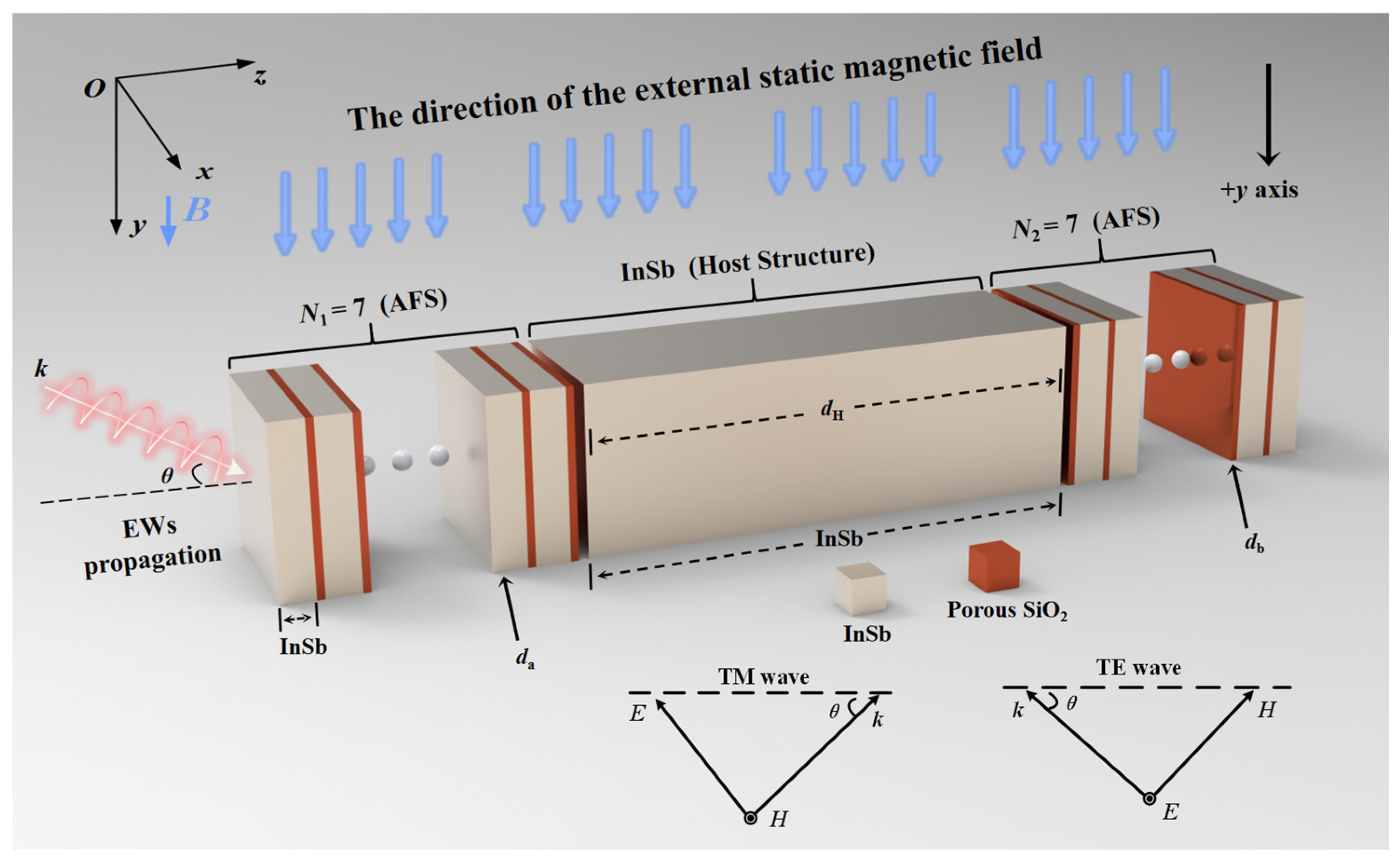
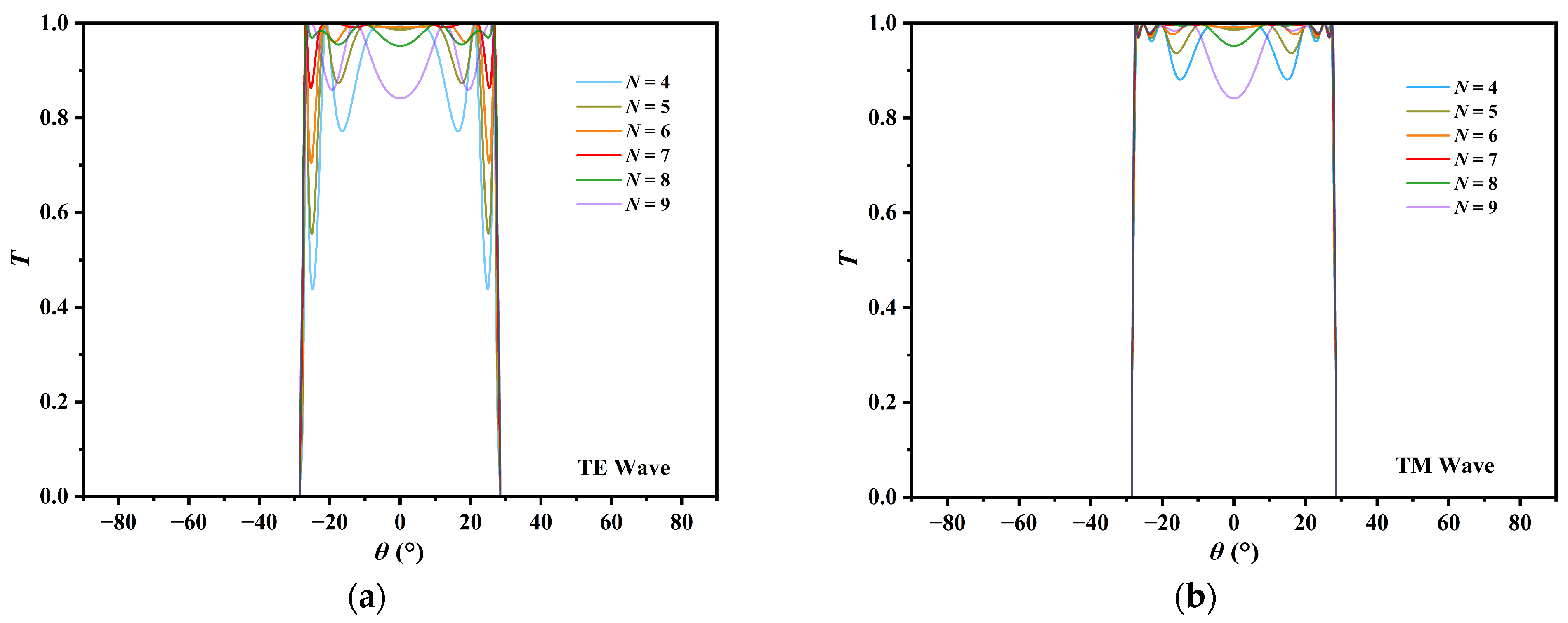
The proposed MO-DPCS is configured as a one-dimensional, multilayered structure tailored specifically for the detection of hazardous gases with low refractive indices, such as CH4, CO, and sulfur dioxide (SO2). The design focuses on a refractive index spectrum ranging from 1.000 to 1.100. This interval is strategically selected to strictly encompass the refractive indices of vacuum (n = 1.0), atmospheric air (n ≈ 1.0003), and the majority of industrial volatile gases, ensuring comprehensive coverage for gas leakage monitoring. The sensor achieves enhanced sensitivity (S) via a differential sensing methodology. Figure 1 demonstrates that the structure operates as a magneto-optical Fabry–Pérot cavity [51], comprising a central resonant cavity sandwiched between two symmetrical anti-reflection structures (AFSs) [52]. The fundamental host structure comprises a singular layer of InSb with an optimized thickness dH of 434 μm, leveraging the epsilon-near-zero (ENZ) [53,54] property to stimulate a designated angular transmission window (ATW). To reduce signal attenuation caused by thin-film resonance effects at energy transition points, the host structure is interposed between two identical AFSs designed using impedance matching to minimize reflection losses [55,56]. As shown in Figure 2, each AFS consists of 7 periods of alternating layers of InSb, with a thickness of da = 7.3 μm, and porous SiO2 layers, with a thickness of db = 1.4 μm. This specific periodicity N was rigorously optimized to balance spectral flatness and transmission efficiency, as numerical analysis indicates that lower values result in significant impedance-mismatch ripples within the passband, while higher values induce excessive cavity resonance dips that degrade the flat-top profile. Consequently, the 7-period configuration was identified as the global optimum for securing near-unity transmission. The porous SiO2 was chosen for its steady low refractive index and regulated dielectric constant of 1.50. A key aspect of this design is the synchronized modulation of the InSb layers within both the host structure and the AFSs. The device is exposed to an incoming electromagnetic wave (EW) characterized by a wave vector k, which propagates in the xoz-plane (the plane of incidence) at incidence angle θ. An external static magnetic field B is oriented along the positive +y-axis, maintaining a direction perpendicular to the plane of incidence to establish the Voigt configuration [57]. To practically generate and maintain this uniform magnetic field in industrial environments, a compact current-driven electromagnetic induction module, utilizing a Helmholtz coil configuration, can be integrated into the sensor housing. By passing a regulated DC current through orthogonal conductive windings, a highly directional and spatially linear magnetic field is established along the required axis. Since the optimized field strength of roughly 0.033 T is significantly lower than that required for conventional magneto-optical isolators, this setup avoids the need for bulky superconducting magnets, thereby ensuring that the system remains structurally compact and cost-effective, with negligible increase in complexity. Under this geometric arrangement, the incident light is decomposed into two orthogonal polarization modes. In the TE wave, the electric field vector E oscillates parallel to the +y-axis and is thus aligned with B. Conversely, in the TM wave, the magnetic field vector H oscillates parallel to the +y-axis, which constrains the electric field vector E to lie within the xoz-plane and remain perpendicular to the direction of B. This configuration generates a significant non-reciprocal magneto-optical effect specifically for the TM mode while maintaining the TE mode as a quasi-static reference, thereby providing the MO-DPCS with enhanced anti-interference capabilities against environmental variations and improved detection resolution by effectively mitigating common-mode noise [58].
The permittivity of InSb can be expressed in tensor form [59]:
ε i = ε x 0 i ε x z 0 ε y 0 i ε x z 0 ε x
ε x = ε ε ω p 2 ( ω + i γ ) ω ( ω + i γ ) 2 ω c 2
ε y = ε ε ω p 2 ω ( ω + i γ )
ε x z = ε ω p 2 ω c ω ( ω + i γ ) 2 ω c 2
In this context, ε denotes the high-frequency dielectric constant of InSb; γ signifies the carrier collision frequency [59], which is treated as a temperature-independent constant in this theoretical model. m and e correspond to the mass and charge of an electron, respectively, and m* equals 0.015 m, indicating the effective mass of the carriers. The theoretical model strictly considers crystalline InSb to leverage its exceptional electronic properties in the THz regime. The high electron mobility and low effective mass inherent to the crystalline state of InSb are fundamentally required to achieve strong magneto-optical non-reciprocity under a relatively low external magnetic field. Compared to amorphous or polycrystalline alternatives, the crystalline lattice effectively minimizes carrier scattering losses, ensuring the ultra-high transmission efficiency and steep spectral edges optimized by MODA. The detailed manufacturing process is provided in Sections S1 and S2 of the Supplementary Materials, the relevant Refs [60,61,62,63]. The emergence of the ENZ property within the investigated THz frequency range is fundamentally rooted in the magneto-plasma resonance response of the semiconductor. To accurately estimate this phenomenon, a Drude tensor model is employed to describe the interaction between the incident electromagnetic waves and the magnetized carriers. When the external magnetic field is applied, the cyclotron motion of the electrons modulates the effective permittivity of the material. At specific frequencies determined by the plasma frequency and the cyclotron frequency, the real part of the diagonal components of the dielectric tensor approaches zero, thereby generating the ENZ state. This near-zero refractive index regime significantly enhances the light–matter interaction within the PC layers, allowing the sensor to exhibit extreme sensitivity to minute variations in the refractive index of the surrounding gas medium. ωp is the plasma frequency, defined as (Ne/ε0εm*)1/2. Crucially, ωp serves as a temperature-dependent variable strictly governed by the intrinsic carrier density N, which acts as a strong function of the lattice temperature. Here, ε0 represents vacuum permittivity, while ambient temperature is denoted by T0. Consequently, the specific temperature-dependent carrier density N is specified as [59]
N cm 3 = 5.76 × 10 14 T 0 1.5 × e 0.26 2 × 8.625 × 10 5 × T 0
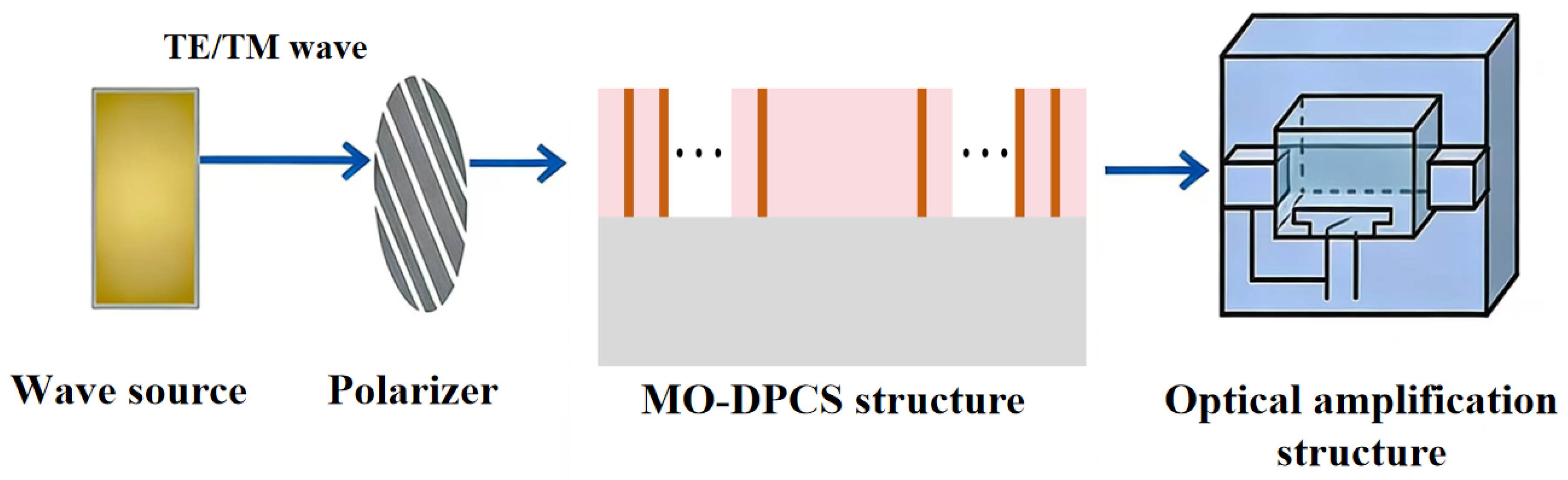
To rigorously validate the theoretical predictions under realistic operating conditions, a comprehensive experimental roadmap is proposed based on a linear transmission spectroscopy setup. The measurements are designed to be conducted within a shielded anechoic chamber to eliminate environmental electromagnetic interference. A Vector Network Analyzer (VNA) is employed to drive a transmitting horn antenna positioned on the left side of the sample, launching a collimated electromagnetic wave beam toward the structure. Theoretically, based on the analysis of 1D-PC, the incident wave is a plane wave; the size of the incident plane is not considered, which is equivalent to the incident plane xoy being infinite in size. In practical experiments, the spot size of the incident wave should remain consistent with the incident plane. Since the detection mechanism relies on monitoring the precise angular displacements of the steep spectral edges within an angular interrogation architecture, the collimation and coherence of the incident THz beam are critical factors. A high degree of beam collimation with a minimal divergence angle is fundamentally required to prevent the spectral broadening of the band edges. If the incident beam possesses excessive angular divergence, the RC of the transmission spectrum will inevitably degrade, thereby reducing the resolution and overall efficiency of the sensing system. To ensure that the performance of the MO-DPCS aligns with the theoretical predictions, the use of a well-collimated continuous-wave THz source is recommended in conjunction with a high-precision rotation stage for accurate angle control. To explicitly verify the polarization splitting capability, a high-extinction-ratio wire-grid polarizer is inserted into the optical path, thereby allowing for the strict isolation of TE and TM modes. The fabricated multilayered structure is mounted on a high-precision motorized rotation stage, enabling continuous angular scanning with millidegree resolution to confirm the steep spectral edges. Furthermore, temperature robustness is assessed by integrating the sample holder with a ceramic heating module and a thermocouple feedback loop. Finally, the transmitted signal is collected by a receiving horn antenna on the right side and fed back to the VNA for S-parameter analysis, ensuring that the simulated performance indicators, including angular sensitivity and thermal stability, are corroborated by empirical data. The experimental process of the proposed MO-DPCS is shown in Figure 3. The effective dielectric constant for an incident plane electromagnetic wave in TE mode can be expressed as [59]
ε TE = ε 1 ω p 2 ω ( ω + i γ )
In the Voigt configuration, an external magnetic field B is applied perpendicularly to the wave propagation direction, resulting in an anisotropic dielectric response of InSb. In TE mode, the electric field oscillates parallel to B, resulting in carrier motion being unaffected by the Lorentz force. Thus, the effective refractive index for the TE mode is isotropic, represented as na (TE) = (εTE)1/2 [64]. Conversely, the TM mode exhibits an electric field orthogonal to B, resulting in robust coupling between the EWs and free carriers influenced by the Lorentz force. This interaction is defined by the cyclotron frequency ωc = eB/m* [59], and the effective refractive index in this mode is given by na (TM) = [(εx − εxz)/εx]1/2 [65].
As a consequence of these distinct dielectric responses, the TE mode retains an isotropic character, whereas the TM mode becomes magneto-optically anisotropic under the influence of the Lorentz force. This divergence in propagation characteristics dictates that within a periodically layered medium, the characteristic transfer matrix of each layer must be formulated independently for the TM and TE waves, which are respectively expressed as [66,67]
M n = cos δ n i p n 1 sin δ n i p n sin δ n cos δ n
M TM = cos k 1 z d n + k 1 x ε x z k 1 z ε x x sin k 1 z d n i p 1 1 sin k 1 z d n i p 1 sin k 1 z d n cos k 1 z d n k 1 x ε x z k 1 z ε x x sin k 1 z d n
M TE = cos k 2 z d n i p 2 1 sin k 2 z d n i p 2 sin k 2 z d n cos k 2 z d n
where kiz = ki cos θi = (ω/c) ni cos θi, k1x = k1 sin θi, pi = (ε0/μ0)1/2 ni cos θi, and ε0 = 8.8542 × 10⁻¹² represent the vacuum dielectric constant and μ0 = 4π × 10−7 is the permeability of the vacuum [61]. To thoroughly examine the optical transmission characteristics of the proposed MO-DPCS, the equations of Maxwell are resolved utilizing the transfer matrix method (TMM) [15,66,67] under the continuity boundary conditions for tangential electric and magnetic fields, which can be employed to calculate energy transfer between dielectric layers.

3. Results

3.1. Spectral Characteristics and Algorithm-Driven Optimization of Magneto-Optical Polarization

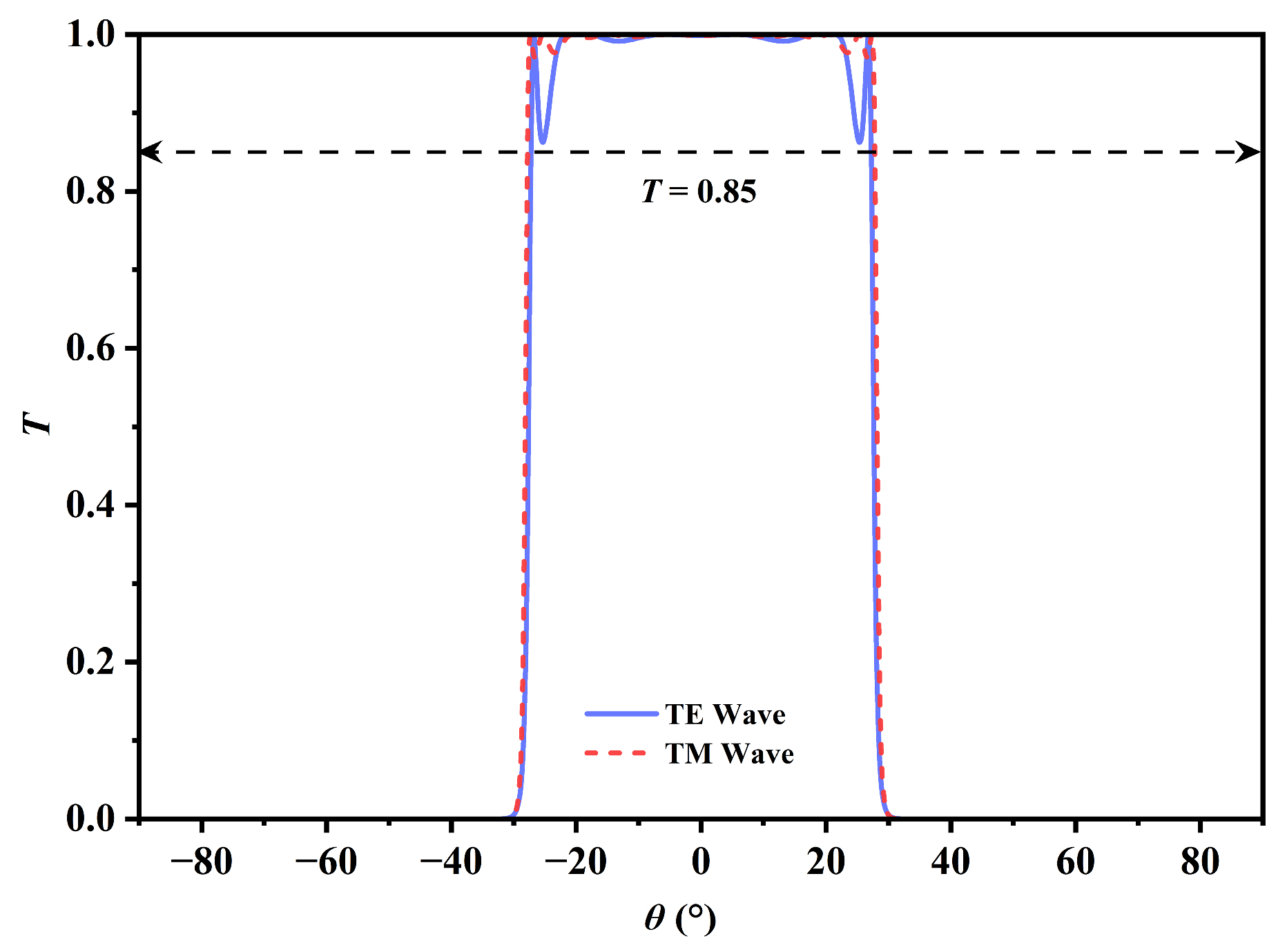
The optical transmission properties of the proposed MO-DPCS were systematically investigated to validate its capability as a high-performance angular filter. Figure 4 illustrates that the periodic stratification of the structure resulted in a pronounced photonic band gap (PBG) [68,69] attributable to Bragg interference [70]. The MO-DPCS demonstrated an exceptional ATW for both TE and TM waves inside the passband. The transmission efficiency typically surpassed 0.9 across the operational angular range, guaranteeing adequate signal intensity for reliable detection, even in lossy experimental conditions. The steepness of the transmission band edge constituted a critical parameter determining the ultimate detection resolution [47]. A steeper edge indicated a more acute angular transition from the passband to the stopband, thereby reducing the ambiguity in identifying the cutoff angle θcutoff and improving the LOD. The RC was employed as a statistic to quantify the sharpness of the band edge. The RC was delineated as [47]
R C = Δ θ 3 dB Δ θ 30 dB
Δθ−3dB and Δθ−30dB represent the angular widths recorded at −3 dB with T = 0.5 and at −30 dB with T = 0.001, respectively. The rectangular coefficient varied from 0 to 1, with values approaching unity signifying a sharper band edge, thus indicating more angular selectivity and greater measurement precision.
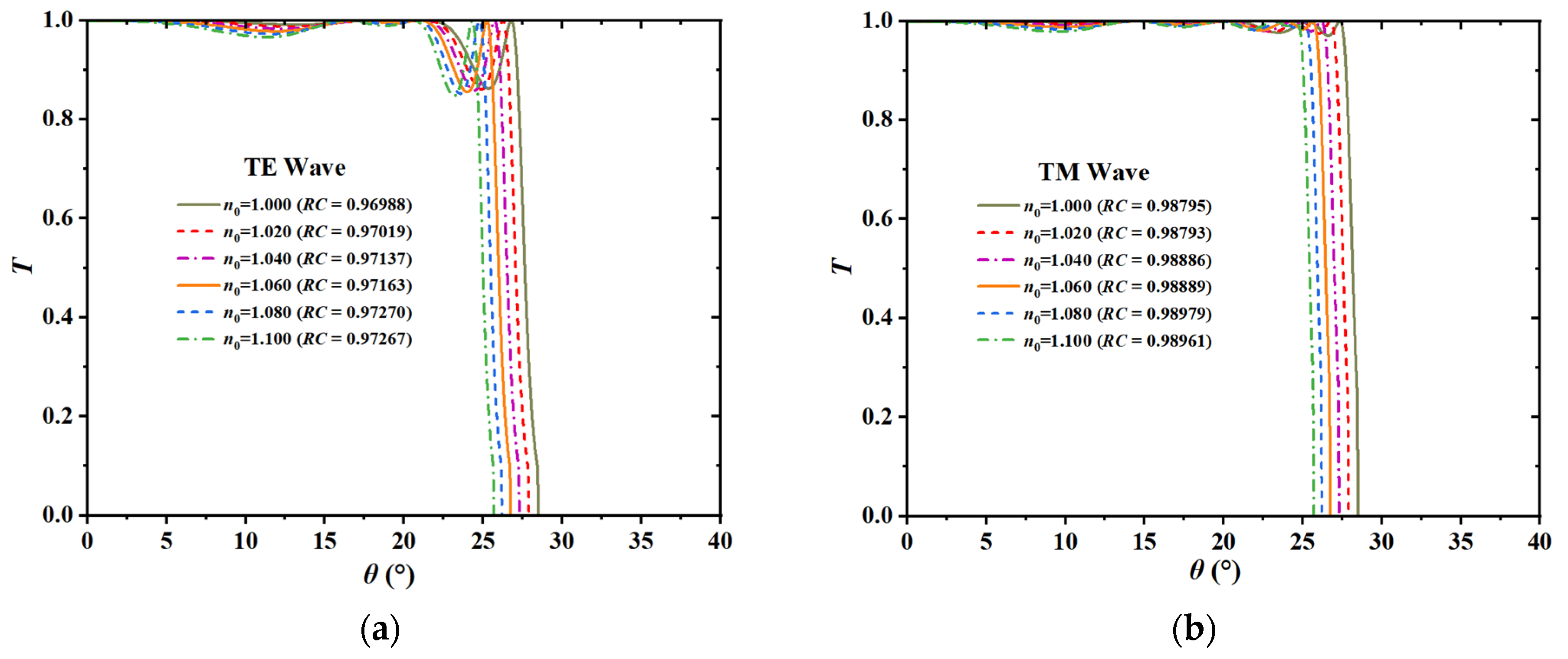
Figure 5 illustrates the quantitative assessment of the spectral quality of the proposed sensor. The data reveal that the RC values for both TE and TM modes remained consistently above 0.975 across the complete refractive index detection range from 1.000 to 1.100. Simultaneously, the device exhibited exceptional optical throughput, with the peak transmittance of the angular transmission window (ATW) exceeding 99%. This persistently high RC indicated a nearly vertical band-edge profile, which was mathematically correlated with a minimized width of the transition region. From a physical perspective, this “flat-top and steep-edge” spectral characteristic offers significant advantages. The high transmission efficiency markedly improves the Signal-to-Noise Ratio (SNR) of the detection system, ensuring that the cutoff point remains distinct even under weak signal conditions, while the high RC directly constrains the Full Width at Half Maximum (FWHM) of the resonance edge [25]. Since the minimization of the FWHM is critical for defining spectral resolution, it serves as the primary mechanism for maximizing the Figure of Merit (FOM). Consequently, the FOM—where higher values indicate superior quality—serves as the most equitable benchmark for evaluating the comprehensive performance of the sensor in practical applications. Although high-Q transmission was crucial, the implementation of differential detection required divergent optical characteristics for TE and TM modes. In the absence of an external magnetic field (B = 0 T), InSb functioned as an isotropic material. Under these circumstances, the transmission spectra for TE and TM modes were essentially indistinguishable, with the cutoff angles θTE and θTM approximately coinciding. Thus, any environmental fluctuation could cause simultaneous shifts in both modes, leading to an insignificant differential signal where Δθ ≈ 0. To address this issue, a static magnetic field of 0.033 T was employed in the Voigt configuration. This field effectively disrupted the time-reversal symmetry of the system and induced gyrotropic anisotropy in the InSb layers. Crucially, the Lorentz force exerted a selective influence; it specifically modified the effective refractive index of the TM mode, where the electric field vector E was orthogonal to the magnetic field vector B. In contrast, the TE mode, with E aligned parallel to B, remained predominantly unaffected. This magneto-optical polarization splitting generated two distinct signal channels within a single physical structure, creating the necessary bias for the ensuing differential detection technique.
The MODA, a bio-inspired metaheuristic first proposed by Mirjalili in 2015 [46], was employed to rigorously determine the optimal magnetic field strength B that maximized the polarization splitting effect while maintaining a high transmission efficiency of the TM mode. MODA represents a sophisticated paradigm in contemporary artificial intelligence research, distinguished by its unique mechanism that mimics the static and dynamic swarming behaviors of dragonflies. In the static phase (exploration), dragonflies form sub-groups to fly over different areas, which allows the algorithm to effectively avoid local optima. Conversely, in the dynamic phase (exploitation), the swarm migrates in a common direction, facilitating rapid convergence toward the global optimum. The core of this algorithm is to calculate the step vectors and position vectors of dragonflies, which are shown as follows, representing their movement directions ΔXi and positions Xi [46]. The detailed variable explanations are provided in Table 1 in pseudo-code.
Δ X i + 1 = s S i + a A i + c C i + f F i + e E i + w Δ X i
X i + 1 = X i + Δ X i + 1
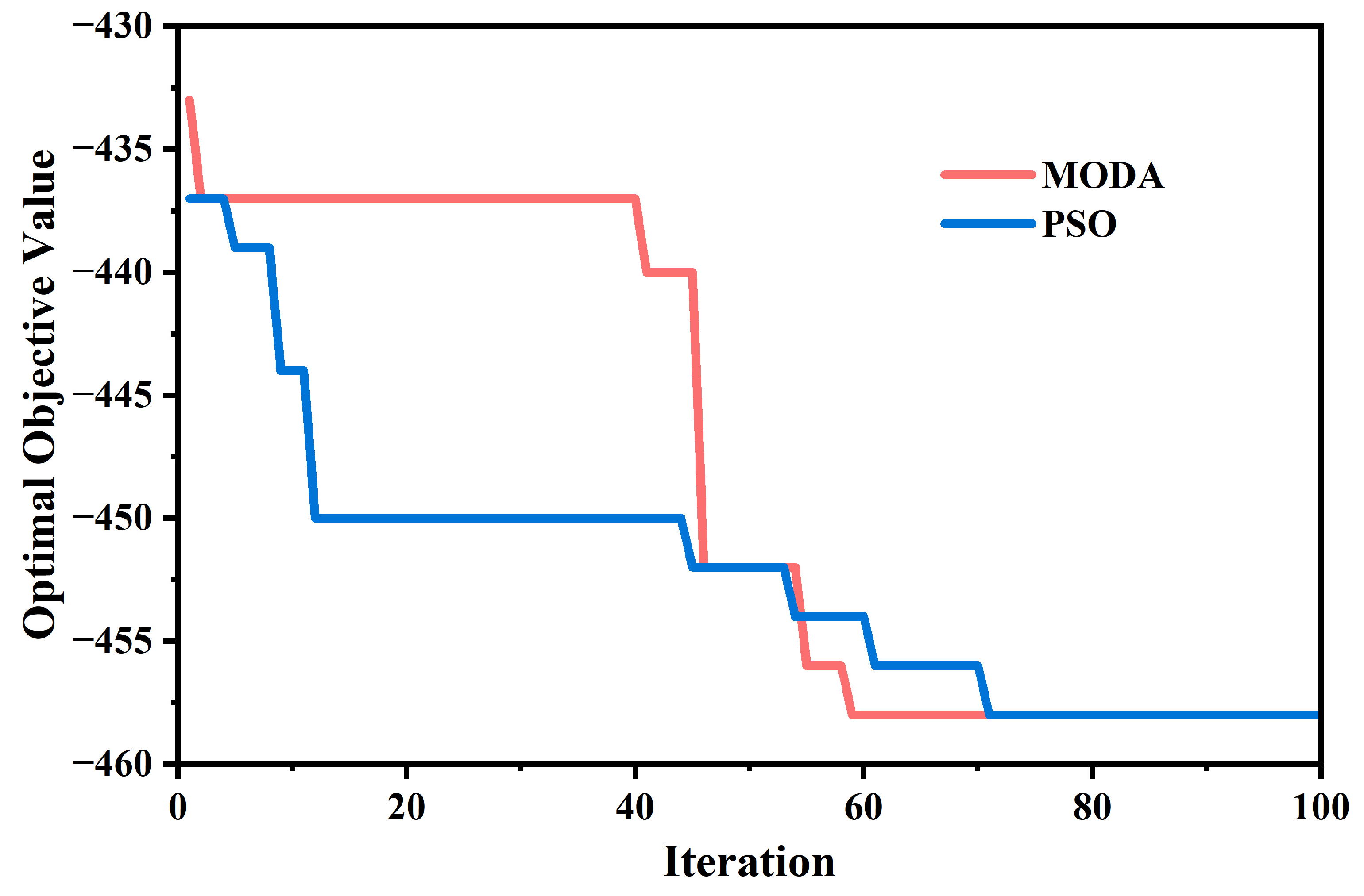
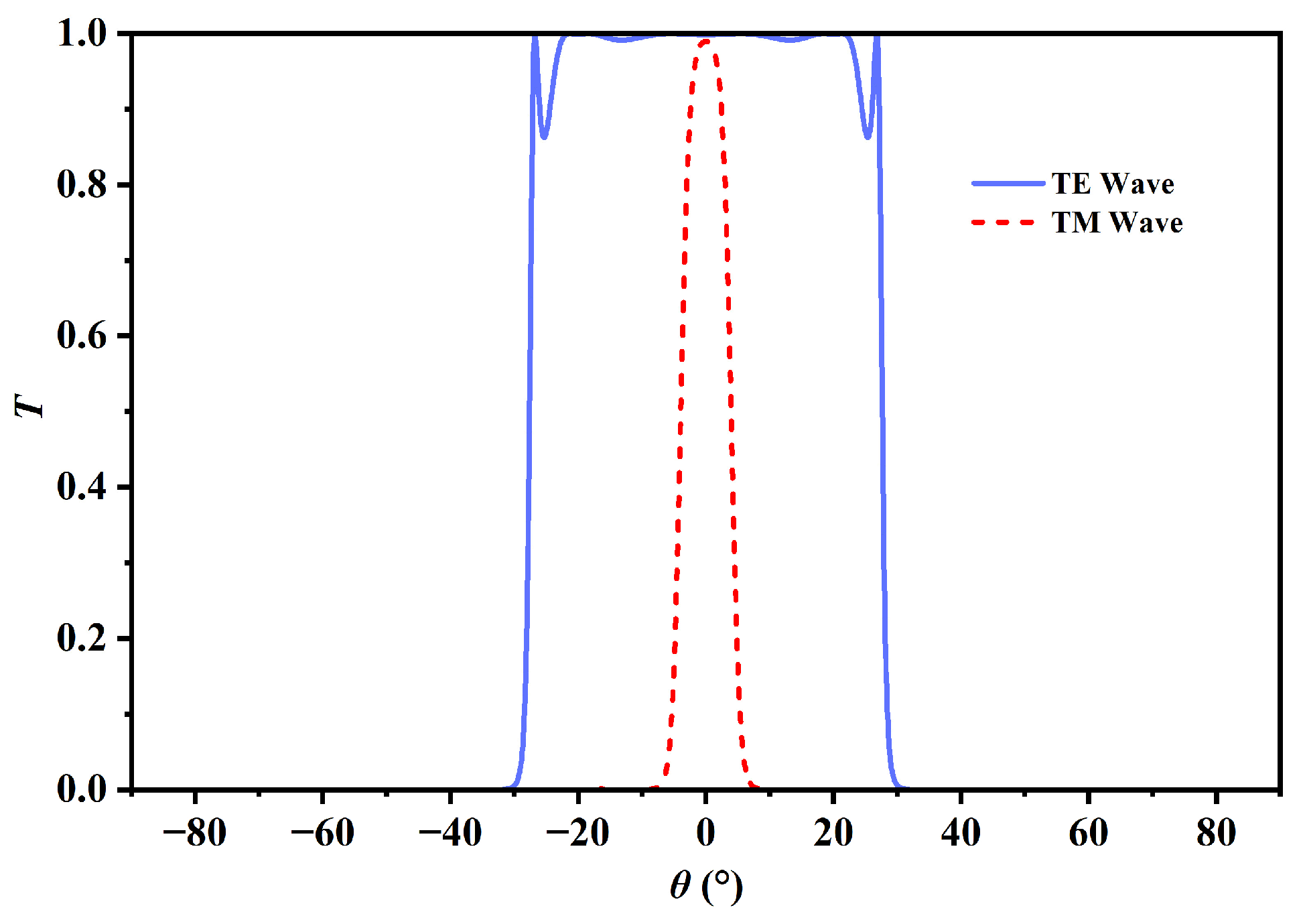
This exceptional capacity to balance exploration and exploitation makes MODA particularly suitable for addressing intricate, multi-variable engineering challenges with conflicting aims. The efficacy of such AI-driven optimization techniques has been extensively validated in the design of high-performance nanophotonic devices. For instance, Genetic Algorithms have been employed to develop ultra-sensitive SPR sensors, including a generic optimization technique that identified a series of sensors with sensitivity improvements of approximately 100%. Notably, a dual-mode SPR structure coupling Surface Plasmon Polaritons and waveguide modes in germanium dioxide was achieved, exhibiting anti-crossing behavior and an unprecedented sensitivity of 1364°/RIU [44]. Other GA-optimized designs include bimetallic Al/Ag structures sandwiched in hBN (578°/RIU at 633 nm) and hybrid hBN/MoS2/hBN structures (676°/RIU at 785 nm). Furthermore, deep learning approaches such as Convolutional Neural Networks (CNNs) have proven superior to traditional methods in the inverse design of Photonic Crystal Waveguides (PCWs). Hybrid frameworks combining the Grey Wolf Optimizer (GWO) with CNNs have also been utilized to optimize complex D-shaped PCF polarization filters, achieving a crosstalk of 965.3 dB and high confinement losses [43]. These cases underscore the powerful potential of intelligent algorithms in pushing the performance boundaries of photonic sensors. As shown in Figure 6, it is acknowledged that similar optimization outcomes can be achieved by other meta-heuristic algorithms, such as GA or PSO. However, MODA is selected in this work to explore its specific efficacy in the context of one-dimensional magnetic PCs, representing a contemporary research direction for solving complex non-linear problems. To ensure the reliability of the optimized parameters, a comparative analysis was performed between MODA and PSO. It was observed that identical convergence toward the global optimum is achieved by both methods, confirming that the optimized configuration is independent of the specific algorithm employed and that the results derived from MODA are robust and consistent. In this study, the optimization focused on a highly refined search space, as the requisite magnetic field adjustments were extremely subtle yet decisive for the resolution of the sensor. The algorithm was assigned the duty of navigating this delicate trade-off to determine a specific magnetic field intensity that maximized the divergence between TE and TM modes while specifically maintaining a high transmission rate. Through rigorous iterative optimization, a magnetic field of 0.032 T was determined to be the global optimum. Figure 7 illustrates the optical response of the structure under optimal conditions, showcasing significant polarization separation while maintaining TM passband transmission above 0.9 (with maximum transmissivity reaching 0.99). The detailed implementation logic and the mathematical foundation of the optimization technique are encapsulated in the pseudo-code provided in Algorithm 1.
Algorithm 1: Multi-Objective Dragonfly Algorithm for Magnetic Field Optimization
Initialize population:
for i = 1 to N do
 |  Magnetic field range: Xi = range(Bmin, Bmax)       // Magnetic field initialization
end
Archive is empty
Iteration M:
for n = 1 to Mmax do
 |  Update adaptive parameters: w, s, a, c, f and e         // Update Pareto
 |  Update archive and select food/enemy position      // Minimize objectives
 |  for i = 1 to N do
 |   |  Separation: Si ← -sum(Xj) − Xj                               // Update positions
 |   |  Alignment: Ai ← mean(ΔXj)
 |   |  Cohesion: Ci ← mean(Xj) − Xi
 |   |  Food: Fi ← Food position − Xi
 |   |  Enemy: Ei ← Enemy position + Xi
 |   |  Calculate step vectors and position vectors
 |   |       ΔXi+1 = s ×Si + a ×Ai + c ×Ci + f ×Fi + e ×Ei + w × ΔXi
 |   |       Xi+1 =Xi + ΔXi+1
 |   |  Update results
 |  end
end
return Archive_X, Archive_F                                           // Output results
To comprehensively execute the inverse design and ensure the seamless integration between the meta-heuristic optimization and TMM calculations, the initialization configuration of MODA was meticulously defined. The optimization framework is multifaceted, encompassing global algorithmic settings, dynamically adaptive swarming coefficients, and strict electrodynamic constraints. Notably, the swarming parameters, such as separation, alignment, and cohesion weights, are non-static and adaptively transition from the exploration phase to the exploitation phase as iterations progress. Furthermore, the objective functions were evaluated under high-resolution angular interrogations and strictly bounded by intrinsic physical properties. The complete architectural parameters and boundary conditions dictating this complex optimization process are systematically detailed in Table 1.

3.2. Refractive Index Sensing Response and Sensitivity Analysis

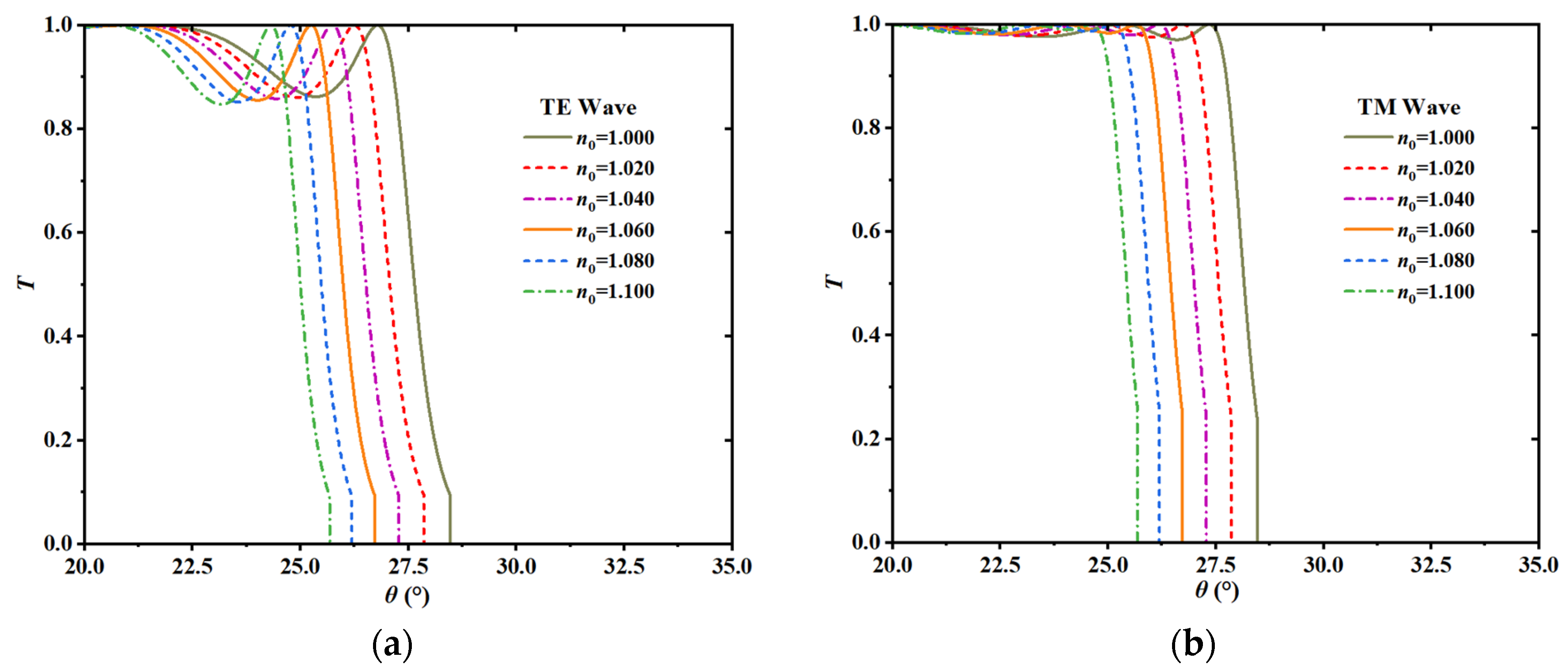
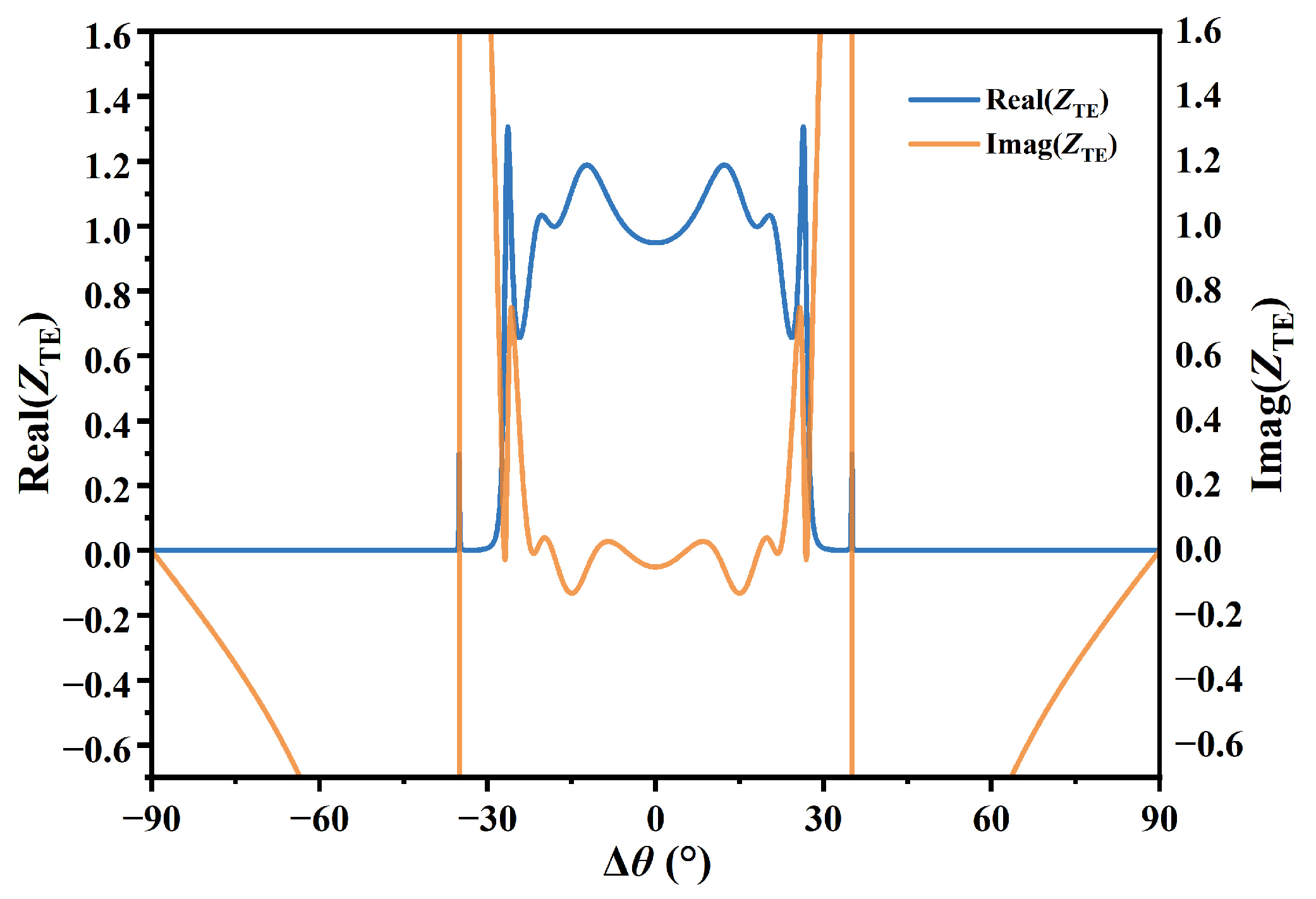
The primary sensing mechanism of the proposed MO-DPCS relies on the dependence of the PBG edge on the dielectric surroundings. Variations in the target gas concentration caused fluctuations in the background refractive index n0, which subsequently modified the effective optical path length within the crystal layers. This alteration in the Bragg resonance condition resulted in a notable angular displacement of the transmission window edge. To clarify the precise effect of magnetic modulation, the response without external magnetic field B = 0 T was initially analyzed to establish a baseline. Specifically, Figure 8a and Figure 8b illustrate the transmission spectra for the TE and TM modes, respectively, demonstrating a concurrent trend towards reduced incidence angles as the refractive index increased from 1.000 to 1.100. While this synchronous blue-shift is characteristic of the unmagnetized state, the application of the optimal external magnetic field induced a distinct magneto-optical phenomenon. Under these magnetized conditions, the two orthogonal polarizations demonstrated contrasting shifting tendencies. The cutoff angle of the TE mode progressively decreased, whereas the cutoff angle of the TM mode shifted in the opposite direction and increased. As shown in Figure 9, to unravel the physical origin of this polarization splitting, the effective surface impedance of the structure was theoretically analyzed. It is a fundamental electromagnetic principle that maximal optical transmission through a metastructure occurs only when the effective impedance is perfectly matched to the intrinsic impedance of free space, specifically, when the real part of the normalized impedance (Zeff/Z0) approaches unity and the imaginary part approaches zero. Our calculations reveal that for the resonant TE mode, this critical matching condition was strictly satisfied, with the reactance vanishing (Imag (ZTE) ≈ 0) and the resistance matching free space (Real (ZTE) ≈ 0), thereby facilitating resonant tunneling. While the TM mode was equally capable of achieving such impedance matching, the gyrotropy induced by the external magnetic field broke the symmetry between the two polarizations. This anisotropy caused the impedance matching conditions for the TE and TM modes to diverge in terms of the operational angle. Consequently, at the specific angle where the TE mode was perfectly matched and transmitting, the TM mode encountered a significant impedance mismatch characterized by a non-zero reactance. This impedance barrier effectively suppressed the TM transmission, confirming that the experimentally observed mode splitting was fundamentally governed by the polarization-dependent impedance modulation of the magneto-optical medium.
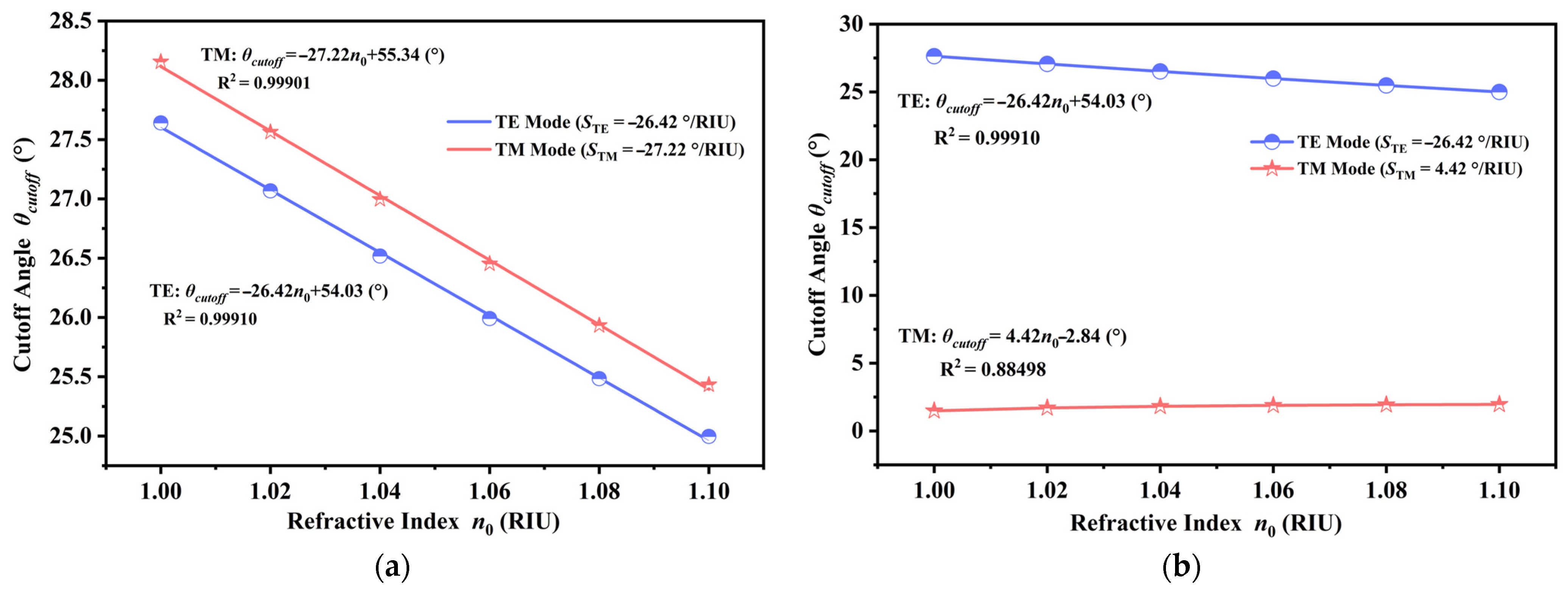
The sensitivity, denoted as S, was computed for both modes and is fundamentally defined as the slope of the angular shift in relation to the change in refractive index. As depicted in Figure 10a, in the unmagnetized state, both modes exhibited a highly similar synchronous response. The TE mode follows the linear equation θcutoff = −26.42 n0 + 54.03° with a correlation coefficient (R2) of 0.99910, yielding a sensitivity θTE of −26.42°/RIU. Concurrently, the TM mode is described by θcutoff = −27.22 n0 − 55.34° (R2 = 0.99901), resulting in a sensitivity θTM of −27.22°/RIU. Upon the application of the optimized external magnetic field, as shown in Figure 10b, the two orthogonal polarizations demonstrate contrasting shifting tendencies. The TE mode, remaining unaffected by the magnetic field, maintained its negative angular shift trend with θTE = −26.42°/RIU. Conversely, the TM mode experienced strong Lorentz force coupling, causing its cutoff angle to progressively increase. This transition was mathematically defined by the linear fitting equation θcutoff = 4.42 n0 − 2.84° (R2 = 0.88498), which corresponded to a positive sensitivity θTM of +4.42°/RIU. While exceptional linearity was maintained by the TE mode, a relatively lower global R2 of 0.88498 was exhibited by the TM mode, which was attributed to the non-linear dispersive nature of the magneto-optical effect across the broad detection range. It should be noted that this global fitting is presented to represent the worst-case scenario regarding the trending behavior of the system. To ensure calibration reliability in practical sensing applications, a piecewise linear fitting strategy can be employed, wherein the detection range is segmented into smaller intervals to achieve local R2 values exceeding 0.99. Furthermore, the final sensing output was derived from the differential angular shift, which, as evidenced in the subsequent analysis, retained high linearity (R2 > 0.99) and resolution, thereby demonstrating that the overall accuracy of the system remained uncompromised. Although the absolute values of the sensitivities varied, the essential discovery was their contrasting signals. This unique differentiation in directional response established the physical basis for the ensuing differential detection technique, which was employed to enhance the overall sensor responsiveness and mitigate common-mode noise.

3.3. Differential Detection Strategy and Comprehensive Performance Evaluation

To enhance the sensing capability of the proposed structure, a differential detection scheme was adopted to quantify the sensing signal. Unlike conventional detection methods, where the sensor response relies on a single resonance feature that is susceptible to environmental noise, the response in this system is determined by the absolute difference between the cutoff angles of the two orthogonal polarization modes. The differential angular shift, denoted as Δθdiff, represents the separation between the TE and TM cutoff edges. Consequently, the total differential sensitivity Sdiff is theoretically defined as the absolute value of the disparity between the individual sensitivities.
S d i f f = S TE S TM
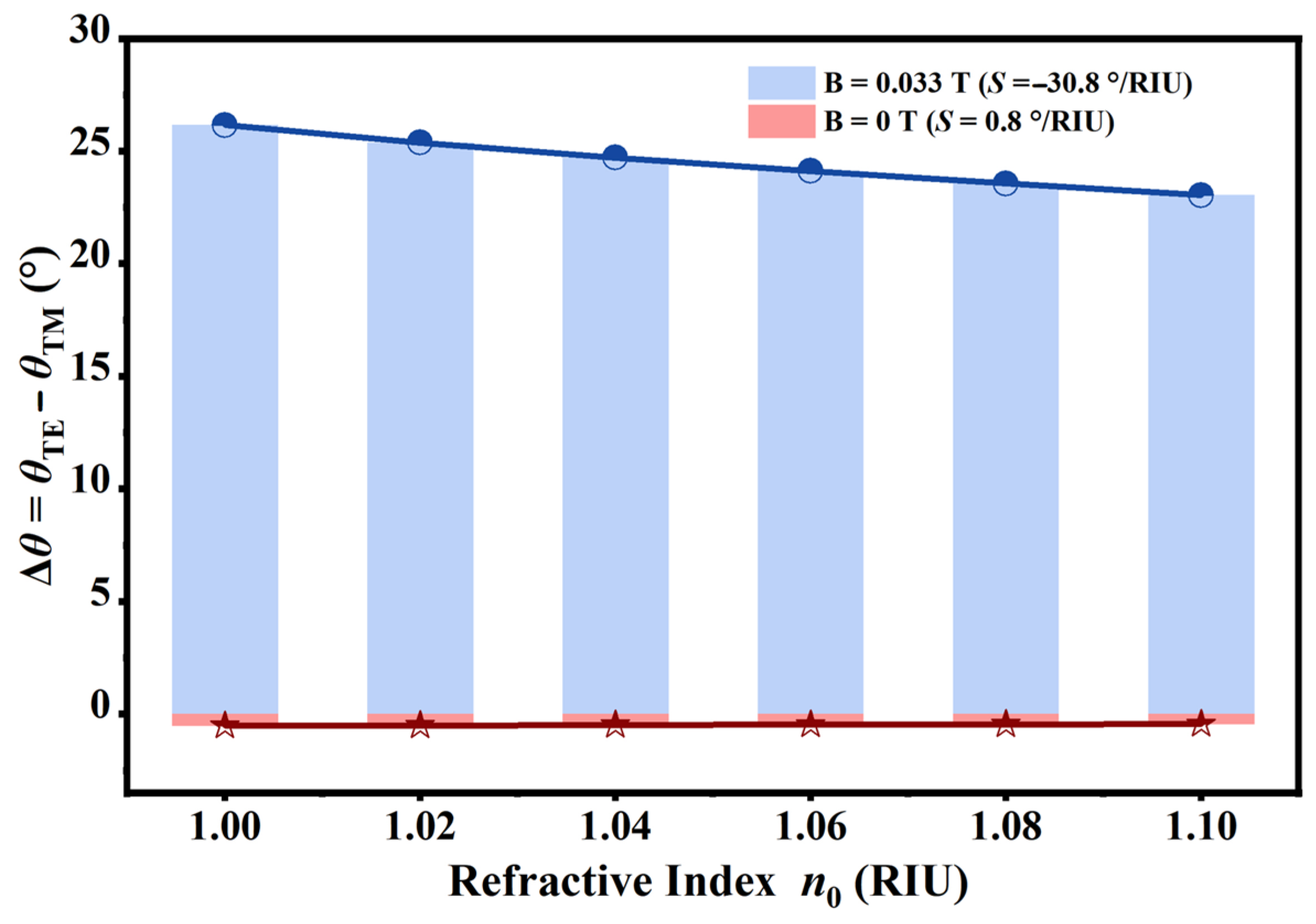
The effectiveness of this differential method relies significantly on the directional shifting patterns of the orthogonal modes. As illustrated in Figure 11, the differential angular shift exhibited completely distinct behaviors depending on the external magnetic field configuration. In the absence of an external magnetic field (B = 0 T), both modes underwent synchronous blue-shifts. Because the algebraic signs of the individual sensitivities STE and STM were congruent, the differential computation inherently resulted in the subtraction of their magnitudes. Quantitative linear fitting verified this limitation, yielding the equation Δθ = −0.8 n0 − 1.31°, with R2 of 0.9935. This corresponded to a negligible differential sensitivity of merely 0.8°/RIU, offering minimal advantage over conventional single-mode detection. Conversely, the application of the external magnetic field (B = 0.033T) exploited the unique reverse-motion characteristic, wherein the individual sensitivities exhibited opposing signs. Under this condition, the algebraic subtraction of the negative STE from the positive STM resulted in a constructive superposition of their absolute values. The linear fitting analysis for this magnetized state defined the relationship as Δθ = −30.84 n0 + 56.87° (R2 = 0.9941), which confirmed a markedly enhanced differential sensitivity of 30.84°/RIU. This exceptional sensitivity significantly surpassed the performance attainable in the unmagnetized state, conclusively demonstrating that the magneto-optical effect served as the primary driver for the superior analytical performance of the proposed sensor.
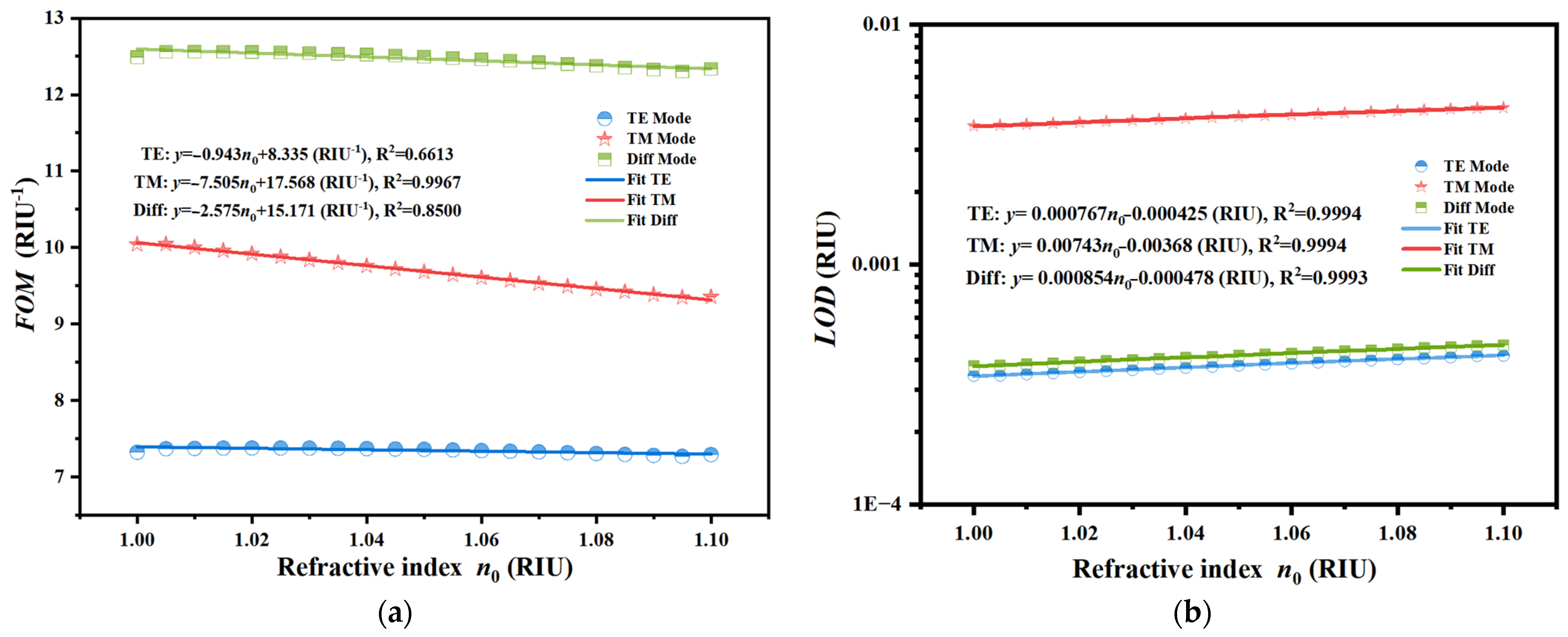
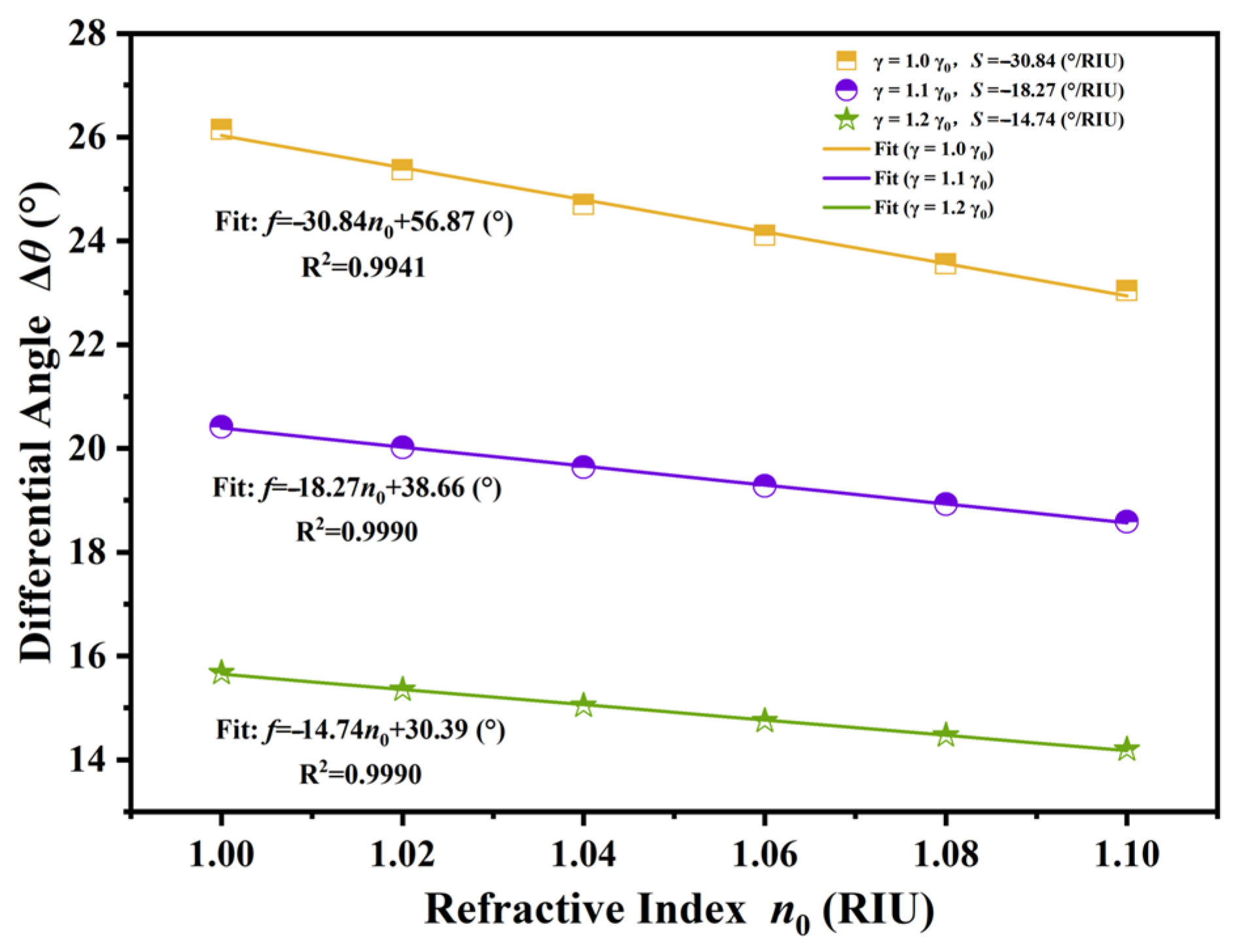
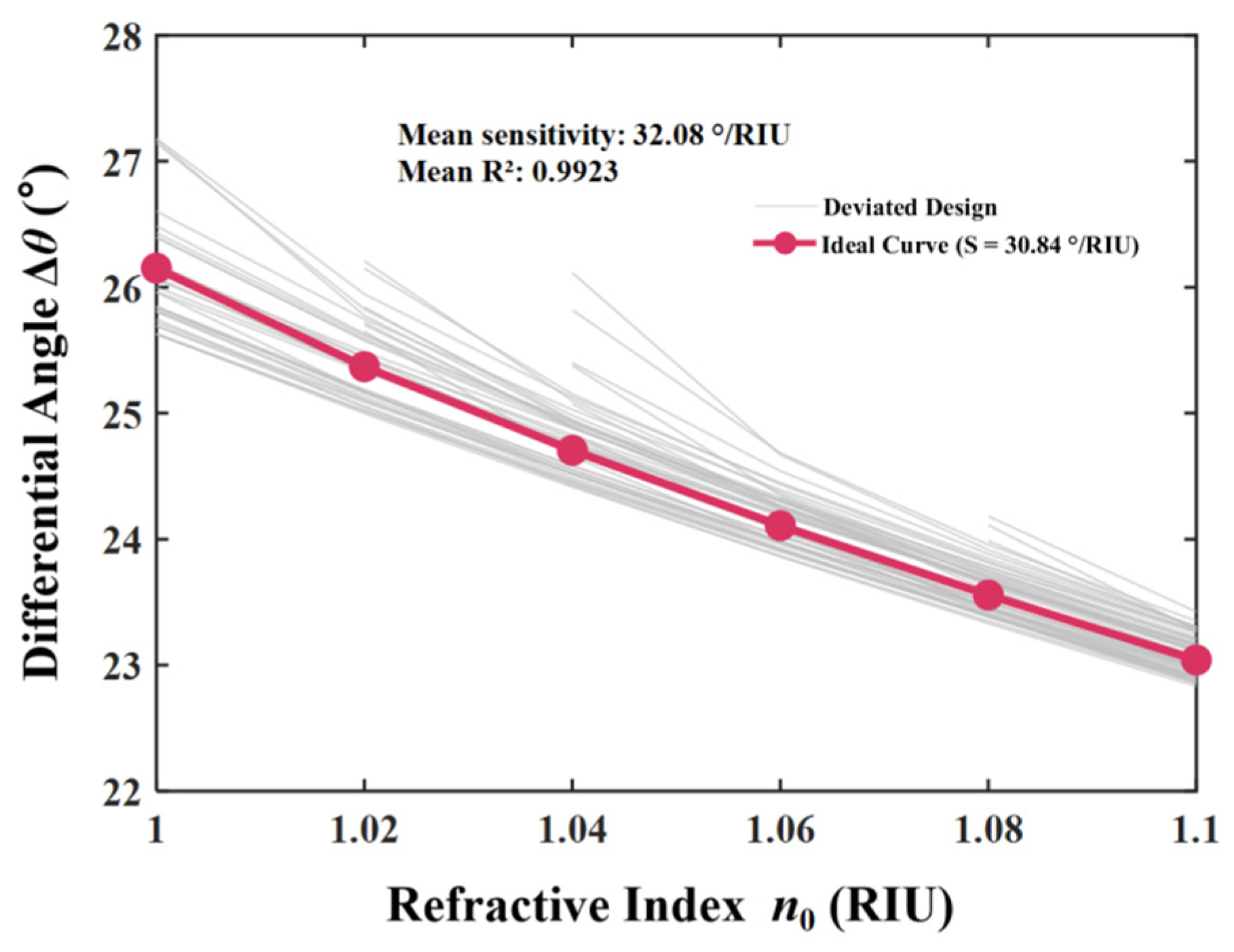
A comprehensive evaluation of the realistic resolution limit was conducted by carefully assessing the FWHM, FOM, and LOD of the sensor. As delineated in Section 3.1, the elevated RC of the structure guaranteed an almost vertical band edge, which immediately correlated with the reduced FWHM of the derivative spectrum. This spectral acuity was essential for performance enhancement. The evaluation was fundamentally grounded in the optimized differential sensitivity, which demonstrated a robust linear response characterized by the equation Δθ = −49.090 n0 + 75.554°, with a correlation coefficient of R2 = 0.9979. The FOM was defined as the ratio of sensitivity to FWHM. The proposed sensor attained remarkable figures of merit due to this enhanced differential sensitivity combined with the reduced FWHM. Figure 12a illustrates that the differential mode displayed the highest FOM throughout the full detection range, markedly exceeding the individual TE and TM modes. This superior performance was quantitatively defined by the linear fitting equation y = −2.575 n0 + 15.171 /RIU with R2 = 0.8500. Furthermore, the LOD was inversely related to the product of sensitivity and the quality factor, mathematically represented as the FWHM divided by twenty times the sensitivity. Figure 12b demonstrates that the differential mode achieved the optimal resolution capability. The linear regression for the differential LOD was described by y = 0.000854 n0 − 0.000478 RIU, with an exceptional linearity of R2 = 0.9993, ultimately reaching a minimal detection limit of roughly 4.18 × 10⁻⁴ RIU. To practically realize this reported LOD, an angular resolution of approximately 0.013° was required by the detection system. This level of precision is experimentally realistic and well within the capabilities of standard commercial high-precision goniometers. Furthermore, to ensure the distinct capture of minute refractive index variations, a geometric optics detection scheme utilizing a reflective lens group can be employed. By functioning as an optical lever, the angular displacement of the beam is significantly magnified, thereby allowing the subtle deflection angles to be resolved with high acuity. This capability is particularly vital for distinguishing gases with similar refractive indices, such as CH4, CO, and NOx. Although the refractive index values are proximate, distinct angular shifts are induced by the high differential sensitivity of the system. Through the application of the aforementioned geometric optics magnification, these minute deviations are translated into separable readout signals, thereby ensuring that specific gaseous species can be effectively differentiated even within mixed environments. This superior performance metric indicates that the sensor is capable of resolving extremely minute variations in the refractive index, thereby validating the suitability of the proposed device for high-precision biosensing and gas detection applications. As shown in Figure 13, prior to a comparative assessment, the influence of intrinsic material absorption in the THz regime was rigorously addressed. In TMM, these losses were fully quantified by the collision frequency γ within the permittivity tensor. While the proposed sensor relies on precise angular interrogation, it is acknowledged that material damping affects the sharpness of the band edge. Specifically, an increase in the loss factor was found to degrade the differential sensitivity, which decreased from roughly 30°/RIU to 15°/RIU in higher loss scenarios, which, in turn, reduced the effective Signal-to-Noise Ratio (SNR) under realistic conditions. However, the differential detection strategy mitigated this effect by canceling common-mode noise, ensuring that the sensor remained functional and accurate, even when material losses were fully considered. As shown in Figure 14, in addition to material properties, the structural robustness against fabrication tolerances was quantitatively evaluated. A Monte Carlo analysis was implemented by introducing random thickness variations of ±5% to the constituent layers over 50 independent simulation cycles. The statistical results demonstrate that the device retained a high mean differential sensitivity of 30.55°/RIU with a standard deviation of 5.31°/RIU. Although minor fluctuations in the response slope were observed due to these geometric deviations, the characteristic linearity and high sensitivity were predominantly preserved, confirming that the sensor performance remains robust and reliable under realistic manufacturing conditions.
To further highlight the practical superiority of the proposed MO-DPCS, Table 2 presents a comprehensive comparison with recently reported optical refractive index gas sensors. Fundamentally distinct from traditional passive sensors or angular SPR-based designs that rely on the absolute shift of a single resonance mode and are inherently restricted by the trade-off between sensitivity and dynamic range, our approach exploits the non-reciprocal magneto-optical effect to induce a unique “reverse-motion” of orthogonal modes. This active differential mechanism not only self-cancels common-mode interference but also constructs a robust sensing channel that allows for high-precision detection across a much wider span. Consequently, as evidenced in the table, the differential sensing architecture developed in this study provides an exceptionally broad detection range spanning from 1.000 to 1.100 RIU. Coupled with the ultra-low LOD established in the preceding analysis, this expansive range empowers the proposed sensor to effectively monitor a highly diverse array of critical industrial and hazardous gases.

3.4. Temperature Cross-Sensitivity and Environmental Stability Analysis

A primary challenge in the implementation of semiconductor-based photonic sensors is the inherent heat sensitivity of the materials involved. The permittivity of InSb is very responsive to temperature fluctuations, resulting in a refractive index alteration that may be indistinguishable from the signal produced by the target analyte. This effect, termed temperature cross-sensitivity, significantly undermines detection accuracy in real settings where thermal fluctuations are unavoidable, potentially resulting in false positive results. To evaluate the robustness of the proposed architecture against thermal noise, the spectral response was systematically characterized across a temperature range of 274 K to 275 K.
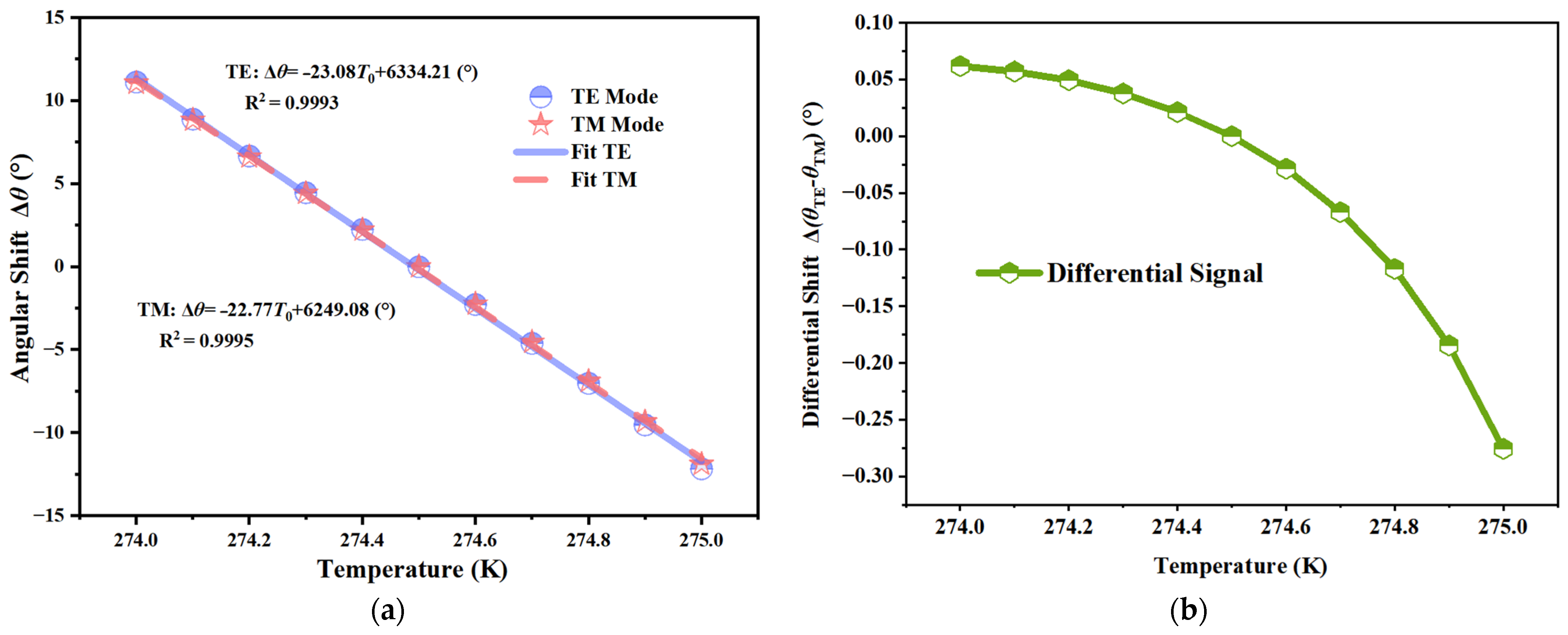
Figure 15a illustrates the inherent limitations of traditional single-mode detection. With a temperature rise of just 1 K, the cutoff angles for both TE and TM modes demonstrate a significant synchronous shift, transitioning from roughly +11° to −12°. The significant angular deviation over 20° suggests that even little thermal fluctuations may be misconstrued as considerable alterations in the refractive index of the target gas, thus compromising the reliability of single-mode measurements without stringent temperature stabilizing measures.
In contrast, the differential detection strategy effectively mitigates this issue by exploiting the common-mode nature of thermal response. Since temperature-induced variations manifest as nearly identical kinematic shifts in both orthogonal polarization modes, the subtraction of the two cutoff angles inherently cancels out the majority of the thermal drift. The stability of the differential signal is presented in Figure 15b. It can be observed that the magnitude of the differential angular shift was confined within a narrow range of approximately 0.35° over the same temperature interval. Compared to the single-mode drift, the temperature cross-sensitivity was suppressed by nearly two orders of magnitude. This result confirms that the proposed differential sensor possesses a self-referencing capability, allowing it to distinguish the true refractive index signal from thermal noise and ensuring high measurement reliability in complex experimental conditions.

4. Conclusions

The results presented in this study demonstrate that the integration of the magneto-optical effect with 1D PCs provides a robust mechanism for enhancing refractive index sensing performance, validating the working hypothesis that the non-reciprocal nature of magnetized InSb can be manipulated to induce opposing spectral shifts in orthogonal polarization modes. Crucially, the structural efficacy was maximized through the implementation of the MODA, which enabled the precise inverse design of layer thicknesses to achieve an optimal RC that manual tuning could not easily attain. While previous studies have predominantly focused on simple geometric optimization to narrow resonance linewidths, the approach utilized here synergizes algorithmic design with the external magnetic field as a new degree of freedom, enabling a transition from absolute angular detection to a differential scheme that amplifies sensitivity from a negligible 0.8°/RIU to a substantial 30.8°/RIU. Interpreting these findings in a broader context, the proposed MO-DPCS addresses the critical challenge of environmental instability inherent to semiconductor-based sensing. Specifically, the differential strategy effectively converts the high thermal cross-sensitivity of InSb into a common-mode noise factor that is mathematically canceled out, thereby ensuring high measurement reliability. Future research directions should focus on the experimental realization of the proposed structure via precision growth techniques such as molecular beam epitaxy, potentially extending the concept to intelligent sensing systems where machine learning algorithms could further enhance real-time data demodulation and pattern recognition in miniaturized on-chip sensor arrays.

Supplementary Materials

The following supporting information can be downloaded at https://www.mdpi.com/article/10.3390/s26061914/s1: Figure S1: Schematic representation of a standard physical vapor deposition (PVD) system; Figure S2: The schematic diagram of the manufacturing process for the proposed layered structure. The bottom of the process flow clearly indicates the specific materials used.

Author Contributions

J.Z.: Investigation, Data curation, Formal analysis, Writing—original draft, Visualization, Software, Validation. L.C.: Visualization, Validation. C.X.: Visualization. H.-F.Z.: Conceptualization, Methodology, Supervision, Writing—review and editing. All authors have read and agreed to the published version of the manuscript.

Funding

This work was supported by the Yangzhou Municipal-University Collaboration Special Program (grant no. YZ2024233), the Open Research Program of China’s State Key Laboratory of Millimeter Waves (grant no. KN202502-15), and the National College Students Innovation and Entrepreneurship Training Program (grant no. 202513989003G).

Institutional Review Board Statement

Not applicable.

Informed Consent Statement

Not applicable.

Data Availability Statement

Dataset available upon request from the authors.

Acknowledgments

This work was supported by the College Student Innovation Training Program of Tongda College of Nanjing University of Posts and Telecommunications.

Conflicts of Interest

The authors declare no conflicts of interest.

References

  1. Waleed, D.; Mustafa, S.H.; Mukhopadhyay, S.; Abdel-Hafez, M.F.; Jaradat, M.A.K.; Dias, K.R.; Arif, F.; Ahmed, J.I. An In-Pipe Leak Detection Robot With a Neural-Network-Based Leak Verification System. IEEE Sens. J. 2019, 19, 1153–1165. [Google Scholar] [CrossRef]
  2. Jackson, R.B.; Down, A.; Phillips, N.G.; Ackley, R.C.; Cook, C.W.; Plata, D.L.; Zhao, K. Natural Gas Pipeline Leaks Across Washington, DC. Environ. Sci. Technol. 2014, 48, 2051–2058. [Google Scholar] [CrossRef]
  3. Wan, B.F.; Wang, Q.Y.; Peng, H.M.; Ye, H.N.; Zhang, H.F. A late-model optical biochemical sensor based on OTS for methane gas and glucose solution concentration detection. IEEE Sens. J. 2021, 21, 21465–21472. [Google Scholar] [CrossRef]
  4. Zhao, Y.; Lei, M.; Liu, S.X.; Zhao, Q. Smart hydrogel-based optical fiber SPR sensor for pH measurements. Sens. Actuators B 2018, 261, 226–232. [Google Scholar] [CrossRef]
  5. Sheng, G.; She, K.; Shan, Z.P.; Liu, E.X.; Peng, Y.C.; Liu, J.J. Topologically-protected dual-parameter Valley Hall photonic crystal sensor. Opt. Express 2025, 33, 25558–25569. [Google Scholar] [CrossRef] [PubMed]
  6. Wilson, G.S.; Gifford, R. Biosensors for real-time in vivo measurements. Biosens. Bioelectron. 2005, 20, 2388–2403. [Google Scholar] [CrossRef]
  7. Samavati, Z.; Samavati, A.; Ismail, A.F.; Yahya, N.; Othman, M.H.D.; Rahman, M.A. Modified polymer optical fiber sensors for crude oil refractive index monitoring. J. Mater. Sci. Mater. Electron. 2020, 31, 12089–12100. [Google Scholar] [CrossRef]
  8. Shakya, A.K.; Singh, S. Novel Merger of spectroscopy and refractive index sensing for modelling hyper sensitive hexa-slotted plasmonic sensor for transformer oil monitoring in near-infrared region. Opt. Quantum Electron. 2023, 55, 764. [Google Scholar] [CrossRef]
  9. Pulikottil, S.; Kasztelanic, R.; Stepniewski, G.; Baltuška, A.; Buczynski, R.; Bugár, I. Refractive index sensor based on the natural roughness of a directly fabricated D-shape fiber for biological and environmental monitoring purposes. Opt. Fiber Technol. 2024, 88, 104036. [Google Scholar] [CrossRef]
  10. Huang, C.H.; He, J.; Austin, E.; Seto, E.; Novosselov, I. Assessing the value of complex refractive index and particle density for calibration of low-cost particle matter sensor for size-resolved particle count and PM2.5 measurements. PLoS ONE 2021, 16, e0259745. [Google Scholar] [CrossRef]
  11. Butt, M.A.; Imran Akca, B.; Mateos, X. Integrated Photonic Biosensors: Enabling Next-Generation Lab-on-a-Chip Platforms. Nanomaterials 2025, 15, 731. [Google Scholar] [CrossRef] [PubMed]
  12. Fuentes Pérez, J.F.; Martínez Miguel, M.; García Vega, A.; Bravo Córdoba, F.J.; Sanz Ronda, F.J. Design and Initial Validation of an Infrared Beam-Break Fish Counter (‘Fish Tracker’) for Fish Passage Monitoring. Sensors 2025, 25, 4112. [Google Scholar] [CrossRef] [PubMed]
  13. Karapateas, L.; Leonidas, E.; Meng, X.F.; Lai, Y.F.; Zhang, Y.; Willmott, J.R.; Hobbs, M.J. InAsSb Photodiode-Based Infrared Radiation Thermometer for the Investigation of Droplet Surface Temperature Dynamics Within an Enclosed Combustion Chamber. Sensors 2025, 25, 5780. [Google Scholar] [CrossRef]
  14. Santos, J.L. Optical Sensors for Industry 4.0. IEEE J. Sel. Top. Quantum Electron. 2021, 27, 1–11. [Google Scholar] [CrossRef]
  15. Hu, P.; Xie, C.W.; Song, Q.J.; Chen, A.; Xiang, H.; Han, D.Z.; Zi, J. Bound states in the continuum based on the total internal reflection of Bloch waves. Natl. Sci. Rev. 2022, 10, nwac043. [Google Scholar] [CrossRef]
  16. Yablonovitch, E.; Gmitter, T.J. Photonic band structure: The face-centered-cubic case. Phys. Rev. Lett. 1989, 63, 1950–1953. [Google Scholar] [CrossRef]
  17. Nishijima, Y.; Ueno, K.; Juodkazis, S.; Mizeikis, V.; Misawa, H.; Tanimura, T.; Maeda, K. Inverse silica opal photonic crystals for optical sensing applications. Opt. Express 2007, 15, 12979–12988. [Google Scholar] [CrossRef] [PubMed]
  18. Viphavakit, C.; Keeffe, S.O.; Yang, M.; Andersson-Engels, S.; Lewis, E. Gold Enhanced Hemoglobin Interaction in a Fabry–Pérot Based Optical Fiber Sensor for Measurement of Blood Refractive Index. J. Lightwave Technol. 2018, 36, 1118–1124. [Google Scholar] [CrossRef]
  19. Li, W.W.; Chen, W.P.; Wang, D.N.; Wang, Z.K.; Xu, B. Fiber inline Mach-Zehnder interferometer based on femtosecond laser inscribed waveguides. Opt. Lett. 2017, 42, 4438–4441. [Google Scholar] [CrossRef]
  20. Ivanov, I.; Skryshevsky, V.; Belarouci, A. Porous silicon photonic crystal-based interferometric chemical sensor. Opt. Express 2025, 33, 40891–40901. [Google Scholar] [CrossRef]
  21. Ullah, S.; Chen, H.L.; Guo, P.X.; Song, M.S.; Zhang, S.; Hu, L.C.; Li, S.G. A Highly Sensitive D-Shaped PCF-SPR Sensor for Refractive Index and Temperature Detection. Sensors 2024, 24, 5582. [Google Scholar] [CrossRef]
  22. Ehiabhili, J.; Prabhu, R.; Kannan, S. Design and Numerical Analysis of an Ultra-Sensitive π-Configuration Fibre Optic-Based SPR Sensor: Dual Plasmonic Enhancement for Low-Refractive-Index Biomolecular Detection. Photonics 2026, 13, 147. [Google Scholar] [CrossRef]
  23. Hasan, A.; Chowdhury, A.; Adib, A.; Das, D.; Ferdous, A.H.M.I.; Mitul, A.F.; Akhtar, J.; Reja, M.I. An Ultra-Sensitive Bimetallic-Coated PCF-Based Surface Plasmon Resonance Sensor for Waterborne Pathogen Detection. Photonics 2025, 12, 1240. [Google Scholar] [CrossRef]
  24. Liang, G.L.; Zhao, Z.J.; Wei, Y.; Liu, K.P.; Hou, W.Q.; Duan, Y.X. Plasma enhanced label-free immunoassay for alpha-fetoprotein based on a U-bend fiber-optic LSPR biosensor. RSC Adv. 2015, 5, 23990–23998. [Google Scholar] [CrossRef]
  25. Zaky, Z.A.; Ahmed, A.M.; Shalaby, A.S.; Aly, A.H. Refractive index gas sensor based on the Tamm state in a one-dimensional photonic crystal: Theoretical optimisation. Sci. Rep. 2020, 10, 9736. [Google Scholar] [CrossRef] [PubMed]
  26. Shokrekhodaei, M.; Cistola, D.P.; Roberts, R.C.; Quinones, S. Non-Invasive Glucose Monitoring Using Optical Sensor and Machine Learning Techniques for Diabetes Applications. IEEE Access 2021, 9, 73029–73045. [Google Scholar] [CrossRef]
  27. Zhou, G.L.; Li, L.Y.; Zhou, Y.; Chen, X.Y. Measurement Error Analysis of Seawater Refractive Index: A Measurement Sensor Based on a Position-Sensitive Detector. Sensors 2024, 24, 4564. [Google Scholar] [CrossRef]
  28. Shen, W.M.; Norrie, D.H. Agent-Based Systems for Intelligent Manufacturing: A State-of-the-Art Survey. Knowl. Inf. Syst. 1999, 1, 129–156. [Google Scholar] [CrossRef]
  29. Tavana, S.; Bahadori Haghighi, S.; Ye, W.N. Tunable and ultra-narrowband multifunctional terahertz devices using anisotropic graphene based hyperbolic metamaterials. Sci. Rep. 2024, 14, 31303. [Google Scholar] [CrossRef]
  30. Tian, H.S.; Wang, H.B.; Zhang, J.K.; Sun, G. Controllable Goos-Hänchen Shift in Photonic Crystal Heterostructure Containing Anisotropic Graphene. Coatings 2024, 14, 1092. [Google Scholar] [CrossRef]
  31. Qing, Y.M.; Ma, H.F.; Wu, L.W.; Cui, T.J. Manipulating the light-matter interaction in a topological photonic crystal heterostructure. Opt. Express 2020, 28, 34904–34915. [Google Scholar] [CrossRef]
  32. Yablonovitch, E. Inhibited Spontaneous Emission in Solid-State Physics and Electronics. Phys. Rev. Lett. 1987, 58, 2059–2062. [Google Scholar] [CrossRef]
  33. Qi, X.; Wu, J.J.; Wu, F.; Ren, M.N.; Wei, Q.; Guo, Z.W.; Jiang, H.T.; Chen, Y.G.; Yang, Y.P.; Chen, H. Topologically enabled giant angle-insensitive Goos-Hänchen shift by tunable merging bound states in the continuum of a quasiflat band. Phys. Rev. B 2024, 110, 035420. [Google Scholar] [CrossRef]
  34. Li, M.Y.; Luo, Z.W.; Zhou, X.; Zhang, Z.X.; Wang, M.M.; Chen, B.; Xiao, L.; Duan, Y.X.; Li, L.Y. Core–Shell Structure of AuNPs@PDMS Nanoparticle-Modified Silver Film on Bent Optical Fiber to Design a SPR Sensor for Synchronous Detection of Temperature and Refractive Index. Plasmonics 2025, 20, 10547–10558. [Google Scholar] [CrossRef]
  35. Wang, B.X.; Zhou, W.J.; Zhao, Q.; Wang, H.; Zhang, Y.Q.; Zhang, D.Q.; Shu, F.Z.; Yang, G.F.; Wu, L. Ge2Sb2Te5-Based Multifunctional Reconfigurable Terahertz Metamaterials with Joint Polarization Control. Laser Photonics Rev. 2025, e02941. [Google Scholar] [CrossRef]
  36. Dong, R.Y.; Sui, J.Y.; Li, Z.J.; Zhang, H.F. The terahertz isolator and switch based on the nonreciprocal feature of magnetized InSb layered photonic structure. Opt. Laser Technol. 2024, 169, 110004. [Google Scholar] [CrossRef]
  37. Li, C.Y.; Xie, Y.J.; Wu, P.Y.; Chen, S. Nonreciprocal Terahertz Propagation via InSb Topological Photonic Crystals. Adv. Photonics Res. 2026, 7, e202500253. [Google Scholar] [CrossRef]
  38. Tan, Z.Y.; Fan, F.; Dong, X.P.; Cheng, J.R.; Chang, S.J. Nonreciprocal terahertz beam steering based on magneto-optic metagratings. Sci. Rep. 2019, 9, 20210. [Google Scholar] [CrossRef]
  39. Wan, B.F.; Xu, Y.; Zhou, Z.W.; Zhang, D.; Zhang, H.F. Theoretical Investigation of a Sensor Based on One-Dimensional Photonic Crystals to Measure Four Physical Quantities. IEEE Sens. J. 2021, 21, 2846–2853. [Google Scholar] [CrossRef]
  40. Suzuki, R. Fabrication of a porous SiO2 thin film with an ultralow refractive index for anti-reflective coatings. J. Sol-Gel Sci. Technol. 2023, 106, 860–868. [Google Scholar] [CrossRef]
  41. Wu, Y.H.; Shang, Z.H.; Li, Z.R.; Zhu, W.L.; Nie, L.F.; Liu, J.C. Porous SiO2 antireflection film with high UV resistance. Opt. Mater. 2024, 153, 115603. [Google Scholar] [CrossRef]
  42. Kim, J.; Kim, J.Y.; Kim, J.; Hyeong, Y.; Neseli, B.; You, J.B.; Shim, J.; Shin, J.; Park, H.H.; Kurt, H. Inverse design of nanophotonic devices enabled by optimization algorithms and deep learning: Recent achievements and future prospects. Nanophotonics 2025, 14, 121–151. [Google Scholar] [CrossRef] [PubMed]
  43. Yang, D.; Huang, J.; Xu, B.; Lv, G.; Li, Y.J.; Cheng, T.L. Design of high-performance photonic crystal fiber polarization filter by Grey Wolf Optimizer with convolutional neural network. Optik 2023, 283, 170925. [Google Scholar] [CrossRef]
  44. Sebek, M.; Thanh, N.T.K.; Su, X.D.; Teng, J.H. A Genetic Algorithm for Universal Optimization of Ultrasensitive Surface Plasmon Resonance Sensors with 2D Materials. ACS Omega 2023, 8, 20792–20800. [Google Scholar] [CrossRef]
  45. Ferdous, A.H.M.I.; Islam, M.S.; Mamun, A.A.; Reza, M.H.; Hossen, M.J.; Anower, M.S. Terahertz PCF sensor for explosive detection: A machine learning approach to nitroglycerine and royal demolition analysis. J. Hazard. Mater. Adv. 2025, 20, 100886. [Google Scholar] [CrossRef]
  46. Mirjalili, S. Dragonfly algorithm: A new meta-heuristic optimization technique for solving single-objective, discrete, and multi-objective problems. Neural Comput. Appl. 2016, 27, 1053–1073. [Google Scholar] [CrossRef]
  47. Rodríguez Suné, L.; Scalora, M.; Johnson, A.S.; Cojocaru, C.; Akozbek, N.; Coppens, Z.J.; Perez Salinas, D.; Wall, S.; Trull, J. Study of second and third harmonic generation from an indium tin oxide nanolayer: Influence of nonlocal effects and hot electrons. APL Photonics 2020, 5, 010801. [Google Scholar] [CrossRef]
  48. Moras, A.L.; Silva, V.; Souza, M.C.M.M.; Cirino, G.A.; Zuben, A.A.G.V.; Barea, L.A.M.; Frateschi, N.C. Integrated Photonic Platform for Robust Differential Refractive Index Sensor. IEEE Photonics J. 2020, 12, 6802910. [Google Scholar] [CrossRef]
  49. Yang, Q.; Gao, L.X.; Zou, C.W.; Xie, W.; Tian, C.X.; Wang, Z.S.; Liang, F.; Ke, Y.H.; Zhou, X.M.; Li, S.Q. Differential Refractive Index Sensor Based on Coupled Plasmon Waveguide Resonance in the C-Band. Sensors 2021, 21, 7984. [Google Scholar] [CrossRef]
  50. Wang, H.; Luo, J.; Dai, W.; Chen, S.; Fu, H. A Differential Intensity-Modulated Refractive Index Sensor Using a Droplet-Like Fiber Cascaded With FBGs. J. Light. Technol. 2022, 40, 3098–3103. [Google Scholar] [CrossRef]
  51. Mathew, J.; Schneller, O.; Polyzos, D.; Havermann, D.; Carter, R.M.; MacPherson, W.N.; Hand, D.P.; Maier, R.R.J. In-Fiber Fabry–Perot Cavity Sensor for High-Temperature Applications. J. Light. Technol. 2015, 33, 2419–2425. [Google Scholar] [CrossRef]
  52. Wan, B.F.; Ye, H.N.; Zhang, H.F. Multi-channel angular selective window based on the epsilon-near-zero features of YaBa2Cu3O7 material and photonic crystals ceramic structure of extremely small dispersion edge regions. Ceram. Int. 2023, 49, 34814–34825. [Google Scholar] [CrossRef]
  53. Shayegan, K.J.; Biswas, S.; Zhao, B.; Fan, S.H.; Atwater, H.A. Direct observation of the violation of Kirchhoff’s law of thermal radiation. Nat. Photonics 2023, 17, 891–896. [Google Scholar] [CrossRef]
  54. Ali, S.; Stanca, S.E.; Vegesna, S.V.; Schmidl, G.; Diegel, M.; Dellith, J.; Müller, R.; Wondraczek, K.; Plentz, J.; Krüger, H. Indium-tin-oxide thin films with real-epsilon-near-zero properties. Phys. B Condens. Matter 2025, 716, 417652. [Google Scholar] [CrossRef]
  55. Huang, X.J.; Yang, H.L.; Wang, D.Q.; Yu, S.Q.; Lou, Y.C.; Guo, L. Calculations of a wideband metamaterial absorber using equivalent medium theory. J. Phys. D Appl. Phys. 2016, 49, 325101. [Google Scholar] [CrossRef]
  56. Wang, T.; Chen, G.; Zhu, J.H.; Gong, H.; Zhang, L.M.; Wu, H.J. Deep understanding of impedance matching and quarter wavelength theory in electromagnetic wave absorption. J. Colloid Interface Sci. 2021, 595, 1–5. [Google Scholar] [CrossRef]
  57. Liang, Y.; Pakniyat, S.; Xiang, Y.X.; Shi, F.; Hanson, G.W.; Cen, C. Temperature-dependent transverse-field magneto-plasmons properties in InSb. Opt. Mater. 2021, 112, 110831. [Google Scholar] [CrossRef]
  58. He, X.F.; Zhang, H.F. Absorption and polarization based on metastructures: A review. Phys. Chem. Chem. Phys. 2025, 27, 25720–25742. [Google Scholar] [CrossRef]
  59. Dai, X.Y.; Xiang, Y.J.; Wen, S.C.; He, H.Y. Thermally tunable and omnidirectional terahertz photonic bandgap in the one-dimensional photonic crystals containing semiconductor InSb. J. Appl. Phys. 2011, 109, 053104. [Google Scholar] [CrossRef]
  60. Wilbrandt, S.; Stenzel, O.; Kaiser, N. Experimental determination of the refractive index profile of rugate filters based on in situ measurements of transmission spectra. J. Phys. D Appl. Phys. 2007, 40, 1435. [Google Scholar] [CrossRef]
  61. Rabe, K.M.; Ahn, C.H.; Triscone, J.M. Physics of Ferroelectrics: A Modern Perspective; Springer: Berlin/Heidelberg, Germany, 2007. [Google Scholar]
  62. Tolmachev, V.A.; Granitsyna, L.S.; Vlasova, E.N.; Volchek, B.Z.; Nashchekin, A.V.; Remenyuk, A.D.; Astrova, E.V. One-dimensional photonic crystal obtained by vertical anisotropic etching of silicon. Semiconductors 2002, 36, 932–935. [Google Scholar] [CrossRef]
  63. Guo, S.J.; Hu, C.X.; Zhang, H.F. Ultra-wide unidirectional infrared absorber based on 1D gyromagnetic photonic crystals concatenated with general Fibonacci quasi-periodic structure in transverse magnetization. J. Opt. 2020, 22, 105101. [Google Scholar] [CrossRef]
  64. Wan, B.F.; Ye, H.N.; Zhang, H.F. Ultra-Wideband Polarization Insensitive Angle Filter Based on ENZ Characteristics and Dynamic Antireflection Structures. Photonics 2022, 9, 854. [Google Scholar] [CrossRef]
  65. Qi, L.; Yang, Z.; Lan, F.; Gao, X.; Shi, Z. Properties of obliquely incident electromagnetic wave in one-dimensional magnetized plasma photonic crystals. Phys. Plasmas 2010, 17, 042501. [Google Scholar] [CrossRef]
  66. Iizuka, H.; Engheta, N.; Sugiura, S. Extremely small wavevector regime in a one-dimensional photonic crystal heterostructure for angular transmission filtering. Opt. Lett. 2016, 41, 3829–3832. [Google Scholar] [CrossRef]
  67. Aly, A.; Abdel Ghany, S.E.S.; Kamal, B.; Vigneswaran, D. Theoretical studies of hybrid multifunctional YaBa2Cu3O7 photonic crystals within visible and infra-red regions. Ceram. Int. 2019, 46, 365–369. [Google Scholar] [CrossRef]
  68. Notomi, M. Theory of light propagation in strongly modulated photonic crystals: Refractionlike behavior in the vicinity of the photonic band gap. Phys. Rev. B 2000, 62, 10696. [Google Scholar] [CrossRef]
  69. Li, Z.Y.; Gu, B.Y.; Yang, G.Z. Large absolute band gap in 2D anisotropic photonic crystals. Phys. Rev. Lett. 1998, 81, 2574. [Google Scholar] [CrossRef]
  70. Cheng, R.; Chrostowski, L. Apodization of Silicon Integrated Bragg Gratings Through Periodic Phase Modulation. IEEE J. Sel. Top. Quantum Electron. 2020, 26, 8300315. [Google Scholar] [CrossRef]
  71. Sharif, V.; Saberi, H.; Pakarzadeh, H. Designing a terahertz optical sensor based on helically twisted photonic crystal fiber for toxic gas sensing. Sci. Rep. 2025, 15, 2268. [Google Scholar] [CrossRef]
  72. Mohebbi, M. Refractive index sensing of gases based on a one-dimensional photonic crystal nanocavity. J. Sens. Sens. Syst. 2015, 4, 209–215. [Google Scholar] [CrossRef]
Figure 1. Schematic diagram of the designed sensor MO-DPCS. The host structure is composed of a single layer of InSb material, while the AFSs on both sides are periodic structures consisting of alternating InSb and porous SiO2. The blue arrows explicitly indicate the direction of the external static magnetic field B, which is applied along the positive +y-axis (perpendicular to the plane of incidence) to establish the Voigt configuration.
Sensors 26 01914 g001
Figure 2. Calculated angular transmission spectra of the MO-DPCS illustrating the impact of the AFS periodicity N at an operating frequency of 1.95 THz. (a) Transmission spectra for the TE mode with N ranging from 4 to 9. (b) Transmission spectra for the TM mode under the identical parameter range.
Sensors 26 01914 g002
Figure 3. The experimental diagram of MO-DPCS.
Sensors 26 01914 g003
Figure 4. Angular transmission spectra of the MO-DPCS for TE and TM waves calculated at an operating frequency of 1.95 THz under a zero external magnetic field condition.
Sensors 26 01914 g004
Figure 5. Calculated angular transmission spectra along with the corresponding RC values for the MO-DPCS operating at a frequency of 1.95 THz. (a) Transmission spectra and RC values for the TE mode under varying background refractive indices ranging from 1.000 to 1.100. (b) Transmission spectra and RC values for the TM mode under the identical refractive index range. The numerical data within the legends indicate that the RC remained consistently high, exceeding 0.970 for the TE mode and 0.988 for the TM mode across the entire detection range, thereby demonstrating the superior steepness of the band edge and the structural foundation for high-precision sensing.
Sensors 26 01914 g005
Figure 6. Monte Carlo tolerance analysis of the differential angular response under ±5% layer thickness variations (N = 50). The grey trajectories represent the perturbed structures and the red solid line denotes the ideal design. The statistical analysis yielded a mean sensitivity of 30.55°/RIU with a standard deviation of 5.31°/RIU.
Sensors 26 01914 g006
Figure 7. Optimized angular transmission spectra of the MO-DPCS for TE and TM modes calculated at an operating frequency of 1.95 THz under an optimized external magnetic field of 0.032 T obtained via the MODA. The blue and red curves correspond to the TE and TM modes, respectively. The plot visually demonstrates the achieved polarization splitting, thereby validating the effectiveness of the optimization strategy in balancing mode separation with signal integrity.
Sensors 26 01914 g007
Figure 8. Angular transmission spectra of the sensor calculated at an operating frequency of 1.95 THz in the absence of an external magnetic field, where B was 0 T. (a) Transmission response for the TE mode as the background refractive index varied from 1.000 to 1.100. (b) Transmission response for the TM mode under the identical refractive index range. The observed synchronous shift of both modes towards smaller incident angles signifies the conventional baseline response of the structure prior to magnetic modulation.
Sensors 26 01914 g008
Figure 9. Calculated effective surface impedance of the proposed structure for the TE mode. The blue and orange curves represent the real part (Real (ZTE)) and imaginary part (Imag (ZTE)) of the normalized impedance, respectively, demonstrating the impedance matching condition at the resonance angle.
Sensors 26 01914 g009
Figure 10. Linear fitting of the angular sensitivity for the proposed sensor under distinct magnetic field configurations. (a) Dependence of the cutoff angle on the refractive index in the absence of an external magnetic field where B is 0 T, illustrating a synchronous blue-shift for both modes. (b) Dependence of the cutoff angle on the refractive index under the optimized magnetic field of 0.032 T. The numerical fitting results in Figure 10b reveal the critical reverse-motion phenomenon, where the TE mode maintained a negative sensitivity of −26.42°/RIU, while the TM mode demonstrated a positive sensitivity of +4.42°/RIU.
Sensors 26 01914 g010
Figure 11. Comparative analysis of the differential angular shift as a function of the refractive index under distinct magnetic field configurations. The response observed under the optimized magnetic field where B = 0.033 T exhibited a substantial differential sensitivity magnitude of 30.8°/RIU. Conversely, the results obtained in the absence of an external magnetic field where B = 0 T yielded a negligible sensitivity of 0.8°/RIU. This distinct contrast demonstrates the significant sensitivity enhancement achieved through the proposed magneto-optical differential detection strategy.
Sensors 26 01914 g011
Figure 12. Comprehensive performance evaluation of the MO-DPCS comparing TE, TM, and differential detection mode under the optimized magnetic field. (a) Calculated FOM as a function of refractive index, where the differential mode exhibited the highest values, confirming its superior spectral quality and sensitivity balance. (b) Calculated LOD as a function of refractive index using a logarithmic scale, revealing that the differential mode achieved the lowest detection limit of approximately 4.18 × 10⁻⁴ RIU, demonstrating the enhanced capability in resolving minute refractive index variations.
Sensors 26 01914 g012
Figure 13. Linear fitting results of the differential angular shift as a function of refractive index under varying collision frequencies (γ). As the material loss factor increased from 1.0 γ0 to 1.2 γ0, the differential sensitivity was observed to decrease from 30.84°/RIU to 14.74°/RIU.
Sensors 26 01914 g013
Figure 14. Fabrication tolerance analysis of the proposed MO-DPCS. The gray lines represent the differential angular shift (Δθ) results from multiple independent Monte Carlo simulation cycles, where random thickness variations were introduced to the constituent layers. The red solid line indicates the performance of the ideal curve. The statistical distribution confirmed that while geometric deviations caused minor fluctuations in the response, the linear relationship between the differential signal and the refractive index was predominantly preserved, demonstrating the structural robustness and practical feasibility of the sensor under realistic manufacturing conditions.
Sensors 26 01914 g014
Figure 15. Temperature cross-sensitivity analysis of the MO-DPCS over the range 274 K to 275 K. (a) Angular drift of individual TE and TM modes, showing a substantial synchronous shift exceeding 20° due to the high thermal dependence of the InSb permittivity. (b) Variation of the differential signal under identical thermal conditions, revealing that the differential scheme effectively mitigates common-mode noise and restricts the drift to approximately 0.35°, demonstrating superior environmental stability.
Sensors 26 01914 g015
Table 2. The proposed MO-DPCS for gas refractive index sensing compared with related research.
Refs.Detection RangeGas Types
[25]RI: 1.00026~1.00046 (RIU)N2O, CO2
[71]RI: 1.00~1.08 (RIU)SOx, NOx, CO
[72]RI: 1.000265~1.000407 (RIU)Air, N2, He, CO2
Our workRI: 1.000~1.100 (RIU)CH4 (n = 1.000444)
CO (n = 1.000297)
SO2 (n = 1.000683)
NOx (n ≈ 1.0002~1.0008)
Air (n = 1.000293)
Industrial volatile gases (VOCs): heavy chemical vapors (n ≈ 1.010~1.100)
Table 1. MODA optimization parameters.
CategoryParameterDescriptionValue/Range
I. Global Algorithmic ConfigurationsNPopulation size30
MmaxMaximum iterations50
NarchiveMaximum capacity of Pareto archive100
II. Dynamic Swarming DynamicsrDynamic neighborhood radiusNon-linear expansion:
0.25Δ → 2.25Δ
s, a, cSeparation, alignment,
and cohesion factors
Adaptive decay proportional to 1/M
f, eFood attraction
and enemy distraction
Stochastic and iteration dependence
III. Physical Boundaries and Objective FunctionsBsearchSearch space for external magnetic field0.001~0.0035 (T)
θscanAngular interrogation range and resolution−90°~90°
Obj1Primary objective functionMin{-(CountTECountTM)}
Obj2Secondary objective functionMin{-CountTE}
Disclaimer/Publisher’s Note: The statements, opinions and data contained in all publications are solely those of the individual author(s) and contributor(s) and not of MDPI and/or the editor(s). MDPI and/or the editor(s) disclaim responsibility for any injury to people or property resulting from any ideas, methods, instructions or products referred to in the content.