Effect of the Chemical Structure of Modifiers Used in the Receptive Membrane of an Umami Taste Sensor on Its Electrical Responses

 ,
,
Abstract
1. Introduction
2. Materials and Methods
2.1. Reagents
2.2. Preparation of the Lipid/Polymer Membrane
2.3. Assembly of Electrodes and Surface Modification of the Lipid/Polymer Membrane
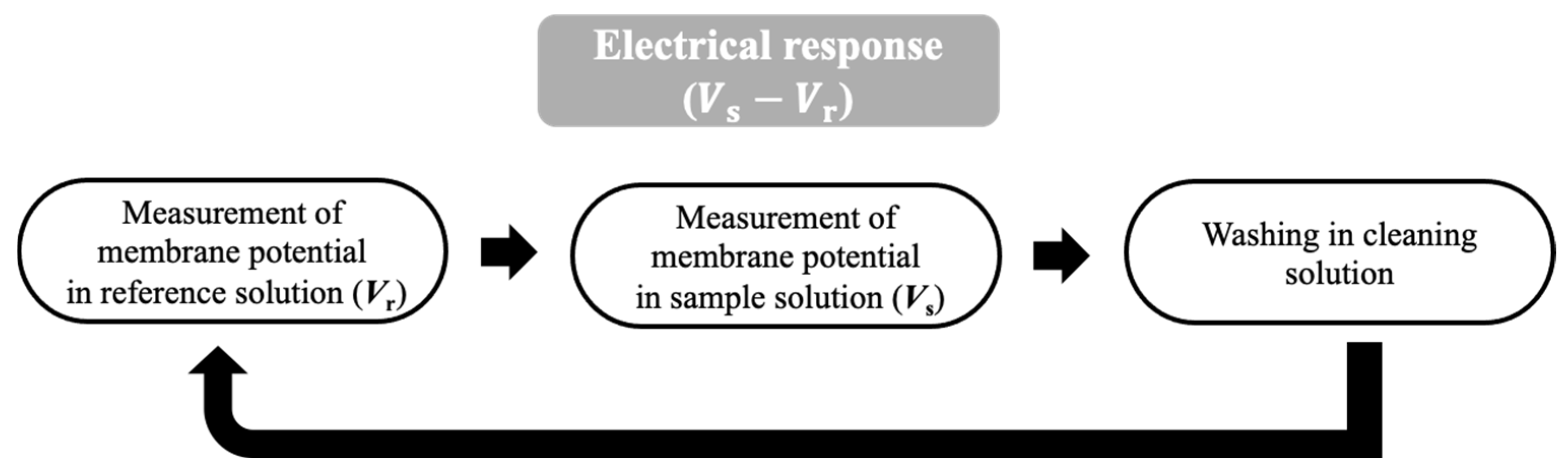
2.4. Measurement of Umami Substances Using a Taste Sensor
2.5. Statistical Analysis
2.6. 1H-NMR Measurement
3. Results and Discussion
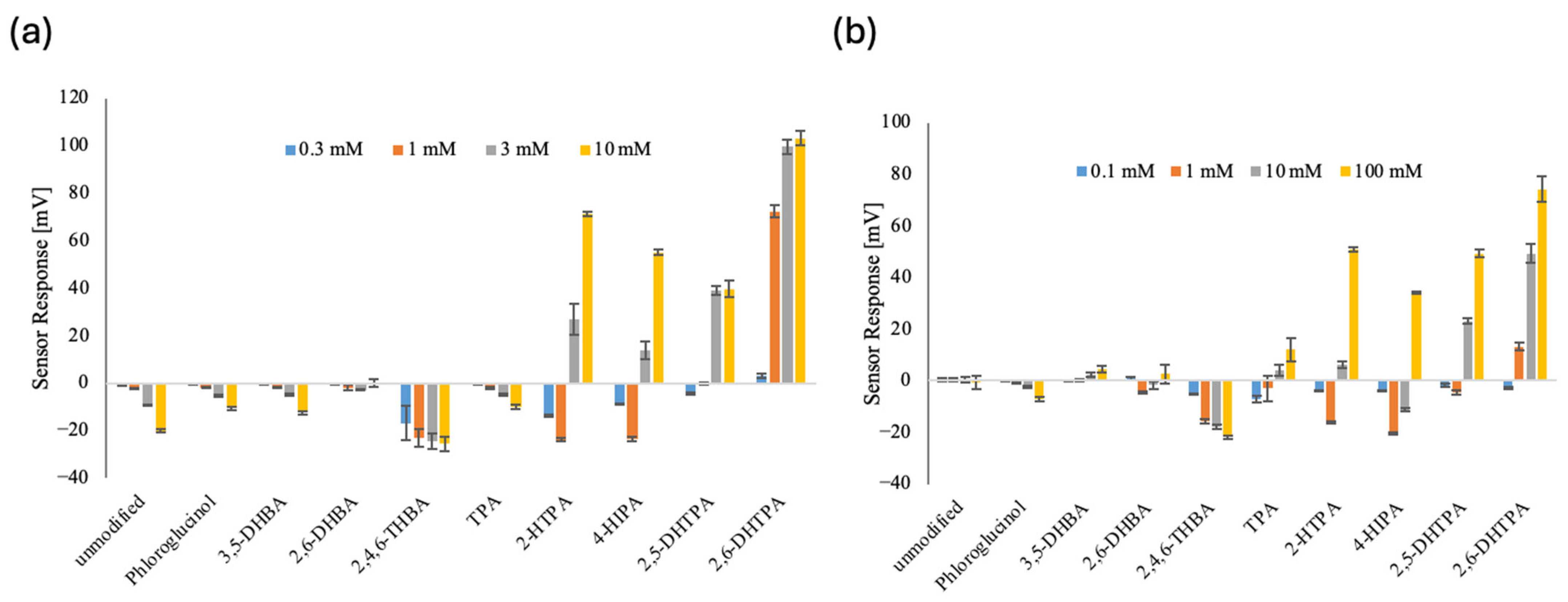
3.1. Taste Sensor Responses
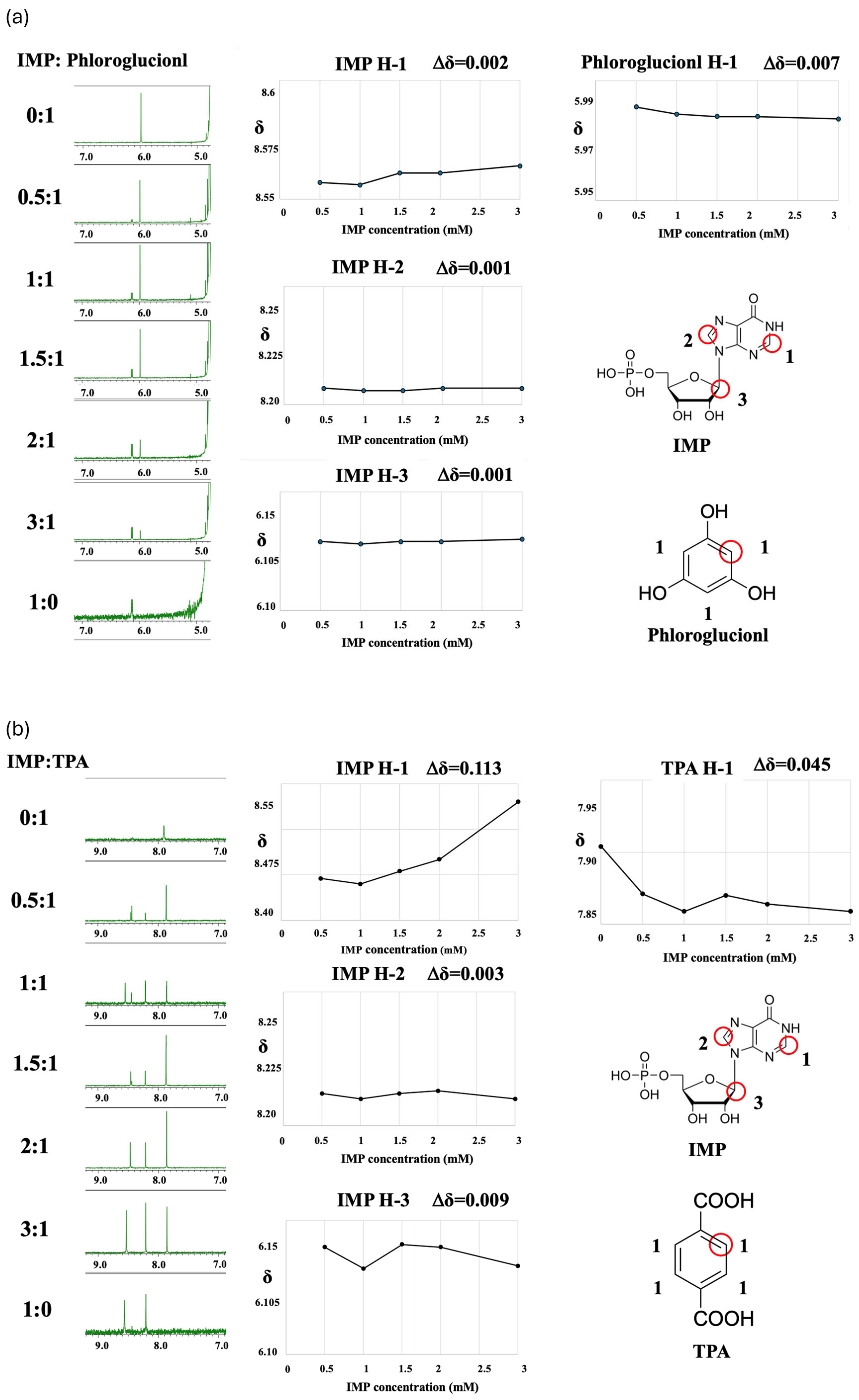
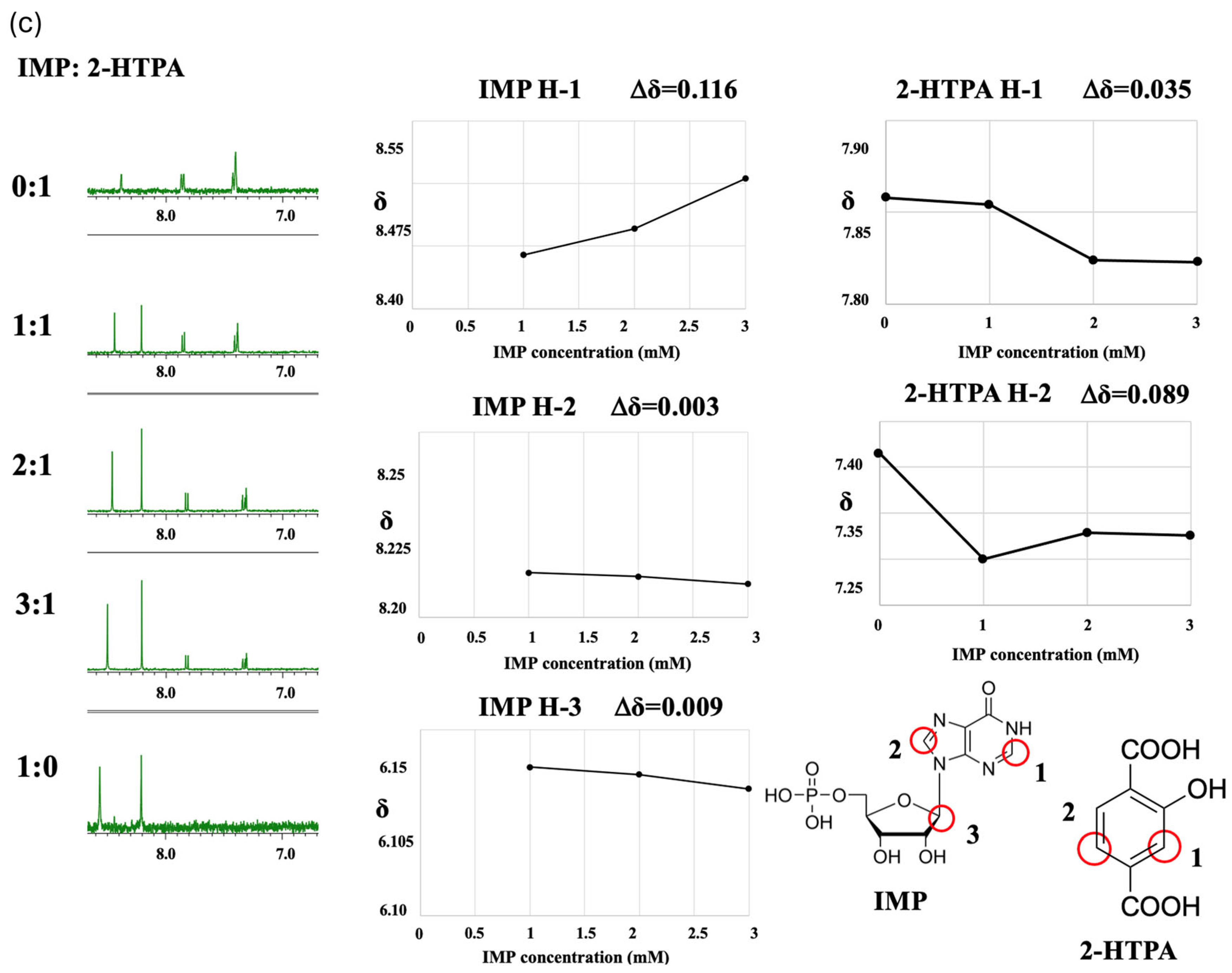
3.2. 1H-NMR Analysis
3.3. Relationship Between Potential Responses of Lipid Membranes with Various Modifiers and Chemical Shift Changes
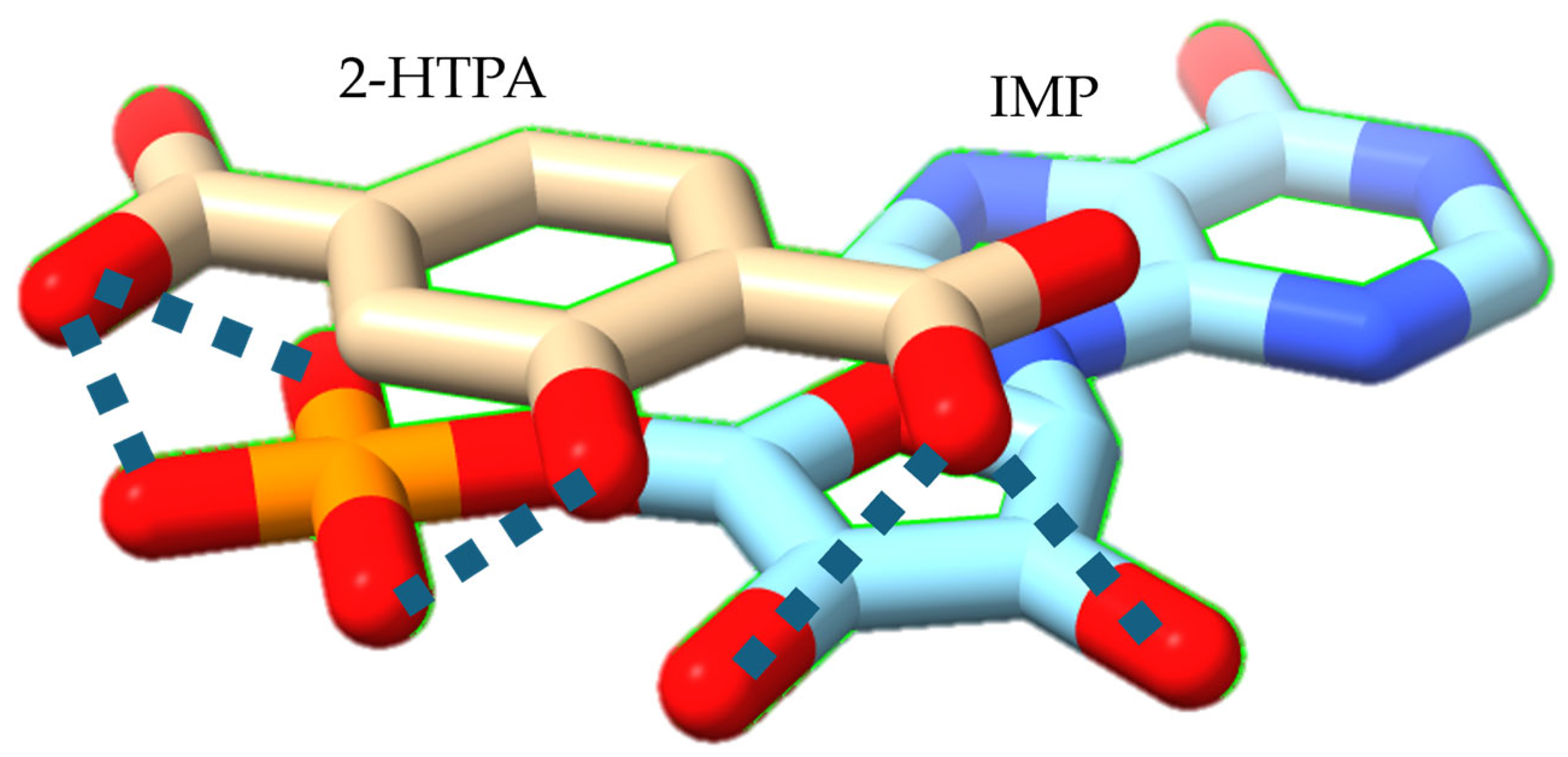
3.4. Interaction Mode Between IMP and the Modifier 2-HTPA
4. Conclusions
Supplementary Materials
Author Contributions
Funding
Institutional Review Board Statement
Informed Consent Statement
Data Availability Statement
Acknowledgments
Conflicts of Interest
References
- Ikeda, K. On a new seasoning. J. Tokyo Chem. Soc. 1909, 30, 820–836. (In Japanese) [Google Scholar] [CrossRef]
- Lindemann, B.; Ogiwara, Y.; Ninomiya, Y. The discovery of umami. Chem. Senses 2002, 27, 843–844. [Google Scholar] [CrossRef] [PubMed]
- Cairoli, P.; Pieraccini, S.; Sironi, M.; Morelli, C.F.; Speranza, G.; Manitto, P. Studies on umami taste: Synthesis of new guanosine 5′-phosphate derivatives and their synergistic effect with monosodium glutamate. J. Agric. Food Chem. 2008, 56, 1043–1050. [Google Scholar] [CrossRef]
- Nakamura, E. One hundred years since the discovery of the “umami” taste from seaweed broth by Kikunae Ikeda, who transcended his time. Chem. Asian J. 2011, 6, 1659–1663. [Google Scholar] [CrossRef] [PubMed]
- Yamaguchi, S.; Ninomiya, K. Umami and food palatability. J. Nutr. 2000, 130, 921S–926S. [Google Scholar] [CrossRef]
- Wijayasekara, K.; Wansapala, J. Uses, effects and properties of monosodium glutamate (MSG) on food & nutrition. Int. J. Food Sci. Nutr. 2017, 2, 132–143. [Google Scholar]
- Morita, R.; Ohta, M.; Hayabuchi, H.; Fujitani, S.; Yoshida, S.; Matsumoto, H.; Tsuchihashi, T. Quantitative verification of the effect of using an umami substance (L-glutamate) to reduce salt intake. Hypertens. Res. 2020, 43, 579–581. [Google Scholar] [CrossRef] [PubMed]
- Kumazawa, T.; Kurihara, K. Large synergism between monosodium glutamate and 5′-nucleotides in canine taste nerve responses. Am. J. Physiol. 1990, 259, R420–R426. [Google Scholar] [CrossRef]
- Rotola-Pukkila, M.; Yang, B.; Hopia, A. The effect of cooking on umami compounds in wild and cultivated mushrooms. Food Chem. 2019, 278, 56–66. [Google Scholar] [CrossRef]
- Mouritsen, O.G.; Khandelia, H. Molecular mechanism of the allosteric enhancement of the umami taste sensation. FEBS J. 2012, 279, 3112–3120. [Google Scholar] [CrossRef]
- Zhang, F.; Klebansky, B.; Fine, R.M.; Xu, H.; Pronin, A.; Liu, H.; Tachdjian, C.; Li, X. Molecular mechanism for the umami taste synergism. Proc. Natl. Acad. Sci. USA 2008, 105, 20930–20934. [Google Scholar] [CrossRef]
- Liu, H.; Da, L.-T.; Liu, Y. Understanding the molecular mechanism of umami recognition by T1R1–T1R3 using molecular dynamics simulations. Biochem. Biophys. Res. Commun. 2019, 514, 967–973. [Google Scholar] [CrossRef]
- San Gabriel, A.; Maekawa, T.; Uneyama, H.; Yoshie, S.; Torii, K. mGluR1 in the fundic glands of rat stomach. FEBS Lett. 2007, 581, 1119–1123. [Google Scholar] [CrossRef] [PubMed]
- Escuder-Gilabert, L.; Peris, M. Highlights in recent applications of electronic tongues in food analysis. Anal. Chim. Acta 2010, 665, 15–25. [Google Scholar] [CrossRef]
- Banerjee, R.; Tudu, B.; Bandyopadhyay, R.; Bhattacharyya, N. A review on combined odor and taste sensor systems. J. Food Eng. 2016, 190, 10–21. [Google Scholar] [CrossRef]
- Tan, J.; Xu, J. Applications of electronic nose (e-nose) and electronic tongue (e-tongue) in food quality-related properties determination: A review. Artif. Intell. Agric. 2020, 4, 104–115. [Google Scholar] [CrossRef]
- Uchida, T. Taste sensor assessment of bitterness in medicines: Overview and recent topics. Sensors 2024, 24, 4799. [Google Scholar] [CrossRef] [PubMed]
- Rudnitskaya, A.; Kirsanov, D.; Blinova, Y.; Legin, E.; Seleznev, B.; Clapham, D.; Ives, R.S.; Saunders, K.A.; Legin, A. Assessment of bitter taste of pharmaceuticals with multisensor system employing three-way PLS regression. Anal. Chim. Acta 2013, 770, 45–52. [Google Scholar] [CrossRef]
- Shimizu, F.M.; de Barros, A.; Braunger, M.; Gaál, G.; Riul, A., Jr. Information visualization and machine learning driven methods for impedimetric biosensing. TrAC Trends Anal. Chem. 2023, 165, 117115. [Google Scholar] [CrossRef]
- Mohamed-Ahmed, A.H.A.; Soto, J.; Ernest, T.; Tuleu, C. Non-human tools for the evaluation of bitter taste in the design and development of medicines: A systematic review. Drug Discov. Today 2016, 21, 1170–1180. [Google Scholar] [CrossRef]
- Toko, K. Research and development of taste sensors as a novel analytical tool. Proc. Jpn. Acad. Ser. B 2023, 99, 173–189. [Google Scholar] [CrossRef]
- Hayashi, N.; Ujihara, T.; Hayakawa, F.; Nakano, Y.; Kawakami, T.; Ikezaki, H. Standardization of tomato juice taste using a taste sensor approach. Biosci. Biotechnol. Biochem. 2020, 84, 2569–2575. [Google Scholar] [CrossRef] [PubMed]
- Hou, F.; Fan, X.; Gui, X.; Li, H.; Li, H.; Wang, Y.; Shi, J.; Zhang, L.; Yao, J.; Li, X.; et al. Development of a variety and quality evaluation method for Amomi fructus using GC, electronic tongue, and electronic nose. Front. Chem. 2023, 11, 1188219. [Google Scholar] [CrossRef] [PubMed]
- Zhang, H.; Zou, G.; Liu, X.; Xiao, Y.; Wang, W. Identification of Xinyang Maojian tea taste using electronic tongue. Sens. Mater. 2019, 31, 2347–2356. [Google Scholar] [CrossRef]
- Ujihara, T.; Hayashi, N.; Ikezaki, H. Objective evaluation of astringent and umami taste intensities of Matcha using a taste sensor system. Food Sci. Technol. Res. 2013, 19, 1099–1105. [Google Scholar] [CrossRef]
- Pardo, H.; Owoyemi, A.; Benjamin, O.; Goldenberg, L.; Yaniv, Y.; Doron-Faigenboim, A.; Carmi, N.; Porat, R. Sensory analysis of a new citrus juice made from ‘Aliza’ fruit: A new pomelo × mandarin hybrid. J. Food Sci. Nutr. Res. 2021, 4, 320–330. [Google Scholar] [CrossRef]
- Makita, Y.; Ishida, T.; Kobayashi, N.; Fujio, M.; Fujimoto, K.; Moritomo, R.; Fujita, J.; Fujiwara, S. Evaluation of the bitterness-masking effect of powdered roasted soybeans. Foods 2016, 5, 44. [Google Scholar] [CrossRef]
- Riul, A., Jr.; Correa, D.S. A first taste to electronic tongues. In Electronic Tongues: Fundamentals and Recent Advances; Shimizu, F.M., Braunger, M.L., Riul, A., Jr., Eds.; IOP Publishing: Bristol, UK, 2021; pp. 1-1–1-4. ISBN 0750336870. [Google Scholar]
- Shimizu, F.M.; Gaál, G.; Braunger, M.L.; Riul, A., Jr. Recent developments on devices applied to impedimetric electronic tongues. In Electronic Tongues: Fundamentals and Recent Advances; Shimizu, F.M., Braunger, M.L., Riul, A., Jr., Eds.; IOP Publishing: Bristol, UK, 2021; pp. 7-1–7-19. ISBN 0750336870. [Google Scholar] [CrossRef]
- Cetó, X.; Del Valle, M. Electronic tongue applications for wastewater and soil analysis. iScience 2022, 25, 104304. [Google Scholar] [CrossRef]
- Wesoly, M.; Przewodowski, W.; Ciosek-Skibińska, P. Electronic noses and electronic tongues for the agricultural purposes. TrAC Trends Anal. Chem. 2023, 164, 117082. [Google Scholar] [CrossRef]
- Lu, L.; Hu, Z.; Hu, X.; Li, D.; Tian, S. Electronic tongue and electronic nose for food quality and safety. Food Res. Int. 2022, 162, 112214. [Google Scholar] [CrossRef]
- Zhao, X.; Qiu, W.; Shao, X.; Fu, B.; Qiao, X.; Yuan, W.; Yang, M.; Liu, P.; Du, M.; Tu, M. Identification, screening and taste mechanisms analysis of two novel umami pentapeptides derived from the myosin heavy chain of Atlantic cod (Gadus morhua). RSC Adv. 2024, 14, 10152. [Google Scholar] [CrossRef]
- Podraźka, M.; Bączyńska, E.; Kundys, M.; Jeleń, P.S.; Nery, E.W. Electronic tongue—A tool for all tastes? Biosensors 2018, 8, 3. [Google Scholar] [CrossRef]
- Chen, W.; Huang, Y.; Jiang, S.; Chen, G.; Liu, Y. Research on sensing characteristics of three human umami receptors via receptor-based biosensor. Flavour Fragr. J. 2020, 35, 695–702. [Google Scholar] [CrossRef]
- Li, M.; Fan, M.; Fu, B.; Chang, Z.; Yi, J.; Xie, Y.; Ren, W.; Tian, Y.; Zhao, Q.; Cheng, S.; et al. A novel strategy based on mouse organoid biosensor for detecting umami substances and their synergistic effect. Food Chem. 2025, 491, 145149. [Google Scholar] [CrossRef]
- Tian, Y.; Wang, P.; Du, L.; Wu, C. Advances in gustatory biomimetic biosensing technologies: In vitro and in vivo bioelectronic tongue. TrAC Trends Anal. Chem. 2022, 157, 116778. [Google Scholar] [CrossRef]
- Du, L.; Chen, W.; Tian, Y.; Zhu, P.; Wu, C.; Wang, P. A biomimetic taste biosensor based on bitter receptors synthesized and purified on chip from a cell-free expression system. Sens. Actuators B Chem. 2020, 312, 127949. [Google Scholar] [CrossRef]
- Cetó, X.; Céspedes, F.; Del Valle, M. Assessment of individual polyphenol content in beer by means of a voltammetric bioelectronic tongue. Electroanalysis 2013, 25, 68–76. [Google Scholar] [CrossRef]
- Kong, L.; Dong, Y.; Shu, G.; Feng, Y.; Zhu, M. Multienzyme-mediated dual-channel magnetic relaxation switching taste biosensor (D-MRSTB) for simultaneous detection of umami compounds and synergistic enhancement in food. ACS Sens. 2024, 9, 1820–1830. [Google Scholar] [CrossRef] [PubMed]
- Iiyama, S.; Kuga, H.; Ezaki, S.; Hayashi, K.; Toko, K. Peculiar change in membrane potential of taste sensor caused by umami substances. Sens. Actuators B Chem. 2003, 91, 191–194. [Google Scholar] [CrossRef]
- Yuan, W.; Zhao, Z.; Kimura, S.; Toko, K. Development of taste sensor with lipid/polymer membranes for detection of umami substances using surface modification. Biosensors 2024, 14, 95. [Google Scholar] [CrossRef] [PubMed]
- Yuan, W.; Ide, H.; Zhao, Z.; Koshi, M.; Kimura, S.; Matsui, T.; Toko, K. Investigating the mechanism underlying umami substance detection in taste sensors by using 1H-NMR analysis. Chemosensors 2024, 12, 146. [Google Scholar] [CrossRef]
- Yuan, W.; Otsuka, S.; Jin, J.; Onodera, T.; Yatabe, R.; Kimura, S.; Toko, K. Relationship between sensor sensitivity and chemical structure of benzene-carboxylic modifiers for umami substance detection. Chemosensors 2025, 13, 98. [Google Scholar] [CrossRef]
- Otsuka, S.; Koshi, M.; Onodera, T.; Yatabe, T.; Matsui, T.; Toko, K. Detection of inosine monophosphate and the umami synergistic effect using a taste sensor with a surface-modified membrane. Molecules 2025, 30, 4171. [Google Scholar] [CrossRef] [PubMed]
- Oohira, K.; Toko, K. Theory of electric characteristics of the lipid/PVC/DOPP membrane and PVC/DOPP membrane in response to taste stimuli. Biophys. Chem. 1996, 61, 29–35. [Google Scholar] [CrossRef]
- Yatabe, R.; Noda, J.; Tahara, Y.; Naito, Y.; Ikezaki, H.; Toko, K. Analysis of a lipid/polymer membrane for bitterness sensing with a preconditioning process. Sensors 2015, 15, 22439–22450. [Google Scholar] [CrossRef]
- Williamson, M.P. Using chemical shift perturbation to characterise ligand binding. Prog. Nucl. Magn. Reson. Spectrosc. 2013, 73, 1–16. [Google Scholar] [CrossRef]
- Govindaraju, V.; Young, K.; Maudsley, A.A. Proton NMR chemical shifts and coupling constants for brain metabolites. NMR Biomed. 2000, 13, 129–153. [Google Scholar] [CrossRef] [PubMed]
- Yoshimatsu, J.; Toko, K.; Tahara, Y.; Ishida, M.; Habara, M.; Ikezaki, H.; Kojima, H.; Ikegami, S.; Yoshida, M.; Uchida, T. Development of taste sensor to detect non-charged bitter substances. Sensors 2020, 20, 3455. [Google Scholar] [CrossRef]
- Ishida, M.; Ide, H.; Arima, K.; Zhao, Z.; Matsui, T.; Toko, K. Identification of the principle of taste sensors to detect non-charged bitter substances by 1H-NMR measurement. Sensors 2022, 22, 2592. [Google Scholar] [CrossRef]
- Meng, E.C.; Goddard, T.D.; Pettersen, E.F.; Couch, G.S.; Pearson, Z.J.; Morris, J.H.; Ferrin, T.E. UCSF ChimeraX: Tools for structure building and analysis. Protein Sci. 2023, 32, e4792. [Google Scholar] [CrossRef]



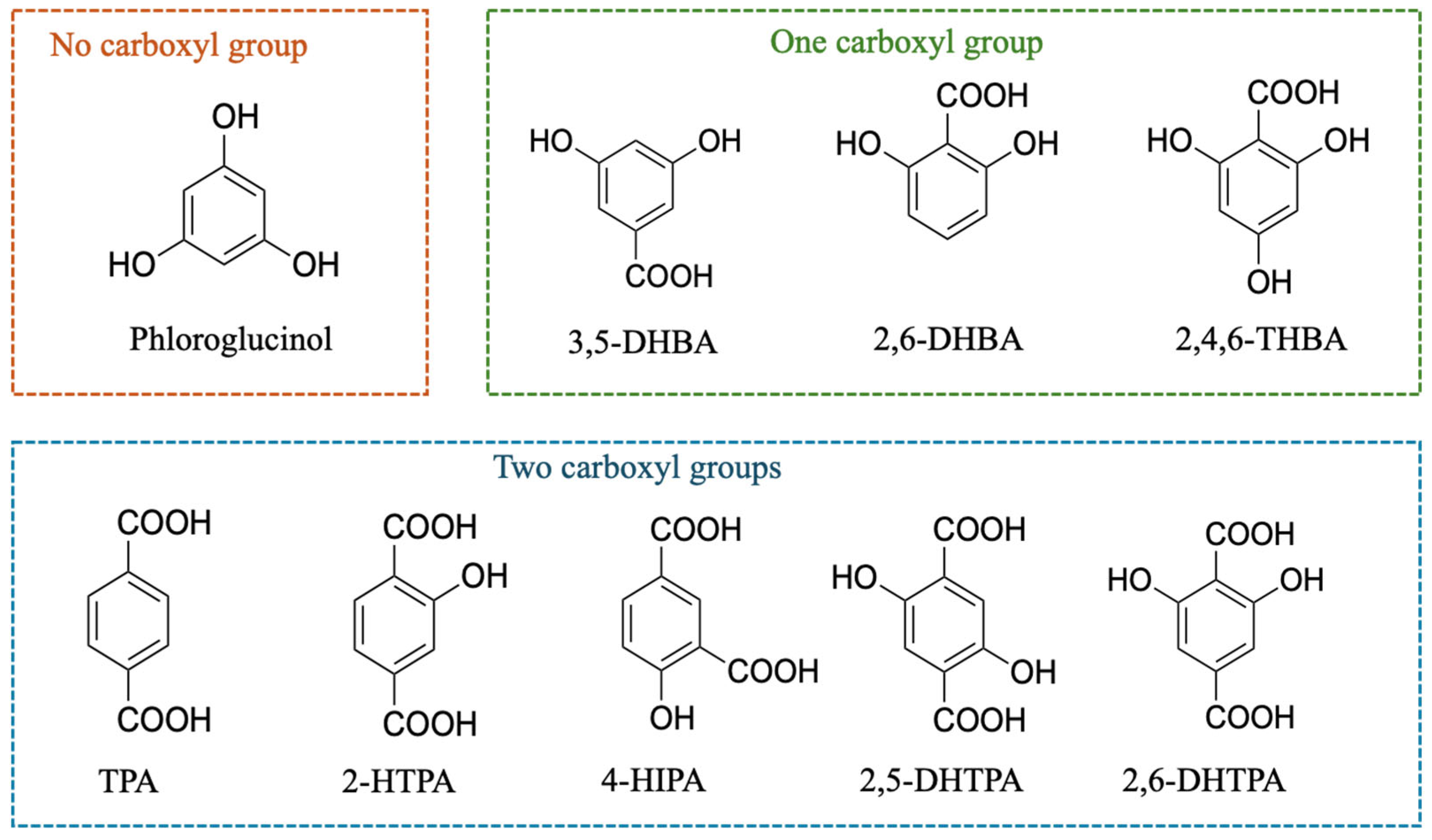
| Carboxyl Groups | 0 | 1 | 2 | |||||||
|---|---|---|---|---|---|---|---|---|---|---|
| Intramolecular H-Bond | No | No | No | Yes | Yes | No | Yes | Yes | Yes | Yes |
| Modifier | Non | Phloroglucinol | 3,5-DHBA | 2,6-DHBA | 2,4,6-THBA | TPA | 2-HTPA | 4-HIPA | 2,5-DHTPA | 2,6-DHTPA |
| Taste sensor response (mV) | −20 | −11 | −13 | −5 | −26 | −10 | 71 | 55 | 40 | 103 |
| Chemical shift change | - | No | Yes | No | Yes | Yes | Yes | Yes | Yes | Yes |
Disclaimer/Publisher’s Note: The statements, opinions and data contained in all publications are solely those of the individual author(s) and contributor(s) and not of MDPI and/or the editor(s). MDPI and/or the editor(s) disclaim responsibility for any injury to people or property resulting from any ideas, methods, instructions or products referred to in the content. |
© 2026 by the authors. Licensee MDPI, Basel, Switzerland. This article is an open access article distributed under the terms and conditions of the Creative Commons Attribution (CC BY) license.
Share and Cite
Toko, K.; Otsuka, S.; Koshi, M.; Koga, Y.; Onodera, T.; Yatabe, R.; Matsui, T. Effect of the Chemical Structure of Modifiers Used in the Receptive Membrane of an Umami Taste Sensor on Its Electrical Responses. Sensors 2026, 26, 1787. https://doi.org/10.3390/s26061787
Toko K, Otsuka S, Koshi M, Koga Y, Onodera T, Yatabe R, Matsui T. Effect of the Chemical Structure of Modifiers Used in the Receptive Membrane of an Umami Taste Sensor on Its Electrical Responses. Sensors. 2026; 26(6):1787. https://doi.org/10.3390/s26061787
Chicago/Turabian StyleToko, Kiyoshi, Sota Otsuka, Mariko Koshi, Yuzuki Koga, Takeshi Onodera, Rui Yatabe, and Toshiro Matsui. 2026. "Effect of the Chemical Structure of Modifiers Used in the Receptive Membrane of an Umami Taste Sensor on Its Electrical Responses" Sensors 26, no. 6: 1787. https://doi.org/10.3390/s26061787
APA StyleToko, K., Otsuka, S., Koshi, M., Koga, Y., Onodera, T., Yatabe, R., & Matsui, T. (2026). Effect of the Chemical Structure of Modifiers Used in the Receptive Membrane of an Umami Taste Sensor on Its Electrical Responses. Sensors, 26(6), 1787. https://doi.org/10.3390/s26061787