Path-Integrated Ultrasonic Attenuation Modeling for Concrete with Random Aggregates Based on Modified Waterman–Truell Theory


Abstract
1. Introduction
- The influence of aggregate volume fraction on ultrasonic propagation characteristics under a fixed water–cement ratio;
- The applicability of a modified Waterman–Truell effective medium model to concrete with moderate aggregate volume fractions;
- The correspondence between path-integrated attenuation predictions and experimental observations.
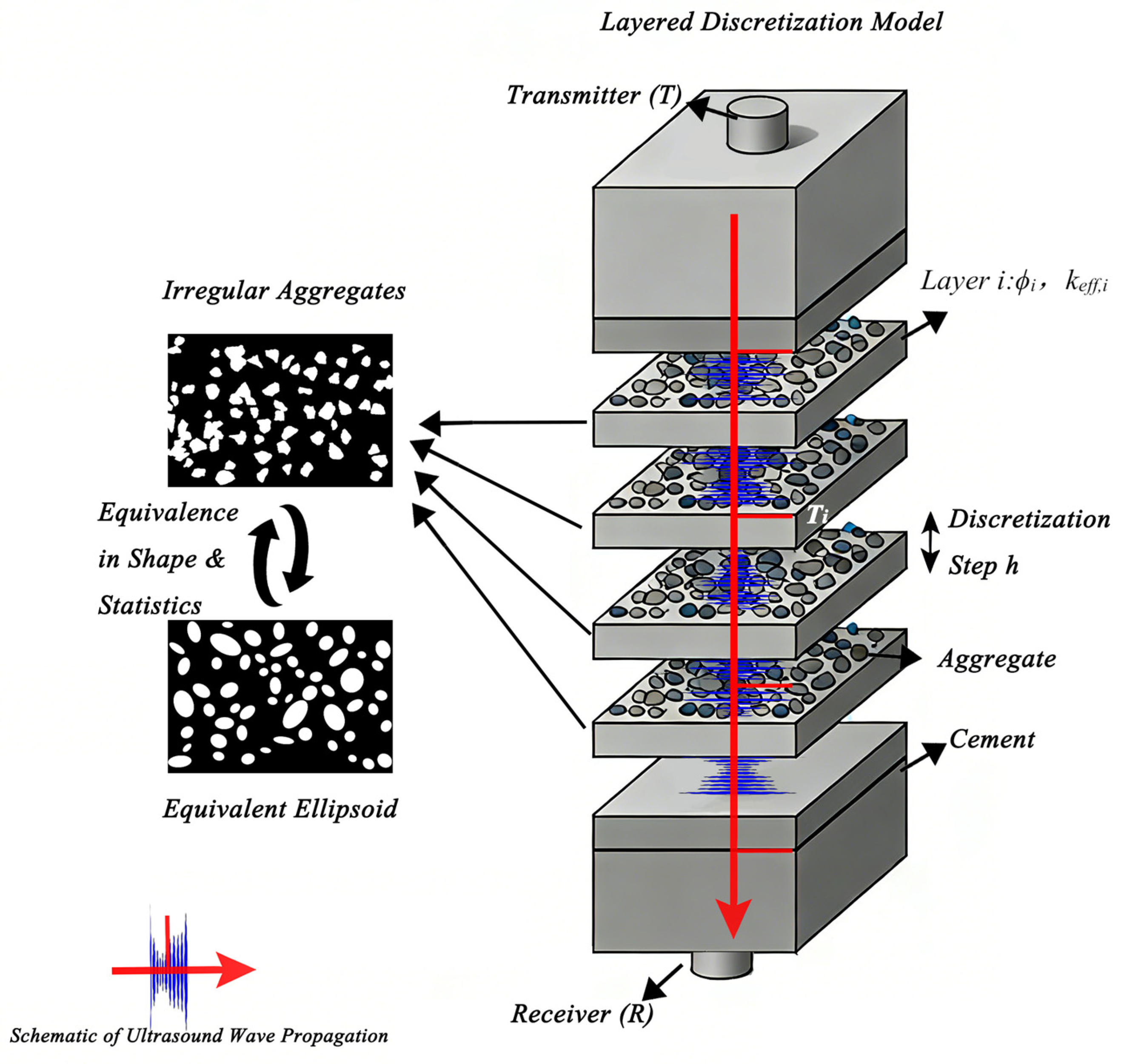
- A modified WT model incorporating structural-factor corrections and non-spherical aggregate equivalence is introduced to establish a physically consistent relationship between aggregate volume fraction and effective wavenumber;
- A path-integration method based on quasi-one-dimensional discretization is developed to accumulate local scattering effects into a global propagation response;
- A targeted experimental design is implemented to enable direct parameter-level comparison between ultrasonic measurements and theoretical predictions, thereby enhancing the clarity and credibility of model validation.
2. Theory
2.1. Discretized Wave Equation for Ultrasonic Propagation in Heterogeneous Media
2.2. Classical Effective Medium Theory: Foldy Approximation and the Waterman–Truell Model
2.3. Modified WT Model Incorporating Structural Factor and Non-Spherical Aggregate Equivalence
2.4. Path-Integration Method Based on the Discretized Wave Equation
3. Materials and Methods
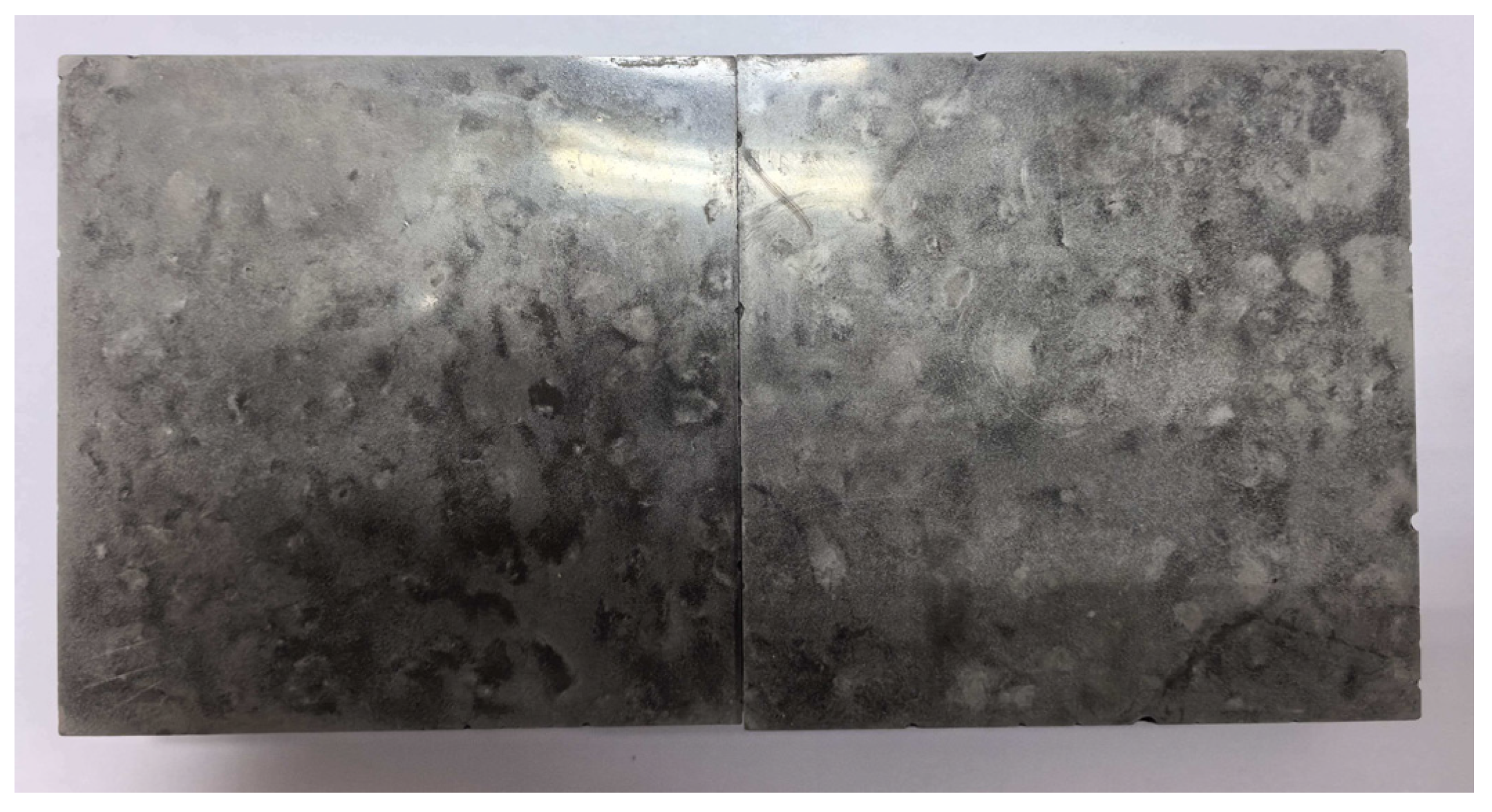
3.1. Materials and Specimen Preparation
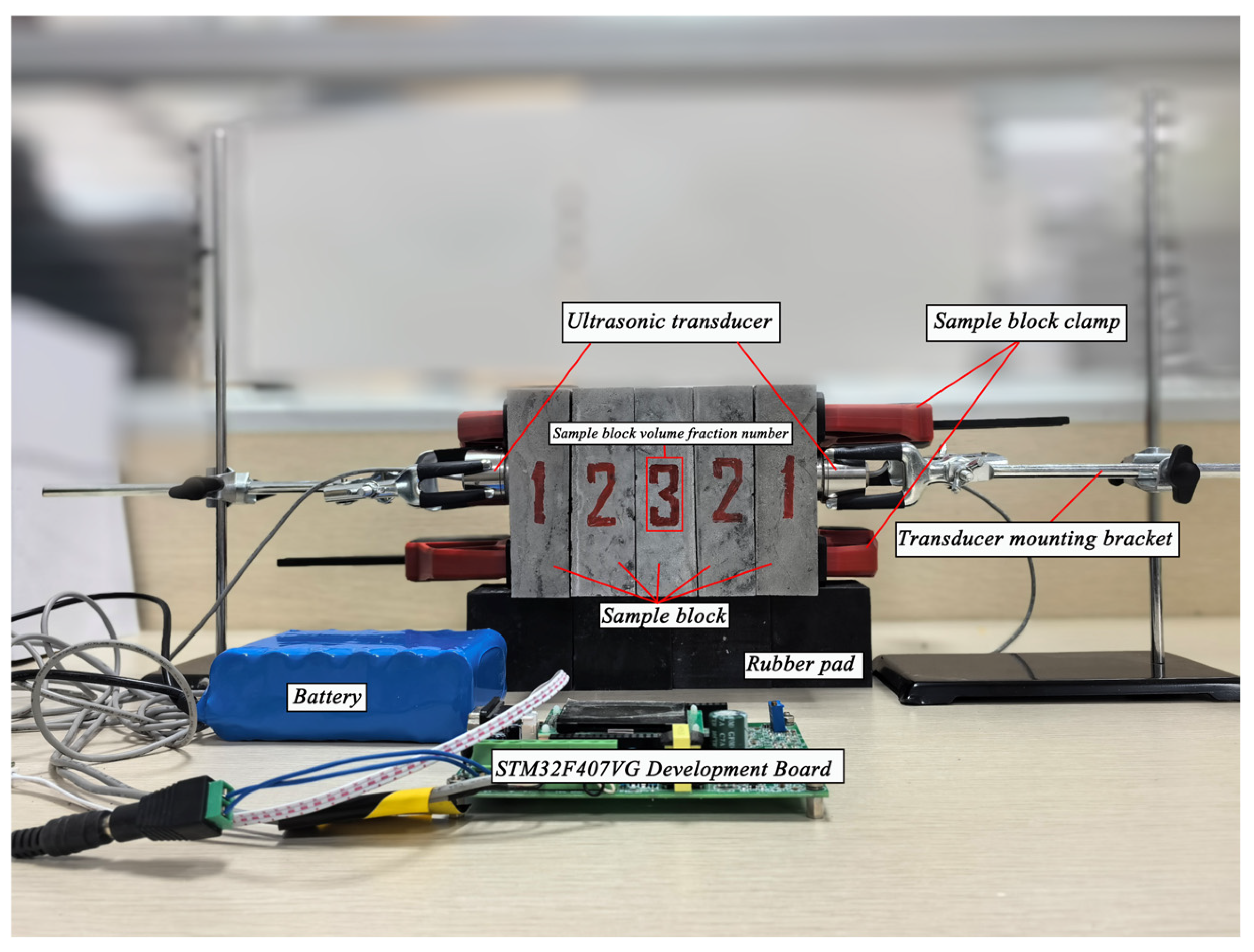
3.2. Specimen Assembly and Fixture Design
3.3. Ultrasonic Testing System and Procedure
3.4. Signal Processing and Acoustic Parameter Extraction
4. Results and Discussion
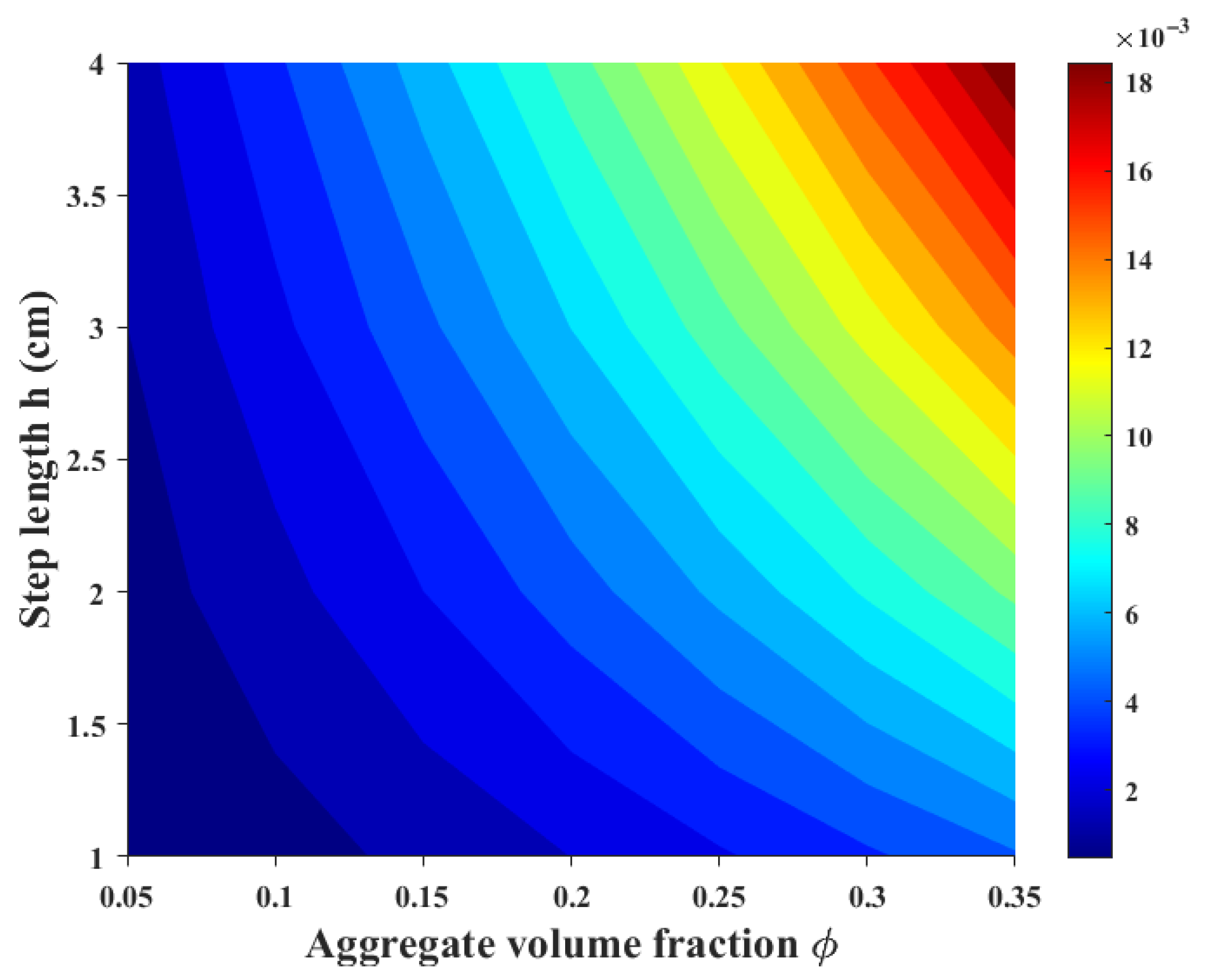
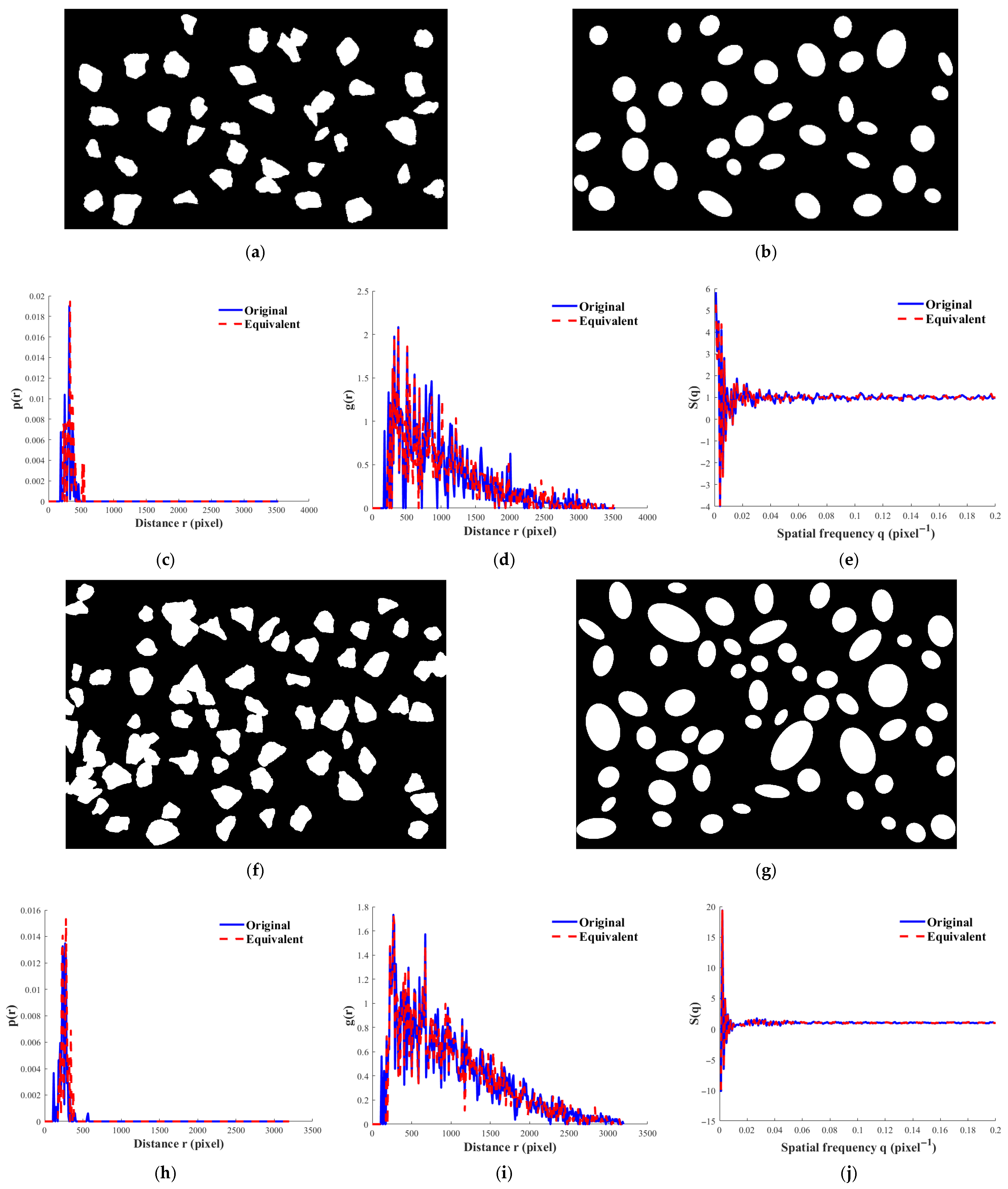
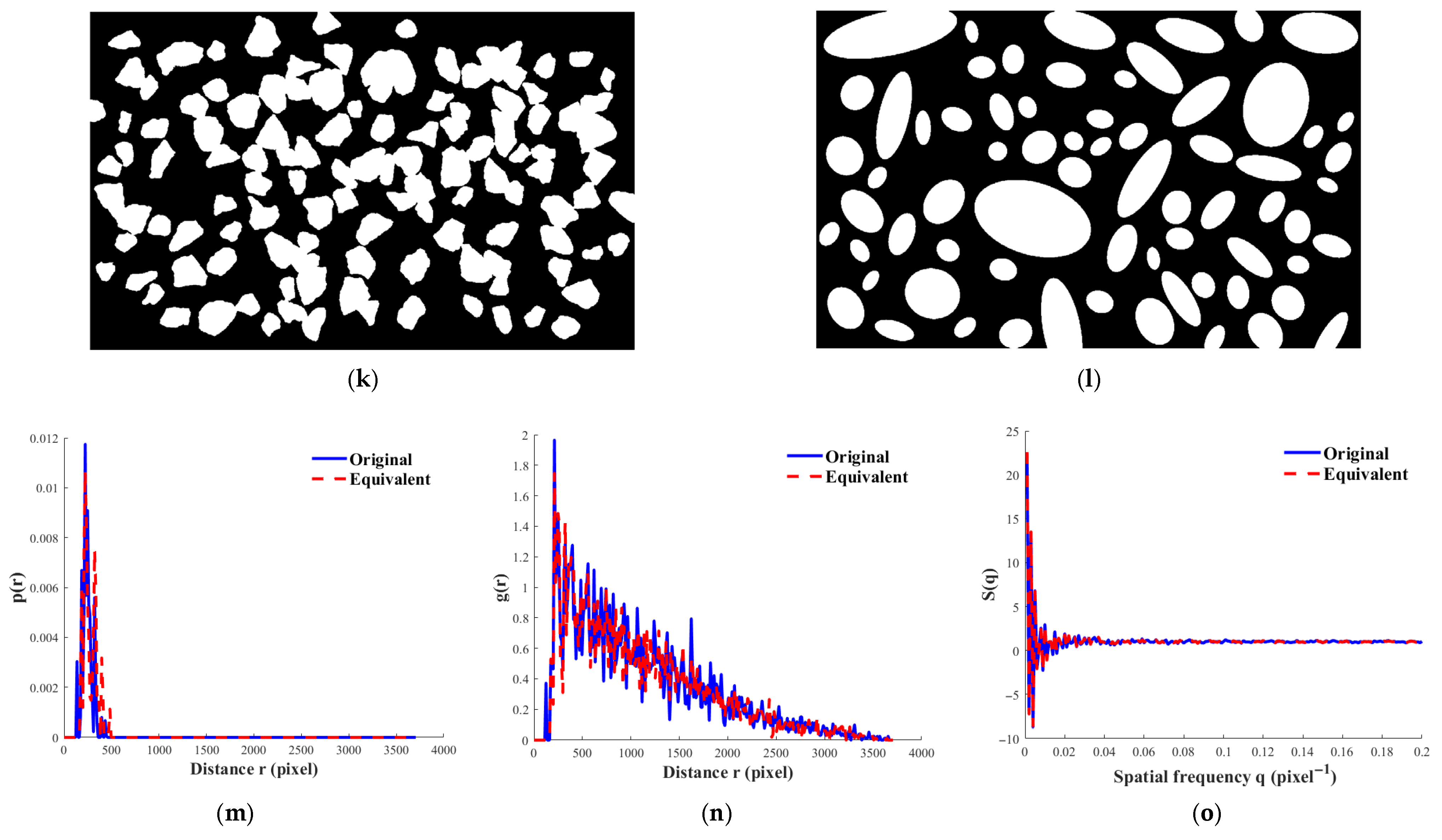
4.1. Equivalent Aggregate Statistical Representation and Its Rationality Analysis
- p(r) represents the radial distribution function, which is used to describe the spatial correlation of aggregate particles in the material. This function is mainly reflective of the size, shape, and scattering properties of the individual aggregates, and is commonly used as a statistical quantity to evaluate the alignment of aggregates in real materials.
- g(r) is the pair correlation function, which describes the correlation between the distances of aggregate particles in the material. It is more sensitive to the distance between particles and the structural configuration of the aggregate system. Compared to p(r), g(r) is more sensitive to the structural features.
- S(q) is the structure factor, which is the response of g(r) in reciprocal space, used to describe the system at different spatial frequencies q. The structure factor is important for characterizing the system’s density at large scales. At low-frequency regions q → 0, it corresponds to the density of the system. In the context of ultrasound scattering and attenuation theory, this factor has a direct physical meaning and is used to control the effective wave vector and the macroscopic reduction of scattering at low frequencies.
4.2. Distribution Attenuation and Comparison Analysis of Multi-Model Prediction Results
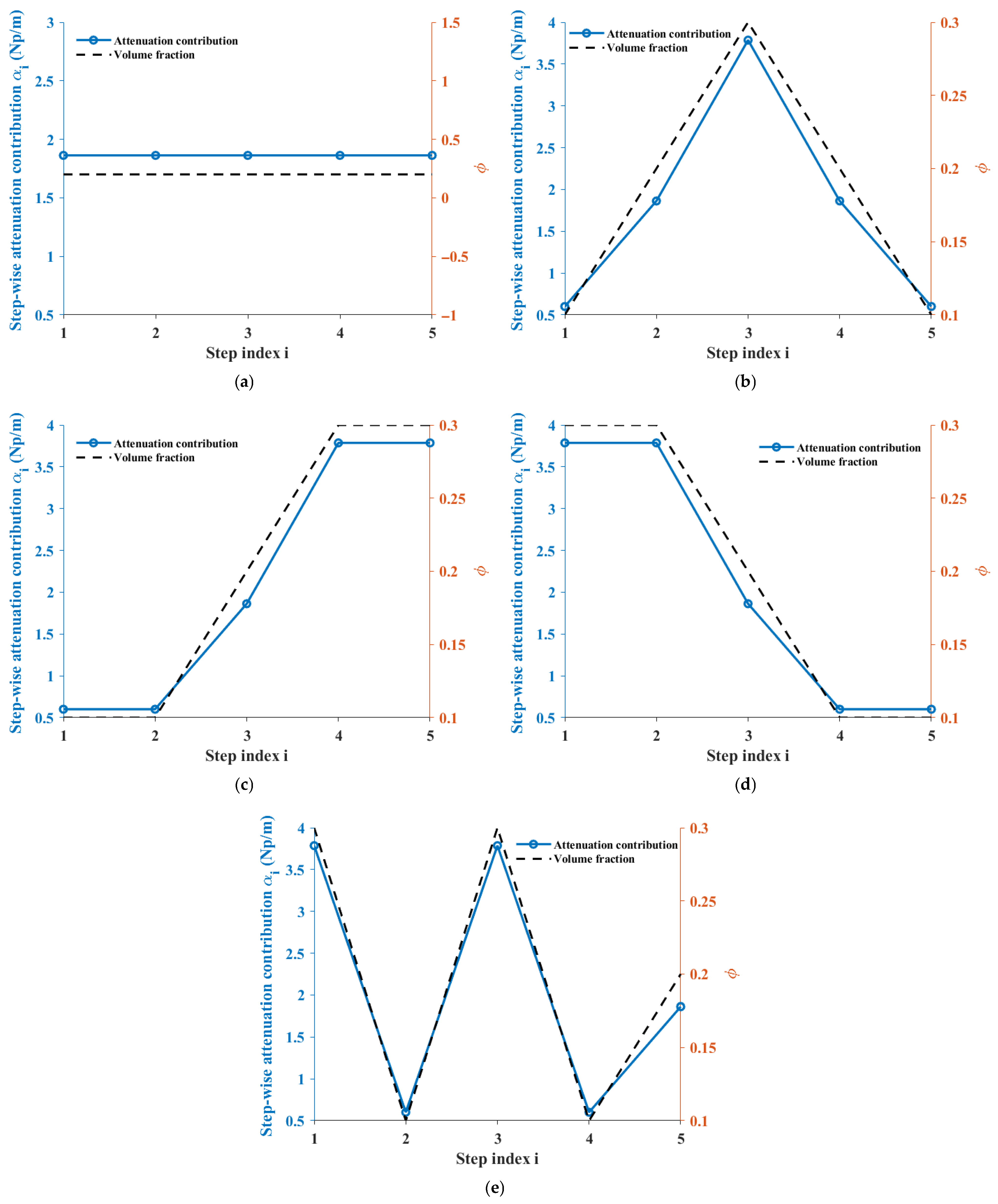
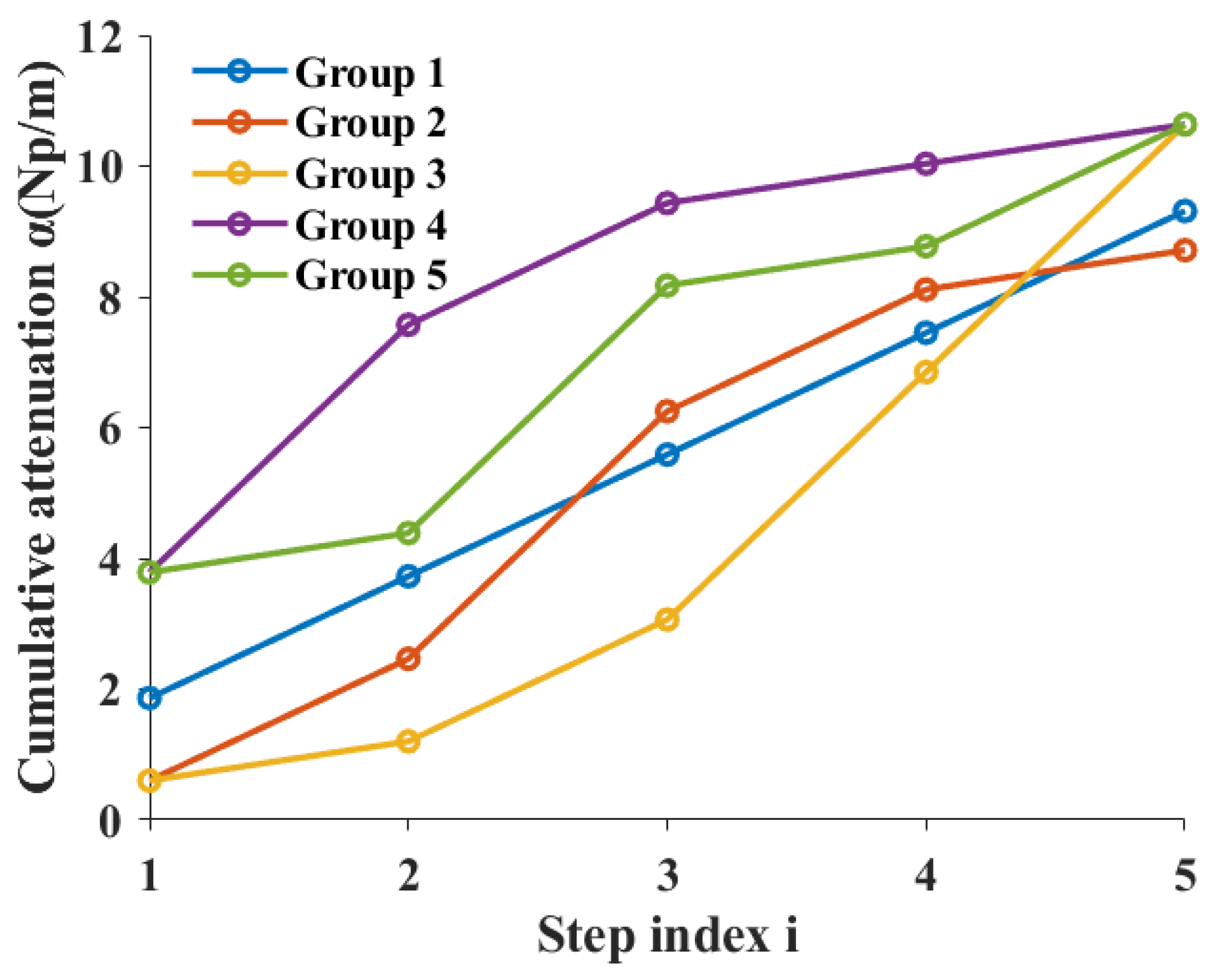
- (a)
- Group 1: ϕ = [0.20, 0.20, 0.20, 0.20, 0.20];
- (b)
- Group 2: ϕ = [0.10, 0.20, 0.30, 0.20, 0.10];
- (c)
- Group 3: ϕ = [0.10, 0.10, 0.20, 0.30, 0.30];
- (d)
- Group 4: ϕ = [0.30, 0.30, 0.20, 0.10, 0.10];
- (e)
- Group 5: ϕ = [0.30, 0.10, 0.30, 0.10, 0.20];
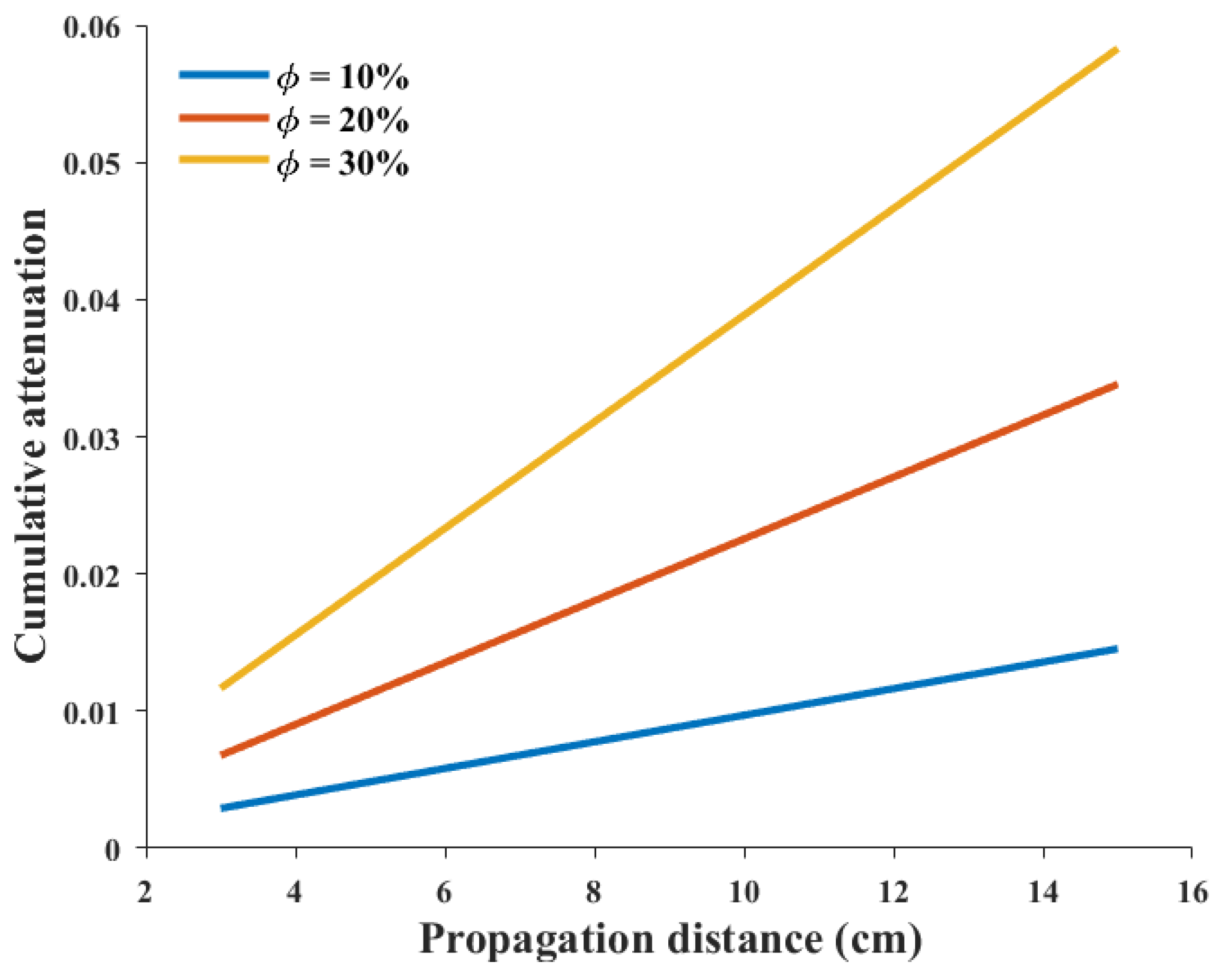
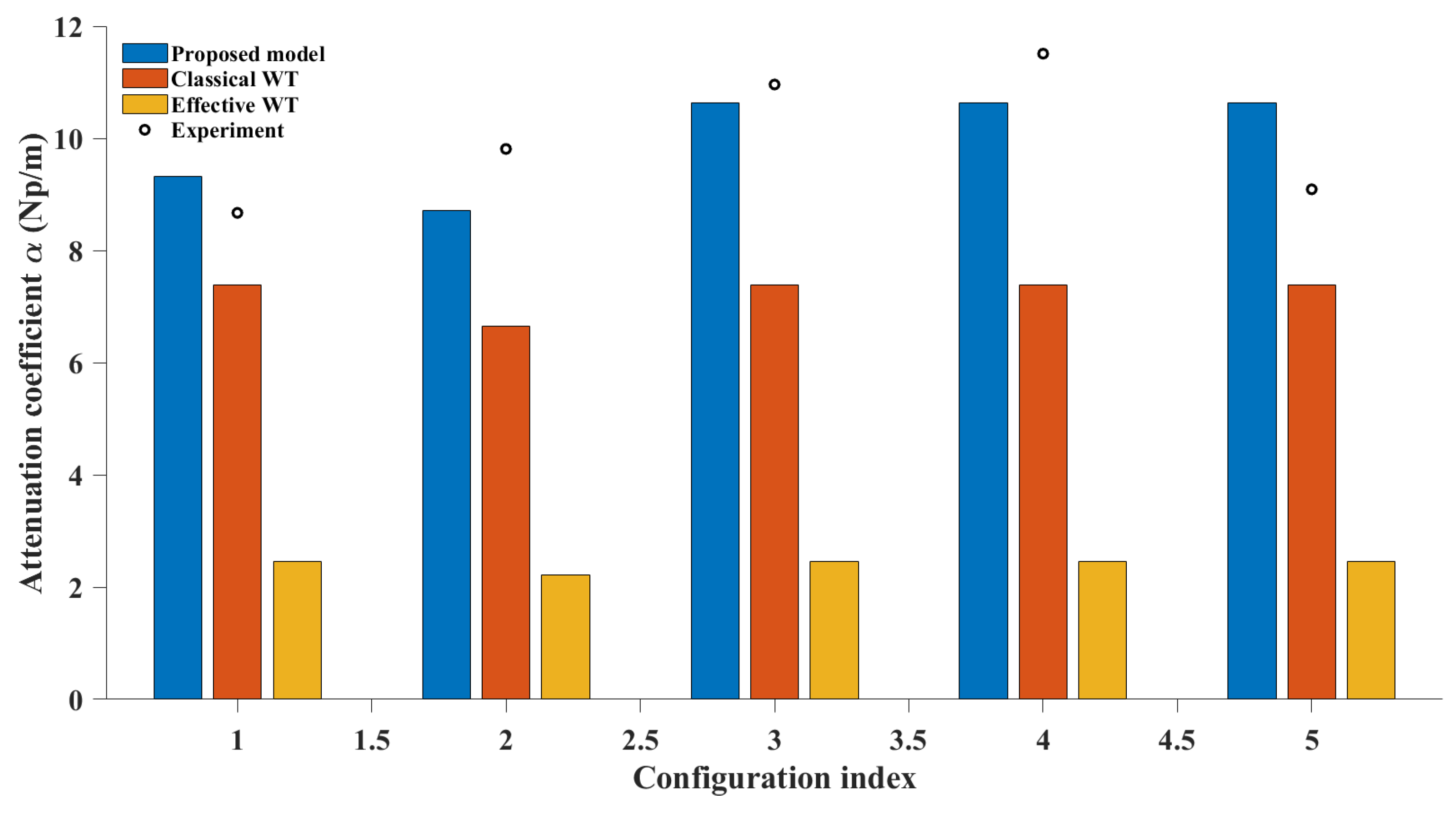
- Ultrasonic attenuation under multi-sample serial conditions exhibits significant path dependence, with the local aggregate volume fraction distribution having a direct impact on the attenuation contributions.
- The model based on the path integral form effectively maps local structural information to the macroscopic attenuation results, maintaining high prediction accuracy under non-uniform distribution conditions.
- Compared to the Classical WT and Effective WT models, the proposed model significantly improves the fit to experimental results while keeping the number of parameters limited, demonstrating its applicability to practical ultrasonic testing problems in concrete.
5. Conclusions
Author Contributions
Funding
Institutional Review Board Statement
Informed Consent Statement
Data Availability Statement
Acknowledgments
Conflicts of Interest
References
- Wu, Y.C.; Kang, S.; Jeong, Y.; David, D.S.K.; Ham, S. Wave dispersion behavior in quasi-solid state concrete hydration. Sensors 2023, 23, 3947. [Google Scholar] [CrossRef] [PubMed]
- Angiulli, G.; Burrascano, P.; Ricci, M.; Versaci, M. Advances in the integration of artificial intelligence and ultrasonic techniques for monitoring concrete structures: A comprehensive review. J. Compos. Sci. 2024, 8, 531. [Google Scholar] [CrossRef]
- Sun, X.; Yi, S.; Li, X.; Cui, Y.; Zhang, M.; Jiang, T.; Wang, L.; Kong, Q. A novel ultrasonic-velocity-based concrete carbonation monitoring method based on step-wise stretching technique. Struct. Health Monit. 2026, 25, 117–130. [Google Scholar] [CrossRef]
- Al Agha, W.; Pal, S.; Dev, N. Challenges for structural health monitoring of concrete curing using piezoelectric sensor and electromechanical impedance (EMI) technique: A critical review. Mater. Today Proc. 2023, in press. [Google Scholar] [CrossRef]
- Rahmati, M.; Toufigh, V.; Keyvan, K. Monitoring of crack healing in geopolymer concrete using a nonlinear ultrasound approach in phase-space domain. Ultrasonics 2023, 134, 107095. [Google Scholar] [CrossRef]
- Wu, X.; Yan, Q.; Hedayat, A.; Wang, X. The influence law of concrete aggregate particle size on acoustic emission wave attenuation. Sci. Rep. 2021, 11, 22685. [Google Scholar] [CrossRef]
- Emery, J. An Investigation of Concrete Porosity and Material Interface Interactions Using High Frequency Ultrasonic Attenuation; The University of Maine: Orono, ME, USA, 2024. [Google Scholar]
- Castellano, A.; Fraddosio, A.; Piccioni, M.D.; Kundu, T. Linear and nonlinear ultrasonic techniques for monitoring stress-induced damages in concrete. J. Nondestruct. Eval. Diagn. Progn. Eng. Syst. 2021, 4, 041001. [Google Scholar] [CrossRef]
- Okazaki, S.; Iwase, H.; Nakagawa, H.; Yoshida, H.; Hinei, R. Effect of moisture distribution on velocity and waveform of ultrasonic-wave propagation in mortar. Materials 2021, 14, 790. [Google Scholar] [CrossRef]
- Darmon, M.; Khalid, N.; Ramaniraka, M.; Dorval, V.; Henault, J.-M.; Chaix, J.-F. Modeling of ultrasonic velocity and attenuation for concrete inspection: A review. Ultrasonics 2025, 154, 107690. [Google Scholar] [CrossRef]
- Popovics, J.; Song, H.; Feldman, S. Ultrasonic characterization of distributed cracking damage in concrete using multiply scattered wave fields. J. Acoust. Soc. Am. 2022, 152, A281. [Google Scholar] [CrossRef]
- Lee, S.; Popovics, J.S. Ultrasonic defect detection in a concrete slab assisted by physics-informed neural networks. NDT E Int. 2025, 151, 103311. [Google Scholar] [CrossRef]
- Kim, J.; Cho, Y.; Lee, J.; Kim, Y.H. Defect detection and characterization in concrete based on FEM and ultrasonic techniques. Materials 2022, 15, 8160. [Google Scholar] [CrossRef] [PubMed]
- Xiao, J.; Cui, F. Machine learning enhanced characterization of surface defects using ultrasonic Rayleigh waves. NDT E Int. 2023, 140, 102969. [Google Scholar] [CrossRef]
- Woo, U.; Choi, H.; Song, H. Experimental analysis of ultrasonic multiple scattering attenuation through the air with fine dust. Appl. Sci. 2021, 11, 694. [Google Scholar] [CrossRef]
- Yang, J.; Fan, G.; Xiang, Y.; Zhang, H.; Zhu, W.; Zhang, H.; Li, Z. Low-frequency ultrasonic array imaging for detecting concrete structural defects in blind zones. Constr. Build. Mater. 2024, 425, 135948. [Google Scholar] [CrossRef]
- Zhang, L.; Qiao, C.; Jia, S.; Zeng, J.; Li, H.; Zhang, T.; Wu, S. Imaging of inclusions in concrete with enhanced low-frequency ultrasound tomography. Sens. Actuators A Phys. 2025, 386, 116324. [Google Scholar] [CrossRef]
- Yim, H.J.; Bae, Y.H.; Jun, Y. Hydration and microstructural characterization of early-age cement paste with ultrasonic wave velocity and electrical resistivity measurements. Constr. Build. Mater. 2021, 303, 124508. [Google Scholar] [CrossRef]
- Xu, D.; Chen, H.; Hu, Y.; Sun, D.; Du, P.; Liu, P. Ultrasonic monitoring and property prediction of cement hydration with novel omnidirectional piezoelectric ultrasonic transducer. J. Build. Eng. 2023, 72, 106612. [Google Scholar] [CrossRef]
- Kuchipudi, S.T.; Ghosh, D. Automated detection and segmentation of internal defects in reinforced concrete using deep learning on ultrasonic images. Constr. Build. Mater. 2024, 411, 134491. [Google Scholar] [CrossRef]
- Chaix, J.-F.; Garnier, V.; Corneloup, G. Ultrasonic wave propagation in heterogeneous solid media: Theoretical analysis and experimental validation. Ultrasonics 2006, 44, 200–210. [Google Scholar] [CrossRef]
- Han, X.; Li, X.; Song, Y.; Ni, P.; Shi, Y. Correcting the Ultrasonic Scattering Attenuation Coefficient of a Metal Using an Equivalent Medium Layer. Mater. Trans. 2016, 57, 1729–1734. [Google Scholar] [CrossRef][Green Version]
- Chaix, J.-F.; Rossat, M.; Garnier, V.; Corneloup, G. An experimental evaluation of two effective medium theories for ultrasonic wave propagation in concrete. J. Acoust. Soc. Am. 2012, 131, 4481–4490. [Google Scholar] [CrossRef]
- Shakeri, F.; Dehghan, M. The method of lines for solution of the one-dimensional wave equation subject to an integral conservation condition. Comput. Math. Appl. 2008, 56, 2175–2188. [Google Scholar] [CrossRef]
- Foldy, L.L. The multiple scattering of waves. I. General theory of isotropic scattering by randomly distributed scatterers. Phys. Rev. 1945, 67, 107. [Google Scholar] [CrossRef]
- Waterman, P.C.; Truell, R. Multiple scattering of waves. J. Math. Phys. 1961, 2, 512–537. [Google Scholar] [CrossRef]
- Fu, L.S.; Sheu, Y.C. Ultrasonic wave propagation in two-phase media: Spherical inclusions. Compos. Struct. 1984, 2, 289–303. [Google Scholar] [CrossRef][Green Version]
- Yu, T.; Chaix, J.-F.; Audibert, L.; Komatitsch, D.; Garnier, V.; Hénault, J.-M. Simulations of ultrasonic wave propagation in concrete based on a two-dimensional numerical model validated analytically and experimentally. Ultrasonics 2019, 92, 21–34. [Google Scholar] [CrossRef] [PubMed]
- Botet, R.; Kwok, S.; Cabane, B. Percus–Yevick structure factors made simple. Appl. Crystallogr. 2020, 53, 1570–1582. [Google Scholar] [CrossRef]
- Hansen, S. Approximation of the structure factor for nonspherical hard bodies using polydisperse spheres. Appl. Crystallogr. 2013, 46, 1008–1016. [Google Scholar] [CrossRef]
- GB/T176-2017; Methods for Chemical Analysis of Cement. Standardization Administration of China: Beijing, China, 2017.
- Villarreal, A.; Solis-Najera, S.; Medina-Gomez, L. Application of Waterman-Truell and the dynamic generalized self-consistent models on concrete. Phys. Procedia 2015, 70, 437–441. [Google Scholar] [CrossRef][Green Version]
- Yu, T.; Chaix, J.-F.; Komatitsch, D.; Garnier, V.; Audibert, L.; Henault, J.-M. 2D numerical modeling of ultrasonic wave propagation in concrete: A parameterization study in a multiple-scattering medium. AIP Conf. Proc. 2017, 1806, 080011. [Google Scholar] [CrossRef]



| Ignition Loss | SiO2 | Al2O3 | Fe2O3 | CaO | MgO | SO3 |
|---|---|---|---|---|---|---|
| ≤4% | 26.38 | 9.61 | 4.34 | 50.09 | 3.16 | 2.01 |
| Volume Fraction ϕ | Cement (g) | Water (g) | Aggregate (g) |
|---|---|---|---|
| 0.10 | 376.3 | 150.5 | 78.0 |
| 0.20 | 334.5 | 133.8 | 156.0 |
| 0.30 | 292.7 | 117.1 | 234.0 |
| Projected Area Fraction | RMMS | RMMS | RMMS | Difference |
|---|---|---|---|---|
| 0.15 | 1.78 × 10⁻³ | 1.63 × 10⁻¹ | 9.83 × 10⁻² | 0.57 |
| 0.25 | 1.160 × 10⁻³ | 1.11 × 10⁻¹ | 8.46 × 10⁻² | 0.30 |
| 0.35 | 6.02 × 10⁻⁴ | 1.08 × 10⁻¹ | 8.67 × 10⁻² | 0.21 |
| Model | RMSE Np/m | MAE Np/m | MAPE% |
|---|---|---|---|
| Proposed model | 0.79 | 0.74 | 7.29 |
| Classical WT | 3.21 | 3.03 | 28.83 |
| Effective WT | 7.91 | 7.84 | 76.28 |
Disclaimer/Publisher’s Note: The statements, opinions and data contained in all publications are solely those of the individual author(s) and contributor(s) and not of MDPI and/or the editor(s). MDPI and/or the editor(s) disclaim responsibility for any injury to people or property resulting from any ideas, methods, instructions or products referred to in the content. |
© 2026 by the authors. Licensee MDPI, Basel, Switzerland. This article is an open access article distributed under the terms and conditions of the Creative Commons Attribution (CC BY) license.
Share and Cite
Zheng, H.; Lu, C.; Zhou, D.; Jia, X.; Lv, X.; Gao, L.; Zhang, G. Path-Integrated Ultrasonic Attenuation Modeling for Concrete with Random Aggregates Based on Modified Waterman–Truell Theory. Sensors 2026, 26, 1647. https://doi.org/10.3390/s26051647
Zheng H, Lu C, Zhou D, Jia X, Lv X, Gao L, Zhang G. Path-Integrated Ultrasonic Attenuation Modeling for Concrete with Random Aggregates Based on Modified Waterman–Truell Theory. Sensors. 2026; 26(5):1647. https://doi.org/10.3390/s26051647
Chicago/Turabian StyleZheng, Haoran, Chao Lu, Dongjie Zhou, Xuejun Jia, Xiang Lv, Laixin Gao, and Guangming Zhang. 2026. "Path-Integrated Ultrasonic Attenuation Modeling for Concrete with Random Aggregates Based on Modified Waterman–Truell Theory" Sensors 26, no. 5: 1647. https://doi.org/10.3390/s26051647
APA StyleZheng, H., Lu, C., Zhou, D., Jia, X., Lv, X., Gao, L., & Zhang, G. (2026). Path-Integrated Ultrasonic Attenuation Modeling for Concrete with Random Aggregates Based on Modified Waterman–Truell Theory. Sensors, 26(5), 1647. https://doi.org/10.3390/s26051647