Soft-Centralized Spectrum Resource Management in UAV-Assisted MANETs from Aggregate Multi-Hop Information Efficiency

Abstract
1. Introduction
1.1. Motivation
1.2. Outcome and Main Contributions
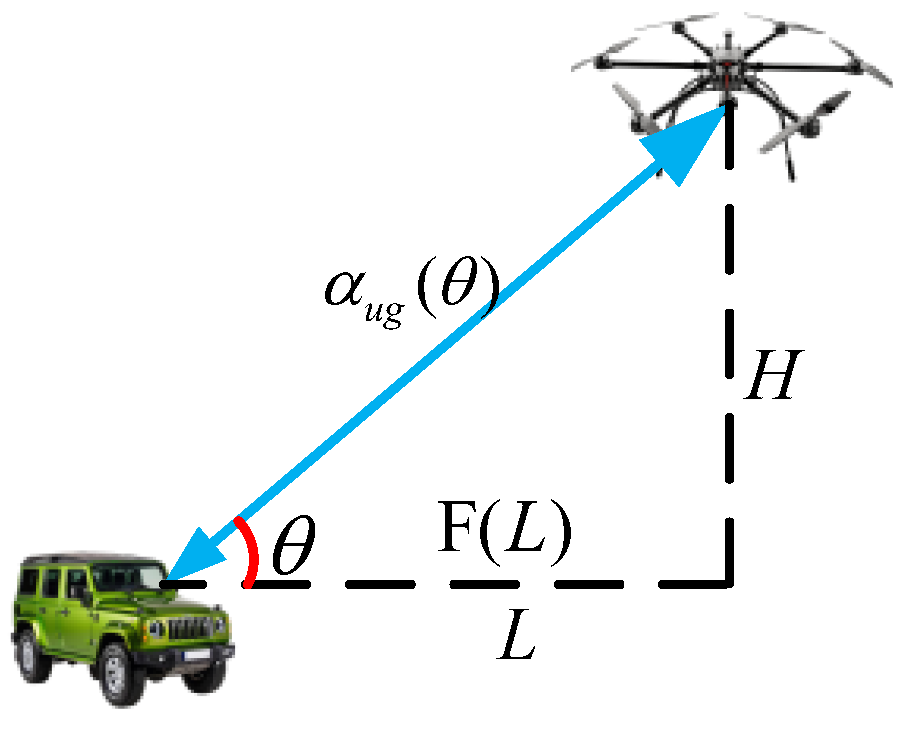
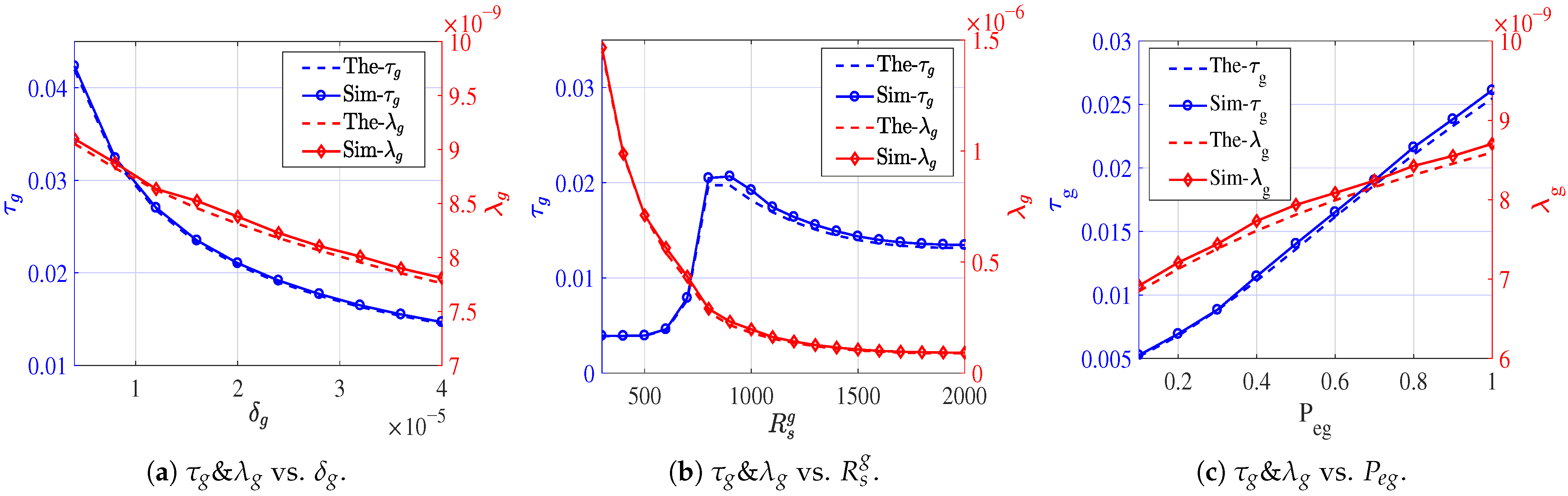
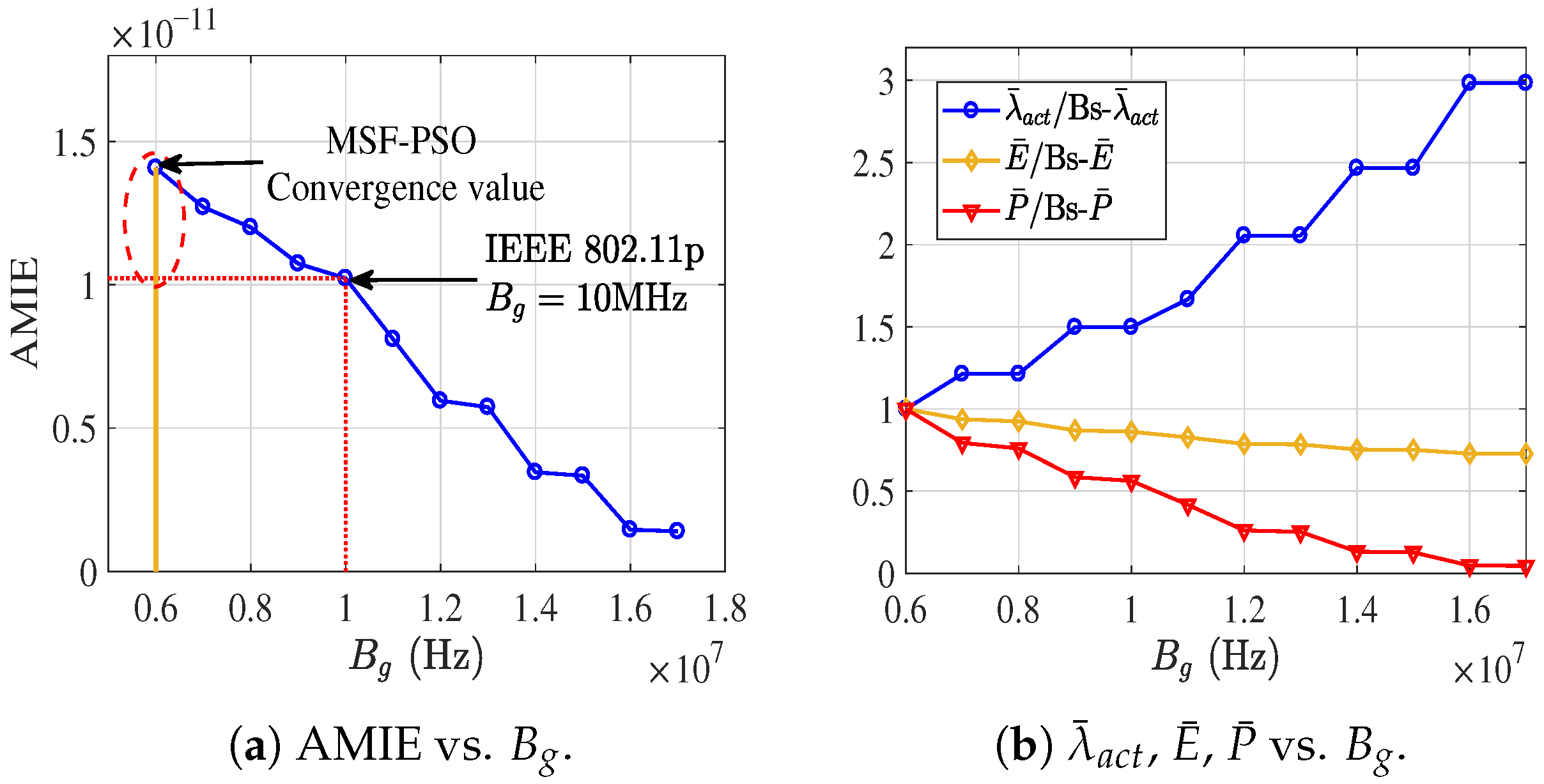
- Analysis of AMIE and Resource Allocation Scheme in UAMANET: Under the proposed network model and commonly used access schemes in current UAMANET, we extended Bianchi’s research on DCF and analyzed the impact of system parameters on AMIE. The results indicate that, resource allocation schemes exert multifaceted effects on AMIE under saturation; Specifically, increasing G2U transmission resources simultaneously reduces network link activation density, G2U transmission interruption probability, and the average E2E hop count, highlighting the inherent trade-offs in resource allocation. Moreover, factors such as access node density, carrier sensing range, and the probability of P2P transmission interruption—as influenced by the network environment and routing parameters—directly affect the convergence of the optimal resource allocation scheme.
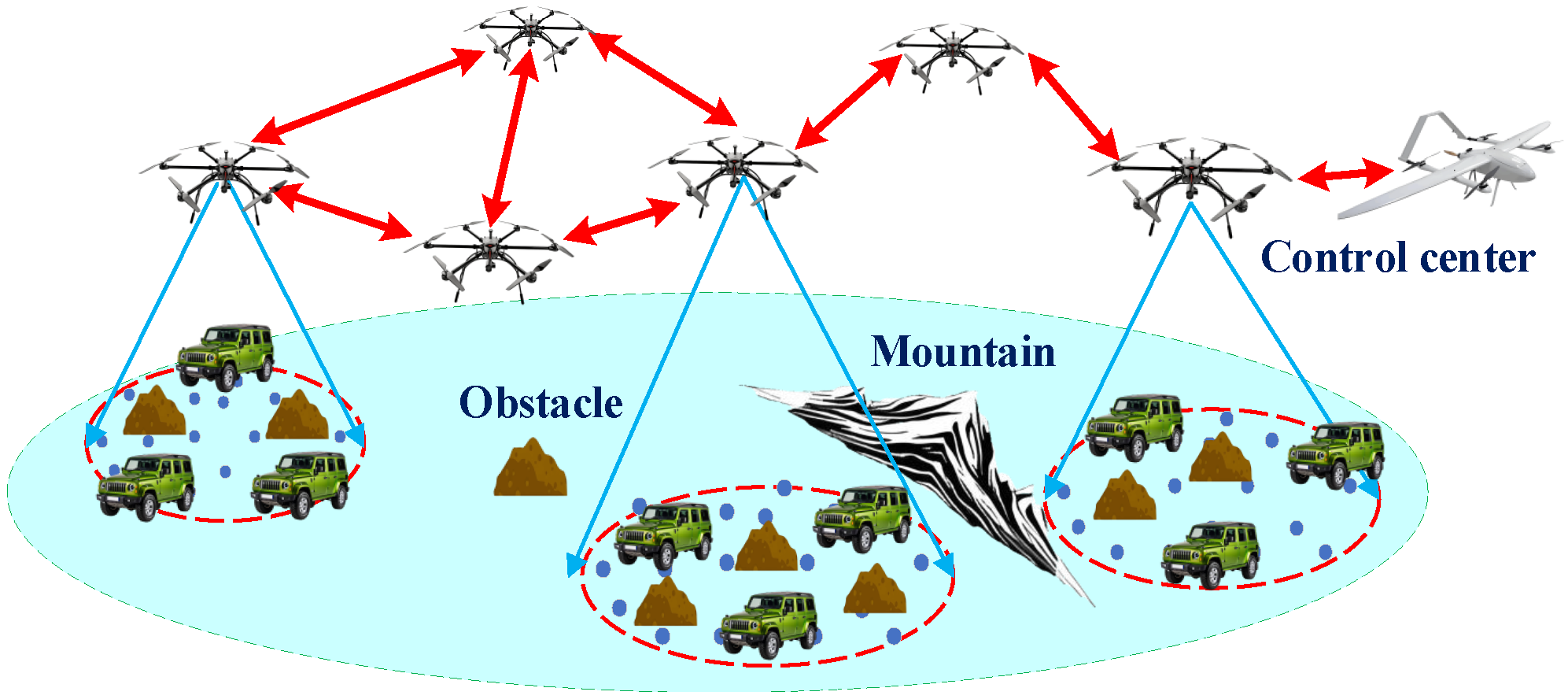
- Resource Management Framework: Considering the decentralized nature of MANETs, we propose a soft-centralized resource allocation and management framework. In this framework, UAV nodes partition network resources into G2G and G2U transmission resources based on global network parameters, while ordinary ground nodes and ground nodes accessing UAVs perform distributed channel access within their allocated resources. Given that the current model lacks closed-form expressions for key parameters such as , we employ a MSF-PSO algorithm [26] to jointly optimize the resource allocation variables and access parameters.
2. System Model
2.1. Network Model
2.2. Channel Model
2.3. Performance Metric
3. Preliminary Analysis
3.1. IBs of Various Links
3.2. RDP Network Model
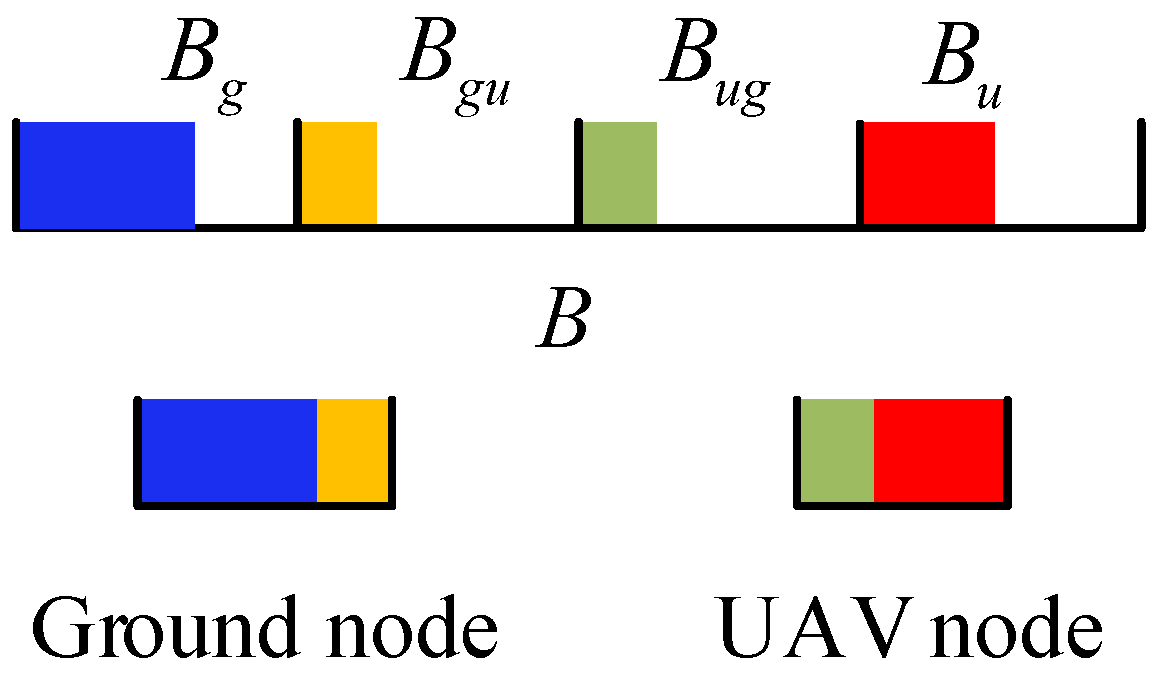
- Resource partitioning: The total transmission resources are divided into . Such resource-domain partitioning enables interference isolation among heterogeneous link types while preserving distributed channel access within each domain.
- Transceiver capabilities: Both ground nodes and UAVs are equipped with full transceiver functionality, enabling them to transmit and receive data over all resource domains in B. This capability ensures that routing and relaying decisions are not constrained by hardware limitations and enables a unified treatment of different link types.
- Access mechanisms for homogeneous links: U2U and G2G links, which connect homogeneous nodes, access the channels and using CSMA/CA. This design choice maintains consistency with IEEE 802.11-based UAMANET implementations and explicitly captures contention-driven channel access behavior among nodes with similar communication characteristics.
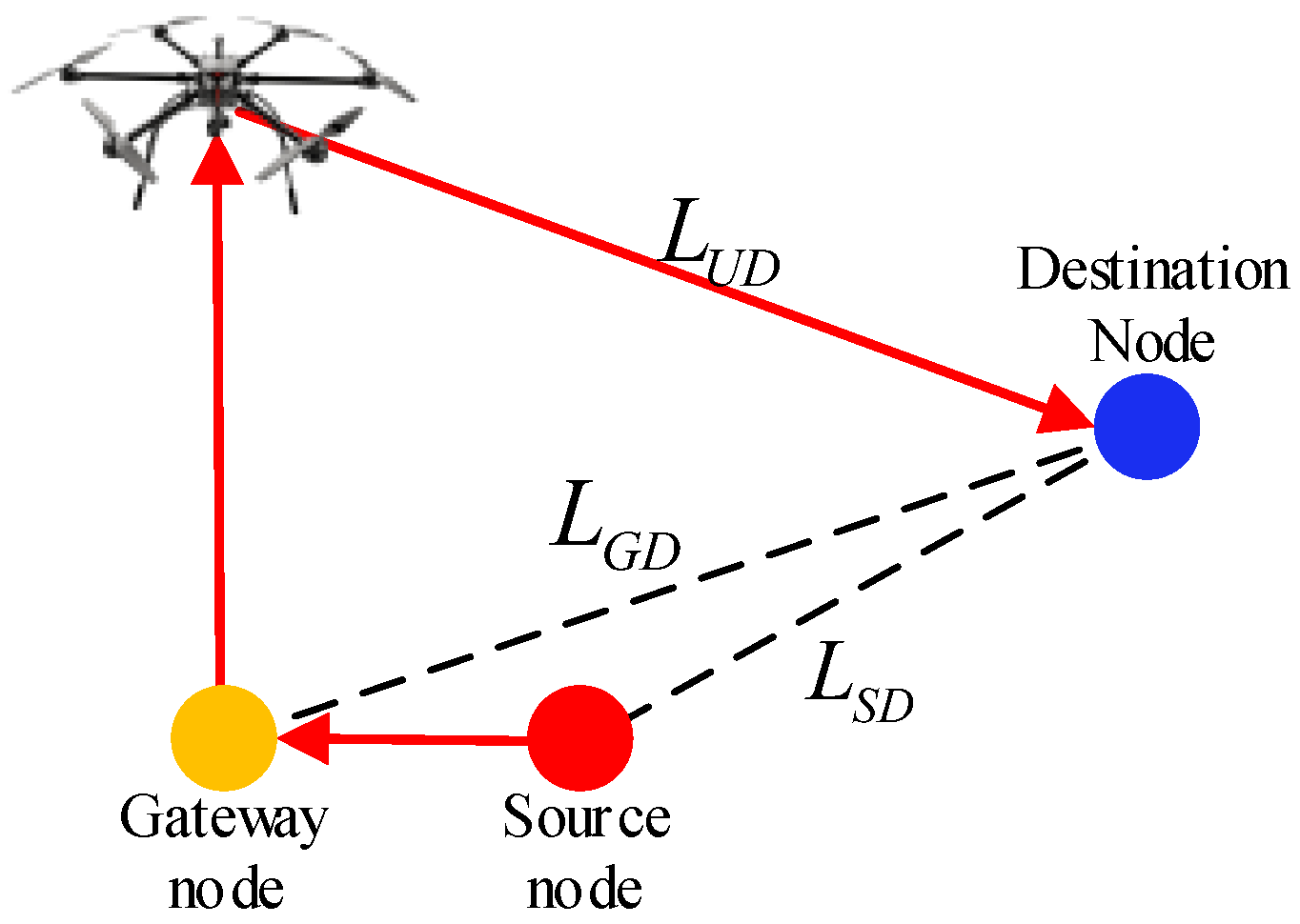
- Ground node access to UAV: Ground nodes attempt to access the UAV with probability using either the CSMA/CA access mechanism or CSMA/CA with RTS/CTS. The probabilistic access mechanism preserves the distributed nature of MANETs.
- Resource assignments principle: All homogeneous nodes are assigned identical access priorities under CSMA/CA. This assumption ensures fairness among nodes of the same type and enables a clear characterization of how resource partitioning and contention jointly affect network load capacity.
4. Optimal Resource Allocation
4.1. Active Link Density
4.2. Transmission Efficiency Analysis
4.3. E2E Successful Transmission Probability Analysis
5. Resource Optimization
5.1. Problem Modeling and Simplification
5.2. Soft-Centralized Spectrum Resource Management Methods
6. Evaluation
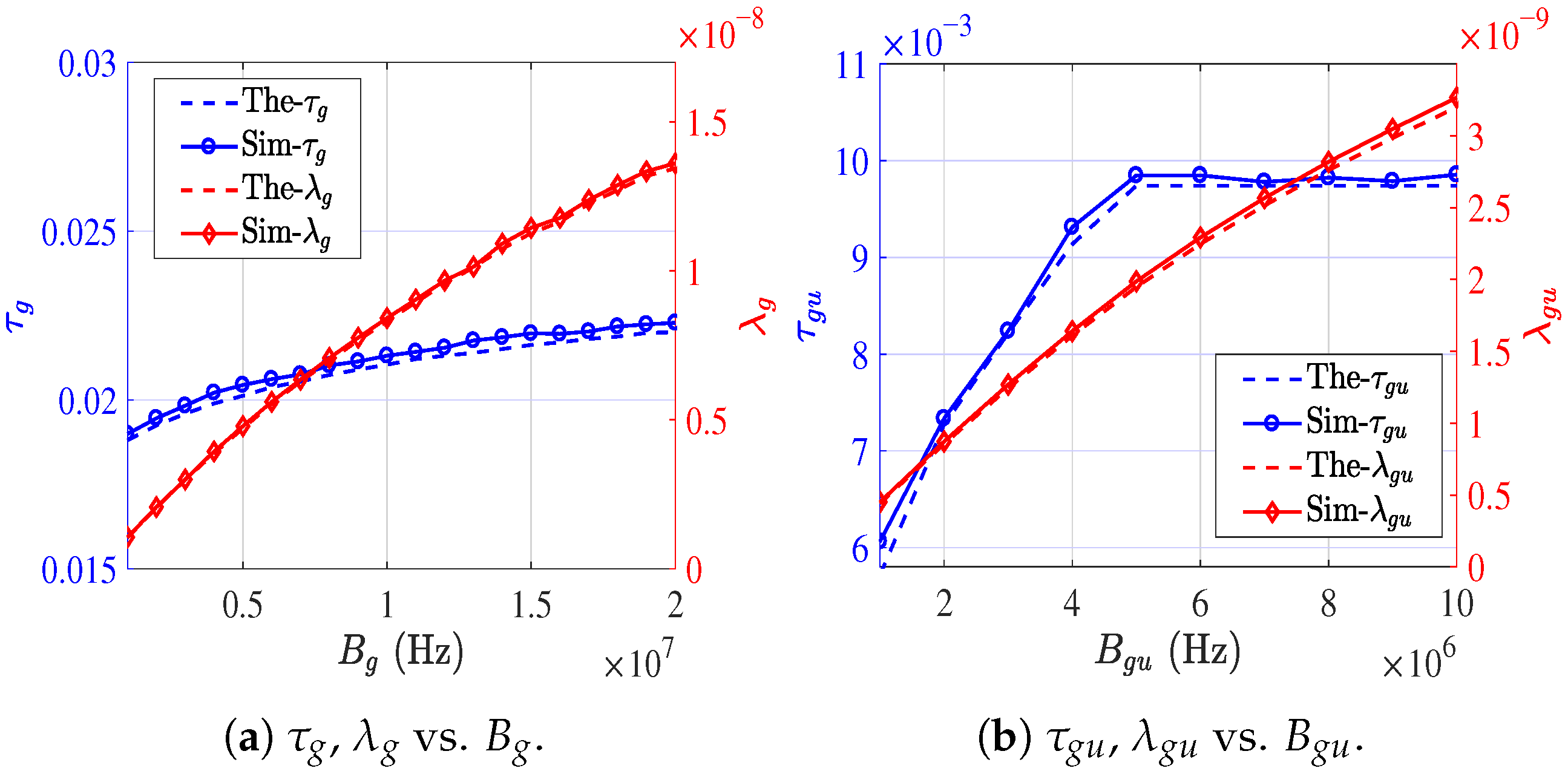
6.1. Derived Models Validated
6.1.1. Activated Link Density
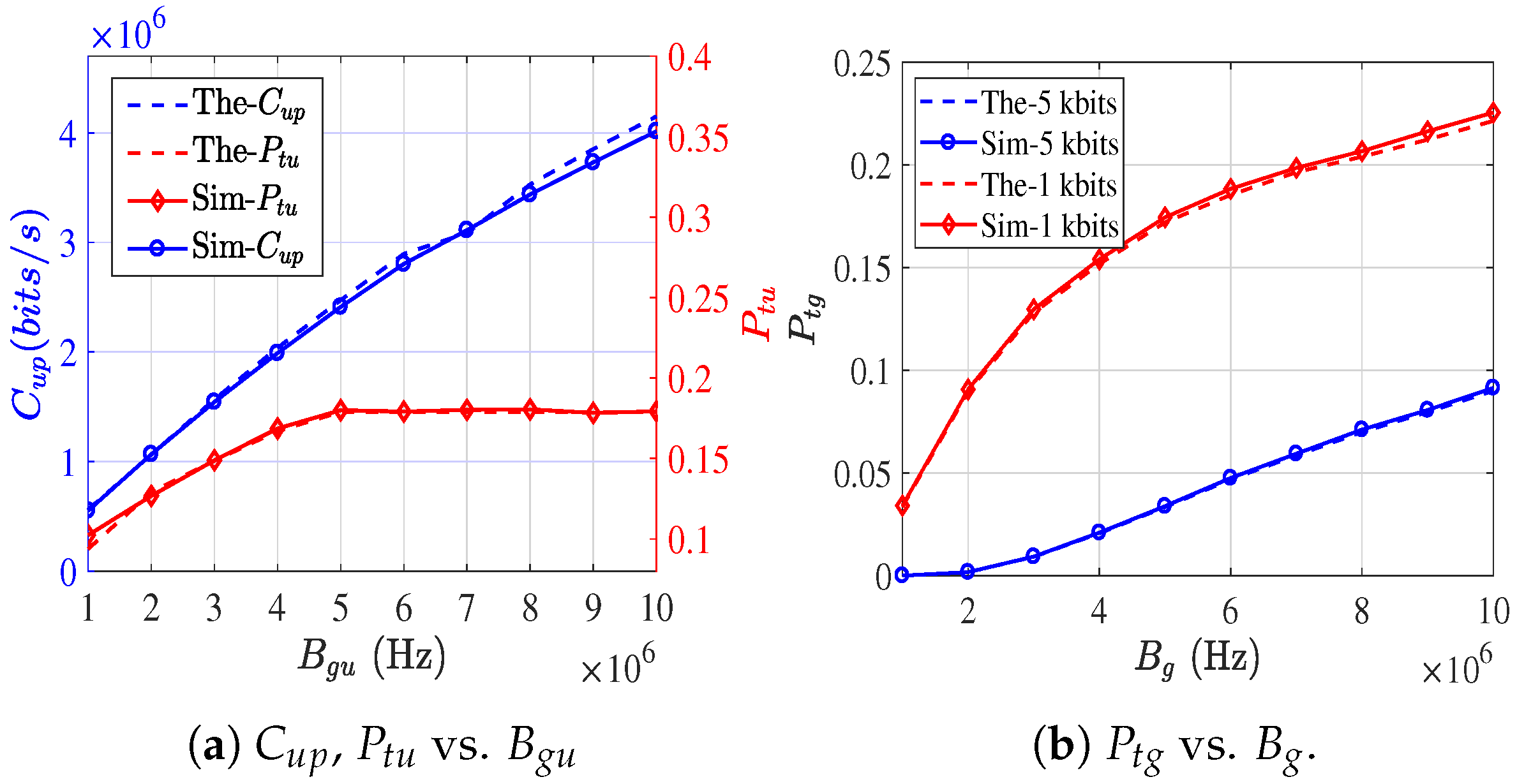
6.1.2. Transmission Efficiency
6.1.3. E2E Successful Transmission Probability
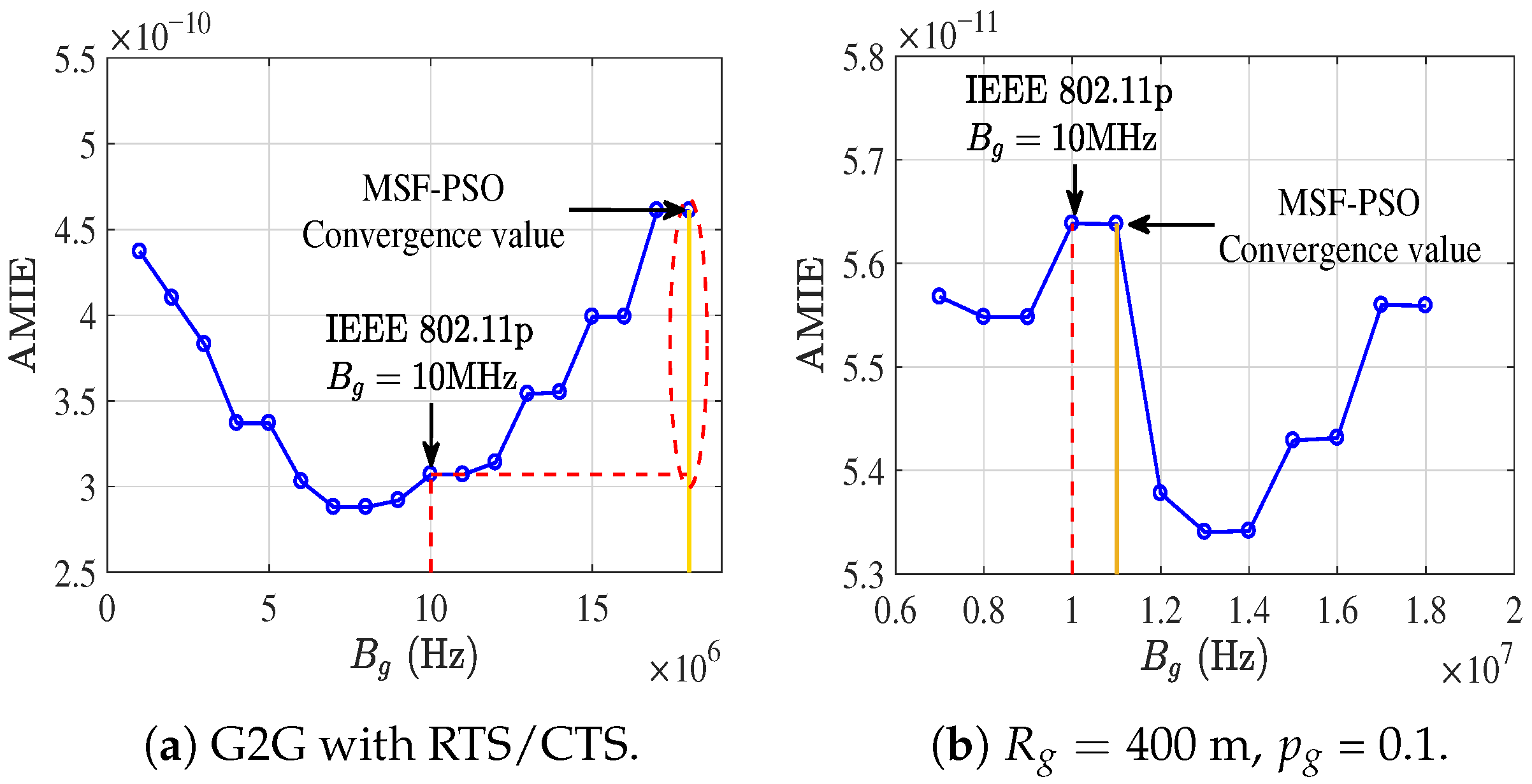
6.2. Soft-Centralized Spectrum Resource Management
7. Conclusions
Author Contributions
Funding
Data Availability Statement
Conflicts of Interest
References
- Quy, V.K.; Nam, V.H.; Linh, D.M.; Ngoc, L.A. Routing algorithms for MANET-IoT networks: A comprehensive survey. Wirel. Pers. Commun. 2022, 125, 3501–3525. [Google Scholar] [CrossRef]
- Kanellopoulos, D.; Sharma, V.K.; Panagiotakopoulos, T.; Kameas, A. Networking architectures and protocols for IoT applications in smart cities: Recent developments and perspectives. Electronics 2023, 12, 2490. [Google Scholar] [CrossRef]
- Li, B.; Yang, D.; Liu, L.; Niyato, D. Aerial RIS-Enhanced Communications: Joint UAV Trajectory, Altitude Control, and Phase Shift Design. IEEE Trans. Wirel. Commun. 2025, 25, 5830–5845. [Google Scholar] [CrossRef]
- Alharbi, A.A.; Hassan, E.S.; Smaili, I.H. Pareto-Optimized Mobile-Sink Routing for Energy-Efficient Wireless Sensor Networks. Int. J. Energy Res. 2025, 2025, 1980824. [Google Scholar] [CrossRef]
- Li, C.; Zhang, Y.; Yu, L.; Yang, M. Efficient vehicle selection and resource allocation for knowledge distillation-based federated learning in UAV-assisted VEC. IEEE Trans. Intell. Transp. Syst. 2025, 26, 6321–6331. [Google Scholar] [CrossRef]
- Yao, Y.; Xiao, W.; Miao, P.; Chen, G.; Yang, H.; Chae, C.B.; Wong, K.K. UAV-relay-aided secure maritime networks coexisting with satellite networks: Robust beamforming and trajectory optimization. IEEE Trans. Wirel. Commun. 2025, 25, 2342–2358. [Google Scholar]
- Shah, M.A.; Zeeshan Khan, F.; Abbas, G.; Abbas, Z.H.; Ali, J.; Aljameel, S.S.; Khan, I.U.; Aslam, N. Optimal path routing protocol for warning messages dissemination for highway VANET. Sensors 2022, 22, 6839. [Google Scholar] [CrossRef]
- Cui, Y.; Zhang, Q.; Feng, Z.; Wei, Z.; Shi, C.; Yang, H. Topology-aware resilient routing protocol for FANETs: An adaptive Q-learning approach. IEEE Internet Things J. 2022, 9, 18632–18649. [Google Scholar]
- Cui, Y.; Tian, H.; Chen, C.; Ni, W.; Wu, H.; Nie, G. New geographical routing protocol for three-dimensional flying ad-hoc network based on new effective transmission range. IEEE Trans. Veh. Technol. 2023, 72, 16135–16147. [Google Scholar] [CrossRef]
- Bashir, N.; Boudjit, S.; Dauphin, G. A connectivity aware path planning for a fleet of UAVs in an urban environment. IEEE Trans. Intell. Transp. Syst. 2023, 24, 10537–10552. [Google Scholar] [CrossRef]
- Liu, X.; Liu, H.; Zheng, K.; Liu, J.; Taleb, T.; Shiratori, N. AoI-minimal clustering, transmission and trajectory co-design for UAV-assisted WPCNs. IEEE Trans. Veh. Technol. 2024, 74, 1035–1051. [Google Scholar] [CrossRef]
- Zhou, Z.; Tang, J.; Feng, W.; Zhao, N.; Yang, Z.; Wong, K.K. Optimized routing protocol through exploitation of trajectory knowledge for uav swarms. IEEE Trans. Veh. Technol. 2024, 73, 15499–15512. [Google Scholar] [CrossRef]
- Islam, M.M.; Saad, M.M.; Khan, M.T.R.; Shah, S.H.A. Proactive uavs placement in vanets. In Proceedings of the ICC 2022-IEEE International Conference on Communications, Seoul, Republic of Korea, 16–20 May 2022; IEEE: New York, NY, USA, 2022; pp. 1–7. [Google Scholar]
- He, Y.; Wang, D.; Huang, F.; Zhang, R.; Pan, J. Trajectory optimization and channel allocation for delay sensitive secure transmission in UAV-relayed VANETs. IEEE Trans. Veh. Technol. 2022, 71, 4512–4517. [Google Scholar] [CrossRef]
- Chen, J.; Huang, D.; Wang, Y.; Yu, Z.; Zhao, Z.; Cao, X.; Liu, Y.; Quek, T.Q.; Wu, D.O. Enhancing Routing Performance through Trajectory Planning with DRL in UAV-aided VANETs. IEEE Trans. Mach. Learn. Commun. Netw. 2025, 3, 517–533. [Google Scholar] [CrossRef]
- HaghighiFard, M.S.; Coleri, S. Hierarchical federated learning in multi-hop cluster-based vanets. IEEE Trans. Veh. Technol. 2025, 74, 15371–15385. [Google Scholar] [CrossRef]
- Shen, R.; Gao, M.; Li, W.; Li, Y. Task offloading oriented cluster generation scheme in vehicular networks. IEEE Trans. Veh. Technol. 2024, 73, 9142–9146. [Google Scholar] [CrossRef]
- Mokhtari, S.; Nouri, N.; Abouei, J.; Avokh, A.; Plataniotis, K.N. Relaying data with joint optimization of energy and delay in cluster-based uav-assisted vanets. IEEE Internet Things 2022, 9, 24541–24559. [Google Scholar] [CrossRef]
- Bopparam, G.; Prajapati, D.; Kumar, M.; Rajput, K.P.; Shankar, M.B. URCR: UAV-Aided Reputation-Based Cluster Routing in Vehicular Ad Hoc Networks. IEEE Trans. Veh. Technol. 2025. [Google Scholar] [CrossRef]
- Gupta, P.; Kumar, P.R. The capacity of wireless networks. IEEE Trans. Inf. Theory 2002, 46, 388–404. [Google Scholar] [CrossRef]
- IEEE Std 802.11-2024; IEEE Standard for Information Technology—Telecommunications and Information Exchange Between Systems—Local and Metropolitan Area Networks—Specific Requirements—Part 11: Wireless LAN Medium Access Control (MAC) and Physical Layer (PHY) Specifications. IEEE: Piscataway, NJ, USA, 2025.
- Singh, A.; Prakash, S.; Singh, S. Comparative study of MAC protocols for wireless mesh network. Wirel. Pers. Commun. 2024, 135, 1473–1495. [Google Scholar] [CrossRef]
- Zhang, T.; Zheng, Y.; Sheng, M.; Li, J. Efficient Air-ground Collaborative Routing Strategy for UAV-assisted MANETs. IEEE Trans. Veh. Technol. 2025. [Google Scholar] [CrossRef]
- Nardelli, P.H.; Cardieri, P.; Latva-aho, M. Efficiency of wireless networks under different hopping strategies. IEEE Trans. Wirel. Commun. 2011, 11, 15–20. [Google Scholar] [CrossRef]
- Chen, X.; Sheng, M.; Zhao, N.; Liu, J.; Li, J. Enhancing Network Capacity with Transmission Range Optimization in UAV Ad hoc Networks. IEEE Trans. Commun. 2024, 73, 4766–4779. [Google Scholar] [CrossRef]
- Shu, B.; Hu, G.; Cheng, M.; Zhang, C. MSFPSO: Multi-algorithm integrated particle swarm optimization with novel strategies for solving complex engineering design problems. Comput. Methods Appl. Mech. Eng. 2025, 437, 117791. [Google Scholar] [CrossRef]
- Bianchi, G. Performance analysis of the IEEE 802.11 distributed coordination function. IEEE J. Sel. Areas Commun. 2002, 18, 535–547. [Google Scholar] [CrossRef]
- Hua, B.; Han, L.; Zhu, Q.; Wang, C.X.; Mao, K.; Bao, J.; Chang, H.; Tang, Z. Ultra-wideband nonstationary channel modeling for UAV-to-ground communications. IEEE Trans. Wirel. Commun. 2025, 24, 4190–4204. [Google Scholar] [CrossRef]
- Fatemidokht, H.; Rafsanjani, M.K.; Gupta, B.B.; Hsu, C.H. Efficient and secure routing protocol based on artificial intelligence algorithms with UAV-assisted for vehicular ad hoc networks in intelligent transportation systems. IEEE Trans. Intell. Transp. Syst. 2021, 22, 4757–4769. [Google Scholar] [CrossRef]






| Notations | Descriptions |
|---|---|
| Number of UAVs | |
| Number of ground nodes within the task cluster | |
| SNIR for P2P transmission | |
| Channel attenuation coefficient | |
| Aggregate multi-hop information efficiency | |
| Density of activated links | |
| Average transmission efficiency | |
| Average E2E transmission collision-free probability | |
| Node’s transmission probability per idle time slot | |
| Node’s actived probability per time slot | |
| Interference radius generated by P2P transmission | |
| The carrier sensing range |
| Parameter | Value |
|---|---|
| Area size | |
| , | 0.8, 0.9 |
| 16, 5, 7 dB | |
| ≈1000 m | |
| , | ≈300 m, 600 m |
| Gateway node ratio | 0.75 |
| MAC Data rate when B = 10 MHz | 6 Mbps |
| Payload size | 5000 bits |
| Total bandwidth | 20 MHz |
| Minimum bandwidth allocation unit | 1 MHz |
| Routing model | Random routing |
| MSF-PSO Population size | 5 |
| MSF-PSO Max iterations | 10 |
| MSF-PSO Inertia weight w | 0.7 |
| MSF-PSO Cognitive coefficient | 1.5 |
| MSF-PSO Social coefficient | 1.5 |
| MSF-PSO Position bounds | [0, 20] |
Disclaimer/Publisher’s Note: The statements, opinions and data contained in all publications are solely those of the individual author(s) and contributor(s) and not of MDPI and/or the editor(s). MDPI and/or the editor(s) disclaim responsibility for any injury to people or property resulting from any ideas, methods, instructions or products referred to in the content. |
© 2026 by the authors. Licensee MDPI, Basel, Switzerland. This article is an open access article distributed under the terms and conditions of the Creative Commons Attribution (CC BY) license.
Share and Cite
Zhang, T.; Zheng, Y. Soft-Centralized Spectrum Resource Management in UAV-Assisted MANETs from Aggregate Multi-Hop Information Efficiency. Sensors 2026, 26, 1446. https://doi.org/10.3390/s26051446
Zhang T, Zheng Y. Soft-Centralized Spectrum Resource Management in UAV-Assisted MANETs from Aggregate Multi-Hop Information Efficiency. Sensors. 2026; 26(5):1446. https://doi.org/10.3390/s26051446
Chicago/Turabian StyleZhang, Tianyi, and Yang Zheng. 2026. "Soft-Centralized Spectrum Resource Management in UAV-Assisted MANETs from Aggregate Multi-Hop Information Efficiency" Sensors 26, no. 5: 1446. https://doi.org/10.3390/s26051446
APA StyleZhang, T., & Zheng, Y. (2026). Soft-Centralized Spectrum Resource Management in UAV-Assisted MANETs from Aggregate Multi-Hop Information Efficiency. Sensors, 26(5), 1446. https://doi.org/10.3390/s26051446