1. Introduction
As robotic technologies continue to proliferate in the industrial and service domains, advances in control theory have enabled increasingly stable and reliable operation [
1,
2,
3,
4,
5,
6]. Paradoxically, such theoretical progress has increased the complexity of control architectures, making implementation and tuning more challenging in practice and, in turn, widening the gap between theory and implementation [
7,
8]. Meanwhile, modern robotic control has expanded toward advanced methodologies, including model predictive control, continuous-time state estimation, and safe learning frameworks, further increasing design complexity and practical tuning requirements [
3,
5,
6]. Consequently, in real-world environments where available resources are limited and environmental uncertainty is pervasive, simple and intuitive control schemes such as Proportional–Integral–Derivative (PID) control remain dominant over high-dimensional controllers [
9,
10]. Nevertheless, these approaches have inherent limitations in guaranteeing consistent performance under varying conditions, including changes in system dynamics, external disturbances, or changes in operators and operating conditions [
9,
10]. Therefore, for practical applicability in field environments, a controller should preserve ease of implementation and operation while achieving high reliability through mathematically grounded design.
A reliable control system should explicitly characterize causal relationships in the control process and provide quantitative assessments of performance and stability based on rigorous analysis. From this perspective, model-based control has been widely adopted as the core methodology for the precise control of robotic systems [
1,
7,
8]. However, as structural complexity increases and operating environments become more demanding, the difficulty of model identification, which is a central step in model-based control, increases sharply and becomes a major barrier to practical implementation [
11,
12,
13,
14]. In particular, nonlinearities and time-varying characteristics inherent in the system degrade the predictability of the model, while persistent disturbances are superimposed on identification residuals and obscure physical causality [
7,
12,
15]. Attempting to identify such a system directly, with the compound uncertainty left intact, is inefficient and often impractical [
11,
12,
13]. From a pragmatic point of view, an effective alternative is to actively suppress uncertainty through inner-loop control to create an identification-friendly environment, while performing online model identification in parallel [
12,
16,
17].
To enhance reliability under uncertainty in the system, two major approaches have been widely investigated: Robust control and Adaptive control. Robust control treats uncertainty as a disturbance to be suppressed, emphasizing stability guarantees under bounded uncertainty, often at the expense of conservative design [
8,
18]. In contrast, adaptive control interprets uncertainty as parameter variation to be accommodated through online model updates, while introducing additional estimation dynamics into the closed-loop system [
19,
20,
21,
22]. By integrating representative techniques of these paradigms, namely a Disturbance Observer (DOB) [
16,
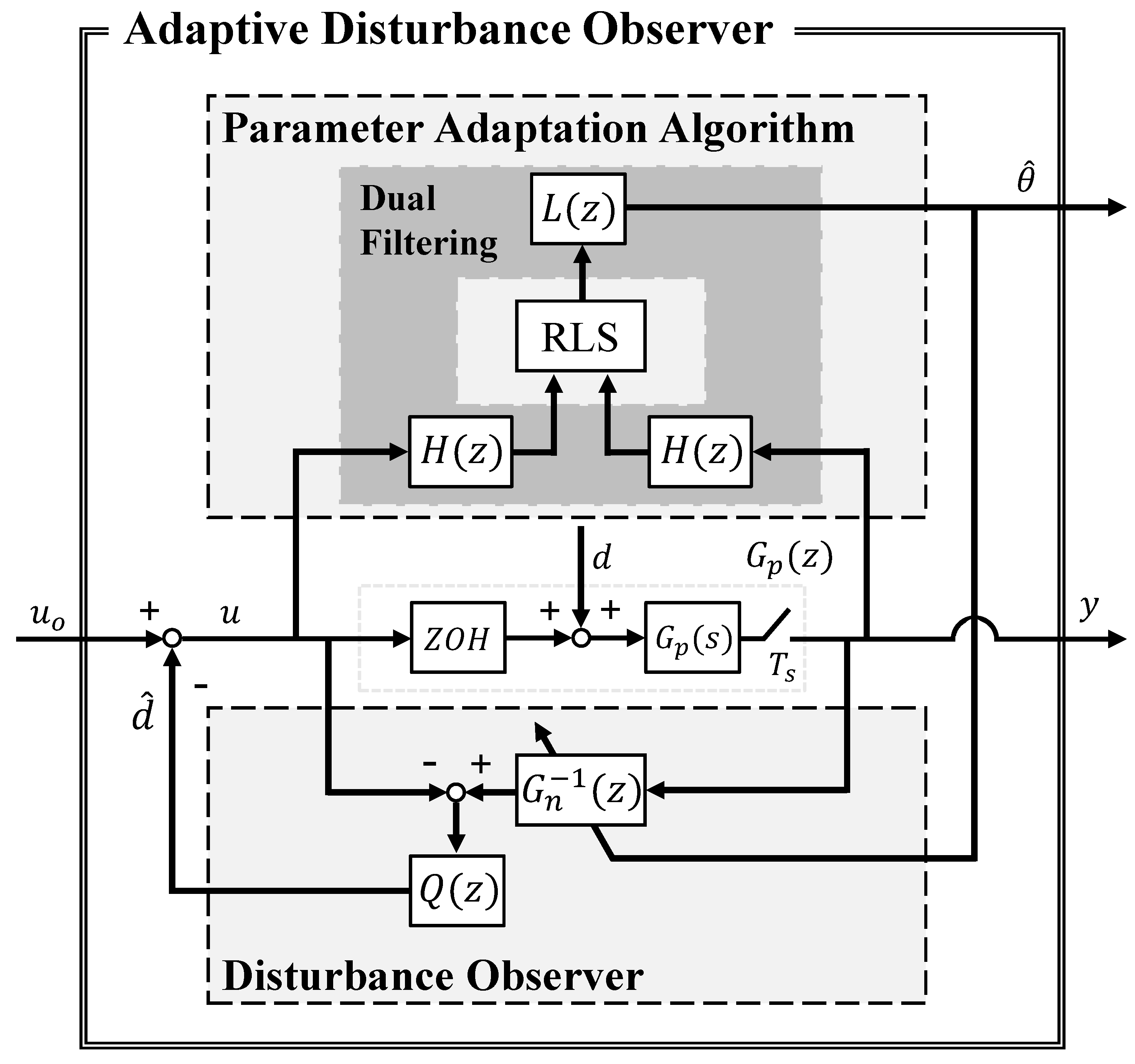
17] and a Parameter Adaptation Algorithm (PAA), it becomes possible to manage nonlinearities, disturbances, and time-varying dynamics in a unified manner, thereby establishing an environment that is favorable for model identification. Specifically, the PAA updates the parameters of the DOB nominal model online based on real-time identification, yielding a Linear Time-Varying (LTV) model, while the DOB immediately compensates for disturbances and model mismatch using the updated model [
16,
17,
19,
21]. Within this structure, nonlinearities and disturbances are suppressed, while time-varying characteristics are tracked with high fidelity. As a result, the system maintains behavior consistent with a linear system, enabling continuous predictability and reliable control performance. In addition, an automated PAA identification process based on optimization algorithms such as Recursive Least Squares (RLS) or gradient-based methods removes the need for manual adjustment and improves implementability in practice [
12,
23,
24].
An important point is that integration of robust control and adaptive control provides more than a simple functional addition; instead, it forms a strong positive feedback cycle in which inherent limitations of each method are alleviated by the other [
25]. In conventional DOB design, a static nominal model is used; therefore, even time-varying characteristics of the system are effectively treated as disturbances, and the resulting unavoidable model mismatch imposes a constraint that forces a conservative design of the bandwidth of the Q-filter to ensure stability [
16,
17]. In addition, when a PAA is exposed to disturbances and uncertainty, an adaptation gain is often kept low to prevent oscillation or divergence of parameter estimates, which sacrifices responsiveness to parameter variation [
19,
20,
21]. Under these conditions, hybrid integration becomes a key mechanism that releases mutual design constraints. When the PAA updates the nominal model of the DOB according to real-time parameter estimation and aligns the nominal model with the dynamics of the system, the DOB is relieved from compensating time-varying characteristics as disturbances and gains sufficient margin to substantially expand the Q-filter bandwidth [
16,
17]. At the same time, when the DOB suppresses nonlinearities and disturbances in a proactive manner and stabilizes the behavior of the system within the validity range of the nominal model, the PAA is provided with refined data that enable a more aggressive adaptation gain, thus improving both the convergence speed and the accuracy of the estimation [
19,
20,
21]. Consequently, this integrated strategy establishes a synergistic interaction in which robust control creates a stable environment for parameter adaptation, while adaptive control continuously updates the nominal model that underpins robust control. This positive feedback structure extends the attainable performance of model-based control and enables high control quality in which precision and robustness coexist, even under complex operating environments.
In this paper, an Adaptive Disturbance Observer (ADOB) is proposed to maximize the control performance of robotic systems by integrating a nominal-model update mechanism based on real-time parameter estimation. The ADOB realizes the positive feedback cycle described above by projecting time-varying characteristics identified by the PAA onto the nominal model of the DOB. However, when the two mechanisms are combined in a naive parallel manner, functional interference may occur, such as misinterpretation of compensation signals as disturbances or overlap of operational bandwidths that compromises stability of the control loop [
16,
17,
19,
21]. To address this issue, this study introduces a dual-filtering mechanism that systematically separates and complements the roles of each algorithm, thus ensuring operational stability of the hybrid structure. With this enhancement, a field engineer can deploy the ADOB by applying a coarse initial model established from simple excitation inputs. During operation, the DOB immediately compensates for model mismatch to ensure stability, while the PAA gradually refines the nominal model toward an optimal LTV model that conforms to the dynamics of the system. Consequently, a user can apply high-performance linear model-based control algorithms, such as Zero Phase Error Tracking Control (ZPETC) [
26], Linear Quadratic Regulator (LQR) [
27], or Model Predictive Control (MPC) [
28], within a predictable linear environment maintained by the ADOB, without the additional burden of complex identification procedures or iterative trial-and-error tuning.
3. Stability and Performance Analysis of the ADOB
In this section, the control stability of the proposed ADOB is theoretically verified, and its superior performance is analyzed through comparison with the standalone DOB and PAA implementations.
3.1. Control Stability
The stability evaluation of the ADOB is performed using hyperstability theory [
31,
32], which is widely used to establish the convergence of the PAA. First, the
a priori and
a posteriori disturbance estimates that form the basis of the stability analysis are defined as follows:
By applying the definition in (
12) together with the recursive formulation established in
Section 2.3 using the Matrix Inversion Lemma, the complex update law in (
8) can be simplified into a compact recursive form based on the
a posteriori estimate:
For stability analysis, when the true parameter vector
is assumed to be constant or to vary sufficiently slowly, the dynamics of the parameter estimation error vector
, defined as
, are governed by:
Considering that
, the
a posteriori disturbance estimate in (
12) can be reformulated in terms of the parameter estimation error as:
As shown in (
14) and (
15),
and
interact within a closed-loop feedback structure, forming an EFS composed of a linear block and a nonlinear block. To analyze the asymptotic stability of this error system, the external input is assumed to be zero. According to hyperstability theory, stability is guaranteed if the linear block is SPR and the nonlinear block satisfies the Popov integral inequality [
31].
In this framework, the forward linear block processes the input signal
to generate the a posteriori disturbance estimate
as its output. Since the ADOB is designed such that
as shown in (
15), the transfer function of the linear block is simply the identity
. Such an identity transfer function inherently satisfies the SPR condition because its phase lag remains at zero for all frequencies.
Simultaneously, the nonlinear block, representing the RLS-based adaptation law in (
14), takes the estimation error
as its input to produce the parameter error feedback
. By defining a Lyapunov-like energy function
, the recursive minimization of the cost function ensures that the energy remains bounded. This leads to the satisfaction of the Popov summation for any arbitrary finite discrete-time
:
where
is a finite positive constant determined by the initial parameter error and adaptation gain.
By fulfilling both the SPR and Popov conditions, the disturbance estimate is guaranteed to converge to zero, ensuring the effective minimization of model uncertainty. While exact parameter convergence () remains a significant metric in general system identification, the proposed ADOB is specifically designed to prioritize the elimination of the modeling-induced disturbance for control-relevant adaptation. This focus allows the nominal model to remain sufficiently matched for compensation even during phases where parameter convergence is incomplete. Furthermore, the smoothing filter reinforces the slowly varying parameter assumption by mitigating numerical fluctuations during periods of limited excitation, thus sustaining the validity of the hyperstability framework in practical field environments.
3.2. Control Performance
To evaluate the control performance, let r denote the residual within the closed-loop architecture and e represent the performance error induced by this residual. In this section, denotes the norm of a discrete-time signal, i.e., .
Assuming that the closed-loop transfer from
r to
e is internally stable, the induced
gain of this transfer is finite. Let
denote the induced
norm of the closed-loop mapping from
r to
e, which signifies the induced
gain of the system. By the definition of induced norm, the following inequality holds:
The residual is defined as , where represents the discrepancy between the physical plant dynamics and the nominal model. Applying the triangle inequality yields .
To quantify the effectiveness of each control component, we define and as the attenuation coefficients for the DOB and PAA, respectively. These coefficients are scalar values representing the suppression capability of each mechanism and satisfy . More precisely, and represent norm-reduction factors applied to the disturbance component and the model-mismatch component of the residual, respectively.
In a single-loop DOB configuration, the disturbance-related component of the residual is attenuated by a factor of
. Substituting this attenuation into (
18) gives the performance bound
In contrast, stand-alone PAA mitigates only modeling errors, yielding
In the proposed ADOB framework, parameter adaptation and disturbance observation operate sequentially on the same residual. Parameter adaptation first reduces the modeling-error component, and the DOB subsequently suppresses the remaining residual. Applying the attenuation factors sequentially in the induced-norm bound (
18) yields
Accordingly, under the same induced-gain
, the ADOB performance satisfies
The above inequalities follow directly from the induced-norm properties of stable linear operators and standard norm inequalities, thereby providing a deterministic performance bound for each configuration.
5. Experimental Results with Three-DOF Robot Arm Manipulator
In the experimental results with the one-DOF electromagnetic actuator system, the multi-DOF control system with the ADOB demonstrated superior control performance even under artificially imposed model uncertainty. In this section, the same design procedure for the ADOB is applied to a higher-order dynamic system, which naturally involves parameter variation due to coupling dynamics among body segments.
To this end, localized controllers based on the DOB/ADOB structures were designed for each of the three joints, distal, middle, and proximal, relative to the base of the manipulator. Satisfactory tracking performance was first achieved via the DOB structure, and the performance was compared against the ADOB implementation, which demonstrated improved tracking accuracy, particularly at the proximal joint.
5.1. Experimental Setup
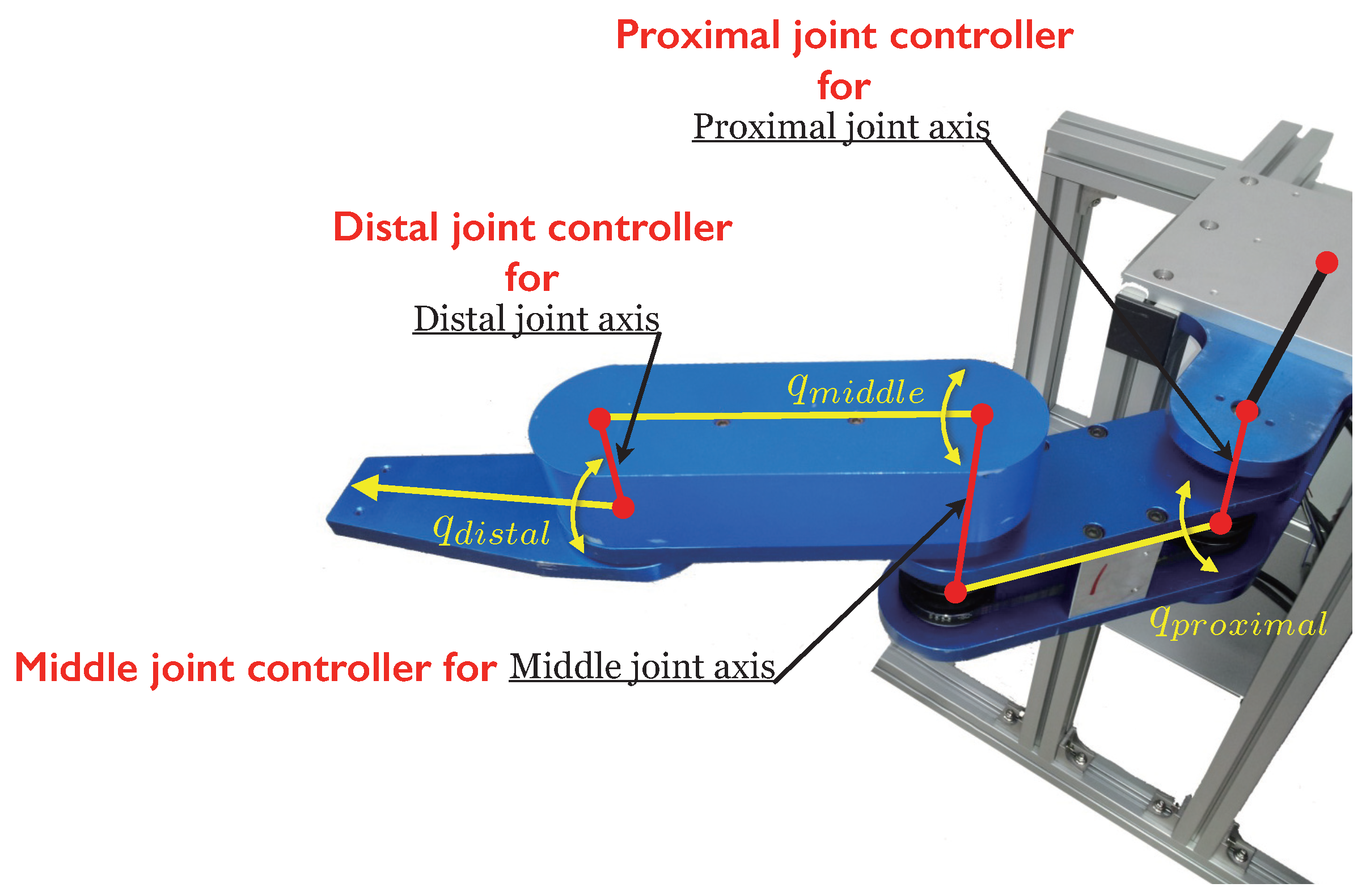
The proposed method was validated through experiments using a three-link robotic manipulator as depicted in
Figure 9. Each link of the manipulator is driven by a 400 W AC motor from LG-OTIS Co. (Seoul, Republic of Korea), where motor angles are measured by encoders with a resolution of 8000 pulses per revolution. Joints and motors are coupled via belt drives, which introduce nonlinearities such as friction and backlash, while motors exhibit inherent nonlinearities in current-to-torque relationships. These nonlinear effects are intended to be rejected by the DOB throughout the experimental procedure.
Moreover, a multi-link manipulator can be characterized as a time-varying system because the inertia matrix
, Coriolis terms
, and gravity effects
depend on joint positions
and velocities
, where
q and
denote generalized coordinates and velocities in the manipulator dynamics:
Within this framework, denotes the Jacobian matrix and denotes the external force. Consequently, changes in the state of each joint influence parameters of the nominal model, provided that an effective PAA updates the model in conjunction with motion of the robotic arm. In particular, when joints are managed by localized controllers, proximal joints experience more significant kinematic effects than distal joints. Furthermore, simultaneous motion across three joints induces more drastic parameter fluctuations due to dynamic coupling, since , , and are generally non-diagonal matrices. In the experimental phase, each joint is controlled independently to evaluate tracking performance of the ADOB under varying kinematics, which effectively treats the Multi-Input Multi-Output (MIMO) system as a collection of SISO systems; thus, model uncertainty is introduced through the decoupling process. In addition, an AC motor can be regarded as a time-varying system over the full lifecycle due to mechanical wear, environmental factors such as ambient temperature, and demagnetization of internal magnets. Accordingly, parameter variation becomes unavoidable during long-term operation.
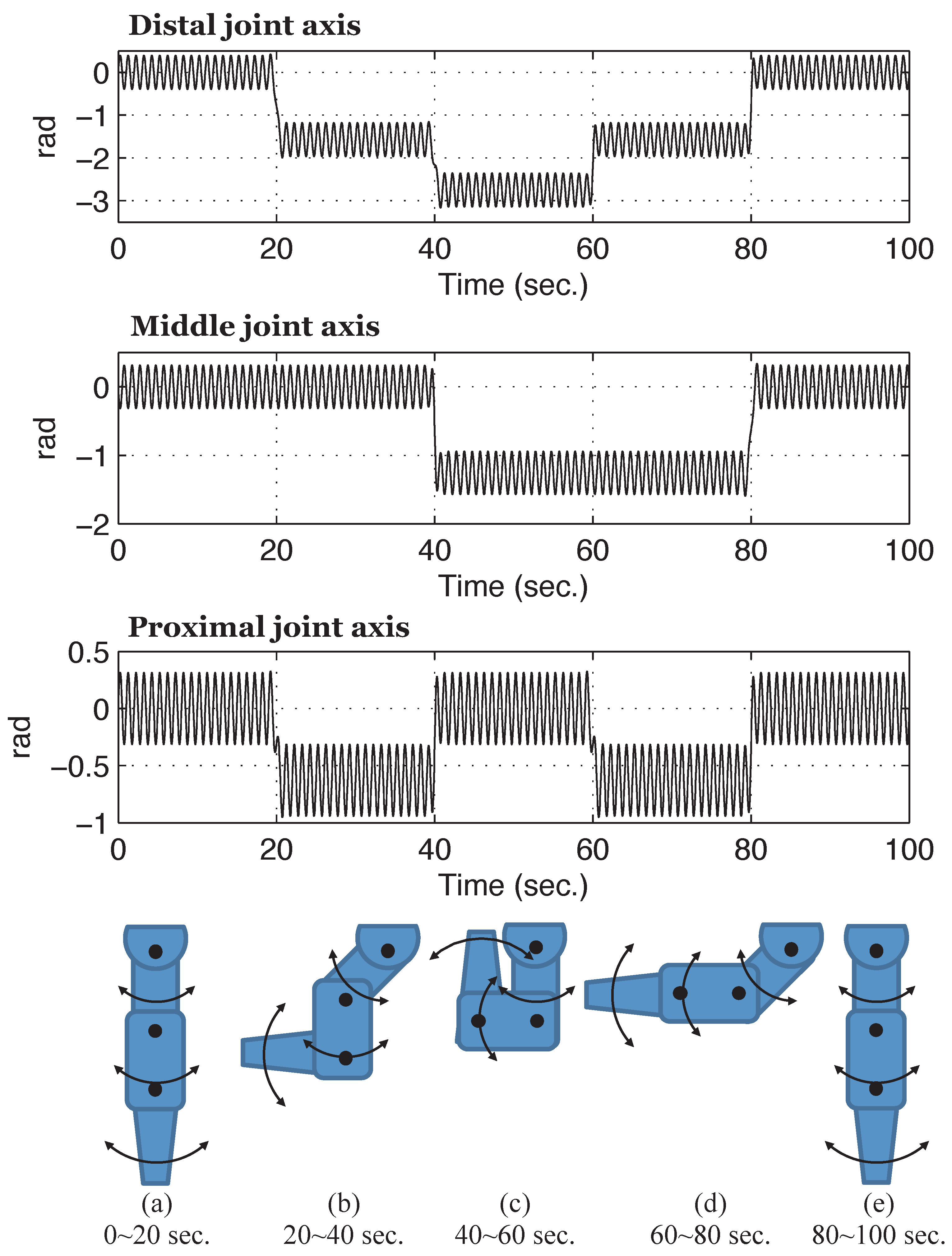
In this experiment, a system with more rapid time-varying properties due to kinematic configuration was assumed;
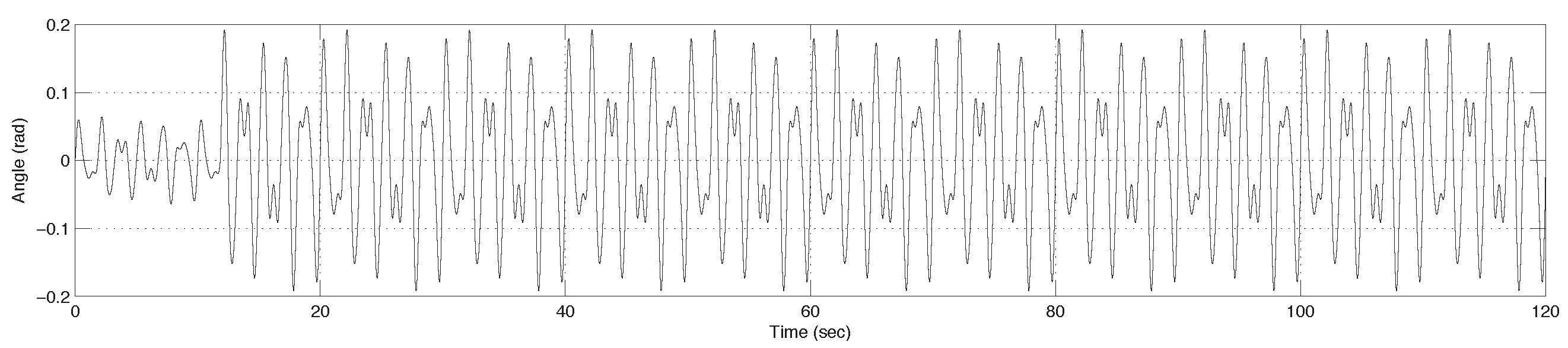
Figure 10 illustrates the reference trajectory of the joint angles. When all three joints were operated to follow the reference trajectories, the behavior of the three-link robotic arm evolved accordingly. The initial angle of each joint was defined as the forward outstretched posture illustrated in
Figure 10a.
5.2. Controller Design
The control system was configured with a sampling frequency of 1 kHz. Based on a feasible linear structure of each joint, the initial nominal model was identified as follows:
The same initial parameters were applied across all three joints. This initial nominal model was obtained through a fundamental frequency response analysis using the sine-sweeping method.
To evaluate the performance of the ADOB, measured tracking trajectories were compared against those of a conventional DOB that uses a fixed nominal model. First, a DOB-based controller with a fixed nominal model was implemented for reference tracking. Next, after integration of the PAA into the DOB as proposed, tracking performance of the resulting ADOB was assessed through comparative analysis against baseline performance of the DOB.
Recall that
should be designed before implementation of the DOB architecture.
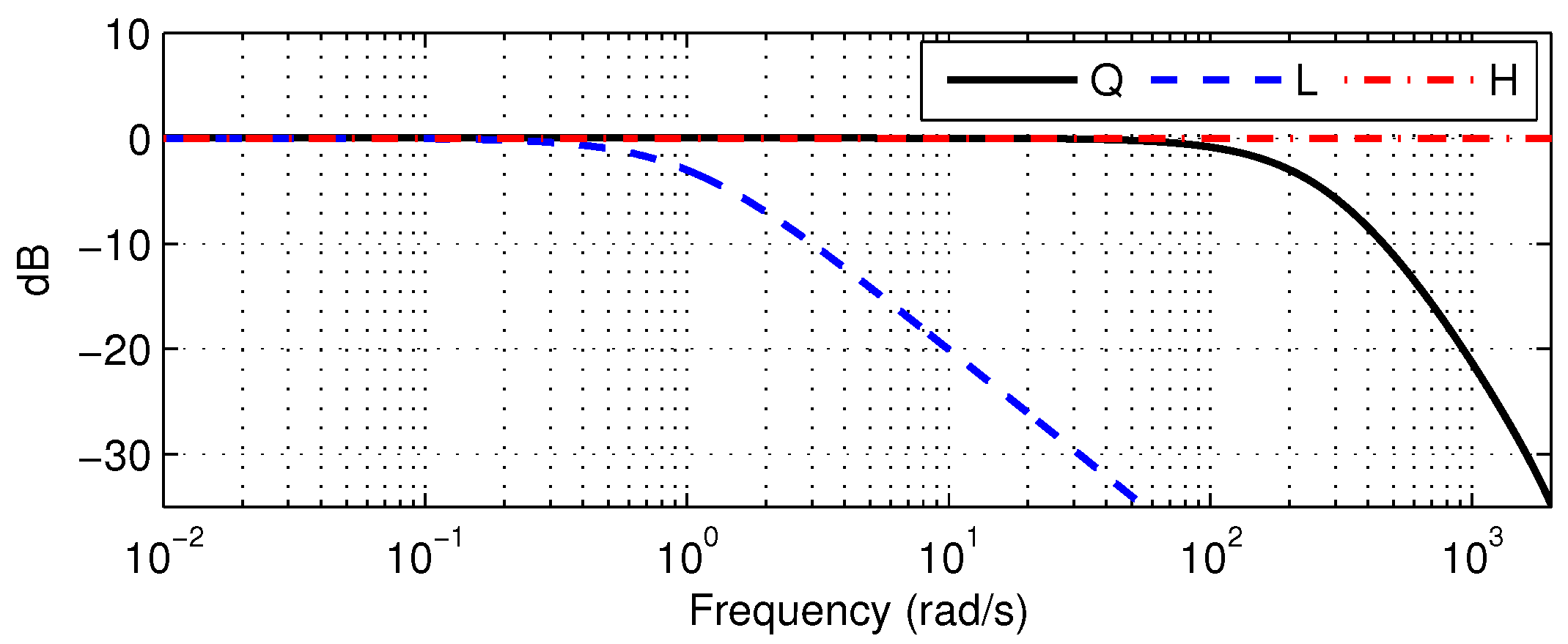
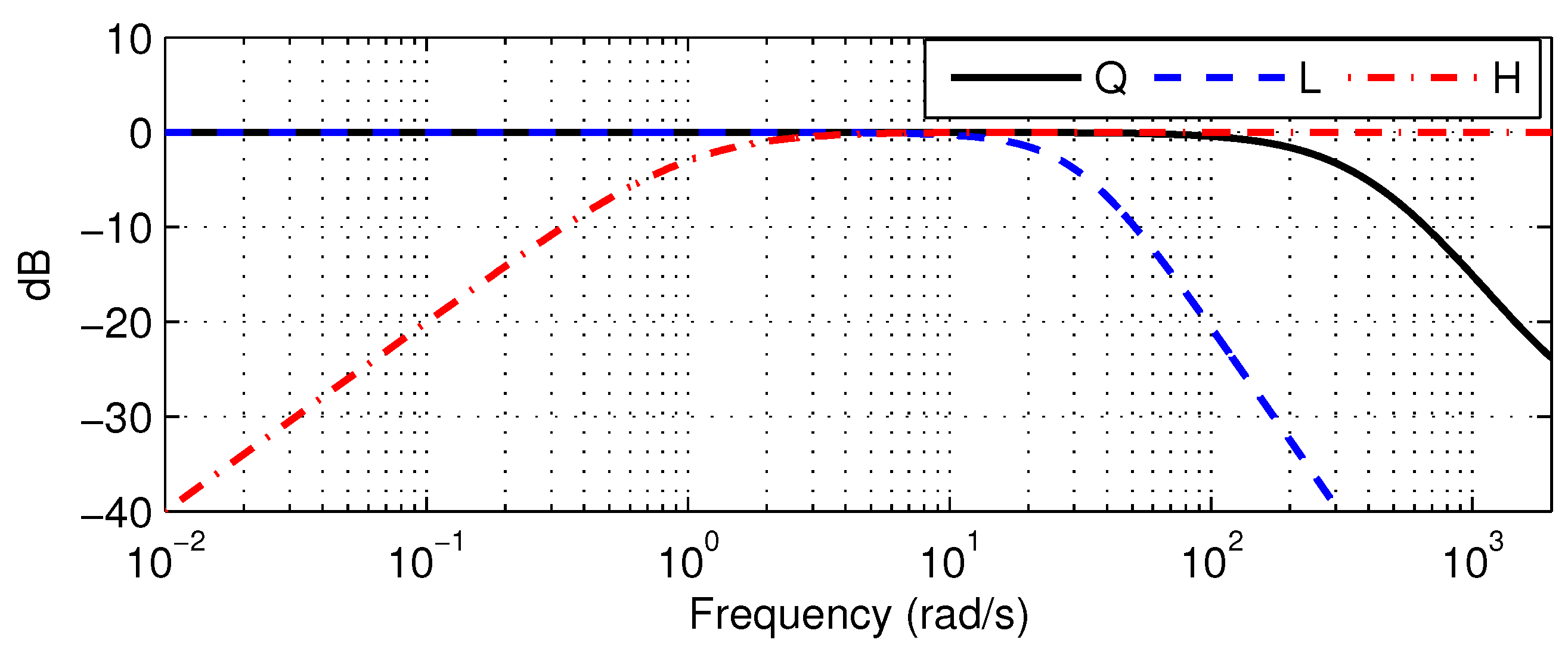
Figure 11 illustrates the frequency response of the selected
, defined as:
This transfer function represents an LPF with a cutoff frequency of 70 Hz. Bandwidth of
exceeds frequency components of the reference trajectory, which implies that the DOB remains effective across the spectral range of the designed trajectories. In addition, the DOB configuration with (
31) was verified to satisfy the robust-stability condition via preliminary testing of the robotic arm at a specific posture, which corresponds to the initial nominal model in (
30).
Subsequently, gains of the PD controller were selected based on the initial nominal model while considering gain and phase margins. The backward difference approximation was employed to derive the discrete-time PD controller as:
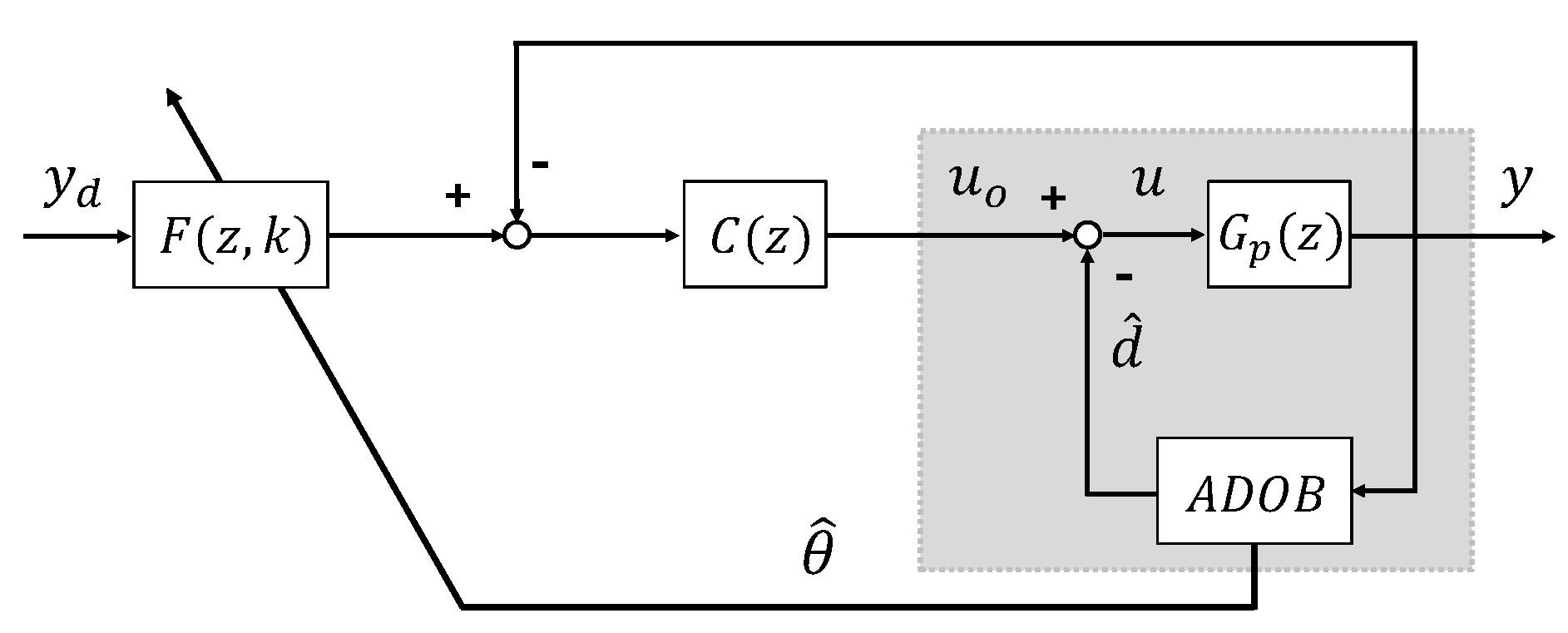
The feedforward controller is automatically determined according to (
23). Consequently, the multi-DOF control system integrated with the proposed ADOB is completed. While tracking control with the DOB demonstrated satisfactory tracking errors across all joints, performance of control at the proximal joint was inferior to that at the distal and middle joints due to model mismatch induced by the fixed nominal model in (
30). This discrepancy was largely induced by shifts in kinematic configuration, particularly near the 40 s mark where the largest tracking error occurred during rapid configuration changes.
5.3. PAA in the ADOB
To design the ADOB, the PAA integrated with
and
is added to the existing DOB structure.
Figure 11 illustrates the frequency responses of
,
, and
. The filter
mitigates rapid variation in parameters of the nominal model within the PAA while allowing slower transitions to pass. The LPF
was established as:
which yields a cutoff frequency of 4.94 Hz. Since links and motors are coupled via belt drives, significant nonlinearities arise due to friction and backlash. Consequently, since the disturbance information in the current setup predominantly consists of low-frequency components,
is configured as an HPF:
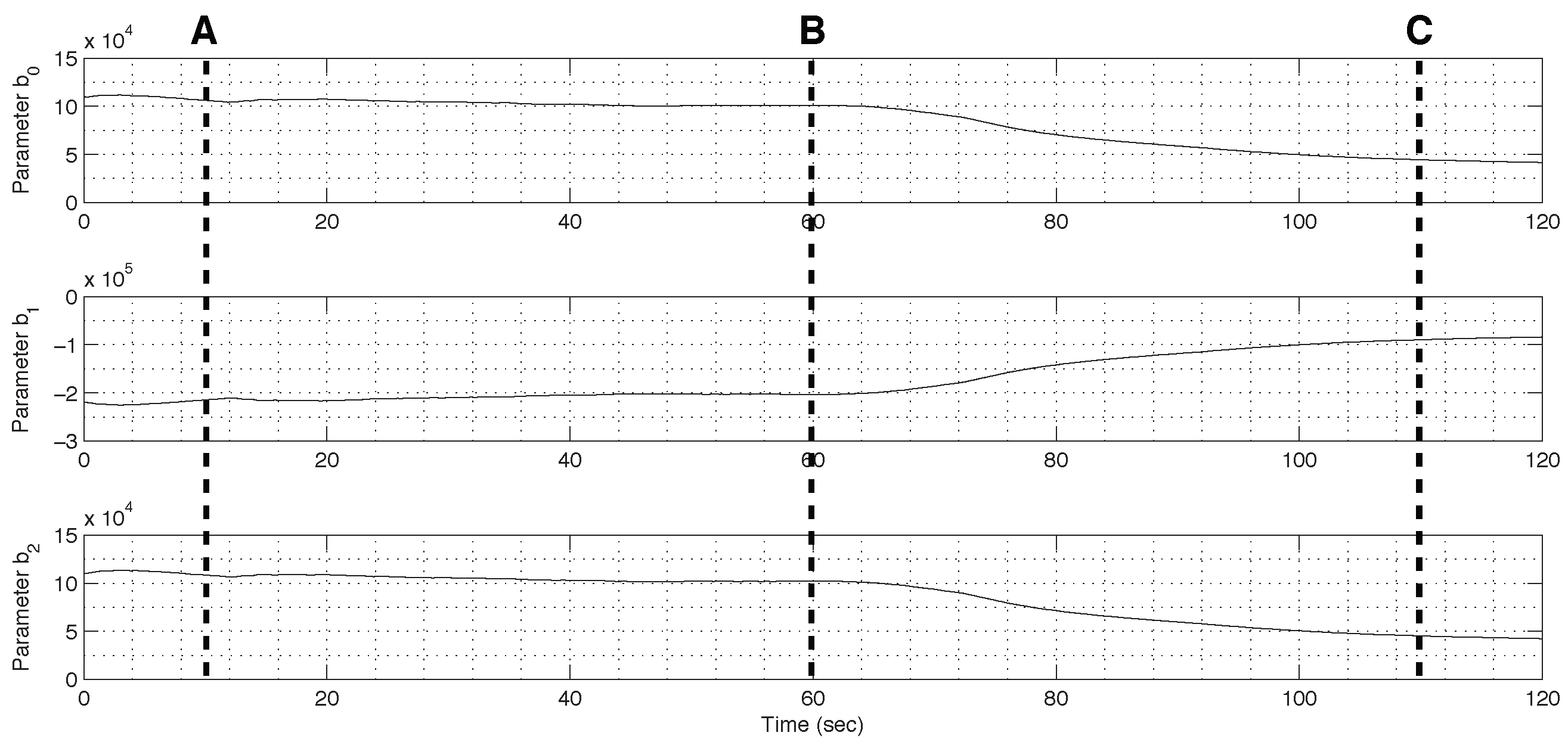
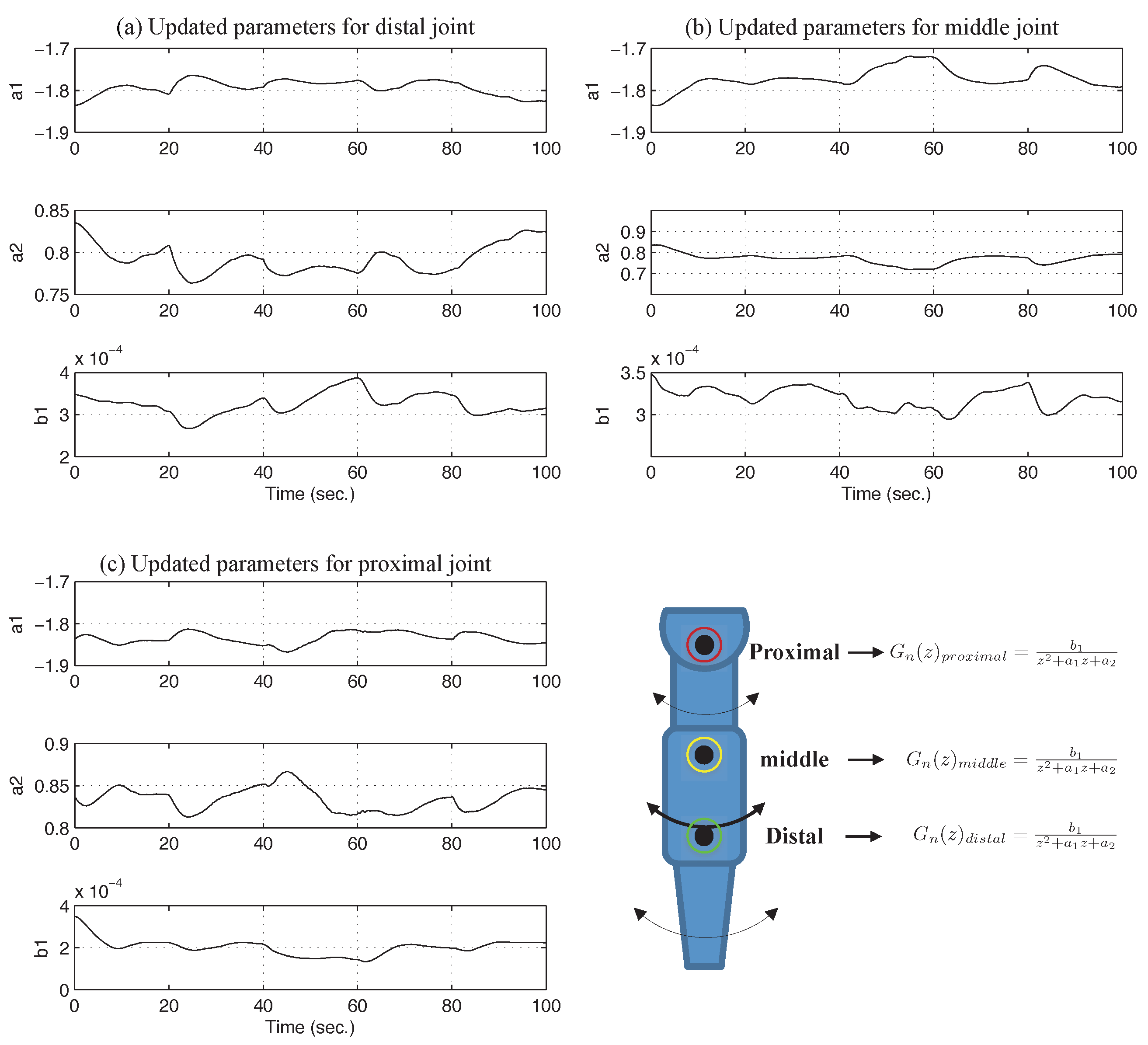
Figure 12 illustrates the experimental results of the time-varying model parameters estimated by the RLS algorithm based on the nominal model structure.
As illustrated in the figure, model parameters varied continuously during operation within the frequency range permitted by the designed . This range influences the update rate of nominal parameters in the PAA and results in a gradual adaptation process. When the kinematic configuration of the three-link robotic arm underwent significant changes at 20, 40, 60, and 80 s, the model parameters updated by the PAA exhibited distinct convergence trends.
5.4. Quantitative Validation of Tracking Performance
The tracking performance of the proposed ADOB architecture was rigorously validated through a quantitative comparison. For this purpose, the
norms of
and
were calculated and summarized in
Table 1 as a performance metric. It is observed that
for each joint of the robotic manipulator is consistently smaller than the corresponding
. In particular, the proximal joint exhibits a significant numerical discrepancy, which underscores the effectiveness of the adaptive approach in mitigating configuration-dependent uncertainty.
As the kinematic configuration of the three-link robotic arm varies, the inertia matrix relative to the proximal joint exhibits greater sensitivity than that of the other two joints under independent SISO control. This sensitivity leads to substantial variation in model parameters of the proximal joint and increases the model uncertainty. Persistence of this model mismatch renders the conventional DOB suboptimal in practice. In contrast, the ADOB attenuates model uncertainty by updating the nominal model based on parameters estimated via the RLS algorithm, thereby reducing the tracking error.
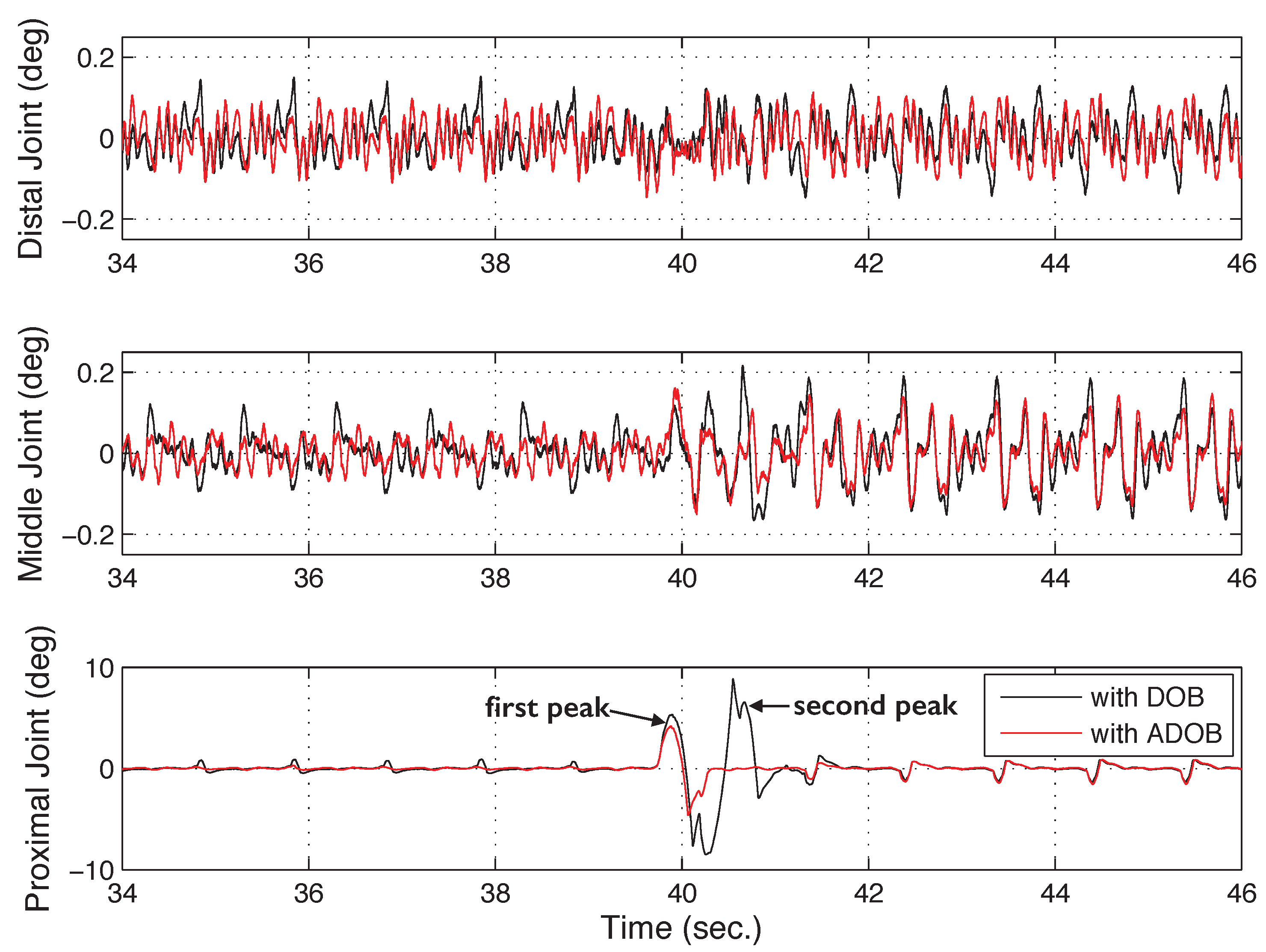
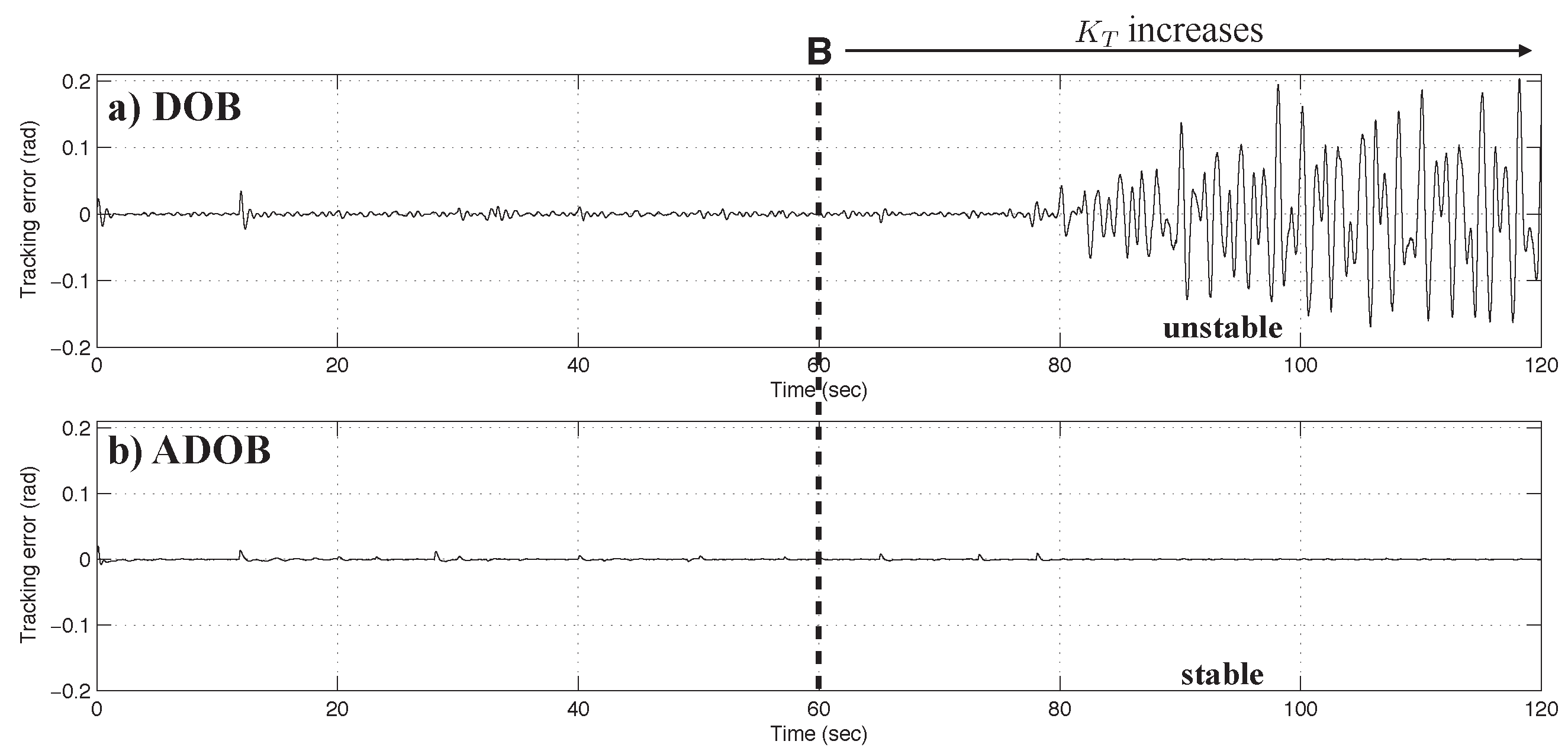
Figure 13 illustrates the tracking errors for the DOB and the ADOB, showing a clear numerical gap in performance. Consistent with the reduction in the
norm error, the ADOB maintains tighter error bounds than the conventional DOB. In particular, the maximum error at the proximal joint near 40 s in the DOB case is significantly mitigated when the ADOB is employed. While an initial peak remains similar during the early transient, a subsequent peak is effectively eliminated by the ADOB through real-time update of the nominal model.
Therefore, the ADOB reduces the tracking error induced by model mismatch that occurs when the DOB uses the fixed nominal model in (
30). Furthermore, despite identifying a total of nine parameters across three joints in this experiment, the decentralized architecture distributed the computational load into independent low-order operations. Consequently, the total CPU occupancy of the ADOB logic remained consistently below 12% of the 1 ms sampling period, demonstrating the practical feasibility and scalability of the proposed framework for multi-DOF robotic systems.
6. Conclusions
This paper proposed the ADOB as a practical control methodology that integrates a DOB with the RLS-based PAA. Through functional division of labor and a virtuous cycle between the DOB and the PAA, the ADOB effectively addresses external disturbances, model uncertainties, and time-varying dynamics that inevitably arise in the control of physical systems. Nonlinearities and external interferences causing discrepancies between the actual plant behavior and the nominal model are estimated and immediately compensated for by the DOB in the form of disturbances. Simultaneously, the PAA continuously tracks long-term dynamic changes based on input–output data from the control loop, providing real-time tracking of structural model mismatches accumulated due to mechanical wear or changes in operating conditions. By updating the nominal model of the DOB with these identified parameters in real time, a robust functional positive feedback cycle between the DOB and the PAA is completed. However, since the DOB targets to “suppress” system variations while the PAA aims to “adapt” to them, functional interference inevitably occurs between the two algorithms as they possess opposing objectives regarding the same error phenomena. To address this issue, the proposed ADOB introduces a dual-filtering mechanism. In the frequency domain, a washout filter clearly separates the roles of the DOB and the PAA, while in the time domain, a smoothing filter is organically designed to mitigate the transient effects of abrupt parameter variations on the control loop.
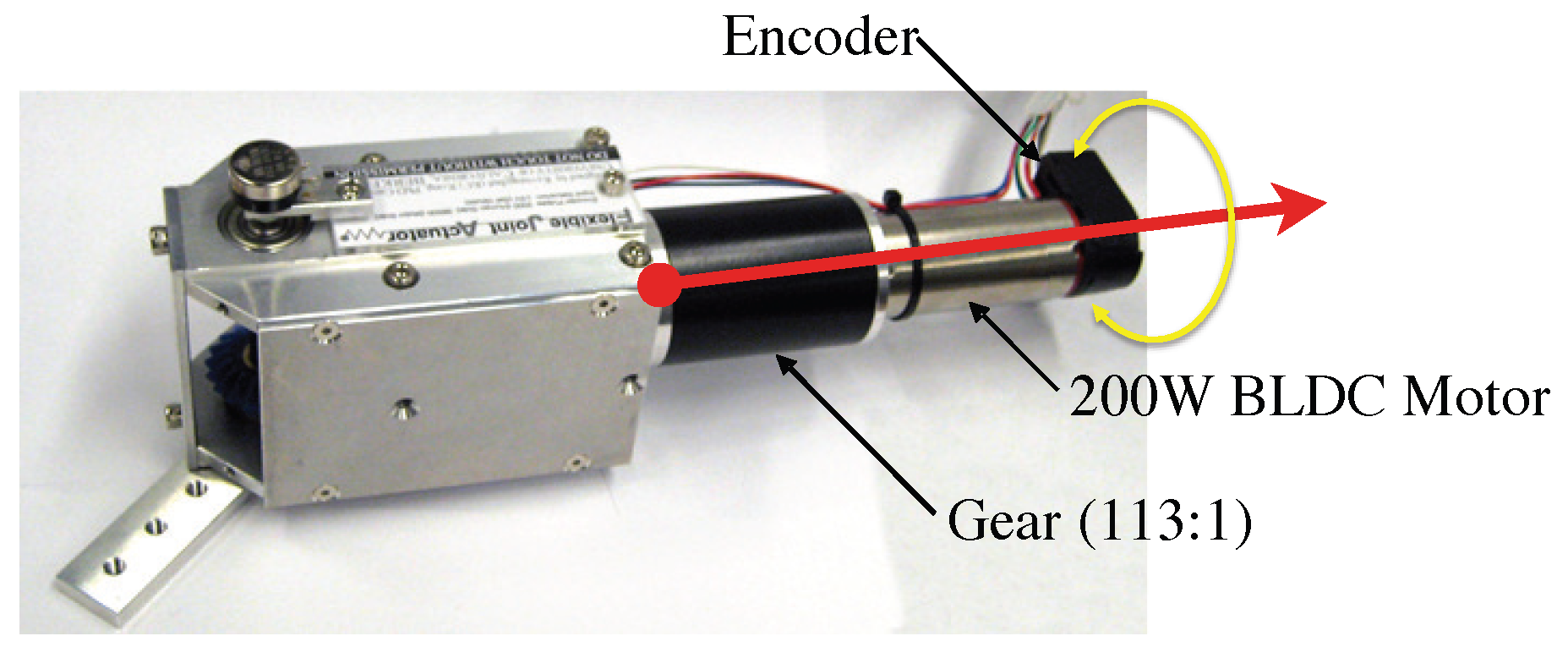
The effectiveness of the proposed ADOB was validated through experiments on a one-DOF electromagnetic actuator and a three-DOF robot arm manipulator, where acquiring an accurate nominal model is challenging. Experimental results confirmed that the ADOB operates by distributing the functions of “suppression,” “adaptation,” and “separation and mitigation” to the DOB, PAA, and dual-filtering, respectively, in response to uncertainties arising from gear backlash, belts, and joint connections, as well as parameter variations due to time-varying dynamics. Consequently, it was verified that these three functions are organically integrated into a virtuous cycle. Furthermore, the proposed method demonstrated that a complex MIMO system, such as a robotic manipulator, can be controlled by independently decoupling it into individual SISO joint units. In particular, it was possible to effectively and individually address uncertainty factors of the links, including coupling uncertainties arising from interactions between joints, at each joint level. Although the proposed ADOB effectively responds to disturbances, model uncertainties, and time-varying dynamics, additional tuning may be required when system parameters fluctuate abruptly. For instance, a sudden change in the payload mass of a robotic manipulator can cause instantaneous shifts in equivalent parameters—such as effective inertia and gravity components—leading to severe model mismatches. Such rapid system changes violate the “slowly varying parameters” assumption, which is the mathematical foundation of adaptive control, and may consequently induce transient oscillations during the parameter identification process. Therefore, to prevent these rapid variations from being directly reflected in the adaptation process and to suppress excessive adaptive responses, it is necessary to organically tune the dynamic characteristics of , , and so that the PAA can converge stably within the robust stability margin accommodated by the Q-filter of the DOB. Nevertheless, field practitioners can flexibly balance performance and robustness according to operating conditions through filter tuning alone, without the complex process of re-identifying the entire model. This realizes highly reliable model-based control that can be immediately implemented in industrial fields with minimal theoretical modeling, ultimately enabling a practical and field-oriented implementation of robust model-based control.