1. Introduction
The impairment or functional limitation of an upper limb significantly reduces an individual’s autonomy and quality of life by restricting the execution of daily manipulation and grasping tasks. Consequently, the development of hand prostheses has become an active research field, with numerous proposals exploring diverse mechanical designs and control strategies to partially restore hand functionality. Despite these advances, replicating natural hand motion while maintaining lightweight structures, practical daily usability, and long-term comfort remains an open challenge, particularly when balancing mechanical performance and control simplicity [
1,
2,
3,
4].
In this context, soft robotics has emerged as an alternative to conventional rigid robotics by employing elastic materials and compliant structures that enable safer and more adaptive interactions with the environment, which is particularly relevant for hand prostheses that must interact with objects of varying shape and stiffness. Soft robotic hand prostheses can be broadly classified according to their actuation principle and structural configuration. From an actuation perspective, pneumatic and electrically driven systems are predominant, while structurally, designs may be monolithic or rely on motion transmission through tendons or cables. These design choices directly influence grip force, response speed, compactness, durability, and manufacturing complexity, resulting in trade-offs between performance and practical feasibility [
5,
6,
7,
8].
Pneumatically actuated soft hand systems commonly rely on PneuNet-type actuators, which generate motion through the pressurization of elastomeric structures with internal cavities. For instance, Ref. [
9] reports a soft robotic hand for teleoperation achieving approximately 15 degrees of freedom with response latencies around 0.5 s. Similarly, Ref. [
10] presents a rehabilitation-oriented soft hand exoskeleton capable of basic grasp patterns, although its portability is limited by the need for a backpack housing pneumatic pumps and valves. Despite their smooth and compliant motion, recent surveys emphasize that pneumatic systems increase weight, volume, noise, and hardware complexity due to compressed air requirements, limiting their suitability for daily-use hand prostheses [
4,
11].
Alternatively, soft electronically actuated hand prostheses generate finger motion using electric motors and tendon- or cable-based transmissions, offering greater compactness and portability than pneumatic systems. Early implementations often adopt monolithic architectures, in which flexible joints enable passive finger motion. For example, Ref. [
12] presents a monolithic soft hand prosthesis driven by five DC motors, weighing approximately 253 g and producing grasp forces up to 21.5 N, with full finger flexion achieved in about 1.3 s. However, the reported service life of roughly one year highlights structural limitations associated with monolithic soft joints. A pediatric variant of this design is reported in [
13], where reduced size and actuator count further trade robustness for simplicity.
To overcome these limitations, tendon-driven soft prostheses integrate compliant elements with cable-based transmission mechanisms to improve mechanical durability and force output. In this context, Ref. [
14] presents an optimized hand prosthesis employing five coupled tendons actuated by a single DC motor, achieving grasping forces up to 88 N with a total weight of 290 g. Nevertheless, this design focuses on a limited set of grasps and does not extensively address advanced myoelectric activation strategies.
In parallel, recent advances in embedded machine learning have given rise to the TinyML paradigm, which focuses on deploying machine learning models directly on low-power microcontrollers under strict memory, latency, and energy constraints. This approach has gained increasing relevance in biomedical signal processing, particularly for EMG-based gesture recognition, where real-time response and wearable integration are essential. Prior studies have demonstrated that compact neural networks can achieve competitive accuracy for EMG classification while remaining compatible with resource-constrained embedded platforms [
15,
16,
17].
Although alternative interfaces such as brain–computer interfaces have been explored for prosthetic control, including SSVEP and motor imagery paradigms, these approaches typically require controlled environments, prolonged stimulation, or complex processing pipelines [
18,
19]. In contrast, EMG-based control remains the most practical solution for daily-use prostheses, enabling high gesture recognition accuracy with relatively simple processing schemes. However, achieving reliable performance on embedded platforms requires careful model simplification and latency-aware design [
20,
21,
22].
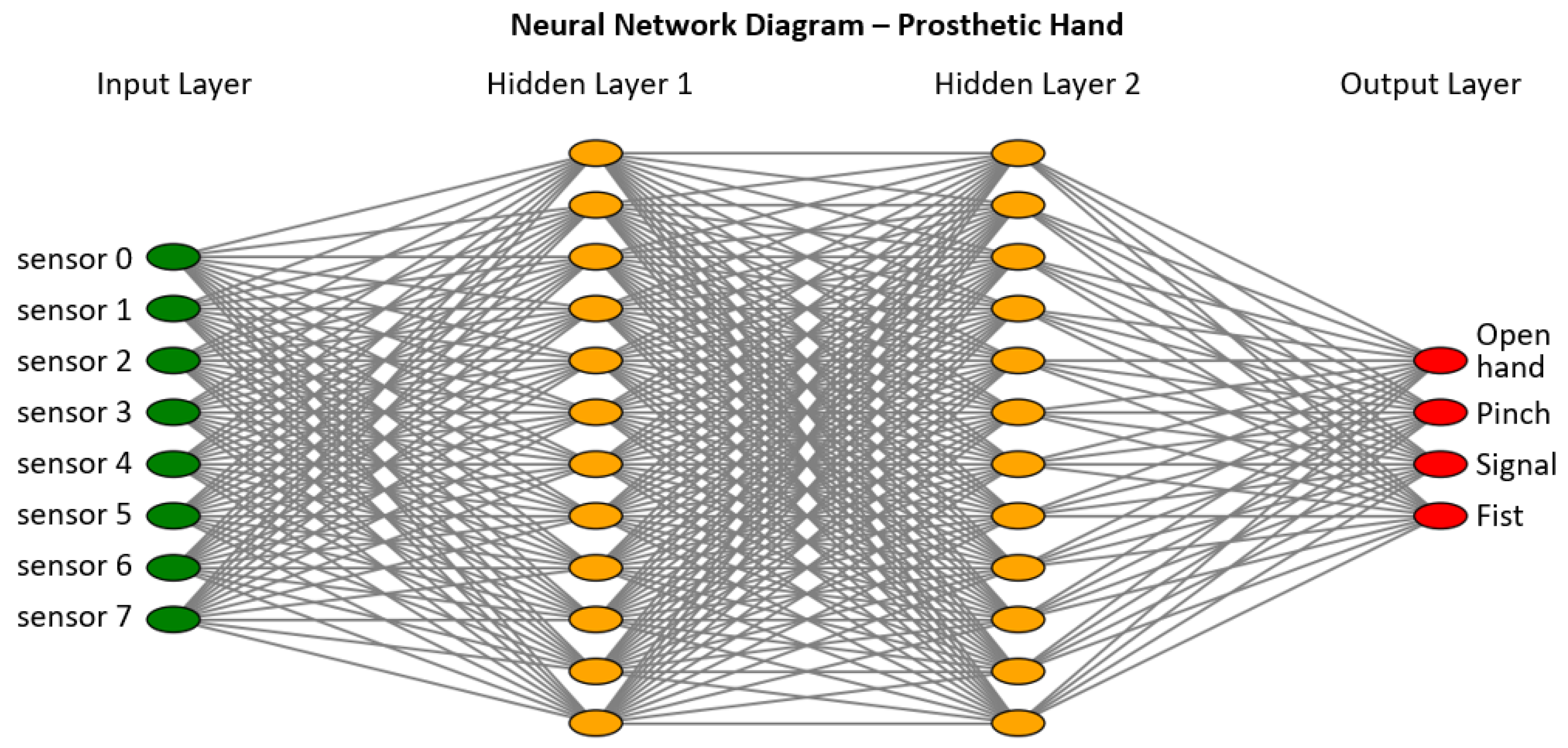
Based on this context, it is evident that there remains a need for soft hand prostheses that balance mechanical compliance, structural robustness, aesthetic integration, and low-latency myoelectric control within resource-constrained embedded systems. The main contributions of this study can be summarized as follows: (i) the design of a soft, tendon-driven prosthetic hand that enhances passive grasp stability through textured finger surfaces and internal vacuum-based reinforcement, without relying on additional force or position sensors; (ii) the implementation of a lightweight fully connected neural network (FCNN) optimized for execution on a low-power microcontroller, enabling end-to-end myoelectric control with experimentally measured response times on the order of one second from EMG activation to physical motion; and (iii) an experimental evaluation aligned with the binary deployment of the system (open hand versus tripod pinch), including quantitative analysis of response time, grip success rate, sustained grasp behavior, and false activations during grasping tasks involving everyday objects.
It is important to note that all experimental evaluations were conducted using healthy subjects, and the reported grasping forces and success rates represent preclinical engineering performance metrics. No clinical assessments involving amputee users were performed; therefore, the presented results should be interpreted as a validation of system feasibility and functional stability under controlled conditions, rather than as a direct assessment of clinical efficacy.
3. Experiments and Results
Performance metrics were evaluated on a per-subject and per-session basis. These metrics included classification accuracy, average response time, sustained grasp duration evaluated over four trials, and repeated grasping performance based on 20 trials per object.
For the performance evaluation of the prosthesis, the analysis was divided into three stages: (1) EMG signal acquisition and response, (2) signal processing and classification, and (3) actuation and control of the prosthesis.
3.1. Description of the Experimental Procedure
The experimental evaluation was conducted in a controlled laboratory environment with the participation of ten healthy volunteers. Subjects were selected based on availability criteria and had no upper-limb amputations or known neuromuscular disorders. To ensure homogeneous experimental conditions, all participants were right-handed and performed the experiments using the same upper limb.
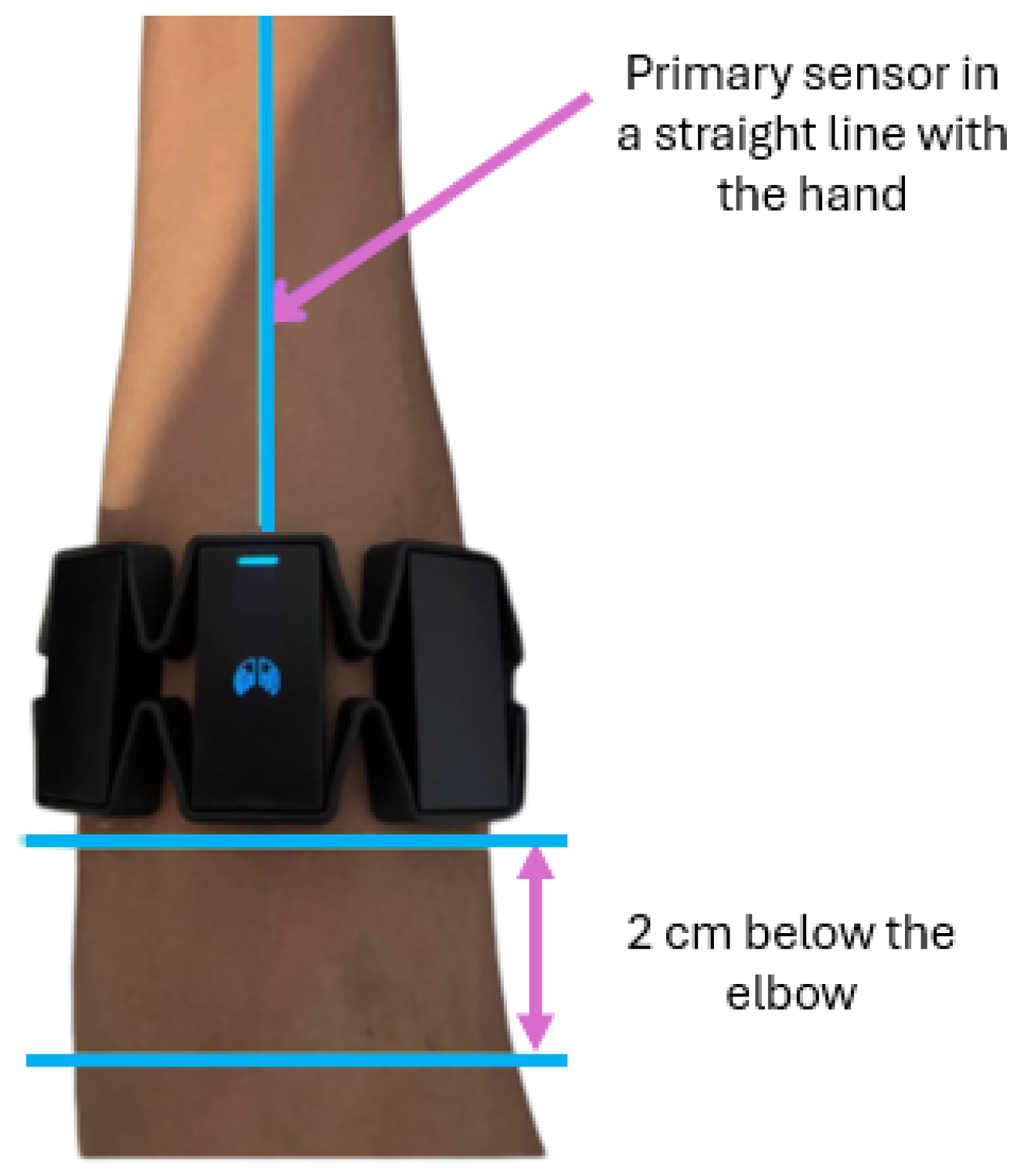
Myoelectric signals were acquired using a wearable EMG armband positioned on the right forearm, approximately 2 cm below the elbow, while maintaining a consistent orientation of the main reference sensor, as illustrated in
Figure 11. Before data acquisition, participants received standardized instructions outlining the experimental protocol and the execution of gestures. All tests were performed with the participants seated in the same position to reduce posture-related variability.
Table 9 summarizes the demographic and anthropometric characteristics of the participants involved in the experimental procedure.
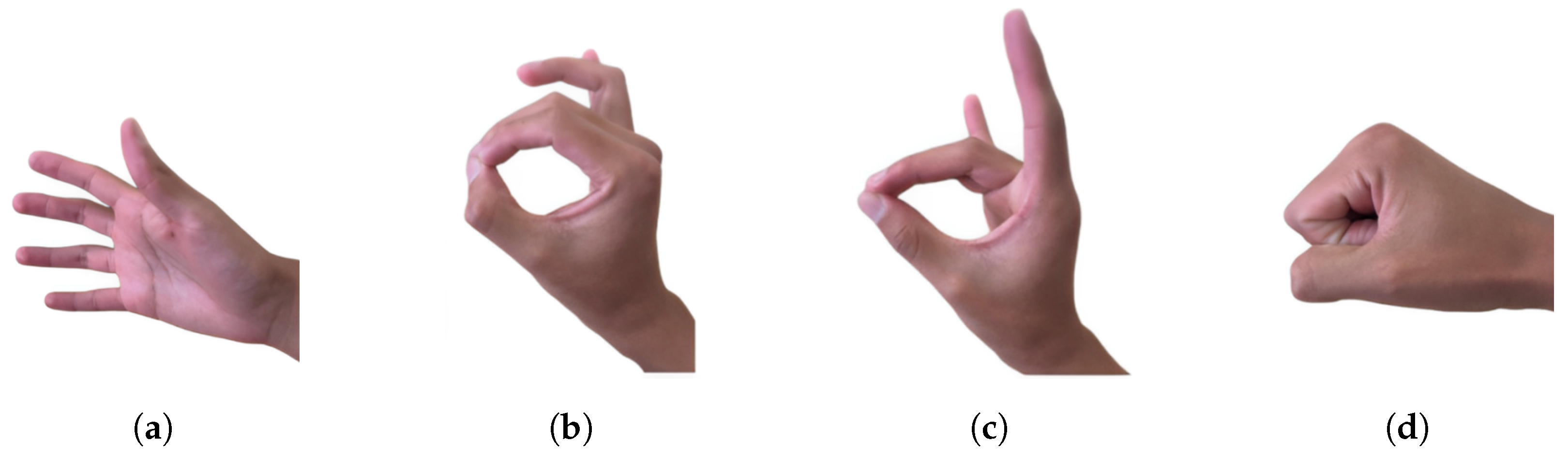
Each participant executed four predefined gestures: open hand, tripod pinch, pointing, and fist. For each gesture, approximately 1250 myoelectric signal samples were recorded using a fixed acquisition window of 50 ms. These data, acquired in a single experimental session per participant under controlled conditions and with short rest intervals between gesture executions, were used exclusively for the analyses presented in
Section 3.2 and
Section 3.3, which focus on EMG signal acquisition, inter-user variability, and classification performance.
In contrast, additional functional evaluations—including response time, sustained grasp duration, and object grasping tests—were conducted exclusively with user E10. This subject was selected due to stable signal behavior and greater availability, enabling extended testing sessions aimed at validating the functional performance of the prosthetic system, as described in
Section 3.4. For all experimental evaluations, the prosthesis was secured on a stable surface and operated without direct physical attachment to the user, ensuring controlled and repeatable testing conditions.
3.2. EMG Signal Acquisition and Response
This subsection focuses on the analysis of EMG signal characteristics across multiple users and on the selection of an appropriate analysis window for real-time gesture classification. The experiments were conducted in a single session per participant on the same day, under controlled conditions, and following the acquisition protocol described in the previous subsection.
During each session, participants performed a predefined sequence of gestures: open hand, tripod pinch, point, and fist (
Figure 12). The myoelectric activity captured by the armband was acquired using the corresponding software interface and stored for offline analysis and model validation.
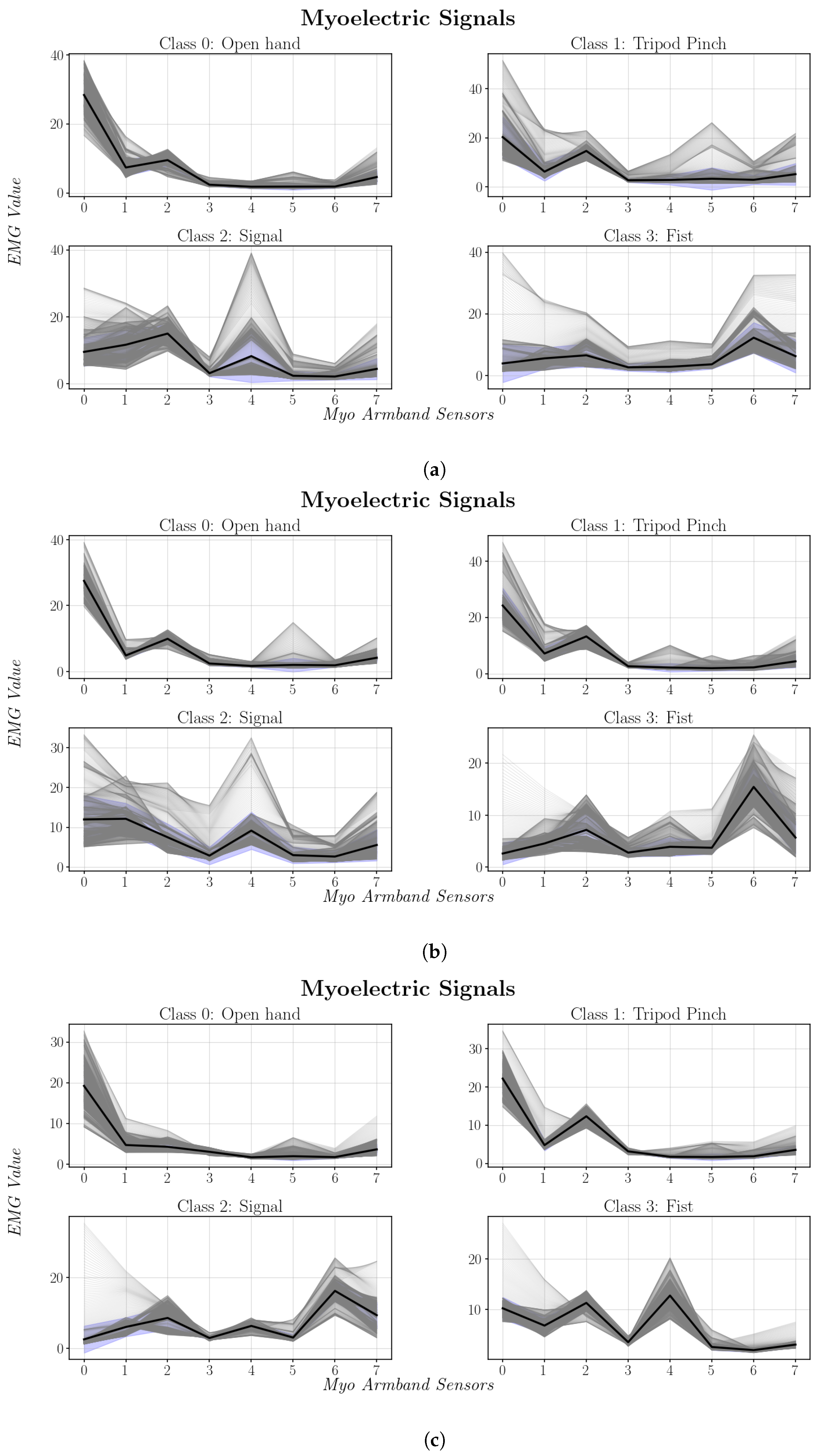
To analyze the effect of the temporal window length on signal quality and classification performance, EMG data were acquired using different window sizes (100 ms, 50 ms, and 30 ms) under identical experimental conditions. In all cases, the signals were pre-filtered according to the parameters defined in the methodology. The resulting waveforms are illustrated in
Figure 12. As reported in the literature, the selection of the analysis window involves a trade-off between temporal resolution and signal stability, where shorter windows reduce latency but increase variability, while longer windows provide smoother signals at the expense of slower response [
33].
The results show that the sampling time has a direct effect on the morphology and clarity of the recorded signal. At 100 ms (
Figure 13c), the signal exhibits higher amplitude but reduced temporal resolution, which may introduce ambiguity in the classification stage. In contrast, a 30 ms window (
Figure 13a) is more sensitive to small muscle variations, resulting in faster response but increased instability and lower amplitude. The 50 ms window (
Figure 13b) provides a balance between temporal resolution and signal stability, enabling reliable classification without significantly increasing latency. For this reason, a 50 ms window was selected for subsequent experiments.
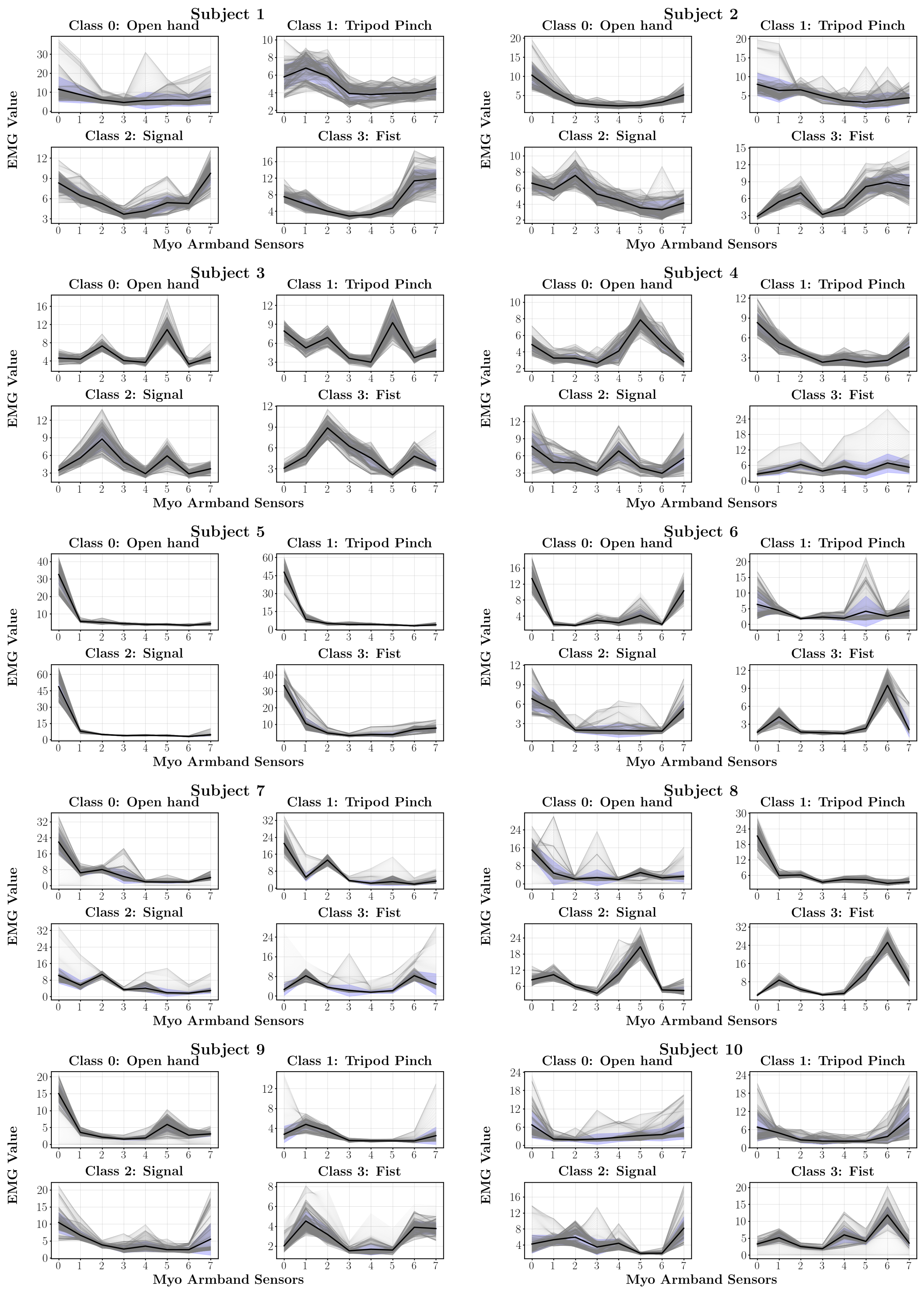
Inter-user variability in myoelectric activation patterns was observed, as EMG signals recorded from different users performing the same gestures showed notable differences in waveform shape, amplitude, and dominant channels (
Figure 14). This behavior, widely reported in the literature, is attributed to individual anatomical and physiological factors that limit the generalizability of surface EMG signals [
34,
35].
These observations indicate that the proposed system cannot rely on a fully generalized classification model without a significant degradation in performance. Instead, reliable control requires adapting the model to the specific myoelectric characteristics of each user. Consequently, the system was designed following a user-oriented approach, in which the signal processing pipeline and network architecture remain fixed, while the model parameters are trained individually.
User E10 was selected for extended functional evaluation due to the stability and repeatability of the EMG signals observed during continuous prosthetic control. Nevertheless, the same training and calibration procedure can be applied to other users, enabling personalization without modifying the underlying control framework.
3.3. Signal Processing and Classification
Based on the inter-user variability observed, individual machine learning models were trained for each participant using the same signal processing pipeline and network architecture. All models were trained using data acquired during the same experimental session.
Table 10 summarizes the main training and validation metrics obtained for each user-specific model.
The following accuracy ranges were considered as criteria for evaluating the models:
<75%: Unsatisfactory model.
80–95%: Well-trained model.
95%: Possible overfitting.
Models corresponding to users E4, E8, E9, and E10 achieved accuracies above 95%, which could indicate potential overfitting. Overfitting occurs when a model memorizes subject-specific patterns rather than learning generalizable features. However, high accuracy does not necessarily imply poor model behavior in user-specific EMG control, where the objective is reliable recognition of signals from the same user.
In particular, user E8 represents an atypical case within the experimental set. Although the model reached 100% accuracy, subsequent tests confirmed stable performance and correct gesture recognition for new signals from the same user. This behavior suggests that the high performance is primarily attributable to the clarity and consistency of the recorded EMG signals rather than to model overfitting.
3.4. Actuation and Control of the Prosthesis
Once the training process was completed, the prosthesis was powered on, and the corresponding code was loaded. For this validation phase, the prosthesis was secured in place on a stable surface, without direct contact with the user, to conduct controlled system tests.
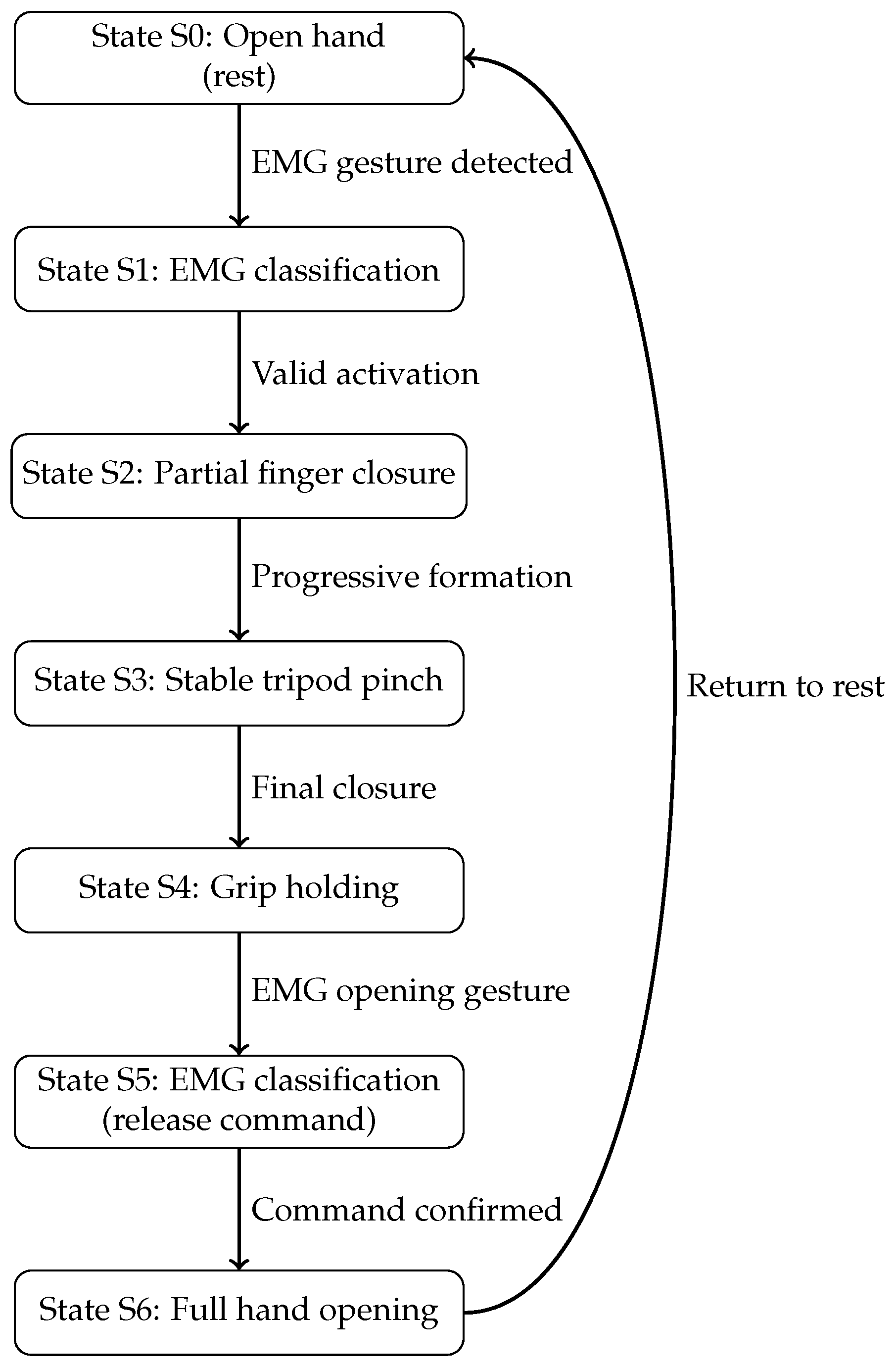
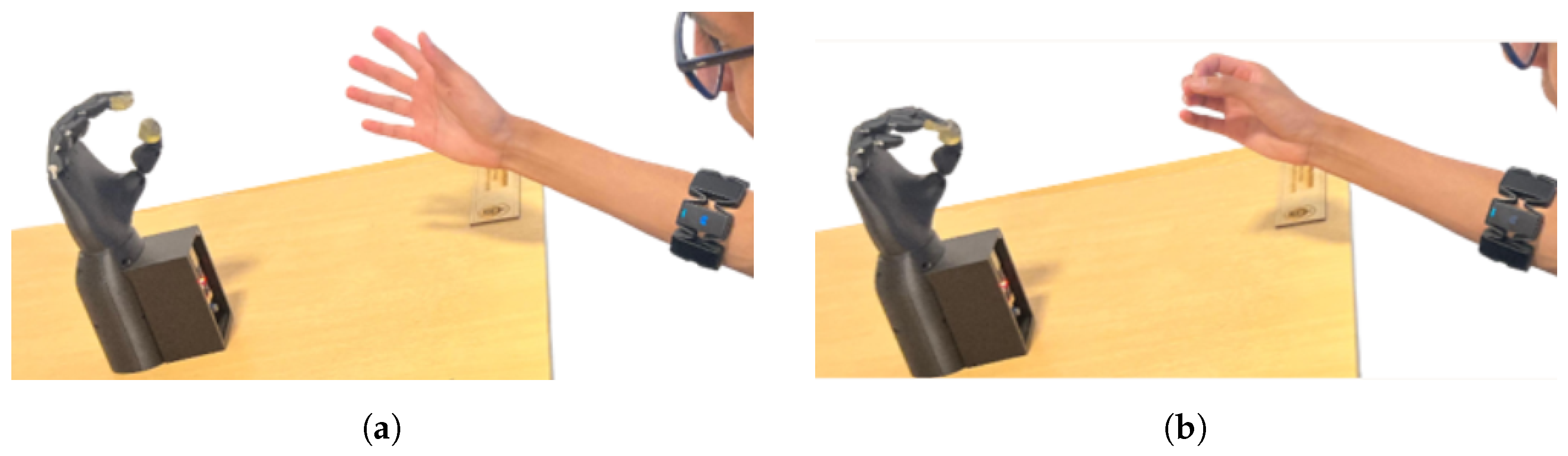
Figure 15 shows the activation of the prosthesis by user E10.
The experimental tests were designed from a functional and engineering-oriented perspective to validate the integration between EMG signal acquisition, gesture classification, and mechanical actuation. Since the proposed system corresponds to a laboratory prototype, the evaluation does not claim clinical validation. Instead, the tests focus on verifying gesture detection reliability, response time, and grasp stability under controlled and reproducible conditions.
3.4.1. Response Time
To evaluate the dynamic performance of the controller, experimental tests were conducted focusing on the response time to EMG-driven gesture transitions. These tests were performed using the model corresponding to subject E10, selected for the functional evaluation stage described in the previous subsection.
The model recognizes four gestures (open hand, tripod pinch, pointing, and fist); however, only two of them (open hand and tripod pinch) are functionally replicated by the prosthesis.
Table 11 reports the activation times measured during consecutive transitions between these two functional gestures. The average activation time was 1.14 s for transitions from open hand to pinch and 1.02 s for transitions from pinch to open hand, resulting in an overall mean response time of 1.05 s.
The measured response times indicate that the system is capable of reliably detecting gestures and executing the corresponding movements with limited latency. Although response time is influenced by subject-specific EMG characteristics, the obtained results demonstrate effective integration between EMG signal acquisition, gesture classification, and mechanical actuation under controlled conditions.
3.4.2. Duration in a Fixed Grasp Position
This experiment aimed to evaluate the ability of the prosthesis to maintain a stable grasp configuration over a prolonged period, focusing on the tripod pinch gesture. This assessment is relevant because sustained muscle contraction may induce user fatigue, progressively altering EMG signal characteristics and affecting the stability of myoelectric control.
The experimental protocol required the user to execute the tripod pinch gesture starting from a fully open-hand configuration. The holding time was measured from the moment the prosthesis fully reached the pinch position. The user was then instructed to maintain the contraction for as long as possible until a noticeable variation in the EMG signal led to grasp loss or a transition to a different class. For consistency, each trial started from the same initial hand configuration.
Table 12 presents the holding times obtained using a marker-type object, selected as a representative case due to its stable geometry and low weight. The first four trials were conducted during a single experimental session, while the remaining seven trials were performed during a separate session on a different day. A rest period of approximately 30 s was introduced between consecutive trials to limit short-term muscle fatigue.
The results indicate that, in successful trials, the prosthesis was able to maintain the tripod pinch grasp for an average duration of 17.92 s before fatigue-related variations in the EMG signal occurred. This behavior highlights an inherent limitation of EMG-based control systems, in which grasp stability depends on the user’s ability to sustain muscle activation.
Despite this limitation, the obtained holding times demonstrate that the system can maintain a functional grasp position for sufficiently long intervals to perform basic fine manipulation tasks. These results complement the response time evaluation, showing that the system provides not only timely gesture activation but also adequate grasp stability under sustained use conditions.
3.4.3. Grip Tests
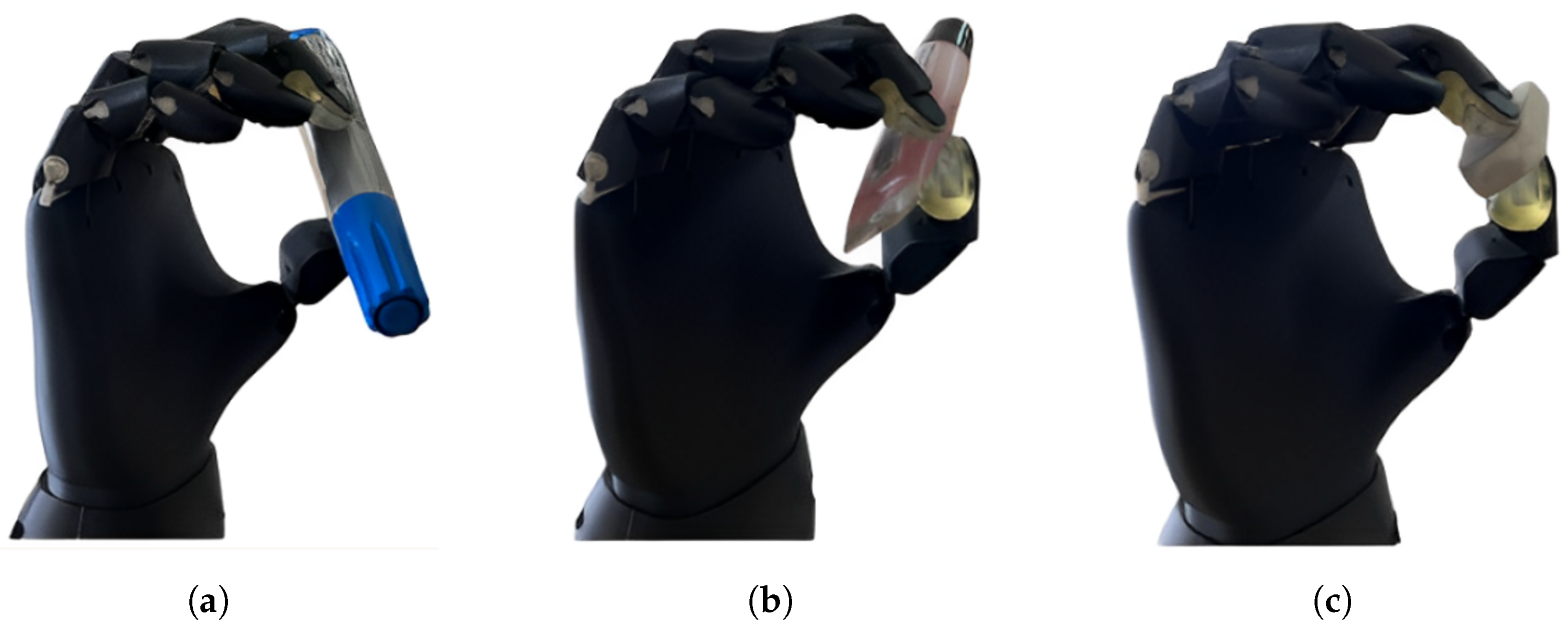
This experimental test aimed to evaluate the prosthesis’s ability to grasp small and lightweight objects using a tripod pinch under controlled and repeatable conditions. Three objects with distinct geometries were selected: a marker, a lipstick, and an eraser. These objects differ in shape, size, and surface texture, allowing for the assessment of grasp adaptability and stability under varying conditions.
All grasping trials were conducted under consistent initial conditions. At the beginning of each attempt, the prosthesis was initialized in a fully open-hand position. Each trial was triggered by the detection of the EMG signal corresponding to the tripod pinch gesture, ensuring consistent activation across tests.
A grasp was defined as successful when the object was lifted and held in a stable position for a continuous interval exceeding 12 s. Conversely, a trial was considered unsuccessful if the object could not be lifted or was released during execution. For each object, 20 independent trials were performed. A rest period of approximately 30 s was introduced between consecutive trials, while a longer rest interval of approximately 2 min was applied when switching between different objects to limit muscle fatigue.
Representative grasping trials performed under the defined experimental conditions are illustrated in
Figure 16. The quantitative results of the repeated grasping experiments are summarized in
Table 13. On average, the prosthesis achieved 16 successful grasps out of 20 attempts per object, corresponding to an overall effectiveness of approximately 80%.
The grasp trajectory and applied force remained consistent across repeated trials, as the control system generates predefined and repeatable activation patterns for each functional gesture. This behavior is supported by prior dynamometer-based measurements conducted on the fingers involved in the tripod pinch, confirming that the selected actuators provide sufficient and repeatable force to securely grasp lightweight objects.
Overall, the results demonstrate reproducible grasping behavior and stable functional performance, validating the prosthesis’s capability to reliably perform basic fine motor tasks under controlled conditions.
4. Discussion of Results
This study’s results indicate that effective performance in myoelectric hand prosthetics can be attained without dependence on costly hardware, many sensing modalities, or complex algorithms. Unlike various contemporary methods that prioritize intricate feature extraction processes or resource-intensive deep architectures [
20,
21,
22], the proposed system achieves dependable performance utilizing readily available components and a compact neural network executed on a low-power microcontroller, which is especially pertinent for embedded and assistive applications.
In contrast to studies like [
20], which integrate handcrafted feature extraction methods (such as RMS) with adaptive systems like ANFIS, the current research successfully classifies gestures using brief analysis windows of 50 ms, while sustaining average end-to-end response times near 1 s. This trade-off provides a pragmatic benefit for real-time prosthetic control, particularly in contexts where low latency, restricted computational resources, and energy efficiency are essential limitations.
The analysis of EMG signals using machine learning highlighted the necessity of user-specific model training due to pronounced inter-individual variability. Factors such as forearm morphology, muscle activation patterns, and prior user experience significantly influence EMG signal characteristics. This observation contrasts with paradigms such as steady-state visual evoked potential (SSVEP)-based interfaces, where activation signals can be detected using subject-independent mathematical formulations [
36]. In contrast to works where EMG electrodes are manually positioned and additional variability between sessions is reported [
12,
37], the use of a wearable armband and a standardized acquisition protocol helps reduce placement-related variability. In the present work, functional performance metrics were therefore evaluated under a personalized deployment scenario, reflecting realistic conditions for myoelectric prosthesis use rather than population-level generalization. Consequently, the results indicate that cross-user model standardization is not feasible under the evaluated conditions, and that reliable performance requires an individualized training process.
From a mechanical perspective, the soft robotics-based design inspired by the behavior of human muscles and tendons enabled smooth and natural execution of fine motor actions, such as the tripod grasp, which are typically associated with the manipulation of lightweight and small-scale everyday objects. Unlike approaches that incorporate force, current, or strain gauge sensors to enhance feedback [
12,
38], the proposed design relies on passive mechanical compliance achieved through tendon-driven actuation, textured fingertip surfaces, and internal vacuum-based reinforcement.
This design choice reduces system complexity and cost while maintaining sufficient grasp stability for fine motor tasks, making the prosthesis particularly suitable for assistive applications and resource-constrained contexts. However, this approach is not intended for tasks involving heavy objects or high gripping forces.
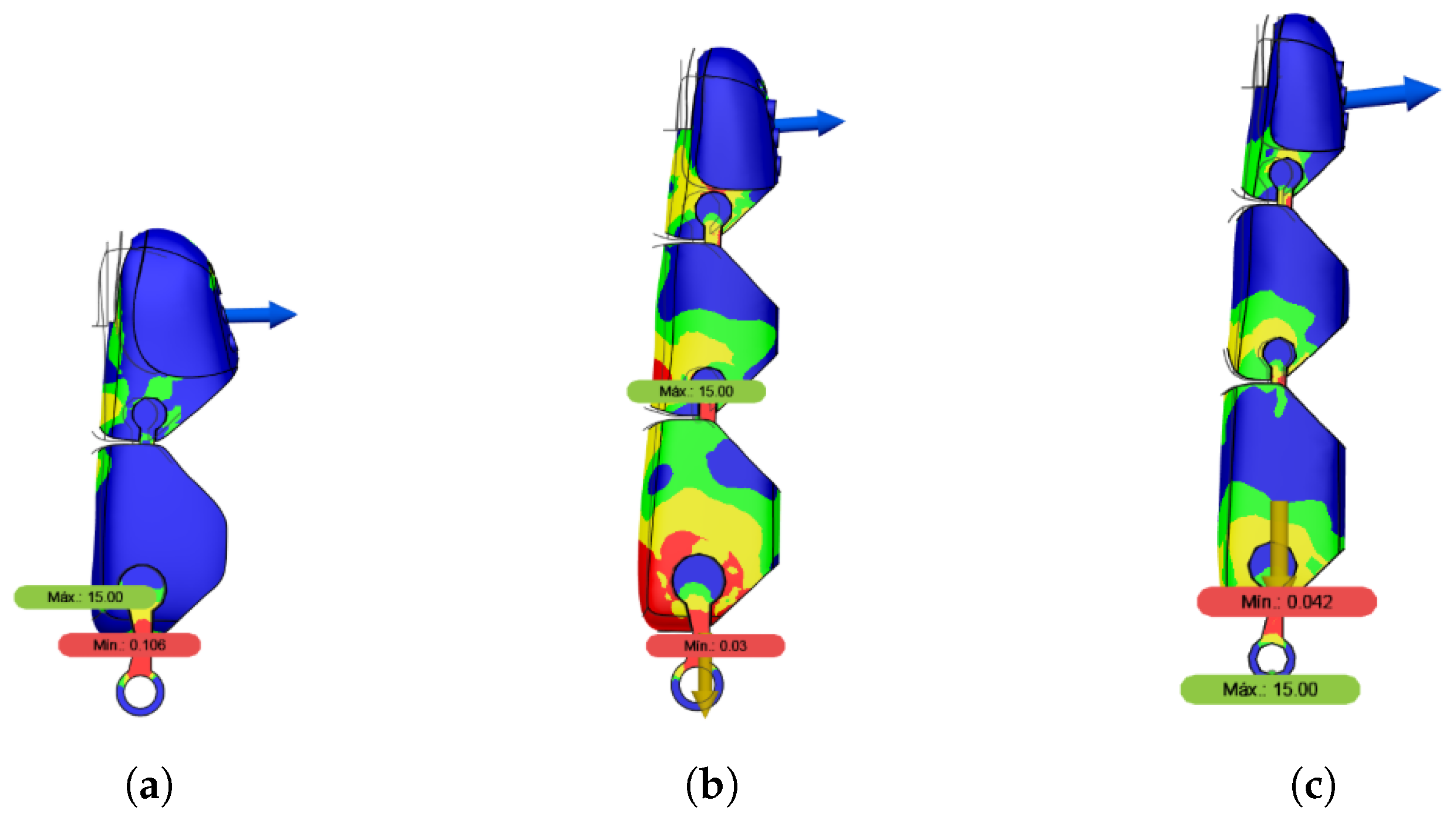
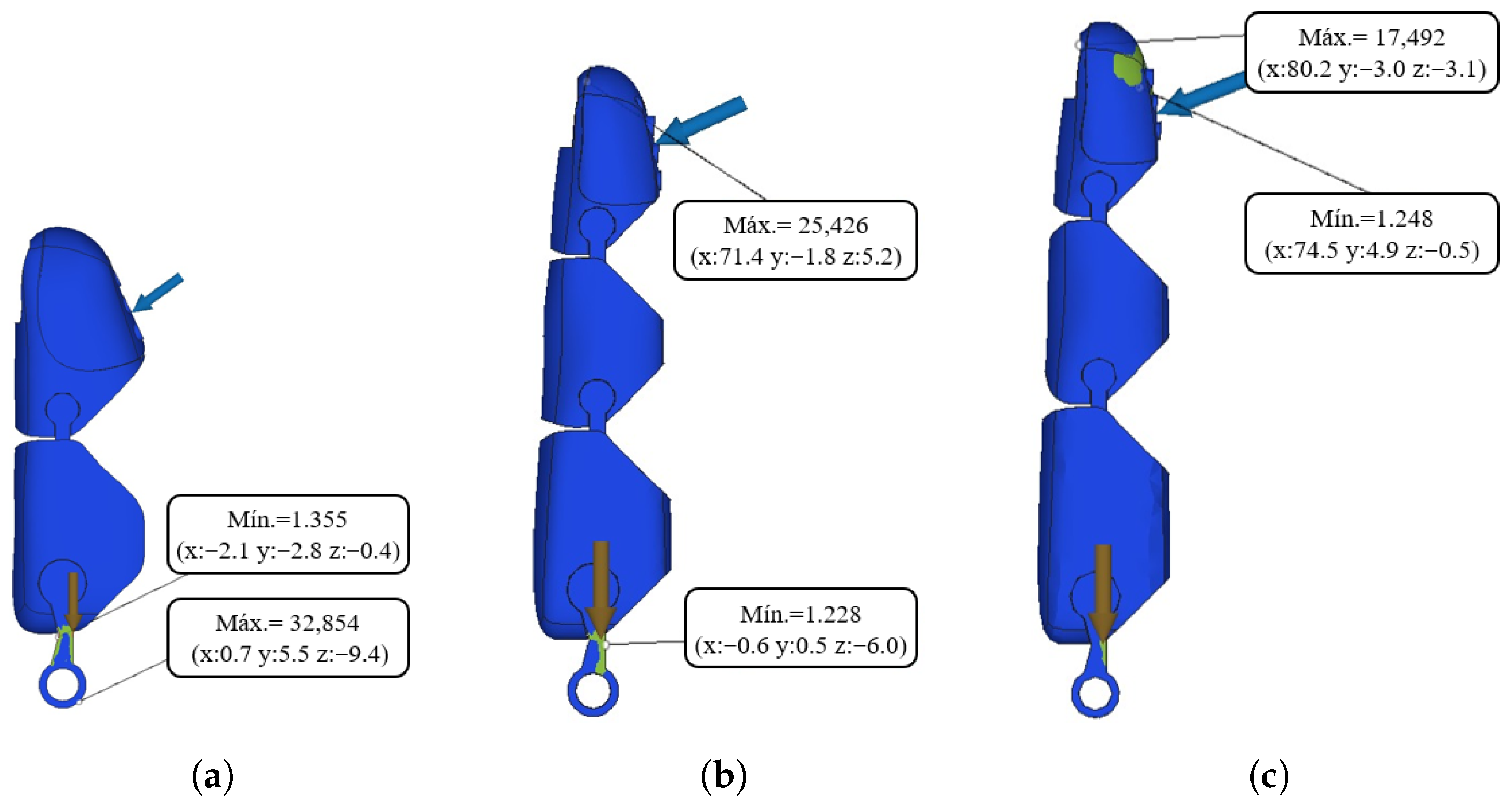
Although the mechanical analyses indicate that the prosthetic structure can withstand a load of 26.9 N when considering the combined resistance of the fingers in the tripod pinch configuration, the effective gripping force is ultimately limited by the actuator torque. Experimental evaluations revealed that, due to transmission losses and the selected motor characteristics, the maximum force actually achieved by the prosthesis during the tripod pinch gesture is approximately 3.83 to 4.23 N. This confirms that, in the current prototype, the operational force range is constrained by the actuation system rather than by the structural resistance of the fingers.
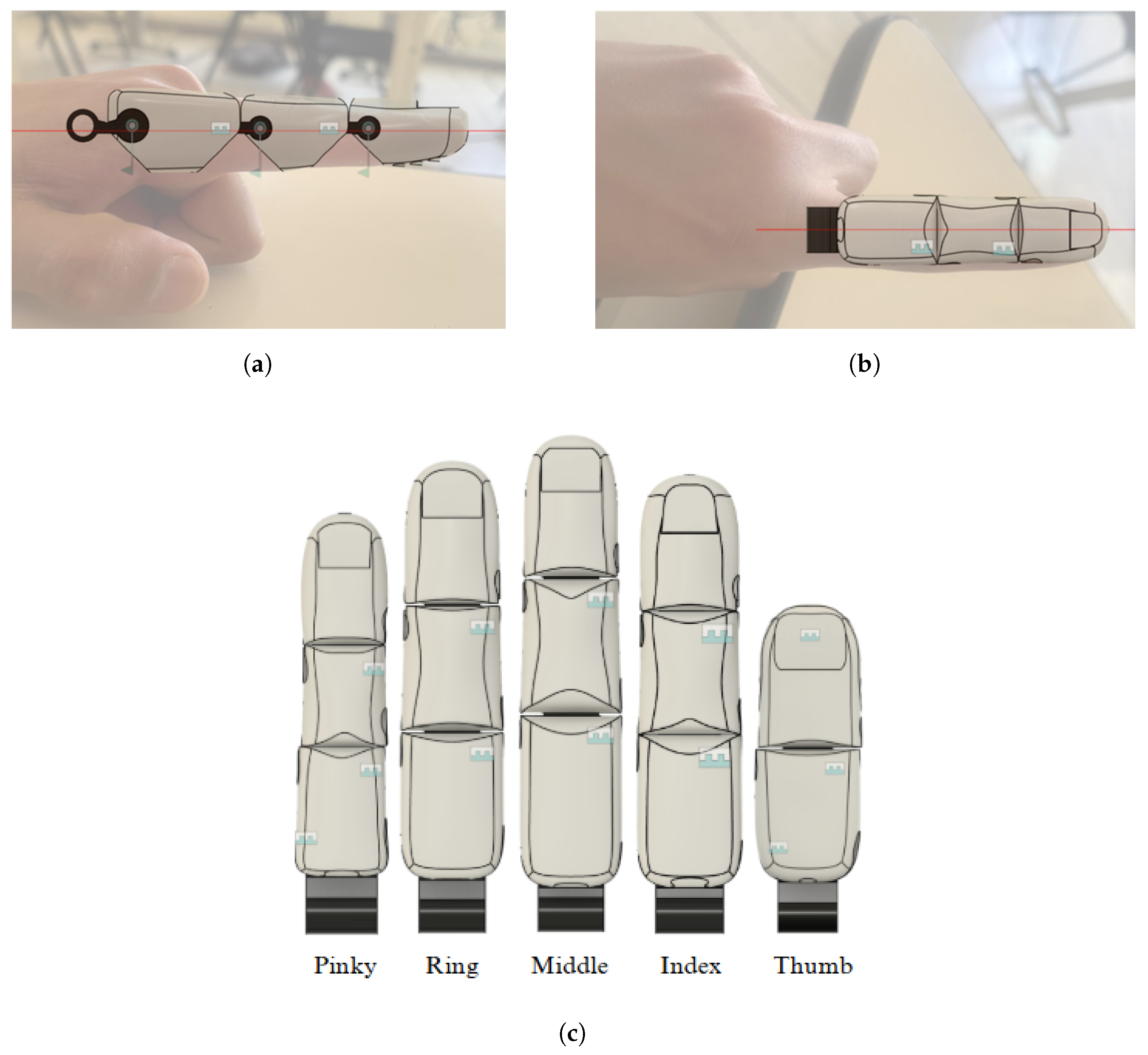
Regarding geometric and aesthetic considerations, the prosthesis design initially followed the anthropometric proportions defined by the DIN 33402 standard [
23]. These dimensions were subsequently adjusted based on real anthropometric measurements, allowing for the morphology to better reflect characteristics representative of the target user population. This process highlighted morphogeometric differences between populations and underscores the importance of regional adaptation in prosthetic design. The resulting prosthesis achieves a balanced integration of functionality, structural simplicity, and visual realism, including details such as palm curvature, fingernails, and fingertip geometry, which are important factors for user acceptance.
The combination of flexible materials and tendon-driven actuation proved advantageous when contrasted with pneumatically actuated soft hands, such as those reported in [
9,
39]. These pneumatic systems demonstrate a high level of compliance and the ability to generate smooth, adaptive motions, particularly in applications requiring large deformation or teleoperation. However, the proposed prosthesis achieved a more compact, quiet, and visually discreet configuration, which facilitated stable grasp execution during laboratory tests and favors its integration into everyday environments.
In comparison with highly biomimetic hand designs that employ complex skeletal structures and tendon routing to maximize anatomical fidelity [
37], the present approach adopts a simplified mechanical and control architecture. While such biomimetic models offer enhanced dexterity and closer resemblance to the human hand, the results obtained in this study indicate that reliable and repeatable performance for fine motor tasks can be achieved using a reduced number of components, prioritizing energy efficiency, ease of replication, and embedded feasibility.
Functional validation demonstrated the combined performance of the proposed control strategy and mechanical structure. User-specific classification models achieved accuracies above 82.5% in most cases, with an overall mean accuracy of 87.94%, despite pronounced inter-user variability. Functional gesture transitions exhibited response times ranging from 0.49 to 2.00 s, comparable to those reported for EMG-driven soft prosthetic systems, such as the 1.3 s finger flexion time reported in [
12] and the 3.3 s reported in [
37]. Sustained grasp experiments yielded an average holding time of 17.92 s, indicating stable control under prolonged muscle activation, while repeated grasping trials with everyday objects achieved an overall effectiveness of approximately 80%. Together, these results confirm that the proposed system can reliably support basic fine manipulation tasks under controlled conditions.
The inclusion of rough fingertip surfaces and internal vacuum-based reinforcement contributed to improved grip stability without requiring pressure sensors or haptic feedback systems. These results highlight how passive mechanical features can complement simplified control strategies, supporting functional performance while preserving a low-cost and user-centered design.
5. Conclusions
This research presents the design and validation of a functional, accessible, and visually realistic myoelectric hand prosthesis aimed at supporting fine motor tasks. The proposed system successfully integrates soft robotic principles with a tendon-driven actuation mechanism and a lightweight EMG-based control strategy, enabling reliable execution of open hand and tripod pinch movements in real-time.
The myoelectric control scheme demonstrated robust gesture recognition using EMG signals acquired through a wearable armband equipped with eight electrodes and processed by a fully connected neural network optimized for execution on a low-power microcontroller. Classification accuracies above 82.5% were obtained in most cases, with some users achieving values close to 100%, confirming the feasibility of accurate and low-latency embedded EMG control for prosthetic applications.
From a mechanical perspective, the soft, tendon-driven design enabled smooth and adaptive motion without relying on additional force, position, or current sensors. This structural simplification reduces system complexity and cost while maintaining functional stability. Furthermore, the geometric design, based on DIN 33402 anthropometric proportions and adjusted using measurements from a real hand, contributed to an improved aesthetic appearance, which is an important factor for user acceptance in daily-use prostheses.
Experimental validation under functional conditions showed an average response time of 1.05 s and an effectiveness of approximately 80% when grasping small everyday objects with different geometries. These results demonstrate the practical applicability of the proposed prototype for assistive and rehabilitation-oriented scenarios, while also highlighting its potential as a low-cost and replicable solution.
As future work, it is proposed to expand the range of movements reproduced by the prosthesis by incorporating additional degrees of freedom in the thumb. This extension would enable a broader set of grasp patterns and increase the functional versatility of the system while preserving its current mechanical simplicity and control architecture.




 ,
,