Optical Waveguide Lightmode Spectroscopy: A Versatile Technique for Real-Time, Label-Free Biosensing

Abstract
1. Introduction
2. Fundamentals of OWLS

- 1.
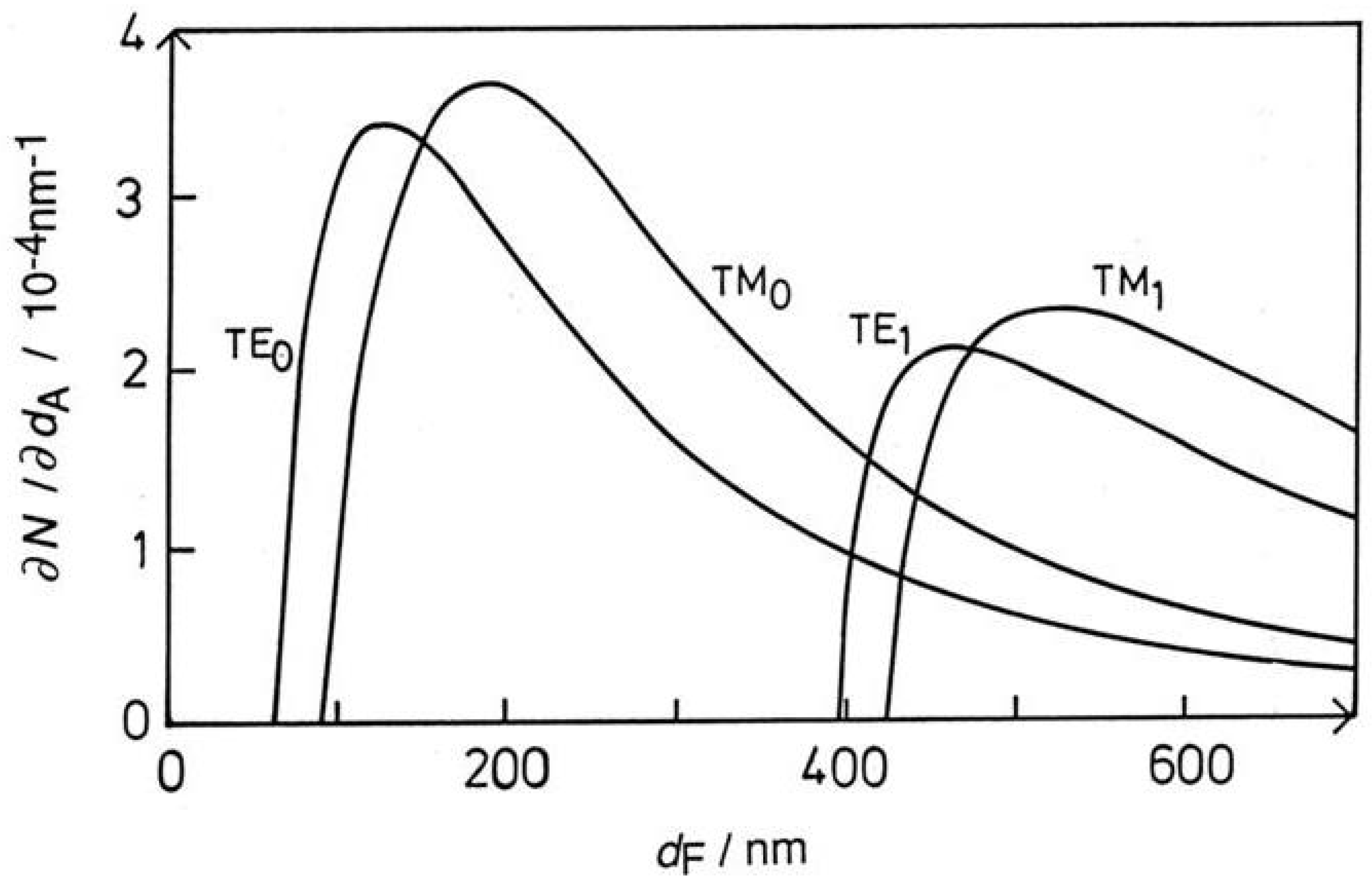
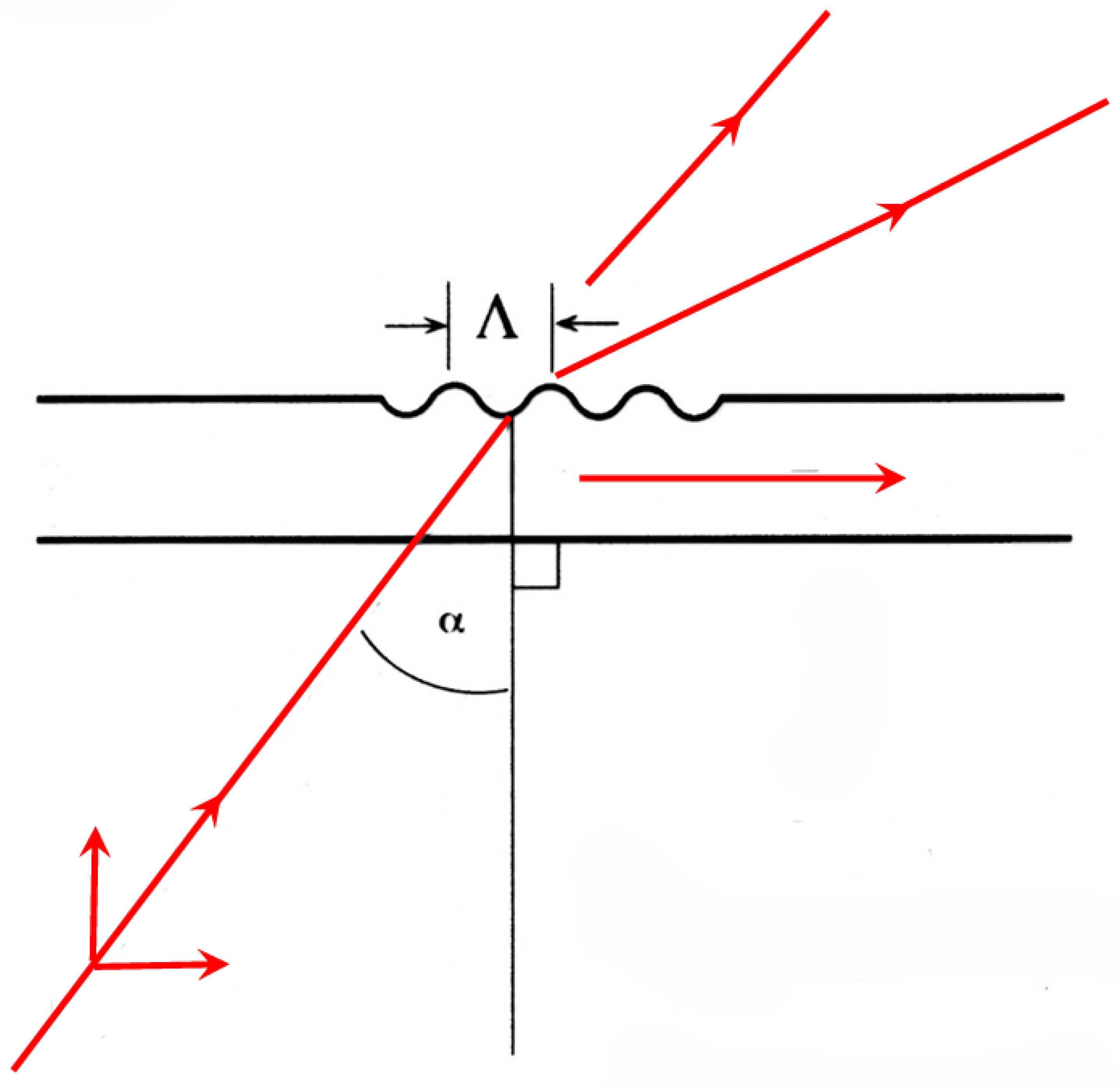
- High sensitivity, i.e., intrinsically at least an order of magnitude higher than that of SPR [33], which is probably the next most sensitive technique. The root of this difference is the short propagation distance, of the order of one micrometer, of the surface plasmons along the thin metal film in which they are generated, whereas the equivalent lightmodes in OWLS can propagate at least three orders of magnitude further in a transparent dielectric. Even higher sensitivities than those attainable with OWLS can be obtained with more recently developed methods such as grating-coupled interferometry (GCI) [34,35,36,37]. Nevertheless, such increased sensitivity is of limited practical value for biosensing since it requires millikelvin temperature control, which is rather problematic. This limitation also applies to interferometry: clearly the sensitivity of an interferometric device can in principle be increased indefinitely by increasing the measurement path length, but practical difficulties soon intervene. Temperature control is discussed further in Section 3.
- 2.
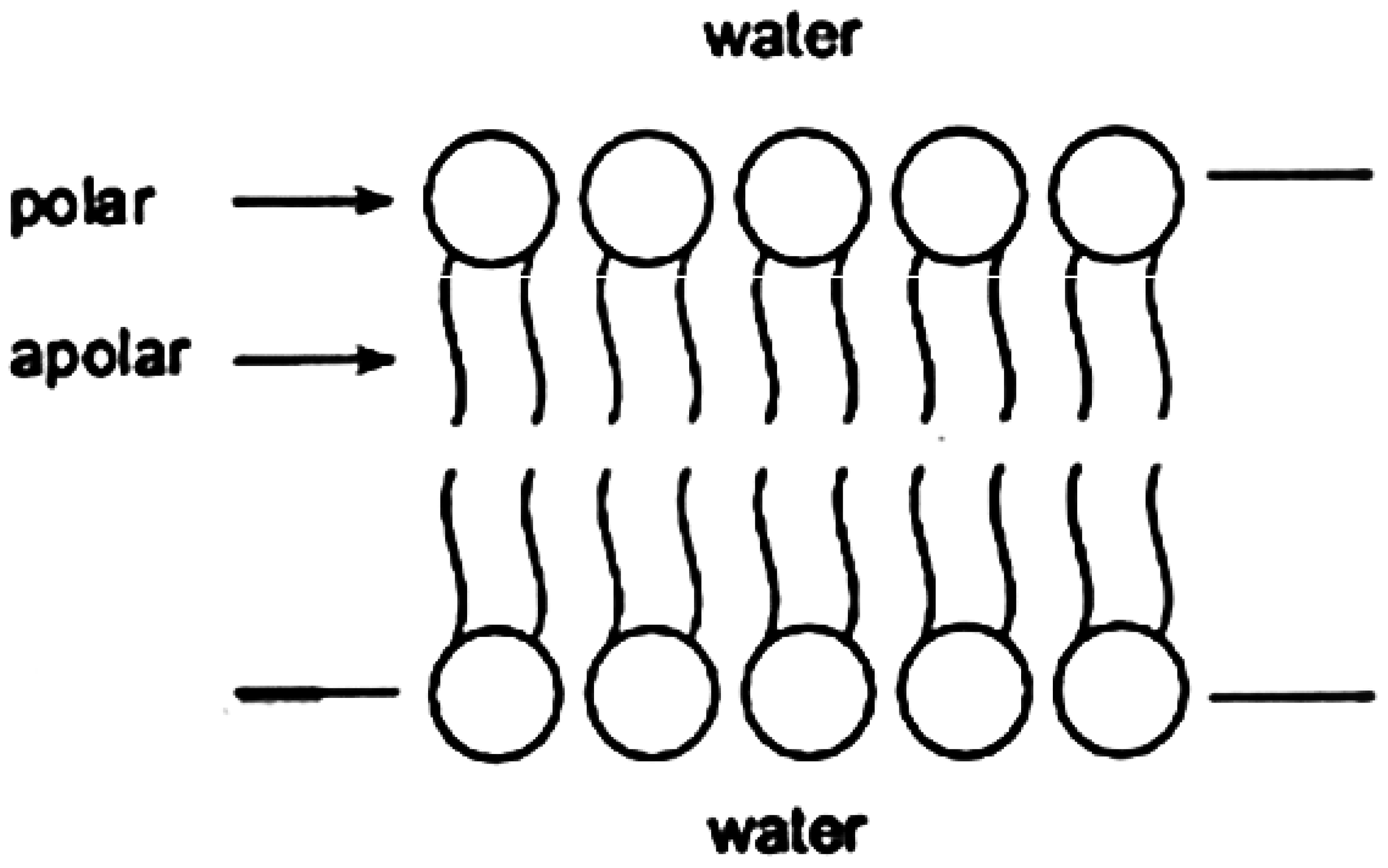
- Versatility: It can be used with any transparent solid phase. The waveguide itself must be made from a high refractive index transparent dielectric, but any other medium, such as a lipid membrane, can be coated onto the waveguide as a thin layer. Although, unlike with ellipsometry, OWLS cannot be used with opaque substrata, if, e.g., a metal is required, it can be evaporated as an ultrathin film (of the order of 1 nm thick) onto the waveguide, and the measurement arrangements suitably adjusted to take the attenuation of the guided light into account.
- 3.
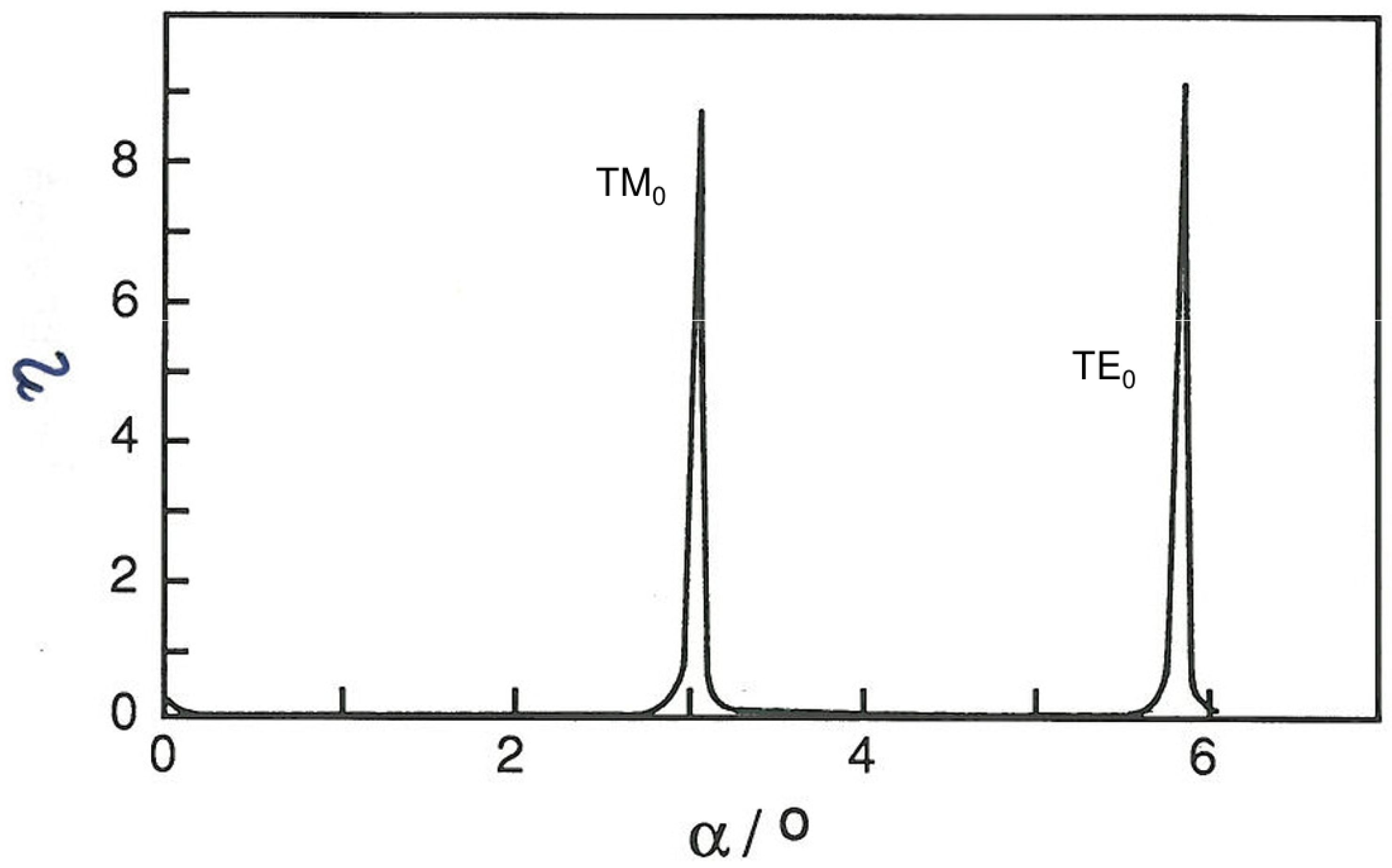
- Informativity, above all because two independent, orthogonal lightmodes are measured simultaneously. Hence key parameters characterizing the event under investigation, such as the number of adsorbed proteins per unit area, can be calculated directly and straightforwardly from the measured quantities (effective refractive indices) without the need for questionable assumptions or awkward calibration procedures.
2.1. Total Internal Reflexion
2.2. The Mode Equations
2.3. Useful Solutions
2.4. Optical Invariants
3. Practical Measurement Arrangements
Effect of Temperature on Waveguide Parameters

| Parameter | Typical Value | Uncertainty | Physical Origin |
|---|---|---|---|
| 1.0002673 | Temperature fluctuations (±1 °C) | ||
| 0.09 rad | rad | Goniometer (mechanical instability) | |
| 632.816 nm | 0.001 nm | Laser mode jumping | |
| 416.147 nm | 0.001 | Grating lateral thermal movement |
4. The Design of Capture Layers
5. Interpretation of the Kinetics of the Sensor Output
6. Cytometry
7. Further Practical Applications
7.1. Three-Layer Waveguides
7.2. Four-Layer Waveguides—Uniform Layers
7.3. Further Examples of Discrete Receptors
7.4. Metabolic Sensors
7.5. Measurements with Living Cells
7.6. Biocompatibility Sensing
7.7. Electrochemical OWLS
8. Conclusions
9. Future Developments
- Simultaneous measurement of parallel fluidic channels on the same grating for referencing purposes;
- Multiwavelength OWLS and combining incoupling angle scanning (as in classical OWLS) with narrow-band wavelength scanning (as in the RWG interpretation of OWLS);
- Exploitation of fluctuation analysis for enhancing biosensing, as has been demonstrated for resistive chemical sensors [126];
Funding
Data Availability Statement
Acknowledgments
Conflicts of Interest
References
- Kapitsa, P. The future problems of science. In The Science of Science; Goldsmith, M., MacKay, A., Eds.; Souvenir Press: London, UK, 1964; pp. 102–113. [Google Scholar]
- Scheller, F.; Schubert, F. Biosensoren; Volume 18 of Beiträge zur Forschungstechnologie; Akademie-Verlag: Berlin, Germany, 1989. [Google Scholar]
- Yamazoe, N.; Sakai, G.; Shimanoe, K. Oxide semiconductor gas sensors. Catal. Surv. Asia 2003, 7, 63–75. [Google Scholar] [CrossRef]
- Lichtenthaler, F.W. 100 years ‘Schlüssel-Schloss-Prinzip’: What made Emil Fischer use this analogy? Angew. Chem. Int. Ed. 1995, 33, 2364–2374. [Google Scholar] [CrossRef]
- Schultz, J.S.; Mansouri, S.; Goldstein, I.J. Affinity sensor: A new technique for developing implantable sensors for glucose and other metabolites. Diabetes Care 1982, 5, 245–253. [Google Scholar] [CrossRef]
- Blumenfeld, L.A. Problems of Biological Physics; Springer: Berlin/Heidelberg, Germany, 1981. [Google Scholar]
- Scott, L.R.; Fernández, A. A Mathematical Approach to Protein Biophysics; Springer: Cham, Switzerland, 2017. [Google Scholar]
- Available online: https://www.merriam-webster.com/dictionary/biosensor (accessed on 23 December 2025).
- Bhalla, N.; Jolly, P.; Formisano, N.; Estrela, P. Introduction to biosensors. Essays Biochem. 2016, 60, 1–8. [Google Scholar] [CrossRef]
- Available online: https://www.oed.com/dictionary/biosensor_n (accessed on 23 December 2025).
- Clark, L.C.; Lyons, C. Electrode systems for continuous monitoring in cardiovascular surgery. Ann. N. Y. Acad. Sci. 1962, 102, 29–45. [Google Scholar] [CrossRef]
- Updike, S.; Hicks, G. The enzyme electrode. Nature 1967, 214, 986–988. [Google Scholar] [CrossRef]
- Wang, J. Electrochemical glucose biosensors. Chem. Rev. 2008, 108, 814–825. [Google Scholar] [CrossRef] [PubMed]
- Eddowes, M.J.; Hill, H.A.O. Investigation of electron-transfer reactions of proteins by electrochemical methods: Review. Biosci. Rep. 1981, 1, 521–532. [Google Scholar] [CrossRef] [PubMed]
- Marks, R.S.; Cullen, D.C.; Karube, T.; Lowe, C.R.; Weetall, H.H. (Eds.) Handbook of Biosensors and Biochips; Wiley: Chichester, UK, 2007. [Google Scholar]
- Available online: https://dictionary.cambridge.org/dictionary/english/biosensor (accessed on 23 December 2025).
- Kumaran, A.; Jude Serpes, N.; Gupta, T.; James, A.; Sharma, A.; Kumar, D.; Nagraik, R.; Kumar, V.; Pandey, S. Advancements in CRISPR-based biosensing for next-gen point of care diagnostic application. Biosensors 2023, 13, 202. [Google Scholar] [CrossRef]
- Kern, S.E. Why your new cancer biomarker may never work: Recurrent patterns and remarkable diversity in biomarker failures. Cancer Res. 2012, 72, 6097–6101. [Google Scholar] [CrossRef] [PubMed]
- Tesema, W.; Jimma, W.; Khan, M.I.; Stiens, J.; da Silva, B. A taxonomy of low-power techniques in wearable medical devices for healthcare applications. Electronics 2024, 13, 3097. [Google Scholar] [CrossRef]
- Huang, G.; Chen, X.; Liao, C. AI-driven wearable bioelectronics in digital healthcare. Biosensors 2025, 15, 410. [Google Scholar] [CrossRef]
- Aggarwal, N.; Lawson, K.; Kershaw, M.; Horvath, R.; Ramsden, J.J. Protein adsorption on heterogeneous surfaces. Appl. Phys. Lett. 2009, 94, 083110. [Google Scholar] [CrossRef]
- Park, Y.-S.; Park, B.U.; Jeon, H.-J. Advances in machine learning-enhanced nanozymes. Front. Chem. 2024, 12, 1483986. [Google Scholar] [CrossRef] [PubMed]
- Naresh, V.; Lee, N. A review on biosensors and recent development of nanostructured materials-enabled biosensors. Sensors 2021, 21, 1109. [Google Scholar] [CrossRef]
- Cui, F.; Yue, Y.; Zhang, Y.; Zhang, Z.; Zhou, H.S. Advancing biosensors with machine learning. ACS Sens. 2020, 5, 3346–3364. [Google Scholar] [CrossRef]
- Thevenot, D.R.; Toth, K.; Durst, R.A.; Wilson, G.S. Electrochemical biosensors: Recommended definitions and classification. Pure Appl. Chem. 1999, 71, 2333–2348. [Google Scholar] [CrossRef]
- Newton, I. Philosophiae Naturalis Principia Mathematica; Lib. 1, Sect. XIV, Prop. XCVI, Theor. L; The Royal Society: London, UK, 1687. [Google Scholar]
- Newton, I. Opticks, 4th ed.; Book 3, Qu. 29; William Innys: London, UK, 1730. [Google Scholar]
- Tiefenthaler, K.; Lukosz, W. Sensitivity of grating couplers as integrated-optical chemical sensors. J. Opt. Soc. Am. B 1989, 6, 209–220. [Google Scholar] [CrossRef]
- Hatton, I.A.; Galbraith, E.D.; Merleau, N.S.C.; Miettinen, T.P.; Smith, B.M.; Shander, J.A. The human cell count and size distribution. Proc. Natl Acad. Sci. USA 2023, 120, e2303077120. [Google Scholar] [CrossRef]
- Horvath, R.; Cottier, K.; Pedersen, H.C.; Ramsden, J.J. Multidepth screening of living cells using optical waveguides. Biosens. Bioelectron. 2008, 24, 805–810. [Google Scholar] [CrossRef]
- Horvath, R.; Pedersen, H.C.; Larsen, N.B. Demonstration of reverse symmetry waveguides sensing in aqueous solutions. Appl. Phys. Lett. 2002, 81, 2166–2168. [Google Scholar] [CrossRef]
- Cross, G.H.; Reeves, A.; Brand, S.; Swann, M.J.; Peel, L.L.; Freeman, N.J.; Lu, J.R. The metrics of surface absorbed small molecules on the Young’s fringe dual-slab waveguide interferometer. J. Phys. D Appl. Phys. 2004, 37, 74–80. [Google Scholar] [CrossRef]
- Lukosz, W. Principles and sensitivities of integrated optical and surface plasmon sensors for direct affinity sensing and immunosensing. Biosens. Bioelectron. 1991, 6, 215–225. [Google Scholar] [CrossRef]
- Kozma, P.; Hamori, A.; Cottier, K.; Kurunczi, S.; Horvath, R. Grating coupled interferometry for optical sensing. Appl. Phys. B 2009, 97, 5–8. [Google Scholar] [CrossRef]
- Kozma, P.; Hámori, A.; Kurunczi, S.; Cottier, K.; Horvath, R. Grating coupled optical waveguide interferometer for label-free biosensing. Sens. Actuators 2011, 155, 446–450. [Google Scholar] [CrossRef]
- Kozma, P.; Kehl, F.; Ehrentreich-Förster, E.; Stamm, C.; Bier, F.F. Integrated planar optical waveguide interferometer biosensors: A comparative review. Biosens. Bioelectron. 2014, 58, 287–307. [Google Scholar] [CrossRef]
- Agocs, E.; Kozma, P.; Nador, J.; Hamori, A.; Janosov, M.; Kalas, B.; Kurunczi, S.; Fodor, B.; Ehrentreich-Förster, E.; Fried, M.; et al. Grating coupled optical waveguide interferometry combined with in situ spectroscopic ellipsometry to monitor surface processes in aqueous solutions. Appl. Surf. Sci. 2017, 421, 289–294. [Google Scholar] [CrossRef]
- Bousquet, P. Étude théorique des propriétés optiques des couches minces transparentes. Ann. Phys. Sér. 1957, 13, 5–15. [Google Scholar] [CrossRef]
- Ghatak, A.; Thyagarajan, K. Optical Electronics; Cambridge University Press: Cambridge, UK, 1989. [Google Scholar]
- Mann, E.K.; Heinrich, L.; Schaaf, P. Validation of the uniform thin-film approximation for the optical analysis of particulate films. Langmuir 1997, 13, 4906–4909. [Google Scholar] [CrossRef]
- Guemouri, L.; Ogier, J.; Zekhnini, Z.; Ramsden, J.J. The architecture of fibronectin at surfaces. J. Chem. Phys. 2000, 113, 8183–8186. [Google Scholar] [CrossRef]
- Ball, V.; Ramsden, J.J. Buffer dependence of refractive index increments of protein solutions. Biopolymers 1998, 46, 489–492. [Google Scholar] [CrossRef]
- Horvath, R.; McColl, J.; Yakubov, G.E.; Ramsden, J.J. Structural hysteresis and hierarchy in adsorbed glycoproteins. J. Chem. Phys. 2008, 129, 071102. [Google Scholar] [CrossRef] [PubMed]
- Kovacs, N.; Patko, D.; Orgovan, N.; Kurunczi, S.; Ramsden, J.J.; Vonderviszt, F.; Horvath, R. Optical anisotropy of flagellin layers: In situ and label-free measurement of adsorbed protein orientation using OWLS. Anal. Chem. 2013, 85, 5382–5389. [Google Scholar] [CrossRef]
- Bedeaux, D.; Vlieger, J. A phenomenological theory of the dielectric properties of thin films. Physica 1973, 67, 55–73. [Google Scholar] [CrossRef]
- Lekner, J. Theory of Reflection; Martinus Nijhoff: Dordrecht, The Netherlands, 1987. [Google Scholar]
- Mann, E.K. Evaluating optical techniques for determining film structure: Optical invariants for anisotropic dielectric thin films. Langmuir 2001, 17, 5872–5881. [Google Scholar] [CrossRef]
- Haarmans, M.T.; Bedeaux, D. Optical properties of thin films up to second order in the thickness. Thin Solid Films 1995, 258, 213–223. [Google Scholar] [CrossRef]
- Horvath, R.; Ramsden, J.J. Quasi-isotropic analysis of anisotropic thin films on optical waveguides. Langmuir 2007, 23, 9330–9334. [Google Scholar] [CrossRef]
- Ramsden, J.J. Optical biosensors. J. Mol. Recognit. 1997, 10, 109–120. [Google Scholar] [CrossRef]
- Parriaux, O.; Sychugov, V.A.; Tishchenko, A.V. Coupling gratings as waveguide functional elements. Pure Appl. Opt. 1996, 5, 453–469. [Google Scholar] [CrossRef]
- Parriaux, O.; Sychugov, V.A.; Tishchenko, A.V. Waveguide coupling gratings: Attractive features and dangerous pitfalls. In Guided-Wave Optoelectronics; Tamir, T., Griffel, G., Bertoni, H.L., Eds.; Plenum Press: New York, NY, USA, 1995; pp. 333–354. [Google Scholar]
- Lukosz, W.; Tiefenthaler, K. Embossing technique for fabricating integrated optical components in hard inorganic waveguiding materials. Opt. Lett. 1986, 8, 445–449. [Google Scholar] [CrossRef]
- Szendrő, I. Art and practice to emboss gratings into sol-gel waveguides. Proc. SPIE 2001, 4284, 80–87. [Google Scholar]
- Dew, G.D.; Sayce, L.A. On the production of diffraction gratings I. The copying of plane gratings. Proc. R. Soc. A 1951, 207, 278–284. [Google Scholar] [CrossRef]
- Aikio, S.; Zeilinger, M.; Hiltunen, J.; Hakalahti, L.; Hiitola-Keinänen, J.; Hiltunen, M.; Kontturi, V.; Siitonen, S.; Puustinen, J.; Lieberzeit, P.; et al. Disposable (bio)chemical integrated optical waveguide sensors implemented on roll-to-roll produced platforms. RSC Adv. 2016, 6, 50414–50422. [Google Scholar] [CrossRef]
- Kurrat, R.; Textor, M.; Ramsden, J.J.; Böni, P.; Spencer, N.D. Instrumental improvements in optical waveguide lightmode spectroscopy for the study of biomolecule adsorption. Rev. Sci. Instruments 1997, 68, 2172–2176. [Google Scholar] [CrossRef]
- Saini, S.; Kurrat, R.; Prenosil, J.E.; Ramsden, J.J. Temperature dependence of pyrolyzed sol-gel planar waveguide parameters. J. Phys. D Appl. Phys. 1994, 27, 1134–1138. [Google Scholar] [CrossRef]
- Baratto, A.C. Measurand: A cornerstone concept in metrology. Metrologia 2008, 45, 299–307. [Google Scholar] [CrossRef]
- Meldal, M.; Schoffelen, S. Recent advances in covalent, site-specific protein immobilization. F1000Research 2016, 5, 2303. [Google Scholar] [CrossRef] [PubMed]
- Karrasch, S.; Dolder, M.; Schabert, F.; Ramsden, J.J.; Engel, A. Covalent binding of biological samples to solid supports for scanning probe microscopy in buffer solution. Biophys. J. 1993, 65, 2437–2446. [Google Scholar] [CrossRef][Green Version]
- Thiviyanathan, V.; Gorenstein, D.G. Aptamers and the next generation of diagnostic reagents. Proteom. Clin. Appl. 2012, 6, 563–573. [Google Scholar] [CrossRef]
- Mitzner, S.R.; Stange, J.; Klammt, S.; Risler, T.; Erley, C.M.; Bader, B.D.; Berger, E.D.; Lauchart, W.; Peszynski, P.; Freytag, J.; et al. Improvement of hepatorenal syndrome with extracorporeal albumin dialysis MARS: Results of a prospective, randomized, controlled clinical trial. Liver Transpl. 2000, 6, 277–286. [Google Scholar] [CrossRef]
- Blaszykowski, C.; Sheikh, S.; Thompson, M. Surface chemistry to minimize fouling from blood-based fluids. Chem. Soc. Rev. 2012, 41, 5599–5612. [Google Scholar] [CrossRef] [PubMed]
- Julien Breault-Turcot, J.; Chaurand, P.; Masson, J.-F. Unravelling nonspecific adsorption of complex protein mixture on surfaces with SPR and MS. Anal. Chem. 2014, 86, 9612–9619. [Google Scholar] [CrossRef] [PubMed]
- Fattinger, C. Focal molography: Coherent microscopic detection of biomolecular interaction. Phys. Rev. X 2014, 4, 031024. [Google Scholar] [CrossRef][Green Version]
- Gatterdam, V.; Frutiger, A.; Stengele, K.P.; Heindl, D.; Lübbers, T.; Vörös, J.; Fattinger, C. Focal molography is a new method for the in situ analysis of molecular interactions in biological samples. Nat. Nanotechnol. 2017, 12, 1089–1095, Erratum in Nat. Nanotechnol. 2021, 16, 606. [Google Scholar] [CrossRef]
- Blickenstorfer, Y.; Borghi, L.; Reichmuth, A.M.; Fattinger, C.; Vörös, J.; Frutiger, A. Total internal reflection focal molography (TIR-M). Sens. Actuators 2021, 349, 130746. [Google Scholar] [CrossRef]
- Schaaf, P.; Voegel, J.-C.; Senger, B. Irreversible deposition/adsorption processes on solid surfaces. Ann. Phys. 1998, 23, 1–89. [Google Scholar] [CrossRef]
- Ramsden, J.J.; Schneider, P. Membrane insertion and antibody recognition of a glycosyl-phosphatidylinositol-anchored protein: An optical study. Biochemistry 1993, 32, 523–529. [Google Scholar] [CrossRef]
- Zweig, H.J. Theoretical considerations on the quantum efficiency of photographic detectors. J. Opt. Soc. Am. 1961, 51, 310–319. [Google Scholar] [CrossRef]
- Manghani, S.; Ramsden, J.J. The efficiency of chemical detectors. J. Biol. Phys. Chem. 2003, 3, 11–17. [Google Scholar] [CrossRef]
- Schuck, P. Kinetics of ligand binding to receptor immobilized in a polymer matrix, as detected with an evanescent wave biosensor. I. A computer simulation of the influence of mass transport. Biophys. J. 1996, 70, 1230–1249. [Google Scholar] [CrossRef]
- Levich, V.G. Physicochemical Hydrodynamics; Prentice Hall: Englewood Cliffs, NJ, USA, 1962. [Google Scholar]
- Ramsden, J.J.; Bachmanova, G.I.; Archakov, A.I. Immobilization of proteins to lipid bilayers. Biosens. Bioelectron. 1996, 11, 523–528. [Google Scholar] [CrossRef]
- Ramsden, J.J. Kinetics of protein adsorption. In Biopolymers at Interfaces; Malmsten, M., Ed.; Dekker: New York, NY, USA, 1998; Chapter 10; pp. 321–361. [Google Scholar]
- Ramsden, J.J. Protein adsorption kinetics. In Biopolymers at Interfaces, 2nd ed.; Malmsten, M., Ed.; Dekker: New York, NY, USA, 2003; Chapter 8; pp. 199–220. [Google Scholar]
- Orgovan, N.; Patko, D.; Hos, C.; Kurunczi, S.; Szabo, B.; Ramsden, J.J.; Horvath, R. Sample handling in surface sensitive chemical and biological sensing: A practical review of basic fluidics and analyte transport. Adv. Colloid Interface Sci. 2014, 211, 1–16. [Google Scholar] [CrossRef] [PubMed]
- Saftics, A.; Kurunczi, S.; Peter, B.; Szekacs, I.; Ramsden, J.J.; Horvath, R. Data evaluation for surface-sensitive label-free methods to obtain real-time kinetic and structural information of thin films: A practical review with related software packages. Adv. Colloid Interface Sci. 2021, 294, 102431. [Google Scholar] [CrossRef] [PubMed]
- Mukundan, H.; Anderson, A.S.; Grace, W.K.; Grace, K.M.; Hartman, N.; Martinez, J.S.; Swanson, B.I. Waveguide-based biosensors for pathogen detection. Sensors 2009, 9, 5783–5809. [Google Scholar] [CrossRef]
- Yeh, Y.-P.; Ramsden, J.J. Quantification of the number of adsorbed bacteria on an optical waveguide. J. Biol. Phys. Chem. 2010, 10, 53–54. [Google Scholar] [CrossRef]
- Orgovan, N.; Peter, B.; Bosze, S.; Ramsden, J.J.; Szabo, B.; Horvath, R. Dependence of cancer cell adhesion kinetics on integrin ligand surface density measured by a high-throughput label-free resonant waveguide grating biosensor. Sci. Rep. 2014, 4, 4034. [Google Scholar] [CrossRef] [PubMed]
- Péter, B.; Ausbüttel, T.; Kanyo, N.; Joó, P.; Tóth, K.; Szittner, Z.; Szekacs, I.; Bosze, S.; Kovács, G.M.; Boldizsár, I.; et al. In situ monitoring of cell adhesion kinetics using label-free optical biosensors: Evaluating anticancer potential and selectivity of natural compounds. VIEW 2025, 20250061. [Google Scholar] [CrossRef]
- Diviès, C. Remarques sur l’oxydation de l’éthanol par une electrode microbienne d’acetobacter zylinum. Ann. Microbiol. 1975, 126, 175–186. [Google Scholar]
- Li, S.-Y.; Ramsden, J.J.; Prenosil, J.E.; Heinzle, E. Measurement of adhesion and spreading kinetics of baby hamster kidney and hybridoma cells using an integrated optical method. Biotechnol. Prog. 1994, 10, 520–524. [Google Scholar] [CrossRef]
- Ramsden, J.J.; Li, S.-Y.; Heinzle, E.; Prenosil, J.E. An optical method for the measurement of number and shape of attached cells in real time. Cytometry 1995, 19, 97–102. [Google Scholar] [CrossRef]
- Aref, A.; Horvath, R.; Ramsden, J.J. Spreading kinetics as a means of quantifying cell state during stem cell differentiation. J. Biol. Phys. Chem. 2010, 10, 53–54. [Google Scholar] [CrossRef]
- Kovacs, K.D.; Beres, B.; Kanyo, N.; Szabó, B.; Peter, B.; Bősze, S.; Szekacs, I.; Horvath, R. Single-cell classification based on label-free high-resolution optical data of cell adhesion kinetics. Sci. Rep. 2024, 14, 11231. [Google Scholar] [CrossRef]
- Hug, T.S.; Prenosil, J.E.; Morbidelli, M. Optical waveguide lightmode spectroscopy as a new method to study adhesion of anchorage-dependent cells as an indicator of metabolic state. Biosens. Bioelectron. 2000, 16, 865–874. [Google Scholar] [CrossRef]
- Wawro, D.; Tibuleac, S.; Magnusson, R. Optical waveguide-mode resonant biosensors. In Optical Imaging Sensors and Systems for Homeland Security; Javidi, B., Ed.; Springer: Berlin/Heidelberg, Germany, 2006; pp. 367–384. [Google Scholar]
- Quaranta, G.; Basset, G.; Martin, O.J.F.; Gallinet, B. Recent advances in resonant waveguide gratings. Laser Photonics Rev. 2018, 12, 1800017. [Google Scholar] [CrossRef]
- Orgovan, N.; Kovacs, B.; Farkas, E.; Szabó, B.; Zaytseva, N.; Fang, Y.; Horvath, R. Bulk and surface sensitivity of a resonant waveguide grating imager. Appl. Phys. Lett. 2014, 104, 083506. [Google Scholar] [CrossRef]
- Peter, B.; Farkas, E.; Forgacs, E.; Saftics, A.; Kovacs, B.; Kurunczi, S.; Szekacs, I.; Csampai, A.; Bosze, S.; Horvath, R. Green tea polyphenol tailors cell adhesivity of RGD displaying surfaces: Multicomponent models monitored optically. Sci. Rep. 2017, 7, 42220. [Google Scholar] [CrossRef] [PubMed]
- Kovacs, B.; Kraft, F.A.; Szabo, Z.; Nazirizadeh, Y.; Gerken, M.; Horvath, R. Near cut-off wavelength operation of resonant waveguide grating biosensors. Sci. Rep. 2021, 11, 13091. [Google Scholar] [CrossRef]
- Tiefenthaler, K.; Lukosz, W. Integrated optical humidity and gas sensors. In Proceedings of the 2nd International Conference on Optical Fiber Sensors, Stuttgart, Germany, 5–7 September 1984; pp. 215–218. [Google Scholar]
- Tiefenthaler, K.; Lukosz, W. Integrated optical switches and gas sensors. Opt. Lett. 1984, 9, 137–139. [Google Scholar] [CrossRef]
- Niesters, M.; Mahajan, R.; Olofsen, E.; Boom, M.; Garcia del Valle, S.; Aarts, L.; Dahan, A. Validation of a novel respiratory rate monitor based on exhaled humidity. Br. J. Anaesth. 2012, 109, 981–989. [Google Scholar] [CrossRef]
- Goutev, N.; Nickolov, Z.S.; Ramsden, J.J. Waveguide Raman spectroscopy of Si(Ti)O2 thin films with grating coupling. J. Raman Spectrosc. 1996, 27, 897–900. [Google Scholar] [CrossRef]
- Ramsden, J.J. Porosity of pyrolyzed sol-gel waveguides. J. Mater. Chem. 1994, 4, 1263–1265. [Google Scholar] [CrossRef]
- Csúcs, G.; Ramsden, J.J. Interaction of phospholipid vesicles with smooth metal oxide surfaces. Biophys. Biochim. Acta 1998, 1369, 61–70. [Google Scholar] [CrossRef]
- Ramsden, J.J. Partial molar volume of solutes in bilayer lipid membranes. J. Phys. Chem. 1993, 97, 4479–4483. [Google Scholar] [CrossRef]
- Ramsden, J.J. Partition coefficients of drugs in bilayer lipid membranes. Experientia 1993, 49, 688–692. [Google Scholar] [CrossRef]
- Trummer, N.; Adányi, N.; Váradi, M.; Szendrő, I. Modification of the surface of integrated optical waveguide sensors for immunosensor applications. Fresenius J. Anal. Chem. 2001, 371, 21–24. [Google Scholar] [CrossRef] [PubMed]
- Fernández, A.; Ramsden, J.J. On adsorption-induced denaturation of folded proteins. J. Biol. Phys. Chem. 2001, 1, 81–84. [Google Scholar] [CrossRef]
- Adányi, N.; Váradi, M.; Kim, N.; Szendrő, I. Development of new immunosensors for determination of contaminants in food. Curr. Appl. Phys. 2006, 6, 279–286. [Google Scholar] [CrossRef]
- Adányi, N.; Levkovets, I.A.; Rodriguez-Gil, S.; Ronald, A.; Váradi, M.; Szendrő, I. Development of immunosensor based on OWLS technique for determining Aflatoxin B1 and Ochratoxin A. Biosens. Bioelectron. 2007, 22, 797–802. [Google Scholar] [CrossRef]
- Chiu, M.L.; Viollier, P.H.; Katoh, T.; Ramsden, J.J.; Thompson, C.J. Ligand-induced changes in the Streptomyces lividans TipAL protein imply an alternative mechanism of transcriptional activation for MerR-like proteins. Biochemistry 2001, 40, 12950–12958. [Google Scholar] [CrossRef]
- Cacace, M.G.; Ramsden, J.J. In situ monitoring of adsorbed enzyme activity. J. Biol. Phys. Chem. 2007, 7, 65–68. [Google Scholar] [CrossRef]
- Dér, A.; Kelemen, L.; Fábián, L.; Taneva, S.G.; Fodor, E.; Páli, T.; Cupane, A.; Cacace, M.G.; Ramsden, J.J. Interfacial water structure controls protein conformation. J. Phys. Chem. B 2007, 111, 5344–5350. [Google Scholar] [CrossRef]
- Kovacs, B.; Saftics, A.; Biro, A.; Kurunczi, S.; Szalontai, B.; Kakasi, B.; Vonderviszt, F.; Der, A.; Horvath, R. Kinetics and structure of self-assembled flagellin monolayers on hydrophobic surfaces in the presence of Hofmeister salts: Experimental measurement of the protein interfacial tension at the nanometer scale. J. Phys. Chem. C 2018, 122, 21375–21386. [Google Scholar] [CrossRef]
- Aref, A.; Horvath, R.; McColl, J.; Ramsden, J.J. Optical monitoring of stem cell-substratum interactions. J. Biomed. Opt. 2009, 14, 010501. [Google Scholar] [CrossRef][Green Version]
- Ramsden, J.J.; Horvath, R. Optical biosensors for cell adhesion. J. Recept. Signal Transduct. 2009, 29, 211–223. [Google Scholar] [CrossRef]
- Shokuhfar, S. An Overview of Biomedical Implants: Biomaterials for the Human Body; Wiley: Hoboken, NJ, USA, 2025. [Google Scholar]
- Kandárová, H.; Pôbiš, P. The “Big Three” in biocompatibility testing of medical devices: Implementation of alternatives to animal experimentation—Are we there yet? Front. Toxicol. 2024, 5, 1337468. [Google Scholar] [CrossRef]
- Ratner, B.D.; Hoffman, A.S.; Schoen, F.J.; Lemons, J.E. Biomaterials Science: An Introduction to Materials in Medicine, 2nd ed.; Academic Press: Amsterdam, The Netherlands, 2004. [Google Scholar]
- S., A.D.; P., S.P.A.; Naveen, J.; Khan, T.; Khahro, S.H. Advancement in biomedical implant materials—A mini review. Front. Bioeng. Biotechnol. 2024, 12, 1400918. [Google Scholar] [CrossRef] [PubMed]
- Kurrat, R.; Wälivaara, B.; Marti, A.; Textor, M.; Tengvall, P.; Ramsden, J.J.; Spencer, N.D. Plasma protein adsorption on titanium. Colloids Surf. B 1998, 11, 187–201. [Google Scholar] [CrossRef]
- Vroman, L.; Lukosevicius, A. Ellipsometry recordings of changes in optical thickness of adsorbed films associated with surface activation of blood clotting. Nature 1964, 204, 701–703. [Google Scholar] [CrossRef] [PubMed]
- Stankowski, S.; Ramsden, J.J. Voltage-dependent coupling of light into ITO-covered waveguides. J. Phys. D Appl. Phys. 2002, 35, 299–302. [Google Scholar] [CrossRef]
- Bearinger, J.P.; Vörös, J.; Hubbell, J.A.; Textor, M. Electrochemical optical waveguide lightmode spectroscopy (EC-OWLS): A pilot study using evanescent-field optical sensing under voltage control to monitor polycationic polymer adsorption onto indium tin oxide (ITO)-coated waveguide chips. Biotechnol. Bioeng. 2003, 82, 465–473. [Google Scholar] [CrossRef] [PubMed]
- Brusatori, M.A.; Van Tassel, P.R. Biosensing under an applied voltage using optical waveguide lightmode spectroscopy. Biosens. Bioelectron. 2003, 18, 1269–1277. [Google Scholar] [CrossRef] [PubMed]
- Olsen, C.; Van Tassel, P.R. Polyelectrolyte adsorption kinetics under an applied electric potential: Strongly versus weakly charged polymers. J. Colloid Interface Sci. 2009, 329, 222–227. [Google Scholar] [CrossRef]
- Adányi, N.; Németh, E.; Halász, A.; Szendrő, I.; Váradi, M. Application of electrochemical optical waveguide lightmode spectroscopy for studying the effect of different stress factors on lactic acid bacteria. Anal. Chim. Acta 2006, 573–574, 41–47. [Google Scholar] [CrossRef]
- Juan-Colás, J.; Johnson, S.; Krauss, T.F. Dual-mode electro-optical techniques for biosensing applications: A review. Sensors 2017, 17, 2047. [Google Scholar] [CrossRef] [PubMed]
- Ullah, N.; Bruce-Tagoe, T.A.; Asamoah, G.A.; Danquah, M.K. Multimodal biosensing of foodborne pathogens. Int. J. Mol. Sci. 2024, 25, 5959. [Google Scholar] [CrossRef]
- Kish, L.B.; Smulko, J.; Heszler, P.; Granqvist, C.-G. On the sensitivity, selectivity, sensory information and optimal size of resistive chemical sensors. Nanotechnol. Perceptions 2007, 3, 43–52. [Google Scholar] [CrossRef]
- Giaever, I.; Keese, C.R. A biosensor that monitors mammalian cells with electrical fields. In Physics of Biomaterials: Fluctuations, Self-Assembly and Evolution; Riste, T., Sherrington, D., Eds.; Kluwer: Dordrecht, The Netherlands, 1996; pp. 173–185. [Google Scholar]
- Hug, T.S. Biophysical methods for monitoring cell-substrate interactions in drug discovery. Assay Drug Dev. Technol. 2003, 1, 479–488. [Google Scholar] [CrossRef] [PubMed]


| Optical Invariants | |||
|---|---|---|---|
| Technique | Noninvariant | 1st Order a | 2nd Order a |
| OWLS | |||
| Ellipsometry | |||
| SAR | |||
| Substrate | Analyte | Result/pmol cm−2 | Interpretation |
|---|---|---|---|
| Lipid bilayer | PSP | 1.7 | Lipid bilayer covered to the jamming limit |
| 1.7 pmol PSP on lipid bilayer | Anti-PSP | 1.7 | Specific binding of the antibody to its antigen |
| Ditto | Nonspecific antibody | 0.05 | Absence of nonspecific binding to a receptor-saturated transducer |
| Lipid bilayer | Ditto | 0.5 | Considerable nonspecific binding on receptor-free lipid bilayer |
| Lipid bilayer | H-PSP | 0.36 | Weak binding of PSP lacking a membrane anchor |
Disclaimer/Publisher’s Note: The statements, opinions and data contained in all publications are solely those of the individual author(s) and contributor(s) and not of MDPI and/or the editor(s). MDPI and/or the editor(s) disclaim responsibility for any injury to people or property resulting from any ideas, methods, instructions or products referred to in the content. |
© 2026 by the author. Licensee MDPI, Basel, Switzerland. This article is an open access article distributed under the terms and conditions of the Creative Commons Attribution (CC BY) license.
Share and Cite
Ramsden, J.J. Optical Waveguide Lightmode Spectroscopy: A Versatile Technique for Real-Time, Label-Free Biosensing. Sensors 2026, 26, 1183. https://doi.org/10.3390/s26041183
Ramsden JJ. Optical Waveguide Lightmode Spectroscopy: A Versatile Technique for Real-Time, Label-Free Biosensing. Sensors. 2026; 26(4):1183. https://doi.org/10.3390/s26041183
Chicago/Turabian StyleRamsden, Jeremy J. 2026. "Optical Waveguide Lightmode Spectroscopy: A Versatile Technique for Real-Time, Label-Free Biosensing" Sensors 26, no. 4: 1183. https://doi.org/10.3390/s26041183
APA StyleRamsden, J. J. (2026). Optical Waveguide Lightmode Spectroscopy: A Versatile Technique for Real-Time, Label-Free Biosensing. Sensors, 26(4), 1183. https://doi.org/10.3390/s26041183