Machine Learning-Driven Sensitivity Analysis for a 2-Layer Printed Circuit Board Inductive Motor Position Sensor


Abstract
1. Introduction
2. Materials and Methods
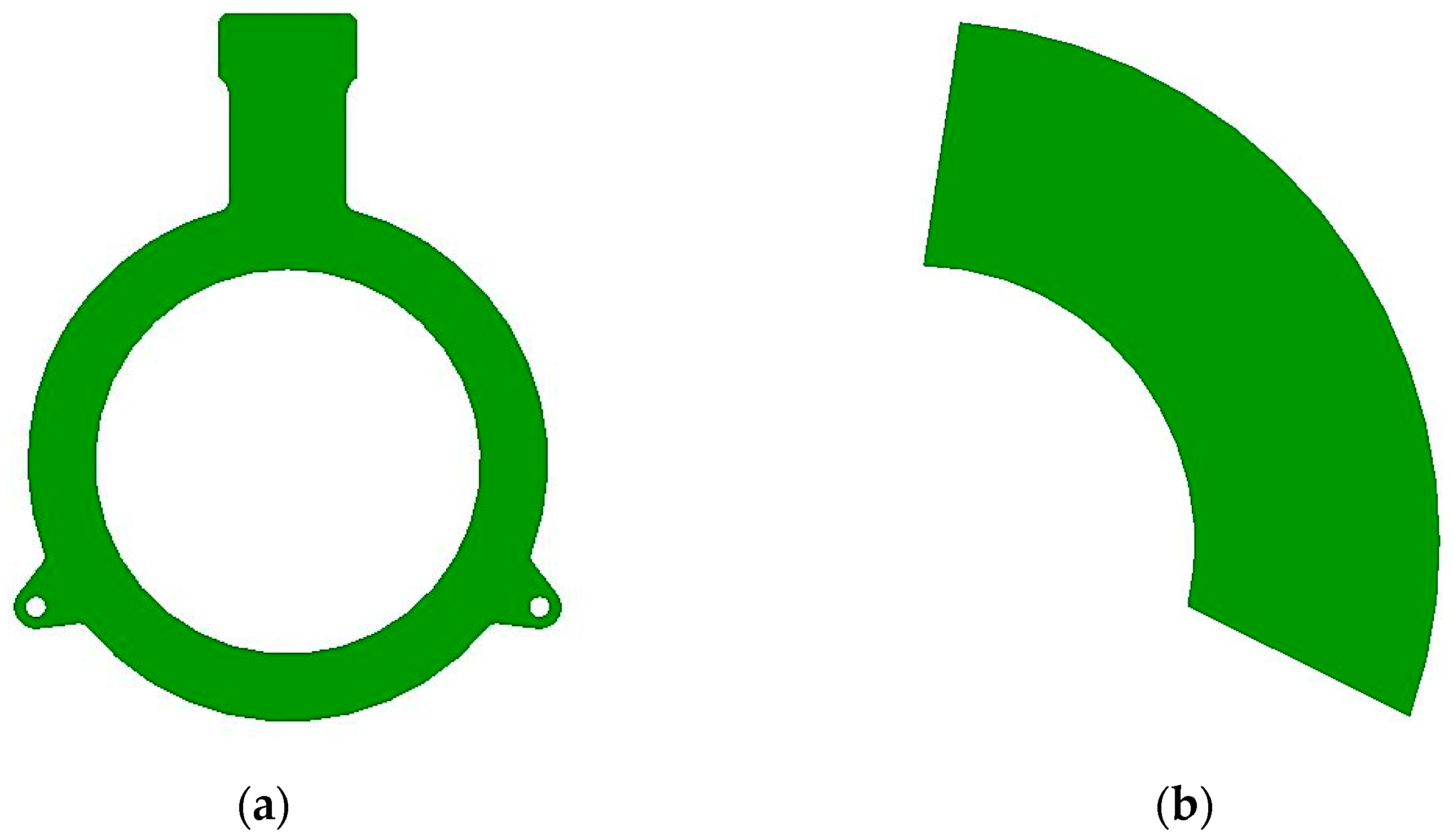
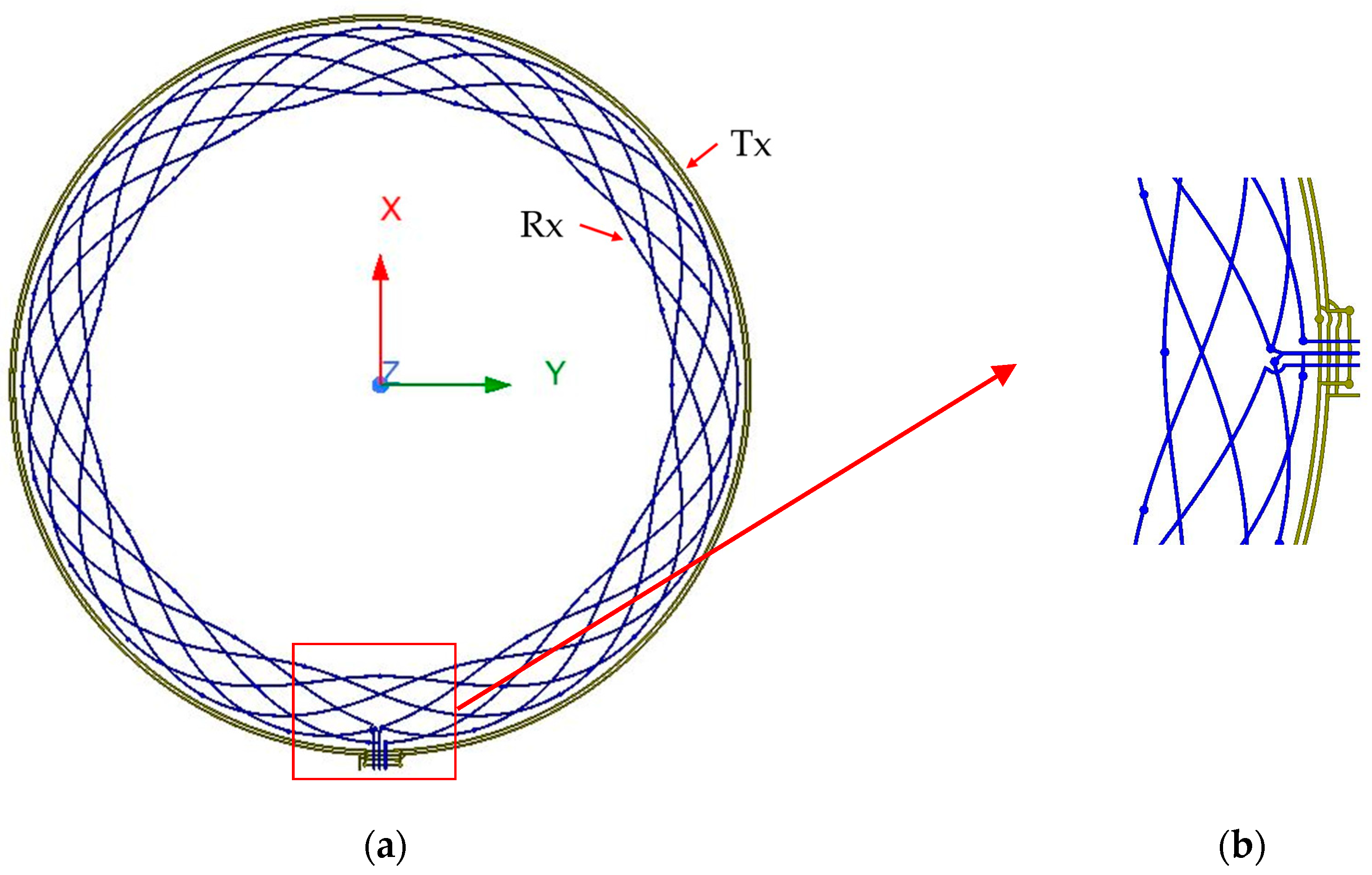
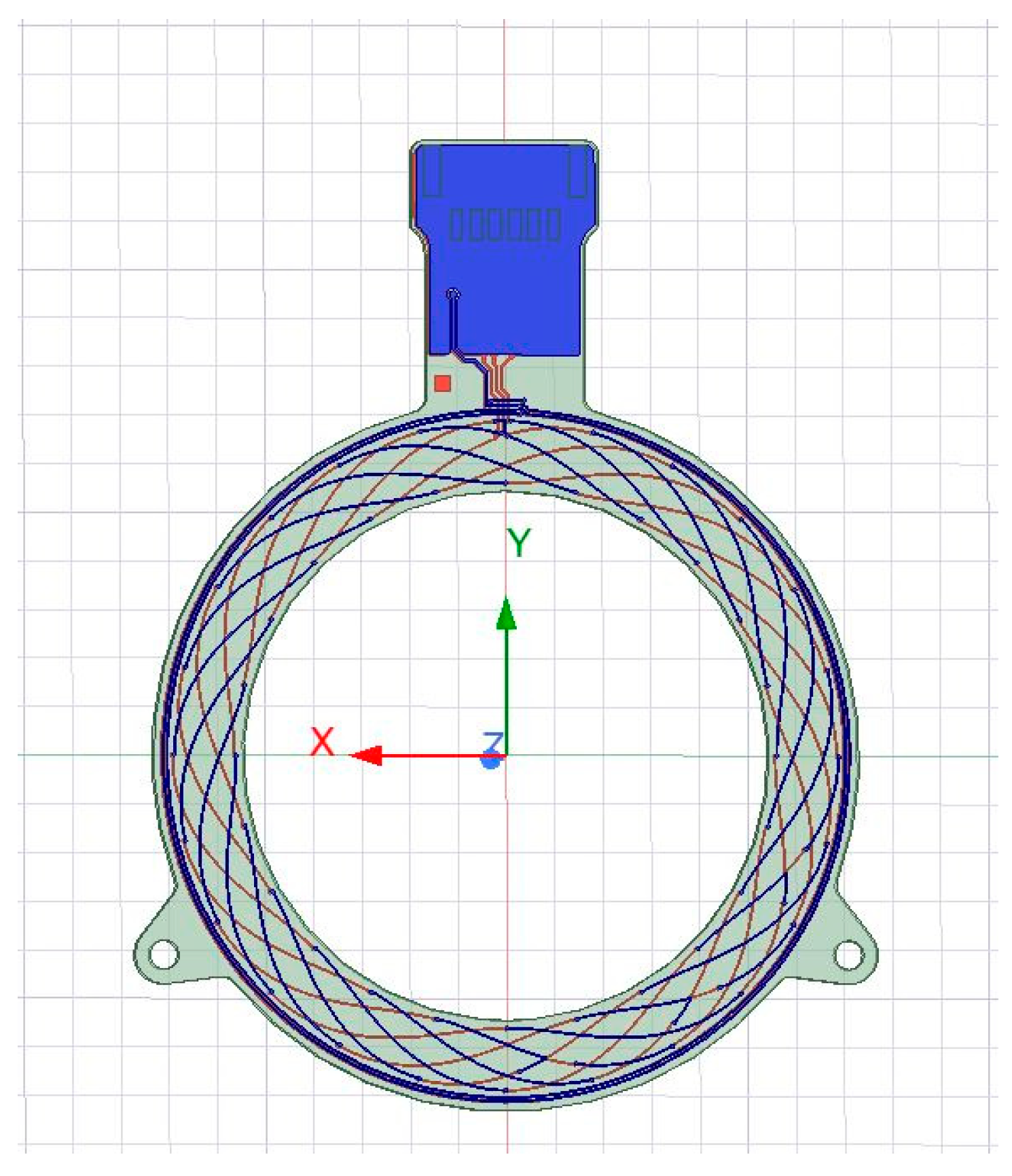
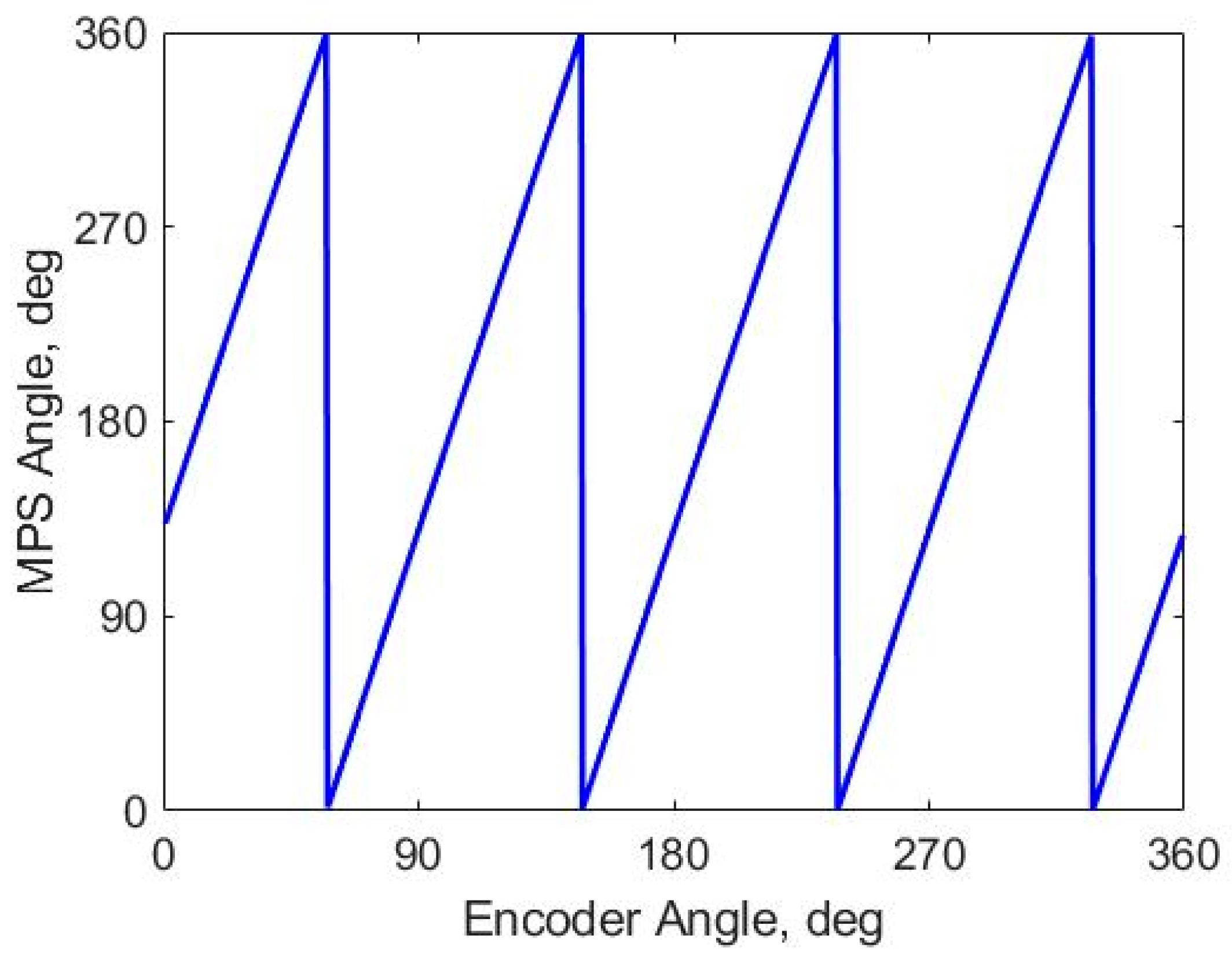
2.1. 2L-PCB Inductive MPS Design
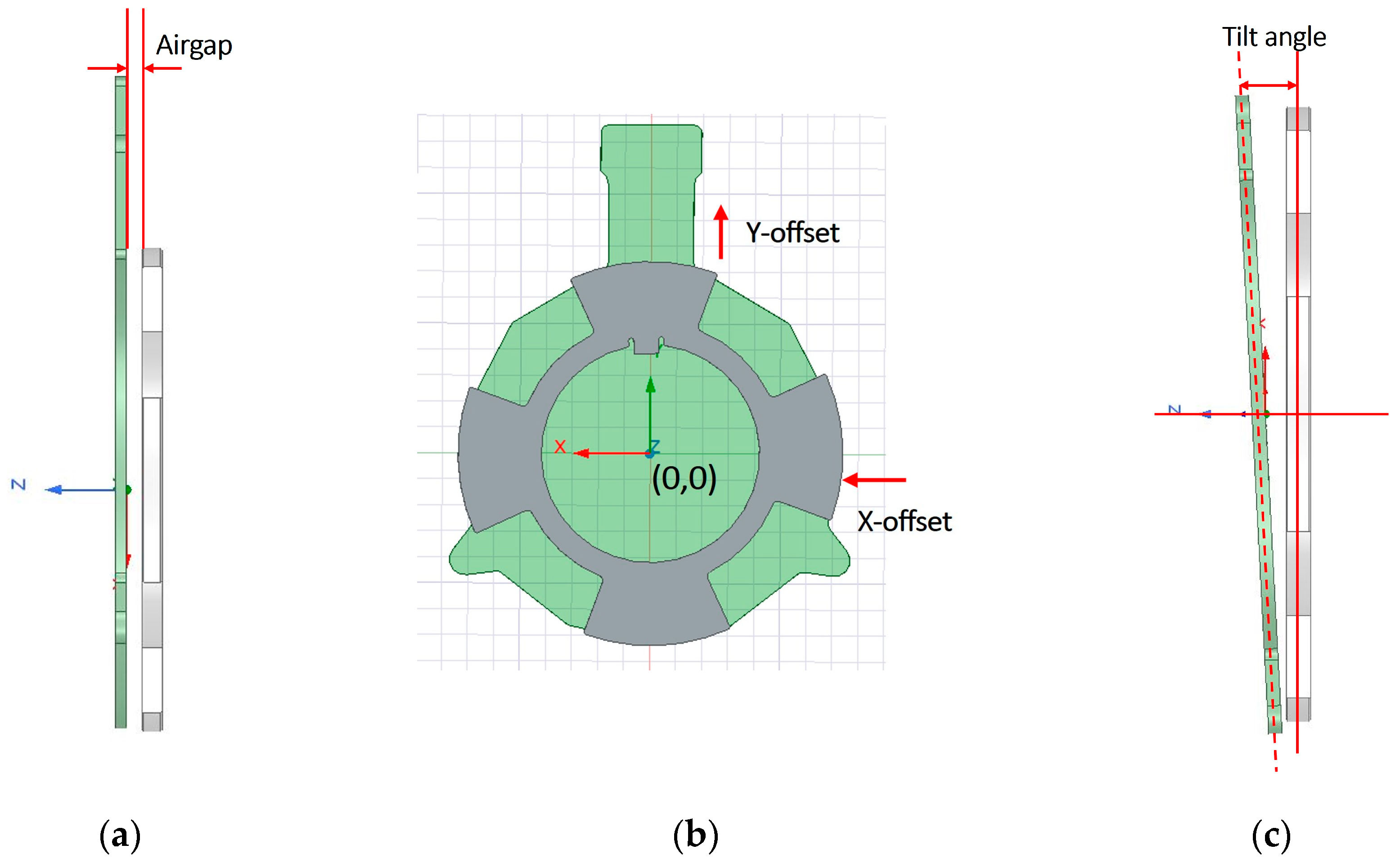
2.2. Design of Experiments
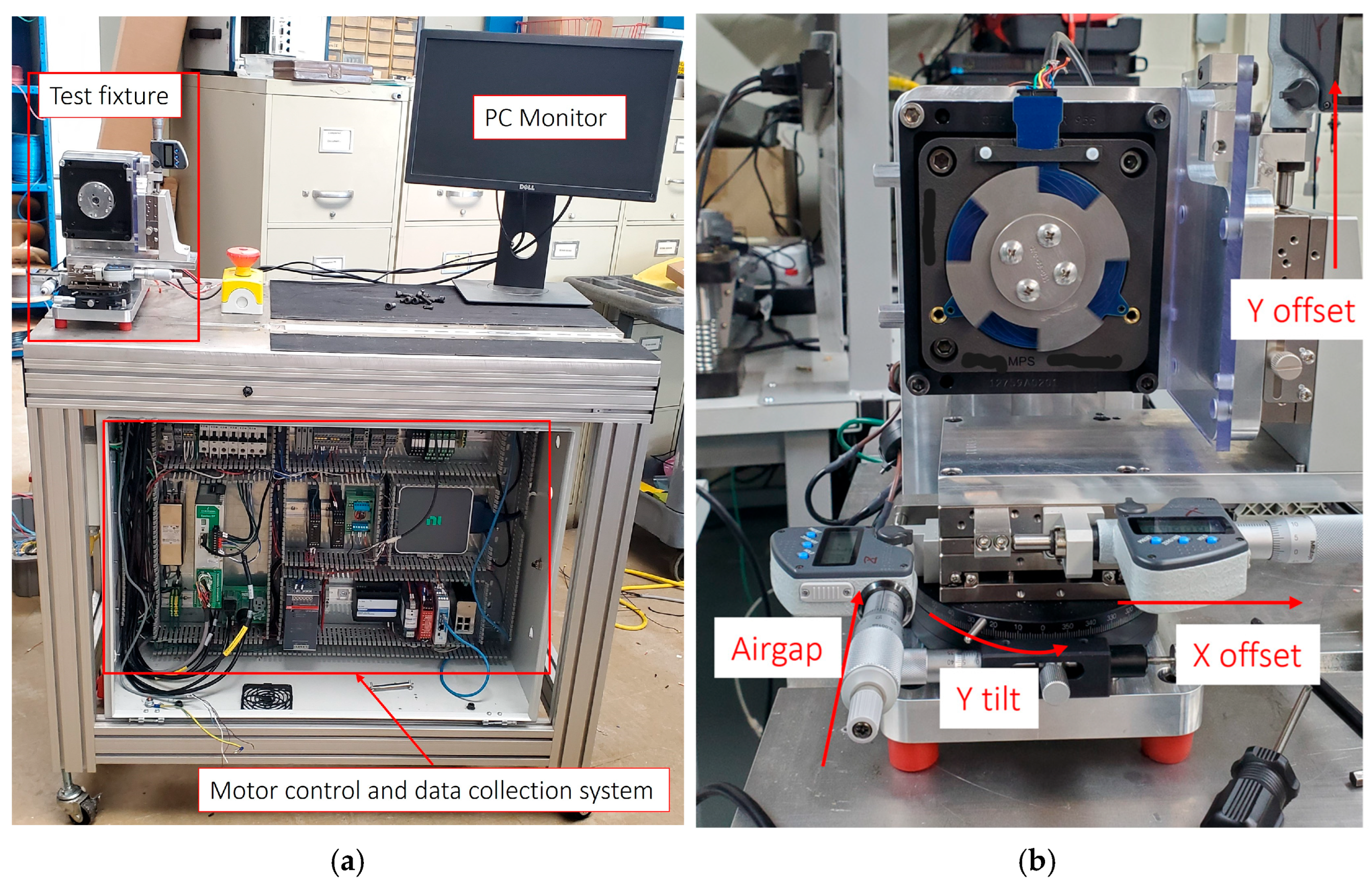
2.3. Experimental Setup
2.4. Methods
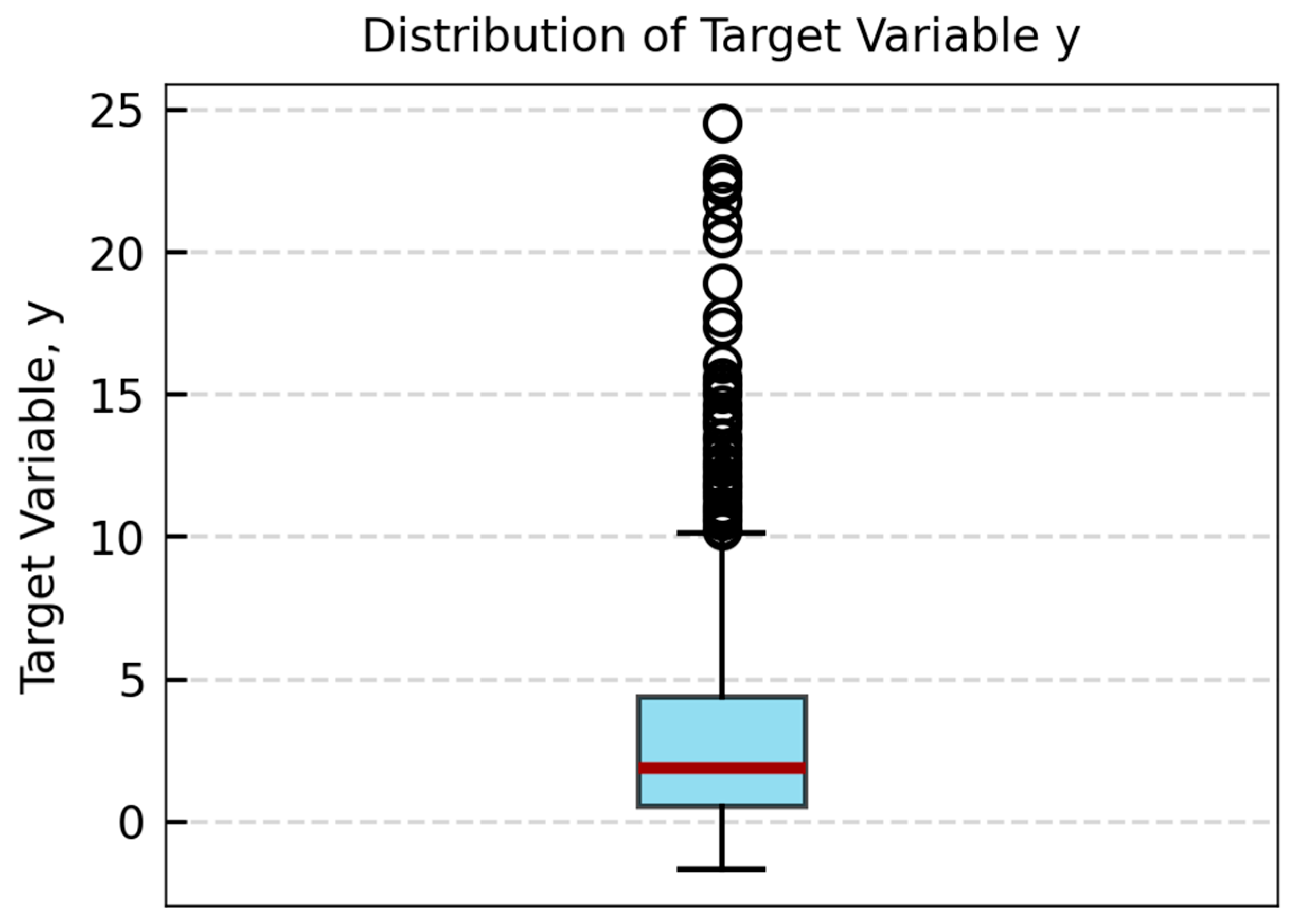
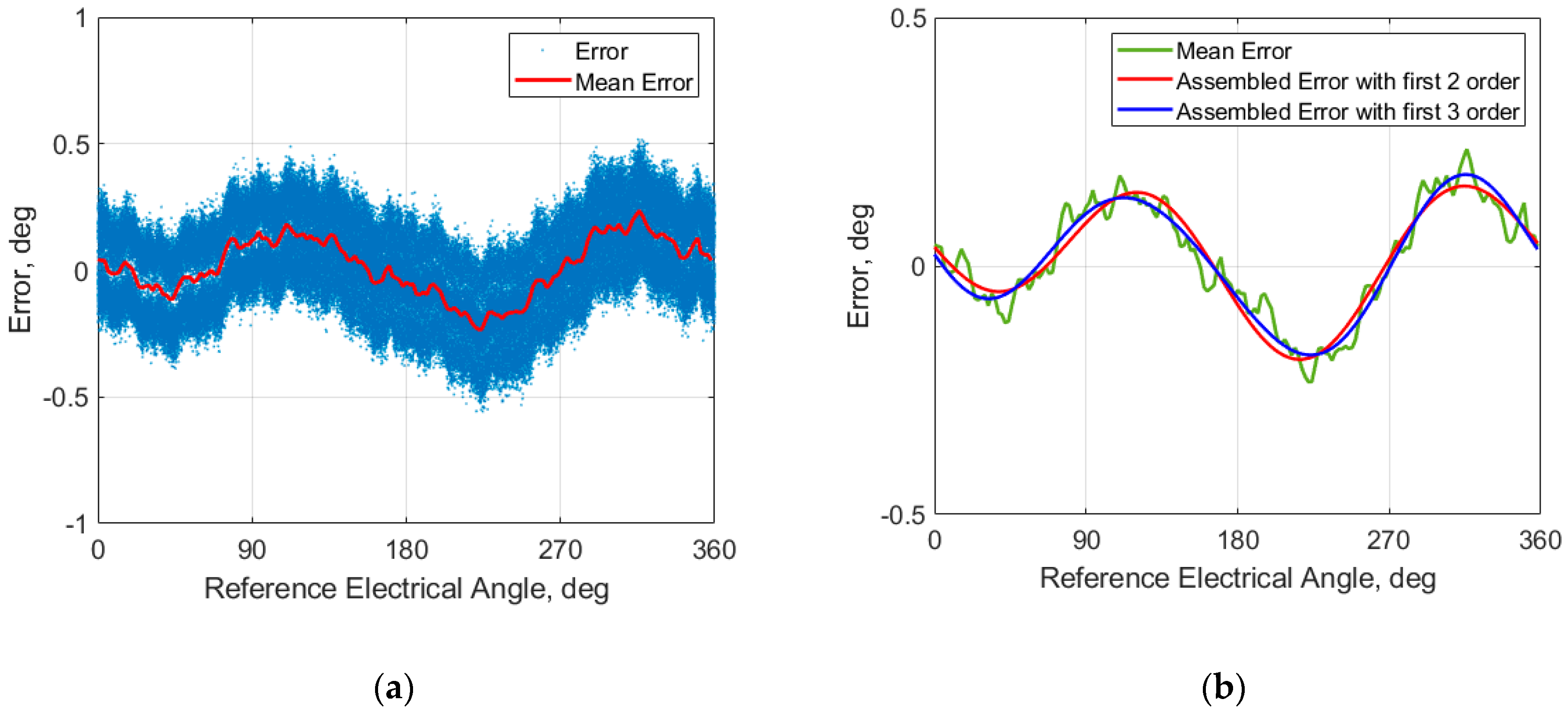
2.4.1. Definition of Sensor Accuracy and Target Variable
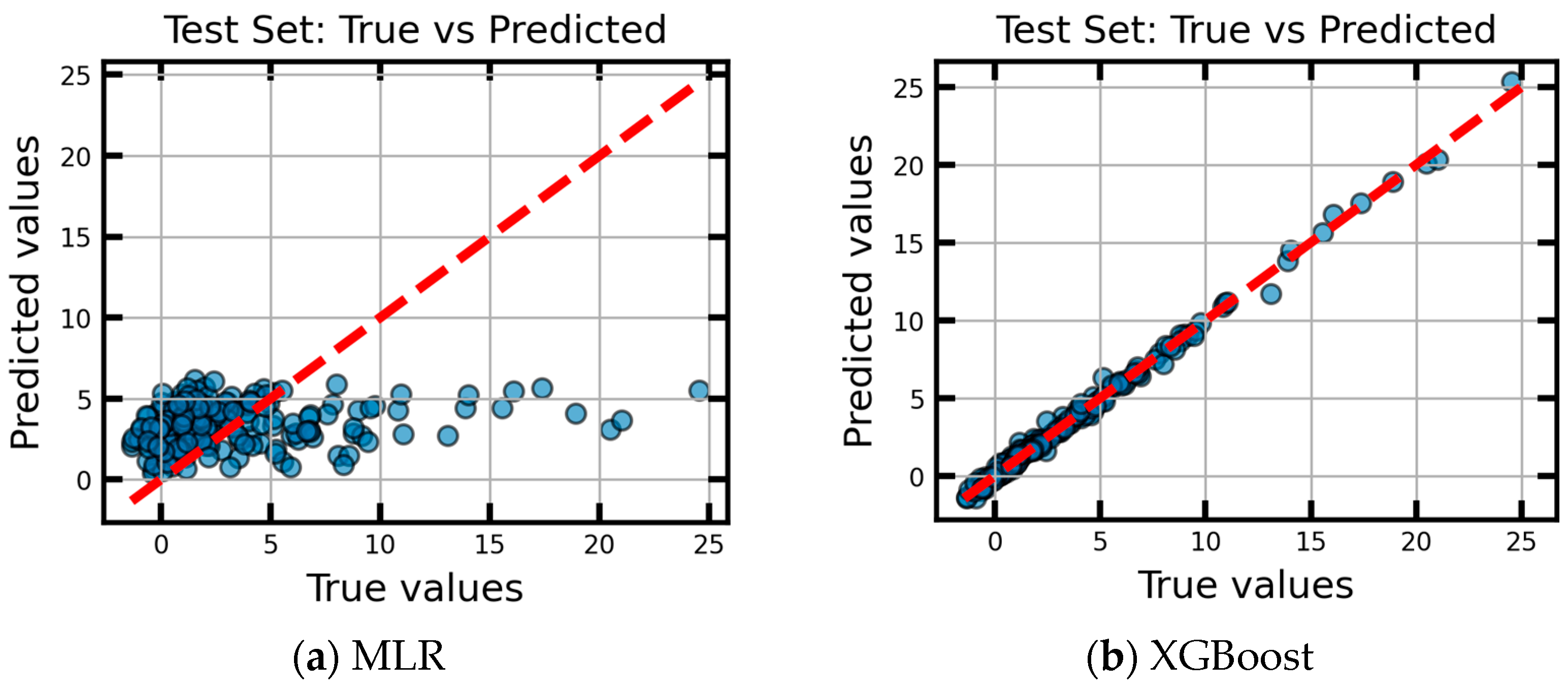
2.4.2. Extreme Gradient Boosting (XGBoost)
- Cross-validation optimization: For each Optuna trial, a 5-fold cross-validation was performed to compute the mean RMSE, which served as the objective metric to minimize.
- Model selection and retraining: After 6000 trials, the best hyperparameters were identified and used to retrain the final model on the full training dataset.
- Final evaluation: The optimized model was then applied to the independent 30% test dataset to generate predicted accuracy values.
2.4.3. Baseline Model: Multiple Linear Regression (MLR)
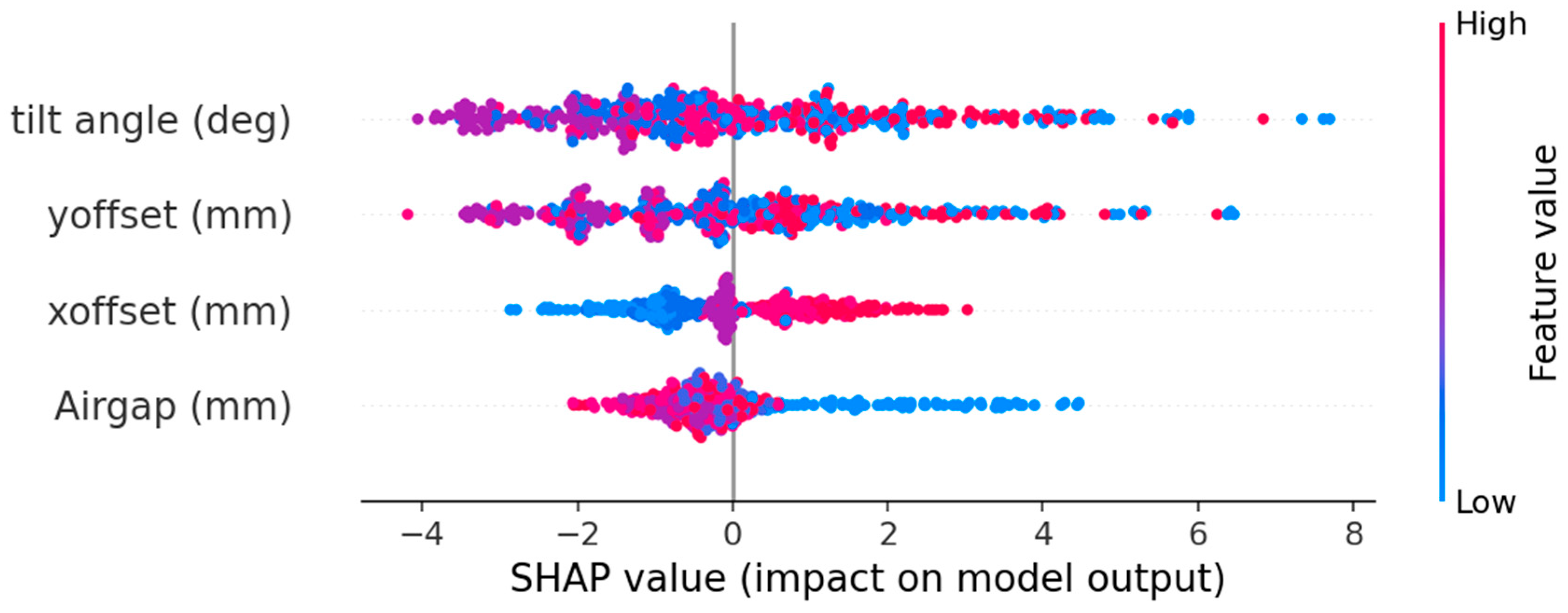
2.4.4. SHAP
3. Results and Discussion
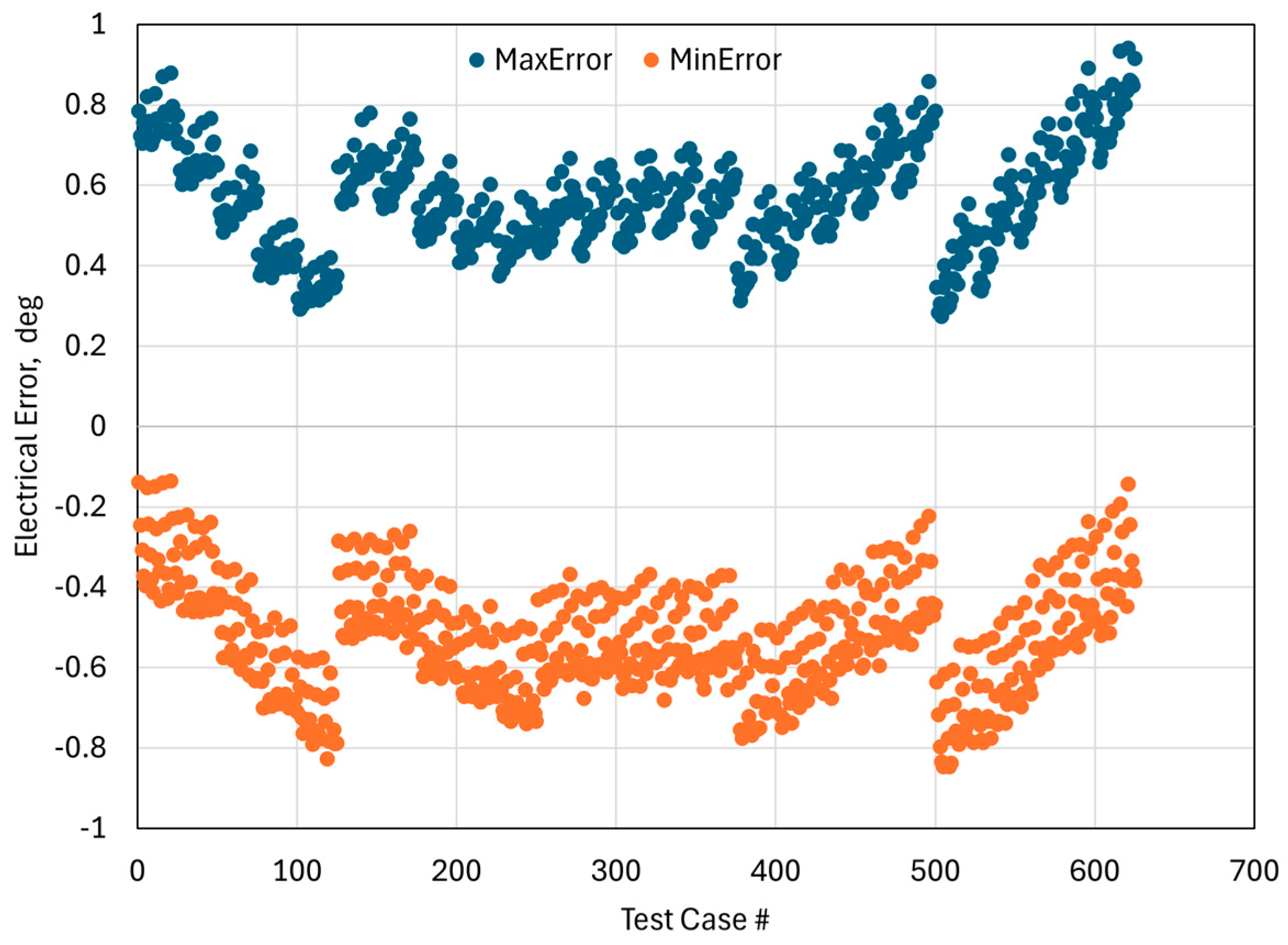
3.1. Accuracy and Robustness over the Tolerance Box
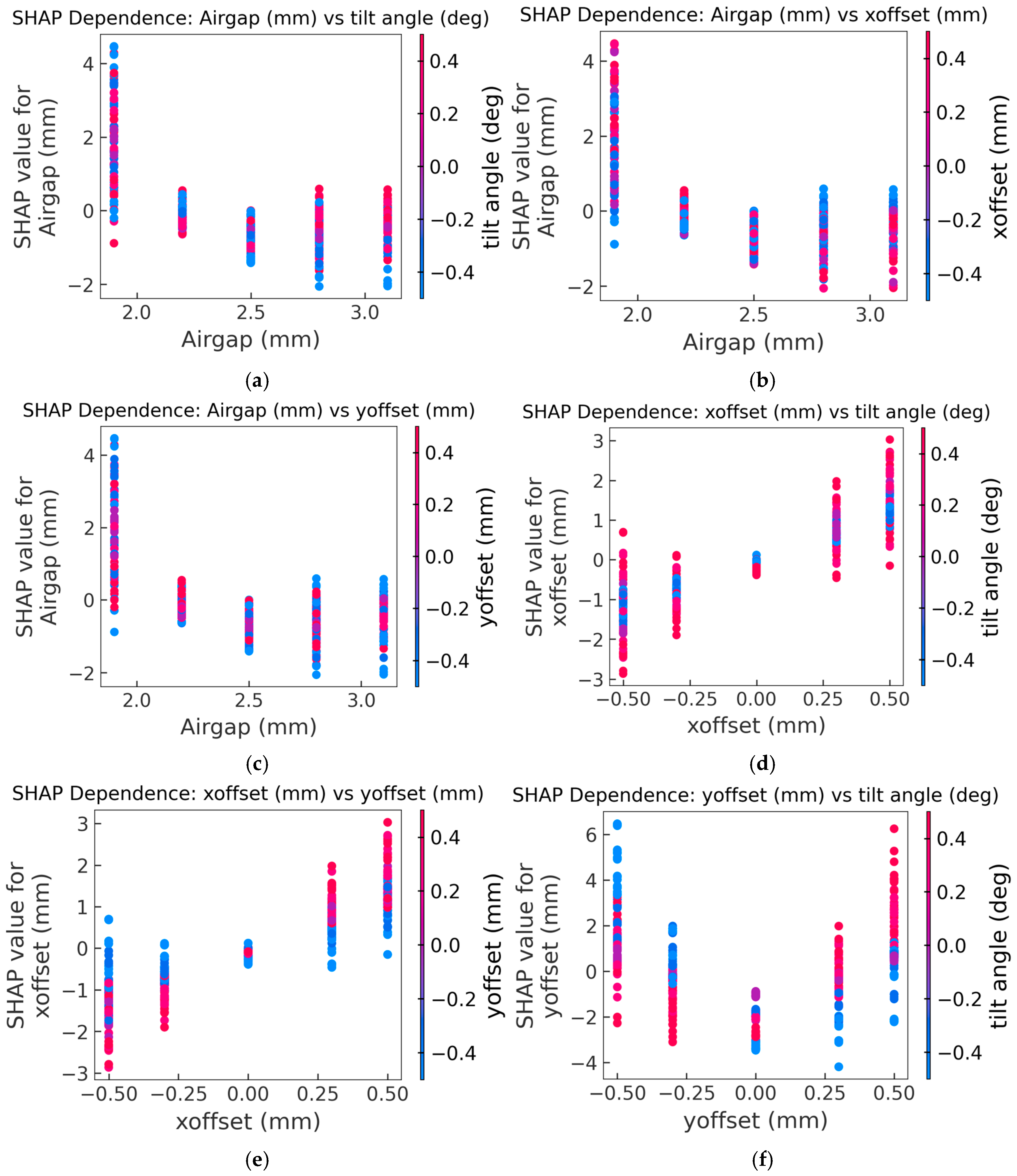
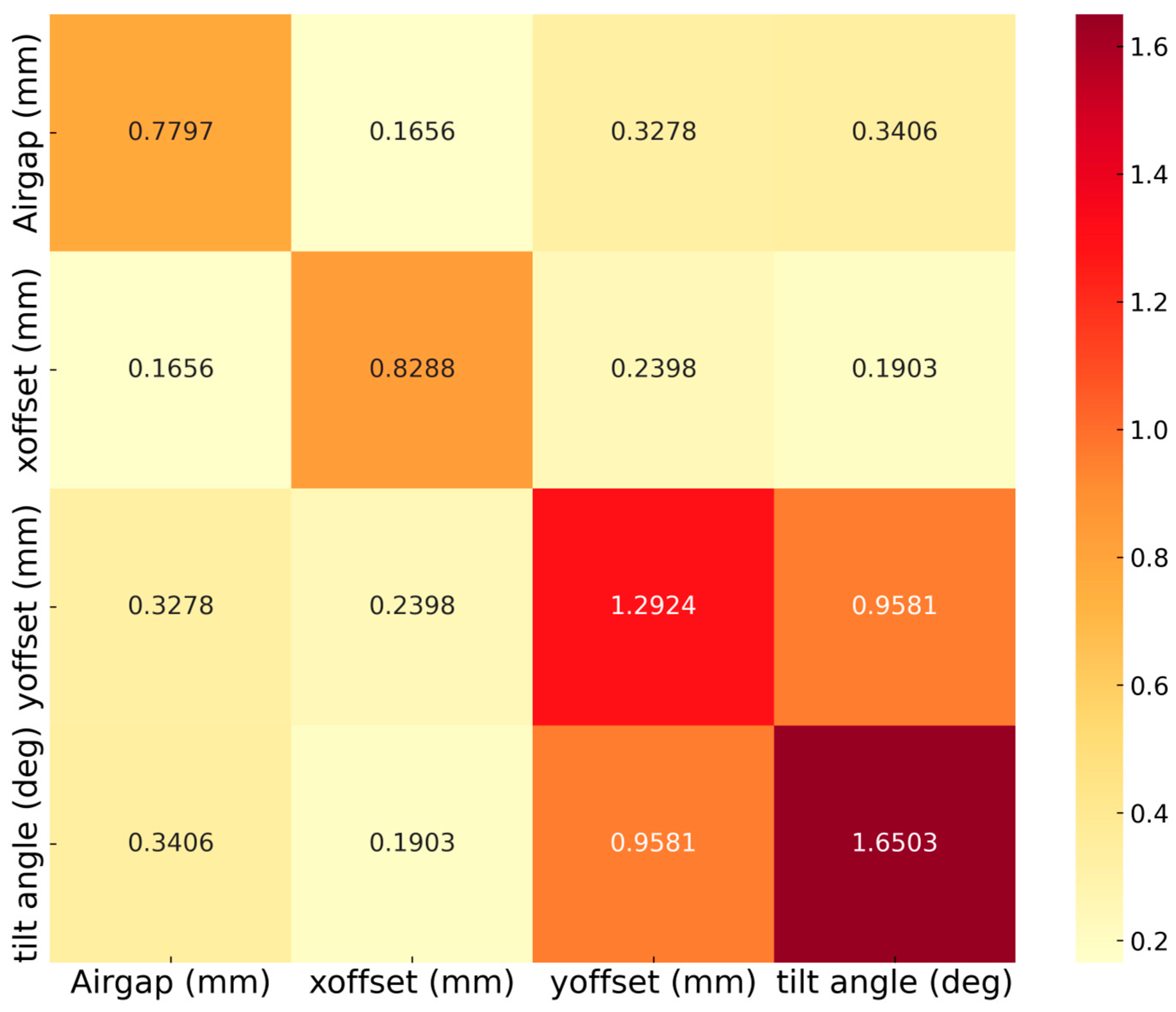
3.2. XGBoost and SHAP
3.3. Practical Implications and Generalizability of the Proposed Workflow
4. Conclusions
Supplementary Materials
Author Contributions
Funding
Institutional Review Board Statement
Informed Consent Statement
Data Availability Statement
Conflicts of Interest
Glossary
| Symbol | Unit | Definition |
| deg | Calculated electrical angle from inductive MPS | |
| deg | Reference electrical angle converted from encoder angle | |
| deg | Electrical angle offset between MPS and encoder | |
| deg | Encoder measurements | |
| - | Number of pole-pairs | |
| U, V, W | mV | Rx coils induced voltage |
| mV | Harmonic coefficients of the 3 Rx signals | |
| mV | DC offset | |
| deg | Magnitude of nth harmonics | |
| deg | DC term in Fourier Error decomposition | |
| - | Regression coefficient | |
| - | Installation tolerance | |
| - | SHAP value | |
| y | - | Target variable |
References
- U.S. DRIVE Partnership. Electric Technical Team Roadmap; U.S. Department of Energy, 2024. Available online: https://www.energy.gov/sites/default/files/2024-06/EDTT_Roadmap_2023_JOG_Consensus_compliant.pdf (accessed on 17 October 2025).
- Mohammadi, A.; Mirimani, S.M. Design of a Novel PM-Assisted Synchronous Reluctance Motor Topology Using V-Shape Permanent Magnets for Improvement of Torque Characteristic. IEEE Trans. Energy Convers. 2022, 37, 424–432. [Google Scholar] [CrossRef]
- Xiang, Z.; Zhou, Y.; Zhu, X.; Quan, L.; Fan, D.; Liu, Q. Research on Characteristic Airgap Harmonics of a Double-Rotor Flux-Modulated PM Motor Based on Harmonic Dimensionality Reduction. IEEE Trans. Transp. Electrific. 2024, 10, 5750–5761. [Google Scholar] [CrossRef]
- Xiang, Z.; Wei, J.; Zhu, X. Torque Ripple Suppression of a PM Vernier Machine From Perspective of Time and Space Harmonic Magnetic Field. IEEE Trans. Ind. Electron. 2024, 71, 10150–10161. [Google Scholar] [CrossRef]
- Datlinger, C.; Hirz, M. Benchmark of Rotor Position Sensor Technologies for Application in Automotive Electric Drive Trains. Electronics 2020, 9, 1063. [Google Scholar] [CrossRef]
- Datlinger, C.; Hirz, M. Evaluation of signal processing effects on rotor position sensor systems for electric traction motors. In Proceedings of the 15th EAEC European Automotive Congress 2017, Madrid, Spain, 3–5 October 2017. [Google Scholar]
- Li, Y.; Wu, H.; Xu, X.; Sun, X.; Zhao, J. Rotor Position Estimation Approaches for Sensorless Control of Permanent Magnet Traction Motor in Electric Vehicles: A Review. World Electr. Veh. J. 2021, 12, 9. [Google Scholar] [CrossRef]
- De Klerk, M.L.; Saha, A.K. A Comprehensive Review of Advanced Traction Motor Control Techniques Suitable for Electric Vehicle Applications. IEEE Access 2021, 9, 125080–125108. [Google Scholar] [CrossRef]
- Murray, A.; Hare, B.; Hirao, A. Resolver position sensing system with integrated fault detection for automotive applications. In Proceedings of the First IEEE International Conference on Sensors—Sensors 2002, Orlando, FL, USA, 12–14 June 2002; pp. 864–869. [Google Scholar] [CrossRef]
- Leibovich, G.; Senanian, S. Development of Variable Reluctance Resolver for Position Feedback. In Proceedings of the 41st Aerospace Mechanisms Symposium, Pasadena, CA, USA, 16–18 May 2012. [Google Scholar]
- Hobein, D.; Dorißen, T.; Dürkopp, K. Progress in Automotive Position Sensors and Introduction of the Hella Inductive Position Sensor; SAE Technical Paper 2004-01-1115; SAE International: Warrendale, PA, USA, 2004. [Google Scholar] [CrossRef]
- Brajon, B.; Lugani, L.; Close, G. Hybrid Magnetic–Inductive Angular Sensor with 360 Range and Stray-Field Immunity. Sensors 2022, 22, 2153. [Google Scholar] [CrossRef] [PubMed]
- Lugani, L.; Akermi, Y.; Laval, P.; Duisters, A. High Speed Inductive Position Sensor for E-Machines; Melexis: Ypres, Belgium, 2021; White Paper. [Google Scholar]
- Kuntz, S.; Gerlach, G.; Fella, S. Inductive Position Sensors Based on Coupling of Coils on Printed Circuit Boards for Demanding Automotive Applications. arXiv 2025, arXiv:2503.14627v1. [Google Scholar] [CrossRef]
- Shao, L. Automotive Inductive Position Sensor. Ph.D. Thesis, Western University, London, ON, Canada, 2017. Available online: https://ir.lib.uwo.ca/etd/4569 (accessed on 5 May 2017).
- Kuntz, S.; Gerber, D.; Gerlach, G.; Fella, S. Design and Analysis of Receiver Coils with Multiple In-Series Windings for Inductive Eddy Current Angle Position Sensors Based on Coupling of Coils on Printed Circuit Boards. Sensors 2024, 24, 4880. [Google Scholar] [CrossRef] [PubMed]
- Hoxha, A.; Passarotto, M.; Qama, G.; Specogna, R. Design Optimization of PCB-Based Rotary-Inductive Position Sensors. Sensors 2022, 22, 4683. [Google Scholar] [CrossRef]
- Jain, K.S. Technical Review: The Rise of Machine Learning for Sensor Design. J. Comput. Sci. Technol. Stud. 2025, 7, 1036–1044. [Google Scholar] [CrossRef]
- Taştan, M. Machine Learning–Based Calibration and Performance Evaluation of Low-Cost Internet of Things Air Quality Sensors. Sensors 2025, 25, 3183. [Google Scholar] [CrossRef]
- Liu, C.; Zhao, C.; Wang, Y.; Wang, H. Machine-Learning-Based Calibration of Temperature Sensors. Sensors 2023, 23, 7347. [Google Scholar] [CrossRef]
- Pietrenko-Dabrowska, A.; Koziel, S.; Wojcikowski, M.; Pankiewicz, B.; Rydosz, A.; Cao, T.-V.; Wojtkiewicz, K. Cost-Efficient Measurement Platform and Machine-Learning-Based Sensor Calibration for Precise NO2 Pollution Monitoring. Measurement 2024, 237, 115168. [Google Scholar] [CrossRef]
- Payette, J.; Vaussenat, F.; Cloutier, S. Deep learning framework for sensor array precision and accuracy enhancement. Sci. Rep. 2023, 13, 11237. [Google Scholar] [CrossRef]
- Nikraftar, Z.; Parizi, E.; Saber, M.; Boueshagh, M.; Tavakoli, M.; Esmaeili Mahmoudabadi, A.; Ekradi, M.H.; Mbuvha, R.; Hosseini, S.M. An Interpretable Machine Learning Framework for Unraveling the Dynamics of Surface Soil Moisture Drivers. Remote Sens. 2025, 17, 2505. [Google Scholar] [CrossRef]
- Han, Q.; Zeng, Y.; Zhang, L.; Wang, C.; Prikaziuk, E.; Niu, Z.; Su, B. Global long term daily 1 km surface soil moisture dataset with physics informed machine learning. Sci. Data 2023, 10, 101. [Google Scholar] [CrossRef] [PubMed]
- Hettikankanamage, N.; Shafiabady, N.; Chatteur, F.; Wu, R.M.X.; Ud Din, F.; Zhou, J. eXplainable Artificial Intelligence (XAI): A Systematic Review for Unveiling the Black Box Models and Their Relevance to Biomedical Imaging and Sensing. Sensors 2025, 25, 6649. [Google Scholar] [CrossRef] [PubMed]
- Chen, T.; Guestrin, C. XGBoost: A Scalable Tree Boosting System. In Proceedings of the 22nd ACM SIGKDD International Conference on Knowledge Discovery and Data Mining, San Francisco, CA, USA, 13–17 August 2016. [Google Scholar]
- Lundberg, S.M.; Lee, S.I. A Unified Approach to Interpreting Model Predictions. Adv. Neural Inf. Process. Syst. 2017, 30, 4765–4774. [Google Scholar]
- Lundberg, S.M.; Erion, G.G.; Lee, S.I. Consistent Individualized Feature Attribution for Tree Ensembles. arXiv 2018, arXiv:1802.03888. [Google Scholar]
- Melexis. MLX90510 High-Speed Inductive Position Sensor; Datasheet; Revision 003, Document No. 3901090510; Melexis: Ypres, Belgium, 15 July 2022. [Google Scholar]
- Singh, A.O.K.; Raja, R.; Sebastian, T.; Gebregergis, A. Effect of Position Measurement Delay on the Performance of PMSM Drive. In Proceedings of the 2018 IEEE Energy Conversion Congress and Exposition (ECCE), Portland, OR, USA, 23–27 September 2018; pp. 4622–4627. [Google Scholar] [CrossRef]
- Pramod, P. Position Sensing Errors in Synchronous Motor Drives. arXiv 2023, arXiv:2310.00977. [Google Scholar] [CrossRef]
- Nuyts, L.; Davis, J. The When and How of Target Variable Transformations. In Advances in Intelligent Data Analysis XXIII; Krempl, G., Puolamäki, K., Miliou, I., Eds.; Lecture Notes in Computer Science; Springer: Cham, Switzerland, 2025; Volume 15669. [Google Scholar] [CrossRef]
- Friedman, J.H. Greedy Function Approximation: A Gradient Boosting Machine. Ann. Stat. 2001, 29, 1189–1232. [Google Scholar] [CrossRef]
- SHAP. An Introduction to Explainable AI with Shapley Values. Read the Docs. Available online: https://shap.readthedocs.io/en/latest/example_notebooks/overviews/An%20introduction%20to%20explainable%20AI%20with%20Shapley%20values.html (accessed on 7 November 2025).



| Factor | Levels | Motor Speed (RPM) |
|---|---|---|
| Airgap (mm) | [1.9, 2.2, 2.5, 2.8, 3.1] | 2000 |
| X-offset (mm) | [−0.5, −0.3, 0, 0.3, 0.5] | 2000 |
| Y-offset (mm) | [−0.5, −0.3, 0, 0.3, 0.5] | 2000 |
| Tilt θ (deg) | [−0.5, −0.3, 0, 0.3, 0.5] | 2000 |
| Order | (deg) | (rad) |
|---|---|---|
| 0 () | 6.5534 × 10⁻¹⁸ | 0 |
| 1 | 0.0686 | −0.5592 |
| 2 | 0.1350 | 1.8352 |
| 3 | 0.0234 | 2.2289 |
| 4 | 0.0200 | −0.9133 |
| 5 | 0.0032 | −0.4544 |
| 6 | 0.0158 | −1.3024 |
| 7 | 0.0025 | 1.5137 |
| 8 | 0.0020 | −0.1020 |
| 9 | 0.0014 | −0.5425 |
| 10 | 8.7534 × 10⁻⁴ | −3.0656 |
| Metric | MLR (Baseline) | XGBoost |
|---|---|---|
| R2 score | 0.0565 | 0.9951 |
| RMSE | 4.2972 | 0.3105 |
| MAE | 3.1009 | 0.2192 |
Disclaimer/Publisher’s Note: The statements, opinions and data contained in all publications are solely those of the individual author(s) and contributor(s) and not of MDPI and/or the editor(s). MDPI and/or the editor(s) disclaim responsibility for any injury to people or property resulting from any ideas, methods, instructions or products referred to in the content. |
© 2026 by the authors. Licensee MDPI, Basel, Switzerland. This article is an open access article distributed under the terms and conditions of the Creative Commons Attribution (CC BY) license.
Share and Cite
Lin, Q.; Sullivan, D.; Moore, D.; Tong, D. Machine Learning-Driven Sensitivity Analysis for a 2-Layer Printed Circuit Board Inductive Motor Position Sensor. Sensors 2026, 26, 879. https://doi.org/10.3390/s26030879
Lin Q, Sullivan D, Moore D, Tong D. Machine Learning-Driven Sensitivity Analysis for a 2-Layer Printed Circuit Board Inductive Motor Position Sensor. Sensors. 2026; 26(3):879. https://doi.org/10.3390/s26030879
Chicago/Turabian StyleLin, Qinghua, Devin Sullivan, Douglas Moore, and Donald Tong. 2026. "Machine Learning-Driven Sensitivity Analysis for a 2-Layer Printed Circuit Board Inductive Motor Position Sensor" Sensors 26, no. 3: 879. https://doi.org/10.3390/s26030879
APA StyleLin, Q., Sullivan, D., Moore, D., & Tong, D. (2026). Machine Learning-Driven Sensitivity Analysis for a 2-Layer Printed Circuit Board Inductive Motor Position Sensor. Sensors, 26(3), 879. https://doi.org/10.3390/s26030879