1. Introduction
With the rapid proliferation of wireless radio technologies, security in wireless communications has become a critical challenge in both personal and professional domains. Unlike wired communication systems, wireless links inherently lack physical boundaries, allowing any nearby receiver to potentially intercept transmitted signals. Physical-layer security aims to safeguard the radio interface by achieving low probability of interception (LPI) while remaining independent of, yet fully compatible with, upper-layer encryption techniques.
Since the pioneering work of Wyner [
1], the concept of a secrecy rate has widely been utilized to measure secrecy performance and derive a rate bound for secure transmission in the physical layer. Although designs and analyses based on the secrecy rate provide useful insight into the secrecy behavior of a communication system, they entail several practical limitations. Primarily, the secrecy rate is required for the transmitter (Alice) to have perfect or statistical knowledge of the eavesdropper’s (Eve’s) channel state information (CSI). However, this is generally unrealizable in practice since passive Eve cannot cooperate with Alice to perform the channel feedback. In addition, a positive secrecy rate is only achievable with relative signal-to-noise ratio (SNR) advantage at the legitimate receiver (Bob) compared to Eve, which is difficult to guarantee in practice. Moreover, the transmit signal is usually required to follow a Gaussian distribution, which hardly captures the effect of practical modulation and coding schemes. It has been shown that the information leakage to Eve can be driven to zero without the aid of Gaussian codewords, either by transmitting the signals in the orthogonal direction of Eve’s channel via multi-antenna beamforming [
2] or by employing random binning-based secrecy coding schemes [
3,
4]. However, such schemes still demand Eve’s CSI at Alice.
To address this issue, artificial noise (AN) transmission schemes have been actively investigated in recent years [
5,
6]. Unlike the aforementioned approaches, the primary objective of AN is to degrade the detection capability of potential Eves with the absence of the Alice-to-Eve link CSI, while minimizing its impact on Bob’s reception, rather than to completely eliminate the information leakage to Eve. One way to implement such a scheme is to transmit AN in the orthogonal direction of Bob’s channel using extra degrees of freedom in the transmit antenna dimension and thereby degrade Eve’s received SNR while allowing Bob to effectively extract information.
Since orthogonal AN was first theoretically established by Goel and Negi [
7], a variety of AN methods have been developed in the literature. For example, the authors in [
8,
9] proposed non-orthogonal AN techniques that can further interfere with Eve by sacrificing Bob’s communication quality, thereby increasing the secrecy rate. However, such a scheme requires Alice to know the CSI of Eve. In [
10,
11], the authors proposed the constructive AN schemes that can be designed at a symbol-rate to be constructive to Bob while being destructive to Eve. The AN-aided on–off transmission scheme was developed in [
12] considering the limited training and feedback overhead. In [
13], the authors addressed data carrying AN, in which encrypted message symbols with pre-shared secret keys act as interference to the unintended users like Eve. From Eve’s point of view, the artificial noise elimination (ANE) schemes have also been actively investigated to counteract AN with and without knowing the Alice-to-Bob link CSI [
14,
15,
16,
17]. The previous studies have shown that Eve with a sufficiently large antenna array and adequate channel knowledge can significantly suppress the impact of AN.
In the meantime, there has been growing interest in the artificial fast fading (AFF) designs as a countermeasure against Eve’s advanced ANE techniques. In the AFF strategy, Alice basically transmits no downlink training to prevent Eve from estimating its own channel and noise distribution, which are essential knowledge for coherent detection, whereas Alice obtains the Alice-to-Bob link CSI through the uplink training from Bob. In this situation, a primary goal of AFF is to effectively shorten the coherence time of Eve’s channels in order to invalidate Eve’s non-coherent blind estimation schemes. To this end, one can design a random precoder which deliberately enhances fluctuation of Eve’s channel while making Bob’s channel deterministic over a channel coherence duration by exploiting the excess degrees of freedom (DoFs) at Alice. Since AFF was first developed in multiple-input single-output (MISO) wiretap channels [
18], it has been extended to multi-carrier [
19], MIMO [
20], and multi-user MISO environments [
21]. In addition, the authors in [
22] analyzed the performance of AFF and compared the results with AN in terms of the secrecy rate. It has been further demonstrated in [
23] that even if Eve has full knowledge of CSI of all nodes, information leakage to Eve can be effectively prevented as long as the AFF precoder remains fully random.
Cooperative relaying has also been considered as a promising technique to improve the security performance in the physical layer [
24]. To further enhance security and practical feasibility, cooperative jamming techniques based on AN have widely been investigated in the literature. For example, the authors in [
25] studied orthogonal AN in secure MIMO amplify-and-forward (AF) relaying systems, where both Alice (or the source) and the relay broadcasts multi-dimensional AN while simultaneously transmitting a single data stream to Bob (or the destination). In [
26,
27], it was shown that we can further interfere with Eve by allowing the destination to transmit jamming signals concurrently with the message transmission from Alice. In [
28], various AN-aided transmission schemes were developed in a two-way MIMO AF relaying system with different security–complexity trade-offs. Cooperative jamming is also useful for impairing potential eavesdropping at untrusted relays [
29,
30]. In [
31,
32], the authors exploited cooperative jamming to proactively wiretap the communication between two suspicious users.
In wireless relaying systems, downlink training is inevitable even in time division duplexing operation. This is because no downlink training from Alice would require pre-equalization of the Alice-to-relay channel, which becomes highly inefficient when the number of relay antennas exceeds that of Alice. Also, the uplink training from the relay immediately serves as the downlink training to both Bob and Eve due to the nature of wireless transmission. For these reasons, most existing studies on relay-assisted physical-layer security typically presume the use of downlink training at both Alice and the relay and further assume that Bob and Eve are aware of all CSI associated with themselves. As discussed before, such channel knowledge provides Eve with useful information for performing ANE to mitigate the effect of jamming. Nevertheless, studies addressing ANE issues in the secure MIMO relay systems remain scarce in the literature.
In this paper, we highlight the vulnerability of AN-based jamming to ANE in the relaying systems and propose a novel AFF design as an effective alternative. Specifically, we investigate AFF-based relay transceiver designs for secure spatial multiplexing MIMO AF relaying systems, where Alice transmits multiple data streams simultaneously to Bob with the aid of a trusted multi-antenna relay at the presence of a potential Eve at each hop. The proposed design aims to satisfy two conditions simultaneously, which we refer to as the
LPI conditions. One condition is to maintain Bob’s channel constant over a channel coherence block length, while the remaining condition is to enhance the security by incurring unresolvable randomness in Eve’s channels. To achieve these two conditions simultaneously, first we apply the random AFF precoding scheme [
23] at Alice to secure the first-hop channel. Then, we design the relay transceiver such that the randomness of the first-hop channel is propagated to the relay-to-Eve channel while having no impact on Bob’s detection behavior.
To further enhance the performance of Bob, we shape Bob’s effective channel such that the total mean squared error (MSE) between the signals and its estimates is minimized under the LPI constraints. Such a minimum MSE (MMSE) problem is generally non-convex and thus is difficult to solve. To solve the problem, we first propose a gradient descent (GD)-based iterative optimization method that can provide near optimal performance. To address the high computational complexity of such an iterative algorithm and provide useful insights into the system, we also identify a low-complexity closed-form solution based on a convex-hull relaxation technique. It is worth noting that both AFF designs provide security without requiring disruptive changes to the training structure of the conventional unsecured MMSE relaying systems [
33,
34].
In contrast to conventional secrecy-rate-based frameworks, we adopt a signal processing oriented approach that focuses on the error performance of Bob and Eve. This approach enables the evaluation of the security gain even in the presence of a powerful eavesdropper equipped with a large number of antennas and capable of performing ANE, with which a positive secrecy rate is generally not guaranteed. Note that such an approach provides insights from a practical implementation perspective and is particularly useful in hardware-constrained environments, such as sensor networks and Internet of Things (IoT) networks, where assessing the reliability of data reception at Bob and Eve is often more critical than characterizing the theoretical limits on transmission rates [
35,
36]. In light of this, extensive simulation results are provided in terms of bit error rate (BER) performance of Bob and Eve to demonstrate the effectiveness of the proposed design. Our simulation results effectively capture the influence of pragmatic system parameters, including modulation schemes, detection strategies, and the amount of CSI at the receivers. We also confirm from the results that while conventional AN-based jamming techniques are highly vulnerable to ANE attacks, the proposed AFF scheme is inherently robust against such attacks.
Organization: The remainder of the paper is organized as follows. In
Section 2, we describe the wiretap relay channel model considered in this paper. In
Section 3, we provide preliminary remarks, and in
Section 4, we describe the design outline and propose a closed-form transceiver design.
Section 5 provides the simulation results, and
Section 6 concludes the paper.
Notations: Throughout the paper, normal letters represent scalar quantities, boldface letters indicate vectors, and boldface uppercase letters designate matrices. The superscripts , , and stand for the transpose, conjugate, and conjugate transpose operations. We define ⊗ as a Kronecker product, and and denote the expectation operators taken over all random variables and a specific random variable x, respectively, while and designate sets of real and complex numbers, respectively. Also, we define and as the Frobenius norm and trace of a matrix , respectively, and stands for the block-wise diagonal matrix with sub-matrices on its main diagonal. The identity and zero matrices are denoted by and , respectively. A notation represents that all elements of are the independent and identically distributed (i.i.d.) circularly symmetric complex Gaussian with mean p and variance q. Finally, we denote the n-th realization of a random variable x.
2. System Model
As described in
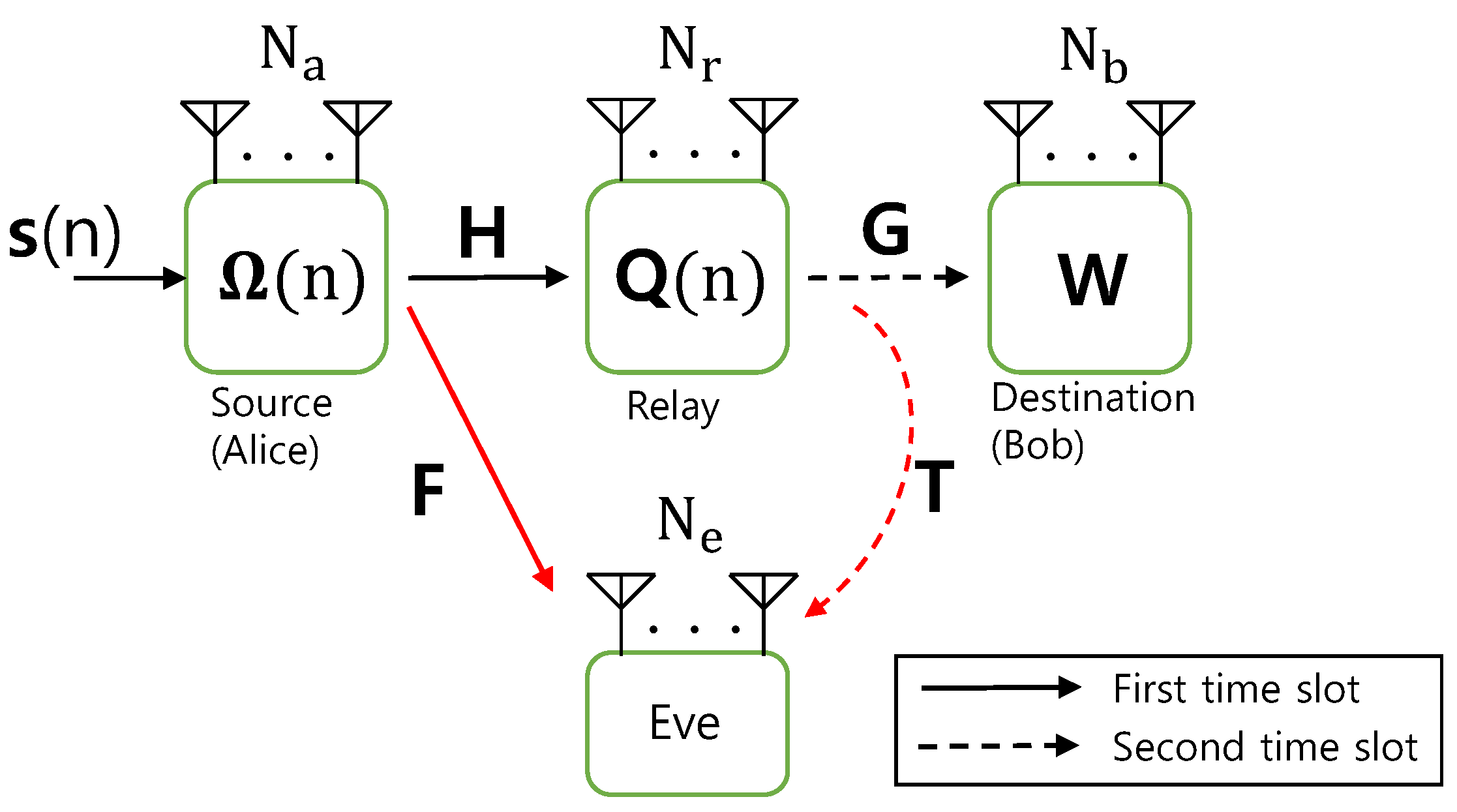
Figure 1, we consider a cooperative relaying system, where a multi-antenna AF relay helps secure communications between the source (Alice) and the destination (Bob) given the existence of a passive eavesdropper. We assume that the direct path between Alice and Bob can be ignored due to large path loss (Extension of our work to the scenarios of non-negligible direct link remains open for future works). However, all the links to Eve cannot be ignored as we have no information on Eve’s location. Alice, the relay, Bob, and Eve are equipped with
,
,
, and
antennas, which implies that in the base-band representation and the Alice-to-relay, Alice-to-Eve, relay-to-Bob, and relay-to-Eve channels are denoted by complex matrices
,
,
, and
, respectively.
We consider a block-wise fading scenario, where all channel coefficients remain invariant over a coherent fading block-length N, after which they may change to new random values. Considering an inter-element spacing of at least half a wavelength among all antennas, all channel matrices and their elements are assumed to be independent of each other. In this paper, we adopt the spatial multiplexing transmission scheme, where Alice transmits data streams at the same time with . However, to avoid the loop interference at the relay, each data transmission at Alice and the relay occurs in two separate time slots.
In this paper, we assume that one time slot equals channel coherence block length
N, but the results can be applied to more general scenarios. In the first time slot, Alice generates an input sequence
, where
represents a message symbol vector in the
n-th symbol interval, which meets
and
for transmit signal covariance
and then transmits a precoded signal
which is constrained by its maximum power budget as
. Here,
denotes a precoding matrix that is customized to the Alice-to-relay channel
, whereas
indicates a random AFF precoder, which is designed to artificially shorten coherence time of Eve’s effective channels. We assume that each coefficient of
varies in every
symbol periods under the condition that
. Then, the received signals at the relay and Eve are expressed by
where
and
designate the noise vectors at the relay and Eve in the
n-th symbol interval, respectively.
In the next time slot, the relay received signal
in (
1) is linearly amplified by a relay transceiver
and then forwarded to Bob with a power constraint
where
signifies the relay transmit signal. Then, the received signals at Bob and Eve in the
n-th symbol interval are, respectively, written as
where
and
designate the noise vectors at Bob and Eve in the second time slot, respectively. Without loss of generality, we assume that all elements of the noise vectors
,
,
, and
are independent and identically distributed complex Gaussian, i.e.,
, throughout the paper. Finally, the estimated signal waveform at Bob is expressed as
with a linear receiver
. In the remainder of this paper, we omit the symbol index
n whenever the corresponding signal is treated as a random variable.
All legitimate nodes are allowed to transmit training (or pilot) signals for channel estimation, as in conventional systems. Accordingly, the relay acquires full CSI of both
and
through uplink and downlink training with Alice and Bob. In contrast, Bob and Eve can access only the CSI of their respective links, i.e.,
and
, since the relay does not forward any information about
to subsequent nodes. Similarly, Alice is assumed to know only the first-hop channel
. As the passive eavesdropper may not transmit any signals, it is reasonable to assume that Eve’s channels
and
are unknown to all legitimate nodes. The amount of CSI at each node is summarized in
Table 1. In addition, a potential eavesdropper, whose location is unknown to the legitimate nodes, is typically away from the legitimate nodes. Thus, we assume that Eve’s eavesdropping channels
and
are statistically uncorrelated with the legitimate link channels
and
, respectively.
In this paper, we consider a trusted and dedicated relay system, in which a secret key-based cryptographic system can facilitate secure communication between Alice and Bob. In contrast, for Bob, which represents a relatively lightweight device such as an IoT node, we assume that secret key sharing is not feasible due to the high overhead required for the key distribution process. In this circumstance, it is difficult for Alice to directly encrypt the messages using a secret key, but such a key can still be exploited to enhance physical-layer security. In this paper, we assume that a shared secret key between Alice and the relay enables each node to locally and securely generate an identical random precoder sequence in advance.
To implement this process, the public-key methods such as the elliptic curve Diffie-Hellman algorithm can provide an assistance to share secret information such as the session key between Alice and the relay as conducted in the current transport layer security protocols. Although the AF relay usually operates at the physical layer for signal forwarding, higher-layer protocols can be implemented for control and management purposes. We can also consider the secret-key agreement methods from wireless measurements between Alice and the relay, which are mainly performed in the physical layer [
13]. Once a secret key has been agreed upon, Alice and the relay can locally produce the same sequence of AFF precoders through a cryptographically secure pseudo-random number generator [
37] by exploiting the shared secret key as a seed number.
4. Proposed AFF-Based Secure MMSE Designs
In this section, we propose an AFF-based secure design for MMSE-based MIMO AF relaying systems as an effective alternative to AN. One of our design goals is to achieve two LPI conditions simultaneously in the two-hop relaying channels, i.e., to generate random fluctuation on both of Eve’s channels while maintaining Bob’s effective channel constant over a coherence block length. Then, we further aim to design transmit and receive filters in each legitimate node in terms of the MMSE criterion under the LPI conditions.
As we adopt the AFF precoder
at Alice, which remains fully random in the first hop link, the remaining problem is to achieve the LPI in the second hop link via well-designed relay transceivers. According to the LPI condition, the randomness of the first-hop channel should propagate to Eve’s channel in the second hop while having no impact on Bob’s channel, which implies that Bob must be able to perform coherent detection using only the second-hop CSI. To address such an issue, we have to generalize the idea in
Section 3.1 to a secured version in terms of AFF.
Before we proceed further, let us evolve some notations in more detail. First, we define the effective channel in the
n-th symbol interval of the first hop link as
. Then, we can evolve the notations as
and
, where
and
denote the
k-th sub-matrix(or -vector) of
and
, respectively. Note that the number of sub-matrices
serves as a system parameter for adjusting the security level, which is chosen among the factors of
in the range of
. As will be shown later, the security level improves as
K increases, whereas the system reduces to the non-secure design [
33] when
. Thus, the proposed work generalizes the previous unsecured design to a secured version. Similarly, we define the
k-th sub-matrices of
and
as
and
, respectively.
4.1. Problem Formulation
To achieve the LPI conditions for both Bob and Eve, the relay transceiver must be configured to vary in accordance with the update period of the AFF precoder. Also, we need to set the relay transceiver to be a block-diagonal form as
where
and
denote the relay transmitter and the receiver with
and
being their
k-th diagonal sub-blocks, respectively. Based on the aforementioned definitions, we can, respectively, rewrite the received signals at Bob and Eve as
Now, we design the relay precoder such that
for an arbitrary matrix
to satisfy the following equations
where
denotes the pseudo inverse of
. Then, one can easily verify that Bob’s received signal in (
11) is alternatively expressed as a multiplication of the precoded second hop channel
, the instantaneous Wiener filter receiver
that equalizes the first hop effective channel
, and the relay received signal
as
where
.
Now, we observe that the proposed design in (
10) with a condition in (
13) enables the propagation of random AFF in
towards Bob’s channel is effectively blocked by the Wiener filter receiver
. In contrast, it is still conveyed to Eve’s channel as the fast faded channel
remains unequalized in Eve’s signal
in () as we have
with probability 1.
To be more specific, let us define
. Then, based on the result in (
14), and following a similar approach to that in Lemma 1, we can formulate the MMSE problem for given the relay transceiver in (
10) as
where the equality (a) is obtained by applying the optimal destination receiver for a given random precoder
as
The optimal receiver in (
16) is prohibited in our system as it requires Bob to have knowledge on the random precoder sequence
as well as the first hop channel
. Nevertheless, we can devise a suboptimal receiver by invoking the high SNR approximation
as
which remains constant over a coherence block length. Note that the approximation
holds in each symbol index
n as we have
where the second and third equalities follow from the well-known Woodbury matrix identity [
40].
It is seen from (
17) that with the proposed design, Bob is still able to estimate the input signal
without being affected by the first hop AFF channel
. However, it is noteworthy that this is not the case for Eve. In the same manner, we can show that the joint MMSE problem in (
15) can be reformulated as
which is a sum of two independent problems with respect to the source and relay precoders
and
, respectively.
For security reasons, the source precoder should be designed so as not to compromise the randomness of the AFF precoder , which implies that remains constant over time while possibly being customized to . There is currently no known analytical solution for this problem. However, with this condition and considering the source power constraint , we can invoke the eigen-beamforming method as an effective source precoder, where denotes the right singular matrix corresponding to the largest singular values of . Such a precoder can be particularly useful when as it prevents power from being wasted on the channel paths having the smallest gains.
In the meantime, as for the design of
, we can formulate an MMSE problem as
where
with
. Note that the constraint of (P-1) follows from the maximum power limit at the relay, i.e.,
.
The problem (P-1) is generally non-convex, and thus it is difficult to find the globally optimal solution. In the subsequent subsections, we propose two distinct approaches to address this problem. The first is a GD-based iterative method that yields a locally optimal solution, while the second is a convex relaxation method which provides an insightful closed-form solution. Note that the GD-based solution can be close to the global optimum with multiple initial points, whereas the closed-form solution exhibits sub-optimal performance with significantly reduced computational complexity.
Without loss of optimality, we can set
, where
denotes a power-normalizing coefficient, which is given by
Then, the problem (P-1) can be reformulated as an unconstrained optimization problem as
where
is defined by
with
.
4.2. GD-Based Optimal Design
Now, we apply a GD algorithm to solve the unconstrained optimization problem (P-2). Using some rules for the differential
and
, we can compute the differential of the MSE
with respect to
as
For a real valued function
, the gradient of
f with respect to a complex matrix
is defined by a partial derivative
. Also, when the differential of
f is given by
, the gradient can be computed as
[
41]. By invoking these rules, the gradient of the MSE
with respect to
can be derived as
Now, we can solve the problem (P-2) using the proposed gradient descent algorithm, which is summarized in Algorithm 1. In this algorithm,
initial points are employed to prevent the optimization process from being stuck in undesirable local minima, and
denotes the tolerance factor for terminating the iteration. We determine the step size
by using the Armijo’s rule, which is shown to provide probable convergence [
42].
| Algorithm 1 Proposed GD algorithm |
for do Initialize for a set of initial points repeat Compute the gradient from ( 20). Determine a step size . Update . until end for Select the best one among the solutions.
|
4.3. Closed-Form Design
Although the aforementioned GD method provides a near optimal solution, the iterative approach may incur excessive computational complexity at the relay. In this subsection, we propose a simple closed-form solution by applying the convex-hull relaxation technique to the feasible domain. The resulting approach achieves significantly lower complexity, comparable to that of the AN-based jamming schemes and thus is practically more meaningful than GD.
To this end, let us first examine the following lemma.
Lemma 2. The consumed power at the relay in (P-1) is bounded below aswhere we have and with denoting the minimum eigenvalue of , and the resulting lower-bound in (21) is a convex function of . Proof. Since
is a positive-definite matrix, we can establish Loewner’s order as
. Then, it simply follows that
The resulting lower-bound is a convex function of
since its Hessian is given by
, which is positive-definite, and thus the proof is concluded. □
The result in Lemma 2 indicates that
in (P-1) can be replaced with
, thereby relaxing the non-convex feasible domain to its nearest convex hull and rendering the problem tractable. However, the resulting solution does not necessarily satisfy the relay transmit power constraint
since such a direct substitution enlarges the feasible region of
compared to the original problem. Therefore, an additional power normalization factor must be applied to the derived solution to ensure compliance with the power constraint. To address this issue, we set
as in the previous subsection, where
serves as a power-normalizing factor as illustrated in (
19). Based on the above arguments, the problem (P-1) is can then be reformulated as
The above problem is now easy to solve as it is reducible to a simple scalar convex optimization problem. To see this, let us define the eigenvalue decomposition (ED) , where and represent a unitary eigenvector matrix of and a diagonal matrix with non-zero eigenvalues on its main diagonal with a descending order, respectively. Similarly, we define , where and represent the eigenvector and eigenvalue matrices with non-zero eigenvalues with a descending order, respectively.
Then, one can easily verify that the optimal solution of (P-3) diagonalizes both the objective and constraint functions simultaneously [
33], which gives rise to a solution
where
and
denote a unitary beamforming matrix composed of the first
columns of
and a diagonal power allocation matrix with its
i-th element being denoted by
, respectively. Thus, the remainder is a scalar optimization problem of
, which is easily solved through the Karush–Kuhn–Tucker (KKT) conditions as
Here,
represents the Lagrange multiplier that can be chosen to satisfy the constraint in problem (P-3) with equality. Finally, for given
, we apply
in order to adjust the relay transmit power to its maximum value
. Finally, we attain a complete solution for the relay transceiver in (
10) as
4.4. Detection Process at Bob
First of all, Bob can readily estimate the desired effective channel
by exploring the information of the second-hop channel
. Then, Bob applies the approximated receiver in (
17) to the received signal
and detects the messages through a simple symbol-by-symbol distance-based metric
without being affected by the random fluctuation of the first-hop effective channel
. Here,
and
denote the
i-th element of
and
, respectively, and
represents a set of modulation symbols.
4.5. Detection Process at Eve
By combining the received signals over the two time slots, Eve effectively obtains
where we have
Also, as in the case of AN, we assume that Eve can accurately estimate its ENC. Then, we apply the MCA technique to
in order to mitigate the effect of possible noise and interference terms as
where
with
being obtained from the estimated ENC as in (
8).
It is easily inferred from (
25) that the proposed AFF design is inherently robust to ANE attacks because the jamming noise is multiplied to the information bearing signals rather than being added as interference. It is also noteworthy that even if the CSI of the wiretap channels
and
is known to Eve, Eve is still impaired by the absence of knowledge regarding the random precoder sequence
as well as the legitimate link CSI
and
. In this situation, the best strategy available at Eve is to adopt the blind estimation schemes. Unlike the case of AN, however, the random precoder
varying over short intervals will continuously hinder Eve’s blind estimation even after the MCA is applied. In particular, if
changes in every symbol time, i.e.,
, Eve’s error rate can be non-negligibly high, although it may increase the short-term computational complexity at the relay.
In terms of maximum likelihood (ML), the blind estimation is performed as [
43,
44]
which can be found by an exhaustive search over the entire symbol space
with
denoting the number of symbols in
. This incurs high search complexity, but the use of sphere decoding may alleviate the computational burden to some extent [
43]. Such a blind technique works well in the case where Eve’s effective channel
remains constant over a relatively long period of time, e.g.,
. In contrast, as
T decreases, the accuracy of signal detection gradually degrades. Our statement so far will be demonstrated in
Section 5 via simulation results.
4.6. Complexity Analysis
In this subsection, we briefly analyze the required computational complexity of the non-secure, AN-based secure, and the proposed AFF-based secure MMSE relaying designs at each node. Note that for fair comparison and practical relevance, the computational complexity of all three techniques is analyzed based on their respective closed-form solutions. In general, a single real-valued addition or multiplication is counted as one floating point operation (flop). As a result, a complex addition and a complex multiplication require 2 and 6 flops, respectively, which implies that the number of multiplications in the complex domain dominates overall complexity.
For simplicity, in this paper, we count each complex multiplication as one flop with any additive and real valued operations being omitted. For operations such as ED and matrix inversion (MI), it is also cumbersome to precisely quantify the exact computational cost. Thus, the associated complexity is characterized in terms of the order of growth and with respect to the matrix dimension, respectively. In addition, some transmit and receive filters need to be updated only once over the channel coherence time. Therefore, the computational complexity can be evaluated from two perspectives, namely, symbol-level short-term and coherence-time-level long-term complexity.
The results of our complexity analysis are summarized in
Table 2. It can be observed that compared with the conventional non-secure and AN-based secure designs, the proposed AFF exhibits a noticeable complexity increase at the relay, particularly from the short-term perspective. A major part of the complexity increase stems from the symbol-level computation of the relay receiver
, including a matrix computation
and a
matrix inversion. However, performing these computations within a symbol duration, which is usually several tens of
s [
45], could be challenging. It is also worth noting that the proposed relay-side receiver assumes perfect synchronization of the random precoders between Alice and the relay.
One notable feature of the proposed AFF scheme is that the source and the relay can locally generate and pre-share a set of the random precoder sequence in advance. In this case, the relay does not need to compute filters at every symbol interval. Instead, all transmit and receive filters to be used over the coherence time can be pre-computed at the beginning of each coherence block. Then, at each symbol time, the relay simply selects and applies the corresponding pre-computed filter. In this manner, the proposed approach can further reduce the short-term complexity to the level of non-secure designs. Such a characteristic is distinguished from existing symbol-level precoding approaches [
36,
46], which requires symbol-level precoder computation depending on the modulated symbols. Meanwhile a rigorous robustness analysis under imperfect or delayed precoding conditions would require explicit modeling of precoder mismatch and synchronization errors. Thus, the development of robust receiver designs that can tolerate such impairments remains an open and meaningful extension of the proposed framework.
5. Simulation Results
In this section, we present numerical simulation results to demonstrate the effectiveness of the proposed AFF designs. For ease of exposition, we set and define throughout the section. We adopted a Rayleigh block fading channel model, where all channel coefficients are generated according to a complex Gaussian distribution for each coherence block, which implies that all inter-node distances are considered to be identical. Further, Eve observes the same signals redundantly over two time slots unlike Bob, which effectively doubles the number of antennas. Thus, the model configures a channel environment that is favorable to Eve rather than Bob.
We consider uncoded transmission from Alice with
in order to isolate the impact of the proposed design on the detection performance. Also, we use the binary phase shift keying (BPSK) modulation scheme with
,
, and
unless stated otherwise. With regard to the AFF precoder, we choose each element of
from the i.i.d. Gaussian distribution such that
, which was shown to minimize the leakage information to Eve [
23]. Here, we set
to meet the design condition
.
In our simulation, it is assumed that Eve attains prior knowledge on the first U symbol vectors, i.e., out of N symbols in in each coherence block. Such an assumption captures a realistic threat model where Eve leverages prior knowledge of the underlying communication protocol or standard. For example, when Eve is aware of the signal field or control channel structures in a data packet, it may be able to infer certain messages such as control information contained within it. Therefore it is important to observe Eve’s detection behavior according to the amount of messages leaked to Eve.
With this prior knowledge, Eve first estimates its ENC by invoking the ML-based ENC estimation process. Further, we consider that Eve is equipped with a sufficiently large number of antennas such that
to perform ANE. Note that it can be numerically verified that in terms of Eve,
and
exhibit the best performance for AN and AFF schemes, respectively. Based on these capabilities, Eve applies MCA to the received signals as in (
9) and (
25) to attenuate the effect of noise. Finally, it attempts to intercept the messages from
N observed signals
through the blind estimation method in (
26). All BER results in this section were obtained by averaging over
Monte Carlo trials and employ a fixed error-count stopping criterion of 1000 observed errors, resulting in consistent confidence interval widths across different scenarios.
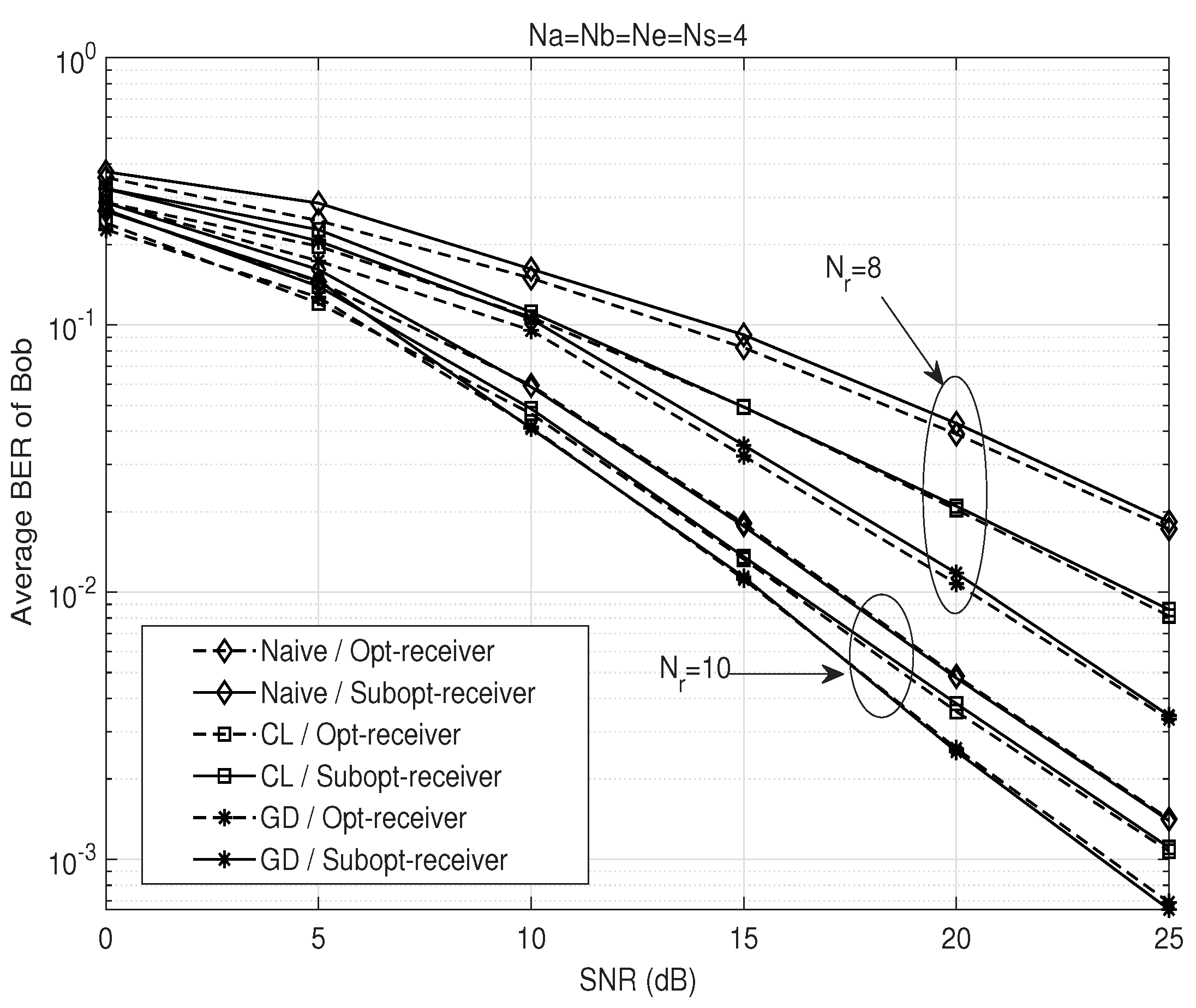
Figure 2 depicts the BER performance of the proposed AFF scheme at Bob in
and
wiretap relay channels. From this figure, we confirm that the proposed optimization schemes such as the GD and closed-form (CL) methods achieve substantial performance gains compared to a naive solution
. While the performance gain gradually diminishes as
increases, a diversity gain is observed for all schemes. It is also demonstrated that over the entire SNR range, the suboptimal receiver in (
17) achieves performance close to the optimal scheme in (
16) despite being independent of the first-hop channel. For this reason, in the following, we consider the CL with a suboptimal receiver as a representative AFF scheme, which is more practical than the optimal designs and achieves a performance gain over the naive scheme.
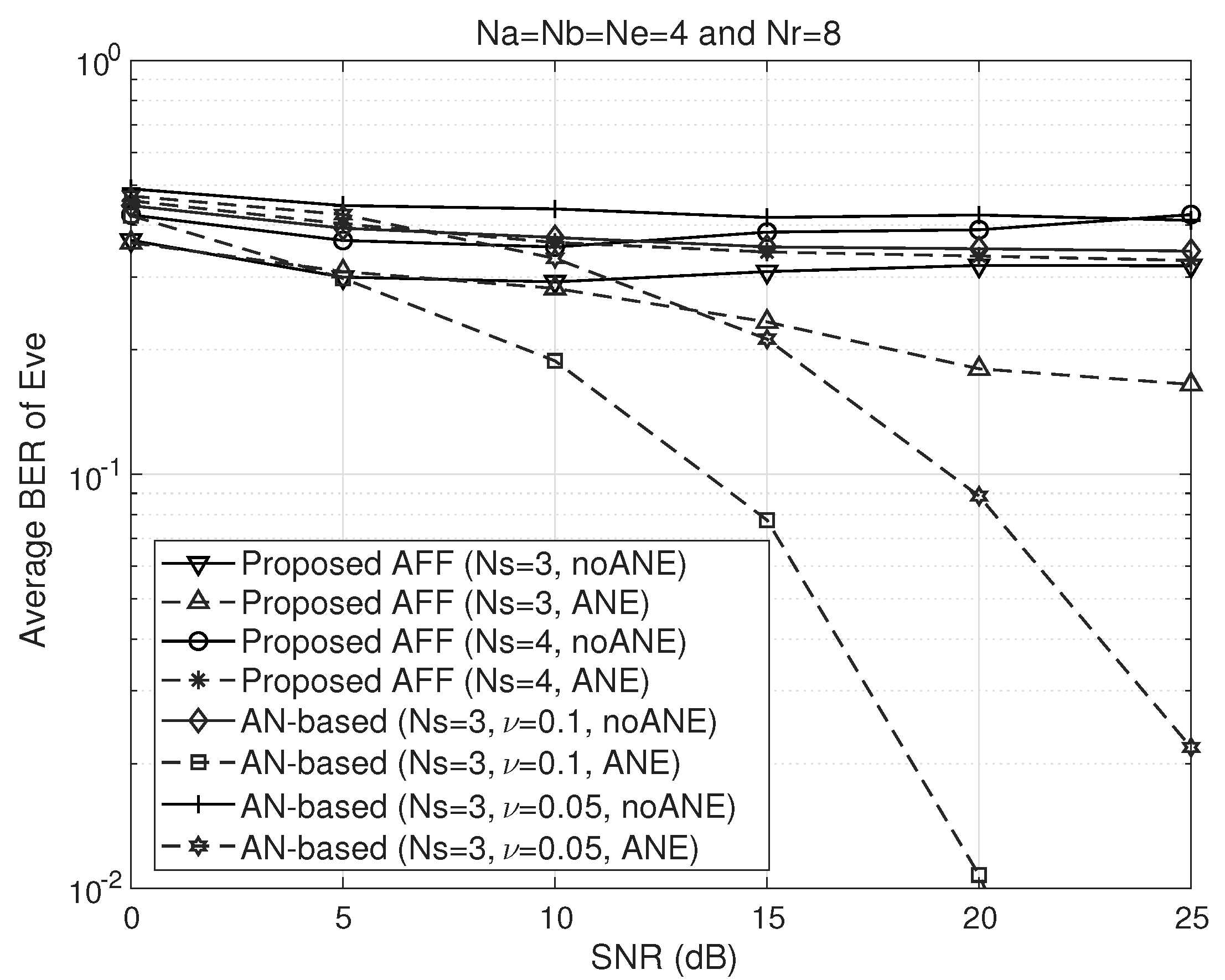
Figure 3 illustrates the BER performance of the AN and AFF schemes at Eve in
and
wiretap relay channels. In this figure, we assumed that Eve has
prior knowledge, which enables Eve to estimate its ENC with sufficient accuracy to perform ANE. In addition, we consider
and 4 spatial multiplexing transmission scenarios with and without ANE at Eve. As for the AN-based design, we set
and
, which implies that
and
of the transmit power is allocated to the artificial noise, respectively. The simulation results demonstrate that while the proposed AFF is robust to ANE attack, the AN-based jamming scheme is highly vulnerable to such an attack even in the case of high AN power. In contrast, as the signal power ratio, i.e.,
, increases, this vulnerability deteriorates more rapidly. From the BER plots obtained without ANE, one can observe slight fluctuations with increasing SNR. This behavior is explained by the absence of ANE, whereby higher SNR levels also amplify the effect of interference.
In
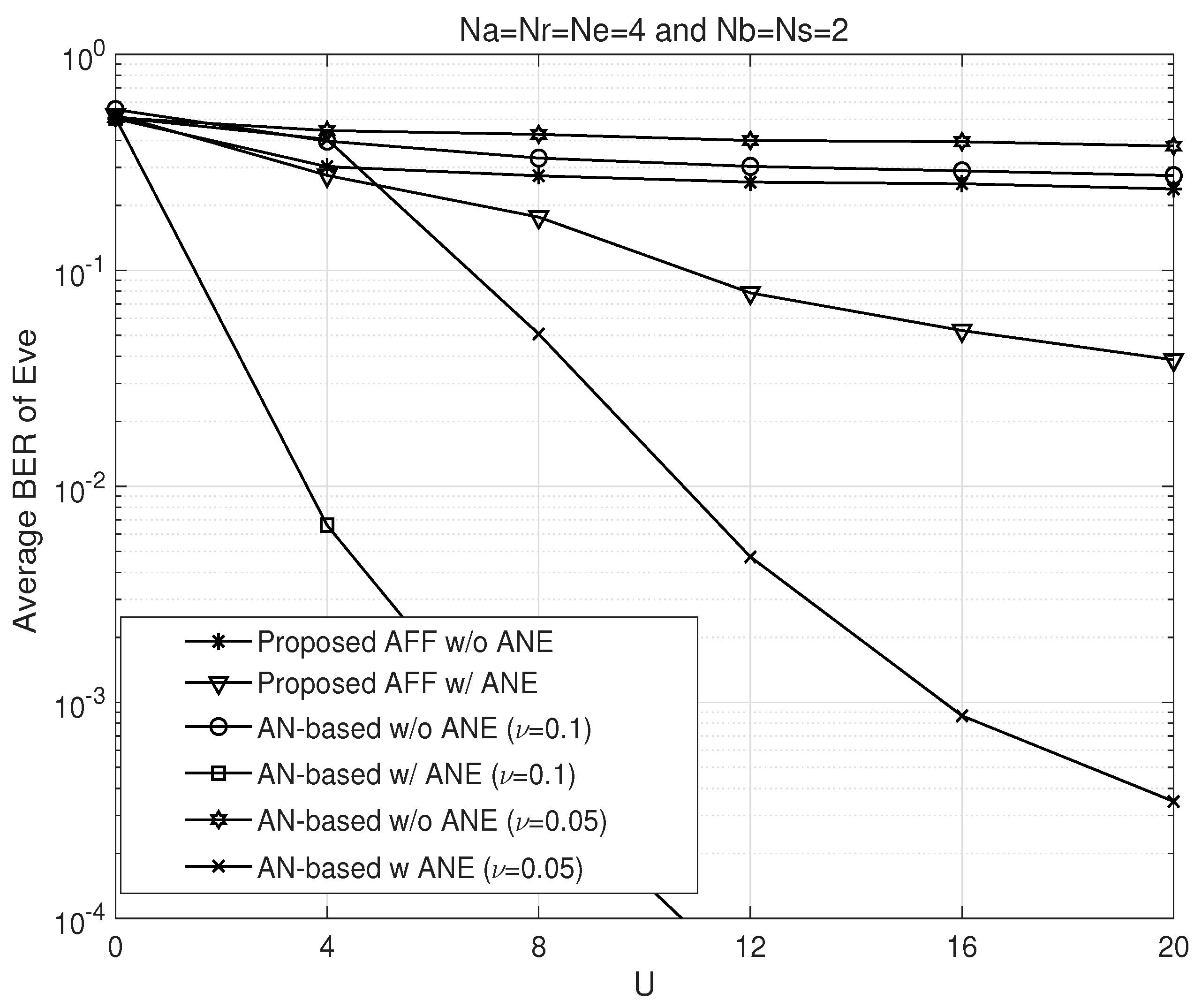
Figure 4, we examine the effect of Eve’s prior knowledge
U on the detection probability in
and
wiretap channels. As observed in the figure, when the amount of leaked a priori information
U is relatively small, both the AN and AFF schemes appear to be secure. However, as
U increases, the probability of information leakage gradually increases. This behavior is attributed to the improved accuracy of ENC estimation with increasing
U. One notable point is that as both
U and
increase, the detection probability of the AN scheme rises more rapidly than that of the AFF scheme.
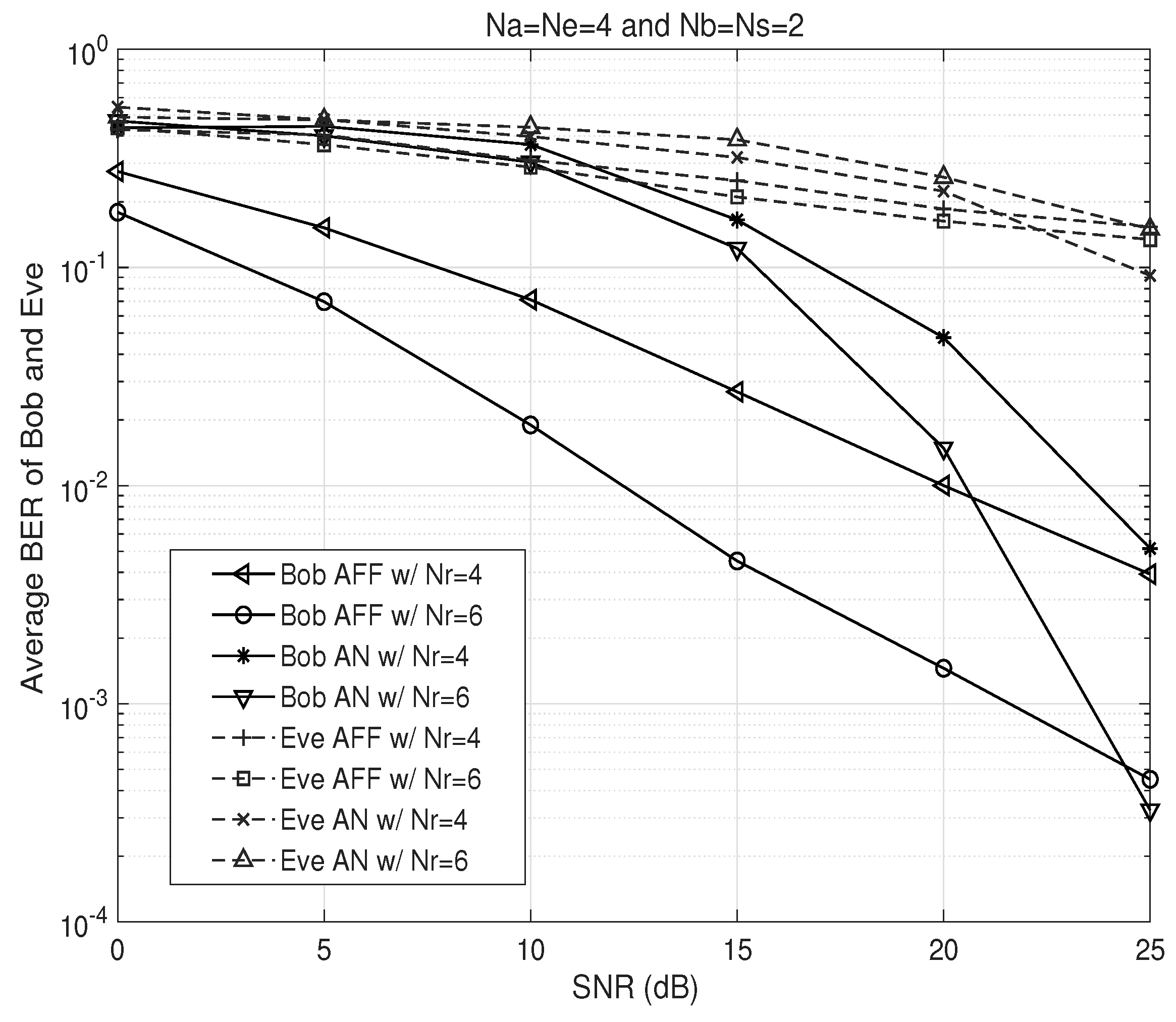
Figure 5 illustrates the BER performance of Bob and Eve in
and
wiretap relay channels with various
. We see that
and
for the AN-based design. This figure shows that, for the AN-based design, up to
of the maximum transmit power must be allocated to AN in order to achieve a security level comparable to that of the proposed AFF scheme. Moreover, it can be observed that, at the same security level, the proposed AFF scheme provides improved detection performance for Bob compared to the AN scheme.
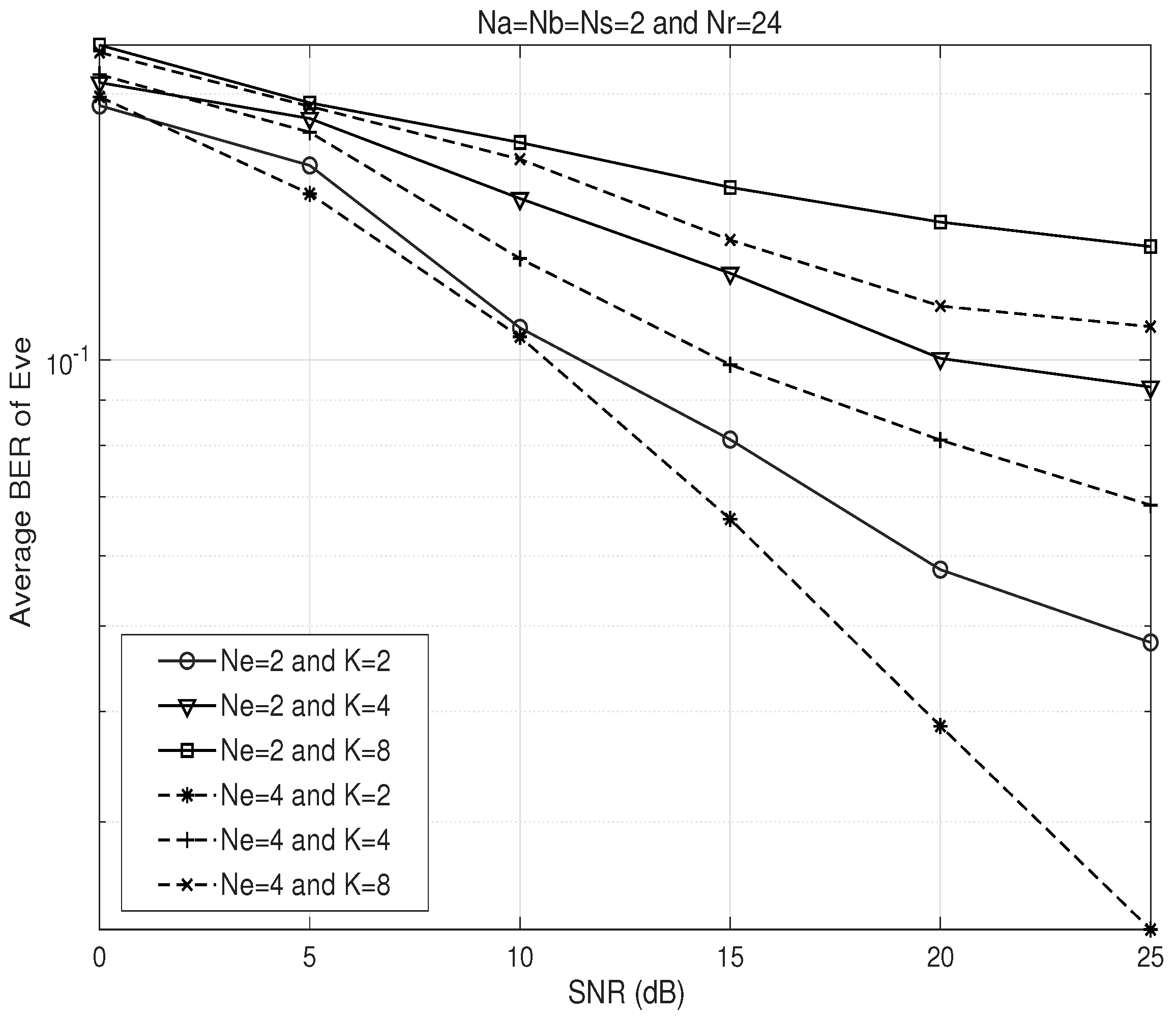
Figure 6 compares the BER performance of the proposed AFF scheme at Eve in
and
wiretap relay channels. Here, we examine how the security performance of the proposed AFF scheme varies with the parameter
K. It is confirmed from the figure that as
K increases, the security level enhances regardless of the number of Eve’s antennas
. However, it is noteworthy that security comes at the cost of diversity loss of Bob due to reduced degrees of freedom at the relay.
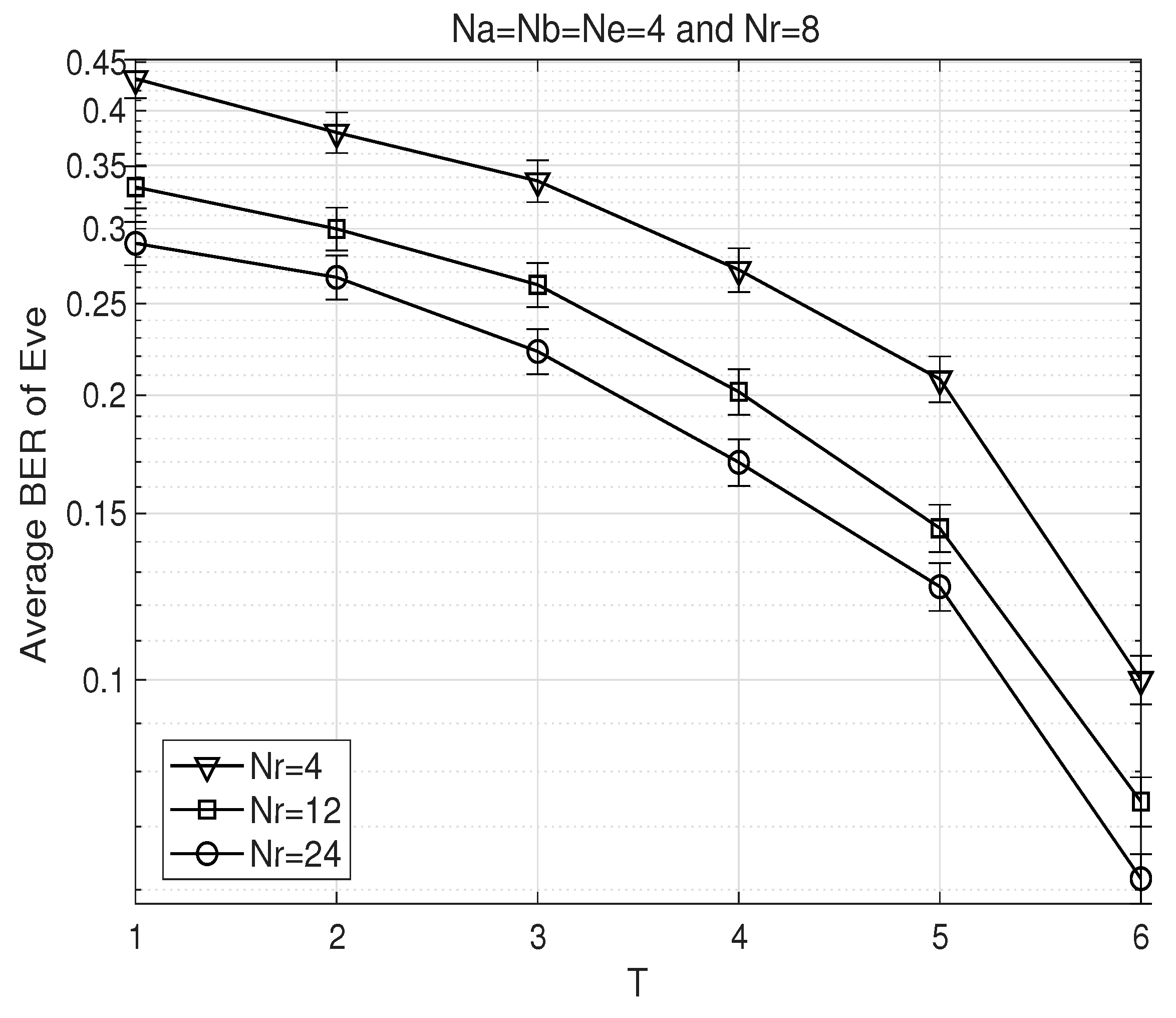
Figure 7 exhibits the BER performance of the proposed AFF scheme at Eve with respect to the effective channel coherence time
T. In this figure, we set
considering a typical Eve that captures little priory information from the received data frame. In this case, the accuracy of ENC estimation is significantly degraded, and thus ANE hardly operates effectively. To exclude the malfunction of ANE, this figure examines the variation in Eve’s error rate with respect to the rate of the AFF precoder in the absence of ANE. It can be observed that the system remains highly secure when
T is small, whereas the security threat to the proposed AFF scheme increases as
T grows. As discussed in the complexity analysis in
Section 4.6, reducing the variation interval
T may increase the computational complexity at the relay. However, in scenarios where the AFF precoder can be generated locally in advance, all the required filters can be precomputed, thereby alleviating the implementation complexity to some extent even for small values of
T. In this figure, the confidence intervals are illustrated as error bars to demonstrate the statistical reliability of the Monte Carlo simulation results. Specifically, 95% confidence intervals were computed based on the total number of transmitted bits and observed errors using the exact Clopper–Pearson method [
47] for binomial distribution. Although not presented in the previous figures, all other BER results exhibit confidence intervals of comparable width for the same simulation settings.