Article

Differential Reflecting Frequency Modulation with QAM for RIS-Based Communications

1
The Key Laboratory of Grain Information Processing and Control (Henan University of Technology), Ministry of Education, Zhengzhou 450001, China
2
The College of Information Science and Engineering, Henan University of Technology, Zhengzhou 450001, China
*
Author to whom correspondence should be addressed.
Sensors 2026, 26(3), 802; https://doi.org/10.3390/s26030802
Submission received: 26 December 2025 / Revised: 22 January 2026 / Accepted: 22 January 2026 / Published: 25 January 2026
(This article belongs to the Section Communications)

Abstract

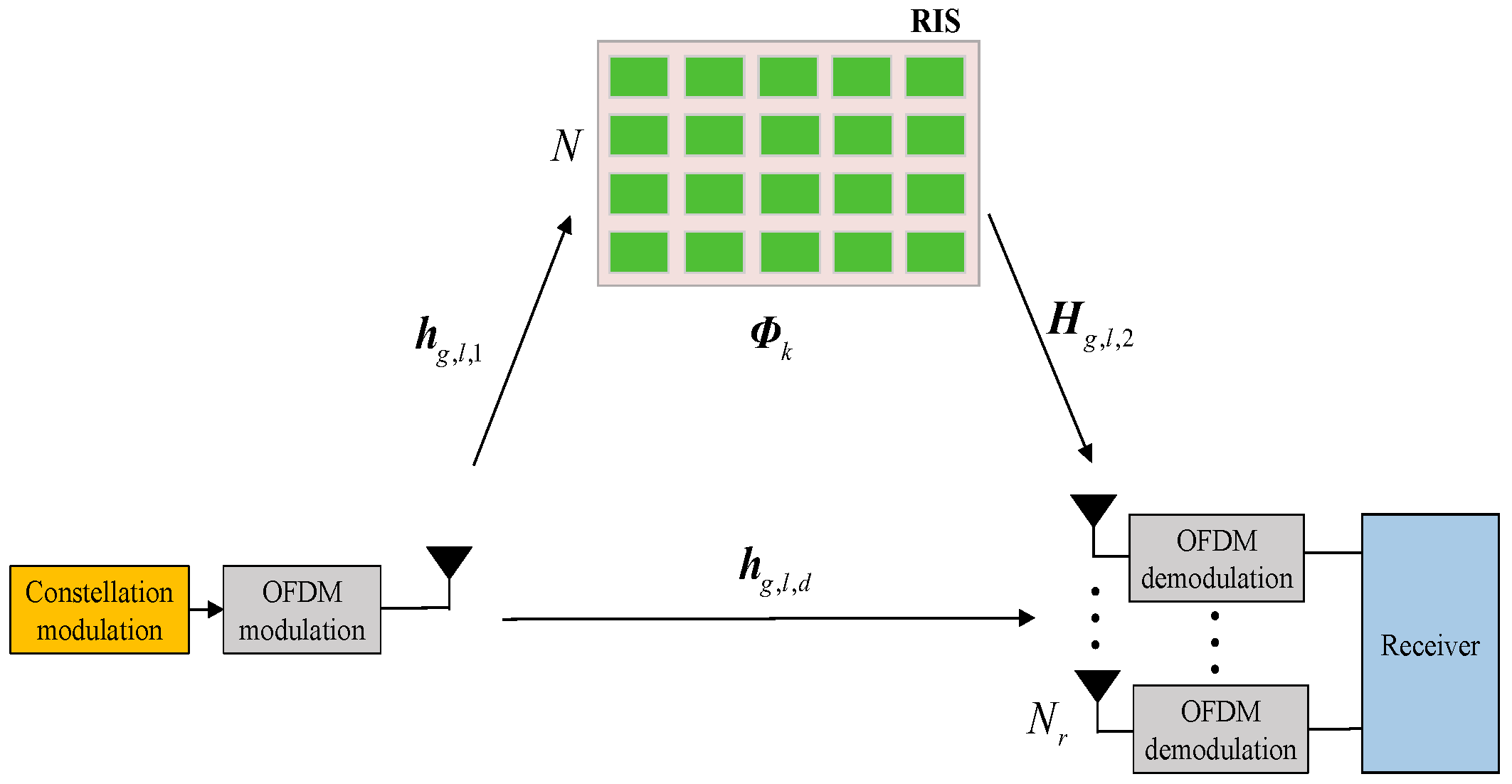
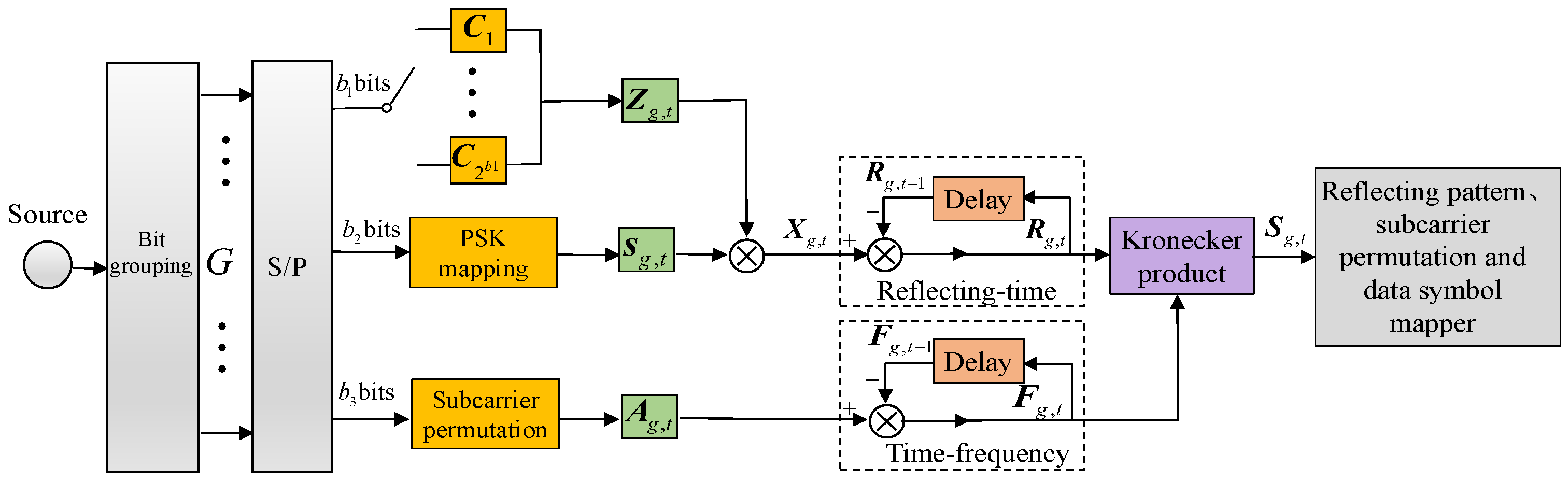
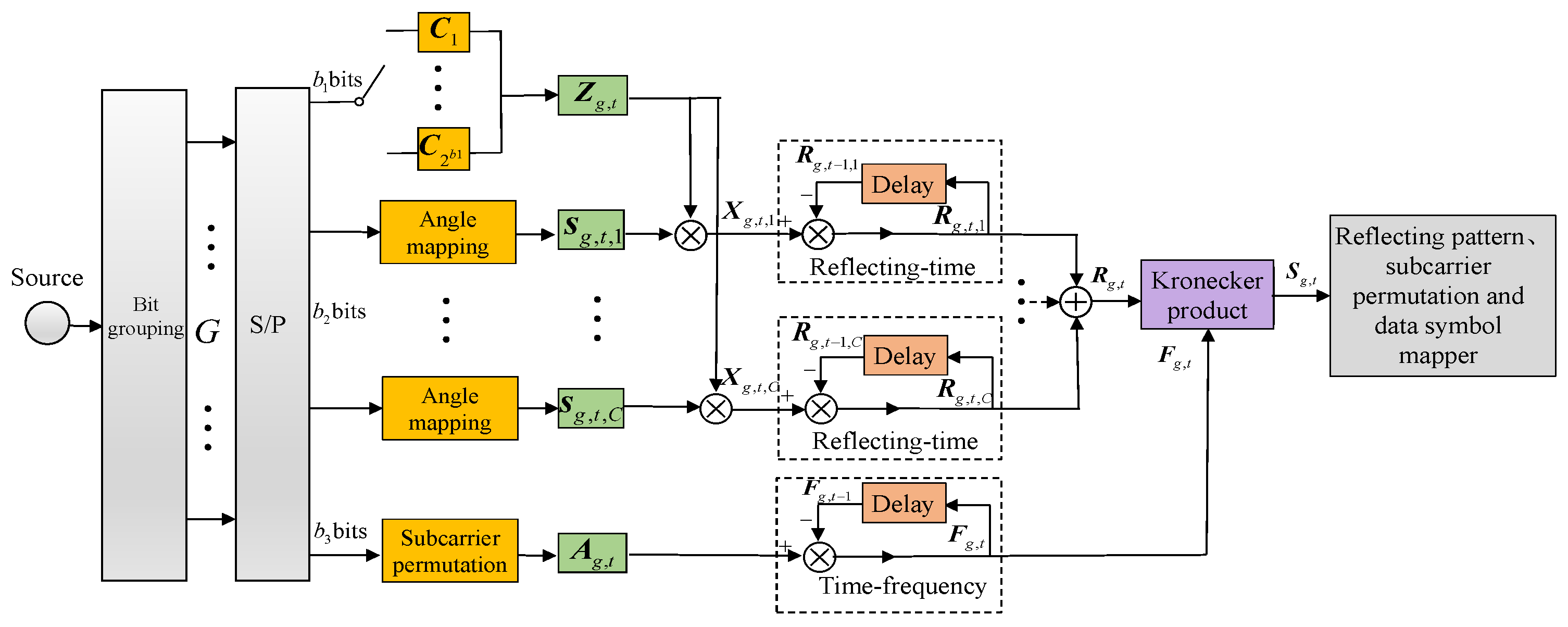
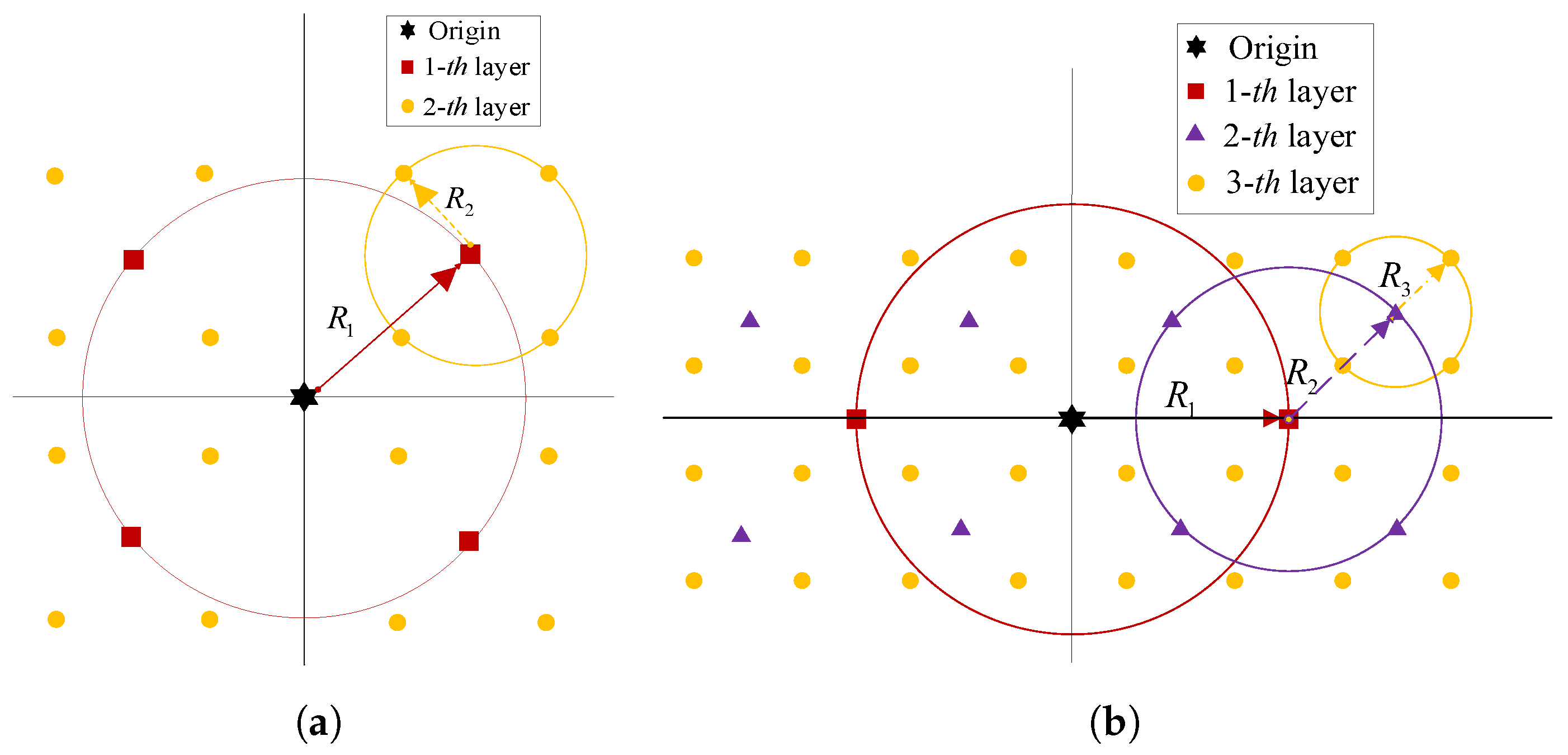
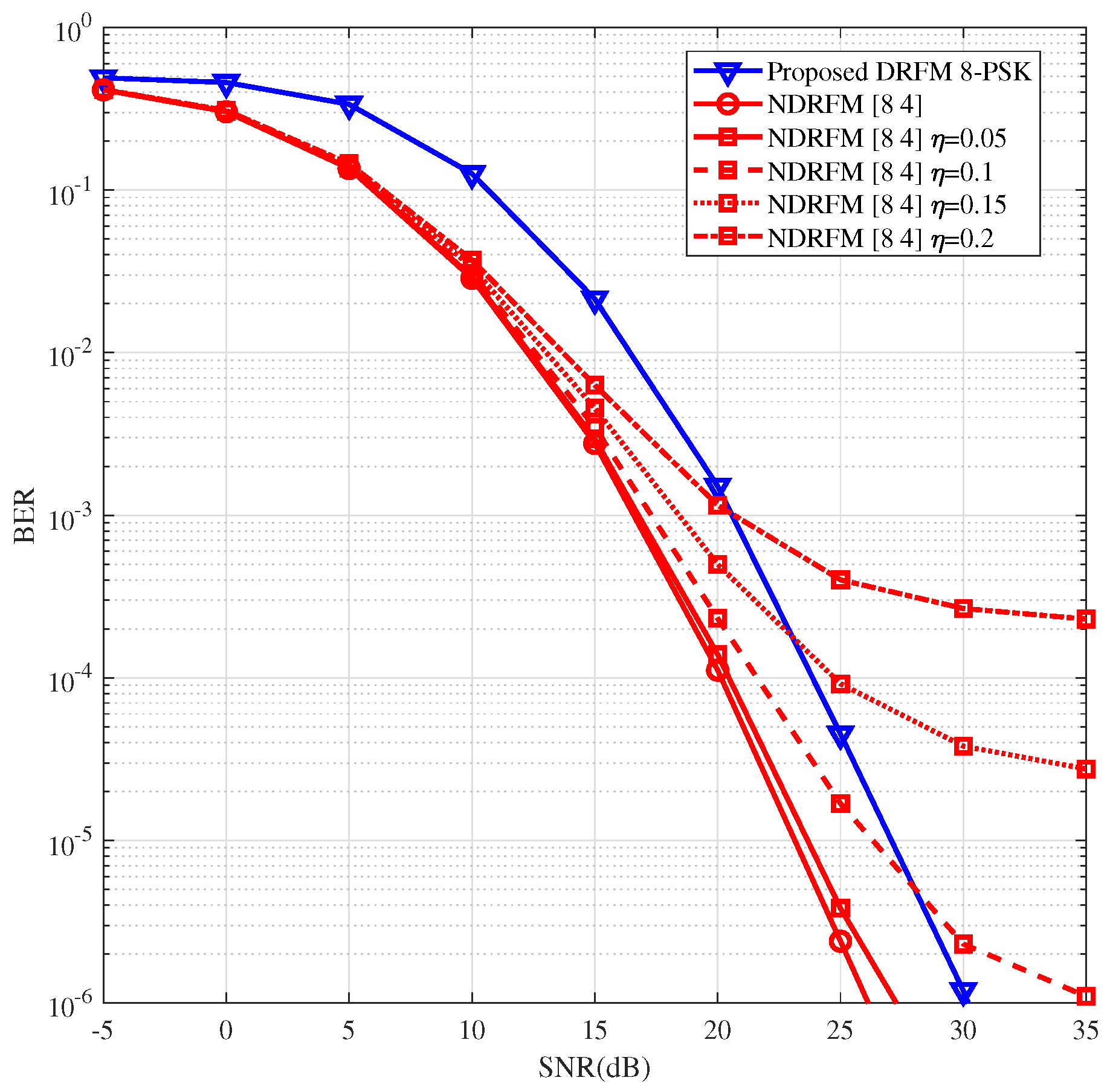
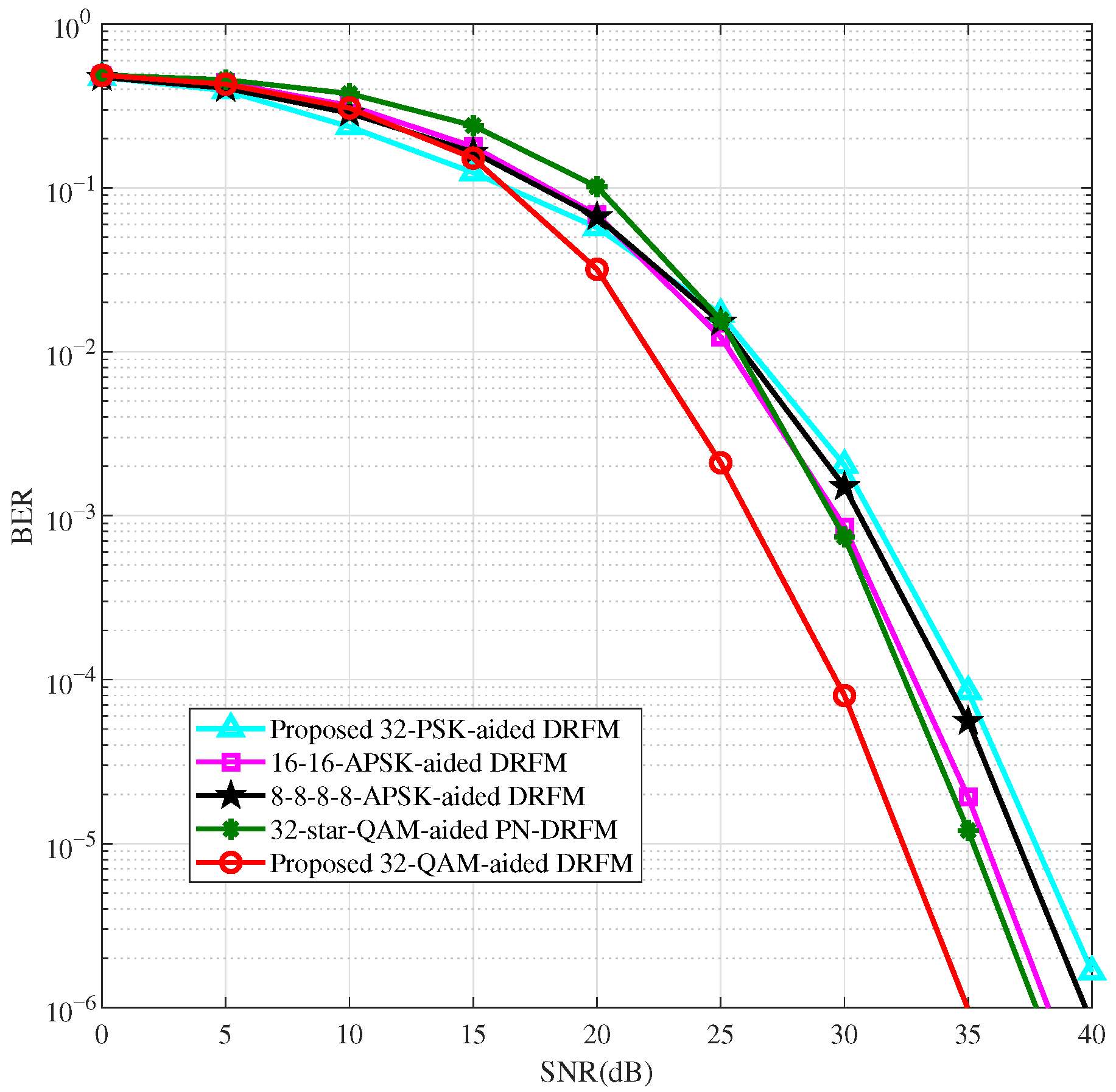
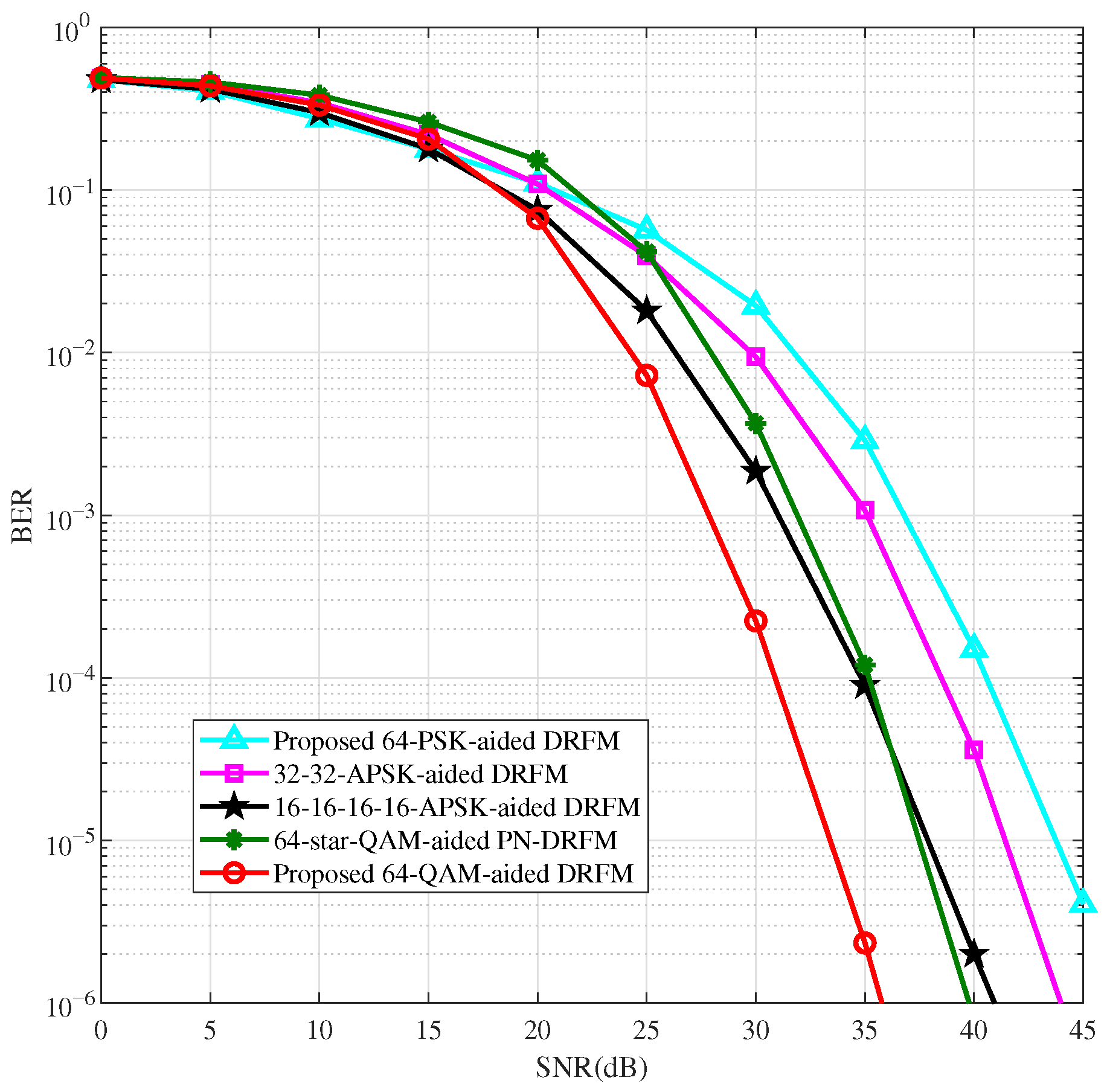
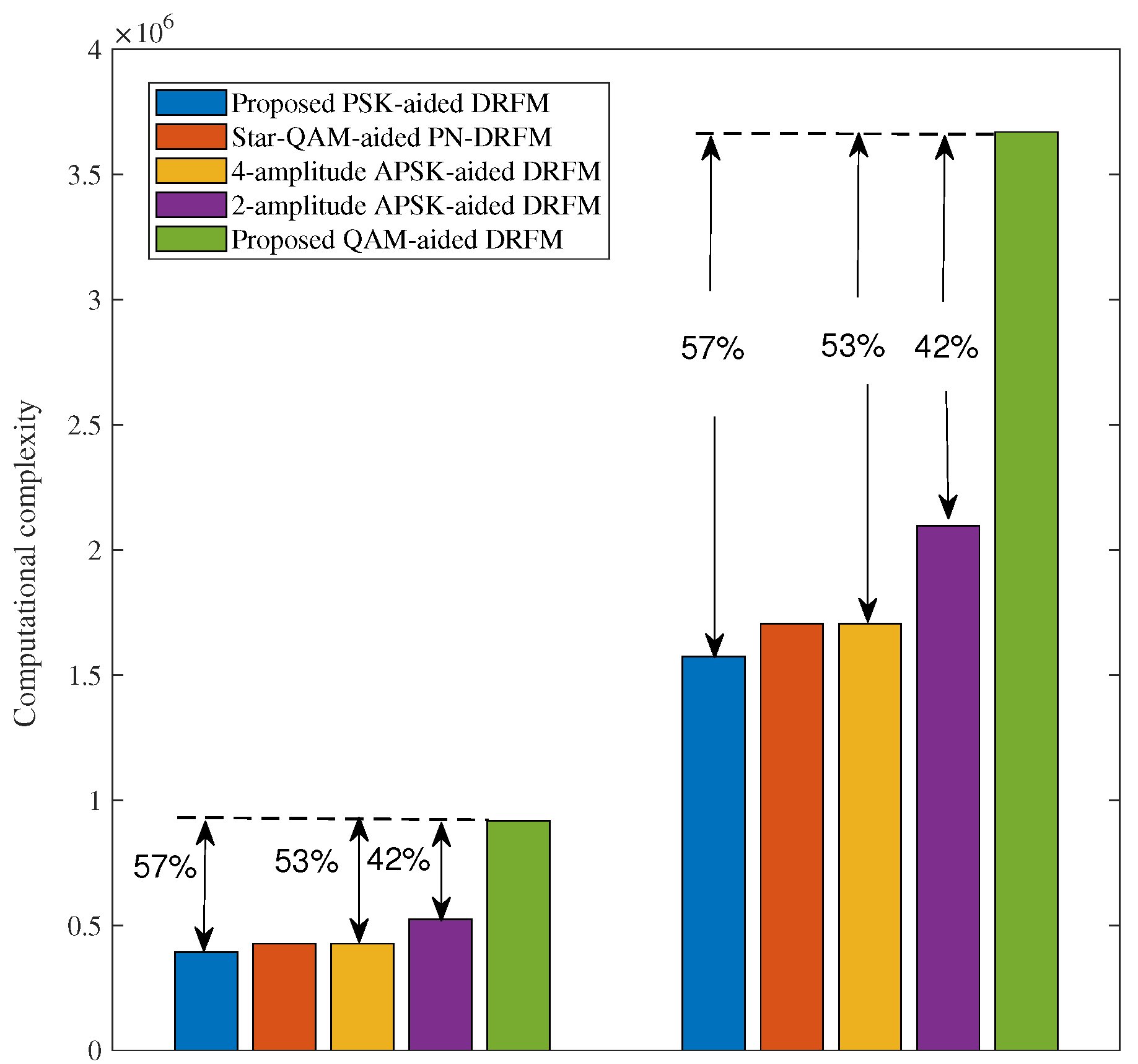
Reconfigurable intelligent surface (RIS)-aided index modulation (IM) shows great potential for next-generation wireless communications. Nevertheless, obtaining channel state information (CSI) for RIS-based IM incurs high pilot overhead, particularly for multi-domain IM. In this paper, we integrate orthogonal frequency division multiplexing into RIS-aided differential reflecting modulation (DRM) communications, introducing the differential reflecting frequency modulation (DRFM) system. In DRFM, information bits are jointly conveyed through the activation permutations of reflecting patterns, grouped carriers, and constellation symbols. The transmitter combines the differentially coded reflecting-time block and the time–frequency block using the Kronecker product. This allows DRFM to operate without relying on CSI at the transmitter, RIS, or receiver. Moreover, we design a novel high-rate quadrature amplitude modulation (QAM) scheme for DRFM. Compared to PSK-based DRFM, this QAM scheme can boost either the throughput or the performance of DRFM. Simulation results illustrate the superiority of the DRFM system, along with an acceptable SNR penalty, compared to non-differential modulation with coherent detection. At the same spectral efficiency, the proposed QAM-aided DRFM outperforms schemes using traditional PSK, amplitude phase shift keying (APSK), and star-QAM constellation modulations.
Keywords: differential reflecting frequency modulation; quadrature amplitude modulation; reconfigurable intelligent surface differential reflecting frequency modulation; quadrature amplitude modulation; reconfigurable intelligent surface