Impact Analysis of the Market Penetration Rate of Connected Vehicles and the Failure Rate of Roadside Equipment on Data Accuracy

Highlights
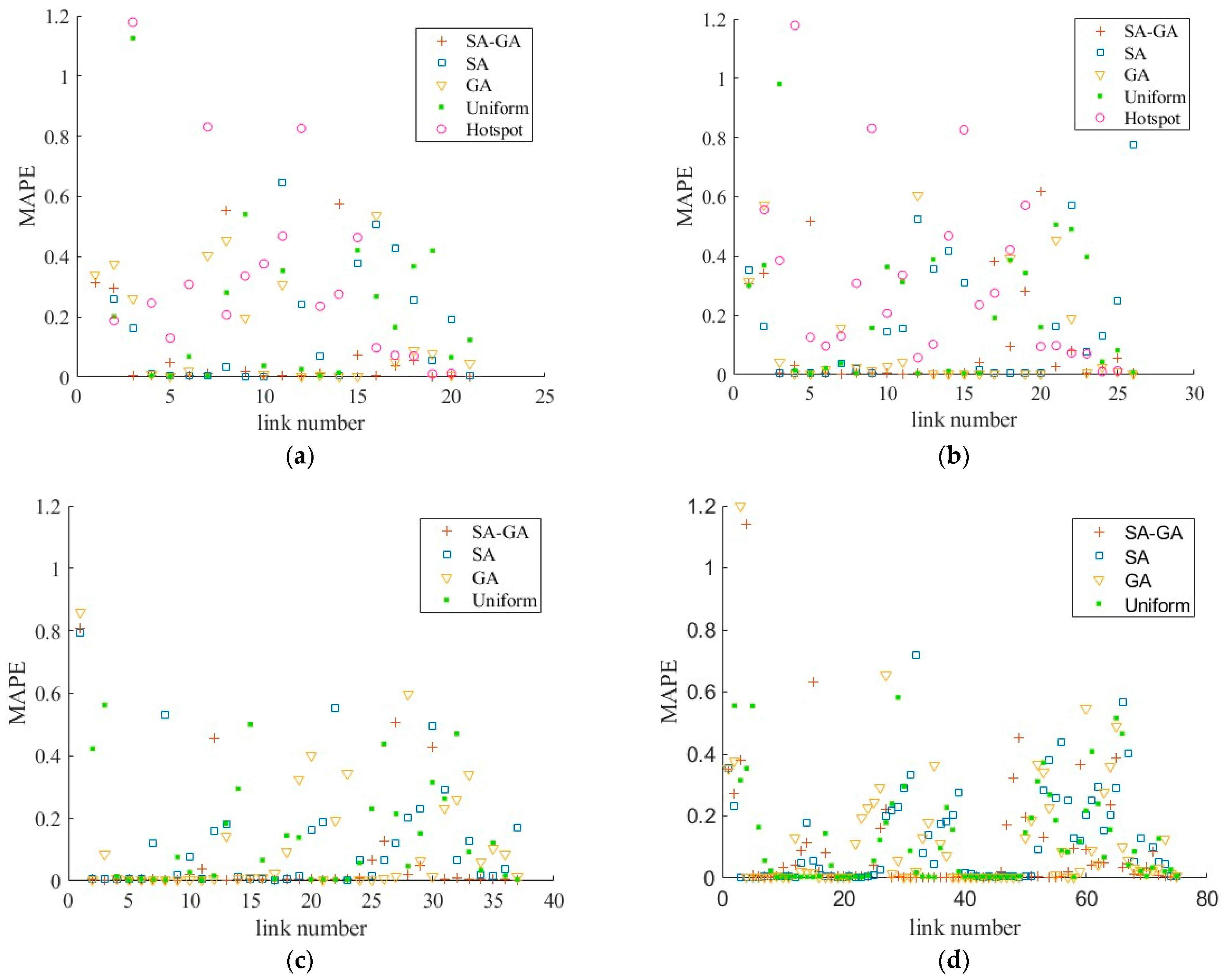
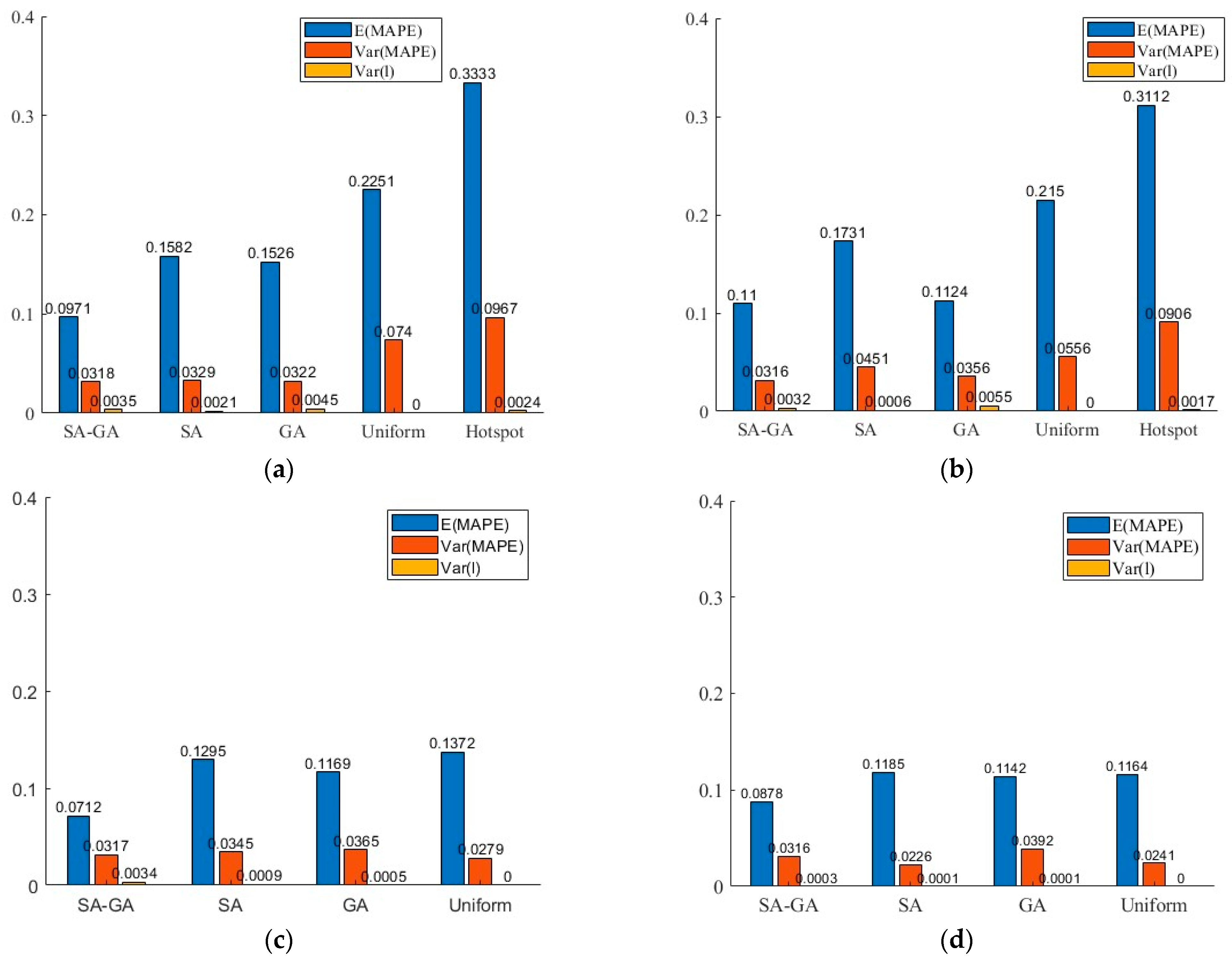
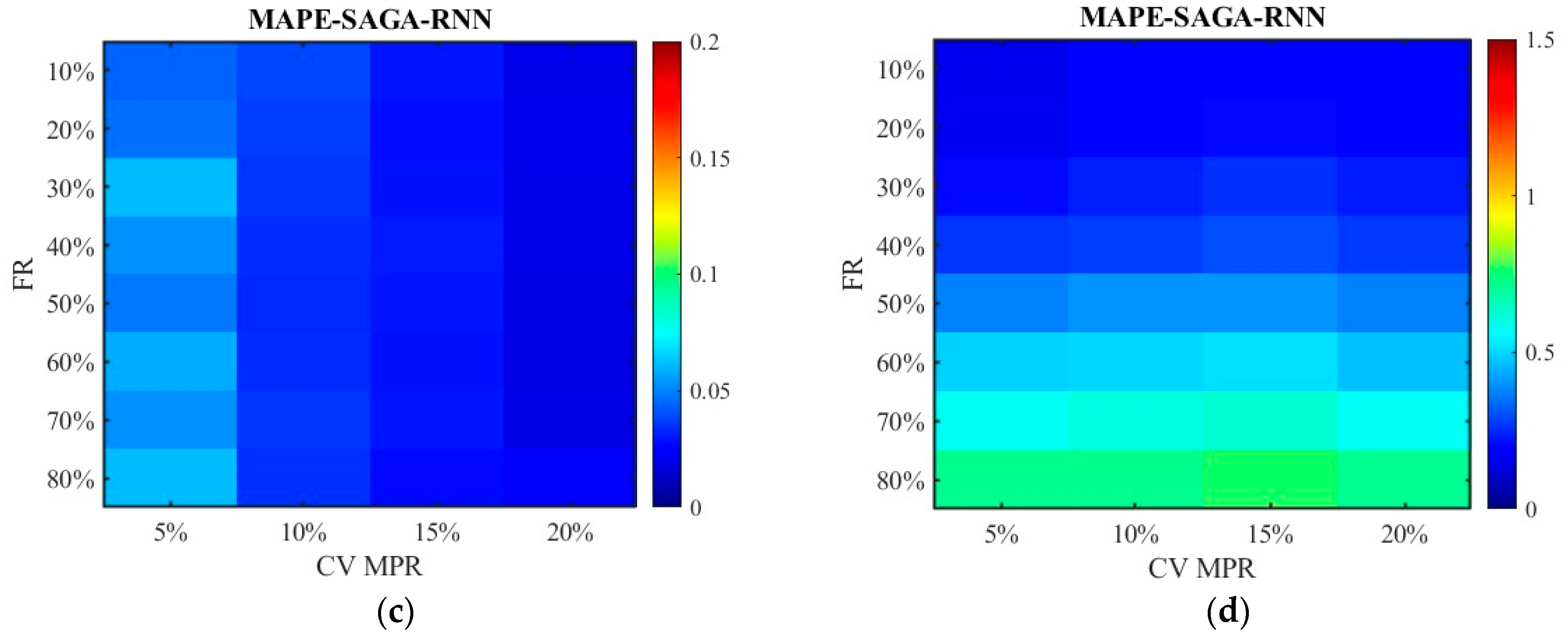
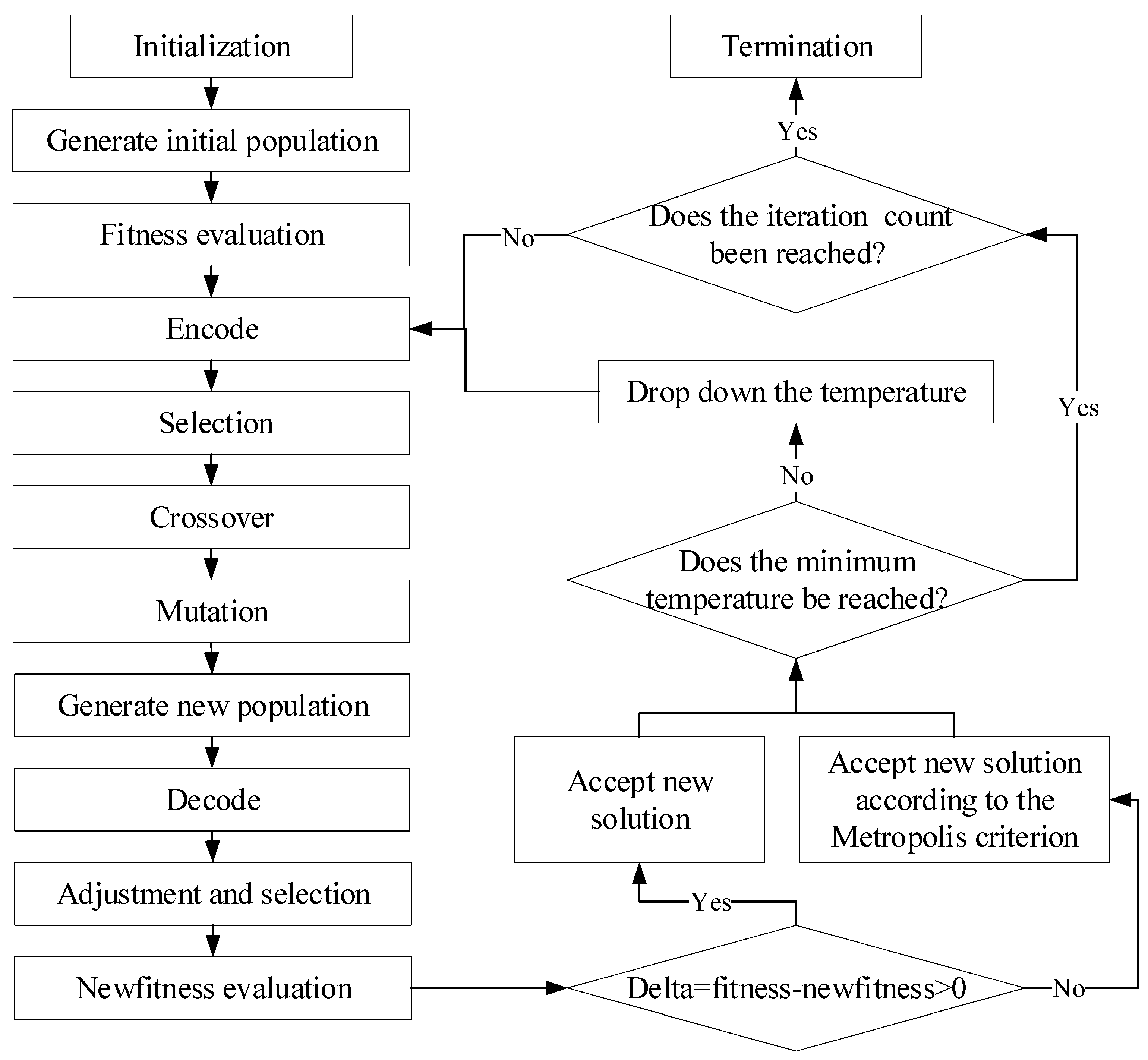
- The optimal deployment method solved by the Simulated Annealing Genetic Algorithm (SAGA) outperforms the SA algorithm and GA, which are superior to the uniform method and the hotspot method in optimizing RSE locations for improving data accuracy.
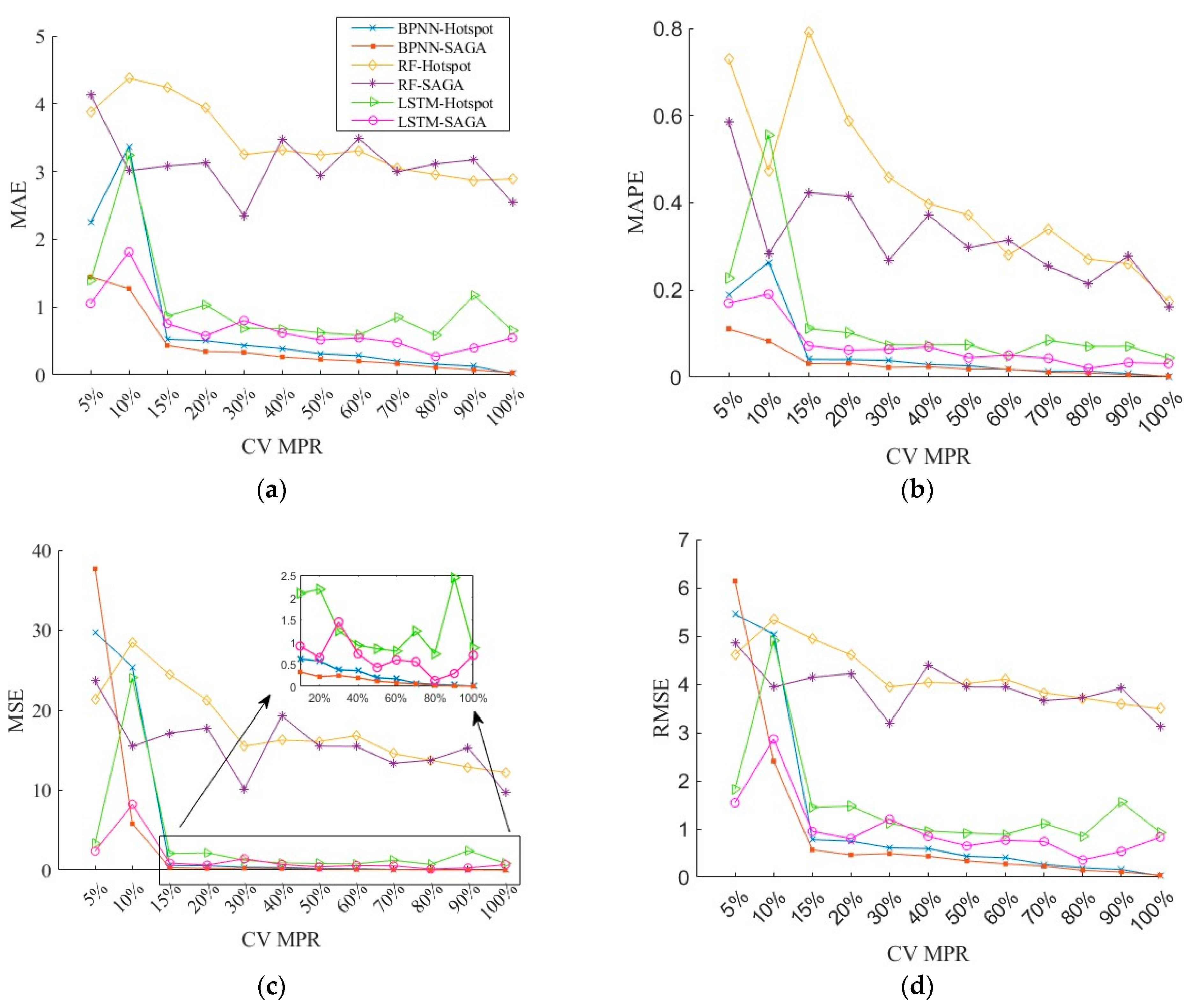
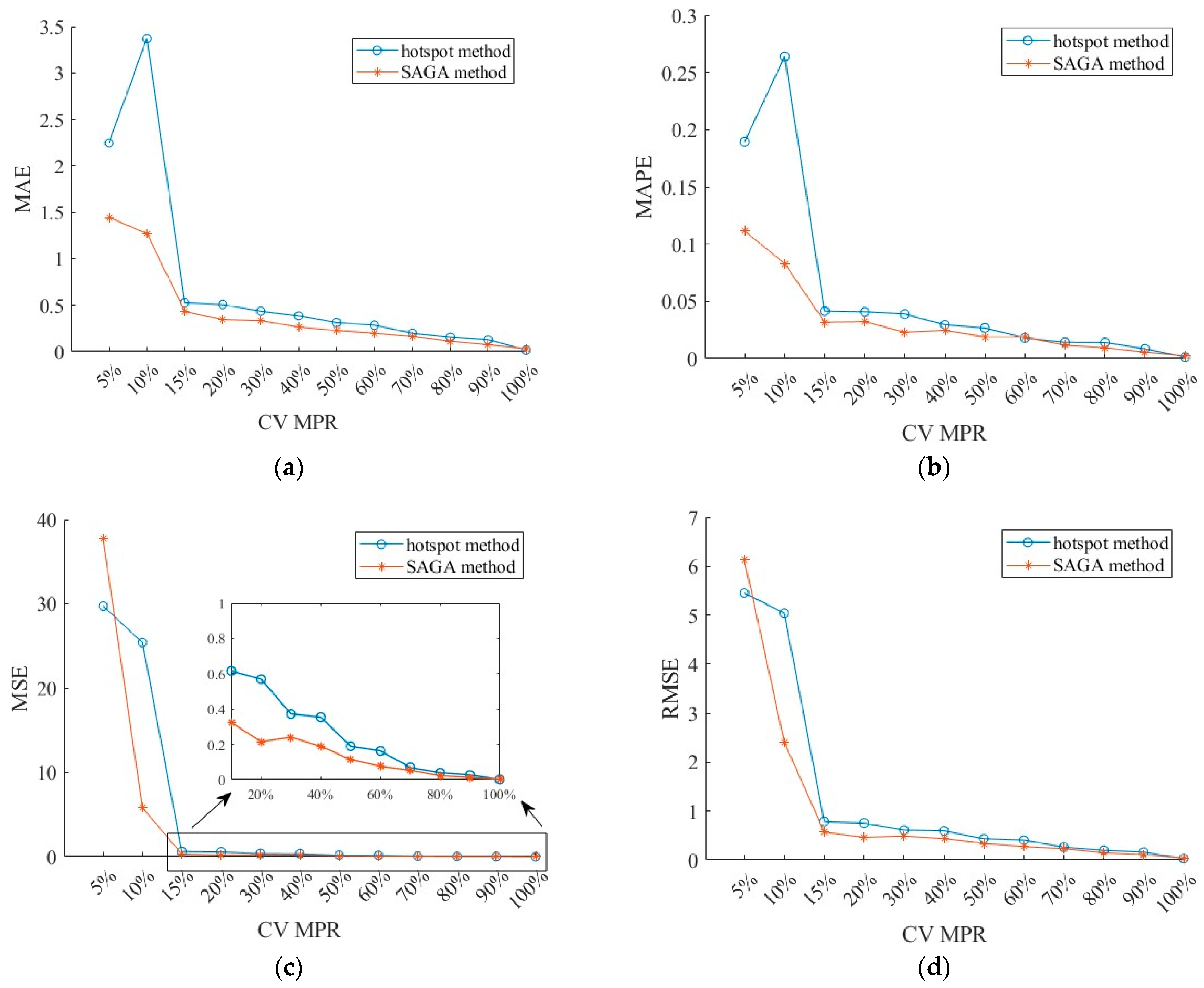
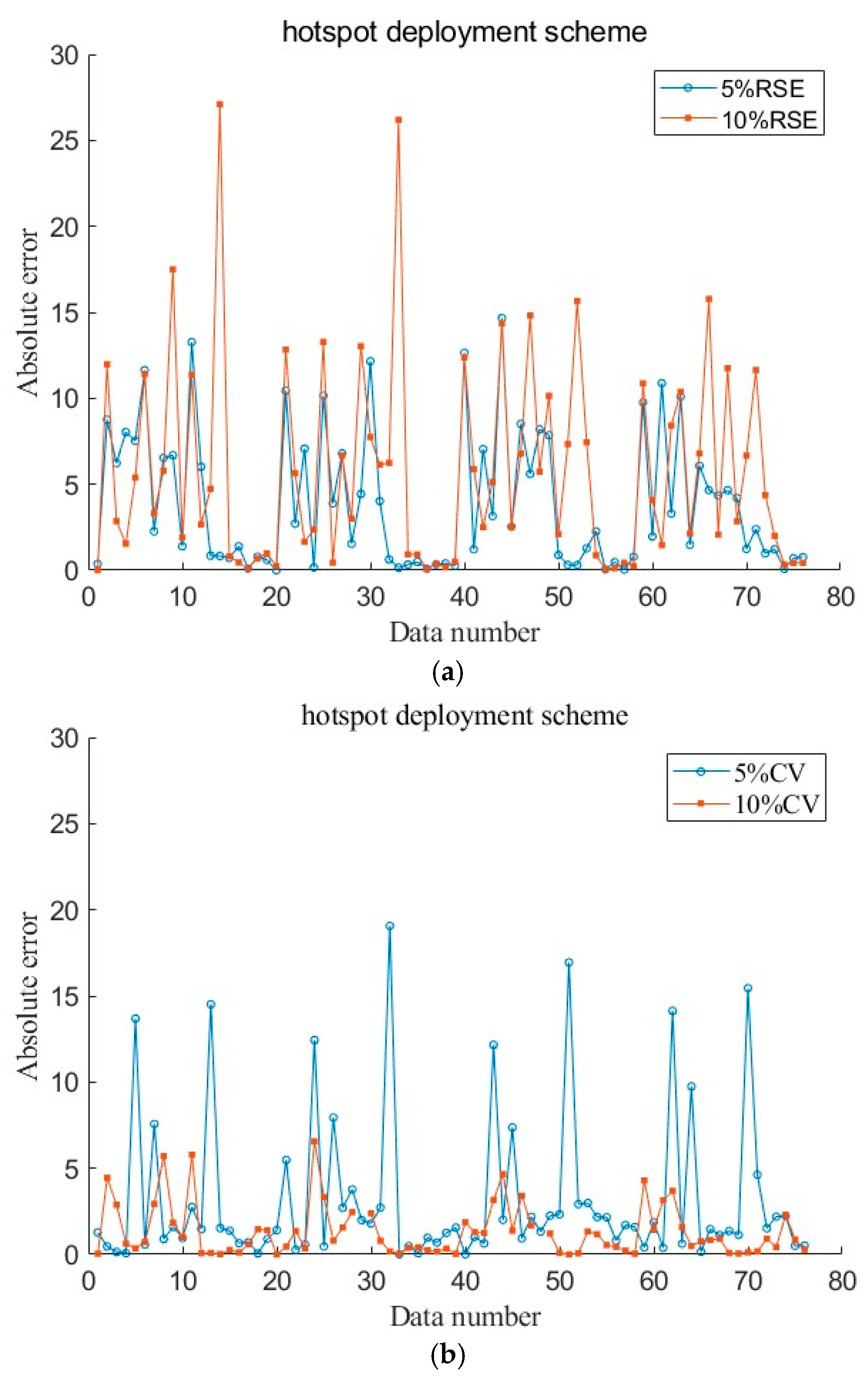
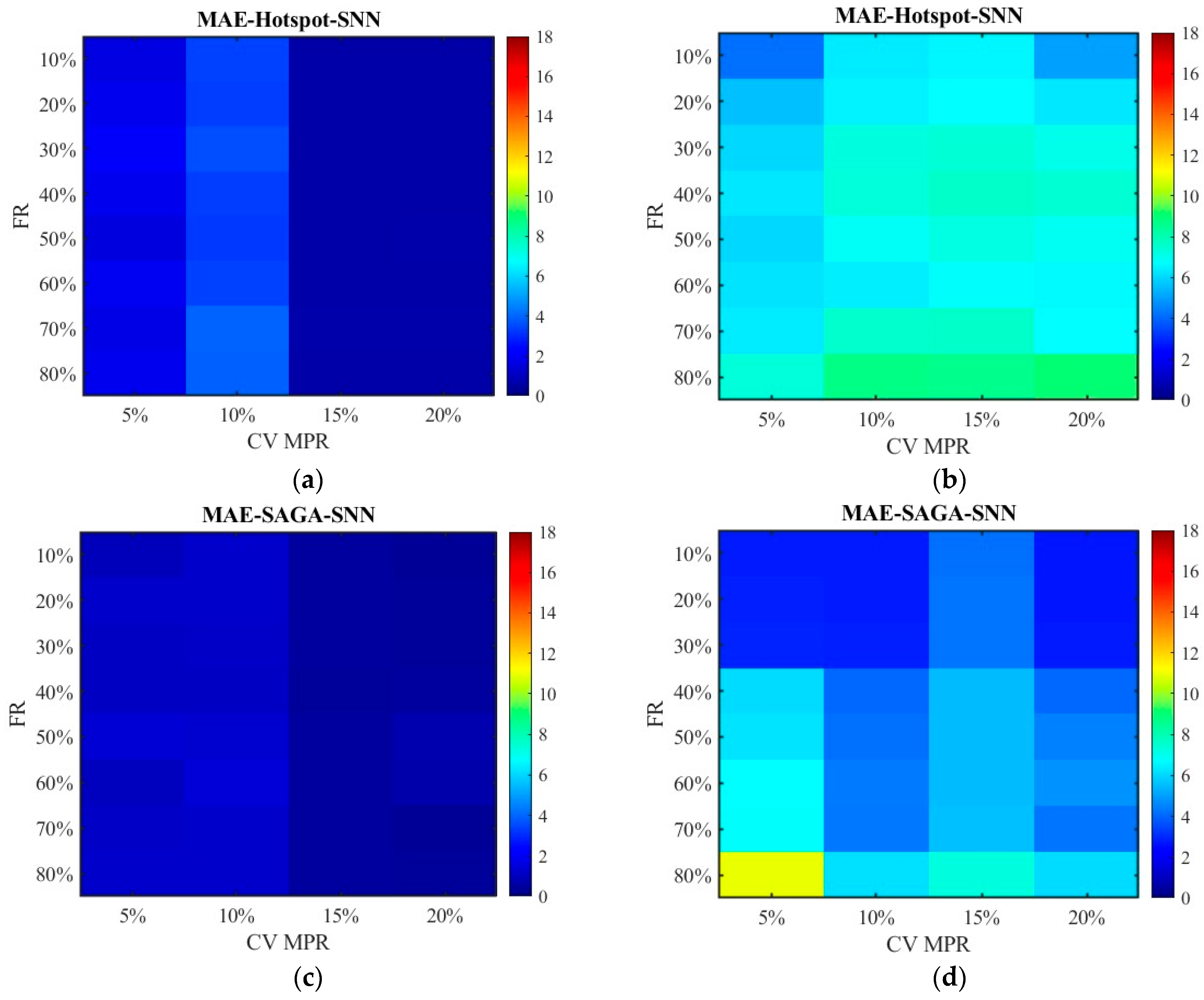
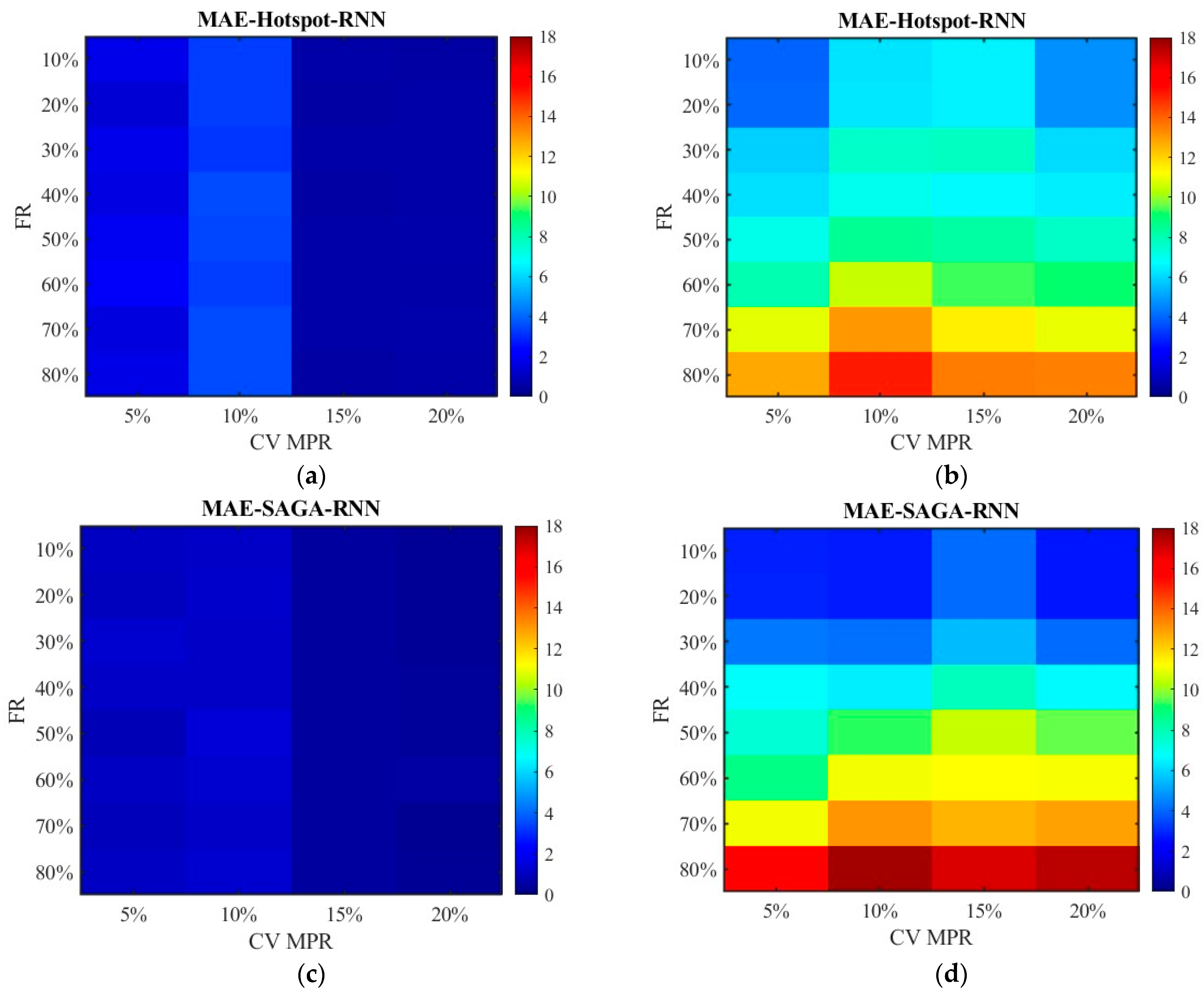
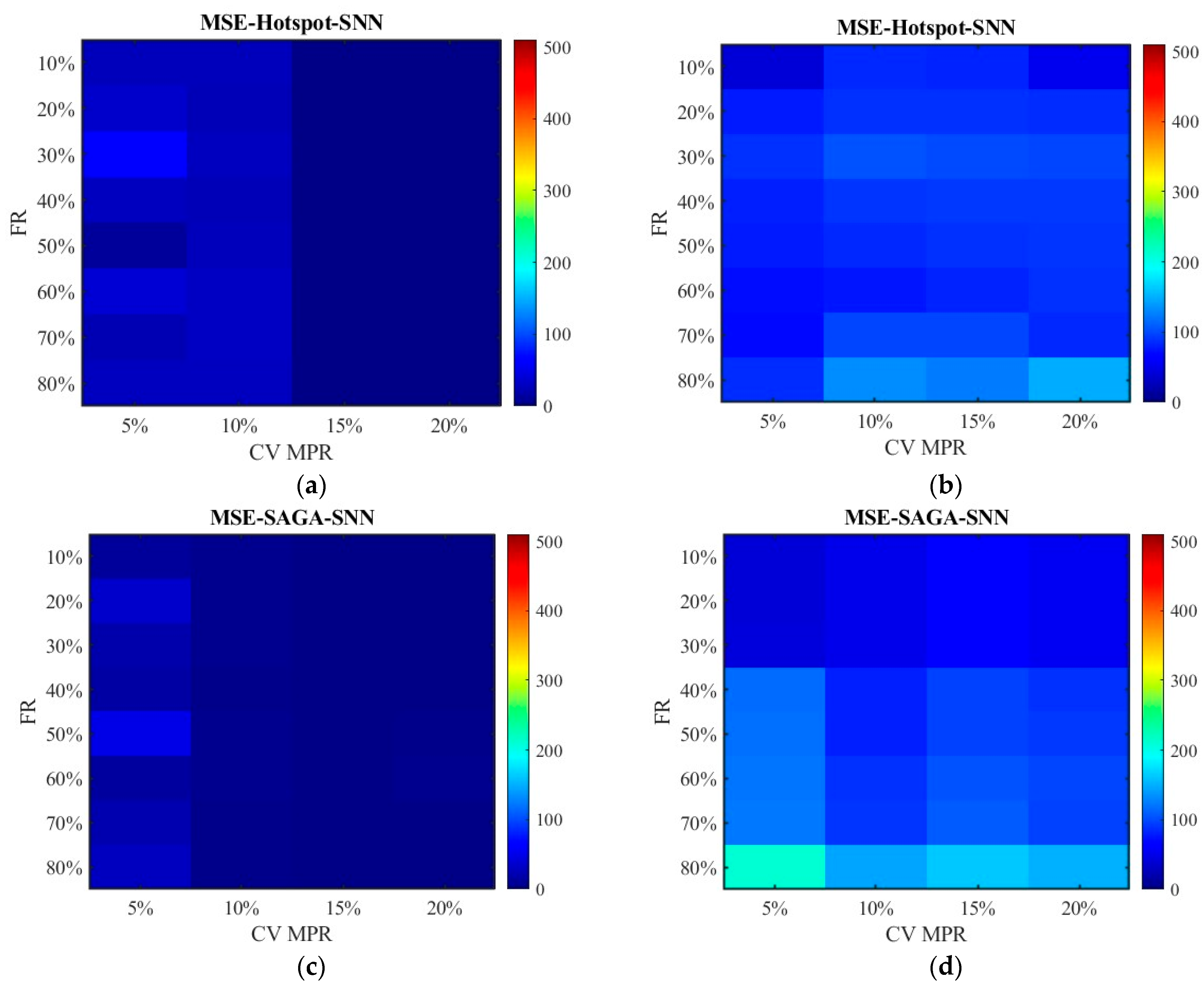
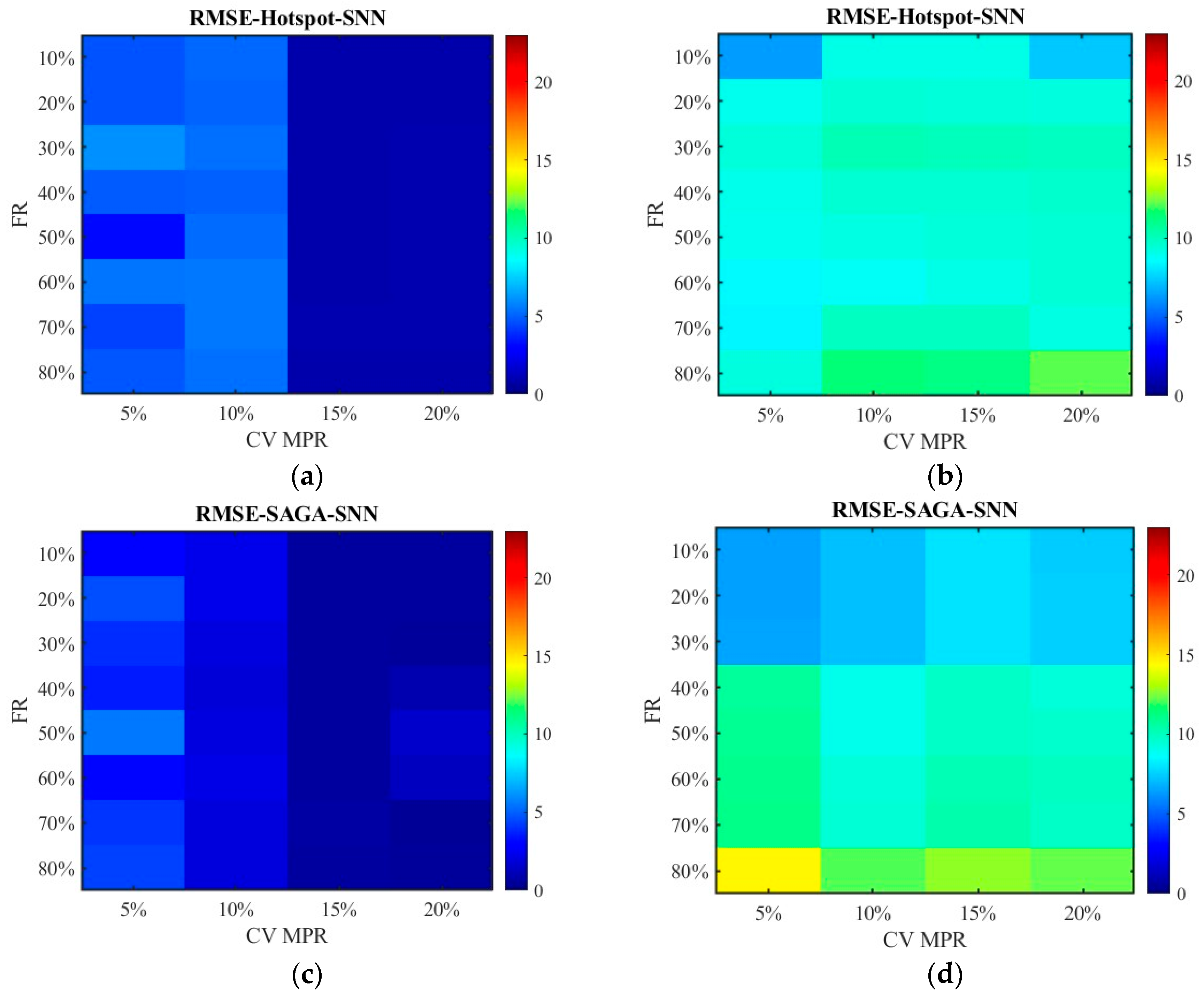
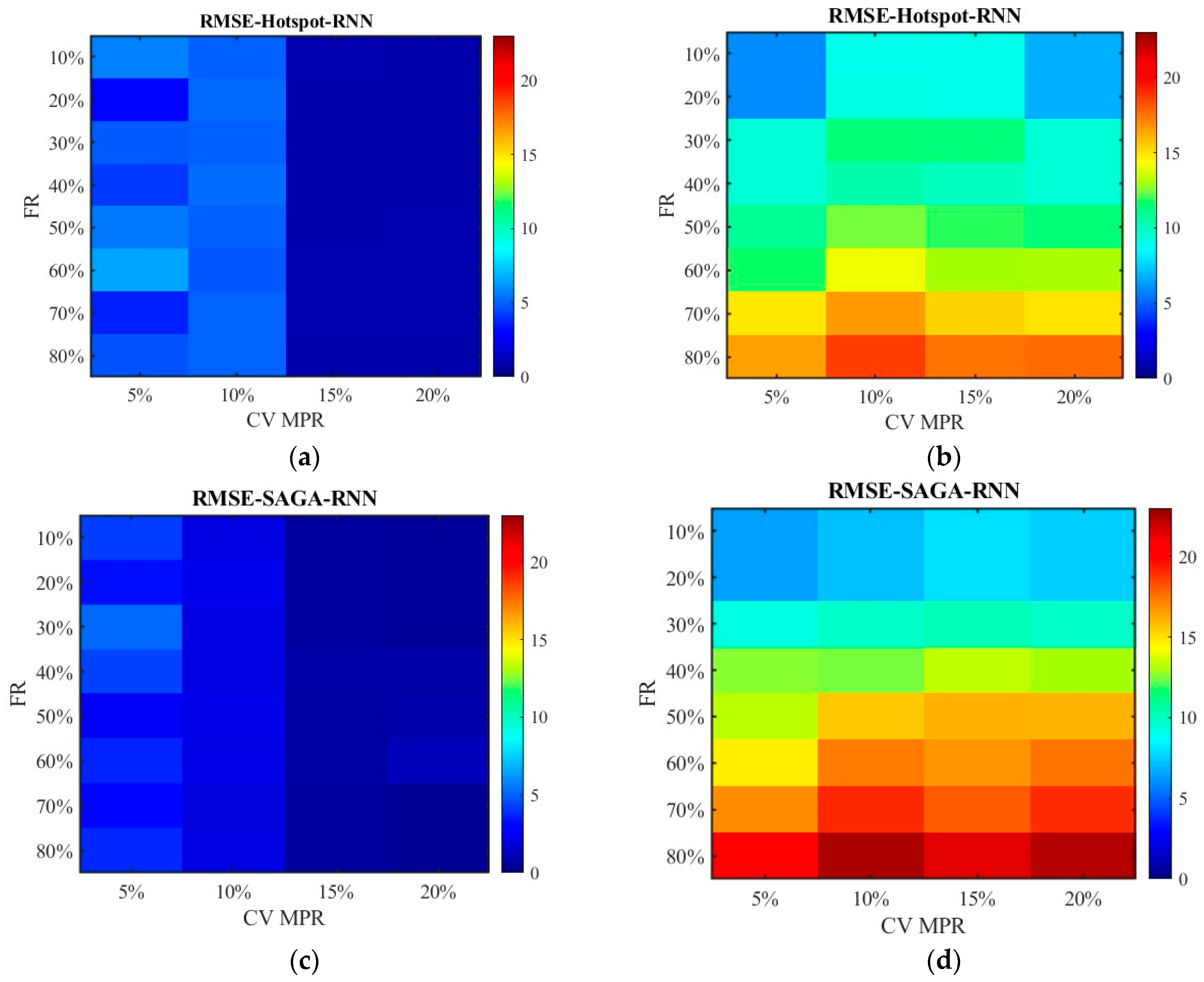
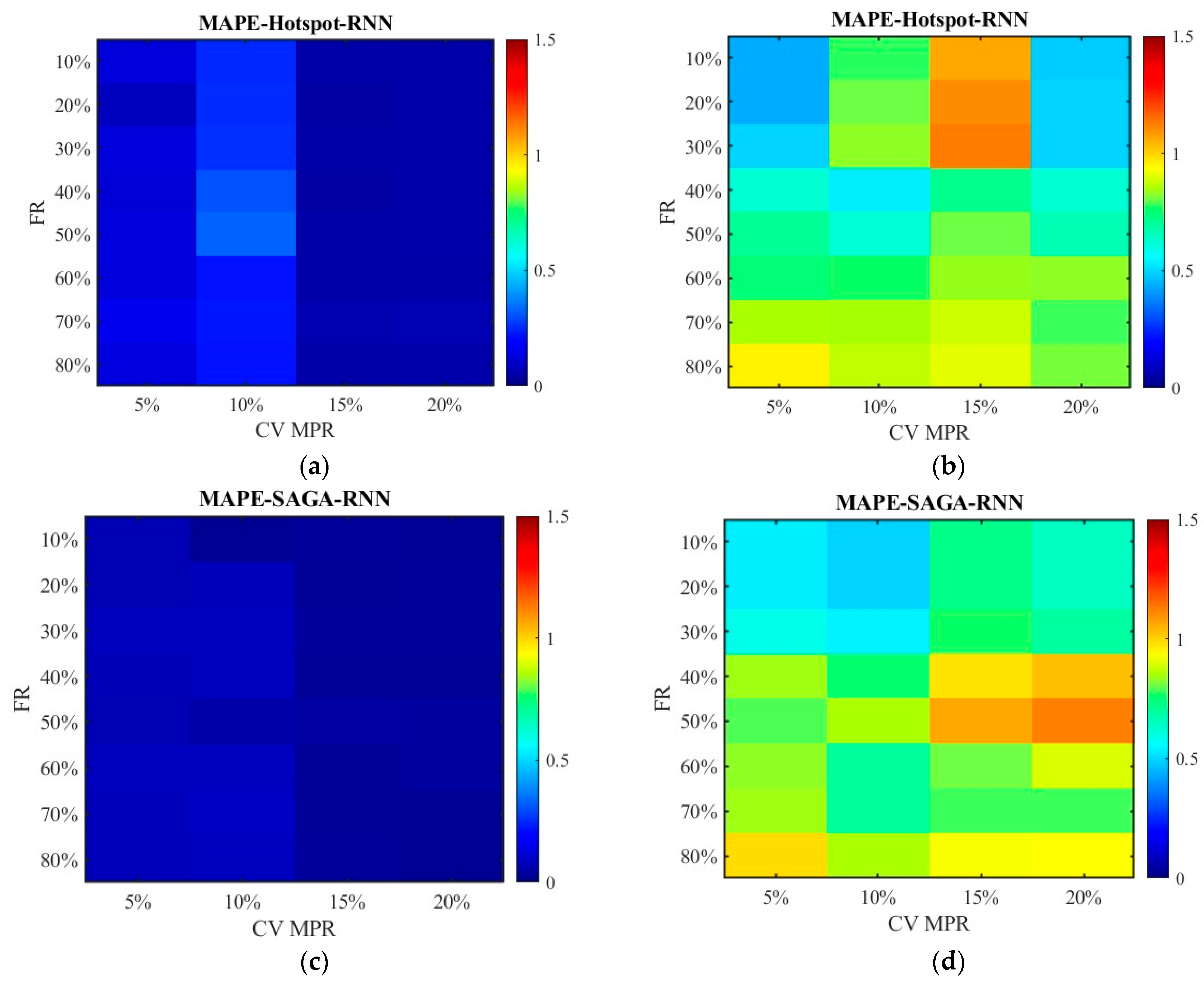
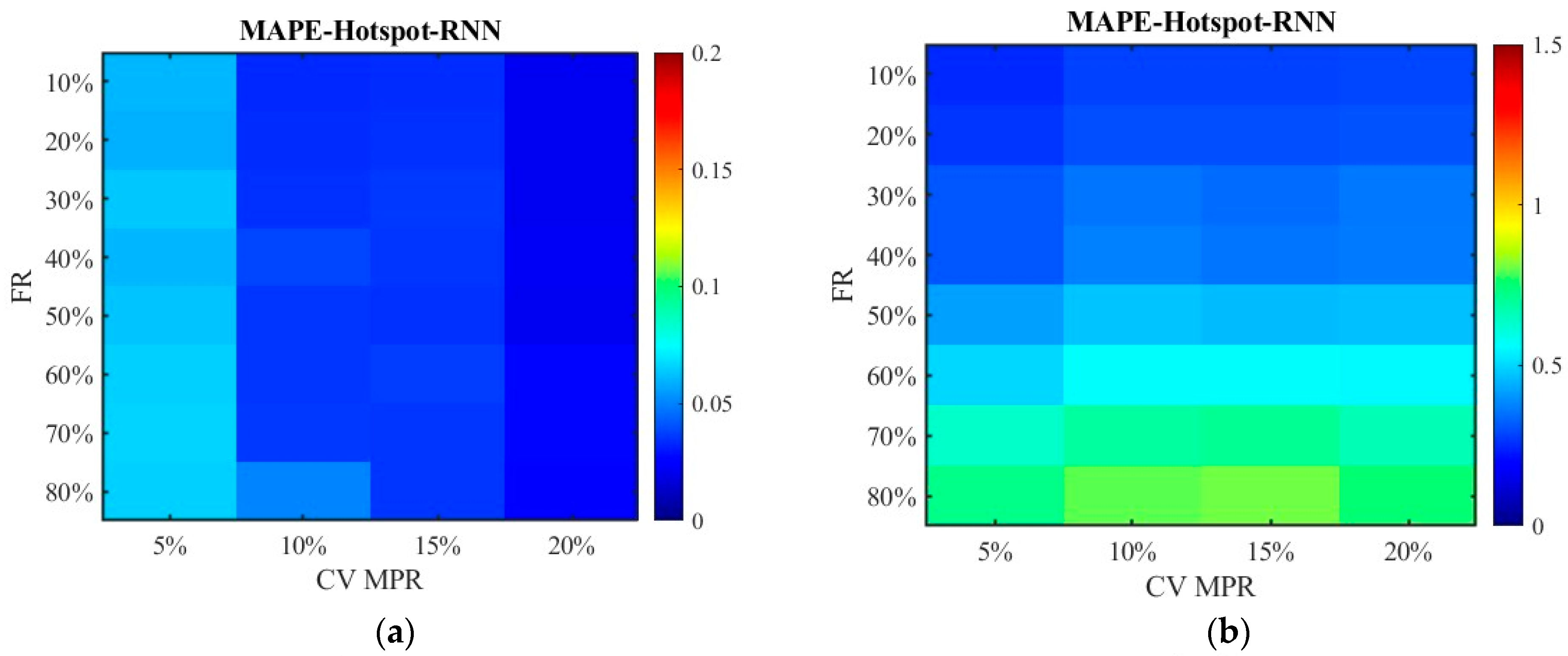
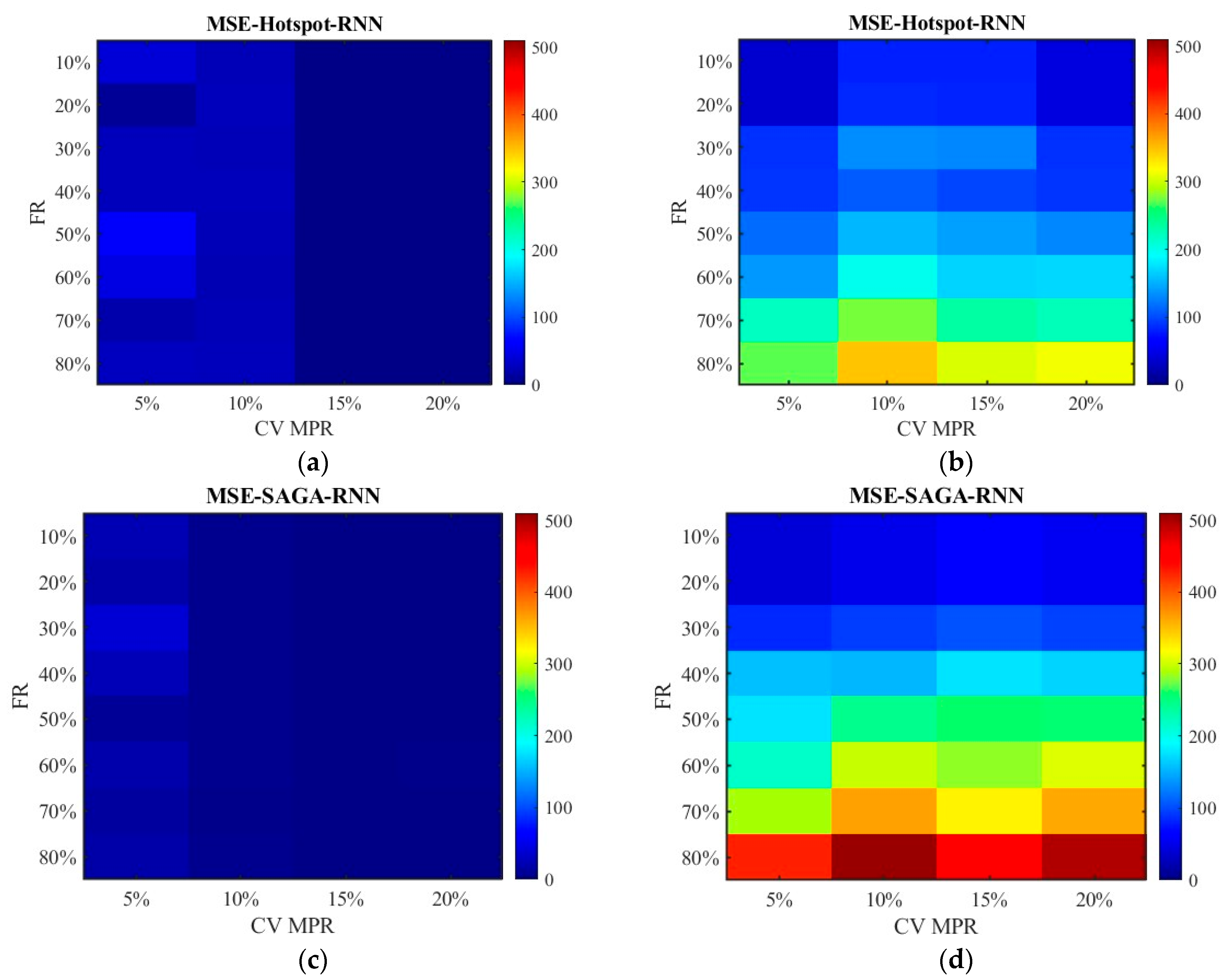
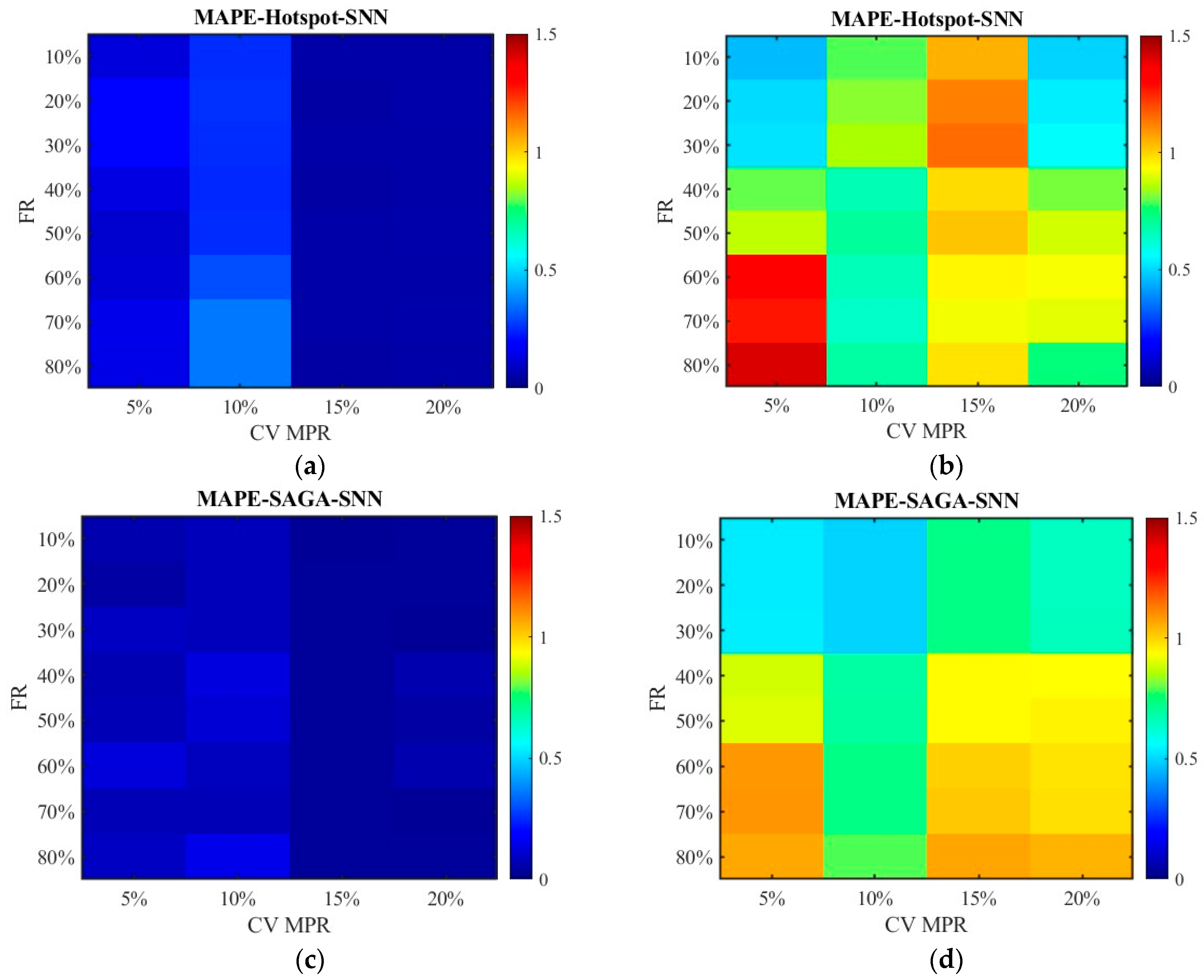
- The accuracy of single-source data can be improved along with the increase in CV MPR but decreases with the increase in sensor failure rate. The fused data is less affected by the failure rates. Multi-source data fusion is much more effective in improving data accuracy than missing data imputation. When the MPR is higher than 15% or the failure rate exceeds 40%, it is recommended to adopt data fusion rather than repairing missing data.
- It provides a method that is more suitable to address the equipment optimization issue at the road segment level and can better balance the spatial selection fairness of sensor locations.
- The findings shed light on the trade-offs and benefits associated with improving RSE deployment and promoting CV development.
Abstract
1. Introduction
- (1)
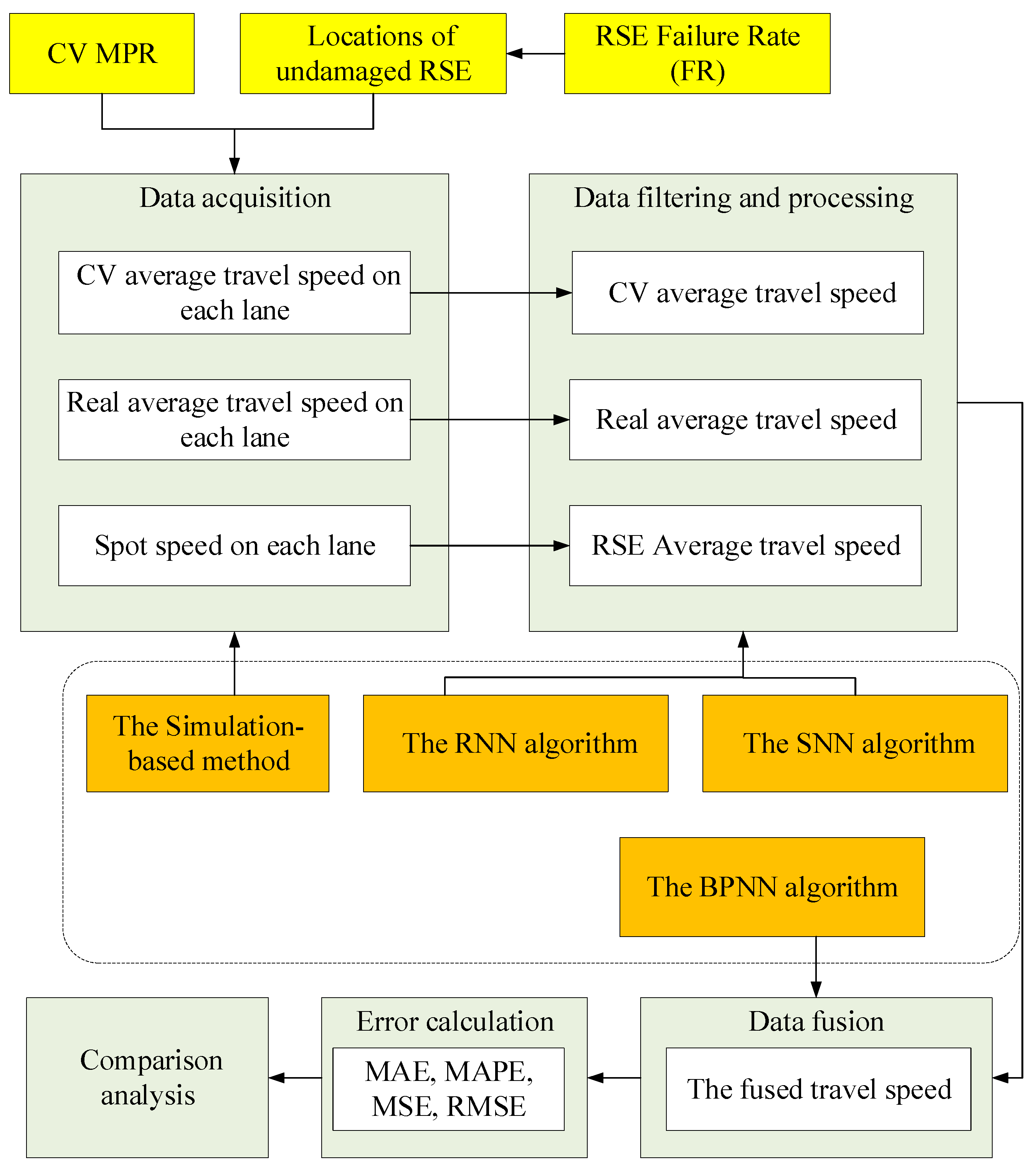
- This is the first study to weigh the impact of CV MPR and the failure rate of RSE on data accuracy for the mixed traffic flow with CVs and human-driven vehicles on a freeway corridor.
- (2)
- A general optimization model, which refers to the spatial uniformity and error minimization as objective and subject to spacing constraints, is formulated to find the optimal sensor deployment scheme. It can better balance the spatial selection fairness of sensor locations by subdividing road segments into cells with relatively small spacing. By solving the model, an improved SAGA is given to find the global optimal solution. This method is more suitable to address the equipment optimization issue at the road segment level.
- (3)
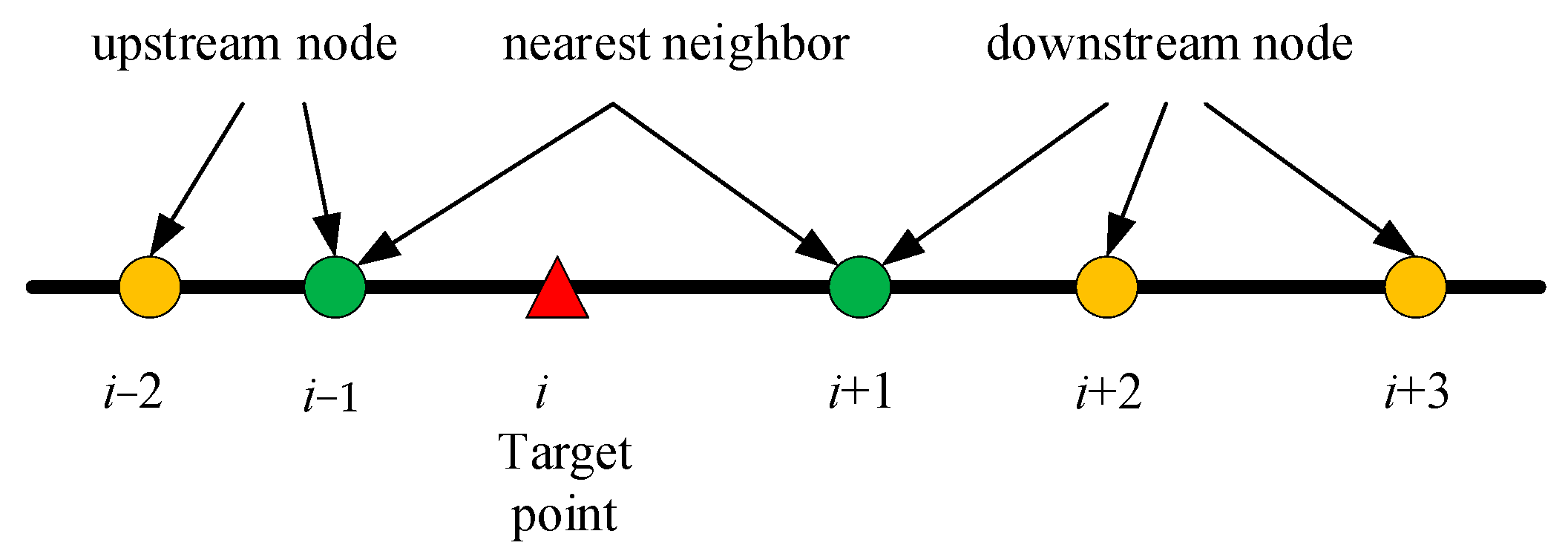
- According to whether missing values are allowed or not, a rigid nearest neighbor algorithm and a soft nearest neighbor algorithm are proposed to handle the missing data caused by sensor failure. Based on these methods, the issue of missing single-source data at the road segment level can be addressed. Compared with missing RSE data imputation, the fusion with CV data can better enhance data quality.
- (4)
- The key parameters—CV MPR and sensor failure rate—affecting data accuracy are discussed in detail. The findings shed light on the trade-offs and benefits associated with improving RSE deployment and promoting CV development.
2. Literature References
2.1. RSE Allocation Methods
2.2. The Influence of CV MPR on Traffic Application
2.3. Sensor Failure on Traffic Data Acquisition
3. Methodology
3.1. The Optimal Deployment Method
3.2. The Simulation-Based Approach Combined with Data Processing Algorithms
| Algorithm 1 The rigid nearest neighbor algorithm |
| Input: spot speed matrix , damaged RSE location matrix Output: travel speed matrix 1: Initialize the spot speed matrix based on ; 2: The elements in every two rows of the matrix are added and multiplied, marked as and ; 3: Find 0 in and , marked the locations as ; 4: Find 0 in but not in , marked the locations as ; 5: Set the values in that are zero to 1; 6: Compute the according to Equation (16); 7: Set the values = 0; 8: Replace the row elements of with that of if . otherwise, 9: Replace the row elements of with that of the next row of ; 10: Return ; |
| Algorithm 2 The soft nearest neighbor algorithm |
| Input: spot speed matrix , damaged RSE location matrix Output: travel speed matrix 1: Initialize the spot speed matrix = {} based on ; 2: For , Compute the travel speed according to Equation (15); 3: do 4: Check if then 5: Repeat check until ; 6: Check if then 7: Repeat check until ; 8: Compute the travel speed of link (i − j, i + k) according to Equation (15); 9: Assign the speed to all the sections between point (i − j) and point (i + k); 10: end for 11: repeat 12: Update the travel speed matrix ; 13: until all elements in be considered 14: Return ; |
| Algorithm 3 The BPNN algorithm |
| Input: travel speed from RSE, the CV travel speed, the true travel speed and the CV MPR Output: the fused travel speed 1: Splitting training data and testing data according to the train-test split ratio. 2: Normalization of training data. 3: Build a BP neural network with input layer, hidden layer and output layer. The transfer functions of the hidden layer and the output layer are tansig and purelin, respectively. The training is conducted by using the trainlm method. 4: Setting network parameters, such as the number of training iterations, learning rate, minimum error of training target, etc. 5: BP neural network training. 6: Normalization of testing data. 7: BP neural network prediction. 8: Prediction result normalization. |
4. Case Analysis
4.1. Simulation Set-Up
4.2. Failure Rate Setting and Data Processing
4.3. Results Analysis
4.3.1. Comparison and Analysis of RSE Deployment Methods
4.3.2. The Impact of CV MPR on Data Accuracy
4.3.3. The Impact of RSE Failure Rate on Data Accuracy
5. Conclusions
Funding
Institutional Review Board Statement
Informed Consent Statement
Data Availability Statement
Conflicts of Interest
References
- Mousavi, S.M.; Osman, O.A.; Lord, D.; Dixon, K.K.; Dadashova, B. Investigating the safety and operational benefits of mixed traffic environments with different automated vehicle market penetration rates in the proximity of a driveway on an urban arterial. Accid. Anal. Prev. 2021, 152, 105982. [Google Scholar] [CrossRef] [Scilit]
- Shladover, S.E. Connected and Automated Vehicle Systems: Introduction and Overview. J. Intell. Transp. Syst. 2018, 22, 190–200. [Google Scholar] [CrossRef] [Scilit]
- Wong, W.; Shen, S.; Zhao, Y.; Liu, H.X. On the estimation of connected vehicle penetration rate based on single-source connected vehicle data. Transp. Res. Part B Methodol. 2019, 126, 169–191. [Google Scholar] [CrossRef] [Scilit]
- Talebpour, A.; Mahmassani, H.S. Influence of connected and autonomous vehicles on traffic flow stability and throughput. Transp. Res. C Emerg. Technol. 2016, 71, 143–163. [Google Scholar] [CrossRef] [Scilit]
- Martin, P.T.; Feng, Y.; Wang, X. Detector Technology Evaluation; University of Utah Traffic Lab: Salt Lake City, UT, USA, 2003. [Google Scholar]
- Jung, Y.; Oh, J. Lifespan Evaluation of Traffic Detector for Automated Traffic Recorders Based on Weibull Distribution. J. Trans. Eng. A Syst. 2017, 143, 05017006. [Google Scholar] [CrossRef]
- Alemazkoor, N.; Wang, S.; Meidani, H. A Recursive Data-driven Model for Traffic Flow Predictions for Locations with Faulty Sensors. In Proceedings of the 2018 21st International Conference on Intelligent Transportation Systems (ITSC), Maui, HI, USA, 4–7 November 2018; pp. 1646–1651. [Google Scholar] [CrossRef] [Scilit]
- Salari, M.; Kattan, L.; Lam, W.H.K.; Ansari Esfeh, M.; Fu, H. Modeling the effect of sensor failure on the location of counting sensors for origin-destination (OD) estimation. Transp. Res. C Emerg. Technol. 2021, 132, 103367. [Google Scholar] [CrossRef] [Scilit]
- Ding, L.; Rajapaksha, P.; Minerva, R.; Crespi, N. Deep Learning for Reducing Redundancy in Madrid’s Traffic Sensor Network. In Proceedings of the 2024 IEEE 49th Conference on Local Computer Networks (LCN), Normandy, France, 8–10 October 2024. [Google Scholar] [CrossRef] [Scilit]
- Zou, X.; Chung, E.; Zhou, Y.; Long, M.; Lam, W.H.K. A feature extraction and deep learning approach for network traffic volume prediction considering detector reliability. Comput. Aided Civ. Infrastruct. Eng. 2024, 39, 102–119. [Google Scholar] [CrossRef] [Scilit]
- Argote-Cabañero, J.; Christofa, E.; Skabardonis, A. Connected vehicle penetration rate for estimation of arterial measures of effectiveness. Transp. Res. C Emerg. Technol. 2015, 60, 298–312. [Google Scholar] [CrossRef] [Scilit]
- Stanek, D.; Huang, E.; Milam, R.T.; Wang, Y.A. Measuring Autonomous Vehicle Impacts on Congested Networks Using Simulation. In Proceedings of the Transportation Research Board 97th Annual Meeting, Washington, DC, USA, 7–11 January 2018; pp. 1–15. [Google Scholar]
- Abdeen, M.A.R.; Yasar, A.; Benaida, M.; Sheltami, T.; Zavantis, D.; El-Hansali, Y. Evaluating the Impacts of Autonomous Vehicles’ Market Penetration on a Complex Urban Freeway during Autonomous Vehicles’ Transition Period. Sustainability 2022, 14, 10094. [Google Scholar] [CrossRef] [Scilit]
- Ye, L.; Yamamoto, T. Evaluating the impact of connected and autonomous vehicles on traffic safety. Phys. A Stat. Mech. Its Appl. 2019, 526, 121009. [Google Scholar] [CrossRef] [Scilit]
- Jiang, Y.; Wang, S.; Yao, Z.; Zhao, B.; Wang, Y. A cellular automata model for mixed traffic flow considering the driving behavior of connected automated vehicle platoons. Phys. A Stat. Mech. Its Appl. 2021, 582, 126262. [Google Scholar] [CrossRef] [Scilit]
- Liu, H.; Kan, X.D.; Shladover, S.E.; Lu, X.; Ferlis, R.E. Modeling impacts of cooperative adaptive cruise control on mixed traffic flow in multi-lane freeway facilities. Transp. Res. C Emerg. Technol. 2018, 95, 261–279. [Google Scholar] [CrossRef] [Scilit]
- Xu, X.; Lo, H.K.; Chen, A.; Castillo, E. Robust network sensor location for complete link flow observability under uncertainty. Transp. Res. B, Methodol. 2016, 88, 1–20. [Google Scholar] [CrossRef] [Scilit]
- Salari, M.; Kattan, L.; Lam, W.H.K.; Lo, H.P.; Esfeh, M.A. Optimization of traffic sensor location for complete link flow observability in traffic network considering sensor failure. Transp. Res. B Methodol. 2019, 121, 216–251. [Google Scholar] [CrossRef] [Scilit]
- Sherali, H.D.; Desai, J.; Rakha, H.A. Discrete optimization approach for locating automatic vehicle identification readers for the provision of roadway travel times. Transp. Res. B Methodol. 2006, 40, 857–871. [Google Scholar] [CrossRef] [Scilit]
- Zhu, N.; Fu, C.; Ma, S. Data-driven distributionally robust optimization approach for reliable travel-time-information-gain-oriented traffic sensor location model. Transp. Res. B Methodol. 2018, 11, 91–120. [Google Scholar] [CrossRef] [Scilit]
- Zhan, F.; Wan, X.; Cheng, Y.; Ran, B. Methods for multi-type sensor allocations along a freeway corridor. IEEE Intell. Transp. Syst. Mag. 2018, 10, 134–149. [Google Scholar] [CrossRef] [Scilit]
- Sayyady, F.; Fathi, Y.; List, G.F.; Stone, J.R. Locating traffic sensors on a highway network: Models and algorithms. Transp. Res. Rec. 2013, 2339, 30–38. [Google Scholar] [CrossRef] [Scilit]
- An, K.; Xie, S.; Ouyang, Y. Reliable sensor location for object positioning and surveillance via trilateration. Transp. Res. Procedia 2017, 23, 228–245. [Google Scholar] [CrossRef] [Scilit]
- Fei, X.; Mahmassani, H.S.; Murray-Tuite, P. Vehicular network sensor placement optimization under uncertainty. Transp. Res. C Emerg. Technol. 2013, 29, 14–31. [Google Scholar] [CrossRef] [Scilit]
- Ban, X.; Herring, R.; Margulici, J.D.; Bayen, A.M. Optimal sensor placement for freeway travel time estimation. In Transportation and Traffic Theory 2009: Golden Jubilee; Lam, W., Wong, S., Lo, H., Eds.; Springer: Boston, MA, USA, 2009. [Google Scholar] [CrossRef] [Scilit]
- Liu, H.X.; Danczyk, A. Optimal sensor locations for freeway bottleneck identification. Comput. Aided Civ. Infrastruct. Eng. 2009, 24, 535–550. [Google Scholar] [CrossRef] [Scilit]
- Danczyk, A.; Liu, H.X. A mixed-integer linear program for optimizing sensor locations along freeway corridors. Transp. Res. B Methodol. 2011, 45, 208–217. [Google Scholar] [CrossRef] [Scilit]
- Kim, J.; Park, B.; Lee, J.; Won, J. Determining optimal sensor locations in freeway using genetic algorithm-based optimization. Eng. Appl. Artif. Intell. 2011, 24, 318–324. [Google Scholar] [CrossRef] [Scilit]
- Zhan, F.; Jing, P.; Ran, B. Infrastructure Allocation for Improving Sensing Accuracy and Connectivity Probability Based on Combination Strategy in Vehicular Networks. IEEE Trans. Intell. Transp. Syst. 2022, 23, 15244–15255. [Google Scholar] [CrossRef] [Scilit]
- Kianfar, J.; Edara, P. Optimizing freeway traffic sensor locations by clustering global-positioning-system-derived speed patterns. IEEE Trans. Intell. Transp. Syst. 2010, 11, 738–747. [Google Scholar] [CrossRef] [Scilit]
- Barrachina, J.; Garrido, P.; Fogue, M.; Martinez, F.J.; Cano, J.-C.; Calafate, C.T.; Manzoni, P. Road side unit deployment: A density-based approach. IEEE Intell. Transp. Syst. Mag. 2013, 5, 30–39. [Google Scholar] [CrossRef] [Scilit]
- Yeferny, T.; Allani, S. MPC: A RSUs deployment strategy for VANET. Int. J. Commun. Syst. 2018, 31, e3712. [Google Scholar] [CrossRef] [Scilit]
- Du, Y.; Wang, F.; Zhao, C.; Zhu, Y.; Ji, Y. Quantifying the performance and optimizing the placement of roadside sensors for cooperative vehicle-infrastructure systems. IET Intell. Transport Syst. 2022, 16, 908–925. [Google Scholar] [CrossRef] [Scilit]
- Wang, Y.; Zheng, J. Connectivity analysis of a highway with one entry/exit and multiple roadside units. IEEE Trans. Veh. Technol. 2018, 67, 11705–11718. [Google Scholar] [CrossRef] [Scilit]
- Xiao, H.; Liu, X.; Zhang, Q.; Chronopoulos, A.T. Connectivity probability analysis for freeway vehicle scenarios in vehicular networks. Wireless Netw. 2021, 27, 465–474. [Google Scholar] [CrossRef] [Scilit]
- Ghorai, C.; Banerjee, I. A constrained Delaunay triangulation based RSUs deployment strategy to cover a convex region with obstacles for maximizing communications probability between V2I. Veh. Commun. 2018, 13, 89–103. [Google Scholar] [CrossRef] [Scilit]
- Liang, B.; Xu, X.; Lu, W.; Wang, F.; Ran, B. Optimizing the Deployment of Static and Mobile Roadside Units Using a Branch-and-Price Algorithm. IEEE Trans. Intell. Transp. Syst. 2024, 25, 17078–17091. [Google Scholar] [CrossRef] [Scilit]
- Zeng, M.; He, J. Deployment Optimization of Roadside Unit with Failure Probability Based on Stochastic Mixed Traffic Equilibrium. IEEE Trans. Intell. Transp. Syst. 2024, 25, 7792–7804. [Google Scholar] [CrossRef] [Scilit]
- Lehsaini, M.; Gaouar, N.; Nebbou, T. Efficient deployment of roadside units in vehicular networks using optimization methods. Int. J. Commun. Syst. 2022, 35, e5265. [Google Scholar] [CrossRef] [Scilit]
- Yu, L.; Zhang, Z.; Li, J.; Ma, J.; Wang, Y. A Multi-Objective Roadside Unit Deployment Model for an Urban Vehicular Ad Hoc Network. ISPRS Int. J. Geo-Inf. 2023, 12, 262. [Google Scholar] [CrossRef] [Scilit]
- Stern, R.E.; Cui, S.; Monache, M.L.D.; Bhadani, R.; Bunting, M.; Churchill, M.; Hamilton, N.; Haulcy, R.M.; Pohlmann, H.; Wu, F.; et al. Dissipation of stop-and-go waves via control of autonomous vehicles: Field experiments. Transp. Res. C Emerg. Technol. 2018, 89, 205–221. [Google Scholar] [CrossRef] [Scilit]
- Zheng, F.; Liu, C.; Liu, X.; Jabari, S.E.; Lu, L. Analyzing the impact of automated vehicles on uncertainty and stability of the mixed traffic flow. Transp. Res. C Emerg. Technol. 2020, 112, 203–219. [Google Scholar] [CrossRef] [Scilit]
- Gao, K.; Han, F.; Dong, P.; Xiong, N.; Du, R. Connected Vehicle as a Mobile Sensor for Real Time Queue Length at Signalized Intersections. Sensors 2019, 19, 2059. [Google Scholar] [CrossRef] [Scilit] [PubMed]
- Majstorović, Ž.; Miletić, M.; Čakija, D.; Dusparić, I.; Ivanjko, E.; Carić, T. Impact of the Connected Vehicles Penetration Rate on the Speed Transition Matrices Accuracy. Transp. Res. Procedia 2022, 64, 240–247. [Google Scholar] [CrossRef] [Scilit]
- Sha, D.; Tang, Y.; Ozbay, K.; Gao, J.; Zuo, F. Market Penetration Rate Optimization for Mobility Benefits of Connected Vehicles: A Bayesian Optimization Approach. Transp. Res. Rec. 2025, 2679, 1513–1527. [Google Scholar] [CrossRef] [Scilit]
- Yao, Z.; Deng, H.; Chen, Z.; He, X.; Ai, Y.; Wu, Y. Linear internal stability for mixed traffic flow of CAVs with different automation levels. Phys. A Stat. Mech. Its Appl. 2024, 642, 129759. [Google Scholar] [CrossRef] [Scilit]
- Chin, H.; Okuda, H.; Tazaki, Y.; Suzuki, T. Model predictive cooperative cruise control in mixed traffic. In Proceedings of the IECON 2015—41st Annual Conference of the IEEE Industrial Electronics Society, Yokohama, Japan, 9–12 November 2015; pp. 003199–003205. [Google Scholar] [CrossRef] [Scilit]
- Xiao, G.; Lee, J.; Jiang, Q.; Huang, H.; Abdel-Aty, M.; Wang, L. Safety improvements by intelligent connected vehicle technologies: A meta-analysis considering market penetration rates. Accid. Anal. and Prev. 2021, 159, 106234. [Google Scholar] [CrossRef] [Scilit]
- Zhang, W.; Guhathakurta, S.; Fang, J.; Zhang, G. Exploring the impact of shared autonomous vehicles on urban parking demand: An agent-based simulation approach. Sustain. Cities Soc. 2015, 19, 34–45. [Google Scholar] [CrossRef] [Scilit]
- Yang, H.; Wang, Z.; Xie, K. Impact of connected vehicles on mitigating secondary crash risk. Int. J. Trans. Sci. Technol. 2017, 6, 196–207. [Google Scholar] [CrossRef] [Scilit]
- Papadoulis, A.; Quddus, M.; Imprialou, M. Evaluating the safety impact of connected and autonomous vehicles on motorways. Accid. Anal. Prev. 2019, 124, 12–22. [Google Scholar] [CrossRef] [Scilit]
- Shladover, S.E.; Su, D.; Lu, X. Impacts of Cooperative Adaptive Cruise Control on Freeway Traffic Flow. Transp. Res. Rec. 2012, 2324, 63–70. [Google Scholar] [CrossRef] [Scilit]
- Henrickson, K.; Zou, Y.; Wang, Y. Flexible and Robust Method for Missing Loop Detector Data Imputation. Transp. Res. Rec. 2015, 2527, 29–36. [Google Scholar] [CrossRef] [Scilit]
- Shang, Q.; Yang, Z.; Gao, S.; Tan, D. An Imputation Method for Missing Traffic Data Based on FCM Optimized by PSO-SVR. J. Adv. Trans. 2018, 2018, 2935248. [Google Scholar] [CrossRef] [Scilit]
- Cottam, A.; Li, X.; Wu, Y. VEMLAN: Imputing missing data for failed freeway traffic sensors. J. Intell. Trans. Syst. 2025; early access. [CrossRef] [Scilit]
- Li, X.; Ouyang, Y. Reliable sensor deployment for network traffic surveillance. Transp. Res. B Methodol. 2011, 45, 218–231. [Google Scholar] [CrossRef] [Scilit]
- Zhu, N.; Ma, S.; Zheng, L. Travel time estimation oriented freeway sensor placement problem considering sensor failure. J. Intell. Trans. Syst. 2017, 21, 26–40. [Google Scholar] [CrossRef] [Scilit]
- Sun, W.; Shao, H.; Li, J.; Wu, T.; Fainman, E.Z. Multi-type traffic sensor location problem for origin–destination estimation considering spatiotemporal correlation and sensor failure. Transp. Res. C Emerg. Technol. 2025, 179, 105288. [Google Scholar] [CrossRef] [Scilit]
- Liang, B.; Wang, F.; Ran, B. Optimizing Roadside Unit Deployment in VANETs: A Study on Consideration of Failure. IEEE Trans. Intell. Transp. Syst. 2024, 25, 10835–10850. [Google Scholar] [CrossRef] [Scilit]
- Chaudhuri, P.; Martin, P.T.; Stevanovic, A.Z.; Zhu, C. The effects of detector spacing on travel time prediction on freeways. World Acad. Sci. Eng. Technol. 2010, 4, 135–144. [Google Scholar] [CrossRef]
- Yang, J.; Peng, Z.; Lin, L. Real-time spatiotemporal prediction and imputation of traffic status based on LSTM and Graph Laplacian regularized matrix factorization. Transp. Res. C Emerg. Technol. 2021, 129, 103228. [Google Scholar] [CrossRef] [Scilit]
- Danczyk, A.; Di, X.; Liu, H.X. A probabilistic optimization model for allocating freeway sensors. Transp. Res. C Emerg. Technol. 2016, 67, 378–398. [Google Scholar] [CrossRef] [Scilit]
- Du, Y.; Sun, C.P. A novel interpretable model of bathtub hazard rate based on system hierarchy. Reliab. Eng. Syst. Saf. 2022, 228, 108756. [Google Scholar] [CrossRef] [Scilit]









| Parameters | Value |
|---|---|
| Simulator | SUMO |
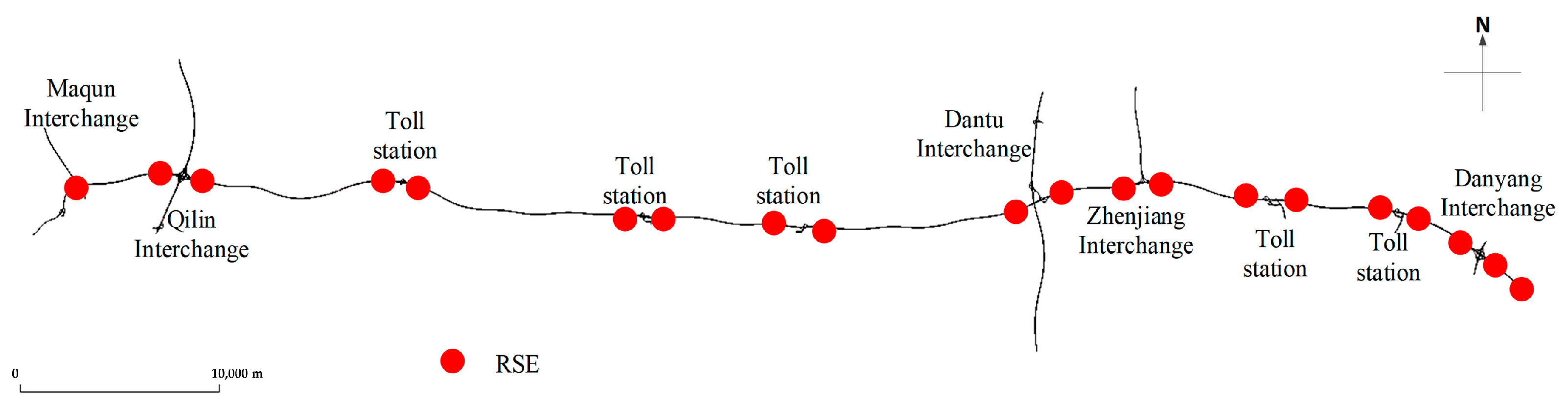
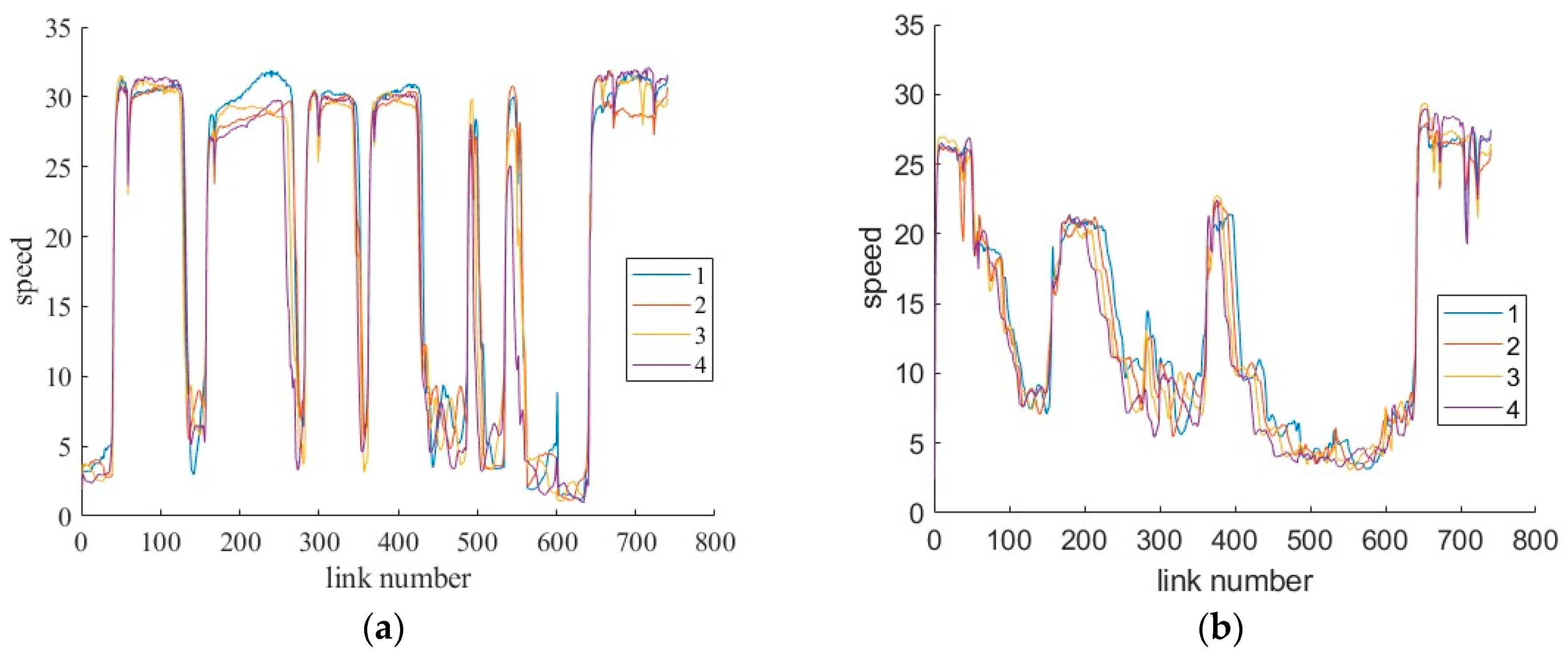
| Road length | 74 km |
| Number of lanes | 4 |
| Number of road segments | 740 |
| Road segment length | 100 m |
| Vehicle speed | 0–33 m/s |
| Volume | 0–2000 veh/h for mainline, 0–800 veh/h for ramps |
| CV MPR | 5%, 10%, 15%, 20%, 30%, 40%, 50%, 60%, 70%, 80%, 90%, 100% |
| Car-following model | CACC/IDM |
| Lane-change model | LC2013 |
| Simulation time | 7200 s |
| Data collection interval | 300 s |
| Serial Number | Uniform | Hotspot | Optimal | ||
|---|---|---|---|---|---|
| SAGA | SA | GA | |||
| 1 | 1 | 1 | 15 | 1 | 31 |
| 2 | 38 | 39 | 71 | 31 | 38 |
| 3 | 75 | 59 | 101 | 68 | 43 |
| 4 | 112 | 157 | 126 | 78 | 63 |
| 5 | 149 | 168 | 171 | 96 | 86 |
| 6 | 186 | 282 | 191 | 100 | 158 |
| 7 | 223 | 299 | 231 | 114 | 275 |
| 8 | 260 | 362 | 366 | 208 | 297 |
| 9 | 297 | 370 | 383 | 218 | 302 |
| 10 | 334 | 487 | 414 | 226 | 339 |
| 11 | 371 | 534 | 448 | 298 | 395 |
| 12 | 408 | 551 | 478 | 364 | 414 |
| 13 | 445 | 600 | 483 | 403 | 435 |
| 14 | 482 | 608 | 657 | 437 | 449 |
| 15 | 519 | 665 | 690 | 580 | 454 |
| 16 | 556 | 672 | 695 | 605 | 659 |
| 17 | 593 | 709 | 704 | 635 | 692 |
| 18 | 630 | 717 | 725 | 658 | 709 |
| 19 | 667 | 723 | 730 | 664 | 718 |
| 20 | 704 | 740 | 739 | 734 | 723 |
| Parameter | Value |
|---|---|
| Initial temperature | 1000 |
| Minimum temperature | 1 × 10⁻³ |
| Temperature attenuation coefficient | 0.9 |
| Maximum number of iterations | 1000 |
| Population size | 300 |
| Crossover rate | 0.8 |
| Mutation rate | 0.05 |
| Parameter | Value |
|---|---|
| Maximum Epochs | 1000 |
| Learning rate | 0.01 |
| Minimum error of training target | 1 × 10⁻⁵ |
| Train-test split ratio | 20:4 |
| Input layer | 3 |
| Hidden layer | 5 |
| Output layer | 1 |
| Ways Affecting Data Accuracy | Scope of Research | Key Findings |
|---|---|---|
| Sensor allocation method | The optimal method, the uniform method, the hotspot method | The optimal method performs better. |
| Heuristic Algorithm | SAGA, SA, GA | The SAGA performs better. |
| Data fusion algorithm | BPNN, LSTM, RF | The BPNN algorithm performs better. |
| Data imputation algorithm | SNN, RNN | The SNN performs better. |
| CV MPR | 5–100% | When MPR exceeds 15% and 60%, respectively, the rate of improvement in data accuracy slows down. |
| RSE failure rate | 10–80% | The fused data is less affected by this factor; the single-source data under 40% failure rate can be improved by data imputation. |
Disclaimer/Publisher’s Note: The statements, opinions and data contained in all publications are solely those of the individual author(s) and contributor(s) and not of MDPI and/or the editor(s). MDPI and/or the editor(s) disclaim responsibility for any injury to people or property resulting from any ideas, methods, instructions or products referred to in the content. |
© 2026 by the author. Licensee MDPI, Basel, Switzerland. This article is an open access article distributed under the terms and conditions of the Creative Commons Attribution (CC BY) license.
Share and Cite
Zhan, F. Impact Analysis of the Market Penetration Rate of Connected Vehicles and the Failure Rate of Roadside Equipment on Data Accuracy. Sensors 2026, 26, 686. https://doi.org/10.3390/s26020686
Zhan F. Impact Analysis of the Market Penetration Rate of Connected Vehicles and the Failure Rate of Roadside Equipment on Data Accuracy. Sensors. 2026; 26(2):686. https://doi.org/10.3390/s26020686
Chicago/Turabian StyleZhan, Fengping. 2026. "Impact Analysis of the Market Penetration Rate of Connected Vehicles and the Failure Rate of Roadside Equipment on Data Accuracy" Sensors 26, no. 2: 686. https://doi.org/10.3390/s26020686
APA StyleZhan, F. (2026). Impact Analysis of the Market Penetration Rate of Connected Vehicles and the Failure Rate of Roadside Equipment on Data Accuracy. Sensors, 26(2), 686. https://doi.org/10.3390/s26020686