Article

Two-Phase Distributed Genetic-Based Algorithm for Time-Aware Shaper Scheduling in Industrial Sensor Networks


Department of Engineering Science and Ocean Engineering, National Taiwan University, Taipei 10617, Taiwan
*
Authors to whom correspondence should be addressed.
Sensors 2026, 26(2), 377; https://doi.org/10.3390/s26020377
Submission received: 9 December 2025 / Revised: 3 January 2026 / Accepted: 4 January 2026 / Published: 6 January 2026

Abstract

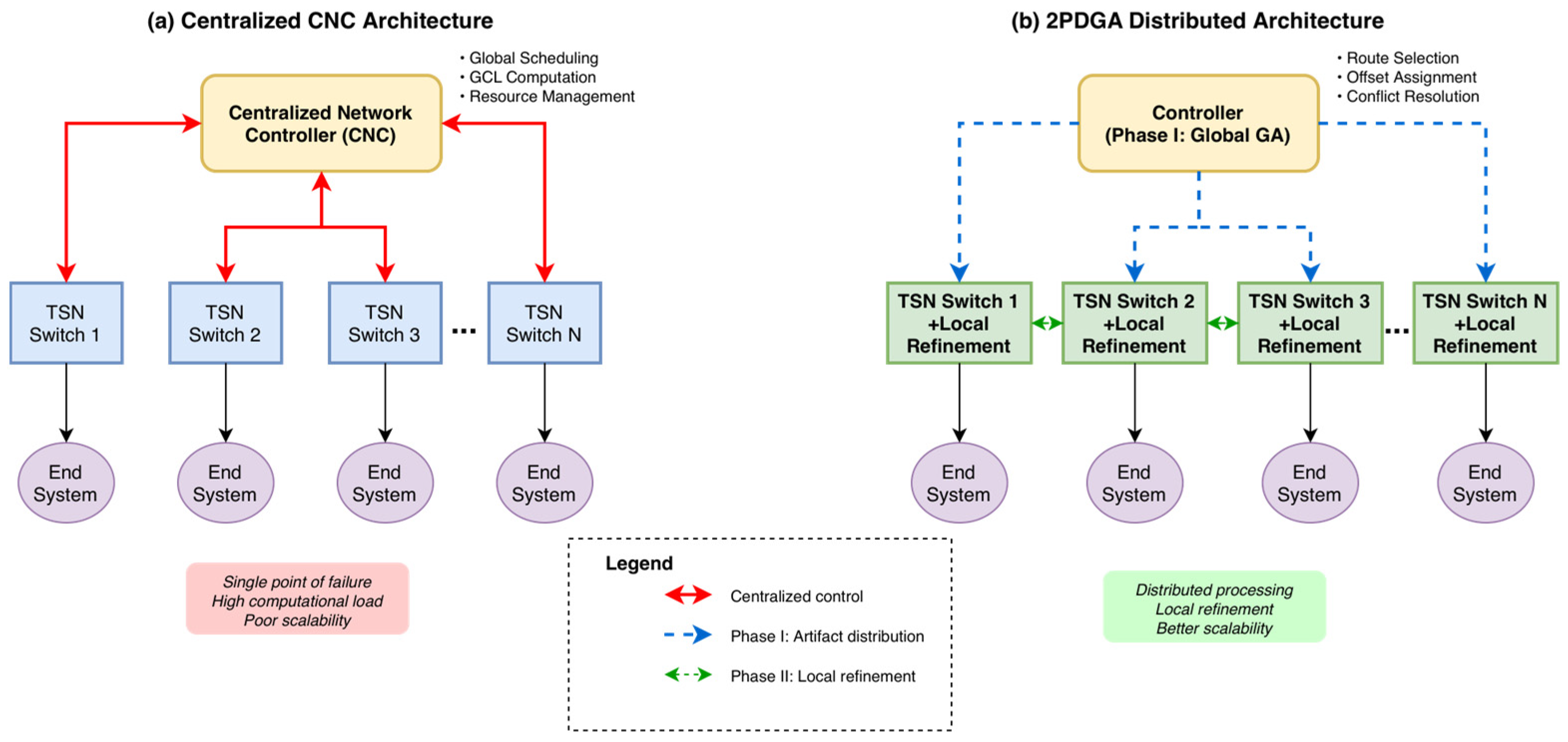
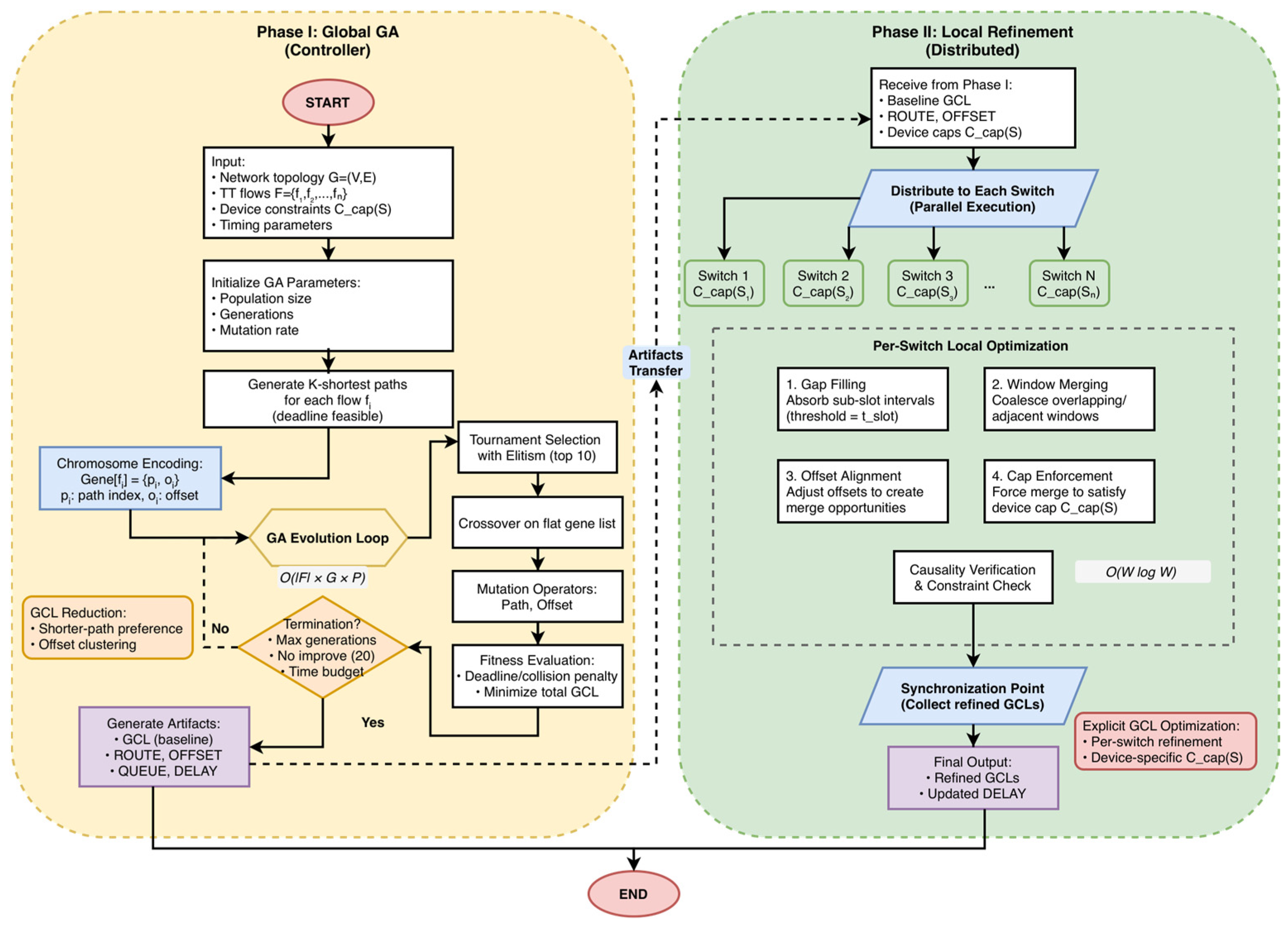
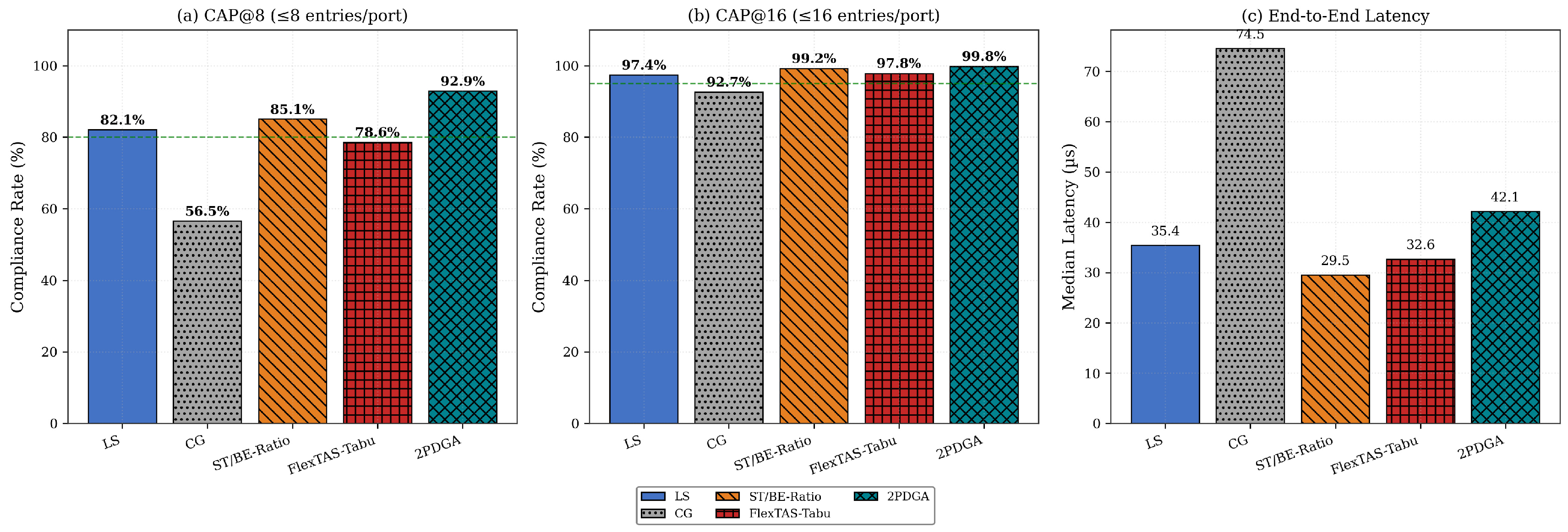
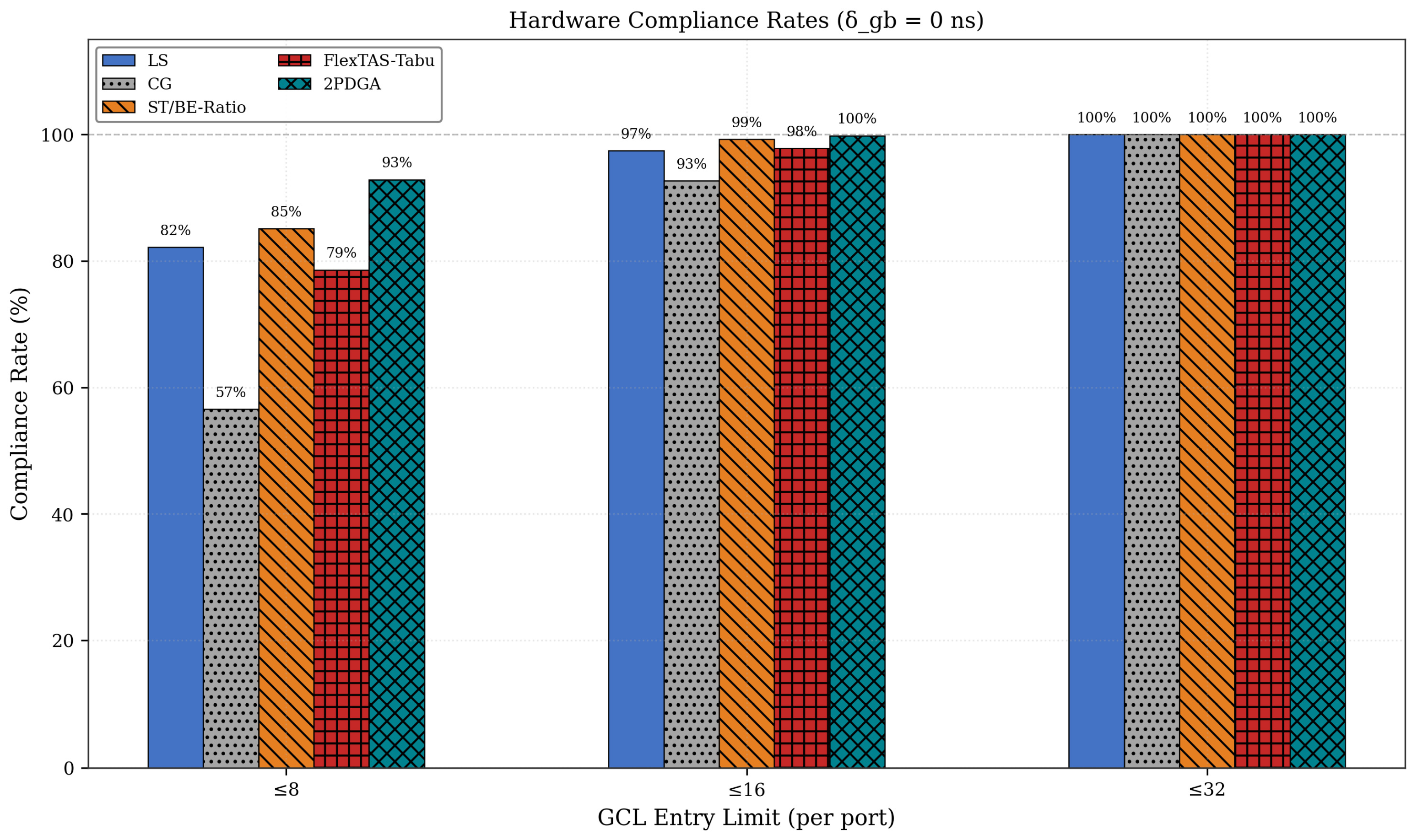
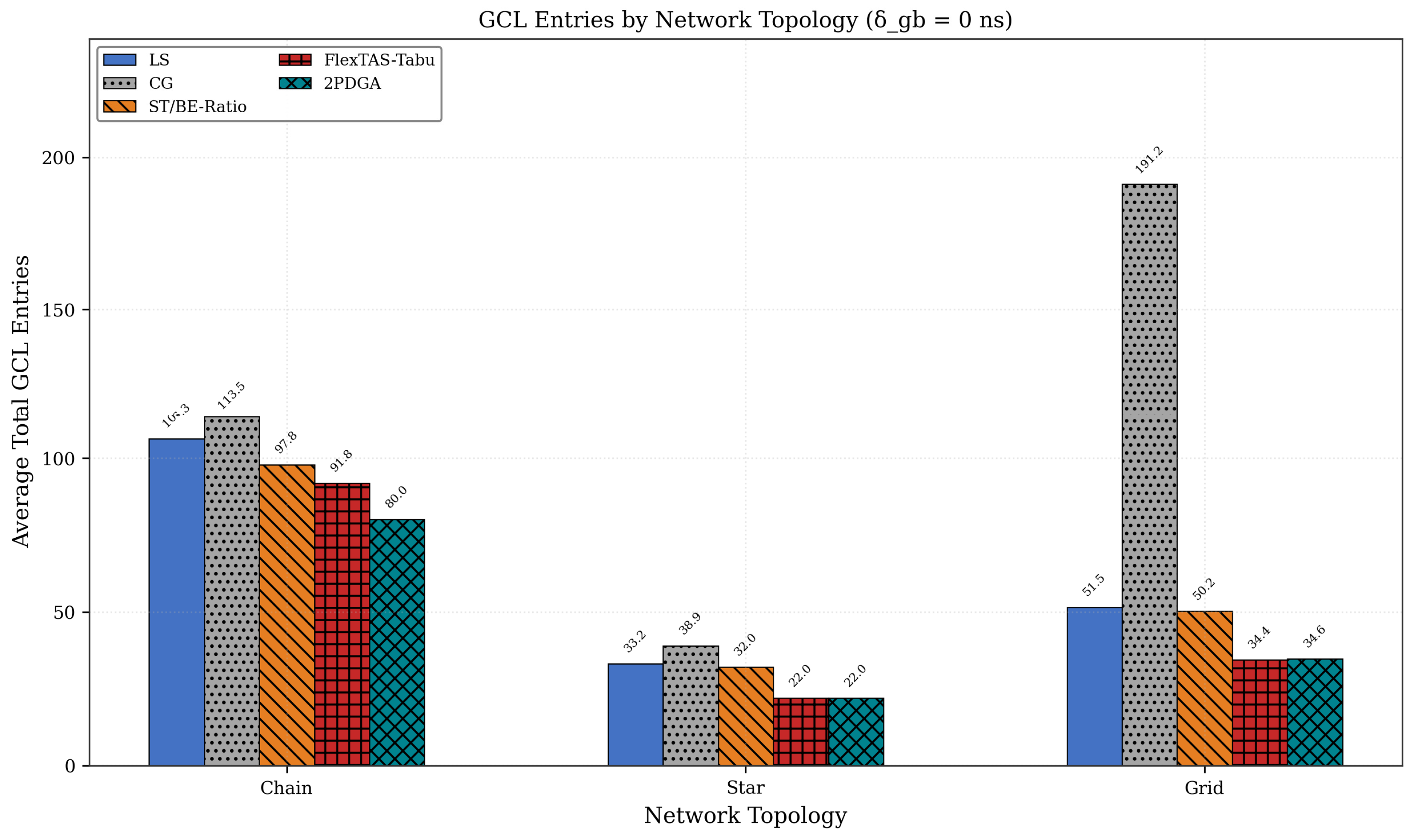
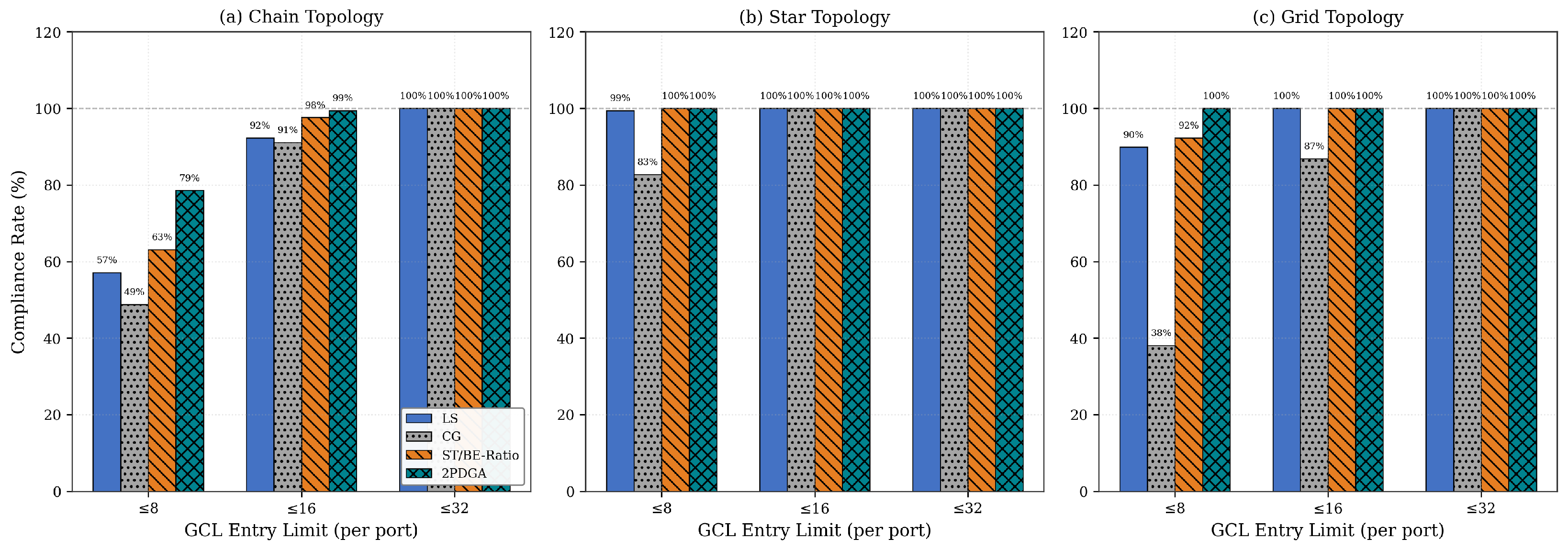
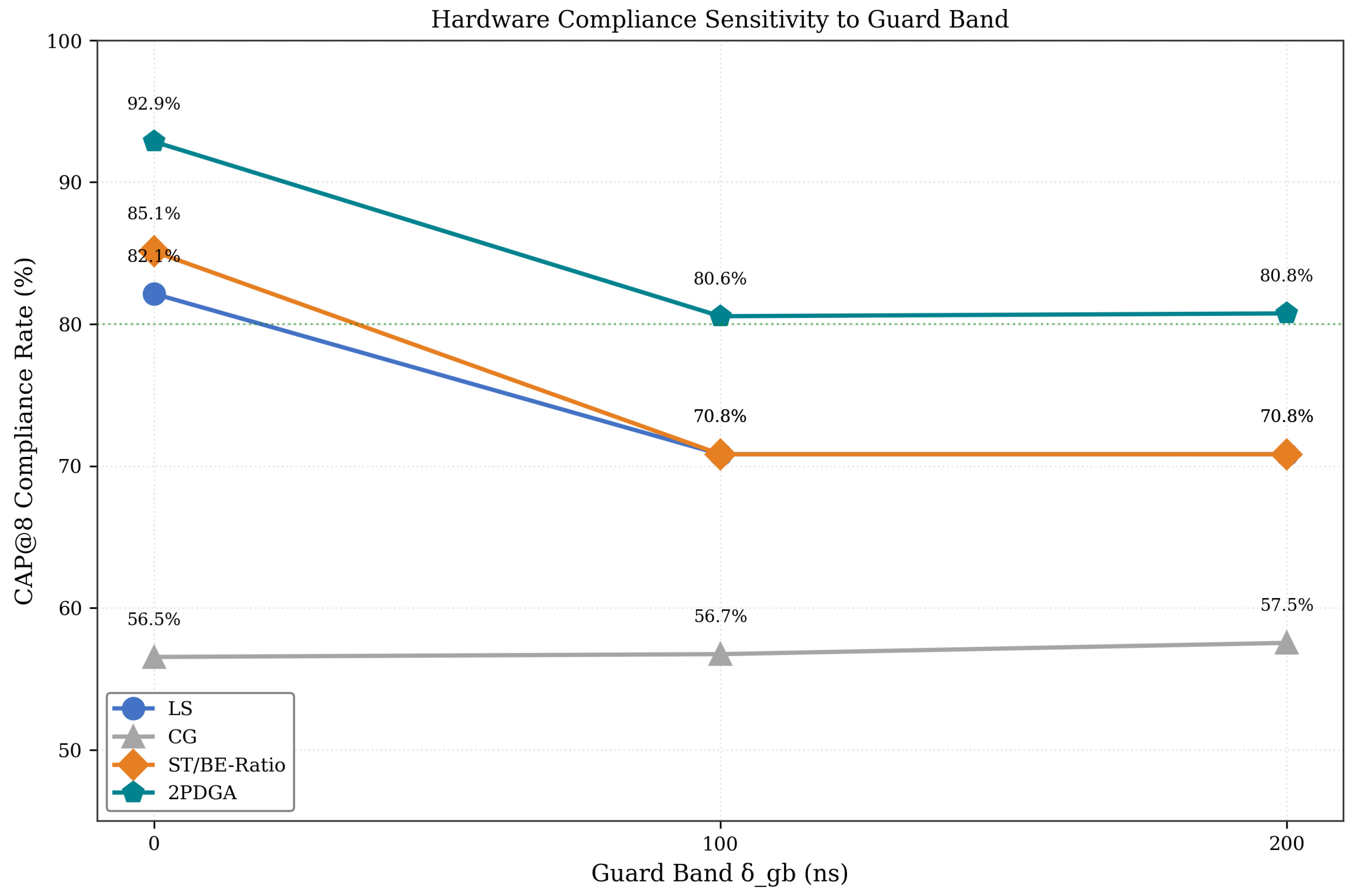
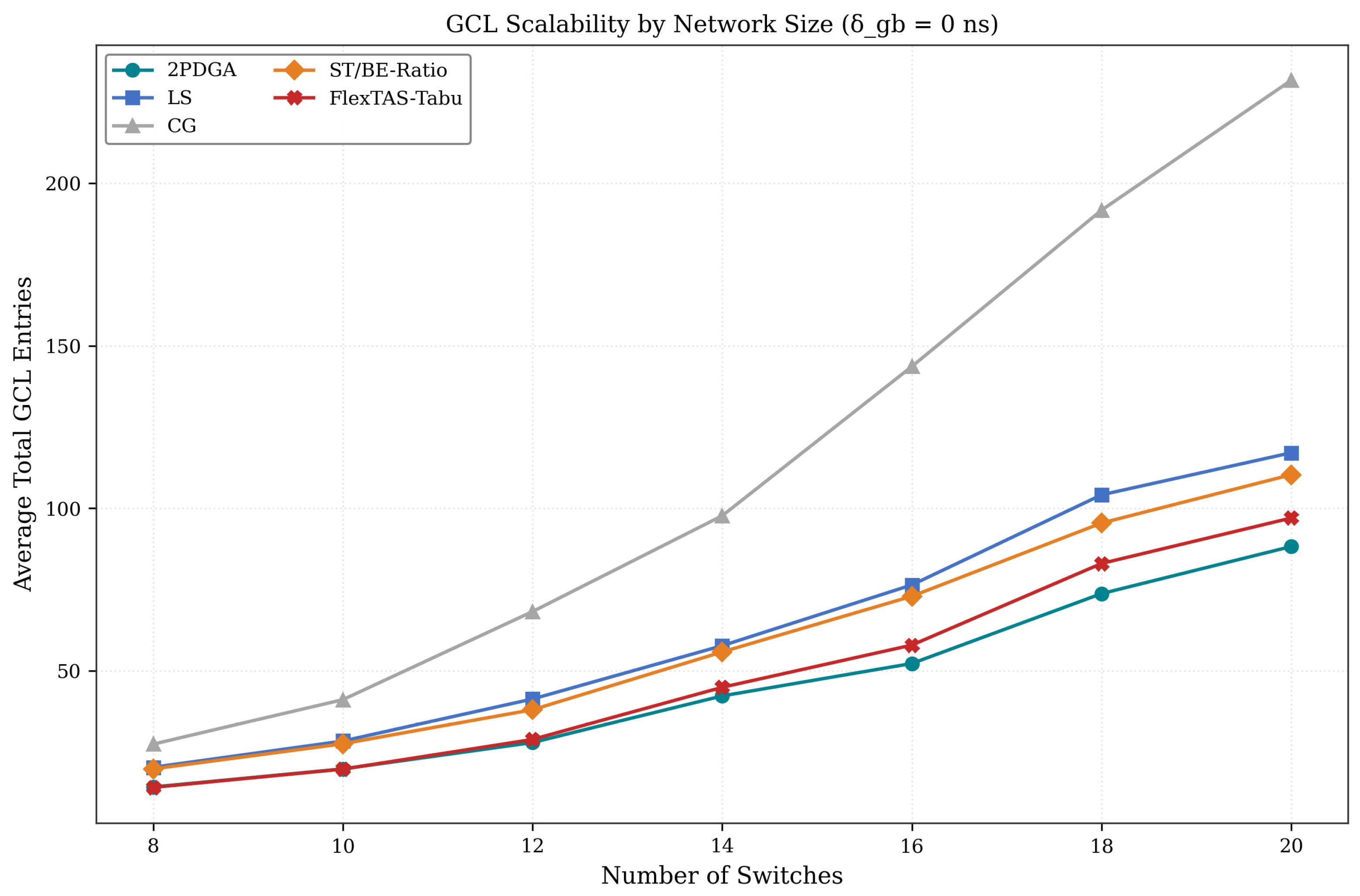
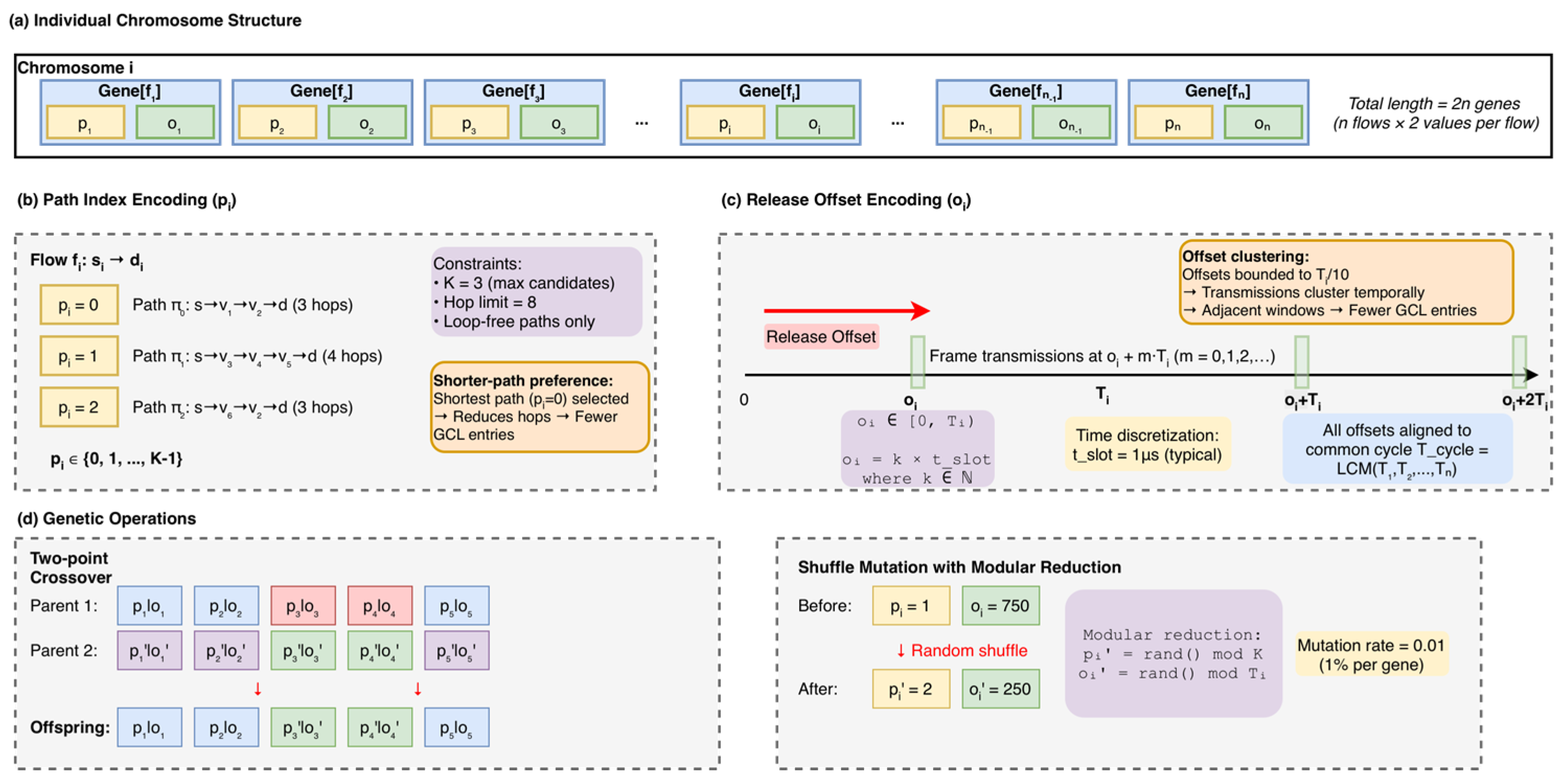
Time-Sensitive Networking (TSN), particularly the Time-Aware Shaper (TAS) specified by IEEE 802.1Qbv, is critical for real-time communication in Industrial Sensor Networks (ISNs). However, many TAS scheduling approaches rely on centralized computation and can face scalability bottlenecks in large networks. In addition, global-only schedulers often generate fragmented Gate Control Lists (GCLs) that exceed per-port entry limits on resource-constrained switches, reducing deployability. This paper proposes a two-phase distributed genetic-based algorithm, 2PDGA, for TAS scheduling. Phase I runs a network-level genetic algorithm (GA) to select routing paths and release offsets and construct a conflict-free baseline schedule. Phase II performs per-switch local refinement to merge windows and enforce device-specific GCL caps with lightweight coordination. We evaluate 2PDGA on 1512 configurations (three topologies, 8–20 switches, and guard bands δgb{0, 100, 200} ns). At δgb=0 ns, 2PDGA achieves 92.9% and 99.8% CAP@8/CAP@16, respectively, compliance while maintaining a median latency of 42.1 μs. Phase II reduces the average max-per-port GCL entries by 7.7%. These results indicate improved hardware deployability under strict GCL caps, supporting practical deployment in real-world Industry 4.0 applications.
Keywords: Time-Sensitive Networking (TSN); IEEE 802.1Qbv; Time-Aware Shaper (TAS); genetic algorithm (GA); Industry 4.0; edge computing Time-Sensitive Networking (TSN); IEEE 802.1Qbv; Time-Aware Shaper (TAS); genetic algorithm (GA); Industry 4.0; edge computing