A Collaborative Framework Based on an Improved Adaptive Cubature Kalman Filter for Multi-Anomaly Mitigation in Bridge Temperature Monitoring Data

 , , and
Abstract
1. Introduction
2. Methodology
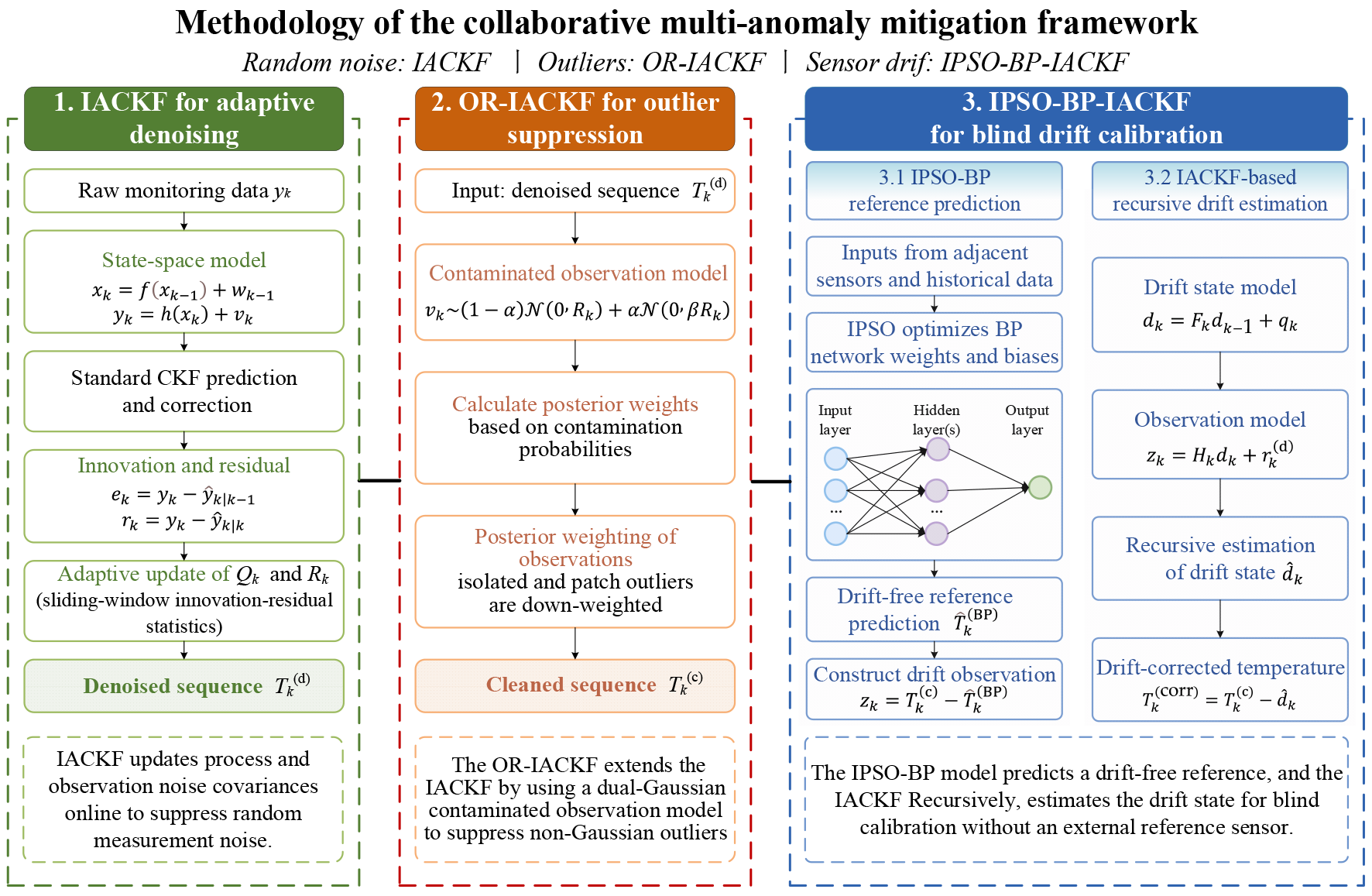
2.1. Collaborative Framework for Multi-Anomaly Mitigation
2.2. State-Space Formulation of Bridge Temperature Monitoring Data
2.3. IACKF for Adaptive Denoising
2.3.1. CKF-Based Nonlinear Recursive Estimation
2.3.2. Innovation-Residual-Based Adaptive Covariance Update
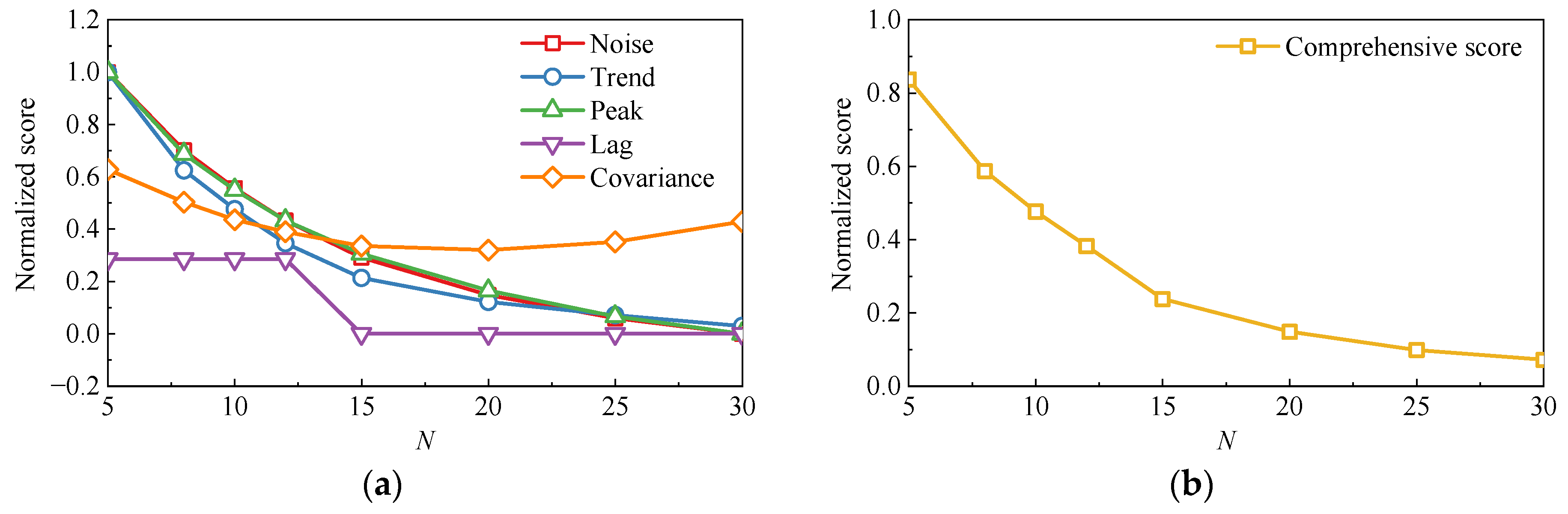
2.3.3. Stability and Sliding-Window Selection
2.3.4. Denoised Output
2.4. OR-IACKF for Outlier Suppression
2.5. IPSO-BP-IACKF for Blind Drift Calibration
2.5.1. Drift-Free Reference Prediction Using IPSO-BP
2.5.2. Drift State Model
2.5.3. Construction of Drift Observation
2.5.4. Recursive Drift Estimation and Corrected Temperature Output
2.6. Evaluation Metrics
3. Experimental Setup and Data Description
3.1. Experimental Design
3.1.1. Experiment I: Simulated Nonlinear Dynamic System Data
3.1.2. Experiment II: Constant Temperature Chamber Measured Data
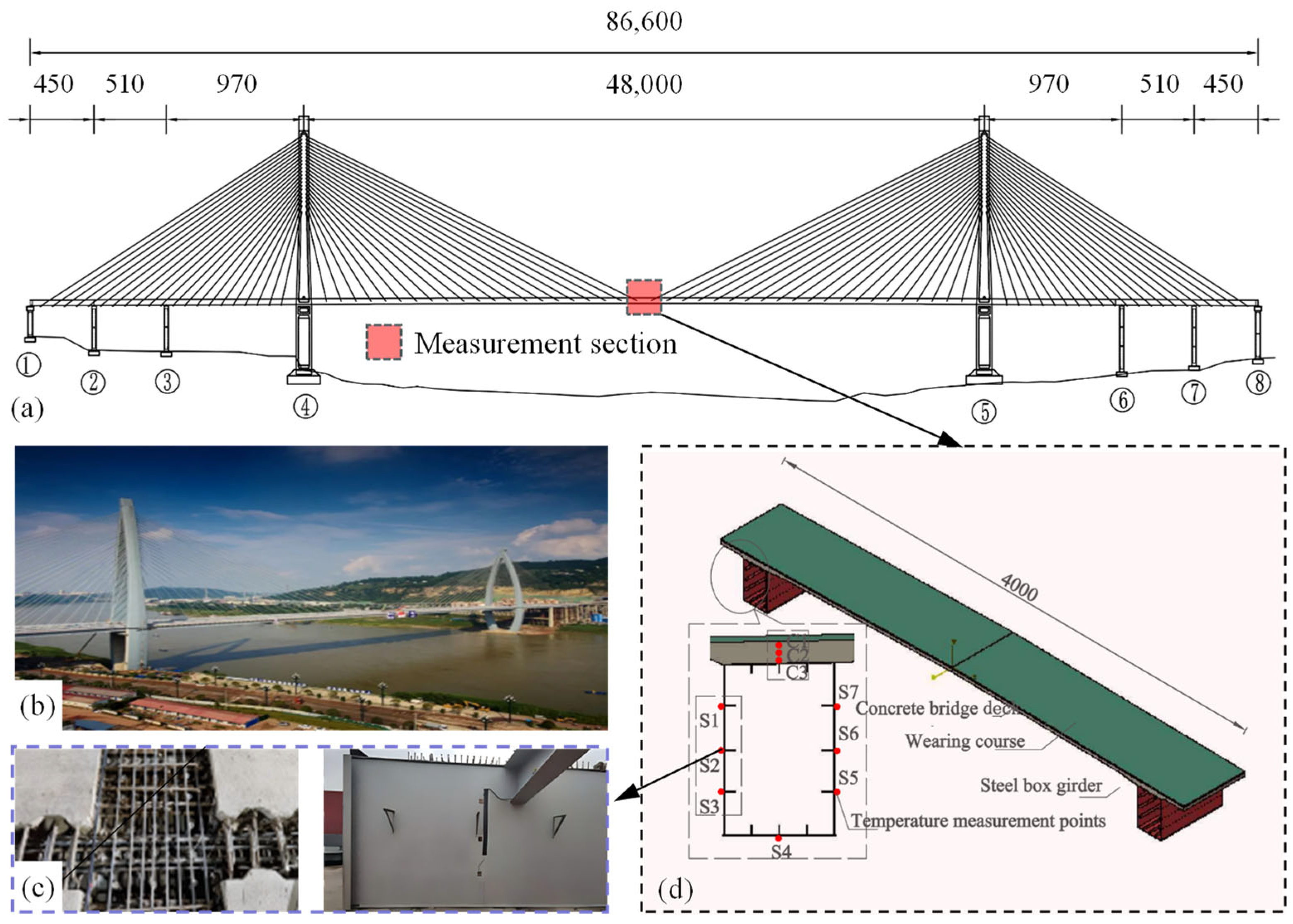
3.1.3. Experiment III: Field-Measured Data from a Long-Span Cable-Stayed Bridge
3.2. Construction of the Jointly Contaminated Dataset
4. Experimental Results and Analysis
4.1. Noise Reduction Performance
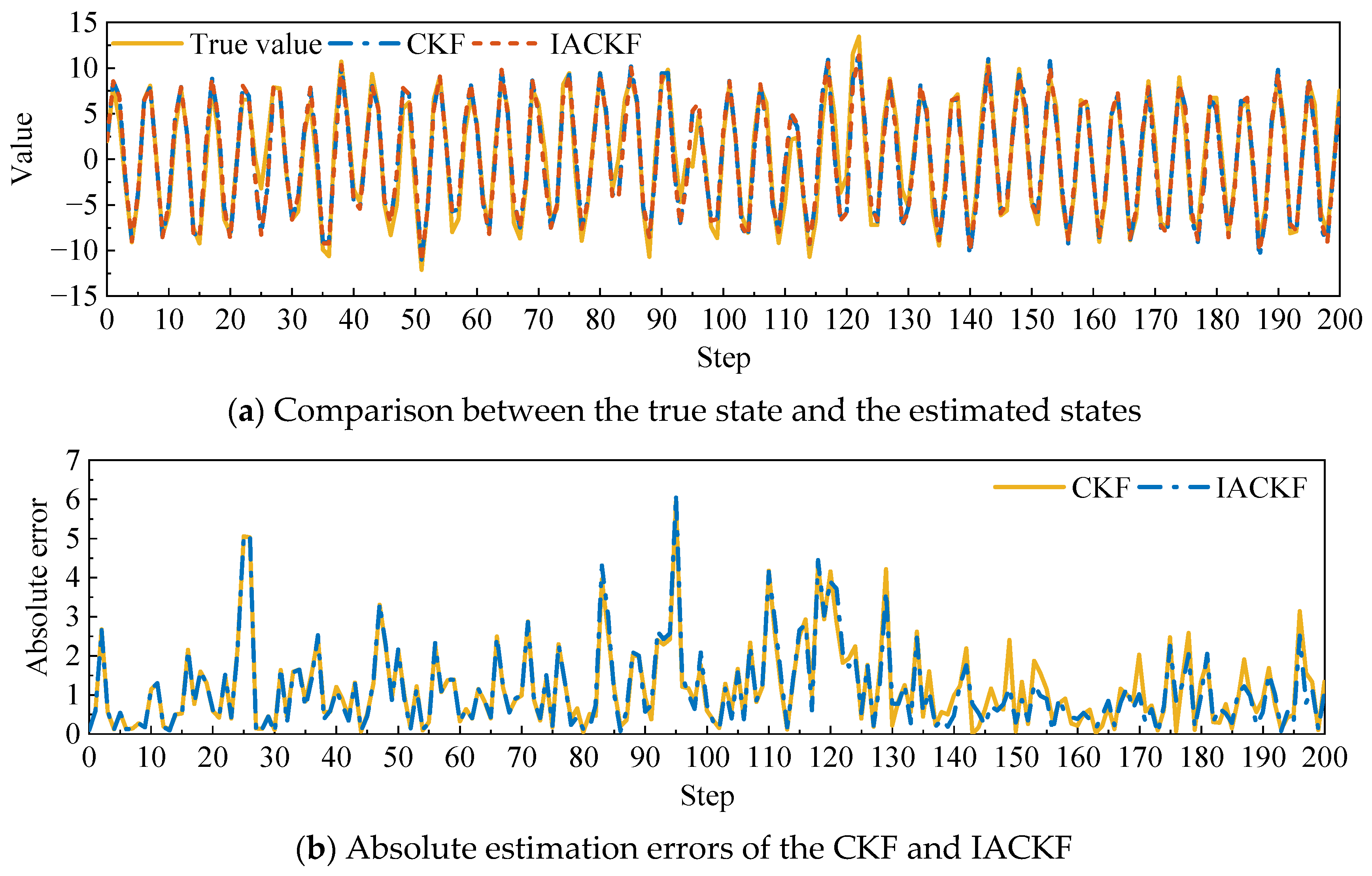
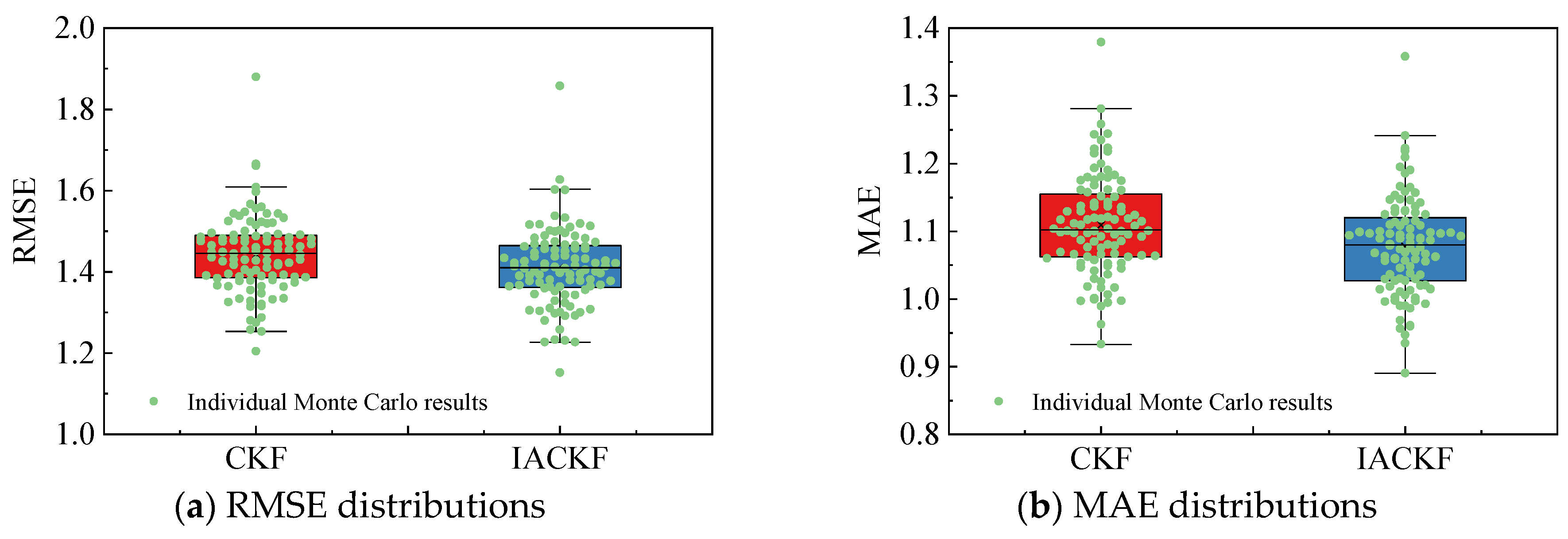
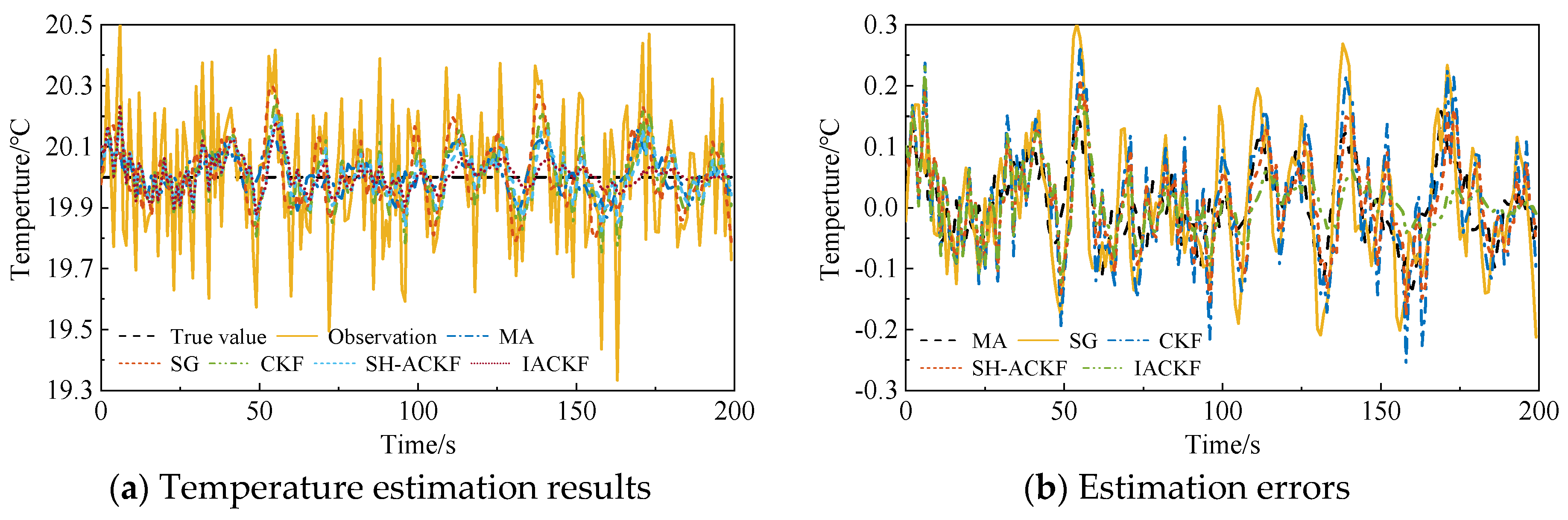
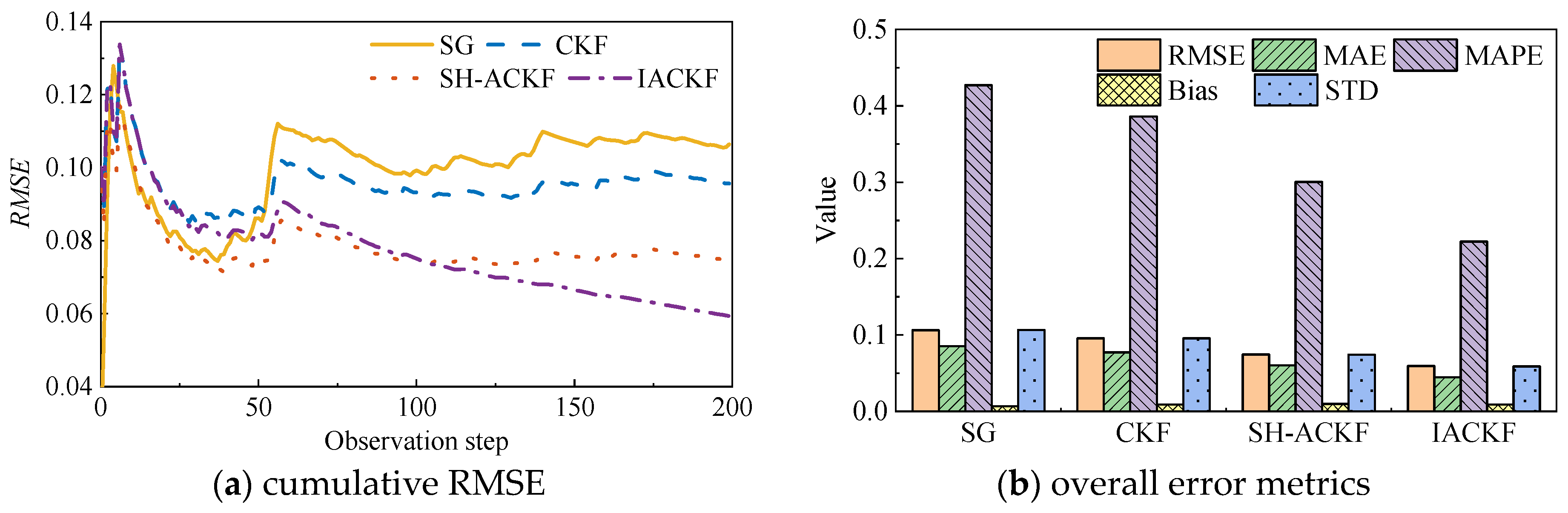
4.1.1. Comparison with the Standard CKF Under Time-Varying Noise
4.1.2. Verification Using Constant-Temperature Chamber Data
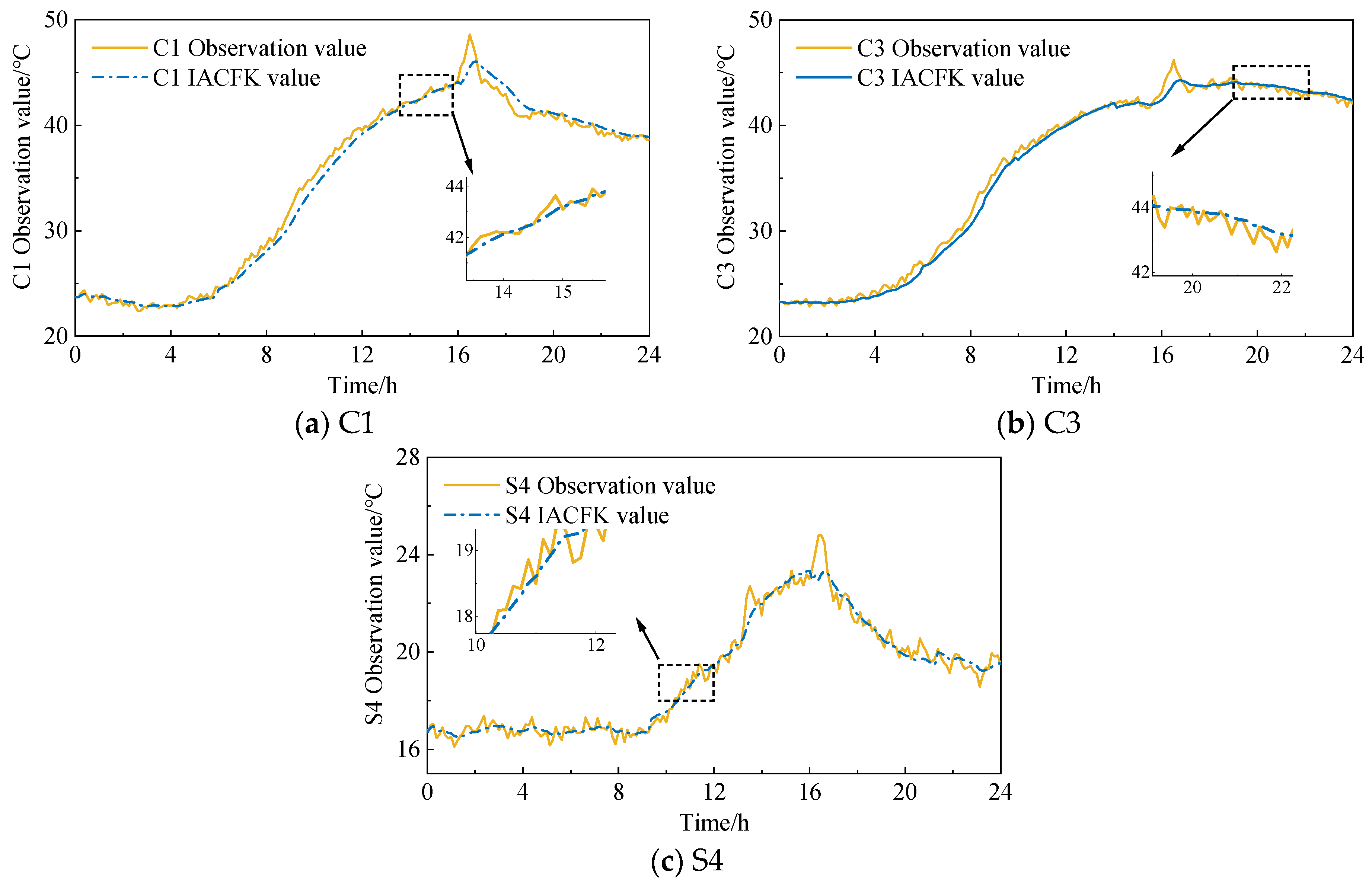
4.1.3. Field Validation Under Hydration and Operation Conditions
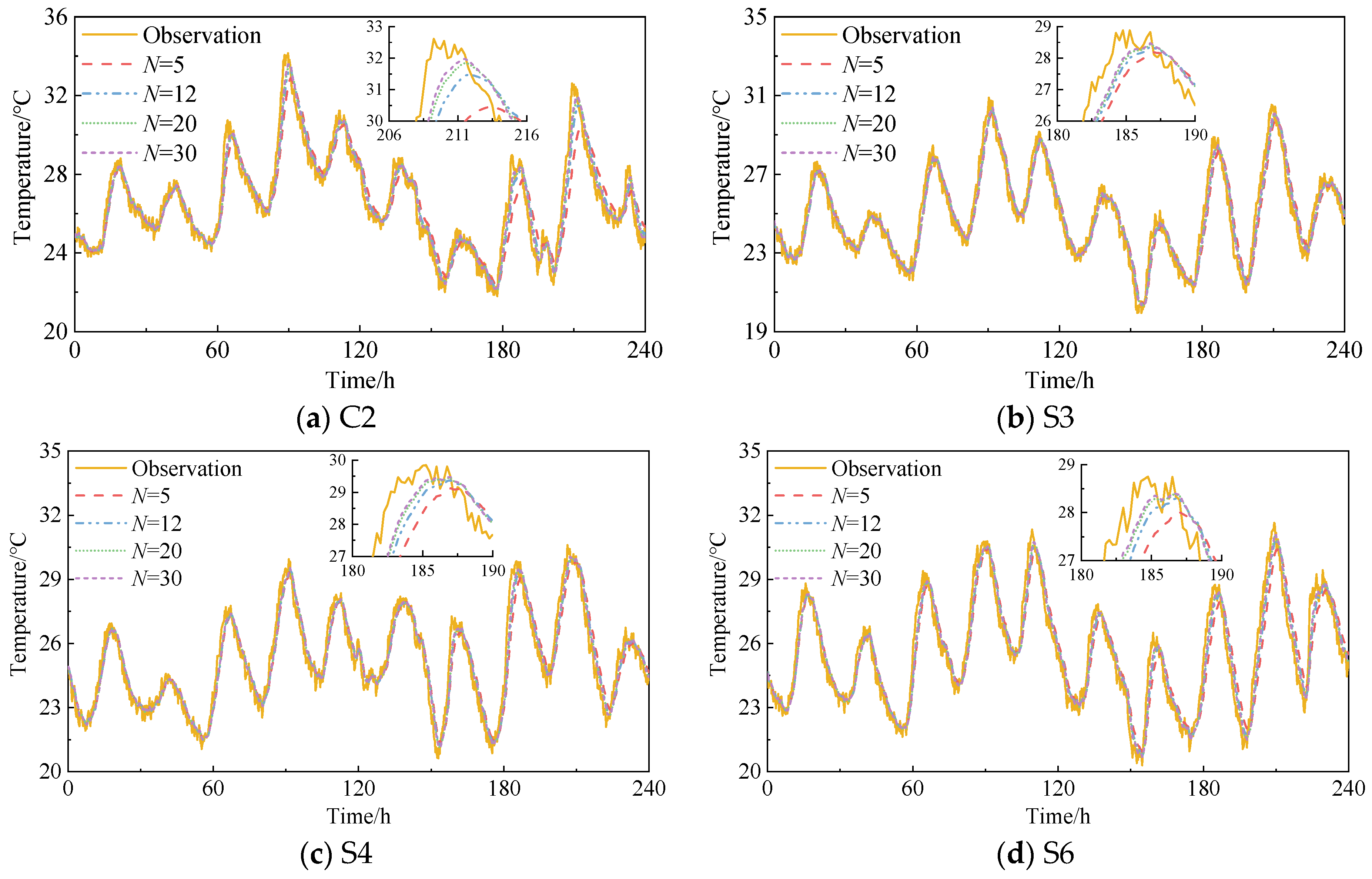
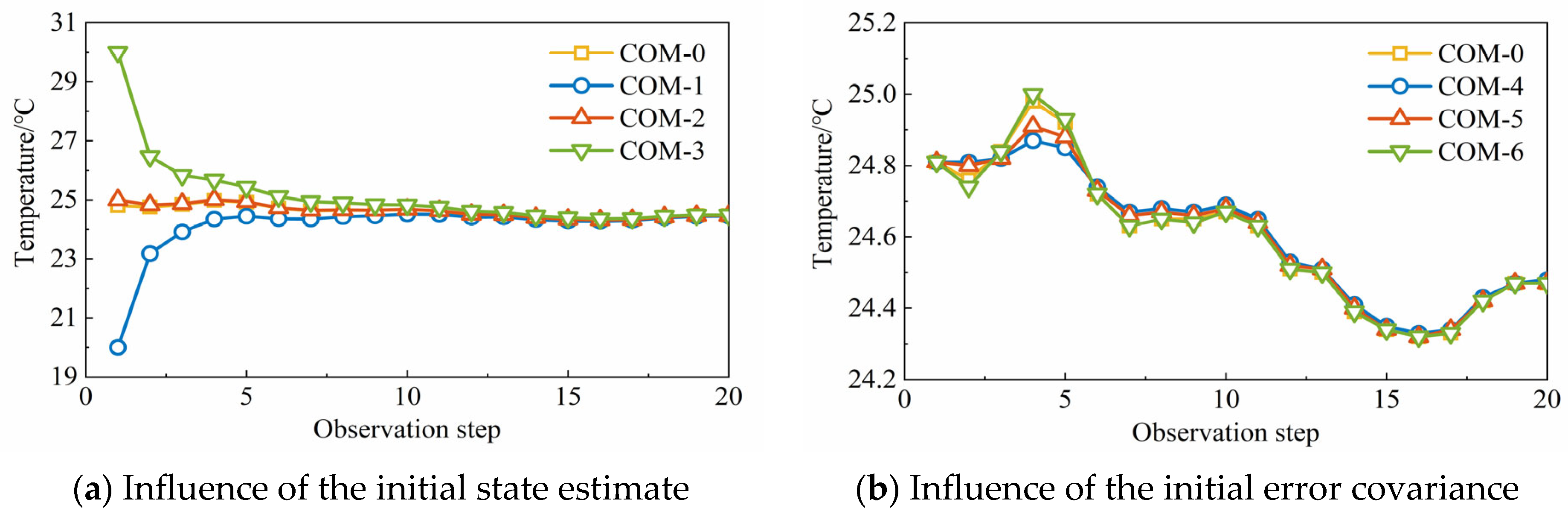
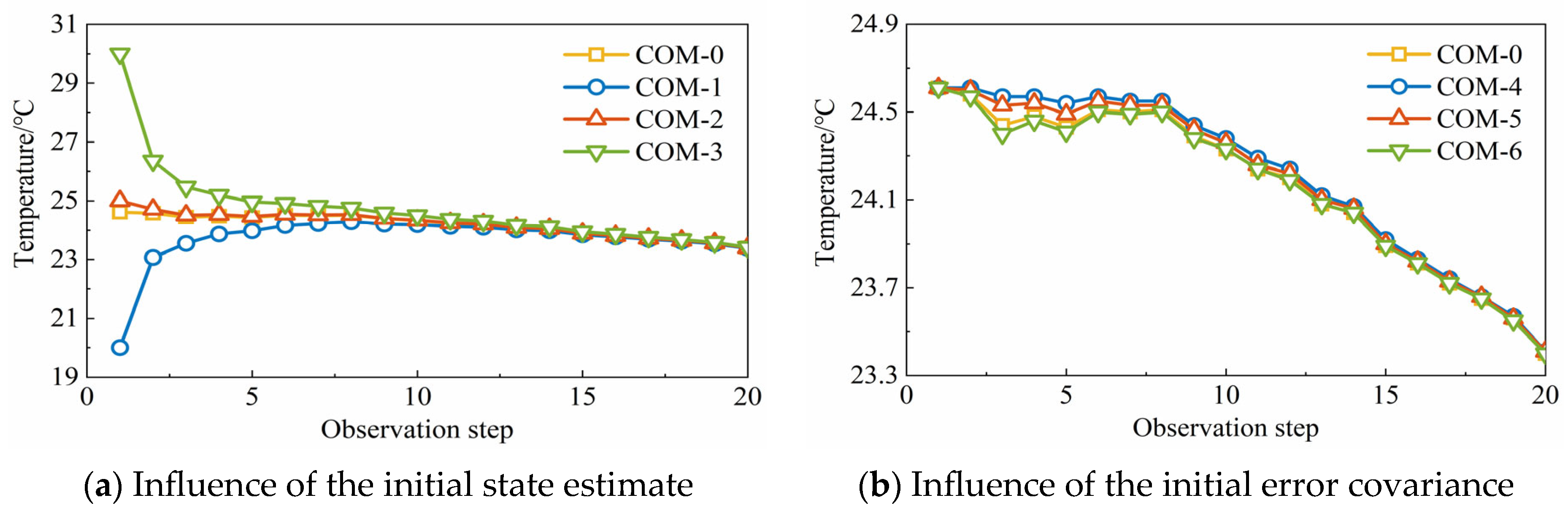
4.1.4. Robustness to Initial State and Error Covariance Settings
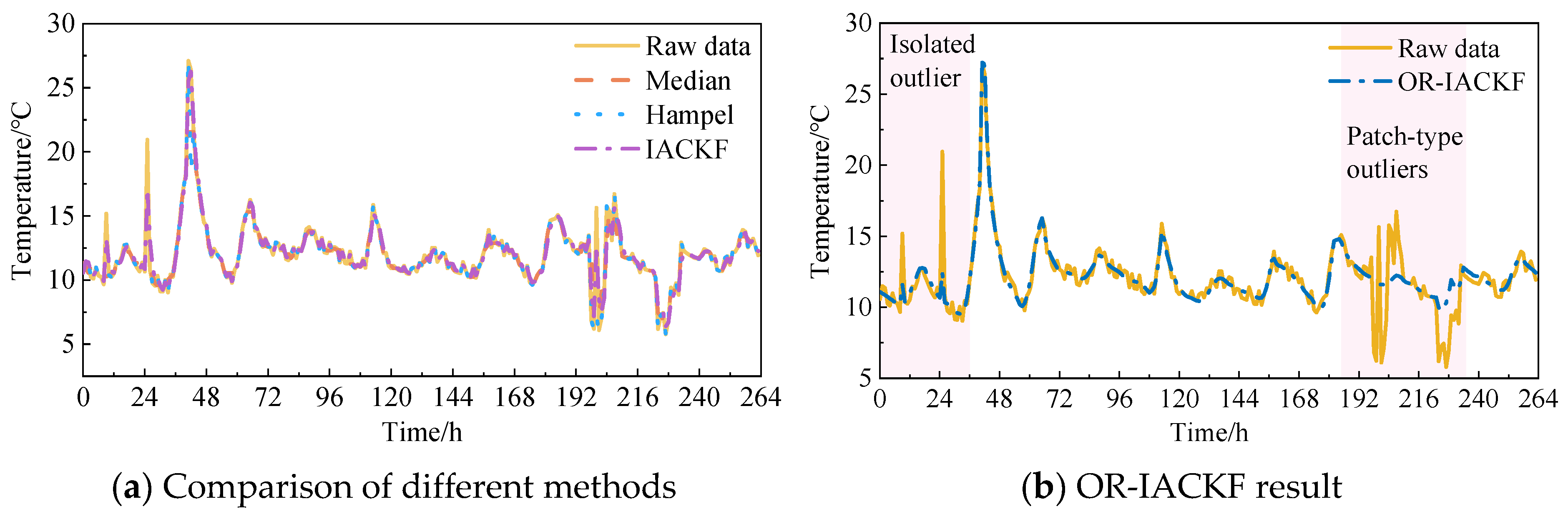
4.2. Outlier Suppression Performance
4.3. Blind Drift Calibration Performance
4.4. Joint Multi-Anomaly Mitigation Performance
5. Conclusions
- (1)
- The IACKF demonstrated effective adaptive denoising performance under the simulated time-varying-noise condition and the constant-temperature chamber experiment. By updating the process- and observation-noise covariance matrices online using innovation and residual information, the IACKF outperformed the standard CKF in both experiments and also showed good applicability to field-monitored bridge temperature data. In addition, the robustness analysis under different initial parameter settings indicated that the IACKF maintained stable denoising performance after the initial observation stage, demonstrating its robustness for practical monitoring applications.
- (2)
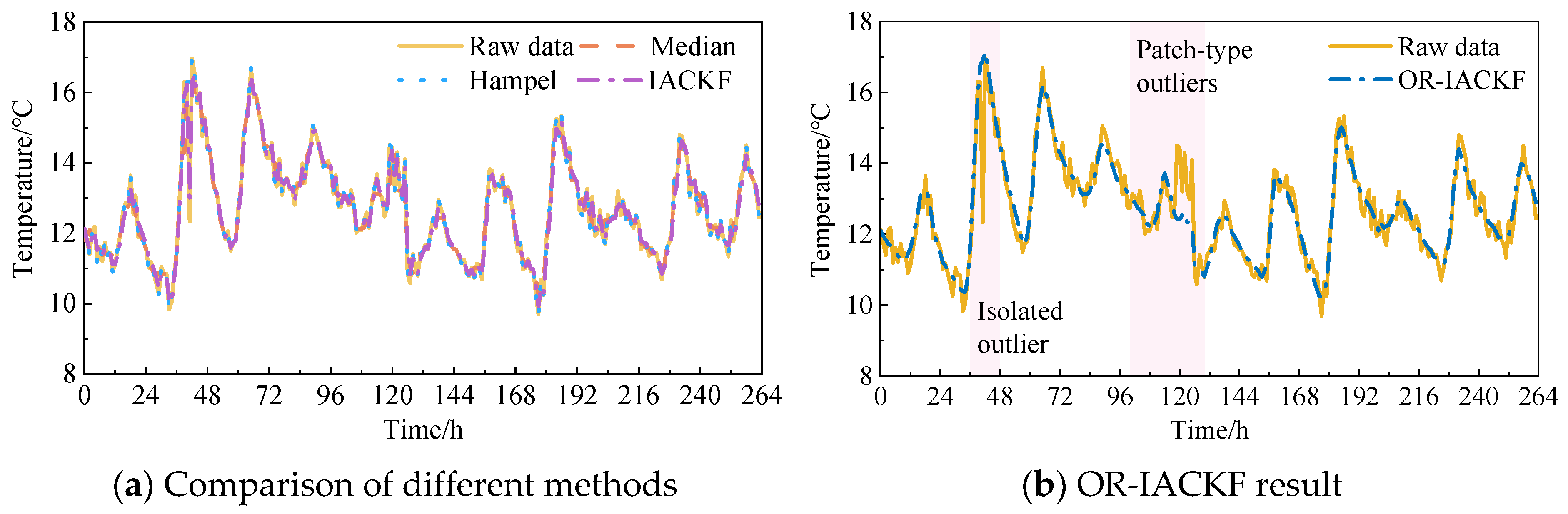
- The OR-IACKF effectively suppressed isolated and patch-type outliers in bridge temperature monitoring data. By introducing a dual-Gaussian contaminated observation model and posterior weighting into the recursive update process, the OR-IACKF exhibited stronger robustness to abnormal observations than the IACKF for the C1 and S1 monitoring datasets containing artificial outliers. The results indicate that the robust observation mechanism can reduce the influence of contaminated measurements while preserving the underlying temperature variation trend.
- (3)
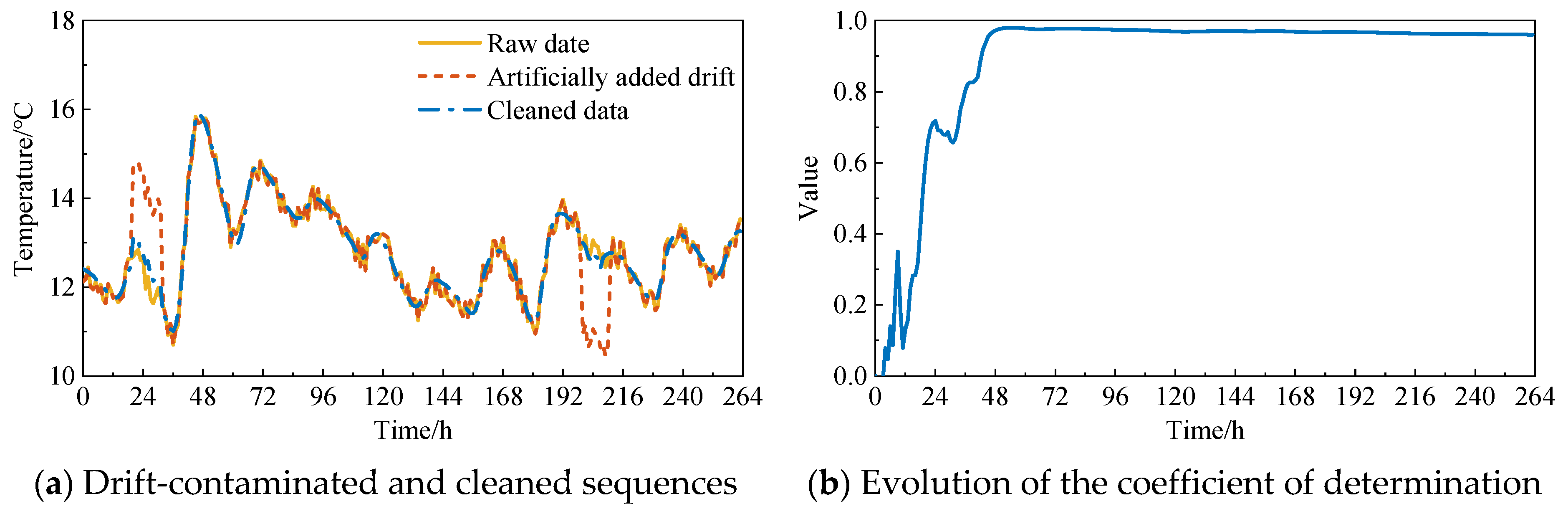
- The IPSO-BP-IACKF framework can effectively correct long-term sensor drift. By using adjacent monitoring points to construct a drift-free reference response and then recursively estimating the drift state through the IACKF, the method successfully reduced the artificially introduced drift in the target monitoring sequence. The drift-cleaning evaluation metric increased rapidly and then stabilized at a high level, and the coefficient of determination after drift cleaning reached approximately 0.96, indicating strong calibration effectiveness and stability.
- (4)
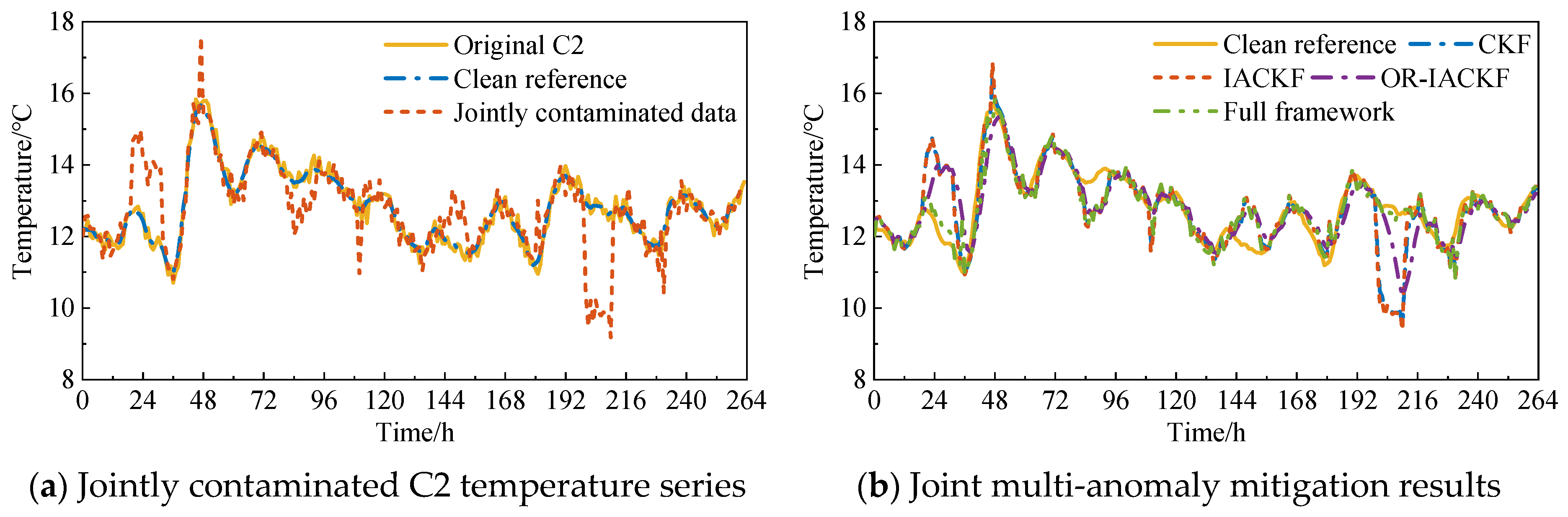
- The collaborative framework provides a progressive solution for multi-anomaly mitigation in bridge temperature monitoring data. The IACKF addresses random noise, the robust IACKF further handles non-Gaussian outliers, and the IPSO-BP-IACKF extends the framework to long-term drift correction. This staged design is well suited to the heterogeneous characteristics of practical monitoring anomalies and provides a feasible strategy for improving the reliability of long-term bridge temperature monitoring data.
- (5)
- Although the framework demonstrates satisfactory performance in processing noise, isolated outliers, patch-type outliers, and drift in bridge temperature monitoring data, several engineering limitations remain. The identification and classification of some abnormal regions still rely on prior knowledge, and the algorithm parameters may need to be adjusted for different sensors and monitoring environments. Moreover, the current validation is limited to a relatively small number of monitoring cases. Future studies will focus on developing automatic anomaly-region and anomaly-type identification methods, incorporating spatial correlations among multiple sensors, and conducting long-term validation on different bridge types and environmental conditions to further improve the generalization and engineering applicability of the framework.
Author Contributions
Funding
Data Availability Statement
Conflicts of Interest
References
- Zhang, B.; Ren, Y.; He, S.; Gao, Z.; Li, B.; Song, J. A review of methods and applications in structural health monitoring (SHM) for bridges. Measurement 2025, 245, 116575. [Google Scholar] [CrossRef]
- Tan, B.; Chen, F.; Wang, D.; Shi, J.; Zhao, C. Physics-informed stacking ensemble machine learning for fatigue life prediction of stud connectors in steel-concrete composite structures. Eng. Struct. 2026, 353, 122182. [Google Scholar] [CrossRef]
- Chen, F.; Tan, B.; Tang, H.; Zhang, H.; Luo, Y.; Xiao, X.; Liu, Y.; Lu, N. An interpretable random forest surrogate for rapid SIF prediction and fatigue life assessment of double-sided U-rib welds in orthotropic steel decks. Eng. Fail. Anal. 2026, 187, 110582. [Google Scholar] [CrossRef]
- Deng, Y.; Zhao, Y.; Ju, H.; Yi, T.-H.; Li, A. Abnormal data detection for structural health monitoring: State-of-the-art review. Dev. Built Environ. 2024, 17, 100337. [Google Scholar] [CrossRef]
- Hou, J.; Jiang, H.; Wan, C.; Yi, L.; Gao, S.; Ding, Y.; Xue, S. Deep learning and data augmentation based data imputation for structural health monitoring system in multi-sensor damaged state. Measurement 2022, 196, 111206. [Google Scholar] [CrossRef]
- Pereira, M.; Glisic, B. Detection and quantification of temperature sensor drift using probabilistic neural networks. Expert Syst. Appl. 2023, 213, 118884. [Google Scholar] [CrossRef]
- Xiong, J.; Hu, L.; Meng, X.; An, X.; Xie, Y. Cross-Modal Graph Attention for Bridge SHM Data Imputation. Sensors 2026, 26, 3339. [Google Scholar] [CrossRef] [PubMed]
- Lakhadive, M.; Sharma, A.; Bhowmik, B. Addressing mode-mixing challenges in structural health monitoring: Numerical and experimental validation. In Proceedings of the 11th International Operational Modal Analysis Conference; International Group of Operational Modal Analysis: Gijon, Spain, 2025; pp. 153–160. [Google Scholar]
- Wu, J.; Li, J.; Yang, J.; Mei, S. Wavelet-integrated deep neural networks: A systematic review of applications and synergistic architectures. Neurocomputing 2025, 657, 131648. [Google Scholar] [CrossRef]
- Kulevome, D.K.B.; Qiu, M.; Cao, F.; Opoku-Mensah, E. Evaluation of Time-Frequency Representations for Deep Learning-Based Rotating Machinery Fault Diagnosis. Int. J. Eng. Technol. Innov. 2025, 15, 314–331. [Google Scholar] [CrossRef]
- Ding, Y.; Peng, Z. An improved Dual Kalman Filter method for structural response reconstruction with adaptive noise covariance adjustment. Structures 2025, 78, 109288. [Google Scholar] [CrossRef]
- Relvas, C.O.; Marulli, G.; Moutinho, C.; Caetano, E. Development and Implementation of a Fully Customised System for Monitoring a Long-Span Cable-Stayed Bridge Undergoing Rehabilitation Works. Sensors 2026, 26, 2786. [Google Scholar] [CrossRef] [PubMed]
- Huang, L.; Xin, J.; Jiang, Y.; Tang, Q.; Zhang, H.; Yang, S.X.; Zhou, J. Bridge temperature data extraction and recovery based on physics-aided VMD and temporal convolutional network. Eng. Struct. 2025, 331, 119967. [Google Scholar] [CrossRef]
- Lin, H.; Zhang, R.; Tong, T. When Tukey meets Chauvenet: A new boxplot criterion for outlier detection. J. Comput. Graph. Stat. 2026, 35, 198–211. [Google Scholar]
- Habeeb, H.K.; Hassan, F.H. A Robust Statistical Framework for Outlier Detection and Its Influence on Predictive Modeling Accuracy. J. Al-Qadisiyah Comput. Sci. Math. 2025, 17, 17–40. [Google Scholar] [CrossRef]
- Cui, B.; Chen, W.; Weng, D.; Wang, J.; Wei, X.; Zhu, Y. Variational resampling-free cubature Kalman filter for GNSS/INS with measurement outlier detection. Signal Process. 2025, 237, 110036. [Google Scholar] [CrossRef]
- Toussaint, G.; Knobbe, A. Latent Monotonic Feature Discovery for Structural Health Monitoring. Sensors 2026, 26, 1898. [Google Scholar] [CrossRef] [PubMed]
- Niu, M.; Ying, C.; Li, C.; Wang, Y.; Cheng, C. Predictive State Estimation for Renewable Energy Power Systems under Normal Operating Condition. In Proceedings of the 2025 International Conference on Advances in Electrical Engineering and Computer Applications (AEECA); IEEE: New York, NY, USA, 2025; pp. 253–257. [Google Scholar]
- Guo, G.; Chai, B.; Cheng, R.; Wang, Y. Temperature Drift Compensation of a MEMS Accelerometer Based on DLSTM and ISSA. Sensors 2023, 23, 1809. [Google Scholar] [CrossRef] [PubMed]
- Bastos, G.F.; Montalvao, J.; Miranda, L. A Probabilistic Approach for Drift Compensation of Gas Sensor Data. IEEE Sens. J. 2026, 26, 6921–6928. [Google Scholar] [CrossRef]
- Radicioni, L.; Giorgi, V.; Benedetti, L.; Bono, F.M.; Pagani, S.; Cinquemani, S.; Belloli, M. On the performance of data-driven dynamic models for temperature compensation on bridge monitoring data. J. Civ. Struct. Health Monit. 2025, 15, 1957–1972. [Google Scholar] [CrossRef]
- Rezazadeh, N.; De Luca, A.; Perfetto, D.; Salami, M.R.; Lamanna, G. Systematic critical review of structural health monitoring under environmental and operational variability: Approaches for baseline compensation, adaptation, and reference-free techniques. Smart Mater. Struct. 2025, 34, 073001. [Google Scholar] [CrossRef]
- Tian, Z.; Wu, J.; Zhang, Z.; Dai, Y.; Zhang, W.; Wang, S. Study on noise reduction method for bridge temperature signal using adaptive parameter selection and improved wavelet threshold function. Measurement 2025, 253, 117683. [Google Scholar] [CrossRef]
- Yu, X.; Cui, S.; Fu, Y.; Zhang, Q. Decentralized system-centric sensor fault diagnosis and recovery using edge computing for wireless structural health monitoring systems. Measurement 2025, 261, 119994. [Google Scholar] [CrossRef]
- Yu, X.; Zhao, Y.; Cui, S.; He, X.; Fu, Y.; Yang, Q. Efficient edge intelligence for onboard data anomaly classification in wireless structural health monitoring using knowledge distillation on low-cost IoT nodes. Struct. Health Monit. 2025. [Google Scholar] [CrossRef]
- Kamali, S.; Palermo, A.; Marzani, A. Virtual baseline to improve anomaly detection of SHM systems with non-stationary data. Mech. Syst. Signal Process. 2025, 224, 111968. [Google Scholar] [CrossRef]
- Wan, K.; Zhang, W.; Wang, Y.; Wang, J.; Ren, J. Unsupervised Data Anomaly Detection Based on Spatio-Temporal Sparse Integration Framework. J. Comput. Civ. Eng. 2026, 40, 04025126. [Google Scholar] [CrossRef]
- Pandit, R.K.; Khan, A.; Balasubramaniam, K.; Srinivasan, B.; Rajagopal, P. Defect identification using sampling and outlier analysis in passive guided wave structural health monitoring. J. Intell. Mater. Syst. Struct. 2025, 36, 543–560. [Google Scholar] [CrossRef]
- Li, X.; Chao, T.; Ma, P.; Yang, M. An improved variational adaptive CKF based on the Gaussian mixture model for abnormal observation and modeling uncertainty. Meas. Sci. Technol. 2025, 36, 086102. [Google Scholar] [CrossRef]
- Nguyen, D.V.; Zhao, H.; Hu, J. Distributed Cubature Kalman Filter Based on MEEF With Adaptive Cauchy Kernel for State Estimation. IEEE Trans. Control Syst. Technol. 2025, 34, 644–656. [Google Scholar] [CrossRef]
- Yang, C.; Kou, F.; Lv, W.; Wang, G.; Liu, P.; Xing, L. Adaptive robust cubature kalman filter with maximum correntropy criterion and variational bayesian for vehicle state estimation. Meas. Sci. Technol. 2025, 36, 106124. [Google Scholar] [CrossRef]
- Liang, S.; Xu, G.; Qin, Z. A Robust Kalman filter for heavy-tailed measurement noise based on Gamma Pearson VII mixture distribution. IEEE Access 2025, 13, 47680–47692. [Google Scholar] [CrossRef]
- Zhao, Y.; Ju, H.; Zheng, L.; Deng, Y.; Li, A. Monitoring data cleaning of in-service historic masonry structures: A case study using BiLSTM-AdaBoost and DBSCAN models. Measurement 2025, 263, 120115. [Google Scholar] [CrossRef]
- Zhang, H.; Long, H.; Chen, F.; Luo, Y.; Xiao, X.; Deng, Y.; Lu, N.; Liu, Y. Temperature field prediction for a PC beam bridge with corrugated steel webs using BP neural network and measured data. Structures 2024, 68, 107232. [Google Scholar] [CrossRef]
- Liu, Z.; Hu, Y.; Fang, Z.; Xiong, S.; Wang, L.; Bao, C. Improved prediction model for daily PM2. 5 concentrations with particle swarm optimization and BP neural network. Sci. Rep. 2025, 15, 32050. [Google Scholar] [CrossRef] [PubMed]
- Li, X.; Wang, M. Prediction of power grid investment demand based on GRA and IPSO-BP neural network. J. Phys. Conf. Ser. 2025, 3079, 012065. [Google Scholar] [CrossRef]
- Qiu, Y.; Long, J. Prediction of Automotive Seat Response Based on IPSO-BP Neural Network. In Proceedings of the 2025 International Conference on Big Data, Internet of Things and Intelligent Transportation (BDIT2025), Guiyang, China, 13–15 June 2025. [Google Scholar]



| Combination No. | Initial Parameters | |
|---|---|---|
| Initial State Estimate | Initial Error Covariance | |
| COM-0 | 1 | |
| COM-1 | 20 | 1 |
| COM-2 | 25 | 1 |
| COM-3 | 30 | 1 |
| COM-4 | 0.01 | |
| COM-5 | 0.1 | |
| COM-6 | 10 | |
| Period | Sampling Interval | Duration | Sensor ID |
|---|---|---|---|
| Hydration heat period | 7.5 min | 24 h | C1, C3, S4 |
| Operation period | 15.0 min | 240 h | C2, S3, S4, S6 |
| Method | R2 | RMSE/°C | MAE/°C | MaxAE/°C |
|---|---|---|---|---|
| Jointly contaminated data | 0.177 | 0.855 | 0.485 | 3.499 |
| CKF | 0.299 | 0.789 | 0.446 | 3.172 |
| IACKF | 0.277 | 0.802 | 0.446 | 3.308 |
| OR-IACKF | 0.488 | 0.675 | 0.439 | 2.357 |
| MA filter | 0.381 | 0.742 | 0.392 | 2.994 |
| SG filter | 0.329 | 0.772 | 0.407 | 3.247 |
| Median filter | 0.328 | 0.773 | 0.386 | 2.992 |
| Hampel filter | 0.211 | 0.838 | 0.464 | 3.499 |
| Proposed full framework | 0.823 | 0.397 | 0.266 | 1.491 |
Disclaimer/Publisher’s Note: The statements, opinions and data contained in all publications are solely those of the individual author(s) and contributor(s) and not of MDPI and/or the editor(s). MDPI and/or the editor(s) disclaim responsibility for any injury to people or property resulting from any ideas, methods, instructions or products referred to in the content. |
© 2026 by the authors. Licensee MDPI, Basel, Switzerland. This article is an open access article distributed under the terms and conditions of the Creative Commons Attribution (CC BY) license.
Share and Cite
Tan, B.; Hu, Z.; Xiang, S.; Wang, D.; Shi, J.; Zhang, Z.; Chen, F.; Zeng, G. A Collaborative Framework Based on an Improved Adaptive Cubature Kalman Filter for Multi-Anomaly Mitigation in Bridge Temperature Monitoring Data. Sensors 2026, 26, 5061. https://doi.org/10.3390/s26165061
Tan B, Hu Z, Xiang S, Wang D, Shi J, Zhang Z, Chen F, Zeng G. A Collaborative Framework Based on an Improved Adaptive Cubature Kalman Filter for Multi-Anomaly Mitigation in Bridge Temperature Monitoring Data. Sensors. 2026; 26(16):5061. https://doi.org/10.3390/s26165061
Chicago/Turabian StyleTan, Benkun, Zhixue Hu, Shengtao Xiang, Da Wang, Jialin Shi, Zujun Zhang, Fanghuai Chen, and Guoliang Zeng. 2026. "A Collaborative Framework Based on an Improved Adaptive Cubature Kalman Filter for Multi-Anomaly Mitigation in Bridge Temperature Monitoring Data" Sensors 26, no. 16: 5061. https://doi.org/10.3390/s26165061
APA StyleTan, B., Hu, Z., Xiang, S., Wang, D., Shi, J., Zhang, Z., Chen, F., & Zeng, G. (2026). A Collaborative Framework Based on an Improved Adaptive Cubature Kalman Filter for Multi-Anomaly Mitigation in Bridge Temperature Monitoring Data. Sensors, 26(16), 5061. https://doi.org/10.3390/s26165061