Compensating Couplant Effects in Phased-Array Ultrasonic ToF Sensing for Residual Stress



Highlights
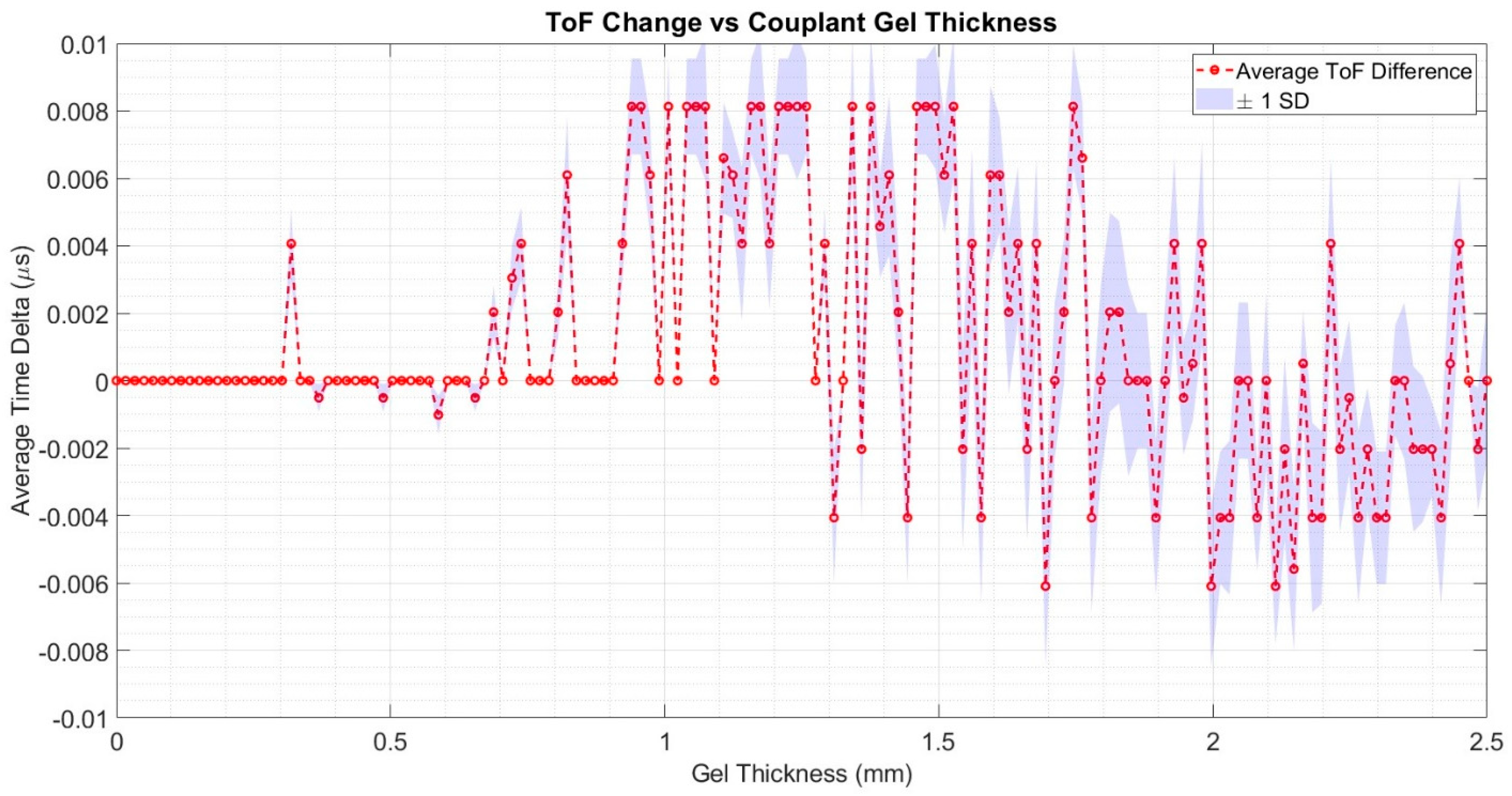
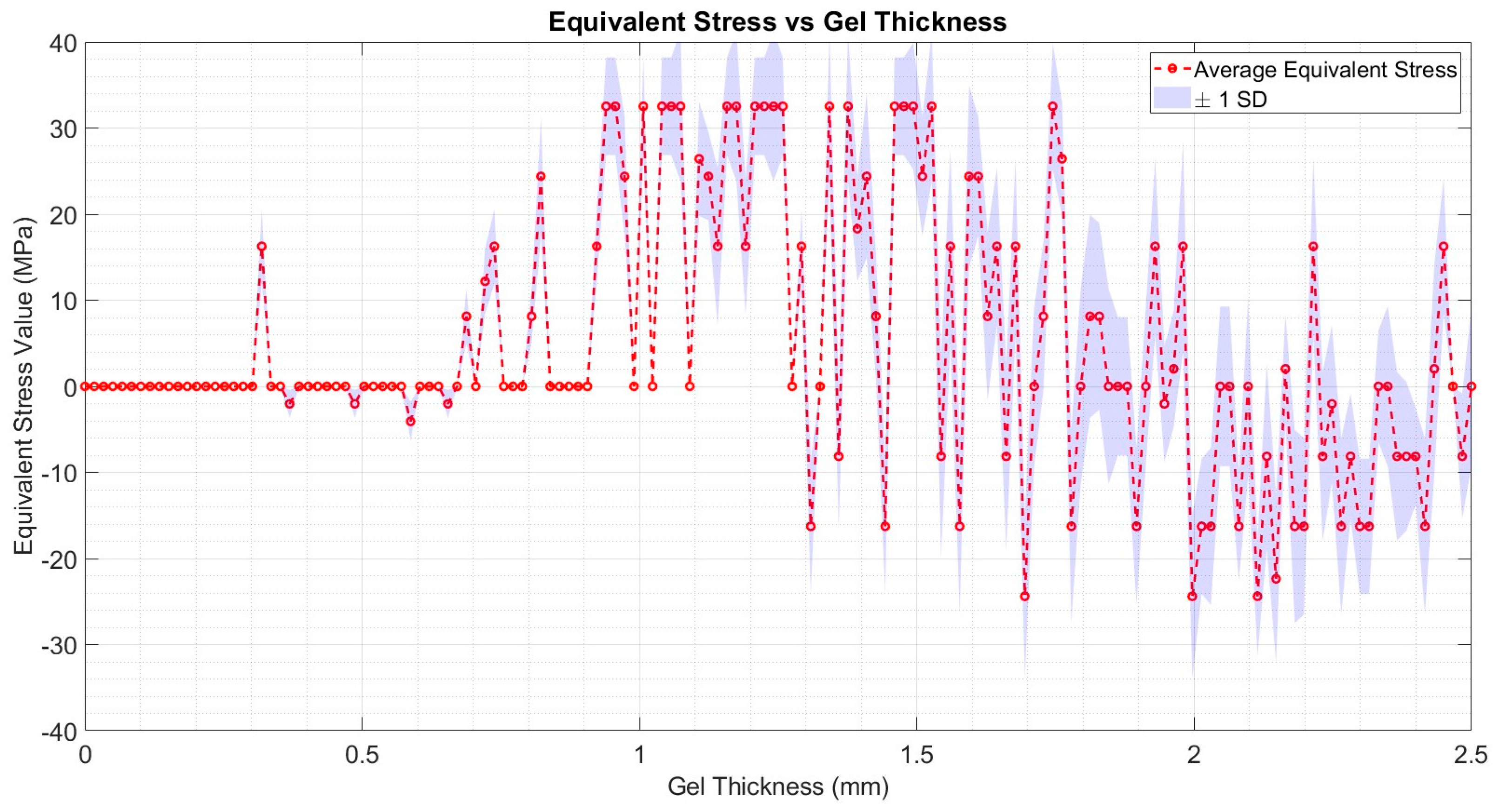
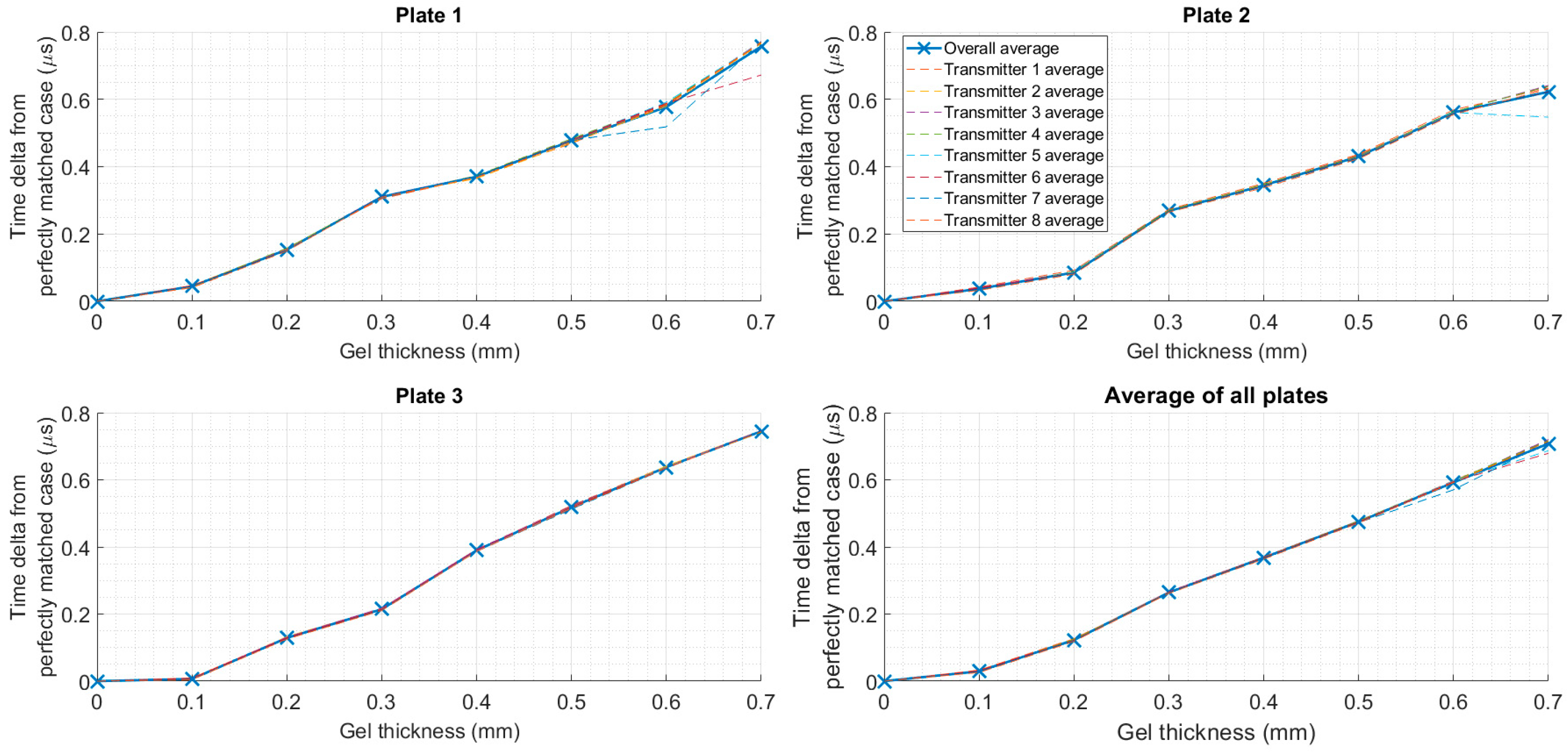
- Couplant thickness significantly biases LCR time-of-flight measurements, causing residual stress errors of ~36 MPa (~13% of yield strength) if uncorrected.
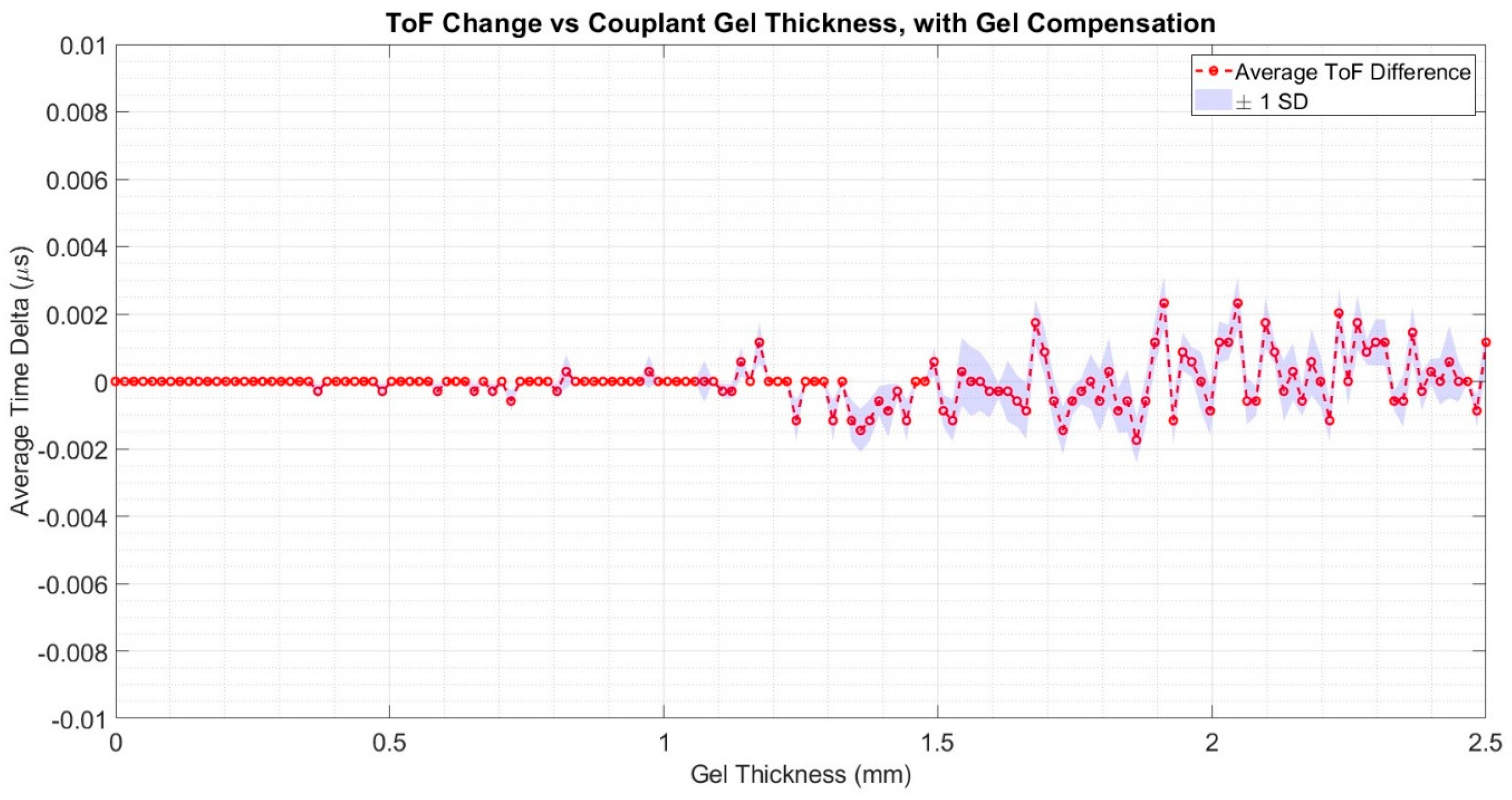
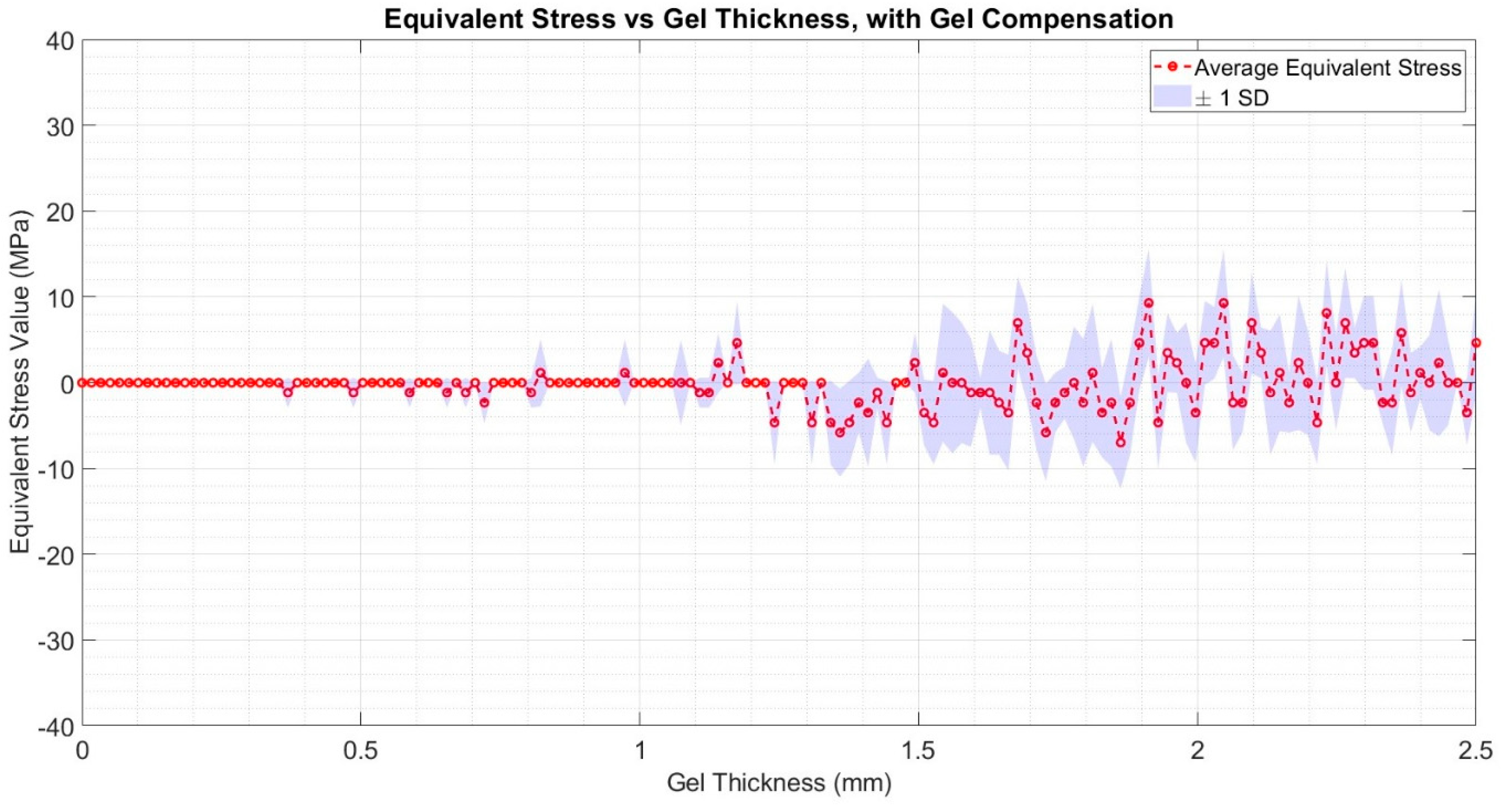
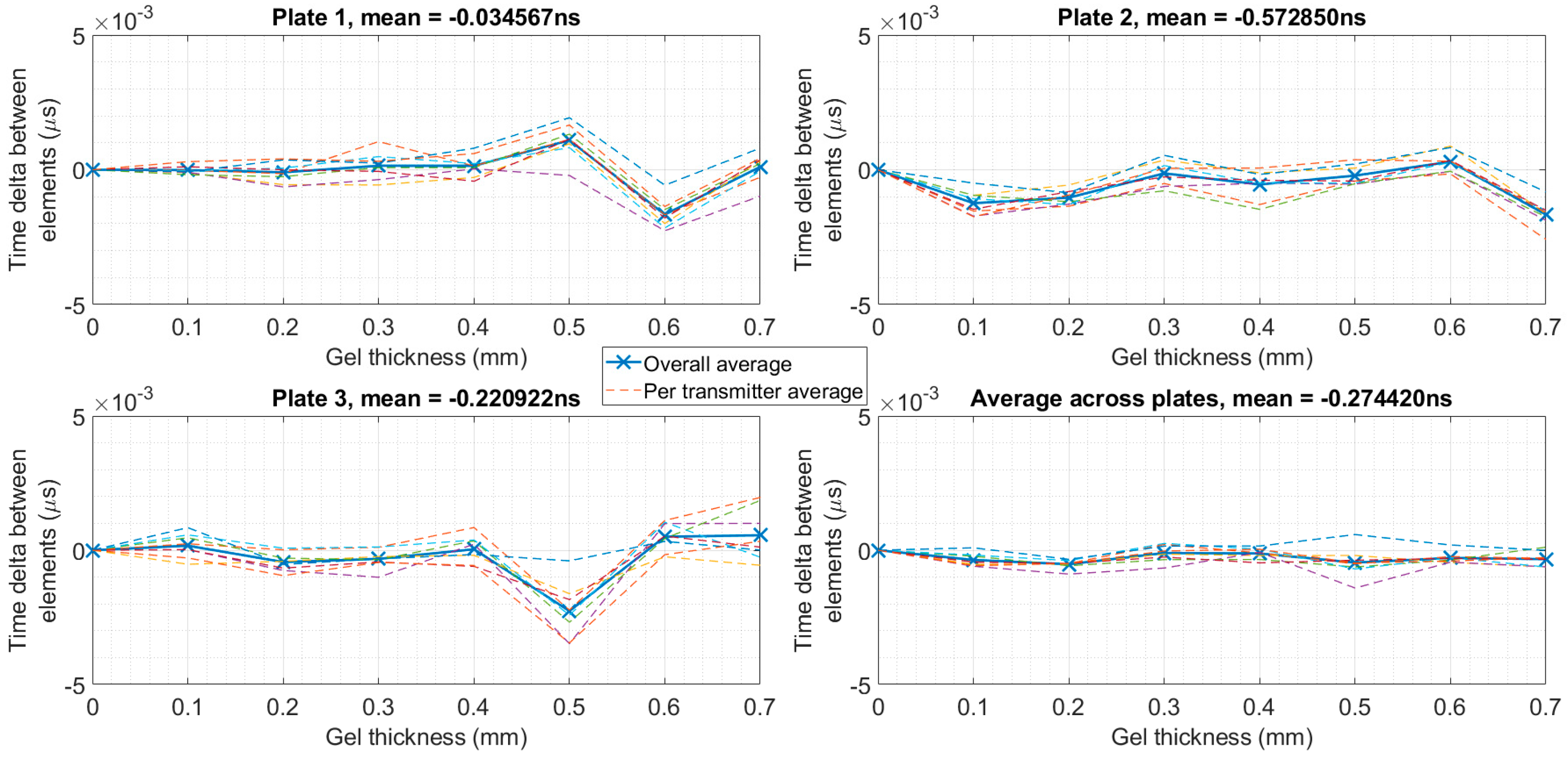
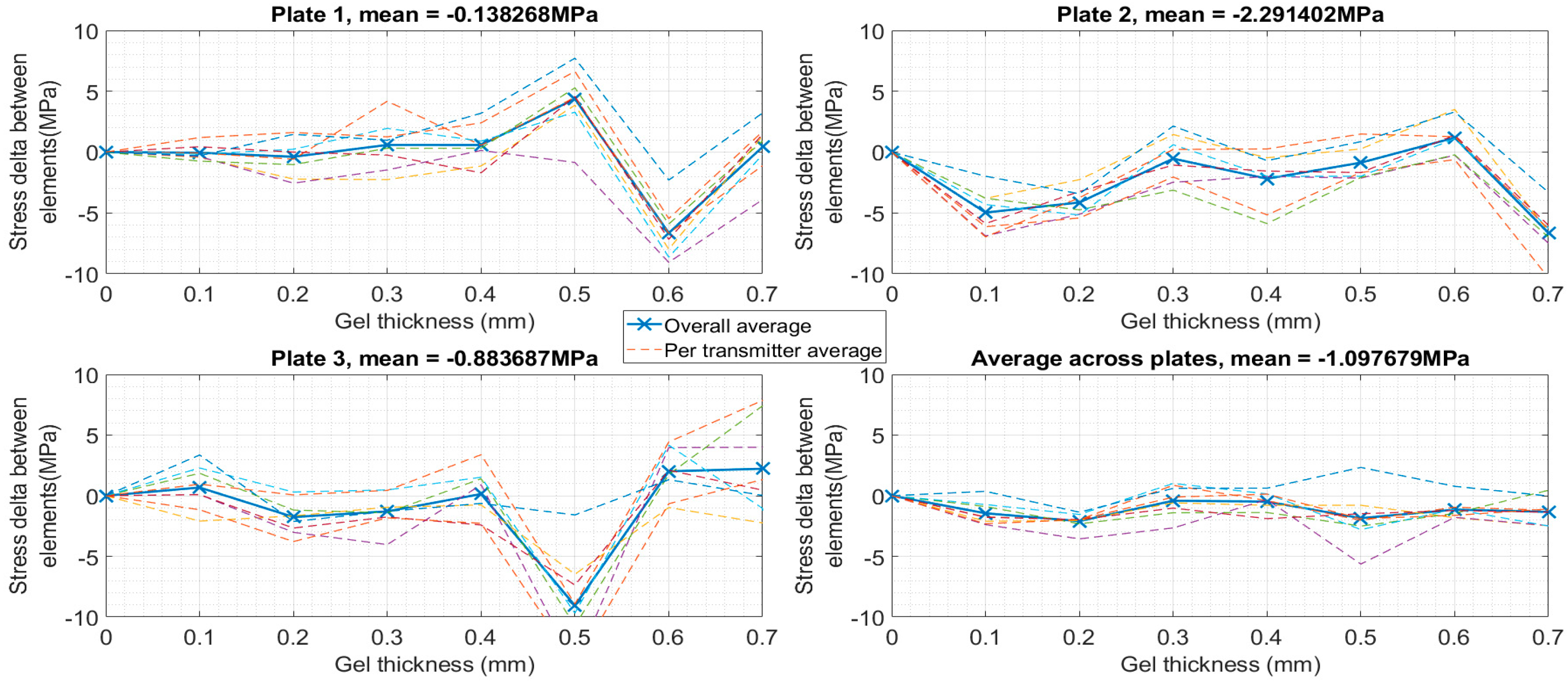
- A model-informed compensation workflow reduced ToF bias to ~0.3 ns in experiments, lowering residual stress error to ~1.1 MPa (~0.4% of yield strength).
- Provides practical calibration and uncertainty-quantification guidance for phased-array ultrasonic residual stress sensing.
- Establishes a foundation for further validation towards field deployment and in-process monitoring of residual stress and microstructure evolution in welding and additive manufacturing.
Abstract
1. Introduction
2. Theory
3. Materials and Methods
3.1. Simulation
3.2. Experimental Verification
4. Results
4.1. Simulation
4.2. Experimental Validation
5. Conclusions
Author Contributions
Funding
Data Availability Statement
Conflicts of Interest
Abbreviations
| RS | Residual Stress |
| PAURS | Phased Array Ultrasonics for Residual Stress Measurement |
| LCR | Longitudinal Critical Refraction |
| ToF | Time of Flight |
References
- Javadi, Y.; Akhlaghi, M.; Najafabadi, M.A. Using finite element and ultrasonic method to evaluate welding longitudinal residual stress through the thickness in austenitic stainless steel plates. Mater. Des. 2013, 45, 628–642. [Google Scholar] [CrossRef]
- Mills, B.; Walker, J.; Javadi, Y.; MacLeod, C.N.; Alipooramirabad, H.; Reid, M.; Paradowska, A. Residual stress analysis in robotically welded plates using phased array ultrasonics with validation through neutron diffraction and hole-drilling methods. Int. J. Press. Vessel. Pip. 2025, 216, 105518. [Google Scholar] [CrossRef]
- Bray, D.E.; Junghans, P. Application of the LCR ultrasonic technique for evaluation of post-weld heat treatment in steel plates. NDTE Int. 1995, 28, 235–242. [Google Scholar] [CrossRef]
- Leide, A.J.; Haynes, T.A.; Tzelepi, N.; Payne, J.; Jordan, M.; Knol, S.; Vreeling, J.A.; Davies, M.; Goddard, D.T.; Pfeifenberger, M.J.; et al. Measurement of residual stresses in surrogate coated nuclear fuel particles using ring-core focussed ion beam digital image correlation. Nucl. Mater. Energy 2023, 36, 101470. [Google Scholar] [CrossRef]
- Jiang, X.; Sun, N.; Ren, F.; Liu, X.; Guo, W.; Guo, M.; Fan, X.; Zhou, J. Multi-process aerospace components: Residual stress modeling and deformation optimization. Int. J. Mech. Sci. 2026, 309, 111077. [Google Scholar]
- Egle, D.M.; Bray, D.E. Measurement of acoustoelastic and third-order elastic constants for rail steel. J. Acoust. Soc. Am. 1976, 59, S32. [Google Scholar] [CrossRef]
- Mills, B.; Javadi, Y.; Lotfian, S.; MacLeod, C.N.; Lines, D.; Pierce, G.; Brennan, F.; Gachagan, A. A Novel Procedure for The Inspection of Wind Turbine Bolts. In Proceedings of the Wind Energy Science Conference, Glasgow, UK, 23–26 May 2023. [Google Scholar]
- Madhusoodanan, M.; Panicker, M.R.; Menakath, M.M. Modelling of Underwater Target for Sector Scan Sonar Imaging using K-Wave Toolbox. In Proceedings of the OCEANS 2024, Singapore, 15–18 April 2024. [Google Scholar]
- Martin, E.; Jaros, J.; Treeby, B.E. Experimental Validation of k-Wave: Nonlinear Wave Propagation in Layered, Absorbing Fluid Media. IEEE Trans. Ultrason. Ferroelectr. Freq. Control 2019, 67, 81–91. [Google Scholar] [CrossRef] [PubMed]
- Menakath, M.M.; Panicker, M.R.; Hareesh, G. k-Wave as a Modelling Tool for Underwater Acoustical Imaging. In Proceedings of the IEEE OCEANS Proceedings, Hampton Roads, VA, USA, 17–20 October 2022. [Google Scholar]
- Treeby, B.; Cox, B.; Jaros, J. K-Wave—A MATLAB Toolbox for the Time-Domain Simulation of Acoustic Wave Fields. 2010. Available online: http://www.k-wave.org/index.php (accessed on 26 June 2025).
- Zverev, V.A.; Slavinskii, M.M. A method for calculating the acoustic field near a rough surface. Acoust. Phys. 1997, 43, 56–60. [Google Scholar]
- Haslinger, S.G.; Lowe, M.J.; Huthwaite, P.; Craster, R.V.; Shi, F. Appraising Kirchoff approximation theory for the scattering of elastic shear waves by randomly rough defects. J. Sound Vib. 2019, 460, 114872. [Google Scholar]
- Haslinger, S.G.; Lowe, M.J.; Huthwaite, P.; Craster, R.V.; Shi, F. Elastic shear wave scattering by randomly rough surfaces. J. Mech. Phys. Solids 2020, 137, 103852. [Google Scholar] [CrossRef]
- Kim, Y.; Song, S.; Lee, S.; Lee, J.; Hong, S.; Eom, H. A study of the couplant effects on contact ultrasonic testing. J. Korean Soc. Non-Destr. Test. 2002, 22, 621–626. [Google Scholar]
- Leymarie, N.; Imperiale, A.; Fortuna, T.; Demaldent, E. Comparisons of ray and finite element simulations of ultrasonic wave fields in smoothly inhomogeneous austenitic welds of thick walled components. NDT E Int. 2024, 147, 103177. [Google Scholar] [CrossRef]
- Vijigiri, V.; Courbon, C.; Cayer-Barrioz, J.; Kermouche, G. Finite element modelling and investigation of the interaction between an ultrasonic wave and a discontinuous interface. In Proceedings of the 44th Leeds—Lyon Symposium on Tribology, Lyon, France, 4–6 September 2017. [Google Scholar]
- Kogut, L.; Etsion, I. A finite element based elastic-plastic model for the contact of rough surfaces. Tribol. Trans. 2003, 46, 383–390. [Google Scholar] [CrossRef]
- Abiza, Z.; Destrade, M.; Ogden, R. Large Acoustoelastic Effect. Wave Motion 2012, 49, 364–374. [Google Scholar] [CrossRef]
- Landau, L.; Lifshitz, E. Theory of Elasticity; Pergamon Press: Oxford, UK, 1989. [Google Scholar]
- BS EN ISO 4287:2000; British Institute of Standards, Geometrical Product Specification (GPS). Surface Texture. Profile Method. Terms, Definitions and Surface Texture Parameters. British Institute of Standards: London, UK, 2000.


Disclaimer/Publisher’s Note: The statements, opinions and data contained in all publications are solely those of the individual author(s) and contributor(s) and not of MDPI and/or the editor(s). MDPI and/or the editor(s) disclaim responsibility for any injury to people or property resulting from any ideas, methods, instructions or products referred to in the content. |
© 2026 by the authors. Licensee MDPI, Basel, Switzerland. This article is an open access article distributed under the terms and conditions of the Creative Commons Attribution (CC BY) license.
Share and Cite
Mills, B.; Javadi, Y.; Macleod, C.N. Compensating Couplant Effects in Phased-Array Ultrasonic ToF Sensing for Residual Stress. Sensors 2026, 26, 3975. https://doi.org/10.3390/s26133975
Mills B, Javadi Y, Macleod CN. Compensating Couplant Effects in Phased-Array Ultrasonic ToF Sensing for Residual Stress. Sensors. 2026; 26(13):3975. https://doi.org/10.3390/s26133975
Chicago/Turabian StyleMills, Brandon, Yashar Javadi, and Charles N. Macleod. 2026. "Compensating Couplant Effects in Phased-Array Ultrasonic ToF Sensing for Residual Stress" Sensors 26, no. 13: 3975. https://doi.org/10.3390/s26133975
APA StyleMills, B., Javadi, Y., & Macleod, C. N. (2026). Compensating Couplant Effects in Phased-Array Ultrasonic ToF Sensing for Residual Stress. Sensors, 26(13), 3975. https://doi.org/10.3390/s26133975